ANFS240 Exam 4
 Call Kai
 Learn
Learn Practice Test
 Spaced Repetition
 Match
Match Flashcards
 Knowt Play
1/272

There's no tags or description
Looks like no tags are added yet.
Name | Mastery | Learn | Test | Matching | Spaced | Call with Kai |
|---|
No analytics yet
Send a link to your students to track their progress
273 Terms
What is Spermatogenesis
-where sperm are created from stem cells
- has endocrine function
Spermatogensis/testicle has what function?
endocrine function which is the creation. and release of sex hormones like testosterone
Testicle has a _________ surface with a ________
smooth outer surface with a firm, homogenous parenchyma
Testicle shape?
Ovoid/ellipsoid shape
True/False: Testicles are not always the same proportion or size between species.
Ex: sometimes very large in very small animals (vise versa)
true
1 multiple choice option
True/false: testicles are not always in the same orientation between species
Ex: sometimes pendulous, sometimes close to the body
true
1 multiple choice option
Define Epididymis
structure adjacent to the testicle and where maturation of sperm occurs
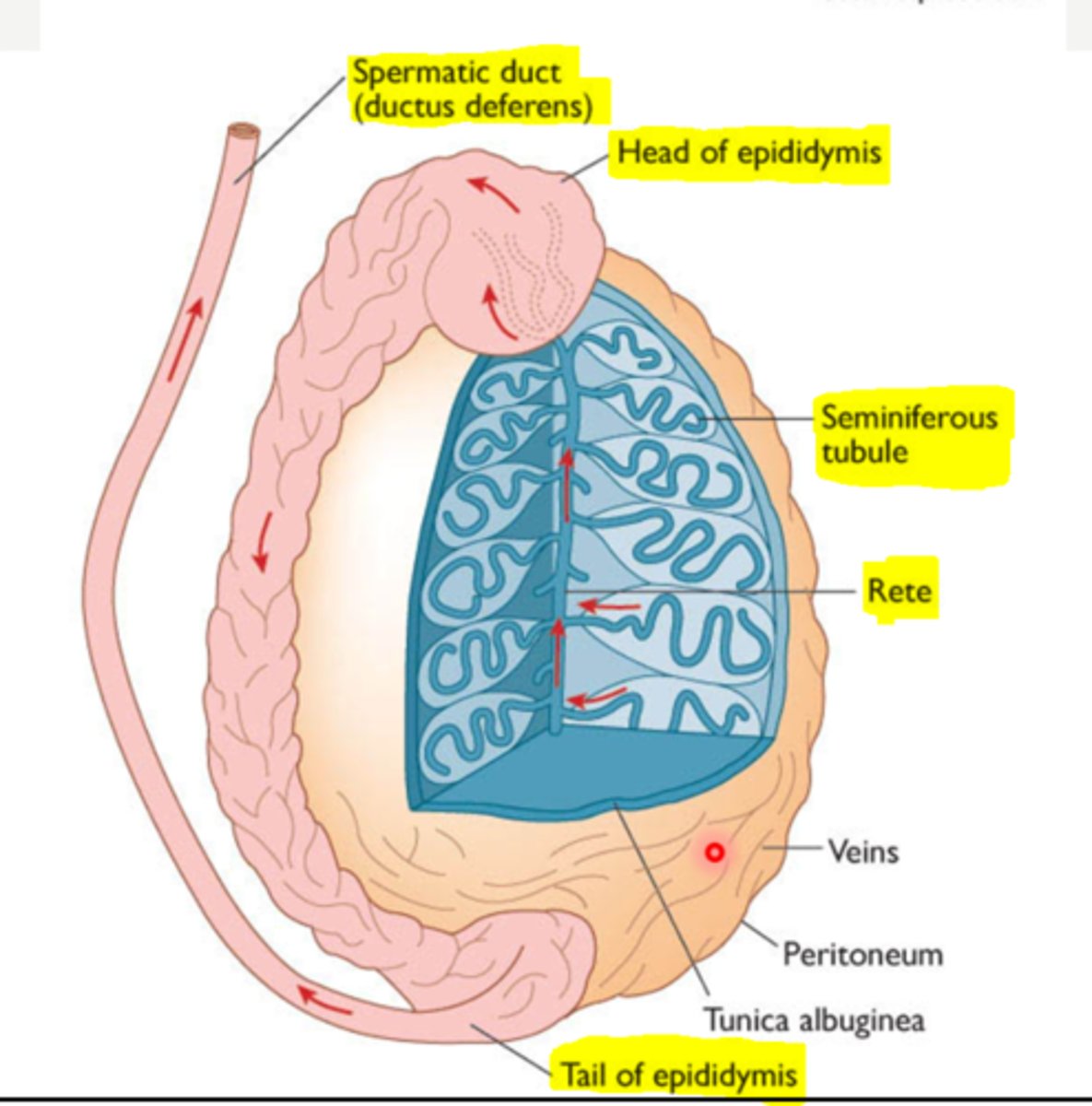
Three parts of epididymis: Head
Sperm enters here from the testicle
1 multiple choice option
Three parts of epididymis: Body
....
Three parts of epididymis: tail
sperm exit here, matured
1 multiple choice option
Deferent Duct (Vas Deferens)
-Long thin tube that extends all that way to the urethra, close to where the uretha arises from the bladder
- continuous with the tail of the epididymis
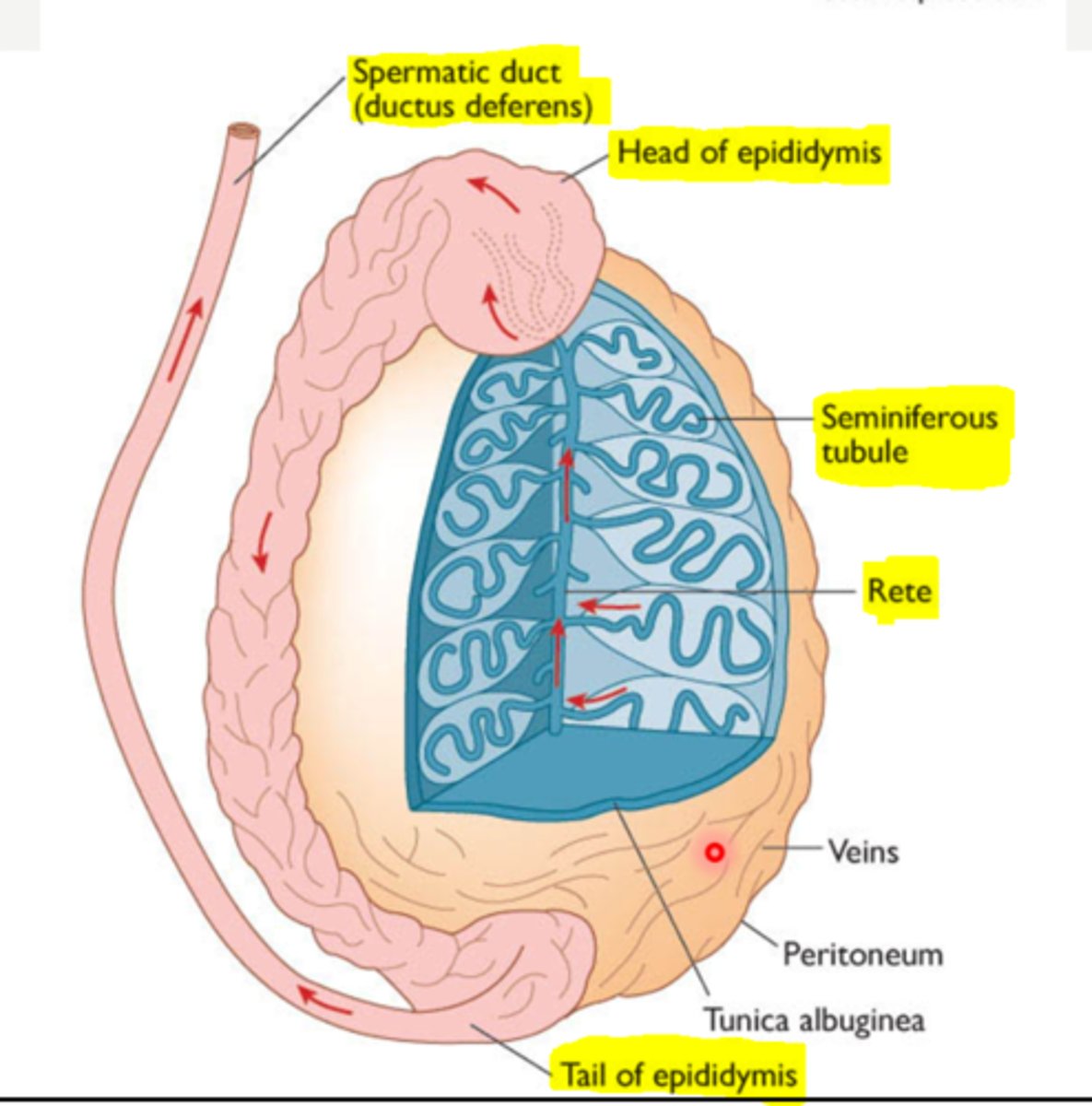
Vaginal Tunic (Tunica Vaginalis)
-Membrane that surrounds and encloses the testis
-invagination and extension of the peritoneum
Vaginal Tunic contains which layers
visceral and parietal
2 multiple choice options
The visceral layer in the vaginal tunic is what?
tightly adhered to the surface of the testicle and epididymis
Both the parietal and visceral layers in the vaginal tunic decent through a potential space: vaginal ring
where sometimes loops of intestine or fat can get trapped, creating an inguinal hernia
In the vaginal tunic, space is continuous with what cavity
peritoneal
Tunica Albuginea
-white covering that surrounds only the testicle, not the epididymis
-projection extends into the testicle, dividing it into halves at the mediastinum
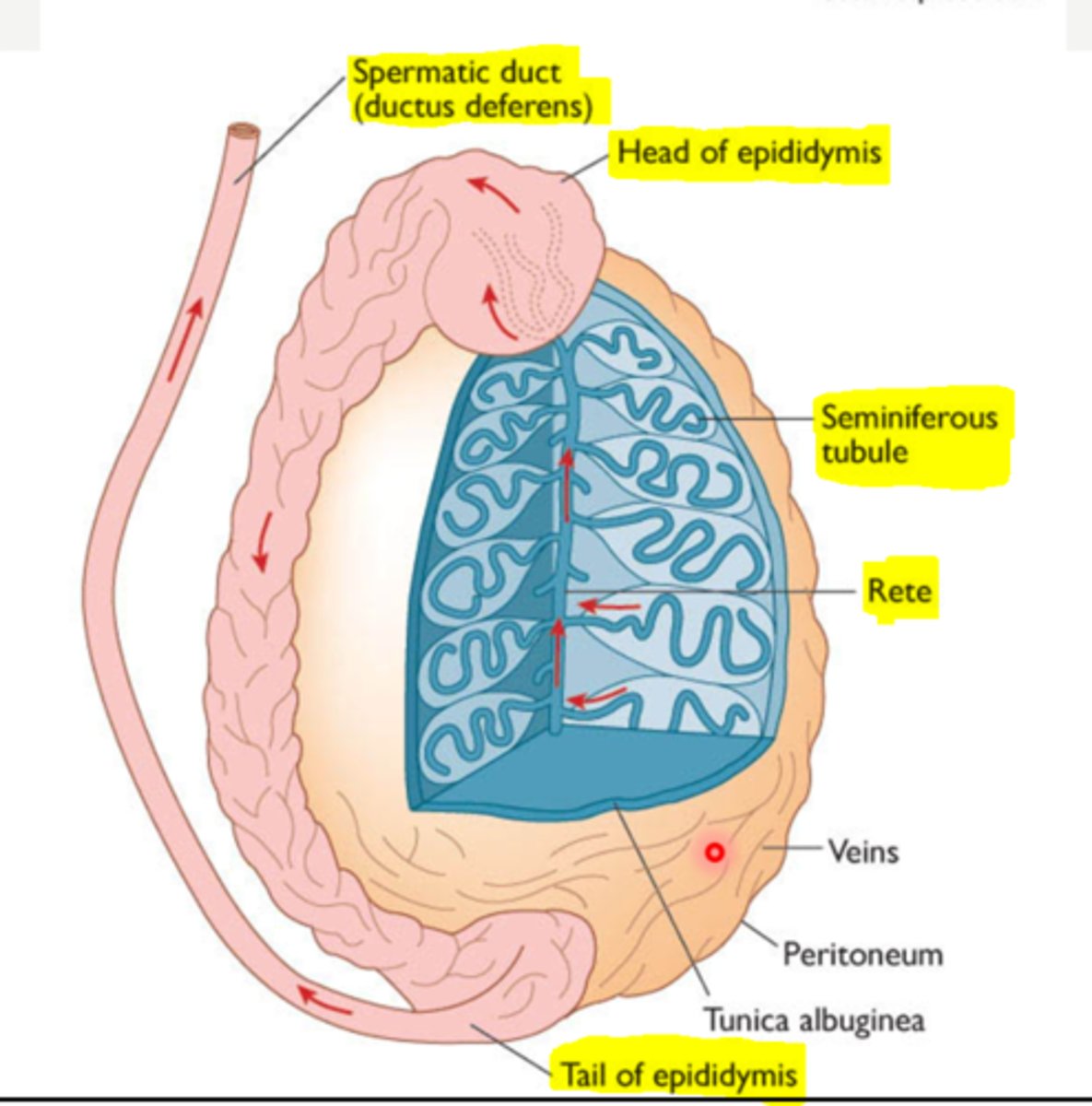
A projection extends into the testicle, dividing it into halves at the __________
mediastinum
Spermatic cord varies in
length and shape depending on the orientation of the testes
3 multiple choice options
Spermatic cord structures include:
pampiniform plexus, spermatic vein, spermatic artery, deferent duct, cremaster muscle
3 multiple choice options
Cremaster Muscle
muscle within the spermatic cord that is responsible for retracting the testicles, bring them closer to the body
1 multiple choice option
Cremaster muscle contracts due to:
decreased temperature, fear, pain
2 multiple choice options
Scrotum
-structure that houses the testicle, epididymis and spermatic cord
-adhered to a tough, musculofibrous layer - tunica dartos
-external median groove (septum), dividing it into right and left compartments
True/false: Scrotum: the testicles should NOT be moveable within the scotum, while still remaining adhered enough to have their position adjusted in accordance with ambient temperature and discomfort
false
1 multiple choice option
Urethra (male)
tube that extends from the bladder to the most distal end of the penis
True/false: the urethra (male) carries both sperm and urine
true
1 multiple choice option
Urethra (male) parts: internal and external
internal part is the pelvic and the external part is the spongy
1 multiple choice option
Urethra (male): pelvic (internal) urethra is where what joins
deferent ducts
3 multiple choice options
Urethra (male): pelvic (internal) urethra info
-is where deferent duct join
-associated with several accessory reproductive glands
Urethra (male): Spongy (external) urethra exists within what
the penis
3 multiple choice options
Urethra (male): Spongy (external) urethra info
-exisits within the penis
- surrounded by significant vasculature
Accessory reproductive glands
-create and secrete fluid that accompanies sperm at time of ejactulation, to feed and keep sperm alive
True/false: accessory repro glands decrease amount of area through which sperm can be dispersed
false: they increase the area
1 multiple choice option
Accessory Repro Glands: 4 in most species
-ampullae (2)
-vesicular glands (2)
-prostate (1)
-Bulbourethral glands (2)
3 multiple choice options
What Accessory Repro Gland does every animal have?
prostate
3 multiple choice options
ampullary glands
-enlarged portion of deferent duct (wall of duct enlarged with glandular tissue, not the lumen that is enlarged)
-near terminal end of deferent duct, usually sitting near or top of bladder
-share duct with vesicular gland--> both secrete into deferent duct
- not in boars or tom cars
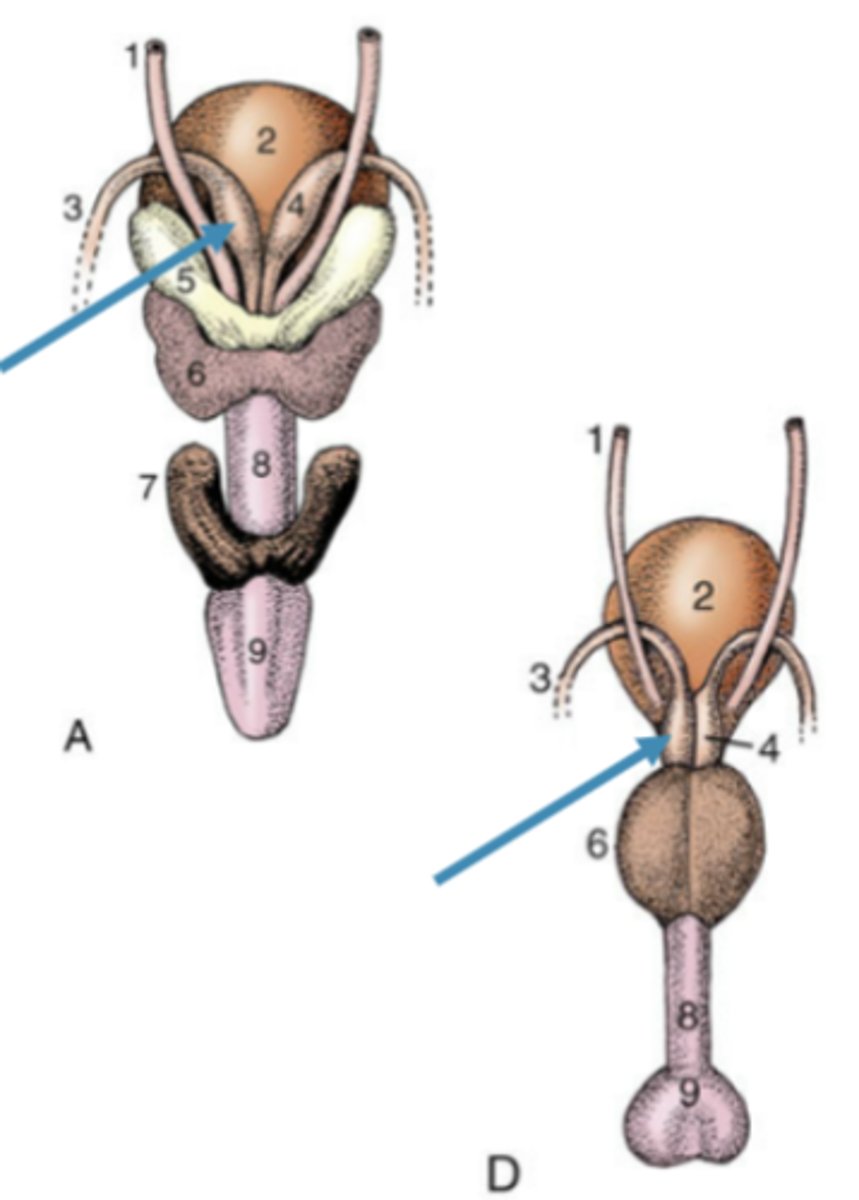
ampullary glands share duct with what other gland
vesicular gland
2 multiple choice options
Ampullary glands are not found in
boars or tom cats
2 multiple choice options
vesicular glands
-lateral to the deferent ducts, often sharing duct with ampullae
- vary in appearance
-horses: large, smooth, bladder like
-other domestics: knobby, thick-walled
- not present in dog or cat
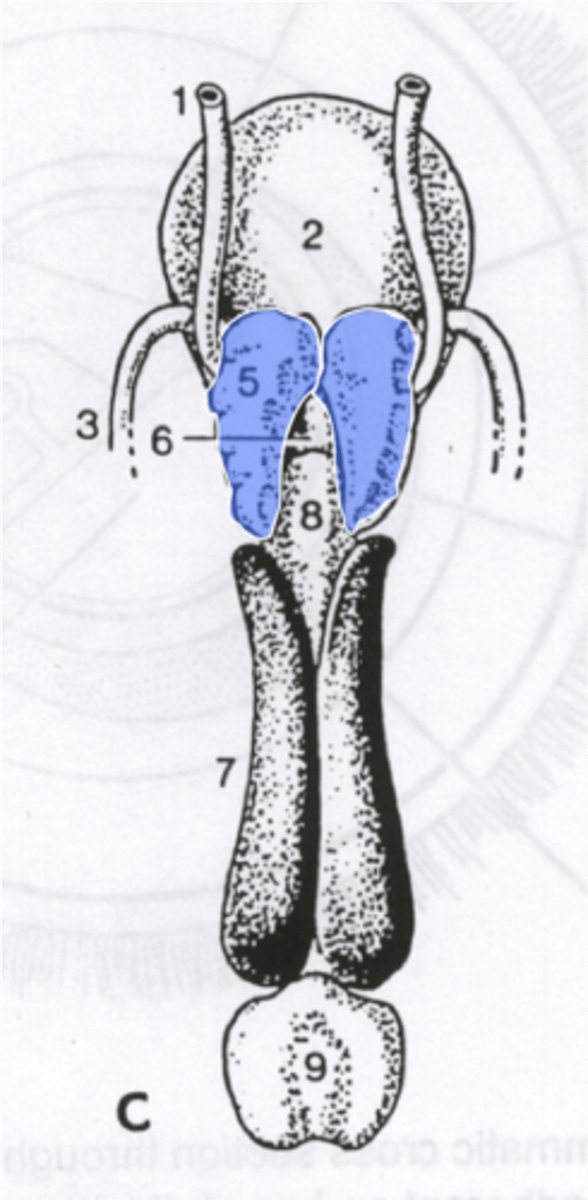
Vesicular glands share a duct with what gland
ampullae
2 multiple choice options
Vesicular glands are not present in what
dog and cat
2 multiple choice options
vesicular gland appearance in horses vs other domestics?
horses: large, smooth, bladder like
others: knobby, thick-walled
1 multiple choice option
Prostate gland (6)
-single gland with two parts
a.) one part diffusely spread throughout a portion of urethra wall
b.)second part is external to the urethra, surrounding it from the outside
- some species have both (dog, cat), while others have one or other
- very well developed in dogs and cats
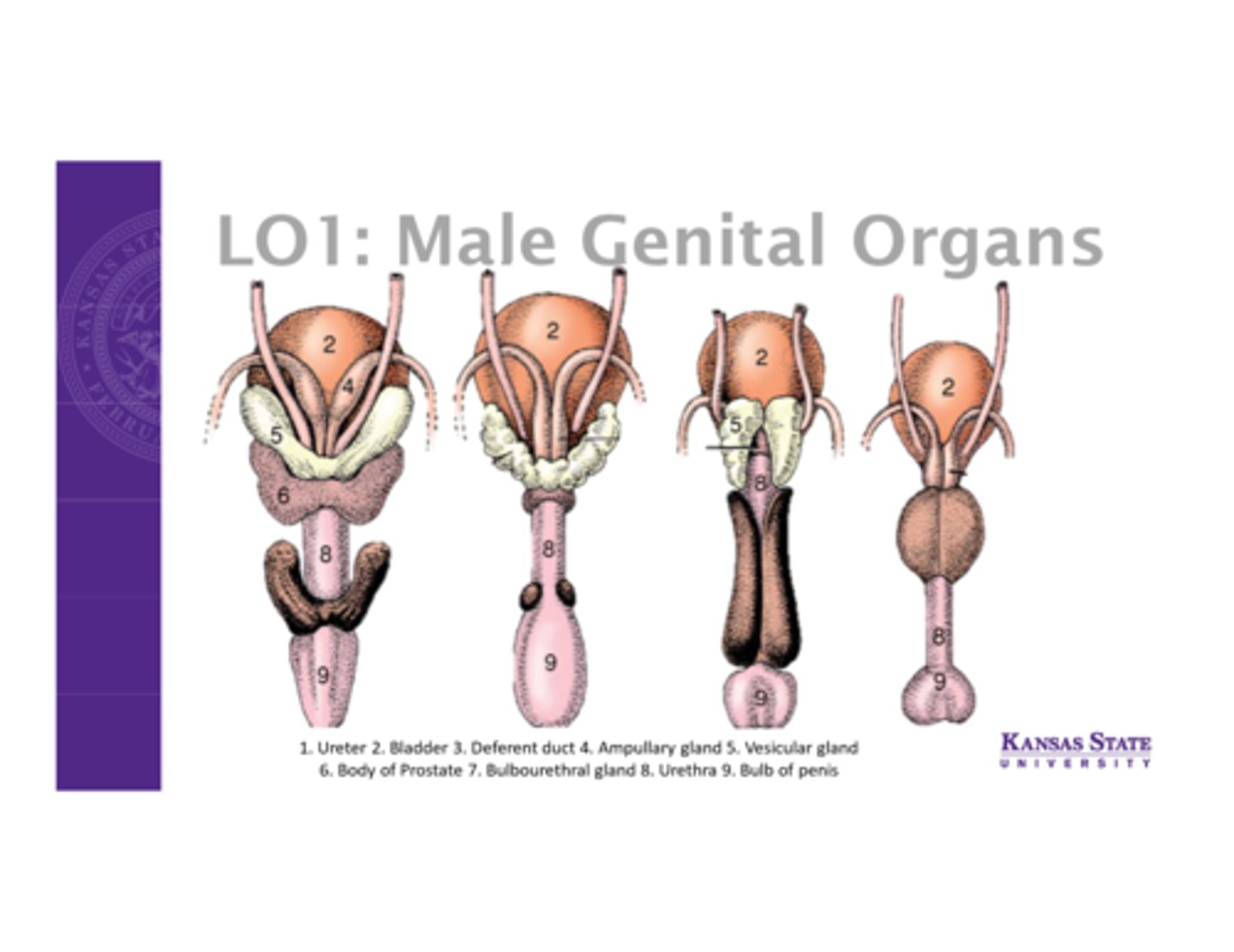
Both parts of the prostate gland are present in which animals
dog and cat
2 multiple choice options
Bulbourethral Gland (7)
-paired glands, dorsal to urethra
-most distal of glands
- not present in dogs, small in cats
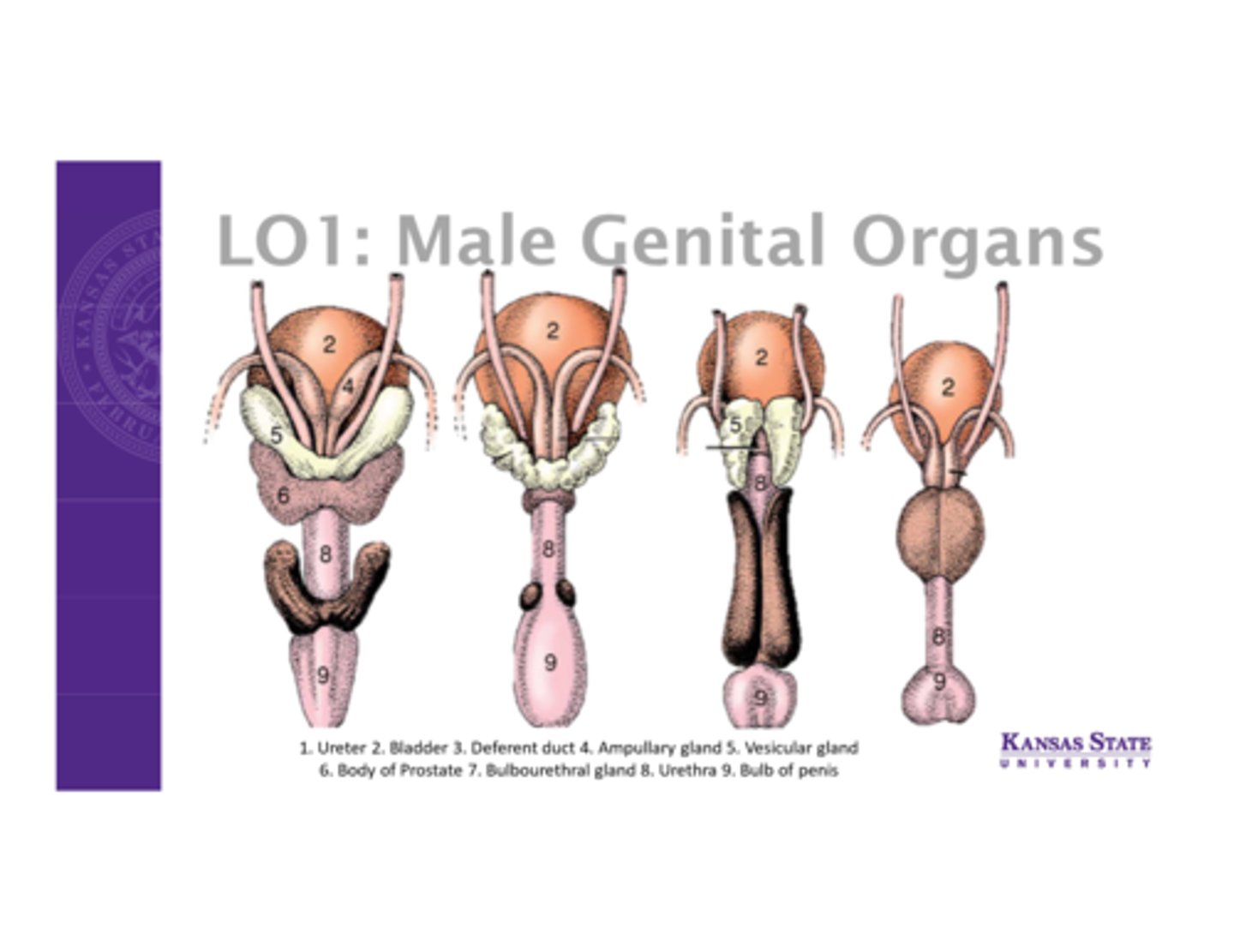
Bulbourethral Gland not present in what animal
dog
3 multiple choice options
Penis & Prepuce:
-suspended below trunk in all besides cat
- when at rest and not sexually active, free end of penis is generally concealed within invagination of abdominal skin (prepuce or sheath)
Prepuce layers: External (lamina externa)
continuous with the external integument
prepuce layers: internal (lamina interna)
-faces the free end of the penis
-continues as the covering of the free part of the penis after reflecting back on itself within the preputial cavity
Two types of penis are:
Musculocavernous and fibroelastic
Musculocavernous penis is found what in species?
carnivores (dogs/cats) and stallions
Musculocavernous penis info
- carnivores (dog/cats) and stallions
-erection secondary to engorement of erectile tissue with blood
-both diameter and length of penis increases upon erection, and goes from flaccid to stiff
- contains much less connective tissue and more space to allow for increase in blood volume
Musculocavernous penis increases ______ upon erection
diameter and length
2 multiple choice options
Musculocavernous penis contains much ______ connective tissue and much ______ space to allow for increase in blood volume
less, more
3 multiple choice options
Fibroelastic penis is present in what animals
ruminants (bulls, bucks, rams) & boars
1 multiple choice option
Fibroelastic penis info
-ruminants (bulls, bucks, rams) & boars
- substantial amounts of tough fibroelastic tissue, and much less open space between for blood flow
-penis is firm even when not erect and does not increase much in diameter
- erection occurs along with external lengthening of the penis by straightening of sigmoid flexure
Os Penis
-Bone that is otherwise disconnected from skeleton
- found in feline and canine penis
-located dorsal to the urethra within the penile tissue, providing additional support and rigidity
Penis parts: Root
area of attachment, proximal part
2 multiple choice options
Penis part: body
main part of the penis
2 multiple choice options
penis parts: glans
distal part of the penis
2 multiple choice options
penis - anatomical parts: Corpus Spongiosum
-erectile tissue directly enclosing the urethra
-allowing the urethra to remain patent while the tissue is engorged with blood
-forms the bulb and glans of penis
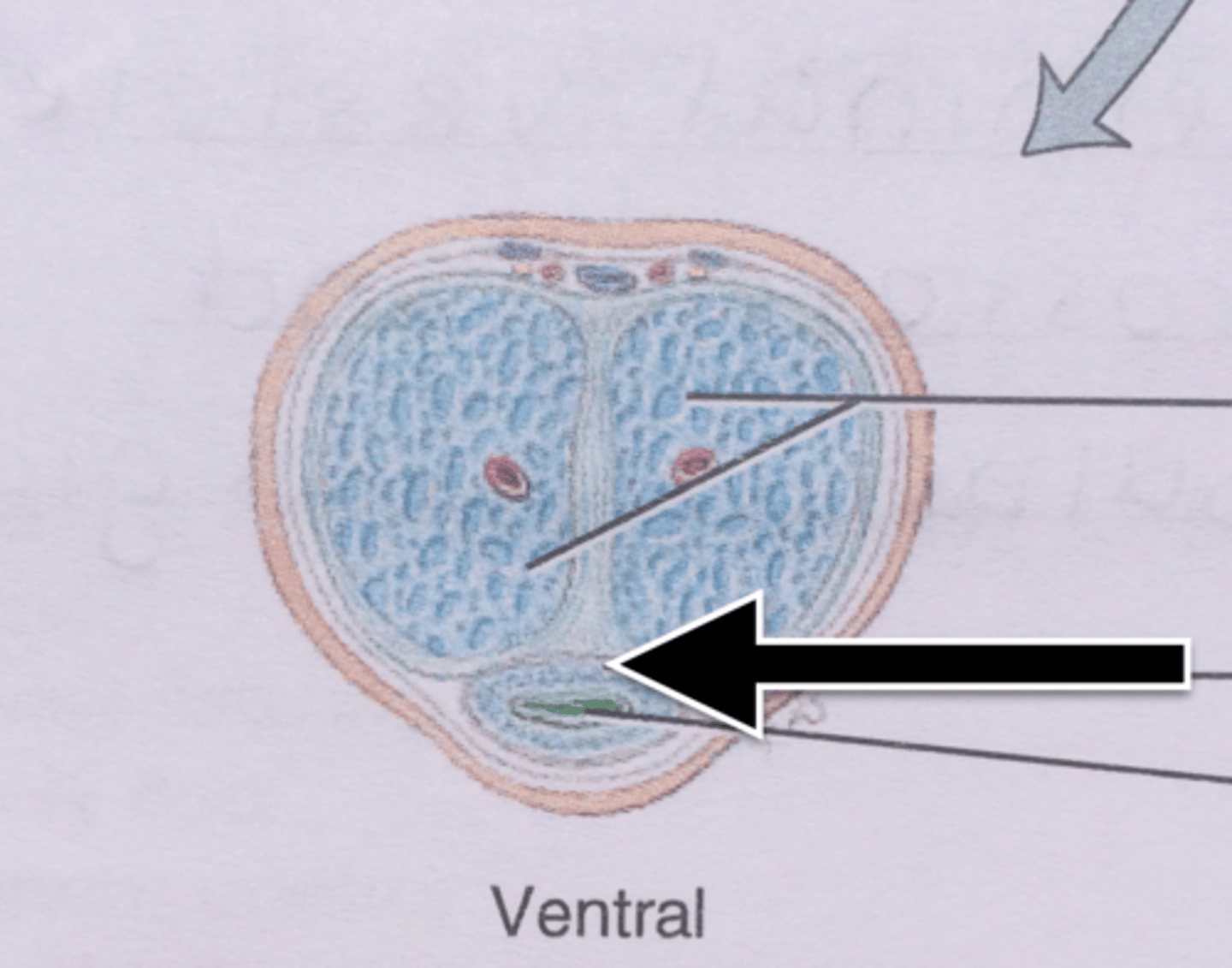
penis - anatomical parts: Corpus Cavernosum (1)
-paired erectile tissue that comprises the bulk of the body of the penis
-tapers off at the glands
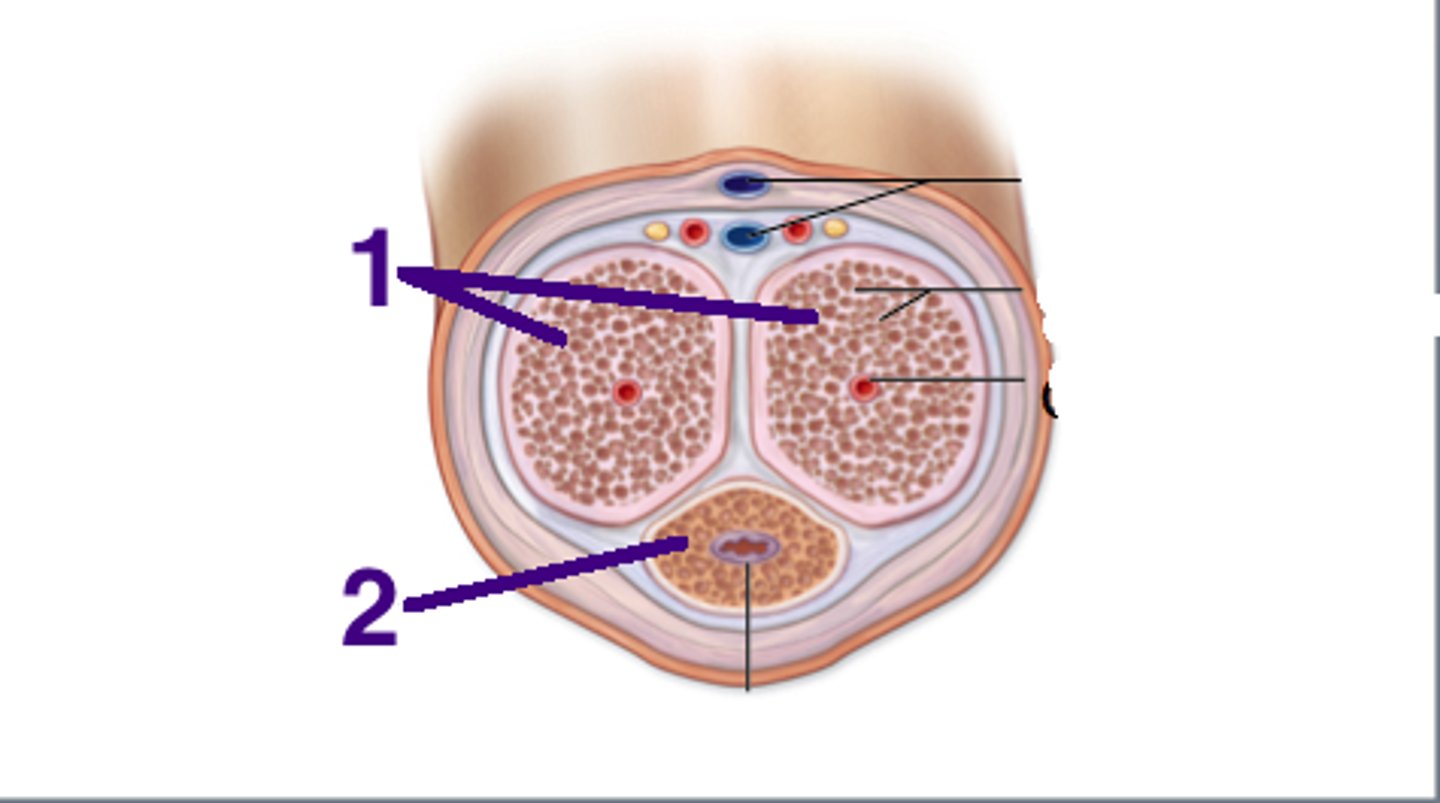
penis - anatomical parts: tunica albuginea
-Tough outer casing that surrounds the corpus cavernosum
penis - anatomical parts: Retractor Penis Muscle
-Muscle responsible for retracting the penis back into the abdomen and prepuce
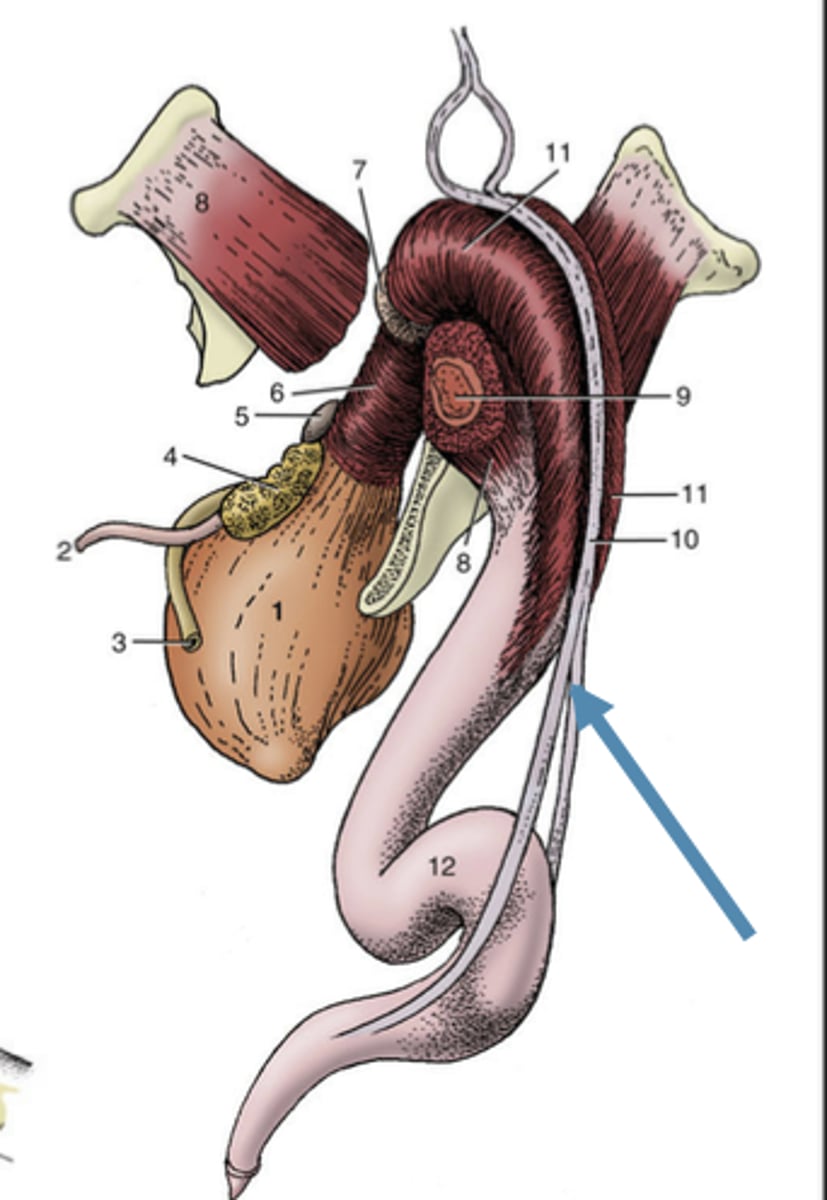
penis - anatomical parts: Urethral Process
-an extension of the urethra beyond the glans
Ovaries pt 1
- paired female gonads
- only one functional ovary in mature bird
- organ where gametes (oocytes) are produced
-where significant sex hormones are produced and released (endocrine function)
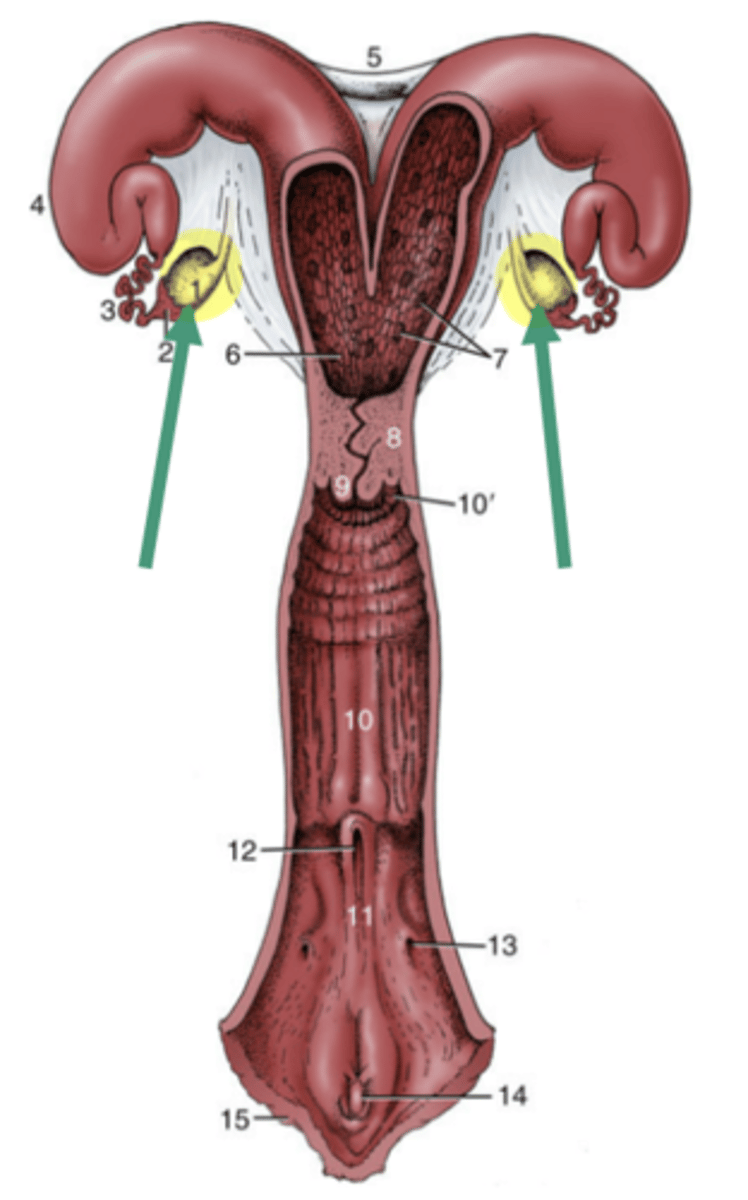
Ovaries pt 2: shape, structure, location,
- round, ovoid, or kidney shaped in domestic species
-have notable structures on them depending on what stage of estrous cycle female is in
-typically found dorsal and caudal half of abdomen
Ovaries pt 3: animals
-canine, feline, equine: caudal to kidneys, around level of L5
- bovine, ovine, and porcine: at the pelvic inlet
What's surrounds the entire ovaries
tunica albuginea
Ovaries parts: Ovarian Cortex
- outer layer of the ovary
- has structures at different stages and levels of development
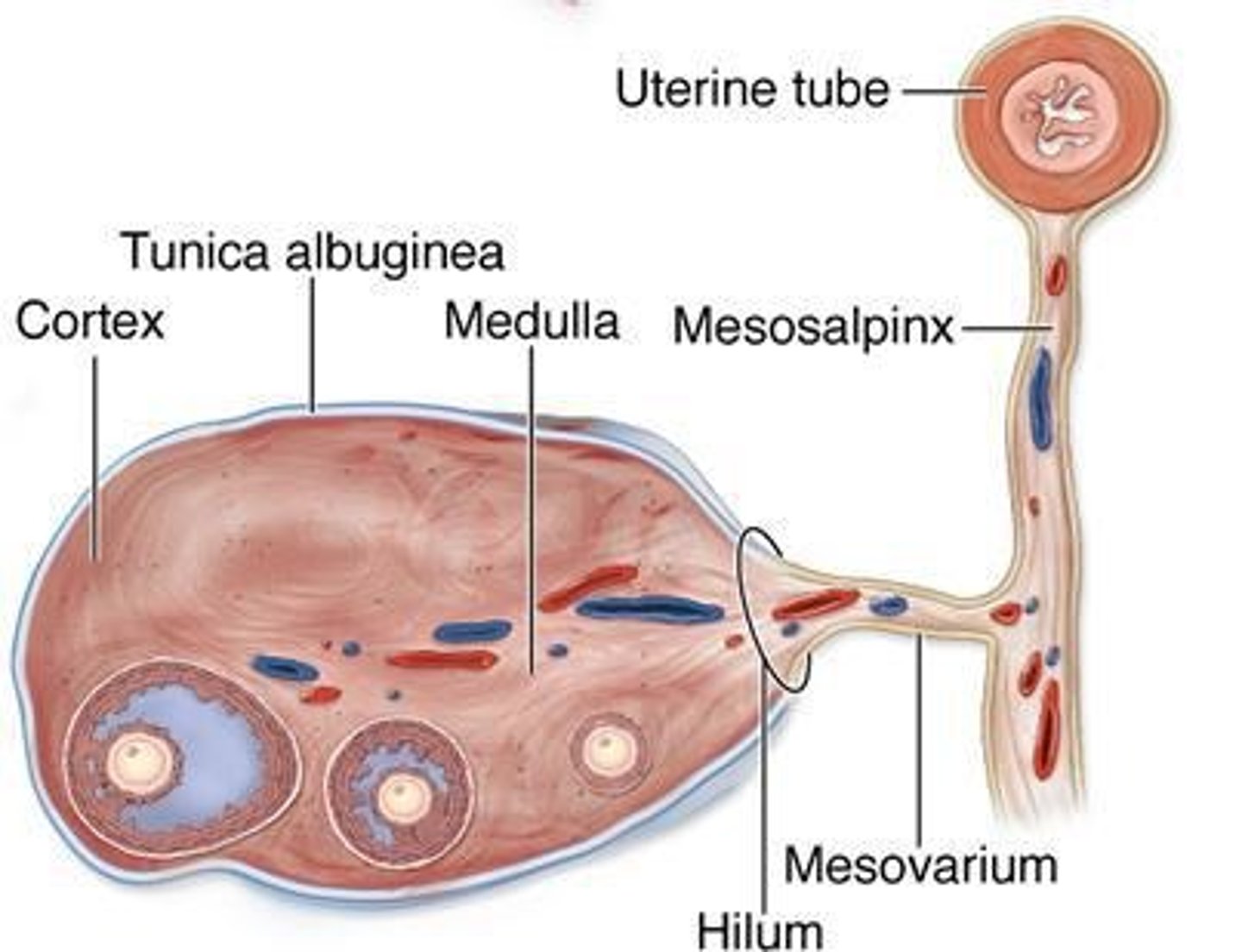
Ovaries parts: Ovarian Medulla
- central layer of the ovary
- contains mainly blood vessels, nerves, lymphatic tissue, smooth muscle fibers, and connective tissue
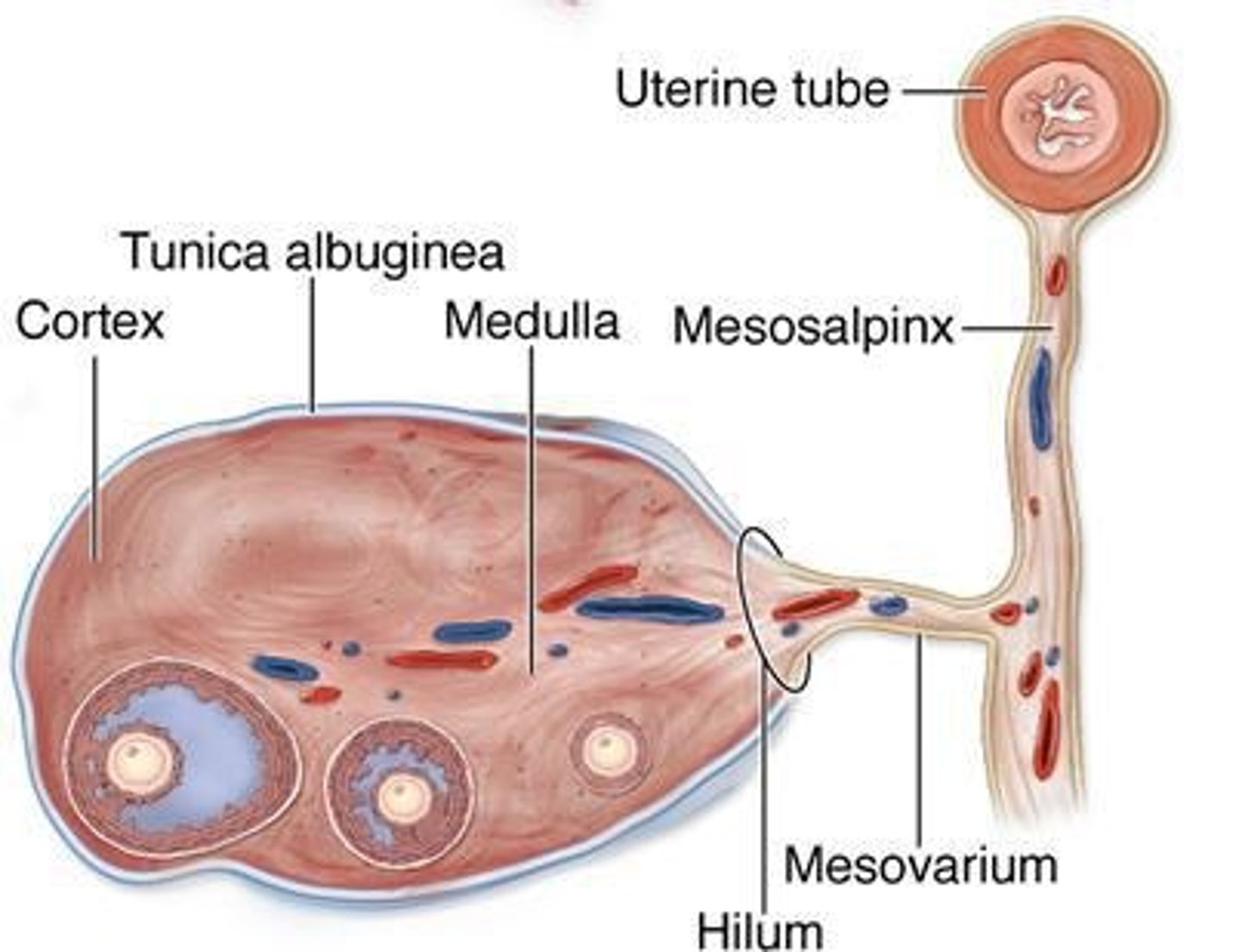
Ovarian Structures: Follicle
-thin-walled, fluid-filled structures that contain the oocyte
-expand in size as they mature
-rupture to release the oocyte: ovulation
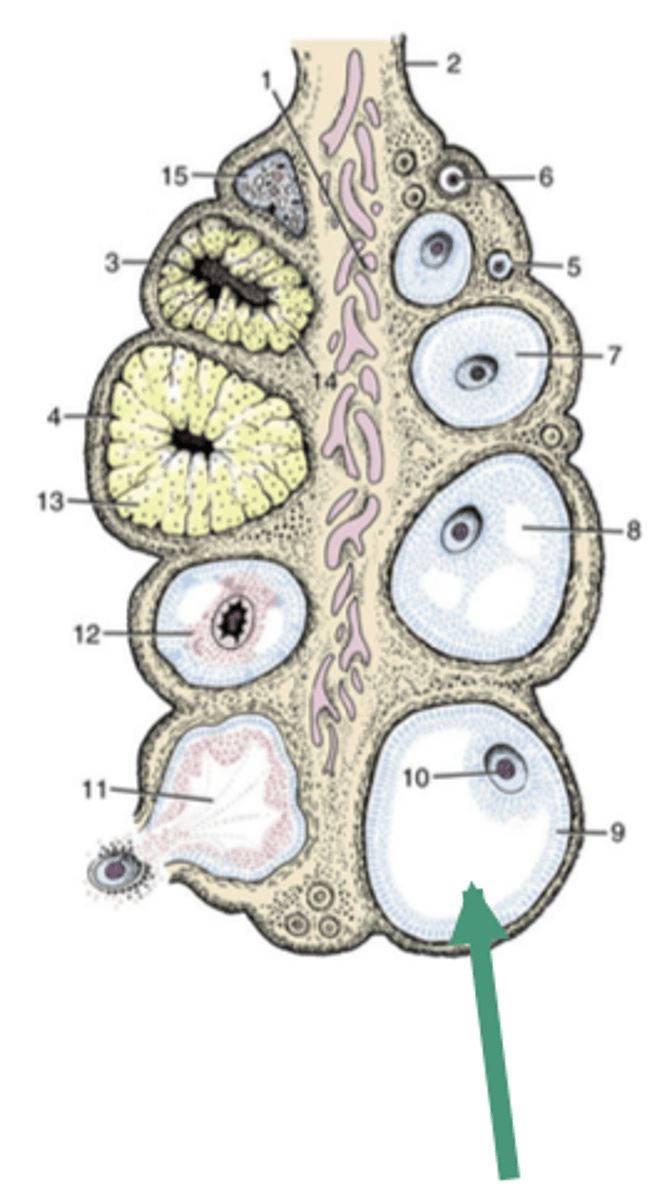
Ovarian Structures: Corpus Luteum (CL)
-tissue that forms in place of where follicle ruptured
-CL = yellow body
- secretes the hormones that require to maintain early pregnancy or maintain entire pregnancy and some
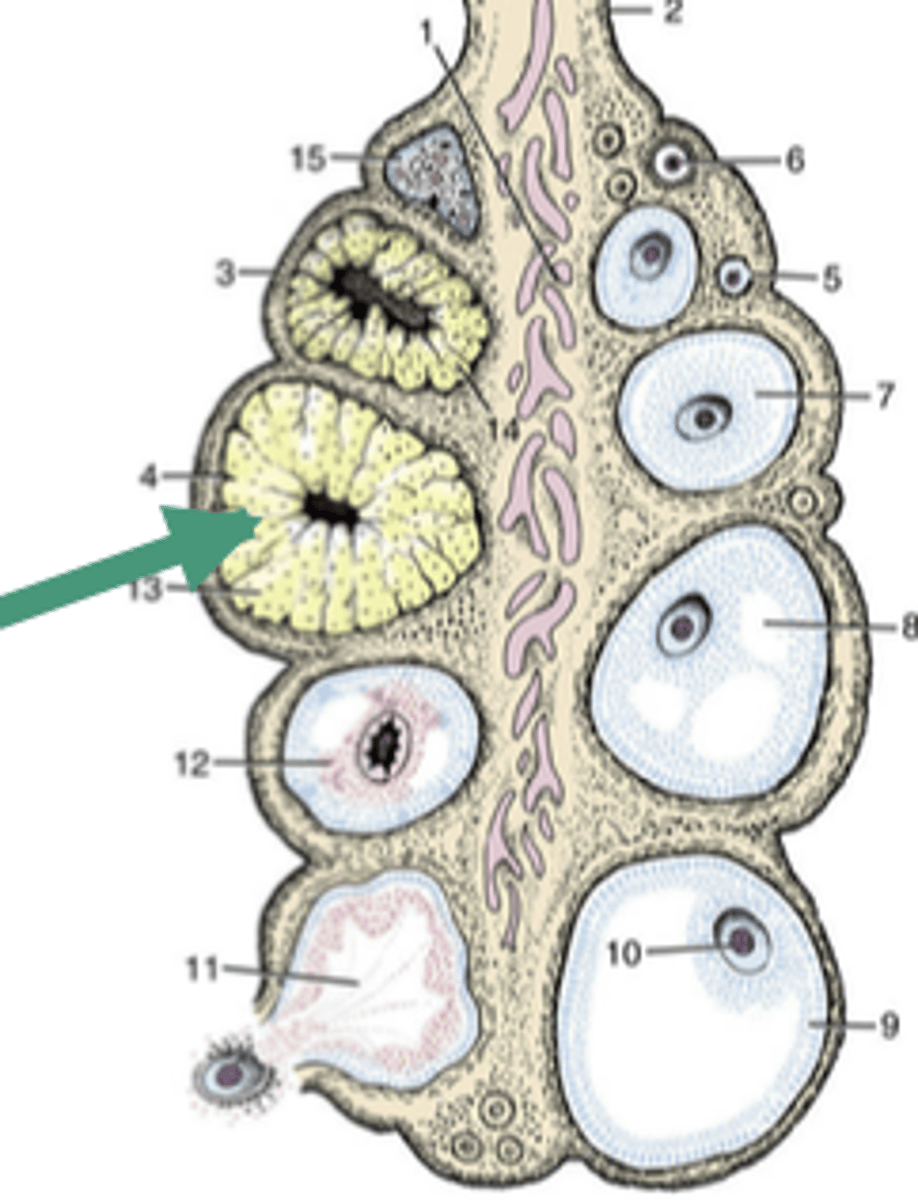
Ovarian Structures: Corpus Albicans
-scar tissue that is remnant of the CL
-CA = white body
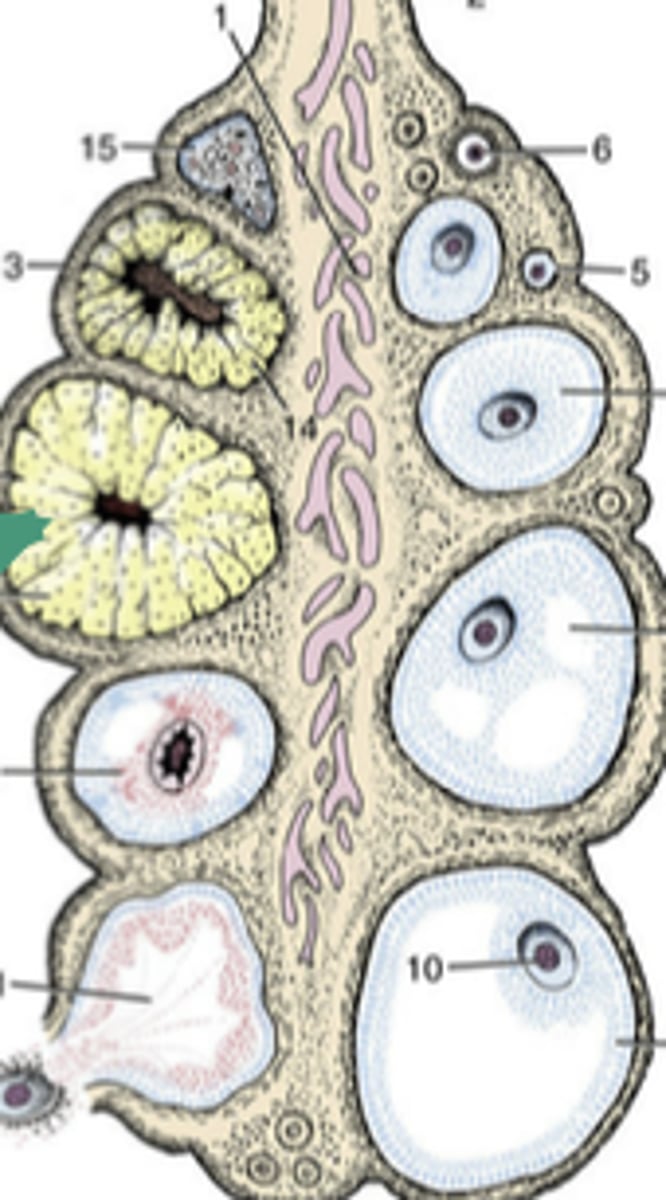
Oviduct
-"uterine tubes"
-carry ovulated oocyte to uterus
-where fertilization occurs (sperm+egg)
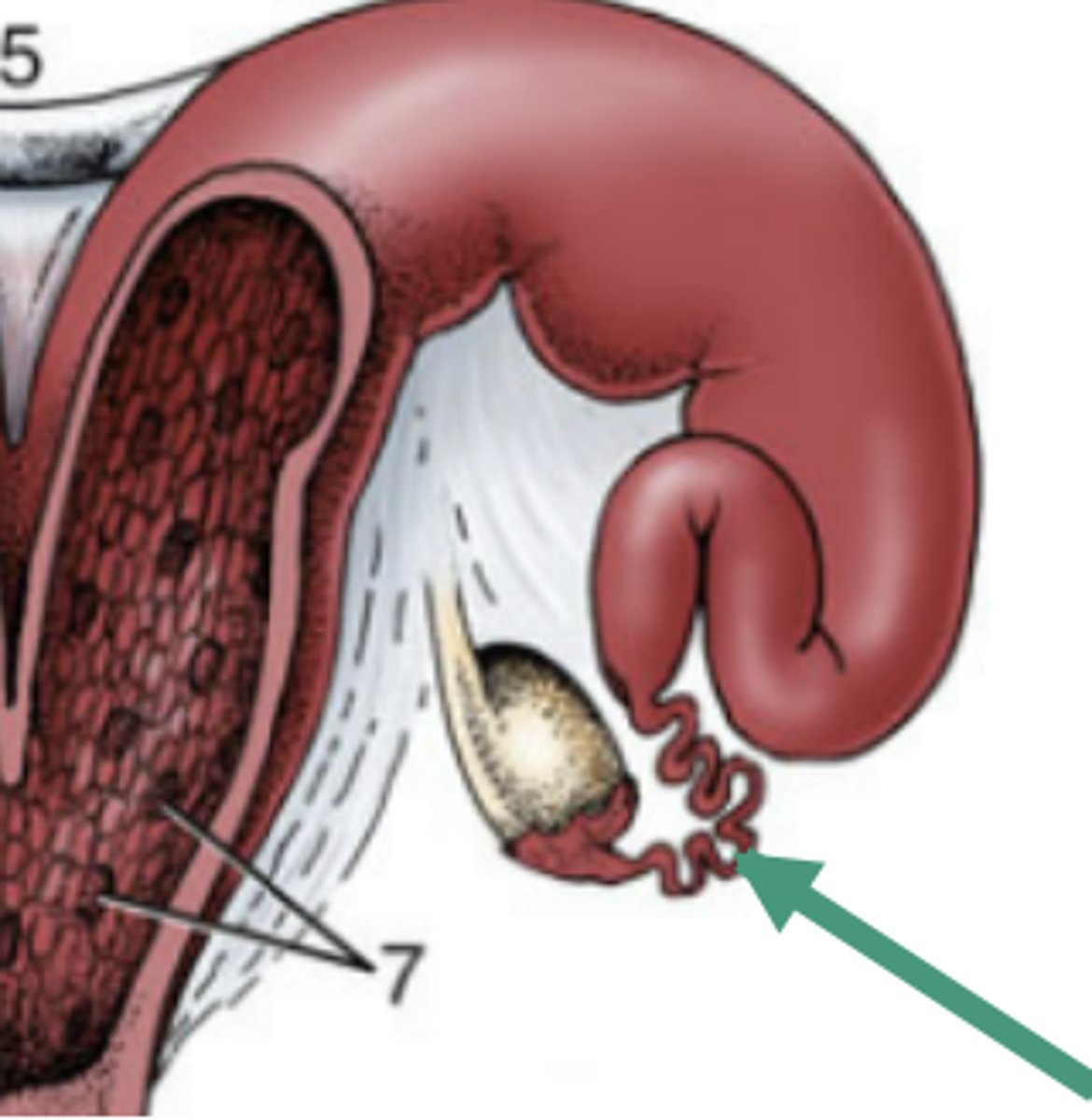
Infundibulum
-part of the uterine tube closest to the ovary
-funnel
-catchers mitt
- very thin-walled
-contains fimbriae: finger like projections that come into contract with ovary to collect the ovum
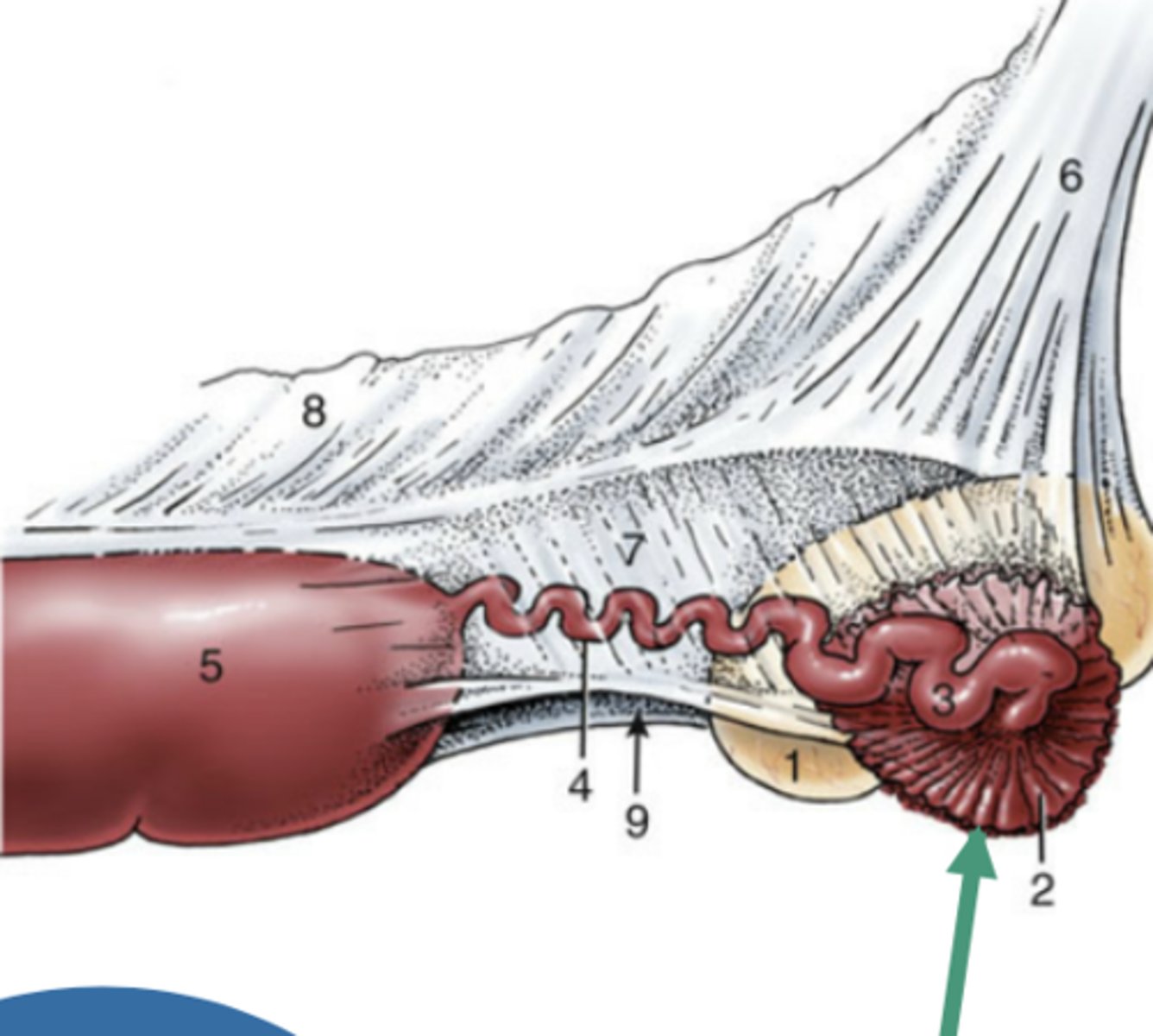
Ampulla
-proximal segment of the uterine tube (closer to the infundibulum)
-slightly larger in diameter than the isthmus
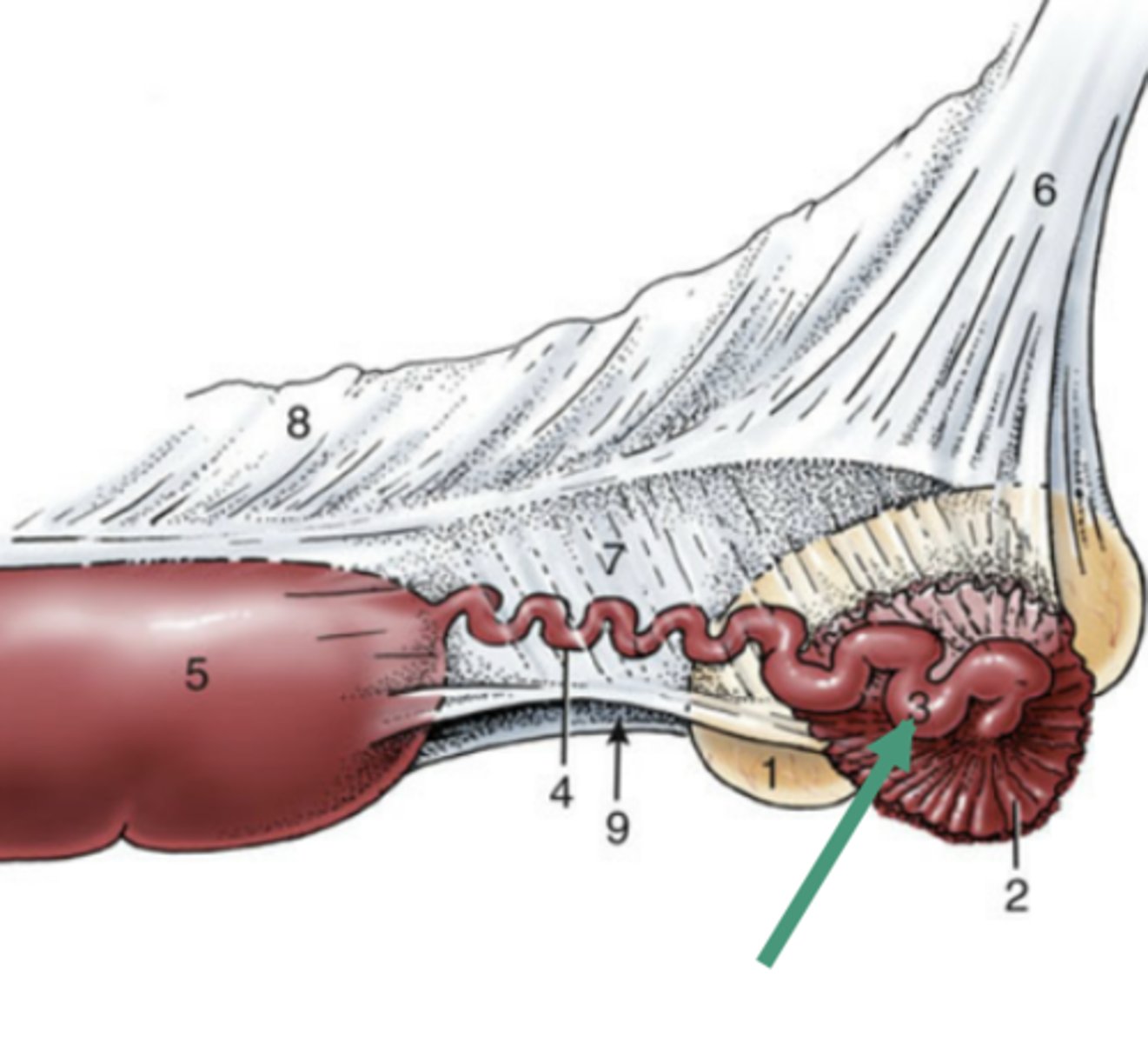
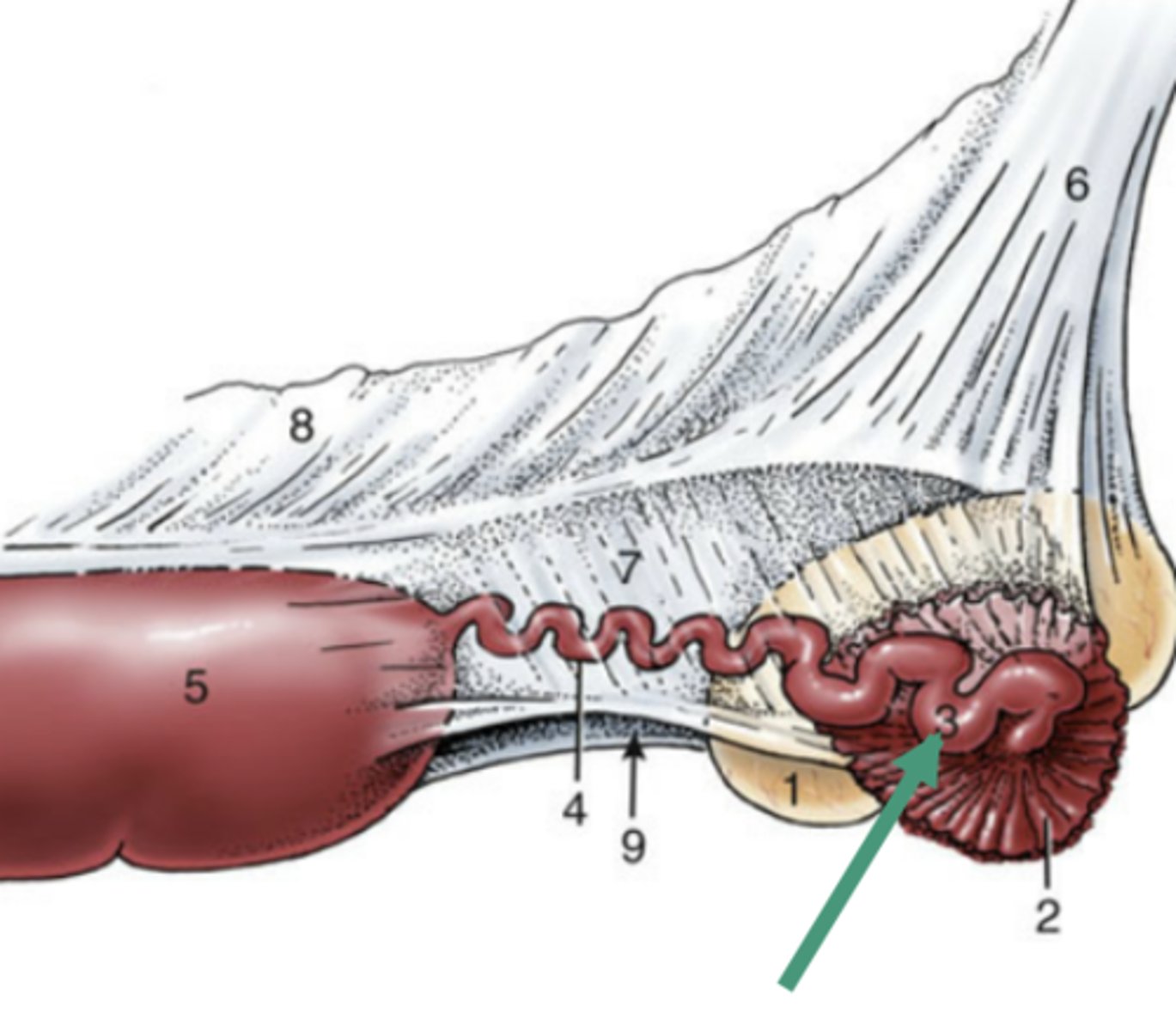
Isthmus
-segment that follows the ampulla
-longer, thinner, and more convoluted (folded or twisted)
-portion of the uterine tube that connects to the uterine horn
Uterus info
-enlarge portion of repro tract where embryo enters, attaches, and develops throughout pregnancy (gestation)
-this part has most variation between species
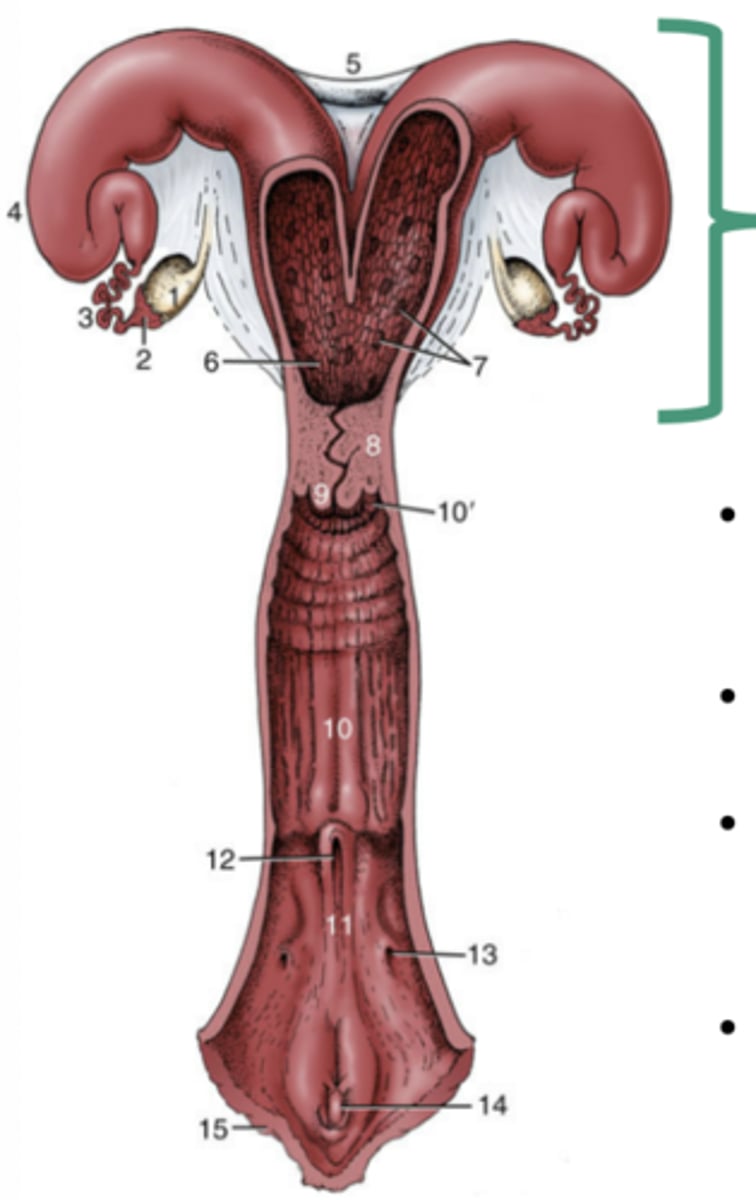
What are the the two parts of the uterus:
uterine body & uterine horns
Uterus: cervix
-thickened area that acts as sphincter to protect the contents of the uterus from the external environment
What are the three layers of the uterus?
-perimetrium (serosal outer layer)
-myometrium (muscular middle layer- heavily myscularized)
-endometrium (inner mucosal layer - very glandular: secretions that are essential for maintaining pregnancy)
- highly expandable
Uterus: perimetrium
serosal outer layer
Uterus: myometrium
-muscular middle layer
-heavily muscularized
Uterus: endometrium
-inner mucosal layer
-very glandular - secretions that are essential for maintaining pregnancy
In species that have ________, the uterine horns tend to be less prominent and the body is larger
a single offspring
1 multiple choice option
In species that have _______, the horns are much more prominent, and the body is insignificant
litters
1 multiple choice option
Where is the uterine body located
-dorsal to urinary bladder
-ventral to rectum/descending colon
Cervix
-Sphincter that acts as physcial and chemical barrier to outside enviroment
-thickened, contrition caudal portion of the uterus
-fibrous elastic tissue + muscle
-highly responsive to hormones that fluctuate throughout estrous cycle
-located within the pelvic cavity
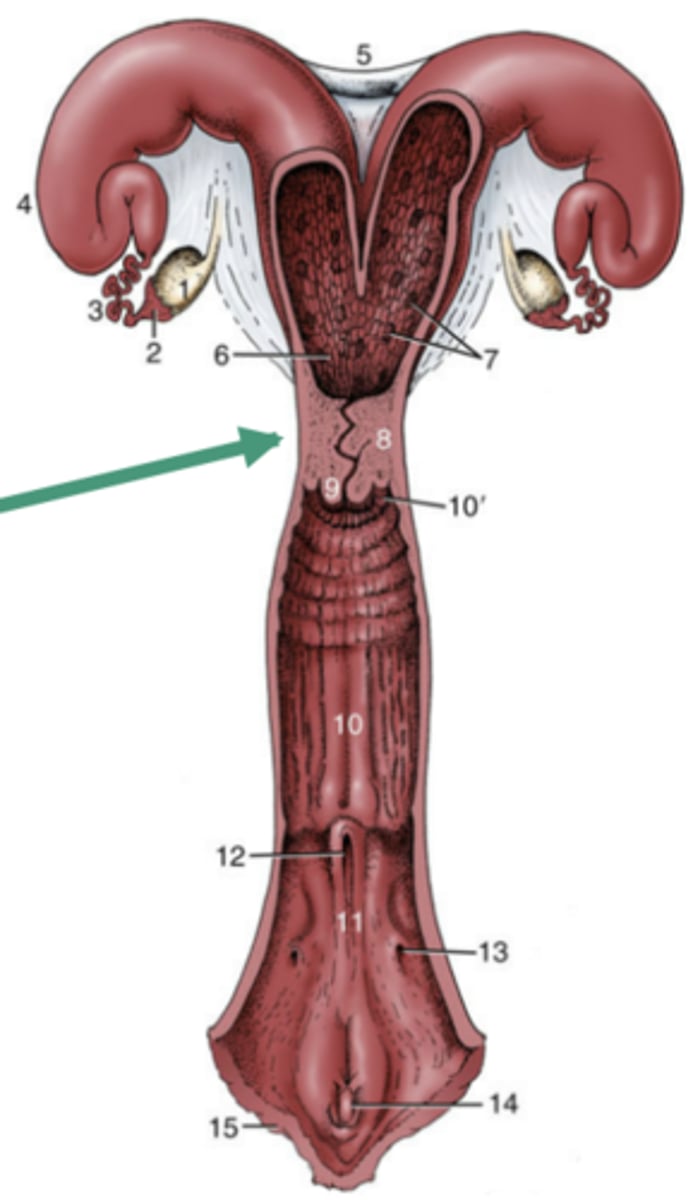
What kind of tissue does the cervix have?
-fibrous elastic tissue and muscle which is highly responsive to hormones
Where is the cervix located
-pelvic cavity
What animals have a firm, fibrous cervix made up of several fibrous rings?
-the vaginal part of the cervix (the entrance from vagina) bulges out into the vagina, forming a fornix (invagination) around it
Cow/Ewe/Dow
2 multiple choice options
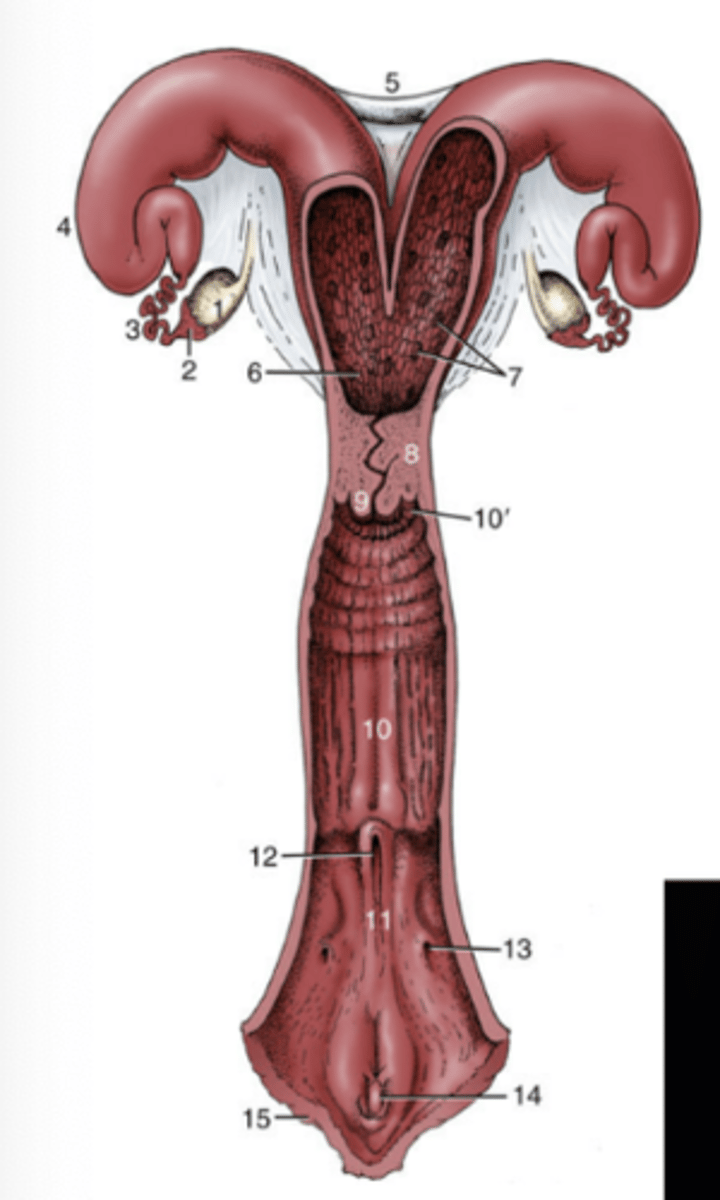
What animals have a simple muscular cervix, with a vaginal part and a fornix (no annular rings)
Mare/Bitch/Queen
2 multiple choice options
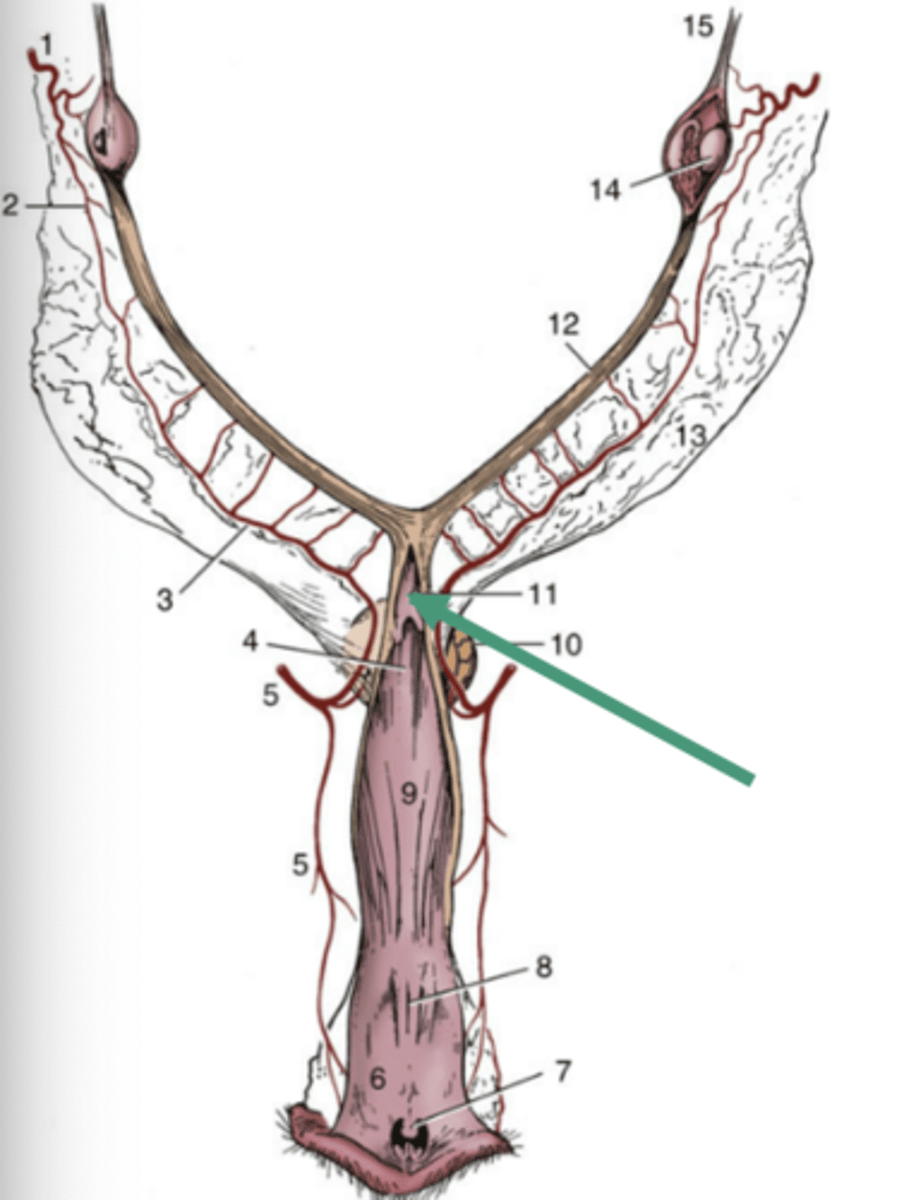
What animal has a very long and complicated cervix?
-lies half in the abdomen and half in pelvic cavity
-comprised of interdigitating mucosal projections that come together to close the lumen, except at the time of sexual reception (heat)
-contains large number of muscus producing cells
-difficult to tell wherecervix ends and the uterine body/vagina begin (no fornix)
Sow
2 multiple choice options
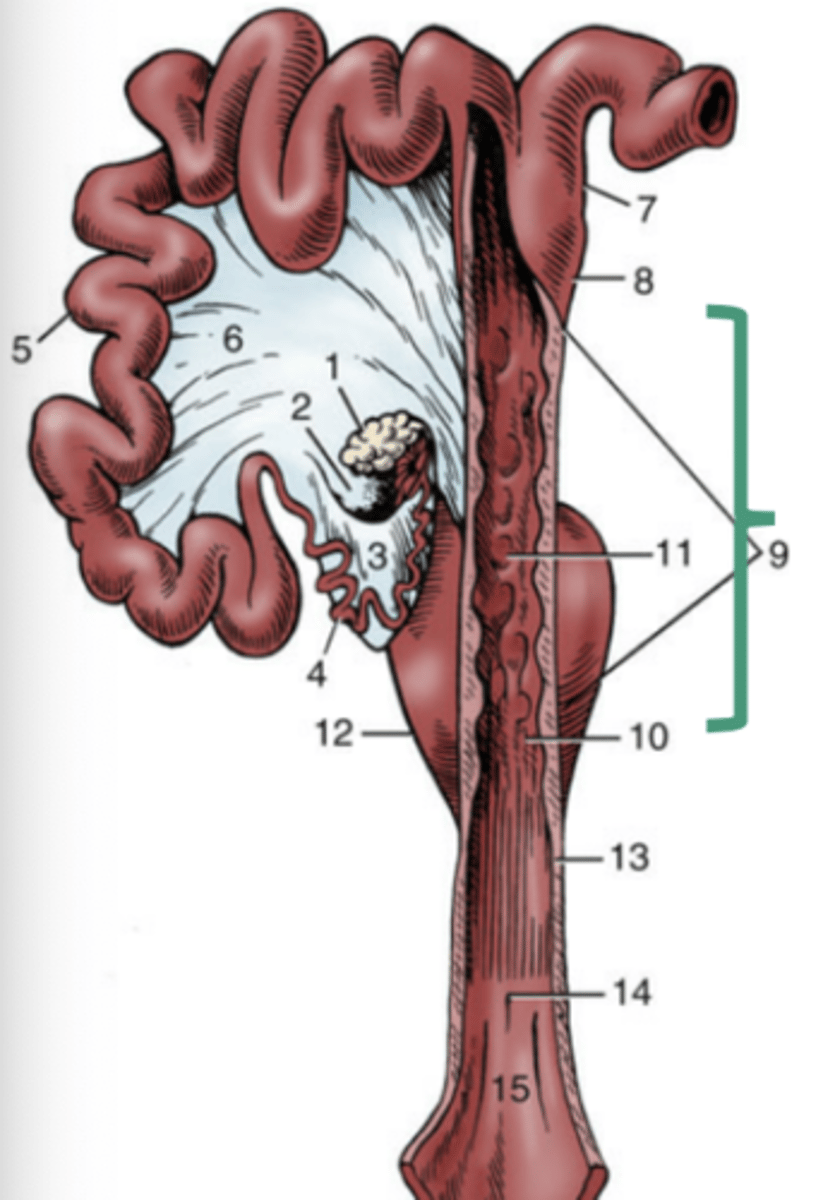
Vagina
-structure that is immediately distal to the cervix and extends to the opening of the urethra
-ventral to the rectum and dorsal to the urethra
-thinner walls than the uterus and cervix
-less muscular and glandular than the uterus, but very distensible
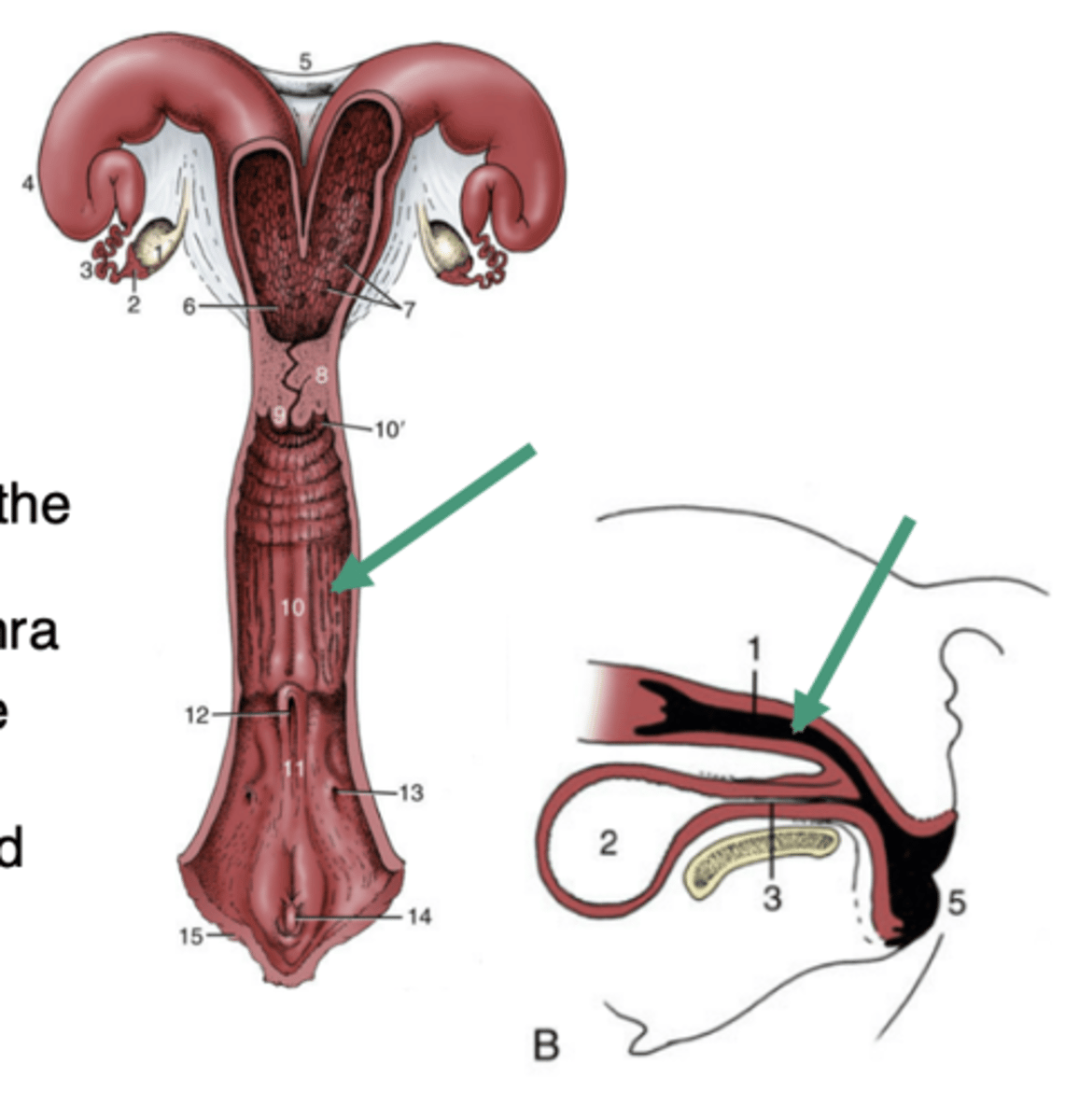
Vestibule
-shared urinary and reproductive space
-somewhere in-between the cloaca of the bird and entirely separate tracks of the human
-contains the urethral opening and the vaginal opening
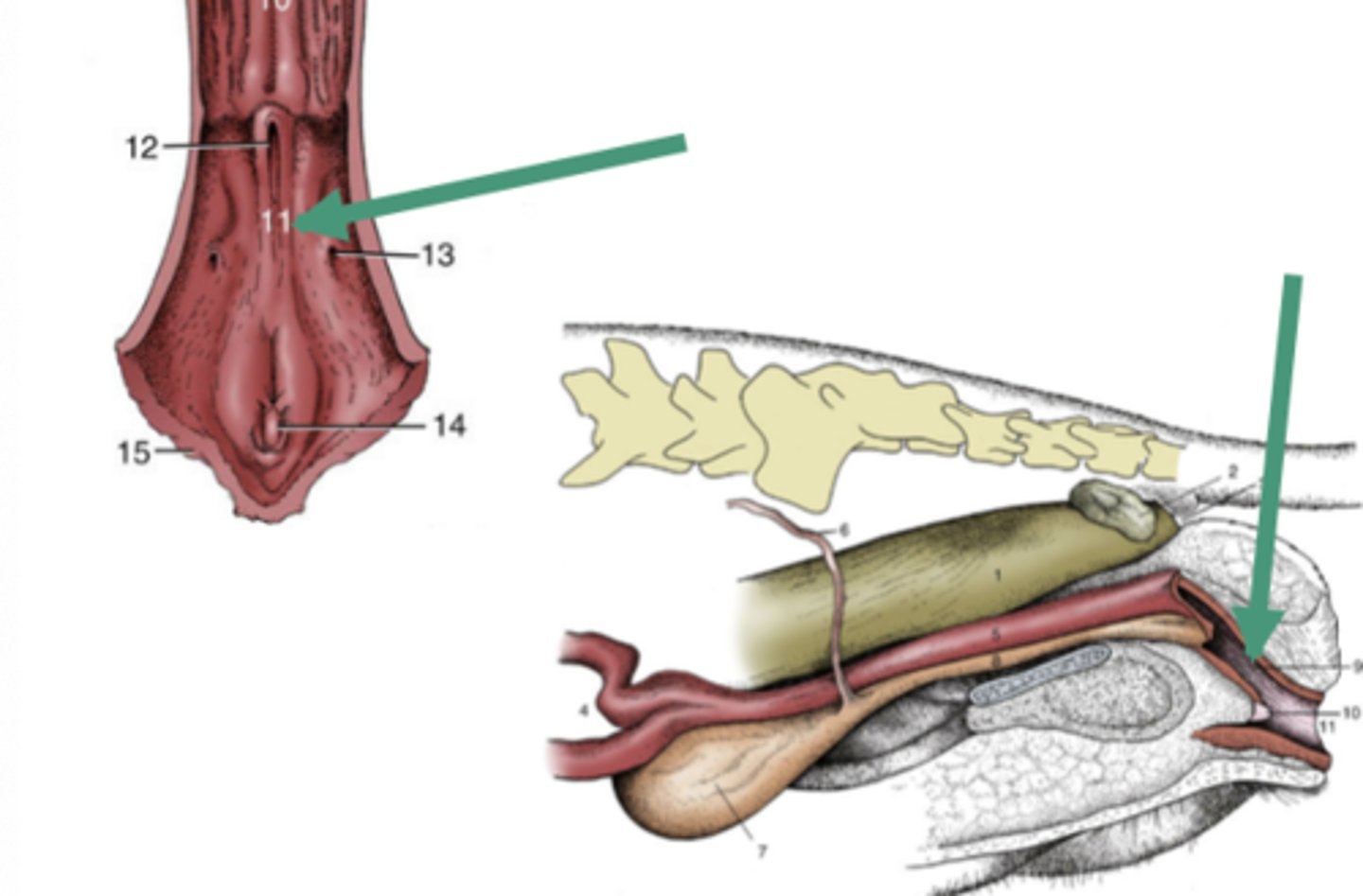
Vulva
-exterior proportion of the repro tract
-to vertically oriented labia meet dorsal and ventral commissures
-in most species, the dorsal commissure is rounded and the ventral commissure is pointed (inverse in mare)
In most species, the dorsal commissure is _______ and the ventral commissure is ______
rounded, pointed
3 multiple choice options
Clitoris
-analogous to the male penis
-consists of two crura, a body, and a glans (only visible externally)
-found within the ventral commissure of the vulva
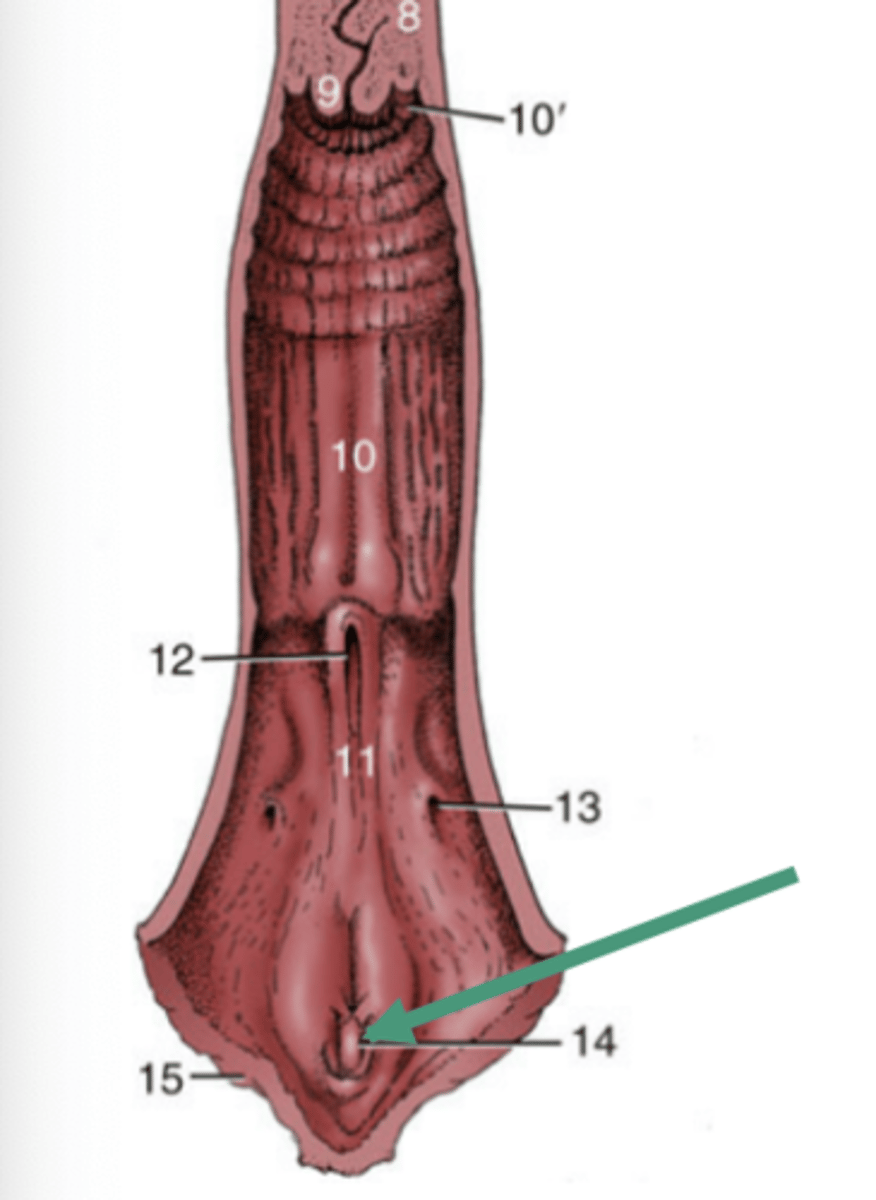
What commissure is the clitoris found in?
Ventral
1 multiple choice option