antibodies and antibodies in medicine
 Call Kai
 Learn
Learn Practice Test
 Spaced Repetition
 Match
Match Flashcards
 Knowt Play
1/16

There's no tags or description
Looks like no tags are added yet.
Name | Mastery | Learn | Test | Matching | Spaced | Call with Kai |
|---|
No analytics yet
Send a link to your students to track their progress
17 Terms
what are 2 uses of monoclonal antibodies?
targeted medication
medical diagnosis
targeted medication?
cancer cells in the body have antigens that signal the cells as abnormal
monoclonal antibodies in cancer treatment can be used to bind specifically to the antigens on cancer cells
cancer treatments can be harmful to many cells; by binding specifically to cancer cells, the antibodies allow the treatment to be targeted only to cancer cells
this reduces damage to other cells
monoclonal antibodies example: targeting drugs to specific cell type (cancer)
different cells in the body have different surface antigens
cancer cells have antigens called tumour markers that are not found on normal body cells
monoclonal antibodies can be made that will bind to the tumour markers
you can also attach anti-cancer drugs to the antibodies
when the antibodies come into contact with the cancer cells, they will bind to the tumour markers
this means the drug will only accumulate in the body where there are cancer cells
so, the side effects of an antibody-based drug are lower than other drugs because they accumulate near specific cells
medical diagnosis?
monoclonal antibodies can be used to indicate the presence of a specific antigen
the antibodies are attached to a dye, fluorescent or radioactive marker
when the complementary antigen is present, it will bind the antibody and the marker will become visible
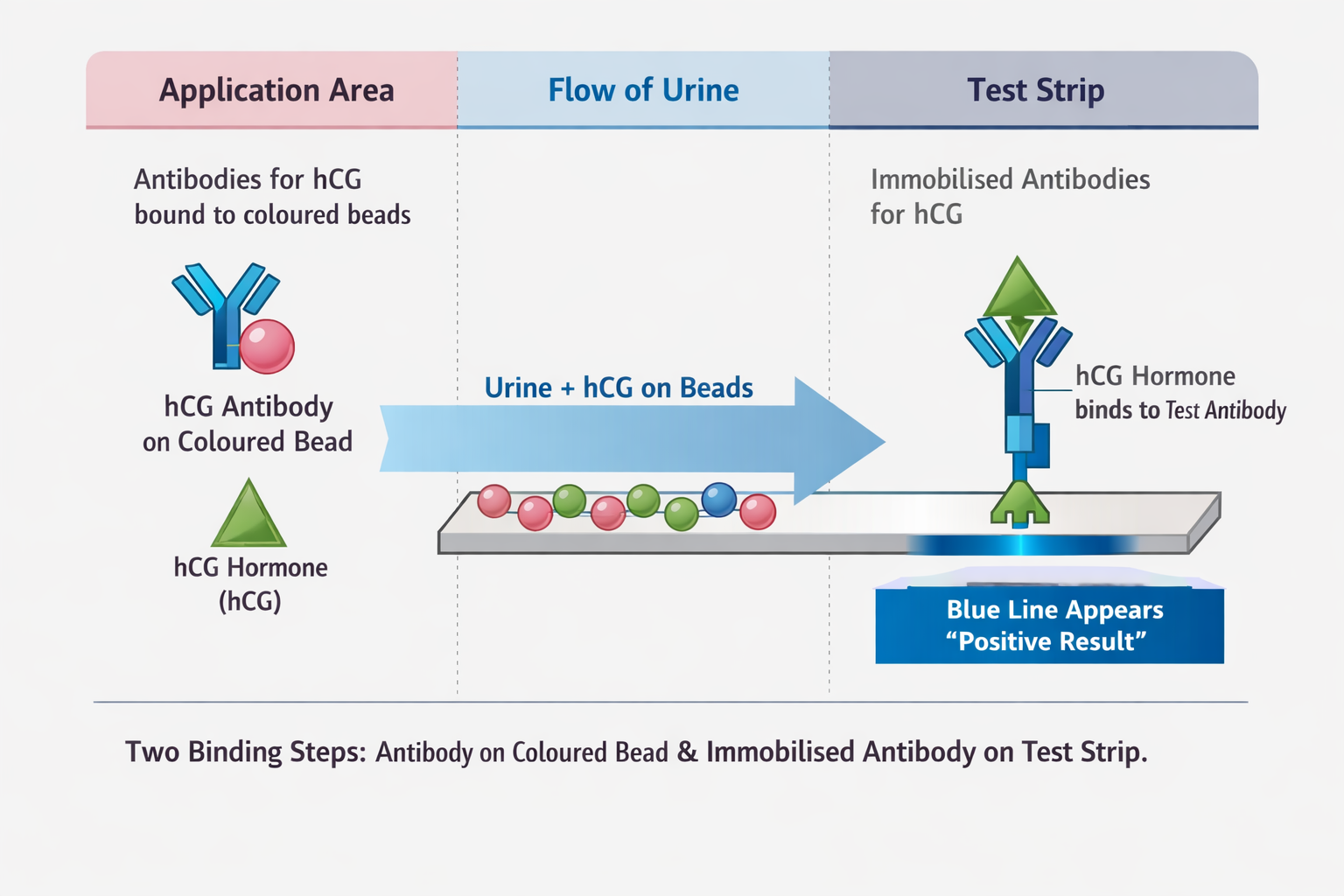
monoclonal antibodies are used in this way in pregnancy test
monoclonal antibodies example: targeting a specific substance for medical diagnosis (pregnancy testing)
(pregnancy tests detect the hormone hCG which is found in the urine of a pregnant woman
the application area contains antibodies for hCG bound to a coloured bead (blue)
when urine is applied to the application area, any hCG will bind to the antibody on the beads, forming an antigen-antibody complex
the urine moves up the stick to the test strip, carrying any beads with it
the test strip contains antibodies to hCG that are stuck in place (immobilised)
if there is hCG present, the test strip turns blue because the immobilised antibody binds to hCG
if there is no hCG present, the beads will pass through the test area without binding to anything, and so it won’t go blue
what test can antibodies be used in?
the ELISA test
what is the ELISA test?
it tests for infections such as HIV or allergies
it allows you to see if a patient has any antibodies to a certain antigen, or any antigen to a certain antibody
overall summary of the ELISA test?
an antibody is used which has an enzyme attached to it
this enzyme can react with a substrate to produce a coloured product. this causes the solution in the vessel to change colour
if there’s a colour change, it shows that the antigen or antibody of interest is present in the sample being tested
in some types of ELISA, the quantity of this antigen/antibody can be worked out from the intensity of the colour change
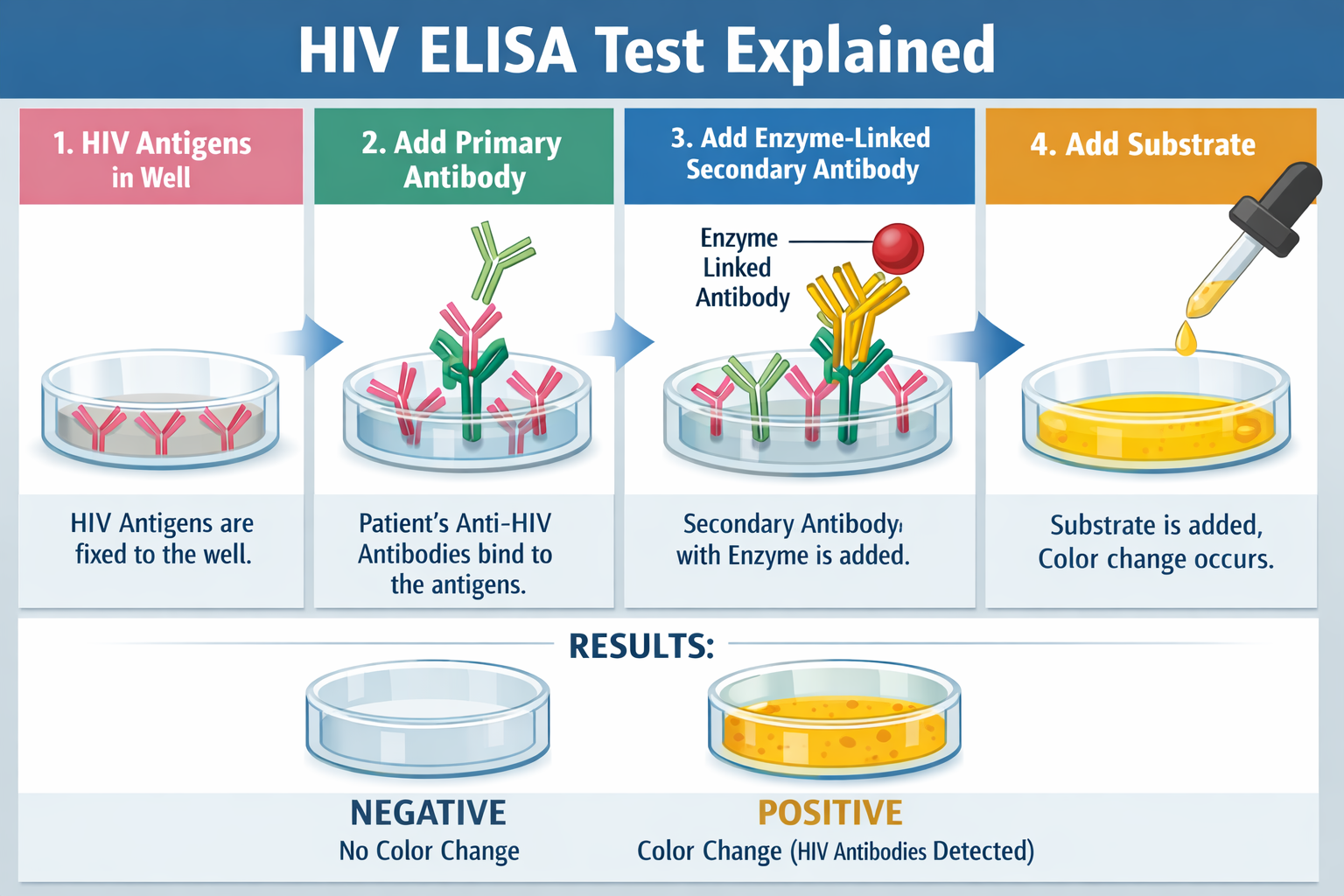
example: using ELISA as a HIV test?
HIV antigen is bound to the bottom of a well in a well plate
a sample of the patient’s blood plasma, which may contain several antibodies is added to the well.
if there are any HIV specific antibodies, these will bind to the HIV antigen stuck to the bottom of the well.
the well is then washed out to remove any unbound antibodies
a secondary antibody, that has a specific enzyme attached to it, is added to the well
the secondary antibody can bind to the HIV specific antibody (also called the primary antibody)
the well is washed out again to remove any unbound secondary antibody. if there is no primary antibody in the sample, all of the secondary antibody will be washed away
a solution is added to the well. the solution contains a substrate, which is able to react with the enzyme attached to the secondary antibody and produce a coloured product.
if the solution changes colour, it indicates that the patient has HIV-specific antibodies in their blood (as it means that the secondary antibodies have bound to the antibodies in the blood sample) and is infected with HIV.
antibody structure?
an antibody has 2 binding sites, so can bind to 2 pathogens at the same time
this means that the pathogens become clumped together - agglutination
phagocytes can then bind to the antibodies and phagocytose many pathogens at once
this process leads to the destruction of pathogens carrying this antigen in the body
what are antibodies made from?
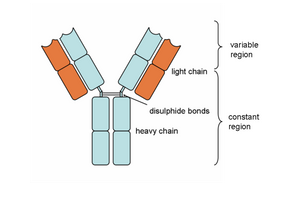
2 heavy chains and 2 light chains
the heavy chains are connected to the light chains by disulphide bridges
what does the specificity of the antibody depend on?
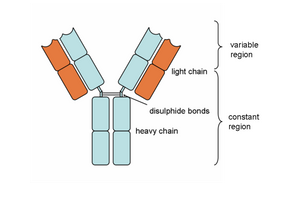
the variable regions, which form the antigen binding sites
each antibody has a variable regions with a unique tertiary structure (due to different amino acid sequences) that’s complementary to one specific antigen
all antibodies have the same constant region
the hinge protein connects the variable region to the constant region
ethical issues surrounding vaccines: animal testing?
all vaccines are tested on animals before tested on humans, some people disagree with animal testing.
also, animal based substances may be used to produce a vaccine, which some people disagree with
ethical issues surrounding vaccines: testing on humans?
testing vaccines on humans can be tricky
e.g- volunteers putting themselves at unnecessary risk of contracting the disease because they think they are fully protected
e.g- they might have unprotected sex because they have had a new HIV vaccine and think they are protected, and the vaccine may not work
ethical issues surrounding vaccines: personal?
some people don’t want to take the vaccine due to risk of side effects, but they are still protected because of herd immunity
other people think this is unfair
ethical issues surrounding vaccines: vaccine priority?
if there was an epidemic of a new disease, there would be a rush to receive a vaccine and difficult decisions would have to be made about who would be the first to receive it
what are monoclonal antibodies made from?
animals produce the cells from which the monoclonal antibodies are produced
some people disagree with this use of animals in this way, which is why there are animal rights issues regarding this