test 1 chem 1302 dr. mcgrath Questions with 100% accurate solutions (A+ GRADED )
 Call Kai
 Learn
Learn Practice Test
 Spaced Repetition
 Match
Match Flashcards
1/45

There's no tags or description
Looks like no tags are added yet.
Name | Mastery | Learn | Test | Matching | Spaced | Call with Kai |
|---|
No analytics yet
Send a link to your students to track their progress
46 Terms
solutions; homogenous mixtures
the solvent dissolves the solute
since the solvent is the component present in greatest amount, it determines the .....?
phase of the solution
a concentrated solution contains...?
a lot of solute
a dilute solution contains ....?
little solute
enthalpy of solution (ΔHsoln) and IMFs
determine whether a solution can forum
1. when all forces are similar, ΔHsoln = ?
0; ideal solution (also: ΔVsoln = 0)
2. solute solvent interactions dominate;
ΔHsoln < 0: solution is non ideal and forms exothermically
3. solute- solute and solvent-solvent interactions dominate:
ΔHsoln > 0; solution is non ideal, and forms endothermically (if it forms)
4. solute- solute and solvent-solvent interactions are >>> solute-solvent interactions
ΔHsoln >> 0 and solution cant form
rule of thumb for predicting solubility
"like dissolves like"
for Ionic compounds in H20
ion dipole forces (+ end of h20 dipole attracts anions, - end of H20 dipole attracts cations) disrupt the solid --> hydrated ions in solution
dissolving too much solute
saturated solution
as a dynamic equilibrium is established
continuous dissolving and crystallizing, but apparently nothing happening (concentration of dissolved solid remains constant; quantity of undissolved solid remains constant)
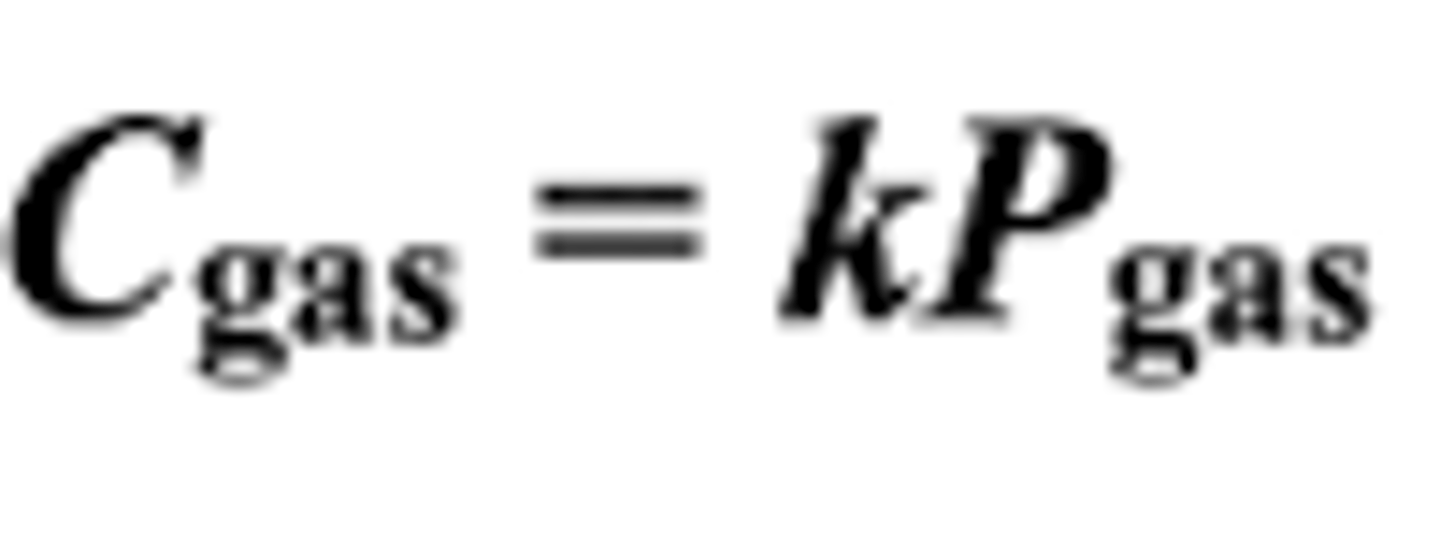
solubility of gases (in H2O) decreased with increasing temperature, but (in all solvents) increase with increasing pressure
henrys law, solubility is proportional to pressure
Concentration
always defined as amount of solute / amount of solution ( or amount of solvent for molality)
molarity
moles solute (mol) / volume of solution (L)
% compositions
use part/whole x 100 with appropriate units ( mass, volume, etc...) ppm, ppb, ppt are simlilar to %: defined as part/whole x 10^6, 10^9, 10^12
molality
moles solute ( mol) / mass of solvent (kg), molality is temperature independent, so is useful when temperature varries
mole fraction
(mole of component)(total moles present), mole% = mole fraction x 100
mass %
100 g of solution
volume%
100 mL of solution
molarity (M)
1.00 L (i.e., 1000 mL) of solution
molality (m)
1.00 Kg (i.e., 1000g) of solvent
mole fraction (fancy x)
1 mole of (solute + solvent)
colligative propertires
depend on quantity (concentration0 of solute particles, not on their identity
Raoult's Law
adding a solute lowers vapor pressure ,compared to the vapor pressure of the pure solvent (remember to use fancy x solvent)

freezing point depression

boiling point elevation

osmosis
concentrated solution/dilute solution separated by semi permeable membrane; solvent passes from dilute ----. concentrated sides, flow continutes until osmotic pressure, PI, is reached
osmotic pressure PI
two solutions with same PI value are isotonic (isosmotic0

Solutions of electrolytes
electrolytes produce ions in solution, so # particles in solutions > formula unites dissolved...
equations for colligative properties must be modifies by vant Hoff factor

**** for raoults law, the equation is the same, but x must be calculated based on numbers of moles of all the particles in solution
remember that there are ions present
i @ infinite dilution
# of ions produced in solution per formula unit of solute. For more concentrated solutions, ion pair formation reduced the effective value of i
colloids are mixtures with particle size between that of solutions and suspensions, they wont settle out ...
they can be distinguished form true solutions by the Tyndall effect (light passing through colloid is scattered in all directions)
reaction rate
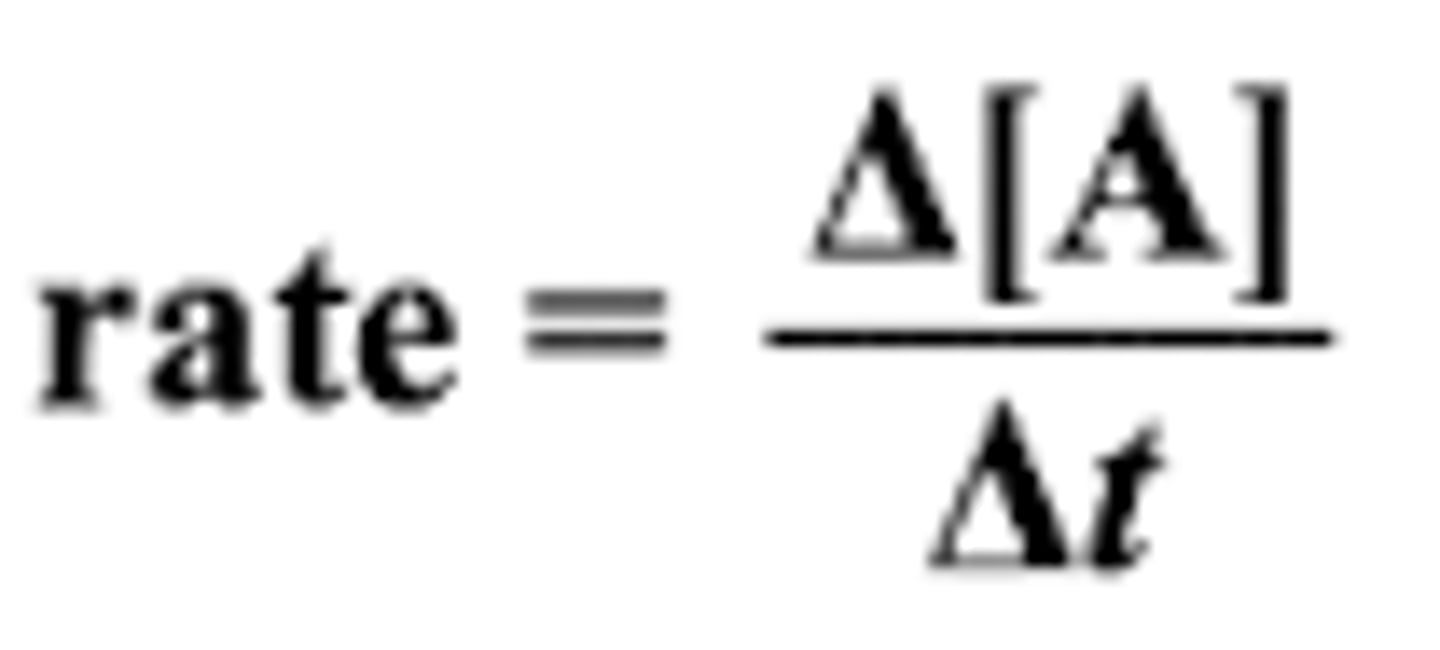
change in concentration per unit time (can refer to products or reactants)
- can be affected by concentration, temperature, surface area (particle size), catalysts/inhibitors
reaction rates are always > 0 (but remember, change in concentration of a substance being consumed is < 0)
true
use [A] to denote...
concentration of A
for a reaction forming compound
unites of reaction rate are always concentration/time (uslaly mol L-1 s-1 or M s-1)... also need to consider stoichiometry of the reaction (balanced equation); for the reaction aA ---> bB,
reaction rate =

measured rate
depends on the time span of the measurement
instantaneous rate
is the rate at one point in time
average time
all the instantaneous rates averaged over a period of time (usually whole reaction)
initial rate
= instantaneous rate at start of reaction
initial rate is usually the highest rate;
rates are usually higher at higher reactant concentrations
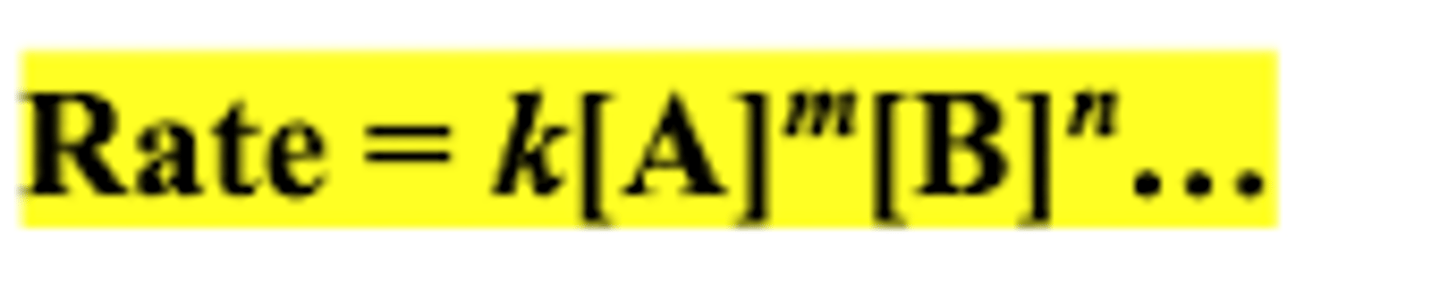
the rate law for a reaction is a relationship between reaction rate and reactant concentrations
for general aA + bB + ... -----> products, the rate law is