RPD midterm
 Call Kai
 Learn
Learn Practice Test
 Spaced Repetition
 Match
Match Flashcards
 Knowt Play
1/83

There's no tags or description
Looks like no tags are added yet.
Name | Mastery | Learn | Test | Matching | Spaced | Call with Kai | Chat |
|---|
No analytics yet
Send a link to your students to track their progress
84 Terms
conduct comprehensive evaluation
the first step in treating a partially edentulous patient is to:
duplicate cast
a temporary partial denture should be CONSTRUCTED on the:
when an RPD would oppose a complete denture
all the following are containdications for an RPD EXCEPT:
extensive caries
when an RPD would oppose a complete denture
extensive periodontal disease
historray of problems with previous RPDs
false
T/F People with chronic health problems are more likely to be satisfied with wearing an RPD.
lingual plate
Which type of major connector would be more suitable for a patient with mandibular tori?
7
A lingual bar is used for a mandibular RPD if ____mm or more of space exists between the free gingival margin and lingual frenum when the tongue is elevated.
false
T/F If one or two lower incisors are to be replaced with a removable partial denture, a lingual bar is indicated
true
T/F Lingual retention is often used for mandibular molars because those teeth are often inclined to the lingual
false
T/F Maxillary major connectors for Class III removable partial dentures should extend to the vibrating line to obtain a posterior palatal seal.
true
T/F Minor connectors connect metal rests and major connectors of RPDs
analyzing rod
When you are surveying a cast for a removable partial denture, which tool should you use first?
false
T/F When placing tripod marks on a cast you should place the marks very close together to assist the lab technician to locate the proper tilt on a survey table.
true
T/F The primary purpose of a rest is to prevent the removable partial denture from settling and damaging periodontal tissues
mesial or distal
Which side of the occlusal surfaces are occlusal rests located?
true
T/F Cingulum rests are not placed into the enamel of the lingual surface of a mandibular canine because the dentin can be exposed easily
true
T/F Incisal rests are not indicated on maxillary canines
mandibular canines
Incisal rest seats are appropriate for which teeth?
above
On the lingual surface of a TRPD the resin contacts the tooth surface
___________ the survey line.
true
T/F A TRPD can be made prior to or after hopeless teeth are extracted.
path of insertion
During guide plane preparation, the bur is lined up with:
check cast
Adequacy of guide planes and rest seats are evaluated on which cast?
class III parrtial denture
Longer guide planes are indicated in which of the following situations:
false
T/F Local anesthetic use is recommended during rest preparation
appointment to keep the patient comfortable.
within 3 minutes
How soon after taking a final impression with alginate, should it be poured
up in stone?
1/2
The width of a rest seat from buccal to lingual should be approximately
_______ the normal buccal cusp tip to lingual cusp tip distance.
transfer
A ____ cast is used to evaluate the contours of a completed crown prior to cementation
before
it is recommended that rest seats and guide planes on natural teeth be prepared _____ any surveyed crown preparatioons
fully seat framework
Which of the following should be completed first when trying a framework intra-orally?
true
T/F Whenever an RPD is involved in a treatment plan, the framework can be used to
secure a jaw relations record.
covers half of the retromolar pad
when selecting a lower rim lock tray for an alginate impression you must ensure that the tray selected ______
true
T/F surveyed crowns must be waxed up to full contour prior to modification
ensure tissue contact
The Borders of the maxillary major connector are beaded to ____
false
T/F It is NOT necessary to hold the tray in place while the impression material is setting in
the patient’s mouth?
after
in a CD/RPD case where a surveyed crown needs to be fabricated, the crown is waxed up ___ the full wax try-in of the CD
example and master
which casts are sent too the lab for the fabrication of an RPD
refractory
partial denture frameworks are waxed up on the _____ cast
example
all elements of the framework are drawn on the _____ cast
alginate
the impression material recommend for fabrication of a TRPD is:
false
T/F a temporary partial denture shoulld be constructed on the original cast prior to blocking outhe undercuts
false
T/F Guide planes are prepared AFTER rest seats
1st statement false, 2nd statement true
which of the following statements is/are true:
TRPD is processed on the mater cast. Duplicate cast is mounted on the articulator to set teeth
guide planes
which type of preparation is done first?
guiding planes
which is the MOST important when surveying a diagnostic cast for a partial denture?
true
T/F lingual retention is often used for lower molars because tthose teeth are oftten inclined to the lingual
false
T/F if a retentive area is not found on an abutment tooth, you can disregard the guiding planes and alter the tilt of tthe surveyor to create the desired retentive undercut on the abutment tooth
retention
resistance to removal from the tissues or teeth
stability
resistance to movement in a horizontal direction
support
resistance to movement towards the tissues or teeth
abutment
a tooth that supports a partial denture
retainer
a component of a partial denture that provides both retention and support for the partial denture
major connector
connects parts of a removable partial denture on one side of the dental arch to those of the other side.
minor connector
connects other components to the major connector
major and minor connectors
provide unification and rigidity to denture
direct retainer
provides retention against dislodging forces
rest, retentive arm, reciprocal arm, minor connector
four elements of direct retainer
indirect retainer
unit of a Class I or II partial denture that prevents or resists movement or rotation of the denture base(s) away from the residual ridge
rest
component of a minor connector
class I
classification?
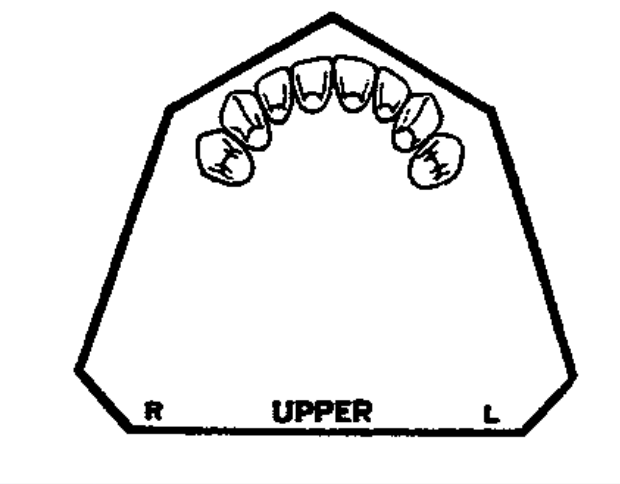
class II
classification?
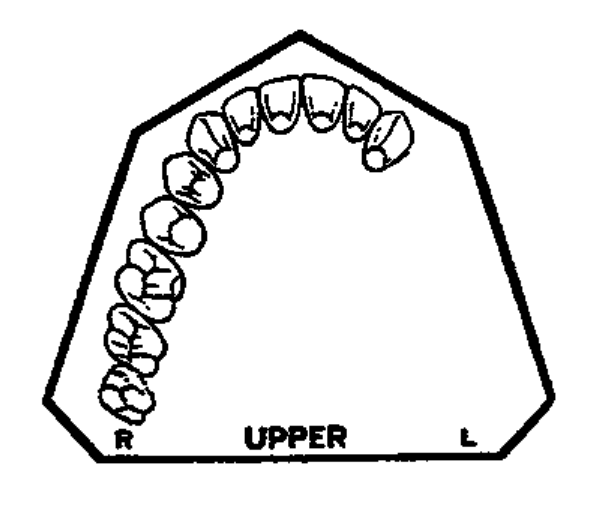
class III
classification?
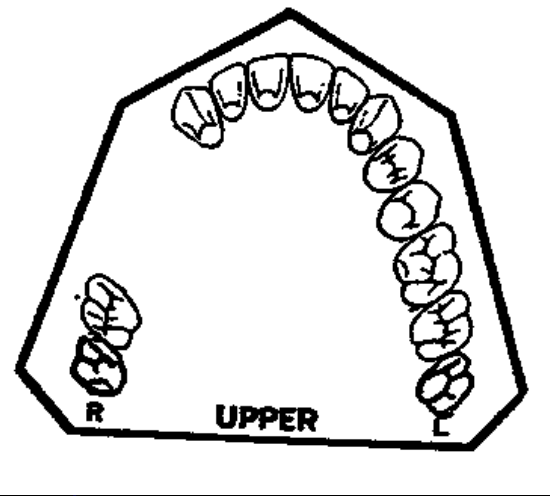
class IV
classification?
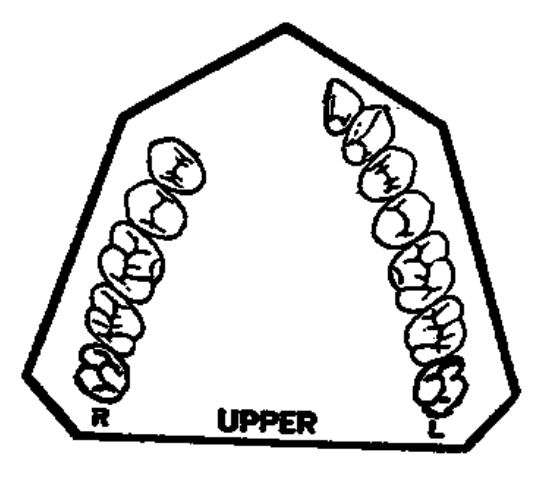
class II mod 1
classification?
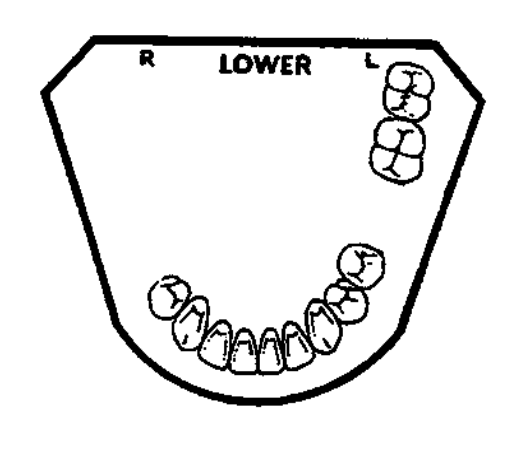
true
T/F there can be no modification areas in class IV arches
soft tissue and abutment teeth
support for RPD comes from:
2 on each side of arch
how many abutment teeth are necessary
true
T/F there could be only one abutment tooth on each side of arch in some class I and II RPD cases
most distal abutment
in class I and II RPDs there should be a rest seat on the ______
true
T/F in class III RPDs teeth next to edentulous spacese are abutment teeth
rotation, away
indirect retainers prevent ____ of the distal extension base ____ from the tissue
guiding planes
preparations on axial surfaces that provide single path of insertion for RPD
wherever rigid components of partial denture contact abutement teeth
where are guide planes prepared
guide planes, undercuts
establishing path of insertion is done by FIRST aligning _____ then evaluating ______
I or II
indirect retainers are indicated for class _____ RPDs
horseshoe
which type of maxillary major connector is indicated for torus palatinus
distal 1/3
which part of the clasp should engage the underecut
reciprocal element
counter acts lateral forces generated by retentive arm during insertion and removal of RPD
I
guide planes are LONG in all cases EXCEPT class ___
short
guide planes for class I are ____
true
T/F The maxillary tuberosity is ALWAYS covered by the base in Class I and II RPD's to gain support.
true
T/F When vertical space is limited (less than 3 mm) between an edentulous space and the opposing teeth, you should consider placing the centric occlusal contact area(s) on the metal framework of the RPD rather than the plastic denture tooth
true
T/F in class I and II cases the resin base must have the maximum extension possible in order to minimize ridge trauma and settling of the base
underextension of base
what is one of the most important factors contributing to gingival damage in a Class I or II RPD
true
T/F in class III The resin base does not have to have maximum extension since the soft tissues are
only passively contacted.
akers clasp
which of the following clasps would NOT be appropriate for the abutment next to the distal extension in class I or II cases:
akers clasp
I bar
L bar
wrought wire