week 5: antimicrobial resistance
 Call Kai
 Learn
Learn Practice Test
 Spaced Repetition
 Match
Match Flashcards
 Knowt Play
1/40

There's no tags or description
Looks like no tags are added yet.
Name | Mastery | Learn | Test | Matching | Spaced | Call with Kai |
|---|
No analytics yet
Send a link to your students to track their progress
41 Terms
What is antimicrobial resistance (AMR)?
ability of bacteria to resist effects of antimicrobials
What is biological resistance?
changes that result in reduced susceptibility of organism to particular antimicrobial
What is clinical resistance?
susceptibility lost to extent drug can no longer be effective for clinical use
T/F clinical resistance is an ongoing process
F, bio resistance
What 3 factors influence antimicrobial resistance?
drug, environment, microorganism
What is environmentally mediated antimicrobial resistance?
resistance directly resulting from physical/chemical characteristics of environment that either alter antimicrobial or microorganism’s response to drug
What are examples of environmentally mediated antimicrobial resistance?
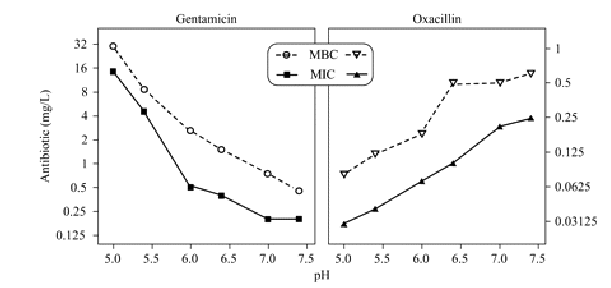
erythromycin and aminoglycosides diminish in decreasing pH
tetracycline diminish in increasing pH
aminoglycosides affected by absence O2 and [cations] in environment
Is gentamicin more effective at low or high pH?
high
Provide an example of environmental factors involving aminoglycosides and P aeruginosa
cations (Mg and Ca) compete with aminoglycosides for binding sites on outer membrane of P aeruginosa
if cations win, less drug is taken up
What is microorganism-mediated antimicrobial resistance?
results from genetically encoded traits of microorganism
intrinsic or acquired
What is intrinsic resistance?
result from normal genetic state (natural)
predictable patterns, help in ID
What is acquired resistance?
altered cell physiology and structure caused by mutations or exchange
unpredictable
How are resistance genes transferred?
genes on plasmids or transposons that are transferred horizontally
Provide 3 examples of horizontal gene transfer
direct exchange (conjugation)
bacteriophage (transduction)
acquisition of DNA (transformation)
How does bacterial conjugation occur?
via sex pili or mating bridge
How does transduction occur via bacteriophage?
phage infects cell
make phage DNA/proteins
donor cell lyses and releases
infects other host cells
recombination can occur
How does genetic transformation in bacteria occur?
recipient cell takes up donor DNA
DNA aligns with complementary bases
recombination occurs
What are some examples of resistance mechanisms?
decreased ABX uptake (block entry)
produce enzyme that inactivate ABX
alter target site
increase efflux of ABX
What is SMR? What efflux transporter?
small multidrug resistance family (ex: tetracycline, sulfonamides)
go through QacC
What is MFS? What efflux transporter?
major facilitator superfamily (ex: fluoroquinolones, tetracycline)
go through NorA and OMP
QaaC and NorA are
H+ transporters
What is ABC? What efflux transporter?
ATP-binding cassette superfamily (fluoroquinolones, tetracyclines)
go through PatA
PatA is
ATP mediated
What is MATE? What efflux transporter?
multidrug and toxic compound extrusion family (fluoroquinolones, aminoglycosides)
NorM
NorM is
Na+/H+ transporter
What is RND? What efflux transporter?
resistance-nodulation-division family (lots)
TolC-AcrB-AcrA transporter
What are the 3 types of resistance to B lactams?
enzymatic destruction (B lactams)
altered target (PBPs)
decreased uptake (changes in outer membrane porins in gram -)
What do B lactmases do the B lactam ABX?
open B lactam ring and alter structure so no bind to PBPs
result: cell wall synthesis continues
What enzyme is active against carbapenem drugs?
carbapenemase
What are extended spectrum B-lactamses?
derived from B lactamase, confer resistance to penicillin and cephalosporin
How does the target of B lactams alter?
the bacteria changes of acquires from other bacteria genes that encode altered PBPs (cell wall)
the PBPs can function in the presence of ABX
Provide 2 bacteria species that are resistant to B lactams from altered targets.
S aureus resistant to methicillin
MRSA
Describe how decreased uptake of B lactams results in resistance
in gram - bacteria, changes to outer membrane porins that B lactams use to enter the cell = resistance
Which bacteria species has acquired high level of resistance to vancomycin?
enterococci, through glycopeptides
What is the MOA of glycopeptides?
bind aa in cell wall to prevent new peptidoglycan
What are the 3 resistance mechanisms to aminoglycosides (ex: gentamicin, tobramycin)?
enzyme mods
altered target
decreased uptake
How does enzyme modification alter aminoglycoside molecules?
ex: phosphorylation, adenylation, acetylation
modified = decreased affinity to 30S ribosome unit = protein synthesis can continue
How does altered target impact aminoglycosides?
mutations in ribosomal binding site diminish aminoglycoside binding/activity
Describe how decreased uptake pathways impact aminoglycosides.
changes in # or characteristics of outer membrane porins = resistance
Why is ABX resistance on the rise?
ABX misuse (selects for resistant mutants)
What are examples of misuse?
using ABX for colds or viral infections, in animal feed or using someone else’s RX