Cardio & Respiratory Wk 12 - Lesson 93
 Call Kai
 Learn
Learn Practice Test
 Spaced Repetition
 Match
Match Flashcards
 Knowt Play
1/129

There's no tags or description
Looks like no tags are added yet.
Name | Mastery | Learn | Test | Matching | Spaced | Call with Kai |
|---|
No analytics yet
Send a link to your students to track their progress
130 Terms
contractile cells that wrap around the endothelial cells of capillaries and venules that are embedded within the basement membrane
What are pericytes?
vascular stability, blood-brain barrier integrity, regulating capillary blood flow, maintaining gap junctions
What is the function of pericytes?
thin, gel-like layer of carbohydrates and proteins that coats the inner surface of endothelial cells
What is the glycocalyx?
influences starling forces, maintaining vascular permeability, protecting against mechanical damage, regulating exchange of substances
What is the function of the glycocalyx?
restricting the movement of plasma proteins into the interstitial space which maintains the oncotic pressure
How does the glycocalyx affect the starling forces?
thick walls with small lumens, generally round
What is the general appearance of arteries?
thin walls with large lumens, generally flattened
What is the general appearance of veins?
Tunica intima, tunica media, tunica externa (adventitia)
What are the layers of walls in blood vessels?
endothelium usually appears wavy due to constriction of smooth muscle
What does the tunica intima of arteries look like?
endothelium appears smooth
What does the tunica intima of arteries look like?
smooth muscle cells and elastic fibers
What does the tunica media of arteries look like?
Tunica intima of larger arteries
What contains an internal elastic membrane?
Tunica media of larger arteries
What contains an external elastic membrane?
Tunica media of veins
What lacks an external elastic membrane?
Tunica intima of veins
What lacks an internal elastic membrane?
Tunica media
What is the thickest layer of arteries?
Tunica externa (adventitia)
What is the thickest layer of veins?
smooth muscle cells and collagenous fibers; nervi and vasa vasorum present
What does the tunica media look like in veins?
collagenous and elastic fibers; nervi and vasa vasorum present
What does the tunica externa (adventitia) look like in arteries?
collagenous and smooth fibers with some smooth muscle cells; nervi and vasa vasorum present
What does the tunica externa (adventitia) look like in veins?
Tunica intima
What is the smallest layer in veins and arteries?
largest arteries
When is the tunica externa larger than the tunica media in arteries?
endothelium, smooth muscle, adventitia
What are the layers of the lymphatic vessels?
single flattened epithelial cells
What is the structure of the endothelium of lymphatic vessels?
transports fluid by the overlapping cells acting as valves and preventing fluid from leaking out
What is the function of the endothelium of lymphatic vessels?
alters the pressure inside the lumen by contracting and relaxing to move lymph
What is the function of the smooth muscle in lymphatic vessels?
consists of fibrous tissue made out of collagen and serves to anchor the lymph vessels
What is the adventitia of lymphatic vessels?
tunica intima
What layer has the function of angiogenesis?
nitric oxide and prostacyclins
What does the endothelium produce to affect hemostasis?
loose and dense irregular connective tissue with collagen and elastic fibers
What is the connective tissue of the adventitia?
fibroblasts, macrophages, stem cells, myofibroblasts, pericytes
What are the cells of the adventitia?
proteoglycans and glycosaminoglycans
What is the extracellular matrix of the adventitia?
anchoring, remodeling and defense, structural integrity and flexibility of the vessel wall
What is the function of the adventitia?
small blood vessels that supply oxygen and nutrients to the outer part of the larger vessels and lymphatic vessels to drain excess fluid
What makes up the vasa vasorum in the adventitia?
contains autonomic nerve fibers that regulate smooth muscle contraction also contains sensory neurons
What makes up the nervi vasorum in the adventitia?
steady blood flow
What are large elastic arteries for?
distribution
What are median muscular arteries for?
resistance and pressure
What are small arteries or arterioles for?
draining
What are small veins or venules for?
unidirectionality and venous return
What are medium veins for?
venous return
What are large veins for?
hepatic, hypothalamo-hypophyseal, renal, and adrenal glands
What are the portal systems?
systemic and pulmonary
What are the two main circulatory routes?
hearts -> lung -> heart
What is the route for pulmonary circulation?
right ventricle and main pulmonary artery
What part of the pulmonary circuit has deoxygenated blood?
pulmonary veins and left atrium
What part of the pulmonary circuit has oxygenated blood?
renal filtration
What is the function of the kidney with blood?
hepatic portal vein
What brings blood from the GI to the liver?
GI tract, pancreas, spleen
What organs does the hepatic portal vein take blood from?
quality assurance of the substances absorbed by the GIT
What is the function of the hepatic portal system?
hepatic vein to caudal vena cava
Where does blood from the liver go to once its been filtered?
surgical procedure to bypass the liver
What is a portocaval shunt/portosystemic shunt?
birds, reptiles, amphibeans, fishes
What animals have renal portal system?
enhancing efficiency of the kidney
What is the function of the renal portal system?
renal portal valves
What controls whether the blood goes to the kidney
femoral vein to external iliac vein or ischiatic vein to common iliac vein to caudal vena cava
What is the order of blood traveling through veins in renal portal system?
injecting drugs into the femoral veins in birds because it may be excreted?
What to be cautious with birds related to the renal portal system?
Hypothalamus and Pituitary gland
What are the organs in the hypothalamo-hypophyseal portal system?
hypophysis
What is another name for the pituitary gland?
neurosecretory cells of the hypothalamus secrete releasing hormone and inhibiting hormones
What is the function of the hypothalamus in the hypothalamo-hypophyseal portal system?
moving hormones from hypothalamus to pituitary to control hormone release from pituitary?
What is the function of the hypothalamo-hypophyseal portal system?
cortisol enriched blood flows from the cortex to the medulla where cortisol enhances the activity that converts norepinephrine to epinephrine
What is the function of the corticomedullary portal system?
flows from the cortex to medulle
Where does blood flow from the corticomedullary portal system?
bulb of the aorta
Where do the coronary arteries stem from?
brachiocephalic trunk
What artery supplies the forelimbs, head, and neck?
paired at rib 3/4-12
Where are the dorsal intercostal arteries of the parietal branches of thoracic aorta?
paired starting at rib 13
Where are the dorsal costo-abdominal arteries of the parietal branches of thoracic aorta?
bronchoesophageal arteries paired
What is the visceral branch of the aorta?
two internal iliac arteries and median sacral artery
What makes up the terminal branches of the aorta?
azygous vein
What vein picks up blood from the thoracic wall?
right side
What side is the azygous vein on for dogs and horses?
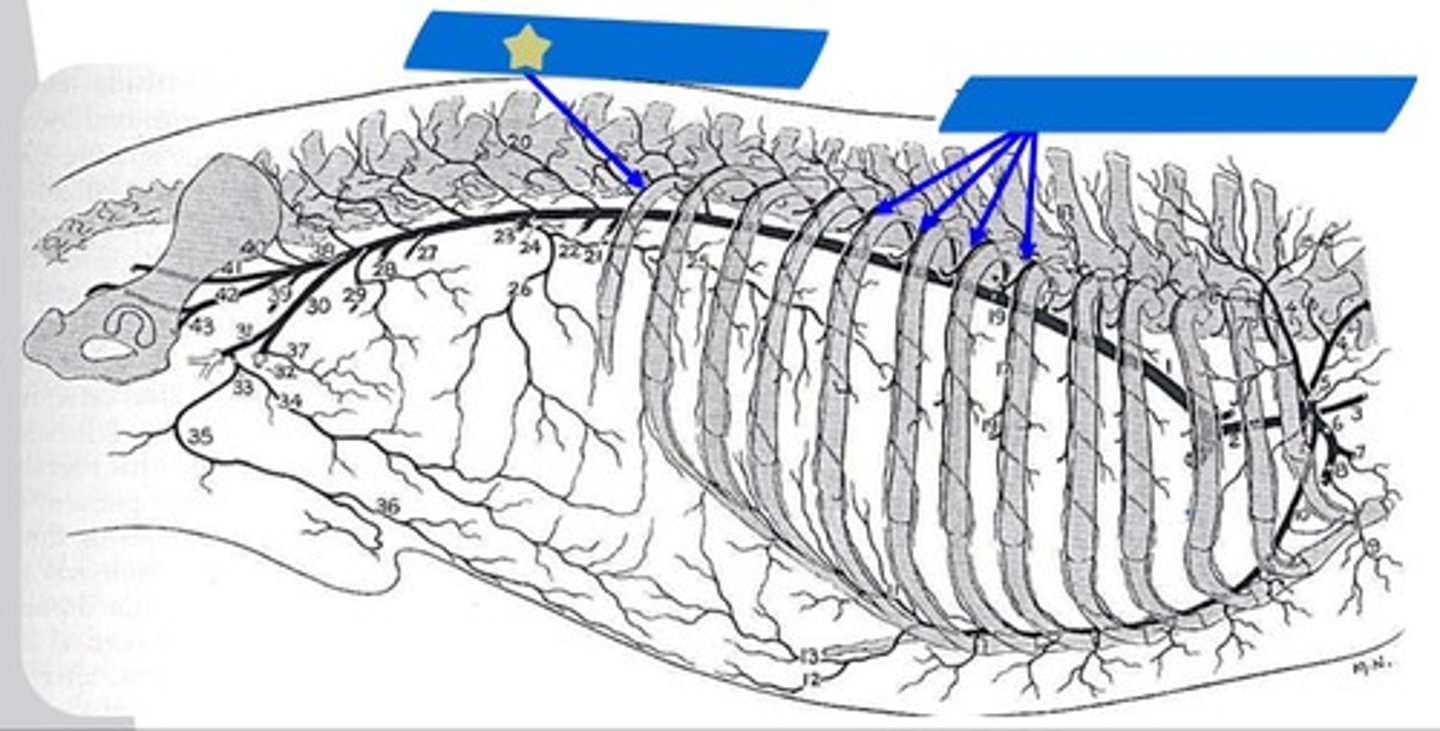
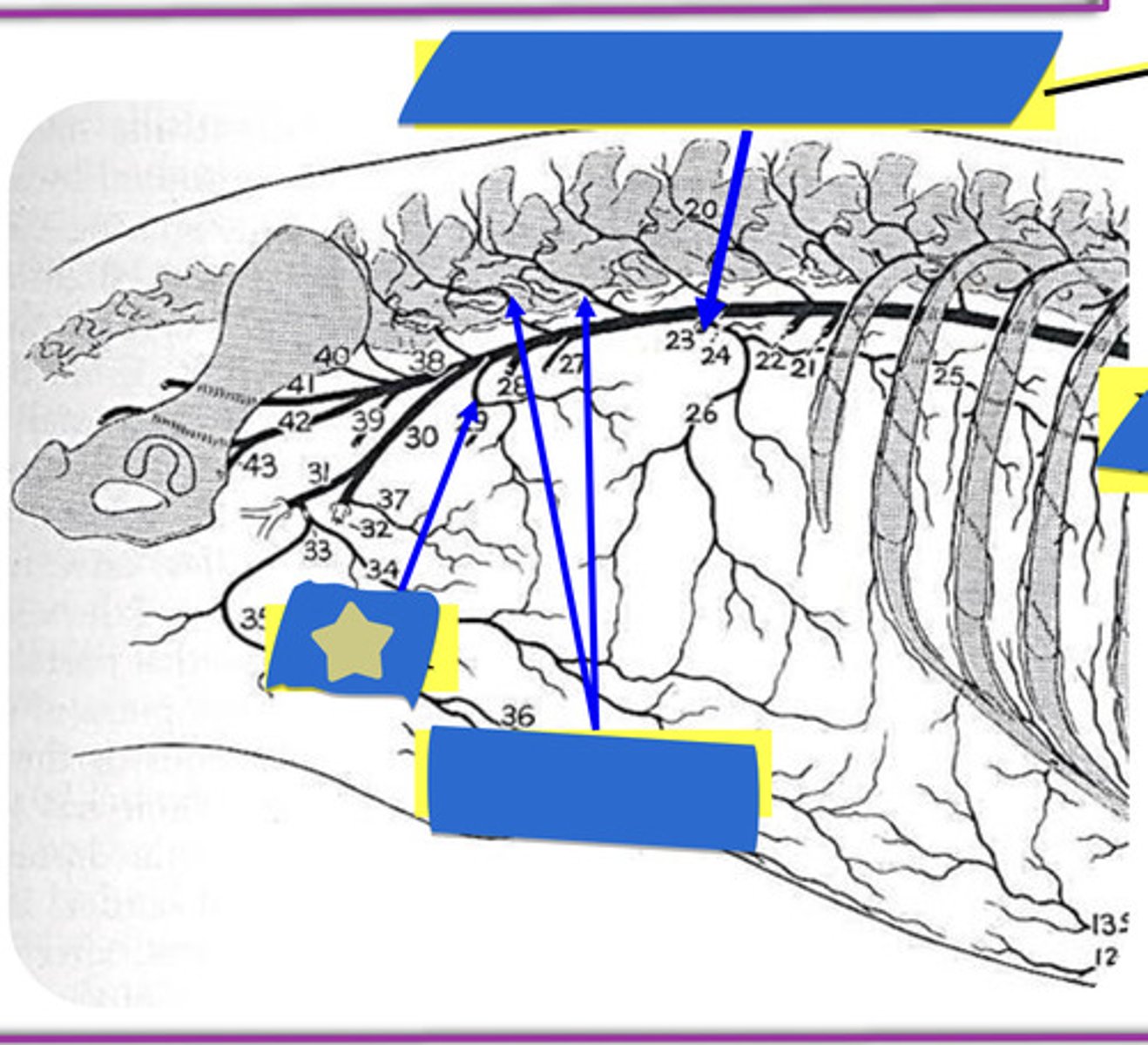
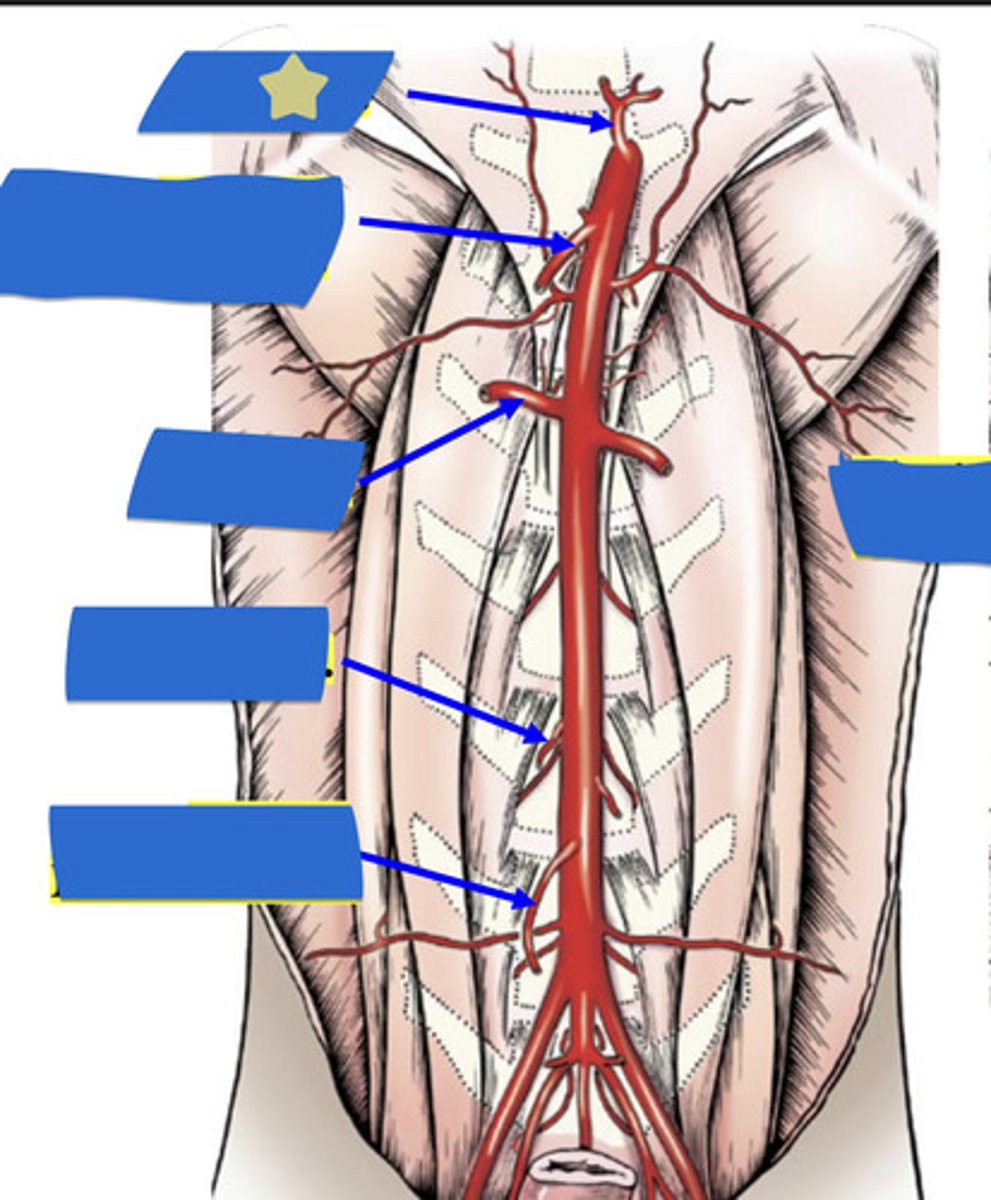
Left Dorsal Intercostal arteries
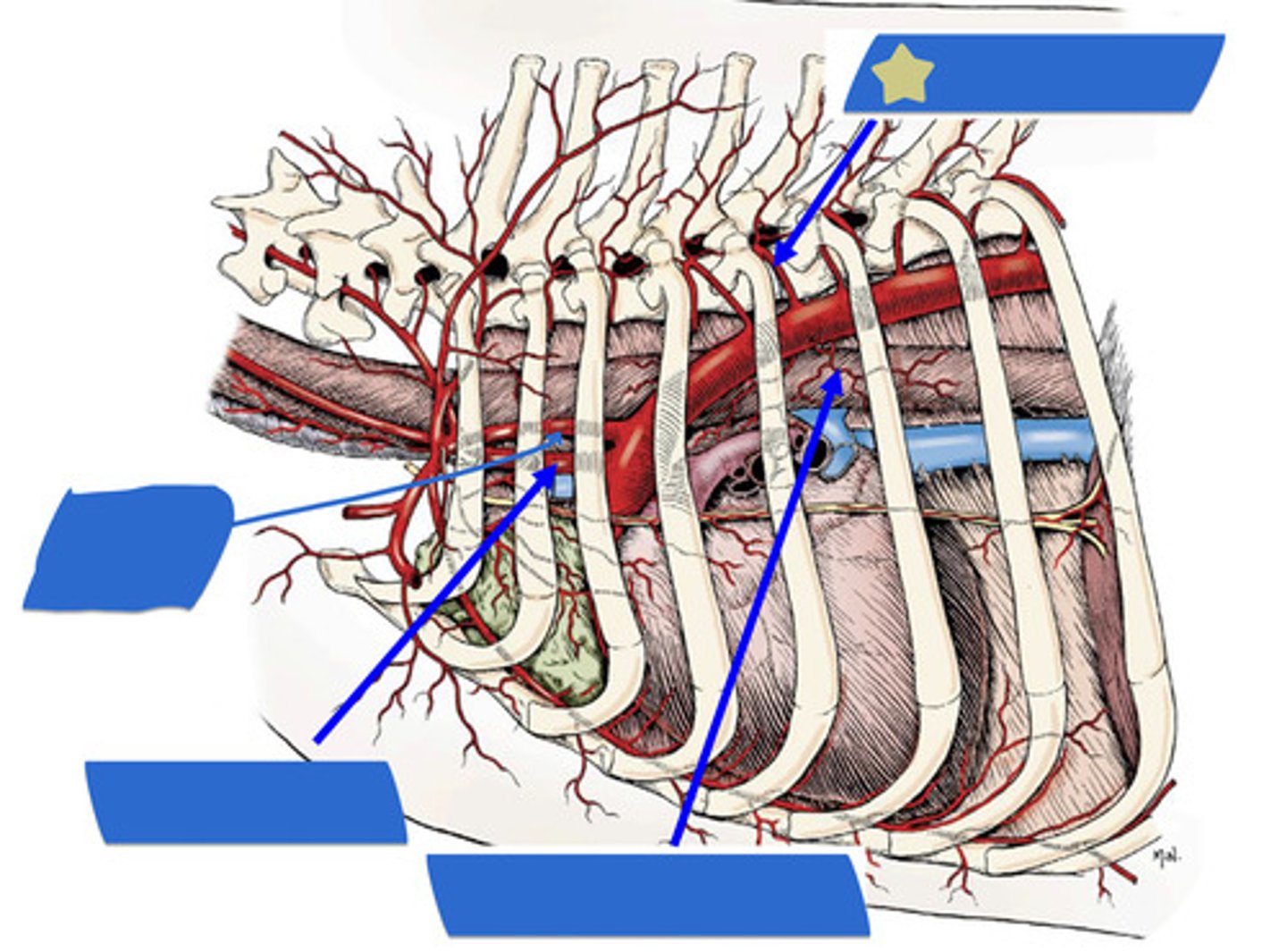
Left Bronchoesophageal artery
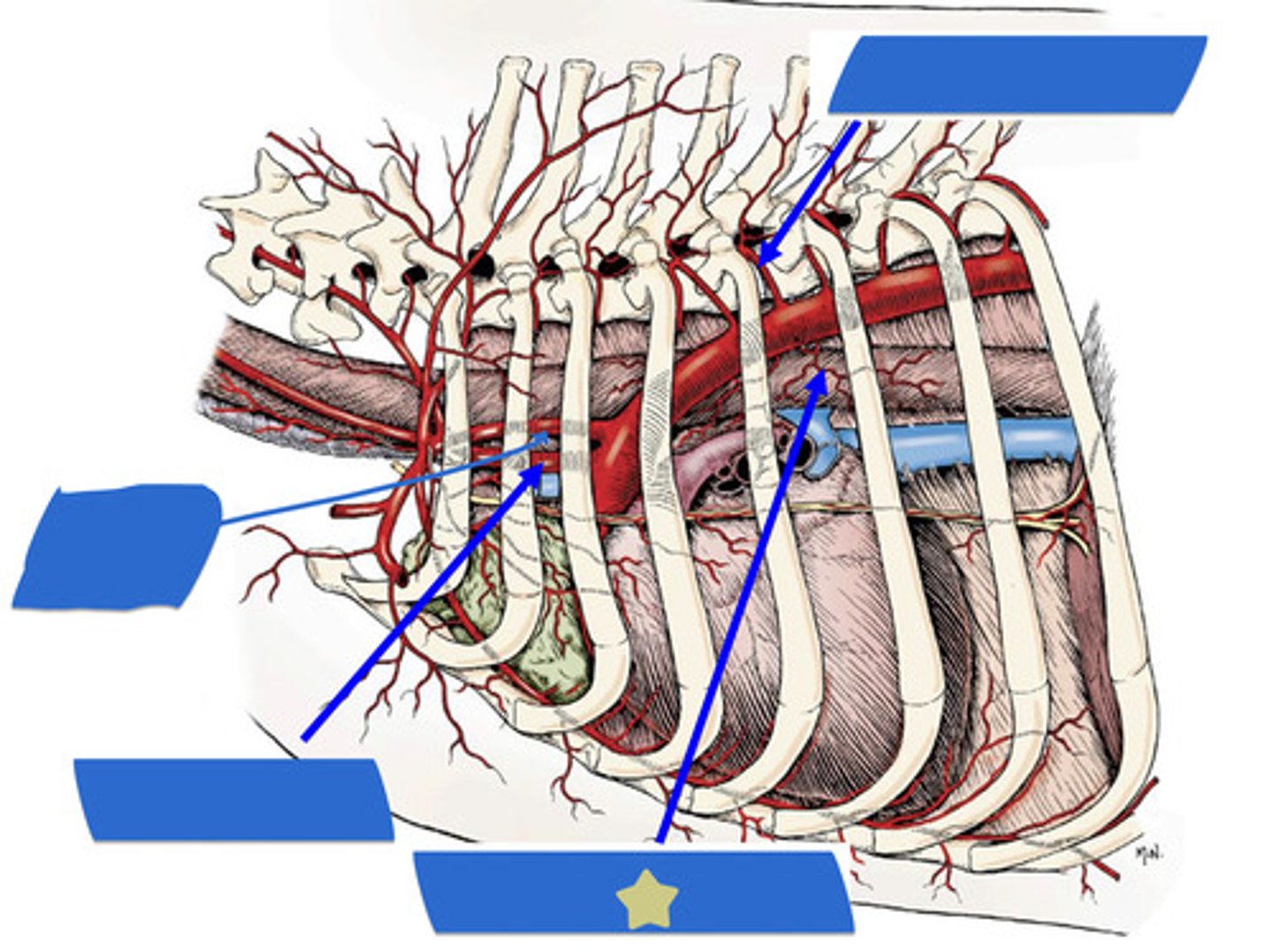
Brachiocephalic trunk
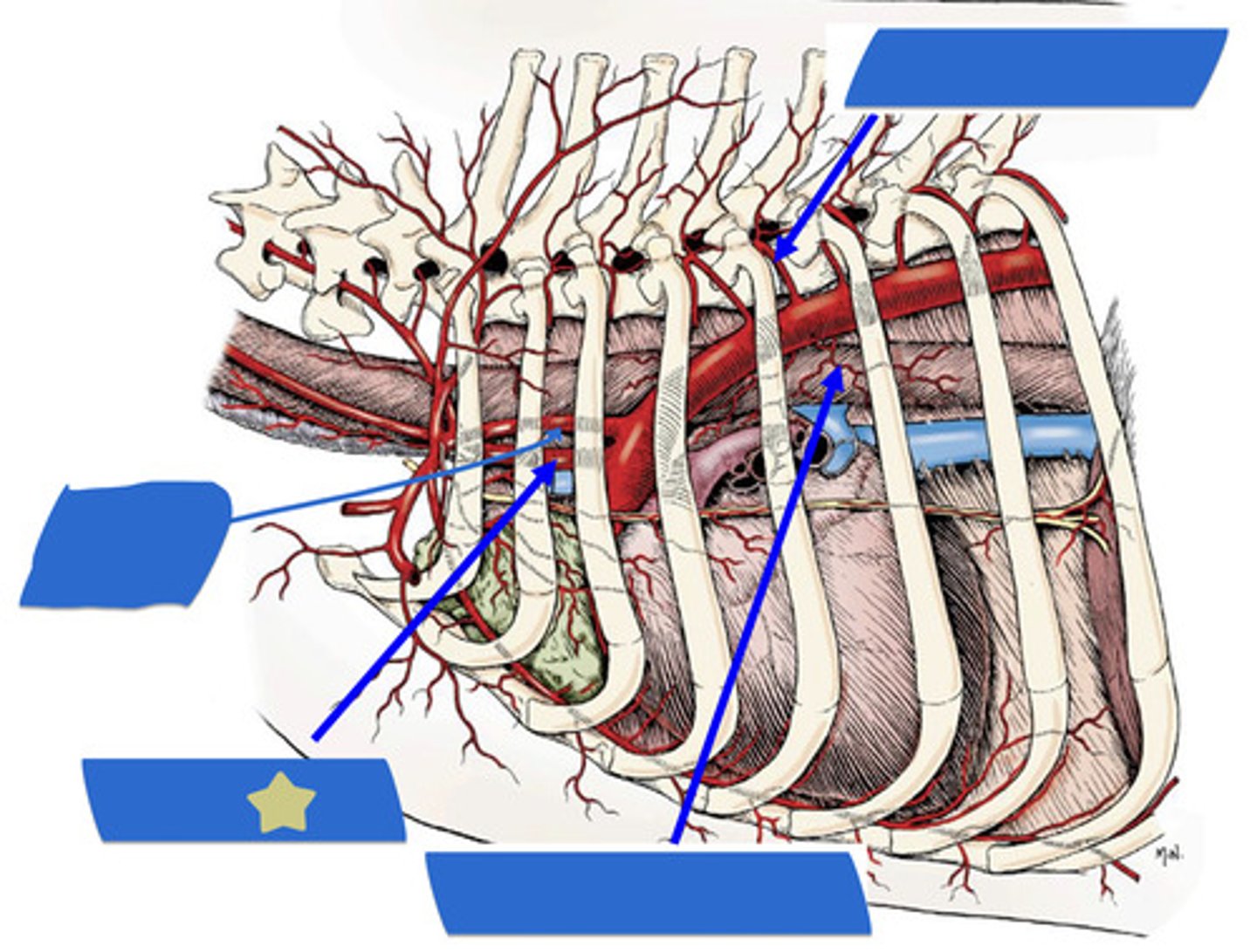
Right Dorsal Intercostal arteries
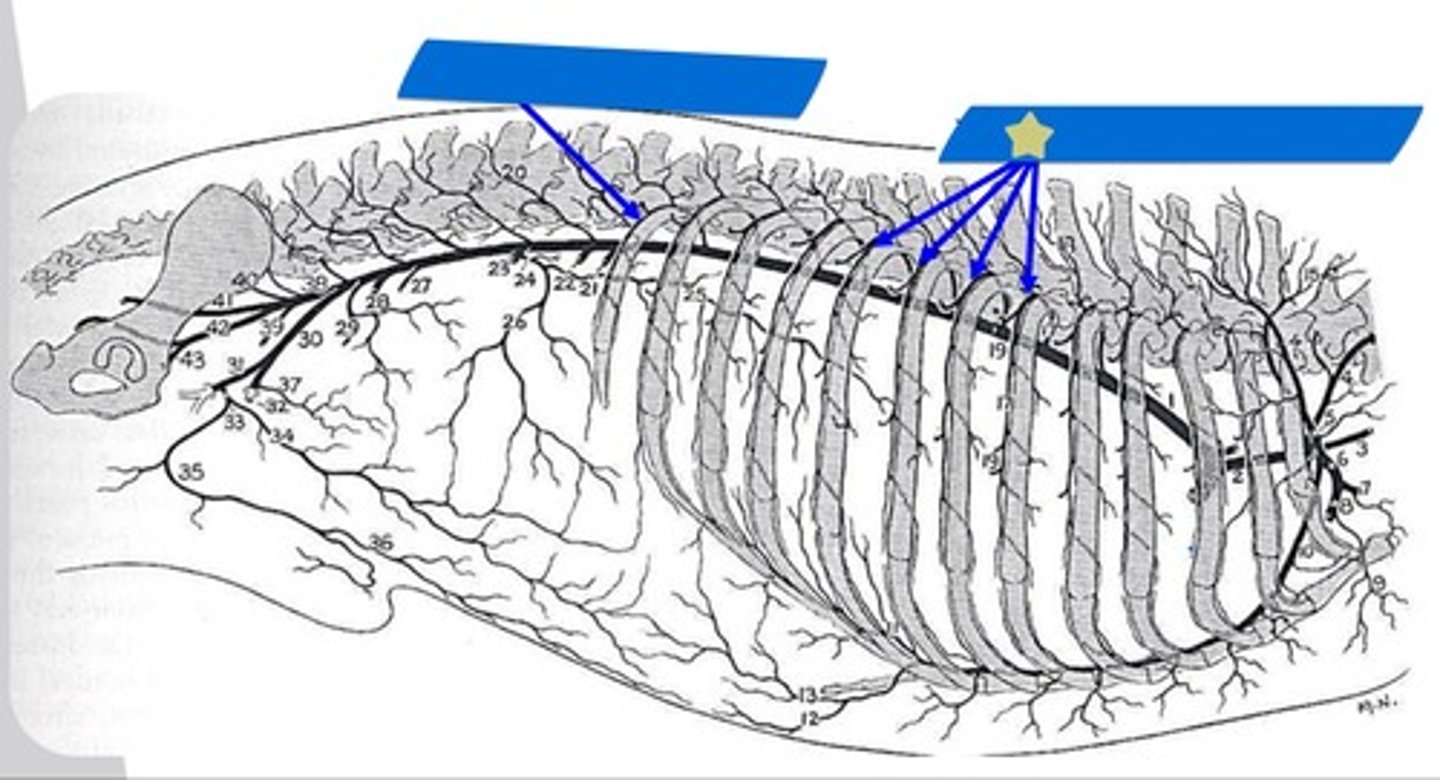
Right Costoabdominal arteries
Phrenicoabdominal artery
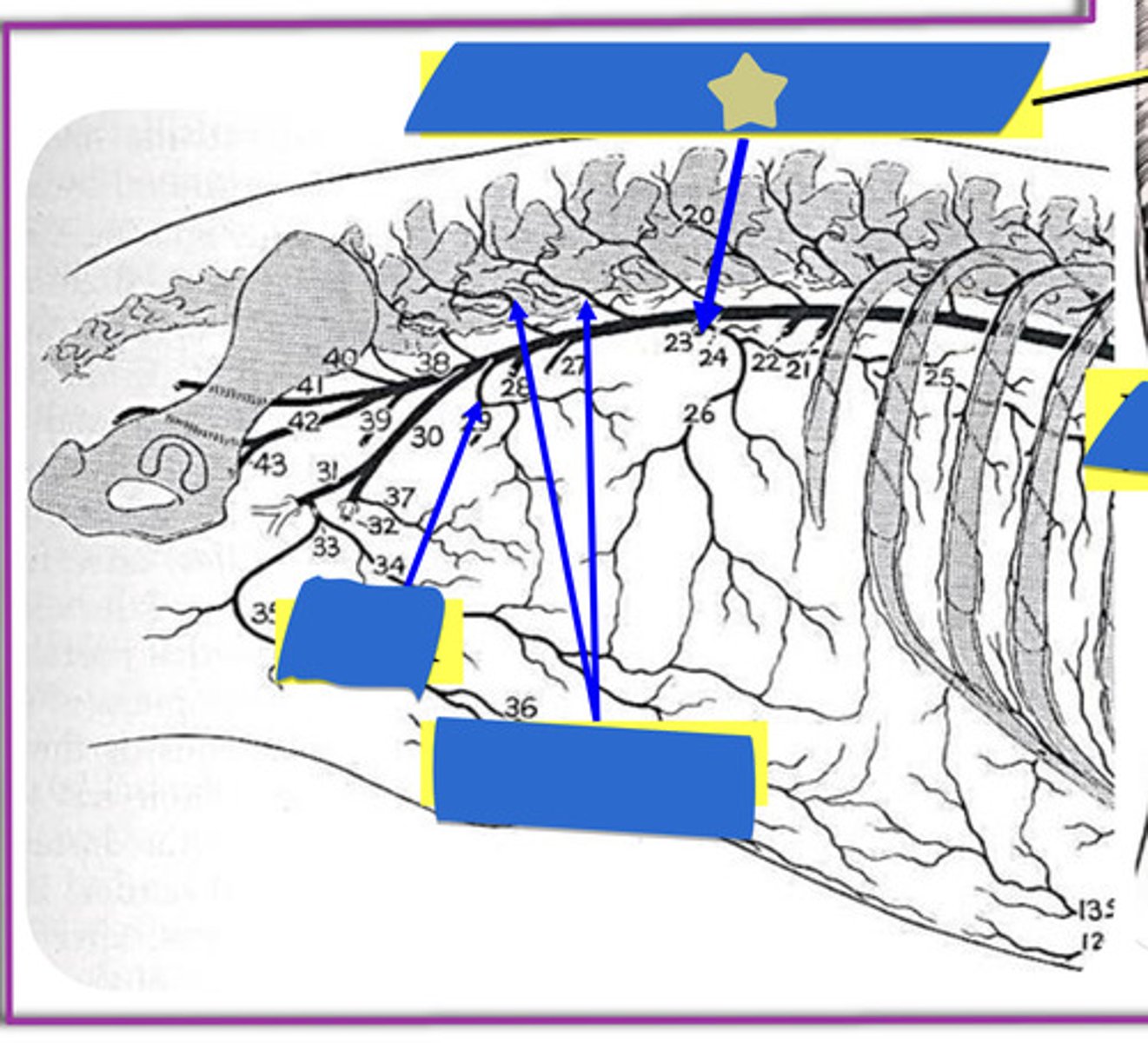
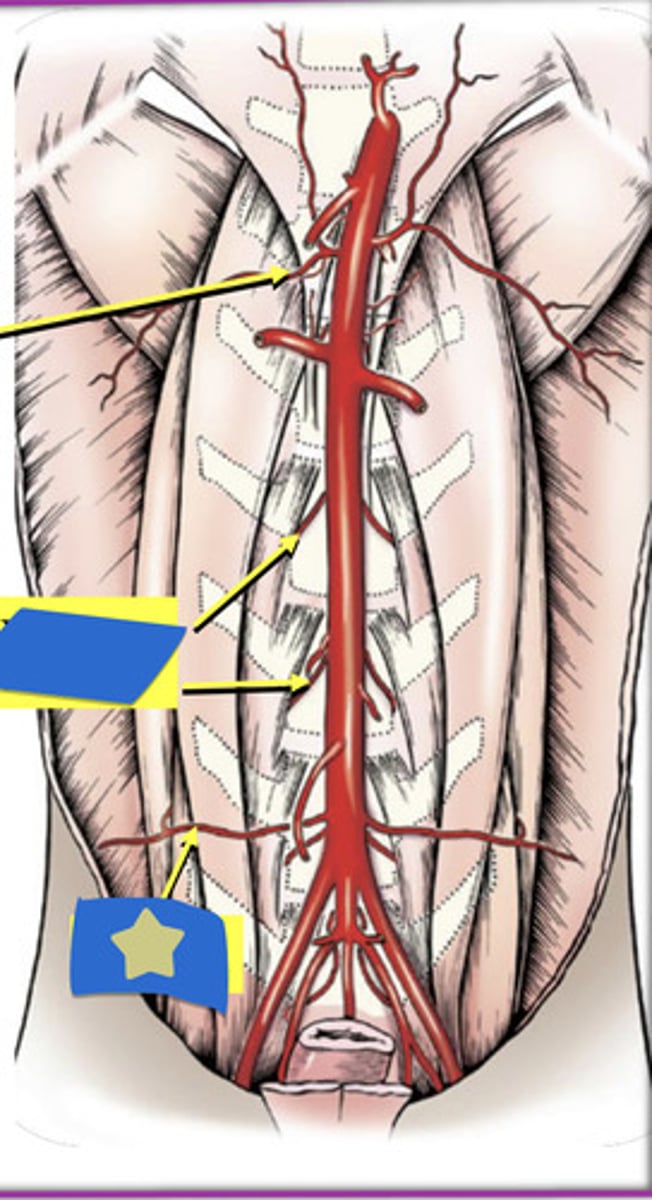
Lumbar arteries
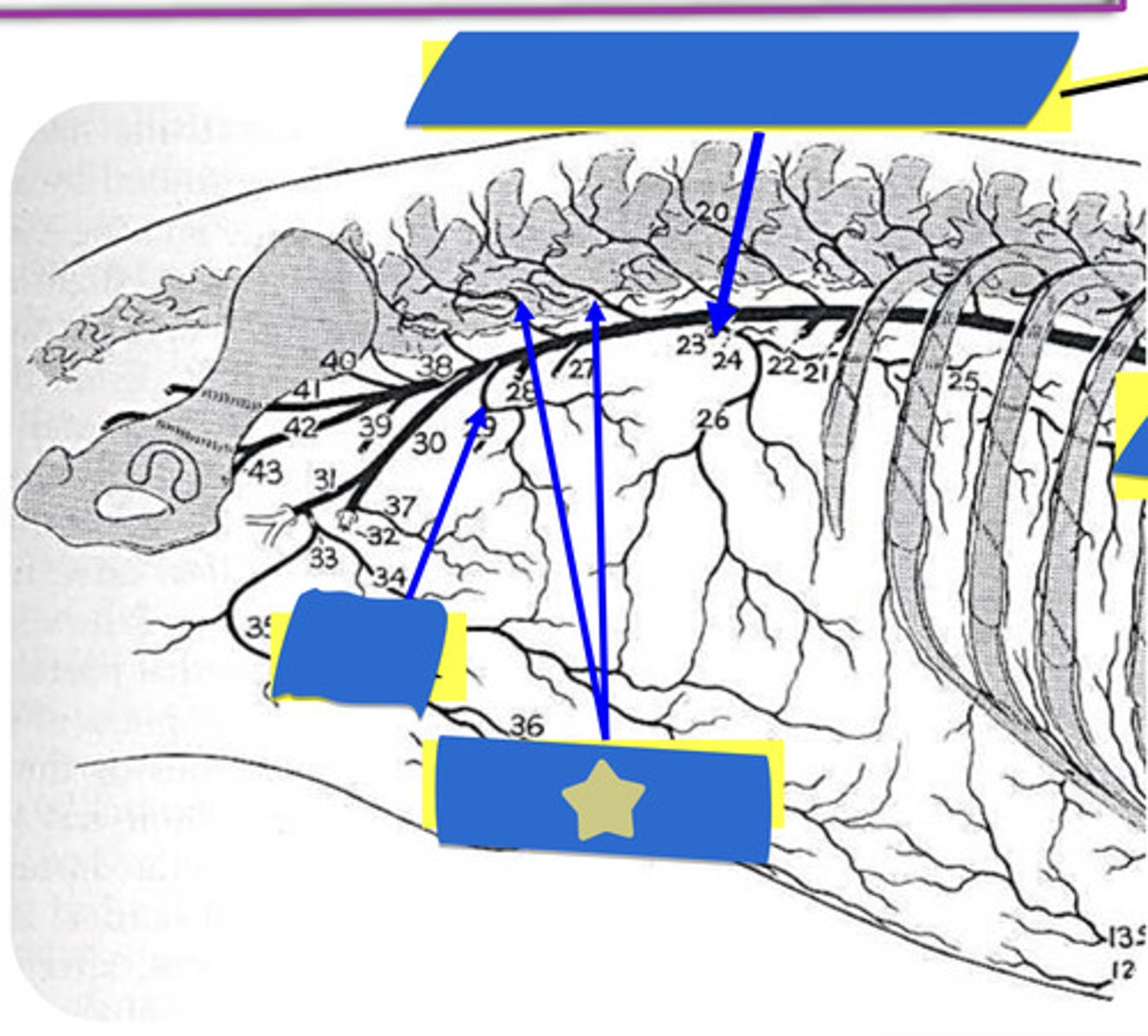
Deep Circumflex Iliac artery
Lumbar arteries
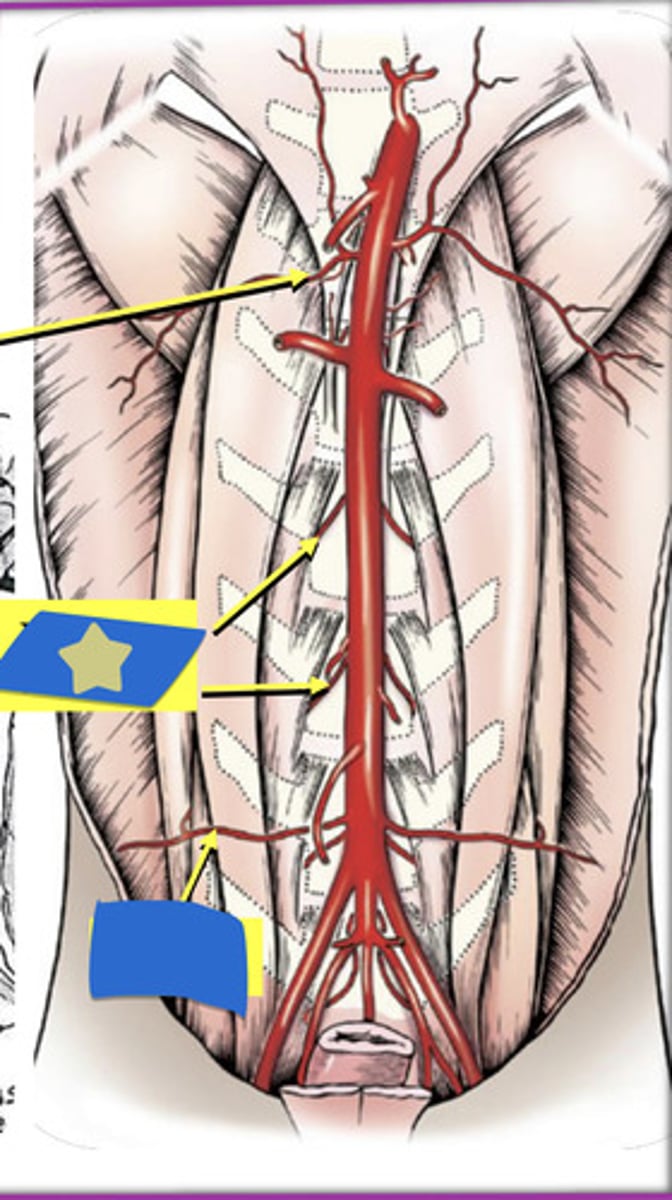
Deep Circumflex Iliac artery
Celiac artery
Cranial Mesenteric artery
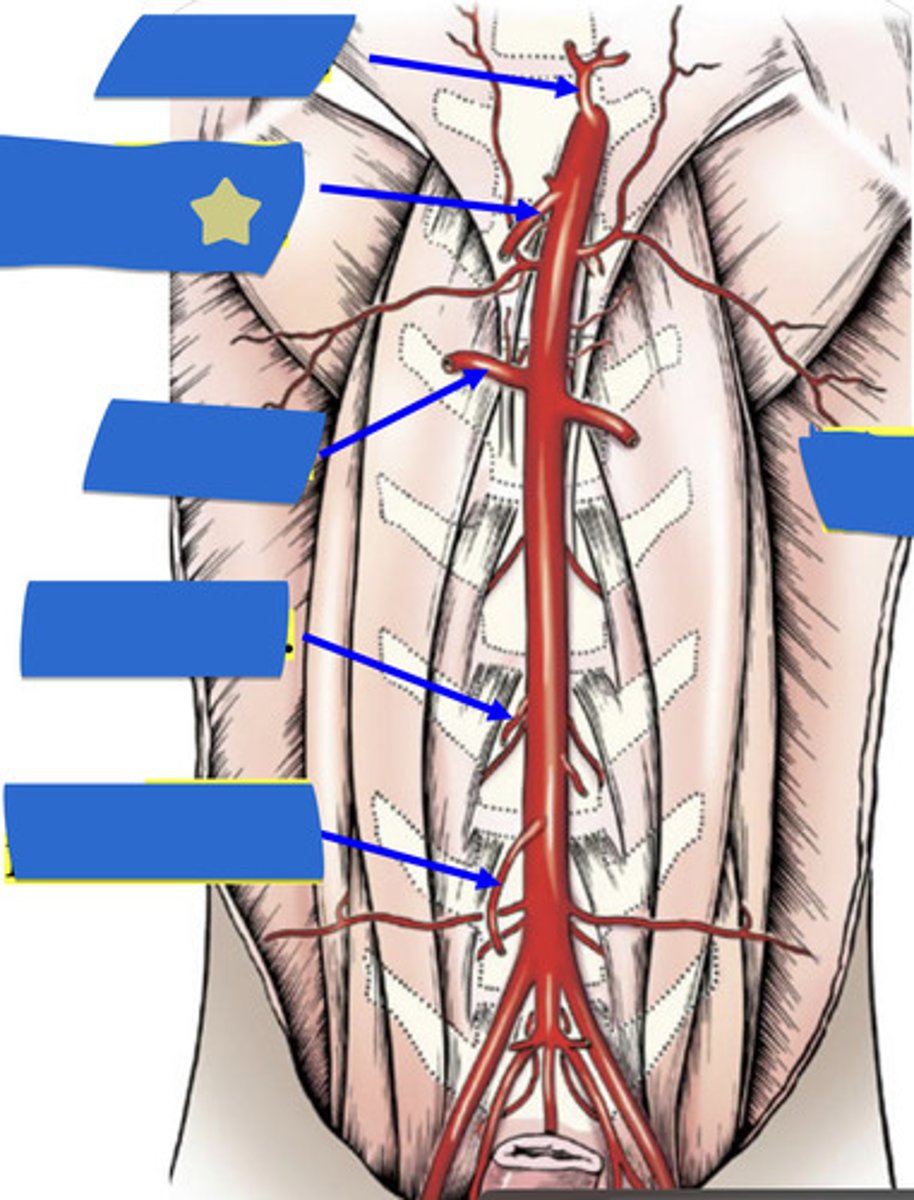
Renal artery
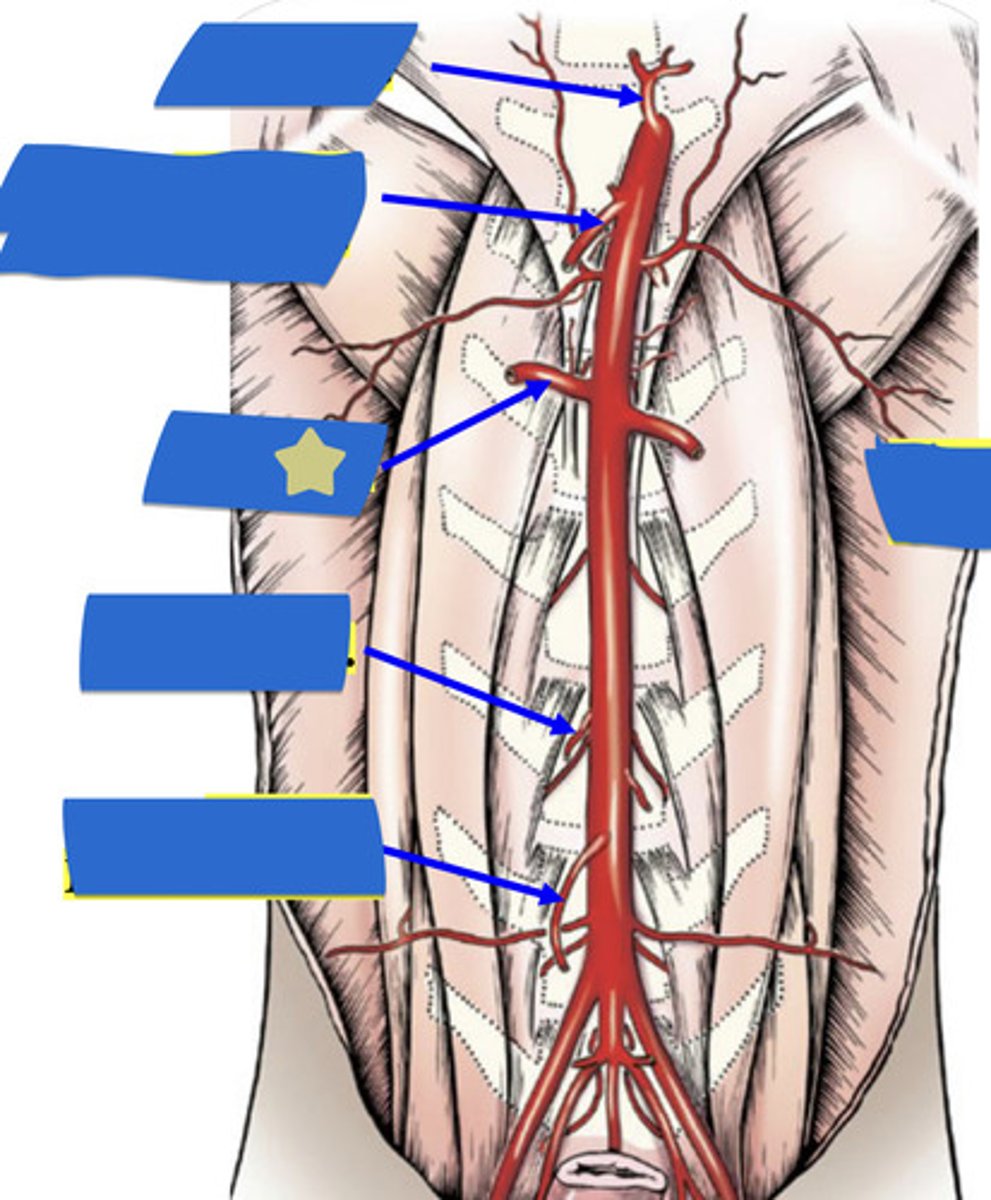
Gonadal artery
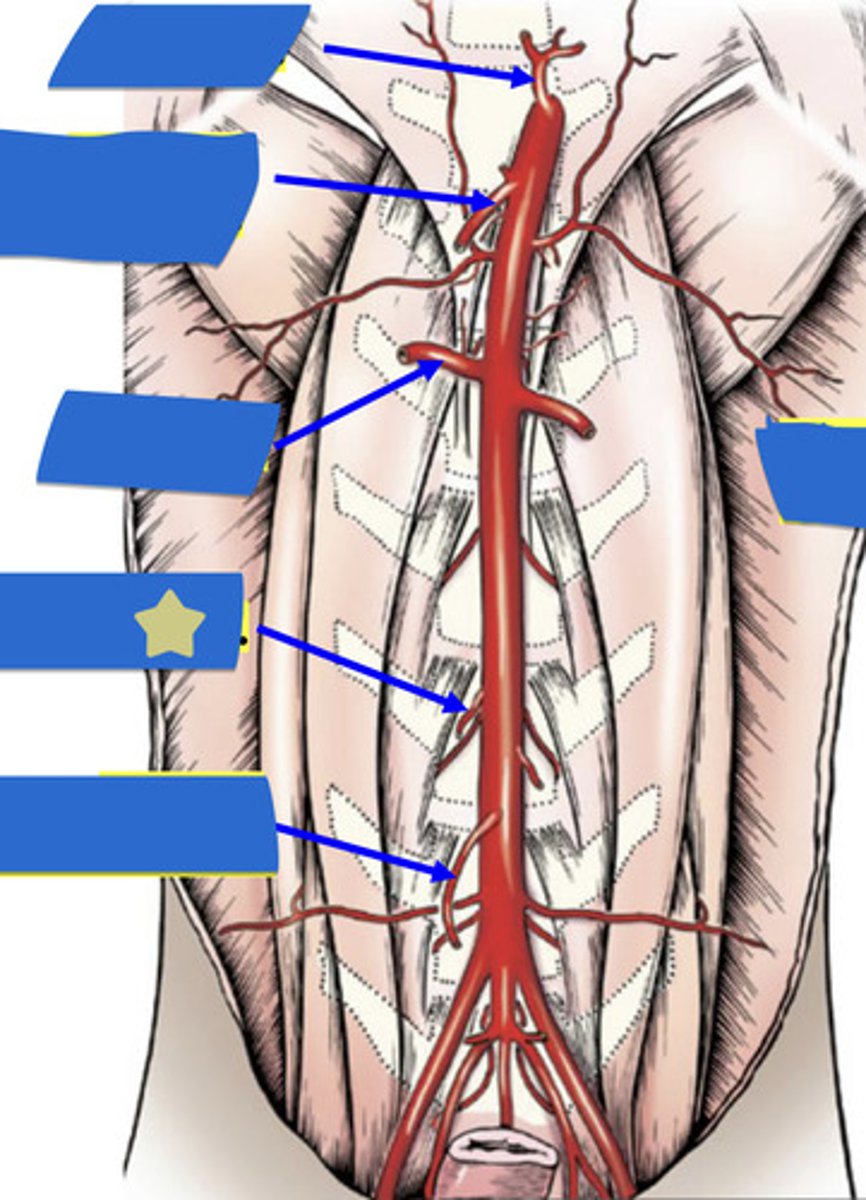
Caudal Mesenteric artery
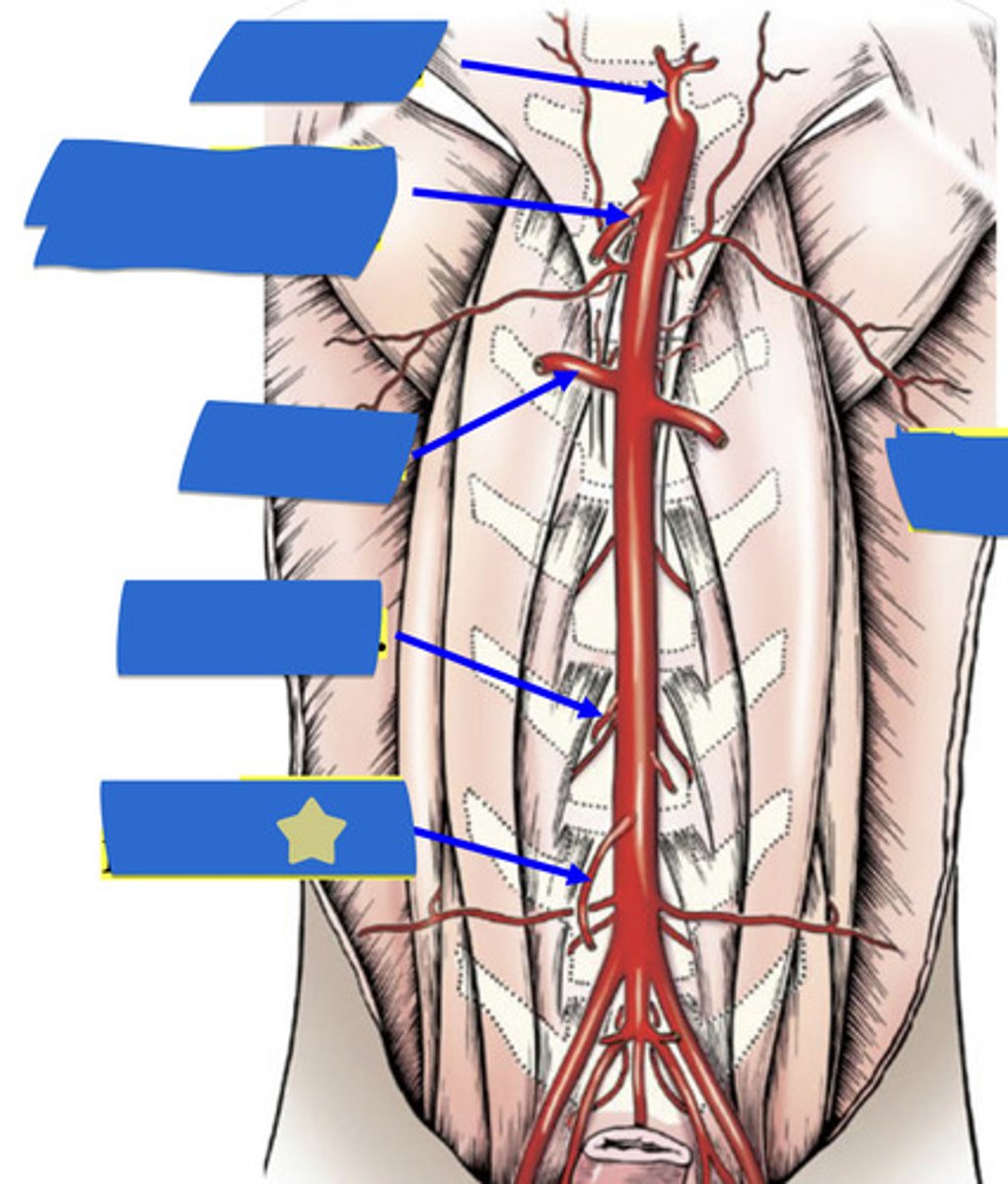
Testicular artery & Vein
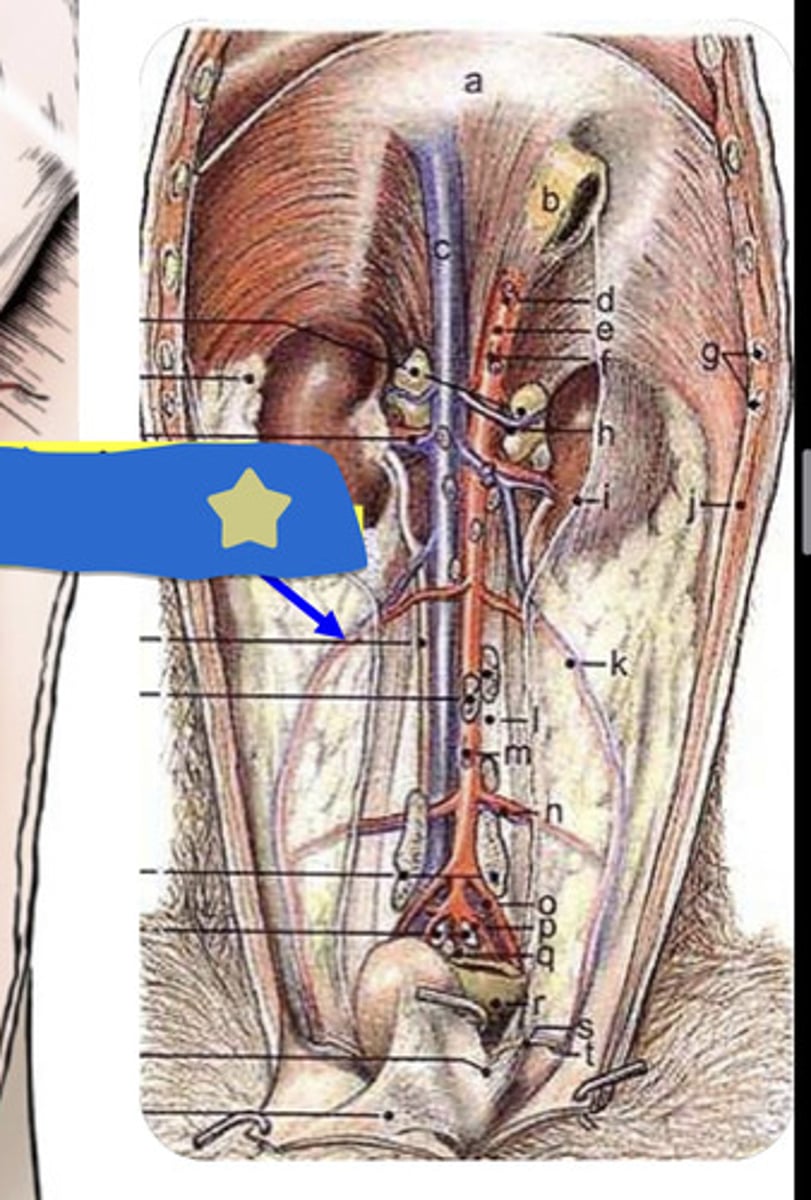
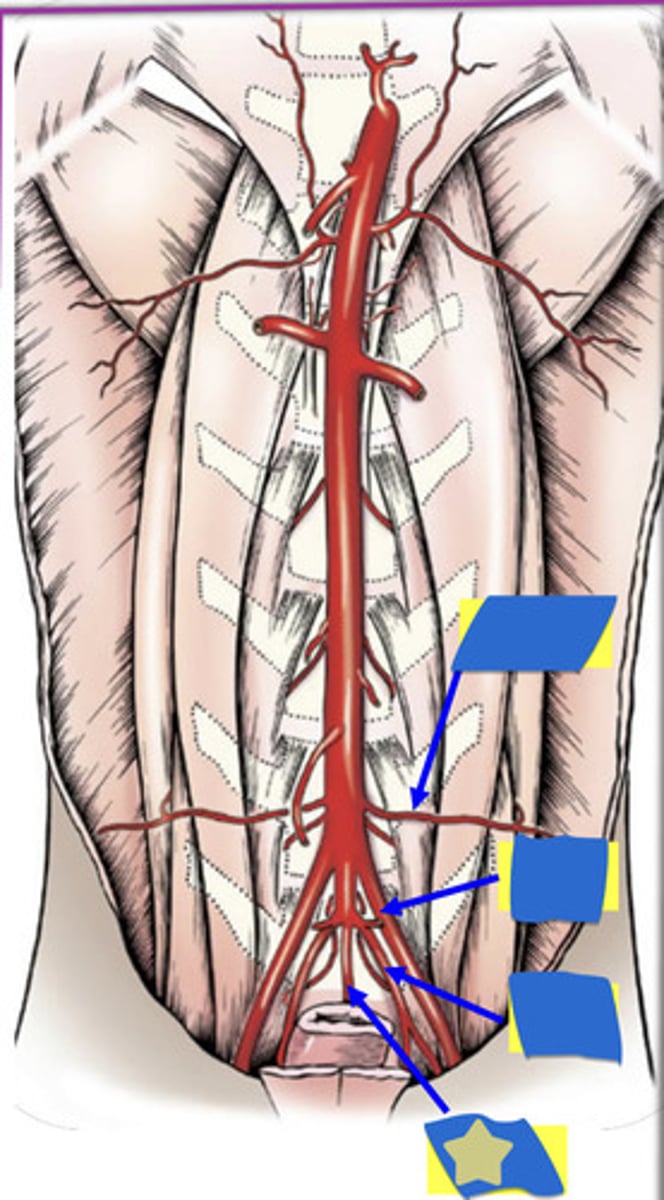
Deep Circumflex Iliac artery
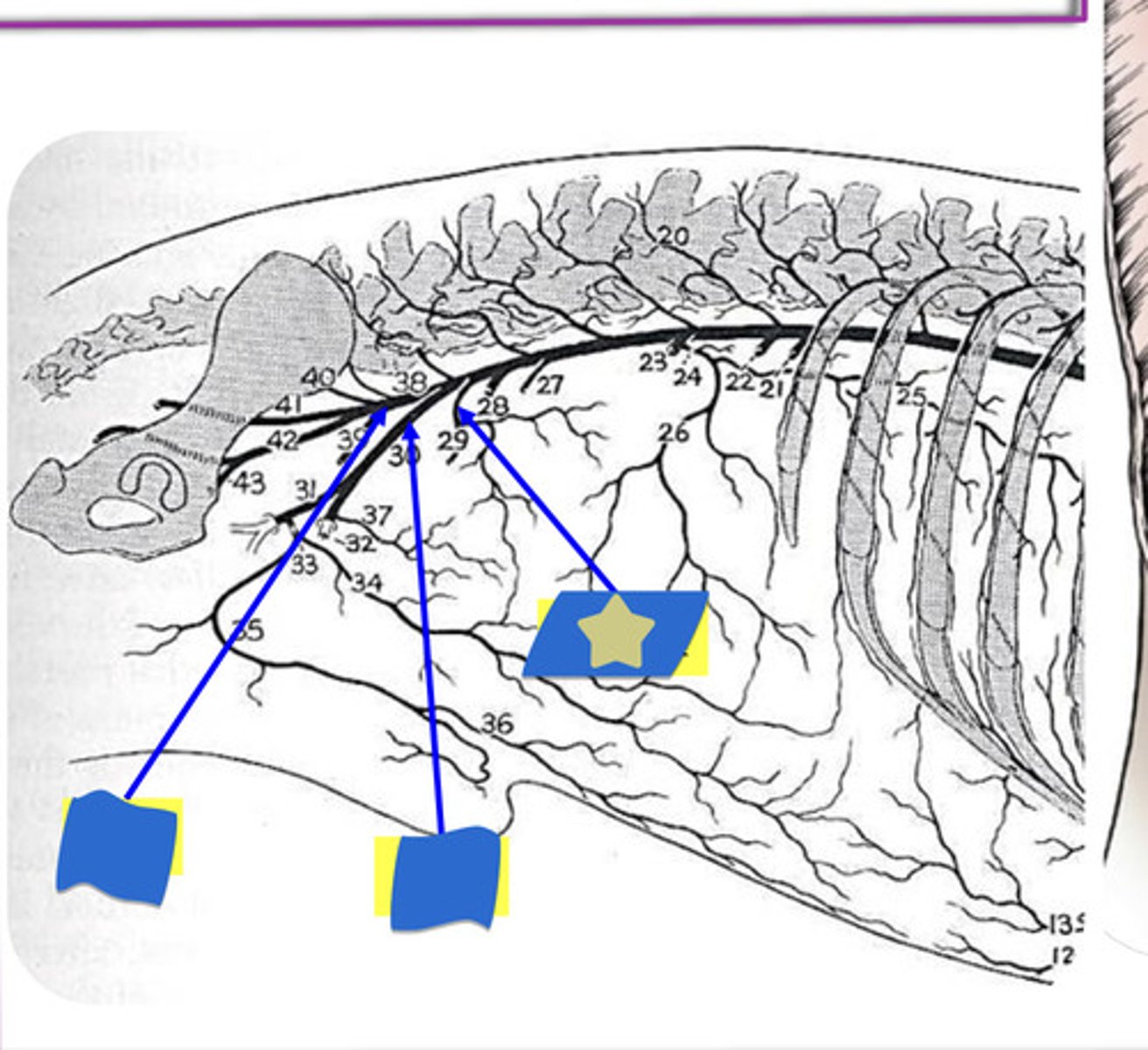
External Iliac artery
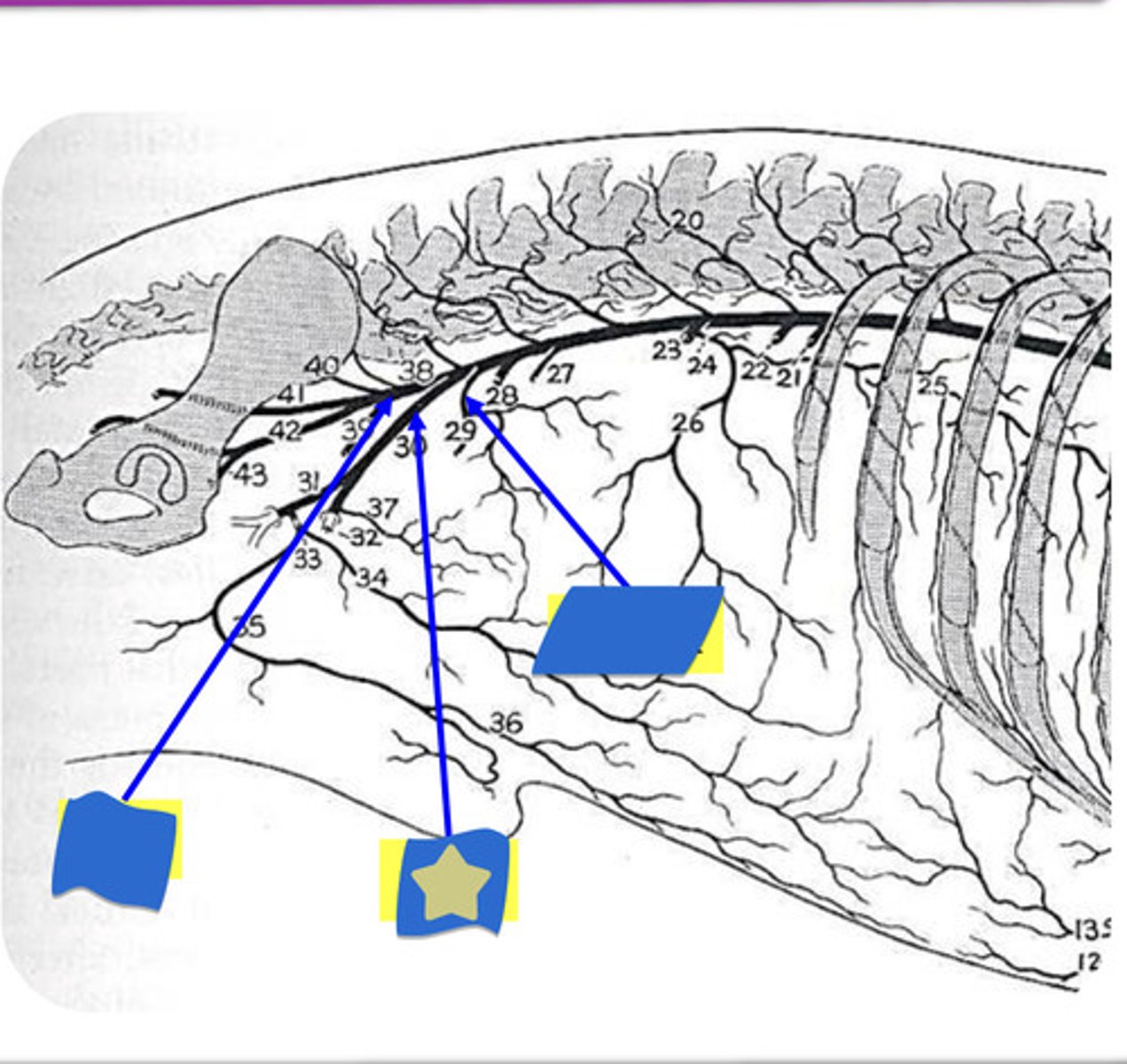
Internal Iliac artery
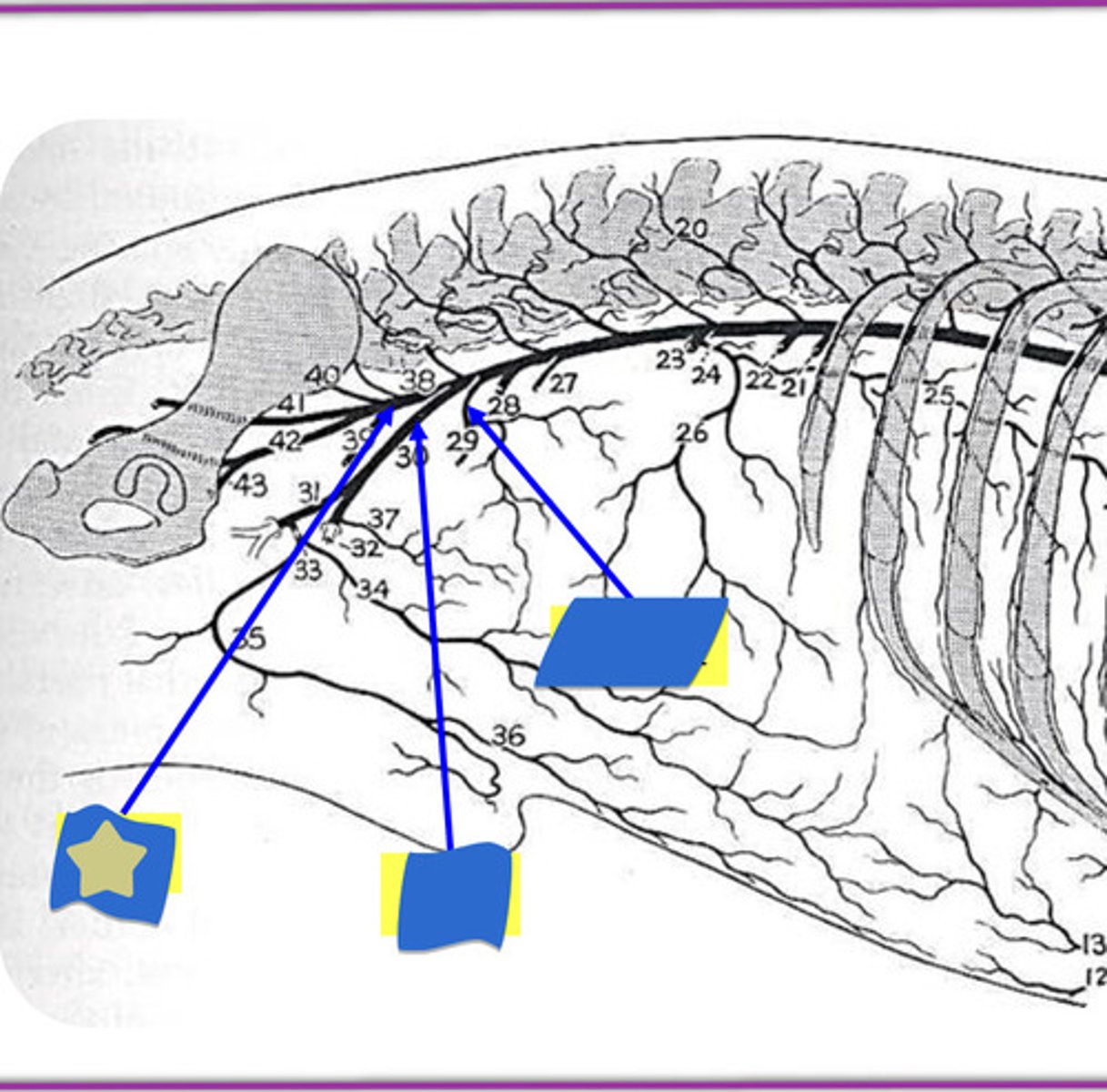
Deep Circumflex artery
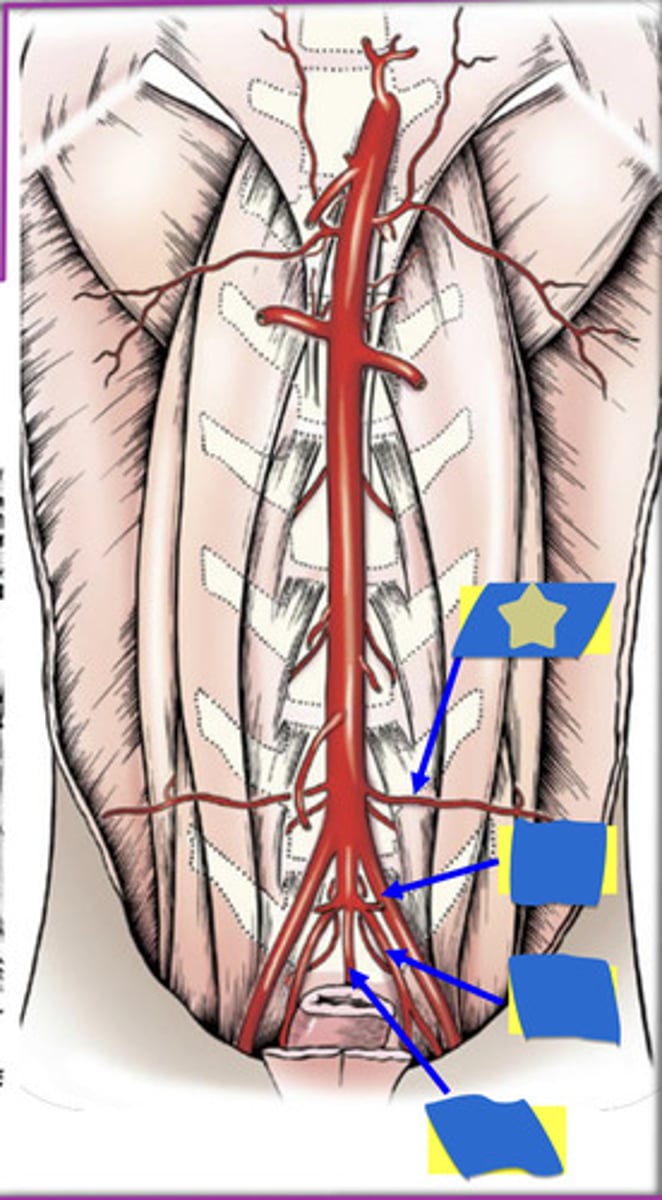
External Iliac artery
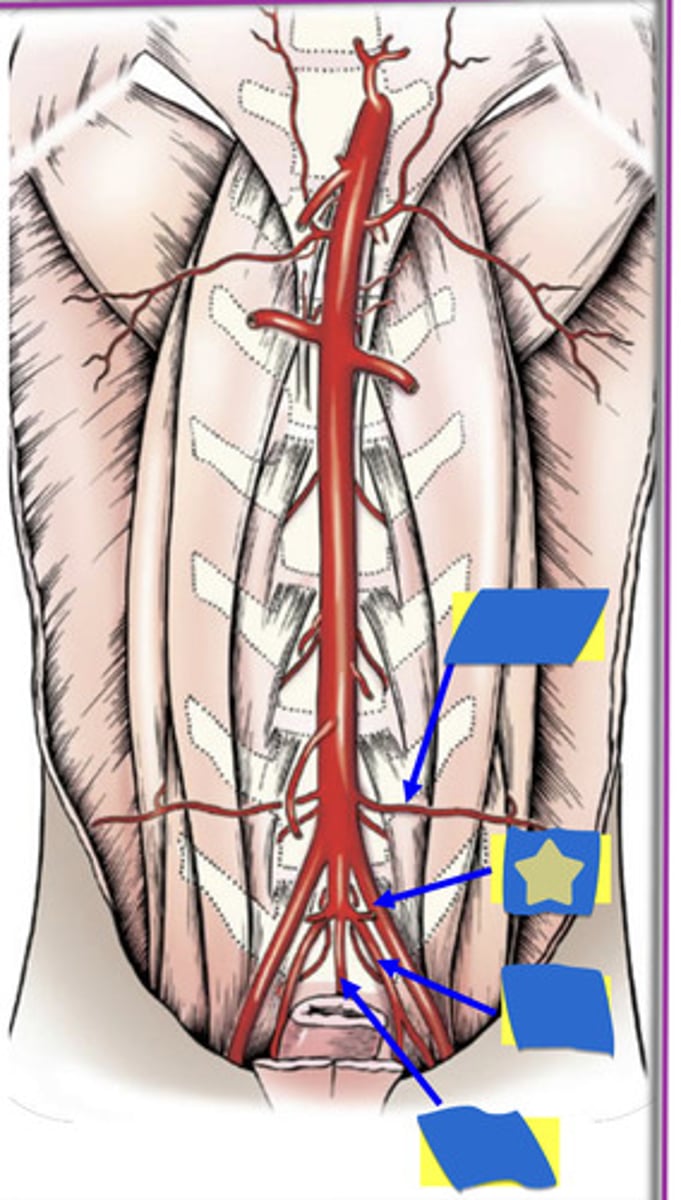
Internal Iliac artery
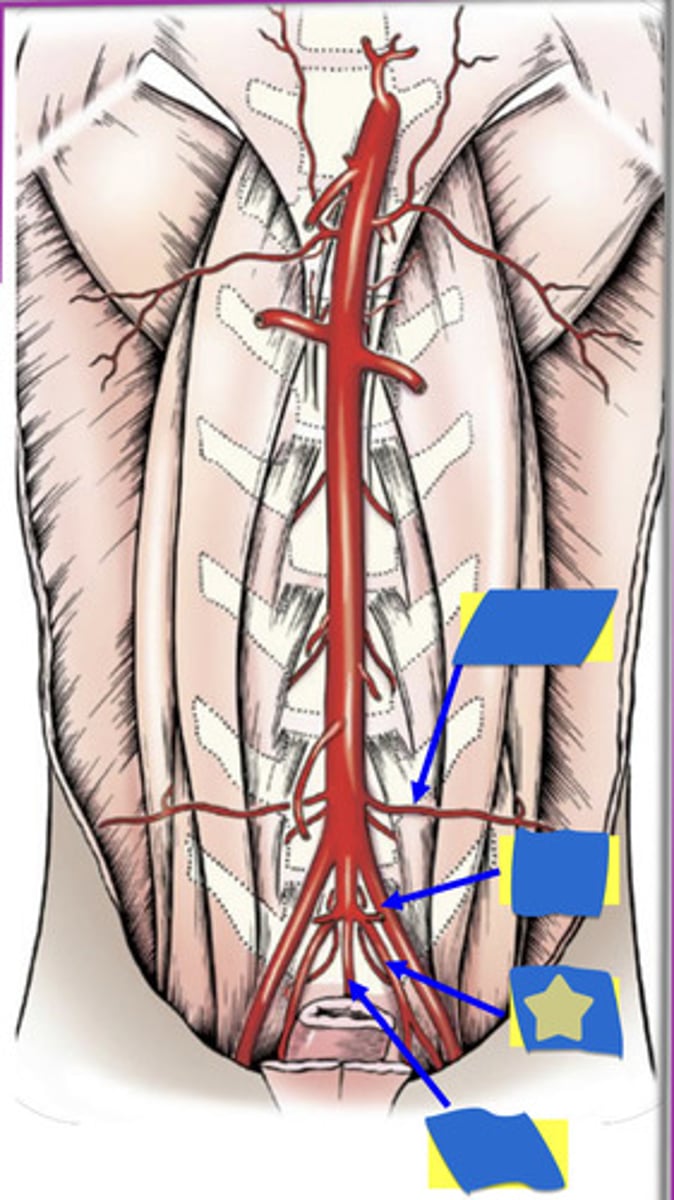
Median Sacral artery
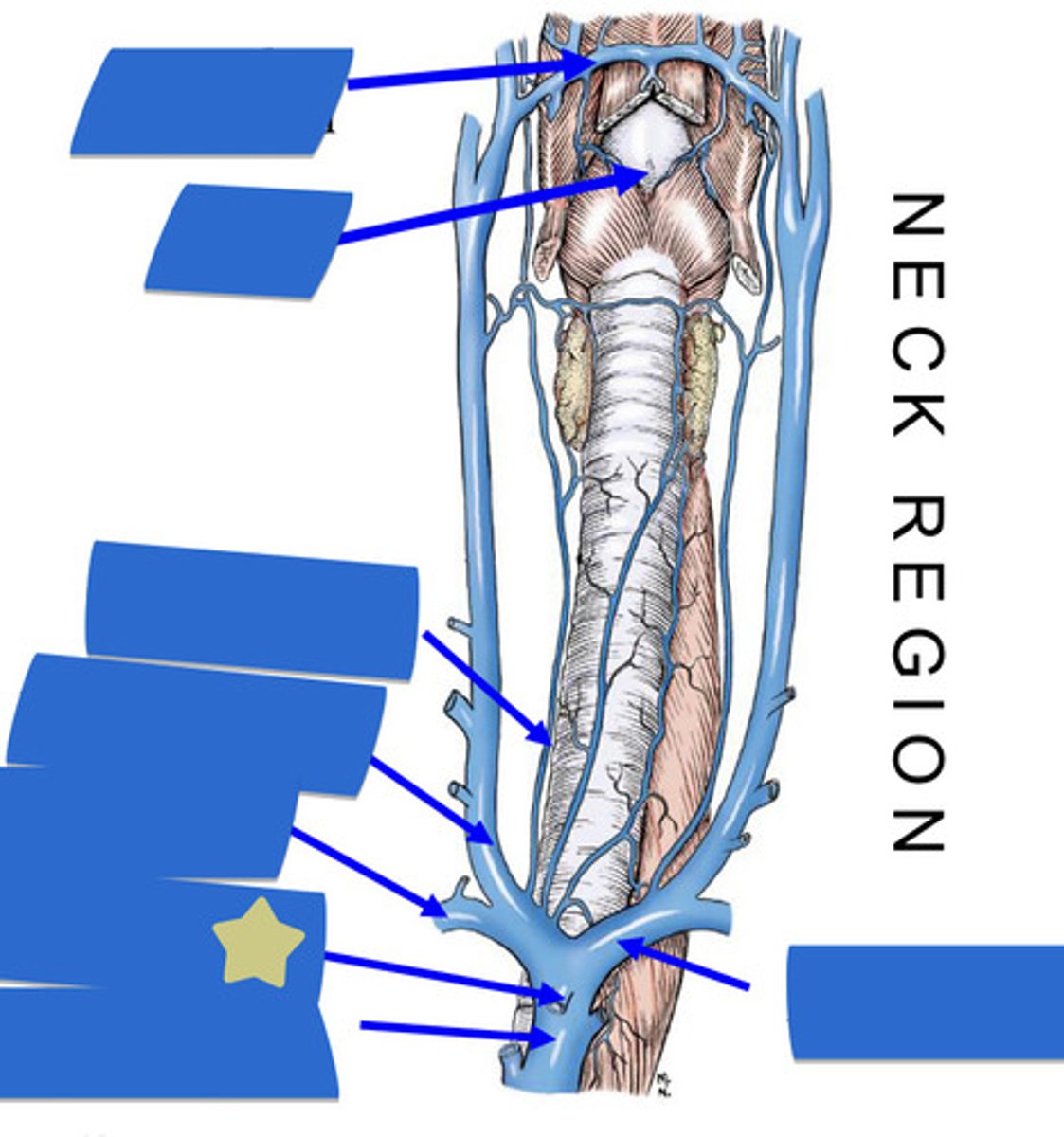
Hyoid Venous arch
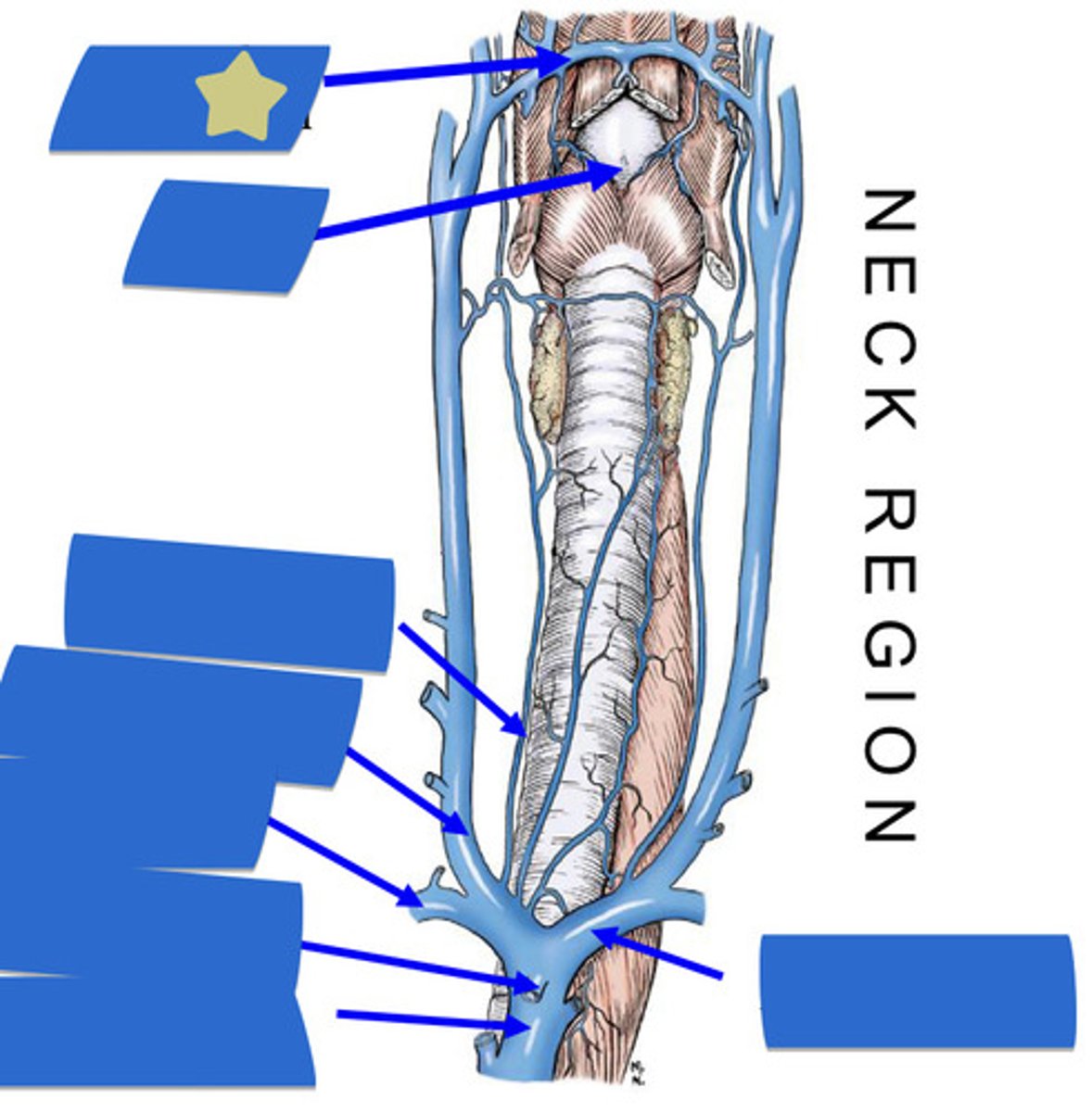
Larynx
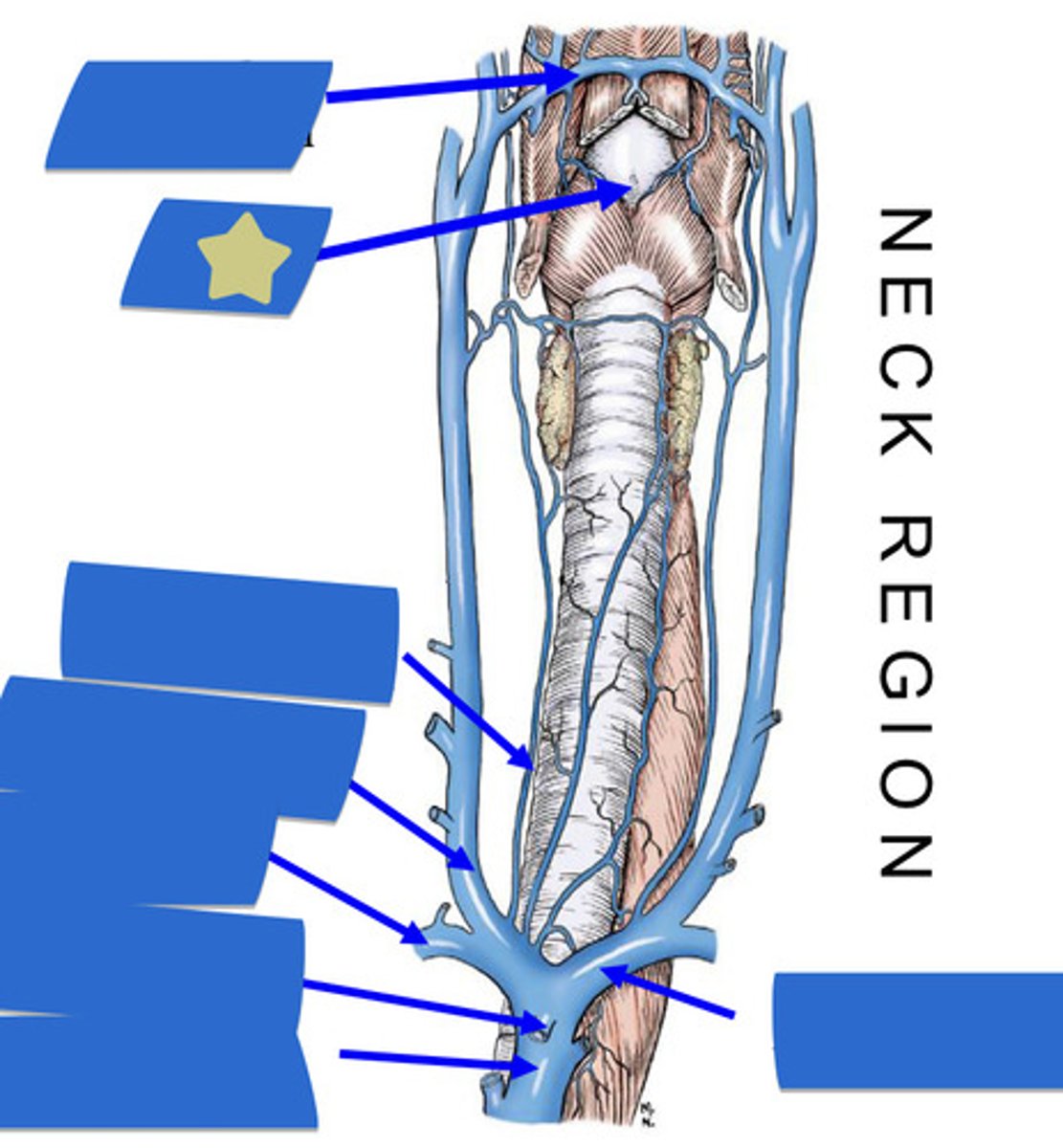
Internal Jugular vein
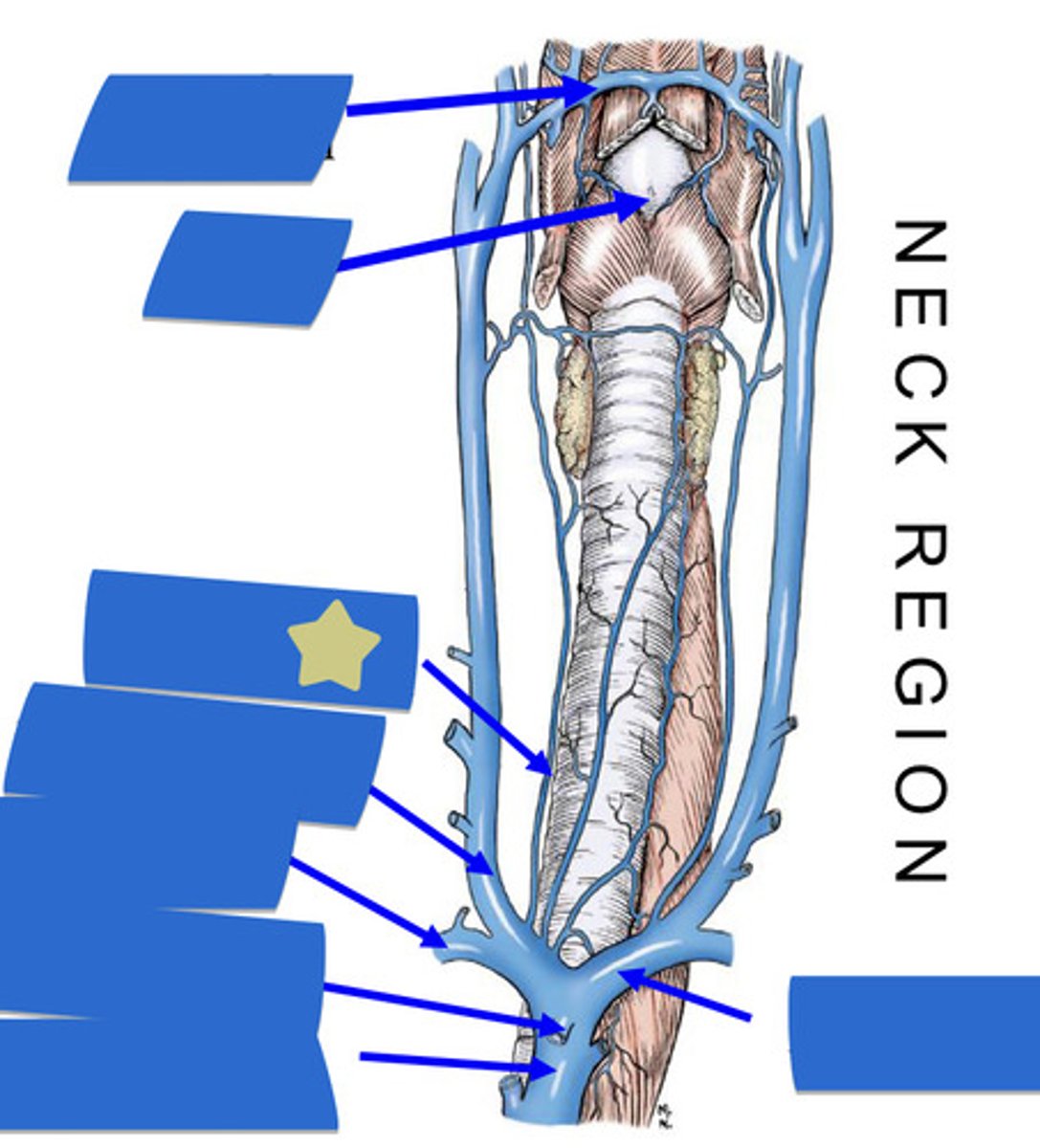
External Jugular vein
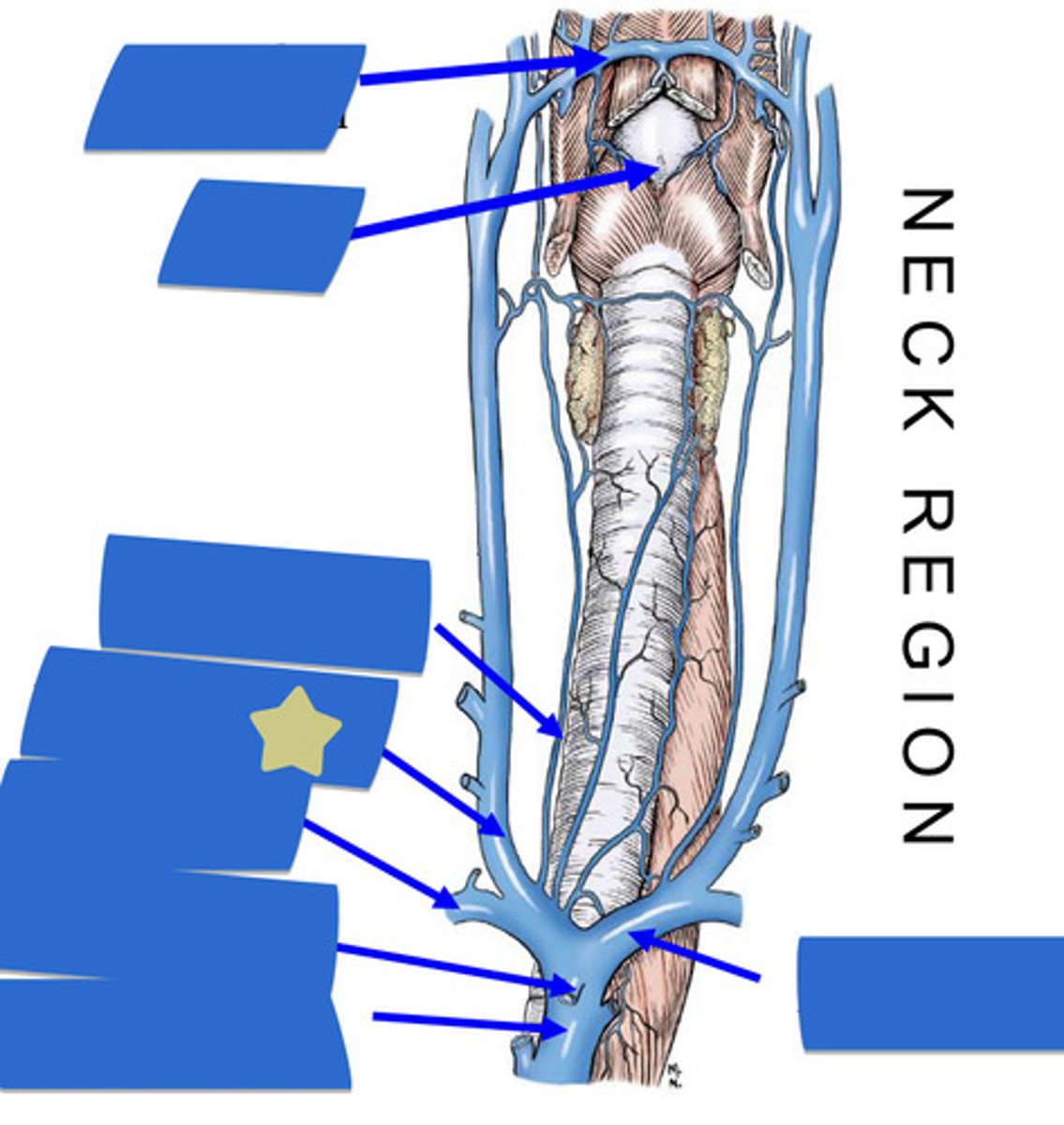
Subclavian vein
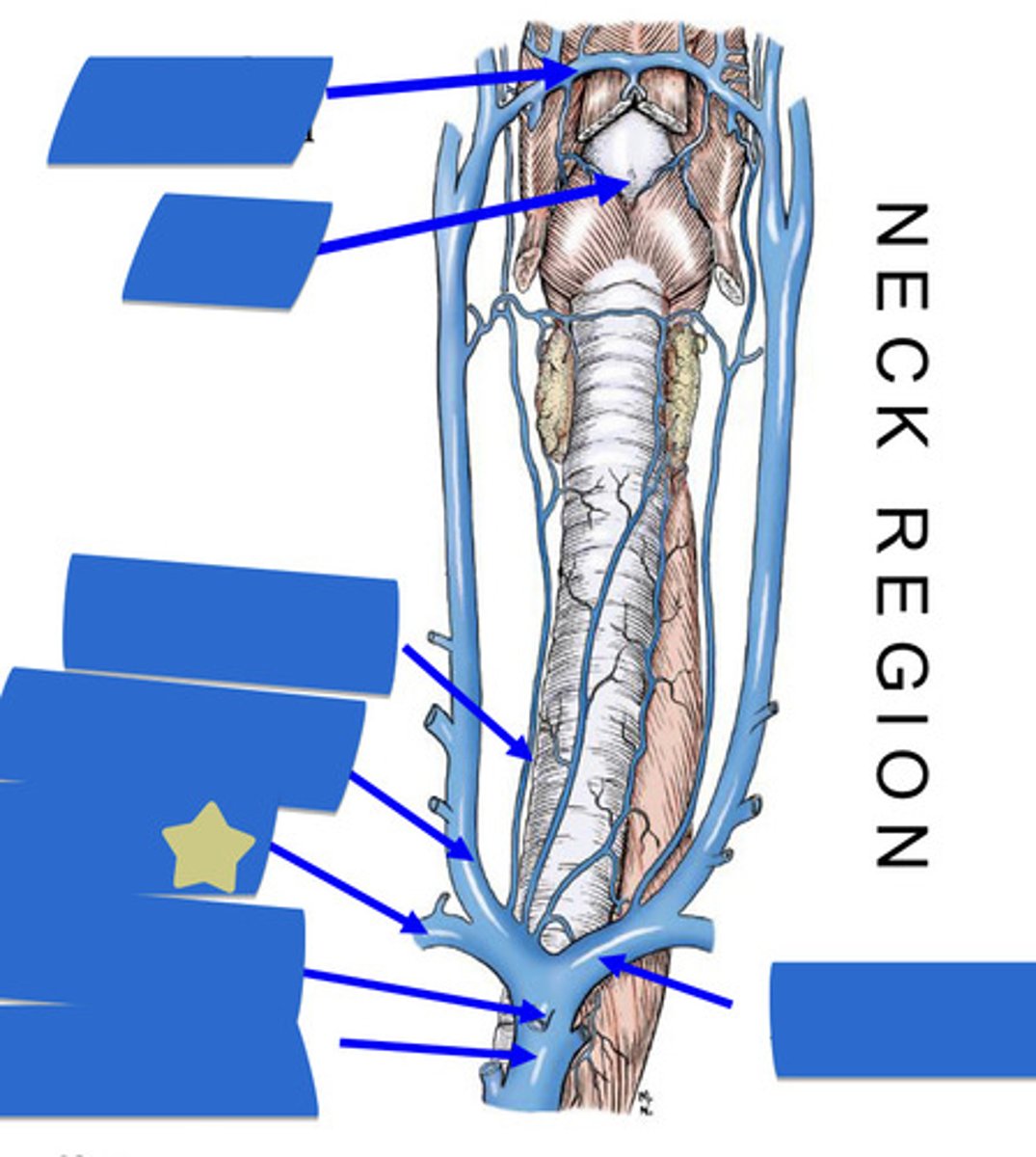
Internal Thoracic trunk/vein