Clinical Diagnosis Quiz 3: Pulmonology 8/30/21
 Call Kai
 Learn
Learn Practice Test
 Spaced Repetition
 Match
Match Flashcards
 Knowt Play
1/180

There's no tags or description
Looks like no tags are added yet.
Name | Mastery | Learn | Test | Matching | Spaced | Call with Kai |
|---|
No analytics yet
Send a link to your students to track their progress
181 Terms
1. Inspection
2. Palpation
3. Percussion
4. Auscultation
***These processes must be performed in this order
What are the four processes that are performed during a Tier 2 lung exam?
1. Inspection
2. Ausculatation
What are two processes that are performed during a Tier 1 lung exam?
Tier 1
A tier ___ lung exam is performed on every patient.
Tier 2
A tier ___ lung exam is performed on every patient with respiratory complaints, an abnormal respiratory rate, or has an abnormal finding on the limited lung exam.
Tier 2
***This is a respiratory complaint --> tier 2
A patient presents to clinic with a cough. Do you perform a Tier 1 or Tier 2 respiratory exam?
Tier 2
***This is a fast respiratory rate --> tier 2 exam
A patients to clinic and is found to have a respiratory rate of 22. Do you perform a Tier 1 or Tier 2 respiratory exam?
Yes
***Any abnormal finding on a tier 1 respiratory exam means that a tier 2 respiratory exam needs to be performed
A patient presents to clinic with abdominal pain, but you noticed that he has crackles at the bases on his lung exam. Do you need to palpate and percuss his lungs?
Tier 2
***Inability to speak in complete sentences --> abnormal breathing pattern --> need to do tier 2 exam
A patient presents to clinic with abdominal pain, but you notice that they cannot finish their sentence without stopping to breath. Do you perform a tier 1 or tier 2 lung exam.
Respiratory rate
What vital sign is most likely to be measured inaccurately?
12-20 breaths/min
A normal respiratory rate for adults is ____.
25
***Even though the normal range is usually 12-20, this is the definition for tachypnea given on the slides
An adult is considered to be tachypneic if their respiratory rate is greater than ____ breathes/min.
8
***Even though the normal range is usually 12-20, this is the definition for bradypnea given on the slides
An adult is considered to have bradypnea if their respiratory rate is less than ____ breathes/min.
Cheyne-Stokes breathing
_______ breathing is a breathing pattern characterized by alternating periods of apnea and rapid breathing (hyperpnea).
Hyperpnea
____ is a fancy word for rapid breathing.
Apnea
____ is a fancy word for not breathing.
Hyperpnea - 30 s
Apnea - 25 s
In Cheyne-Stokes breathing, the hyperpnea phase lasts about ____ seconds and the apnea phase lasts about ____ seconds.
Stable heart failure
What cardiac condition can cause a patient to exhibit Cheyne-Stokes breathing?
Cheyne-Stokes
Comas, head injuries, tumors, meningitis, and strokes are four conditions that can cause a patient to exhibit a _____ breathing pattern.
Tidal volume
During the hyperpnea phase of Cheyne-Stokes breathing, which varies more: the tidal volume or respiratory rate?
Worse outcomes
***Associated with lower cardiac output, higher filling pressures, and shorter survival
A patient with stable heart failure exhibits Cheyne-Stokes breathing. Is this patient more likely to have better or worse outcomes compared to other heart failure patients that do not have this breathing pattern?
Their chemoreceptors are more sensitive to the CO2 levels in the blood.
***More sensitive receptors --> sympathetic activation will occur at a lower threshold (even with fairly normal CO2 levels) --> hyperventilation
What causes the Cheyne-Stokes breathing seen in patients with stable heart failure?
Delayed medullary response to alveolar CO2 levels.
***CO2 levels will get very high before it is recognized by the medulla. Once it is recognized, there is sympathetic stimulation and hyperventilation
What causes the Cheyne-Stokes breathing seen in patients with neurologic disorders?
Kussmaul's respiration
_______ respiration is a rapid, deep pattern of breathing that is used to blow off excess acid as CO2.
fast rate, high tidal volume
Kussmaul's respiration has a _____ rate and a ____ tidal volume.
Kussmaul's respiration involves deep breathing (high tidal volumes). Regular tachypnea is often shallow.
What is the difference between regular tachypnea and Kussmaul's respiration?
Metabolic acidosis
***High tidal volume --> blow off acid as CO2 (compensatory mechanism)
What acid/base abnormality is associated with Kussmaul's respiration?
Orthopnea
______ is dyspnea that occurs when a patient is lying down and is relieved with sitting up.
Trepopnea
_____ is dyspnea that is worse when lying on one side and relieved with lying on the other side.
Platypnea
_____ is dyspnea that occurs when a patient sits up but is relieved with lying down.
Right
***Laying on right side --> improves venous return to right atrium.
***Also something about decreased sympathetic stimulation when lying on right side ???
Patients with heart failure who exhibit trepopnea will often prefer to lie on their _____ side.
Right side (healthy lung down)
*** maximizes perfusion to healthy lung
If a patient has a large left-sided pulmonary embolism, what side might they prefer to lie on?
Right side (healthy lung down)
***Maximizes perfusion to healthy lung
If a patient has a left lower lobe pneumonia, which side might they prefer to lie on?
Right-to-left cardiac shunting (ASD, PFO)
***also intrapulmonary shunting in patients with liver disease (hepatopulmonary syndrome)
What condition can cause a patient to have platypnea (dyspnea when sitting up but not lying down)?
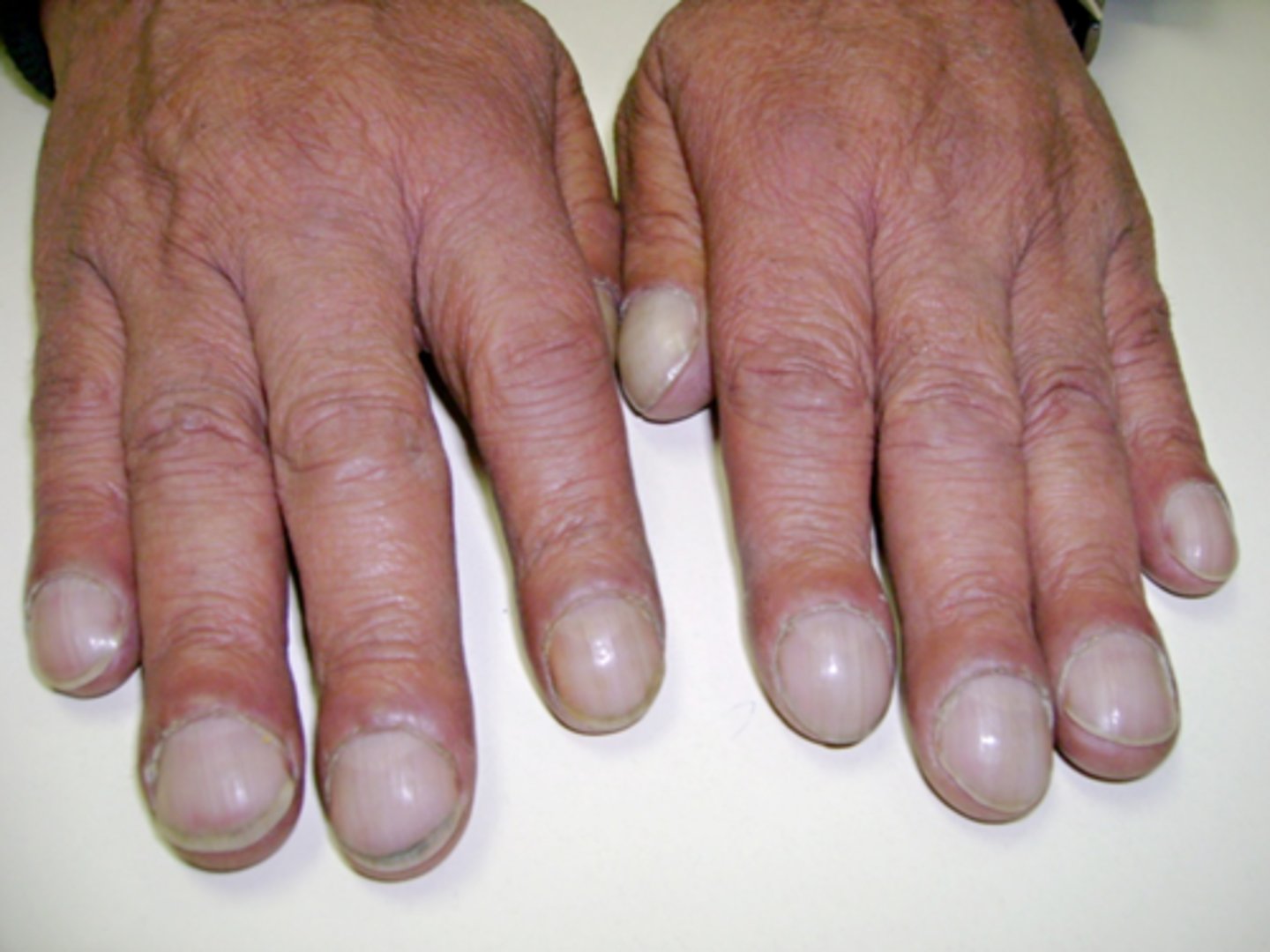
Digital clubbing
What's this called?
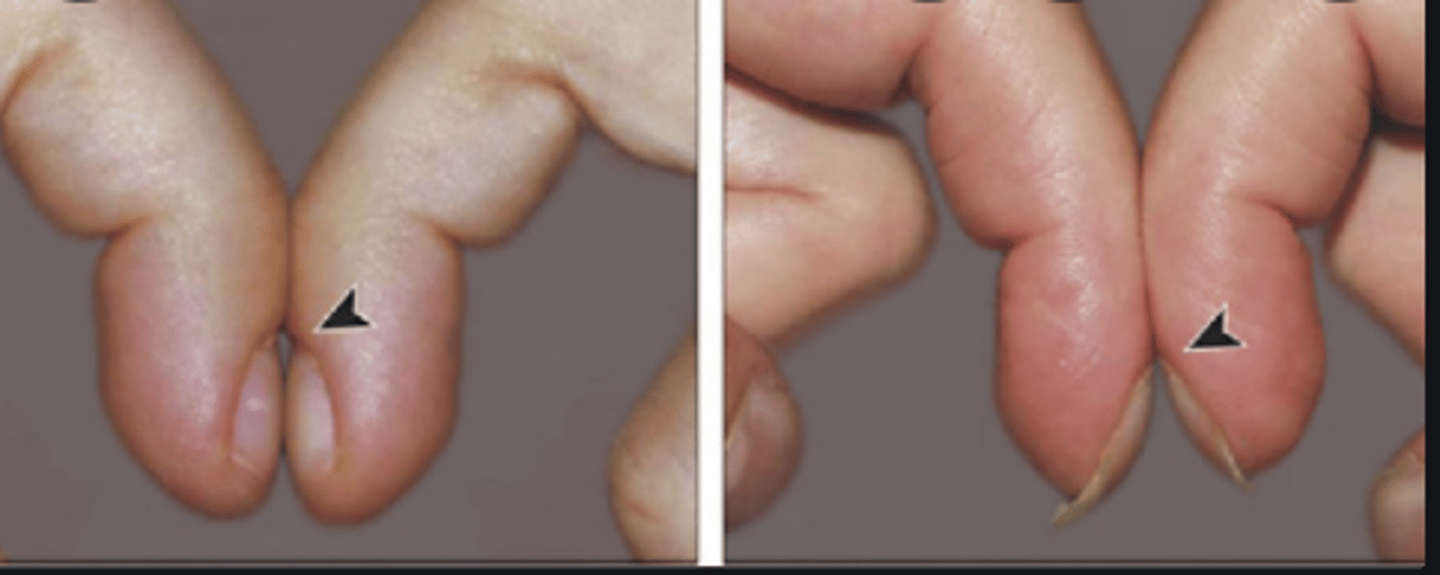
Shamroth's sign
_____'s sign is the absence of the diamond-shaped space between the finger tips in a patient with digital clubbing.
Respiratory disorders
The vast majority of patients with digital clubbing have underlying _____ disorders.
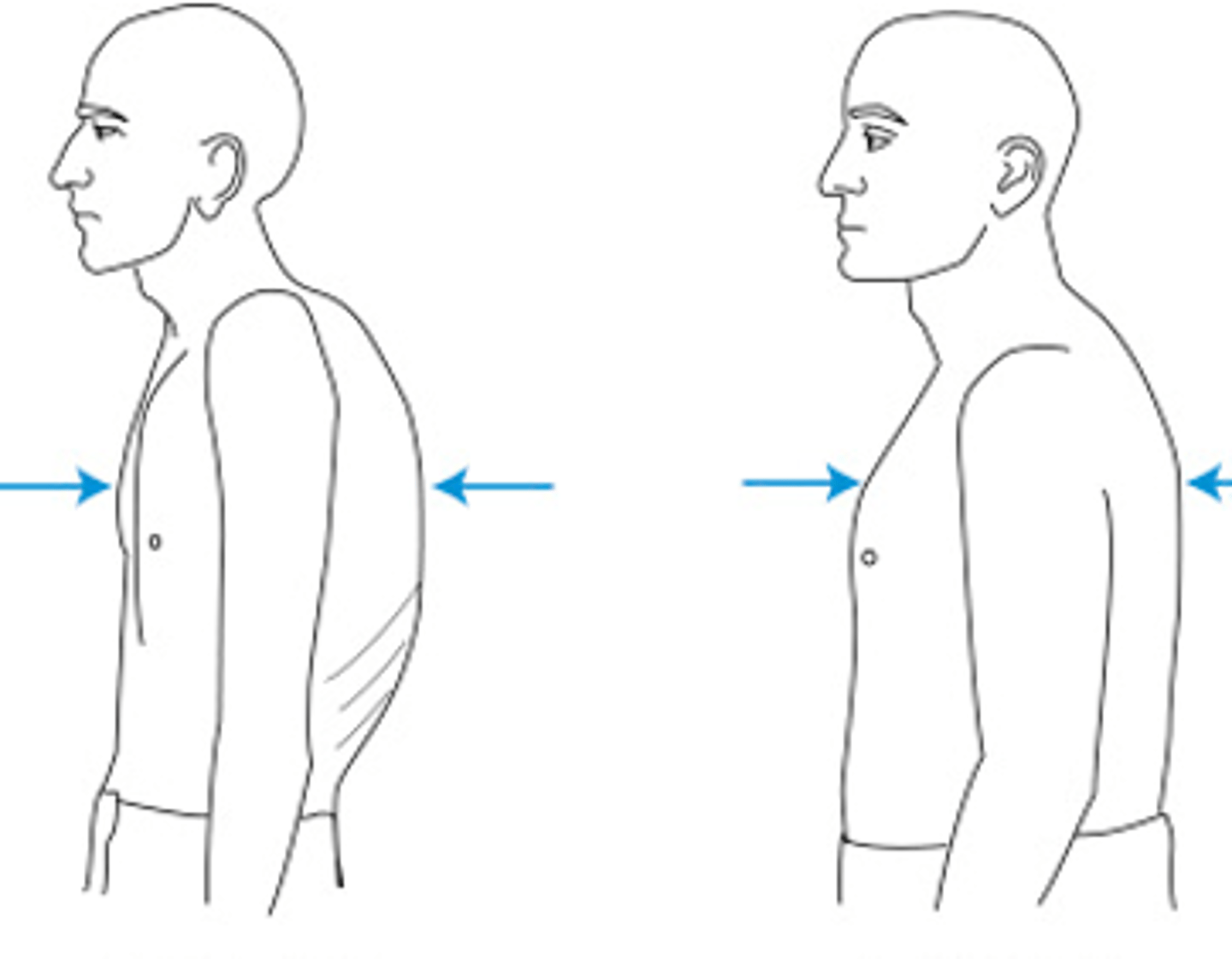
Barrel chest, COPD
What's this chest physical exam finding called (left side)? What underlying condition do they probably have?
COPD
***Increases pressure within the airway during exhalation to prevent airway collapse --> decreases amount of CO2 retained --> less dyspnea
Patients with what chronic lung disease will often engage in pursed lip breathing in order to relieve dyspnea?
Only the diaphragm
During normal respiration, what muscle(s) are used for breathing?
Accessory muscles
The scalenes, sternocleidomastoid, and abdominal muscles are _____ muscles of respiration that can aid in inhalation/exhalation in a patient who is struggling to breath.
Scalenes, sternocleidomastoid
What two accessory muscles can aid in inspiration?
Exhalation
Do the abdominal muscles act as accessory muscles during inhalation or exhalation?
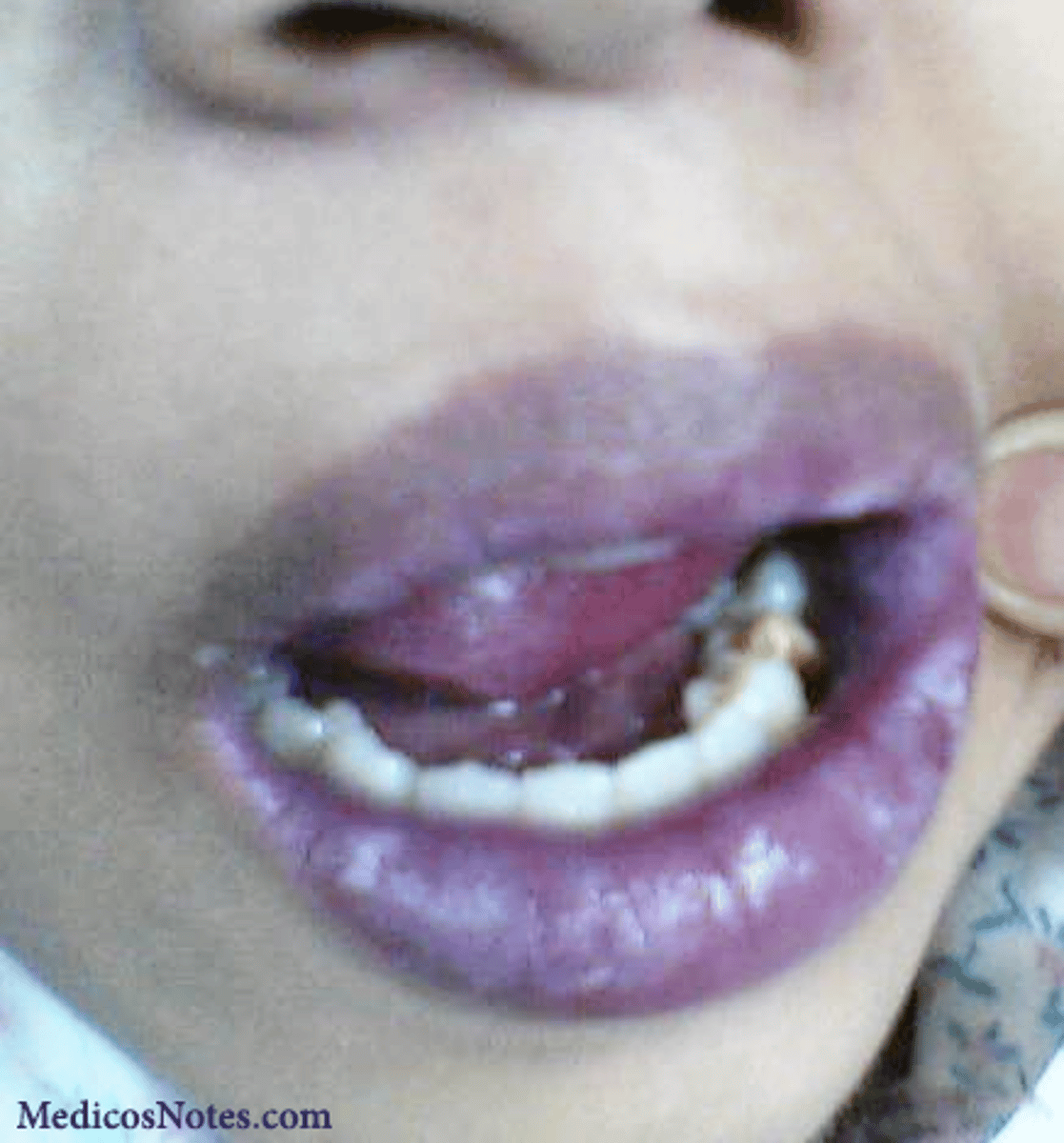
Cyanosis
What's this called?
Subcostal retractions
***Notice that the belly looks like it is getting sucked under the ribs (and that the skin between the ribs is being pulled in)
What type of retractions are seen here?
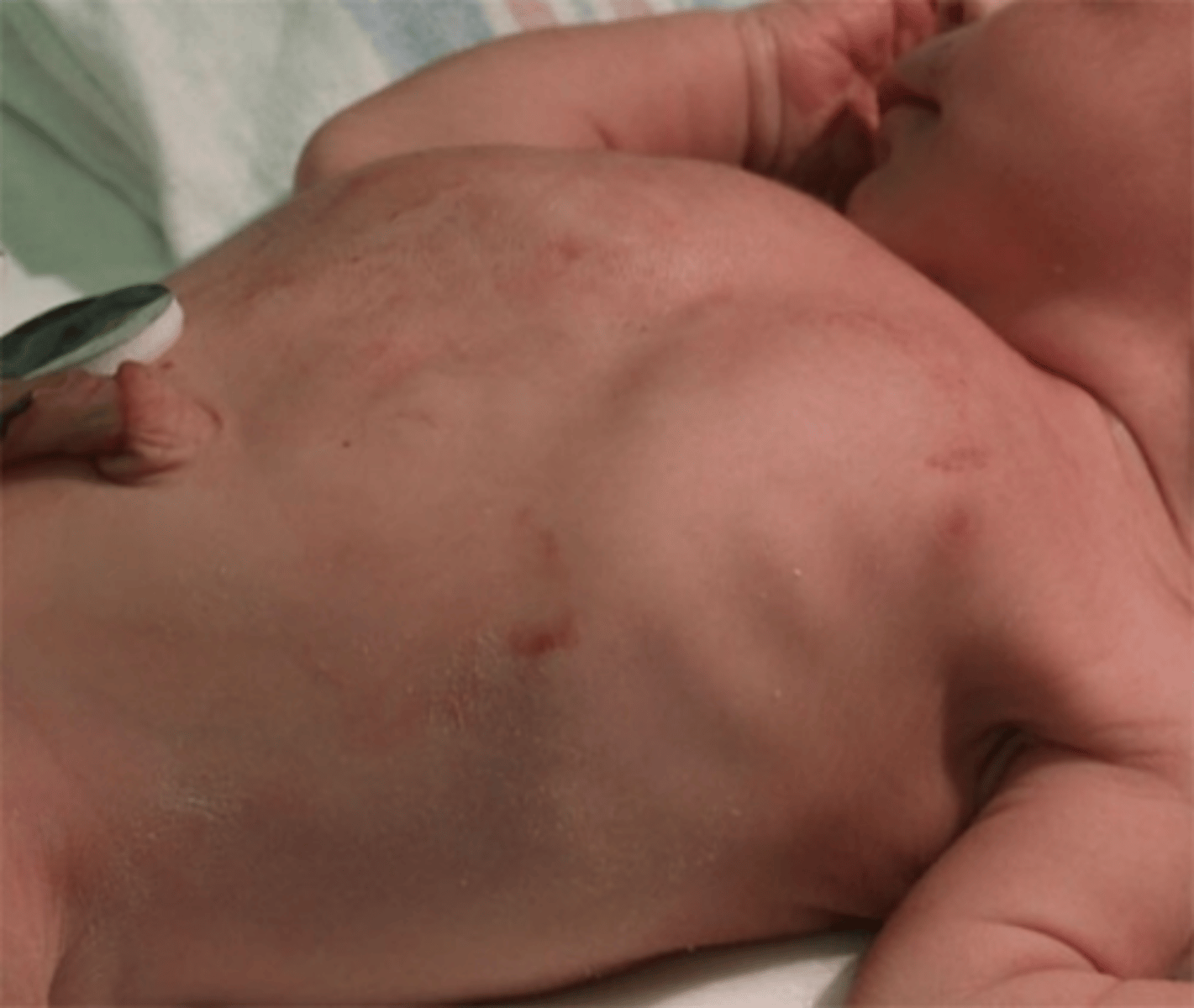
Infants
***Adults are often too "meaty" in between the ribs in order for these retractions to occur
Are subcostal retractions usually seen in infants or adults with respiratory distress?
No, unfortunately the nails will have to be removed
Are you going to get a good pulse oximetry reading on this patient?

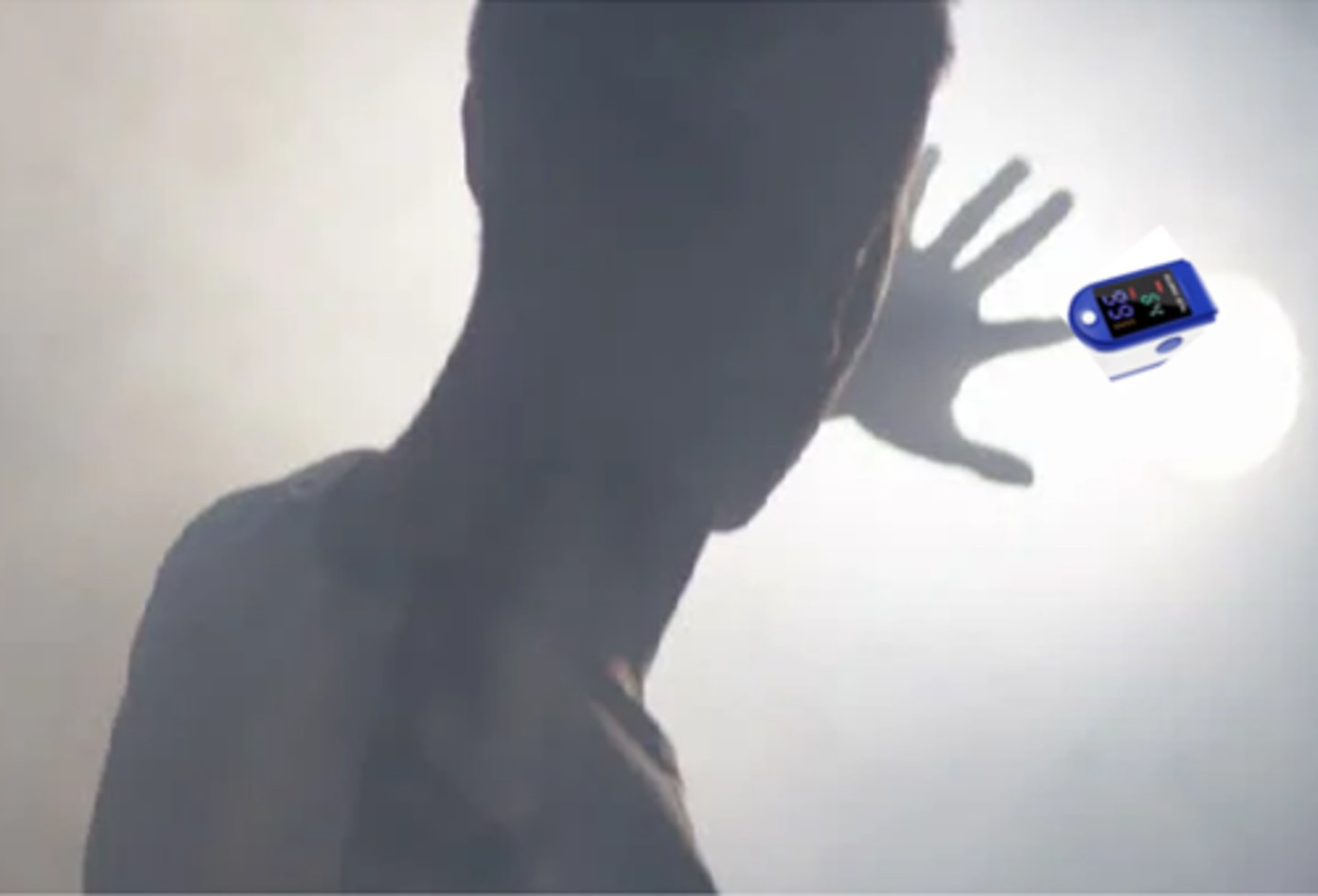
No - bright lights can make the readings falsely low or high
Is this an optimal environment for obtaining good pulse oximetry readings?
No - a pulse oximeter cannot distinguish between carbon monoxide bound to Hgb and oxygen bound to Hgb. The pulse ox might provide a falsely high estimate of her O2 sats.
A patient comes to the ER after using a charcoal grill to heat her house. A pulse oximeter shows normal O2 sats. Do you believe this?
Venous pulsations
Tricuspid regurgitation --> prominent venous wave forms --> pulse ox can mistake the venous wave forms for arterial waveforms and accidentally measure the venous O2 saturation
A patient with severe tricuspid regurgitation might not have an accurate pulse oximeter reading due to exaggerated _____.
Probably not super accurate. Pulse ox might not get a good enough signal to provide an accurate reading in a patient with severe hypotension.
How accurate is a pulse oximeter reading on a patient pale, dusky hands and a blood pressure of 68/40?
Left side
What side would this patient prefer to lie on?
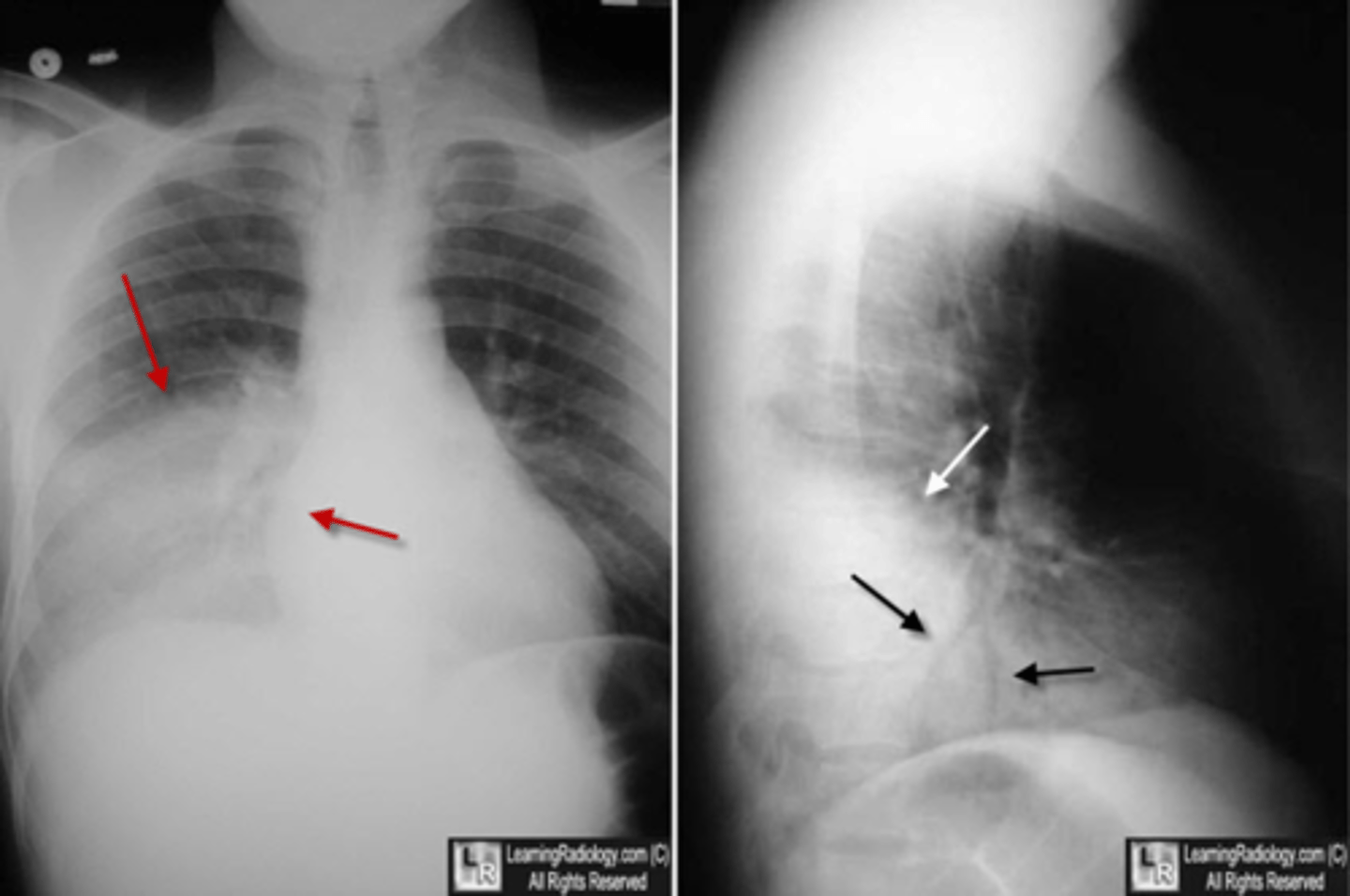
Right lower lobar pneumonia
What's this?
5th rib
The right and left oblique fissures of the lung are located at the level of the ____ rib at the mid-axillary line
6th rib
the right and left oblique fissures of the lung are located at the level of the _____ rib anteriorly (at the mid-clavicular line).
Diaphragm
What part of the stethoscope is used for lung auscultation: bell or diaphragm?
Right anterior chest, right middle lobe
Where is auscultation point 9? What lobe of the lung are you listening to?
Vesicular breath sounds
_____ breath sounds are caused by air moving in and out of the alveoli.
Inhalation
Are vesicular breath sounds heard for a longer period during inhalation or exhalation?
Alveoli, low-pitched, trachea
Vesicular breath sounds are caused by air moving in and out of the _____. These are ____-pitched and are best heard in the areas away from the ____.
Bronchial (tubular)
______ breath sounds are caused by air moving in and out of the bronchi and trachea.
Bronchi/trachea, bronchial tree, near the trachea
Tubular breath sounds are caused by air moving in and out of the ____. These are normally heard ____ (near/far from) the trachea
Crackles
Rales are an old term for ____
Wheezes
Rhonchi is an old term for ____
Both
Are bronchial breath sounds heard during inhalation, exhalation, or both?
Exhalation
Vesicular breath sounds fade quickly during _____.
Soft
Are vesicular (alveolar) breath sounds loud or soft?
No
Is it normal to hear bronchial breath sounds far away from the trachea and major airways?
Exhalation
When listening to bronchial breath sounds, which phase is heard for a longer period of time: inhalation or exhalation?
Loud
Are bronchial breath sounds loud or soft?
Inhalation
***Sound attributed to deflated airways re-inflating during inhalation
When are crackles heard best: inhalation or exhalation?
Pneumonia, heart failure (pulmonary edema), pulmonary fibrosis
***Can also be heard in an atelectatic lung, but this will resolve with a cough
What are three conditions that frequently cause crackles?
Atelectasis
Crackles are initially heard on a lung exam, but then they go away after the patient coughs. What might this suggest?
Wheezes
_____ are abnormal lung sounds that are produced by the passage of air through a narrowed bronchus.
Exhalation (but can occasionally be heard on both)
Do wheezes usually occur on inhalation, exhalation, or both?
No
Does the pitch of a wheeze correlate to the size of the airway involved?
Child - airways are smaller, so the narrowing is more likely to cause a wheeze
Are wheezes more likely to be heard in a child with mild asthma or an adult with mild asthma?
Probably not - wheezing can disappear when a patient is no longer able to move air, so it can be a sign that the patient is actually getting worse.
An asthmatic patient comes to the ER in respiratory distress with lots of wheezing. After starting an albuterol nebulizer, the wheezing disappears, but you notice that the patient is getting really sleepy. Is this a good sign?
Crackles
A rub that is only heard on inhalation can be very difficult to distinguish from _____.
Usually both
Are rubs usually heard on inhalation, exhalation, or both?
Usually just in a particular area where the inflammation is occurring.
Are rubs usually heard throughout the lungs or just in a particular area?
Rub
A _____ is an abnormal breath sound that occurs when inflamed pleural surfaces move against each other.
Rub
Pericarditis, pleuritis, and pneumonia involving the pleura can all cause what abnormal breath sound?
Crackles
What is the main abnormal breath sound heard in patients with heart failure?
Pneumthorax
A patient presents to the ER with shortness of breath. When you palpate the chest, you notice that only one side of the chest is expanding. What might be happening?
Fremitus
_____ refers to the vibrations that are felt when you put your hand on a patient's back and ask them to speak.
Palm at the base of the fingers, Ulnar aspect of the hand
In order to assess tactile fremitus, you must place your ____ or ____ on the patient's back.
Increased fremitus
***Because transmission of vibrations through a liquid is better than through air as long as the airway is patent
Would pneumonia cause increased or decreased fremitus?
Decreased fremitus
***Obstruction of respiratory tract --> decreased transmission of vibration
Would COPD cause increased or decreased fremitus?
Percussion
_____ is is the technique in which you tap on the patient's chest wall and listen to the vibrations produced.
5-7 cm
The vibrations from percussion of the chest wall penetrate about ___ cm into the chest.
In the same 9 spots as used for auscultation.
When you percuss the chest, where do you tap your finger on the patient?
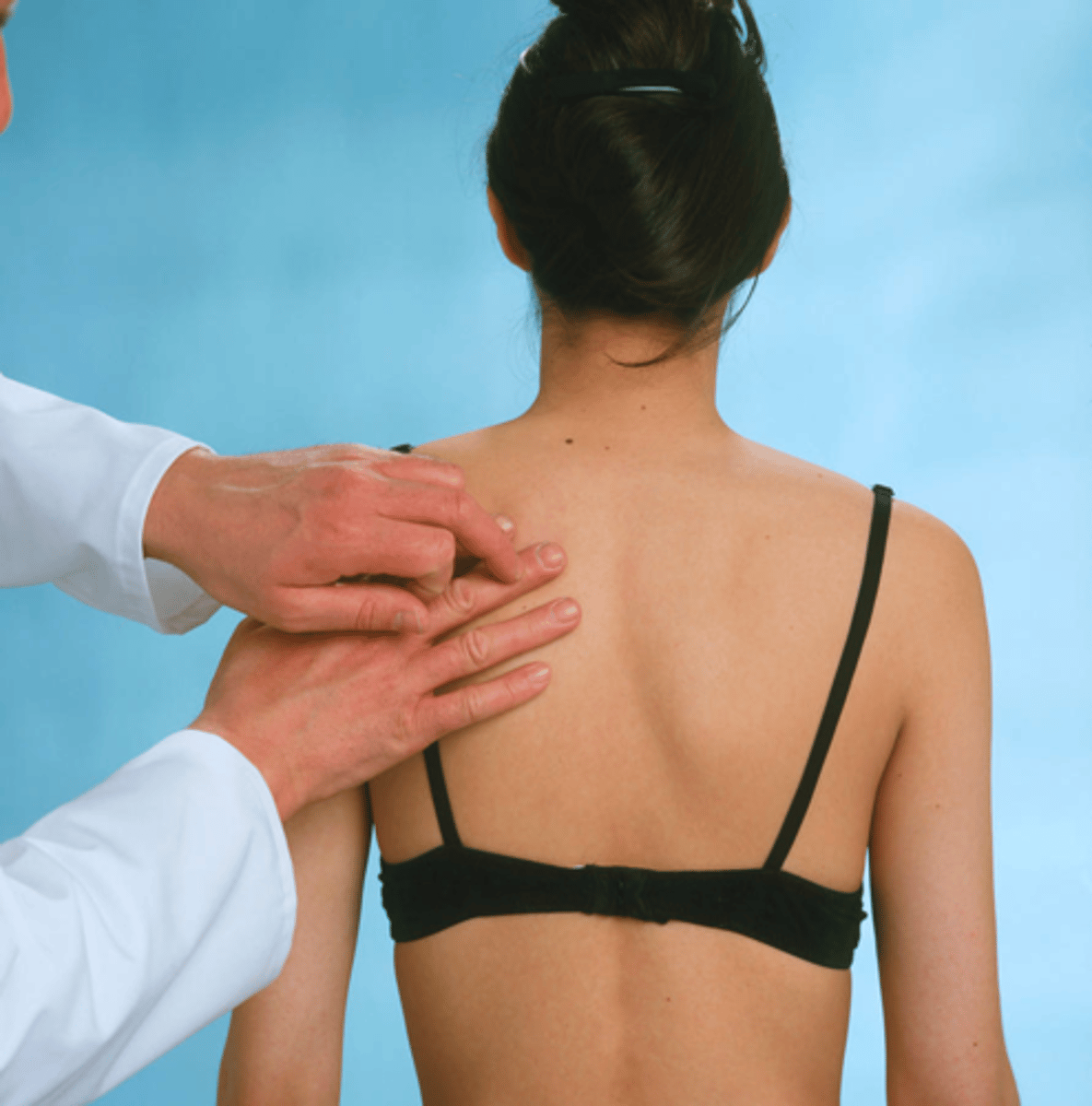
Non-dominant hand
When you are percussing the chest, which hand lays flat on the patient's back ("pleximeter finger"): dominant or non-dominant?
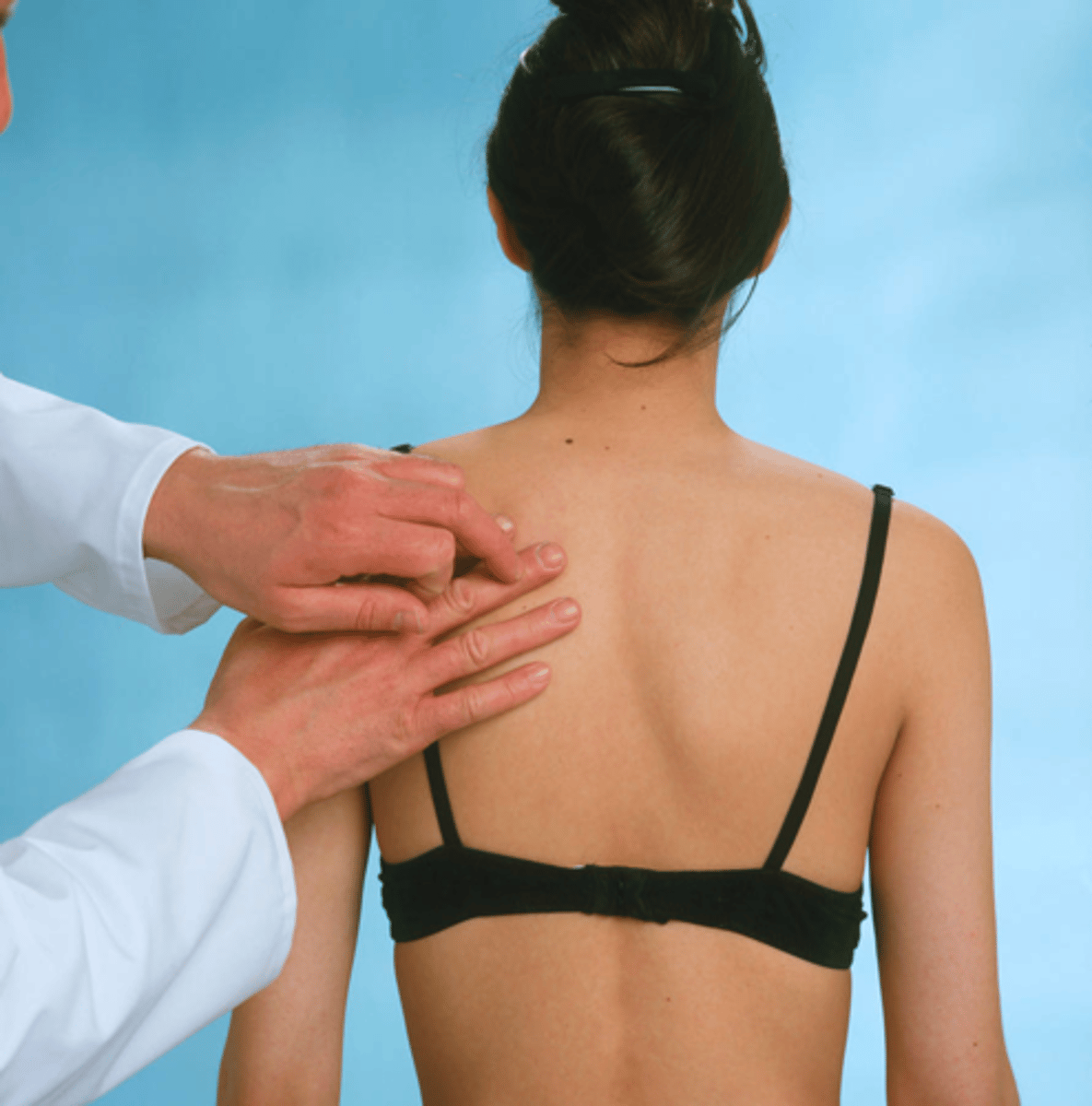
Dominant hand
When you are percussing the chest: which hand is used tap on the DIP of the middle finger your other hand: dominant or non-dominant hand?
Flatness, dullness, resonance, hyperresonance, tympany
What are the five percussion notes that can be produced?
Flatness
If you percuss your thigh, what percussion note/sound is produced?
Soft intensity, high pitch
A percussion sound that is described as "flat" will have ____ intensity and ____ pitch.
Medium intensity, medium pitch
A percussion sound that is described as "dull" will have ___ intensity and ___ pitch
Dull
Percussing the abdomen over the liver will produce a ____ sound.
Resonant
Percussing the chest over normal lung will cause a ____ sound.
Loud intensity, low pitch
Resonant percussion sounds have a ___ intensity and ____ pitch