Year 10 Food Focus: Allergies and Intolerances
 Call Kai
 Learn
Learn Practice Test
 Spaced Repetition
 Match
Match Flashcards
1/15

Earn XP
Description and Tags
Vocabulary based on Year 10 lecture notes regarding the definitions, symptoms, and labelling requirements for food allergies and intolerances.
Name | Mastery | Learn | Test | Matching | Spaced | Call with Kai |
|---|
No analytics yet
Send a link to your students to track their progress
16 Terms
Allergy
Allergy: immune system reacts to substances in the environment that are harmless for most people.
Examples: pollen, mould, dust mites, insect bites and food.
Response: immune system releases large amount of chemicals leading to signs and symptoms of an allergic reaction.
Allergy signs and symptoms
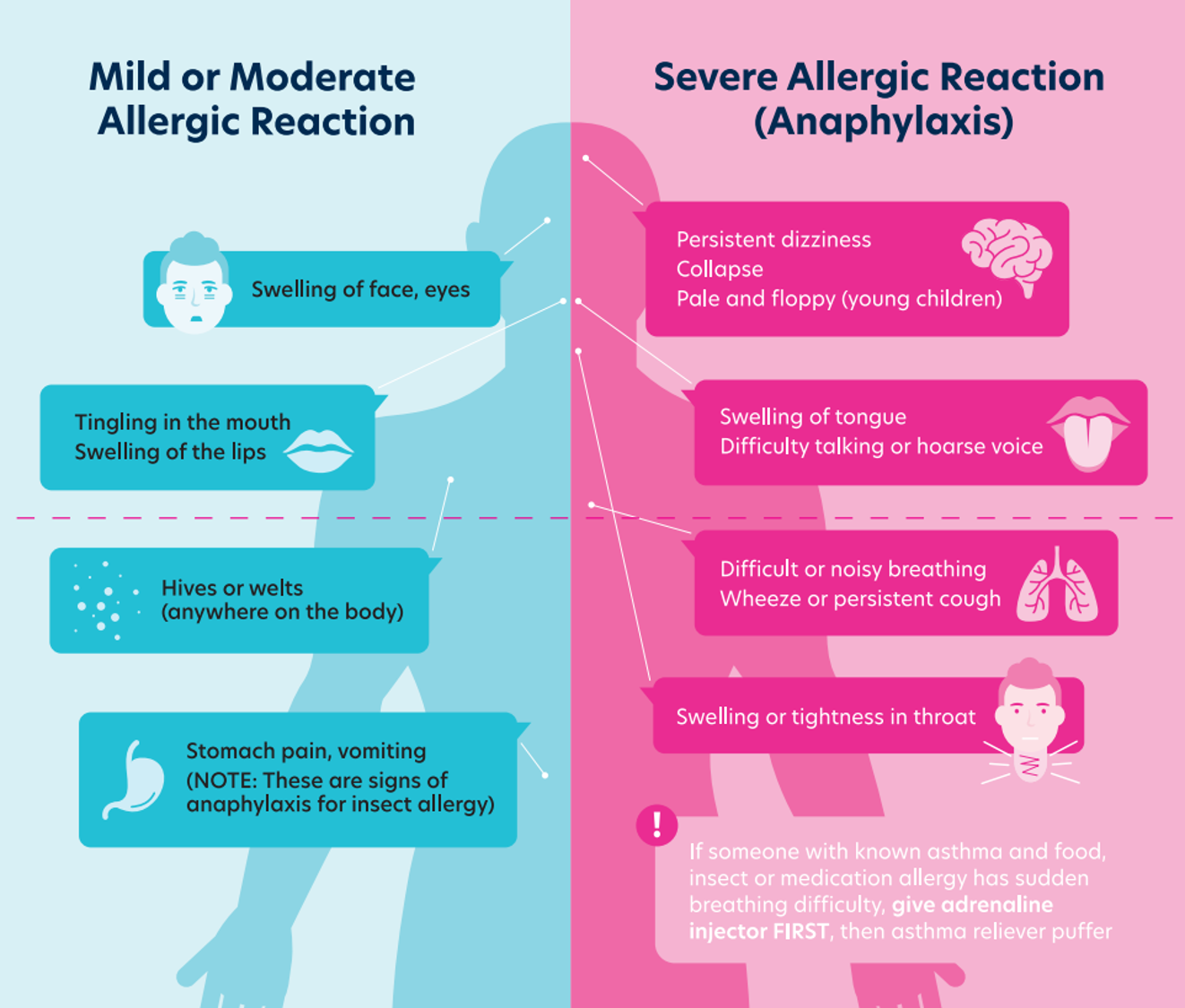
An allergic reaction can involve the gut, skin, breathing and/or heart systems.
Symptoms can be mild to moderate or severe (known as anaphylaxis).
Anaphylaxis
A severe, life-threatening allergic reaction that affects breathing and blood pressure.
Mandatory Allergen Labelling
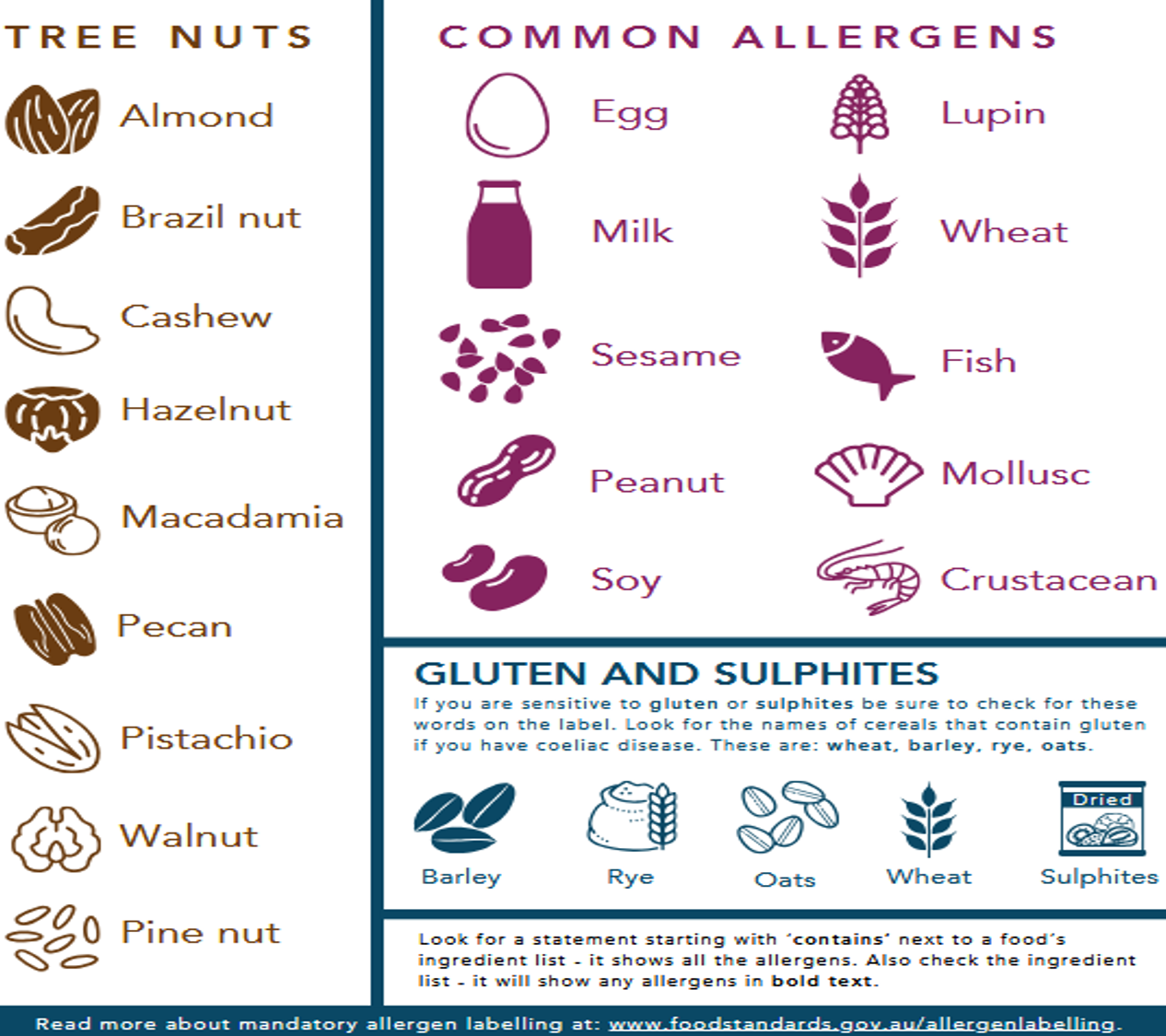
The requirement that allergens be declared in the ingredient list using bolded text and their exact name, followed by a separate summary statement starting with the word 'Contains'.
Allergic Reaction
Common Food Allergens
Precautionary Allergen Labelling
Non-mandatory (companies don’t have to use them) statements used by companies to warn consumers that a food might be accidentally contaminated with an allergen.
Food Intolerance
A chemical reaction to a food that is not an immune response; it typically affects the digestive system and causes symptoms like bloating, stomach pain, or fatigue.
Lactose
A sugar found in milk that can trigger symptoms of food intolerance.
Vasoactive amines
Substances found naturally in a range of foods that can trigger food intolerance symptoms.
Salicylates
Substances found in many herbs, spices, fruits, and vegetables that can trigger food intolerance symptoms.
Monosodium glutamate (MSG)
A substance that is both added to some foods and naturally occurring which can trigger intolerance reactions.
Gluten-containing cereals
Specific grains that must be identified by people with coeliac disease, including wheat, barley, rye, and oats.
Cellular Immune-mediated reaction
The type of reaction characteristic of a food allergy, which affects the immune system and can be fatal.
Coeliac Disease
A condition described as a gluten intolerance requiring a strict avoidance of certain grains like wheat and barley.
Hives
A mild to moderate symptom of an allergic reaction characterized by welts appearing anywhere on the body.