LEC 7: Digital Fabric Printing & Nanography: Technologies, Market Trends, and Applications
 Call Kai
 Learn
Learn Practice Test
 Spaced Repetition
 Match
Match Flashcards
 Knowt Play
1/74

There's no tags or description
Looks like no tags are added yet.
Name | Mastery | Learn | Test | Matching | Spaced | Call with Kai |
|---|
No analytics yet
Send a link to your students to track their progress
75 Terms
What is the primary focus of today's lecture?
Digital Fabric Printing and Nanography
What is the expected compound annual growth rate for the digital fabric printing market through 2030?
12.3%
What was the projected market value of digital fabric printing?
$4 billion
What are the two major market drivers for digital fabric printing growth?
Fast fashion industry's demand for rapid production cycles and the expanding soft signage and display market.
Name a key advantage of digital fabric printing over traditional methods.
Superior print quality, faster turnaround, design without limits, substrate versatility, and environmental benefits.
What does 'superior print quality' in digital fabric printing refer to?
Exceptional detail and color vibrancy.
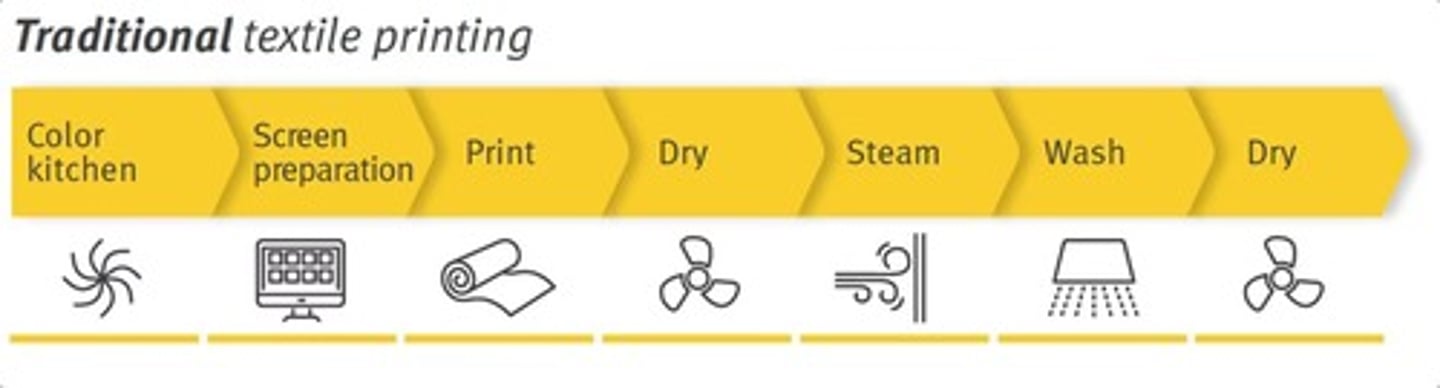
How does digital fabric printing eliminate screen preparation time?
By enabling same-day production and rapid prototyping.
What is the environmental benefit of digital fabric printing compared to traditional methods?
90% less water consumption and 30% less electricity.
What is the EFI Connect 2019 event about?
An industry showcase for leading manufacturers to demonstrate advancements in digital textile printing technologies.
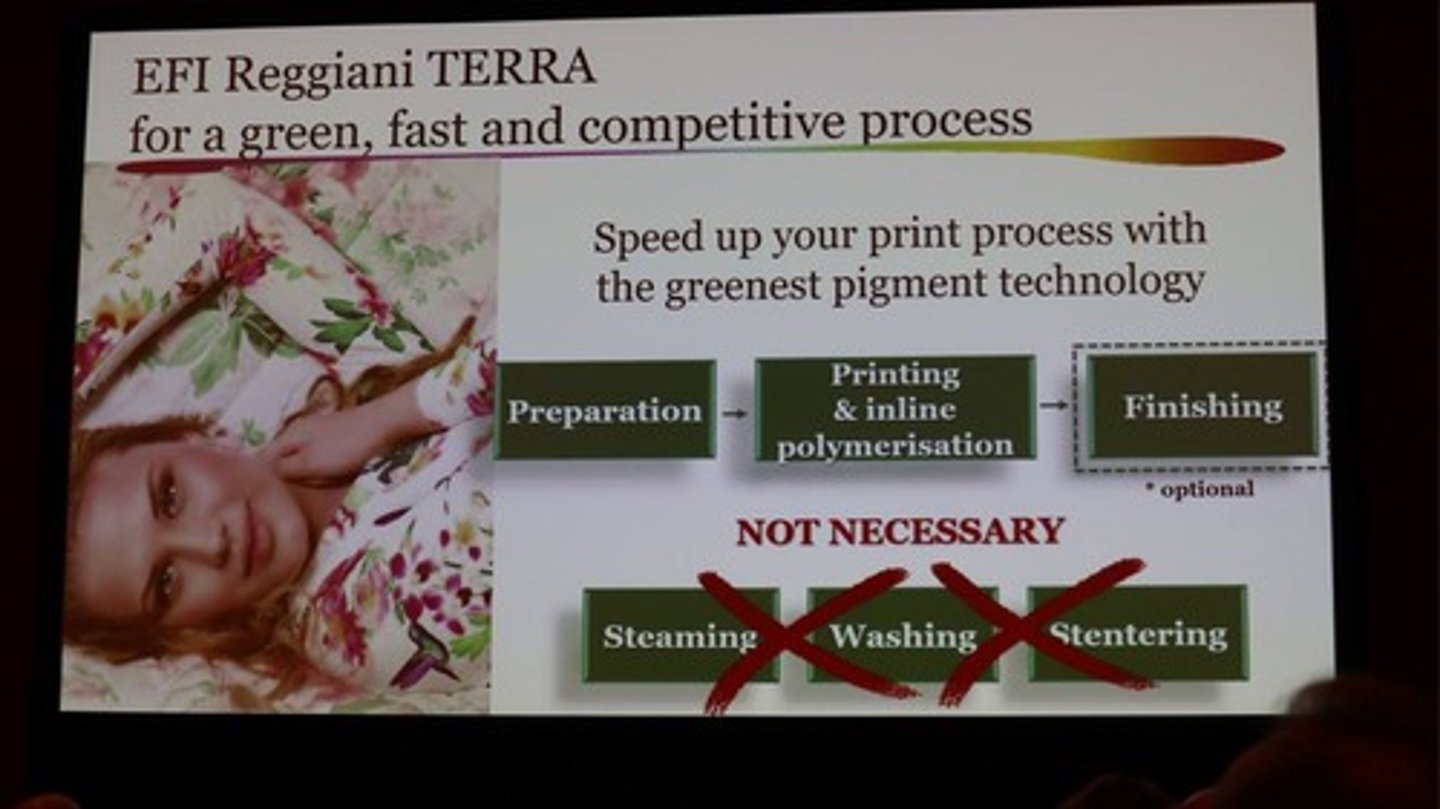
What does the EFI Reggiani BOLT printer specialize in?
High-speed production with water-based inks.
What is the operational speed of the EFI Reggiani BOLT XS?
90 meters per minute.
What is the print width of the EFI Reggiani BOLT XS?
1,830 mm (1.83 meters).
What types of applications are suited for EFI Reggiani printers?
Apparel, accessories, home textiles, sportswear, and footwear manufacturing.
What distinguishes Direct to Garment (DTG) printing?
It prints ink directly onto the fabric surface, best for cotton and cotton-blend materials.
What is the process of Direct to Film (DTF) printing?
Printing the design onto a transfer film first, then applying it to the fabric using heat and pressure.
What are the advantages of DTF over DTG?
Greater versatility and durability, working on virtually any fabric type.
What is the significance of the Durst Alpha 330 in digital textile printing?
It represents a leading solution in industrial digital textile printing.
What are the primary models of EFI Reggiani printers mentioned?
EFI Reggiani BOLT, EFI Reggiani FLEXY, EFI Reggiani VOGUE, EFI Reggiani COLORS, and EFI Reggiani POWER for Fabric.
What is the main feature of EFI Reggiani VOGUE?
Most accurate fabric handling system in the industry.
What does EFI Reggiani COLORS support?
Up to 12 different colors simultaneously with 24 printing heads.
What is the focus of Roland DG's TexArt solutions?
Specialized direct-to-film (DTF) printing solutions for custom apparel decoration.
What are the entry-level digital textile printing options from Epson?
Epson F170 and F570 printers.
What is a key benefit of digital fabric printing technology?
It allows for consistent reproduction across runs without color separation constraints.
What is the role of the fast fashion industry in digital fabric printing?
It drives demand for rapid production cycles and short runs.
What is the significance of the term 'substrate versatility' in digital fabric printing?
The ability to print on virtually any fabric type, including cotton, polyester, and silk.
What environmental impact does digital fabric printing aim to reduce?
It significantly reduces water and electricity consumption compared to traditional printing methods.
What is the price of the Epson V1070 & F1070 DTG & DTF System?
$7,995
What is the price of the Desktop UV Printer?
$12,148.00
What does the Epson V1070 desktop UV printer offer?
Versatility for hard goods and specialty applications.
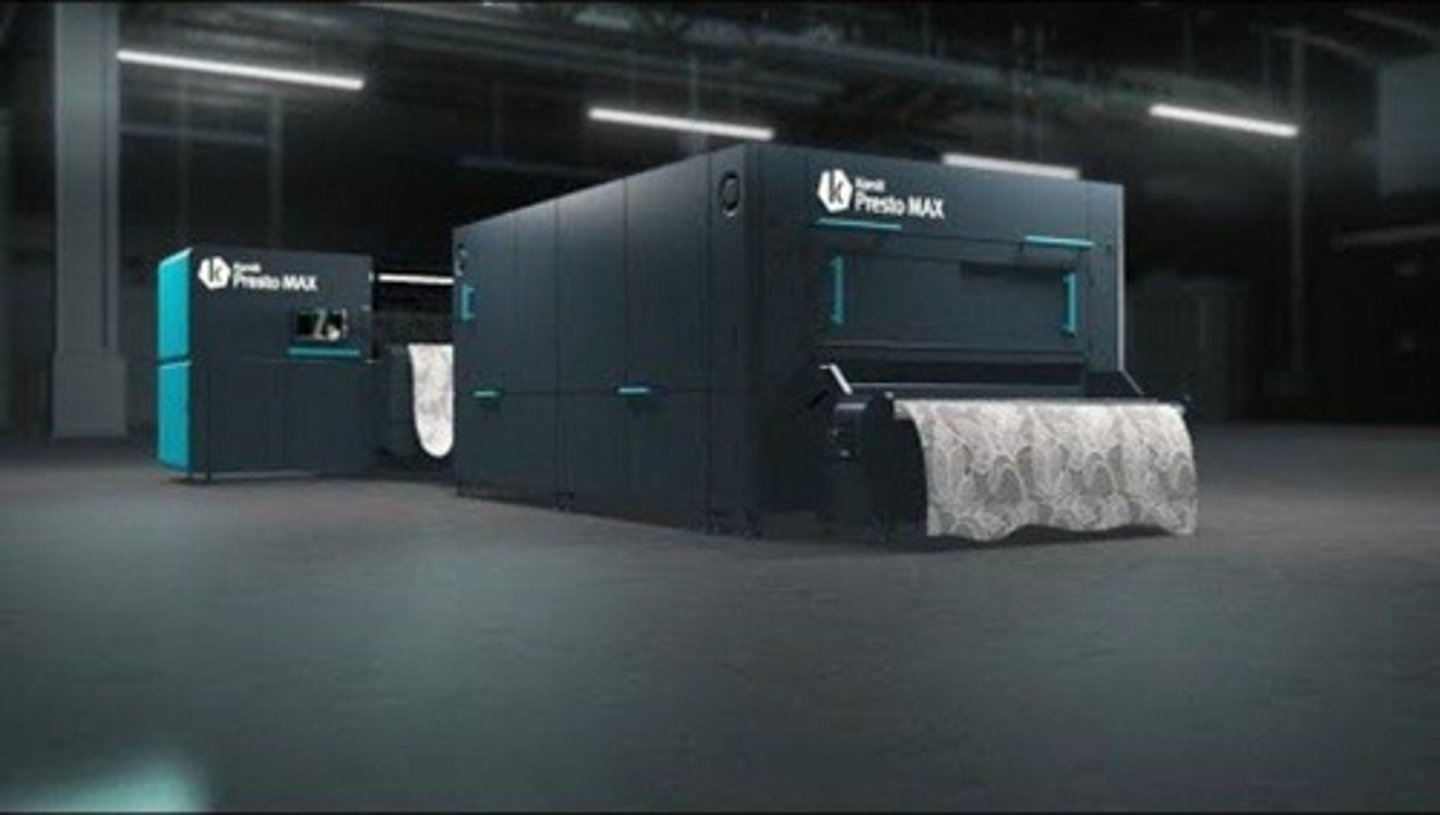
What is the Kornit Presto MAX known for?
Significant advancement in on-demand digital garment printing technology.
What is a major advantage of digital printing over traditional screen printing?
Digital printing eliminates extensive setup and allows designs to go directly from computer to fabric.
What are water-based inks used in digital printing free from?
Dangerous chemical additives that can be toxic to the environment.
How does digital printing reduce water consumption?
It eliminates the extensive water usage required for screen cleaning and dye bath processes.
What is one environmental benefit of digital printing?
Lower energy requirements compared to traditional dyeing and printing equipment.
What does on-demand manufacturing in digital printing support?
Ethical working conditions and reduced carbon footprint of global shipping.
Who is the inventor of nanographic printing?
Benny Landa.

What significant achievement did Benny Landa accomplish in 1977?
Founded Indigo Digital Press Company.
What technology did Benny Landa announce at Drupa 2012?
The revolutionary Landa nanographic sheetfed press.
What is the size difference between ink particles used in HP Indigo presses and nanographic printing?
HP Indigo uses micron-sized pigments (10^-6 meters), while nanographic printing uses nano-sized particles (10^-9 meters).
Describe the first step in the nanographic printing process.
Water-based nano ink is precisely jetted onto a heated transfer belt.
What happens to the water component in the nanographic printing process?
It rapidly evaporates under controlled heat.
What is formed on the transfer belt after the water evaporates in nanographic printing?
A semi-solid, plastic-like film.
What is the distance maintained by the inkjet heads in the nanographic printing process?
Only 1-2mm from the blanket.
What does the nanographic printing process combine from offset and digital printing?
The quality and color gamut of offset with the flexibility and personalization capabilities of digital technology.
What is one of the key benefits of digital printing technology?
Consistent quality across printed pieces.
What does nanographic printing technology achieve in terms of print quality?
Unprecedented print quality and efficiency.
What is the impact of Benny Landa's work on the printing industry?
His innovations have transformed how the industry operates, making high-quality commercial printing more accessible and efficient.
What does the term 'eco-friendly technology' refer to in the context of digital printing?
Digital systems enable on-demand manufacturing and reduce waste.
How does digital printing technology support animal-safe operations?
Digital printers and inks are safe around animals, though fabric sustainability depends on sourcing and production practices.
What is a key advantage of nanographic printing over traditional digital printing?
It produces smoother color transitions and sharper edges.
What type of image quality does nanographic printing rival?
Traditional offset lithography.
What is the significance of nano-sized ink particles in printing?
They create a continuous tone image and improve print quality.
What are some print quality improvements achieved with nanographic printing?
Sharper edges, smoother gradients, superior detail, accurate color reproduction.
How does nanographic printing compare in ink film thickness to traditional methods?
It produces the thinnest and most uniform ink film.
What are the benefits of the thin ink film produced by nanographic printing?
Sharper image detail, more efficient ink usage, better color saturation, reduced ink consumption, and faster drying times.
What does the extended color gamut of Landa's nanographic printing allow for?
More vibrant packaging and accurate brand color matching.
What market gap does Landa's nanographic printing technology aim to fill?
The gap between high-volume offset printing and shorter-run digital printing.
What is the flagship model of Landa's nanographic press?
The Landa S10.
What are some key features of the Landa S10 press?
It combines nanoink technology with proven mechanical systems for commercial applications.
What is the production capacity of the Landa S11 press?
11,200 sheets per hour.
What is the print resolution of the Landa S11 press?
1200 x 1200 dpi.
What does the Landa W10 web press target?
High-volume publication printing, direct mail, and packaging markets.
What technology does the Landa W10 utilize?
Nanographic printing technology for web-fed applications.
What are the benefits of using Landa inks in food packaging?
They meet stringent regulations for indirect food contact.
What is the role of Fujifilm Dimatix SAMBA heads in Landa presses?
They deliver high-resolution printing with exceptional image quality.
What is one of the main challenges that nanographic printing addresses?
The need for offset-quality output with digital flexibility.
What are some current installation sites for the Landa S10 press?
GRAPHICA BEZALEL (Israel), Mercury Printing (NY), Edelmann Group (Germany).
How has the design of Landa presses evolved since their initial unveiling?
Through engineering refinement and feedback from beta testing.
What is the primary advantage of nanographic printing in terms of production?
It offers offset-quality output economically for medium-length runs.
What is the expected outcome of Landa's ongoing innovations?
Increased productivity and improved print quality.
What does the term 'extended color gamut' refer to in nanographic printing?
The ability to reproduce a wider spectrum of colors than traditional CMYK.
What is the significance of the Landa S11 and S11P presses?
They represent significant performance upgrades to the nanographic platform.
What does the term 'workflow integration' refer to in the context of Landa presses?
Seamless integration with existing printing workflows.
What is the benefit of reduced ink consumption in nanographic printing?
Lower operational costs and environmental impact.
What type of applications is nanographic printing particularly suited for?
Packaging, commercial printing, publications, and direct mail.