PLAN 3860: Final
 Call Kai
 Learn
Learn Practice Test
 Spaced Repetition
 Match
Match Flashcards
 Knowt Play
1/75

There's no tags or description
Looks like no tags are added yet.
Name | Mastery | Learn | Test | Matching | Spaced | Call with Kai |
|---|
No analytics yet
Send a link to your students to track their progress
76 Terms
Project Coyote
North American non-profit organization that promotes compassionate conservation and coexistence between humans and wild carnivores). Mission to change how wild carnivores, coyotes, bears, wolves, etc., are viewed and treated, advocating for their protection. Use of science, education, and advocacy, the groups works to shift federal and state polices away from lethal predator control toward non-lethal, science-based solutions. Science and ethics → “Keeping it Wild”
BearWise
B.C. Canada Cities, city to coexist with Black bears, don’t feed the, bear proof trashcans, successful program, brough tourism to the area
Help people live responsibly with black bears
6 At-Home Basics:
Never Feed or Approach bears
Secure Food, Garbage and Recycling
Remove Bird Feeders When Bears are Active
Never Leave Pet Food Outdoors
Clean & Store Grills
Alert Neighbors to Bear Activity
Emily Fairfax
Ecosystem Restoration as Climate Adaptation. She did work in creating advocacy for all the wonderful work beavers do. Stop-motion video on how beavers create responses to wildfires → acting as “Widlfire Breaks”
Pond Levelers and “Beaver Deceivers”
How we tend to coexist with beavers is by building these. They are non-lethal, sustainable “flow devices” used to prevent flooding caused by beaver dams while allowing beavers to remain in their habitat. These manage water height via pipes through a dam, while the latter are fencing systems that stop beavers from plugging culverts
P-22 Mountain Lion
Mountain Lion in California, many of them get hit by cars. This lion lived in a park, eventually was found hit by a car, but further investigation showed poisons in its system, and had to be euthanized. People honored the lion in the Hollywood Bowl, performance’s held in the lion’s honor.
Milkweeds for Monarchs (St Louis)
The St. Louis Butterfly Project, city-led initiative launched in 2014 to create vital habitats for monarch butterflies by planting native milkweed and nectar plants. The program encourages residents to create butterfly gardens, aiming to restore habitat in St. Louis for the migrating butterflies. Aim to combat the decline of monarch butterflies
Mayor advocated, exceeded goal and made a milkweed corridor along the Mississippi River
Homegrown National Park
Grassroots, non-profit movement co-founded by Doug Tallamy to regenerate biodiversity by planting native species and removing invasive plants on private property. Aims to convert 20 million acres of lawn into, or connect existing, eco-friendly, native habitats, creating conservation corridors
The Goal: to create a “national park” composed of interconnected private yards, gardens, and community spaces to combat biodiversity loss.
Use of shrinking lawns, planting native, remove non-native and interactive mapping, logging plant efforts to create map to visualize impact.
Working on the individual scale to make an impact.
Re-thinking the Lawn
40 million acres of turfgrass
“Homeowners put roughly the same amount of fertilizer on their lawns as is used in agriculture.”
Extensive use of herbicides and pesticides
8 billion gallons of water each day
What is Missing?
Native plants and trees
Keystone species
Groundcover and nesting sites for native bees
Water
Seattle Pollinator Pathway
Initiative by Sarah Bergmann, one of the first pollinator pathways, planting native species along one corridor
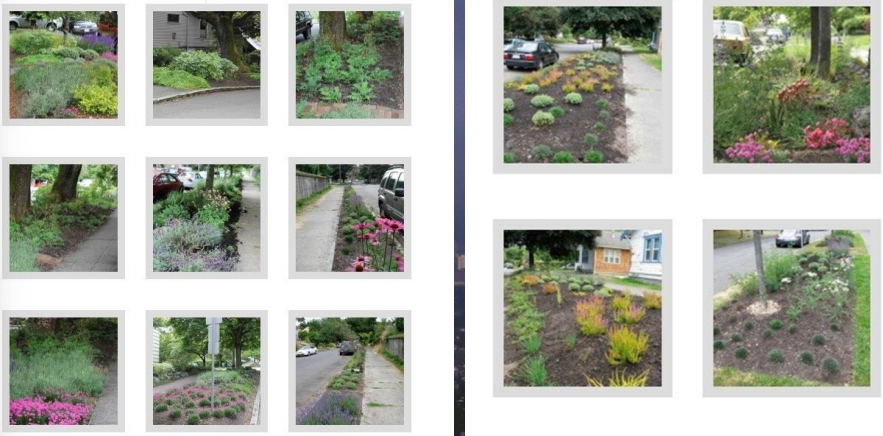
San Francisco Green Connections Network
A planning initiative designed to increase access to parks, open spaces, and the waterfront by upgrading city streets into greener safer, and more pleasant walking and biking corridors. Aims to enhance urban ecology, support biodiversity, and improve public health over a 20-year period.
“Salamander Crossing Brigades”
hundreds of volunteers with headlamps and pick up salamanders and take them to the other side of the road. Part of the Harris Center for conservation education
Monarch Sanctuary (design by Terreform One)
Observed live butterflies in their test lab to see what sorts of external stimuli they reacted to and based on that came up with an aesthetically pleasing facade with seasonal vents that can be opened as needed
a pioneering 8-story mixed-use building designed for Nolita, NYC, featuring a "vertical butterfly meadow" facade that acts as a breeding ground and habitat for endangered monarch butterflies. It integrates milkweed-filled terrariums into its building skin, atrium, and roof, aiming to increase urban biodiversity
Seattle Green Factor
One Seattle comprehensive plan, many cities with lessening zoning provisions to build more → densifying units, ADUs. Led to a lot of conflicts around trees, loss of trees in building density.
Planning method: requirement to green a certain degree based in a point system replace what is being taken away by construction
a score-based, code-mandated landscaping requirement for new developments, aiming to increase urban greening, reduce stormwater runoff, and mitigate heat islands. It requires developers to meet a minimum score (typically 0.3) using a menu of features like green roofs, permeable paving, and diverse, drought-tolerant plantings
Green Area Ratio (GAR)
an environmental sustainability zoning regulation that sets minimum standards for landscape and site design, often applied to new buildings or major renovations to reduce stormwater runoff, improve air quality, and mitigate urban heat islands.
Calculated ration of weighted value of landscape elements to total lot area
Landscape Replacement Policy (LUSH)
Singapore program requiring developers to replace greenery lost during development with new greenery in the form of sky terraces, roof gardens, and vertical greening. Mandates that the total replacement landscaping at least equals the development site area, promoting a “City in Nature” by regeneration green spaces into high-rise, high density environments
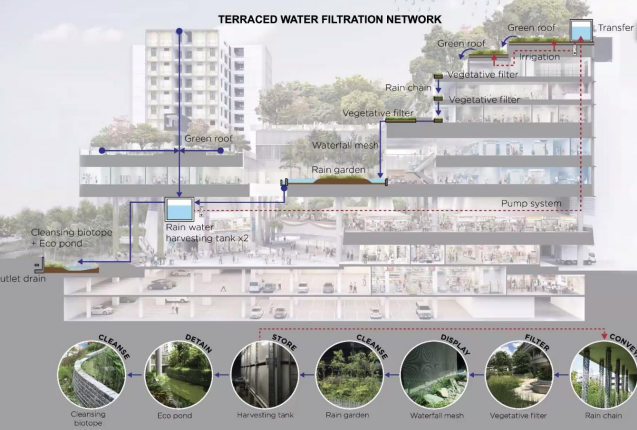
Kampung Admiralty
Singapore’s first integrated “vertical village” development designed to meet the needs of an aging population by stacking healthcare, social, commercial, and residential facilities in a single 11-story complex. Terraced water filtration network
Designed by WOHA architects
Superblocks
groups several city blocks (typically 3×3) into a single, cohesive unit, restricting through traffic to the perimeter to prioritize pedestrians, cyclists, and green space in the interior. Began in Barcelona
Portland Green Streets
landscaped, engineered facilities, such as rain gardens, bioswales, and planters — intgrated into city streets to manage stormwater runoff at its source.They use vegetation and soil to filter pollutants, slow water flow, and reduce volume by 50-90% before it enters the sewer system, doubling as street beautification.
Shrinking Cities
a special subset of older industrial cities, with significant and sustained population loss (25% or greater over the past 40 years) and increasing levels of vacant and abandoned properties, including blighted residential, commercial and industrial buildings.
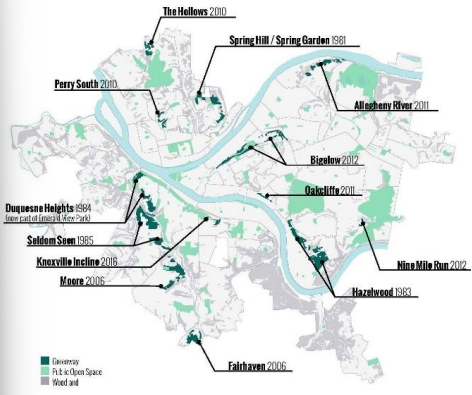
Pittsburgh’s Greenways
Pittsburgh’s Population less than half it’s 1950 peak.
Defined as a permanently conserved primarily passive, open space that is stewarded primarily by the community and serves to benefit adjacent a neighborhoods and general public
12 of these total 605 acres
Mansfield Fraser (and Chateau Hough (Cleveland))
Community activist, writer, and winery owner, passed away at 78.
founded Chateau Hough, a pioneering urban vineyard and winery, in 2010. Located in Cleveland's Hough neighborhood, Chateau Hough aimed to revitalize vacant lots and provide jobs for formerly incarcerated individuals, aiming to turn disadvantaged neighborhoods into prosperous places. viewing his work with the winery as a second chance to help others. The vineyard functioned as a vocational training ground for at-risk youth and formerly incarcerated individuals, helping them re-enter society through jobs and entrepreneurship
Determined nature enveloped his spirit. Some people thought a winery in Cleveland wouldn’t work, but he did it anyway, hiring a number of formerly incarcerated people to work there. Global Cleveland president Joe Cimperman, who served on Cleveland City Council for 19 years, described Frazier as ‘fearless.’ ‘It’s hard to imagine a Cleveland without Mansfield Frazier,’ said Thomas Mulready, a close friend and founder of the Cool Cleveland publication. ‘He’s had that much of an impact on this town.’
Philadelphia Orchard Project
Philly has over 40,000 vacant lots
a non-profit organization that plants and supports community orchards in formerly vacant lots, schoolyards, and community gardens to expand access to fresh fruit, provide environmental benefits, and offer educational opportunities in low-wealth neighborhoods. Since its inception, POP has established over 70 orchards, planting thousands of trees, shrubs, and vines
Philadelphia Green (PHS)
s the urban greening program of the Pennsylvania Horticultural Society (PHS). It is one of the most prominent and longest-running urban greening initiatives in the United States, focused on improving public health, community safety, and environmental equity through horticulture.
While the specific "Philadelphia Green" title was largely rebranded into PHS’s "Healthy Neighborhoods" division, its core work continues to transform Philadelphia’s urban landscape, particularly by tackling the city's high number of vacant lots
pop-up garden: program that temporarily transforms vacant lots into urban oases and helps energize neighborhoods
City harvest: community gardens create produce for families in need
Park in a Truck (Philadelphia)
a "do-it-yourself" toolkit and initiative developed by Thomas Jefferson University to help community members transform vacant lots into neighborhood parks. It guides residents through the design, building, and maintenance process, often employing local youth to build green spaces.
Guiding principles: builds equity through participation:
process of designing, building and maintaining a community parks disrupts the status quo of who gets what
provides positive avenues for youth
provides places for connection
beautifies
Builds on and celebrates existing community networks and resources:
provides spaces for community events and activities
universally accessible
fights social isolation
inter-generational
celebrates history of neighborhood
socially resilient
Milwaukee Urban Ecology Center
nonprofit that connects urban residents to nature through environmental education, community programming, and restoration of local parks. With three locations (Riverside Park, Washington Park, and Menomonee Valley), it operates green facilities that offer equipment lending, outdoor education, and community science, fostering ecological awareness
Gotham Whale
Paul Sieswerda, whales moving through the city harbor in New York case study (humpback whales).
Nonprofit dedicated to record sightings, warn people of presence and celebrate these creature (whale watching crews)
Pier into the Night
a free, seasonal marine education program by Harbor WildWatch in Gig Harbor, WA, where scuba divers live-stream underwater footage from the Puget Sound to a large screen on the dock. Running October to March, it showcases nocturnal sea creatures like squid and sea worms, with biologists narrating the live feed
Divers use cameras to show viewers on the dock (or at events like 7 Seas Brewing) what is living directly below them, featuring species seldom seen during the day.
Philip Henry Gosse
Victorian era writer on marine life, one of the first people to organize low-tide shoreline walks in Great Britain, idea that those who are ill would go to the winter/coast, raised importance on the amazement of Marine life, coined term aquarium.
Fascination with watching fish, lingering
Book: The Ocean: one of the first books to have colored imagery of marine organisms
Seattle Seawall
a 7,166-foot reinforced concrete structure along Elliott Bay that protects downtown Seattle's waterfront infrastructure, including Alaskan Way and utility lines, from erosion and earthquake-induced liquefaction. Completed in 2017, the $410 million "eco-engineered" replacement replaced a 1934 wall, integrating salmon-friendly habitats
It acts as a necessary barrier between the saltwater of Elliott Bay and the city’s waterfront, which was built on filled land that is vulnerable to collapse.
Coral City Camera
a 24/7 live-streaming underwater camera located in a bustling industrial shipping channel at PortMiami, Florida. Launched in 2019 by Coral Morphologic, it highlights a resilient "urban reef" thriving on man-made infrastructure, showcasing nearly 220 fish species and 20 species of coral to promote local biodiversity
The camera acts as a hybrid art-science project (part of the WATERPROOF initiative) that studies how corals adapt to urban environments while fostering civic pride in Miami's marine life
Billion Oyster Project (BOP)
a massive ecosystem restoration initiative aiming to restore one billion live oysters to New York Harbor by 2030, spearheaded by NYC community engagement. By restoring these reefs, BOP improves water quality—as one oyster filters 50 gallons daily—boosts biodiversity, and protects city shorelines from storm surges
Community-Supported Fisheries (CSFs)
programs where consumers buy "shares" or subscriptions directly from local fishermen in advance, receiving a portion of the catch on a regular schedule. Modeled after community-supported agriculture (CSAs), they provide fishermen with upfront capital, stable prices, and direct access to consumers, while members receive traceable, fresh, and seasonal seafood
Direct-to-Consumer: By removing intermediaries, CSFs ensure better pay for fishermen and increased transparency for consumers regarding who caught their food and how.
Sustainability: CSFs often prioritize smaller-scale, lower-impact fishing methods, helping to reduce the carbon footprint of seafood distribution and reducing pressure on overfished stocks by promoting diverse, local, and underutilized species.
Subscription Model: Consumers typically pay up front for weekly or monthly shares of local catch.
South Mountain Park
17,000 acres
When it was being constructed as a city park in 1920s it was owned by federal government. Government sold land to city as a park
lots of trails and activities
unique flora and fauna: chuckwallas, elephant trees
largest urban park in U.S.
Burrowing Owls
Rio Salado burrowing owls are a population of small, ground-dwelling owls protected through a conservation project at the Nina Mason Pulliam Rio Salado Audubon Center in Phoenix, Arizona. This initiative uses artificial burrows to provide safe nesting sites in the Salt River habitat, protecting them from regional development and urbanization
public project to build artificial burrows for owls to live in. They typically depend on prairie dog cavities and other animal burrows to live in as the owls do not create the burrows themselves
McDowell Sonoran Preserve (and Conservancy)
Scottsdale, AZ
trails
citizen-based managed approach rather than managed by a parks department, stewards are trained to upkeep and give tours
Jane Rau: co-founder of this, doctor recommended that her time outdoors and working led to better health and bone-density
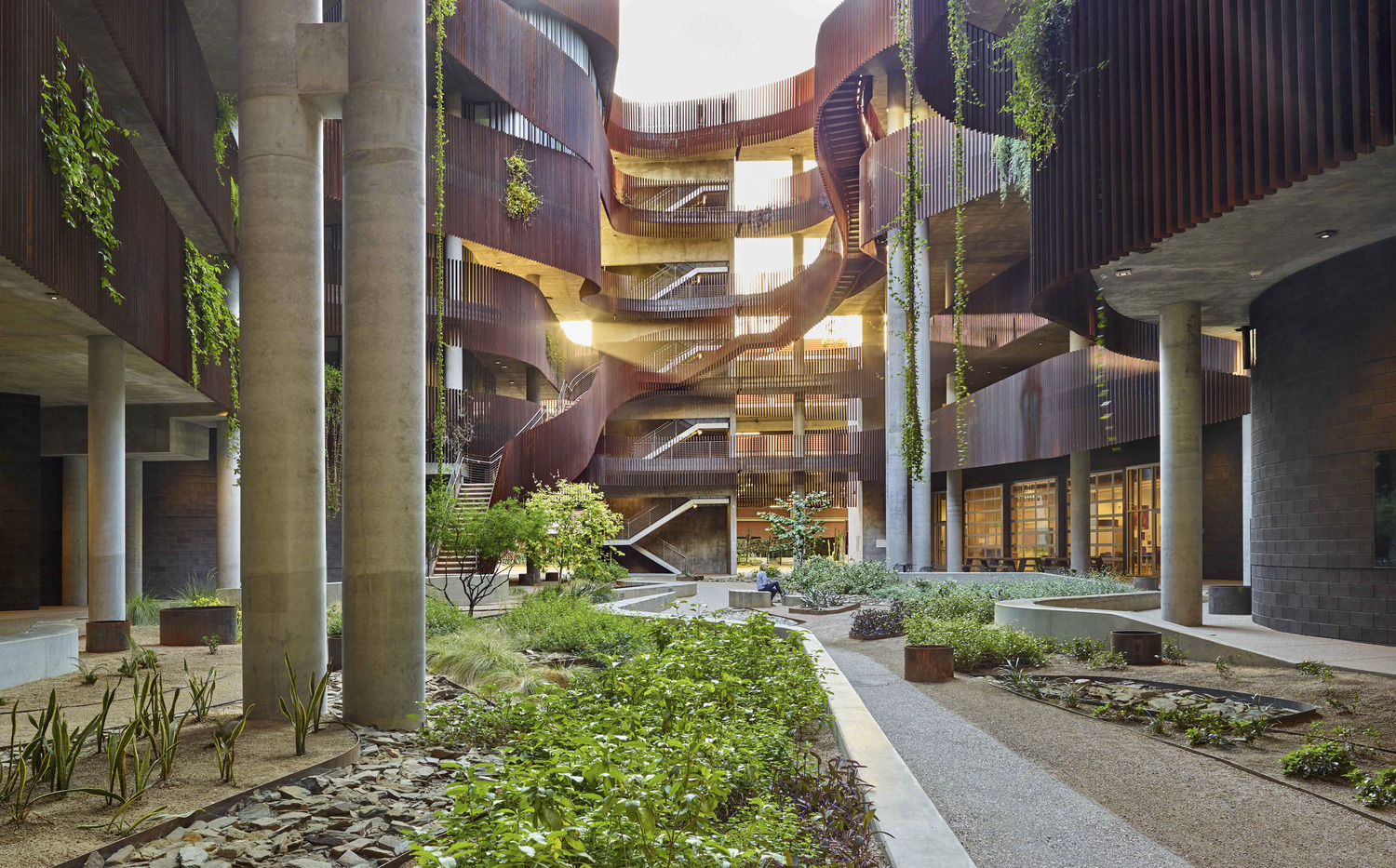
Environment and Natural Resources Building (ENR2) at Univ. of Arizona
LEED platinum-certified, five-story building in Tucson completed in 2015, designed to function as a “living laboratory” for sustainability. It serves as a hub for interdisciplinary environmental research, housing Arizona Institute for Resilience (AIR), faculty office, classrooms and a central, canyon-inspired courtyard
Culdesac (Tempe)
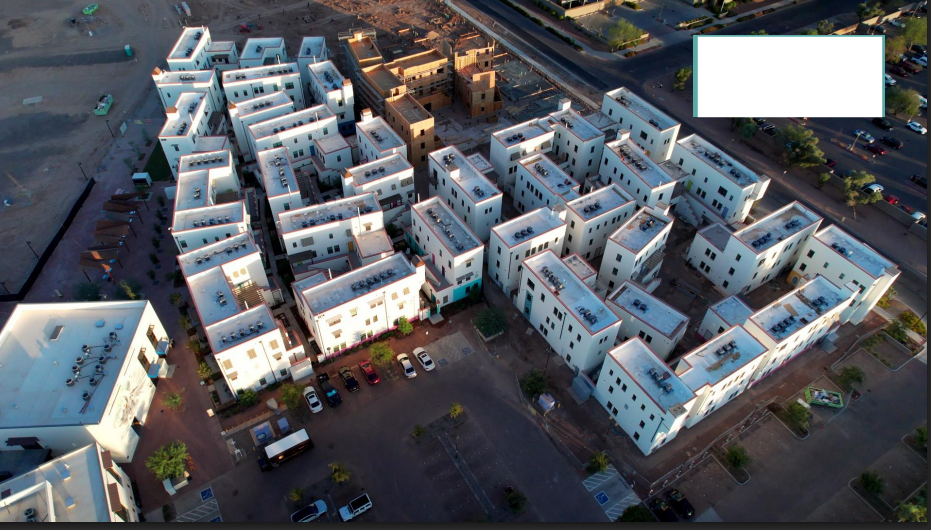
the first entirely car-free neighborhood built from scratch in the United States, located in Arizona. It is a 17-acre, mixed-use community designed for walking, biking, and transit, featuring 1,000+ residents at completion, 21 local businesses, and no residential parking for cars
The community is centered around walkability and public transport, offering residents free Valley Metro passes, discounted rideshare (Uber/Lyft), and on-site electric bike/scooter access.
Design: Inspired by European city design, it features dense housing (studios to 3-bedrooms) with Mediterranean-style architecture, 50 courtyards, and no asphalt, using shaded paseos to reduce temperatures.
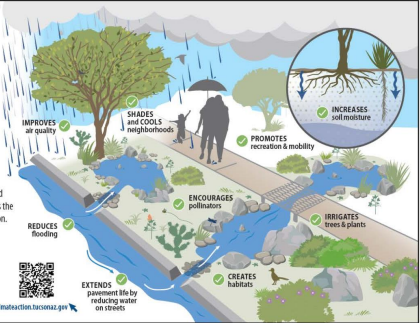
Storm to Shade (Tucson)
Green Stormwater Infrastructure (GSI) directs stormwater runoff from streets, parking lots, and rooftops into landscaped areas where it infiltrates the soil to support vegetation.
program builds and maintains GSI on public property throughout the city that makes use of stormwater runoff as the primary irrigation resource to support native vegetation
BirdCast
Weather radar used as bird radar, tracks bird migration forecasts in real time, use weather radar to detect and predict numbers and flight directions of migrating birds aloft to support bird conservation and expand understanding of migratory bird movement.
During periods of seasonal bird migration, “live” migration maps show where nocturnal bird migration is occurring in near real-time, as detected by the U.S. weather surveillance radar network between local sunset to sunrise. The maps show how many birds are present and in what direction they are moving.
3-30-300 Rule
Can see 3 trees from window/house
30% tree canopy coverage for neighborhood
300 meters from a park
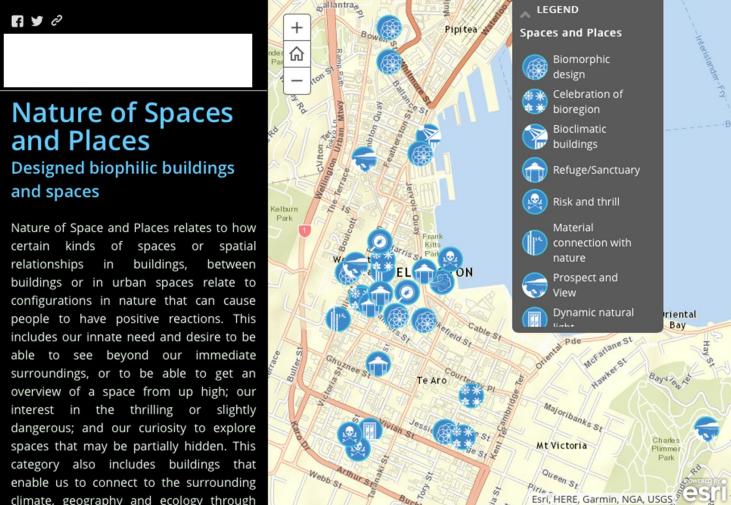
Wellington Nature in the City Map
Spatial categories for all the biophilic elements in the city: green roofs, street trees, gardens (community), etc.
Standard mapping nature activities: clubs or groups, natural history celebration, outdoor cafes, prospect and refuge, refuge, biomorphic design
Map has been retired since 2022
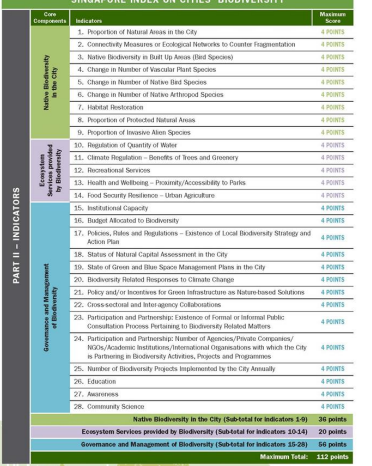
Singapore Index on Cities Biodiversity
Comprehensive set of indicators, assessment tool on a city’s biodiversity
Scoring manual with how many points given
Self-assessment tool for cities to benchmark and monitor the progress of their biodiversity conservation efforts against their own individual baselines.
Core Components: Native Biodiversity in the city, Ecosystem services provided by biodiversity, Governance and Management of Biodiversity
Biophilic Art
Art Inspired by shapes, forms, processes of nature
Subjects are biophilic and natureful: birds, trees, leaves, fish, waves, and natural experiences and processes
Art created with natural materials, colors, textures, and methods
Art that engages the public in learning about and celebrating nature
Art that tells stories about nature, that conveys the history of place, landscape, our natural home
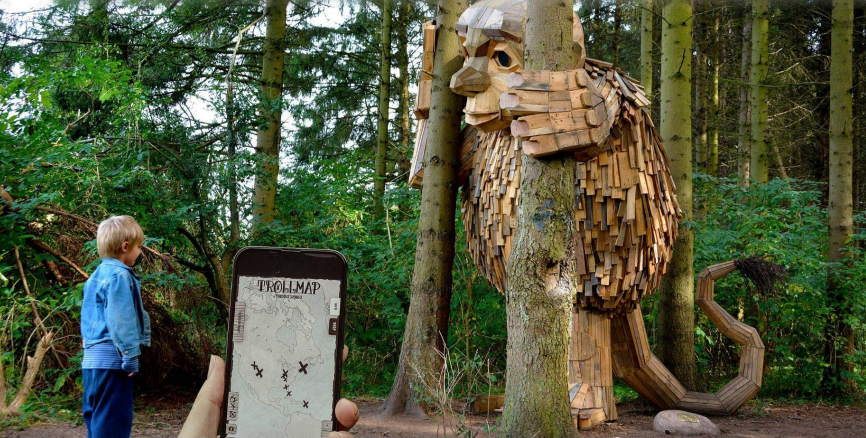
Thomas Dambo’s giant trolls (and troll trails)
Danish Artist, public park art made of recycled wood with community labor, discovery and exploration (clues to how to find these pieces of art)
mapped on website
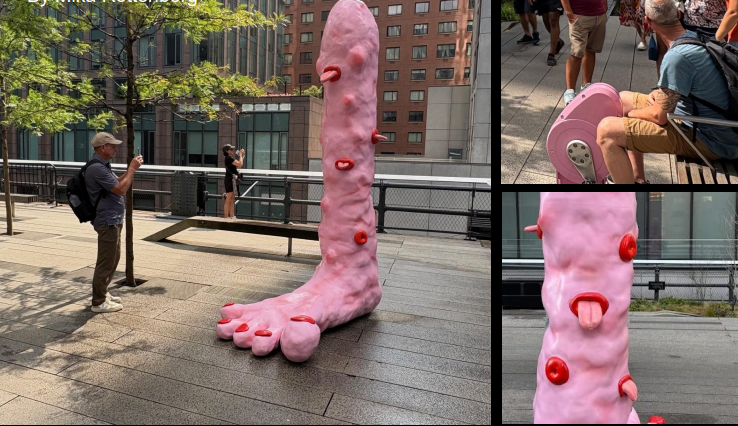
Foot Fountain (on the High Line)
Art instillation by Mika Rottenberg, startling design, unexpected, should biophilic art always be comfortable?
installed from April 2025 through May 2026. It is a vibrant, pink lower leg and foot decorated with red toenails and tongues, featuring a working sprinkler activated by nearby pedals to cool visitors.
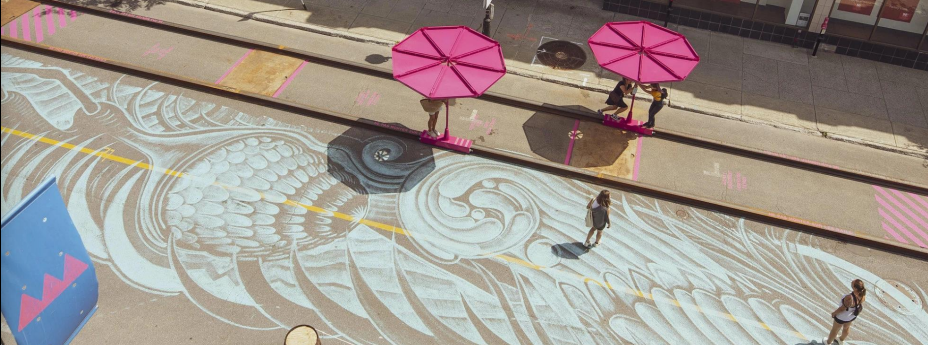
Shade Parade (Montreal)
a slow means of public transportation inviting passerby to glide oversized parasols along a rail to negotiate and gather in delightful ways.
BETA Project (Biophilia Enhanced Through Art, Phipps Conservatory)
In Pittsburgh, showcase work of 20 local, nation, and international artists that showcase and immerse people with nature, all types, physical, sound art, etc.
experience to a new level of sensory immersion, enhancing and restoring bonds between people and the natural world.
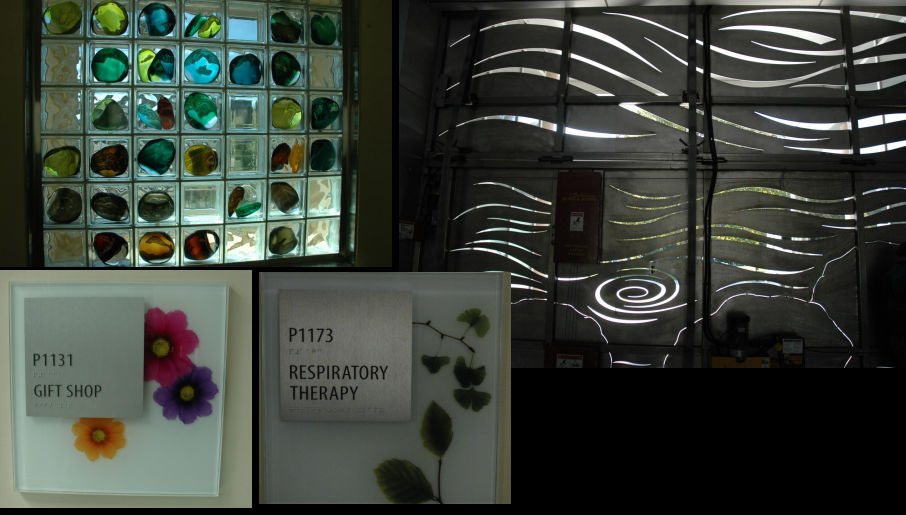
Laguna Honda Rehabilitation Center (and Public Art Program)
collection of art on landscapes of California, diffused light and themes of nature
Unique loading dock featuring bark like cut outs, unique handrails, textured, glass blocks made by local artists
Studies: Patients in the rooms with murals were found to have improvements in heart rate and systolic blood pressure in comparison to patients in control rooms, suggesting that the murals had an impact on physiological processes. Data also suggest that subject matter played a role, as patients in tree murals rooms had the most health-related outcomes
From website:
Wayfinding and Location Identity
Visual cues are critical in helping residents navigate their environment. The multiple corridors, floors and wings characteristic of large hospitals can be frustrating for patients and visitors who may experience difficulty finding their way around. Visually arresting work placed in key locations provides landmarks for patients and establishes an identity for specific areas.
Sensory Stimulation
The functional program study called for drawing upon “visual, audio, tactile, olfactory and kinesthetic resources to assist residents with sensory losses to utilize remaining abilities.” Many of the artworks commissioned encourage touch and physical engagement with the work.
Encouragement of Activity
The campus features a number of gardens and formal courtyards, which allow residents to take advantage of the natural setting. The outdoor spaces incorporate secure wandering paths for patients with dementia, and appropriate outlets for resident activity. Sculptures commissioned for these courtyards provide a destination and an object for patients to explore.
Nature and Stimulation of Memory
Research related to the positive effects of artwork in a hospital environment indicated that art and nature were found to alleviate stress and divert attention away from pain (Ulrich, 1991). Studies have also shown that a majority of patients respond positively to art that represents the natural world (Ulrich & Gilpin, 2003). Cues, props and experiences that serve to connect residents with their pasts and familiar practices are also beneficial. Much of the artwork commissioned for Laguna Honda employs imagery from nature or otherwise evokes the natural world. Many of the artworks” depict iconic views of San Francisco and the greater Bay Area, or other familiar activities and vocations.
“Flight Paths” (at ATL airport)
450-foot tall art instillation by artist Steve Waldeck
by Steve Waldeck located in the underground pedestrian tunnel between Concourses A and B at Hartsfield-Jackson Atlanta International Airport (ATL). Installed in 2017, it simulates a Georgia forest using 13,000 aluminum leaves, 24,000 LED lights, bird sounds, and thunderstorm simulations
Effort to make less stressful and more restorative, expensive installation
It features a stylized tree canopy, immersive audio of bird songs (from 31 species), frogs, and crickets, floor projections, and a "thunderstorm" sequence, rain projection hitting the floor
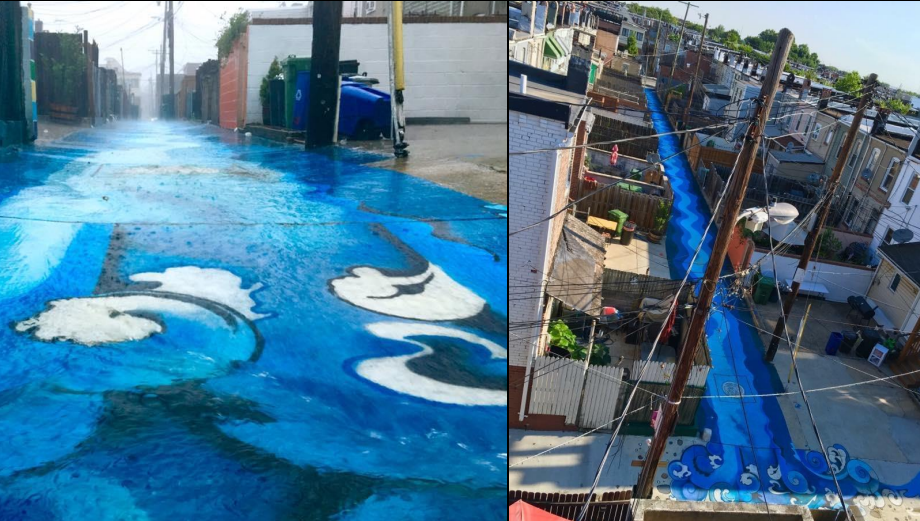
Baltimore Alley Makeover
community engagement through biophilic art
Led by resident Robbyn Lewis and her neighbors after making serval improvements to their neighborhood like recycling bins and planting hundreds of trees along the street. The alley was the last space and decided to paint the alley togther with neighbors and to create an educational painting on stormwater
using art to educate residents that storm drains lead directly to local waterways. These projects, often featuring sea creatures, aimed to prevent illegal dumping and trash from entering the Chesapeake Bay.
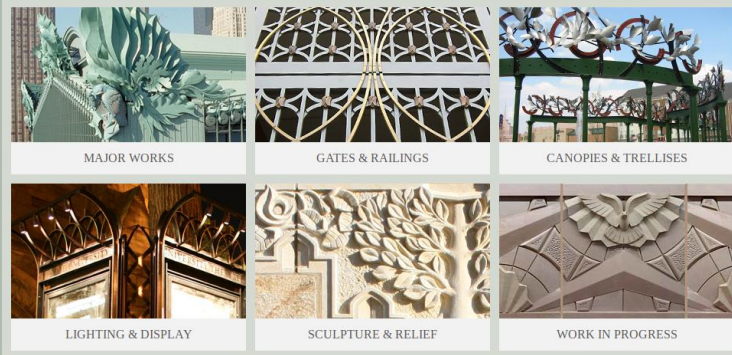
Kent Bloomer
Art for architecture, designer of biophilic art instillations that blend into everyday architecture. Works to create sculptures and carvings out of metal, wood, plaster.
Jennifer Steinkamp
Los Angeles based media and installation artist whose works with video and new media explore ideas about nature, architectural space, contemporary social issues, and the passage of time. Pioneer in 3-D animation.
Cleveland Clinic: moving tree projection art that goes through all the seasons and cycles of a tree. Patients cluster around to view it
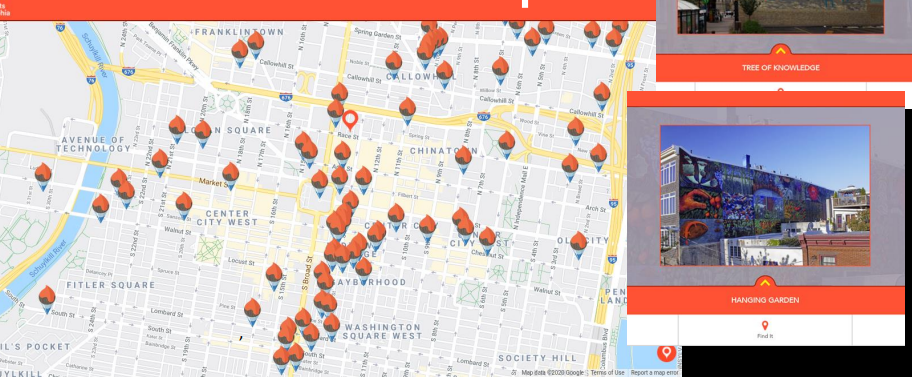
Mural Arts Philadelphia
subsidized and paid for mural paintings throughout the city. Some murals are subjects around nature. Murals are tracked and can be found on an online map
Michele Oka Dona
Seeds and Pods art piece
known for her richly botanical works hints at “raves” and a departure from the expected kind of art installation as she digs in to the 250-acre landscape
“raves” and “fireflies” being part of her vision for the work she will create in the gardens, adding that “the [art] programme shouldn’t be something that you insert, like a piece of sculpture, which I think most people are expecting.”
Her best-known of those projects is A Walk on the Beach (1995), a sprawling inlay of marine cosmology at the American Airlines terminal in the Miami International Airport. 1.25 mile long concourse at Miami International Airport: 9,000 bronzes images abstracted from tropical life
The artist will bring her experience with such large-scale public projects in subways and airports as she takes on the botanical gardens. “It’s big, and you’d be surprised at how much of it is happily fallow,” she says.
![<p>Seeds and Pods art piece</p><p>known for her richly botanical works hints at “raves” and a departure from the expected kind of art installation as she digs in to the 250-acre landscape</p><p>“raves” and “fireflies” being part of her vision for the work she will create in the gardens, adding that “the [art] programme shouldn’t be something that you insert, like a piece of sculpture, which I think most people are expecting.”</p><p>Her best-known of those projects is A Walk on the Beach (1995), a sprawling inlay of marine cosmology at the American Airlines terminal in the Miami International Airport. 1.25 mile long concourse at Miami International Airport<span>: 9,000 bronzes images abstracted from tropical life</span></p><p>The artist will bring her experience with such large-scale public projects in subways and airports as she takes on the botanical gardens. “It’s big, and you’d be surprised at how much of it is happily fallow,” she says.</p>](https://assets.knowt.com/user-attachments/6446090b-5fb6-4058-8b1e-65f6e32fdd7d.png)
One Square Inch of Silence
Olympia National Park, the quietest place in America
a non-profit conservation project located in the Hoh Rain Forest of Olympic National Park, designated as one of the quietest places in the U.S. Established in 2005 by acoustic ecologist Gordon Hempton, it aims to defend natural silence from noise pollution. It is marked by a small red stone on a mossy log 3.2 miles up the Hoh River Trail
Bernie Krause (The great Animal Orchestra)
an immersive audio-visual installation and project by soundscape ecologist Bernie Krause, featuring over 5,000 hours of recordings from natural habitats worldwide. It highlights the "biophony"—the collective sound of animals—visualized as spectrograms by United Visual Artists, showcasing the beauty and fragility of biodiversity while warning of habitat loss
Geophonies and Biophonies
This is inanimate objects providing sound
ex: water flowing, moving trees, rumble of moving glaciers
This is sounds from living organisms
ex: owl screeching
City Soundscapes
Idea by R. Murray Scafer. Recording the sounds of the city, acoustic ecology
the total combination of acoustic elements—natural, human-made, and mechanical—that define the sonic environment of an urban area. Far from just "noise," they include traffic, voices, music, and nature, shaping how people experience, interact with, and identify with urban public spaces.
the urban component of his broader soundscape studies, defining the sonic environment of cities as complex, often overwhelmed, collections of human-made noise (anthropophony). Developed through the World Soundscape Project, Schafer analyzed city sounds to improve acoustic ecology, reduce noise pollution, and identify unique "soundmarks" worth preserving.
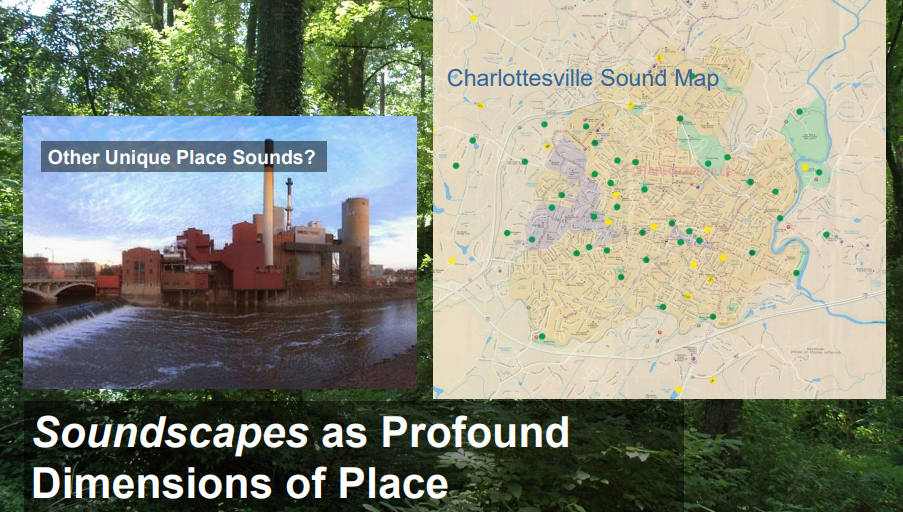
Sound Maps
digital or analogue, audio-visual representations that plot urban soundscapes—such as traffic, chatter, birdsong, or transit noises—onto a geographic map. They document the acoustic environment, combining sound clips with location, often allowing public collaboration and acting as tools for urban planning, noise pollution management, and artistic expression.
examples of nature areas mapped in Toronto and Cville
a location-based mobile music collection game, often described as “Pokemon GO for music” Players move in the real world to discover and collect songs from map drops, which they can trade, build collections, and complete artist quests.
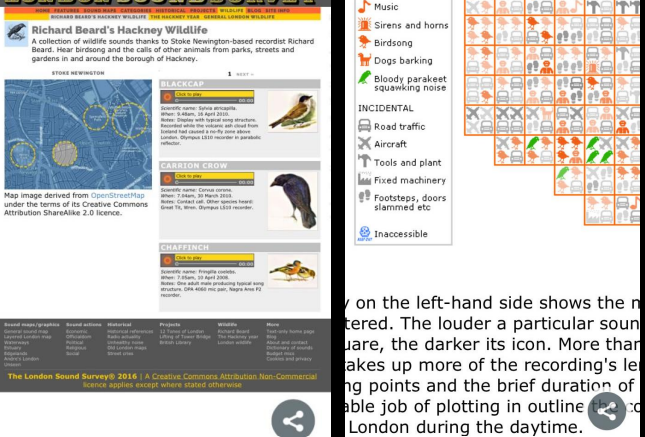
London Sound Survey
a collaborative, open-access online collection of over 2,000 field recordings documenting the acoustic environment of London, created by Ian Rawes in 2009. It maps the city’s everyday sounds, wildlife, and industrial noises—including the Thames—alongside historical descriptions dating back to the 11th century.
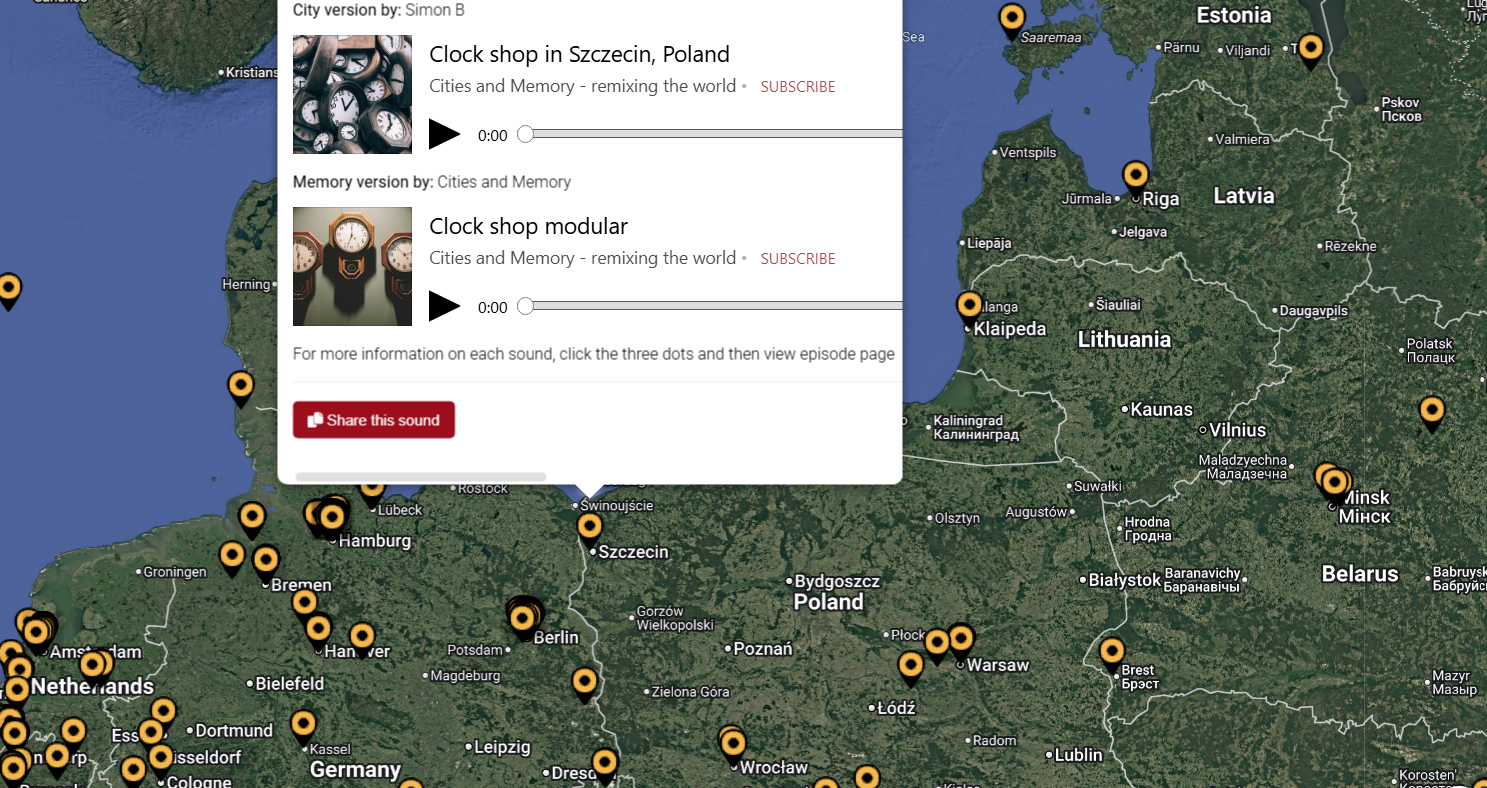
Cities and Memories (Global sound map)
One of the biggest sound projects, covering 140 countries and territories with more than 8,000 sounds and more than 2,500 contributing artists.
With the aim of remixing the world, one sound at a time, in this award-winning project thousands of field recordings are reimagined by our global community of sound artists and musicians to create an entirely new form of listening
Sounds accessible on the global sound map
Paley Park, NYC
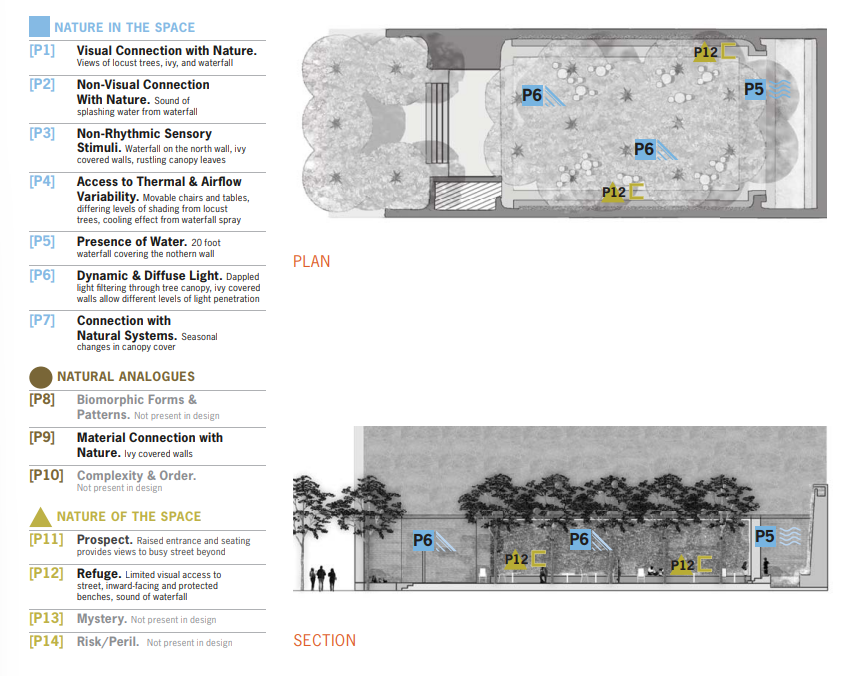
First of its kind pocket park in NYC, most heavily used park in NYC per square foot. Very few of the tall buildings nearby provide useable outdoor areas, and Central Park is too far to reach for a short break. A unique oasis for office workers and MoMA patrons.
Approximately 20% of the total floor and wall area is occupied by the park’s waterfall, and its sound can be hears from as far as the sidewalk.
Designed to offer ideal refuge with limited visual access from the outside street. The noise from the waterfall also provides privacy and refuge
Technobiophilia
Term coined by author Sue Thomas, wrote book with this title on nature and cyberspace
The innate tendency to focus on life and lifelike processes as they appear in technology. It can be seen in our everyday experiences online, and found in many of the internets most deeply embedded stories
he human urge to integrate nature into digital environments, such as using nature metaphors (e.g., "the cloud") or viewing nature-based screensavers to alleviate mental fatigue and foster a tech-nature balance.
Recharge Rooms
Rooms in Mt Sinai Hospital, New York
Rooms for healthcare workers with screens that project nature scenes like ocean and sunsets to calm doctors and nurses who are under extremely stressed and working long hours. Sights and sounds of natura; settings to allow them to unwind.
Report: 15 minutes in the space report showed 70-0% reduction in stress, many papers and research on this
Sue Thomas
Author of Technobiophilia, coined the term, investigates why nature metaphors like “surfing the web” are so prevalent online and argues that this connection helps us find restorative balance in our digital lives.
“So it seems that when we first entered cyberspace, we took the natural world along too. Our knowledge and imaginings of the physical helped us understand the new terrain and, like seeds in the mud on our shoes, we carried it in on the vehicle of language. Later when technology allowed it, we imported pictures and sounds which reminded us of nature. Indeed, some of the internet’s own noises triggered sensations of nature in our minds and hearts, such as the now largely forgotten tones of the dial-up modem, the electronic song which heralded each entry into the virtual. These incongruous couplings of abstract technology with a deeply grounded and atavistic earth-bound connection have continued to evolve in powerful affective ways.”
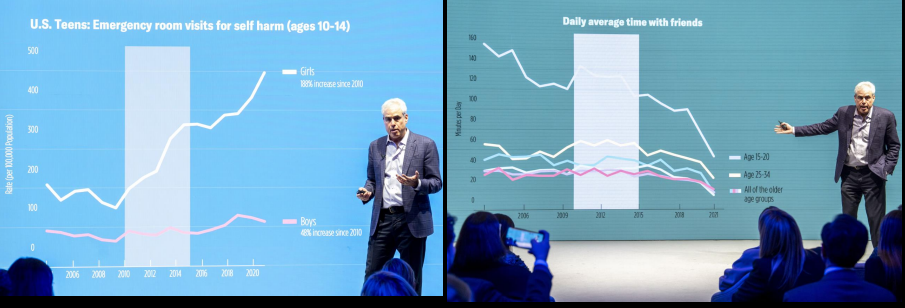
Jonathan Haidt (The Anxious Generation)
Psychologist that argues anxiety is being caused by the technology, increases in anxiety, depression, young people becoming lonelier
Suggests new norms:
phone free schools
no internet/phone before age 14
no social media before 16
let kids have a more independent life outside → Peter Gray’s Free Play
Singapore’s Wonderfall (digital Waterfall)
4-story digital waterfall in the Departure Hall of Singapore Changi Airport Terminal 2
892 tiles mimics a real, powerful waterfall cascading between vertical gardens. It offers a calming, immersive, and highly realistic visual spectacle for travelers, featuring, periodic music shows and sound effects.
Dreamscape (Also at the Singapore Changi Terminal 2)
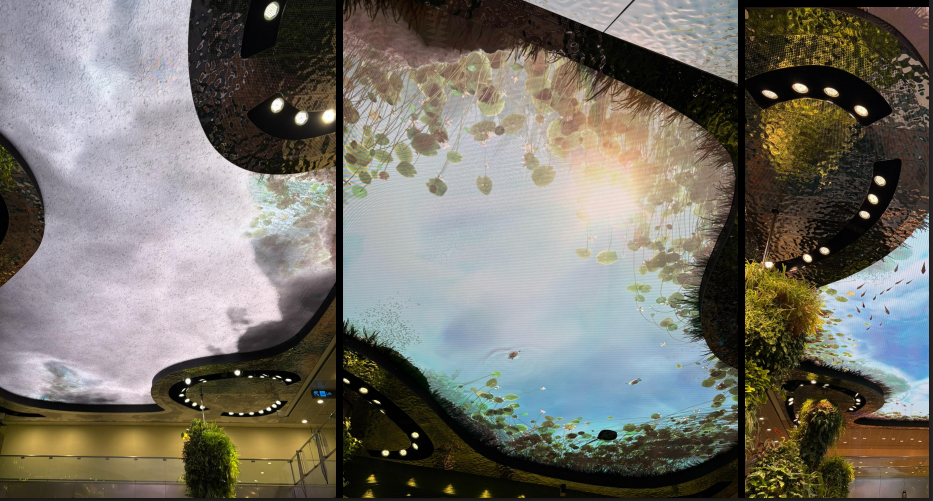
digital sky connected to weather station so it reflects the actual weather outside the airport
At times will project a water environment so it feels like you are underwater
“a lush garden beneath a sprawling digital sky”
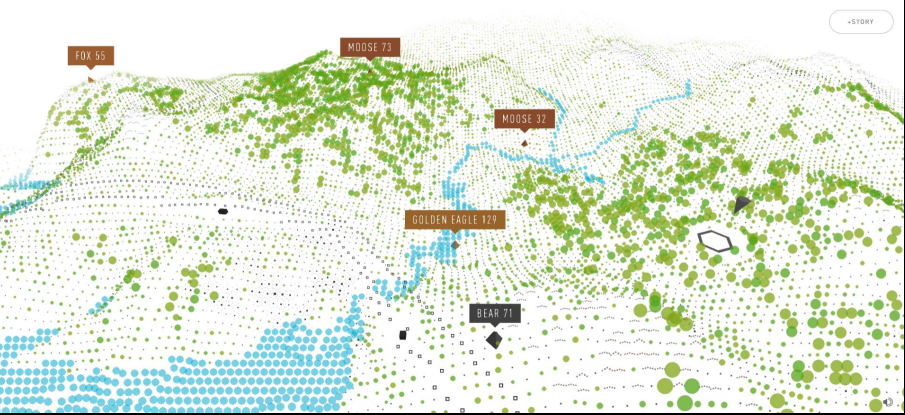
Bear 71
An interactive VR documentary, intersection between humans, animals, and technology
The true story of a female grizzly bear monitored by the wildlife conservation offices from 2001 - 2009.
She lived her life under near constant surveillance and was continually stressed by the interactions with the human world. She was tracked and logged as data, reflecting the way we have to see the world around us through Tron and Matrix-like filters, qualifying and quantifying everything, rather than experiencing and interacting.
Leanne Allison sifted through thousands of photos from motion-triggered cameras from this project. The grainy images gathered over the past 10 years by various scientists reveal the hidden life of the forest, played out by the animals and humans - including Bear 71 - captured covertly on film.
Bear 71’s story is consistently played out in places all over the globe where humans and wildlife intersect - from cougars in Nova Scotia to Bears in suburban Vancouver to Bear culls in New Jersey.
It highlights how our growing dependence on technology divorces us from nature, even while allowing us to keep closer tabs on it. It raises questions about how we view nature, how we view ourselves in relation to technology and nature, and the nature and validity of surveillance both in the wild, and within human society.
Merlin
App that records what it is hearing, typically birdsong, and identifies it
Nature and technology education
Hybrid Urban Nature/s
the blended, interconnected landscapes where natural elements and human-built infrastructure exist together, blurring the lines between nature and city. It includes green roofs, urban parks, and rehabilitated ecosystems that provide ecological services, improve biodiversity, and support human well-being, often through managed or engineered environments
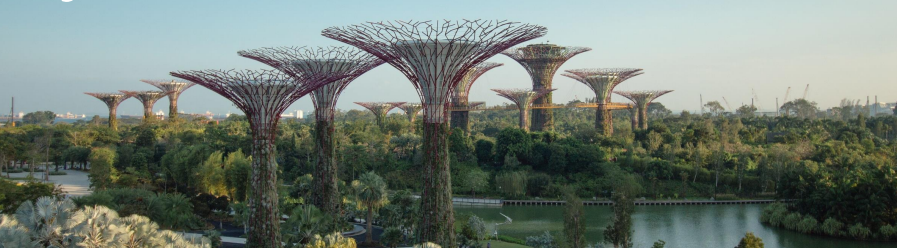
Supertrees (Singapore)
18 iconic, towering vertical gardens ranging from 25 to 50 meters tall, located in Gardens by the Bay. These man-made, eco-friendly structures feature over 160,000 plants, generate solar power, and harvest rainwater, while acting as ventilation shafts for the conservatories
Ecological Gentrification
The displacement of vulnerable human inhabitants resulting from the implementation of an environmental agenda driven by environmental ethic. Ecological gentrification captures the consequences of narrow planning approaches that fail to recognize the connectivity among housing, homelessness, and urban green spaces
What To Do? Emphasis on Decentralized, Neighborhood Nature Tools for Capturing and Redistributing the Economic Benefits of Nature (e.g. TIF, Betterment Zones); Affordable Housing Measures and Benefit Agreements; “Just Green Enough” (Curran and Hamilton, 2012; looking at Greenpoint, Brooklyn as a positive case in point)
Equity and Social Justice? Who Has Access To Nature, and What Are the Untended Consequences of Urban Greening Projects?
occurs when urban greening initiatives—such as new parks, eco-friendly infrastructure, or pollution cleanup—drive up property values and rents, resulting in the displacement of low-income, long-term residents. It converts previously industrial or neglected areas into desirable, "sustainable" neighborhoods, often replacing vulnerable communities with wealthier residents.
11th Street Bridge Park (Washington, DC)
Design by OMA + OLIN
Will link upscale Capitol Hill with Anacostia (a historically African-American predominately low income neighborhood east of the river).
D.C.'s first elevated public park, transforming the piers of an old 11th Street vehicular bridge over the Anacostia River into a vibrant pedestrian destination. Scheduled to open around 2028, it will feature community spaces, environmental education, and art, connecting the Navy Yard and Anacostia neighborhoods, linking the Ward 6 to ward 8 (disparate neighborhoods)
The project features a rigorous Equitable Development Plan to prevent gentrification and ensure current residents benefit from the new infrastructure.
Oakland Goes Outdoors
San Francisco Foundation aimed to create equitable, inclusive, and culturally informed outdoor trips for youth who may not otherwise have access to them.
a grant-funded initiative that provides Oakland Unified School District (OUSD) students with equitable access to outdoor learning and environmental experiences. Launched in 2018, it funds trips, gear, and training, aiming for every student to have multiple outdoor experiences like camping, hiking, and sailing, fostering belonging, wellness, and nature connection.
Majora Carter
American urban revitalization strategist and public radio host from the South Bronx area of New York City. Carter founded and led the non-profit environmental justice solutions corporation Sustainable South Bronx from 2001 onward, before entering the private sector in 2008.
dedicated much of her career to improving environmental and economic conditions in her hometown of South Bronx, New York City in order to preserve the community so that members no longer desire to leave in search of a higher quality of life.