Kin 432 W4: Powering High Performance: CHO and Fats
 Call Kai
 Learn
Learn Practice Test
 Spaced Repetition
 Match
Match Flashcards
 Knowt Play
1/63

There's no tags or description
Looks like no tags are added yet.
Name | Mastery | Learn | Test | Matching | Spaced | Call with Kai |
|---|
No analytics yet
Send a link to your students to track their progress
64 Terms
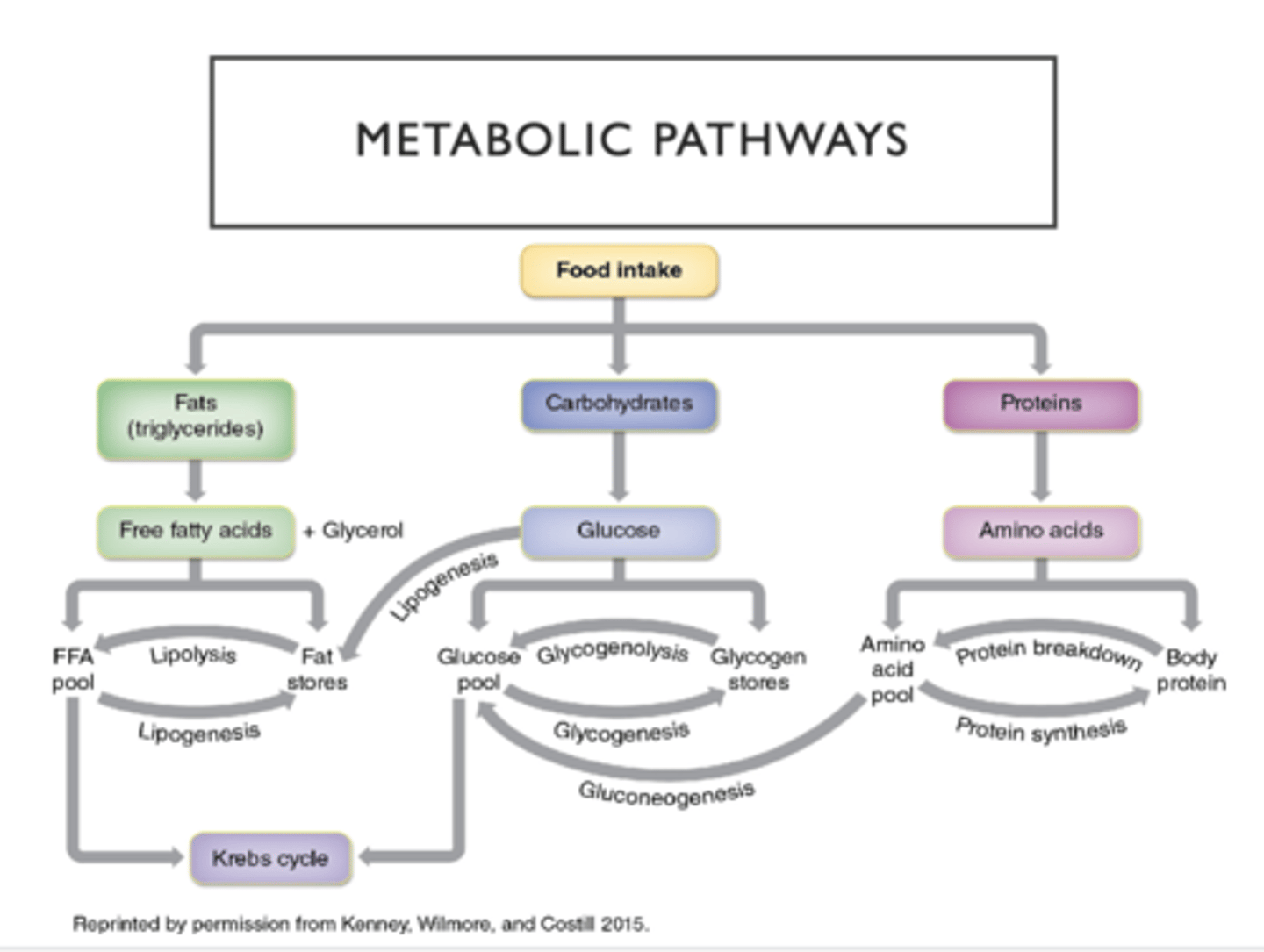
metabolic pathways
Carbs are king
Protein: not used much as fuel (2%)
In athletes: We’re maximizing availability, storage and feed for performance
What’s an issue with high fat, low CHO diets for performance?
They downregulate access to the CHO
Best fuel for start-stop, athletes?
Carbs and creatine
Role of CHO in exercise and performance
Prolonged exercise
Supports endurance by maintaining glycogen
Intermittent-intensity exercise (soccer, basketball):
Provides quick energy for high-intensity bursts
High-intensity exercise:
Immediate energy needs for optimal performance
For recovery in sport:
replenish glycogen for subsequent training
aids muscle repair when combined with protein
where can we find carbs in our body
Muscle: 3-400g
Liver: 75-100g
Blood: 4.5g (maintains blood glucose 3.9-5.5 mmol/L
how much in liver? what does it do? how does it get depleted?
75 - 100g
Supports blood glucose level at rest and during exercise
Depleted by overnight fast to <20g
how much in muscle? what does it do? how does it get depleted?
300 - 400g (Level varies slightly with diet. higher with high-CHO diet, and large muscle mass)
Supplies glucose for muscle - lacks G6P
Use increases with exercise intensity
Depletion: depends on exercise intensity
how much in blood? what does it do? how does it get depleted?
~4-5g maintain blood glucose 3.9 - 5.5 mmol/L
• Used by brain (and exercising muscle, as muscle glycogen becomes depleted)
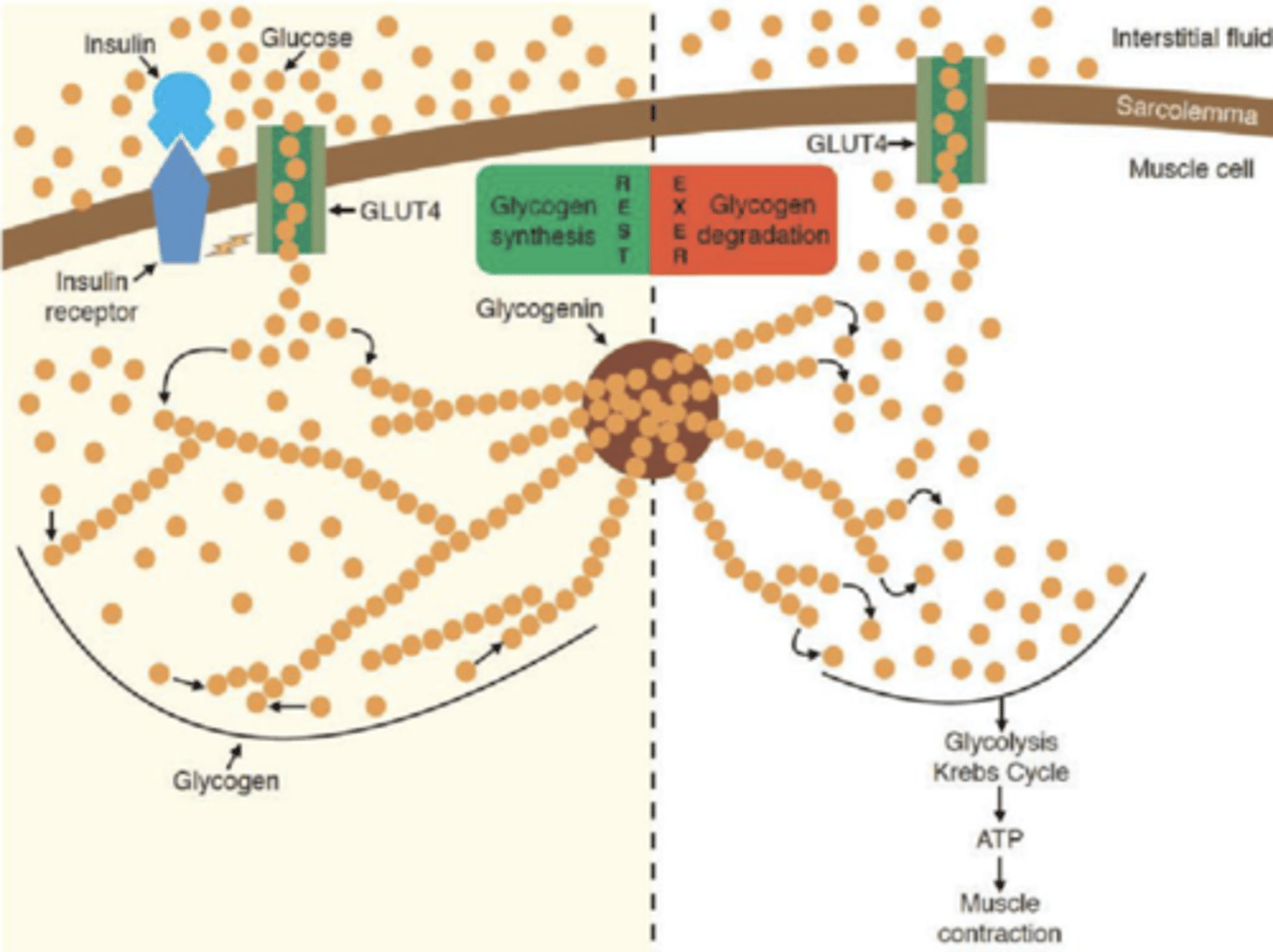
image of glucose in cell
at rest: carbs broken down to glucose. insulin released in response. insulin receptor attaches to insulin on surface of cell. GLUT4 mobilization from centre of cell to surface. allows glucose molecules to enter cell
at rest, not using that glucose much so they are chained together to form glycogen
exercise: break down glycogen.
Can we use muscle glycogen to keep our blood glucose high?
Muscle glycogen depletion is proportionally to duration and intensity.
But, muscle glycogen is only used locally for muscle contraction. It lacks the G6P enzyme needed to convert glycogen to glucose
Liver glycogen does have G6P which allows it to control blood glucose
Rest: insulin → GLUT4 → glucose uptake → glycogen storage
Exercise: glycogen → glucose → ATP
Why should i eat carbs as an athlete?
Sustain daily training, health and wellbeing
Replenish liver and muscle glycogen stores - post training and sleep
liver depleted during night to replenish blood
no more than 20g available in the morning
Carb cycling based on menstrual cycle
bs
Carb Requirements vary depending on
training intensity and duration
how often to eat carbs
Should be consumed throughout the day
Should be altered day by day to reflect training load
training load can vary between
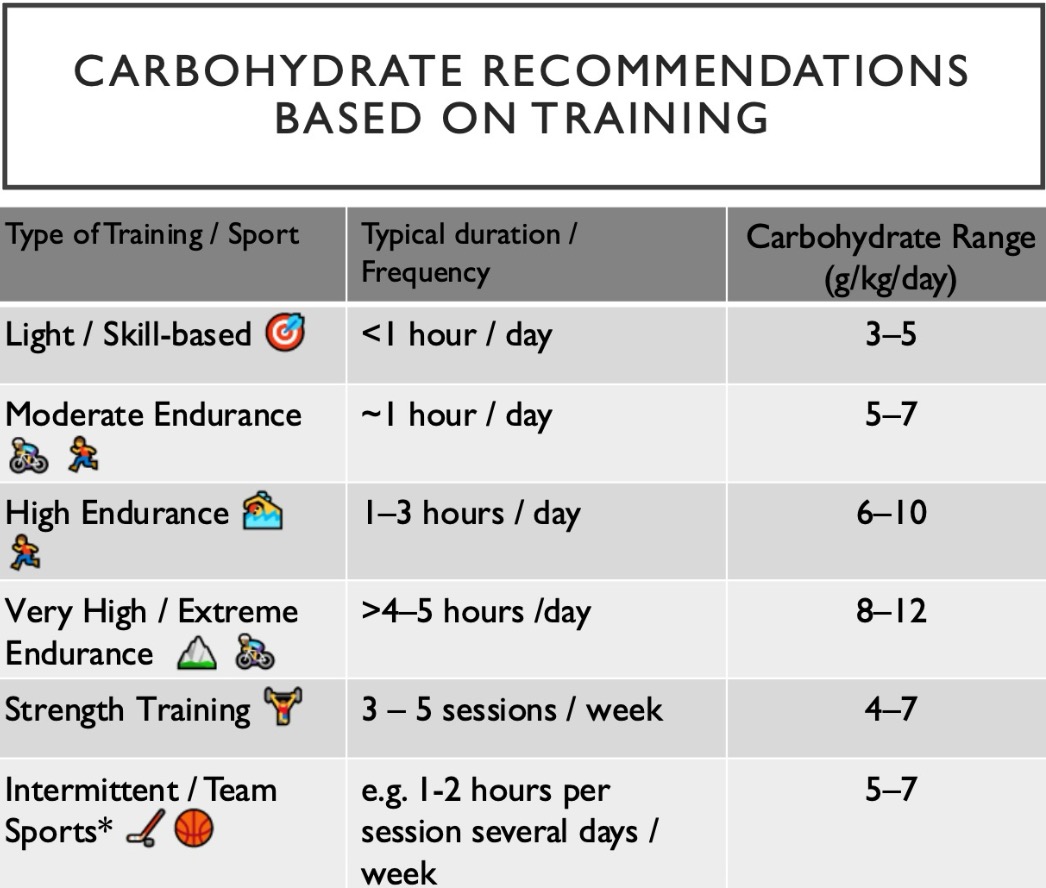
Light / Skill-based ( <1 hour/ day):
3-5 g/kg/d
Moderate (~1 hr/d):
5-7 g/kg/d
High Endurance (1-3hr/d):
6-10 g/kg/d
Very High / Extreme(>4-5 hr/d)
8-12 g/kg/d
Strength training (3-5 sessions/week):
4-7 g/kg/d
Intermittent sports (1-2 hours per session several days/week):
5-7 g/kg/d
key takeaways.
1. High glycogen availability improves
exercise capacity and performance
2. Depletion of glycogen stores can lead to
fatigue and decreased performance, particularly in endurance sports
We have limited capacity to store carbohydrate so
exogenous (external) carbohydrate must be consumed if exercise is to continue at a high intensity - or we will need to switch to a different fuel source which will slow the rate of exercise down
Athletes need to pay particular attention to the
recovery window and think ahead to the subsequent exercise / performance bout in order to start the session with adequate glycogen stores
Carbohydrate reserves are about
~500 g - 2000 kcal
CHO reserves vs fat reserves
~500g (2000 kcals) vs almost unlimited!
CHO: can’t access that fat. stored with water so can’t store too much. Have to top it off constantly
Fat: It is a compact way to store energy!
What are the fuel contribution changes with duration? intensity?
As duration increases:
> 2 hours: don’t have CHO left over, so we turn to fats
30-90 mins: Majority of ATP fueled by muscle glycogen and plasma glucose
Increased intensity = Increased CHO use
Summary of CHO vs FAT use for fuel during exercise
CHO: fast, limited, essential for intensity
FAT: slow, abundant, useful for low/moderate intensity
In-session fuel for exercise. what kind of fat
mobilized storage forms (IMTG, FFAs), not the fat on your plate that day
intramuscular triglycerides = IMTG
What are the fat recommendations for athletes?
do not change hugely from healthy population:
20-35% of total energy intake from fat
<10% of energy from saturated fat is typically advised
Is taking less than the recommended amount of fat (20-35%) okay
Very low fat intakes (<15-20%) are not recommended because they can compromise essential fatty acid intake, fat-soluble vitamin absorption, and hormone production
considerations in setting daily carbohydrate intake targets for athletes
Range is 3-10g/kg/day of CHO depending on what you’re doing
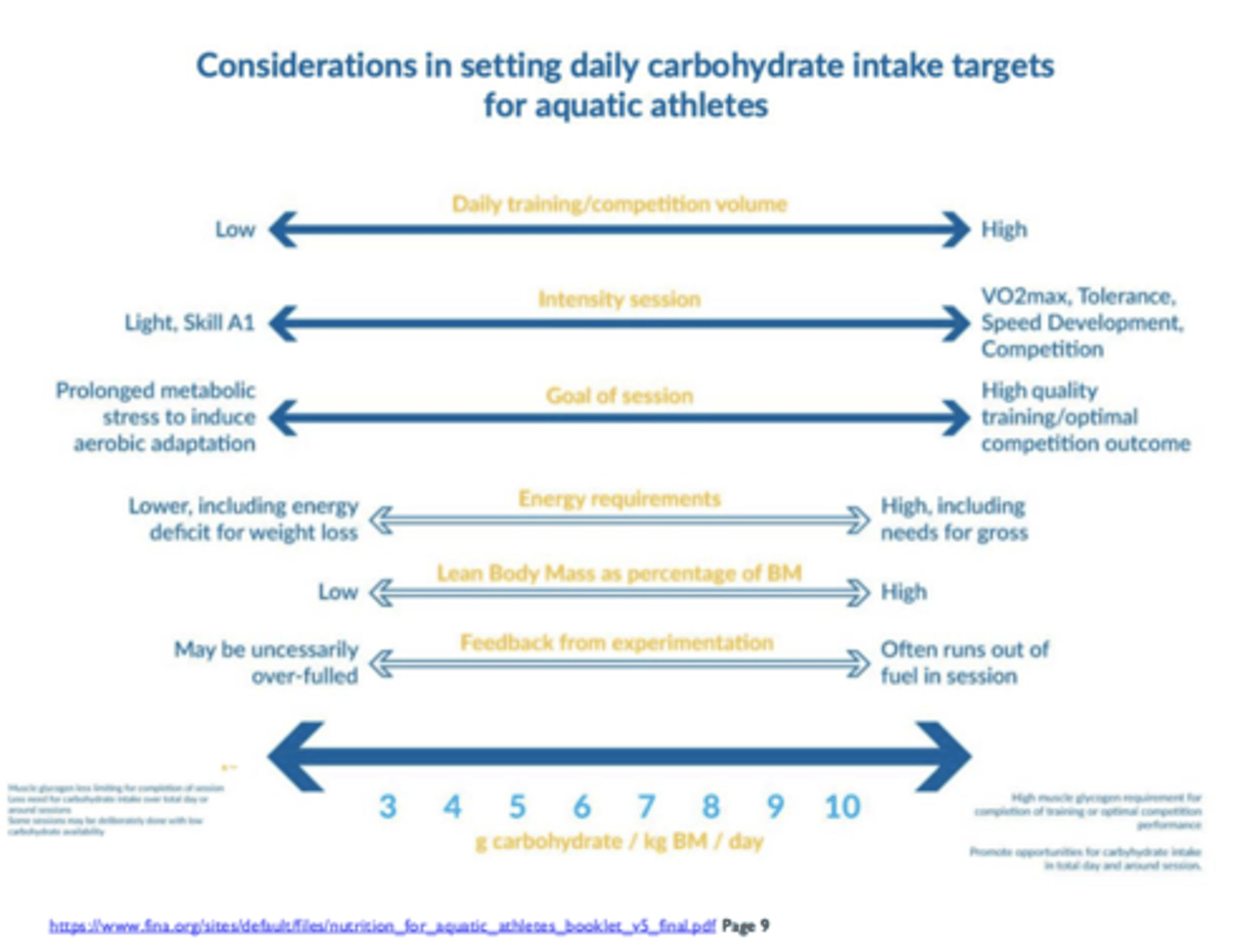
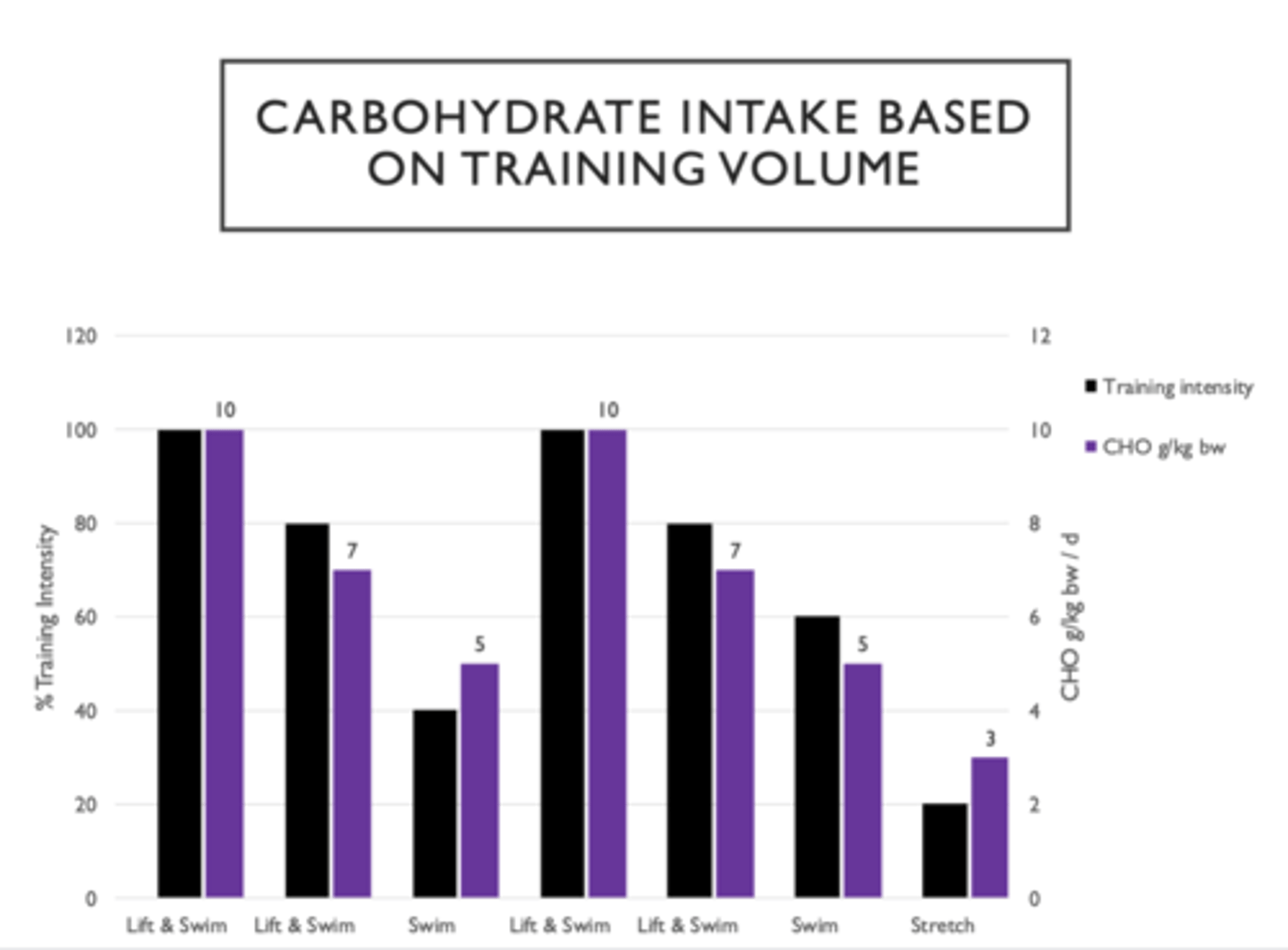
carbohydrate intake based on training volume/CHO range recommendation best practices
CHO range is a guiding point but also rely on athlete feedback in order to meet their needs
what range of carbohydrates does a 75kg runner running for 2 hours need
Requires 6-10g CHO/kg body mass per day
• Weight = 75kgs
• Carbohydrate = 450 – 750g per day
CARBOHYDRATE RECOMMENDATIONS BASED ON TRAINING (g/kg/day).
already covered
Light / Skill-based 3-5
Moderate (~1 hr/d) 5-7
High Endurance (1-3 hr/d) 6-10
Very High / Extreme (>4-5 hr/d) 8-12
how about resistance training?
intermittent/team sports?
Strength Training 4-7 g/kg/d
Intermittent / Team Sports 5-7 g/kg/d
SUMMARY SO FAR
1. In the majority of athletes, low glycogen stores will
bring activity to a premature end OR result in lowered intensity
3. Carbohydrate guidelines for athletes are calculated based on (3)
frequently and based on number of hours, intensity and type of sports
4. Carbohydrate guidelines are calculated based on
kg body mass - which assumes athletes have reasonable body fat %
THE PRE-EXERCISE MEAL
Purpose
Restore liver glycogen after an overnight fast in morning
drops to 20g from 75-100g
breakfast is important if you skip dinner!
Increase / replenish muscle glycogen
Prevent hunger and provide energy during exercise
Psychological boost
pre exercise meal guideline
main meal 2-3 hours before exercise lasting >60 min
Provide ~1 - 4g CHO/kg before exercise
Contain fluid
Avoid very high fat and spicy foods
Moderate in protein
30 - 60 minutes before exercise top up with high GI carbs
rational: main meal 2-3 hours before exercise lasting >60 min
To allow for gastric emptying before exercise
rational: Provide ~1 - 4g CHO/kg before exercise
Restore liver glycogen. Increase / replenish muscle glycogen
rational: contain fluid
Contribute to hydration; some athletes may prefer liquid meals
rational: avoid very high fat and spicy foods
Facilitate gastric emptying; minimize GI distress
rational: moderate in protein
filling?
can lower it if cant meet carb target.
rational: 30 - 60 minutes before exercise top up with high GI carbs
Quick source of glucose
image of pre exercise meal high and low in sugar
when to have low sugar?
low 2-3 hours before training/games with high fiber
like wholewheat pasta, multigrain bread, sweet potato, brown rice, oatmeal...
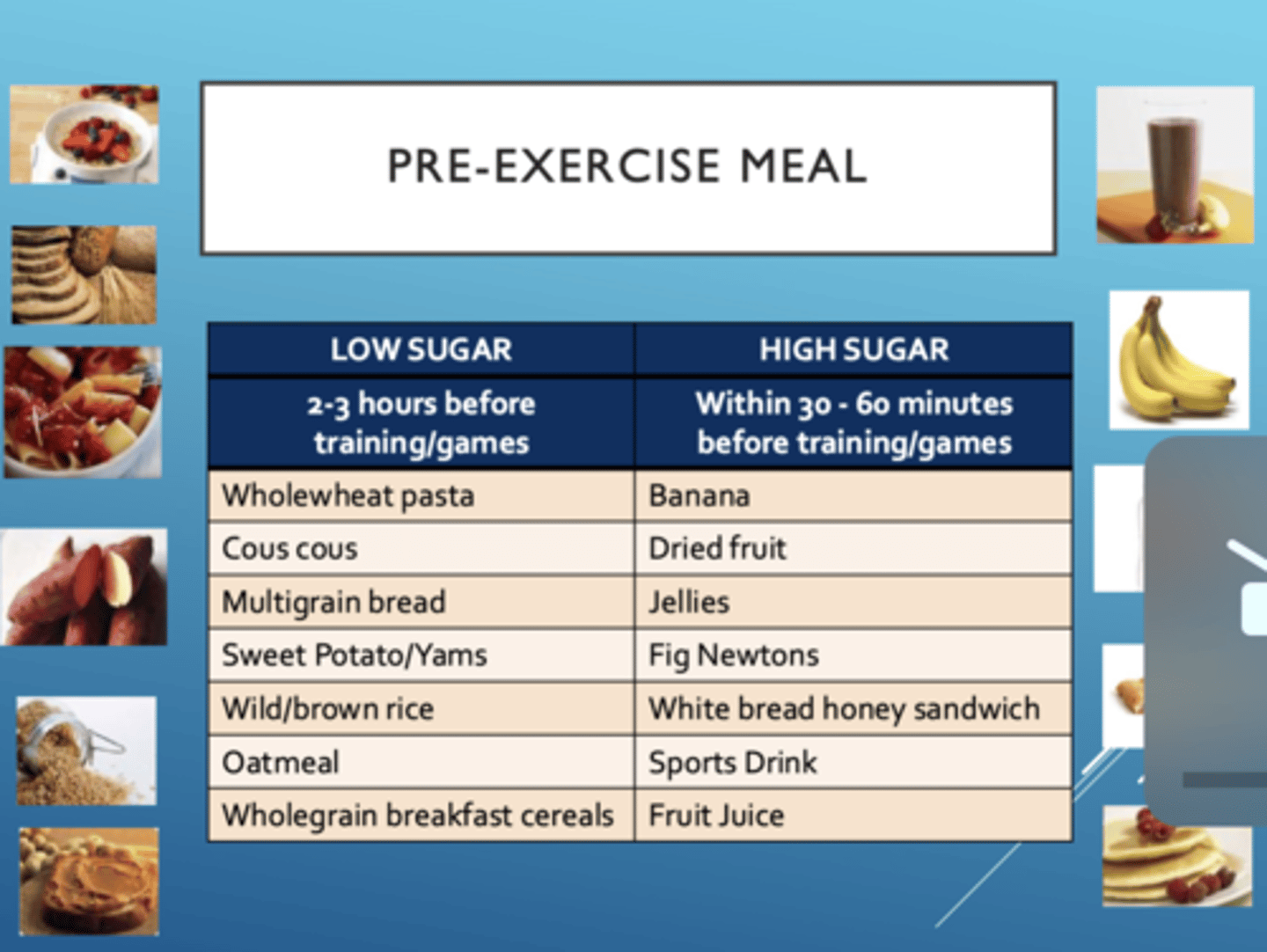
when high sugar?
high 30-60 min before with low fiber
banana, jellies, dried fruits, sport drink, fruit juice
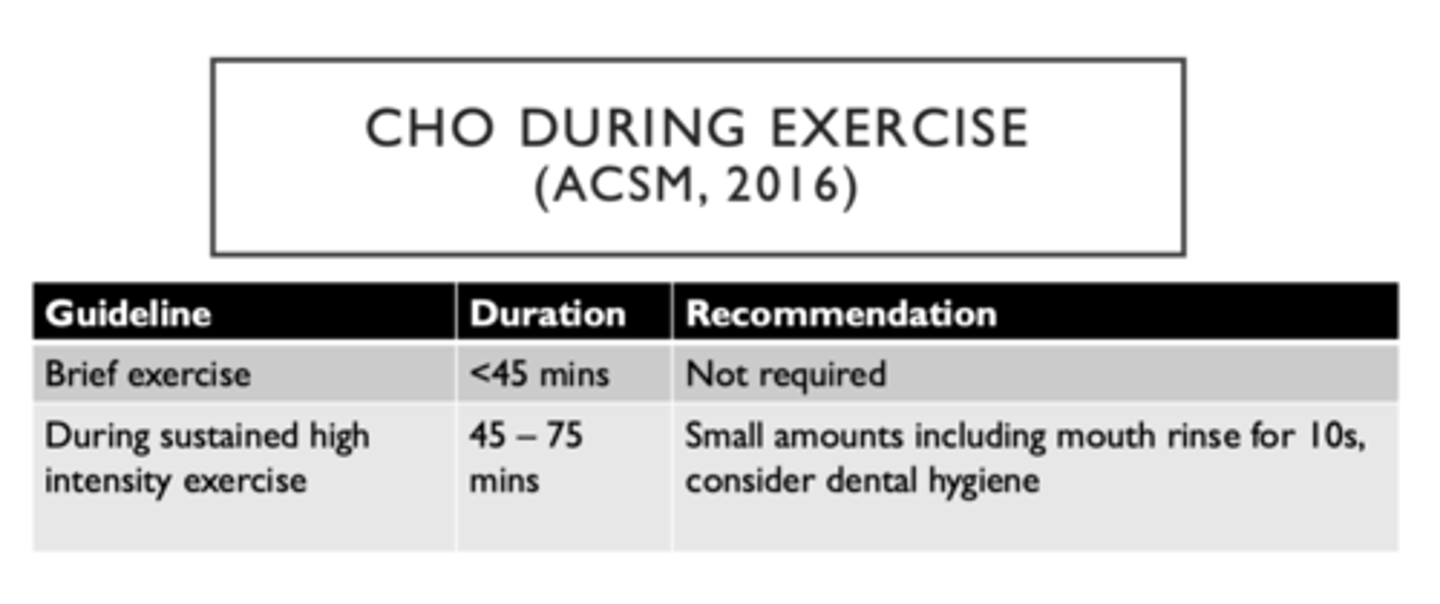
CHO during exercise GUIDELINES
During exercise:
Brief exercise < 45 mins: no top up need after big meal
High intensity exercise 45 - 75 mins: mouth rinse for 10s
mouth rinsing
Evidence for maltodextrin based carb oral rinse
Rinse for 10 s with isotonic drink
Practical application: mouth rinsing
• weight category sports
• Athletes with GI upset
• Remember - ideally athletes ingest carbohydrates
CHO During Exercise:
already covered brief and sustained high intensity
Intermittent “start stop” sports
Duration: 1-2.5 hours.
Consume: 30-60 g/h to spare muscle glycogen and maintain blood glucose levels
CHO During Exercise
Covered: brief, sustained high intensity, stop start sports.
Ultra Endurance Events
Duration: >2.5-3 hours.
Can oxidize up to 90g/h
Use of different intestinal transporters may increase overall CHO absorption
• maltodextrin : fructose
• glucose : fructose
• glucose : sucrose : fructose
Note: recommendations based on oxidation rates not total CHO content of real food - so consuming slightly more to tolerance may be advantageous e.g. 100 - 120g/h = ~90g/hr oxidized
What is important to remember for ultra endurance CHO composition during ultra endurance?
Diff types of sugar needed for the diff types of receptors to maximize absorption
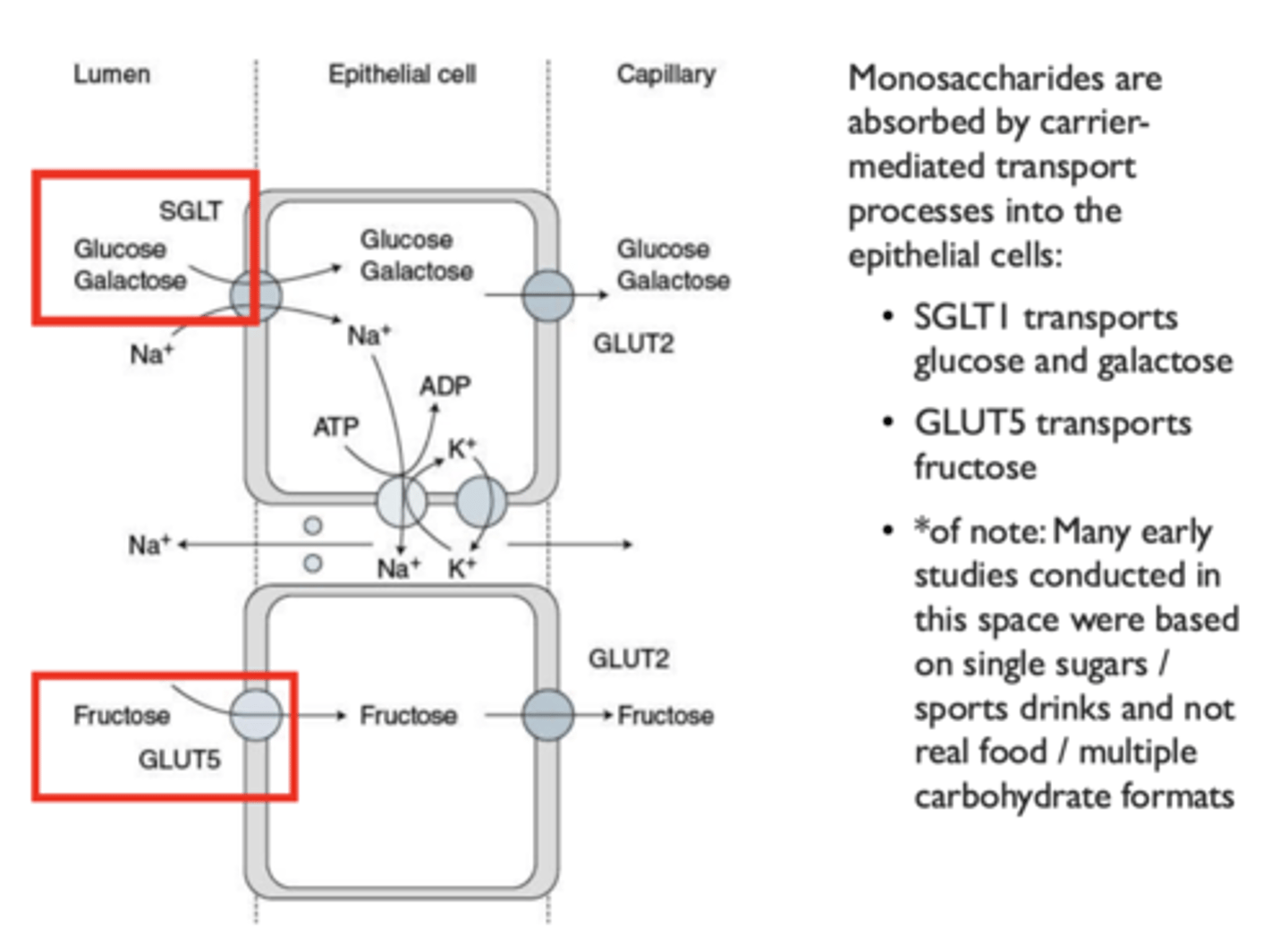
image of absorption sites inside intestine.
• SGLT1:
transports glucose and galactose
has limited capacity
• GLUT5 transports fructose
FUELING DURING ACTIVITY. soccer player that is 75 kg
Pre-game, 30 mins before game, During 90 minutes game
Pre game meal:
75 – 300g before exercise
30 mins before game
Sips from sports drink
• During 90 game
45 – 90g carbs
example from protein module: athlete weight is 92kg.
how much protein per day? per meal? how many eating occasions per day?
92 x 1.6 = 147 g
92 x 0.3 = 28 g
147 / 28 = about 5 eating occasions per day
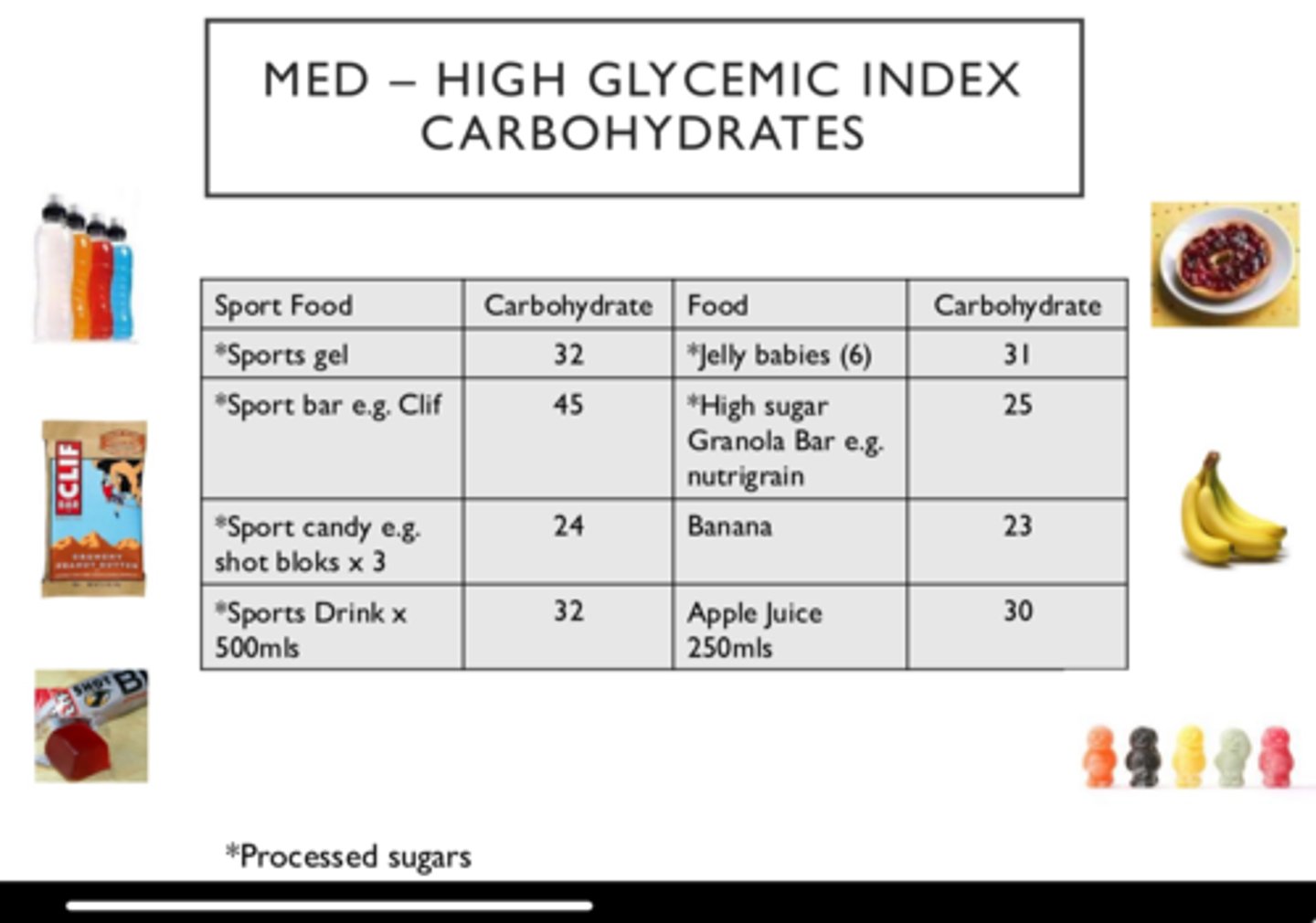
CHO sport nutrition products
designed for elite athletes.
specially formulated to allow maximal carbs to be absorbed. easy for athletes to get down quickly...
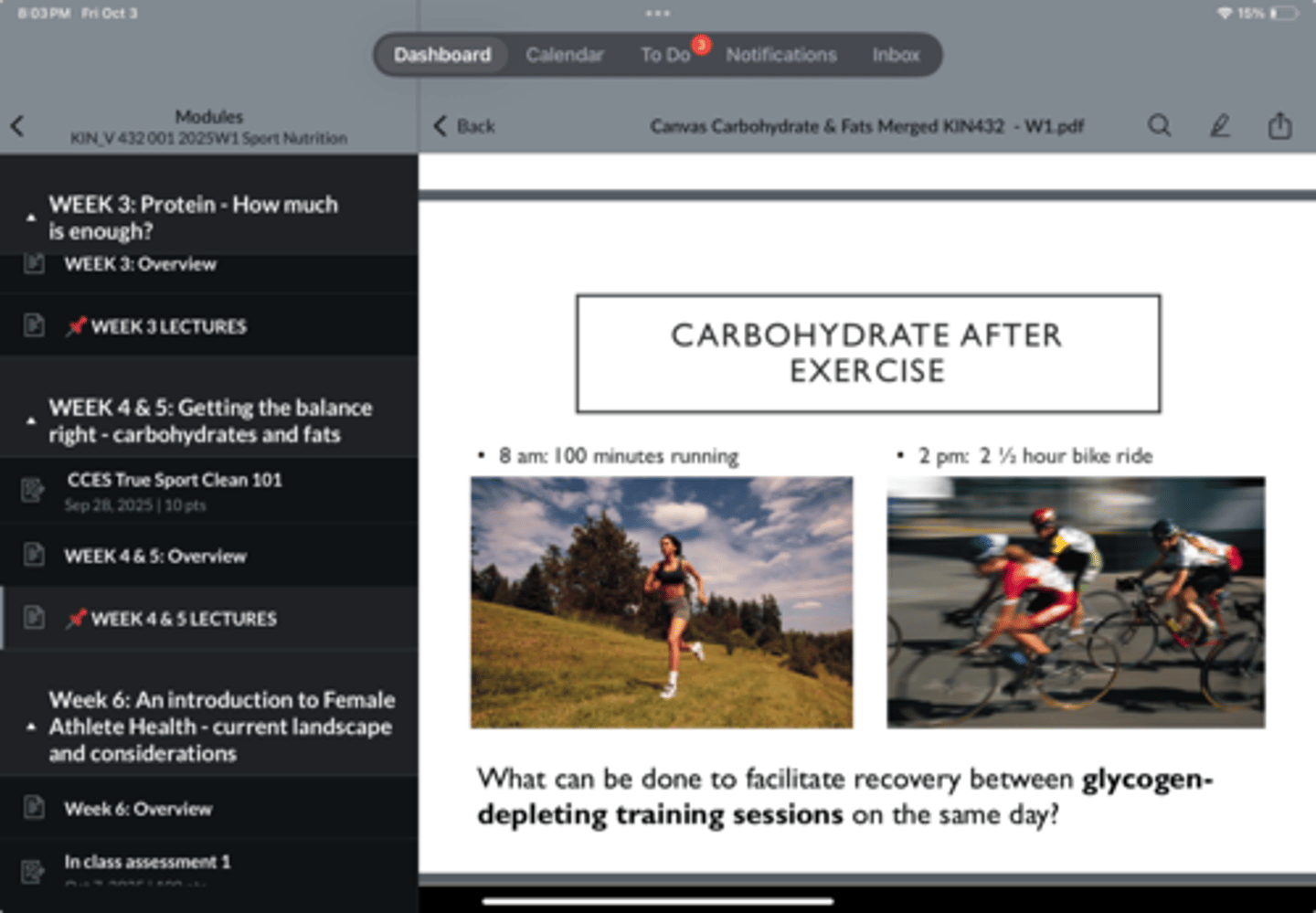
CHO after exercise:
What can be done to facilitate recovery between glycogen depleting training sessions?
It is critical for is for people training twice in a day, especially if < 4 hours between sessions
if 100 min run in morning (depletes glycogen stores), and then a bike ride later in the day. it is critical that they follow a plan. need to aggressively consume carbs between sessions
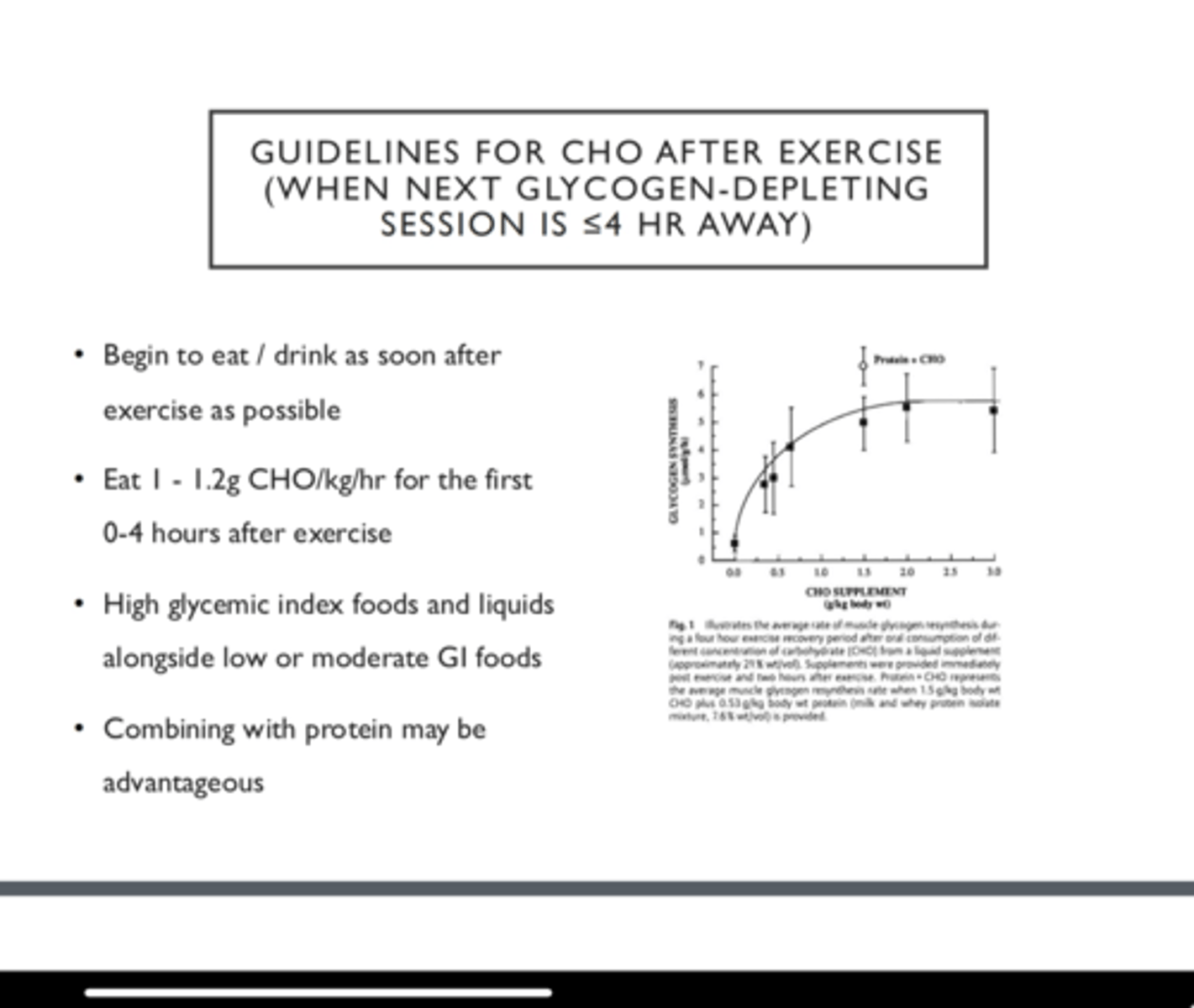
Guidelines for CHO after exercise when next session < 4 hours away
1-1.2g CHO/kg/hr for the first 0-4 hours after exercise.
may not need to be as aggressive when they have a longer rest period and enough time to eat a few meals and replenish those stores.
Prioritize liquids and high GI food
Adding protein might be advantageous
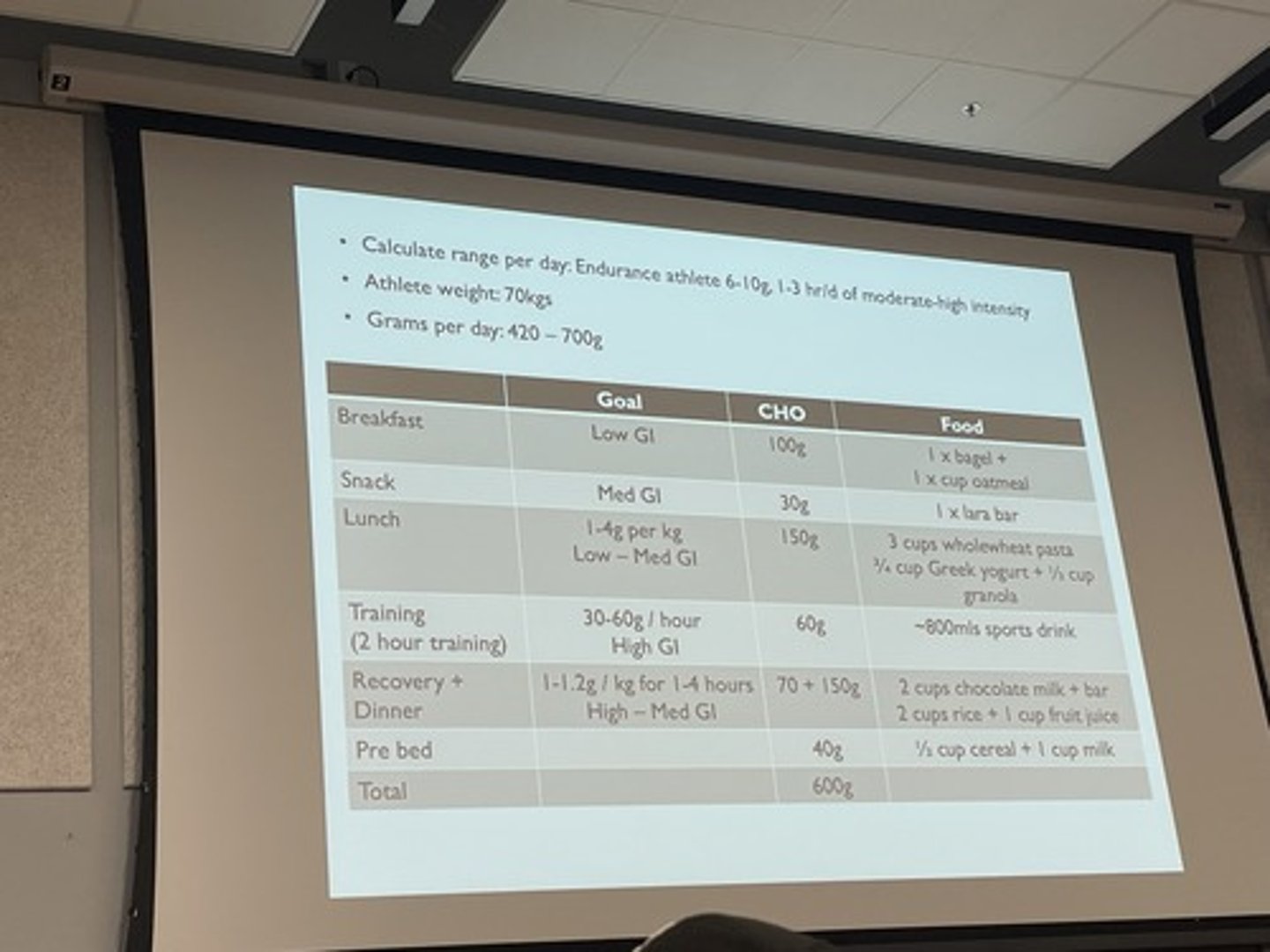
when building a nutrition plan (CHO), you must (7 steps)
1. Calculate approximate energy expenditure per day
2. Examine current food diary - 4 to 7 days
3. Select appropriate carbohydrate range per day
4. Focus first on fueling pre, during and post exercise - usually med - high GI foods during and immediately post
5. Subtract what has been used for these events and build remaining meals / snacks using this value
6. Work with individuals gi comfort, tastes and lifestyle
7. Work at meeting overall needs and smarter choices for better health
example:
70 kg
endurance athlete. 1-3 hr/d mod-high intensity
6-10g/kg so 420-700g
summary now
Carbohydrate is important particularly for
endurance sport - reserves are limited, and when depleted, performance at intensities >65% VO2max decline
• Recommended daily carbohydrate intakes for elite athletes are based on
body weight, training intensity and duration with many fluctuations during training cycle
• The pre-exercise meal should have:
CHO (1-4 g/kg, 2-3 hrs pre-exercise) and fluid
• Carbohydrate requirements during exercise will differ depending on
exercise duration and use of clinical judgment and expertise is critical
• Carbohydrate refueling post exercise is a high priority particularly when the next
glycogen depleting session is ≤ 4 hours away
• Sports foods rich in carbohydrate can and likely should strategically be used in
high performance sport
BELOW THIS WAS NOT COVERED IN CLASS, NOT IN MIDTERM