full paper 1 pe
 Call Kai
 Learn
Learn Practice Test
 Spaced Repetition
 Match
Match Flashcards
 Knowt Play
1/360

There's no tags or description
Looks like no tags are added yet.
Name | Mastery | Learn | Test | Matching | Spaced | Call with Kai |
|---|
No analytics yet
Send a link to your students to track their progress
361 Terms
Popular recreation
The sport and pastimes of people in pre-industrial Britain
Characteristics of popular recreation
limited transport and communications
widespread illiteracy
harsh society
long working hours
fuedal system
The sports of popular recreation
Mob football- localised, male-dominated, played by the working class, uncodified, uncontrolled
Real tennis- exclusive to upper class, codified, high moral code, purpose built facilities
Foot racing- A form of competitive running/ walking in the seventeenth and eighteenth centuries involving feats of endurance, wagering of upper class
Wenlock Olympic Games
Started in 1850 where Wenlock set up Olympian class to promote moral and physical values
First games in October 1850 with mixture of athletics and country sports
1890- Baron Pierre de Coubertin visited and was inspired and formed the modern Olympic society
Rational recreation
Sports and pastimes for the lower classes which were designed by the middle classes to be well organised and controlled
Characteristics of rational recreation
Respectability
Regularly played
Codified
Purpose built facilities
Officials
Skills based
Urbanisation
A large number of people migrating from rural to towns and cities
Effects of urbanisation (pos+neg)
first half- overcrowding, lack of leisure time, lack of income, poor health and hygiene, loss of rights, lack of public provisions
second half- health and hygiene improved, public baths, inc wages and leisure time, devl middle class, ex public school boys, improved transport and communications
Transport revolution
development of steam trains allowing an improved access to the country
Impacts of transport revolution
Movement of spectators and teams
Improved access to the country
Cheaper train travel
Improved access to the countryside
Improved communications
Increased awareness and knowledge of sport
Emergence of sporting heroes
Spread news of matches easily
Role models arise
Impact of the Church
Changing views to promote sport
Church facilities provided facilities
Clergy approved of sport
YMCA, Boys Brigade, Scouts
Impact of the middle class
Codification- same game played everywhere
Formed competitions- leagues, cups, factory teams
Public provisions- better hygiene meant they had more energy
Increased leisure time- time to watch and play
Move to professionalism- early commercialisation
British Empire
Teachers- development of teams and taught sporting values in the empire
Factory Owners- set up teams and gave people time off to play nationally and internationally
Clergy- made teams and took sport abroad as they believed it promoted good Christian values
Army- played in free-time to spread sport
Diplomat- travelled the world and took sport with them
NGBs- codified and established leagues and competitions which spread internationally
Amateurs (industrial)
A person who plays sport for the love of it and not for financial gain
- amateur code: stresses participation in sport purely for the sake of it
Professional (industial)
A person who plays sport for financial gain
- professional code: emphasis on winning
Values of amateurism
Manliness, robustness, striving and physical endeavour
Appreciating the value of health and fitness
Appreciating the value of rule-regulated activity
High moral integrity
Values of professionalism
Upper class
High status in society
Wealth and time
Natural talent
High morality and character building
Amateurs (modern-day)
Does is still evident through sportsmanship and fair-play
Amateurism is still viewed positively and is promoted such as shaking hands
Lower status
No class distinctions
Based on personal performance and merit
Professionals (modern-day)
Based on talent
High rewards through media and sponsorship
More time to train
Celebrity stats and wealth
Positive role models
Characteristics of commercialisation
Professional sport
Sponsorship and business
Entertainment
Contracts
Athletes as commodities
Wide media coverage
Effects of commercialisation on Sport
✓: breaks in play to advertise
✓: competition formats change
✓: technology inc experience
✖: women receive less coverage
✖: can slow down action
Effects of commercialisation on Performers
✓: high income
✓:full time training
✓:paid for successful result
✓: can become household names
✖: controlled by sponsor
✖: under pressure to perform
Golden Triangle
Sport, media, business
If the performer is doing well it will bring more media attention and people to the sport. Sponsors will be attracted to get their business shown, bringing more money to the sport to buy players and equipment to raise standards
Development of tennis
Late 19th century: lower classes excluded, walls and hedges installed
Use specialist equipment as middle class could afford equipment
Played by both genders as a social game
Development of track and field
Became popular from urbanisation
Purpose built facilities created
Athletics became very popular due to wagering among upper classes
1866: AAC formed and excluded professionals
1880: AAA opened it to everyone, still unacceptable for women
Development of football
FA formed 1863
1848 Cambridge Uni produced widely accepted rules
1927: BBC began live footage
maximum wage was prevalent until 1961
1995: Bosman ruling
Women in football
Equal opportunities- more sports available and became socially acceptable
Increased media coverage
Female role models
More provisions from school programmes and national curriculum
More free time
Society
An organised group of people associated for a specific purpose or shared interest
Socialisation
The lifelong process of learning the skills, customs, attitudes, norms and values in order to take place in their society
Internalisation
The learning of values or attitudes that are incorporated within yourself
Primary socialisation
Socialisation by the family in the early stages of life
Secondary socialisation
Occurs during the later years when the family is less involved and others exert more of an influence
Gender socialisation
The act of learning to conform to culturally defined gender roles through socialisation
Social control
Attempts by society to regulate people's thoughts and behaviour
Social change
The transformation of a culture over time
Examples of social change
This Girl Can: try to increase women participation in sport
Cricket4change: aims to get those in disadvantaged ethnic minority groups into sport
Social issues
Problem that affect many people within a society
Inequality
The unfair situation where resources or opportunities are distributed unevenly within society
Examples of inequality
Lack of money
Lack of confidence
Lack of role models
Myths or stereotypes about the capabilities of a group
Social stratification
A type of social inequality where society is divided into different levels on the basis of their social characteristics, such as wealth and status
Social action theory
A way of viewing socialisation, emphasising social action
- relationships of people who share similar views
Interactionist approach
The study of how individuals behave within a society
- communication and interaction
Equal opportunities
The right to access the same opportunities regardless of factors such as race, gender etc
Prejudice
To form an unfavourable opinion of an individual, often based on inadequate facts
Discrimination
The unfair treatment of a person to make a distinction and act on a predjudice
- overt
- covert
Stereotyping
A standardised image making simple generalisations about all members of a group and treat them accordingly
Barriers to participation: gender
Body image issues-
Fewer competitions and leagues-
Stereotypes-
Domestic responsibilities-
Lack of female role models-
Religion-
Lack of media coverage-
Channelling of women into specific sports-
Solutions to participation: gender
Body image issues- private facilities, variety of images
Fewer competitions and leagues- increased sponsors
Stereotypes- education to reduce it
Domestic responsibilities- encourage shared responsibilities, greater social exception
Lack of female role models- increased media coverage
Religion- clothing adaptations, reduce stigma
Lack of media coverage- increase media coverage
Channelling of women into specific sports- sex discrimination laws
Barriers to participation: disability
Negative self-image
Low income levels
Lack of accessibility
Lack of organised programmes
Lack of media coverage
Lack of specialist coaches and equipment
Stereotypes
Solutions to participation: disability
Negative self-image- more opportunities for success
Low income levels- more investment into programmes for disabled
Lack of accessibility- provide transport, improve access
Lack of organised programmes
Lack of media coverage- promote role models
Lack of specialist coaches and equipment- more training
Stereotypes- education
Barriers to participation: ethnicity
Stacking and channelling
Religion/culture
Higher value placed on education
Fear of racism
Fewer role models
Fear of rejection
Language barriers
Solutions to participation: ethnicity
Stacking and channelling- education and anti discrimination acts
Religion/culture- ensure single sex provision
Higher value placed on education
Fear of racism- punishing any racist abuse: zero tolerance policy
Fewer role models- PE programmes showing range of ethnicities
Fear of rejection- campaigns such as Kick racism out of football
Language barriers- training more ethnic minority coaches
Benefits of raising participation (health)
Decreased risk of heart disease
Avoidance of high/low blood pressure
Decreased risk of type 2 diabetes
Maintaining healthy weight
Strengthen bones
Improved mental health
Decreased risk of some cancers
Benefits of raising participation (fitness)
Improved posture
Improved body shape/tone
Improved cardiovascular fitness
Improved muscular strength
Improved flexibility
Improved agility, balance, coordination, speed, power, reaction time
Benefits of raising participation (social)
Release of serotonin make people feel better about themselves
Improved sleep patterns
Boost of mood
Increased confidence and self-esteem
New friends
Local partners
County sports partnerships: networks of local agencies working together to increase numbers in sport and physical activity
- help more people develop sporting habit for life
- create more opportunities for young people
- nurture and develop talent
- provide the right facilities
- support local authorities
- ensure real opportunities
National partners
English Federation of Disability Sport: aims to increase participation among young and disabled
Street games: developing sport in disadvantaged communities
fitness
the ability to cope with the demands of day to day life
cardiac output
The volume of blood pumped out from the hearts left ventricle in one minute.
stroke volume x heart rate
stroke volume
the volume of blood pumped by the left ventricle in each contraction
heart rate
number of beats per minute
bradycardia
resting heart rate below 60bpm
venous return
the volume of blood returned to the hearts right atrium per min via the veins
max heart rate
220-age
starlings law
greater stretch of cardiac muscle leads to the greater the force of contraction, the greater the ejection faction/stroke vol
cardiac hypertrophy
increased cardiac muscle mass
cardiac conduction system
a group of specialised cardiac muscle cells in the walls of the heart that send signals to the heart tissue
sinoatrial node
pacemaker of the heart
atrioventricular node
where the impulse pauses in the cardiac conduction system
Sympathetic Nervous System (SNS)
'Fight or flight' - speeds up heart rate
parasympathetic nervous system
Maintains heart rate at rest - slows down heart rate
Anticipatory Rise
Increase in heart rate prior to an event caused by adrenaline
Myogenic
generated within muscle tissue
vascular shunting
Blood can be redistributed to body parts
Chemoreceptors
Detect changes in chemicals eg CO2, lactic acid
medulla oblongata
In the brain, where Cardiac control centre and respiratory control centre are found
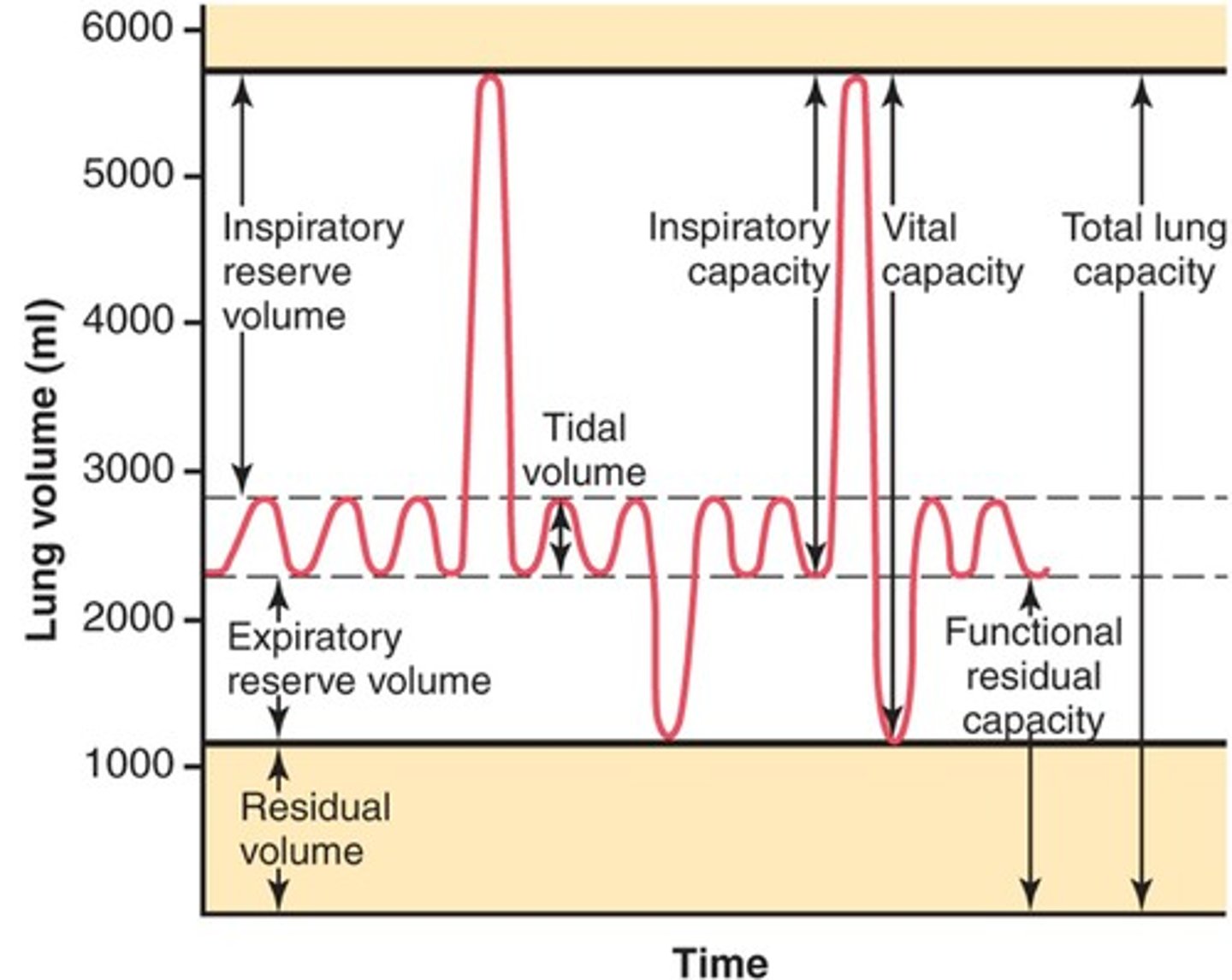
tidal volume
Amount of air that moves in and out of the lungs per breath
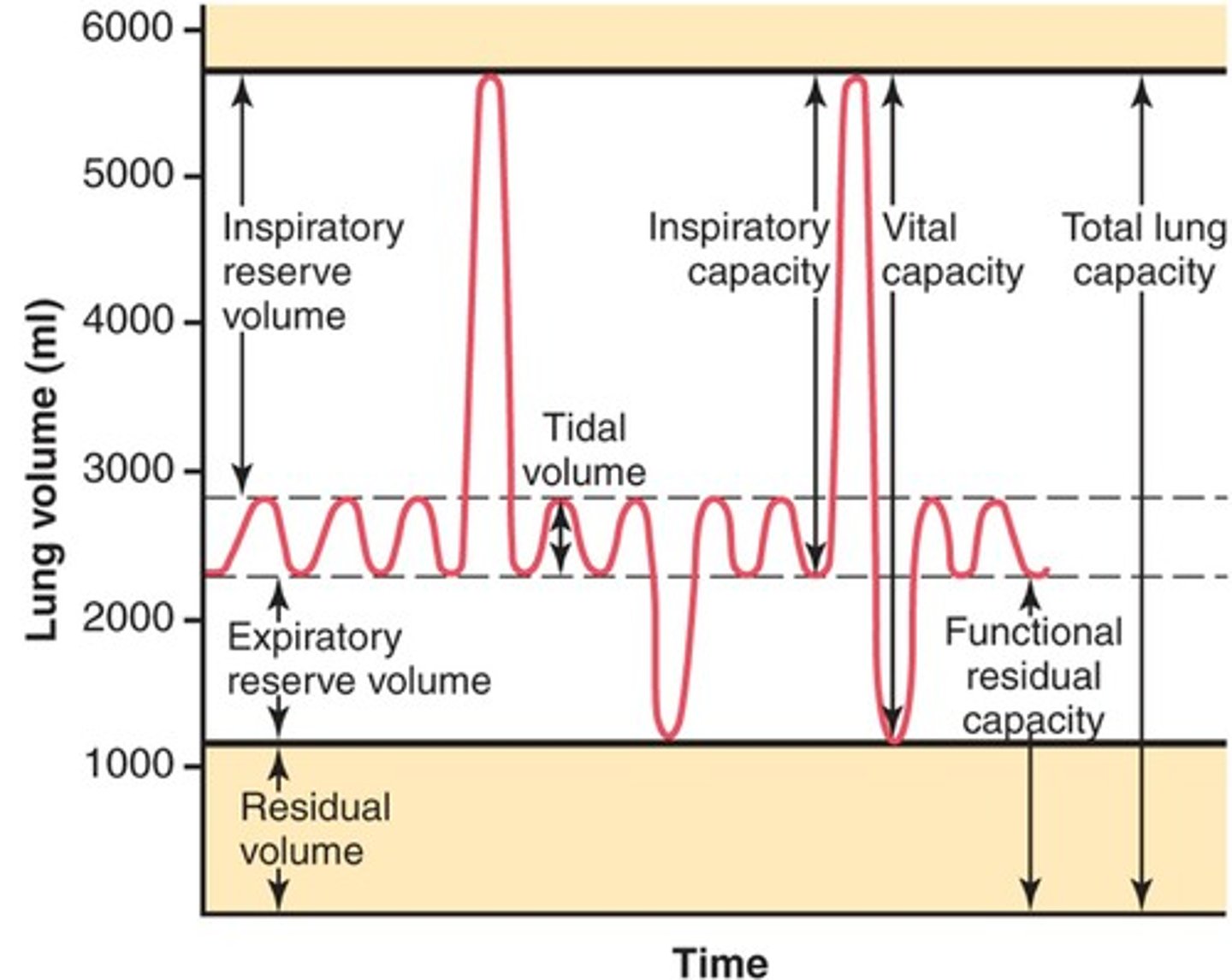
inspiratory reserve volume
maximum amount of air that can be forcebly inspired in addition to tidal volume
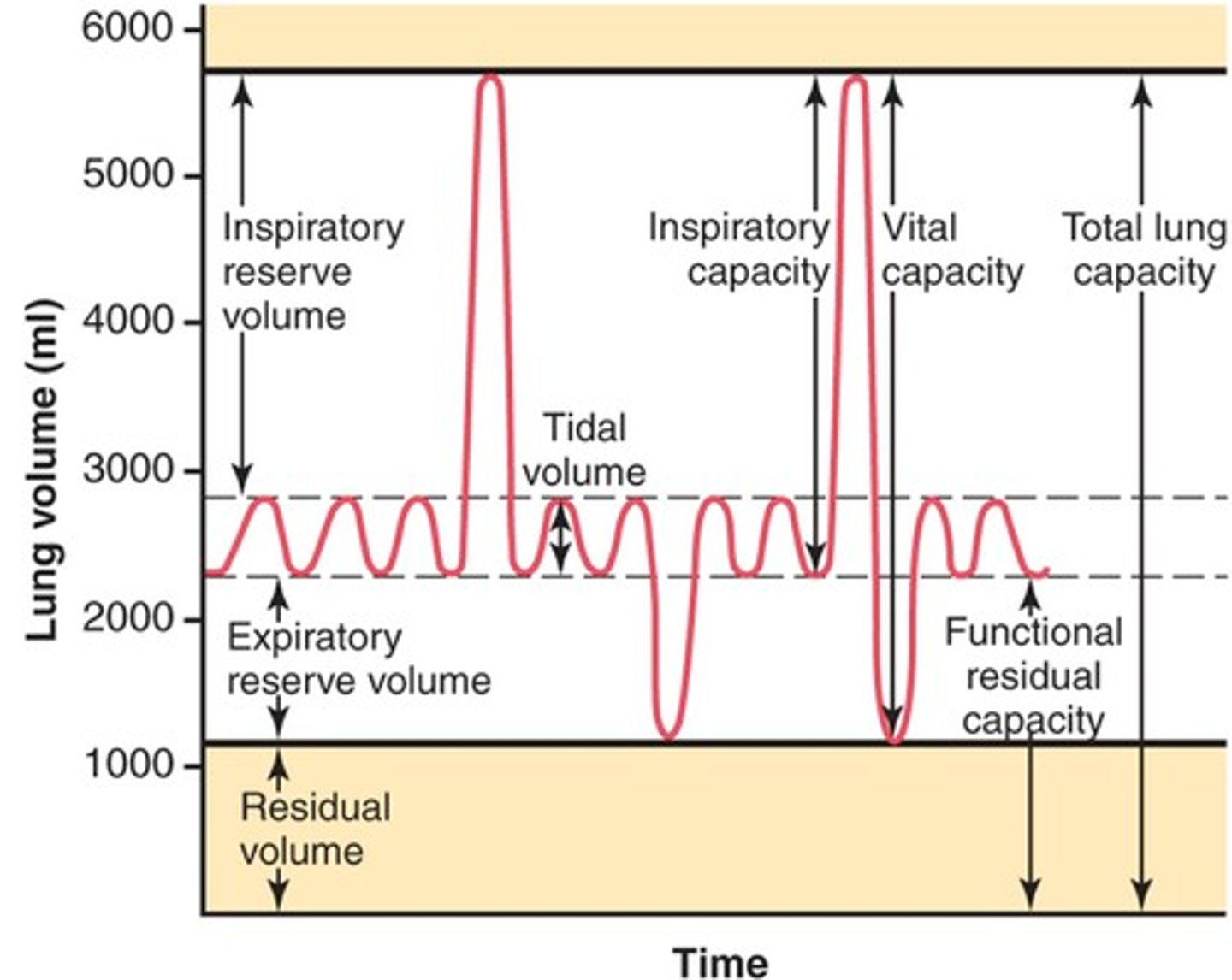
expiratory reserve volume
maximum amount of air that can be forcibly expired in addition to tidal volume
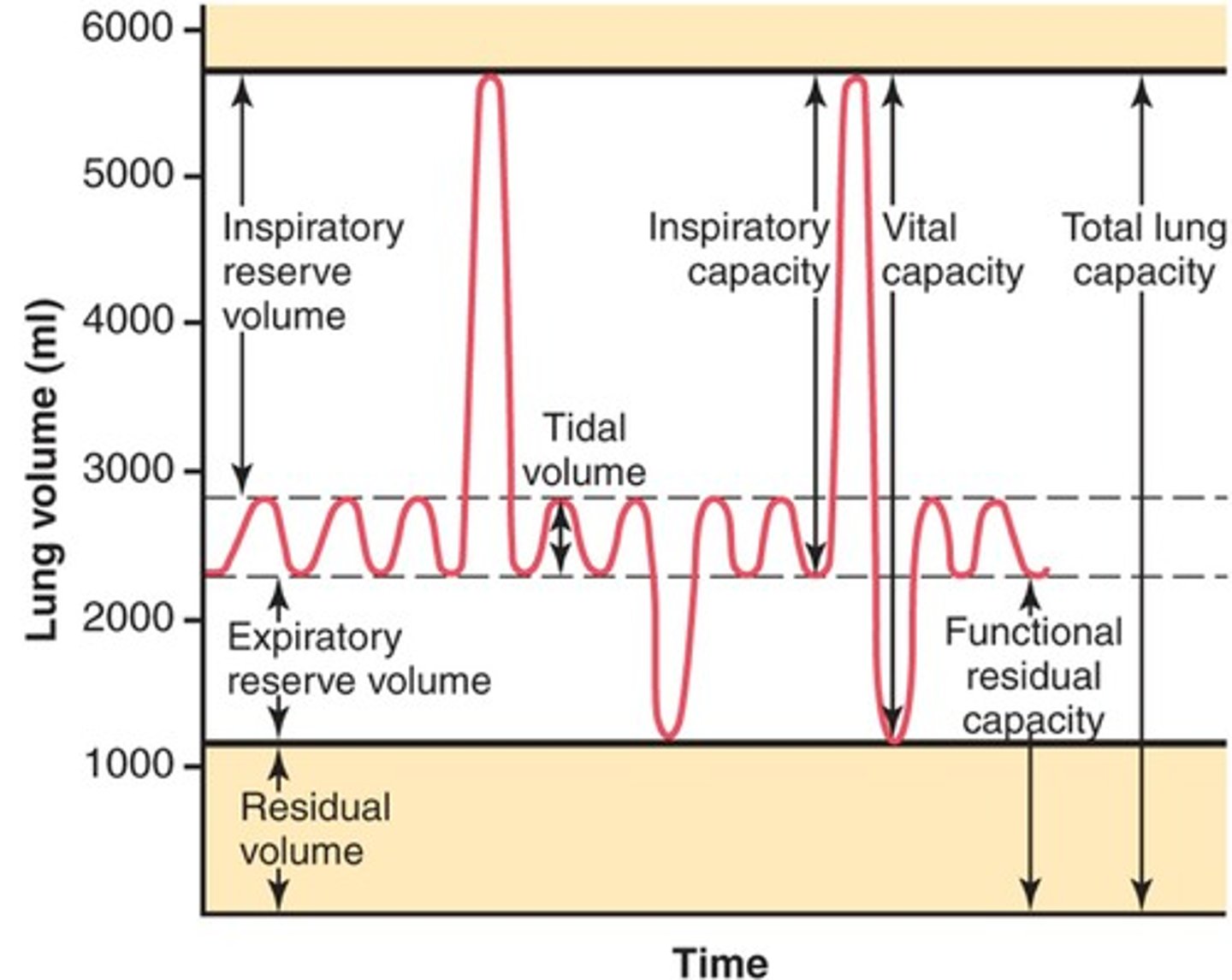
vital capacity
Maximum volume of air exhaled after a maximal inspiration
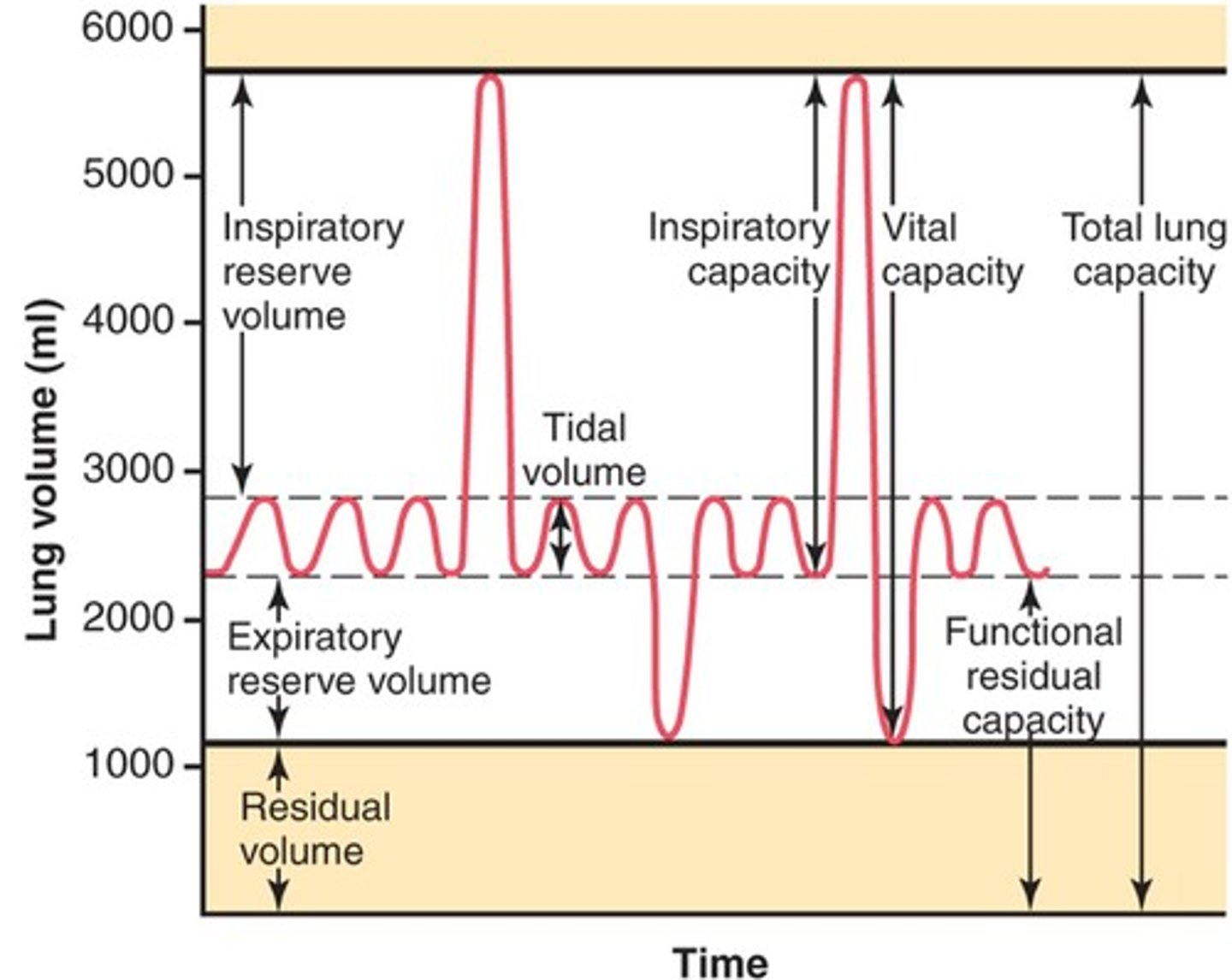
residual volume
Amount of air remaining in the lungs after a maximal expiration
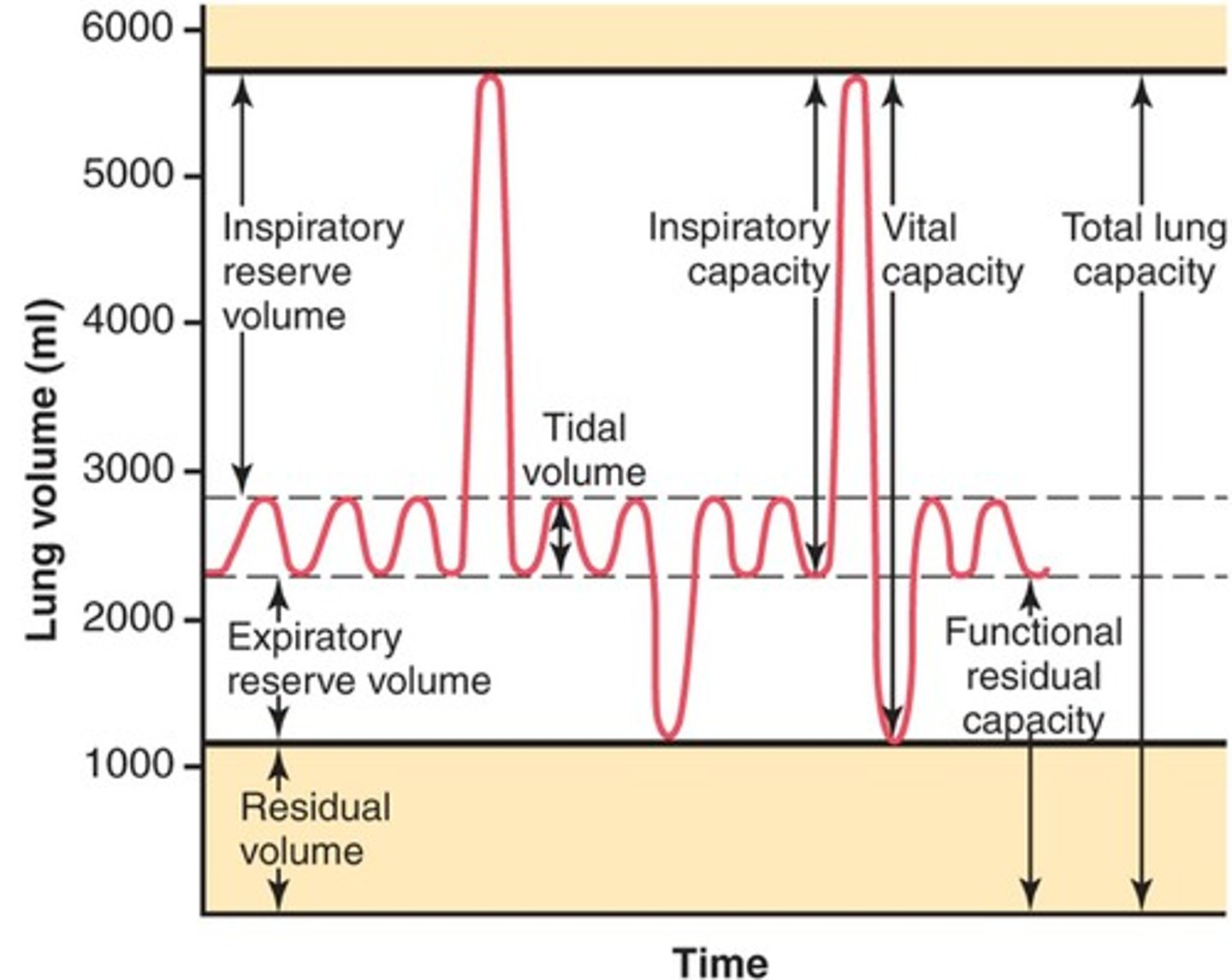
total lung capacity
vital capacity + residual volume
minute ventilation
The amount of air moved in or out of the lungs per min
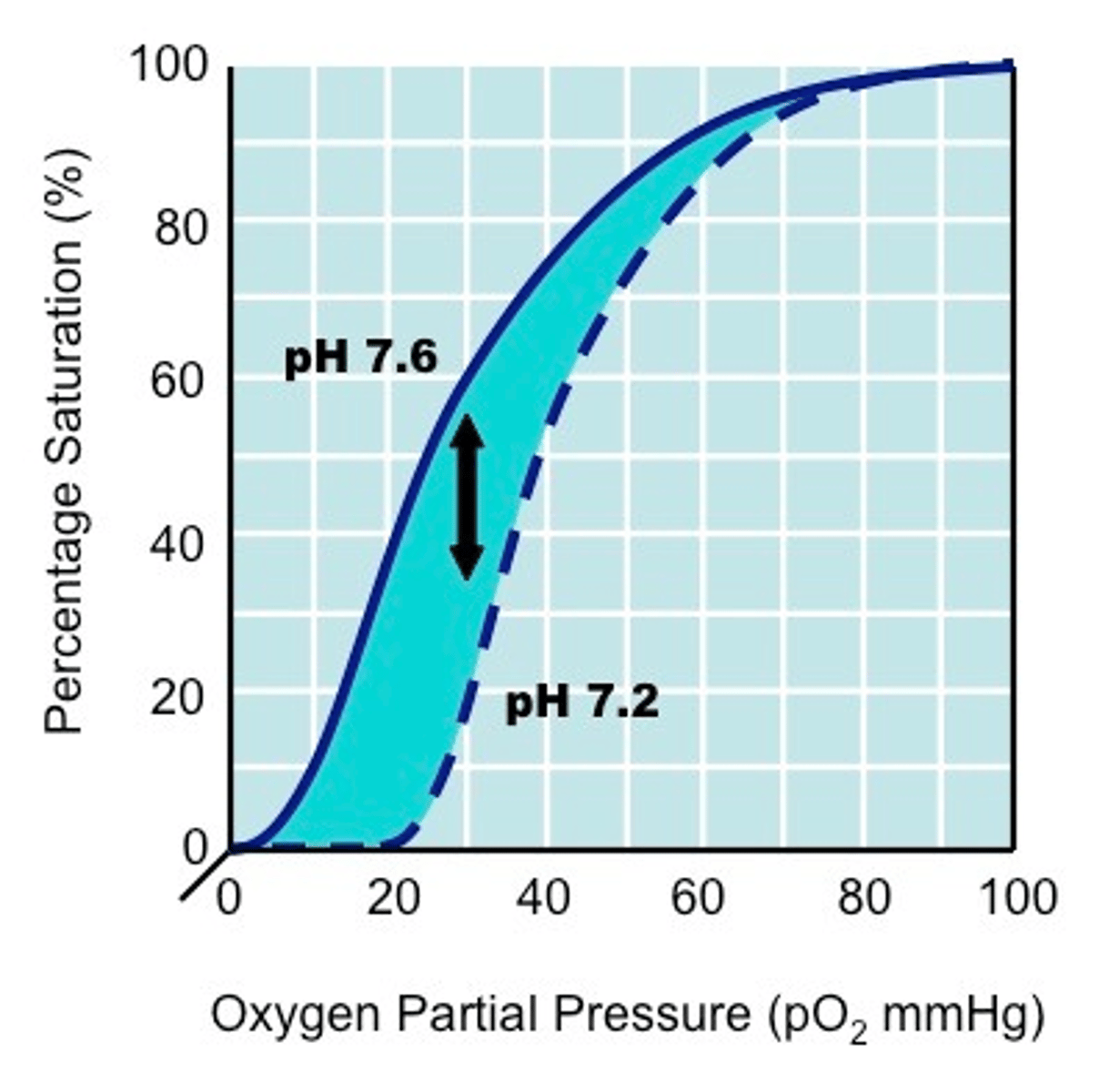
bohr shift
Occurs when an increase in CO2/ blood acidity and temperature results in a reduction in the affinity of haemoglobin for oxygen.
Oxyhaemoglobin dissociation curve shifts to the right.
role of the inspiratory centre
responsible for inspiration and expiration
role of the expiratory centre
stimulates the expiratory muscles during exercise
The order of neural/chemical control for increased inspiration during exercise is:
Receptors - medulla oblongata - phrenic nerve - inspiratory muscles (diaphragm, external intercostals, scalenes and pectoralis minor)
The order of neural/chemical control for expiration during exercise is:
Receptors - medulla oblongata - intercostal nerve - abdominals and internal intercostals
ball and socket
a joint that allows movement in every direction
hinge joints
a joint that that allows movement in only one direction
sagittal plane
a vertical plane that divides the body into a right and left half elbow and knee
frontal plane
a vertical plane dividing the body into the front and back.
transverse plane
a horizontal plane which divides the body into upper and lower halves
agonist
The muscle responsible for the movement that is occurring
antagonist
the muscle that works in opposition to the agonist
Name the agonist & antagonist in elbow flexion
agonist - Biceps
antagonist - Triceps
Name the agonist & antagonist in elbow extension
agonist - Triceps
antagonist - Biceps
Name the agonist & antagonist in ankle plantar-flexion
agonist - Gastrocnemius
antagonist - Tibialis anterior
Name the agonist & antagonist in ankle dorsi-flexion
agonist - Tibialis anterior
antagonist - Gastrocnemius