HIAA 0860 – Contemporary Architecture Quiz 2 Study Sheet (buildings)
 Call Kai
 Learn
Learn Practice Test
 Spaced Repetition
 Match
Match Flashcards
 Knowt Play
1/47

Earn XP
Description and Tags
(make sure to check that all of the given info matches the quiz 2 study sheet)
Name | Mastery | Learn | Test | Matching | Spaced | Call with Kai |
|---|
No analytics yet
Send a link to your students to track their progress
48 Terms
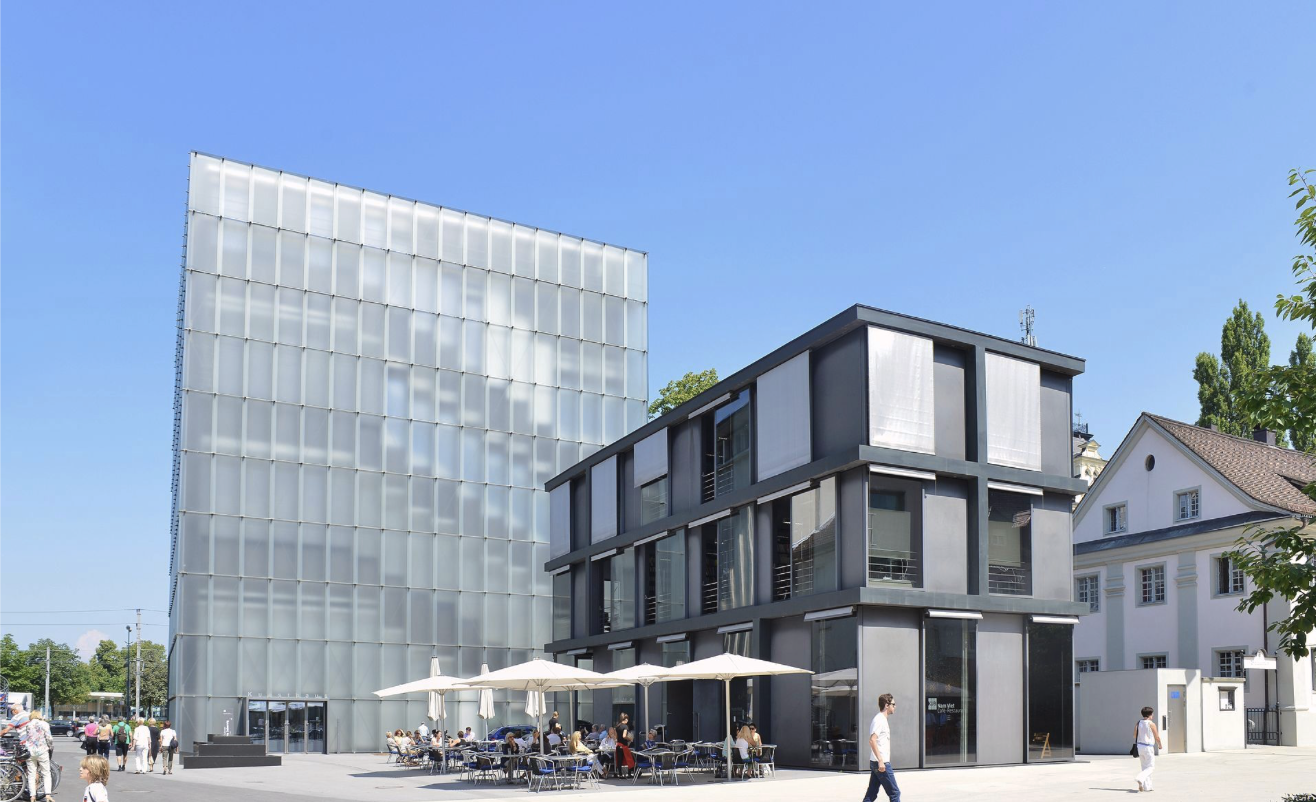
Bregenz, Austria; Kunsthaus; Peter Zumthor; 1997
The building is celebrated as a "lamp" that absorbs and reflects the atmosphere of Lake Constance, changing its appearance based on weather and time of day.
It serves as a leading venue for contemporary art, renowned for having a uniquely neutral and luminous interior designed to enhance, rather than overshadow, art.
Its structural design features a revolutionary, minimalist construction using only three concrete shear walls supporting the entire structure.
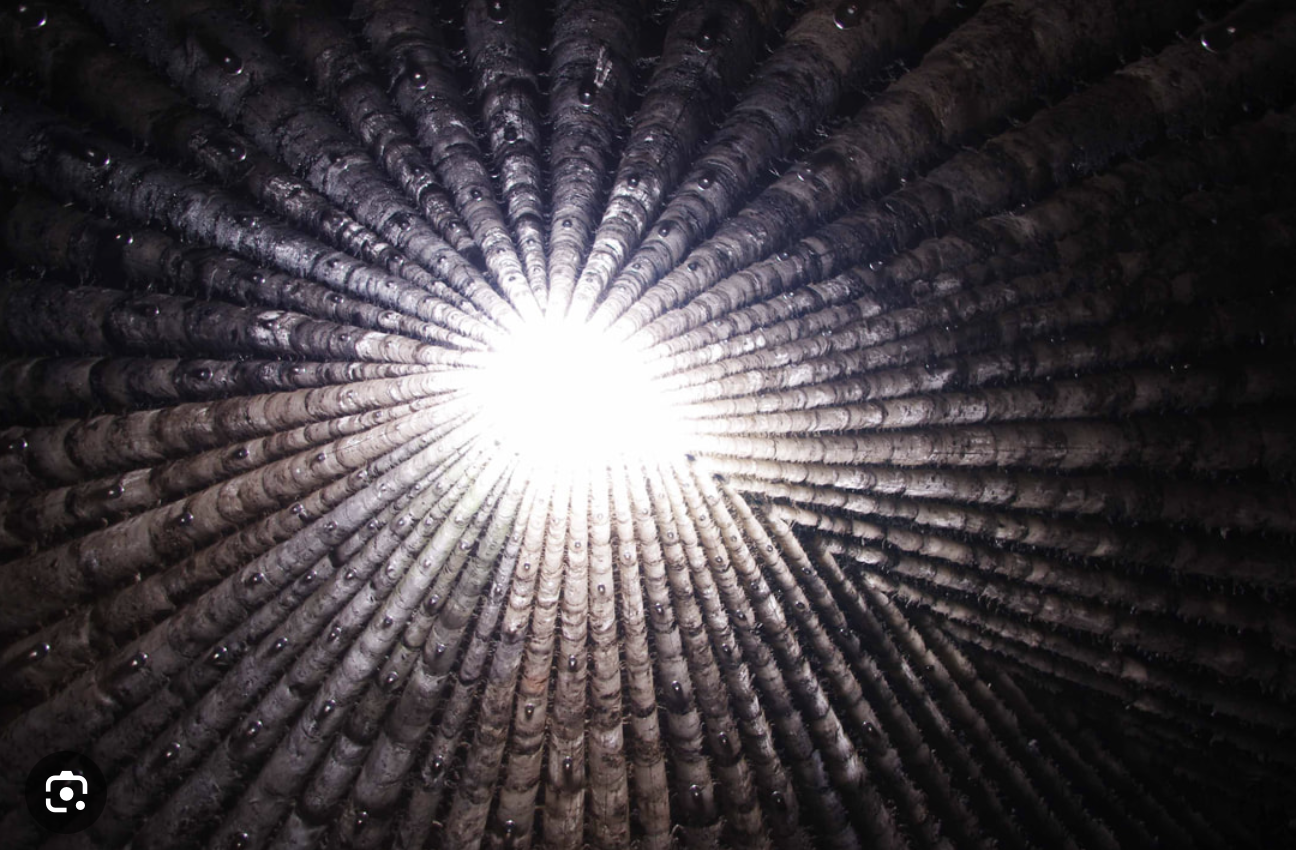
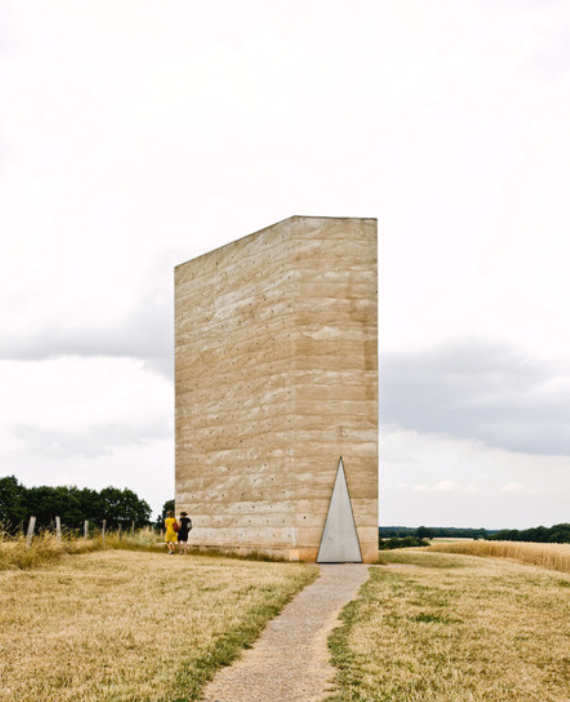
Eiffel, Germany; Bruder Klaus Field Chapel; Peter Zumthor; 2007
It was created by pouring concrete around a stacked timber wigwam, which was then burned for three weeks to create a charred, pitch-black interior.
The chapel is a profound exploration of materiality and atmosphere, using an open oculus to allow rain and sunlight to enter, fostering a deeply contemplative, meditative space that connects visitors to the natural elements.
Built by local farmers to honor their patron saint, Bruder Klaus, the 12-meter-high concrete tower is a landmark of contemporary religious architecture that contrasts a rigid, angular exterior with a soft, organic interior shaped by fire
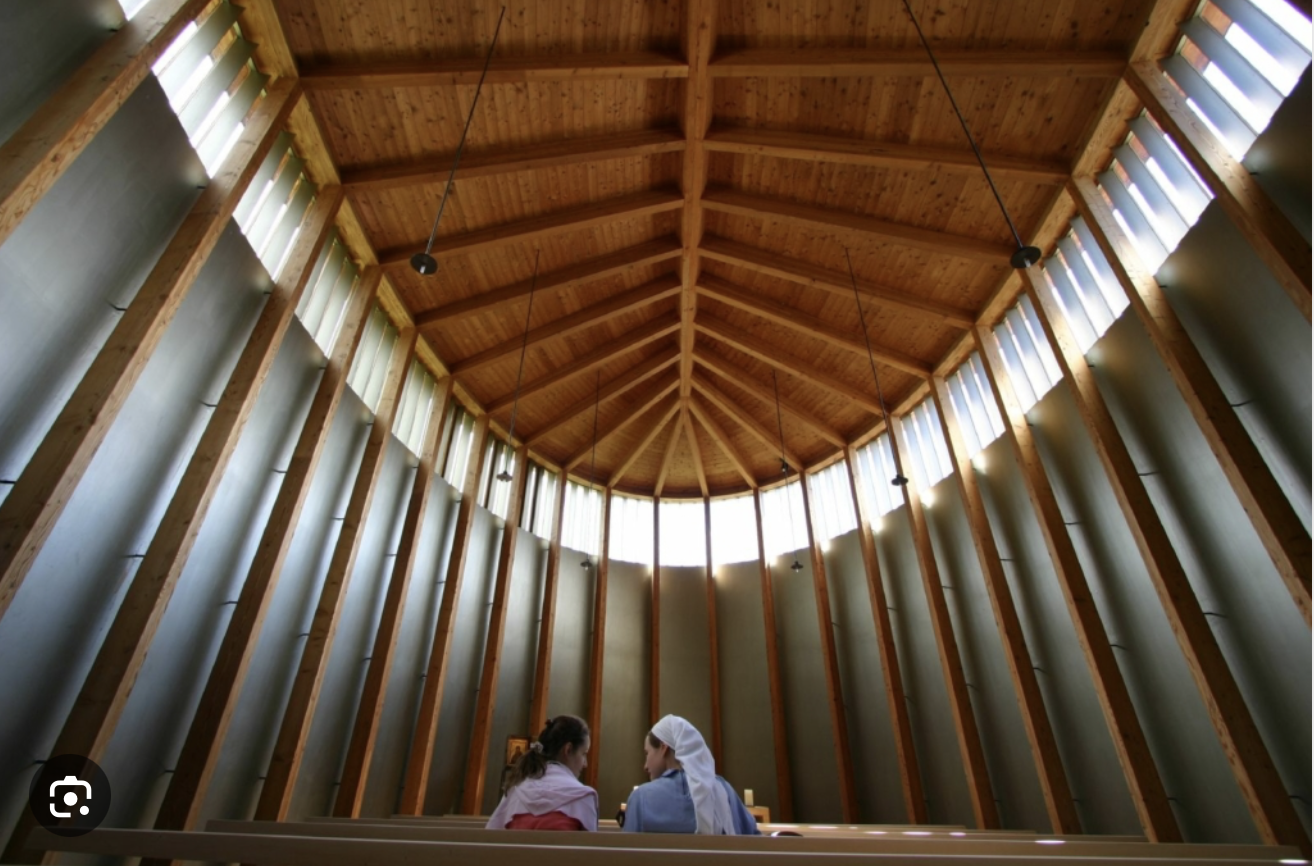
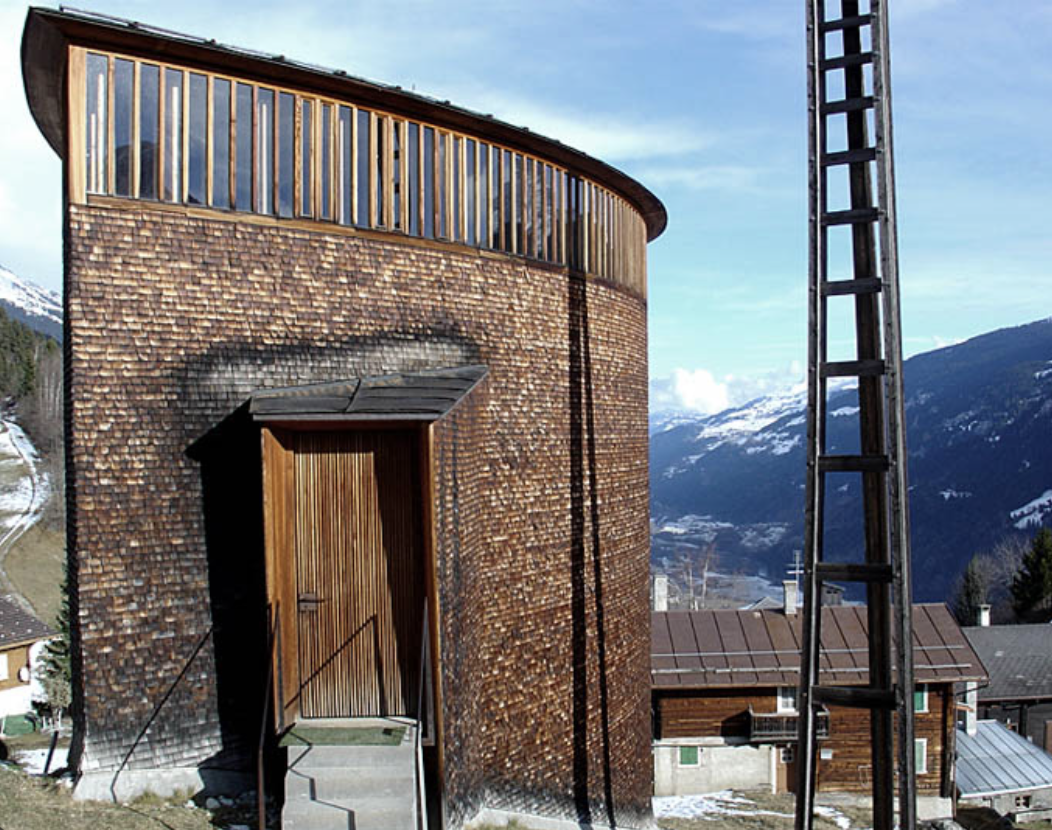
Sumvitg, Switzerland; Saint Benedict Chapel; Peter Zumthor; 1988
Built after a 1984 avalanche destroyed the village's original chapel, the 1988 structure is a resilient, modern intervention designed to blend into the mountainous landscape while honoring traditional Alpine wood craftsmanship.
Peter Zumthor created a unique, leaf-shaped, or "boat-like" structure that uses vertical timber columns, a ring of light, and delicate structural wooden components to create a serene, minimalist interior focused on the sensory experience of space.
The chapel demonstrates masterful use of local wood, particularly its shingled exterior cladding and timber-framed interior, exemplifying a "phenomenological" approach where material honesty and natural light foster a profound sense of calm and spiritual presence.
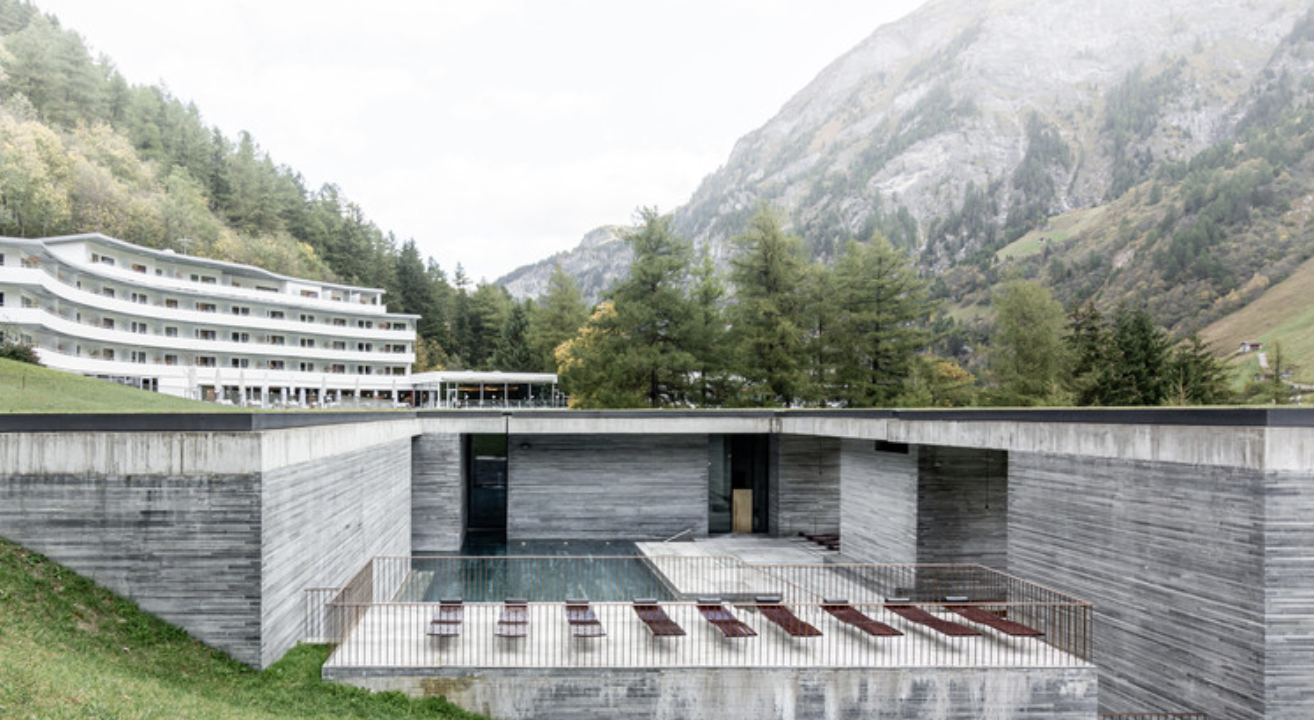
Vals, Switzerland; Thermal Bath Vals; Peter Zumthor; 1996
The building is constructed from 60,000 layers of locally sourced Vals quartzite stone, creating a distinct, monolithic structure.
It features a "meander" design, forming a subterranean, labyrinthine experience that encourages contemplative, silent bathing.
The baths are recognized for their intense sensory focus, prioritizing the experiential qualities of light, shadow, acoustics, and temperature over mere functional utility
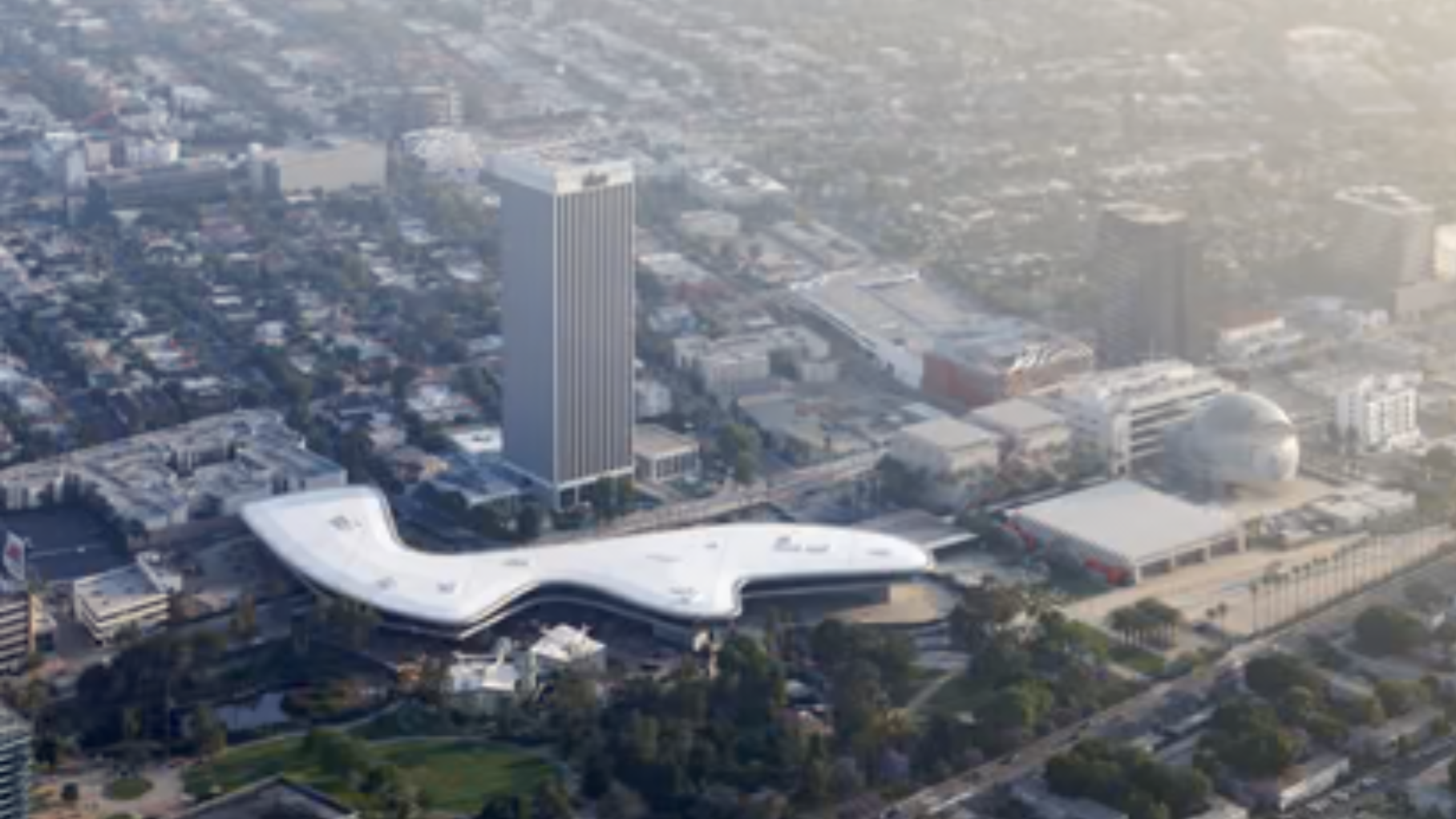
Los Angeles, LA County Museum, 2013 -2024, arch.: Peter Zumthor.
Zumthor’s radical design replaces multiple aging structures with a sweeping, organically shaped, single-level concrete and glass pavilion that dramatically elevates the museum above Hancock Park and spans directly across Wilshire Boulevard.
By placing all main galleries on a single continuous floor, the architecture intentionally dismantles traditional chronological and geographic hierarchies to foster an egalitarian, non-linear experience of the museum's encyclopedic collection.
The decade-long redevelopment sparked intense public debate due to its ballooning budget, the permanent demolition of the original mid-century campus, and a contentious reduction in total exhibition space.
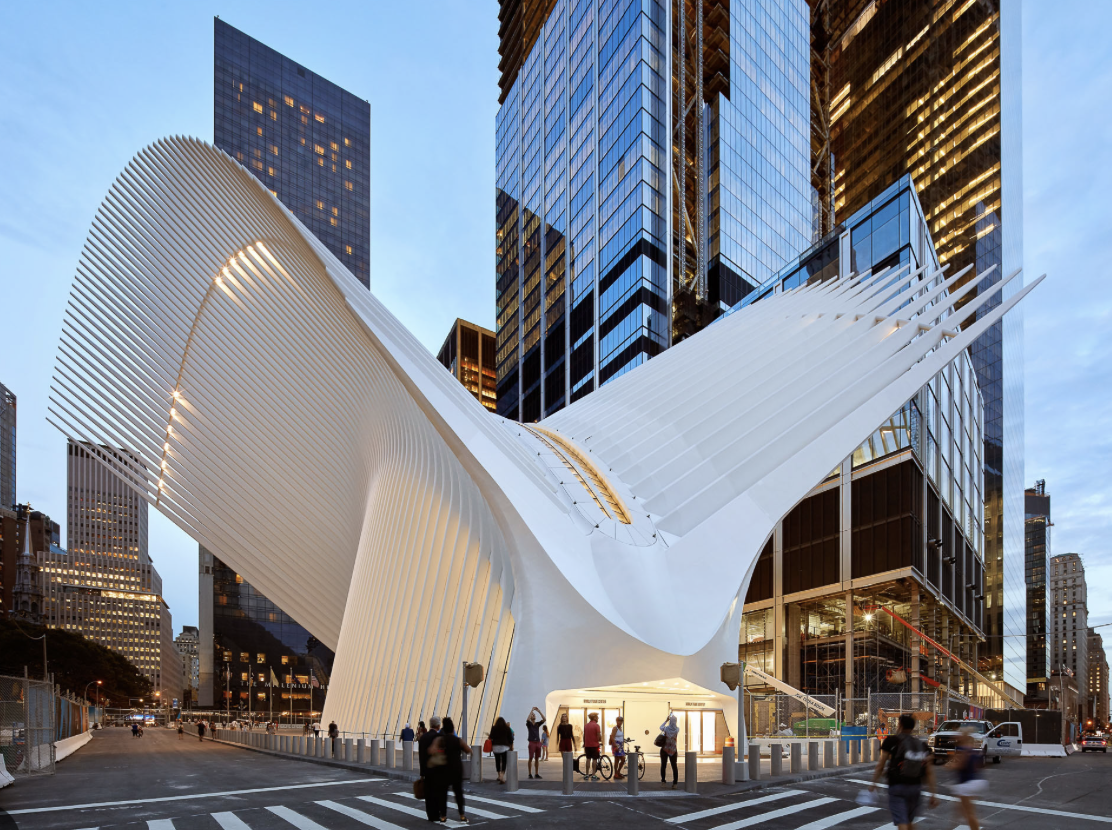
WTC Transportation Hub; Santiago Calatrava; New York, NY; 2004–16
It serves as a vital mobility anchor for Lower Manhattan, connecting PATH trains and eleven subway lines while providing massive retail space to the post-9/11 site.
The iconic, sculptural "Oculus" structure, defined by white steel ribs representing wings of a bird, serves as a poignant symbol of renewal and a, frequently, light-filled, transcendent civic space.
Despite attracting criticism as a $4 billion "boondoggle" due to massive cost overruns, the project is a definitive, monumental work of 21st-century architecture.
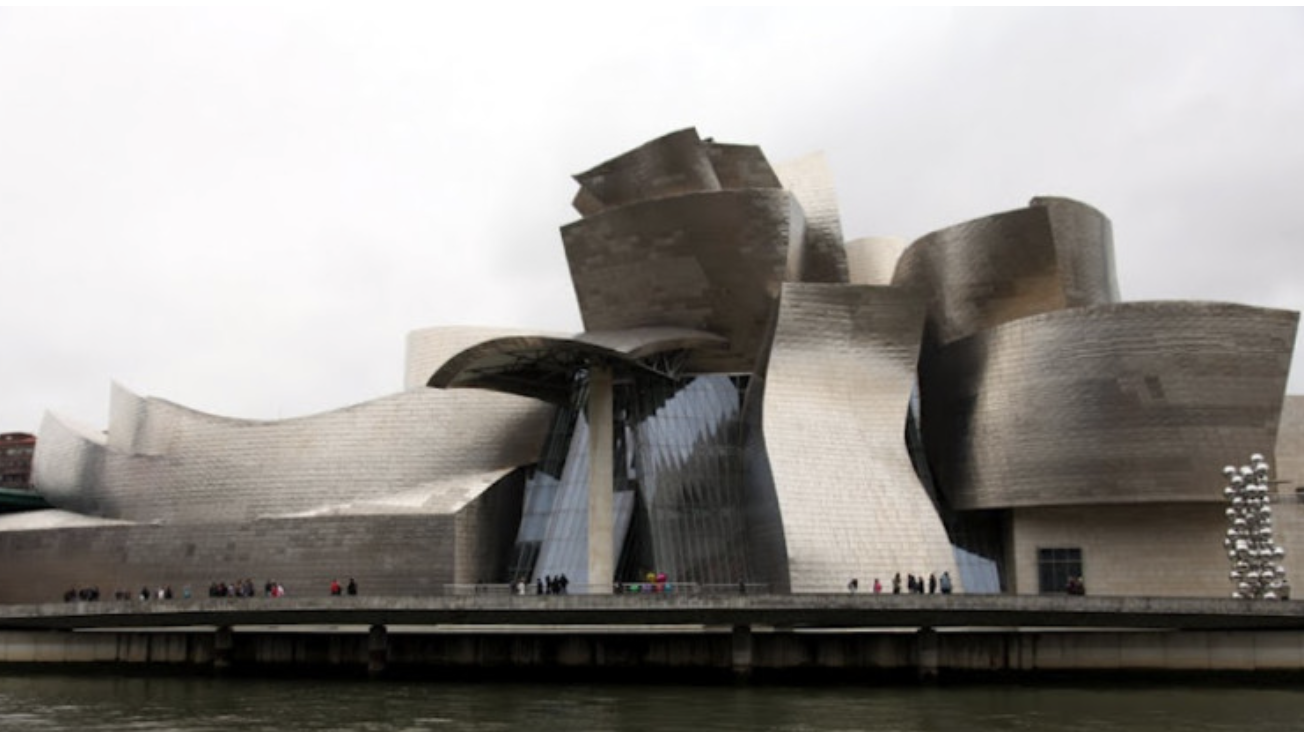
Guggenheim Museum Bilbao; Frank Gehry; Bilbao, ESP; 1997
Architectural Innovation: Gehry’s groundbreaking use of advanced aerospace software (CATIA) enabled the construction of the museum's complex, undulating titanium curves, permanently revolutionizing the possibilities of digital architectural design.
The "Bilbao Effect": The museum's unprecedented success transformed the declining post-industrial city into a booming global tourist destination, coining a new urban planning term to describe how striking cultural architecture can act as a catalyst for profound economic revitalization.
Institutional Redefinition: By serving as a spectacular, avant-garde attraction in its own right, the building redefined the contemporary museum as a global architectural destination and validated the Guggenheim Foundation's ambitious strategy of international franchising.
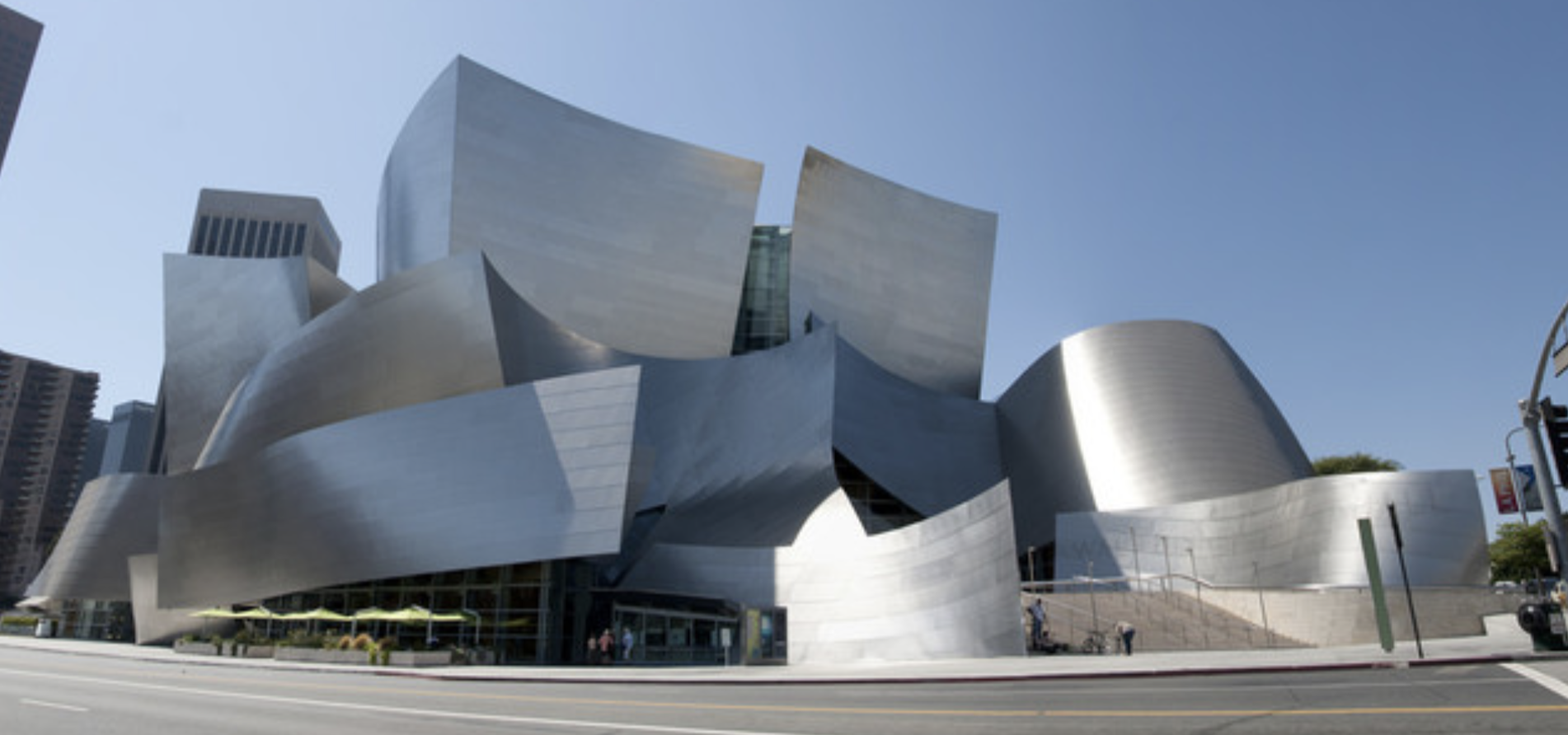
Disney Concert Hall; Frank Gehry; Los Angeles, CA; 1993–2005
The, design pioneered the use of, CATIA software to translate complex, sculptural, and asymmetrical designs into a buildable, steel-framed reality.
Its interior design offers, exceptional, world-class, acoustic precision through a, vineyard-style seating arrangement that, promotes a democratized relationship between audience and orchestra.
Overcoming a decade of delays and funding challenges, the completed concert hall acted as a powerful anchor for the cultural and economic revitalization of downtown Los Angeles's Grand Avenue corridor.
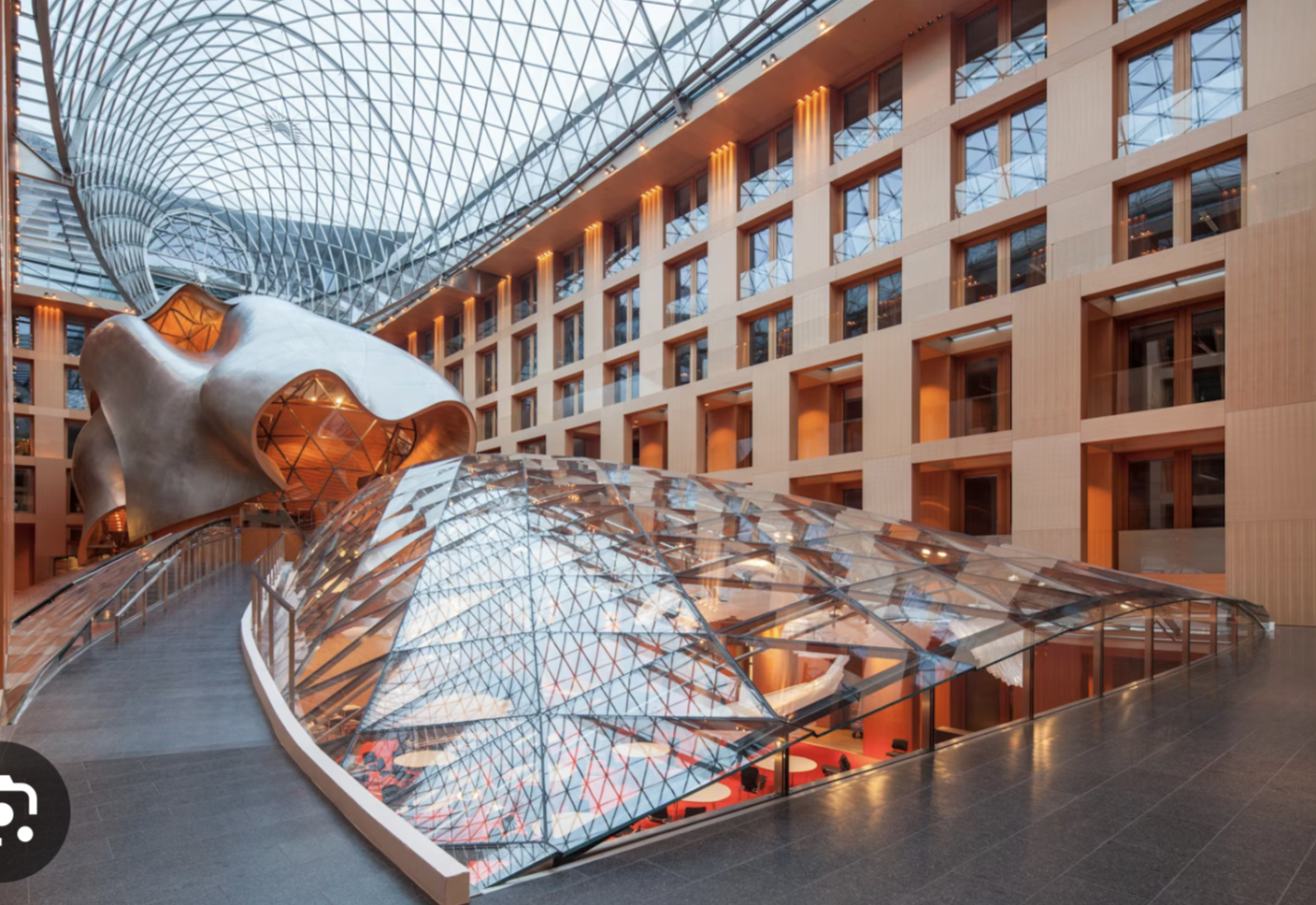
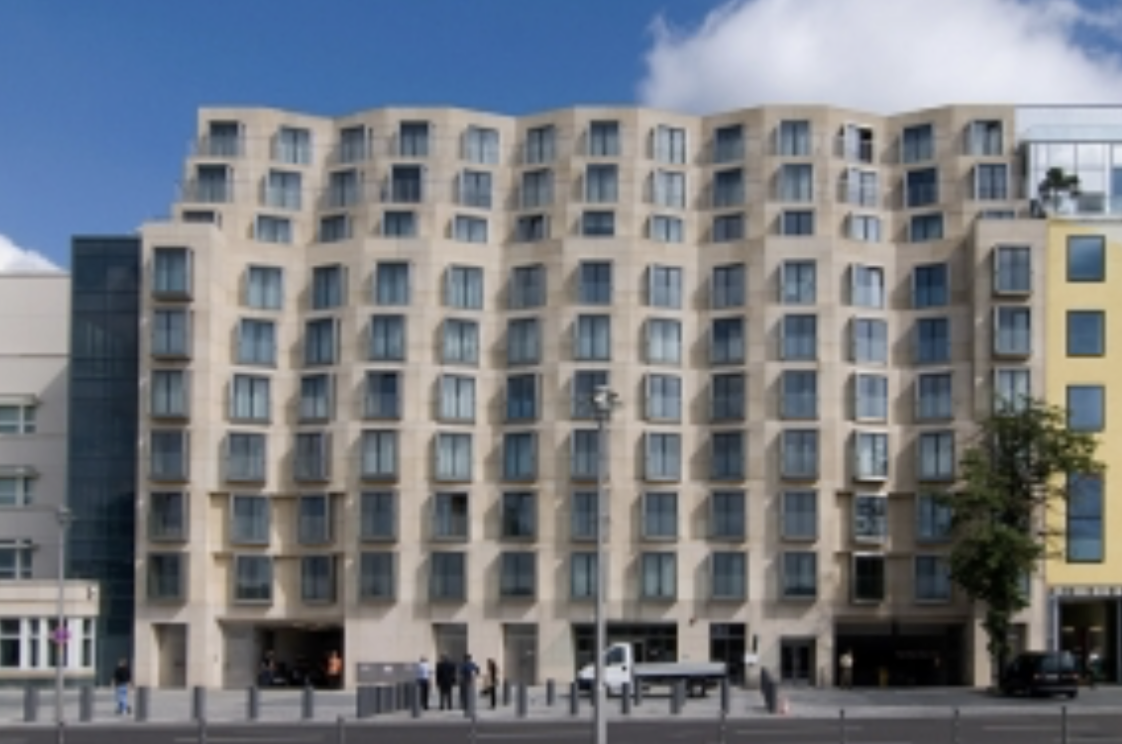
Berlin, DZ Bank building: 1996-99, arch.: Frank Gehry
Contextual Exterior/Surprising Interior: The facade, clad in yellow Italian limestone, respects the strict, historic aesthetic of Pariser Platz, intentionally masking a complex, curvaceous, and highly sculpted interior world.
The Sculptural Conference Hall: The heart of the atrium features a striking meeting hall that resembles a fish or submarine, utilizing stainless steel and timber to create a dramatic, organic, and floating volume inside a glass-vaulted space.
Symbolic Urban Location: Located directly next to the US Embassy, this building signifies the post-reunification revitalization of Berlin's center and represents DZ Bank's, formerly "Preussische Central-Genossenschaftskasse," return to its historic roots.
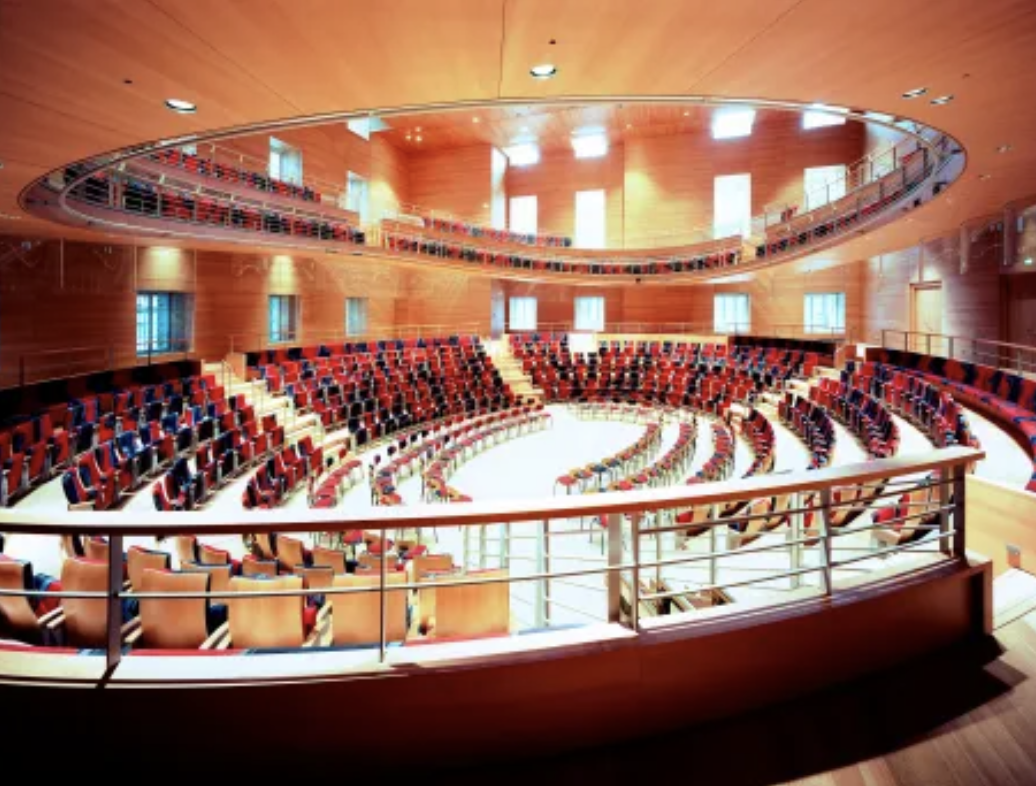
Berlin, Pierre Boulez Saal, 2017, Frank Gehry
Intimate 360-Degree Design: Frank Gehry designed the hall as an intimate "living room" featuring a hovering, column-free balcony, where no seat is far from the stage, creating a unique communal experience between audience and musicians.
Acoustic and Structural Flexibility: The hall features modular seating and staging that can be reconfigured for different musical formats without disrupting the exceptional acoustics created by Toyota.
Cultural Dialogue and Symbolism: As part of the Barenboim-Said Akademie, the 2017 hall serves as a, architectural vessel for Daniel Barenboim’s vision of fostering peace and dialogue through music, specifically hosting musicians from the Middle East.
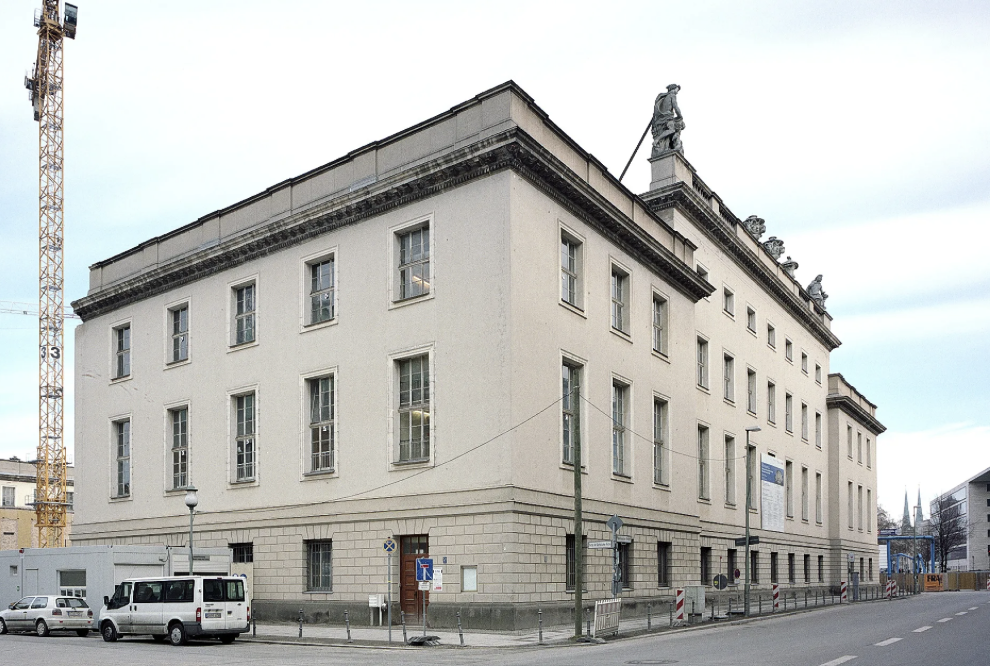
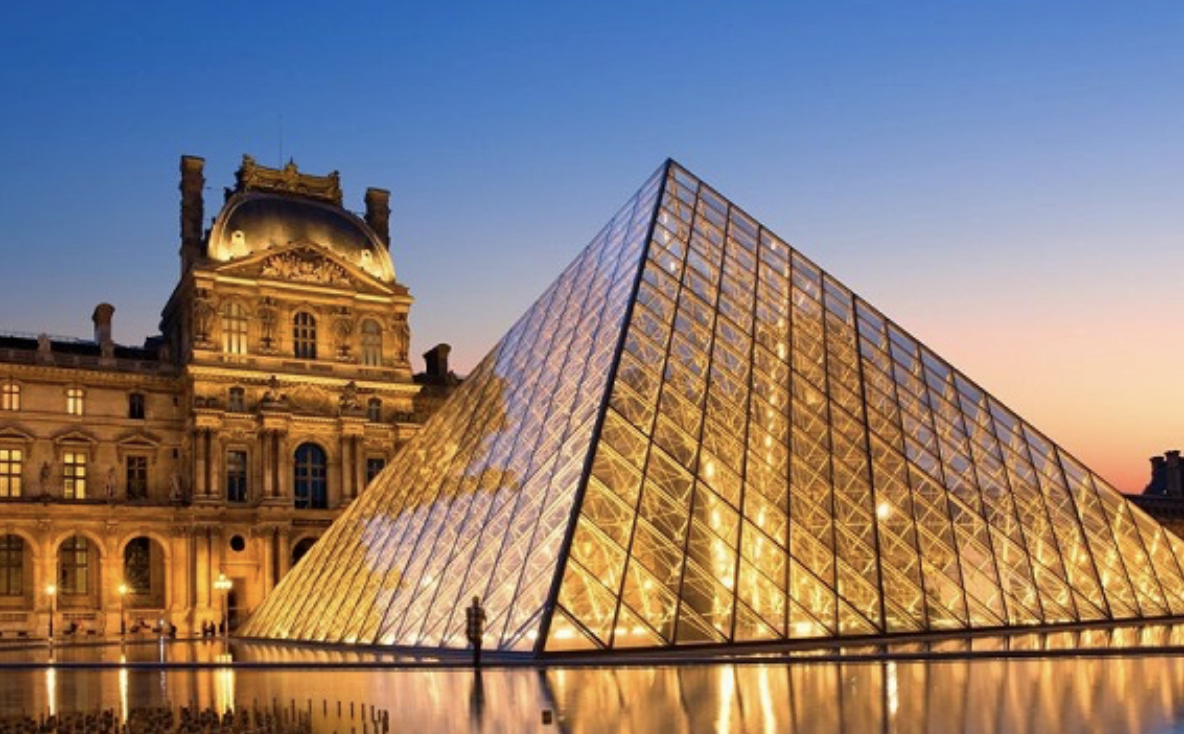
Paris, Louvre addition, 1981-1993, arch.: Ieoh Ming Pei
Modernization of Accessibility: It solved logistical bottlenecks by moving the entrance to the Cour Napoléon and organizing access to wings via a central, below-ground concourse.
Architectural Juxtaposition: It exemplified the successful integration of modern structural techniques and geometric design within a historic,, high-prestige, traditional setting.
Through the renovation of the Richelieu wing, formerly a government office, Pei's plan added over 230,000 square feet of gallery space, allowing the entire Louvre complex to be dedicated to art in 1993.
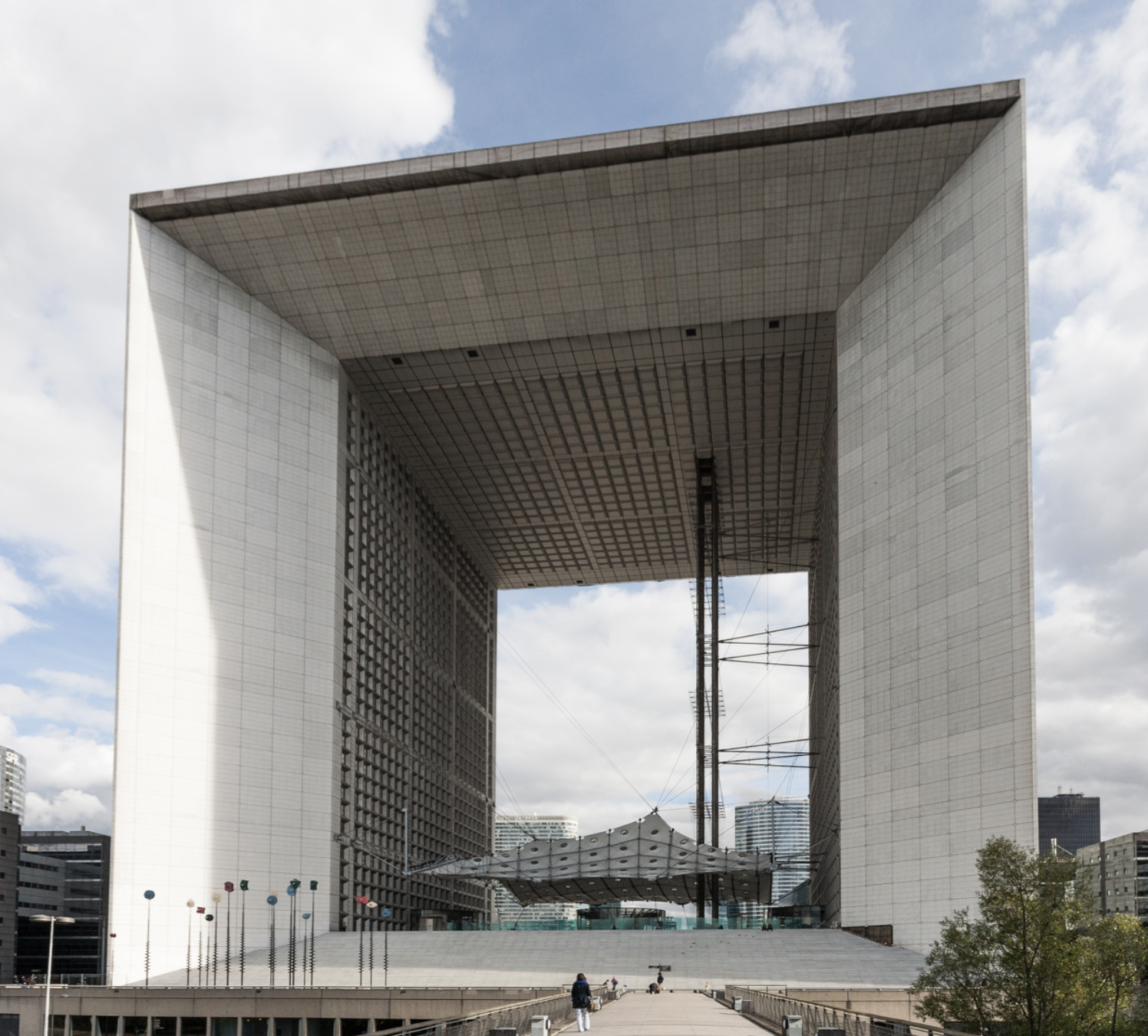
Paris, Grande Arche, 1985-1989, arch.: Johan Otto von Spreckelsen
Completion of the Historical Axis: It serves as the final, modern landmark at the terminus of Paris's historic east-west axis, connecting the Louvre and Arc de Triomphe to the bustling La Défense business district.
Symbolism of Humanism: Initiated by President Mitterrand for the 1989 Bicentennial, it represents a contemporary monument to humanity and humanitarian ideals rather than traditional military victory.
Engineering and Architectural Feat: The structure, completed by Paul Andreu after Spreckelsen's death, spans 70 meters with massive prestressed concrete beams and is intentionally rotated 6.33 degrees to align with both the historical axis and underlying infrastructure.
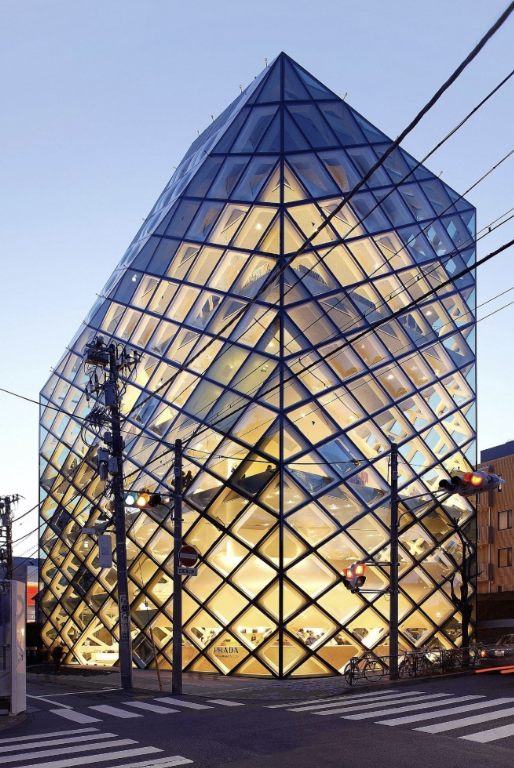
Prada Store, Tokyo, 2003, Herzog & de Meuron
Integrated Structural Skin: The building is a pioneering example of a "structural facade," where the diagonal steel grid (rhomboid shape) acts as the building’s exoskeleton, removing the need for internal columns and integrating facade, structure, and space.
Optical Manipulation and Identity: The facade uses a mix of convex, concave, and flat glass panels—described as "contact lens" like—which create a constantly shifting view for onlookers and serve as a "visual filter" between the street and luxury products.
Unique Crystalline Sculptural Form: The five-sided, 6-story building departs from the standard, boxy architecture of Tokyo's shopping districts. Its shape, influenced by building regulations, results in a sculptural, shifting form that looks like a crystal or an organic, growing "blossom"
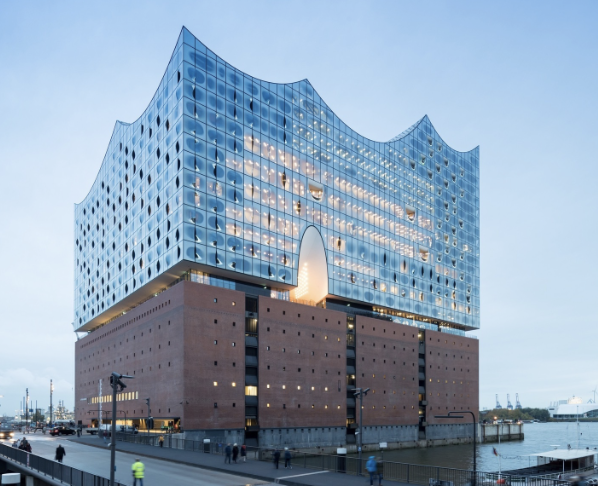
Hamburg, Philharmonie, 2017, Herzog & de Meuron
Architectural Synthesis: Herzog & de Meuron’s design (2017) acts as a dramatic juxtaposition, placing a sculptural, curvy glass structure atop the industrial Kaispeicher A warehouse to bridge Hamburg’s maritime history with its modern future.
Cultural & Urban Impact: The Elbphilharmonie serves as a new cultural landmark and urban hub in HafenCity, transforming an underutilized, historic waterfront spot into a vibrant, publicly accessible space that connects the city with the Elbe River.
Innovative Acoustics: The Grand Hall, engineered by Yasuhisa Toyota, introduces a "vineyard" style layout with a "White Skin" acoustic lining, creating an immersive, intimate experience and setting a new standard for world-class concert design
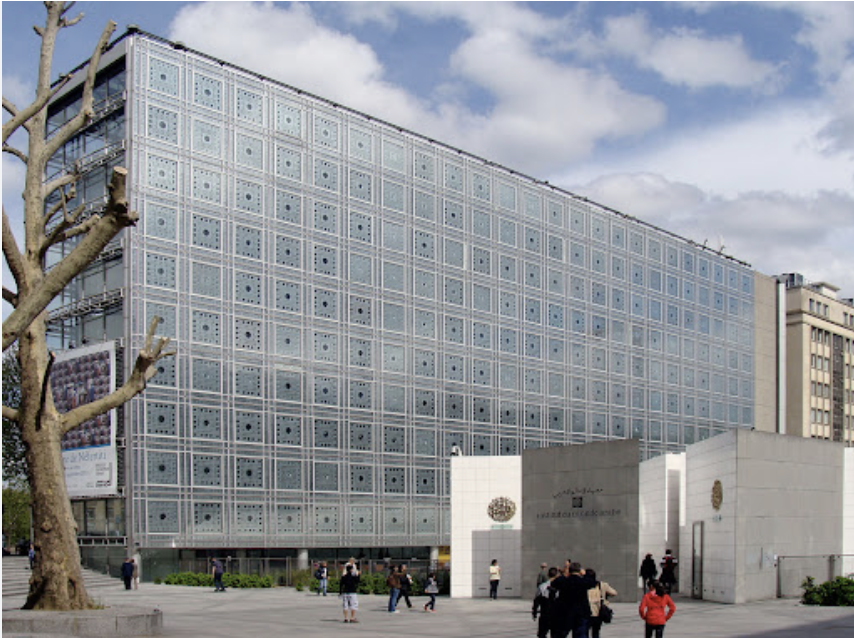
Paris, Centre du Monde Arabe, 1981-1987, arch.: Jean Nouvel
Innovative Façade Technology: The south façade features motorized metallic diaphragms that act as a camera aperture to automatically control light, successfully updating traditional Arabic lattice work with 20th-century technology.
Cultural Hinge & Contextualism: Positioned between the historic Seine and the modern Jussieu Campus, the building acts as a structural dialogue between Arab and Occidental cultures and serves as a, architectural "hinge" between old and new Paris.
International Recognition & Symbolism: Representing a key "Grands Projets" collaboration between France and the Arab League, the design earned Nouvel the 1989 Aga Khan Award for Architecture, securing his international status
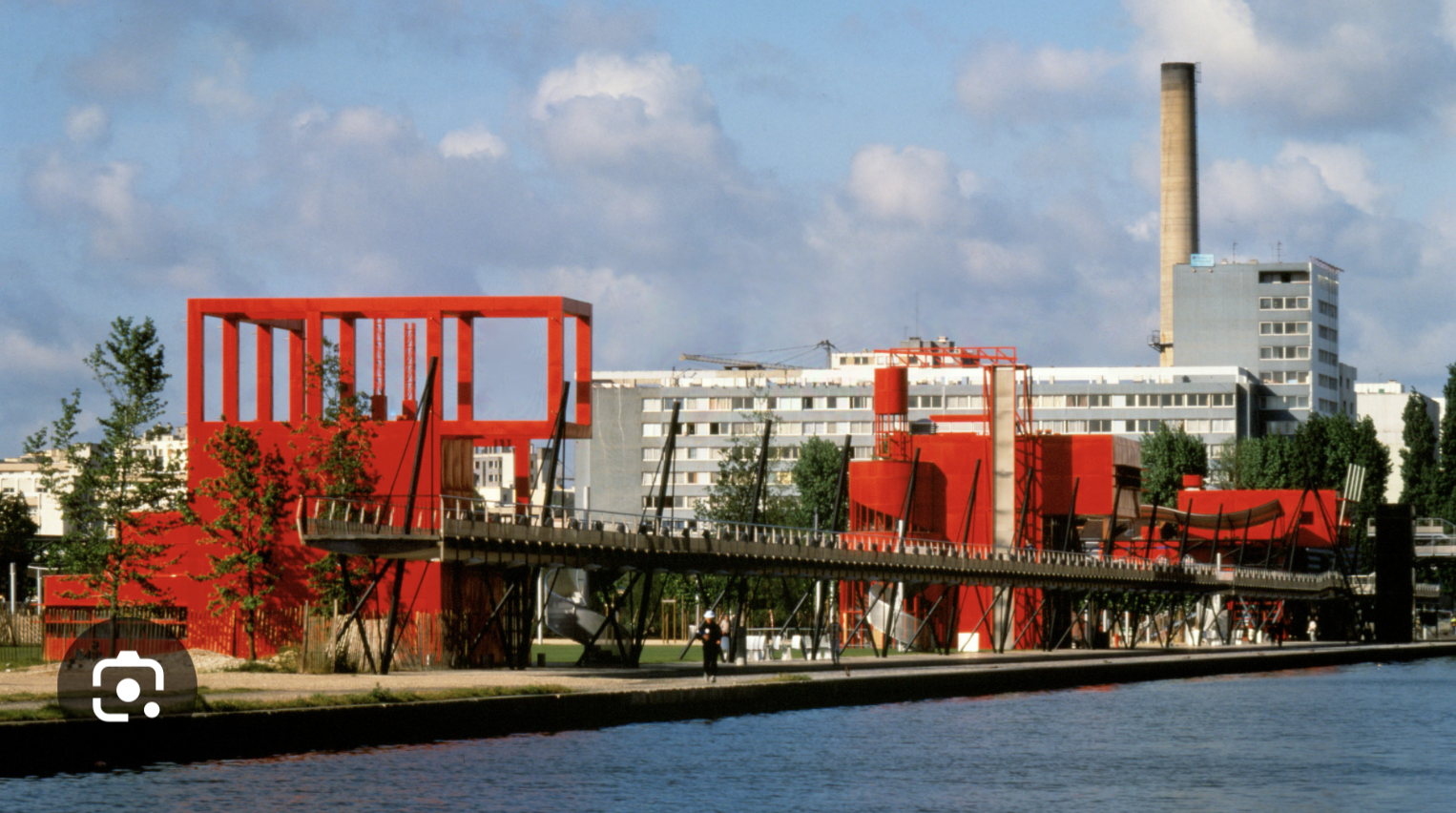
Paris, Parc de la Villette, 1982ff. Bernard Tschumi
Deconstructivist Milestone: It stands as one of the most significant early applications of deconstructivist theory, utilizing fragmentation and complexity to challenge traditional, unified architectural forms.
Layered Organizational System: The park is organized by superimposing three independent, disparate systems—a grid of 35 red "follies" (points), organized pedestrian paths (lines), and open green spaces (surfaces)—to create a dynamic, multi-layered urban experience.
Cultural Catalyst: It transformed the former 19th-century slaughterhouse site into a modern, 55-hectare "park for the 21st century," functioning as a dense, year-round venue for cultural, educational, and leisure activities
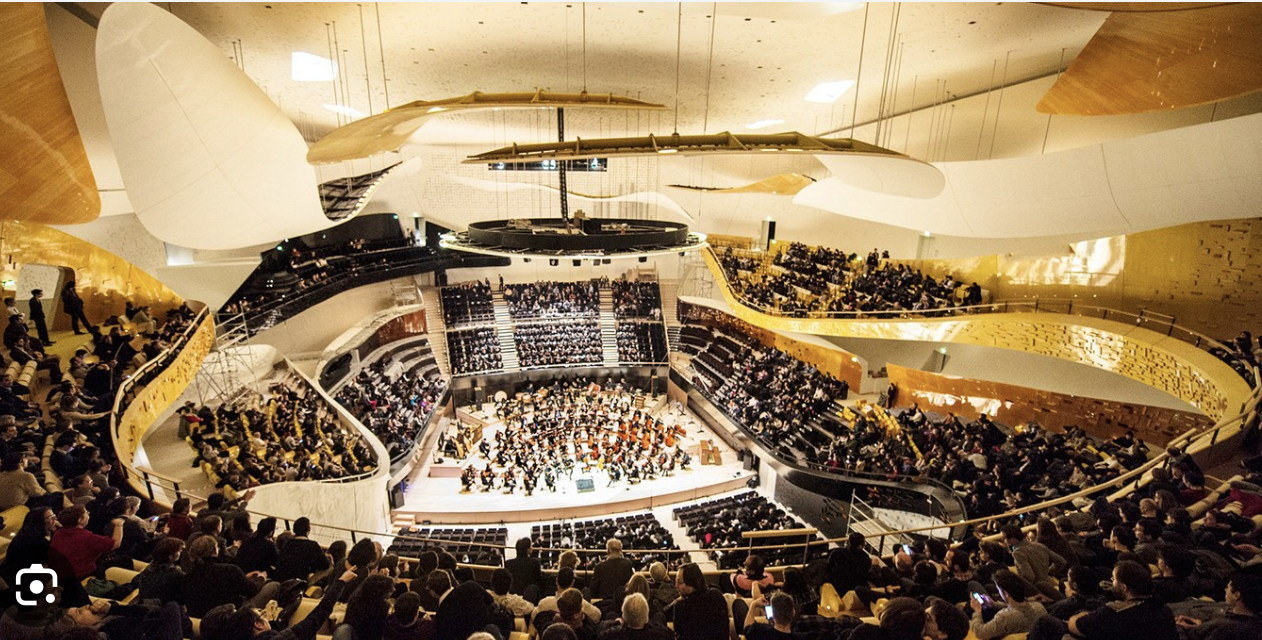
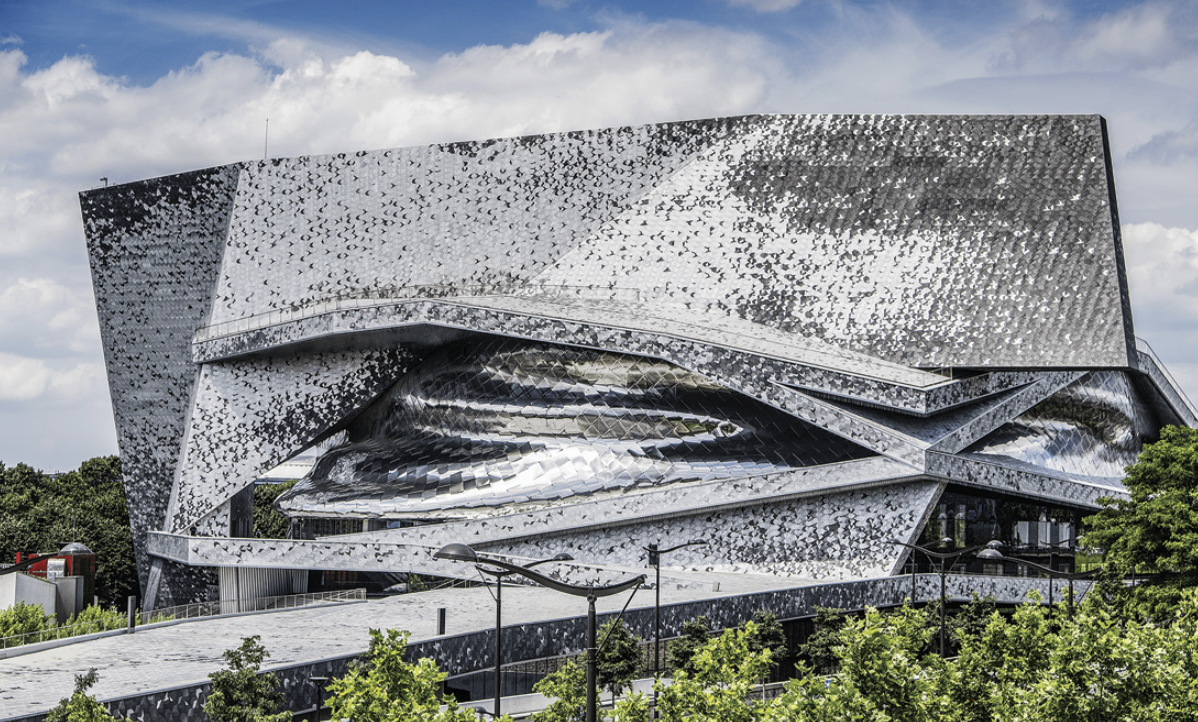
Paris, Philharmonie, 2010-2015, arch. Jean Nouvel
Architectural Symbolism: The building functions as a new public landscape, designed as an accessible, upward-spiraling "hill" that connects the surrounding city to the Parc de la Villette with an exterior facade featuring an etched, multi-tonal bird motif.
Acoustic Innovation: The auditorium features a revolutionary "surround" design, placing the audience close to the stage with floating balconies and cloud-shaped reflectors, optimizing sound clarity and intimacy.
Urban Integration: Strategically located on the ring road, the venue is aimed at connecting central Paris with the diverse suburban communities to the north, offering a wide array of musical genres and educational programs.
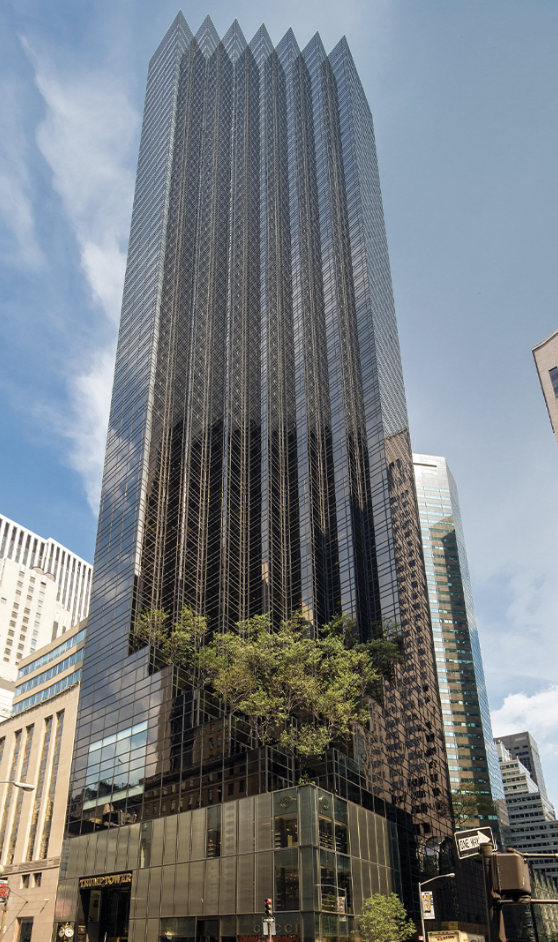
New York City, 725 Fifth Avenue, “Trump Tower” 1979-1983, arch: Der Scutt
Mixed-Use Pioneering: Designed by architect Der Scutt, the 58-story skyscraper revolutionized luxury urban development in Manhattan by successfully integrating a multi-level retail atrium, commercial offices, and ultra-luxury condominiums within a striking, stepped-glass facade.
Structural Innovation: At the time of its completion in 1983, the building stood as the tallest reinforced concrete structure in New York City, utilizing an innovative concrete tube framework rather than traditional steel to maximize interior space and stability.
Cultural and Political Landmark: Beyond cementing its developer's brand of conspicuous opulence in the 1980s, the tower evolved into a globally recognized symbol, serving as the nerve center for Donald Trump’s business empire and the headquarters for his successful presidential campaigns.
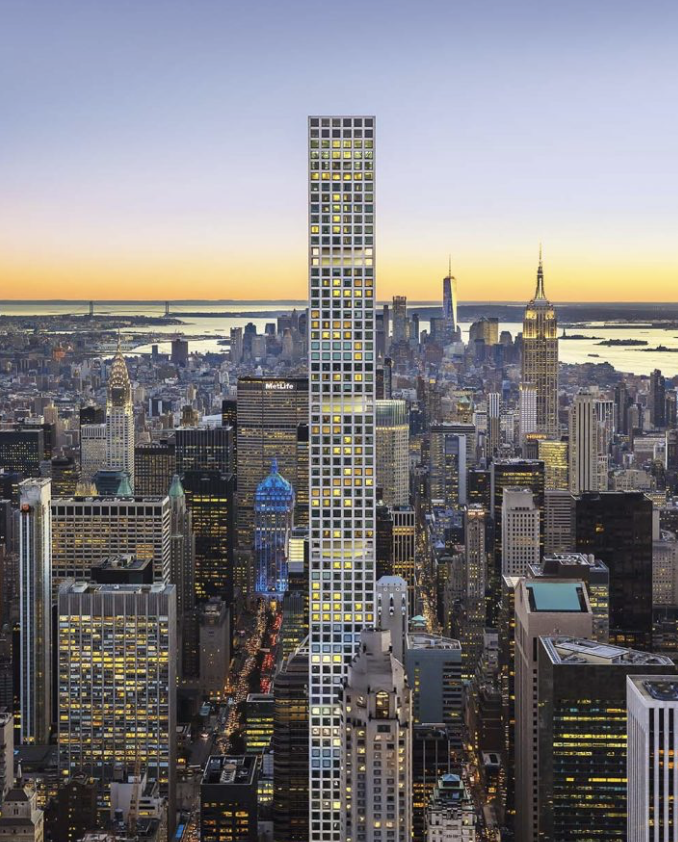
New York City, 432 Park Ave., 2016, arch.: Rafael Vinoly
Residential Milestone: Standing at 1,396 feet, it held the title of the tallest residential building in the Western Hemisphere upon completion, transforming the NYC real estate market by offering ultra-luxury, high-elevation housing.
Structural Innovation: The building utilizes a concrete lattice structure to provide rigidity against wind loads while allowing for open, column-free interior layouts.
Economic Impact: As the premier, record-setting tower on Billionaires’ Row, 432 Park Ave. represents a new generation of extreme luxury, high-altitude real estate aimed at a global clientele.
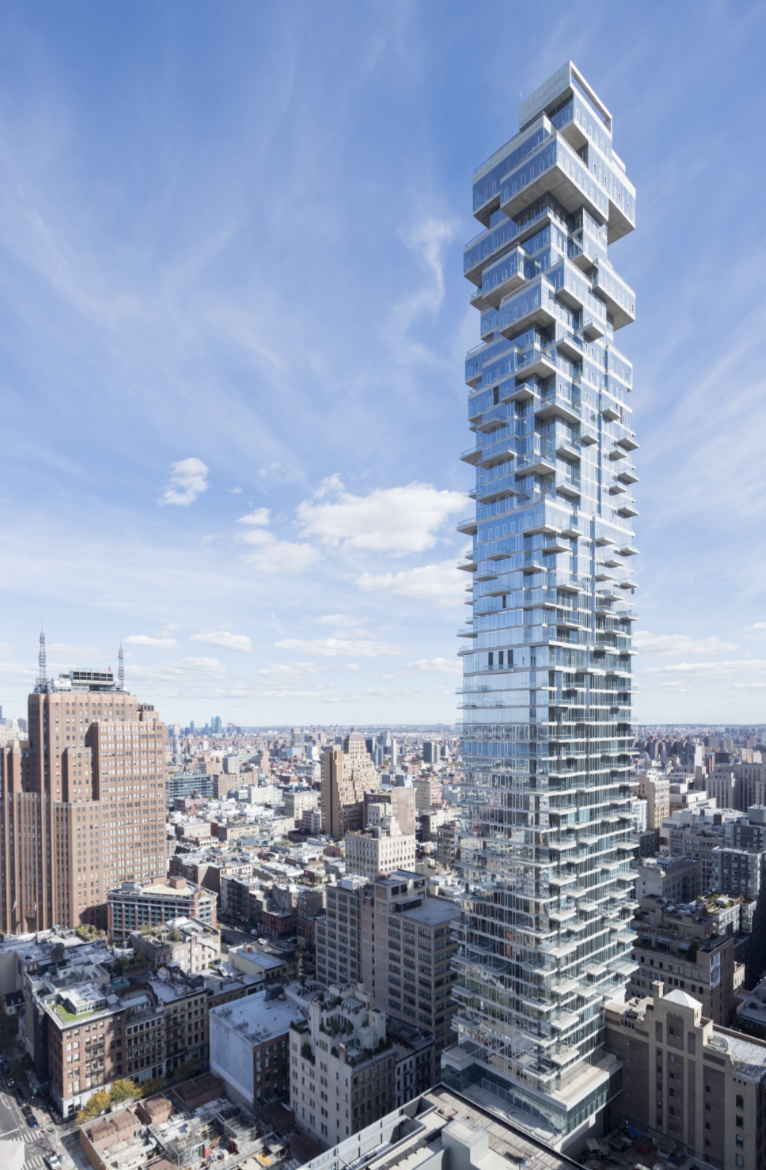
New York City, 56 Leonard Street, 2017, arch.: Herzog & DeMeuron
Architectural Innovation: Known as the "Jenga Tower," the building is a landmark of structural engineering, featuring an irregular, vertical "stacking" of glassy, cantilevering volumes that creates a unique silhouette rather than a conventional uniform skyscraper.
Residential Redefinition: The design challenges traditional high-rise uniformity by ensuring each of the 145 luxury residences is distinct, featuring specialized layouts, private outdoor cantilevering terraces, and floor-to-ceiling windows that provide panoramic views.
Cultural & Urban Impact: The project, which includes a mirrored sculpture by Anish Kapoor at its base, represents a significant 2017 addition to Lower Manhattan, blending private luxury living with artistic, public-facing, and dramatic design, designed by the Pritzker Prize-winning firm.
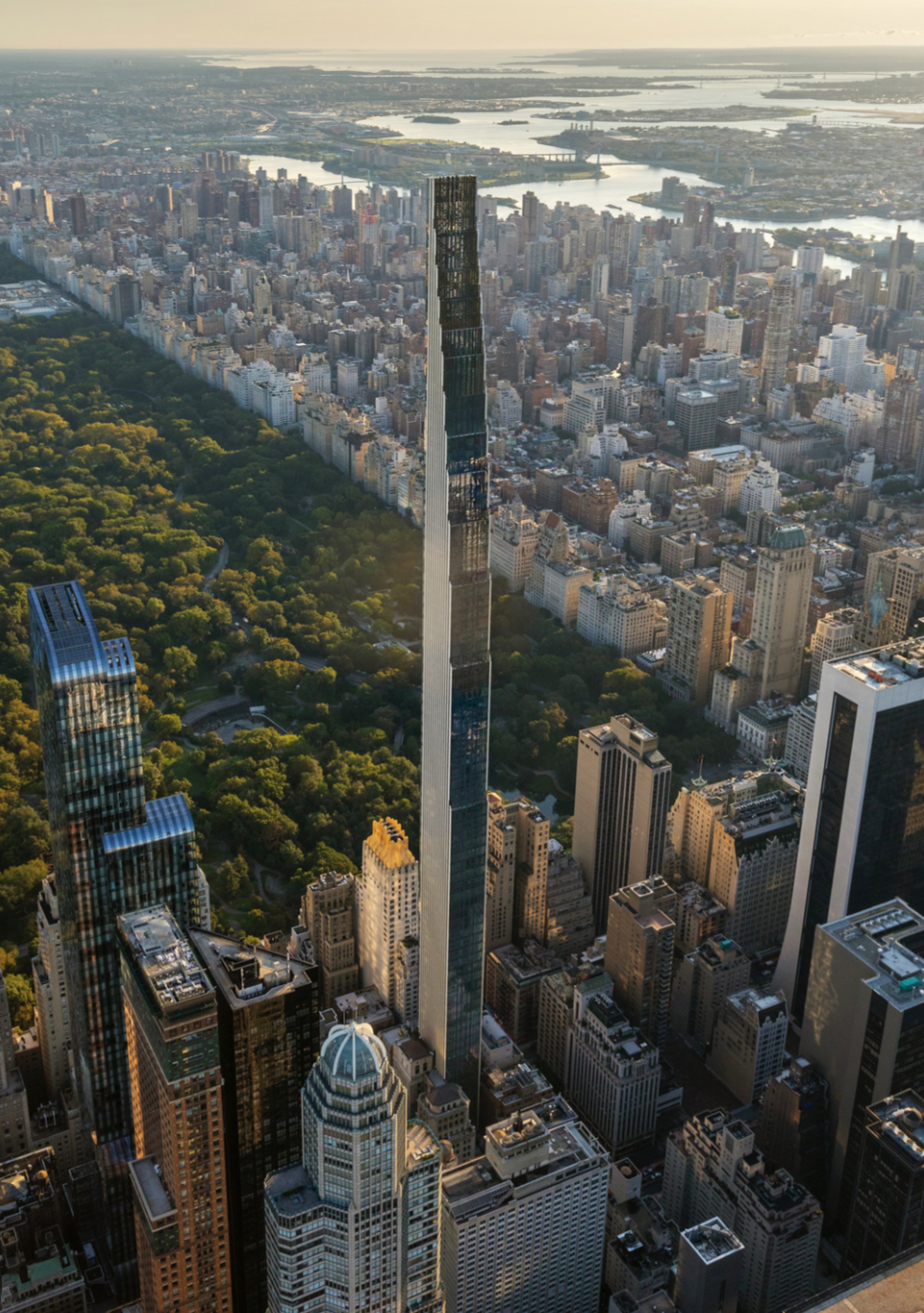
New York City, 111 W 57th Street, arch.: SHoP, 2019
Engineering Feat: With a record-breaking slenderness ratio of 1:24, the tower represents a new era of ultra-thin, high-performance supertall residential engineering in New York City.
Contextual Materiality: SHoP Architects designed the facade with terra-cotta panels and bronze accents to honor the 1920s Art Deco skyline, specifically referencing the restored Steinway Hall at its base.
Historic Intersection: The 1,428-foot residential tower combines modern luxury with historic preservation by incorporating the landmarked Steinway Hall into its structure, bridging the golden age of Manhattan skyscrapers with contemporary architecture.
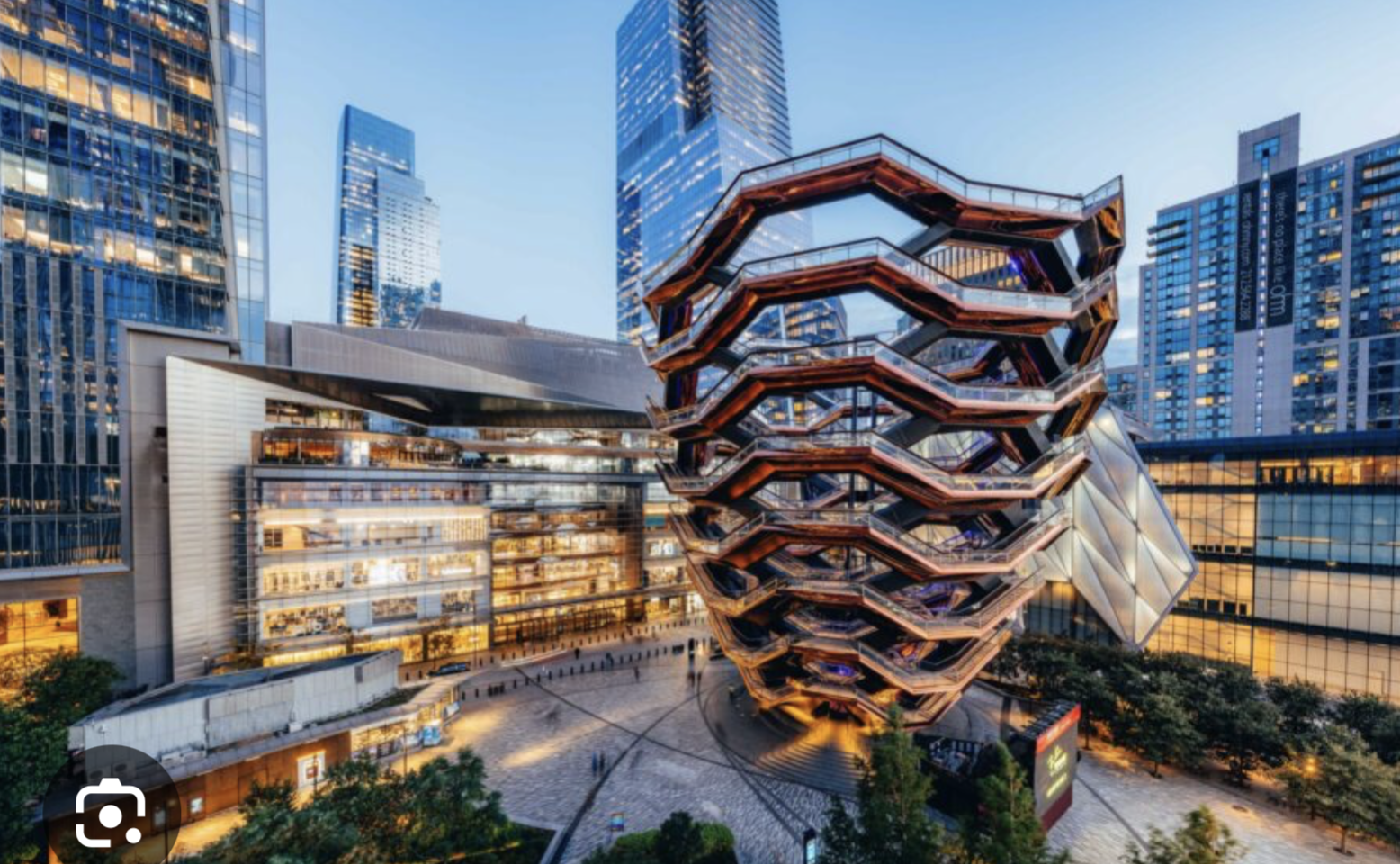
New York City, Hudson Yards, The Vessel 2019 Heatherwick Studios
Architectural Innovation: Inspired by Indian stepwells, the structure features a unique honeycomb-like, copper-clad steel design that creates a three-dimensional, interactive, and functional sculpture rather than a passive monument.
Interactive Public Space: It was designed to encourage physical interaction, acting as a social, climbing landmark that brings people together in a 16-story, 3D lattice of 2,465 steps.
Development Catalyst: As a $200 million focal point of the Hudson Yards development, it functions as a defining, branded landmark intended to shape the identity of NYC's largest development since Rockefeller Center
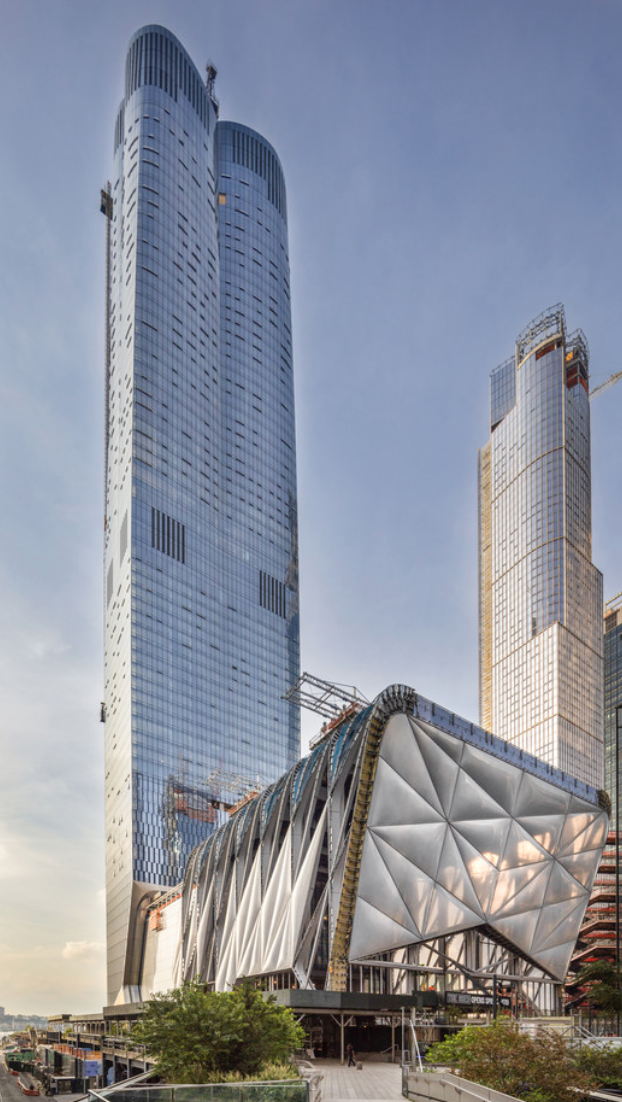
15 Hudson Yards and The Shed: (2019) Architects: Diller, Scofidio & Renfro
The tower is ingeniously interconnected with The Shed’s back-of-house facilities, allowing for a tight, symbiotic relationship between residential luxury and cultural infrastructure.
The building features an innovative, telescoping outer shell that moves on wheels to double its footprint, creating a 20,000-square-foot flexible hall for large-scale performances and installations.
Located directly adjacent to the High Line, the tower acts as a vertical landmark at the intersection of public space and private development on the West Side.
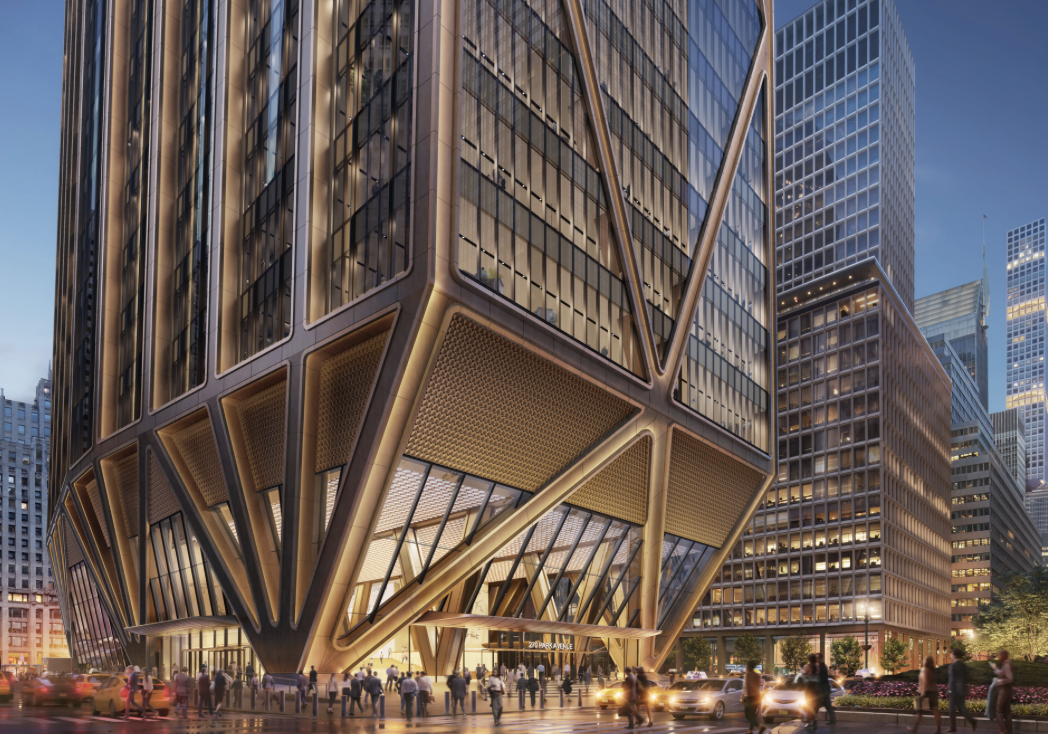
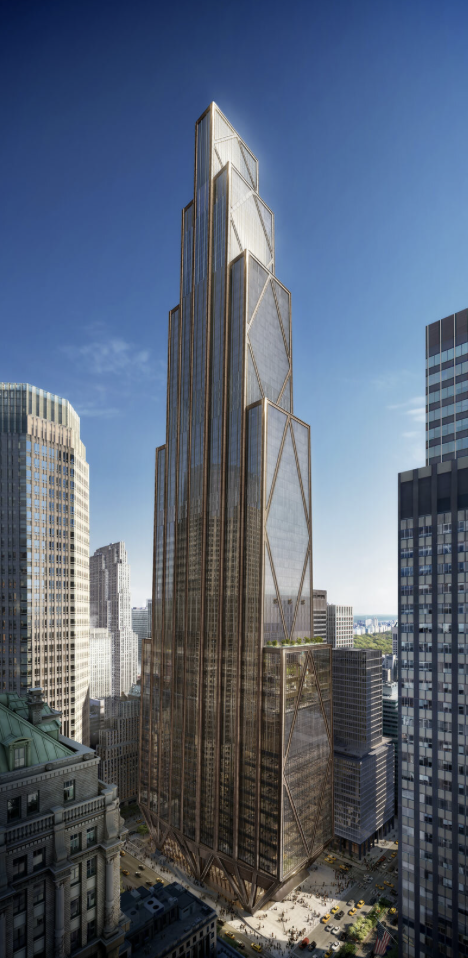
New York City, 270 Park Ave (J.P.Morgan Chase), 2026, arch.: Norman Foster
Sustainability: It is New York City’s largest all-electric tower, operating on 100% renewable energy sourced from a New York State hydroelectric plant to achieve net-zero operational emissions.
Structural Innovation: The building features a unique "fan-column" structure and triangular diagrid bracing that allows the tower to touch the ground lightly, providing 2.5 times more outdoor public space than the previous building.
Workplace Transformation: Completed in 2025, the tower consolidates 10,000 employees into a modern, 60-story workspace designed for 2026 standards of employee wellness, including advanced air filtration, circadian lighting, and smart, data-driven systems
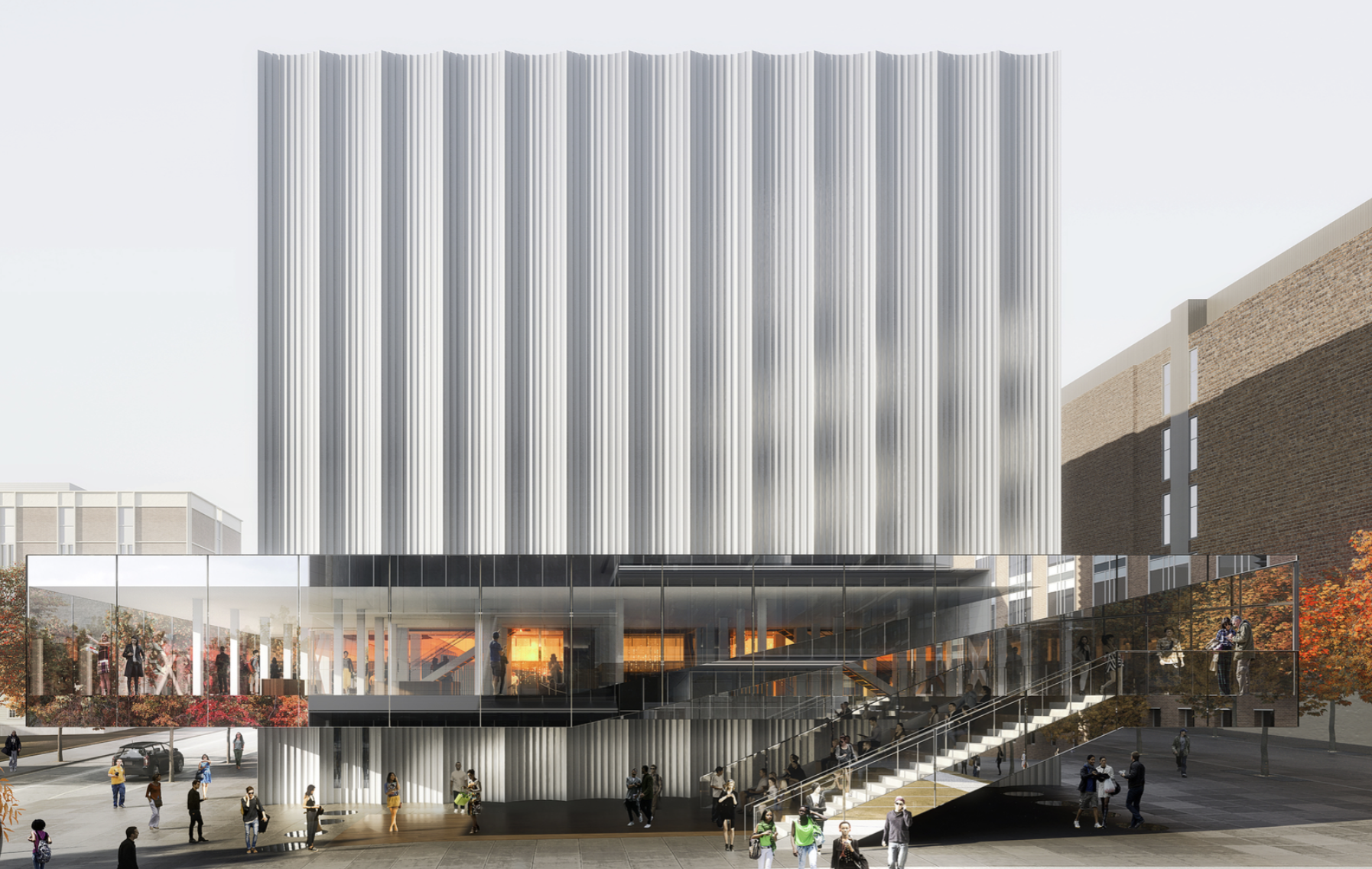
Providence, RI Brown Performing Arts Center, , 2017-2023, arch.: Joshua Ramus (REX)
A landmark of radical architectural flexibility, featuring automated moving walls, ceilings, and seating that allow a single space to transform into five distinct, high-performance configurations.
Situated on Providence’s College Hill, the building’s "holy grail" design resolves the conflicting needs of intimate performance spaces and large-scale, 100-piece orchestral symphony needs within one technologically advanced 101,000-square-foot facility.
Its unique "fractal" aluminum facade and transparent ground-floor "slice" serve as a new, vibrant hub for both student artists and the Providence community, fostering an immersive "laboratory" for experimental, interdisciplinary creative work
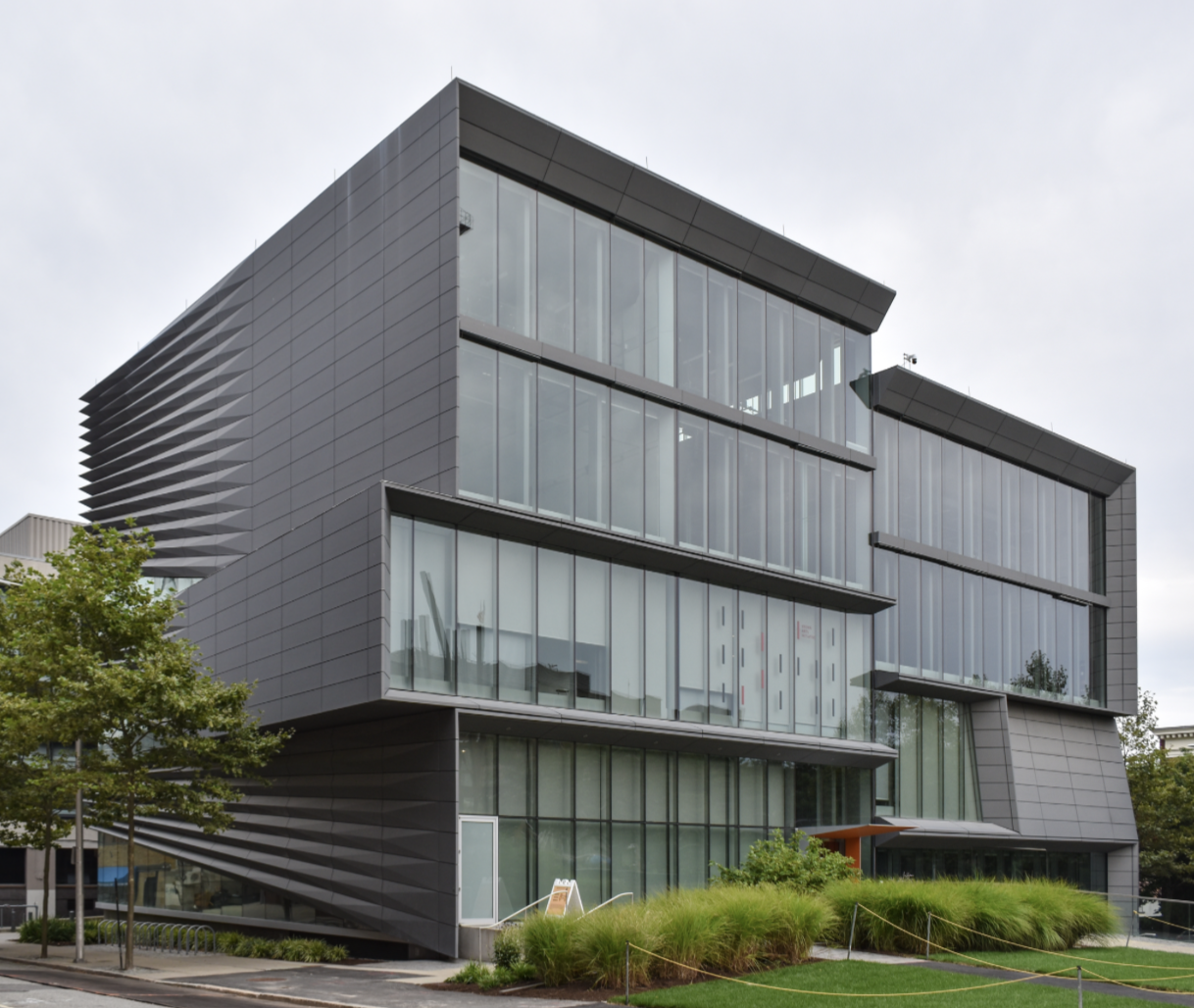
Providence, RI Brown University, Granoff Center, 2011, arch.: Diller, Scofidio & Renfro
The center supports short- and long-term merit-based work proposed by students and faculty in the visual arts, performing arts, sciences, and humanities.
The building is an evolution of the loft typology: it is made up of long-span column-free floor plates, severed in two and slipped vertically to create half levels.
The levels include a recital hall and film screening facility, a recording studio, a gallery space, classrooms, shop spaces, a multipurpose hall, and a dance studio.
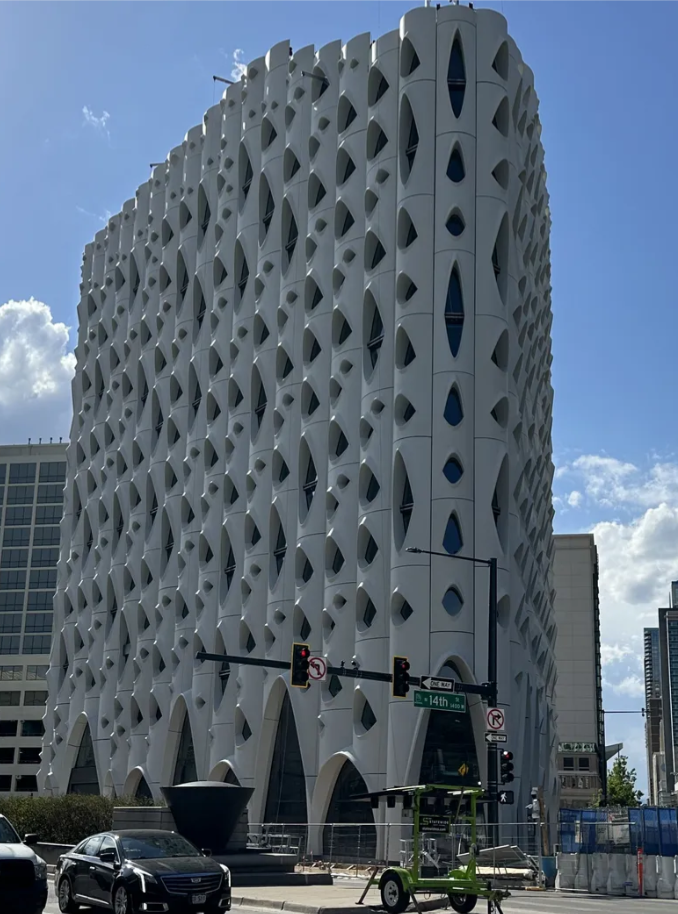
Denver, Populus Hotel, 2025, arch.: Jeannie Gang, Chicago
Biophilic Facade Design: The exterior, inspired by the "eyes" of Colorado’s Aspen trees, features distinctive, sculptural windows that act as eco-friendly rain screens and provide natural shade, designed to improve the building's energy efficiency.
Radical Sustainability & Structure: The hotel is a net-positive development that captures more carbon than it emits, using low-carbon concrete and a biodigester to manage waste.
Urban Integration & Impact: Located on a compact, irregular lot at a prominent civic intersection, the structure demonstrates high-density, car-free urban development that strengthens community ties without needing dedicated parking
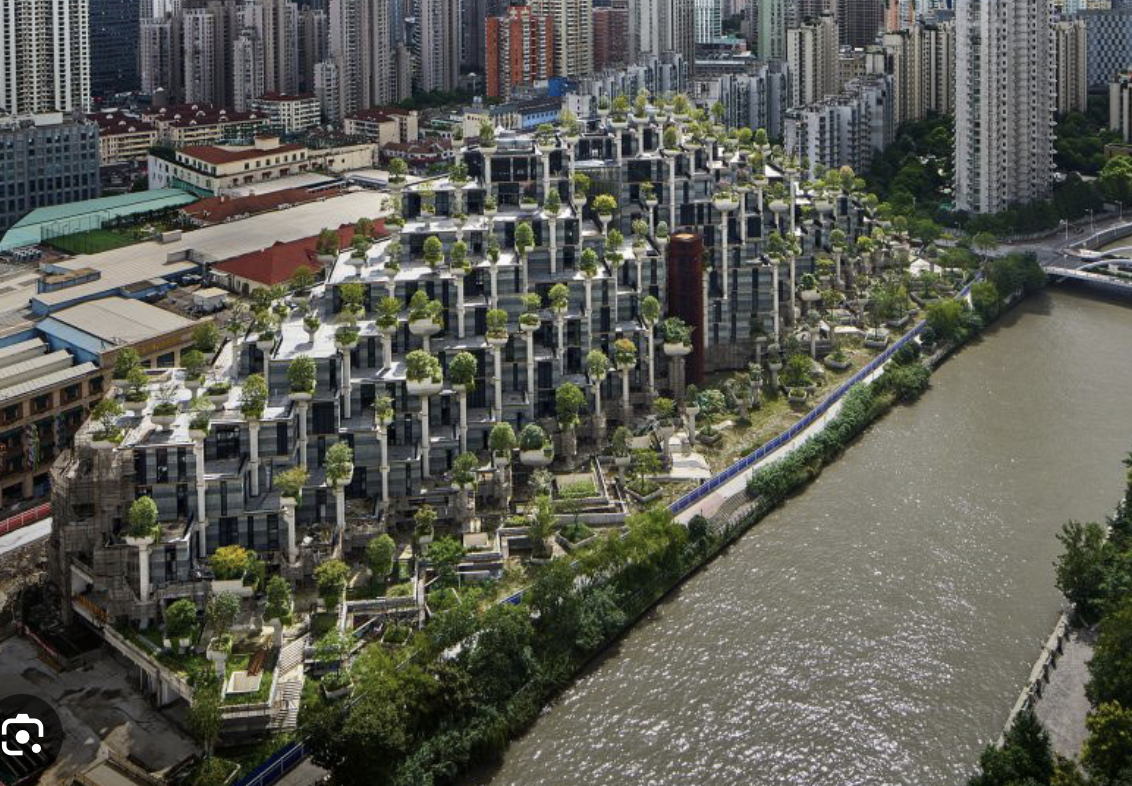
Shanghai, 1000 Trees Commercial Development, 2010-2018, arch.: Thomas Heatherwick
innovative "mountainous" topography, where 1,000 structural columns extend into tree-filled planters, creating a "3D forest" that integrates nature into the dense urban fabric
The project transforms a traditional retail development into a human-scale, eco-conscious mixed-use space featuring over 25,000 plants and 70 tree species, designed to combat the urban heat island effect.
The design creatively bridges urban history with modern ecology by integrating with the nearby M50 arts district, featuring street art murals and a heritage structure within its "two mountain" facade
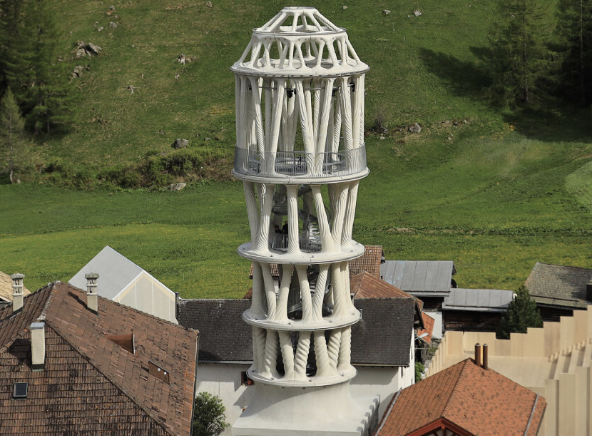
Mulegns, Switzerland, Tor Alva, 2025, arch.: Michael Hansmeyer, Benjamin Dillenburger
World Record & Innovation: As the tallest 3D-printed structure (approx. 30 meters), the tower demonstrates the feasibility of large-scale, formwork-free additive manufacturing in architecture.
Intricate Design: The design uses complex algorithms to create 32 distinct, white concrete columns that blend Baroque-inspired ornament with modern digital fabrication.
Cultural & Structural Revitalization: The project acts as a bold artistic landmark intended to revive the tiny village of Mulegns by providing a unique venue for cultural performances
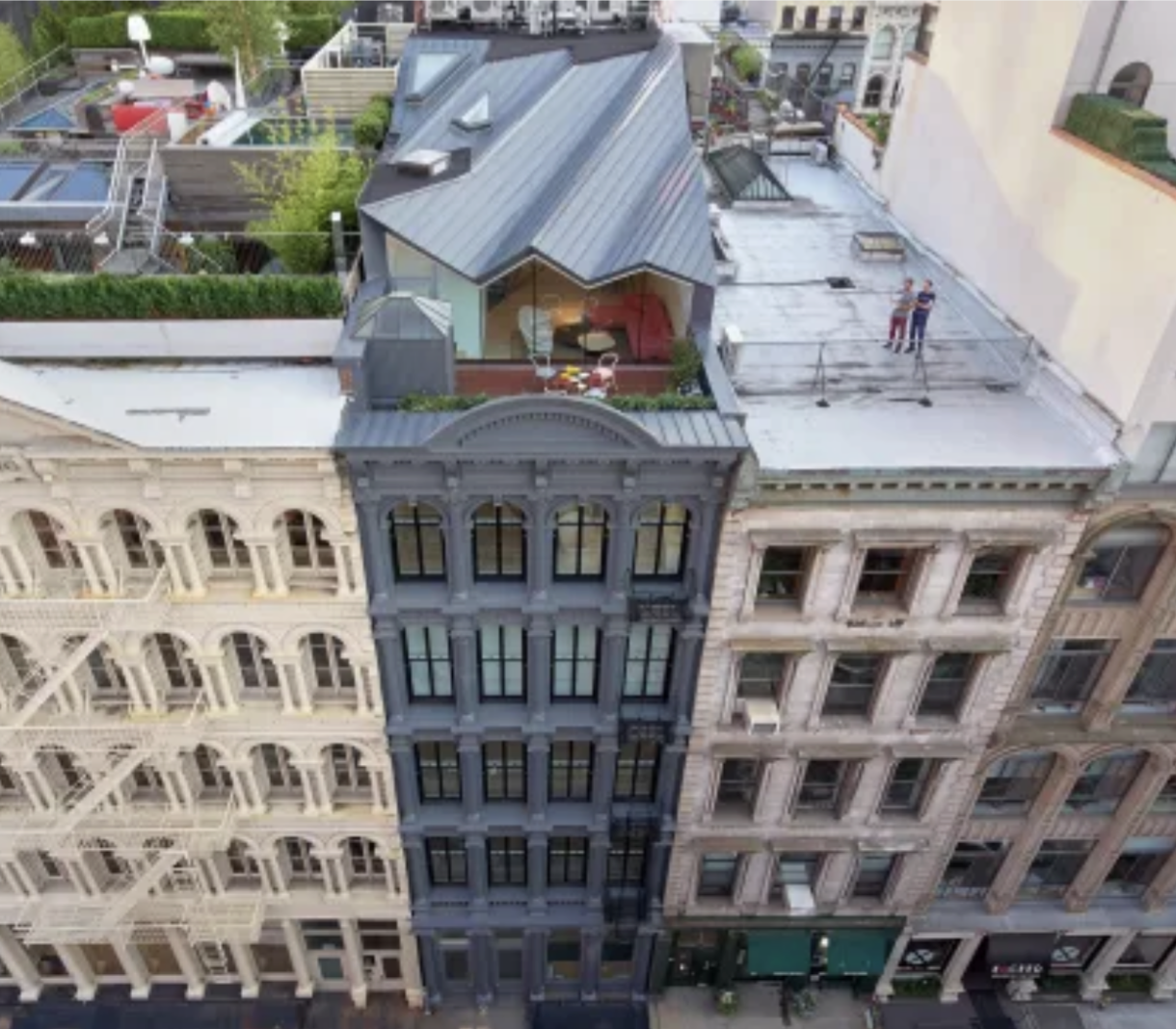
New York City, “Stealth Building” 2016, arch.: WORKac (Amale Andraos, Dan Wood)
Invisible Expansion: The project is a landmark example of rooftop, or "stealth," expansion, where a modern penthouse addition is meticulously designed to remain invisible from street level
Preservation and Modernity: It showcases a sophisticated blending of 19th-century cast-iron architecture with contemporary residential design, featuring a fully restored historic facade.
"Shadow" Geometry: The design used complex sightline analysis of existing building features and neighboring structures to dictate the angles of the new, sculptural roofline
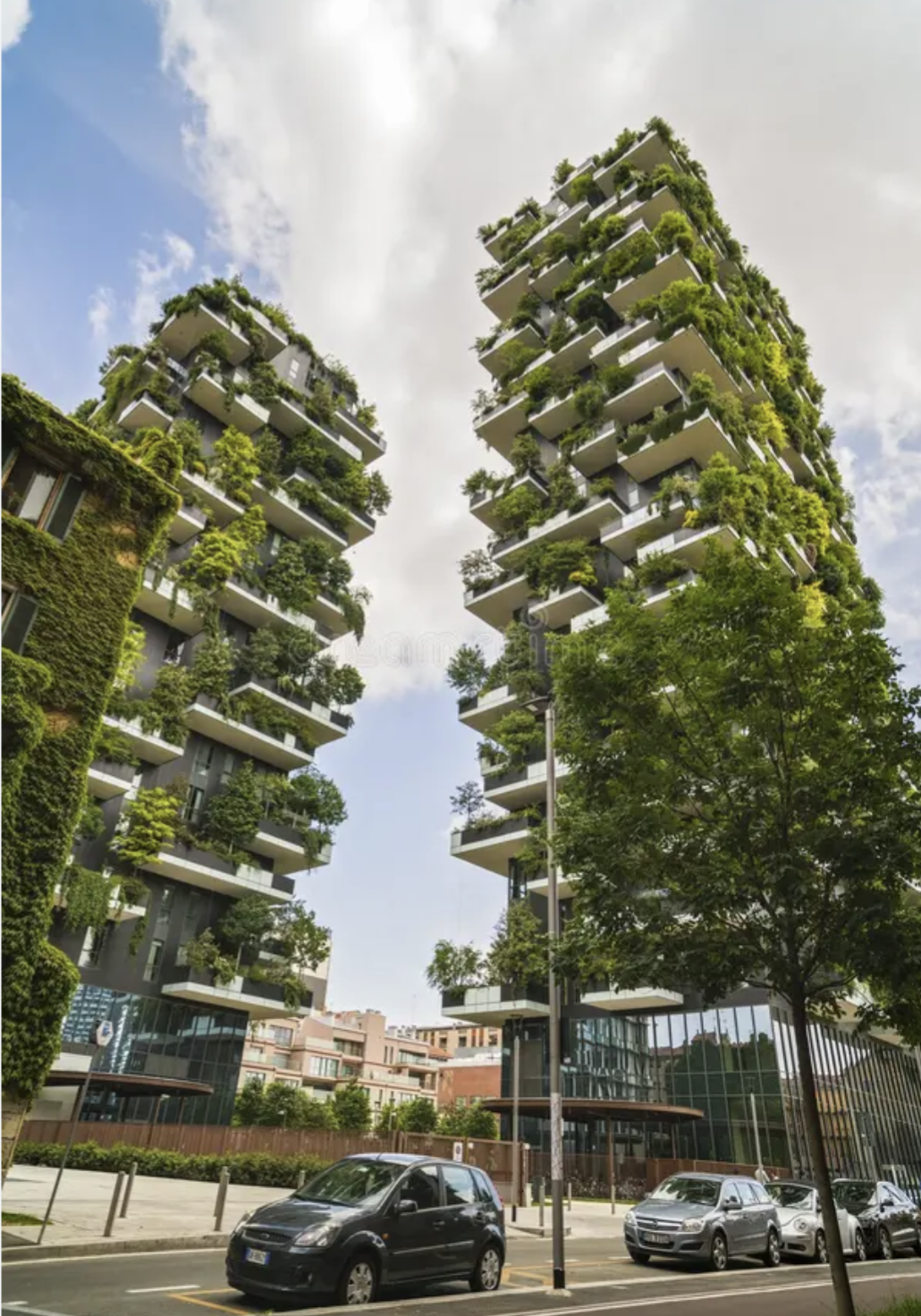
Milan, Porta Nuova tower (“Bosco Verticale”), 2017, arch.: Boeri Studio
Ecological Innovation: The towers function as a vertical ecosystem, hosting over 900 trees and 5,000 shrubs that produce oxygen, absorb CO2, filter fine dust, and reduce noise pollution, effectively creating a 3-hectare forest in a dense urban environment.
Urban Biodiversity: The project acts as an urban habitat that has attracted over 1,600 bird and butterfly species, enhancing biodiversity and creating a self-sustaining microclimate that mitigates the urban heat island effect.
The building's greenery is managed exclusively by a specialized team to ensure plant health, removing the burden of care from individual owners. External pruning and plant care are performed by specialized gardeners ("Flying Gardeners") who access balconies via ropes and harnesses.
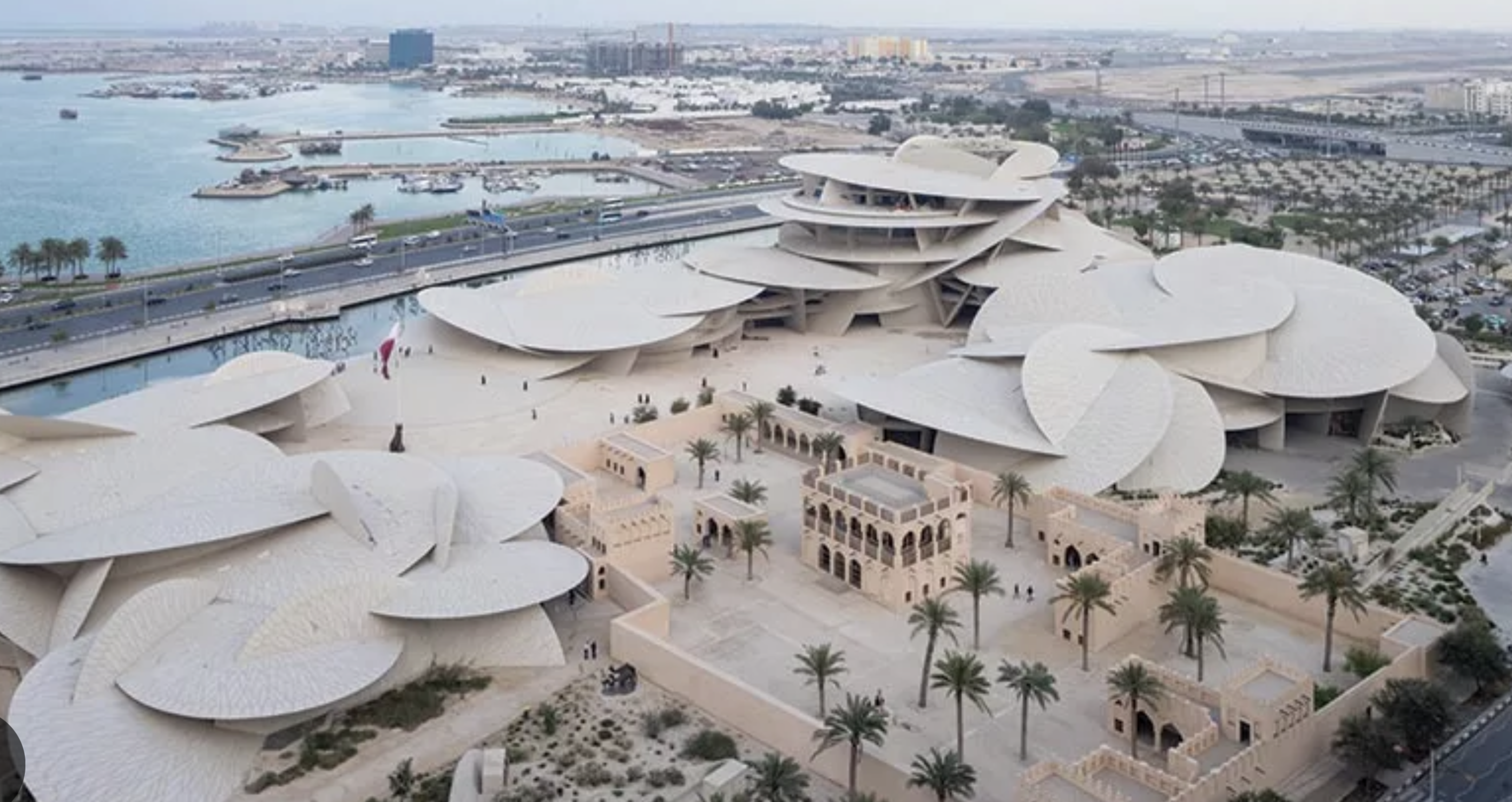
Doha, Qatar, National Museum, (2019) arch.: Jean Nouvel
Architectural Symbolism: The structure, featuring complex interlocking, cantilevered, sand-colored disks, is designed to evoke the "desert rose" crystal, embodying the intersection of nature, tradition, and modern daring.
Historical Preservation: The museum is deliberately constructed around the restored 20th-century Palace of Sheikh Abdullah bin Jassim Al Thani, anchoring Qatar's rapid modernization to its royal and historical roots.
Cultural Narrative: It houses eleven immersive galleries organized in a chronological journey that highlights Qatar's geological beginnings, life on the coast, and its rapid, contemporary transformation.
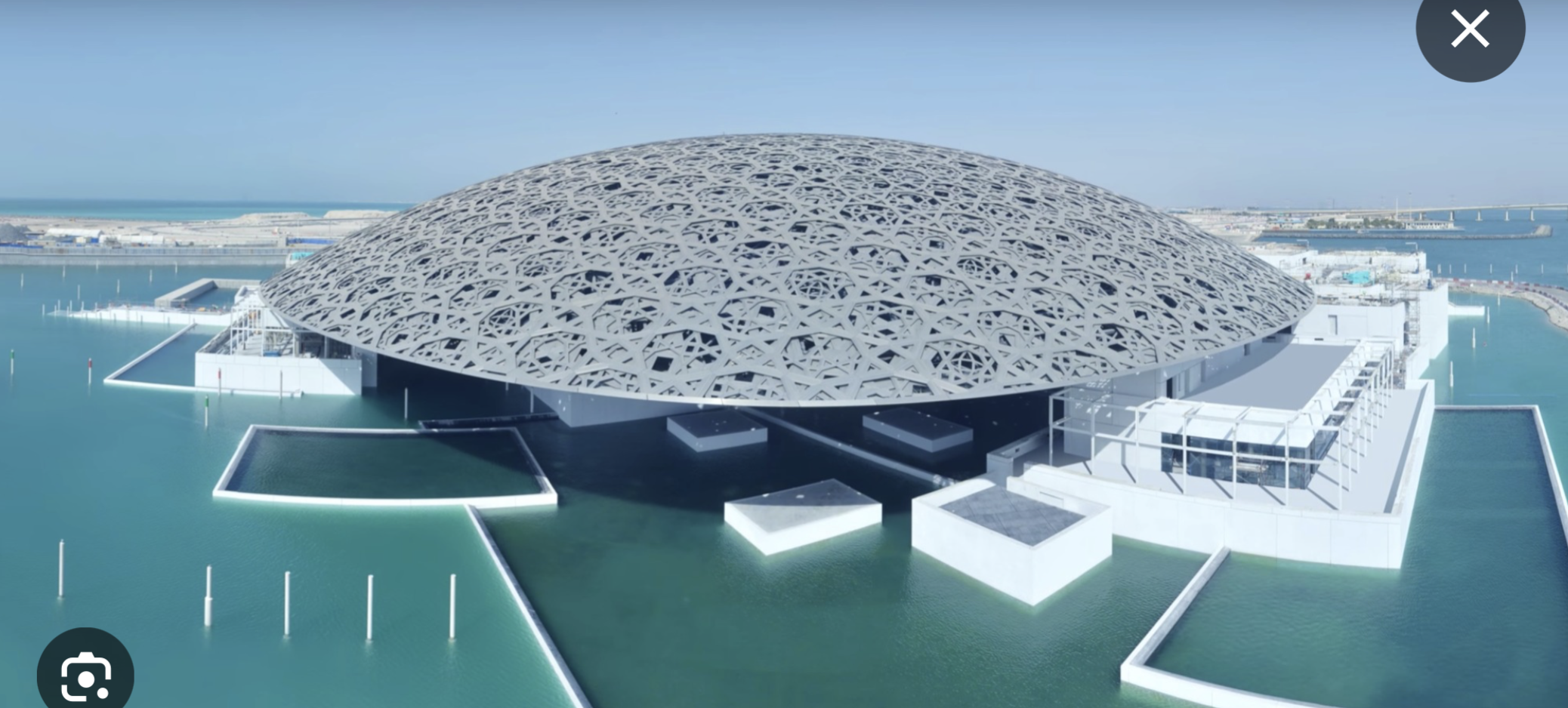
Abu Dhabi, UAE, Louvre, 2010-2017, arch.: Jean Nouvel
Dome Engineering: The complex double-dome structure provides passive shading, reducing energy consumption and creating a comfortable, shaded, and ventilated microclimate.
Cultural Symbolism: Jean Nouvel designed the museum to blend Islamic design principles—like the mashrabiya—with modern technology, reflecting a "museum city" or medina.
Global Cultural Impact: Established through an international partnership, the project serves as a cornerstone of the Saadiyat Cultural District, connecting Eastern and Western art.
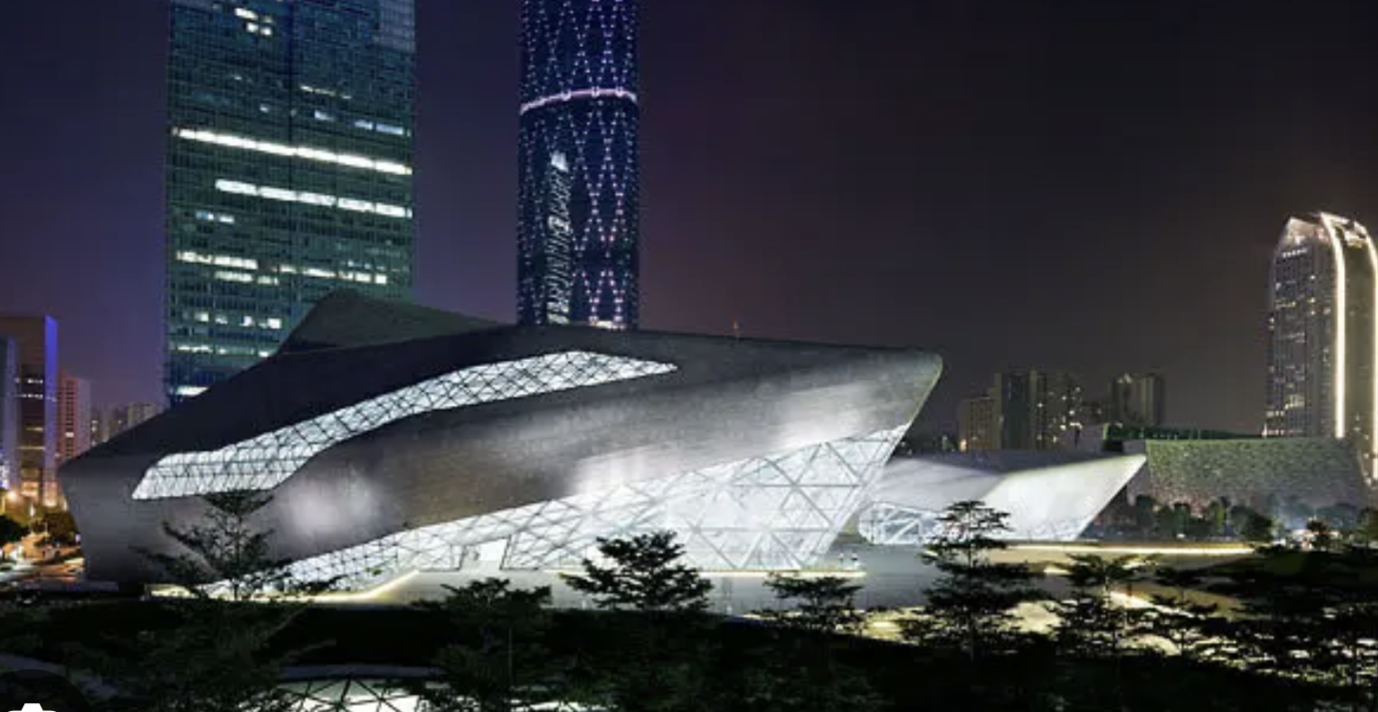
Guangzhou, Opera House, Zaha Hadid, 2011
Guangzhou: The opera house anchors the city's cultural development, acting as a stunning, modern centerpiece that enhances urban interaction along the Pearl River.
Opera House: As one of China's largest theaters, it boasts a twin-boulder design that creates a 1,800-seat auditorium and a 400-seat multi-function hall, utilizing advanced acoustics.
the building immediately became a lasting monument to the new millennium, representing a shift toward avant-garde architecture in China
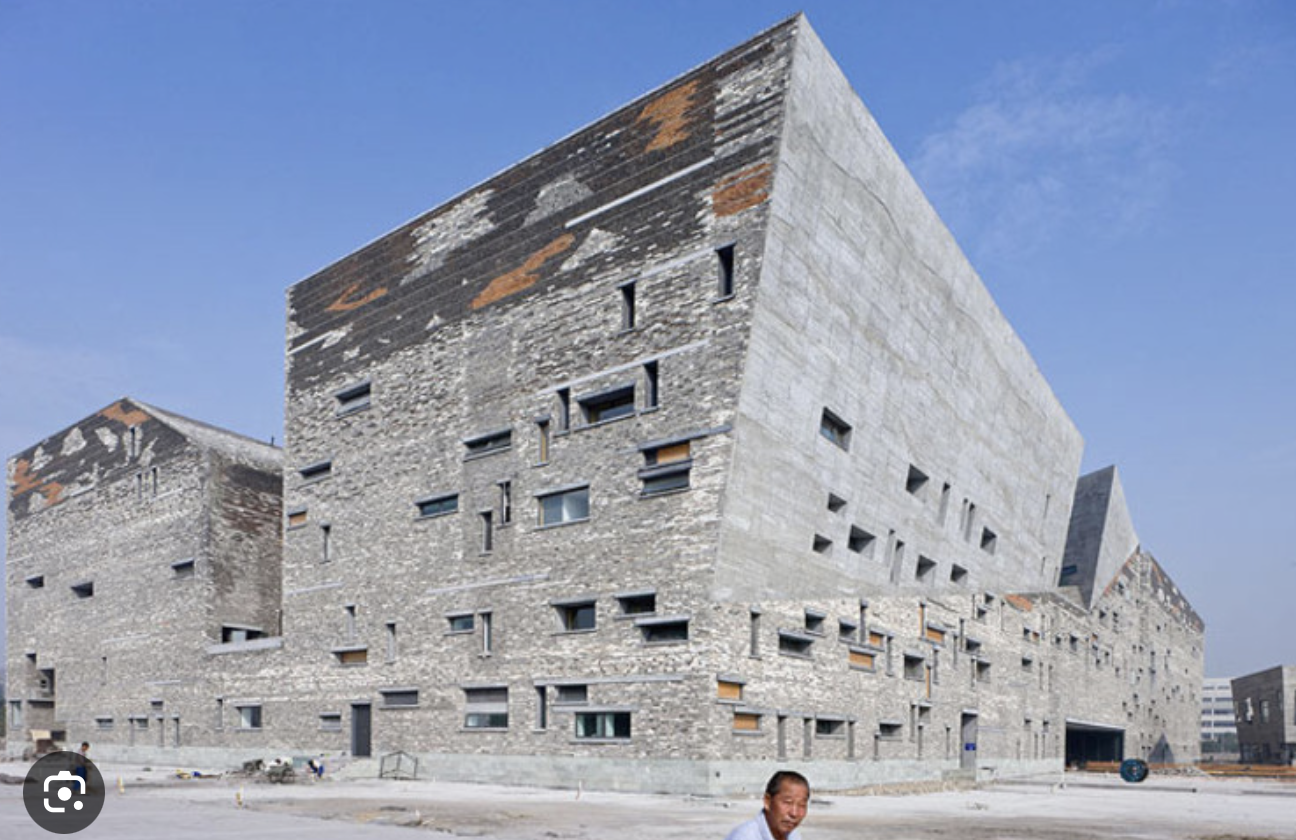
Ningbo Museum of History, Ningbo, China, 2011, Wang Shu
Sustainable Material Reuse: The museum acts as a "recycled building," using millions of salvaged bricks and tiles from demolished rural villages, reflecting a sustainable approach to memory and construction.
Wapan Technique & Regional Tradition: Wang Shu employed traditional wapanmethods, which involve mixing salvaged materials, to give the walls a textured, historically rich aesthetic that connects the building to local craft traditions.
Contextual Critical Regionalism: The building’s design mimics a natural, mountainous landscape, acting as a cultural landmark that breaks from generic urban development to preserve regional identity
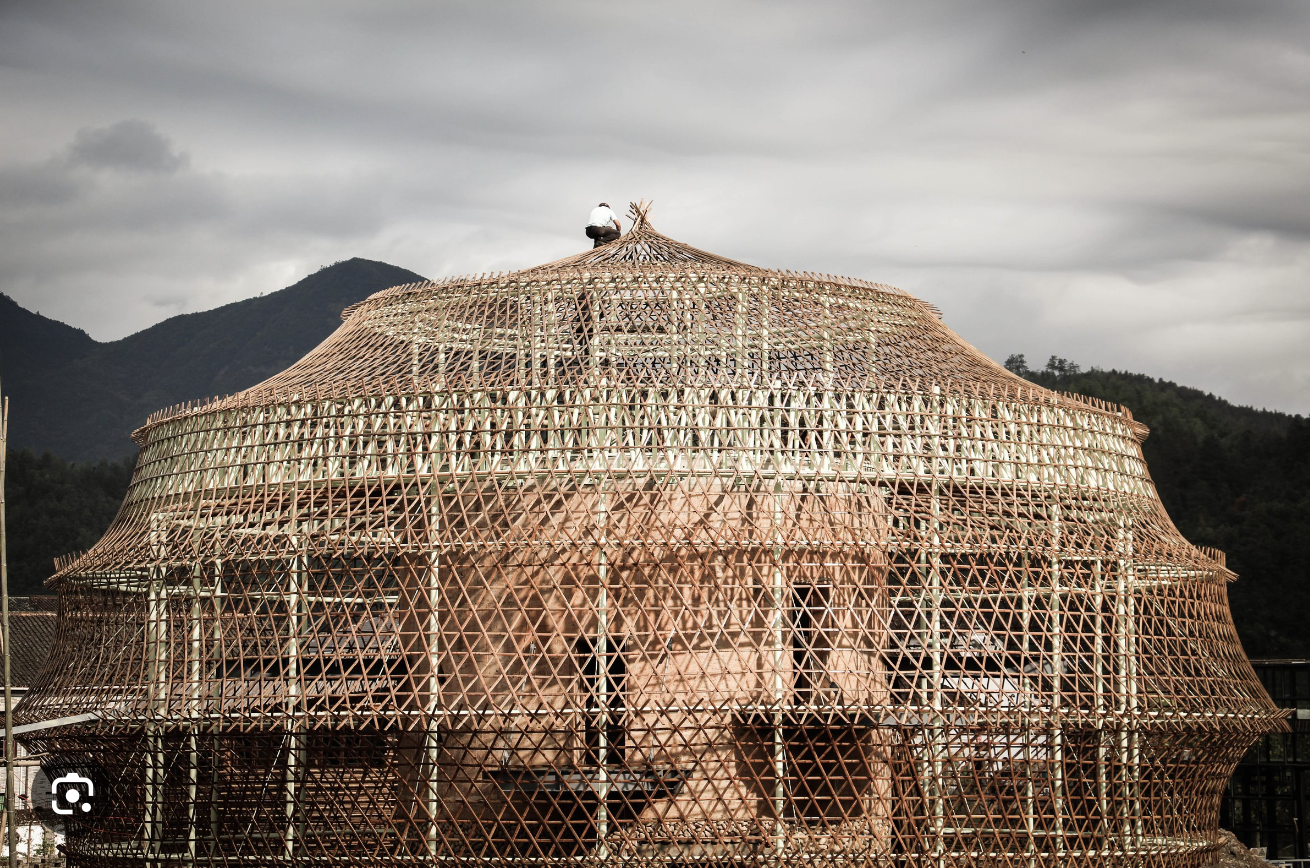
Baoxi (China), Three Hostels, 2016, arch.: Anna Heringer
Sustainable Materiality: The project showcases the structural potential of bamboo and rammed earth in contemporary, eco-friendly construction, challenging the overuse of concrete in China.
Cultural & Technical Preservation: The design honors local heritage by incorporating traditional Baoxi basket-weaving techniques, pushing local craftsmanship to a new level.
Community Empowerment: The project is designed to be accessible and easily maintained by local residents, ensuring that knowledge, skills, and economic benefits remain within the community
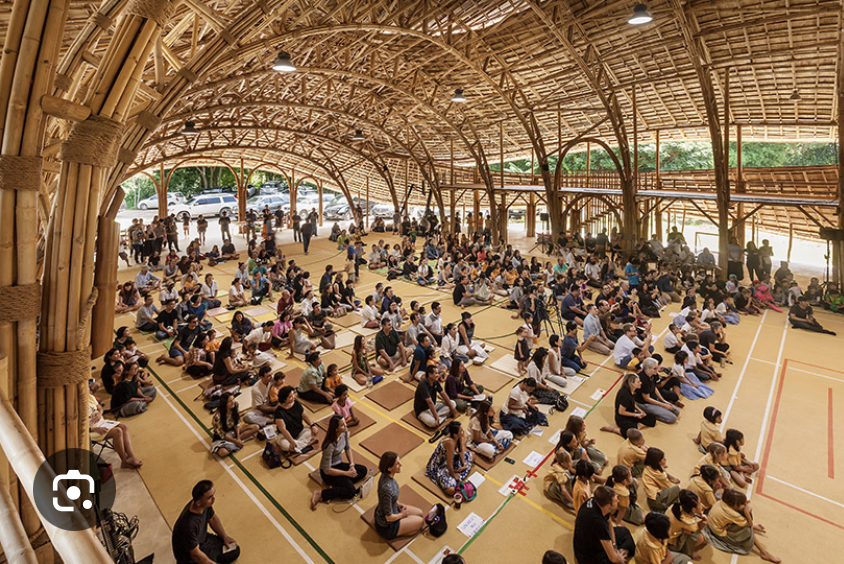
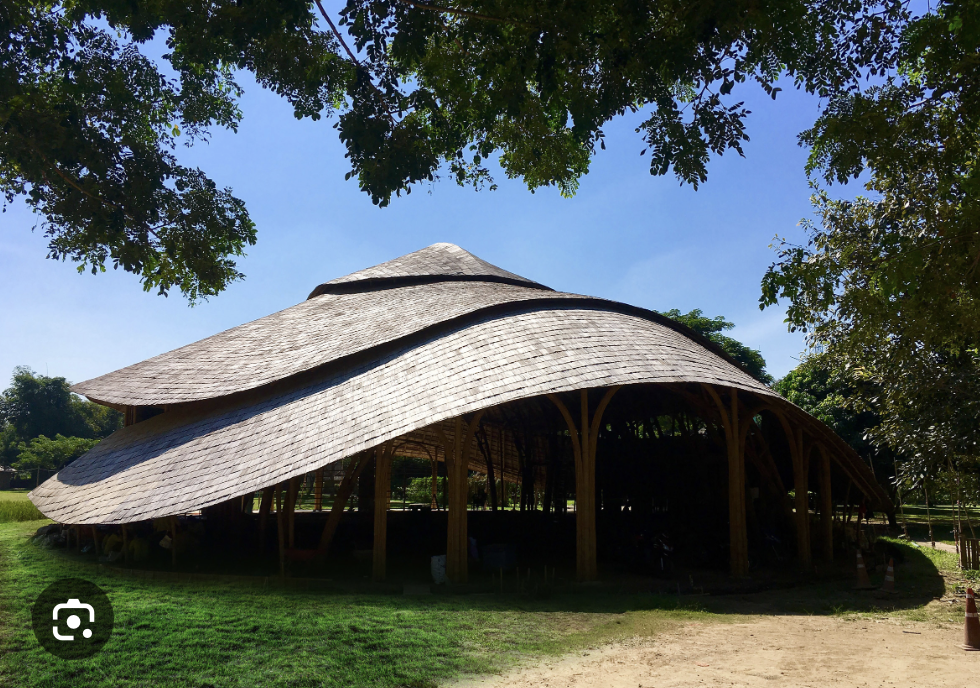
Chiang Mai, Thailand, Panyaden School, 2017 arch.: Chiangmai Life Architects & Construction
Sustainable Engineering Milestone: The sports hall achieves a zero-carbon footprint by using treated bamboo that absorbs more CO2 than emitted during construction, showcasing a viable, low-carbon alternative to modern steel and concrete.
Innovative Organic Design: Inspired by the lotus flower to reflect the school's Buddhist principles, the structure uses innovative, 17-meter prefabricated bamboo trusses without steel connectors to create a safe, open-span sports arena.
Climate-Resilient Architecture: Designed to handle hot and wet climates, the building offers natural ventilation for a cool, comfortable interior while meeting modern safety standards for high-speed winds and earthquakes
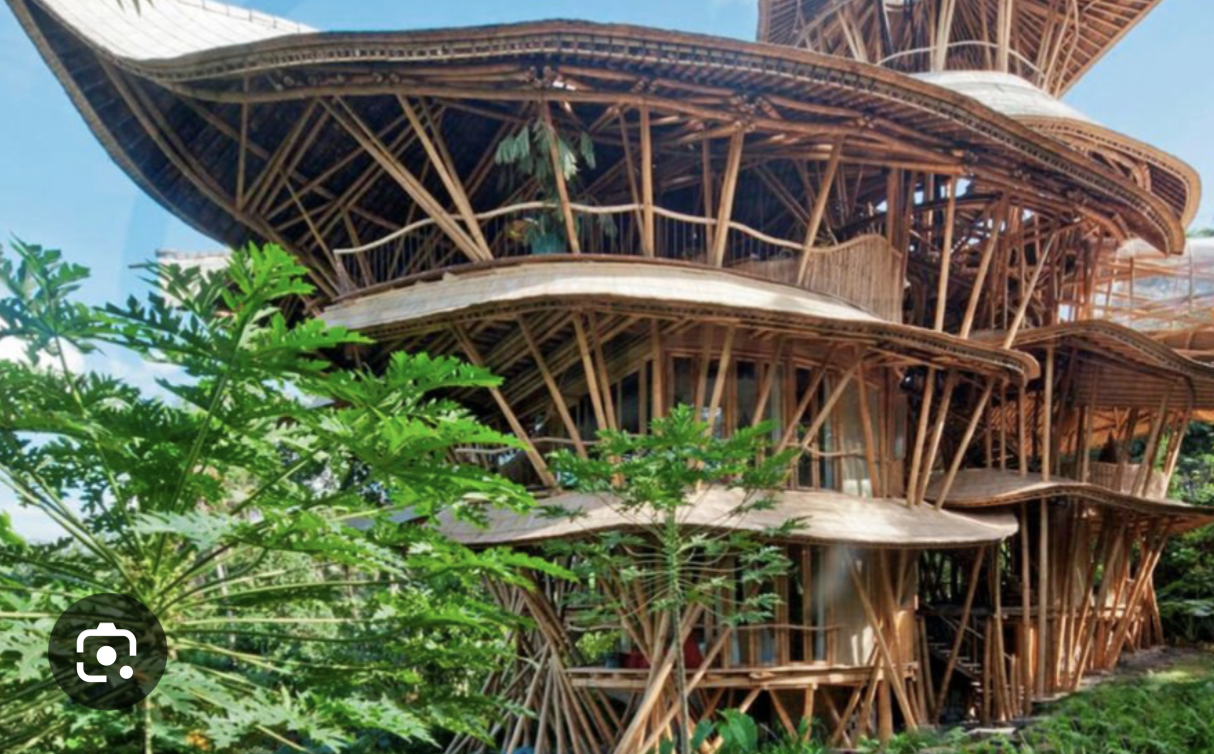
Sibang Gede, Bali, Sharms Springs Residence, 2012, arch.: Ibuku (Elora Hardy)
Tallest Bamboo Structure in Bali: As the crowning jewel of the Green Village in Sibang Gede, the 2012 Sharma Springs residence by Ibuku (Elora Hardy) holds the distinction of being the tallest bamboo structure in Bali, standing six storeys high.
Pioneering Sustainable Luxury: The residence showcases the potential of locally sourced, boron-treated bamboo as a primary, high-end building material, blending modern engineering with artisanal, bespoke design.
Nature-Inspired Engineering: The building is famously designed in the shape of a lotus flower, featuring a dramatic 15-meter tubular bamboo bridge entrance and a central tower that serves as a structurally integral, organic centerpiece
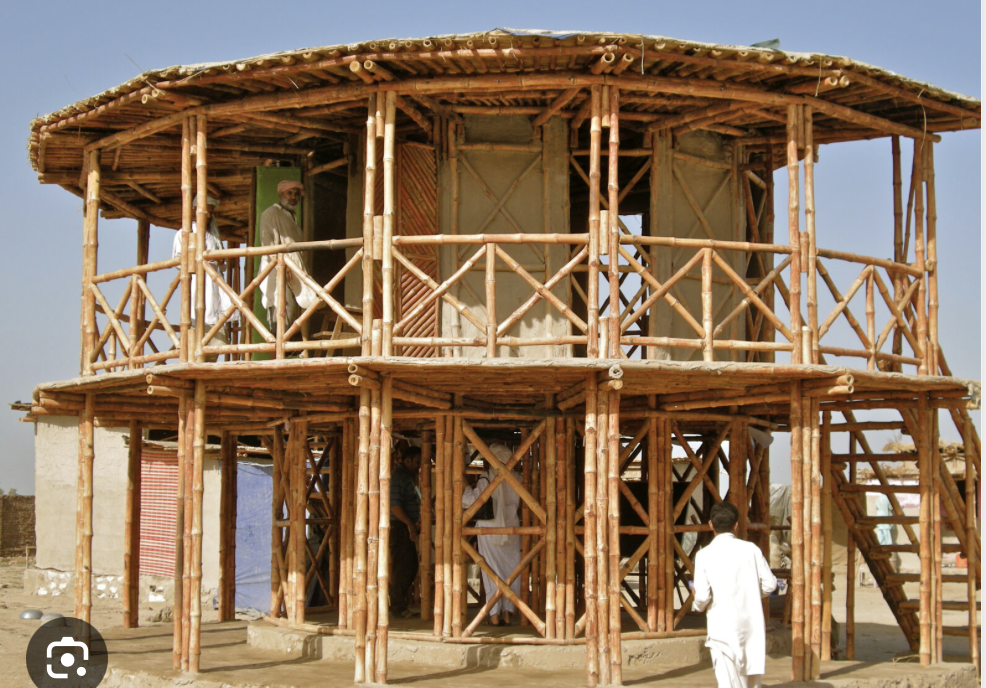
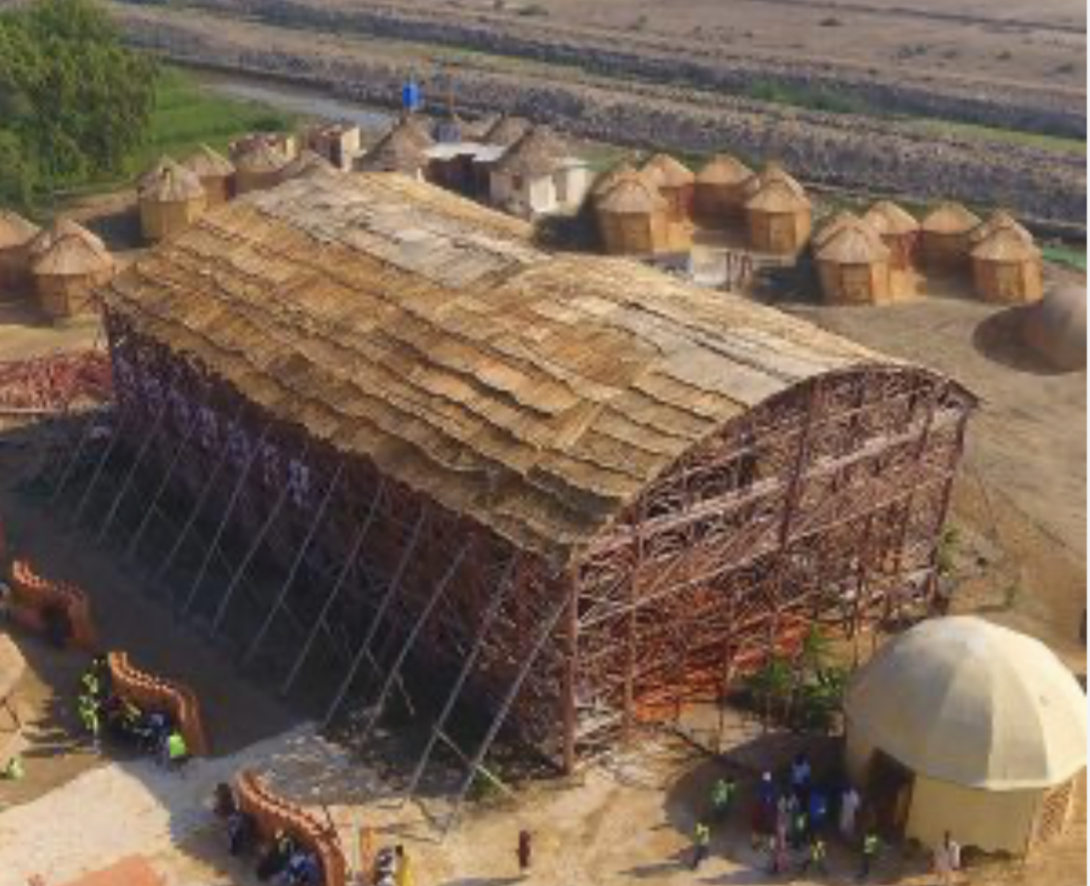
Zero Carbon Cultural Centre, Makli, Pakistan (2018), Yasmeen Lari (check this)
The Zero Carbon Cultural Centre (ZC3) in Makli is a significant landmark of sustainable architecture, constructed as the largest bamboo pavilion in Pakistan using locally sourced materials and eco-friendly techniques designed for zero carbon emissions.
It serves as a community hub for training marginalized communities, especially women, in vocational skills and "Barefoot Social Architecture" to promote self-reliance, flood resistance, and environmental sustainability.
The structure exemplifies a shift from luxury architectural practices to humanitarian, collaborative design, fostering pride and economic empowerment within the local community living near the historic Makli Necropolis
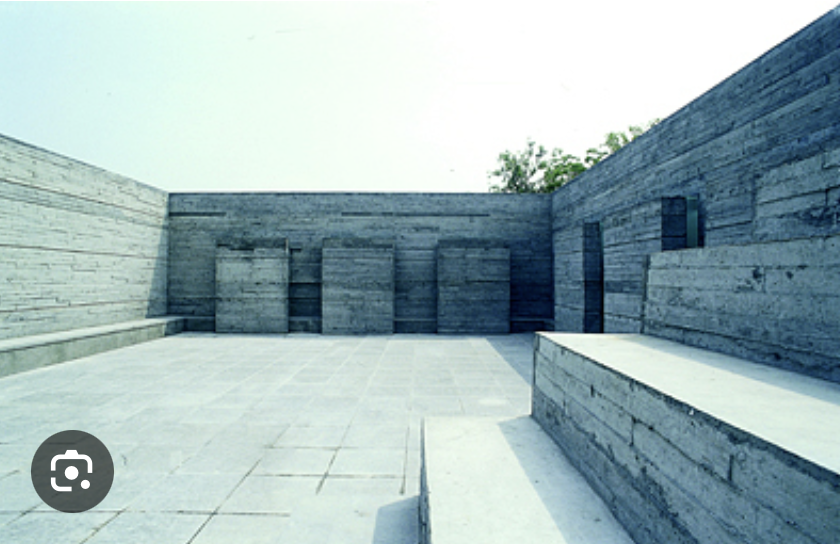
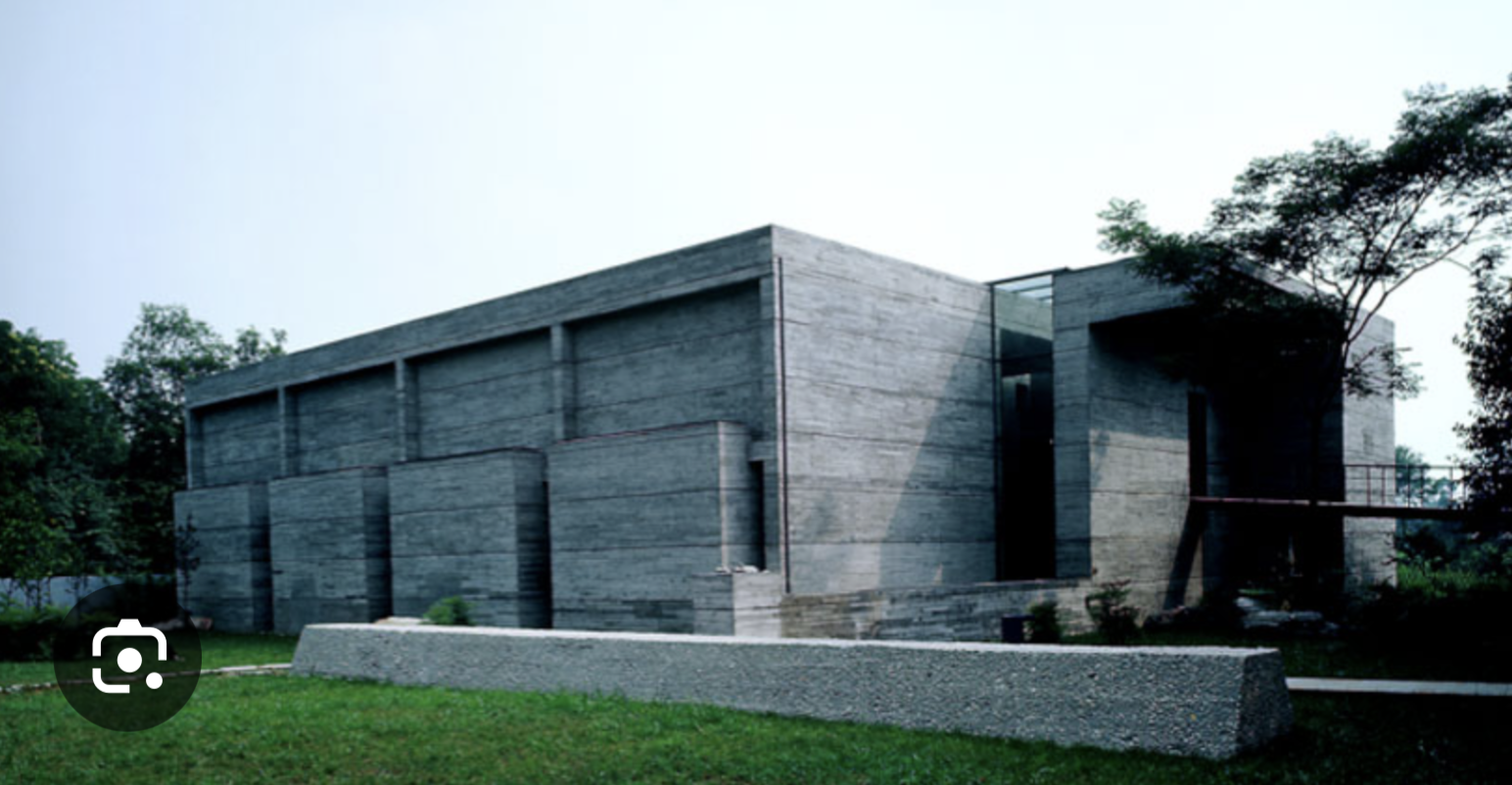
Chengdu, China, Luyeyuan Stone Sculpture Art Museum, 2002, Arch.: Liu Jiakun
Contextual Integration and Nature: The museum is designed to merge with its surroundings, using bamboo forests, water features, and a "garden" layout to create a "hidden" space between nature and architecture.
Innovative Local Construction: To address local, unskilled construction limitations, Liu used a hybrid technique of combining fair-faced concrete with brick mold walls, enhancing structural, and later modifications, using local materials.
Spiritual Narrative and Spatial Light: The building's layout emphasizes a contemplative visitor experience, utilizing carefully designed skylights and voids to allow natural light to filter onto the Buddhist sculptures
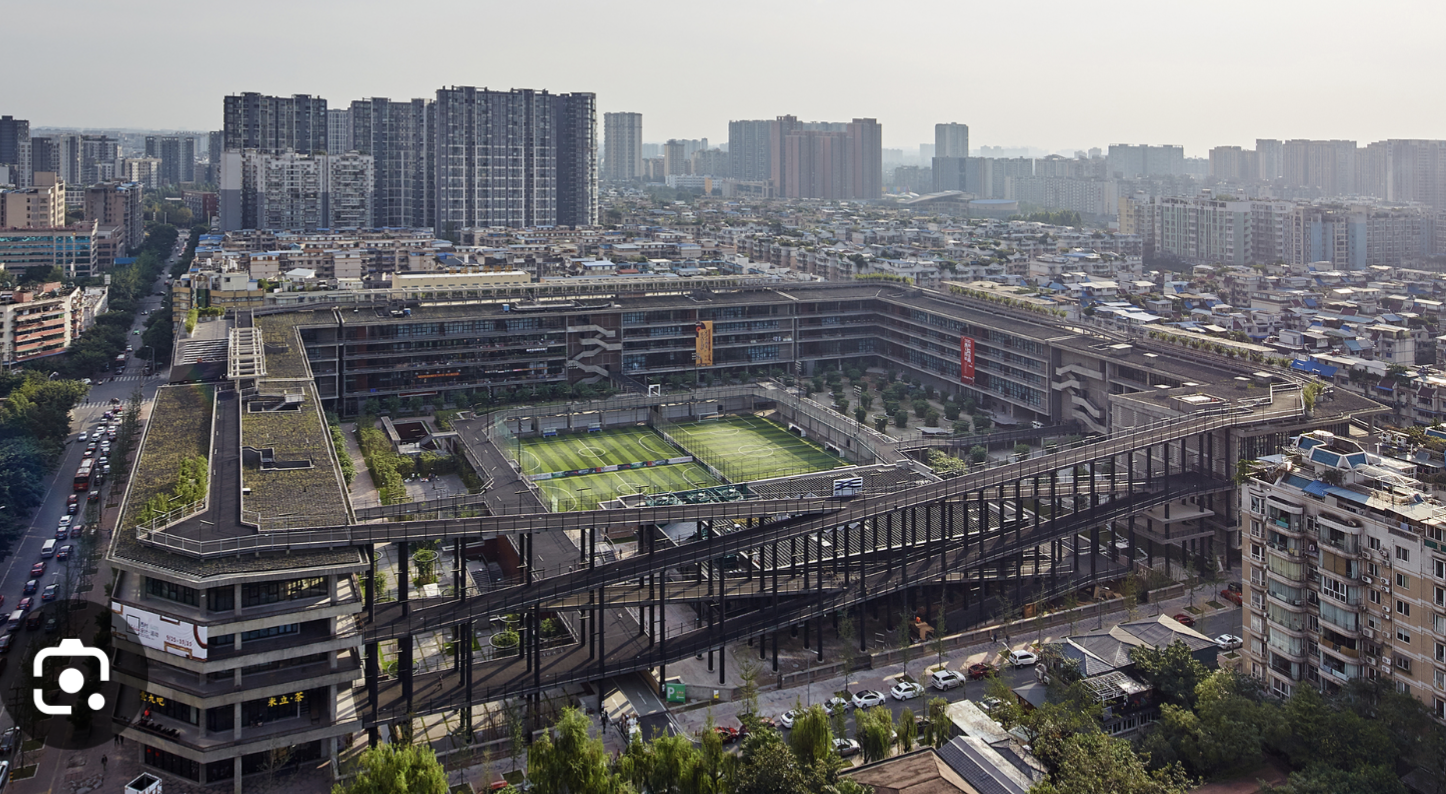
Chengdu, China, West Village, 2015, Arch.: Liu Jiakun
Rethinking Urban Density: Completed in 2015, Liu Jiakun’s West Village in Chengdu challenges typical Chinese high-rise development by creating a five-story "maxi-courtyard" block that fosters public interaction, open space, and communal life rather than isolating residential units.
Integrating Everyday Life & Leisure: The project acts as a "collective living room" that blends commercial, cultural, and sports facilities, including an elevated running path, which integrates traditional Chengdu leisure lifestyles with modern, high-density urban functional needs.
Social & Cultural Hub: The project revitalizes local Chengdu culture by encouraging "collective living" through integrated bamboo-shaded, multi-functional areas that host public life, cafes, and creative industries.
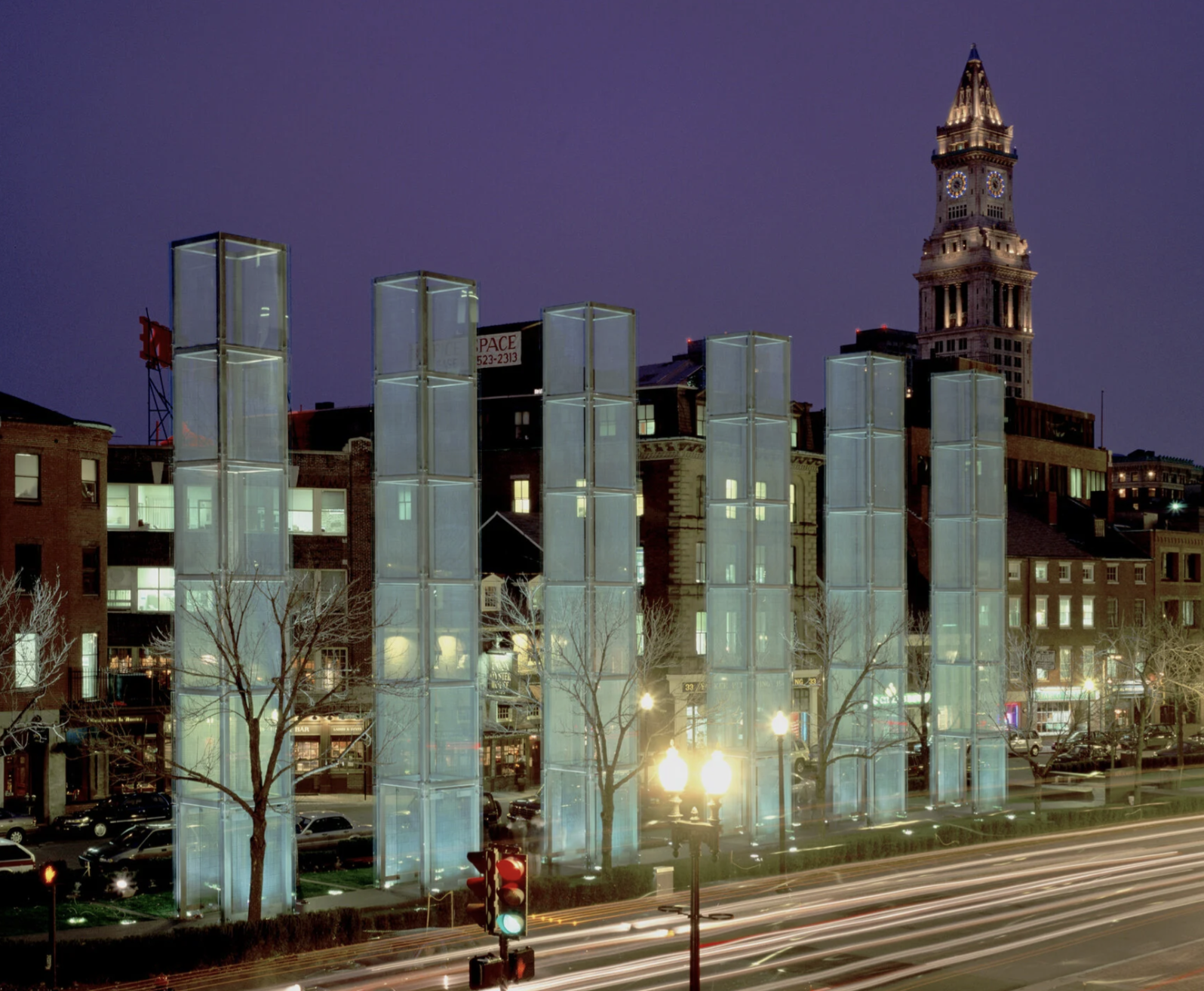
Boston, New England Holocaust Memorial, 1997, arch.: Stanley Saitowitz,
1. Symbolic Architecture: The six, fifty-four foot tall glass towers, designed by Stanley Saitowitz, represent both the six million Jews murdered and the six major death camps.
2. Urban Commemoration: Located on Boston's Freedom Trail near Faneuil Hall, it contrasts with surrounding historic sites to highlight the fragility of freedom and the necessity of remembering the Holocaust.
3. Immersive Experience: The design features 6 million etched numbers and rising steam, created to evoke the memory of tattoos from concentration camp victims and the loss of life.
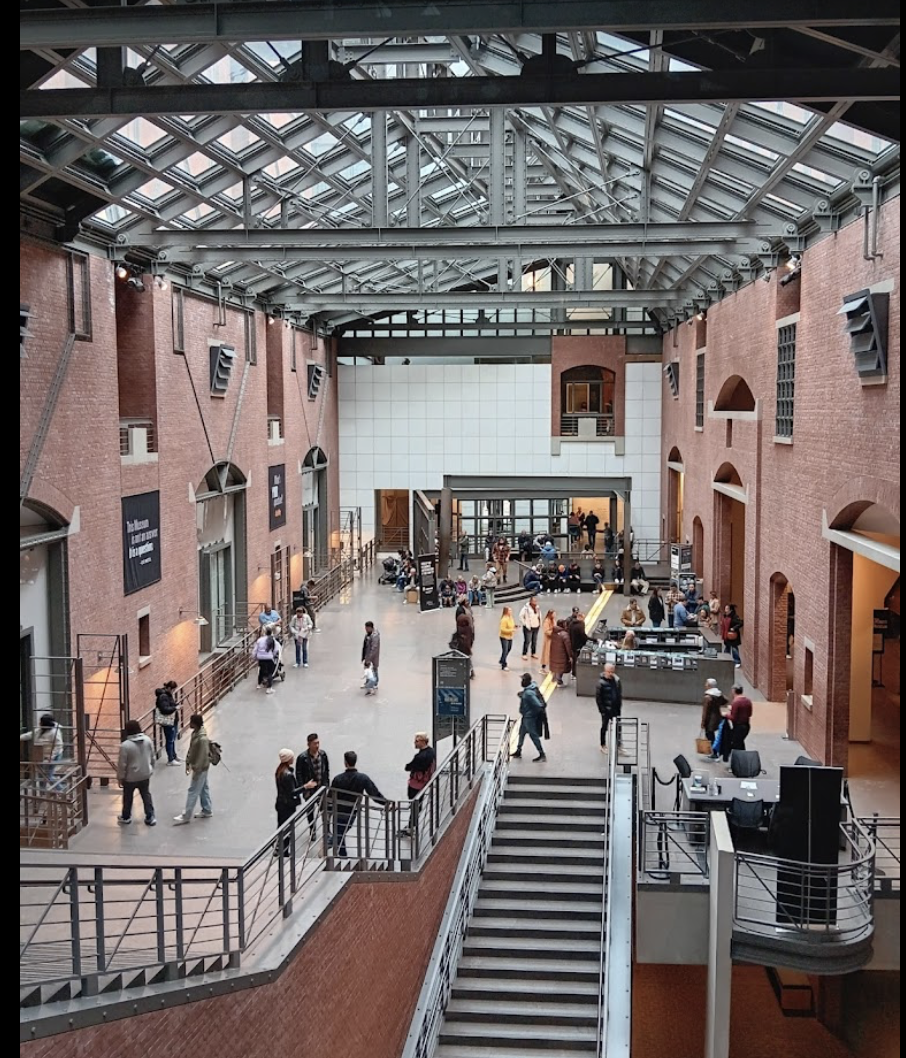
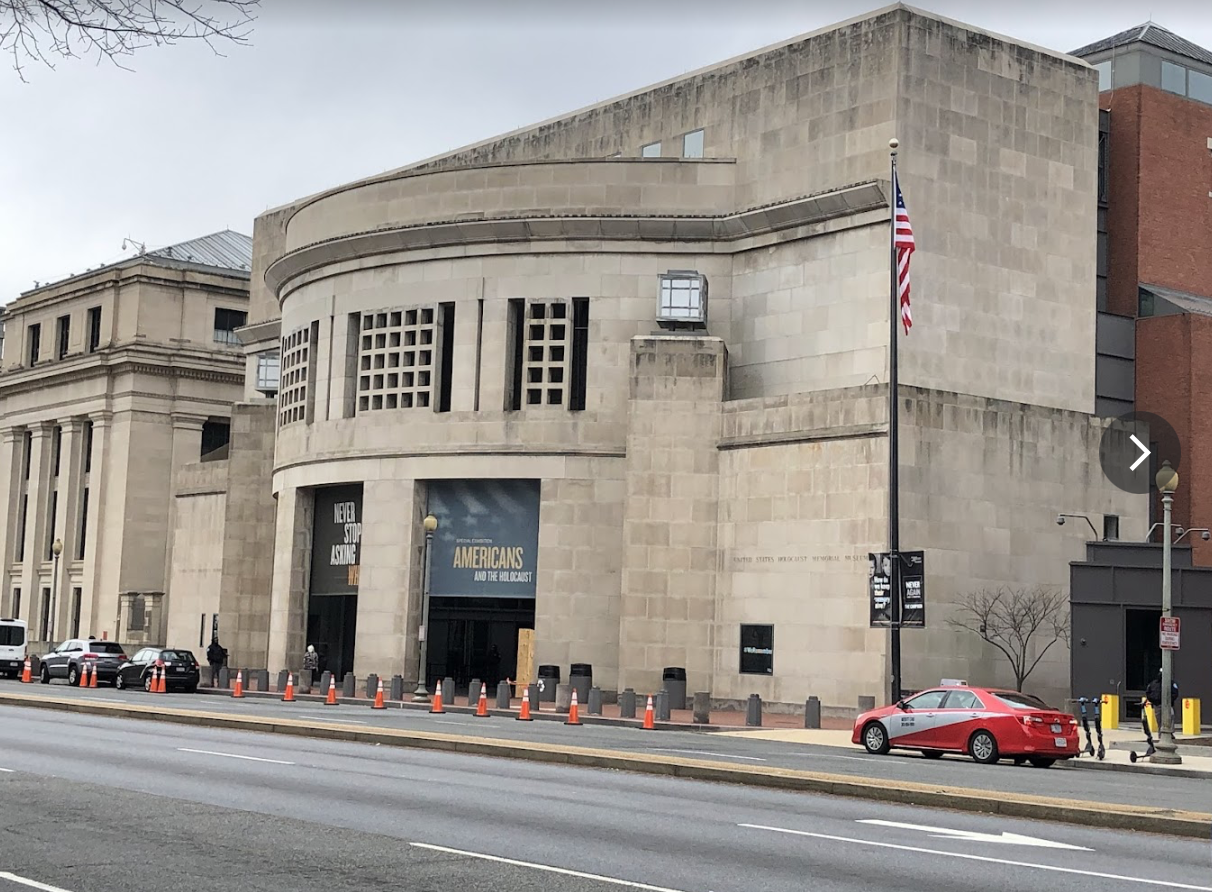
Washington, US Holocaust Memorial Museum, 1990-1995, arch.: J. I. Freed, I.M.Pei
Symbolic Architecture: Freed, who was born in Germany, visited numerous concentration camp sites and ghettos in Europe to study structures and materials for inspiration, resulting in a design that consciously rejects a neutral or traditional museum feel.
Architectural Philosophy: The structure is described as an "institution of memory," utilizing cold materials like brick, steel, and glass to create an imposing, uncomfortable, and disorienting experience.
Symbolism in Design: Elements such as the Hall of Witness (reminiscent of detention centers) and the Hall of Remembrance (a hexagonal, reflective space) are designed to evoke contemplation and the personal experience of the Holocaust
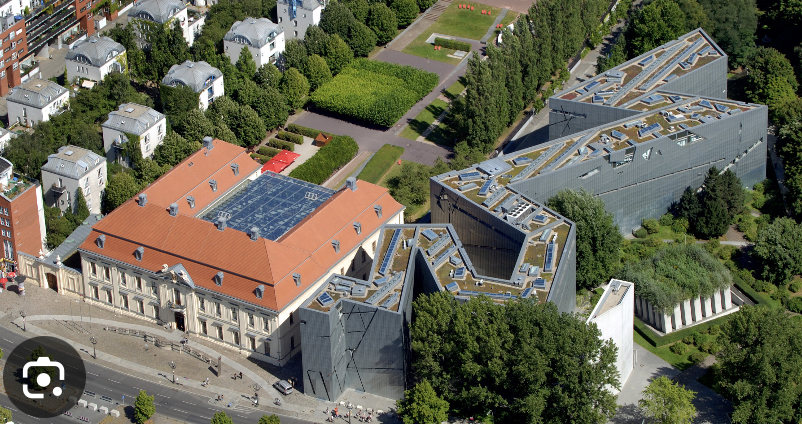
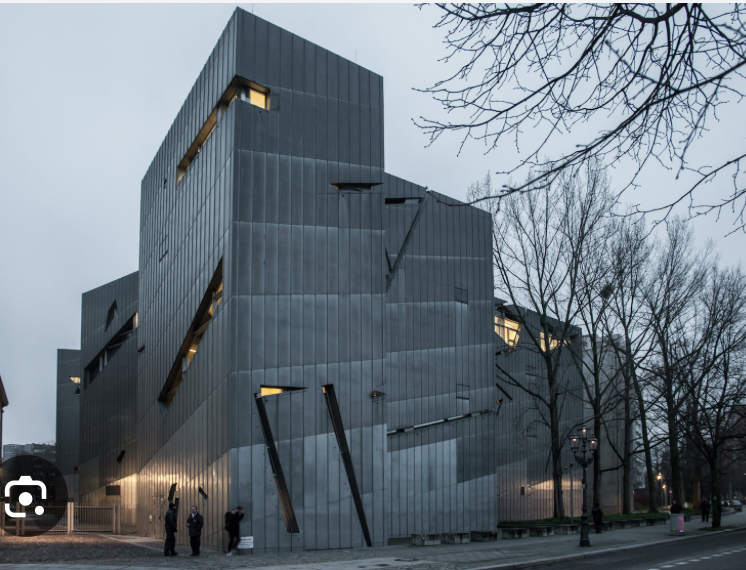
Berlin, Jewish Museum, 1992-1998, arch.: Daniel Libeskind
Embodiment of Absence (The Voids): The design incorporates a central, empty "void" cutting through the entire building, physically representing the destruction and erasure of Jewish life in Berlin.
Narrative of Traumatic History: Its zig-zag structure, crossed by the straight "Axis of the Holocaust" and "Axis of Exile," forces a physical engagement with the interrupted narratives of German Jews.
Emotive Visitor Experience: Libeskind used intentional discomfort—slanted walls, echoing spaces, and lack of traditional pathways—to create an emotional, subjective experience rather than just an exhibition space.
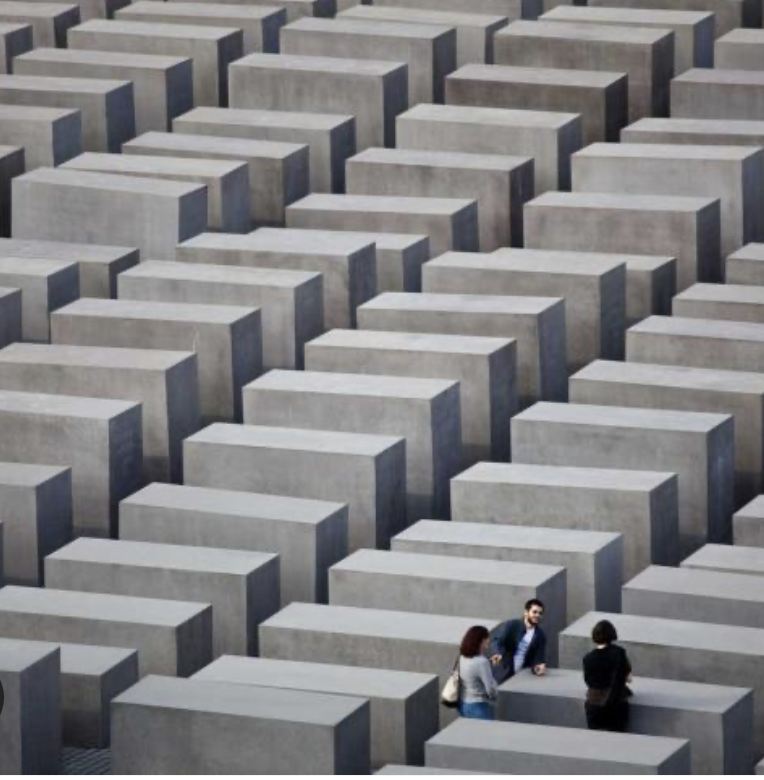
Berlin, Holocaust Memorial: P. Eisenman, R. Serra, 1989/99, executed 2002-2005
Abstract Representation: Through its 2,711 non-representational, varying-height concrete stelae arranged on a grid, the monument avoids traditional narrative, forcing personal confrontation with feelings of confusion, isolation, and disorientation.
Symbolic Location: Located near the former Nazi government ministries and the Berlin Wall, the memorial consciously places the enormity of the Holocaust within the heart of the modern, reunited German capital.
The Subterranean Information Center: Beneath the disorienting, open-air field, an underground archive provides a necessary counterpoint, offering individual names and personal stories of victims to ensure the human scale of the tragedy is not lost
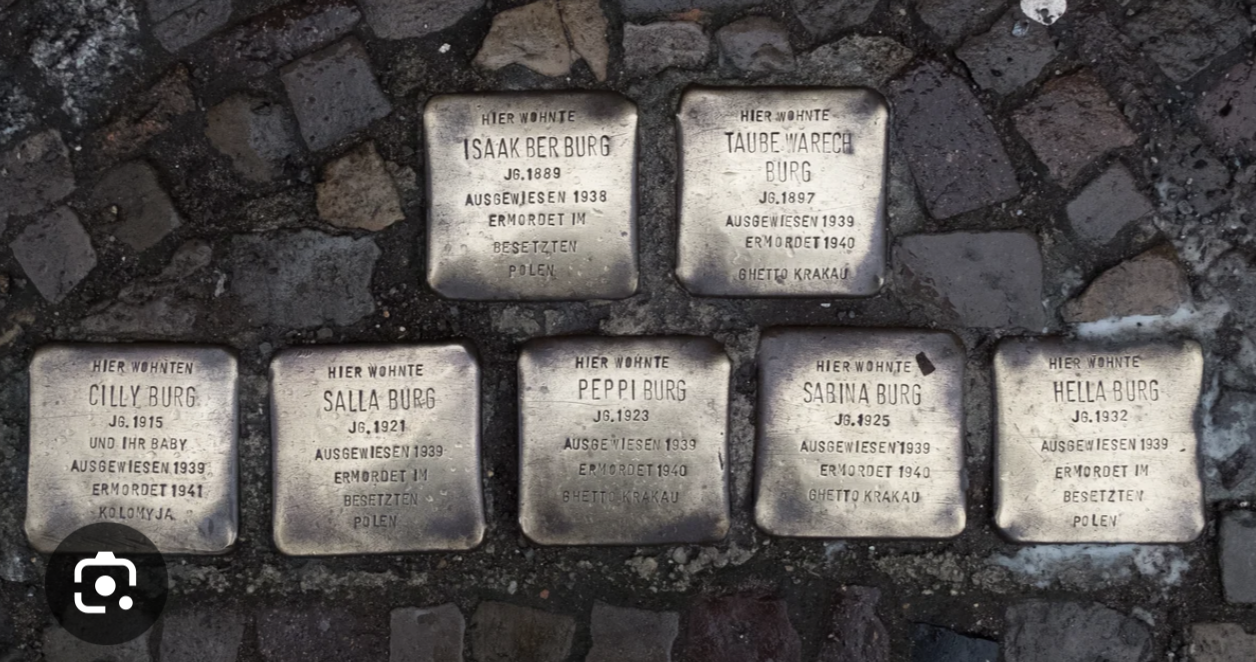
Berlin, Hamburg a.o., “Stumbling Stones” Gunter Demnig, 1993ff.
Individualized Remembrance: Unlike monolithic monuments, these stones bring historical memory into daily life by focusing on the individual names, dates, and fates of victims, preventing them from becoming anonymous victims.
Decentralized Significance (Berlin, Hamburg, a.o.): They transform local neighborhoods throughout Berlin, Hamburg, and thousands of other European cities into, making history unavoidable at our feet rather than tucked away in museums.
Comprehensive Victim Commemoration: Unlike monuments focused solely on specific groups, Stolpersteine honor all categories of Nazi victims, including Jews, Sinti, Roma, LGBTQ+ individuals, and political dissidents.
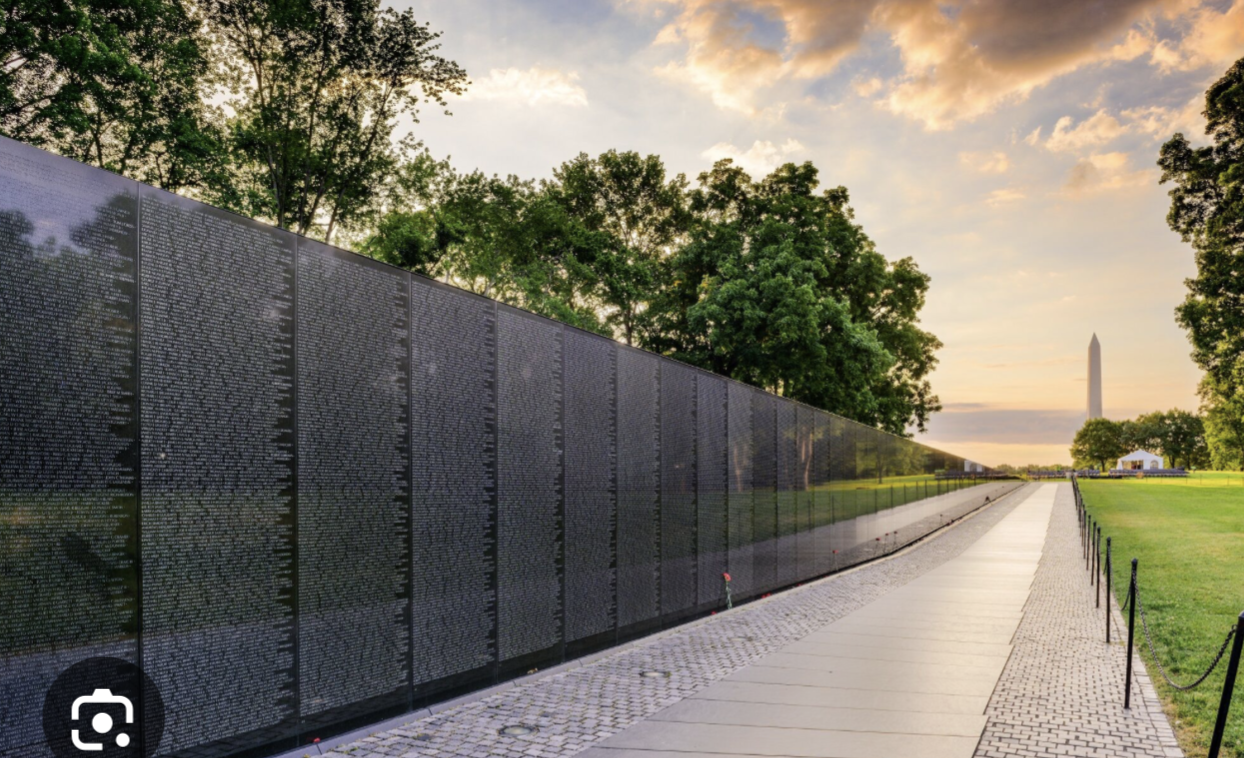
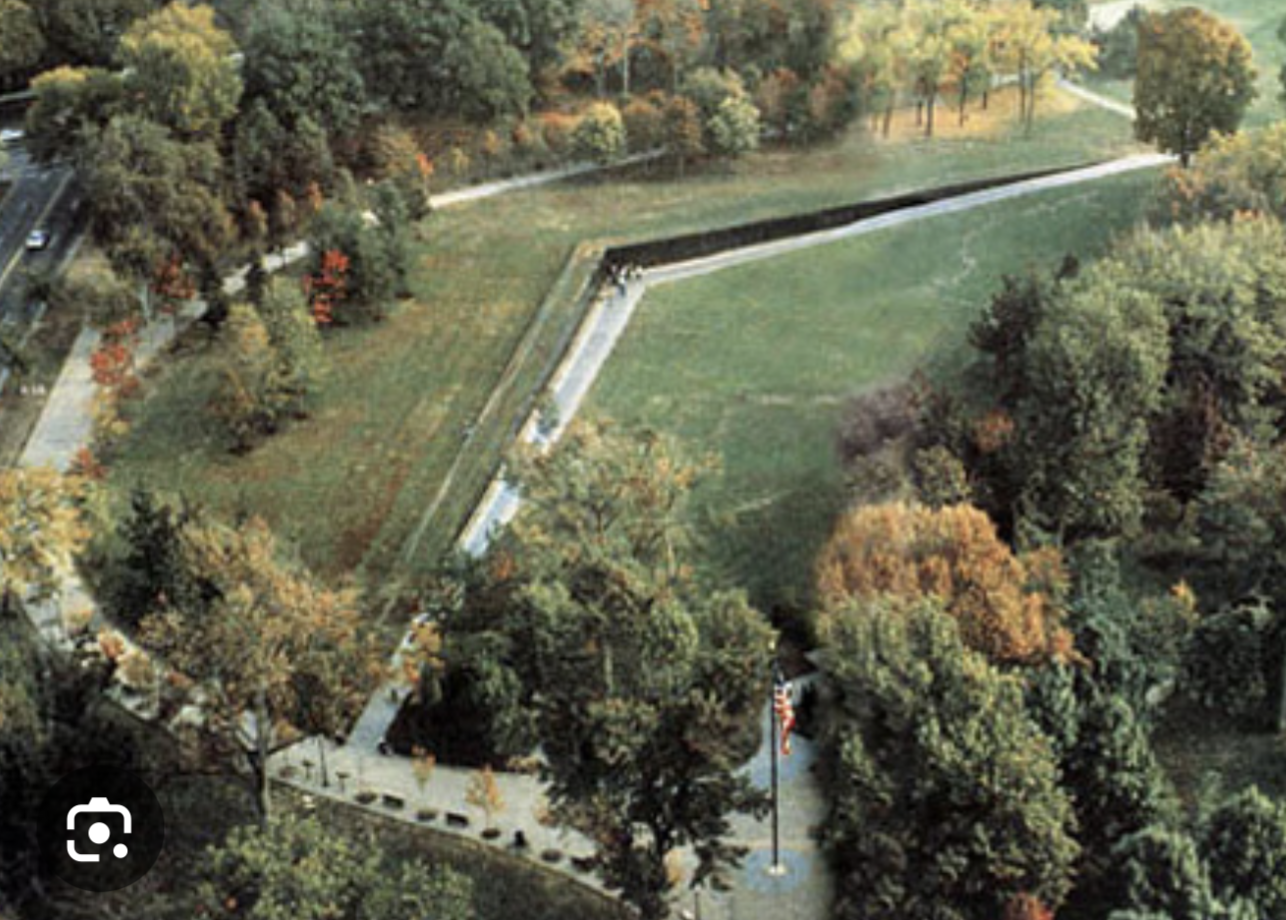
Washington, D.C., Vietnam Veterans Memorial, 1980-1985, arch.: Maya Lin
It revolutionized commemorative design by using a non-traditional, minimalist black granite V-shape to focus on individual loss rather than political ideology.
Its chronological listing of over 58,000 names creates a profound, personal experience for visitors, who see their own reflections in the polished, earth-set wall alongside the names of the fallen.
The memorial, which faced initial controversy before becoming a deeply respected site for healing, is strategically located on the National Mall to link the Washington Monument and Lincoln Memorial, symbolizing national reconciliation.
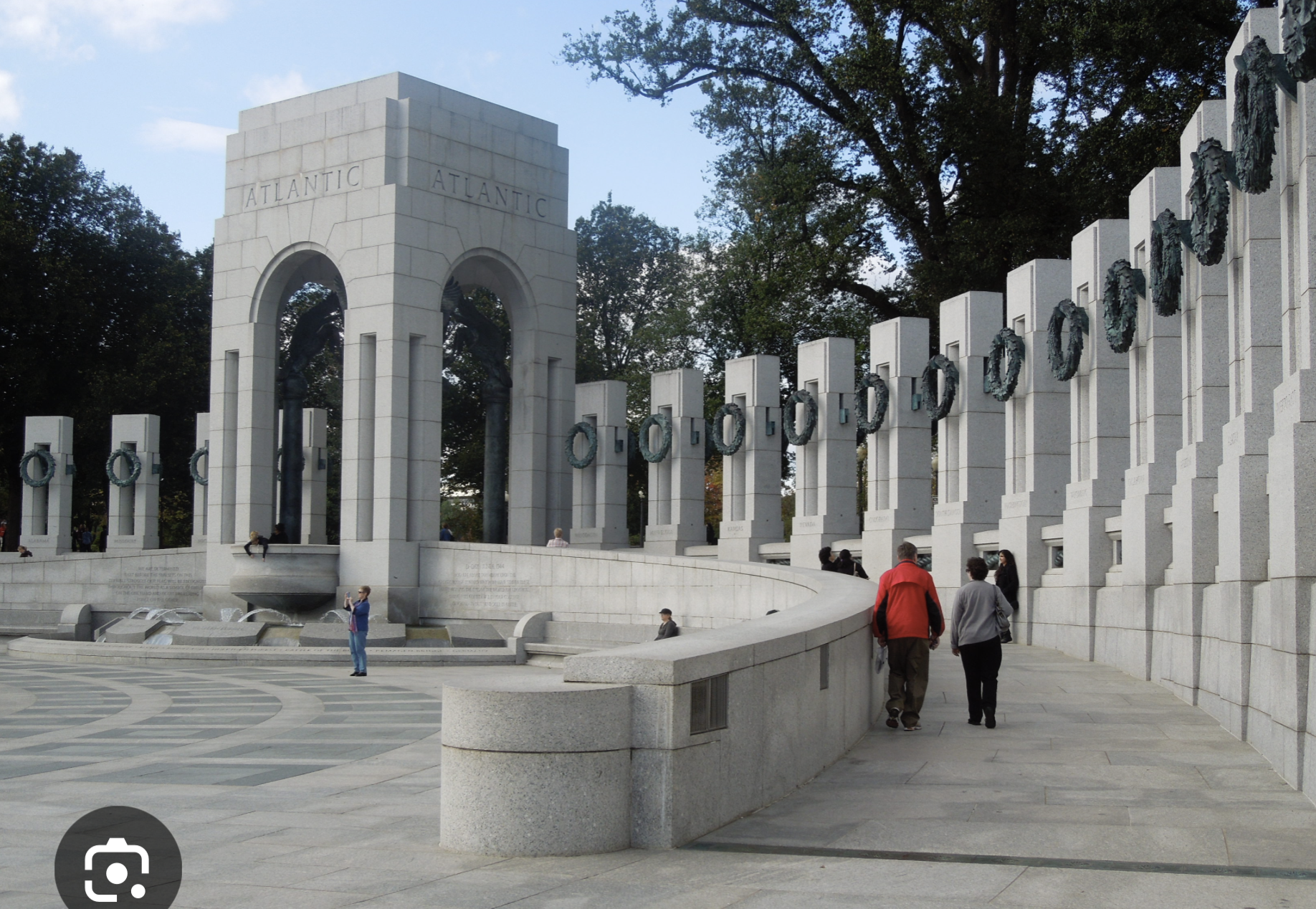
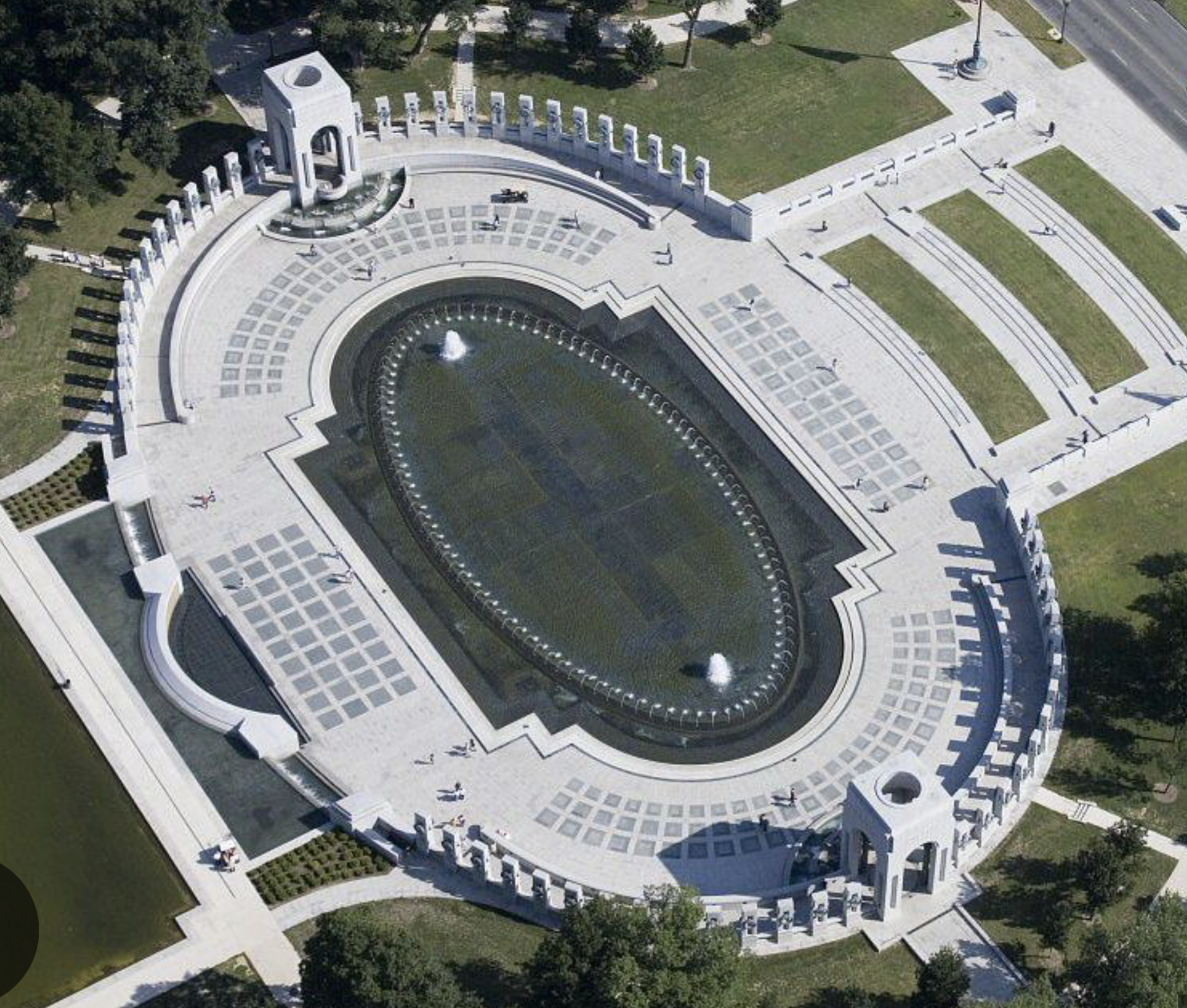
Washington, D.C. WWII Memorial, 2002, arch.: Friedrich St. Florian
Honoring the "Greatest Generation" and Sacrifice: The memorial, located on the National Mall, serves as the premier national site for honoring the 16 million who served, over 400,000 who died, and the millions who supported the war effort from home.
Symbolic Architecture of Unity: Architect Friedrich St. Florian designed a classical,, 7.4-acre plaza with 56 pillars and two massive triumphal arches (Pacific and Atlantic) linked by bronze ropes to represent the unprecedented unity of American states and territories.
The Freedom Wall and Home Front Recognition: The memorial features the Freedom Wall containing 4,048 gold stars, each representing 100 American deaths, along with 24 bronze bas-relief panels that narrate both battle scenes and, significantly, the industrial and agricultural transformation of the American home front.