isat test 2 ch. 9: plastics, polymers, & waste
 Call Kai
 Learn
Learn Practice Test
 Spaced Repetition
 Match
Match Flashcards
 Knowt Play
1/40

There's no tags or description
Looks like no tags are added yet.
Name | Mastery | Learn | Test | Matching | Spaced | Call with Kai |
|---|
No analytics yet
Send a link to your students to track their progress
41 Terms
what kind of plastics can you NOT recycle?
3, 4, 5, 6, AND 7
what does the number on the recycling symbol mean?
shows what type of plastic it is
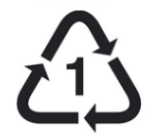
PET
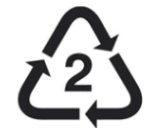
HDPE
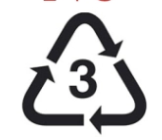
PVC
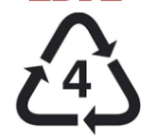
LDPE
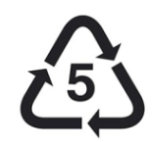
PP
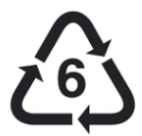
PS
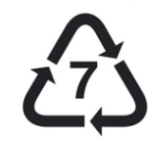
OTHER
downcycling
process of recycling waste into new product of lower quality than original
park benches, carpets, fleece jackets
plastic
lightweight, durable, & cheap (blessing & curse)
does plastic decompose?
NO
degrades to finer pieces & accumulates
microplastics
tiny particles too small to see
get eaten by animals & humans
ocean garbage patches
not real patch, areas where debris collects (pacific area)
small pieces, often below surface
what country is the leading importer of plastic scrap?
malaysia
what are options you can do when it comes to disposing items?
reduce
reuse
recycle
recover energy (burn)
dispose (if no other option)
what should you do when you want to avoid creating potential waste?
reduce
what should you do it you can’t avoid the waste?
reuse
what should you do if you can’t reuse the waste?
recycle/compost
bottle deposit system for reusable bottles
what should you do to the waste if you can’t recycle?
recover energy (burn safely)
cradle-to-cradle/closed loop/downcycling
what should you do with the waste if you can’t burn it?
dispose safely in landfill
what are plastics mostly made of?
hydrocarbons
energy from combustion → mandated in europe
landfill disposal
designed & engineered to keep water out & keep waste in
doesn’t always work
how do we know what’s best?
life-cycle-assessment (LCA)
consider environmental impacts
account from cradle-to-grave
what environmental impacts should we consider?
production
transport/handling
use
re-use
disposal
polymers
large molecules made up of long chains of atoms (covalent bonds)
chains of MONOMERS
monomers
smaller molecule units that are chained together
macromolecules
very large molecules with 1000s of atoms
what are plastics ALSO made of?
POLYMERS
cellulose
woody plant matter
glucose monomers linked together
what do natural polymers include?
cellulose
starch
latex (rubber)
keratin (hair wool, nails, horns)
proteins
DNA
what are polymers made out of?
hydrocarbons (mostly from oil)
how is polyethylene made?
addition polymerization
free radical that initated reaction
what does a HIGH density polyethylene dictate?
not branched, uniform (stronger & more rigid)
30% recycled
milk bottles
what does a LOW density polyethylene dictate?
branched, won’t stack tightly
~3% recycled
carrier bags
big 6 polymers definition
THERMOPLASTIC POLYMERS
can be melted & reshaped
degrade over time
what ARE the big 6 polymers?
LDPE (4)
HDPE (2)
PVC/V (3)
PS (6)
PP (5)
PETE/PET (1)
what is the only difference in monomers?
SINGLE FUNCTIONAL GROUP
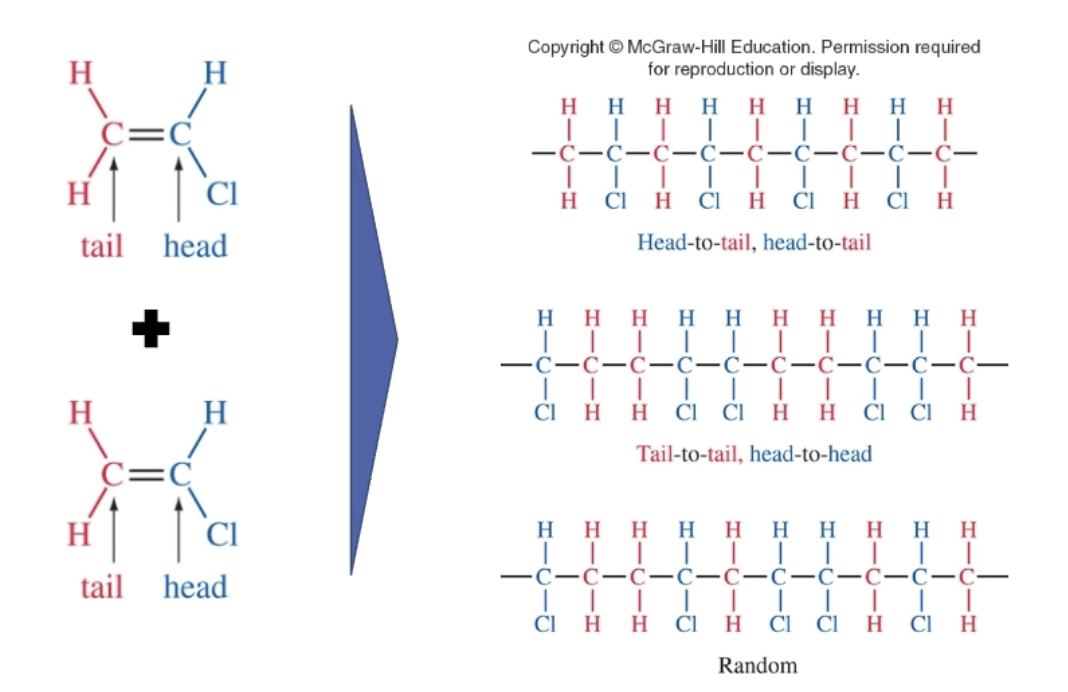
polymer structure impacts properties
head to tail, head to tail
head to head, tail to tail
random
what kind of polymer is a polyester compound?
PET (1)
what is polyester made of?
a condensation polymerization reaction
polyester bond is formed
water is produced