BIOL10008: Topic 3
 Call Kai
 Learn
Learn Practice Test
 Spaced Repetition
 Match
Match Flashcards
 Knowt Play
1/76

There's no tags or description
Looks like no tags are added yet.
Name | Mastery | Learn | Test | Matching | Spaced | Call with Kai |
|---|
No analytics yet
Send a link to your students to track their progress
77 Terms
Genetics
Genetic information is stored in nucleic acids, predominantly DNA (Lectures 2 and 5, Topic 1)
Genetics involves identifying the location of genes in a genome sequence
Sequence changes caused by mutation can then be studied (Lecture 20)
DNA replication and cell division processes
DNA is compacted into chromosomes (Chromatin = DNA + proteins)(Lecture 8, Topic 1)
Semi-conservative replication of DNA (Lecture 9, Topic 1)
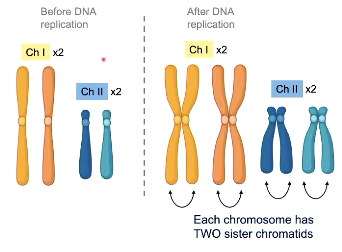
Different chromosome structures exist pre/post DNA replication (Lecture 22)
Cell division produces daughter cells with a compete set of genetic information (Lecture 9, Topic 1)
Genes are expressed to produce
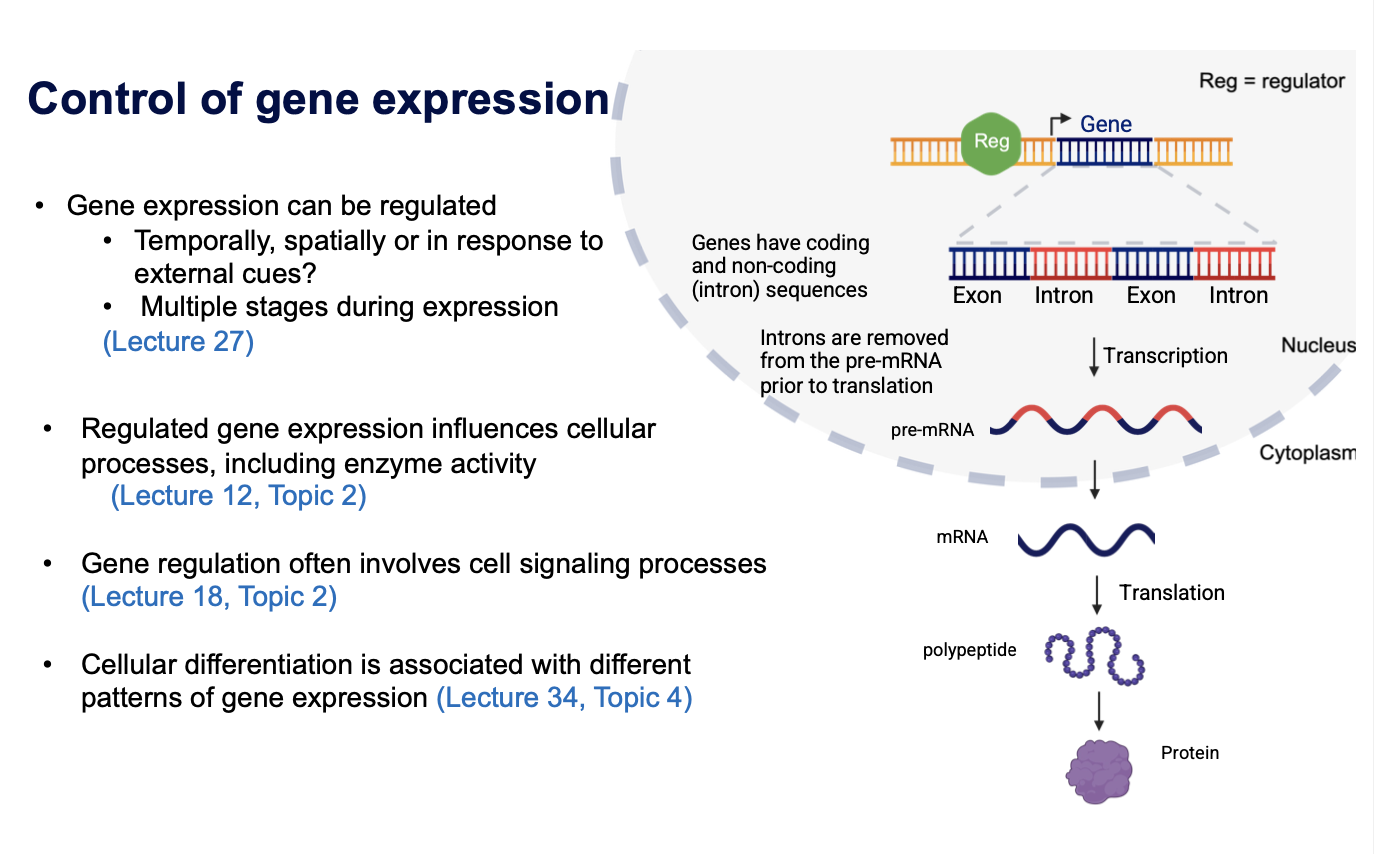
Genes are expressed to produce mRNA and protein products (Lecture 5, Topic 1)
Gene expression prokaryotes vs eukaryotes
Transcription and translation occur simultaneously in prokaryotes (no membrane bound organelle of nucleus) but are spatially & temporally separated in eukaryotes
(Lectures 2 & 8, Topic 1)
Eukaryotic genes can include introns which are spliced out prior to translation
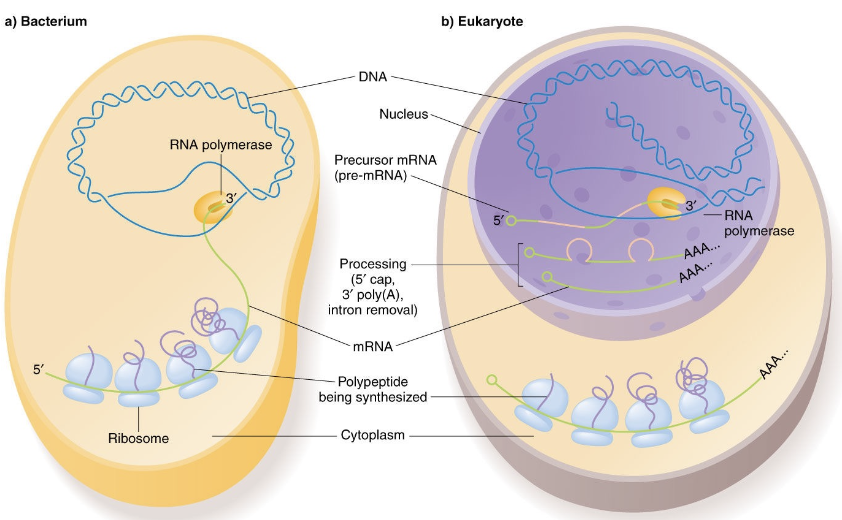
Gene products (RNA and proteins) perform biological functions like
Enzymes
Structural molecules
Regulatory molecules
Genetic variation effects how
Genetic variation can effect how gene products function (Lecture 20)
The function of gene products gives rise to Biological characteristics (traits/phenotypes) that are influenced by genetic variation (Lecture 21)
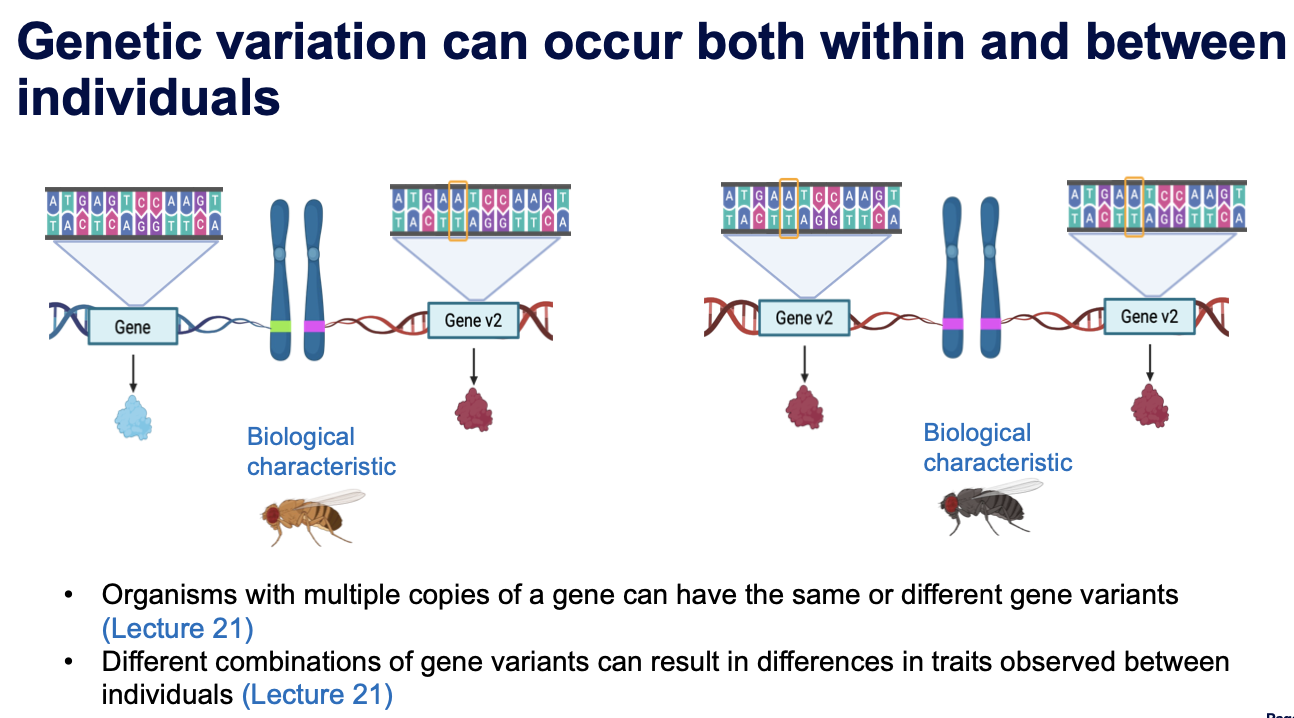
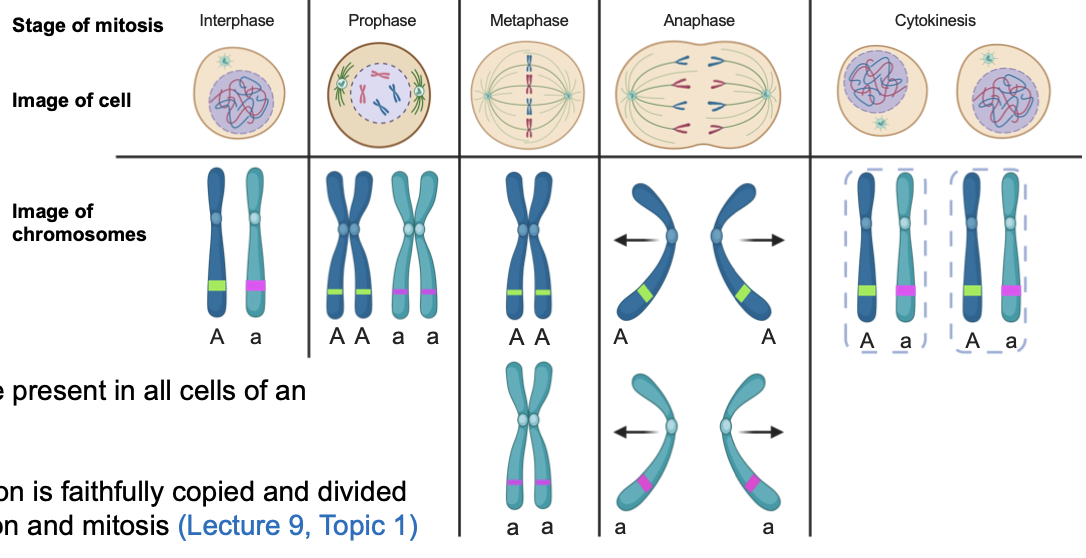
Genetic variants are transmitted from cell to cell within an organism
Gene variants are present in all cells of an organism
Genetic information is faithfully copied and divided via DNA replication and mitosis (Lecture 9, Topic 1)
Genetic variants are transmitted to the next generation
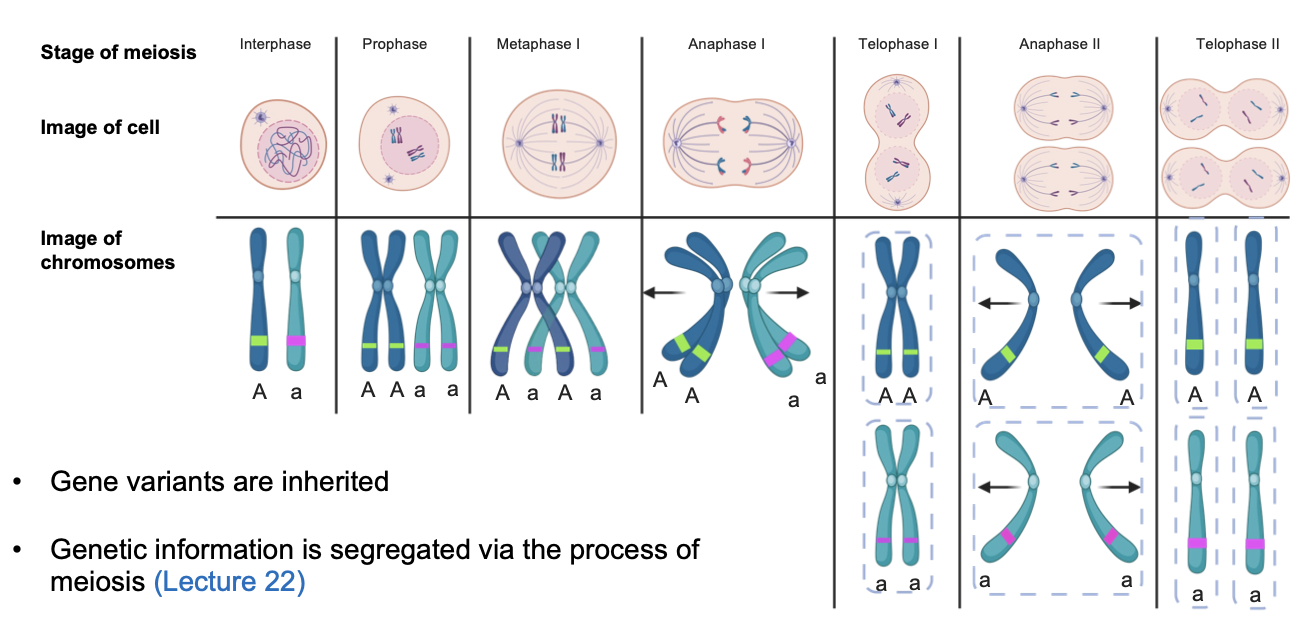
Pedigree maps
Father passing trait on only to daughters
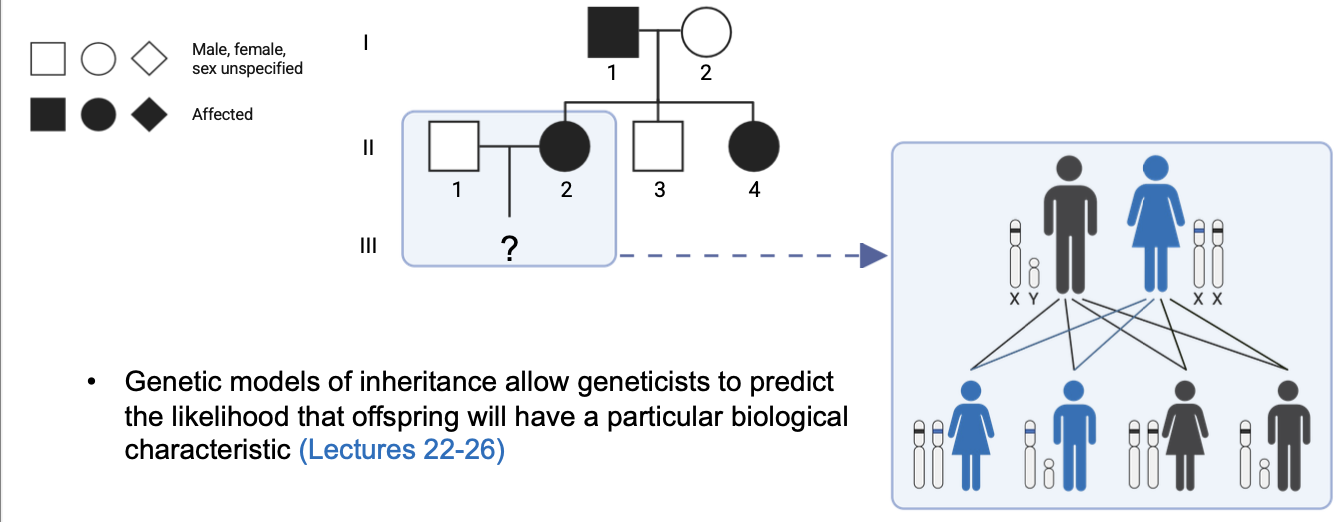
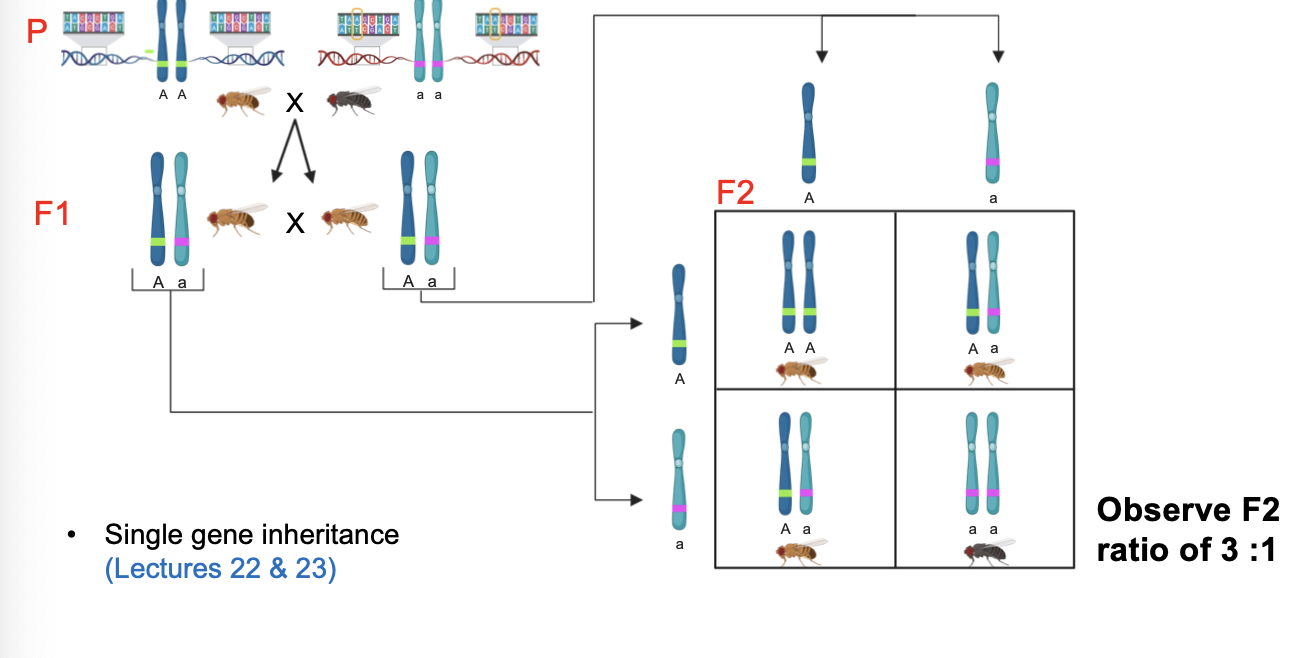
Genetic crosses - determining how gene variants contribute to traits
Crosses between individuals with different variants can be performed
Genetically hybrid progeny allow us to examine how different variants of a gene interact (dominance) to influence a trait (Lecture 21)
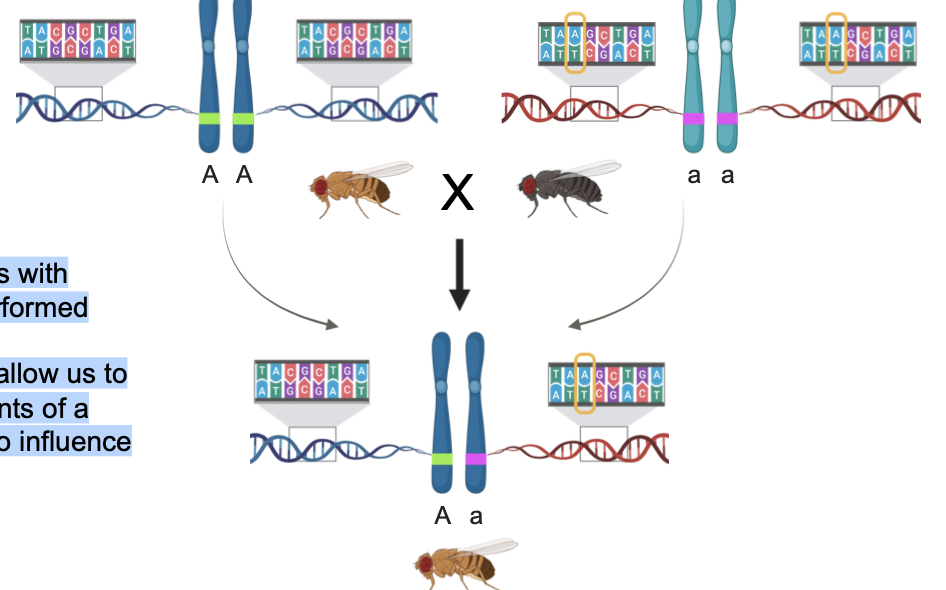
Genetic crosses - examine inheritance over successive generations
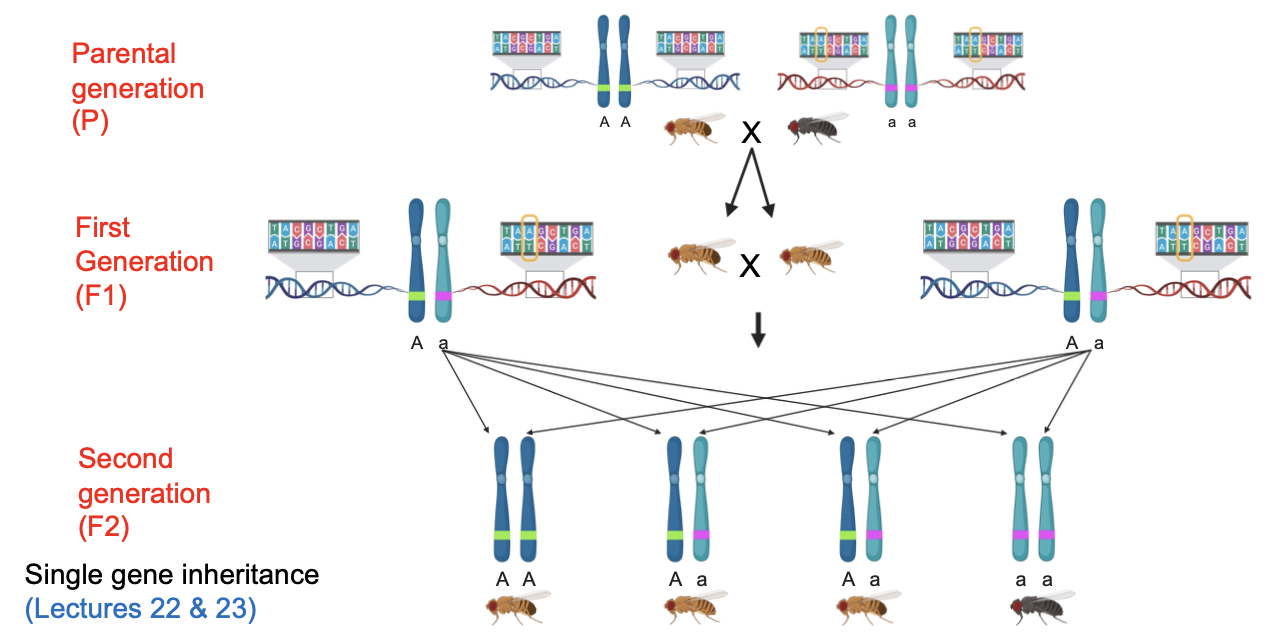
Genetic crosses - observe patterns of inheritance to create genetic models
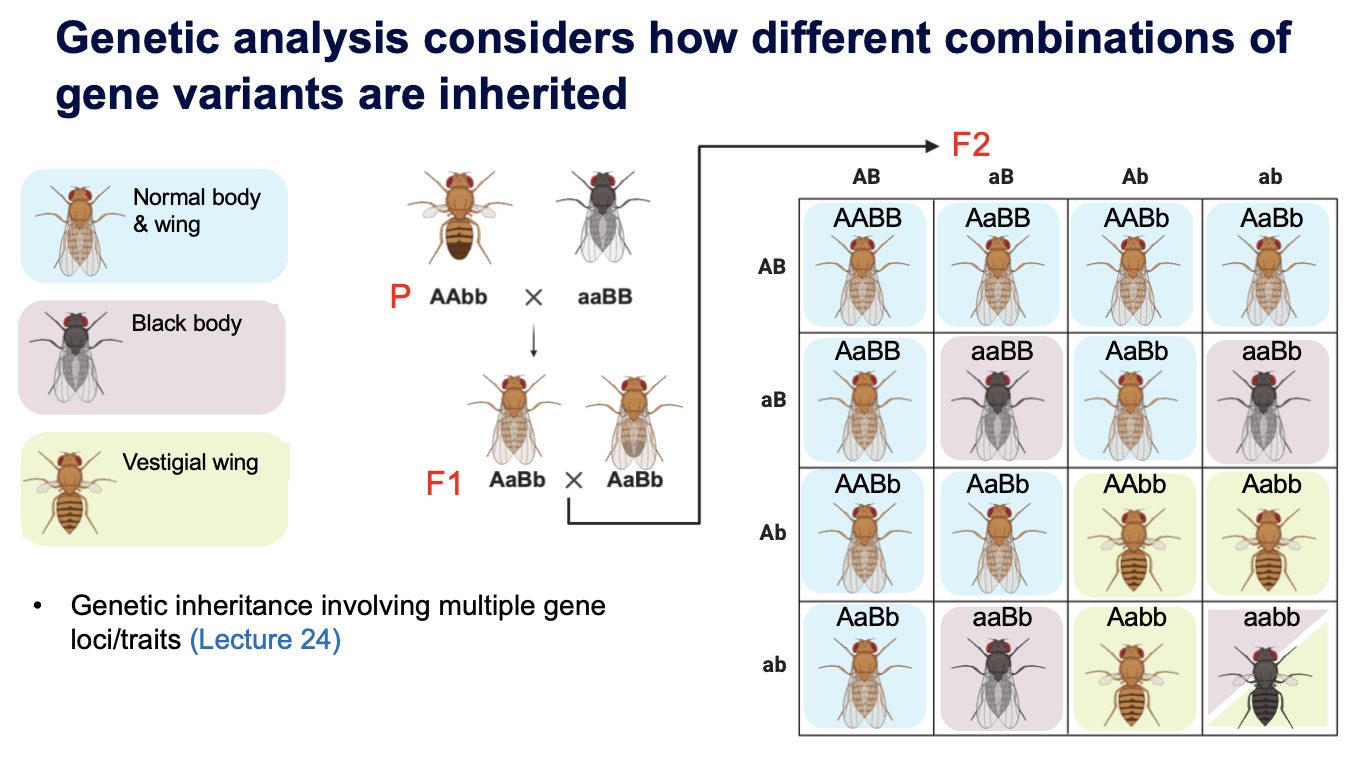
Genetic inheritance involving multiple gene loci/traits
Control of gene expression
Mutations
are the primary source of genetic variation
Mutations are a change in the sequence, structure or composition of the genome of an organism.
may/may not affect genes
may/may not be transmitted to offspring
Mutation creating positive and negative variation
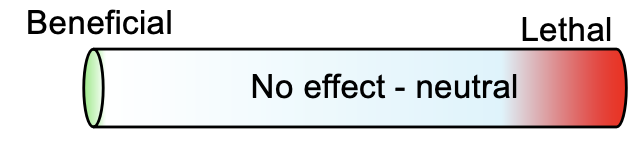
Mutations are classified in multiple ways
How mutations occur
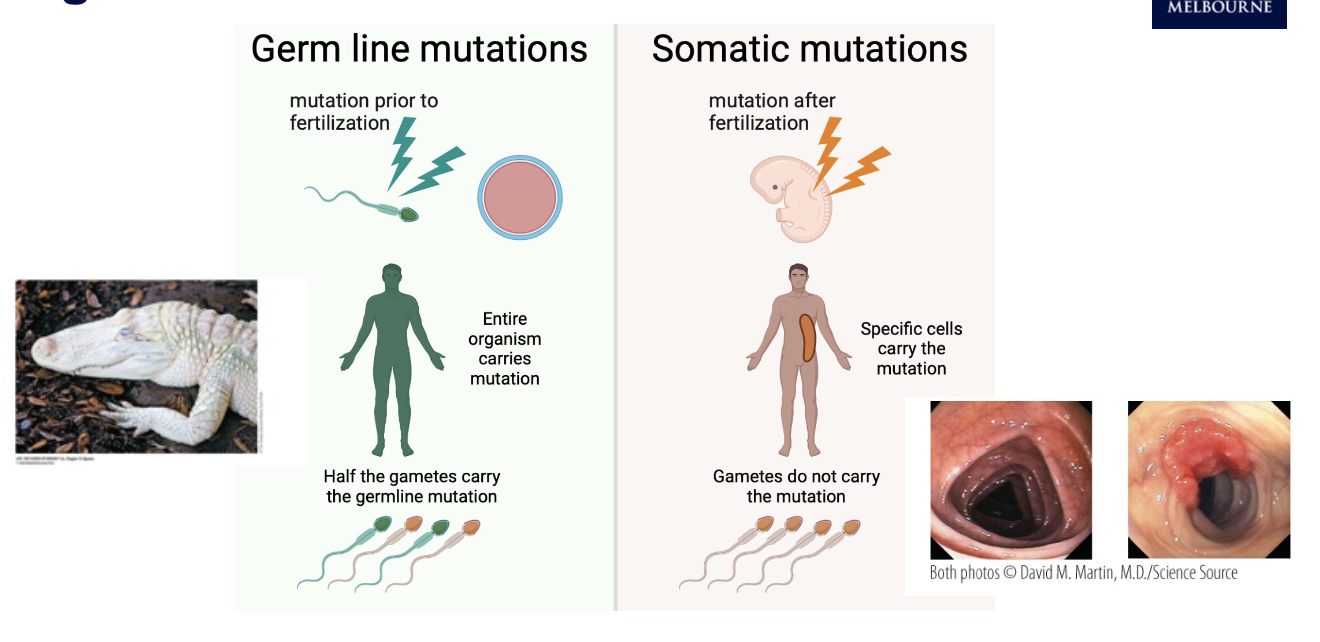
Whether or not they can be passed to offspring
Size/scale of the mutation
Locations within genes
Change to polypeptide sequence or abundance
Effect on gene function
Effect on fitness
Mutations can be spontaneous
Example 1. Error during DNA replication
At most one mutation per billion nucleotides
Example 2. Chemical changes to nucleotide bases such as Deamination (removal of an NH2 amino group)v
Mutations can be induced
Chemical agents:
Nitrous acid: cause deamination
Benzopyrene: adds chemical group to guanine
Radiation:
X-rays and gamma-rays can break sugar- phosphate backbone of DNA
Ultraviolet radiation can cause covalent bonds between adjacent thymine bases.
Germ line vs somatic mutations
Small scale DNA mutations
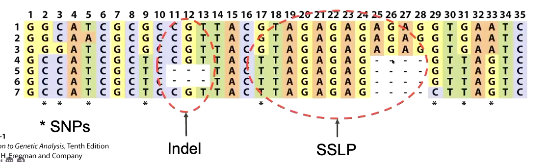
Mutations affecting one to a few nucleotides
Point mutation or SNP (single nucleotide polymorphisms) – affect a single nucleotide
Indels - Small insertions or deletions
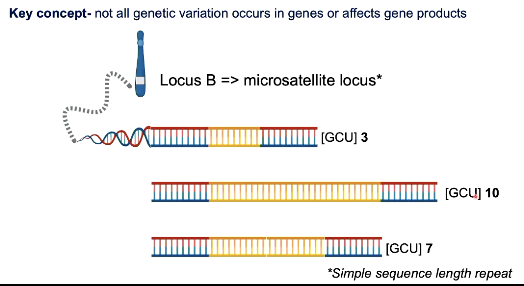
Microsatellite or SSLP (Simple sequence length polymorphisms) - a short sequence of 1-6 nucleotides with variable numbers of repeats
Large scale chromosomal mutations
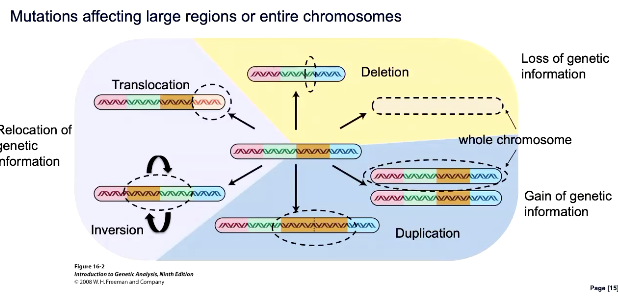
Mutations affecting large regions or entire chromosomes
inversion swaps within chromosomes and translocation swaps chromosomes
Where can mutations occur?
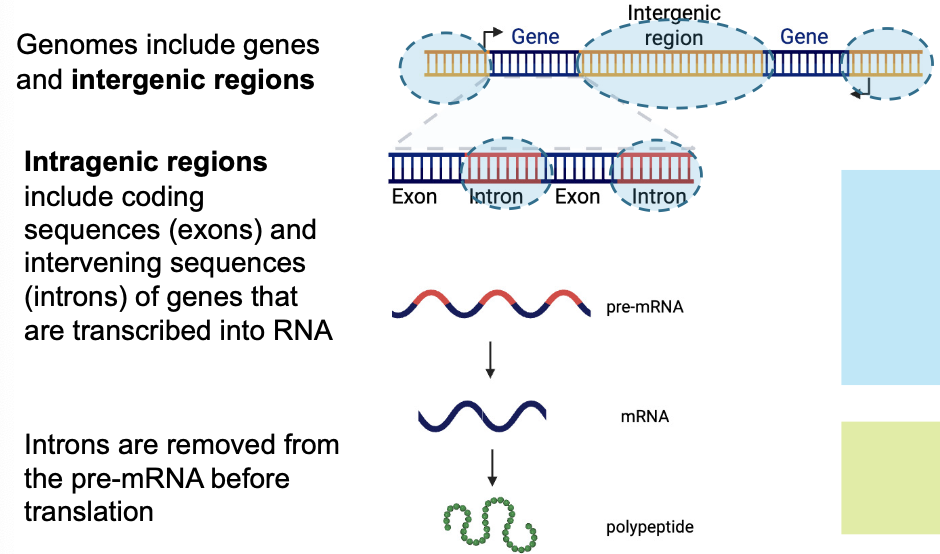
intragenic regions
include coding sequences (exons) and intervening sequences (introns) of genes that are transcribed into RNA
Non coding regions
(intergenic regions and introns) - can include regions important for gene expression and regulation
Coding sequences
those that are expressed as functional gene products
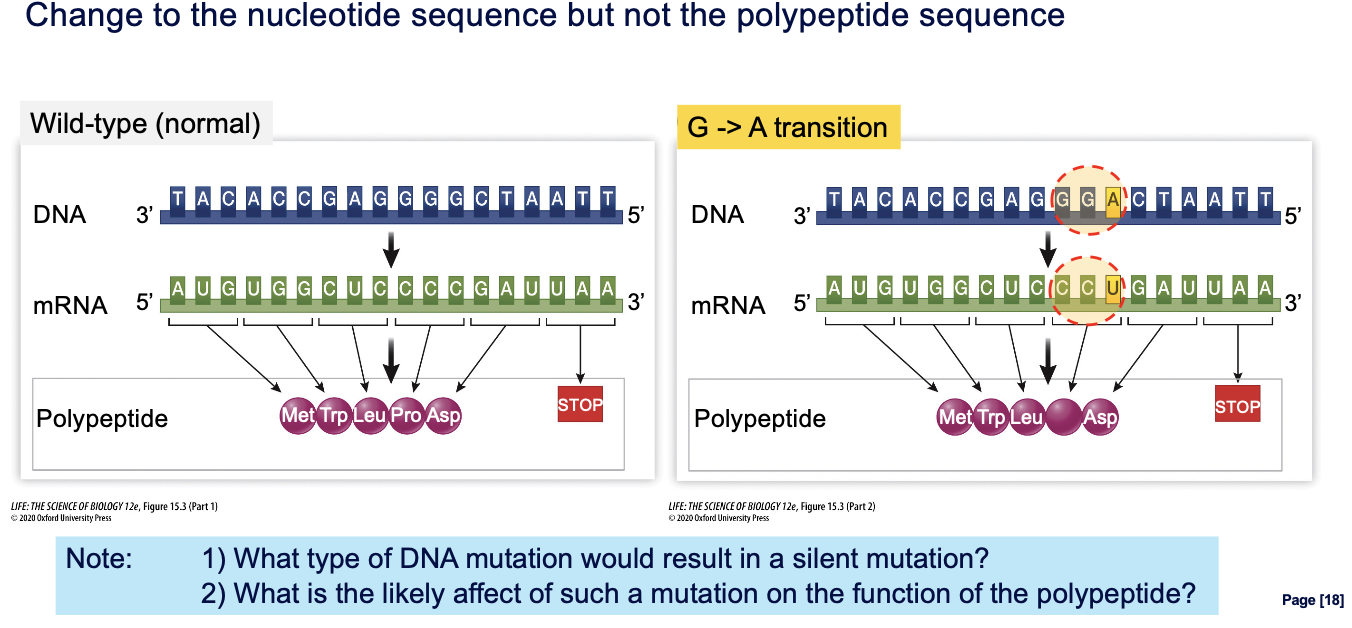
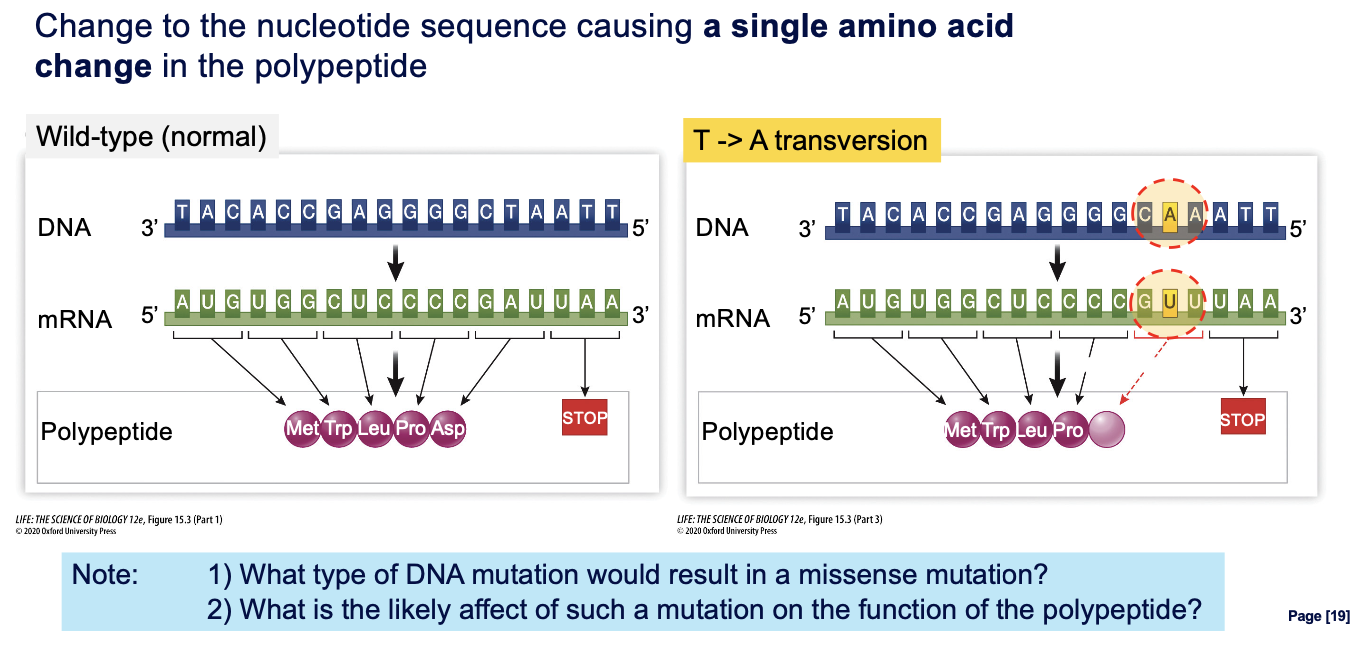
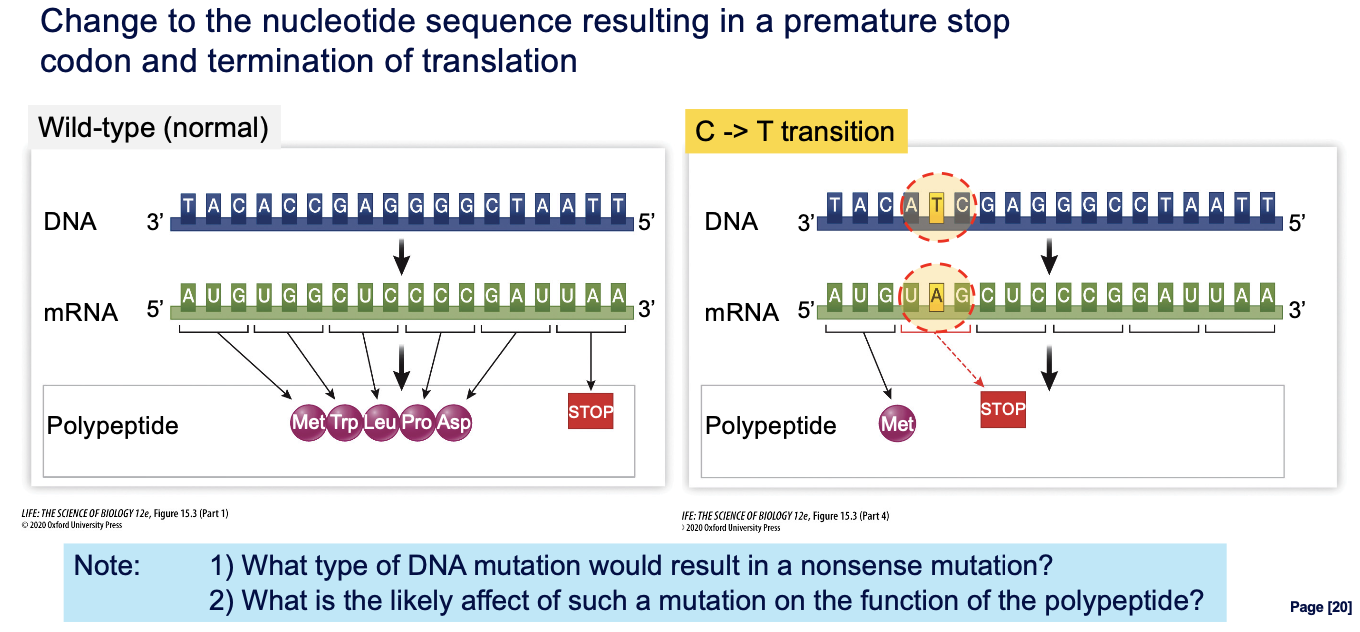
mutations within genes - how they effect the polypeptide
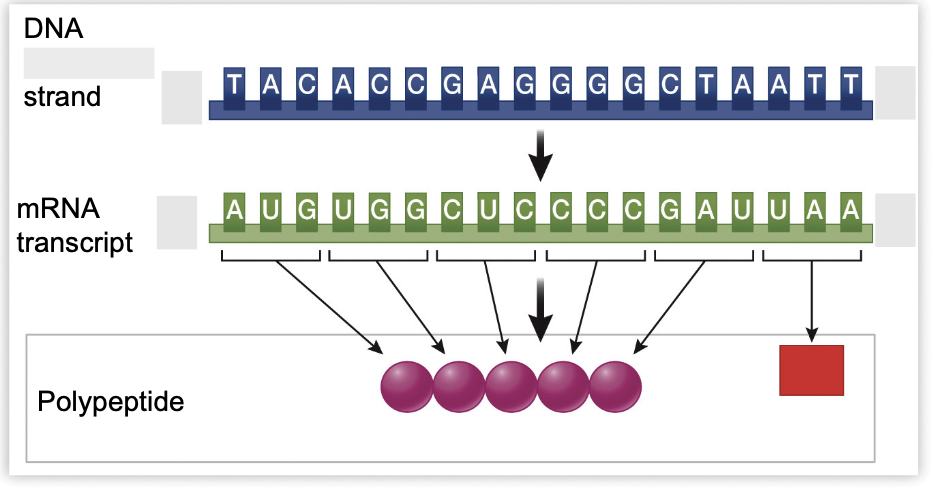
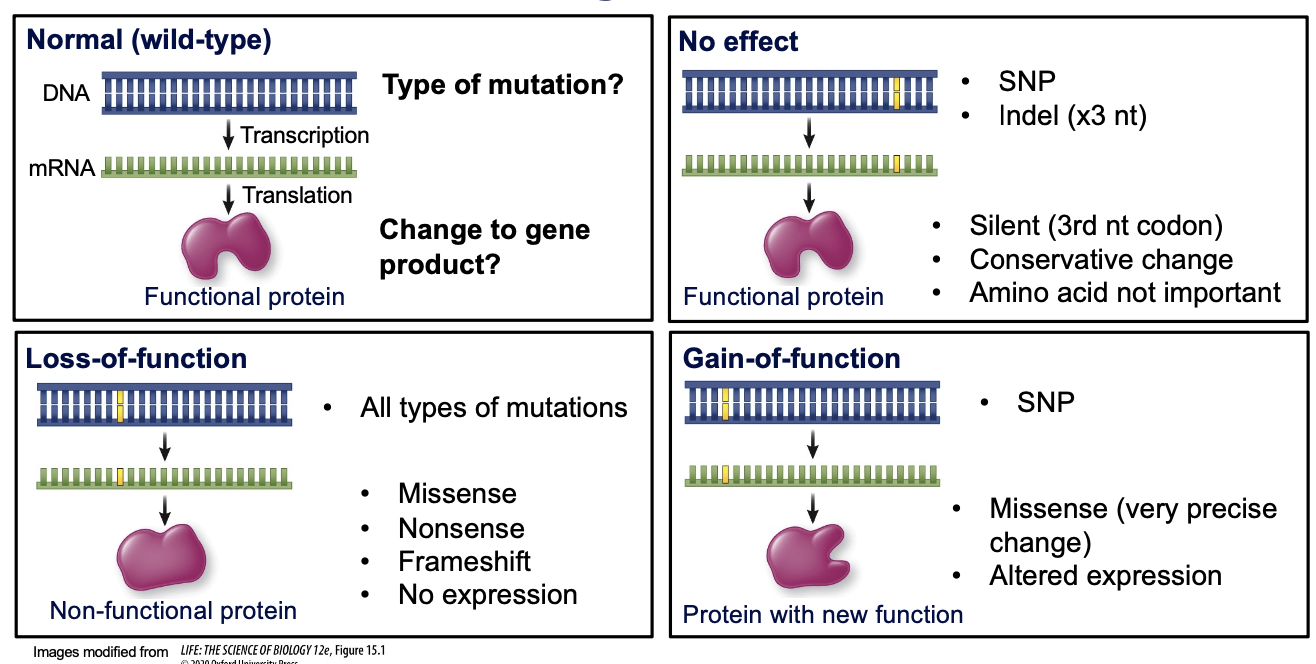
Silent mutations
Missense mutations
don’t know without further details
Nonsense mutations
truncated/shortened polypeptide
Frameshift mutations
huge change in amino acids
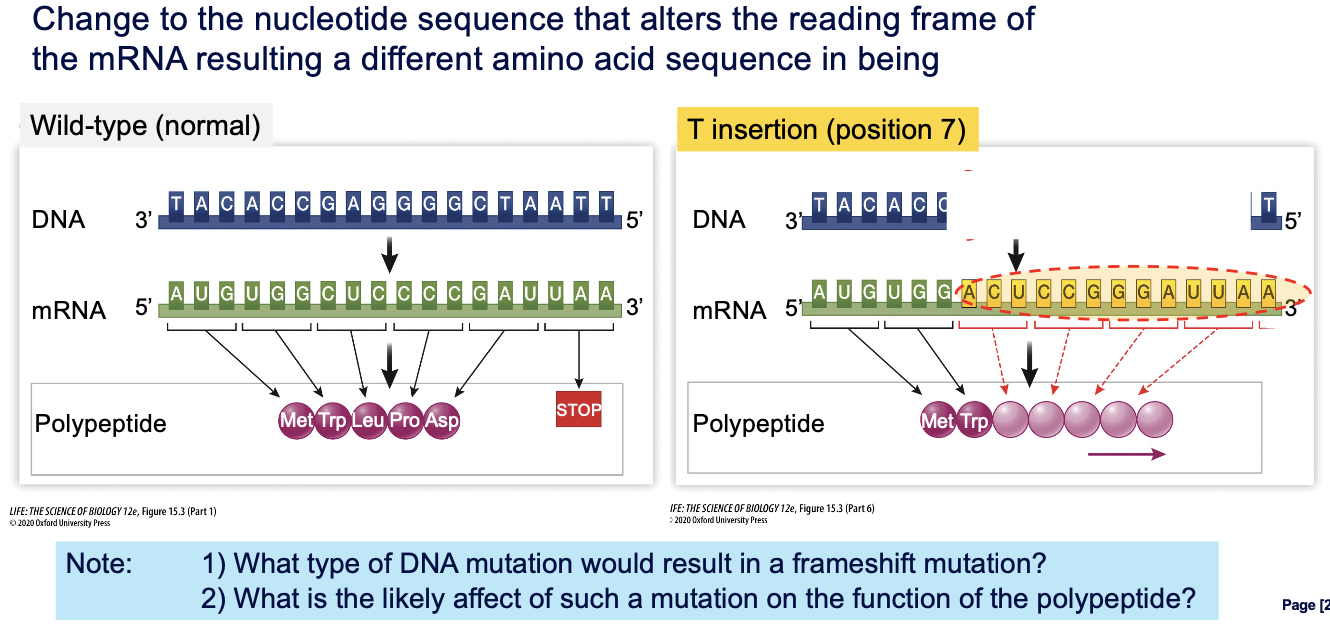
Effect of mutations on gene function - based on types of mutation
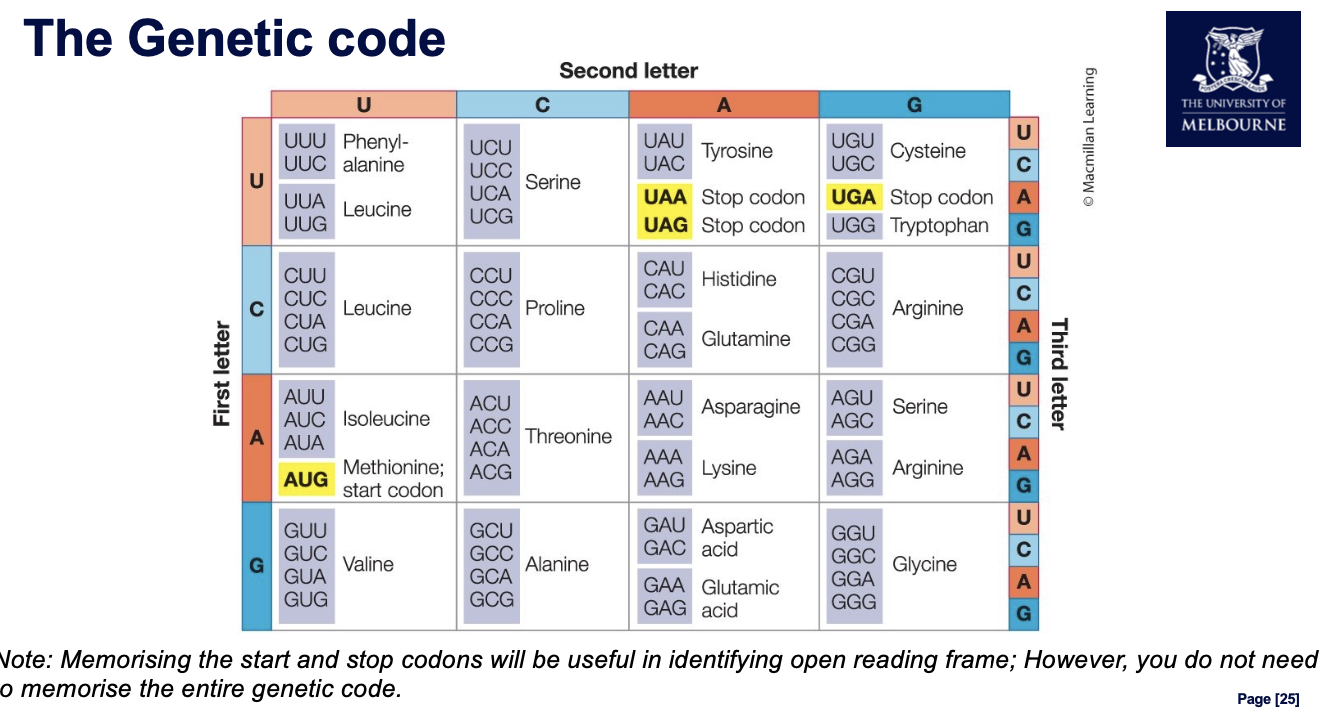
Genetic code - start and stop codons
redundancy - diff codon = same amino acids
Proportion of mutations beneficial vs deleterious
more bad than good
More mutations are deleterious than beneficial
Large-scale chromosomal mutations → can affect many genes or gene balance
Small-scale DNA mutations (SNPs and indels) → can change important residues, large portions of the polypeptide or result in .truncated polypeptides
• Only very specific (and therefore rare) changes can give genes functions
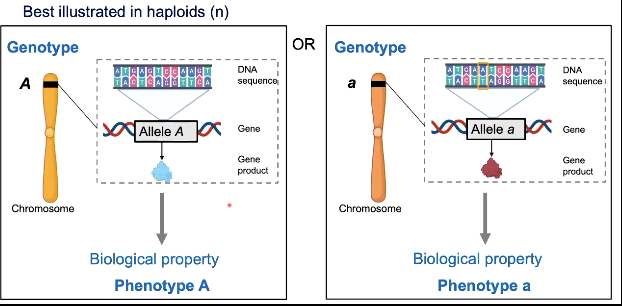
Genotype
genetic composition of an individual
ploidy
locus (pl. → loci)
allele
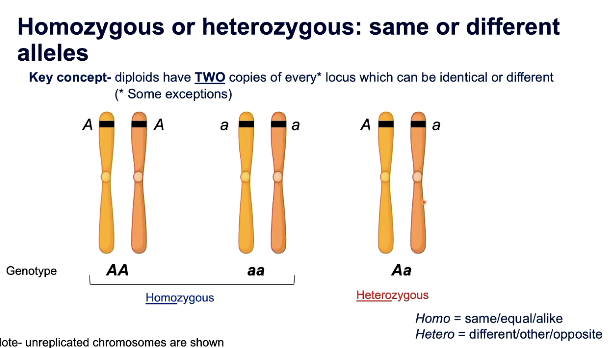
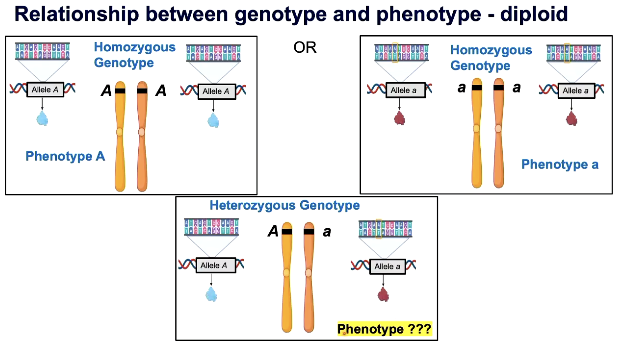
homozygous or heterozygous (or hemizygous)
Phenotype
distinguishable biological property or trait
observable OR measurable
visible, physiological or molecular
dominance relationships bw variants
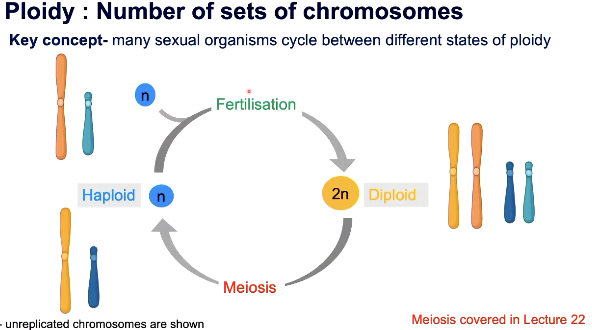
Ploidy
number of sets of chromosomes
independent of number of diff chromosomes an org has
Haploid
2 copies remain attached and each og stick is a chromatid (same whether haploid or diploid)
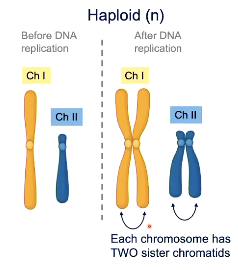
Diploid
both copies considered homologous although slight differences could be present
2 chromosomes remain attached and each og stick is a chromatid (same whether haploid or diploid)
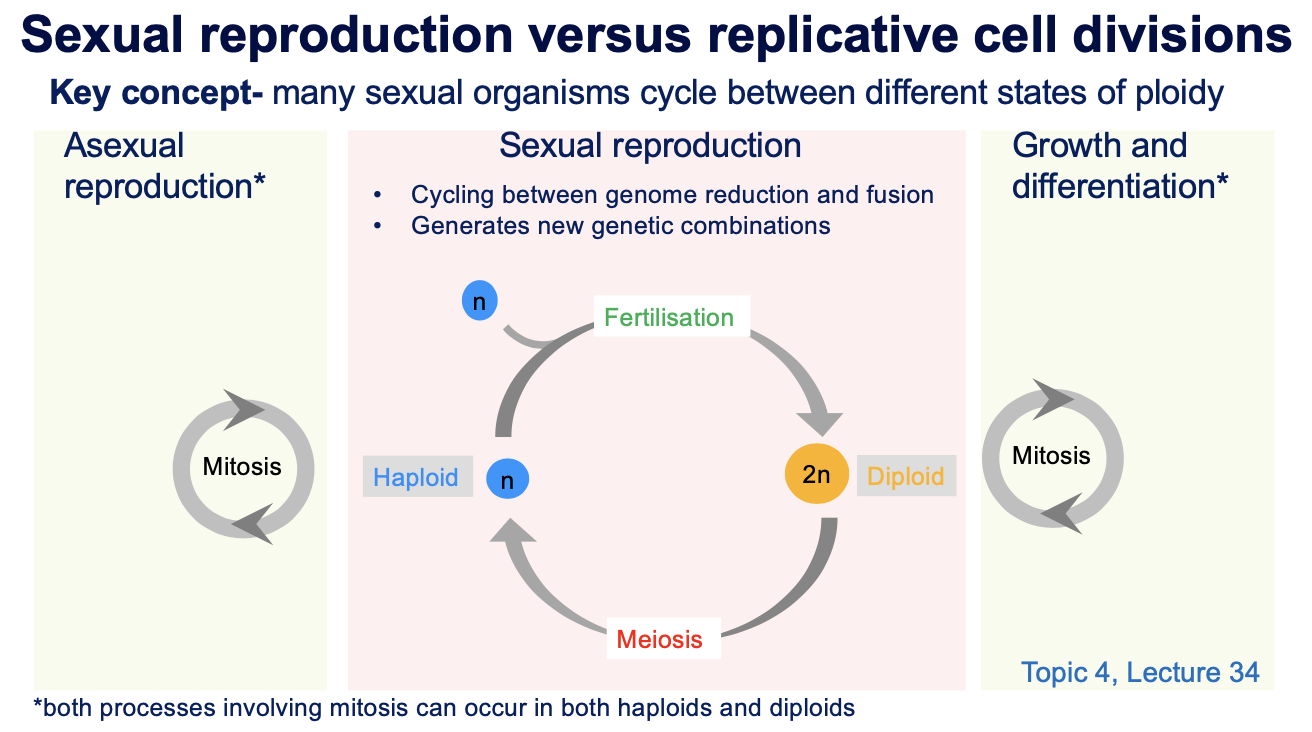
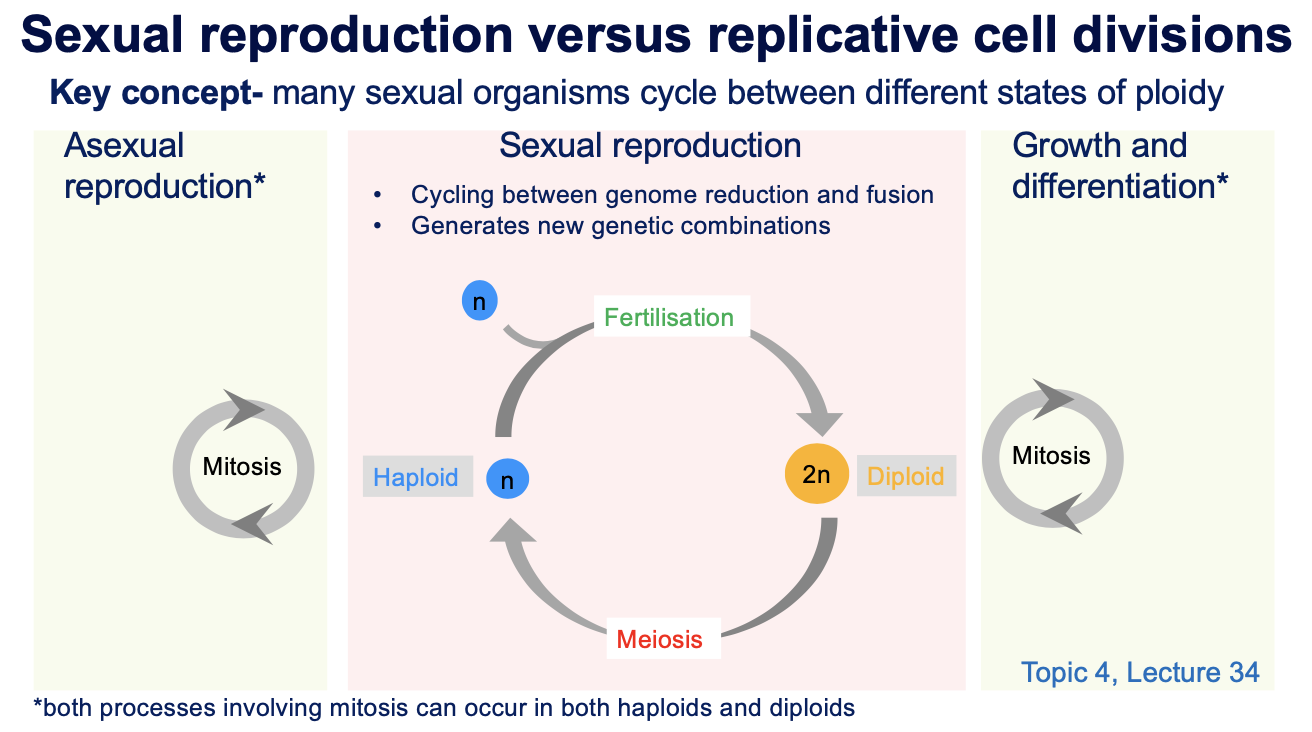
Cycling between diploids and haploids
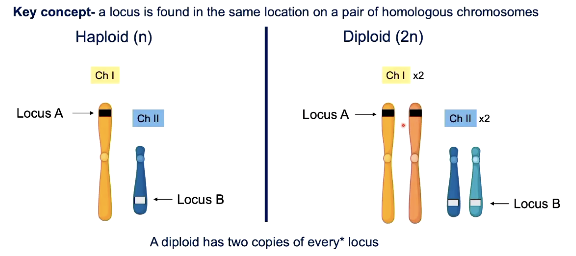
Locus
Location of specific gene or DNA sequence
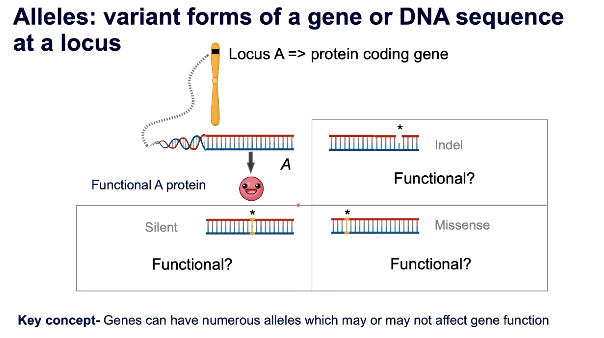
Alleles
variant forms of a gene or DNA sequence at a locus
not just binary - can be many variants at a locus (not just 2 types at each can be much more)
Locus doesn’t have to code for gene product
Can just look at individual loci as any DNA sequence to assess how many repeats (forensic analysis)
Same or different alleles (homozygous vs heterozygous)
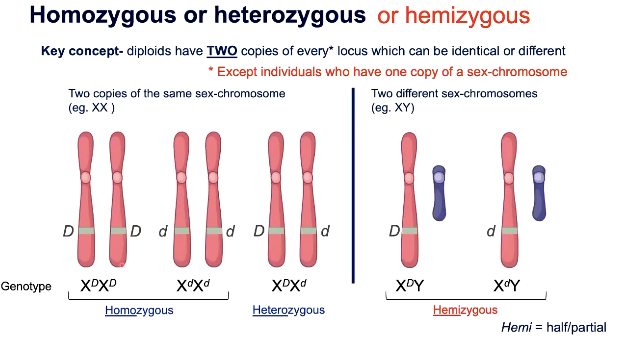
Hemizygous
men will always be hemizygous
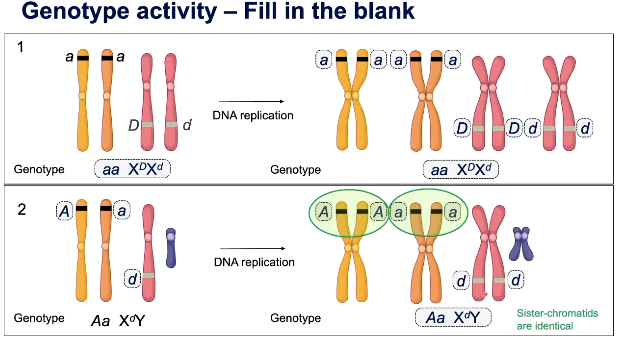
Example of what genotype looks like before and after replication in diploids
Relationship bw genotype and phenotype (easy to see in haploids)
Relationship bw genotype and phenotype with diploids
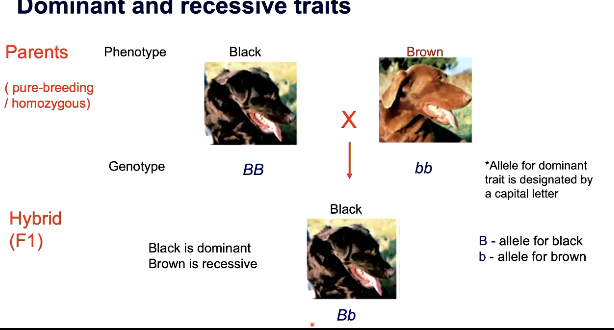
Dominant and recessive traits - what phenotype is observed in a heterozygote
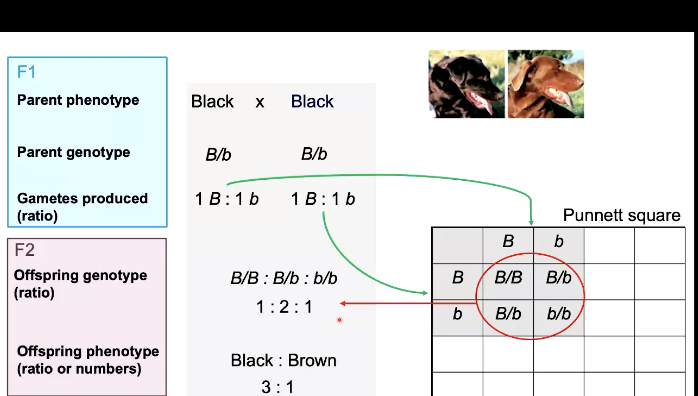
black - dominant so capital D
brown - recessive so little d
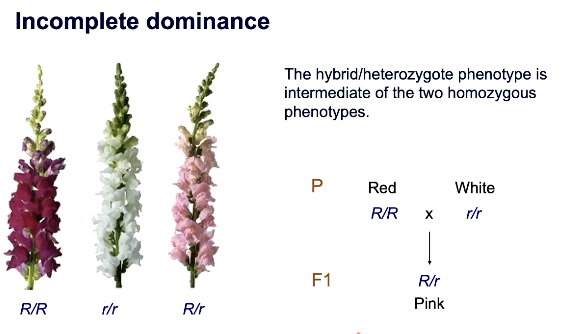
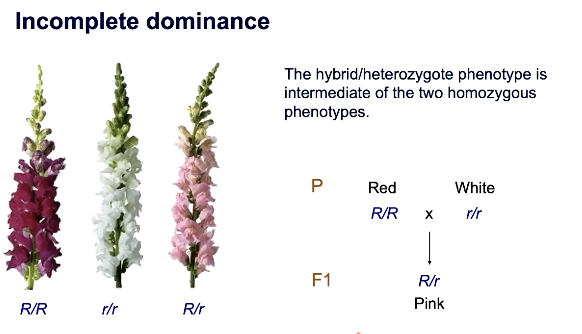
Incomplete dominance
How incomplete dominance can work at molecular level
NEITHER is dominant over the either
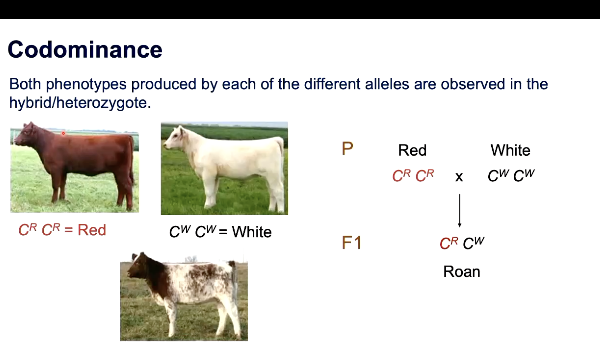
Codominance
BOTH dominant or observed
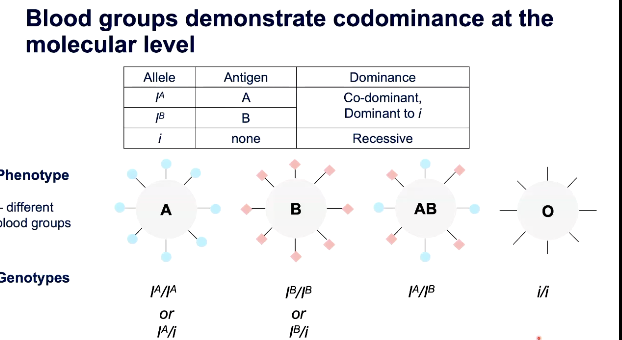
Blood groups demonstrating codominance and dominance
Sexual reproduction versus replicative cell divisions
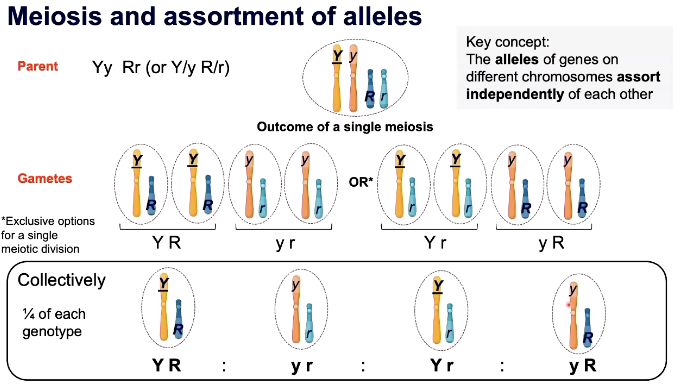
Meiosis vs mitosis
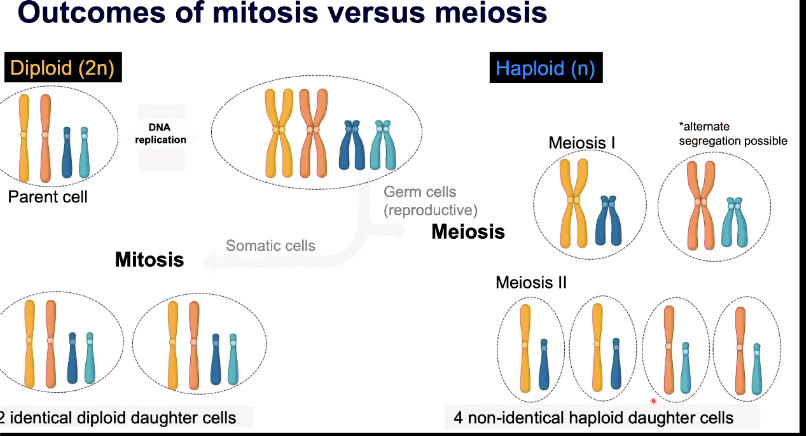
Meiosis involves two cell division events – meiosis I and meiosis II
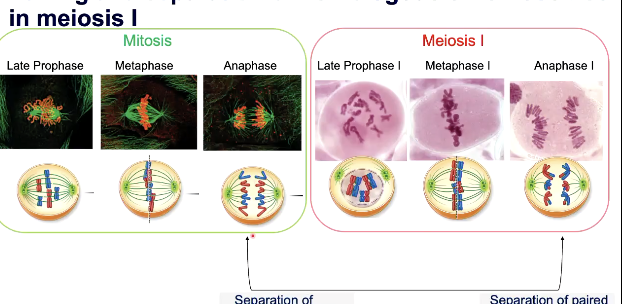
Chromosomes pair( synapse) during prophase I & metaphase I in meiosis but not during mitosis
Sister chromatids separate at the end of mitosis & at the end of meiosis II ‒ Homologous chromosomes separate at the end of meiosis
Meiosis is are ductive division. Reducing the number of chromosomes by1/2
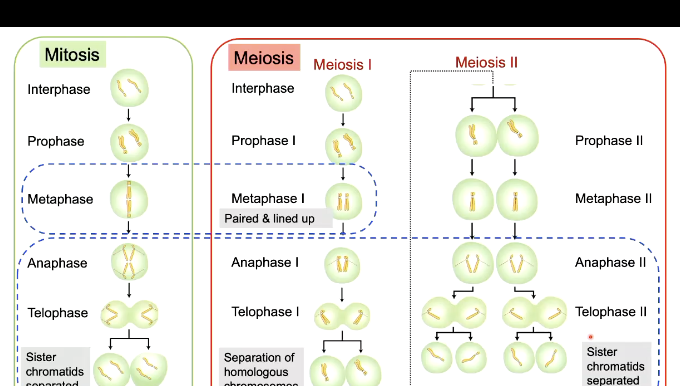
Mitosis vs meiosis in stages
Pairing and seperation of homologous chromosomes in meiosis 1
mitosis vs meiosis outcomes
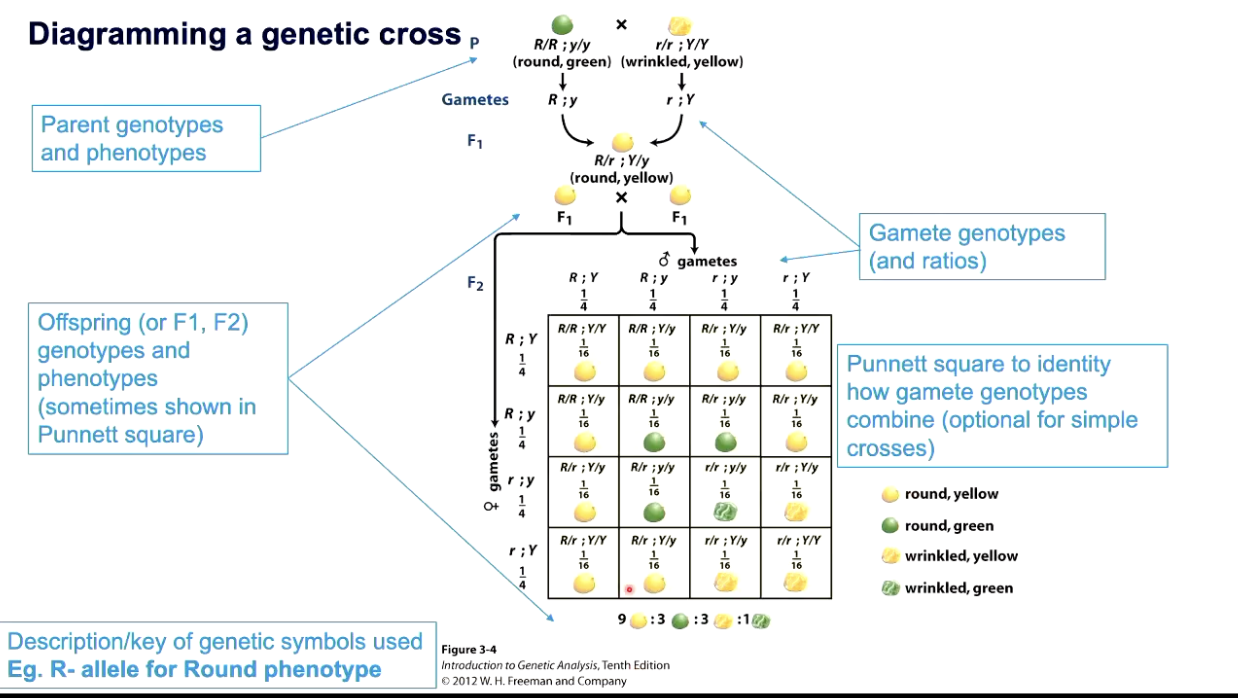
Outcomes of crosses
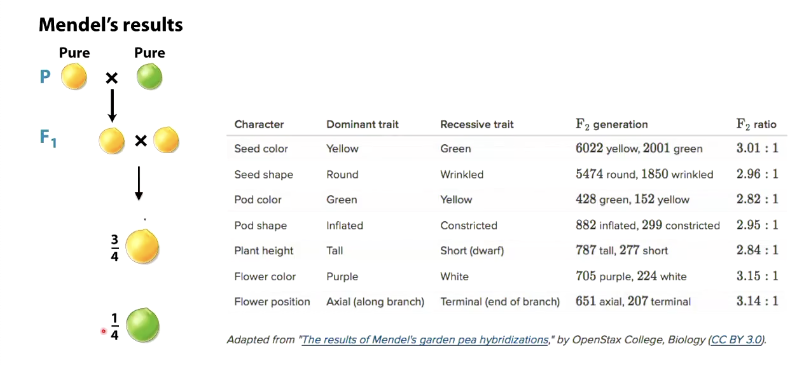
Outcome of crosses via meiosis F1 hybrid (when pure bred tgt)
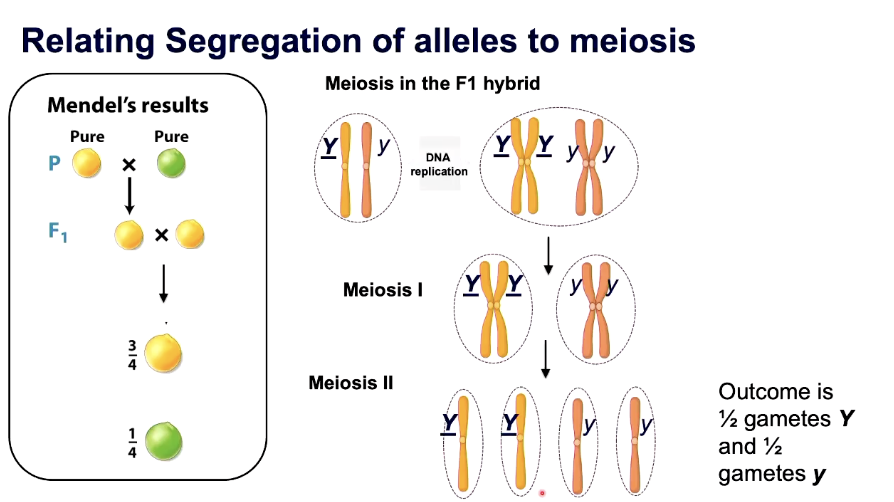
What F1 gametes from parent 1 and 2 + F2 ratio
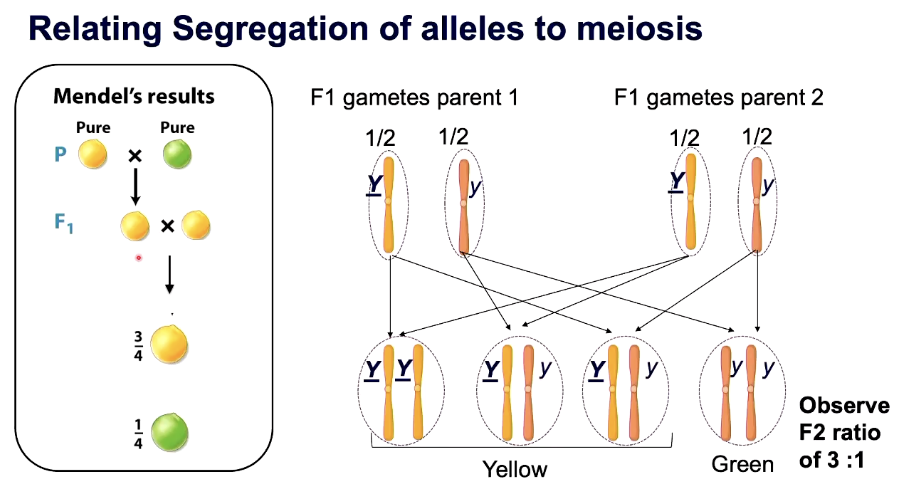
Punnet squares with same yellow flower example
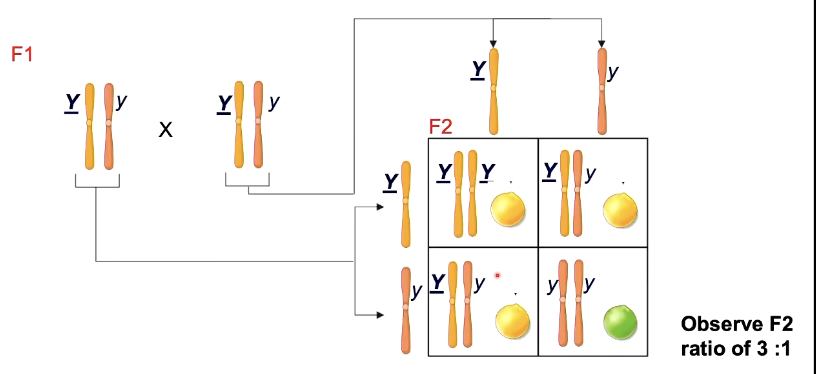
Genetic cross punnet square with multiple
Black vs brown dog punnet sq eg.
Meiosis and assortment of alleles
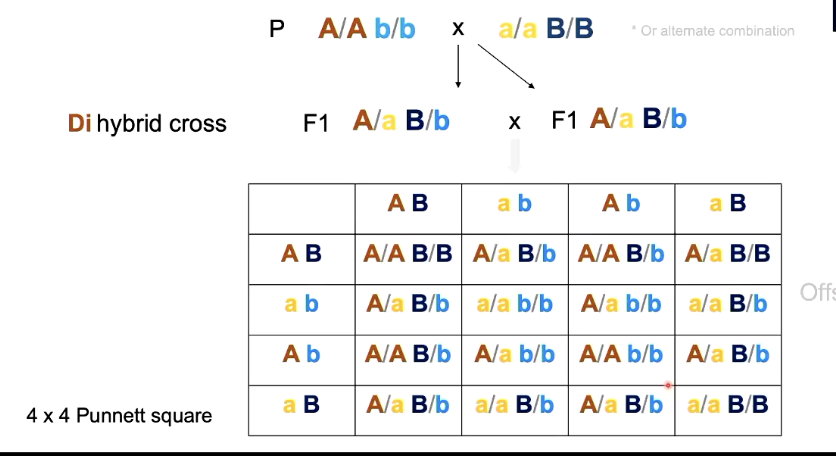
dihybrid cross
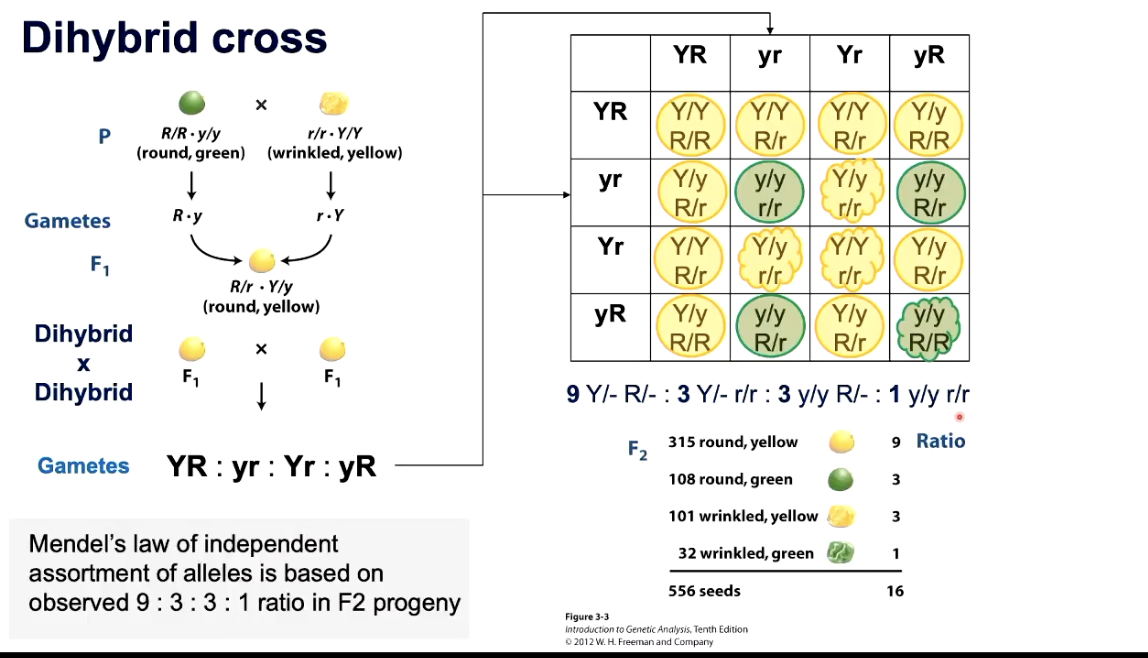
4 × 4 punnet square with hybrid crosses
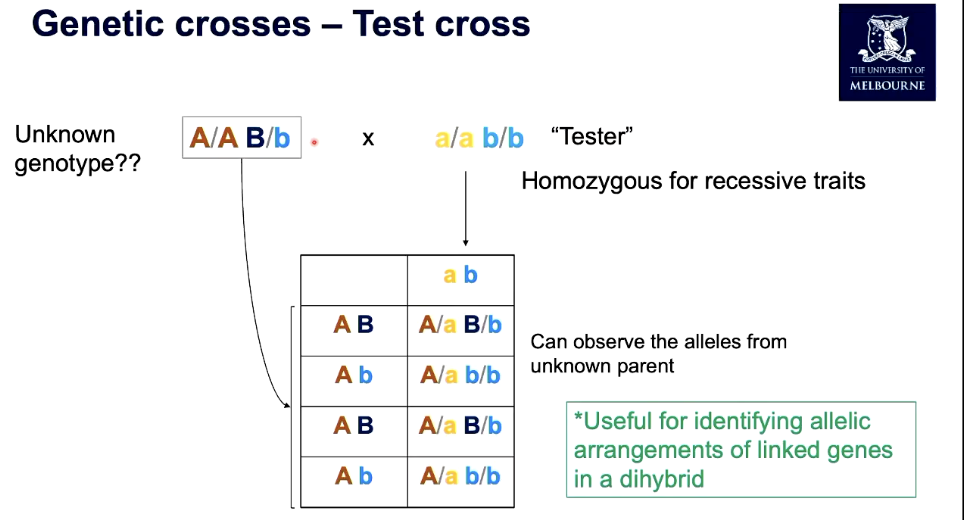
Test cross
when unknown genotype, can work backwards
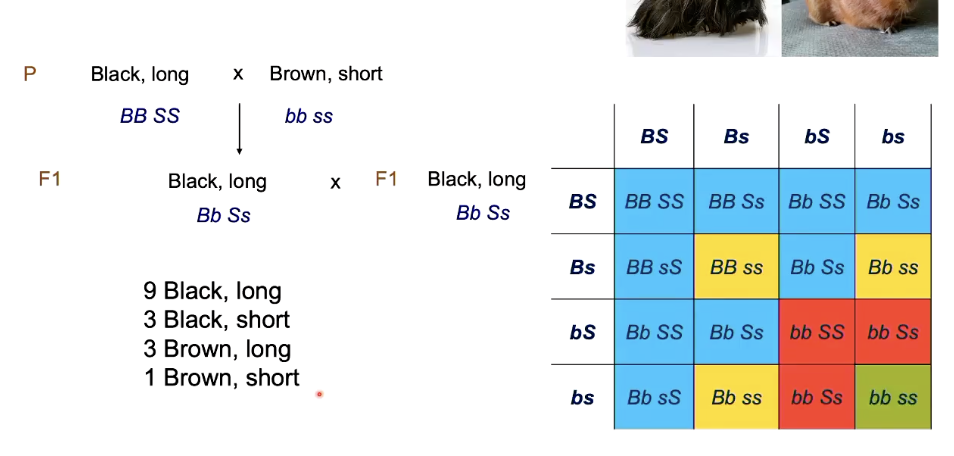
Dihybrid cross - guinea pig 4×4 punnet sq
Back cross - from genotype to one of the parents
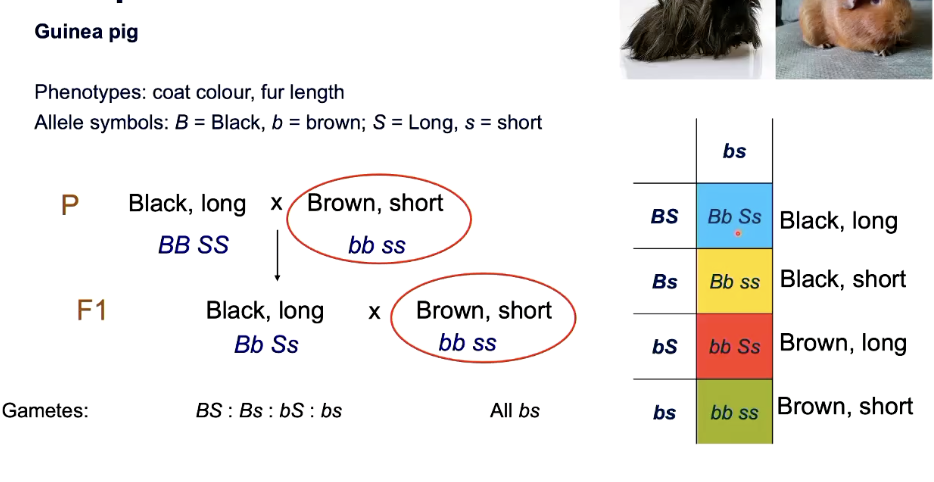
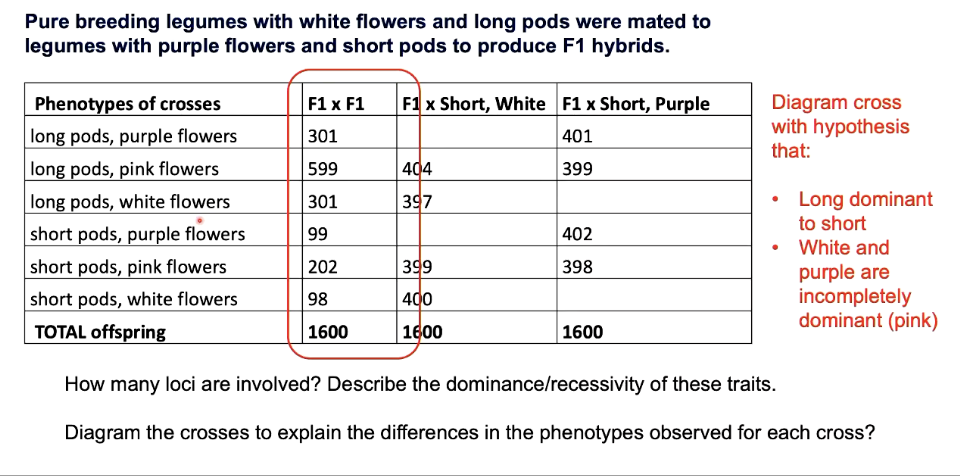
Back cross - working backward from phenotype
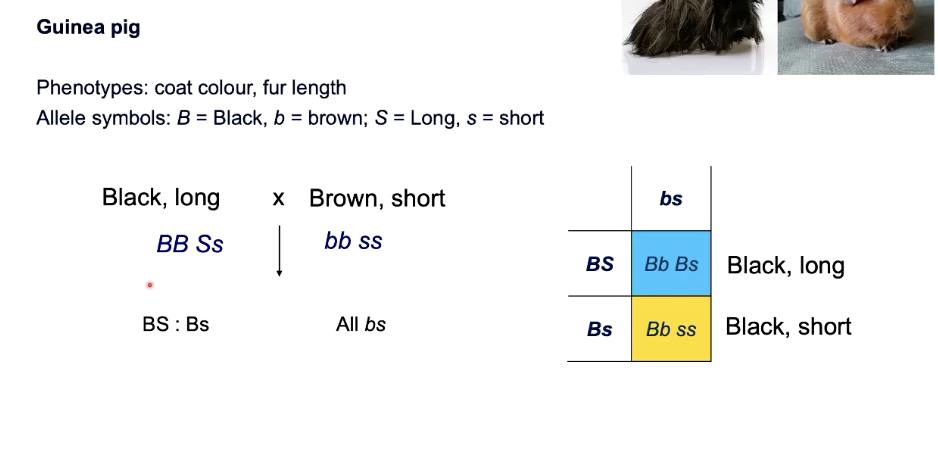
Determining dominance by looking at ratios
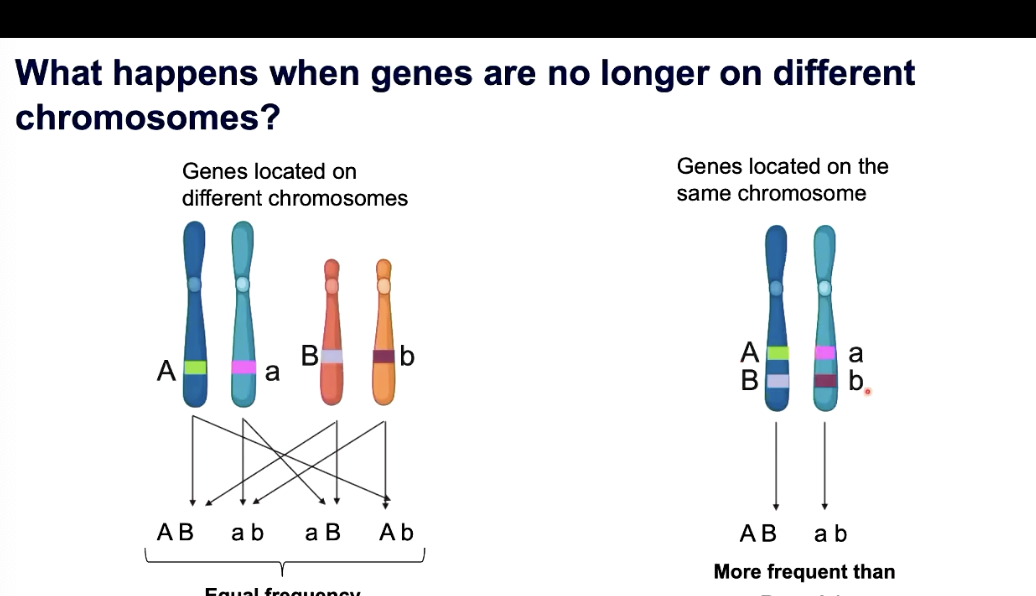
When we have 2 diff genes on 2 diff chromosoms vs on same chromosome
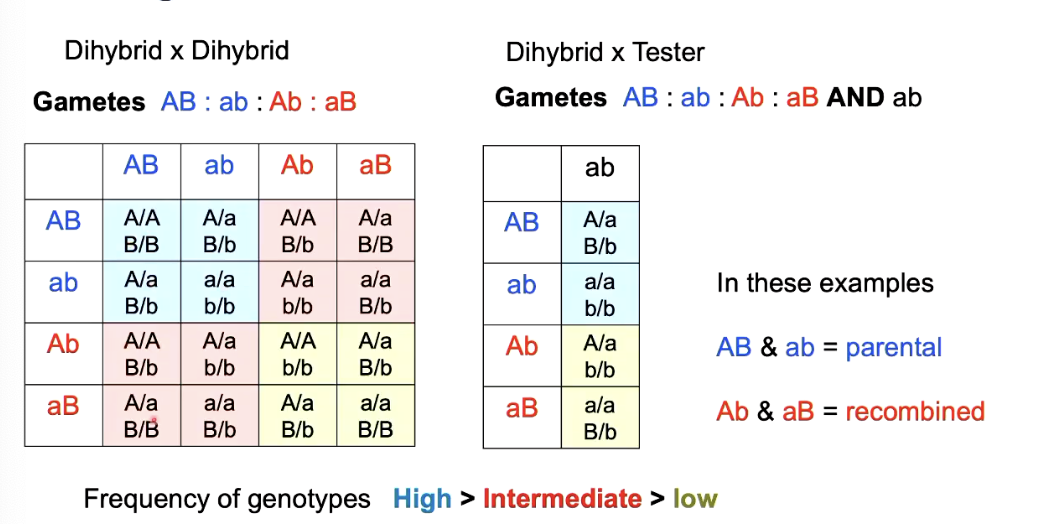
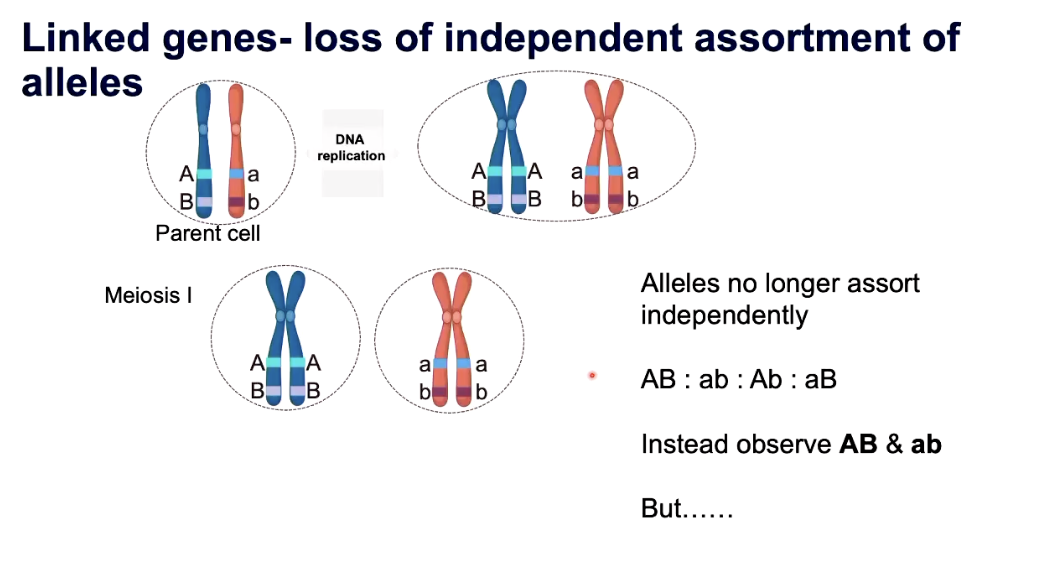
Linked genes - loss of independent assortment of alleles
Crossing over bw chromatids and chiasmata
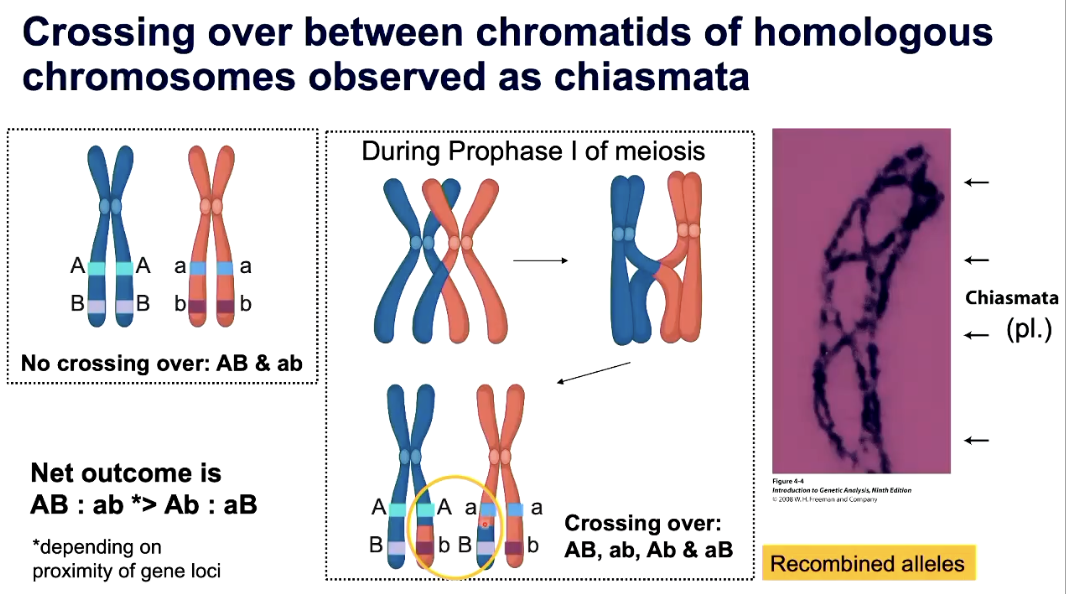
Linked genes - cross outcomes