63: AVANT-GARDE ART IN EUROPE
 Call Kai
 Learn
Learn Practice Test
 Spaced Repetition
 Match
Match Flashcards
 Knowt Play
 Podcast
1/25

There's no tags or description
Looks like no tags are added yet.
Name | Mastery | Learn | Test | Matching | Spaced | Call with Kai |
|---|
No analytics yet
Send a link to your students to track their progress
26 Terms
What changes marked the art world in the 1880s and 1890s, and what general characteristics marked the new, experimental art that was made in Paris during these years? What Modernist belief about the artist took root at this time?
- New group of artists -> Impressionists challenged tradition + challenged new approaches to art. There was an increase in art that was available to the public, the state-sponsored Salon ended, and the Society of French Artists continued to create large exhibitions. There was a surge in private art dealers who opened small public galleries where people could purchase art. Because of this, impressionists were able to establish legitimacy by the mid-1880's.
- Most experimental artists studied space, time, perspective, and color when approaching subject matter. They also approached their artwork as a way to develop meaning and express emotion.
- Modernist belief began to gain popularity: the individual artist was special, misunderstood, ahead of his time, and a genius
How do the Neo-Impressionist paintings of Georges Seurat reflect nineteenth-century studies in color theory? How did this “divisionist” approach to painting differ from the work of the Impressionist painters such as Monet?
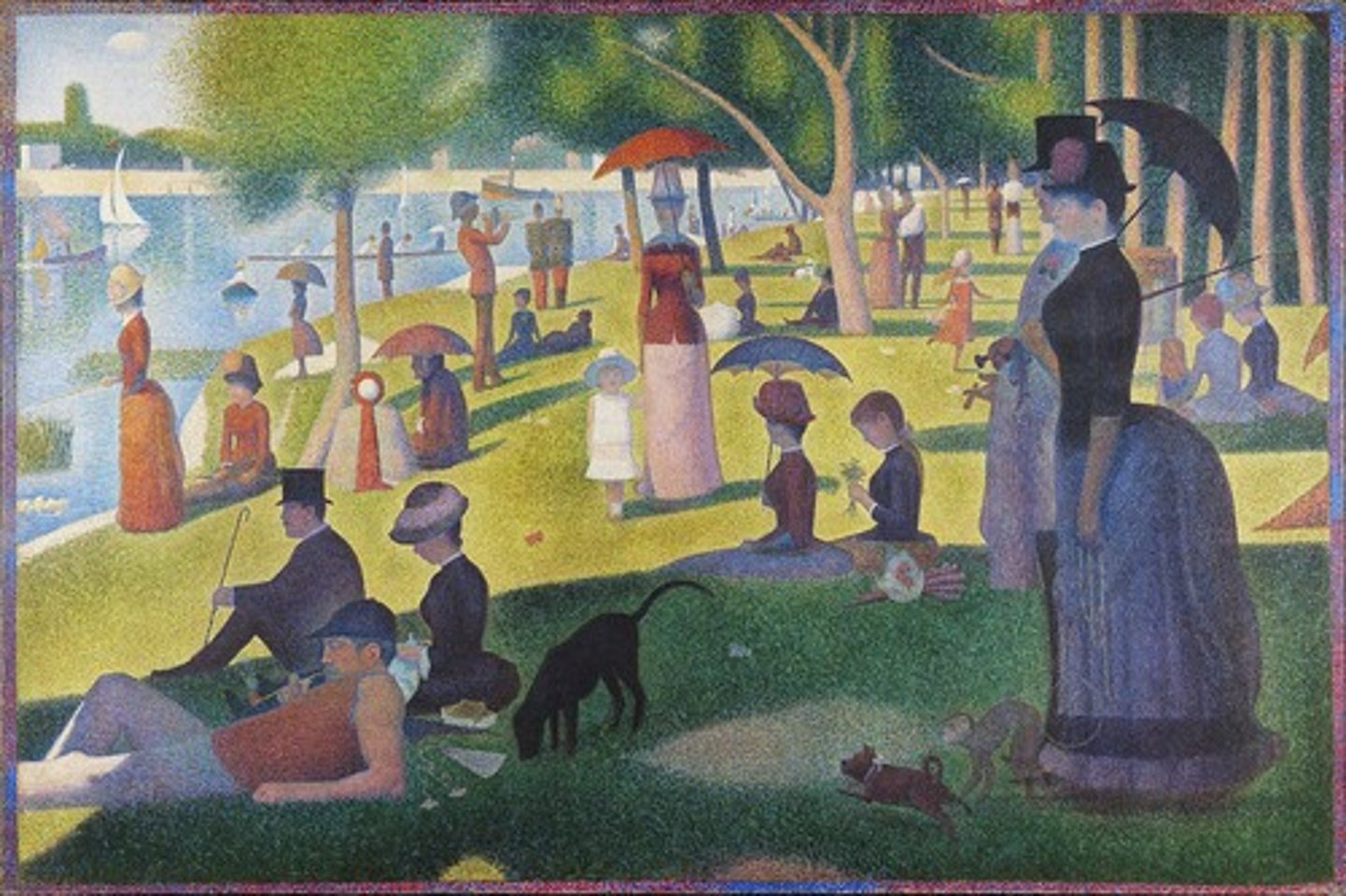
Georges Seurat developed the new concept of pointillism, which was classified as a "divisionist" approach. Instead of mixing his colors, Suerat would place individual dots of complementary colors, creating the "simultaneous contrast" effect (divided colors appear to fuse into one another). This reflected his studies on how the eye perceives color and light, while also giving him the ability to control how color reacts with light within the scene. This was unlike Monet, who would apply dabs of color spontaneously to capture a scene, while Seurat would carefully control the size and placement of every stroke.
What did the painting approach of Paul Cezanne differ from that of the Impressionists? In what ways was it similar?
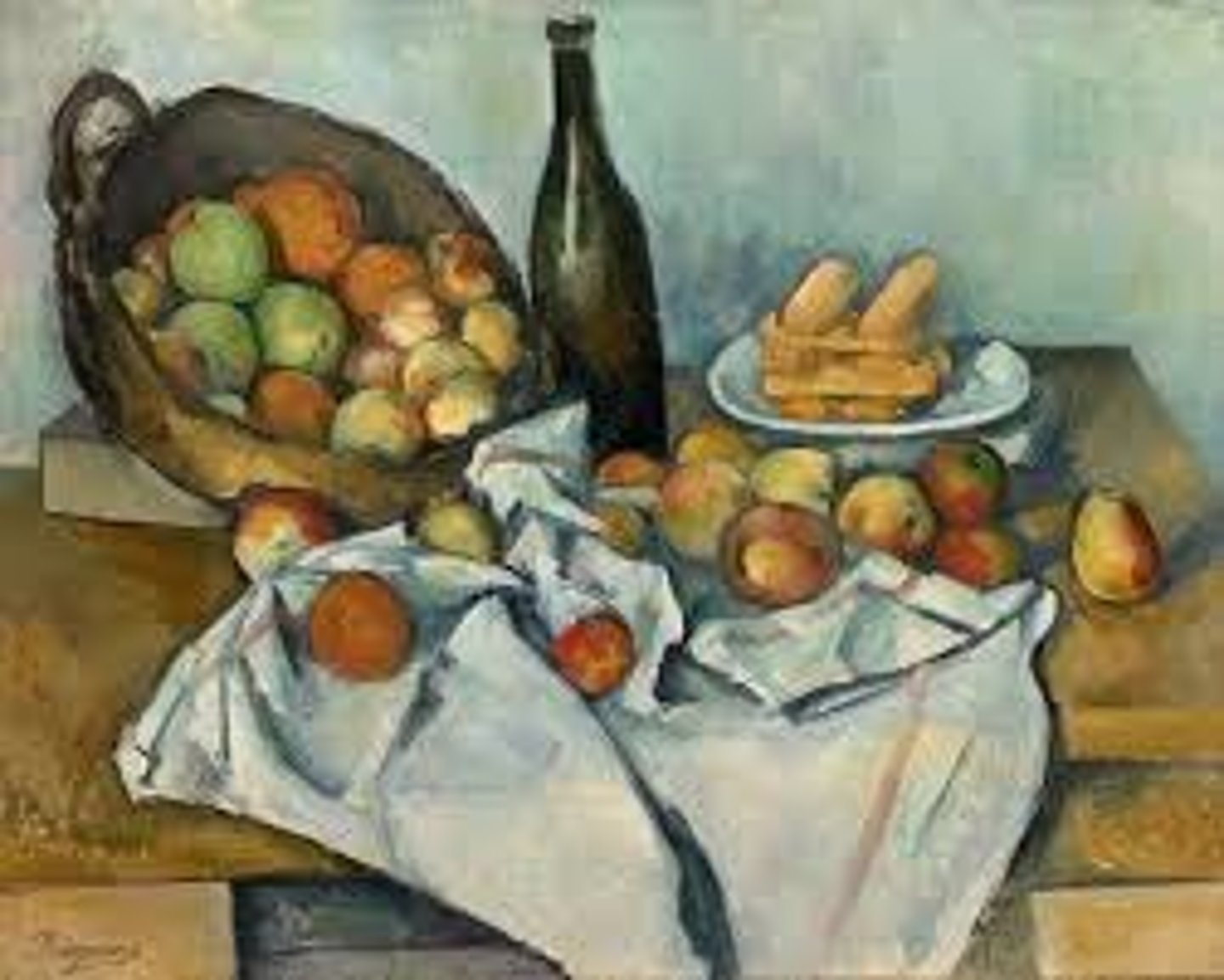
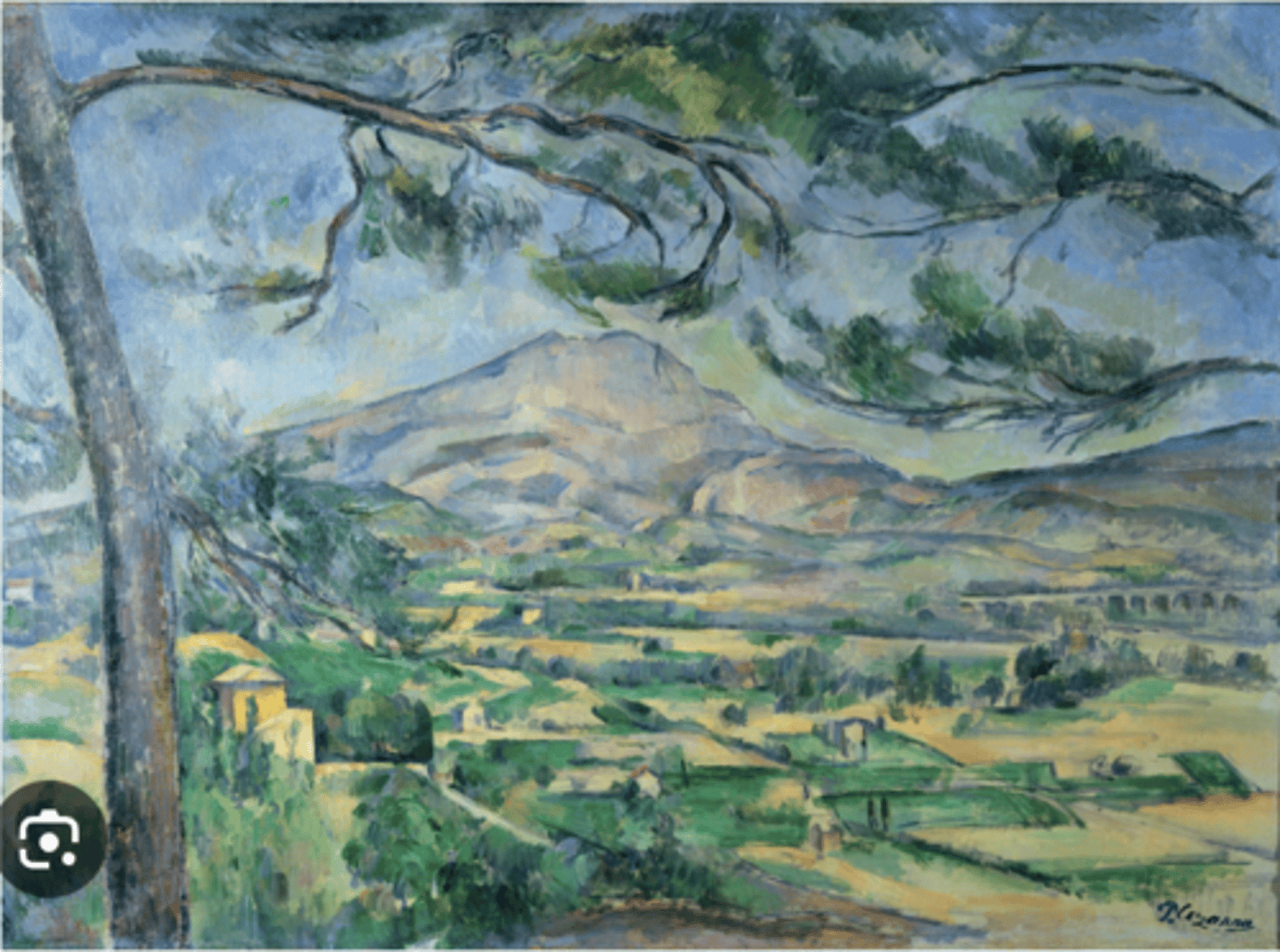
Just like impressionism, Cezanne practiced plein air, valued the study of nature, a bright color palette, and broken brushwork. But he had an analytical mind and wanted to achieve a more structured composition than most impressionists. He would do this by unifying arrangements of lines, shapes, and colors. He also didn't want to rely on Renaissance techniques or chiaroscuro. Instead, he experimented with space, time, perspective, and color, and understood that we don't observe the world from a 1 point perspective. He reflected this in his art, where he would constantly shift his perspective and viewpoint. He also mastered the concept of warm colors appearing to come forward in space, while cool colors appeared to shift backward.
How are the expressive intentions of Vincent Van Gogh reflected in his handling of form and color?
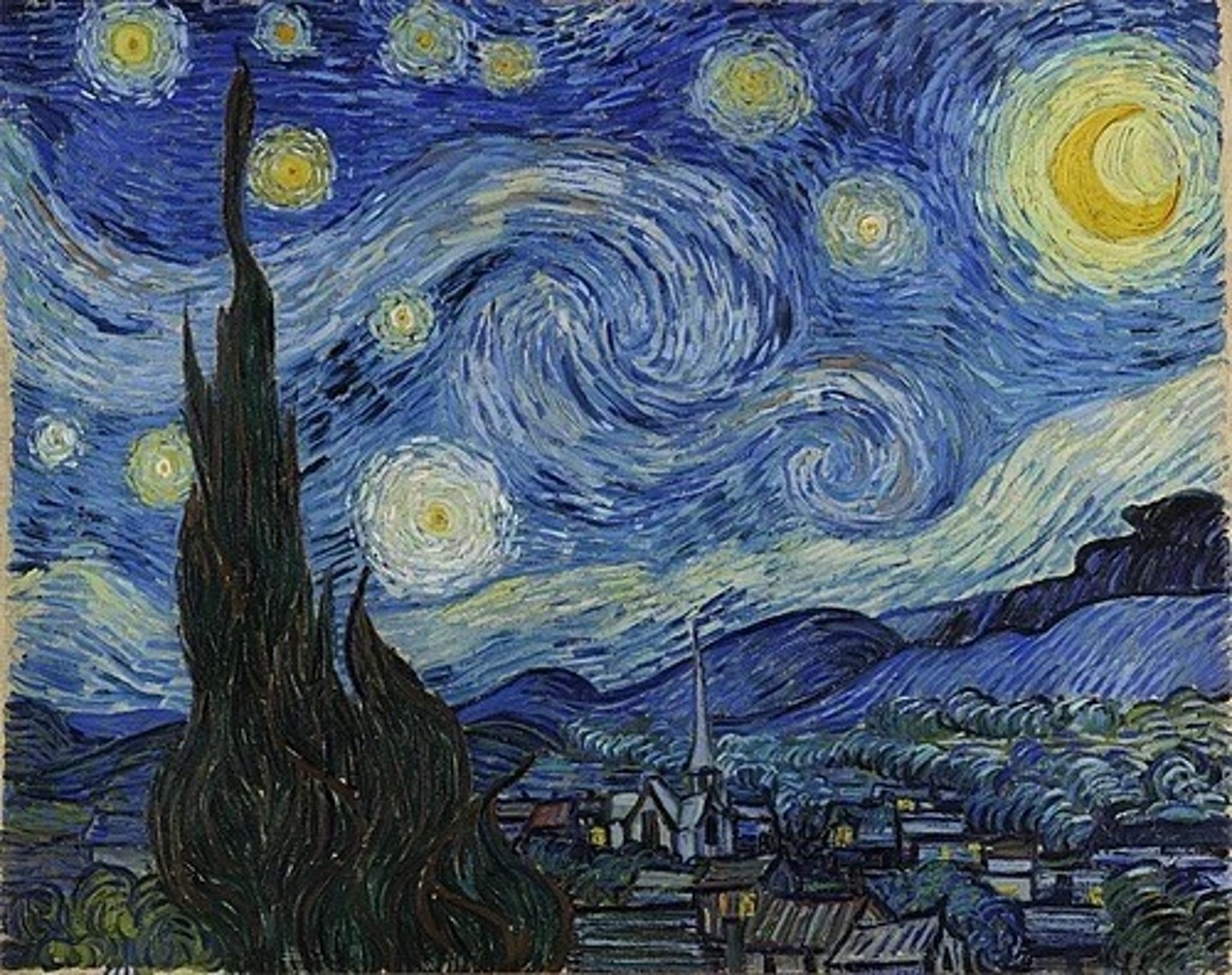
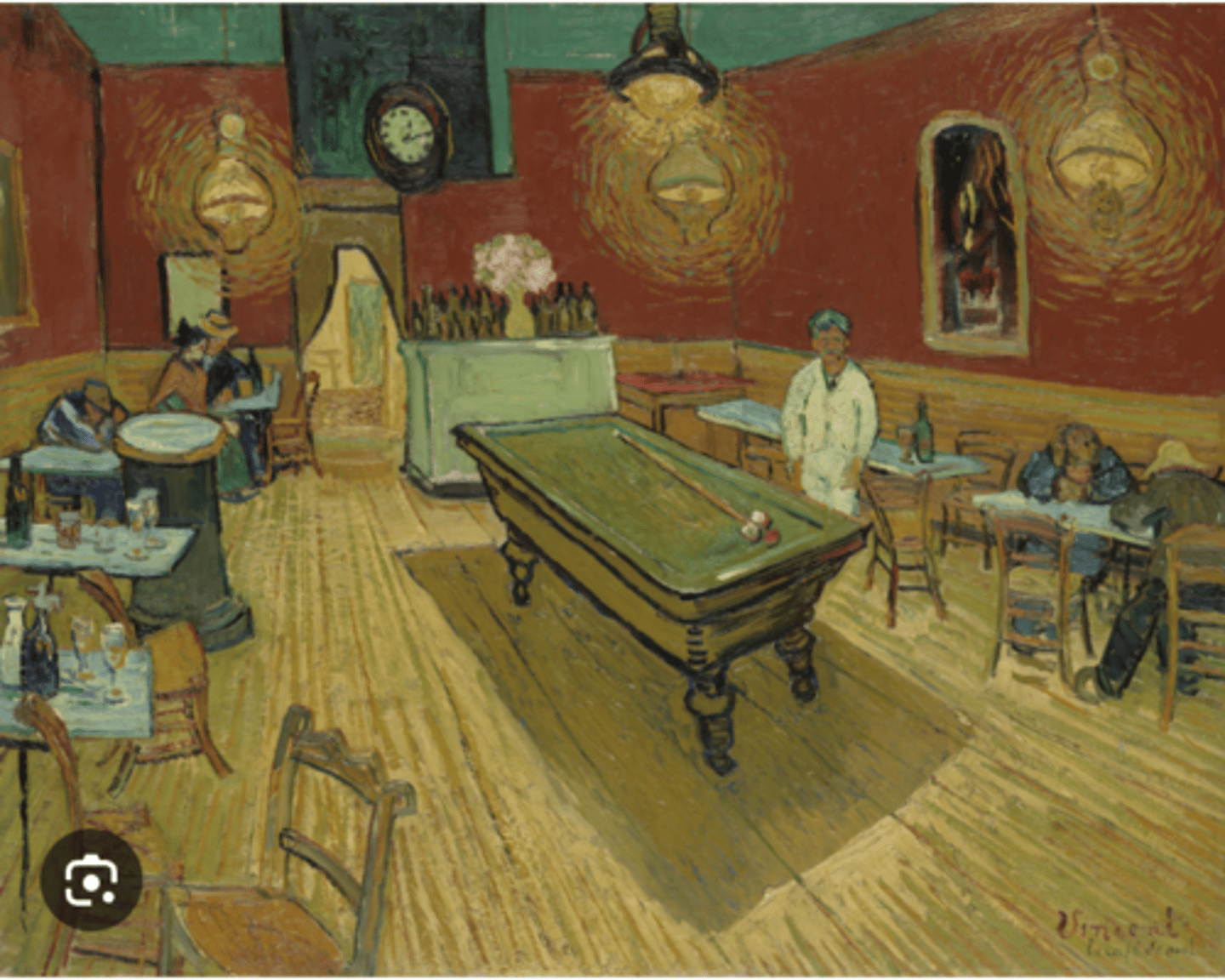
After moving to the South of France, Van Gogh hoped to produce simple and unsophisticated art that could communicate to even the humblest of people. He often used intense colors, choppy brushstrokes, lines, heavy impasto, and distorted forms to communicate his emotions and passions. An example of this would be in Starry Night, where the cypresses represent fertility and growth. He was also quoted as saying that color “expresses something in itself:” Ex: the yellow sun symbolizes joy and hope.
How does Edvard Munch’s The Scream reflect the psychological turn in art at the end of the nineteenth century?
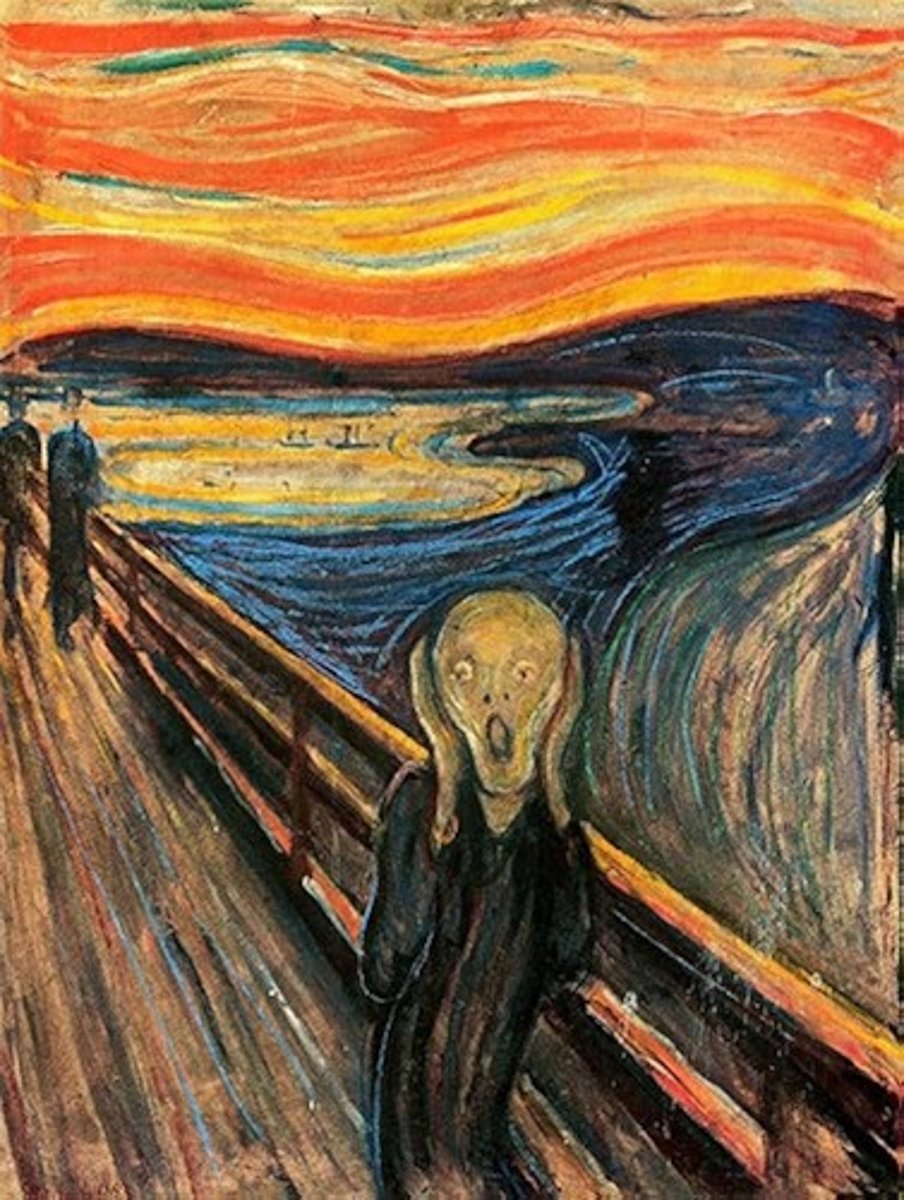
Munch expressed the anxieties in his life, as well as the isolation and despair he saw in modern society. The themes within his pieces commonly depicted illness, death, and sexuality. Munch was able to translate his feelings into his own personal style within his work (such as simplified, abstract images, combined with harsh colors). His art was often a reflection of psychological trauma and "universal implications." For The Scream, Munch showed swirling stripes of color to suggest sound waves or psychic energy emanating from the scream of the subject.
What is primitivism, and how is it embodied in the life and art of Paul Gauguin? Why is he controversial to contemporary art historians?
PRIMITIVISM:
Western artistic idealization of non-European cultures as more “pure,” instinctive, or spiritually authentic than industrialized Europe. They drew from African, Oceanic, and Indigenous cultures to break away from academic realism.
GAUGUIN:
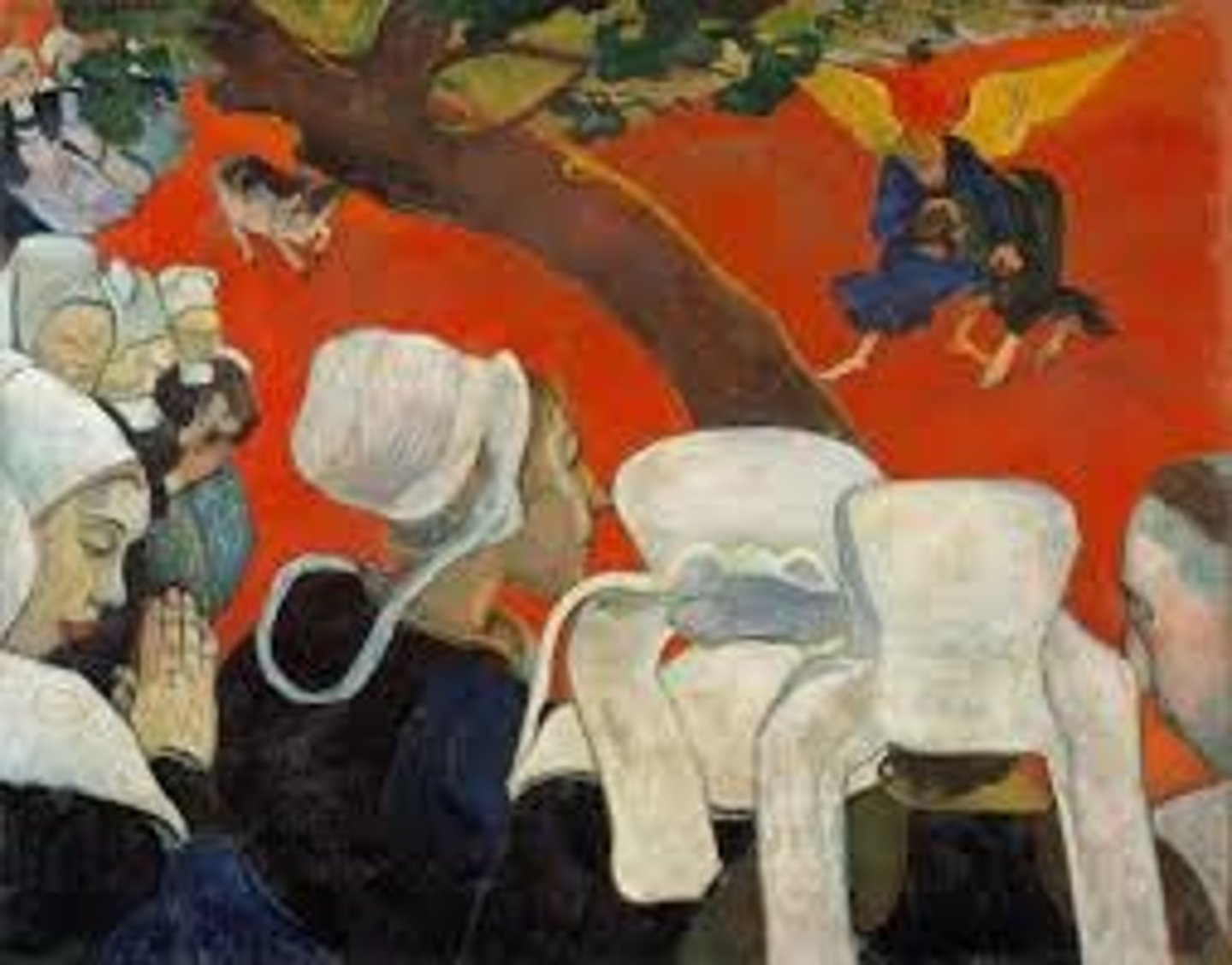
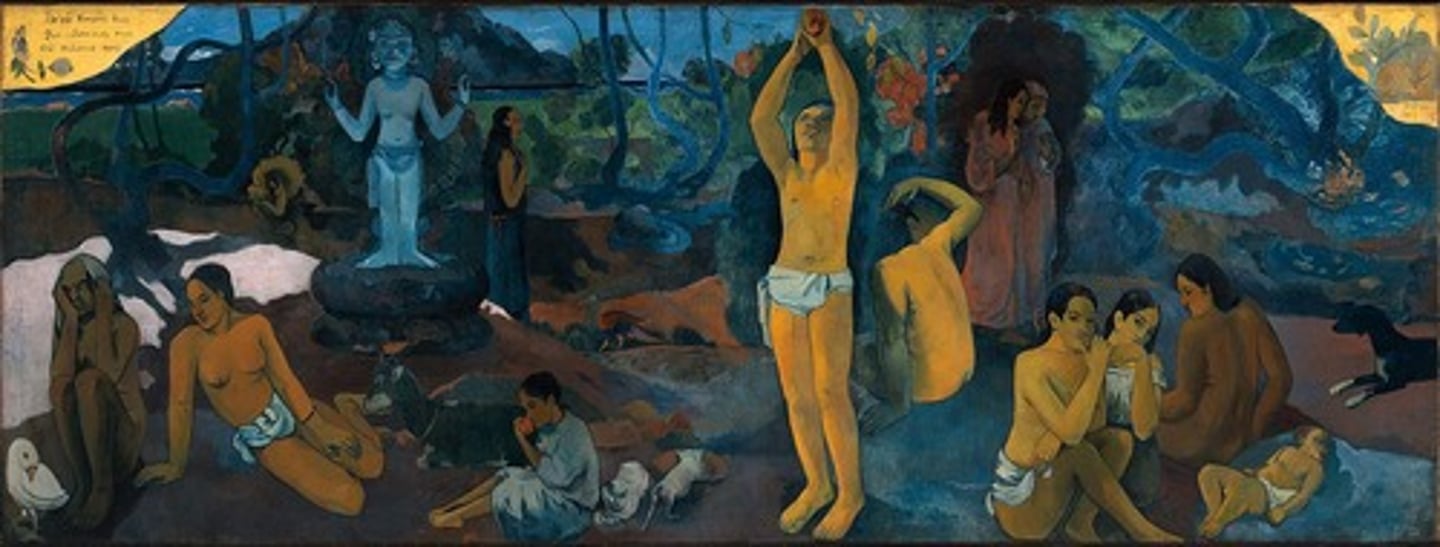
Sought an “escape from civilization” and primitive truth in his life, moved to TahitI
Depicted Tahitian women in idealized, serene settings, emphasizing harmony with nature + life untouched by modern industry
CONTROVERSIAL:
Idealized, European fantasy of non-western cultures
Cultural appropriation- borrowing motifs/symbols from different cultures, inaccurate + without context.
Seurat
A Sunday on La Grande Jatte
Neo-Impressionism
France
Cézanne
The Basket of Apples
Post-Impressionism
France
Cézanne
Mont Sainte-Victoire with Large Pine
Post-Impressionism
France
Van Gogh
The Starry Night
Post-Impressionism
France
Van Gogh
The Night Café
Post-Impressionism
France
Gauguin
Vision After the Sermon
Post-Impressionism
France
Gauguin
Where Do We Come From? What Are We? Where Are We Going?
Post-Impressionism
France
Munch
The Scream
Symbolism
France
Pointillism
in painting, applying dabs of color, either short strokes or dots, of uniform size
pigment
any substance used as a coloring material in paint, such as dry powders made from finely ground minerals.
Divisionism
a characteristic
painting method forming the basis for Neo-Impressionism; following color theory of the era, artists applied contrasting dabs of color side by side that would be perceived by the retina as a unified glowing color.
Neo-Impressionism
the art movement founded by Georges Seurat, an artist who wanted to apply a more scientific approach to Impressionism and who was inspired by optical theory to paint using uniform dabs of color to create light effects.
Post-Impressionism
a term coined by British artist and art critic Roger Fry in 1910 that refers not to a movement, but to a shared aesthetic attitude: namely, that an artist should develop novel ideas and techniques that move beyond both Academic convention and Impressionism.
Modernism
contour line
the outline that defines a form.
Cloisonnism
a style of Post-Impressionist painting in which flat forms are often painted in bold colors, and are separated by dark contours.
cloisonné
a decorative enamelwork technique in which cut gemstones, glass, or colored enamel pastes are separated into compartmented designs by flattened strips of wire.
enamel
an opaque ornamental coating made of powdered glass.
Symbolism
movement in European art and literature, c. 1885-1910, that conveyed meaning by the use of powerful yet ambiguous symbols.
Rückenfigur
a person in the foreground of an image facing away from the viewer, inviting the viewer to experience the person's perspective and emotional reaction; from the German for "back figure."