Chapter 44 - exam 4
 Call Kai
 Learn
Learn Practice Test
 Spaced Repetition
 Match
Match Flashcards
 Knowt Play
1/17

There's no tags or description
Looks like no tags are added yet.
Name | Mastery | Learn | Test | Matching | Spaced | Call with Kai |
|---|
No analytics yet
Send a link to your students to track their progress
18 Terms
What are the four mechanisms of cell communication?
Direct contact, synaptic signaling, endocrine signaling, and paracrine signaling.
What is direct contact in cell communication?
Immediate communication between adjacent cells, key for tissue formation.
What is synaptic signaling?
Axons secrete neurotransmitters that travel short distances, usually localized to the receiving cell.
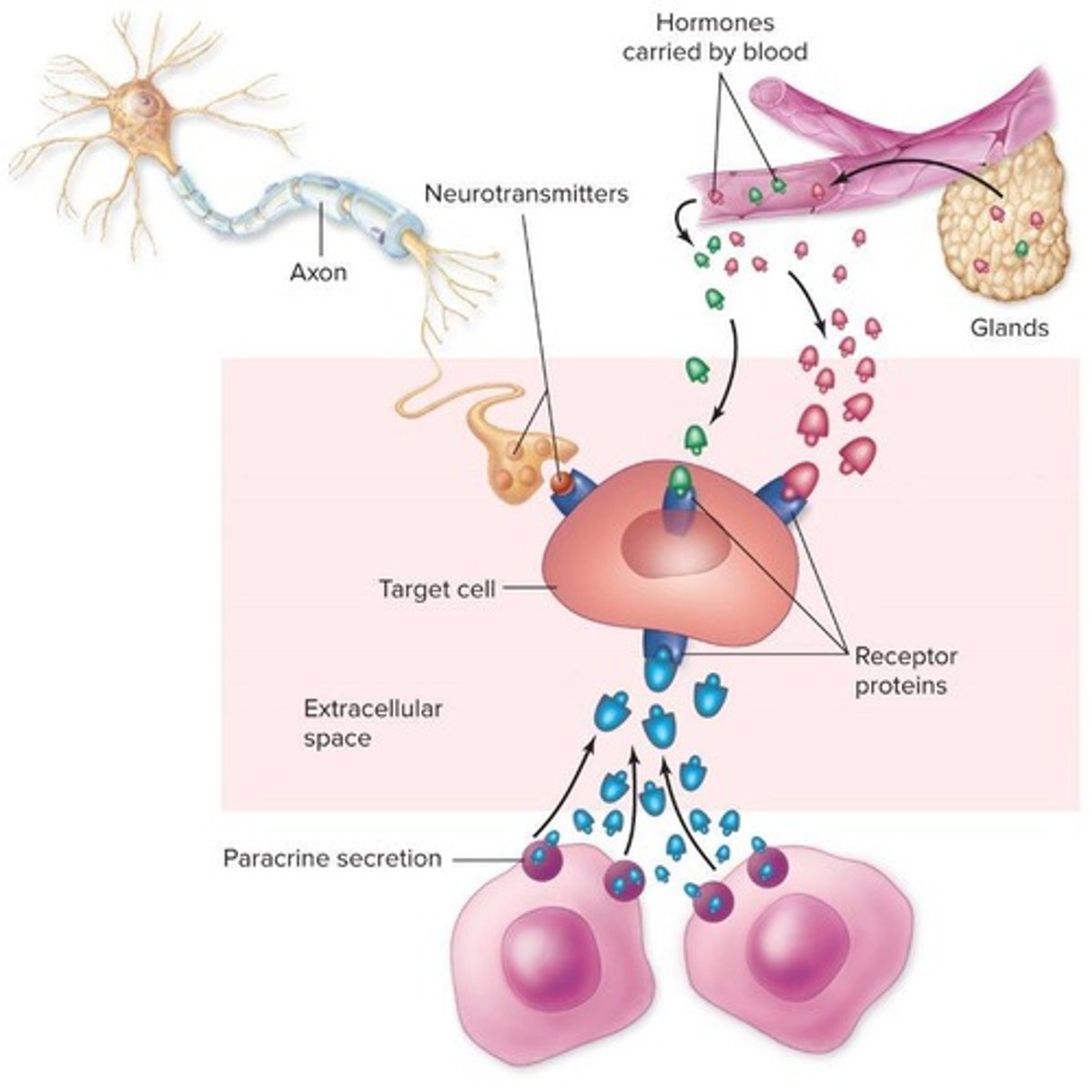
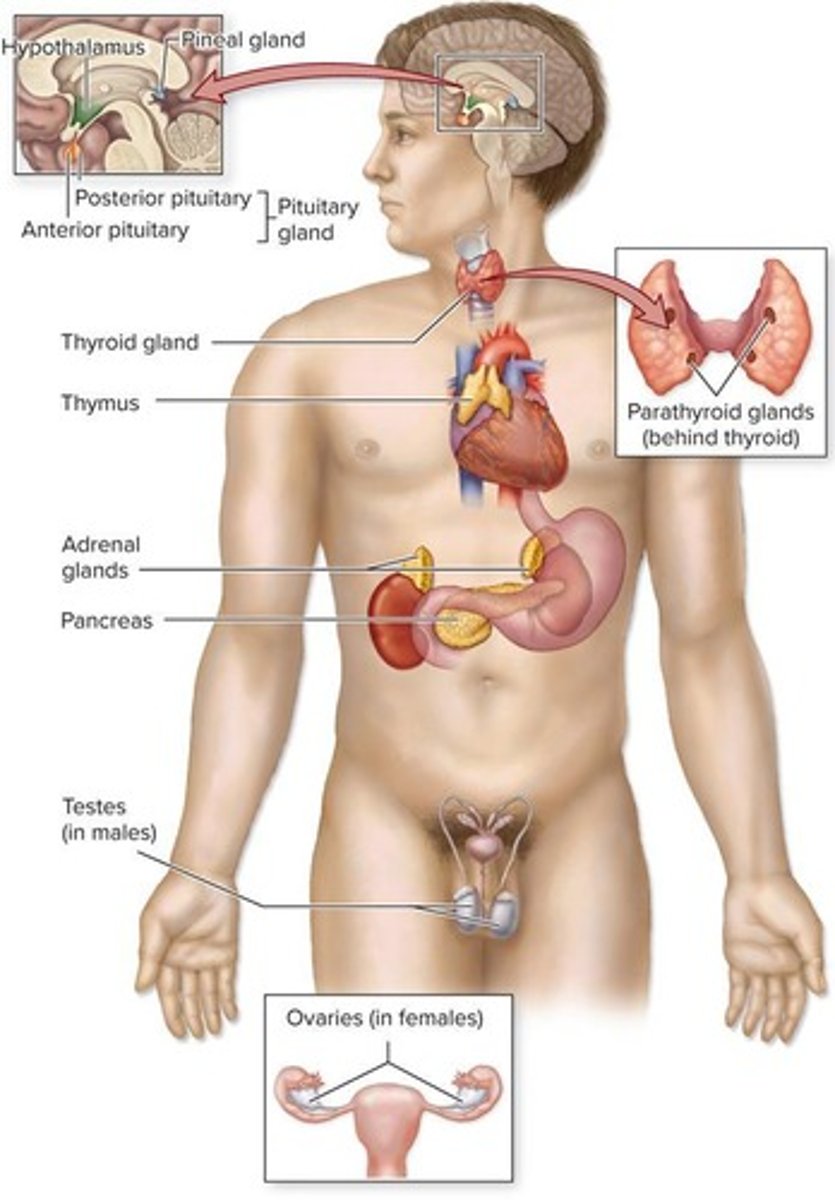
What is endocrine signaling?
Endocrine glands secrete hormones into extracellular fluid, carried by the bloodstream to target cells.
What is paracrine signaling?
Signaling molecules coordinate local physiological responses without traveling through the bloodstream.
What role do neurotransmitters play in the endocrine system?
Some neurotransmitters, like norepinephrine, are distributed by blood and act as hormones.
What is a neurohormone?
Hormones secreted by neurons that are carried by blood, such as antidiuretic hormone.
What are the two basic characteristics of hormones?
They must be complex enough to convey regulatory information and stable enough to resist destruction.
What are the three classes of hormones?
Peptides and proteins, amino acid derivatives, and steroids.
What are examples of peptide and protein hormones?
Glycoproteins like luteinizing hormone.
What are amino acid derivative hormones?
Hormones produced by enzymatic modification of amino acids, such as catecholamines and thyroid hormones.
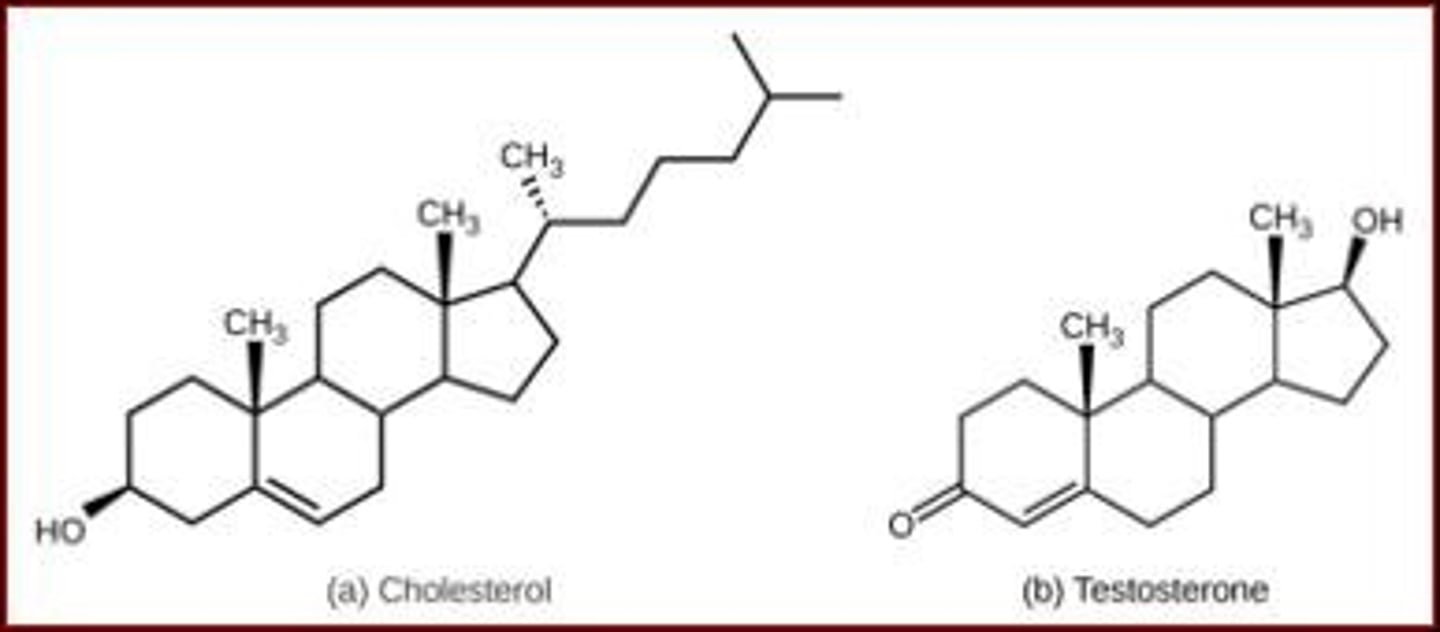
What are steroid hormones derived from?
Cholesterol, including sex steroids like testosterone and corticosteroids like cortisol.
How do lipophilic hormones signal to target cells?
They bind to intracellular receptors after crossing the cell membrane.
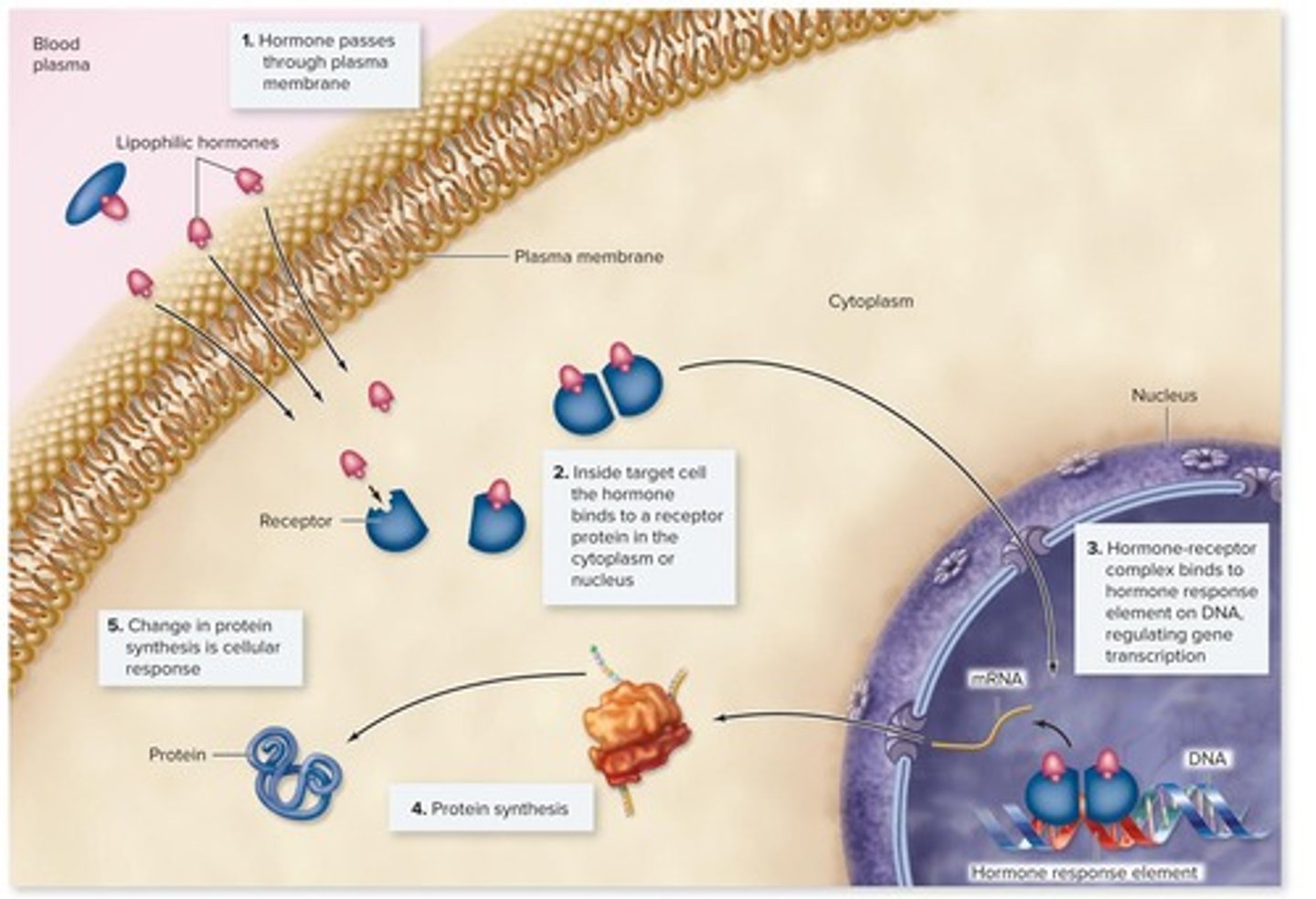
What are the characteristics of lipophilic hormones?
Fat-soluble, travel on transport proteins in blood, bind to intracellular receptors, and act over brief periods.
What are hydrophilic hormones?
Water-soluble hormones that bind to extracellular receptors and have longer active periods.
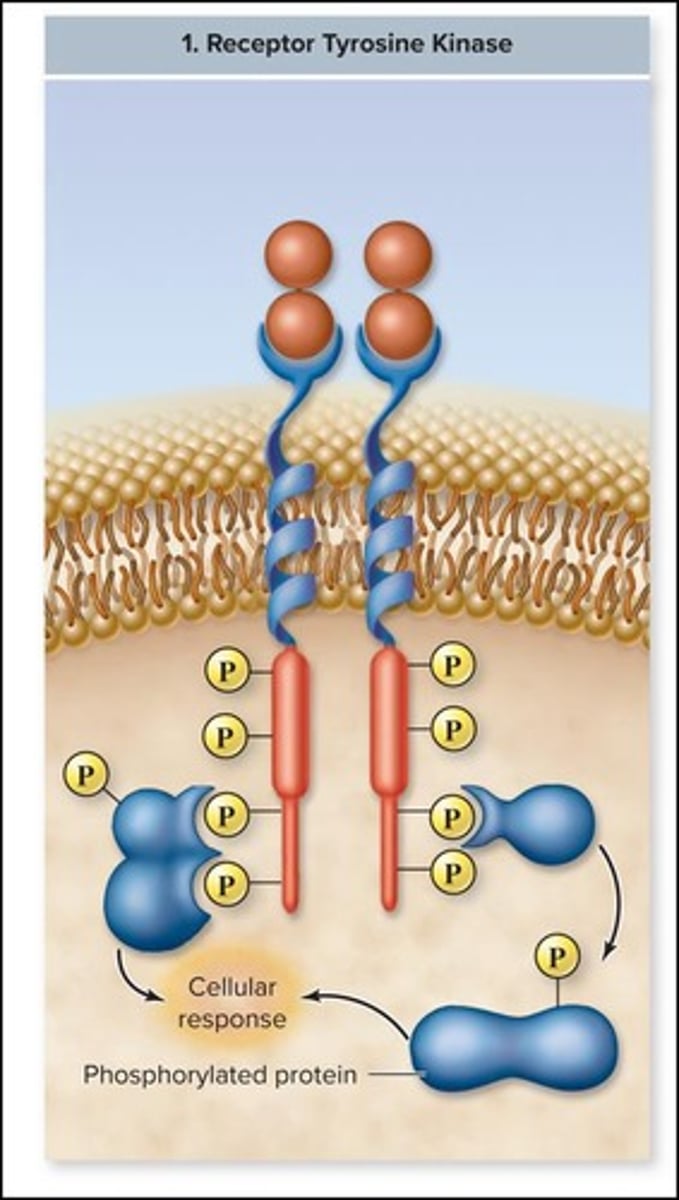
How do hydrophilic hormones activate cellular responses?
They bind to receptors on the plasma membrane, activating protein kinases that phosphorylate intracellular proteins.
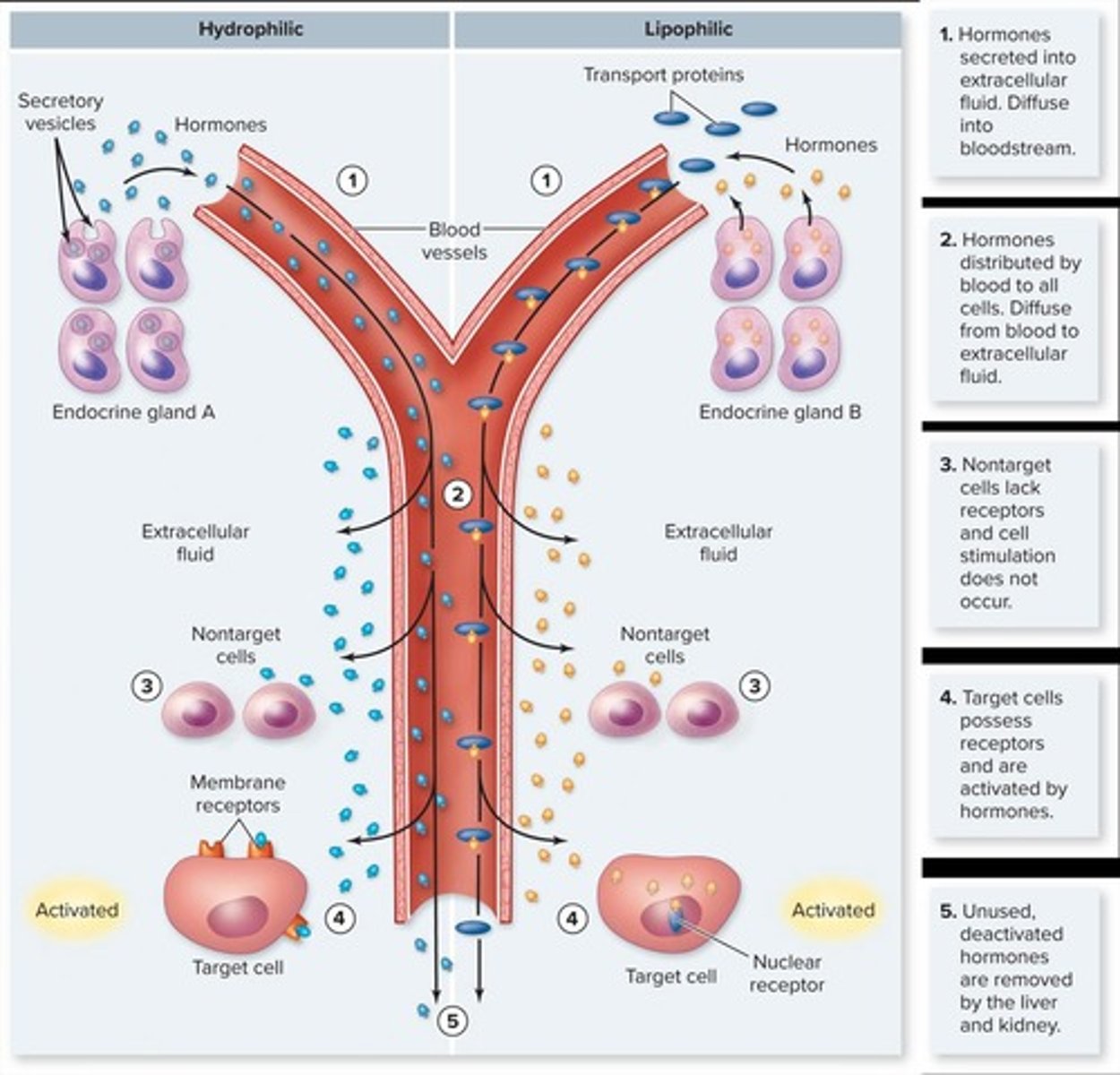
What is the primary action of lipophilic hormones inside the cell?
They regulate gene expression and act slowly, with effects lasting hours to days.
What is the largest class of membrane receptors?
Receptor Tyrosine Kinases (RTKs).