Module 11: Human Immunodeficiency Virus (HIV)
 Call Kai
 Learn
Learn Practice Test
 Spaced Repetition
 Match
Match Flashcards
 Knowt Play
1/47

There's no tags or description
Looks like no tags are added yet.
Name | Mastery | Learn | Test | Matching | Spaced | Call with Kai |
|---|
No analytics yet
Send a link to your students to track their progress
48 Terms
Which statement best explains the “Hunter Theory” of HIV origin?
HIV-1 and HIV-2 evolved from different strains of simian immunodeficiency virus (SIV) transmitted to humans through the consumption or handling of bushmeat.
Which of the following correctly describes the characteristics of the HIV virion?
HIV is an enveloped, single-stranded RNA retrovirus with a cone-shaped capsid.
Which HIV proteins are crucial for entry into host cells?
gp41 and gp120
Why is HIV classified as a retrovirus, and what is the significance of reverse transcription and DNA integration in its replication cycle?
HIV is a retrovirus because it uses reverse transcriptase to convert its RNA into DNA, which then integrates into the host genome, allowing persistent infection.
Translation of unspliced mRNAs occurs in the ______ using ______ ______. This produces regulatory proteins and some structural proteins.
cytoplasm / viral polyproteins
Translation of spliced mRNAs occurs on the _____ using ______
Rough ER / ribosomes
How does the HIV life cycle differ when infecting macrophages versus CD4 T cells?
HIV infects macrophages using the CCR5 chemokine receptor, leading to a longer-lived viral reservoir, whereas in CD4 T cells, it mostly uses CXCR4, leading to active replication and cell death.
Which phase of HIV infection is associated with a low viral load and a strong antibody response?
chronic
Which of the following correctly describes the mode of HIV transmission and how virions reach their target cells inside the body?
HIV is transmitted through blood, sexual contact, and perinatal exposure. After entry, virions infect dendritic cells or macrophages, which transport the virus to lymphoid tissues where CD4+ T cells are targeted.
Which of the following best describes the function of reverse transcriptase inhibitors (RTIs) in HIV antiretroviral therapy?
RTIs inhibit the enzyme reverse transcriptase, preventing HIV from converting its RNA into DNA, which is necessary for integration into the host genome.
Which of the following best describes pre-exposure prophylaxis (PrEP) for HIV prevention?
PrEP is a daily medication taken by individuals at high risk of HIV infection to reduce the likelihood of acquiring the virus.
The most accepted theory for the origin of HIV is the ________, which proposes zoonotic transmission from primates to humans.
Hunter Theory
HIV 1 is believed to have evolved from ________ found in chimpanzees.
SIVcpz
HIV 2 is believed to have evolved from ________ found in sooty mangabeys.
SIVsm
The natural reservoir for HIV 1 is the ________, a primate native to Central Africa.
Chimpanzee
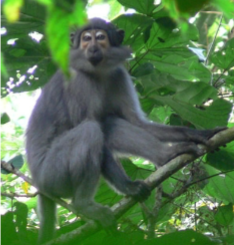
The natural reservoir for HIV 2 is the ________, a primate native to West Africa.
Sooty Mangabey
HIV is classified as an enveloped virus belonging to the family ________.
Retroviridae
The genus of HIV, characterized by slow progression of disease, is ________.
Lentivirus
The viral envelope protein responsible for binding to CD4 receptors is ________.
gp120
The viral protein responsible for membrane fusion with host cells is ________.
gp41
The protein that forms the capsid surrounding HIV RNA is ________.
p24
HIV contains a ________ genome, meaning it carries RNA that must be reverse transcribed into DNA.
positive
The enzyme that converts viral RNA into DNA is ________.
reverse transcriptase
The enzyme responsible for integrating viral DNA into the host genome is ________.
integrase
The enzyme that cleaves viral proteins into functional units during maturation is ________.
protease
HIV enters CD4 T cells by binding to the CD4 receptor and a coreceptor such as ________ (T-cell coreceptor) or ______ ( macrophage coreceptor)
CXCR4 / CCR5
HIV enters macrophages by binding to the CD4 receptor and the co receptor ________.
CCR5
The process by which viral RNA is converted into DNA is called ________.
reverse transcription
The integration of viral DNA into the host genome forms a ________.
provirus
Unspliced HIV RNA serves as the ________ for new virions.
genome
Spliced HIV RNA is used for the synthesis of ________.
viral proteins
HIV assembly occurs at the host cell ________ before budding.
plasma membrane
During maturation, HIV becomes infectious after cleavage by the enzyme ________.
protease
In macrophages, HIV infection is typically ________, allowing the cells to survive longer.
non-lethal
In CD4 T cells, HIV infection is typically ________, leading to cell death.
lytic
The initial phase of HIV infection characterized by high viral load and flu like symptoms is the ________ phase.
acute
The period early in infection when HIV is not yet detectable is called the ________ period.
eclipse
The long asymptomatic phase of HIV infection is known as ________.
clinical latency
A diagnosis of AIDS is defined by a CD4 count below ________ cells per microliter.
200
Opportunistic infections in AIDS occur due to depletion of ________ lymphocytes.
CD4 T
HIV is primarily transmitted through exchange of bodily fluids such as blood, semen, and ________.
vaginal fluid
A common route of HIV transmission among intravenous drug users is sharing ________.
contaminated needles
After entering the body, HIV first infects ________ cells before spreading to CD4 T cells.
macrophages
Antiretroviral therapy works by using multiple drugs to ________ HIV replication.
inhibit
HIV is not cured by antiretroviral therapy because the virus can remain latent in ________.
host genome
Pre-exposure prophylaxis (PrEP) is used to ________ the risk of acquiring HIV before exposure.
reduce
Post-exposure prophylaxis (PEP) must be started within ________ hours after potential exposure.
72
The lack of an effective HIV vaccine is largely due to the virus’s high ________ rate.
mutation