BIO Exam 3
 Call Kai
 Learn
Learn Practice Test
 Spaced Repetition
 Match
Match Flashcards
 Knowt Play
1/273

There's no tags or description
Looks like no tags are added yet.
Name | Mastery | Learn | Test | Matching | Spaced | Call with Kai |
|---|
No analytics yet
Send a link to your students to track their progress
274 Terms
(29) Kingdom Plantae
Eukaryotic, multicellular, photoautrotrophs, cell walls
(29) Cell walls made of:
Cellulose
(29) “Green plants” includes:
Land plants and green algae
(29) What is excluded in “green plants”
Red and brown algae
(29) All green plants arose from:
A single species of fresh water algae
(29) 2 clades of green algae
Chlorophytes
Charophytes
Charophytes definition
Similar to ancestor that evolved into land plants
(29) Derived characteristics of plants (not found in Charophytes)
Alternation of generations
Plants are embryophytes
(29) Embryophytes
Multicellular, dependent embryo is retained in female gametophyte
(29) Haplodiplontic life cycle: Alternation of generations
Multicellular haploid gametophyte s and multicellular diploid sporophytes take turns producing each other

(29)Land plants adaptations for living on land:
Roots and shoots
Waxy cuticle
Stomata
Some plants: vascular tissue(xylem and phloem), pollen, seeds
(29) Non vascular plants
Bryophytes
Still rely on water
Gametophyte dominant
(29)Nonvascular plants still rely on water meaning:
Swimming sperm and no transport system
(29)Nonvascular plants still rely on water meaning:
Swimming sperm and no transport system
(29) Nonvascular plants, gametophyte dominant meaning:
Sporophyte-small and dependent
(29) 3 clades of Nonvascular plants
Liverworts
Mosses
Hornworts

(29) Mosses gametophytes
Small, leaflike structures around a stemlike axis
No true leaves- no vascular tissue
(29) Mosses anchored by:
Rhizoids (no true roots)
(29) Mosses: What forms at the tips of gametophytes?
Multicellular gametangia
(29) Mosses: Gametangia female and male
Archegonia- produces eggs
Antheridia- produces sperm - flagellated sperm must swim in water
(29) Mosses life cycle
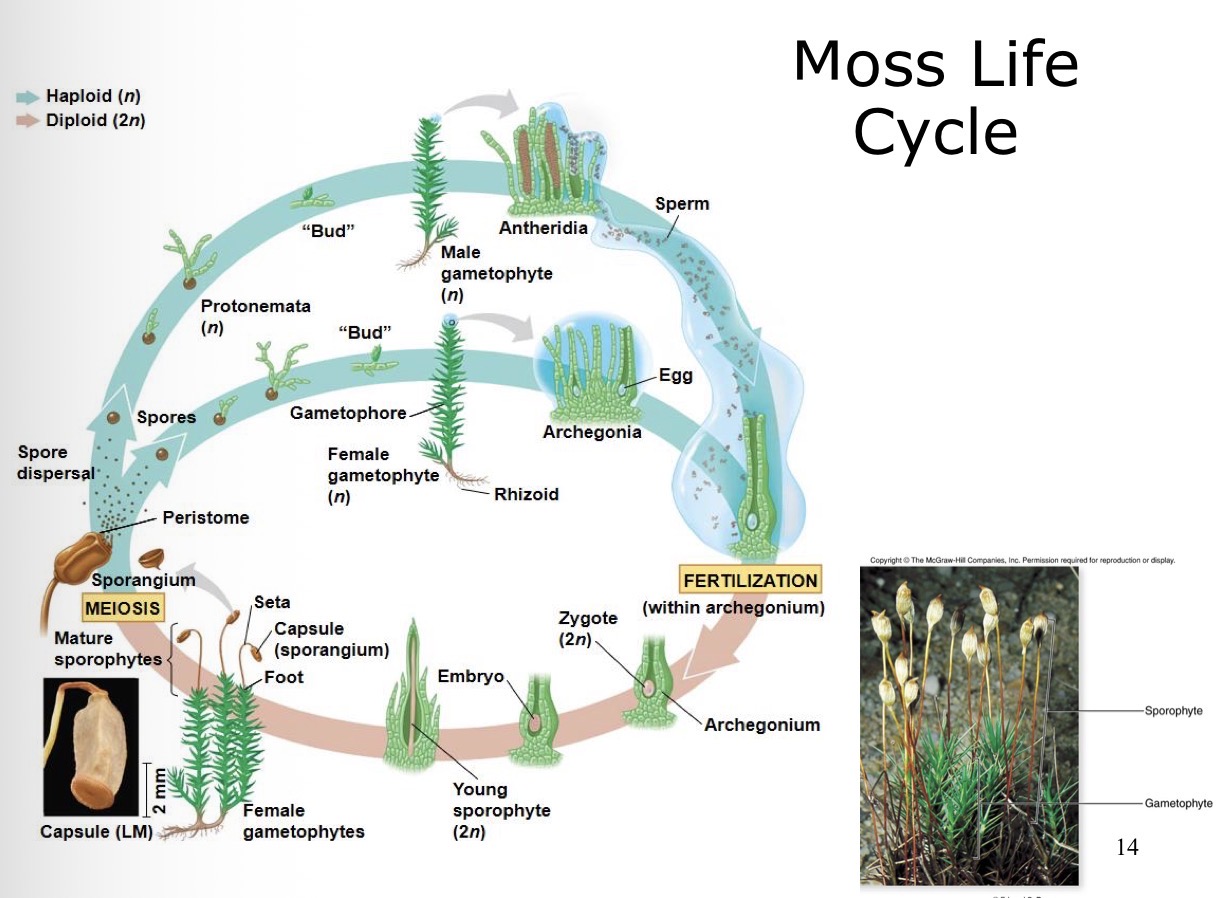
(29) Plant phylogeny
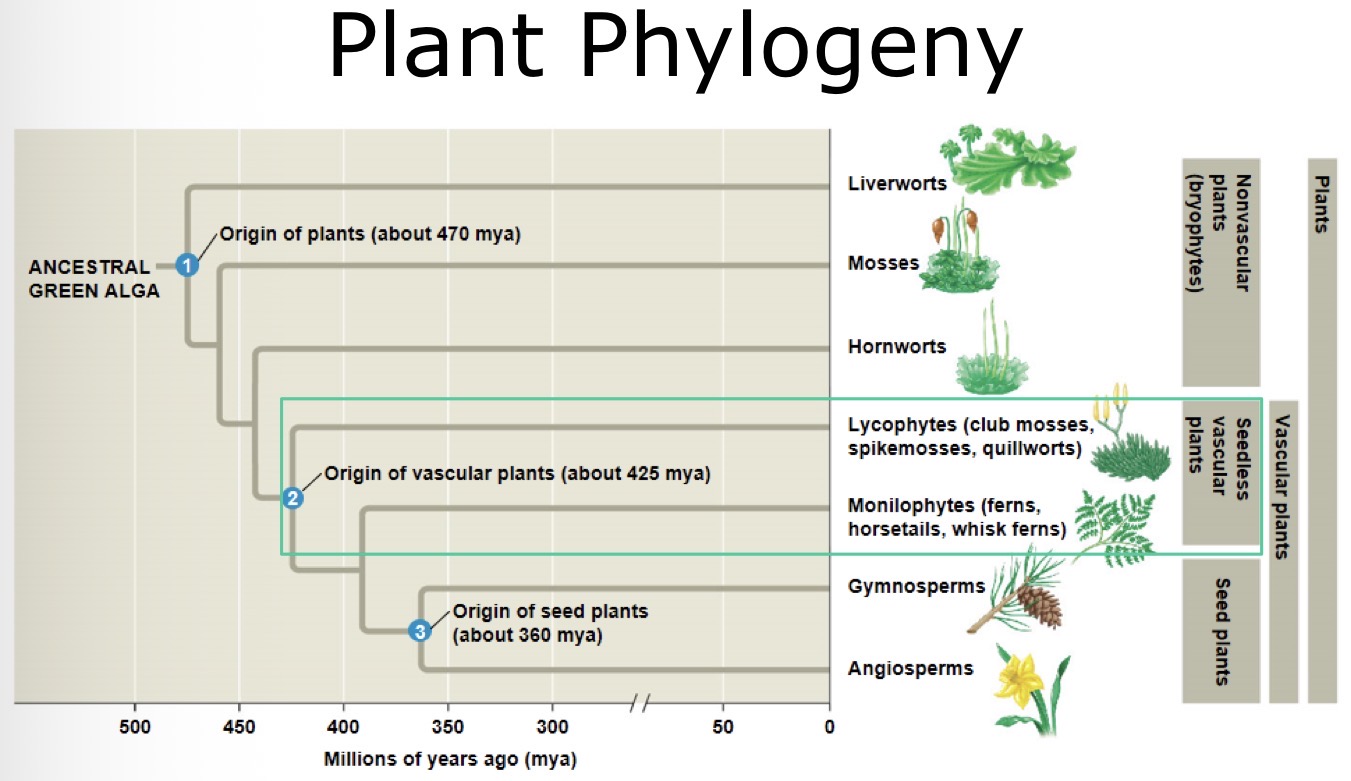
(29) Seedless vascular plants are not:
Monophyletic group
(29) Seedless vascular plants clades
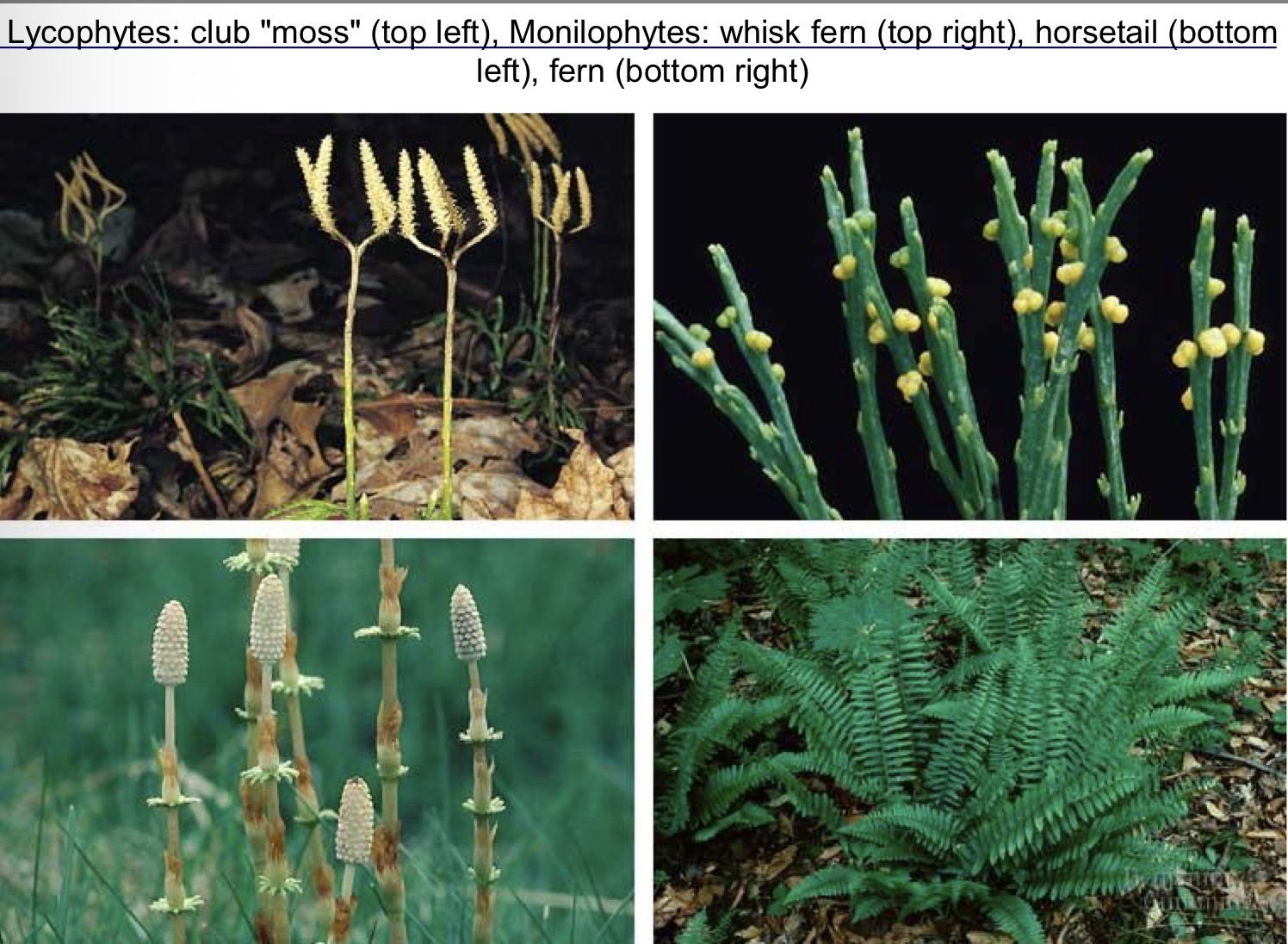
Monilophytes
Lycophytes
(29) Seedless vascular plants: Monilophytes
Clade
Ferns, whisk ferns, horsetails
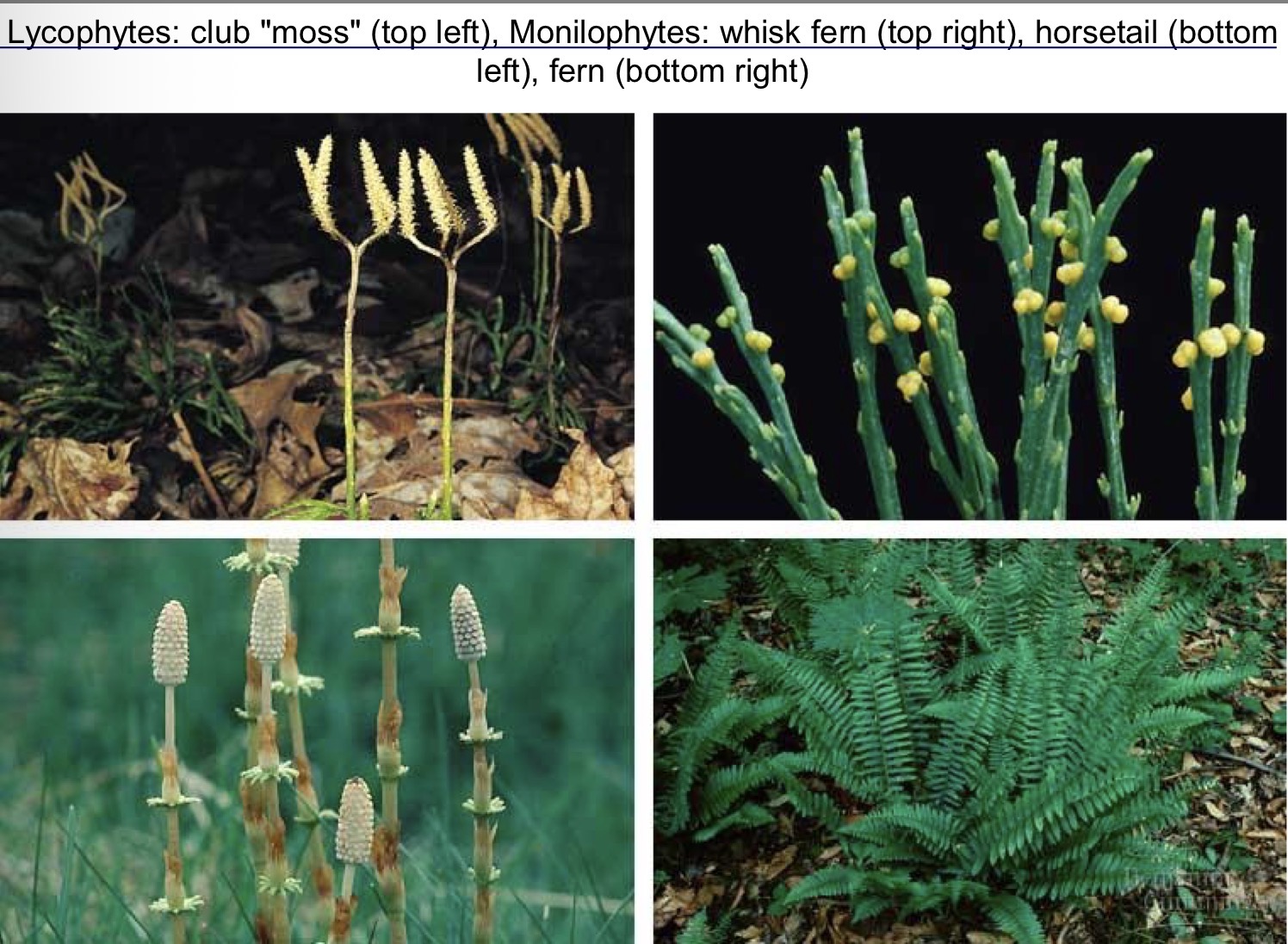
(29) Seedless vascular plants, Lycophytes
Clade
Club moss
(29) Vascular tissue in seedless vascular plants
Xylem and Phloem
(29) What does the vascular tissue in seedless vascular plants do/ where is it found?
Transport water, nutrients and provides support
Only found in sprophyte (not gametophyte
(29) Seedless plants sperm
Flagellated
(29) Seedless vascular plants are _____ dominant?
Sporophyte
(29) Stems
Early fossils reveal stems but no roots or leaves
(29) Roots
Provide transportation and support
(29) What diverged before true roots appeared
Lycophytes, (have rhizomes)
(29) Leaves
Increase surface area for photosynthesis
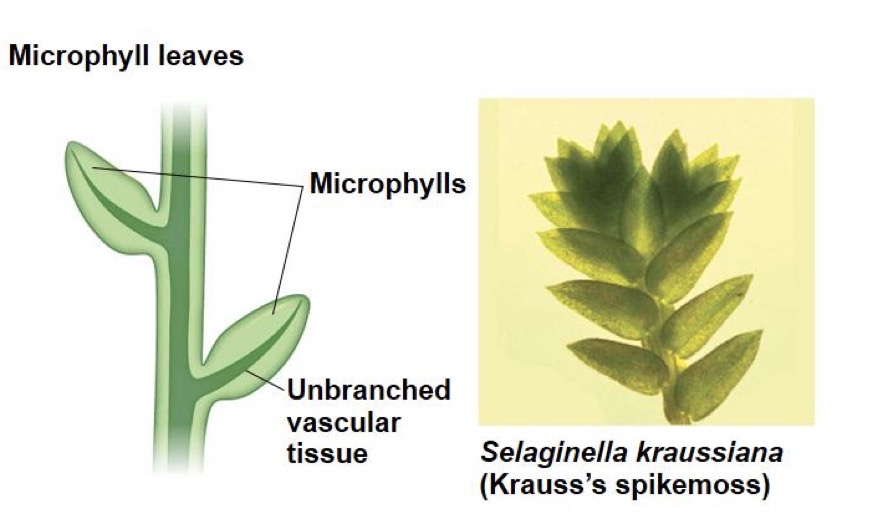
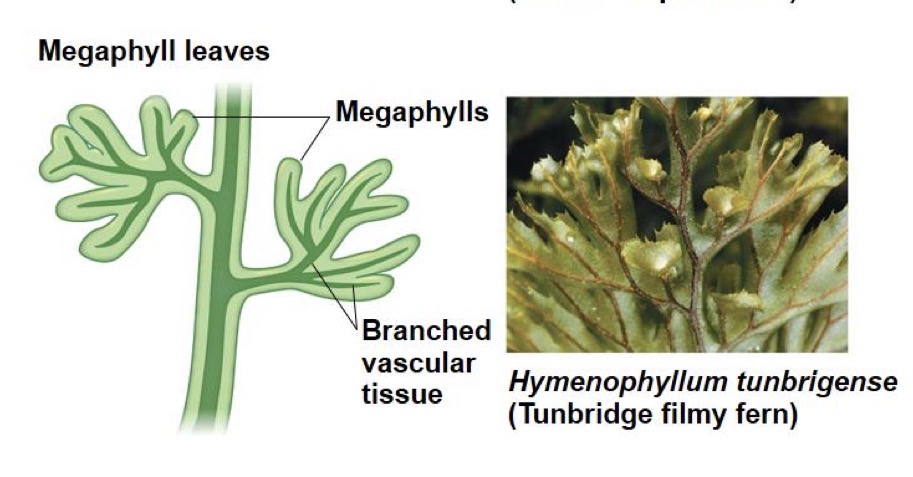
Evolved twice: Micro and megaphylls
(29) Leaves: Microphylls
Small leaves with single vein found in Lycophytes (club mosses)
(29) Leaves: Megaphylls
(Larger leaves with branched vascular system) found in ferns and seed plants
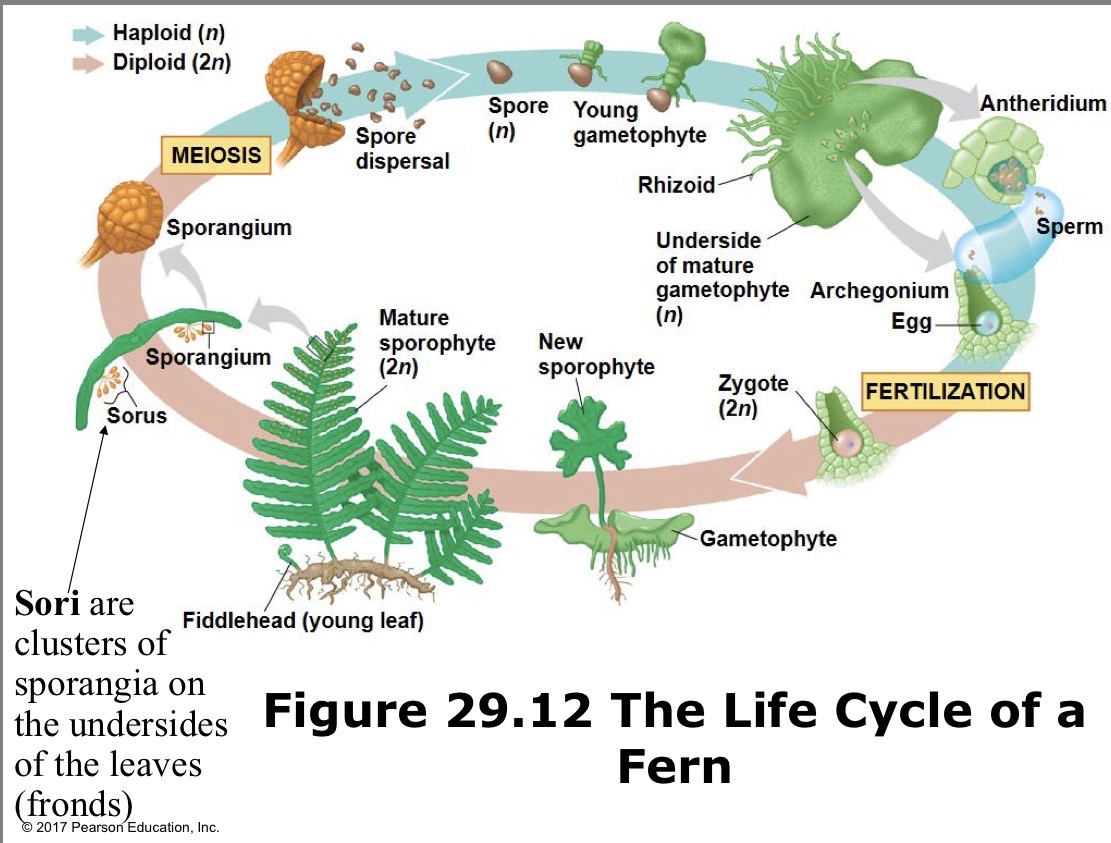
Life cycle of a fern
(30) Seed Plants: Gymnosperms transfer sperm with?
Pollen
(30) Gymnosperms seeds is
Embryo and food source in a protective coat
(30) Gymnosperms: heterosporous
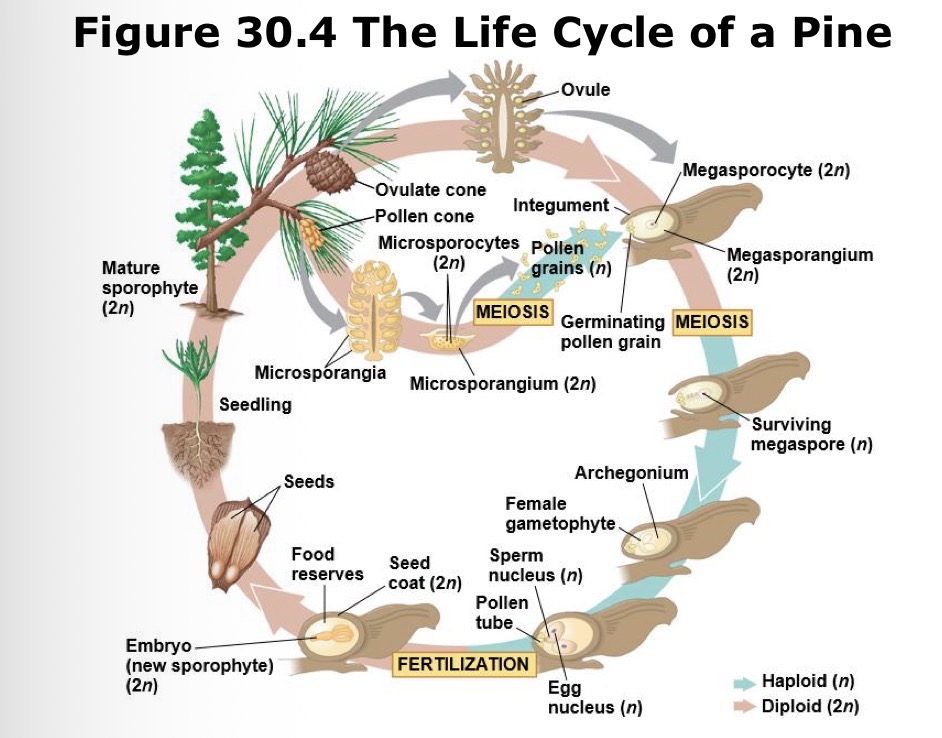
Microspore produces male gametophyte
Mega spore produces female gametophyte
Spores not released for dispersal
(30) Gymnosperms: gametophyte stage reduced
Male gametophyte= pollen grain
Female gametophyte= inside ovule
(30) 4 living groups of gymnosperms
Coniferophytes (Pine, spruce)
Cycadophytes
Gnetophytes
Ginkgophytes
(30) Pine life cycle
(30) What are angiosperms
Flowering plants
(30) Reproductive structure of an angiosperm?
Flower
(30) Angiosperms ovules
Are enclosed in diploid tissue at time of pollination
(30) In angiosperms what does the ovary develop?
Develops into fruit
(30)Angiosperms 2 main groups
Eudicots
Monocots
(30) Angiosperms: Eudicots
Trees, shrubs, snap dragons, peas etc
(30) Angiosperms: Monocots
Grasses, lilies, palms, irises, etc
(30) What is the carpel in flowers?
The female part
(30) Carpel: Ovary, Stigma and Style
Swollen base containing ovules
Tip where pollen lands
Neck or stalk
(30) Male part of flower?
Stamen
(30) Stamen parts in the flower?
Filament
Anther- produces pollen
(30) What happens inside the anther?
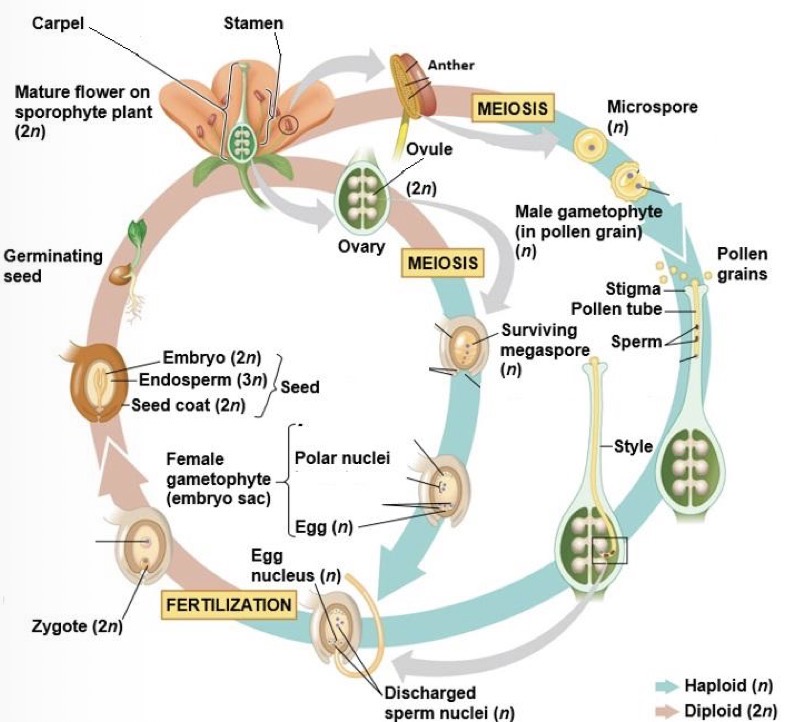
Diploid cells undergo meiosis to produce haploid microspores which grow into the pollen grain
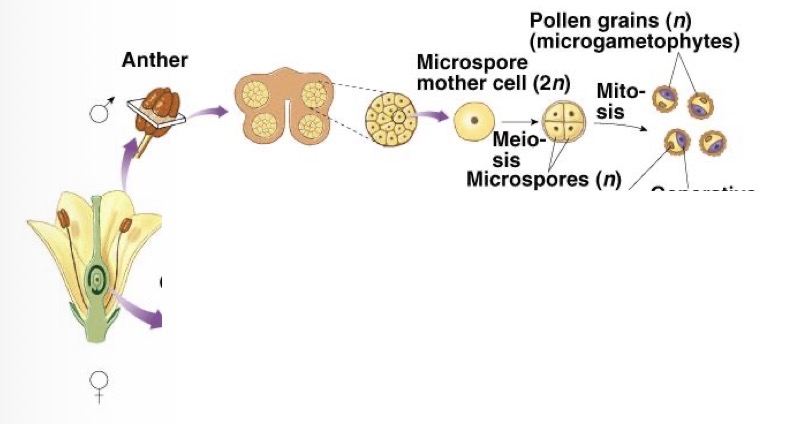
(30) What is pollen grain?
Male gametophyte
(30) What happens inside the ovule?
Diploid cells undergo meiosis to produce haploid megastores which grow into embryo sac
(30) What is the embryo sac?
Female gametophyte
(30) Transfer of pollination
From another to stigma
(30) How is pollen transferred
By wind or by animals
(30) Pollen grains develop?
Pollen tube that is guided to the embryo sac
(30) One of 2 pollen grain cells lags behind:
This generative cell divides to produce 2 sperm cells
No flagella on sperm
(30) Double fertilization (1)
One sperm unites with egg to form the diploid zygote
New sporophyte
(30) Double fertilization (2)
Other sperm unites with 2 polar nuclei to form the triploid endosperm
Provides nutrients to embryo
(30) Seed formation
May remain dormant for many years, germinate when conditions are favorable
(30) Fruits definition
mature ovaries
During seed formation the flower ovary begins to develop into fruit, seed dispersal
Life cycle of an angiosperm
(32) Heterotrophy
Obtain energy and organic molecules by ingesting other organisms
(32) Multicelluilarity
Many complex bodies
(32) No cell walls
Lack rigidity cell walls and are usually flexible
(32) tissues
Cells of most animals are organized into structural and functional units
(32) Tissues: muscle and nervous tissues
All for active movement
(30) Active movement
Most move more rapidly and in more complex ways
(32) Sexual reproductions
Most animals reproduce sexually. Diploid phase dominates. Eggs non mobile and sperm are mobile
(32) Embryonic development
Zygote first undergoes a series of mitosis divisions that produces a ball of cells
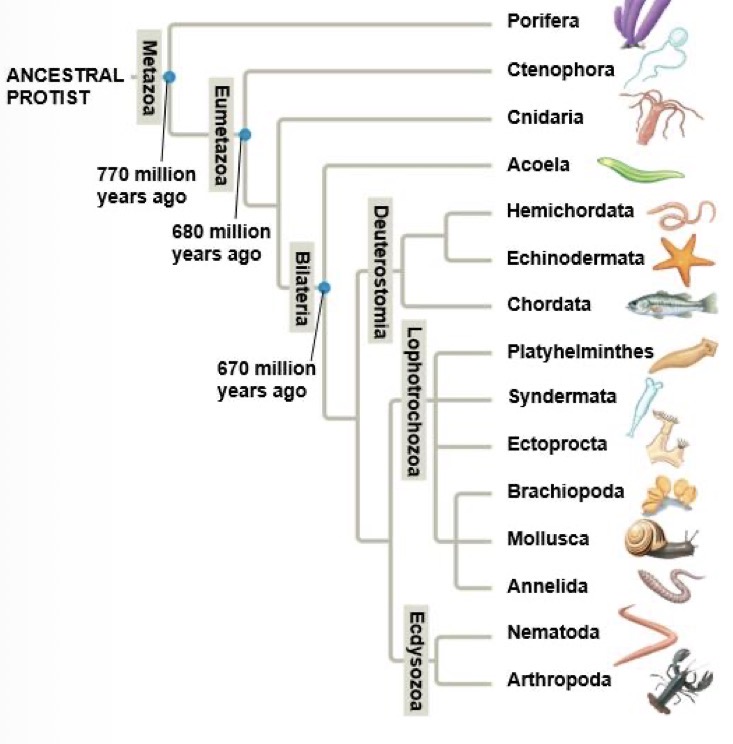
(32)Phylogeny of living animals
(32) Animals vary and can be described by:
Relatively small number of major “body plans”
(32) Body plans
Particular set of morphological and developmental traits, integrated into a functional whole-the living animal
(32) Taxonomists defined major branches of the phylogeny by the evolution of the following traits:
Presence of tissue(parazoa and eumetazoa)
Symmetry
Body cavity
Embryonic development
Segmentation
(32) Zygotes are ___ and can give rise to
(Fertilized eggs) totipotent
All other body cells
(32) As embryo develops
Cells specialize
(32) Specializing cells are irreversible except in:
Sponges- simplest animals- defined organs and tissues are not present(parazoa)
(32) Specialized cells have
The ability to disaggregate and aggregate their cells
(32)Eumetazoa
All other animals have distinct and well defined tissues
Irreversible differentiation for most cell types
(32)What lacks symmetry?
Sponges lack any definite symmetry
(32Symmetry in other animals:
Have symmetry defined along. An imaginary axis drawn through the animals body
(32) 2 main types of symmetry
Radial and Bilateral
(32) Radial symmetry
Organisms are also diploblasic
(32) Bilateral symmetry
Evolved at the same time as animals
became triploblastic(3 germ layers)
(32) Bilateral symmetry advantages
Cephalization
Directional movement
(32) Cephalization
Evolution of a definite brain/head area
(32) Most animals have embryos that produce:
3 germ layers which makes them triploblastic
(32) Animals embryos: 3 germ layers
Outer ectoderm (body covering and nervous system)
Middle mesoderm (skeleton and muscle)
Inner endoderm (digestive organs and intestines)
(32) All triploblastic animals have:
Bilateral symmetry
(32) Cnidarians are:
Diploblastic, have endoderm and ectoderm
(32) Sponges lack:
Germ layers
(32) Body cavity:
Space surrounded by the mesoderm tissue that is formed during development
(32) 3 basic body plans for triploblastic animals:
Acoelomates (compact)
Hemocoelomates
Coelomates
(32) Acoelomates:
(Compact) No body cavity
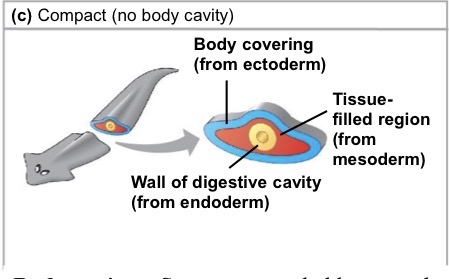
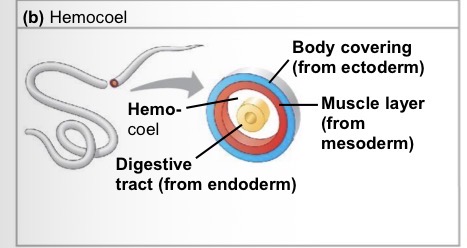
(32) Hemocoelomates(Hemocoel):
Body cavity between mesoderm and endoderm