Lecture 3: Genetics, Epigenetics, & Ontogeny
 Call Kai
 Learn
Learn Practice Test
 Spaced Repetition
 Match
Match Flashcards
 Knowt Play
1/26

There's no tags or description
Looks like no tags are added yet.
Name | Mastery | Learn | Test | Matching | Spaced | Call with Kai |
|---|
No analytics yet
Send a link to your students to track their progress
27 Terms
How do you know where to start with proximate questions?
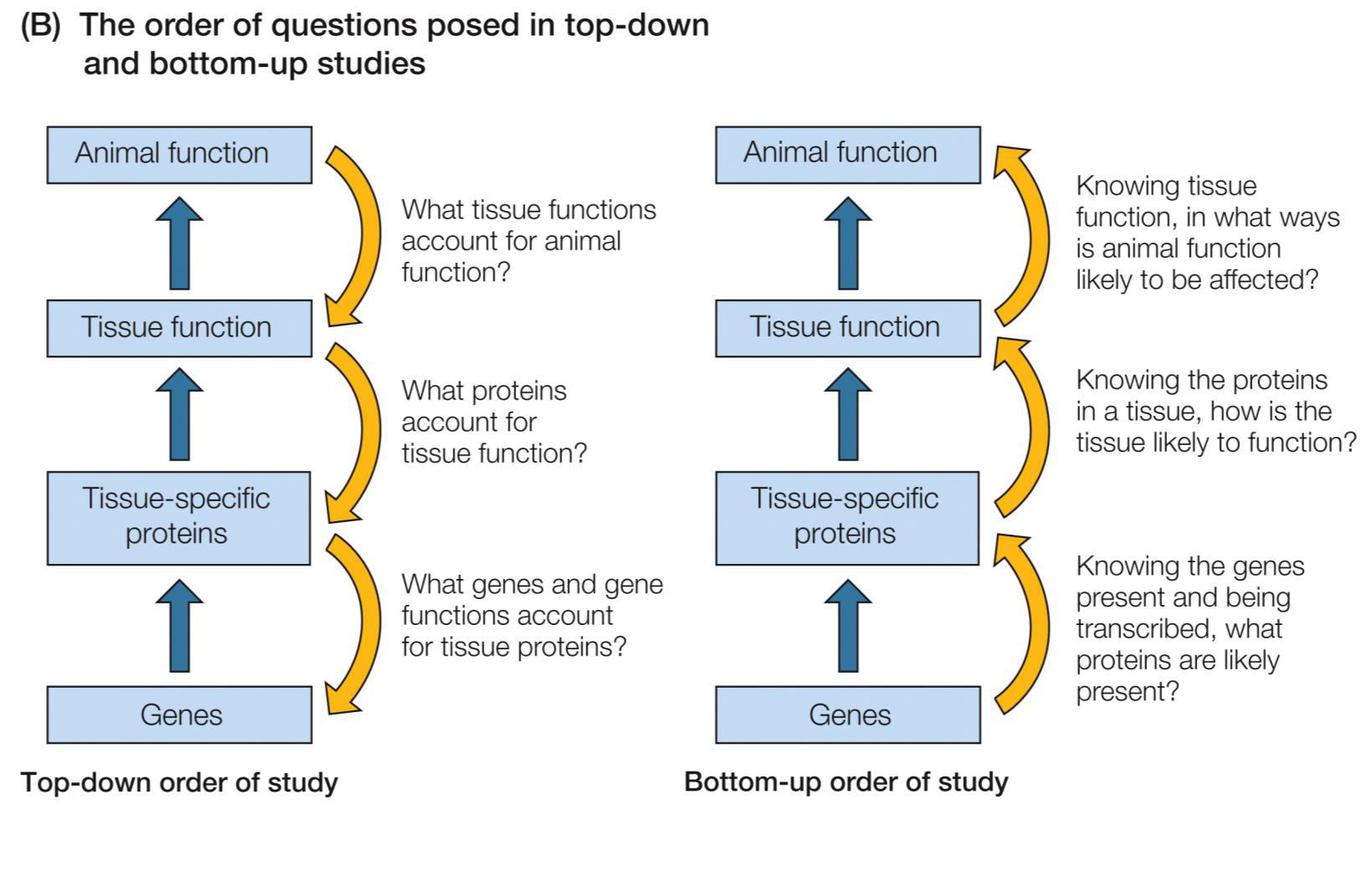
Ice fish where found to have whitish blood. Proximately: How did loss of hemoglobin arise?
This is an example of a top down study
Principle of parsimony:
The simplest explanation is usually the correct one (in this case, regarding alternative evolutionary hypotheses)
Ultimately: Why don’t ice fish have hemoglobin?
The simplest explanation (most favored hypotheses):
1) This is a homologous trait
2) Evolutionary loss of hemoglobin was not adaptive, but a one-time random event
Genome-environment association (GEA) approach
•Examined single nucleotide polymorphisms in this paper wasp across its range
•Overlayed with extrapolated climate data (Bioclim database)
•Identified climate-associated genes under disproportionate selection
•BLAST (Basic Local Alignment Search Tool) ->
•These are thermally-relevant loci in other animals
This is an example of a bottom up study
Genetics
the study of specific genes within the genome
Genomics
the study of the whole genome
•Becoming more feasible to use to test physiological questions
•Common methods include:
•Sampling widely and randomly across the genome
•Ex. Single Nucleotide polymorphisms (SNPs)
•Assembling a new species genome denovo (can have billions of base pairs)
•Ex. Ultra conserved elements (UCEs)
Transcriptomics
the study of the transcriptome (the complete set of RNA transcripts that are produced by the genome), and the reasons why certain parts of the genome conditionally are or aren’t transcribed
Why does the same DNA in your muscle and brain cell nuclei produce such different cell types?
gene expression
Proteomics
The study of all the proteins being synthesized by cells and tissues
Metabolomics
The study of all the organic compounds in cells and tissues (other than macromolecules coded by the genome)
•Mostly focuses on metabolites: small “building blocks” of metabolism
•Ex: sugars, amino acids, fatty acids
Direction of causation
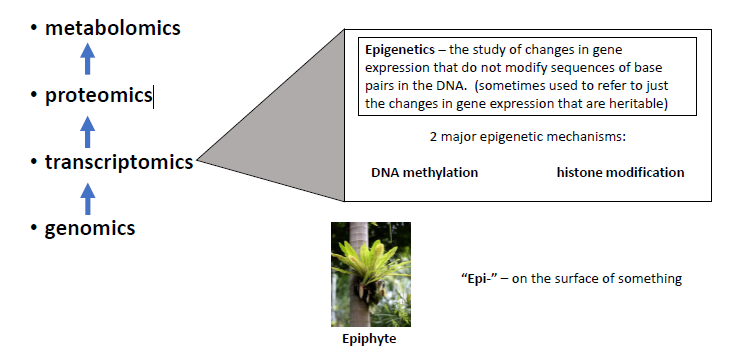
Epigenetics
the study of changes in gene expression that do not modify sequences of base pairs in the DNA. (sometimes used to refer to just the changes in gene expression that are heritable)
2 major epigenetic mechanisms:
DNA methylation and histone modification
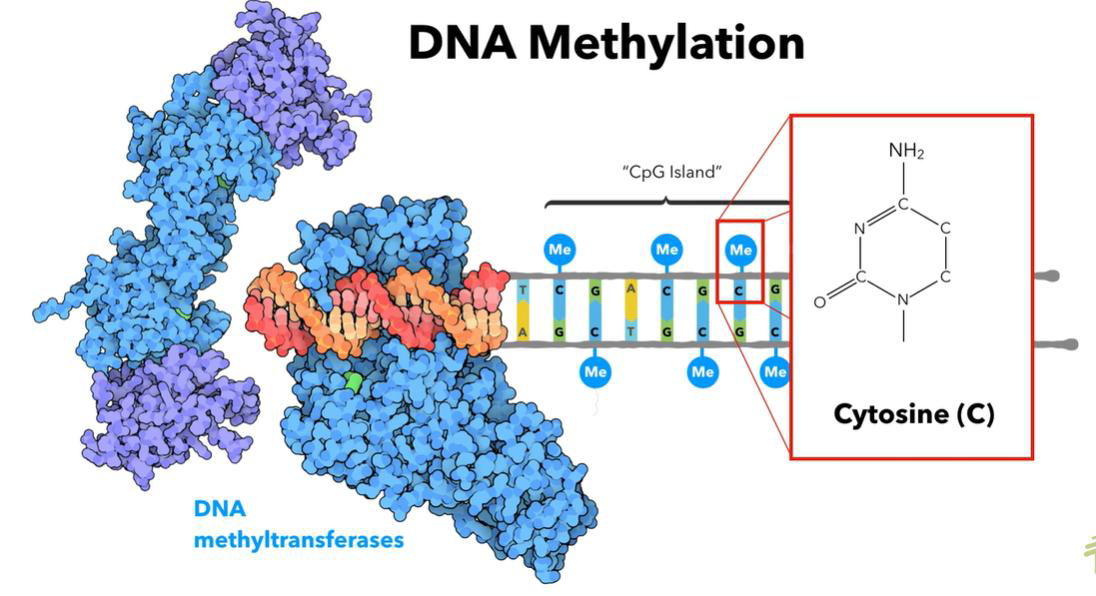
DNA Methylation
•(usually) Methyl groups attach to cytosine in promotor regions of genes
•Turns gene expression “off”
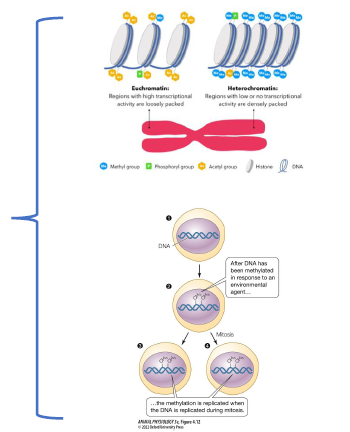
•Can be replicated during mitosis (somatic replication)
•Can be replicated during meiosis (transgenerational replication)
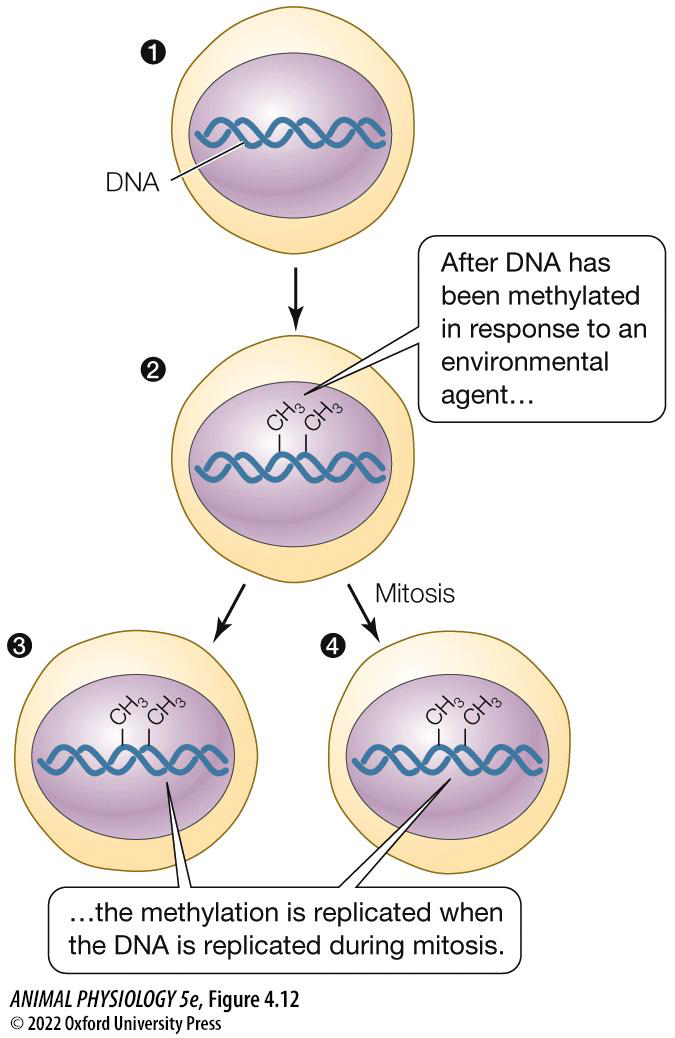
During DNA replication,
methyl group tags are transferred to new strands of DNA by proteins called DNA methyltransferases
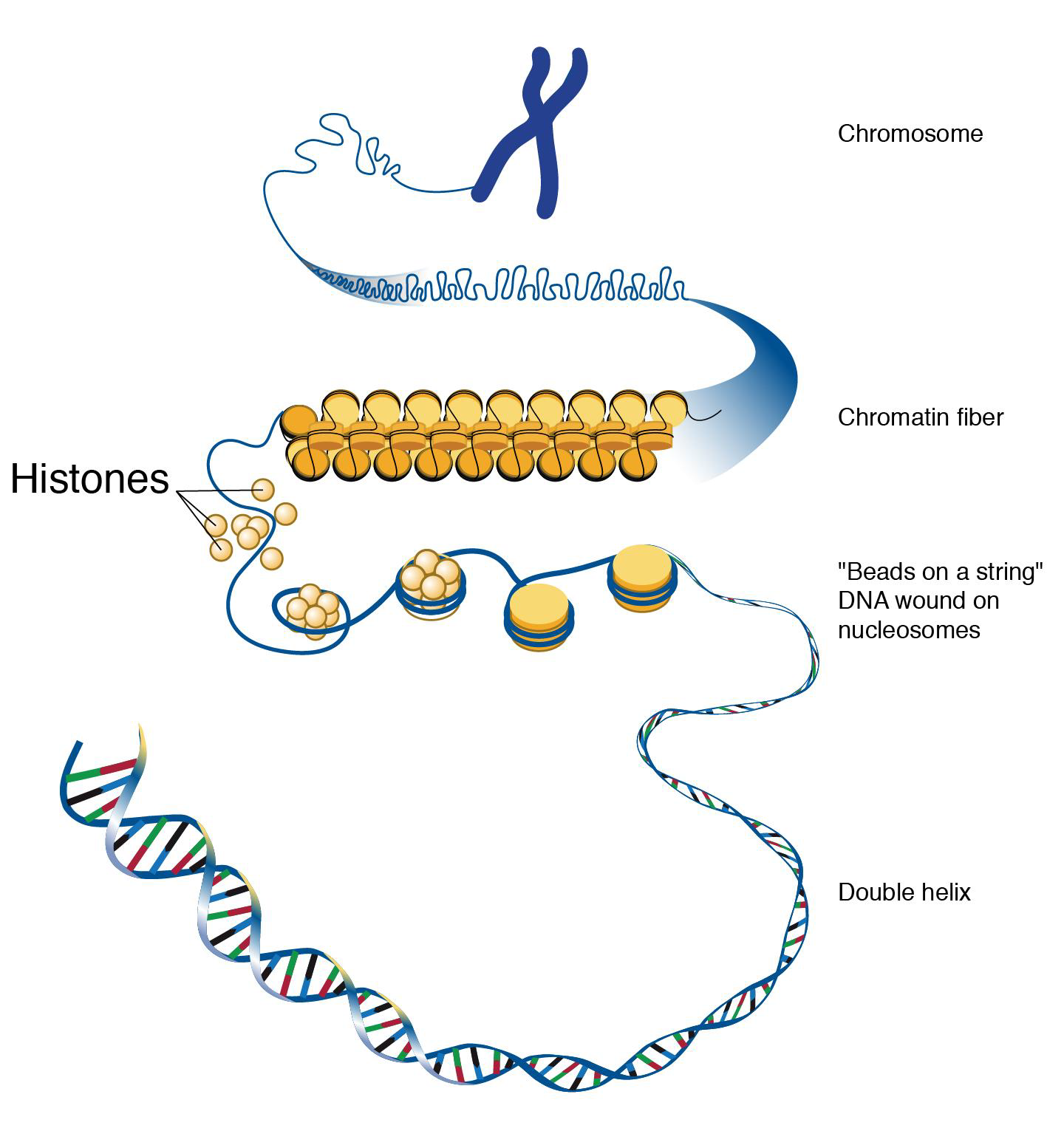
Histone modification
•Histones – proteins that help compact DNA into chromosomes
•Must unwrap the DNA for gene expression to occur
•Can have one of several tags added that affect packing (and thus expression).
•The looser the packing, the higher the expression
When various types of epigenetic marks or tags are described together as a set, we call this global summary of marks the “epigenome”
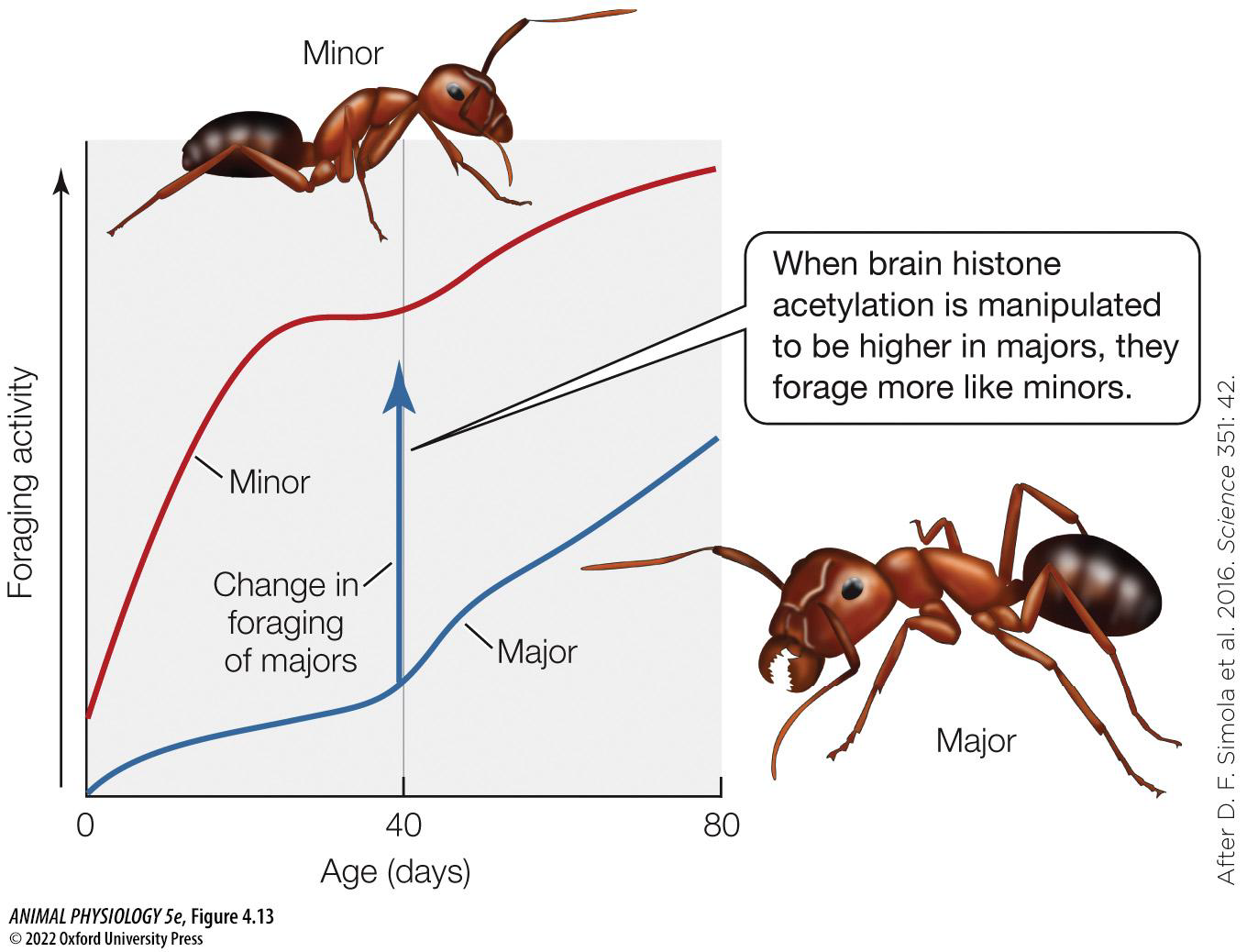
Real-world examples of epigenetics: social insects
•Ant workers are all female & genetically very similar
•How does behavioral division of labor arise?
•Hypothesized mechanism: histone modification
•Other studies: DNA methylation may regulate physical form
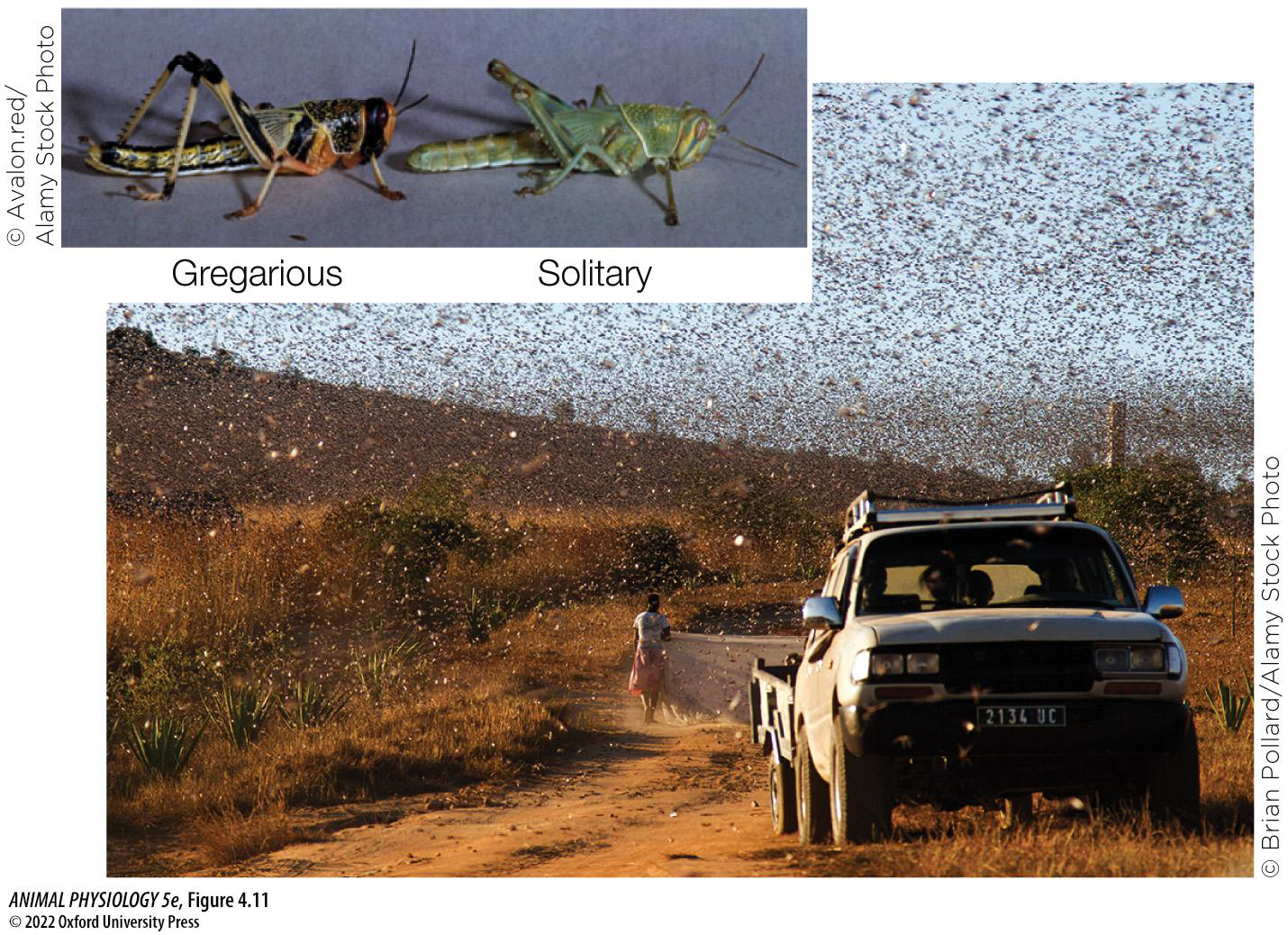
Real-world examples of epigenetics: locusts
A locust is a type of grasshopper that swarms under certain conditions.
Locusts swarms have long been a farming challenge for humans. However, modern industrial farming practices can increase the intensity and incidence of locust swarms.
This has negative effects on the environment and on human food security. As researchers seek low-cost ways to mitigate this problem, they reveal interesting aspects of the physiology behind this behavior, including epigenetics.
Developmental physiology
many physiological changes over the lifetime of an animal are driven by changes in gene expression
Ontogeny
growth and development (usually from egg to adult)
Immature physiology almost always differs from
adult physiology
How does development occur?
often differential gene expression across life stages underlies these numerous developmental changes
As such, enzymes and other proteins expressed in a tissue also exhibit sequential development.
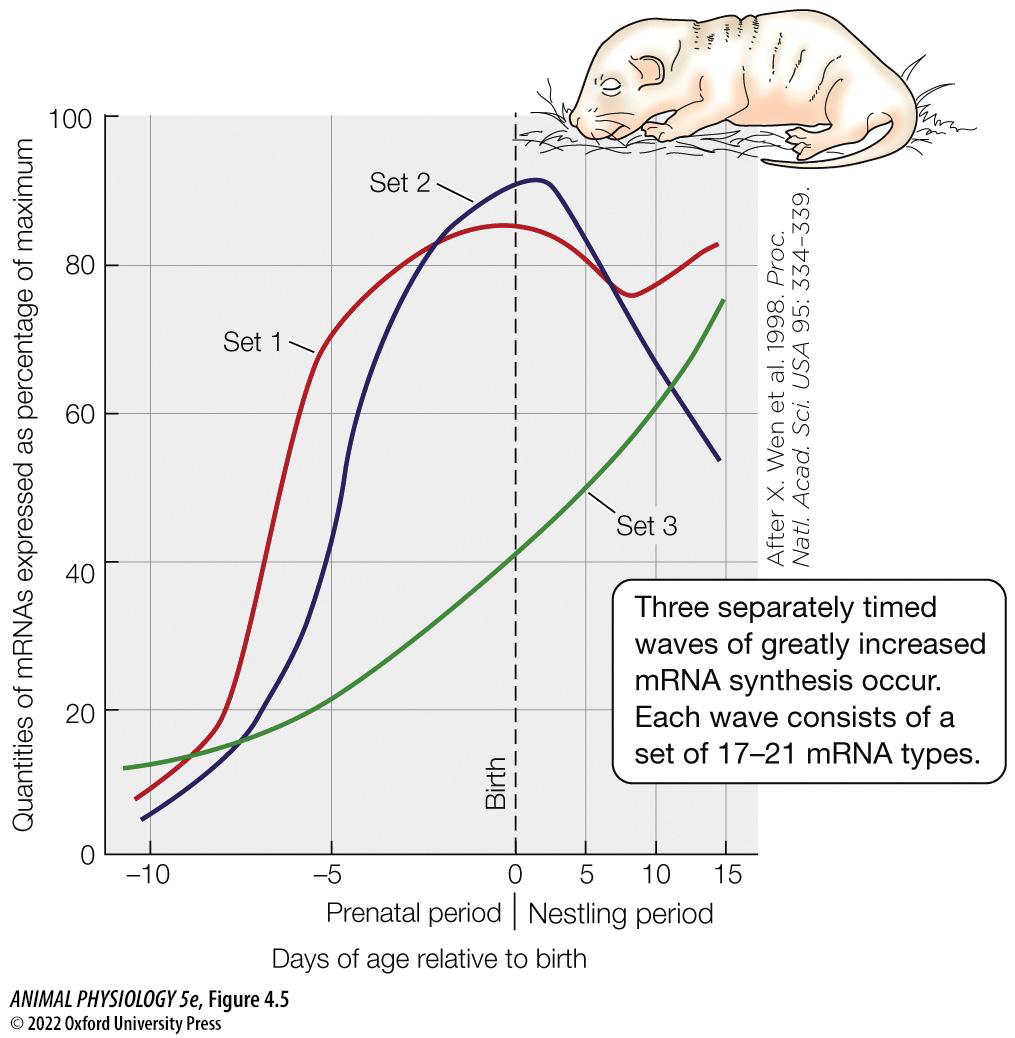
This graph shows quantities of three sets of mRNAs in the developing spinal cord of baby rats.
What type of omics is this an example of?
transcriptomics
Development and temperature
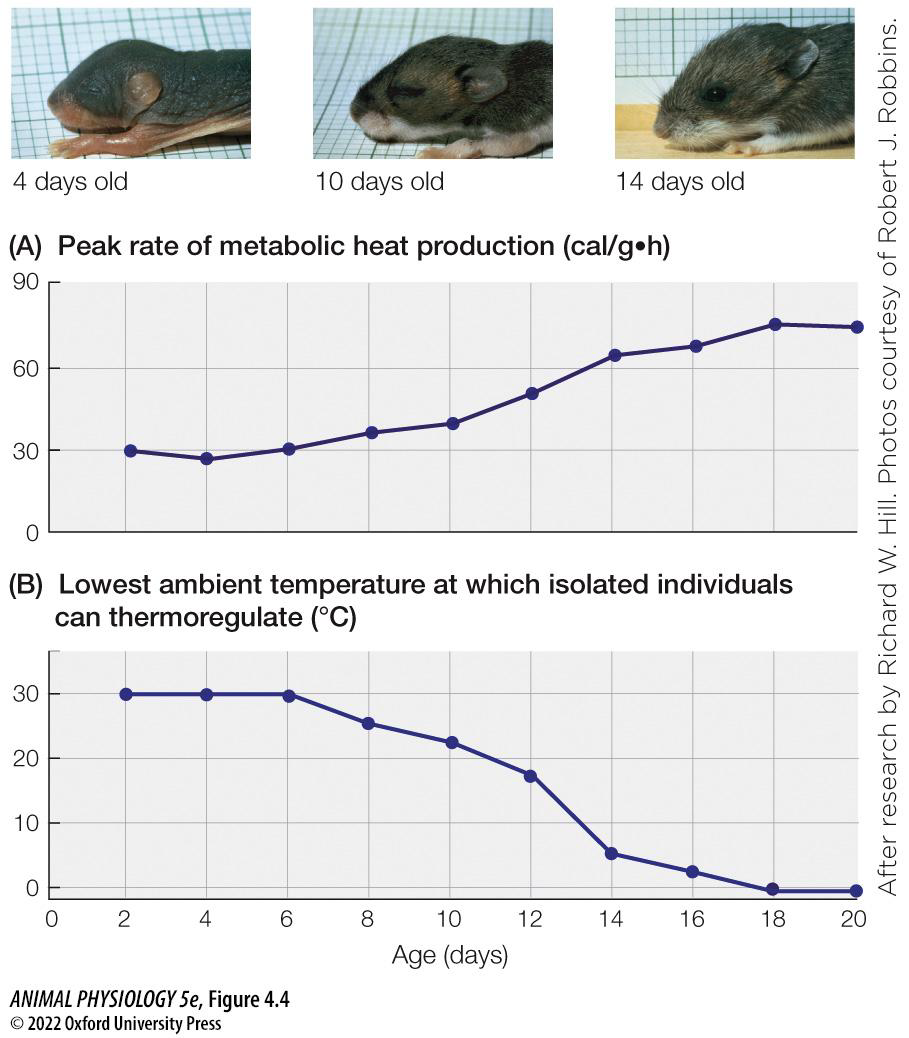
•The ability to endothermically thermoregulate is a major adaptive trait of mammals
•Juvenile mammals are small, often naked, and with a greater surface area to volume ratio, making it harder for them to thermoregulate
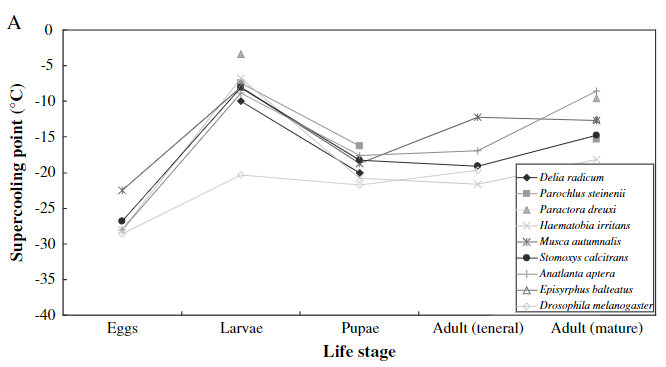
Temperature variation can be limiting to thermal conformers too!
•Often early developmental stages are the most thermally sensitive.
•A supercooling point is the temperature at which an insect spontaneously freezes