L6 cohesion complex
 View linked note
 Call Kai
 Learn
Learn Practice Test
 Spaced Repetition
 Match
Match Flashcards
 Knowt Play
1/28

Earn XP
Description and Tags
Flashcards covering key terms and concepts related to the cohesin complex and its roles in chromosome biology and cancer.
Name | Mastery | Learn | Test | Matching | Spaced | Call with Kai | Chat |
|---|
No analytics yet
Send a link to your students to track their progress
29 Terms
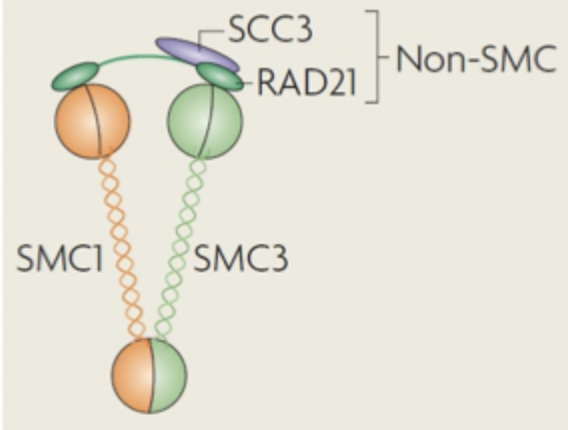
Cohesin complex
A protein complex that holds sister chromatids together and organizes chromatin during cell division.
heterodimer of SMC proteins (1 and 3) and non-SMC subunits (ATP, RAD21, SCC1/2)
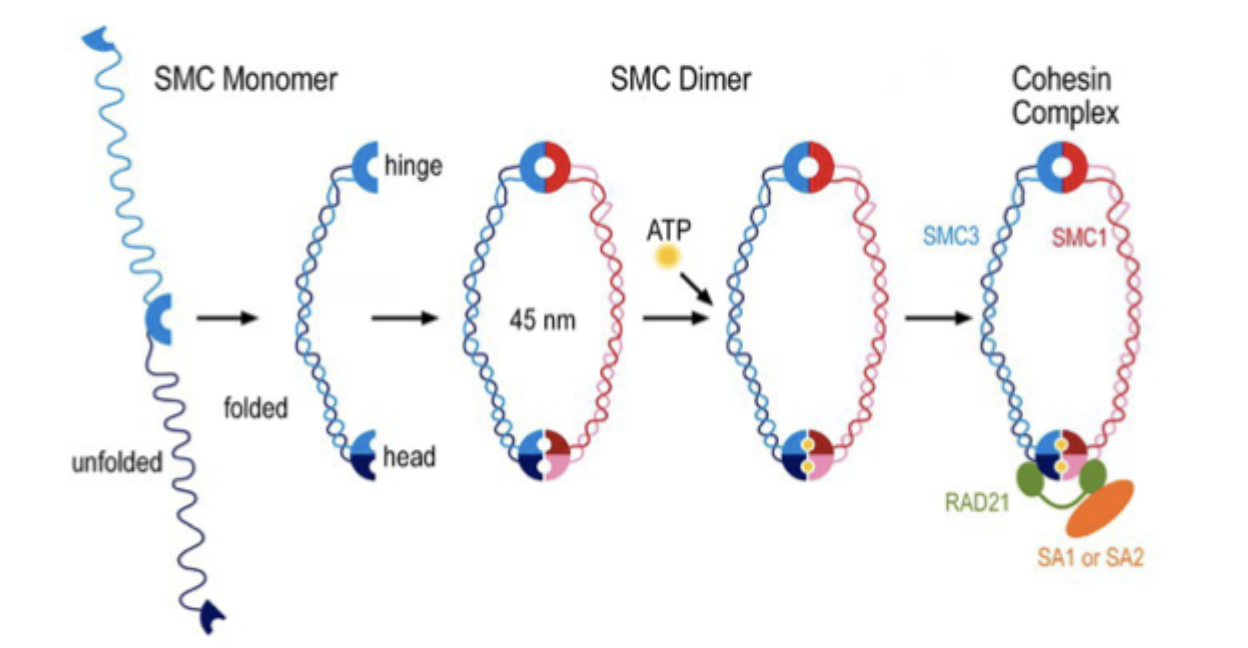
at what mitotic phase is cohesin loaded onto chromosomes
G1 phase before DNA replication
cohesin complex functions in mitosis
sister chromatid cohesion (at centromeres)
holding together sister centrioles
cohesin complex functions in meiosis
pairing of homologous chromosomes
assembly of axes of synaptonemal complex
coordination of sister kinetochores during first meiotic division
cohesin complex functions in interphase
sister chromatids cohesion (entire chromatin)
repair of DNA breaks
assembly of DNA replication factories during S phase
regulation of transcription
organisation of chromatin loops and TADs
cohesin complex functions in centrosomes
maintains paired centrioles
centrosome number is tightly controlled
SMC proteins
Structural Maintenance of Chromosomes proteins that form part of the cohesin complex, specifically SMC1 and SMC3.
phases for cohesin removal from chromosomes during mitosis
removal from chromosomal arms - mitotic kinases
removal from centromeres - separase
Aneuploidy
An abnormal number of chromosomes in a cell, commonly found in cancer cells.
Spindle assembly checkpoint (SAC)
A surveillance mechanism that ensures proper attachment of kinetochores to microtubules before proceeding with anaphase.
Mps1
responsible for sensing attachment of MTs to KTs
SAC activity gives cells more time to establish proper MT-KT connections
without this extra time, cells may proceed to anaphase without MT-KT attachment
why is aurora B considered part of SAC
aurora B phosphorylates Mps1 and regulates tension across sister chromatids, ensuring proper checkpoint signaling.
MPS1 can distinguish when NDC80 is bound to MT or not
what is the dual role of Aurora B?
Error correction system: Low tension → phosphorylation of NDC80 → detachment of kinetochores → unattached KT recognised by SAC
And SAC activity: MPS1 phosphorylated by aurora B to sense proper microtubule attachment
Mitotic Checkpoint Complex (MCC)
kinetochores that are improperly attached/ under insufficient tension produce MCC, A “STOP’ signal complex of SAC proteins (BubR1, Bub3, Mad2, Cdc20)
binds to APC/C to delay anaphase until all kinetochores are properly attached and aligned on metaphase plate
satisfaction of checkpoint leads to degredation of cyclin B and securin
Separase
An enzyme that is responsible for cleaving cohesin, allowing sister chromatids to separate during anaphase.
how is separase activity controlled?
activation of separase is triggered by proteasome pathway
APC/C (anaphase-promoting complex/cyclosome)
is a ubiquitin ligase that triggers the degradation of cyclin and other proteins, thereby activating separase.
controlled by SAC
proteasome pathway
ubiquitylation of targeted proteins by APC/C → degradation of the regulatory proteins
regulation checkpoint from one stage of mitosis to another
pre-requisite for metaphase to anaphase transition
inactivation of CDK1
activation of separase
both triggered by proteasome pathway
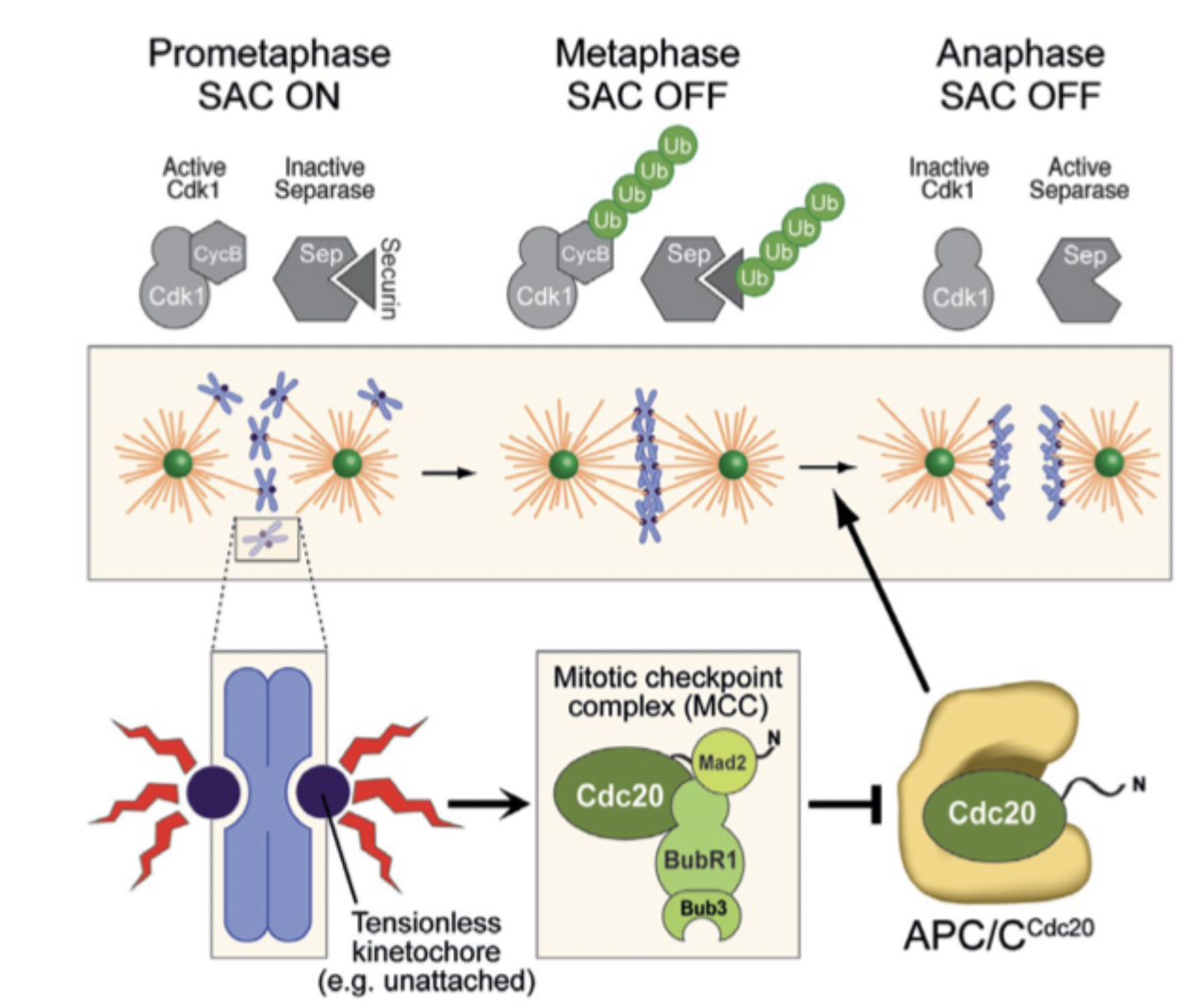
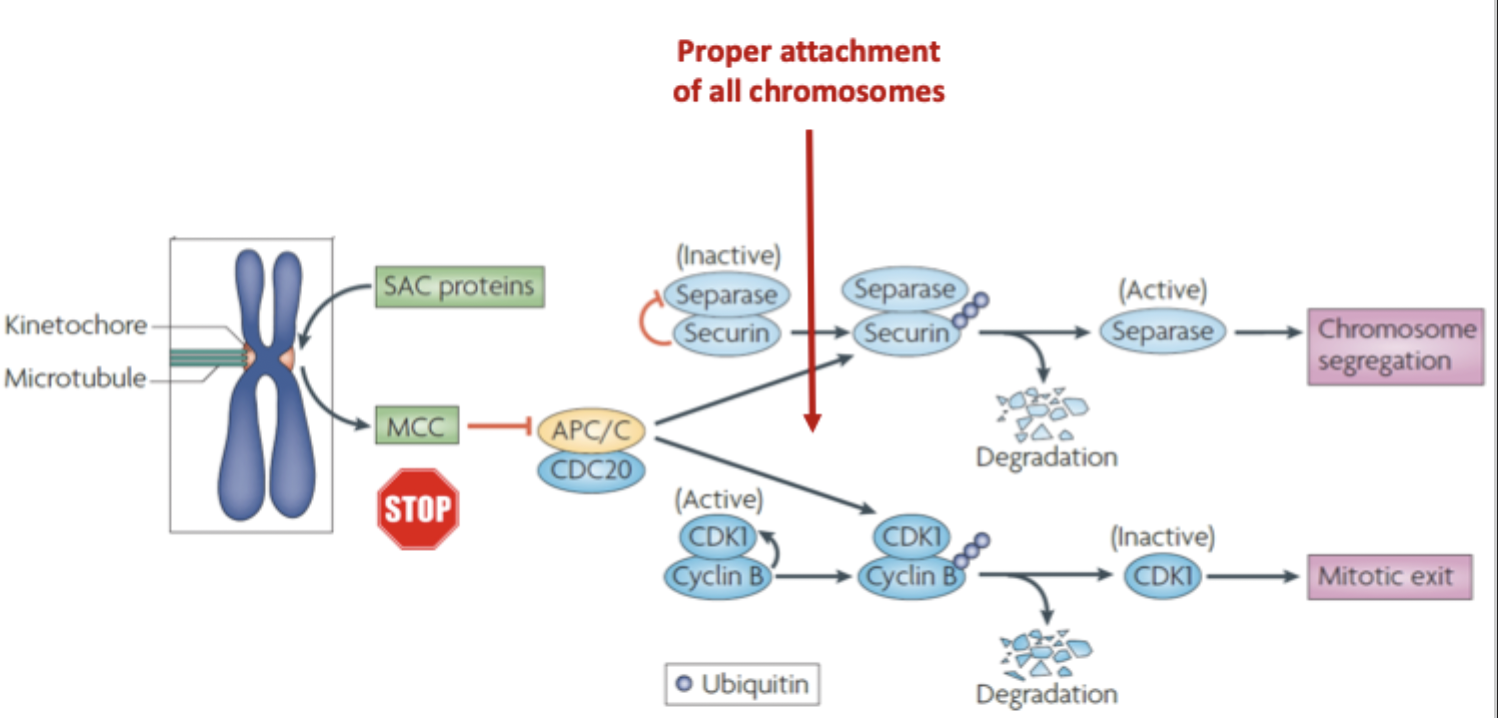
what happens when APCC is activated during metaphase
degradation of securin → activates separase → chromosome segregation (separase cuts cohesin at centromere)
degrade cyclin B (activator of CDK1) → inactivates CDK1 → mitotic exit
Cohesion-dependent functions
Functions of cohesin that rely on its ability to hold sister chromatids together.
Cohesion-independent functions
Functions of cohesin that do not involve sister chromatid cohesion but are related to chromatin organization and gene regulation.
Mad2
A component of the Mitotic Checkpoint Complex; it binds to unattached kinetochores to signal a delay in anaphase.
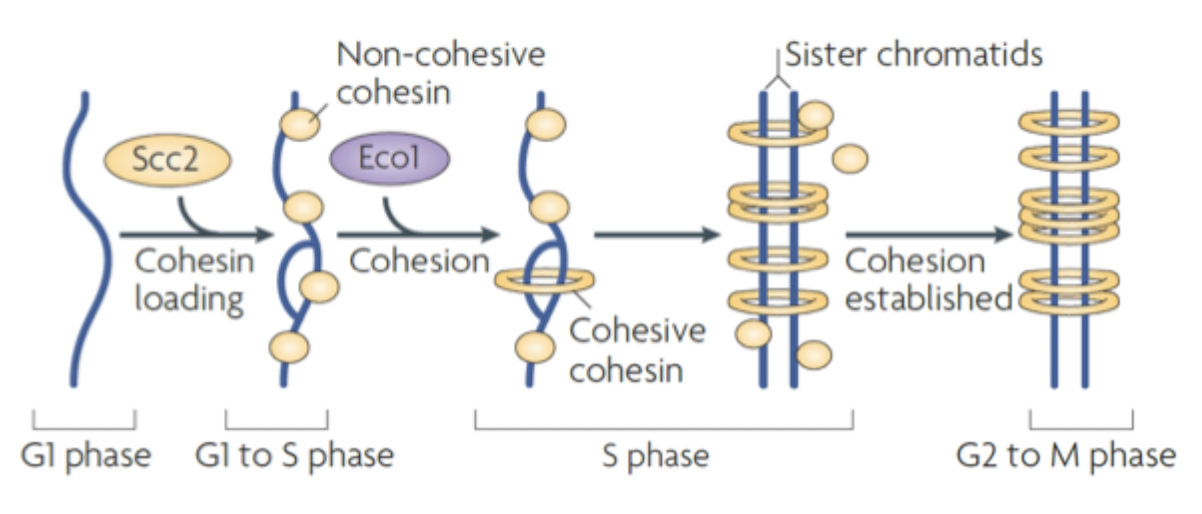
Cohesin cycle
non-cohesive cohesin loaded onto DNA after G1 phase with the help of Scc2 cohesin loading factor
there is no sister chromatid in G1 phase
Eco1 acetylates cohesin during S phase to create cohesive cohesin (can hold sister chromatids together)
cohesion of sister chromatids is established in G2 phase
cohesin is removed completely from chromatin during mitosis
cohesive vs non-cohesive cohesin
non-cohesive cohesin doesn’t bind sister chromatids together, bound to only 1 sister chromatid
how is cohesin removed during mitosis?
2 waves
prophase (mitotic kinase) pathway
Plk1 + Wapl kinases phosphorylate cohesins that are in the arms of chromosomes → prevents cohesin binding to DNA
shugoshin protein and Protein Phosphatase 2A protect centromeric cohesin - not removed
separase pathway
cohesin in the centromere - holds two sister chromatids together
enzymatic pathway which degrades centromeric cohesin → anaphase can occur
Regulatory proteins
Proteins that are involved in controlling the activity of other proteins, crucial for cell cycle transition.
how does SAC perform its function
inhibition of the removal of centromeric cohesion
inactivation of mitotic kinase CDK1
centrosome duplication cycle
separase disengages centrioles by cutting cohesin (centrioles are held together by cohesin)
centrioles undergo duplication to create daughter centrioles
daughter centrioles undergo mitosis