restoration and reference models
 Call Kai
 Learn
Learn Practice Test
 Spaced Repetition
 Match
Match Flashcards
 Knowt Play
1/22

There's no tags or description
Looks like no tags are added yet.
Name | Mastery | Learn | Test | Matching | Spaced | Call with Kai |
|---|
No analytics yet
Send a link to your students to track their progress
23 Terms
reference model
a model which indicates the expected condition that the restoration site (target ecosystem composition) would have been in had it not been degraded. not historic condition but background and predicted changes in environmental conditions
used in pre project planning, encompasses the restoration target ecosystem goal, composition, structure and function
sources informing reference models
pre-disturbance assessments
undamaged remnants
similar ecosystems
historical information
future
historic reference model framework
narrow scope, single site references, focused on recovery of specific species, poor data collection led to imperfect references
mostly focussed on historical baseline not other disturbed land uses
new reference model framework
multiple data sets, TEK, new axes - spatial and temporal data (temporal = modern, historic, future, and spatial = regional, local, ecosystem)
hard to quantify but uses more data analysis, future scenarios included, spectrum of reference options
ecosystem attributes characterizing reference systems
absence of threats (invasive species, overuse)
physical (environmental) conditions
species composition, structural diversity
ecosystem function, external exchanges
eight principles for restoration
engages stakeholders, draws on different types of knowledge, information by native reference ecosystems and considered change, supports recovery process, clear goals/objectives and measurable indicators, seeks highest level of recovery, gains cumulative value when applied at large scales, is part of continuum for restoration
1) restoration engages stakeholders
improved social-ecological resilience, contribute knowledge, provide political and financial support, generate employment
2) restoration draws on many types of knowledge
practioner, TEK, local ecological knowledge, scientific discovery
interdisciplinary, collaborative
3) practice is informed by native ecosystems and considers change
consider definition reference model, sources of information and the ecosystem attributes used to characterize the reference ecosystems
considered changes and climate change, traditional management and values
4) supports recovery processes
assists natural processes of recovery that are carried out by the effects of time on physical processes
the responses and interactions of the biota throughout their life cycles
goal to promote capacity for self-organization and resilience for future stress
harness the potential for remnant species to regenerate
three approaches: natural regen, assisted regen, and reconstruction
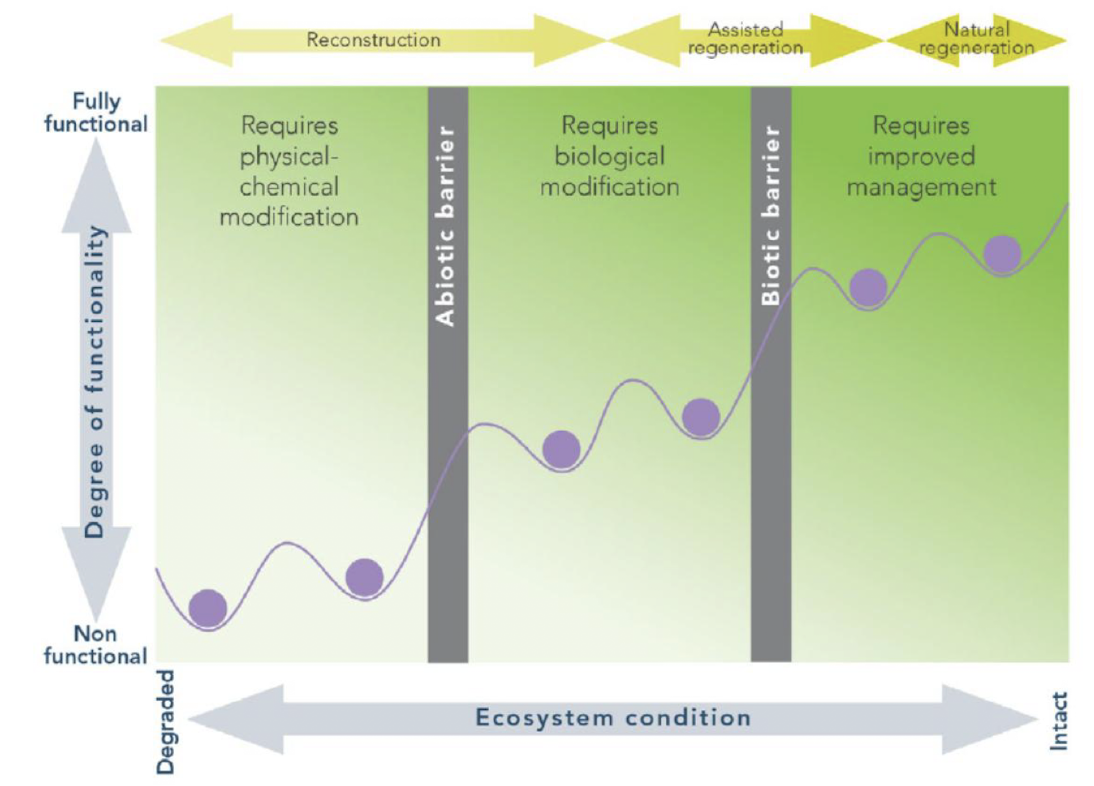
natural regeneration
for when ecosystem is relatively intact, requires improved management
biotic barrier of ecosystem condition has already been overcome
functionality is almost full
assisted regeneration
recovery approach at site of moderately degraded condition, mid functionality
abiotic barrier has already been passed, but biotic barrier is limiting
requires biological modification
reconstruction
recovery approach for completely degraded ecosystems which are non functional
abiotic and biotic barrier need to crossed
requires physical and chemical modification
5) clear goals/objectives and measurable indicators
adaptive management
scope, vision, targets, goals, objectives, indicators
scope
the broad geographic or thematic focus of a project
vision
a general summary of the desired condition one is trying to achieve through work of the project
second most broad
targets
identify the native ecosystem to be restored at a site as informed by the reference model along with any social outcomes or constraints expected of the project
goals
formal statements of the medium to long term desired ecological or social conditions including the level of recovery sought
must be clearly linked to targets, measurable, time-limited and specific
objectives
formal statements of the interim outcomes along the trajectory of recovery
must be must be clearly linked to targets and goalsin, measurable, time-limited and specific
indicators
specific and quantifiable measures of attributes which directly connect longer term goals and short term objectives
variables measured to assess changes in the physical, chemical, or biotic ecosystem attributes as guided by the reference models
social-ecological or cultural can measure changes in human well being, participation in traditional practices, governance, language and education
6) restoration seeks highest level of recovery possible
continuous improvement
5 star system and ecological recovery wheel
7) gain cumulative value when applied at larger scales
ex carbon sequestration in soils or water security
increasing scope can be hard
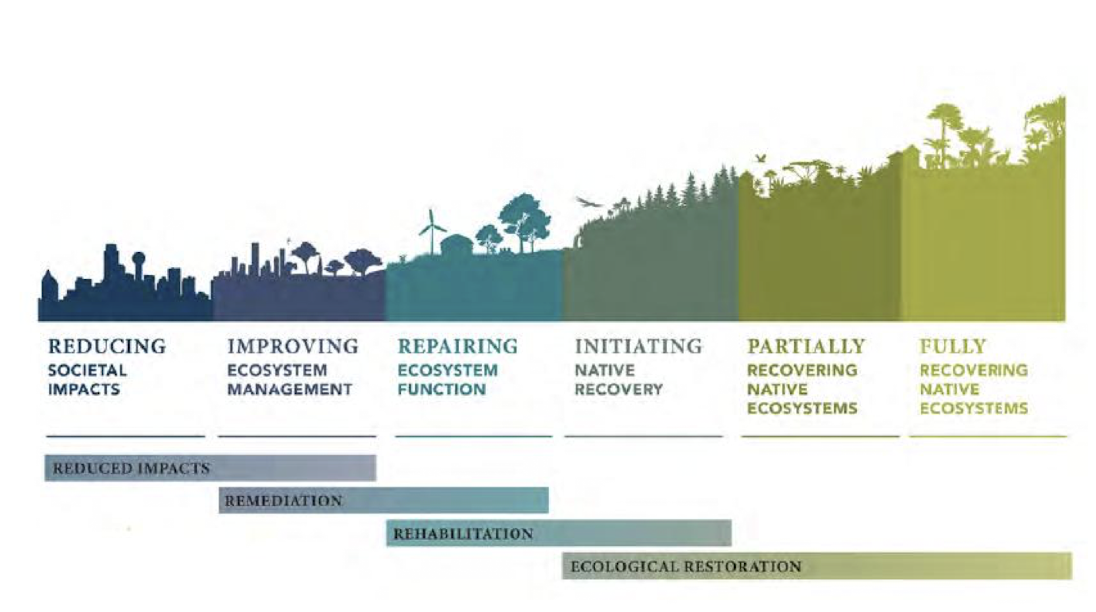
8) part of a continuum of restoration activities
range of activities worldwide
categories include reduced societal impacts, remediation, rehabilitation and ecological restoration