Module 5 Respiratory System Lab Practice

0.0(0)
Studied by 0 people
call kaiCall Kai
learnLearn
examPractice Test
spaced repetitionSpaced Repetition
heart puzzleMatch
flashcardsFlashcards
GameKnowt Play
Card Sorting

1/58

flashcard set

Earn XP

Description and Tags

MSDAMFMSDAFMSADF

Last updated 12:26 AM on 6/2/26
Name
Mastery
Learn
Test
Matching
Spaced
Call with Kai

No analytics yet

Send a link to your students to track their progress

59 Terms

1
New cards

Respiratory System

A system that supplies the body with oxygen and removes carbon dioxide. Consists of a series of structures that allow for the passage of air into the body.

2
New cards

Cellular Respiration

The use of oxygen and production of carbon dioxide by the cells

3
New cards

External Respiration

The movement of gases into the body and blood.

4
New cards

Upper Respiratory System

The division of the respiratory system that consists of the nose and nasal cavity, the sinuses, pharynx, and larynx
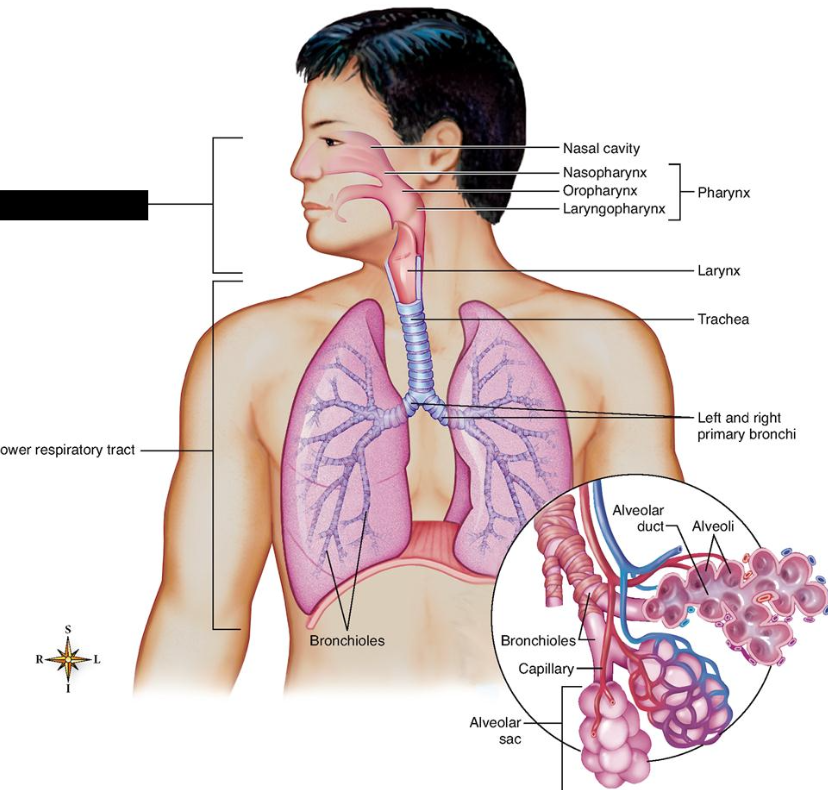
<p>The division of the respiratory system that <span style="background-color: transparent;">consists of the <strong>nose</strong> and <strong>nasal cavity</strong>, the <strong>sinuses, pharynx,</strong> and <strong>larynx</strong></span></p>
5
New cards

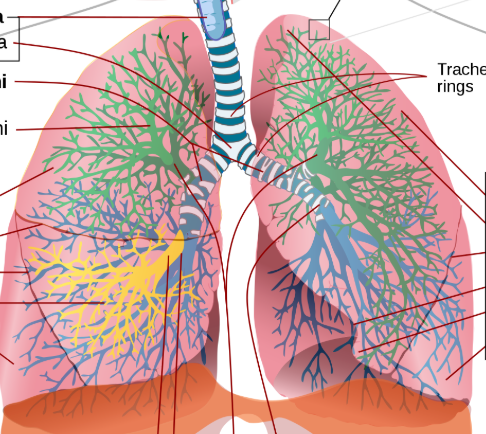
Lower Respiratory System

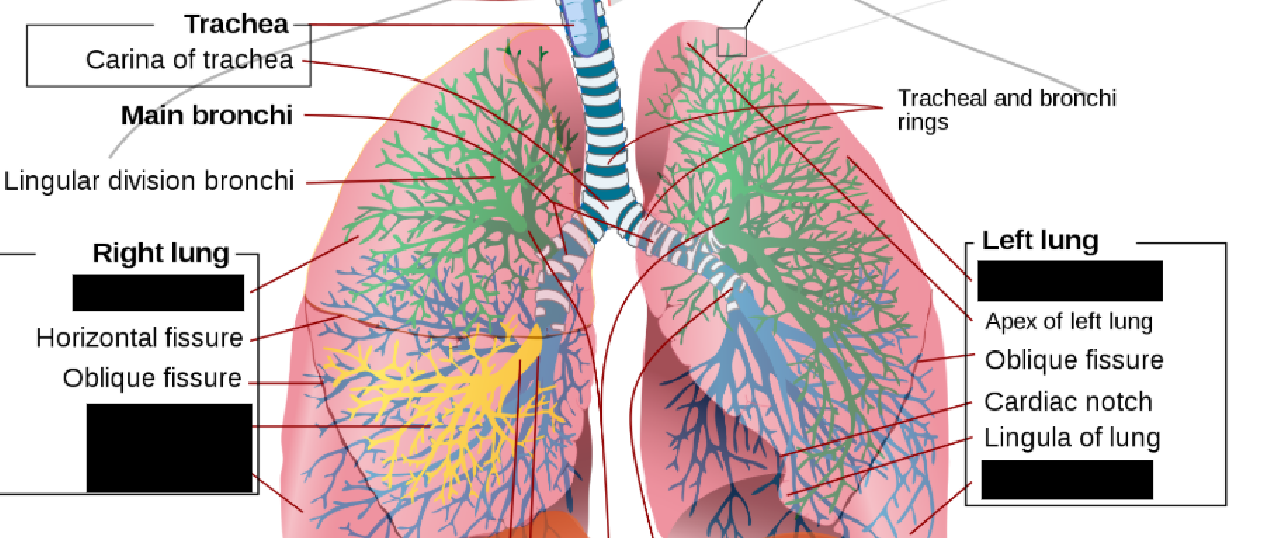
The division of the respiratory system that consists of the trachea, bronchi, bronchioles, lungs, and alveoli.
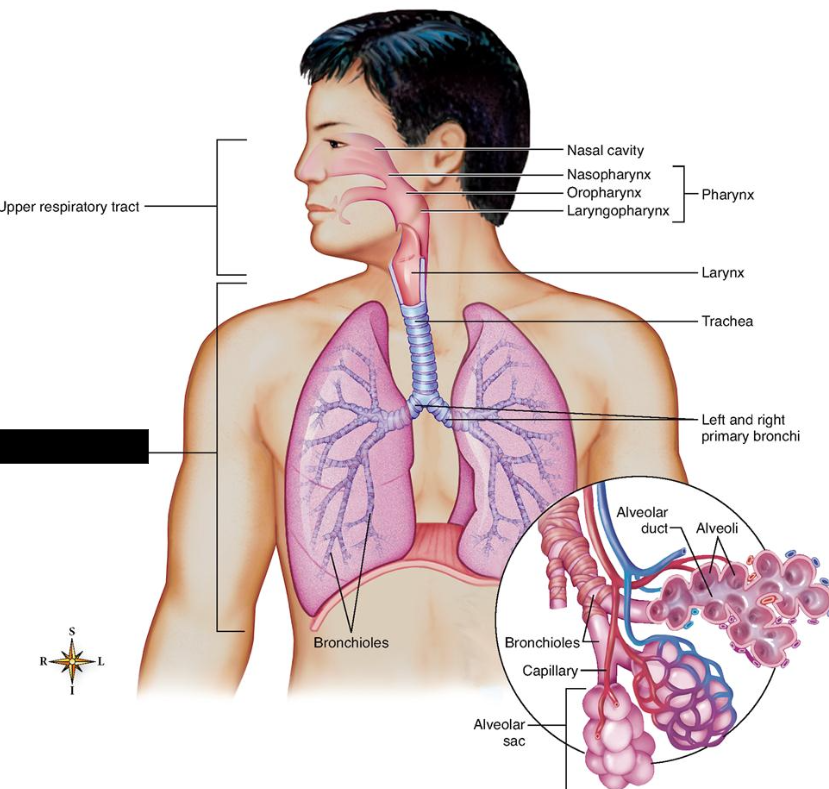
<p>The division of the respiratory system that <span style="background-color: transparent;">consists of the <strong>trachea,</strong> <strong>bronchi, bronchioles, lungs</strong>, and <strong>alveoli.</strong></span></p>
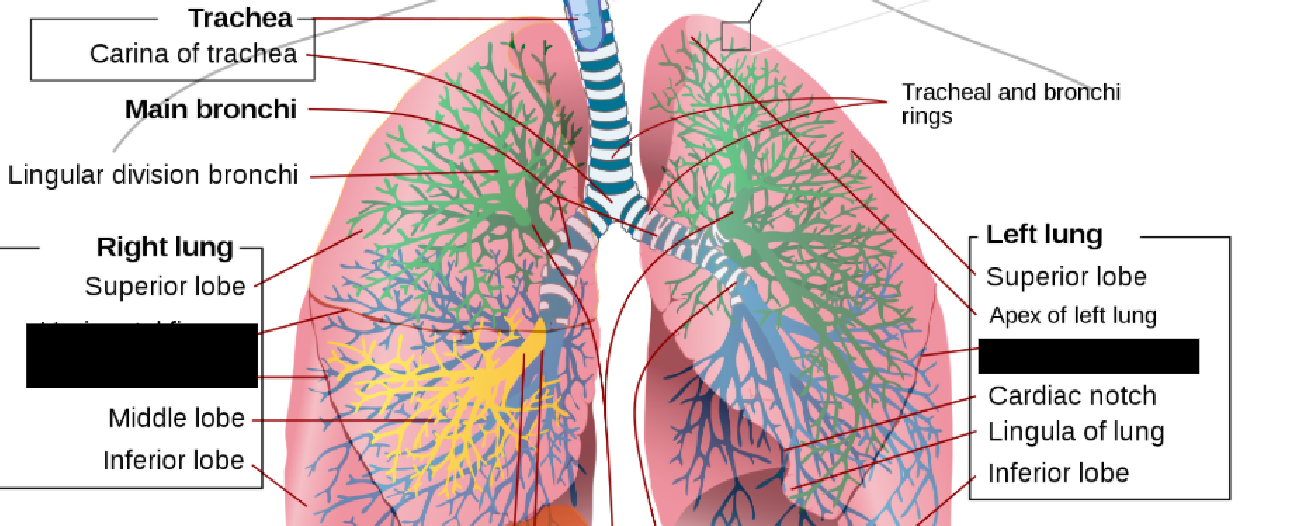
6
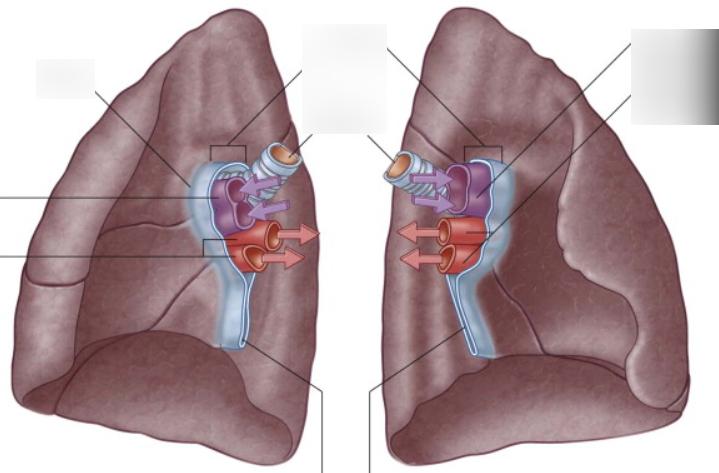
New cards

Nasal Cavity

The large, air-filled space above and behind the nose in the middle of the face. Lined with epithelium containing hairs. Air moves into it through the nostrils.
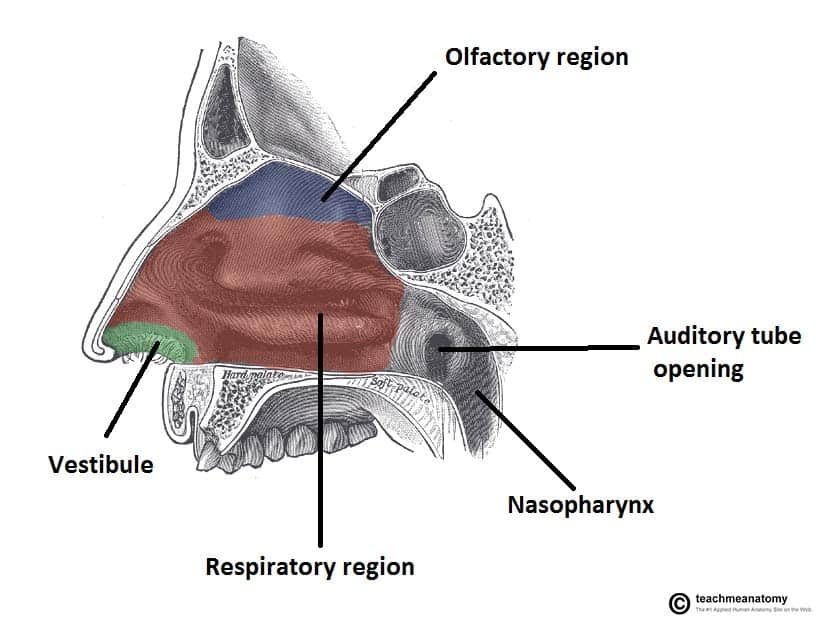
<p>The large, air-filled space above and behind the nose in the middle of the face. <span style="background-color: transparent;">Lined with epithelium containing hairs. Air moves into it through the nostrils.</span></p>
7
New cards

columnar mucous-secreting goblet cells

The epithelium in the nasal cavity contains _______ and _______-______ _____ ______

8
New cards

Lamina Propria

A highly vascular area under the epithelium in the nasal cavity (as well as all other mucous membranes in the body). The vascularization helps to provide heat and humidity to the air of the nasal cavity
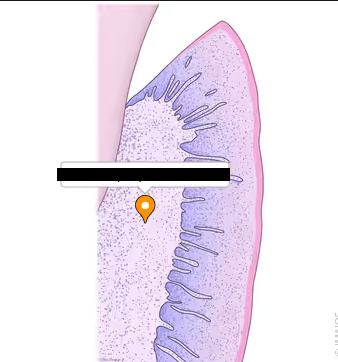
<p><span style="background-color: transparent;">A highly vascular area under the epithelium in the nasal cavity (as well as all other mucous membranes in the body). The vascularization helps to provide heat and humidity to the air of the nasal cavity</span></p>
9
New cards

Conchae

Bony protuberances in the nasal cavity. There are superior, middle, and inferior conchae. Their purpose is to create turbulent airflow, warm the air, and increase contact with the nasal mucosa and hairs so that the mucosa can pick up particles.
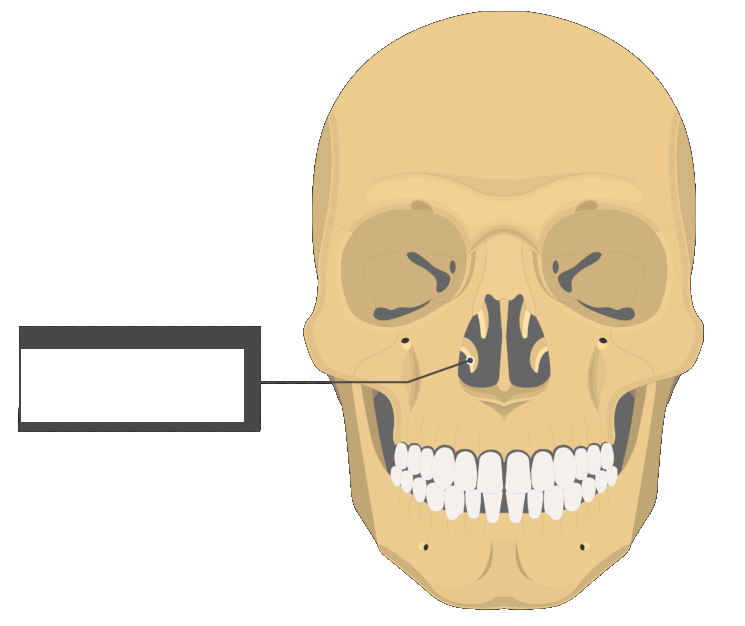
<p><span style="background-color: transparent;">Bony protuberances in the nasal cavity. There are superior, middle, and inferior conchae. Their purpose is to create turbulent airflow, warm the air, and increase contact with the nasal mucosa and hairs so that the mucosa can pick up particles.</span></p>
10
New cards

Nasal Septum

Formed by two bones; divides the nasal cavity into right and left portions. The superior portion consists of the perpendicular plate of the ethmoid bone, and the inferior portion consists of the vomer bone. The anterior portion consists of cartilage.
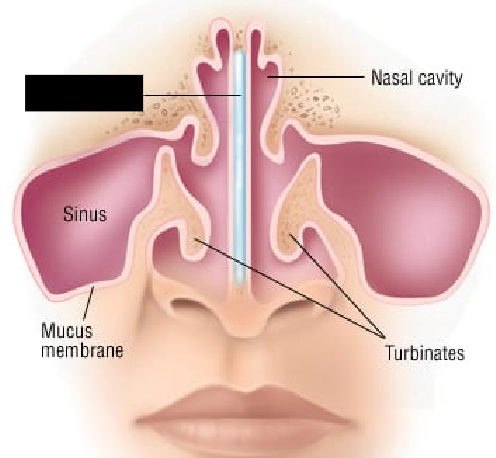
<p><span style="background-color: transparent;">Formed by two bones; divides the nasal cavity into right and left portions. The superior portion consists of the <strong>perpendicular plate </strong>of the <strong>ethmoid</strong> bone, and the inferior portion consists of the <strong>vomer</strong> bone. The anterior portion consists of cartilage.</span></p>
11
New cards

Meati

Superior, middle, and inferior grooves that allow air to flow between the nasal cavity, paranasal sinuses, and nasolacrimal ducts.
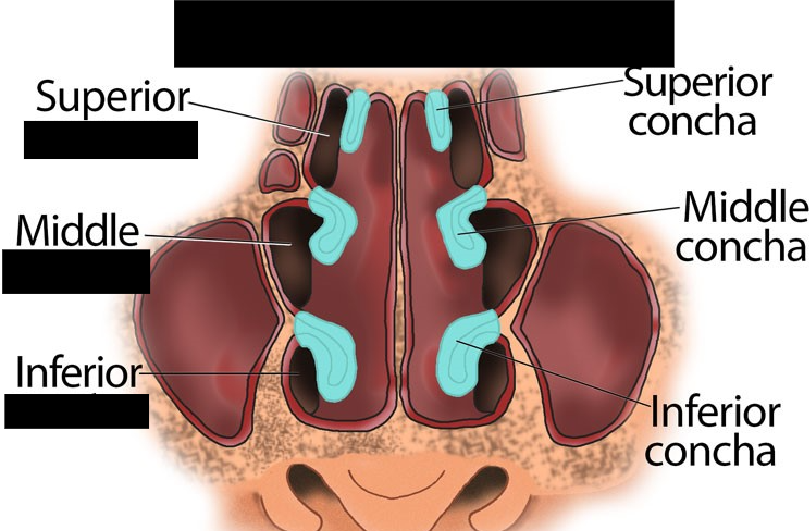
<p><span style="background-color: transparent;">Superior, middle, and inferior grooves that allow air to flow between the nasal cavity, paranasal sinuses, and nasolacrimal ducts.</span></p>
12
New cards

Hard Palate

Creates the floor of the nasal cavity. Formed by the maxilla (anterior) and palatine (posterior) bones. Separates the nasal and oral cavities. Anterior of the soft palate and uvula.
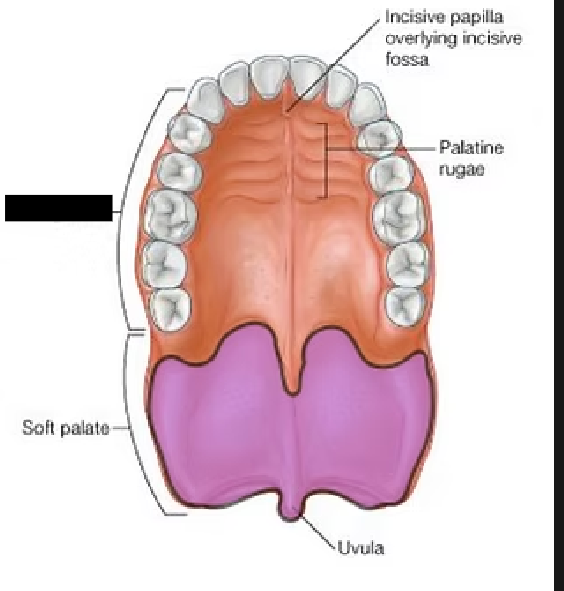
<p><span style="background-color: transparent;">Creates the floor of the nasal cavity. Formed by the maxilla (anterior) and palatine (posterior) bones. Separates the nasal and oral cavities. Anterior of the soft palate and uvula.</span></p>
13
New cards

Internal Nares

Ways of passage where air can exit the nasal cavity to the nasopharynx.

14
New cards

Nasopharynx

The upper portion of the pharynx. Begins posterior to the conchae and extends inferior to the soft palate.
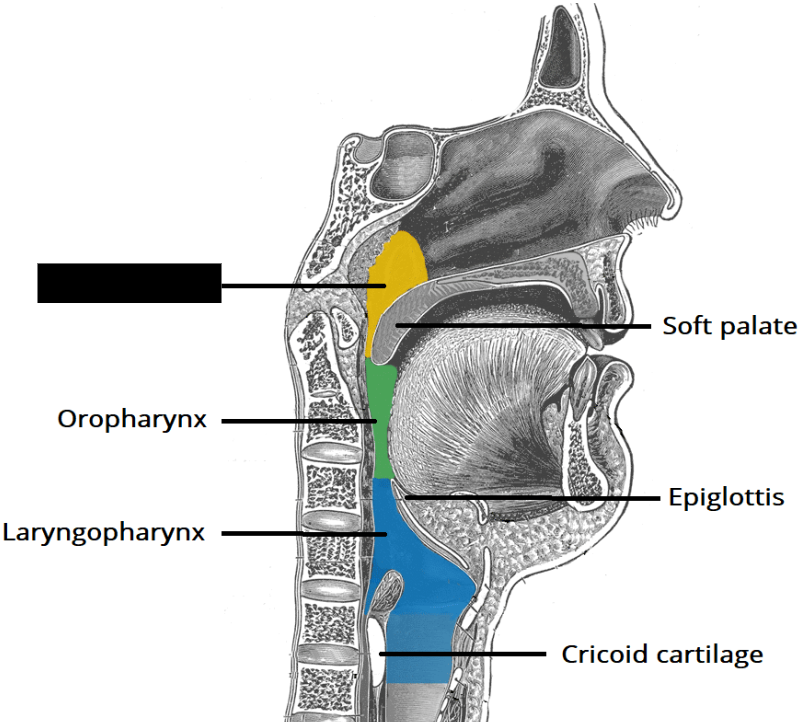
<p><span style="background-color: transparent;">The upper portion of the pharynx. Begins posterior to the conchae and extends inferior to the soft palate.</span></p>
15
New cards

Uvula

Structure that raises to close of the nasopharynx during swallowing to prevent substances from moving into the nasopharynx.
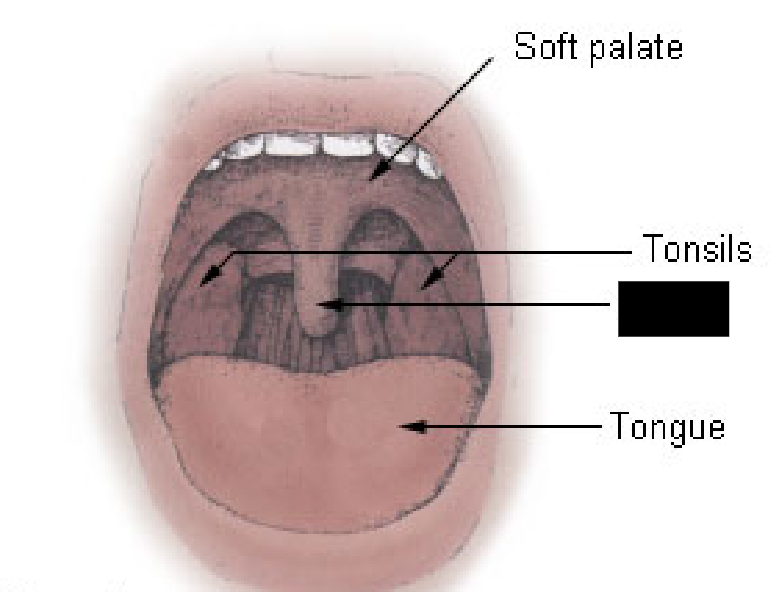
<p><span style="background-color: transparent;">Structure that raises to close of the nasopharynx during swallowing to prevent substances from moving into the nasopharynx.</span></p>
16
New cards

Oropharynx

Inferior to the nasopharynx and extends from the soft palate to the epiglottis. A shared passageway for air and substances on their way to the digestive tract
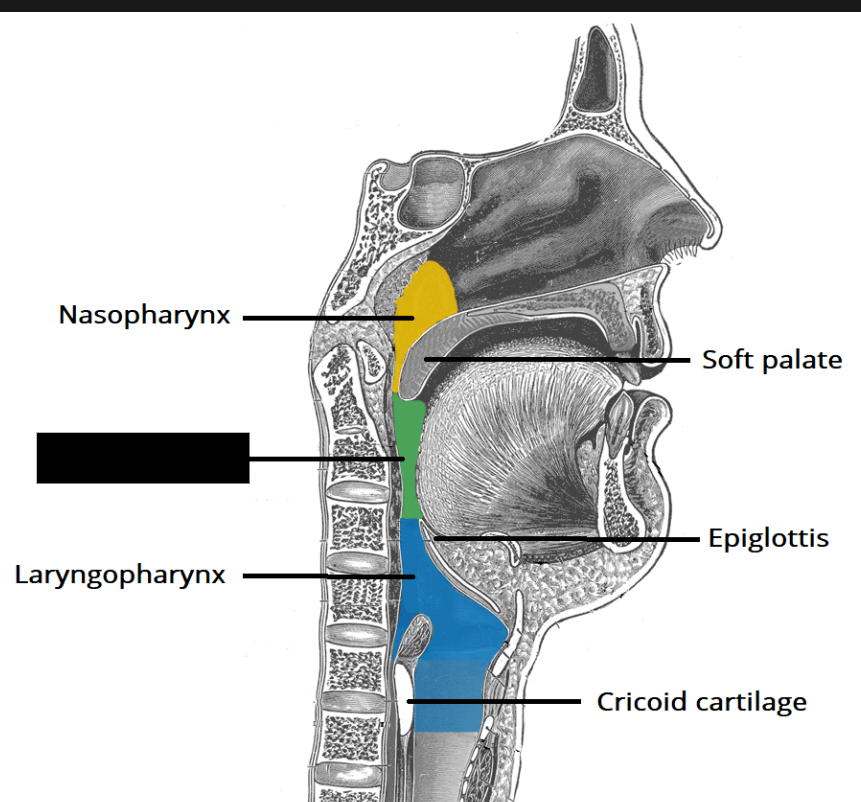
<p><span style="background-color: transparent;">Inferior to the nasopharynx and extends from the soft palate to the epiglottis. A shared passageway for air and substances on their way to the digestive tract</span></p>
17
New cards

Laryngopharynx

The most inferior portion of the pharynx. Extends from the tip of the epiglottis to the larynx. Lines with stratified squamous epithelium.
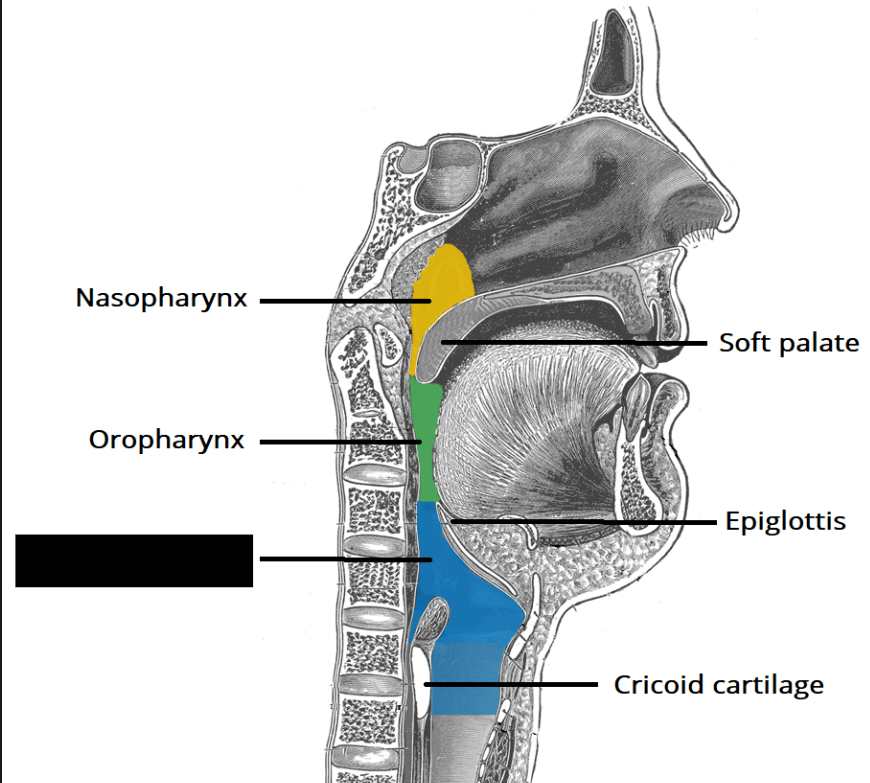
<p><span style="background-color: transparent;">The most inferior portion of the pharynx. Extends from the tip of the epiglottis to the larynx. Lines with stratified squamous epithelium.</span></p>
18
New cards

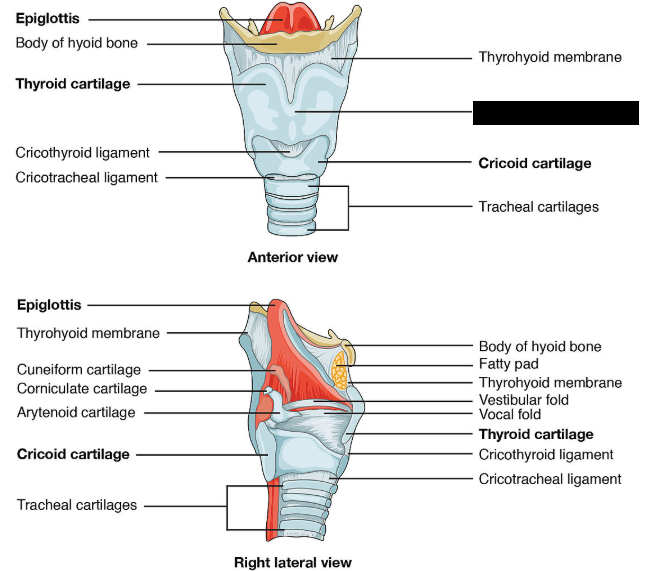
Larynx

Begins at the base of the tongue and extends to the trachea. Consists of 9 cartilages that are interconnected with muscles and ligaments.
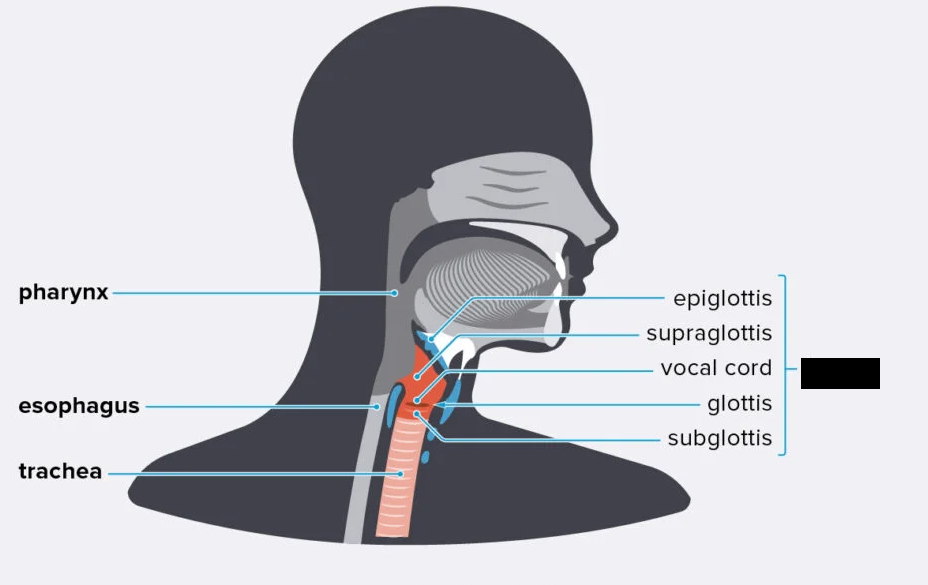
<p><span style="background-color: transparent;">Begins at the base of the tongue and extends to the trachea. Consists of 9 cartilages that are interconnected with muscles and ligaments.</span></p>
19
New cards

thyroid

The largest of the cartilages is the ______ cartilage (adam’s apple).
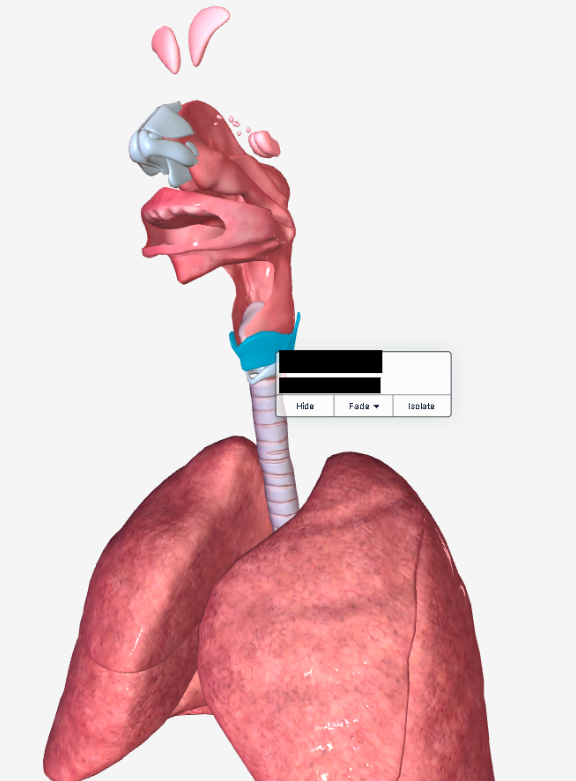
<p><span style="background-color: transparent;">The largest of the cartilages is the ______ cartilage (adam’s apple).</span></p>
20
New cards

cricoid

Inferior to the thyroid cartilage is the ______ cartilage.
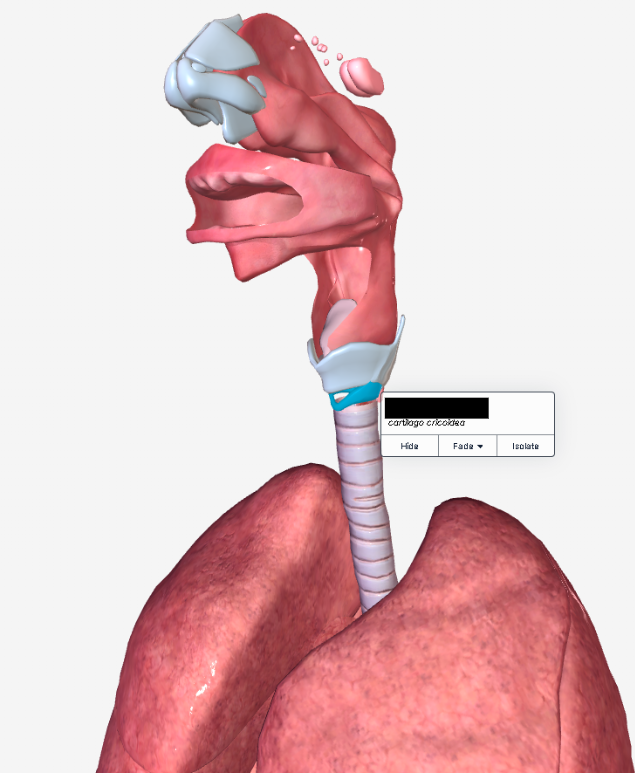
<p><span style="background-color: transparent;">Inferior to the thyroid cartilage is the <strong>______ </strong>cartilage.</span></p>
21
New cards

Epiglottis

An elastic cartilage flap that closes during swallowing to keep substances from moving into the trachea and air passages.
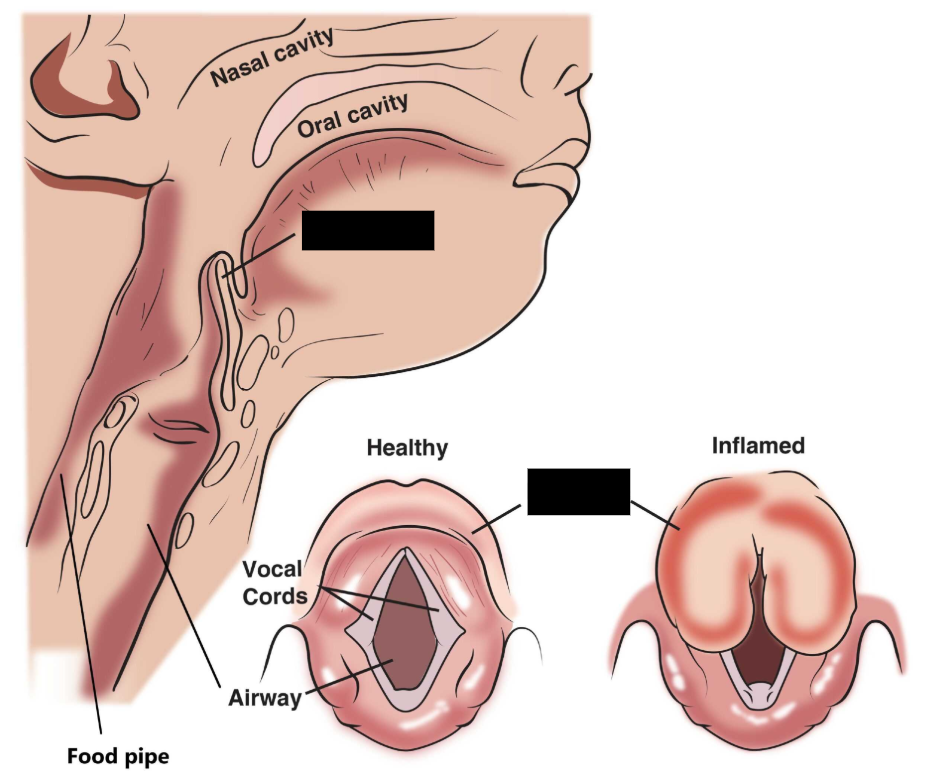
<p><span style="background-color: transparent;">An elastic cartilage flap that closes during swallowing to keep substances from moving into the trachea and air passages.</span></p>
22
New cards

arytenoid cartilages

a pair of small, pyramid-shaped structures located in the larynx (voice box). They sit atop the cricoid cartilage and serve as the primary attachment points for the vocal cords.
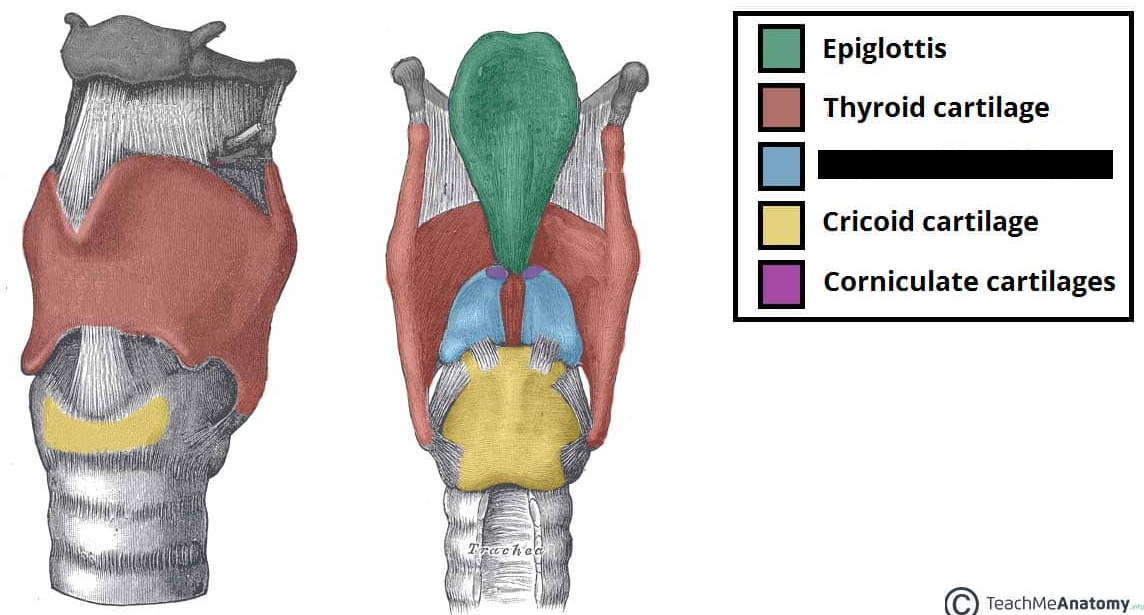
<p>a pair of small, pyramid-shaped structures located in the larynx (voice box). They sit atop the cricoid cartilage and serve as the primary attachment points for the vocal cords.</p>
23
New cards

corniculate cartilages

two small, cone-shaped nodules made of elastic cartilage. They are paired structures in the larynx (the voice box) located at the very top of the larger arytenoid cartilages
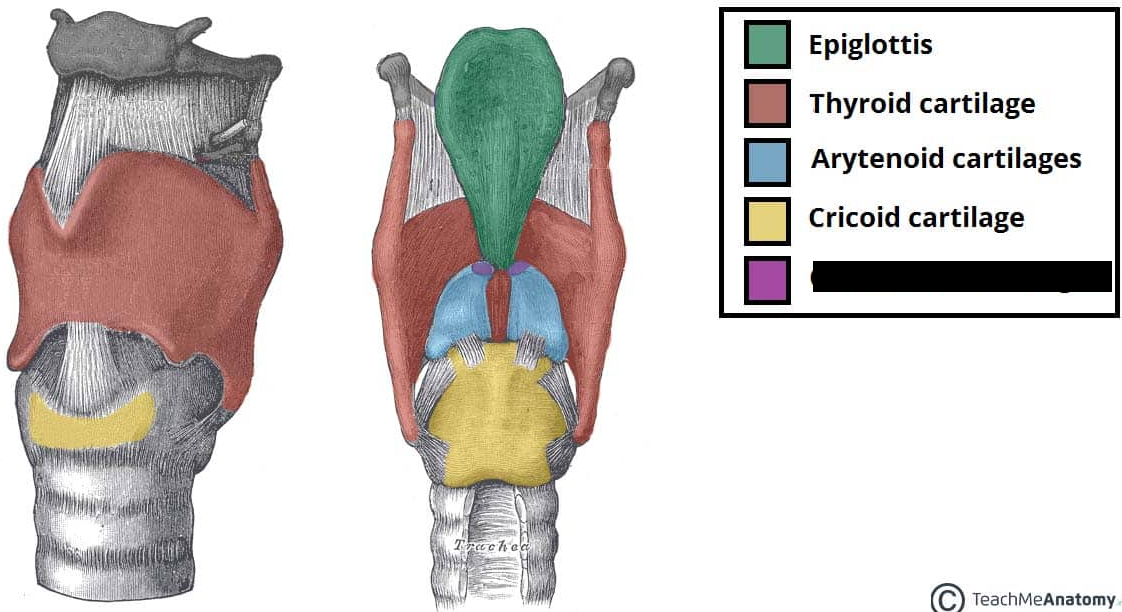
<p>two small, cone-shaped nodules made of elastic cartilage. They are paired structures in the larynx (the voice box) located at the very top of the larger arytenoid cartilages</p>
24
New cards

cuneiform cartilages

paired, small, club-shaped accessory cartilages of the larynx. Made of elastic cartilage, they are suspended within the aryepiglottic folds on either side of the larynx. They do not directly articulate with other laryngeal cartilages
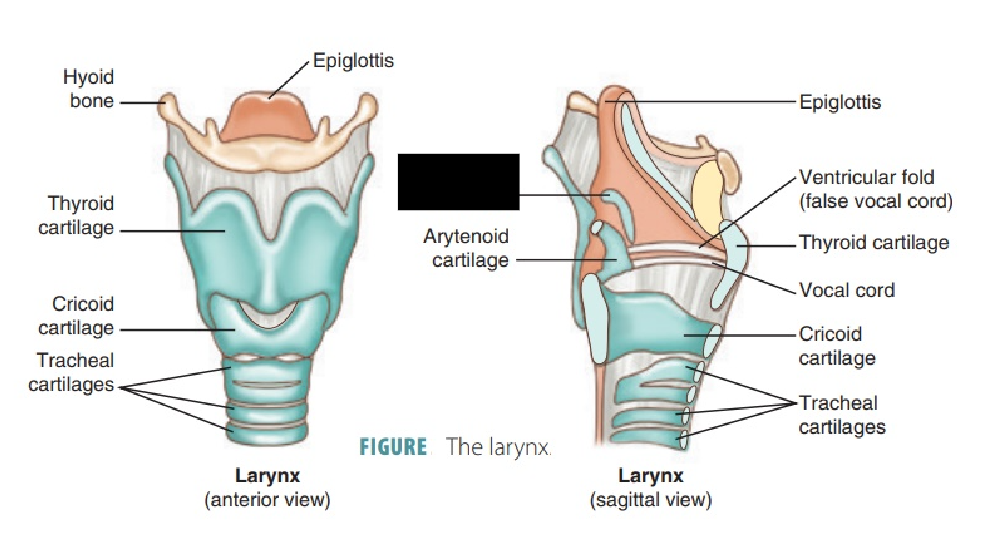
<p>paired, small, club-shaped accessory cartilages of the larynx. Made of elastic cartilage, they are suspended within the aryepiglottic folds on either side of the larynx. They do not directly articulate with other laryngeal cartilages</p>
25
New cards

Thyrohyoid Membrane

a broad, fibro-elastic sheet in the neck that connects the upper border of the thyroid cartilage to the hyoid bone. It provides structural support to the larynx and allows it to move upward during swallowing
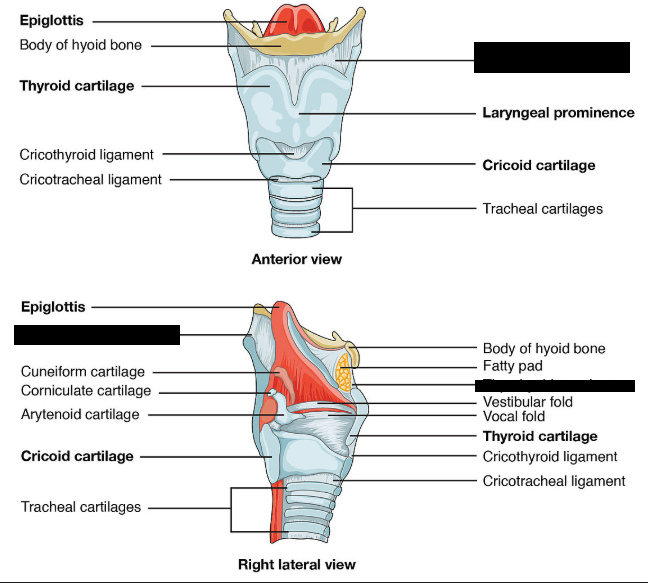
<p>a broad, fibro-elastic sheet in the neck that connects the upper border of the thyroid cartilage to the hyoid bone. It provides structural support to the larynx and allows it to move upward during swallowing</p>
26
New cards

laryngeal prominence

the protruding, visible part of the thyroid cartilage surrounding the larynx (voice box). It serves to protect the vocal cords and front of the neck
<p>the protruding, visible part of the thyroid cartilage surrounding the larynx (voice box). It serves to protect the vocal cords and front of the neck</p>
27
New cards

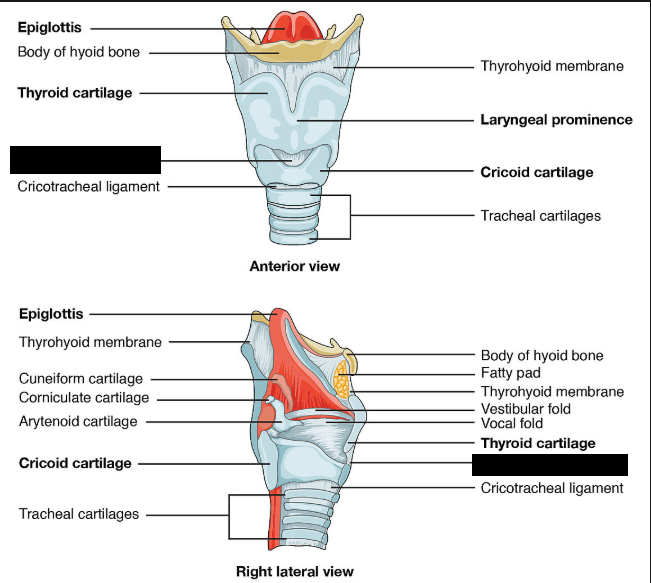
cricothyroid ligament

a strong, fibrous band connecting the thyroid cartilage to the cricoid cartilage in the larynx. It helps stabilize the laryngeal cartilages.
<p>a strong, fibrous band connecting the thyroid cartilage to the cricoid cartilage in the larynx. It helps stabilize the laryngeal cartilages.</p>
28
New cards

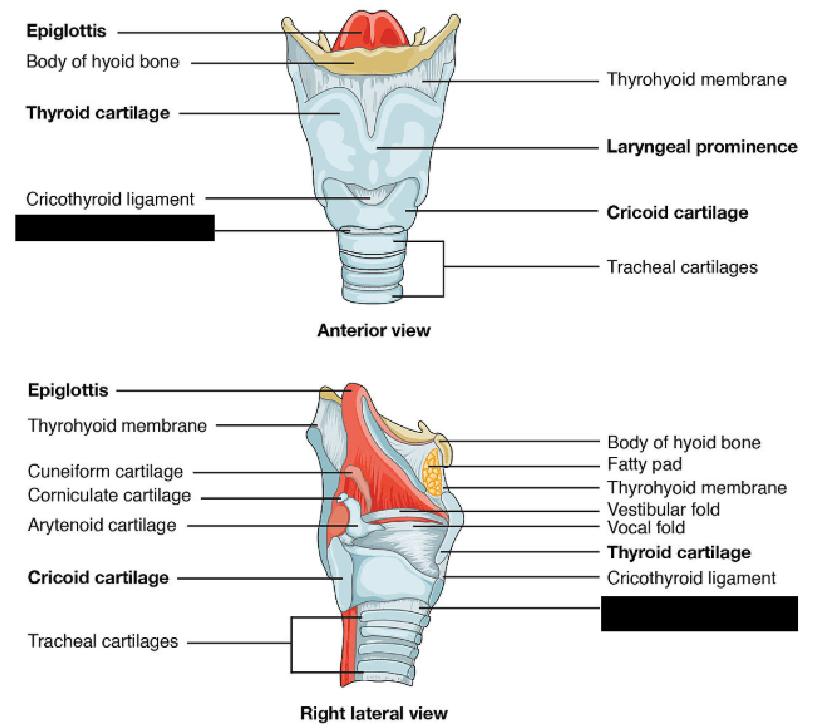
cricotracheal ligament

Ligament that connects the cricoid cartilage with the first ring of the trachea.
<p>Ligament that connects the cricoid cartilage with the first ring of the trachea.</p>
29
New cards

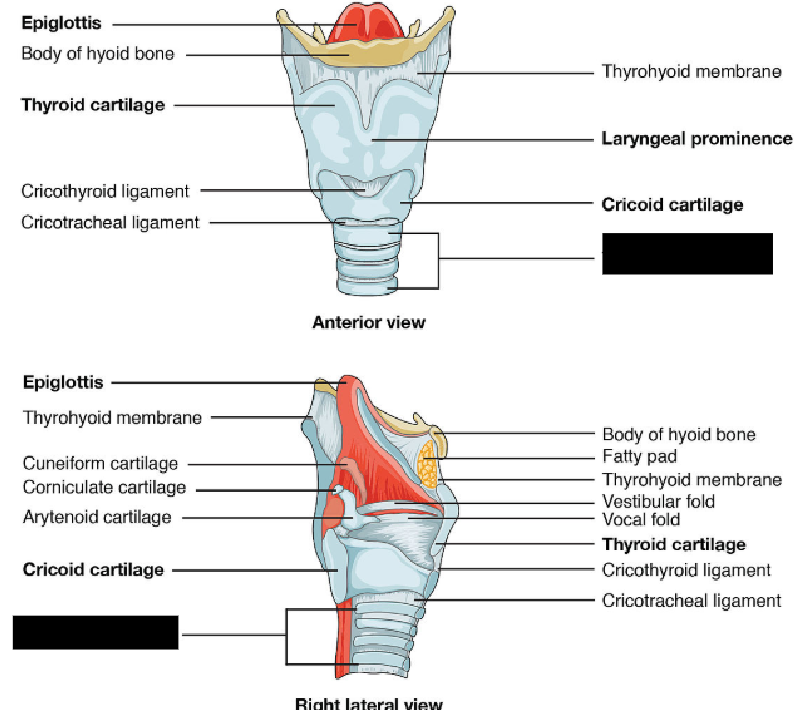
tracheal cartilages

the 16 to 20 C-shaped rings of strong, flexible hyaline cartilage that form the structural framework of the human windpipe (trachea)
<p>the 16 to 20 C-shaped rings of strong, flexible hyaline cartilage that form the structural framework of the human windpipe (trachea)</p>
30
New cards

Vocal Cords

A structure that resides in the larynx and consists of two pairs of ligaments that extend from the arytenoid to the thyroid cartilages. The superior set is called the false ____ _____, while the inferior set is called the true _____ _____.
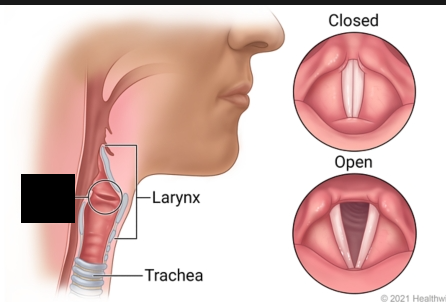
<p><span style="background-color: transparent;">A structure that resides in the larynx and consists of two pairs of ligaments that extend from the arytenoid to the thyroid cartilages. The superior set is called the false ____ _____, while the inferior set is called the true _____ _____.</span></p>
31
New cards

Glottis

A triangular space formed when the vocal cords are relaxed.
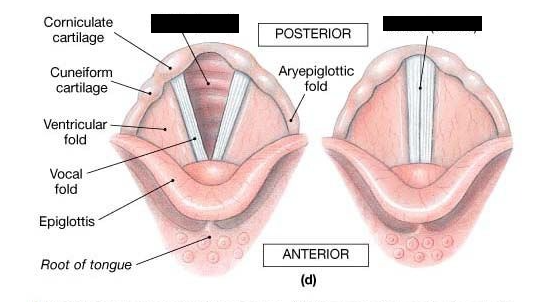
<p><span style="background-color: transparent;">A triangular space formed when the vocal cords are relaxed.</span></p>
32
New cards

higher lower

The vibration of smaller areas of the vocal cords results in _____ pitches, while _____ pitches are produced by longer vocal cords

33
New cards

longer

Males typically have ______ vocal cords than females.

34
New cards

trachea

Air travels from the larynx to the ______.
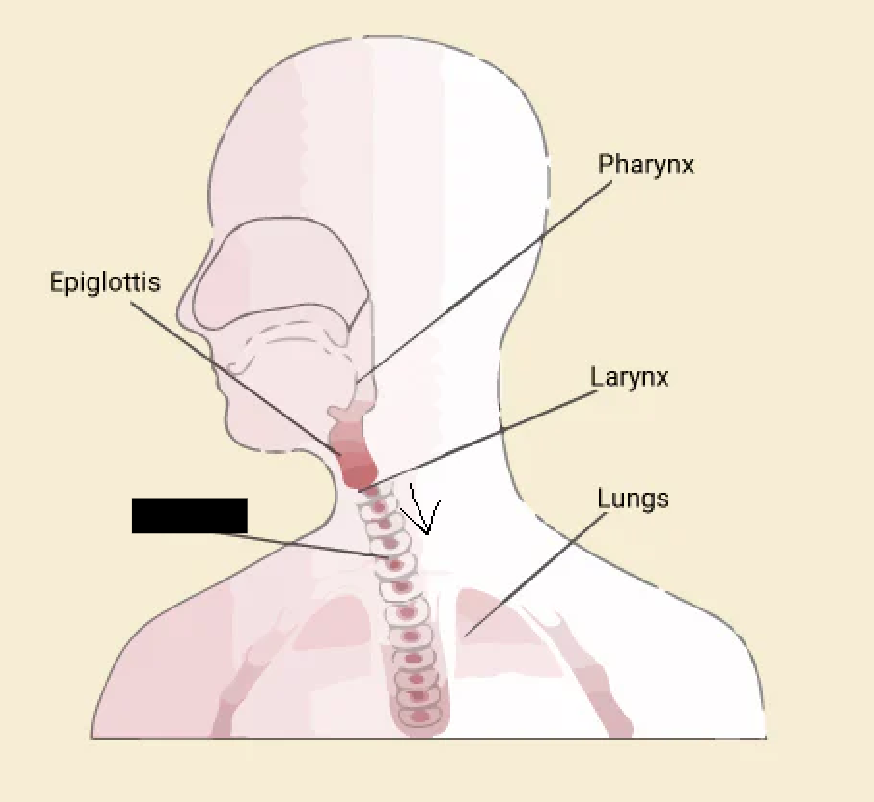
<p><span style="background-color: transparent;">Air travels from the larynx to the ______.</span></p>
35
New cards

Trachea

A tubular structure consisting of dense connective tissue and rings of hyaline cartilage. Lined with ciliated pseudostratified columnar epithelium with goblet cells. The epithelium moves substances toward the larynx and esophagus for swallowing.
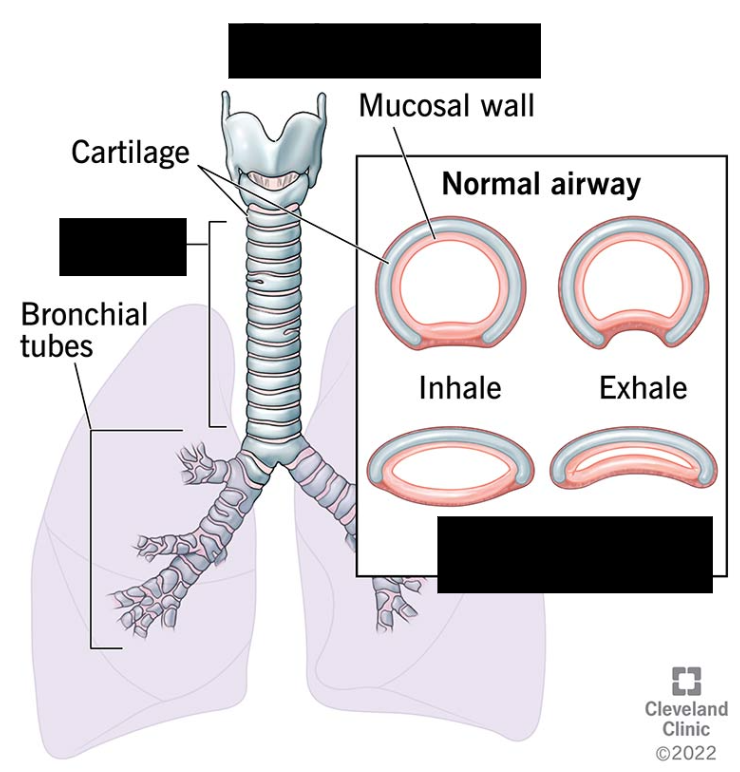
<p><span style="background-color: transparent;">A tubular structure consisting of dense connective tissue and rings of hyaline cartilage. Lined with ciliated pseudostratified columnar epithelium with goblet cells. The epithelium moves substances toward the larynx and esophagus for swallowing.</span></p>
36
New cards

Posteriorly

The hyaline cartilage rings do not completely encircle the trachea, but are open __________
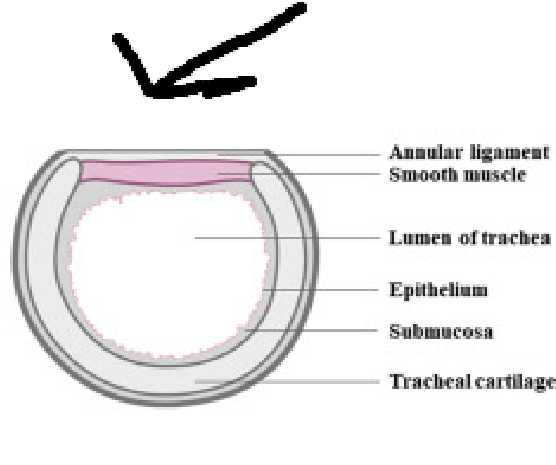
<p><span style="background-color: transparent;">The hyaline cartilage rings do not completely encircle the trachea, but are open __________</span></p><p></p>
37
New cards

Carina

Area where the inferior end of the trachea divides into right and left bronchi.
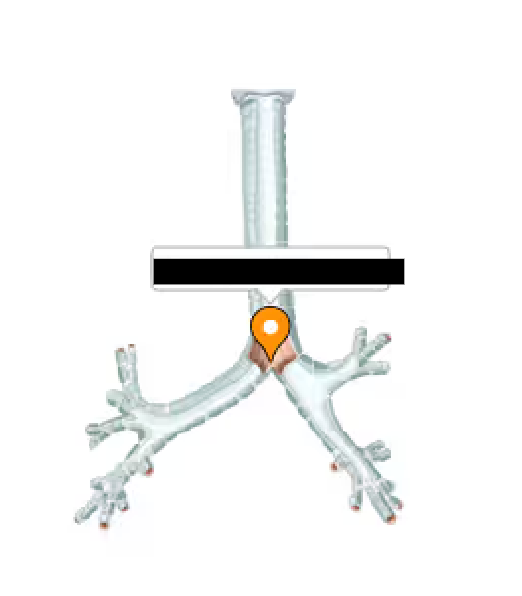
<p>Area where the inferior end of the trachea divides into right and left bronchi.</p>
38
New cards

Trachealis

 A muscle that is located at the posterior section of the trachea. It can constrict and contract the trachea. It usually ends at about the level of the fifth thoracic segment.
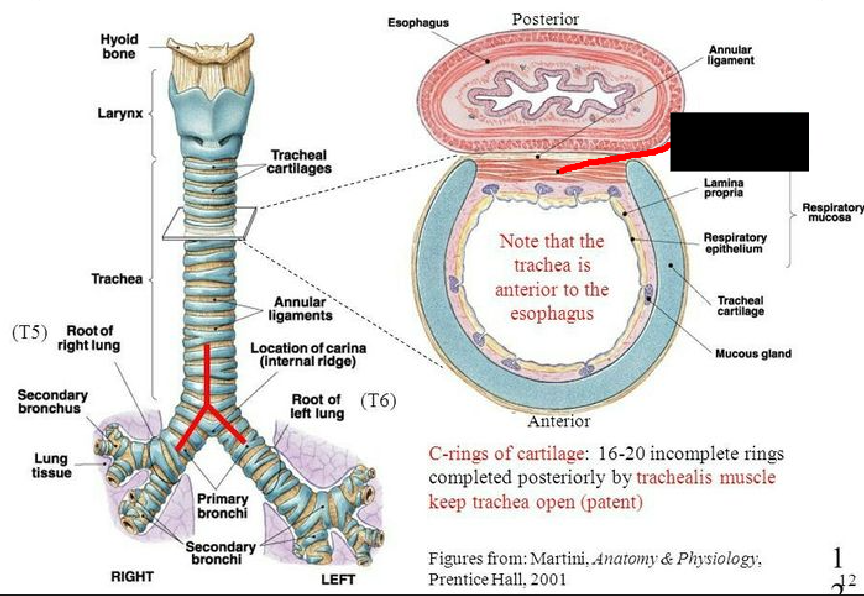
<p><span style="background-color: transparent;">&nbsp;A muscle that is located at the posterior section of the trachea. It can constrict and contract the trachea. It usually ends at about the level of the fifth thoracic segment.</span></p>
39
New cards

secondary lobar bronchi tertiary segmental bronchi

The right and left bronchi originate from the carina, and divide into smaller branches called ______ or ______ ______ . They then divide into smaller branches called ______ or ______ ______ .
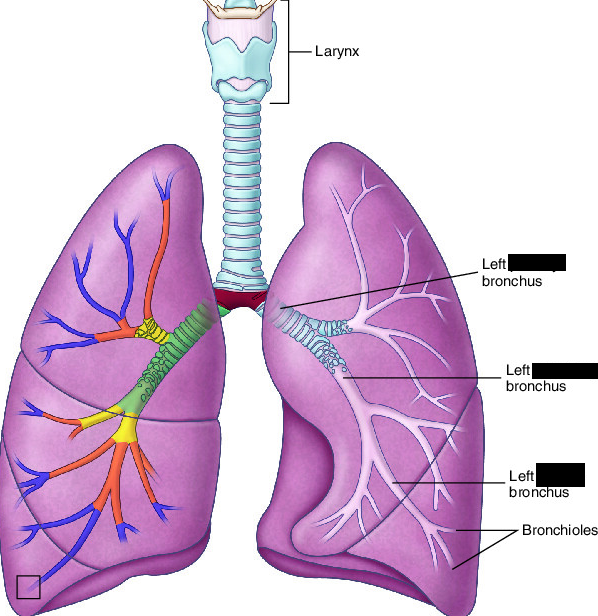
<p><span style="background-color: transparent;">The right and left bronchi originate from the carina, and divide into smaller branches called <strong>______ </strong>or <strong>______ ______ </strong>. They then divide into smaller branches called <strong>______ </strong>or <strong>______ ______ </strong>.</span></p>
40
New cards

less more smooth muscle

As bronchi get smaller, there is ____ cartilage and ____ smooth muscle until reaching the tertiary bronchi, which consist entirely of _____ _______, which can constrict the bronchi and impede air passage

41
New cards

terminal respiratory

Bronchioles divide to form _____ bronchioles, which divide to form ________ bronchioles that connect with alveolar ducts. The alveolar ducts give rise to form alveoli.
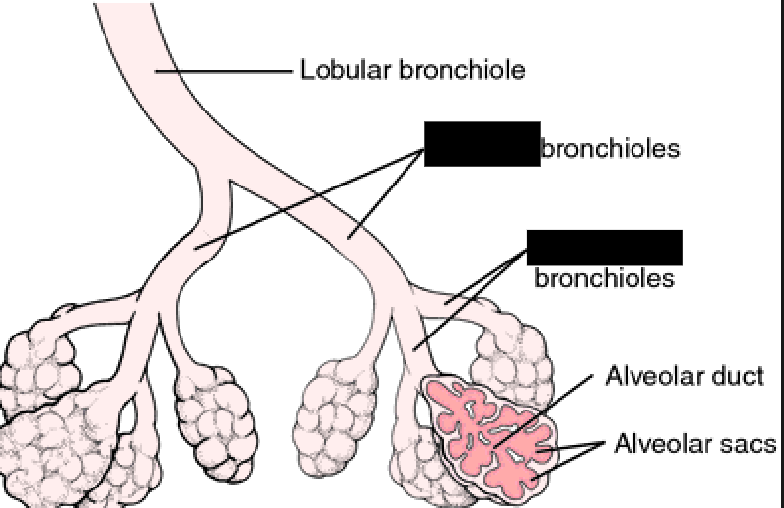
<p><span style="background-color: transparent;">Bronchioles divide to form _____ bronchioles, which divide to form ________ bronchioles that connect with alveolar ducts. The alveolar ducts give rise to form alveoli.</span></p>
42
New cards

Alveoli

The functional unit of the lung. Consists of small hollow areas for gas exchange. Both Alveoli and alveolar ducts are lined with simple squamous epithelium that allow for gas exchange.
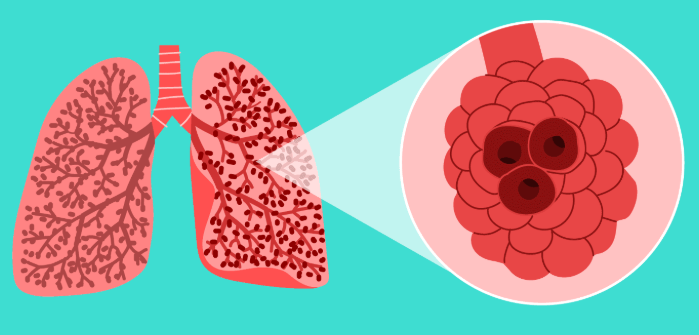
<p><span style="background-color: transparent;">The functional unit of the lung. Consists of small hollow areas for gas exchange. Both Alveoli and alveolar ducts are lined with simple squamous epithelium that allow for gas exchange.</span></p>
43
New cards

300

The lungs contain about ___ million alveoli.

44
New cards

Type I Pneumocytes

The cells of the simple squamous epithelium
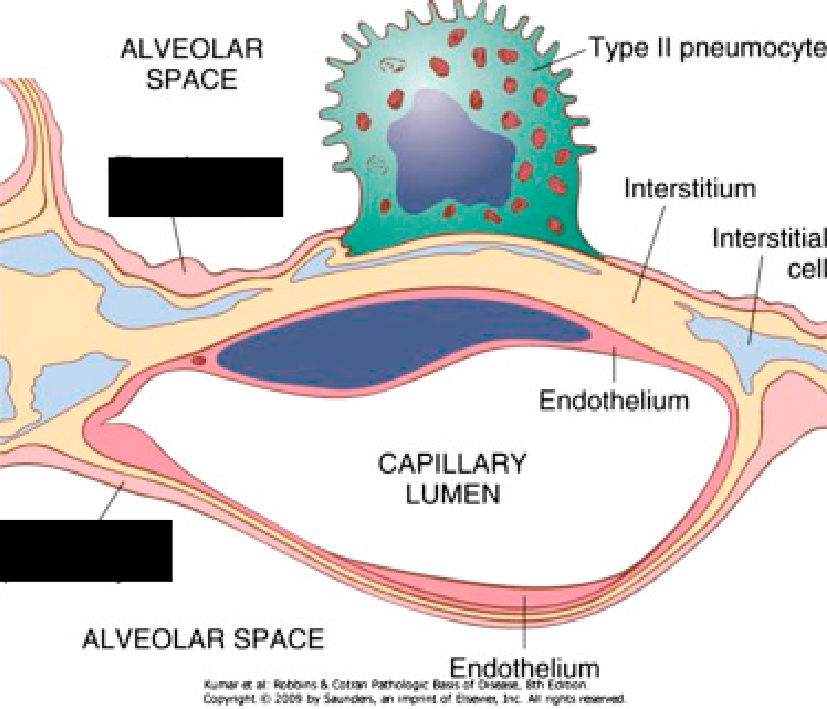
<p><span style="background-color: transparent;">The cells of the simple squamous epithelium</span></p>
45
New cards

Type II Pneumocytes

Cells in the alveoli that secrete a substance known as surfactant that helps to decrease tension in the alveoli.
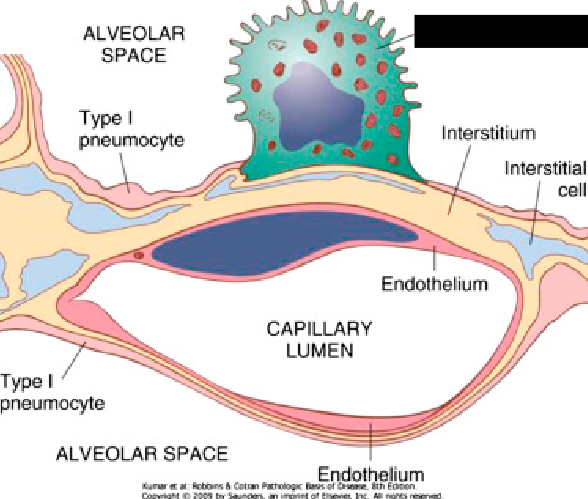
<p><span style="background-color: transparent;">Cells in the alveoli that secrete a substance known as <strong>surfactant</strong> that helps to decrease tension in the alveoli.</span></p>
46
New cards

Lungs

Two cone-shaped structures residing in the thoracic cavity. The inferior portion of each lung reaches the diaphragm. The superior portion extends about one inch above each clavicle.
<p><span style="background-color: transparent;">Two cone-shaped structures residing in the thoracic cavity. The inferior portion of each lung reaches the diaphragm. The superior portion extends about one inch above each clavicle.</span></p>
47
New cards

superior middle inferior larger superior inferior

The right lung contains ______, ______, and ______ lobes, and is ______ than the left lung, which contains only a ______ and ______ lobe.
<p><span style="background-color: transparent;">The right lung contains ______, ______, and ______ lobes, and is ______ than the left lung, which contains only a ______ and ______ lobe.</span></p>
48
New cards

fissures

the lobes of the lungs are separated by ________

49
New cards

horizontal oblique oblique

The right lung includes a ______ and ______ fissure, while the left lung only contains an ______ fissure.
<p><span style="background-color: transparent;">The right lung includes a ______ and ______ fissure, while the left lung only contains an ______ fissure.</span></p>
50
New cards

Hilum

An area at the medial surface of each lung that allows vessels to enter and exit
<p><span style="background-color: transparent;">An area at the medial surface of each lung that allows vessels to enter and exit</span></p>
51
New cards

Cardiac Notch

 Located at the left lung; an indentation for the heart.
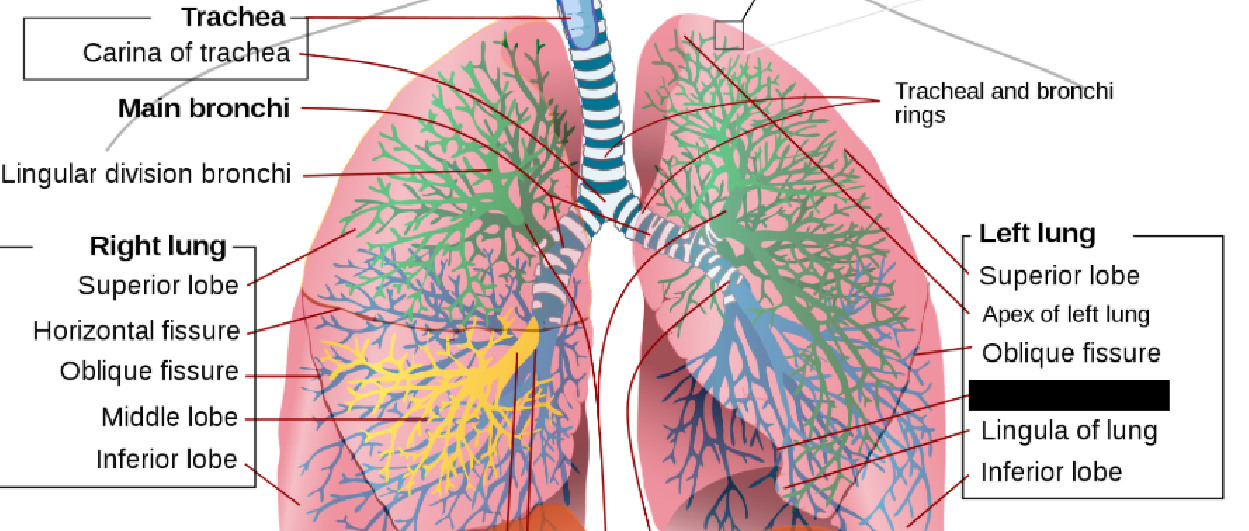
<p><span style="background-color: transparent;">&nbsp;Located at the left lung; an indentation for the heart.</span></p>
52
New cards

Visceral Pleural Membrane

Serous membrane that surrounds the lungs and closely adheres to the lung surface.
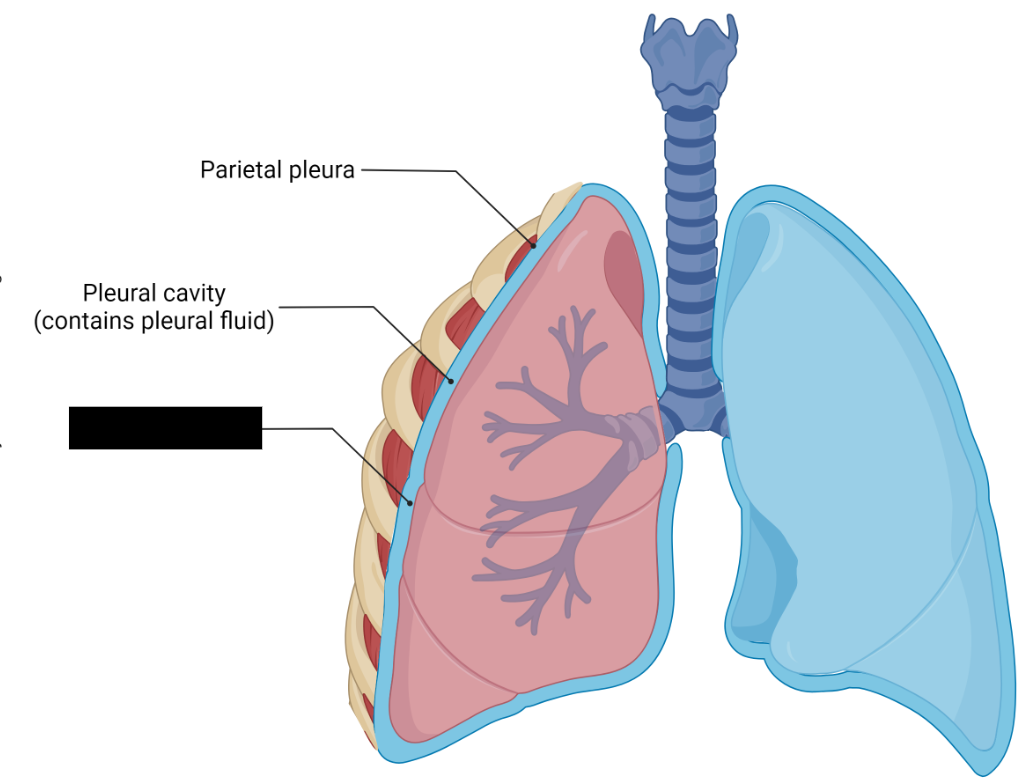
<p><span style="background-color: transparent;">Serous membrane that surrounds the lungs and closely adheres to the lung surface.</span></p>
53
New cards

Parietal Pleural Membrane

Serous membrane that lines the interior of the thoracic wall of the lungs.
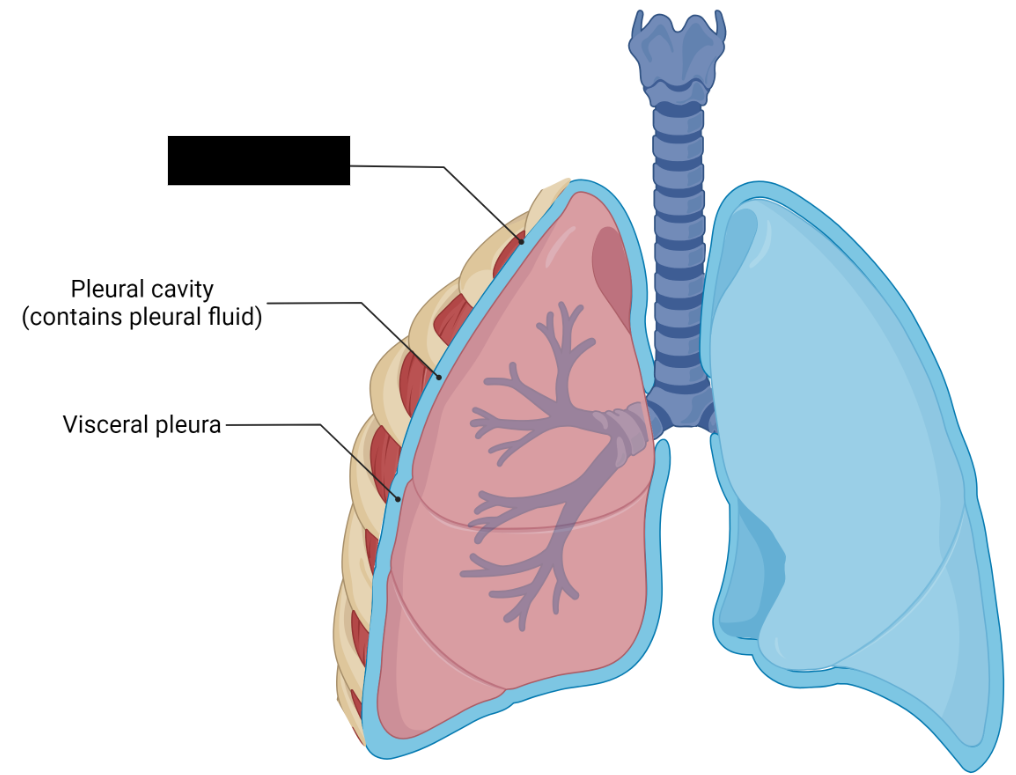
<p><span style="background-color: transparent;">Serous membrane that lines the interior of the thoracic wall of the lungs.</span></p>
54
New cards

Pleural Fluid

Fluid secreted by the visceral and parietal pleural membranes to reduce friction and hold the membranes together.

55
New cards

Chronic Obstructive Pulmonary Disease

An airflow-limiting condition that affects the lungs. Includes both emphysema and chronic bronchitis.
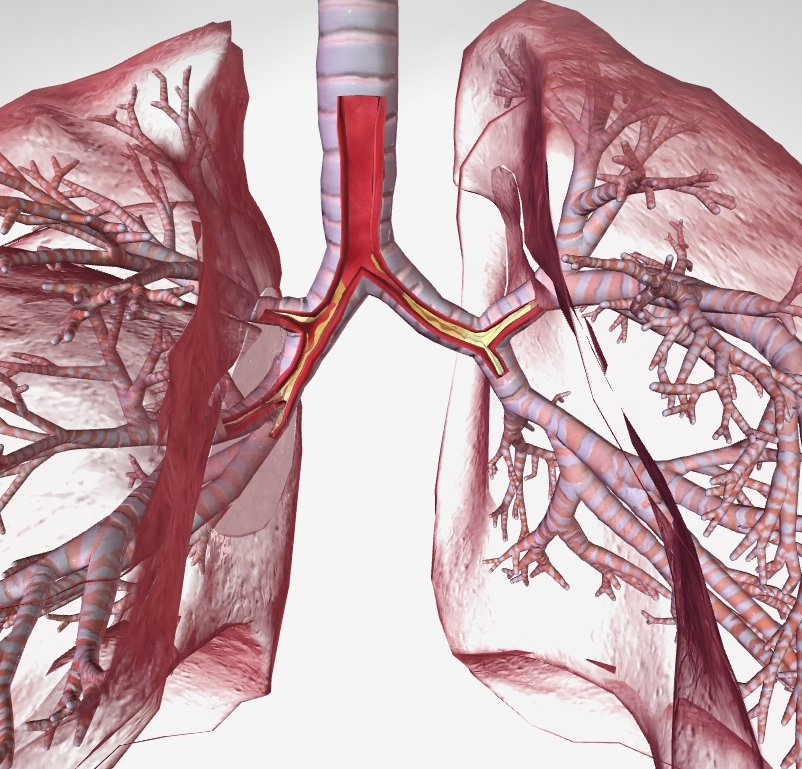
<p><span style="background-color: transparent;">An airflow-limiting condition that affects the lungs. Includes both emphysema and chronic bronchitis.</span></p>
56
New cards

Emphysema

A condition that affects the alveoli (the tiny air-filled pockets in the lungs responsible for gas exchange and breathing). Alveolar walls are broken down, causing alveolar spaces to become permanently and abnormally enlarged. Fewer alveolar walls lead to less surface area for gas exchange to occur, limiting airflow.
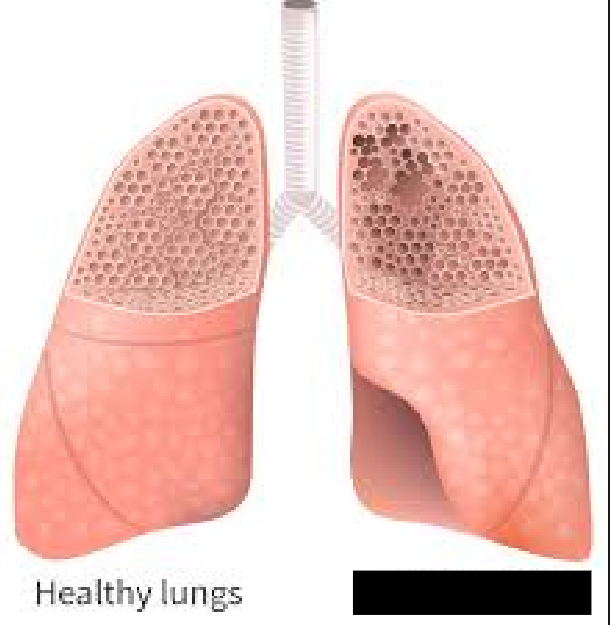
<p><span style="background-color: transparent;">A condition that affects the alveoli (the tiny air-filled pockets in the lungs responsible for gas exchange and breathing). Alveolar walls are broken down, causing alveolar spaces to become permanently and abnormally enlarged. Fewer alveolar walls lead to less surface area for gas exchange to occur, limiting airflow.</span></p>
57
New cards

Chronic Bronchitis

A condition that affects the bronchi and bronchioles (small tubes that allow for the passage of air in and out of the lungs). The airways become narrowed and blocked by mucus, limiting airflow.
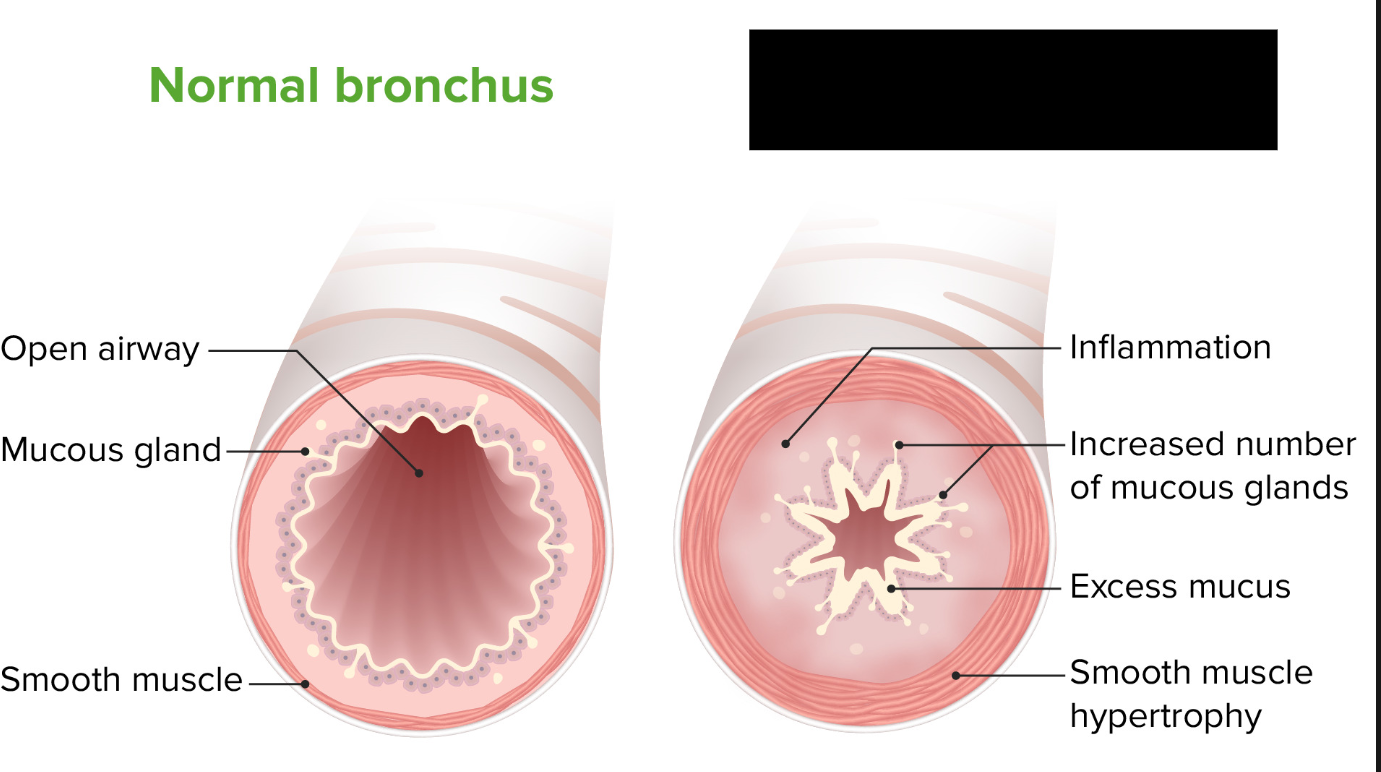
<p><span style="background-color: transparent;">A condition that affects the bronchi and bronchioles (small tubes that allow for the passage of air in and out of the lungs). The airways become narrowed and blocked by mucus, limiting airflow.</span></p>
58
New cards

Cystic Fibrosis

A genetically inherited disease that affects secretory cells throughout the body.  Causes thicker mucous and higher salt content in sweat. Thick mucous can block respiratory passages, leading to wheezing and coughing, as well as chronic respiratory infections. Mucus can also block the pancreatic ducts, blocking the release of pancreatic enzymes needed to digest nutrients.

59
New cards

Lung Cancer

A disease that originates in the cells of the central or peripheral lung tissue. The most common is Non-small Cell Lung Cancer which comprises 85% of all lung cancers. The leading cause is smoking, which leads to mutations in healthy cells, promoting abnormal cell growth and eventually lung cancer tumors.



