CNA Program Key Terms
 Call Kai
 Learn
Learn Practice Test
 Spaced Repetition
 Match
Match Flashcards
 Knowt Play
1/147

There's no tags or description
Looks like no tags are added yet.
Name | Mastery | Learn | Test | Matching | Spaced | Call with Kai |
|---|
No analytics yet
Send a link to your students to track their progress
148 Terms
Long-term care (LTC)
Care given in a LTC facility for people who need 24-hour skilled care (medically necessary care given by skilled professional)
Facilities are also called skilled nursing facilities (SNFs)
Dysphagia
Difficulty or discomfort when swallowing
Sundowning
Becoming restless and agitated in the late afternoon, evening, or night
Common in patients with Alzheimer’s disease
Eloping
Patient with Alzheimer’s wanders away from protected area and doesn’t return
Chronic Obstructive Pulmonary Disease (COPD)
Chronic, progressive disease that cannot be cured
Have trouble breathing
Two types are chronic bronchitis and emphysema
Diuretic
Medication that reduce fluid in body and increases need to urinate
Myocardial Infarction (MI)
Medical term for heart attack
Blood flow to heart muscle is blocked, causing waste products to not be removed and muscle cells die
Oxygens and nutrients fail to reach cardiac muscle cells
Peripheral Vascular Disease (PVD)
Disease where legs, feet, arms, hands do not have enough blood circulation due to fatty deposits in blood vessels that harden over time
Affected body parts feel cold and becomes cyanotic
Causes ulcers and swelling
Dyspnea
Difficulty breathing or shortness of breath
Congestive Heart Failure (CHF)
When one or both sides of heart stops pumping blood properly
Causes blood to back up to lungs, legs, feet, abdomen
Happens when heart muscles gets damaged severely
Angina
Chest pain, pressure, discomfort in the left side or center of chest caused by heart muscle not getting enough oxygen
Patient might sweat, look pale, feel dizzy, or have trouble breathing
Could be sign of heart attack
Atherosclerosis
Hardening or narrowing of blood vessels
Rectal Suppository
Medication that’s inserted into the rectum to treat constipation or hemorrhoids
Used when oral medications cannot be taken
Sputum
thick mixture of mucus and saliva coughed up from lungs and airways
Occupied bed
Bed made while a person is in bed
Unoccupied bed
Bed made while no person is in bed
Bronchitis
Irritation and inflammation of the lining of bronchi
Categorized as acute or chronic
Emphysema
Progressive, irreversible lung disease where alveoli are destroyed.
Caused by smoking
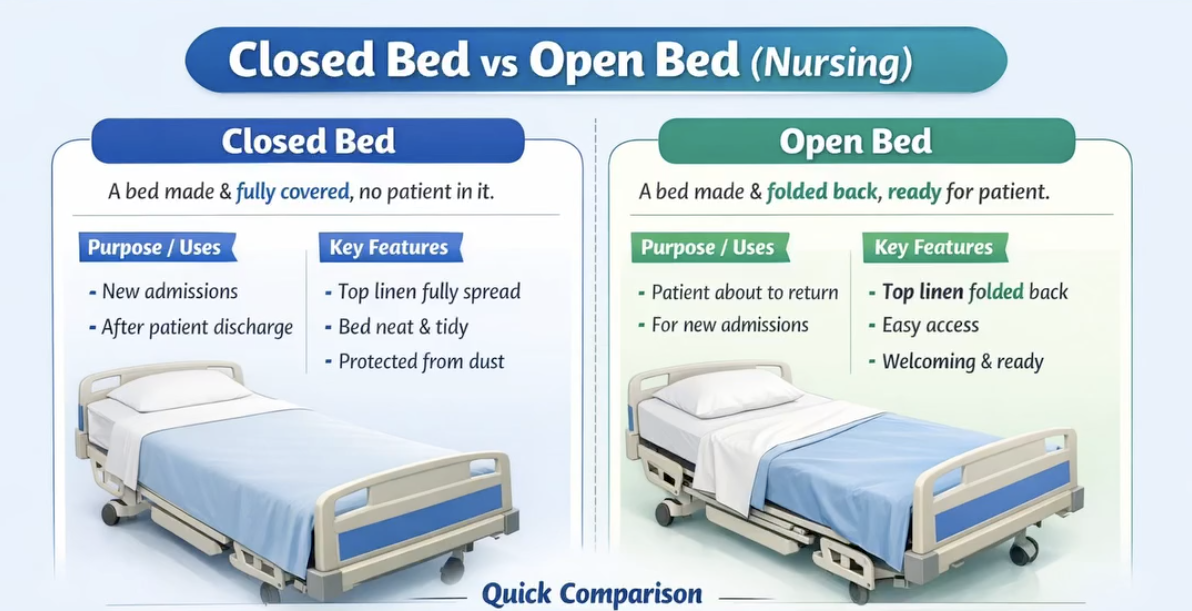
Closed bed
Bed completely made with the bedspread and blankets in place
For new admissions and after discharge
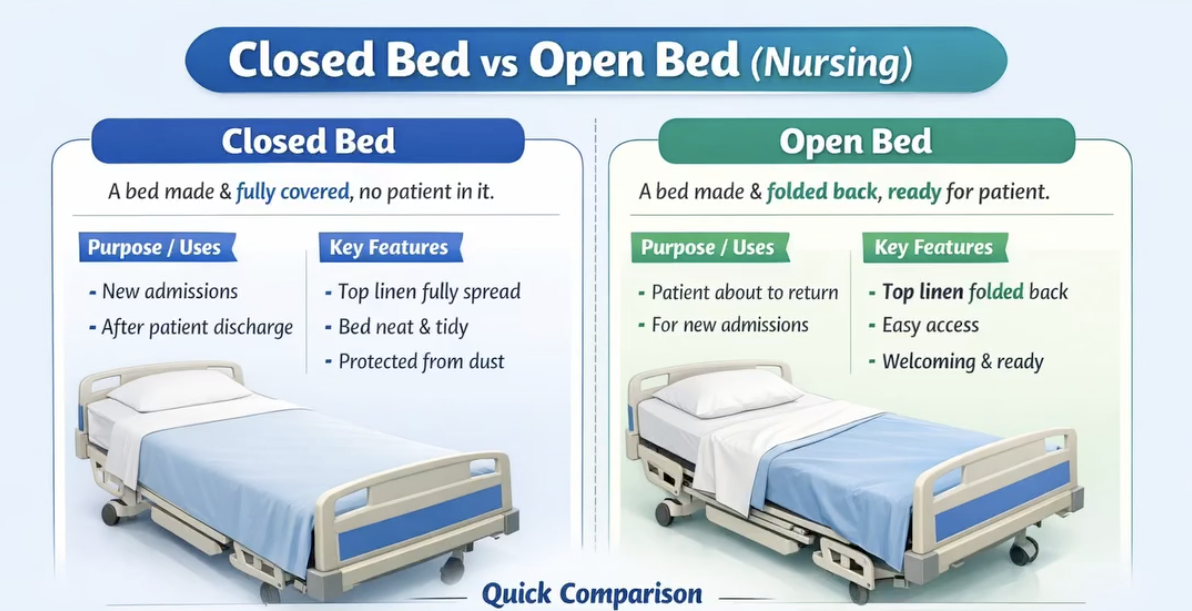
Open bed
Bed made with linen folded down to the foot of the bed
Ready for use (usually for patients about to return)
End Stage Renal Disease (ESRD)
Medical term for kidney failure
Fecal impaction
Hard stool that is stuck and cannot be expelled.
Urinary Catheter
Used to drain urine from the bladder
Straight Catheter
Also called in and out catheter
Inserted to drain urine from bladder
Removed immediately after urine is drained; does not remain inside
Indwelling Catheter
Also called Foley catheter
Remains inside the bladder for a period of time
Urine drains into a bag
Condom catheter
Also called Texas catheter
External catheter used on males
Attachment fits onto penis and fasted with special tape, then drains into bag
Incontinence
Inability to control urinary bladder or bowels - involuntary elimination
Constipation
Inability to eliminate stool or infrequent, difficult, painful elimination of hard, dry stool
Occurs when feces move too slowly through intestine
Hemorrhoids
Enlarged veins in rectum
Caused by straining during defecation, overuse of laxatives/enema, diarrhea, obesity, constipation
Diarrhea
Frequent elimination of liquid or semiliquid feces
Gastroesophageal Reflux Disease (GERD)
Chronic condition where liquid contents of stomach back up into esophagus
Cause burning sensation in esophagus (heartburn)
Inflame and damages lining of esophagus and can cause bleeding or ulcers
Ostomy
Surgical creation of opening from area inside the body to outside
Opening is called stoma
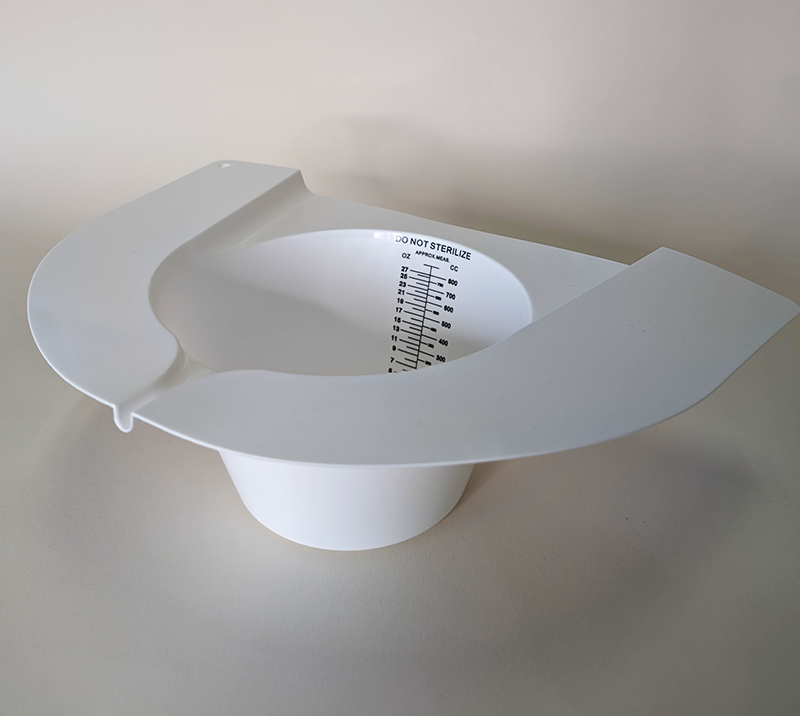
Hat
Plastic collection container placed into toilet bowl to collect and measure urine or stool
Midstream specimen (CCMS)
Also called clean-catch specimen
Doesn’t include first and last urine voided in sample (first has bacteria, last is diluted)
Used to detect bacteria in urine
Routine urine specimen
Urine is collected at any time and has no prior cleaning
Resident voids into bedpan, urinal, commode, hat
Oxygen therapy
Administration of oxygen to increase supply of oxygen to lungs
Increases oxygen to body tissues
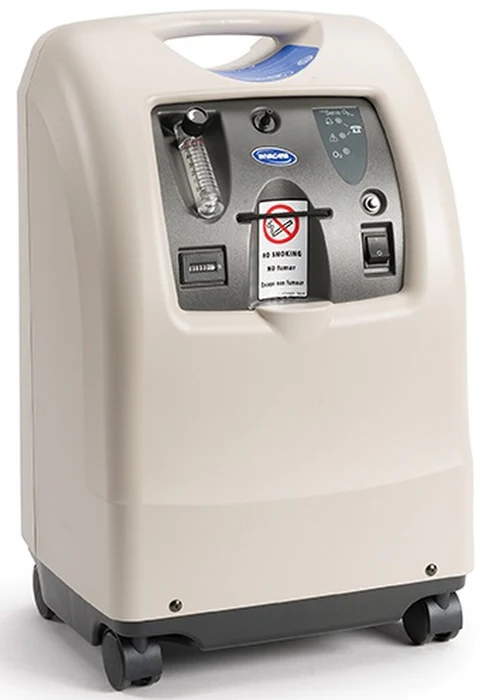
Oxygen concentrator
Box-like device that changes air in room into air with more oxygen
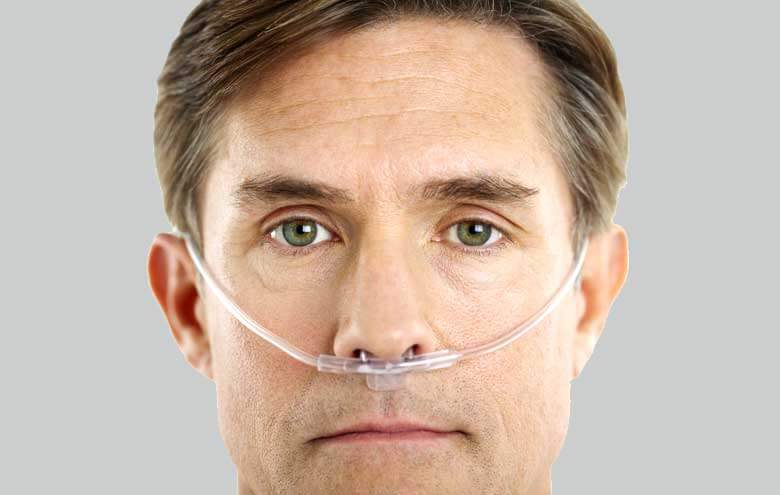
Nasal cannula
Piece of plastic tubing that fits around face and has two short prongs that fit inside the nose
Delivers oxygen through tubes
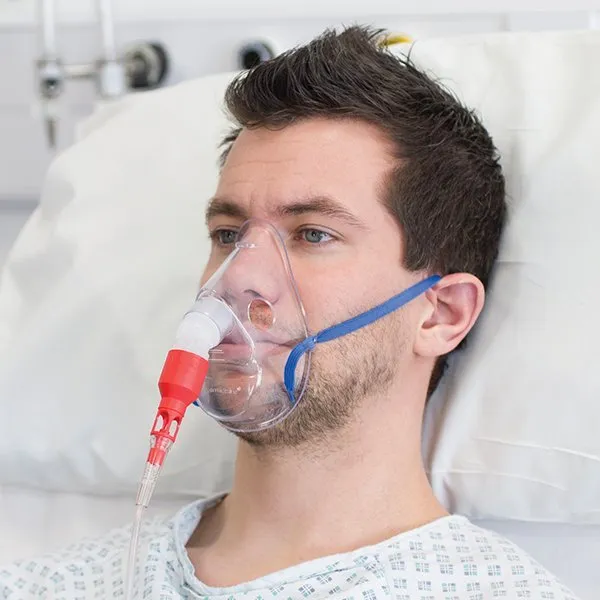
Oxygen mask
Fits over nose and mouth and delivers high oxygen concentrations
Used for residents who don’t need concentrated oxygen all the time
Combustion
Process of burning
Intravenous therapy (IV)
Delivery of medication, nutrition, fluids through vein
Gives direct access to bloodstream
Either drip from bag or pumped through portable pump
Catheter
Thin tube inserted into body to drain or inject fluids
Parenteral Nutrition (PN)
Solution of nutrients goes directly into bloodstream, bypassing digestive system
Used when digestive system isn’t working properly.
Nasogastric Tube
Inserted into nose and goes to stomach.
Used when resident is unable to swallow.
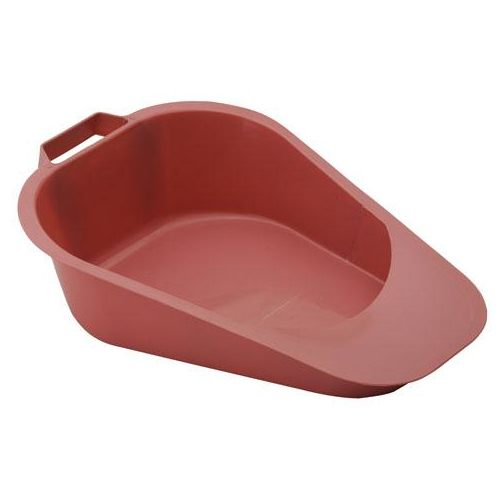
Fracture pan
Bedpan that is flatter than regular bedpan
Used for residents who cannot assist with raising hips on regular bedpan
Enema
Specific amount of water (with or without additive) introduced into colon to eliminate stool
Used to treat constipation
Urinary Tract Infection (UTI)
Bacterial infection of urethra, bladder, ureter, kidney.
Results in pain or burning during voiding and frequent feeling of needing to urinate.
Transient Ischemic Attack (TIA)
Temporary blockage of blood flow to brain
Causes stroke-like symptoms but resolves itself and no permanent damage
Serves as warning sign that full stroke (CVA) could happen soon
Insulin Reaction
Diabetic person takes too much insulin or has too little blood sugar (too little food)
Symptoms: hunger, dizziness, nervousness, headache, numbness, blurred vision, rapid pulse, low blood pressure
Treat with glass of milk, fruit juice, water w/ dissolve sugar, glucose tablet
Called hypoglycemia (low blood sugar)
Diabetic Ketoacidosis (DKA)
Diabetic person has too little insulin or too much blood sugar (too much food)
Symptoms: increased hunger, thirst, urination, abdominal pain, deep/labored breathing, bad breath (halitosis) or fruity breath
Notify charge nurse immediately
Called hyperglycemia (high blood sugar)
Thrombus
Medical term for blood clot (form of embolism)
Forms inside blood vessel or heart
Starts and stays stuck (stays at original site)
Prosthesis
Device that replaces a body part that’s missing/deformed because of an accident, injury, illness, or birth defect
E.g. dentures, artificial breast, hearing aid, artificial limbs
Embolus
Mobile piece of thrombus, plague, fat globule, air bubble that circulates through bloodstream until blocks vessel somewhere
Breaks off, travels, and gets stuck
Deep Vein Thrombosis (DVT)
When thrombus (blood clot) forms inside a deep vein, blocking it
Infection
Germ invades body tissues, multiplies (can trigger immune system reaction, but not always)
Caused by pathogens
Edema
Swelling caused by excess fluid in body tissues
Cerebrovascular Accident (CVA)
Medical term for stroke
Blood supply to brain is blocked/interrupted, causing brain cells to die
Typically caused by embolism
Symptoms: face drooping, arm weakness, speech difficulty, time to call 911
Shock
Organs and tissue in body do not receive adequate blood supply
Causes blood pressure to drop
Can be caused by embolism, blood loss, infection, allergic reaction, heart failure
FAST acronym
Used to detect stroke
F - Face drooping
A - Arm weakness/numbness
S - Speech difficulty (slurring)
T - Time to call emergency services (911)
Embolism
Obstruction of a blood vessel, usually a blood clot but can also be foreign objects
Cuts off oxygen and blood supply to vital organs/tissue
Inflammation
Immune system reaction to injury, damage, infection
Always causes edema (swelling)
Voiding
Act of urinating by emptying bladder
Sitz Bath
Treatment including shallow, warm water bath used to heal and sooth perineum
Aspiration
Inhalation of food, fluid, foreign material in lungs.
Can cause pneumonia or death
When giving oral care to unconscious patients, turn them to their side to prevent
Terminal illness
Illness that will eventually cause death
Chronic
Condition lasting a long period of time
Home health care
Also called home care
Care provided in a person’s home
Assisted Living Facilities
Residences for people who need some help with daily tasks (showering, meals, dressing)
People do not need 24-hour skilled care
Adult Day Services
Service for people who need some help/supervision during certain hours
Do not live in facility where care is provided
Acute care
24-hour skilled care given in hospitals and ambulatory surgical centers
For people who require short-term, immediate care for illnesses/injuries
Subacute care
Care given in hospitals/LTCF
For people who need less care for an acute illness but more than chronic illness
Treatment ends when condition stabilizes or treatment set time has completed
Outpatient care
Given to people who have had treatments, procedures, surgeries and need short-term skilled care.
Medical procedure, consultation, or treatment that does not require an overnight stay in a hospital or medical facility
Rehabilitation
Therapy aimed at helping to restore or improve function after an illness or injury
Hospice care
Given in facilities/homes for people who have 6 months or less to live
Hospice workers give physical/emotional care to both patient + patient’s family until patient dies
Activities of Daily Living (ADL)
Personal care tasks
Bathing, showering, dressing, eating, drinking, walking, elimination
Medicare
Insurance program for people aged 65 or older or those with permanent organ failures or certain disabilities
- Part A: pays for care in hospital/SNF/hospice/home health agency
- Part B: pays for doctor, medical services and equipment
- Part C: allows private health insurance companies to provide Medicare benefits
- Part D: pays for medically necessary, prescribed medication for treatment
Medicaid
Medical assistance for low income and disabled people
Eligibility determined by income and special circumstances
Scope of Practice
Range of tasks healthcare providers are legally allowed to do according to the law
Care plan
Plan developed for each resident to achieve certain goals
Outlines steps and tasks that must be performed
Omnibus Budget Reconciliation Act (OBRA)
Law outlining minimum standard for NA training, staff requirements, assessment instruction, and rights for resident
Assault
Threat to harm a person
Battery
Intentional touching of a person without their consent
False imprisonment
Unlawful restraint that restricts person’s freedom of movement
Includes both threatening to and actually restraining
Involuntary seculsion
Separation of person from others against their will (confinement)
Neglect
Failure to provide needed care resulting in physical, mental, emotional harm to person
Negligence
Actions/failure to act or provide proper care resulting in unintended injury
Malpractice
Person is injured due to professional misconduct through negligence, carelessness, lack of skill
Ombudsman
Required by Older Americans Act (OAA)
Assigned to LTCF by law to act as legal advocate for residents
Resolves conflicts + settle disputes
Health Insurance Portability and Accountability Act (HIPAA)
Law that mandates that medical professionals must keep health information private and secure
Must take special steps to protect health information
Protected health information (PHI)
Information used to identify a person and relates to patient’s condition
Incident
Accident, problem, or unexpected event during course of care
Not part of normal routine
Standard Precaution
Method of infection prevention
All blood, bodily fluids, non-intact skin, mucous membranes treated as if they were infected with an infectious disease
Should be used with every resident
Sterilization
Cleaning measure that destroys all microorganisms, including pathogens (organisms that causes disease
Safety Data Sheet (SDS)
Standardized document that outlines the hazards, safe handling, and emergency procedures for a specific chemical substance or product
Objective information
Also called signs
Factual, measurable, observable data
What healthcare provider can measure (blood pressure, blood test, imaging scans)
Subjective information
Also called symptoms
Based on something that resident reports (may or may not be true)
Ambulatory
Capable of walking
In case of fire, save ambulatory first
Nonambulatory
Not capable of walking
In case of fire, save ambulatory first
Syncope
Loss of consciousness; fainting
Can be caused by hunger, hypoglycemia, dehydration, fear, pain, fatigue, overheating, etc.
Localized infections
Infections limited to a specific location in the body
Symptoms near site of infection