Intro Classical Arch Quiz 2
 Call Kai
 Learn
Learn Practice Test
 Spaced Repetition
 Match
Match Flashcards
 Knowt Play
1/36

There's no tags or description
Looks like no tags are added yet.
Name | Mastery | Learn | Test | Matching | Spaced | Call with Kai |
|---|
No analytics yet
Send a link to your students to track their progress
37 Terms
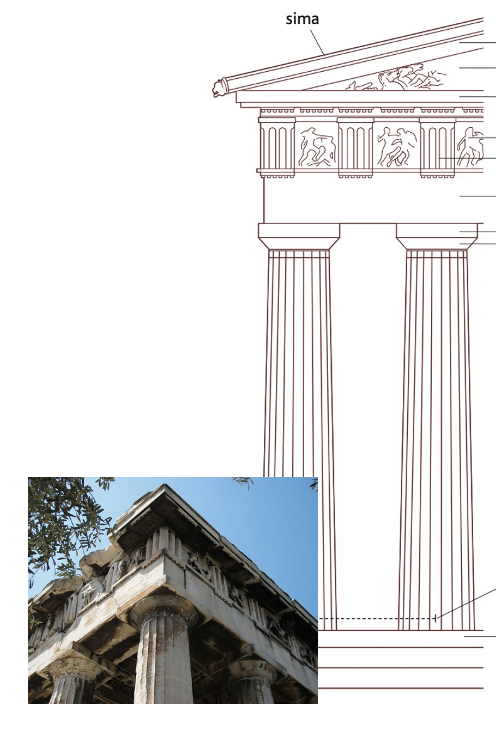
Doric Order
Where: Mainland Greece, developed/accepted in S italy.
When: Late 7th/ Early 6th century BCE
Attributes: Columns without bases, fluted shafts. No base. Alternating triglyphs and metopes. Themes on metopes indicative of civic identity and authority. Temple of Apollo at Syracuse, Temple of Poseidon at Isthmia is an example.
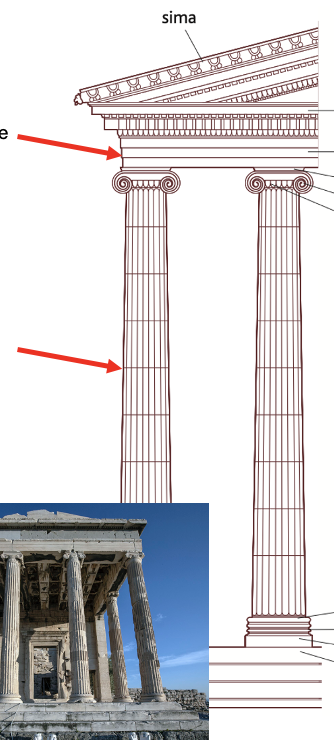
Ionic Order
Where: Ionia/Cyclades (The Greek Islands)
When: Mid 6th century BCE
Attributes: Continuous decorative frieze. Columns with bases and volute capitals. More ornamental. Slimmer, light columns. no triglyphs separating narration. Architrave similar to other order, Frieze different. Temple of Hera at Samos, Temple of Artemis at Ephesos as examples.
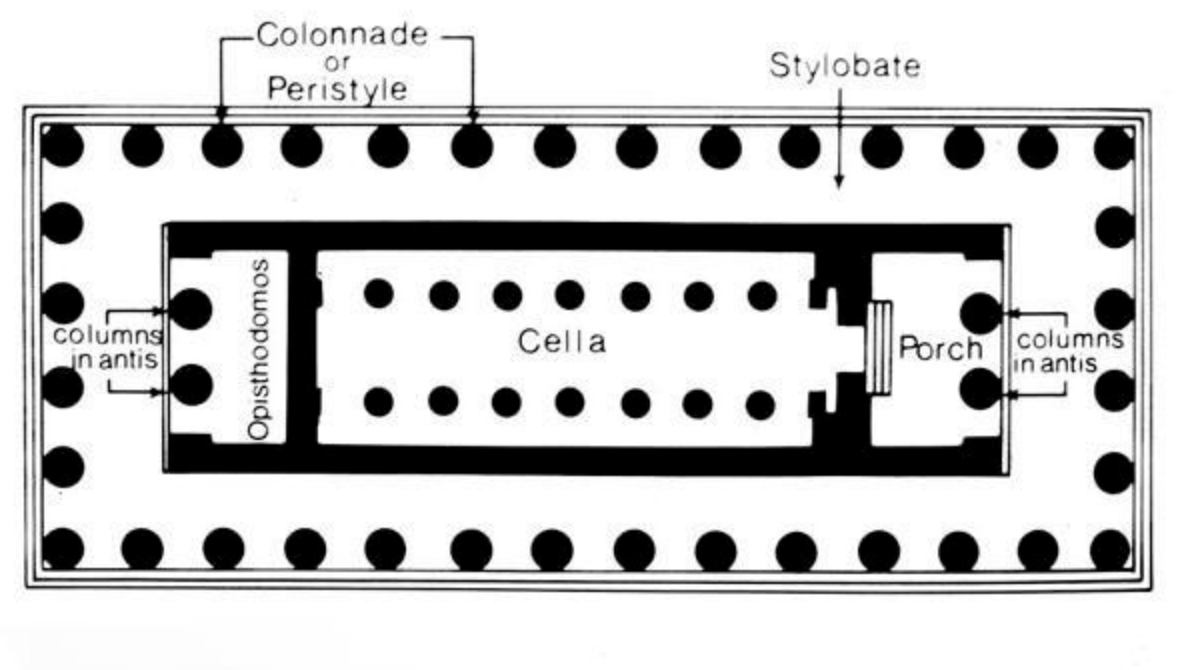
Naos/Cella
Interior hall used for the cult statue
Pronaos
Front porch
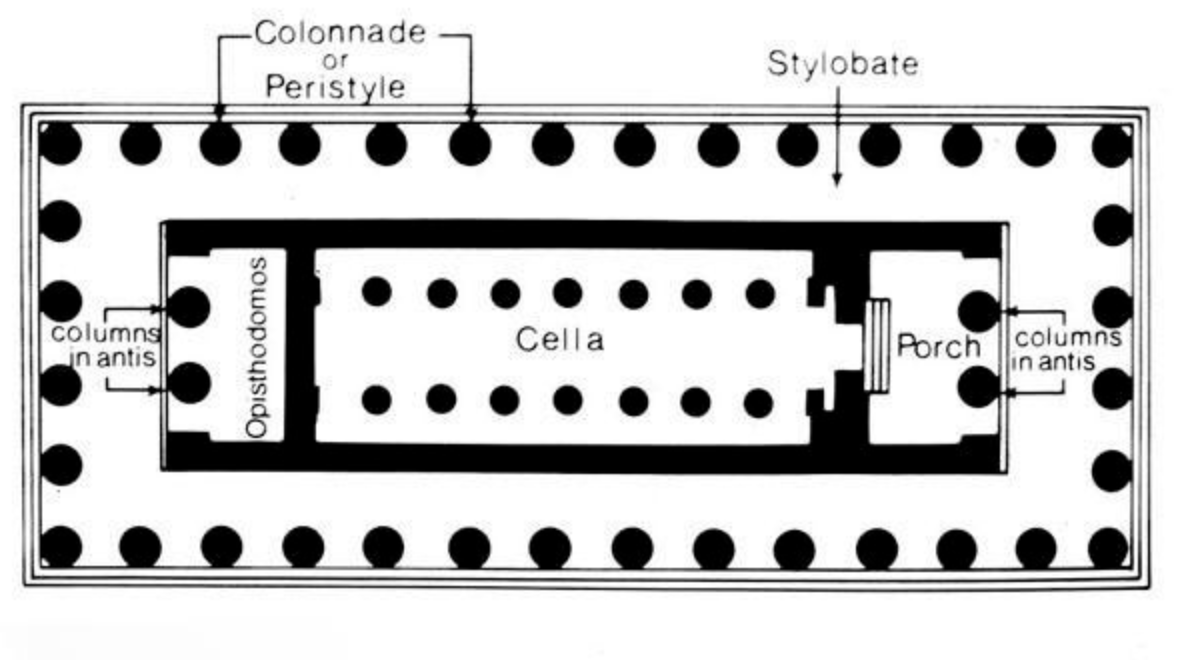
Opisthodomos
Rear Porch
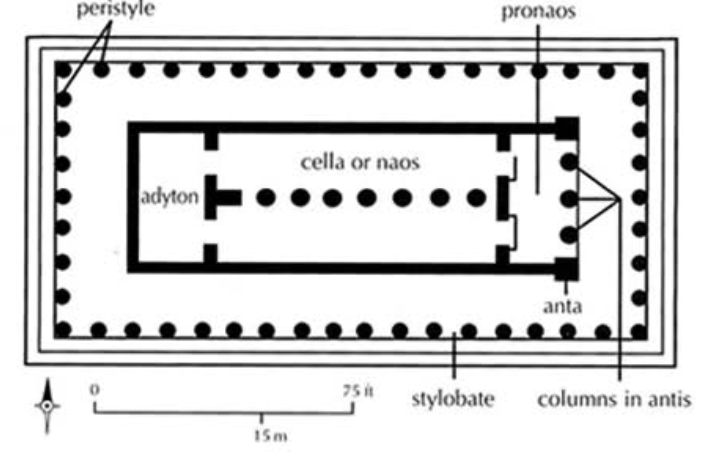
Adyton
Back room behind naos. Only open to priests or religious people in charge, holy.
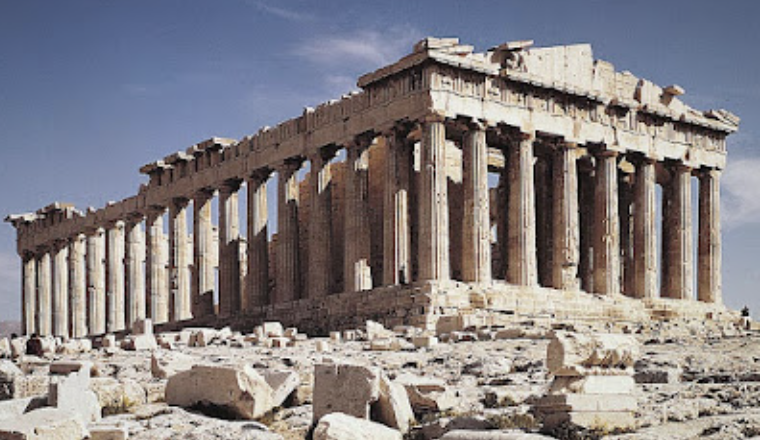
Peristyle
Single peristyle/colonnade around. One series of columns surrounding a building or enclosing a court. Row of columns themselves.
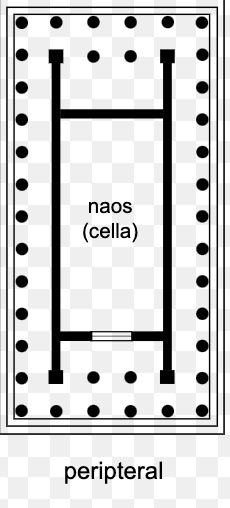
Peripteral
Surrounded by a single row of free-standing columns (a peristyle) on all four sides, creating a continuous, covered walkway around the central chamber (cella or naos). Design/Style.
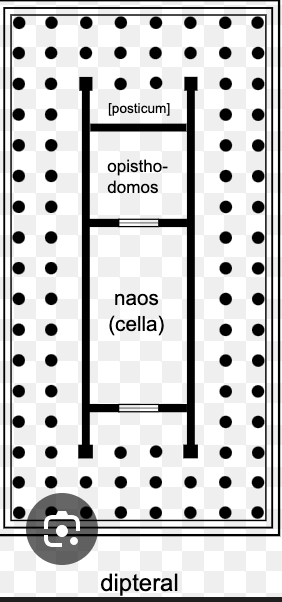
Dipteral
2 colonnades, describing a building that has two peristyles around the exterior.
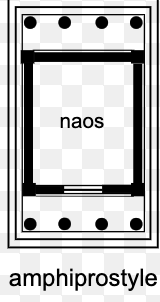
Amphiprostyle
Columns in the front and back but not on the sides. An example is Temple of Athena Nike
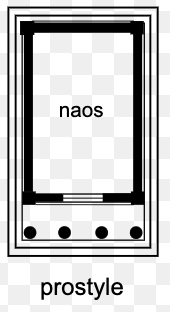
Prostyle
Characterized by a row of columns only across the front portico, with the sides and rear walls left unadorned.
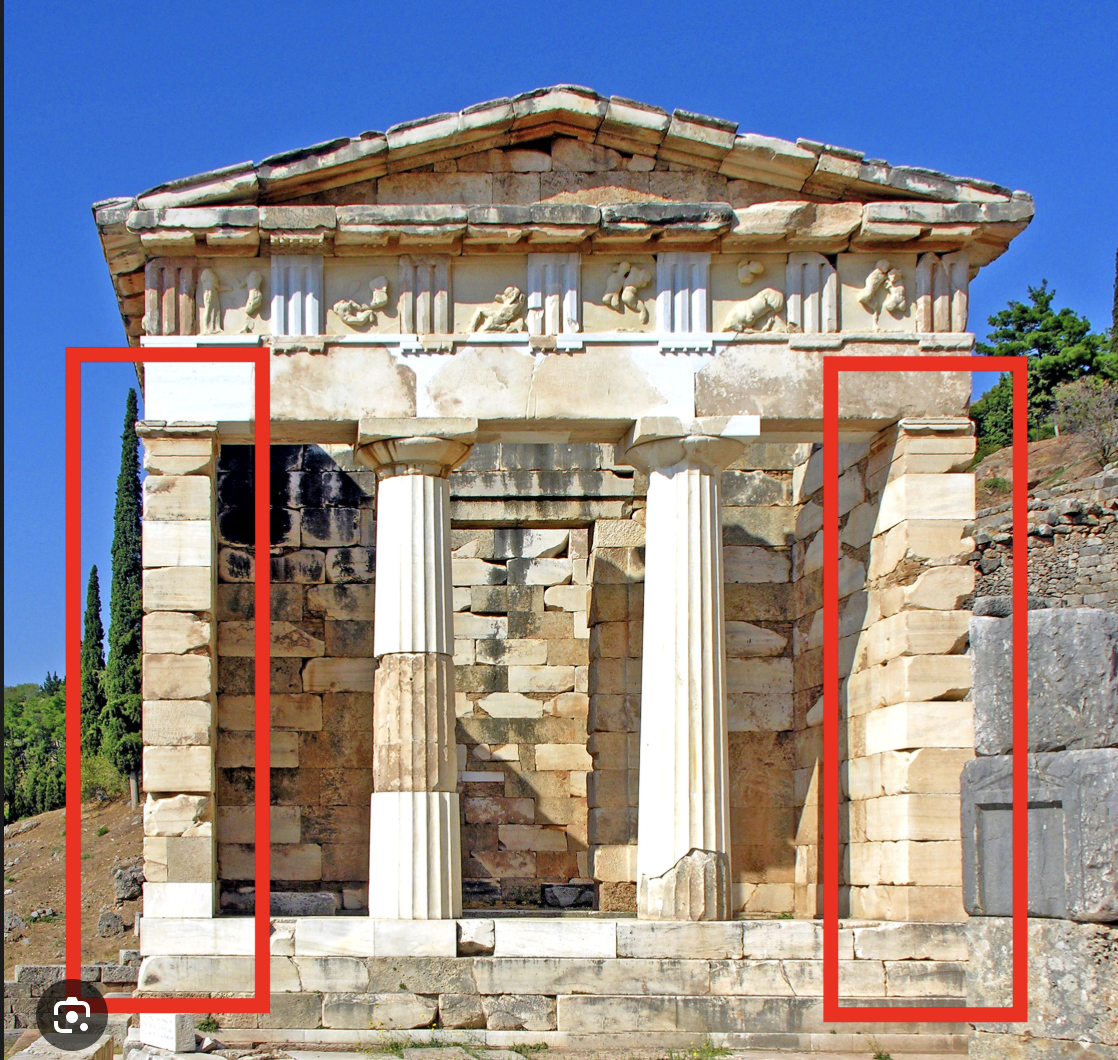
Distyle in Antis
Only two columns on the front porch (pronaos), which are positioned between the extended, solid side walls (called antae)
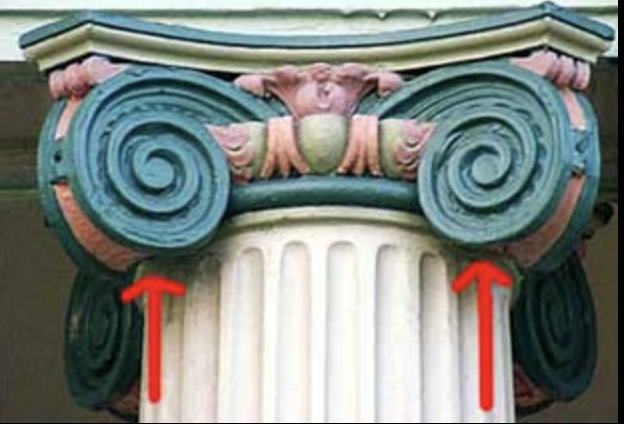
Volute
Curly part at top of column
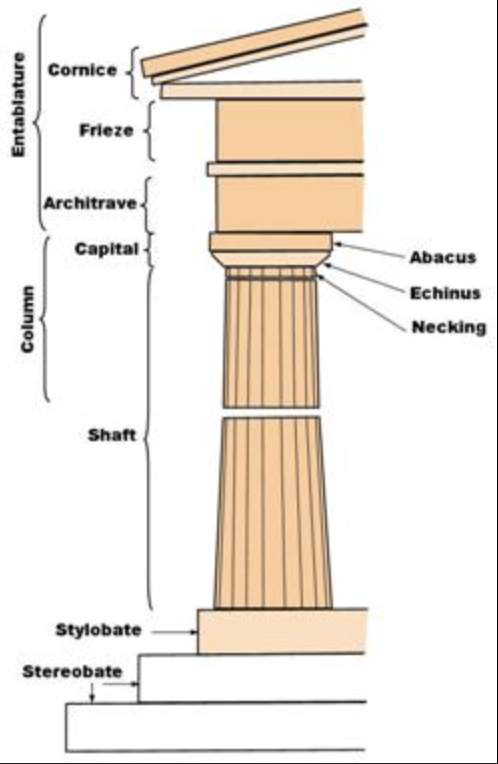
Stylobate
The top, uppermost step or level of a stepped platform that directly supports a row of columns
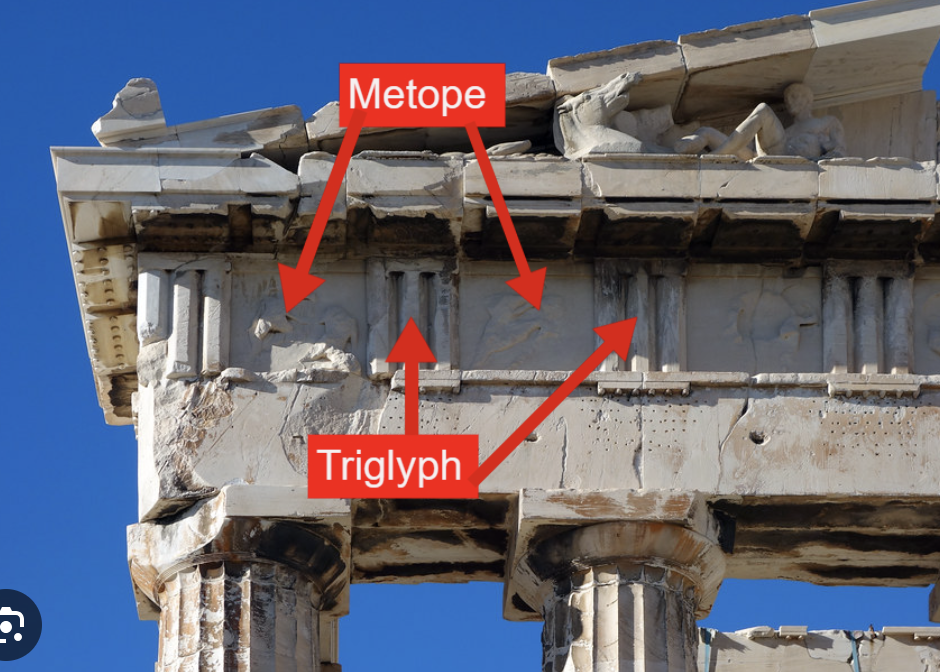
Triglyph
Spacers to metopes.
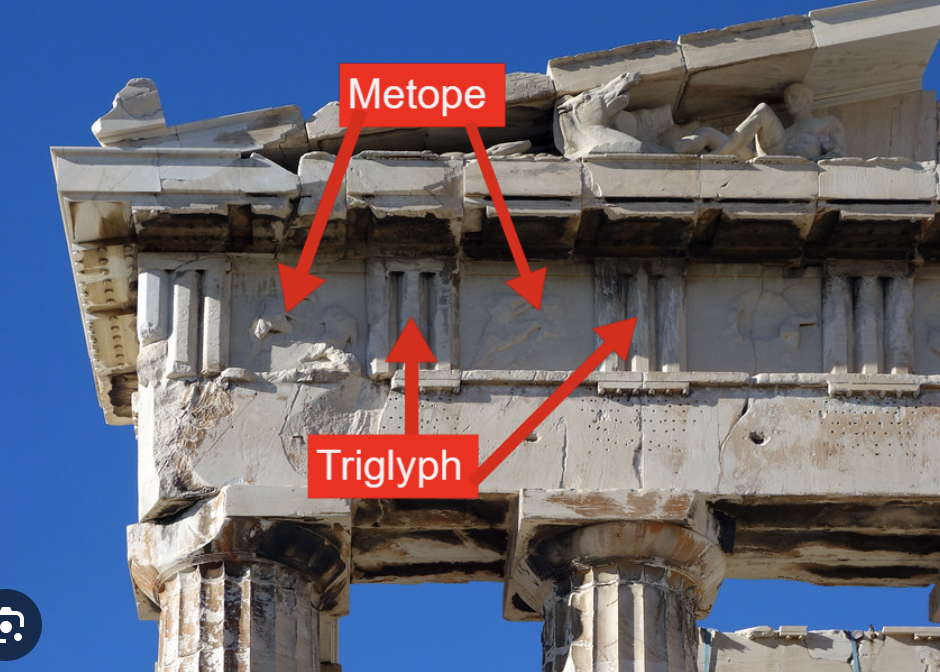
Metope
Panel Relief. Often decorated with painted scenes, myths.
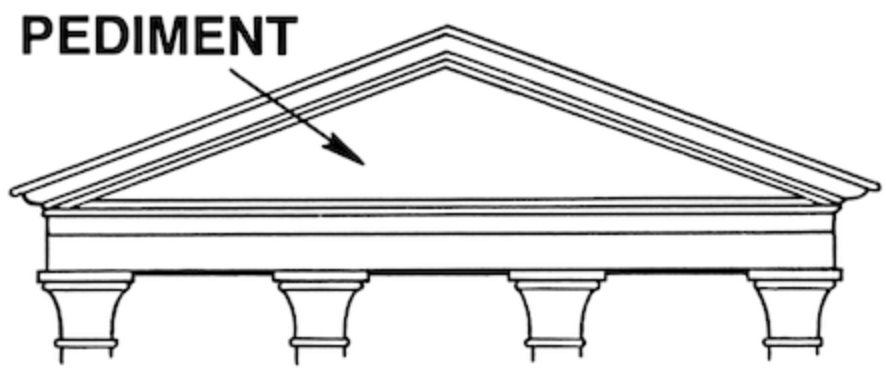
Pediment
Triangular Space. Shows Mythical representation, city, or religious identity. Conveys messages to foreigners. Gigantomachy, titanomachy, centauromachy as recurring
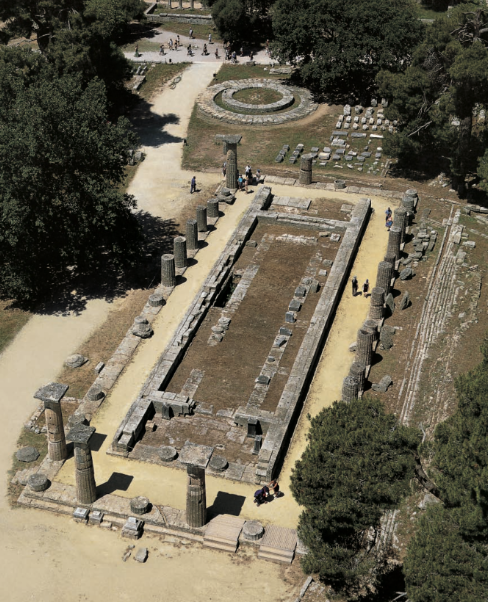
Temple of Hera
When: Early Archaic Period
Where: Peloponnese
Why: Doric peripteral style. Transition from wood to stone architecture. Goddess Hera and Zeus (later) worshipped. One of the earliest monumental temples in Greece.
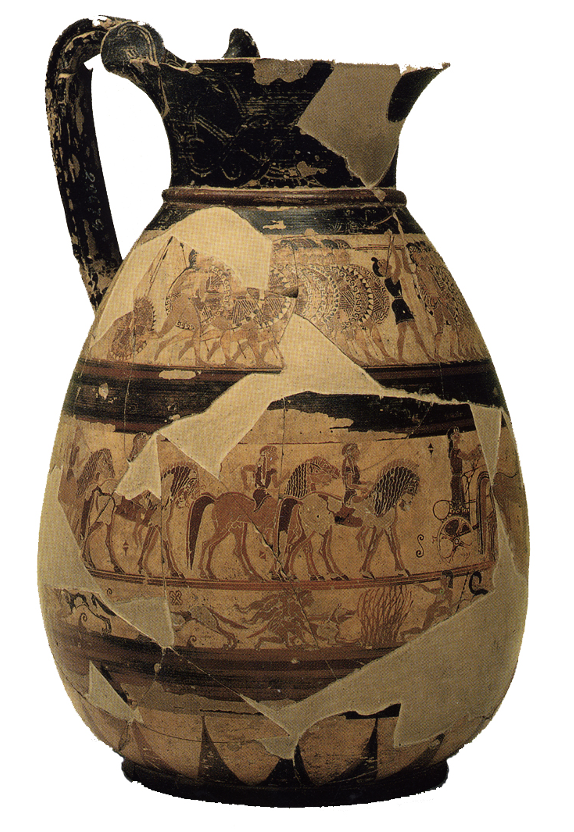
Olpe Chigi
When: Early Archaic
Where: Villa Giulia, Rome
Why: An Olpe is a wine pouring jug. On top- hoplite warriors carrying shields. Middle- Procession, Judgement of Paris, lion hunt, double-bodied sphinx. Bottom- Humans, hounds, hares. Orientalized.
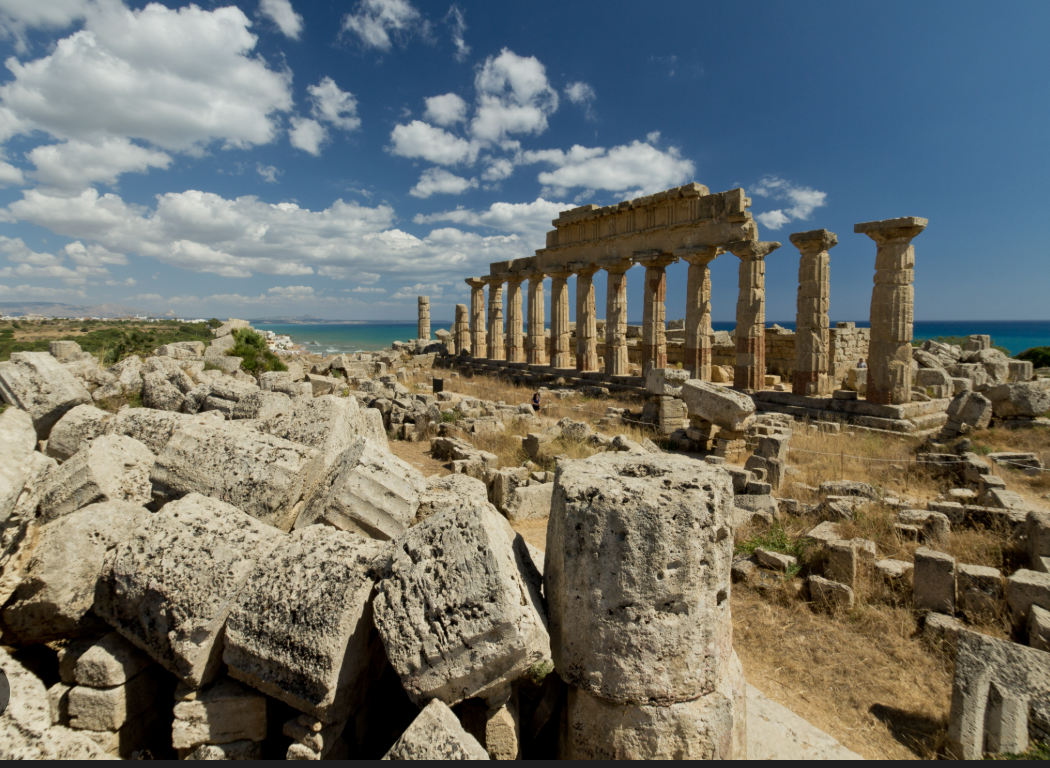
Temple C Selinus
When: Middle Archaic
Where: Southwest Sicily
Why: One of the earliest doric temples, very large. Largest on Sicilian acropolis. Not sure who it was dedicated to. Stone sculpted metopes, depict mythical scenes.
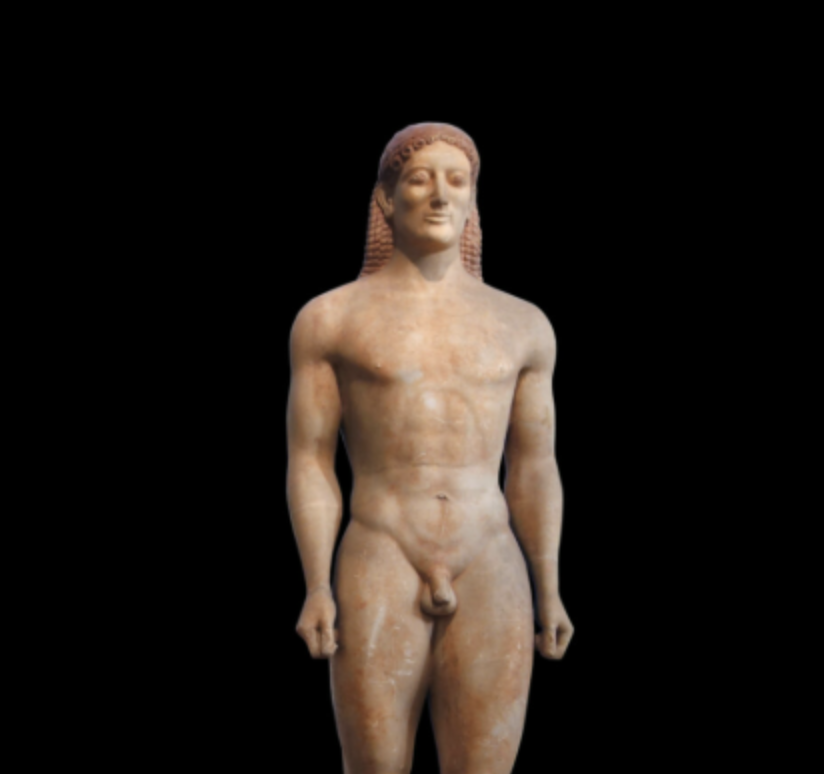
Anavysos Kourous
When: Late Archaic
Where: Anavysos (Attica)
Why: Grave Marker made of marble, archaic smile, bilateral symmetry, patternized anatomy, naturalistic proportions
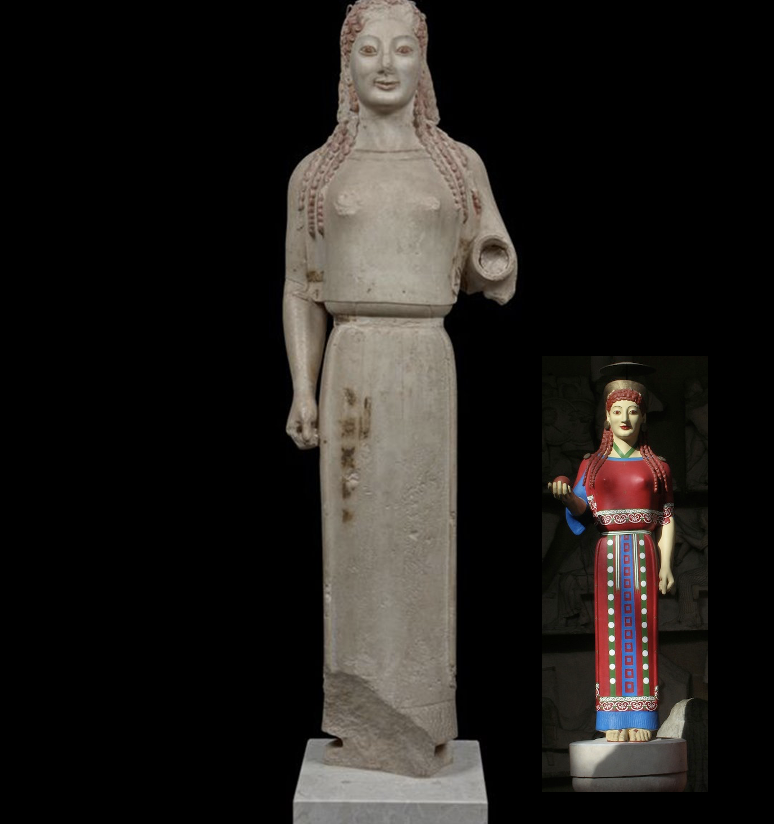
Peplos Kore
When: Late Archaic
Where: Athenian Acropolis
Why: Votive offering, made of marble, archaic smile, lots of paint on it, wearing a peplos, which is a type of outer robe worn over a dress.
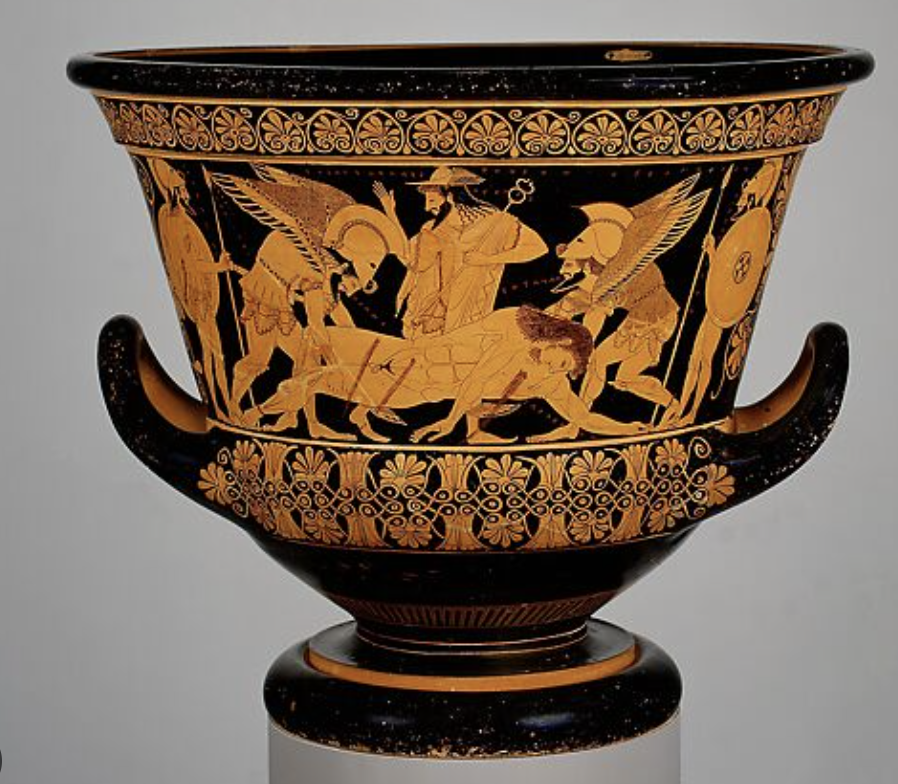
Euphronios Crater
When: Late Archaic
Where: Athens
Why: Crater used to mix wine at symposiums. Signed by potter. Scenes from Troy, trojan war. Illegally excavated.
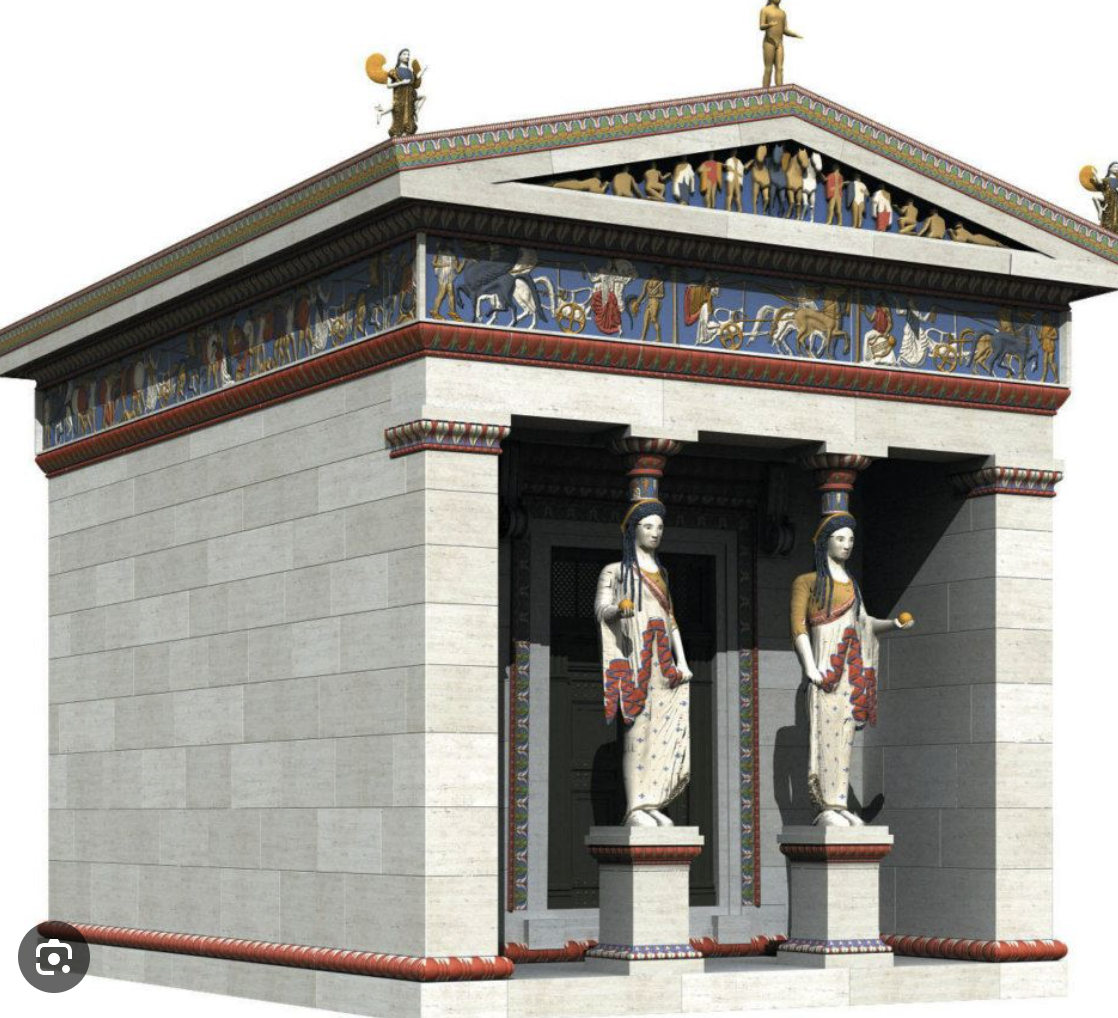
Siphnians Treasury
When: Late Archaic
Where: Delphi, Greece
Why: Early experiments using Caryatids as columns. Continuous frieze of Gigantomachy, Trojan War episodes, Judgement of Paris, Assembly of gods.
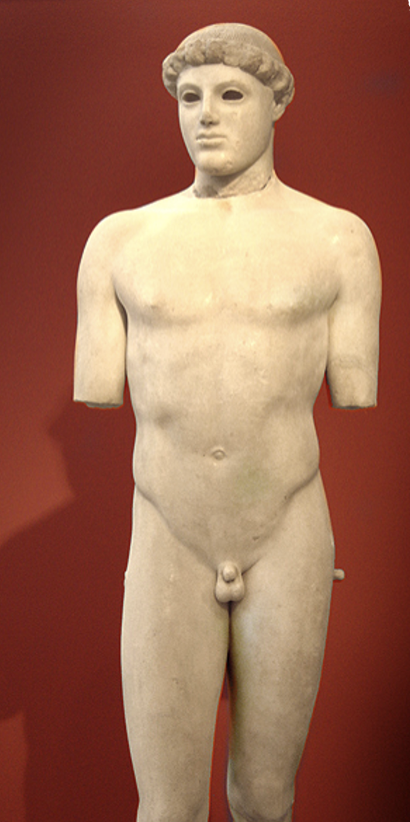
Kritios Boy
When: Late Archaic/Early Classical
Where: Acropolis of Athens, Persian destruction layer
Why: Made of marble, transitionary/severe style. Contrapposto pose, rolled hairstyle
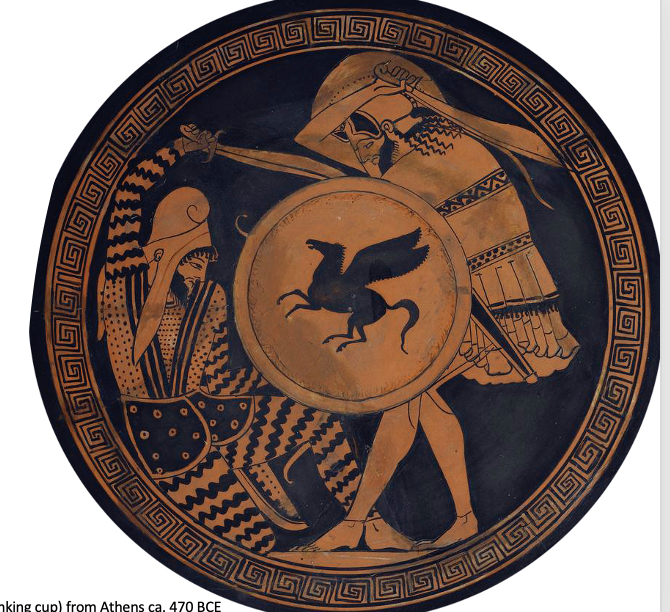
Early Classical Period
When: 490-440 BCE
Why: After Persian Wars, more Athenian power in Aegean. Stylistic unity, more monumental civic and religious programs
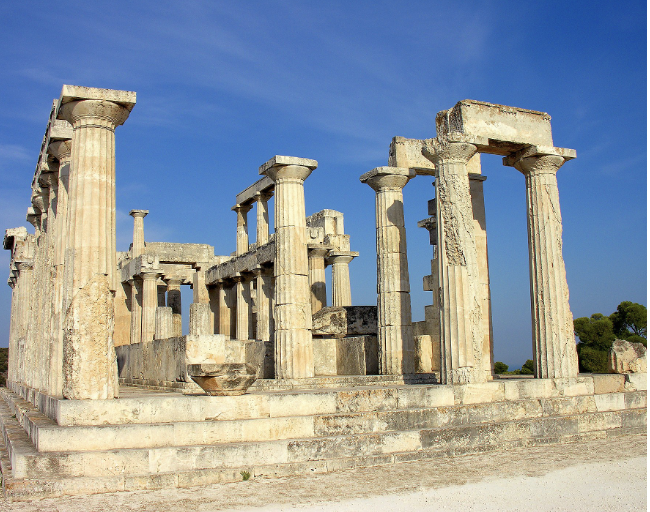
Temple of Athena Aphaia
When: Early Classical Period
Where: Aegina (Island across Athens)
Why: Richly decorated pediments: Scenes of trojan war depicted symbolizing struggle between Greeks and Eastern World. Made of marble.
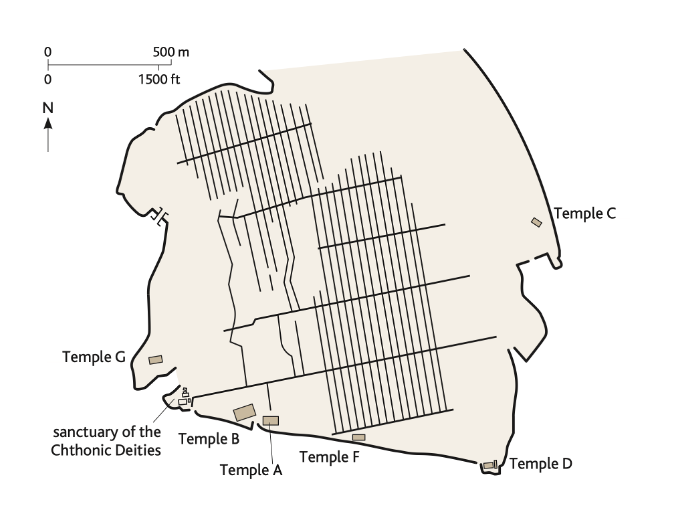
Classical Period Architecture/Urbanism
Doric architecture is the standard. Grid planned cities, more monumental temples, sculpture and architecture, urban planning as civic identity.
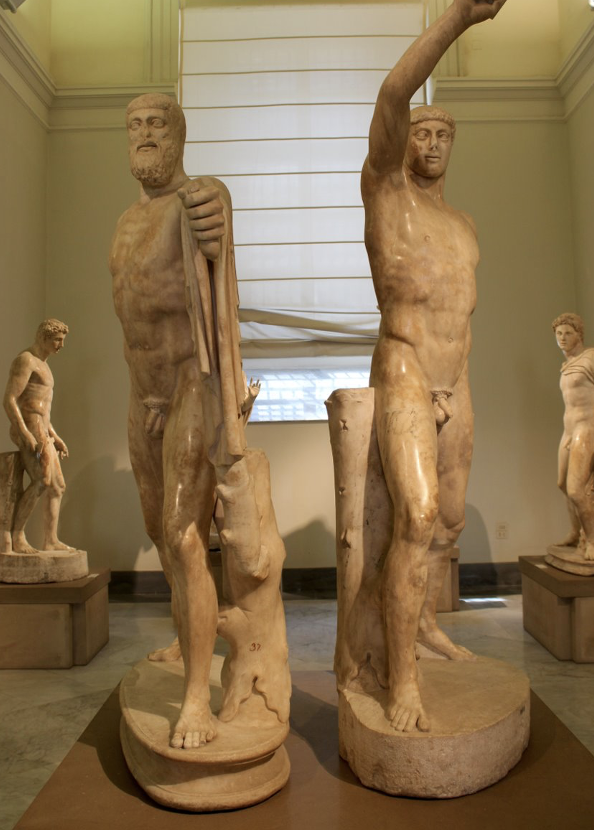
Tyrannicides/Tyrant Slayers
When: Classical Period
Where: Agora in Athens
Why: Depicts Harmodios and Aristogeiton, who killed tyrant Hipparchos. Roman copy of a Greek bronze original, archaic hairstyle with severe style face of early classical. Symbol of democracy. Forward motion replaces archaic stillness.
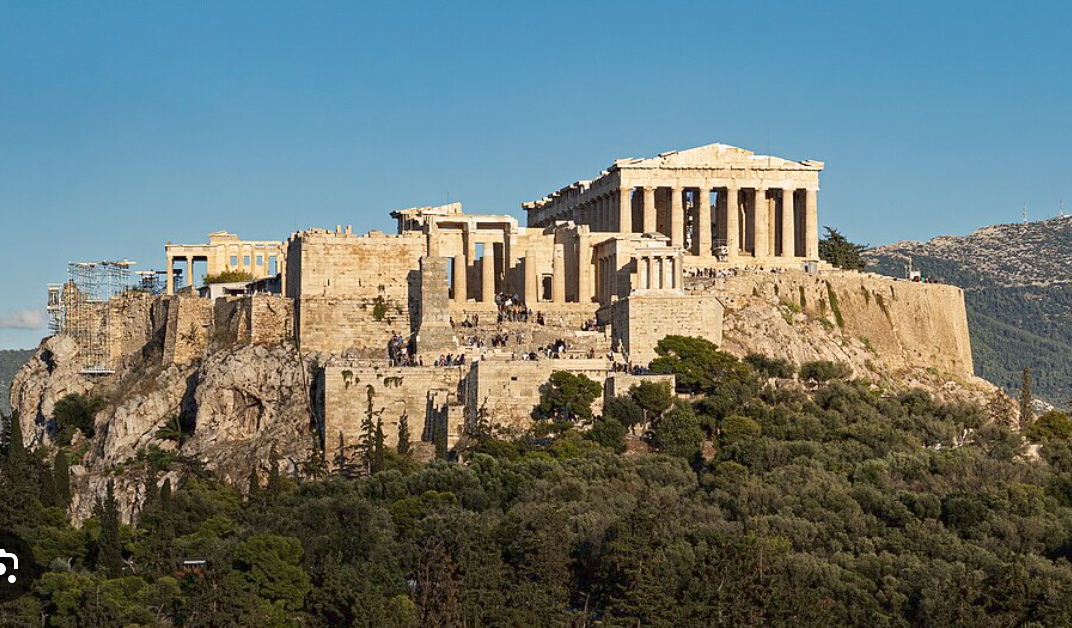
Athens Acropolis
When: Classical period
Where: Athens
Why: Peak of monumental program of Athens. Religious sanctuary dedicated to Athena.
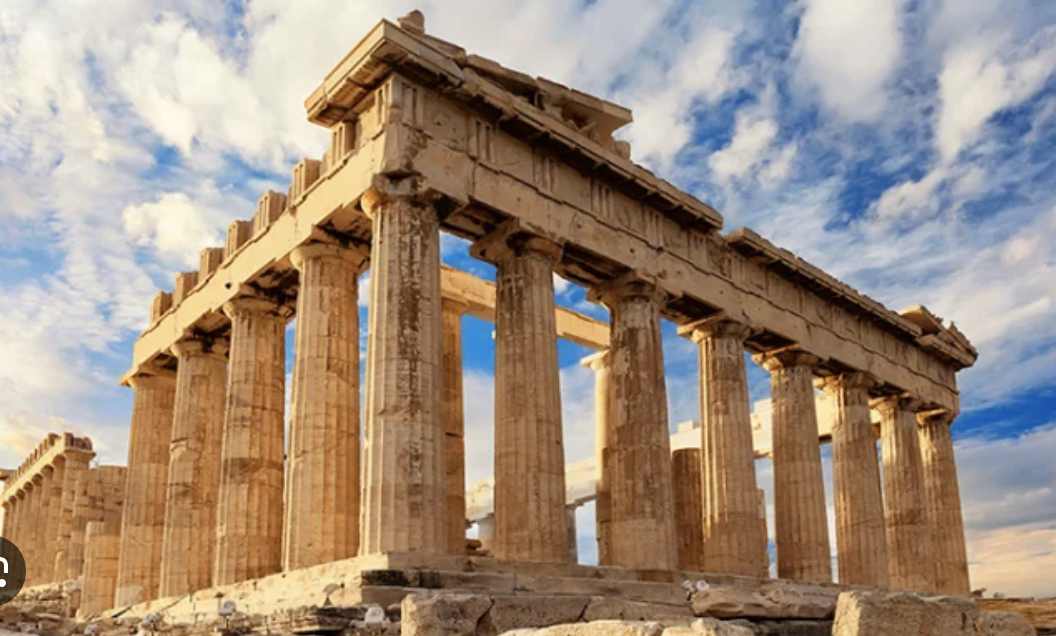
The Parthenon
When: Classical period
Where: Acropolis of Athens
Why: Pentelic marble, 92 metopes, long ionic frieze, Doric, mythology, ideology, cosmology. Housed the chryselphantine statue of athena parthenos. Divine order of Athena’s authority over Athens. Panathenaic procession on frieze, as well as many cultural events. Peristyle.
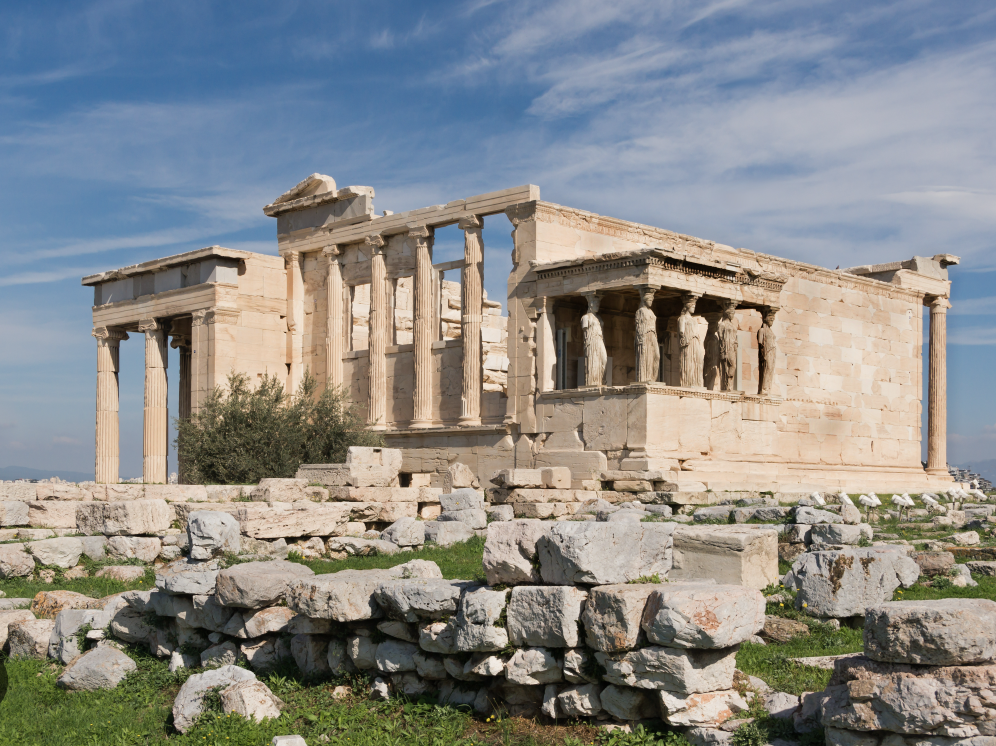
Erechteion
When: Classical (built after Parthenon)
Where: Acropolis of Athens
Why: Caryatid Porch, breaks symmetrical rules of canonical temple architecture. Asymmetrical because sacred land was nearby and they didn’t want to build over it.
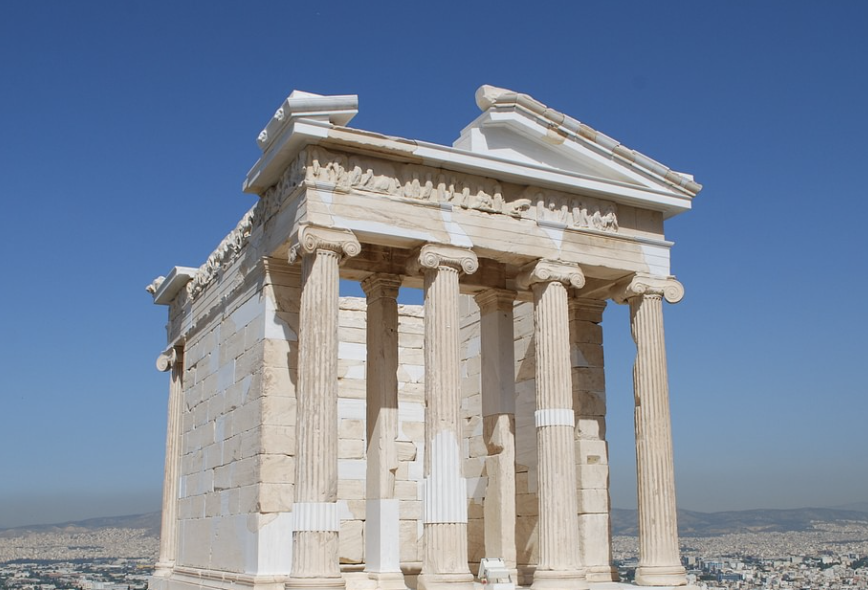
Temple of Athena Nike
When: Classical (Built around same time as Erechteion)
Where: Acropolis of Athens
Why: Ionic frieze and columns. Amphiprostyle. Emphasizes victory, renewed position of Athens after Peloponnesian/Persian wars. Friezes depict mythological battles.
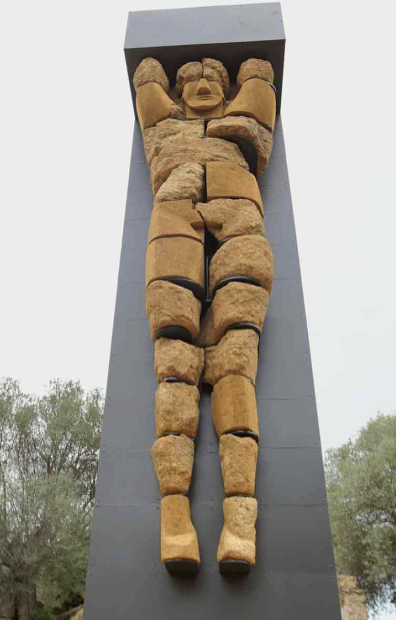
Temple of Olympian Zeus
When: Classical Period
Where: Akragas, Sicily
Why: Famous for its giant telamons (figures holding up temple), signifying richer city.
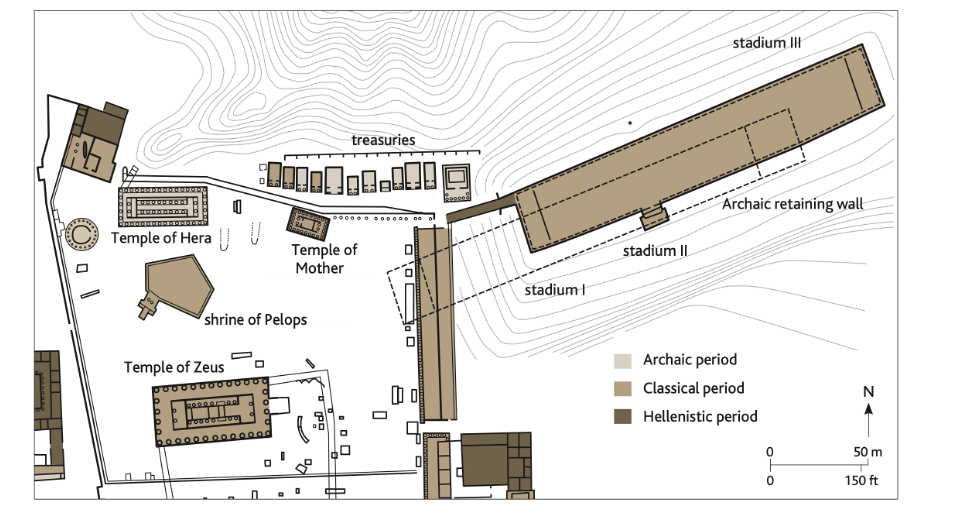
Sanctuary of Zeus at Olympia
When: Classical Period
Where: Peloponnese
Why: Dedicated to Zeus, as well as some smaller buildings dedicated to gods of pantheon/hera. Treasuries (line of small temples to contain offerings) here.
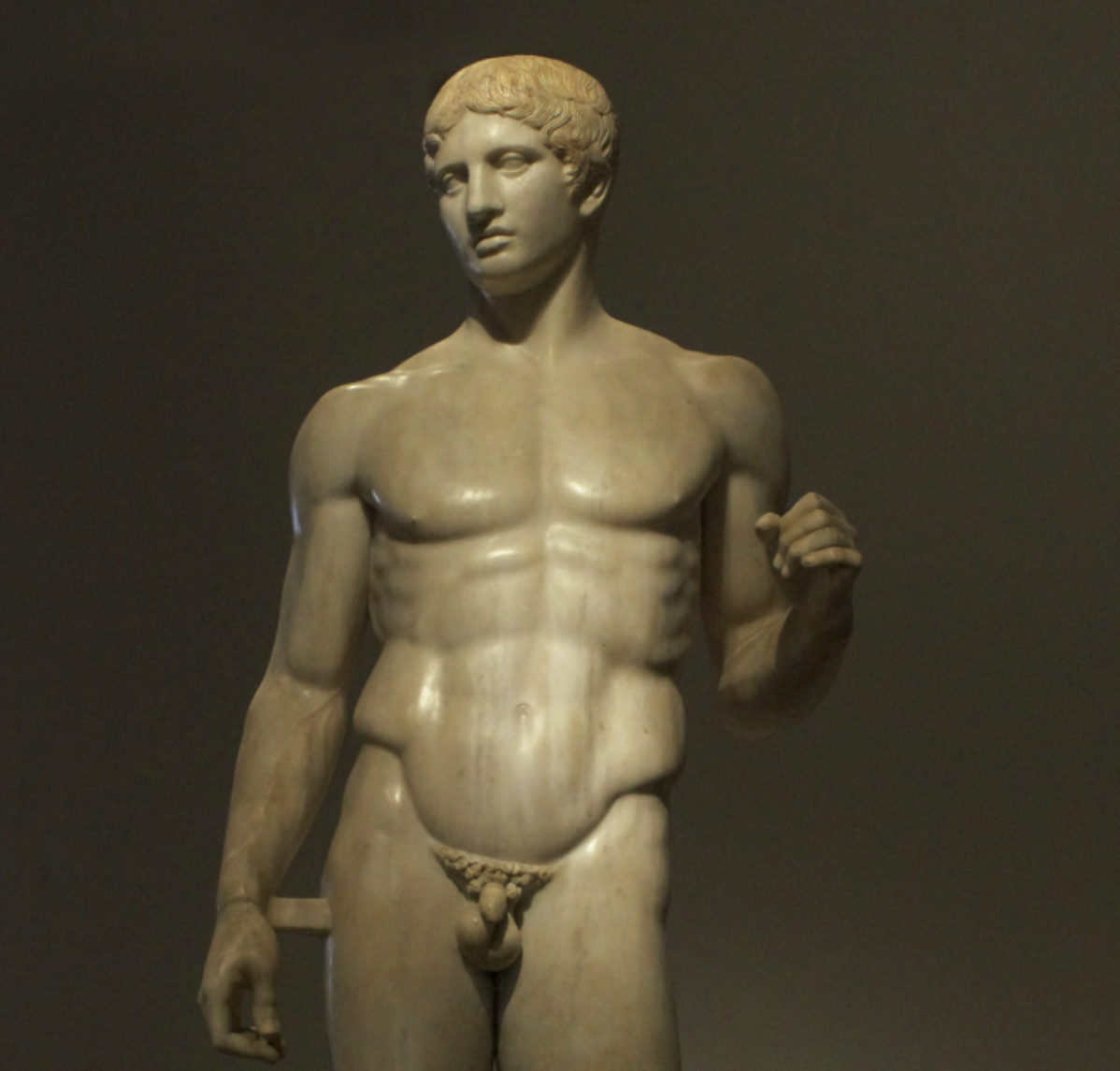
Argos & Polykleitos
When: Active 460-420 BCE
Why: Sculptors that emphasized symmetry on basis of beauty, sculpted male athletic bodies as civic and ethical ideals. Influenced later sculptors. Famous for spear-bearer (pic). Wrote theoretical treatise known as the canon, linking sculpture to math.
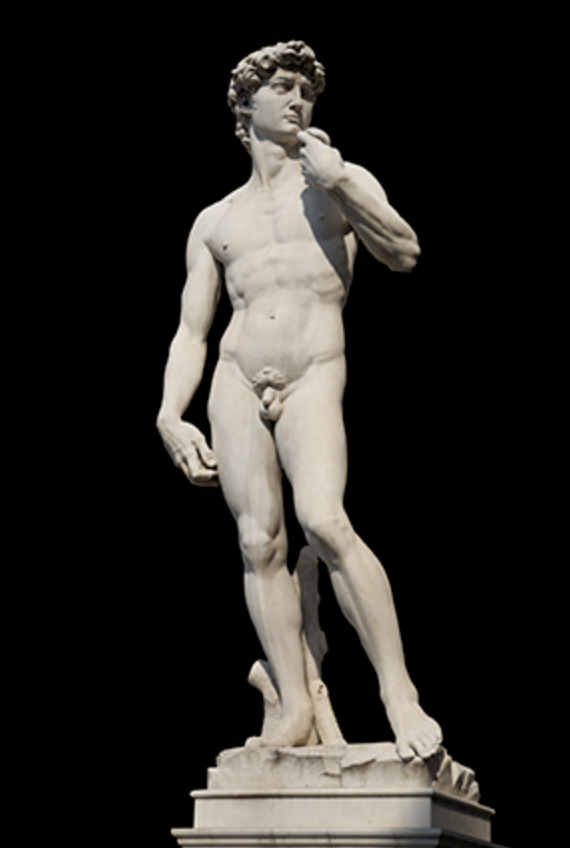
Contrapposto Pose
Right leg advanced, weight is on the left.
Right hip is lowered and shoulders tilt.
Head turns and body curves a little