CH 7 DATA FOR DECISIONS

0.0(0)
Studied by 6 people
call kaiCall Kai
learnLearn
examPractice Test
spaced repetitionSpaced Repetition
heart puzzleMatch
flashcardsFlashcards
GameKnowt Play
Card Sorting

1/35

flashcard set

Earn XP

Description and Tags

36 Terms

1
New cards
Population
the entire group of individuals about which we WANT information
2
New cards
Sample
a part of the population & refers to the process of choosing a sample from a population
3
New cards
Convenience Sample
a sample of individuals who are selected because they are members of a population who are easy to reach. Usually, such a sample cannot be trusted to be representative of a population (FULL of Bias)
4
New cards
Bias
systematically favors certain outcomes
5
New cards
Why is variance important?
it is used to help predict outcomes
6
New cards
smaller, easier
The ___ the range, the ___ it is to understand
7
New cards
small, stay
If your variance is ___, you will ___ on target
8
New cards
larger, longer
The ___ the spread, the ___ the curve
9
New cards
Voluntary Response Sample
Consists of people who choose themselves by responding to a general appeal.
10
New cards
Why are Voluntary Response Samples considered biased?
Because people with strong opinions are more likely to respond and will therefore be overrepresented in the sample.
11
New cards
Simple random sample
size n; consists of individuals from the population chosen
12
New cards

Table of Random Digits

a list of the digits 0, 1, 2, 3, 4, ,5 ,6 ,7 ,8, 9 with two properties

13
New cards

2 qualities of the table of random digits:

Each entry is ___ likely to be any of the ten digits 0 through 9

These entries are ___ of each other.

equally, independent

14
New cards

Under coverage/discrimination

occurs when some groups in the population are left out of the process of choosing a sample

15
New cards
Nonresponse
when an individual can't be contacted or refuse to participate in a survey
16
New cards

Experiment

The purpose of an ___ is to study whether the treatment causes a change in the response

17
New cards

Confounding

when their effects on the outcome CANNOT be distinguished from each other; not have been intended to be a part of the study.

18
New cards

Statistically significant

an observed effect that is SO large that it would rarely occur by chance

19
New cards

NO

Can you ignore statistical significance?

20
New cards
Observational study
NO manipulation in an experiment
21
New cards
Placebo effect
the tendency of patients to respond favorably to any apparent treatment (even on that is in reality a "fake treatment") because of their expectation about the treatment
22
New cards

Double-blind experiment

experimenter and subject are unaware as to what is going on

23
New cards

Random

a phenomenon or trial is said to be ___ if individual outcomes are uncertain but the long-term of many individual outcomes is predictable

24
New cards

YES

Can you predict a group of people easier than the outcome of an individual?

25
New cards
Probability
the proportion of times in a random phenomenon the outcome would occur in a very long series of repetition; can be expressed as decimals, percentages, or fractions
26
New cards
Event
subset of sample space
27
New cards
Sample Space
a set of all possible outcomes
28
New cards

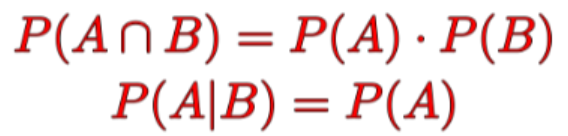
Independent:

if the occurrence of one event has NO influence on the probability of the occurrence of another event

29
New cards

Dependent

2 events are reliable on each other

30
New cards

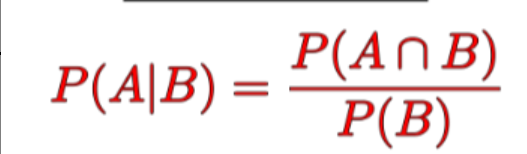
Conditional Probability

we write P(A| B) read “Probability of A given B”

31
New cards

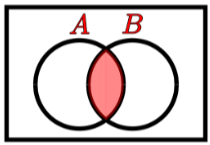
Intersection (P and B)

knowt flashcard image
32
New cards

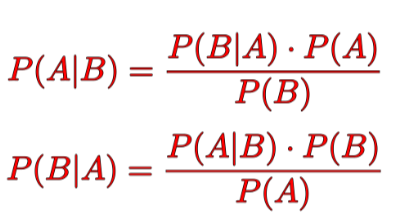
Bayes’ theorem

knowt flashcard image
33
New cards

Conditional

knowt flashcard image
34
New cards

Union

knowt flashcard image
35
New cards

Mutually Exclusive

knowt flashcard image
36
New cards

Independent

knowt flashcard image