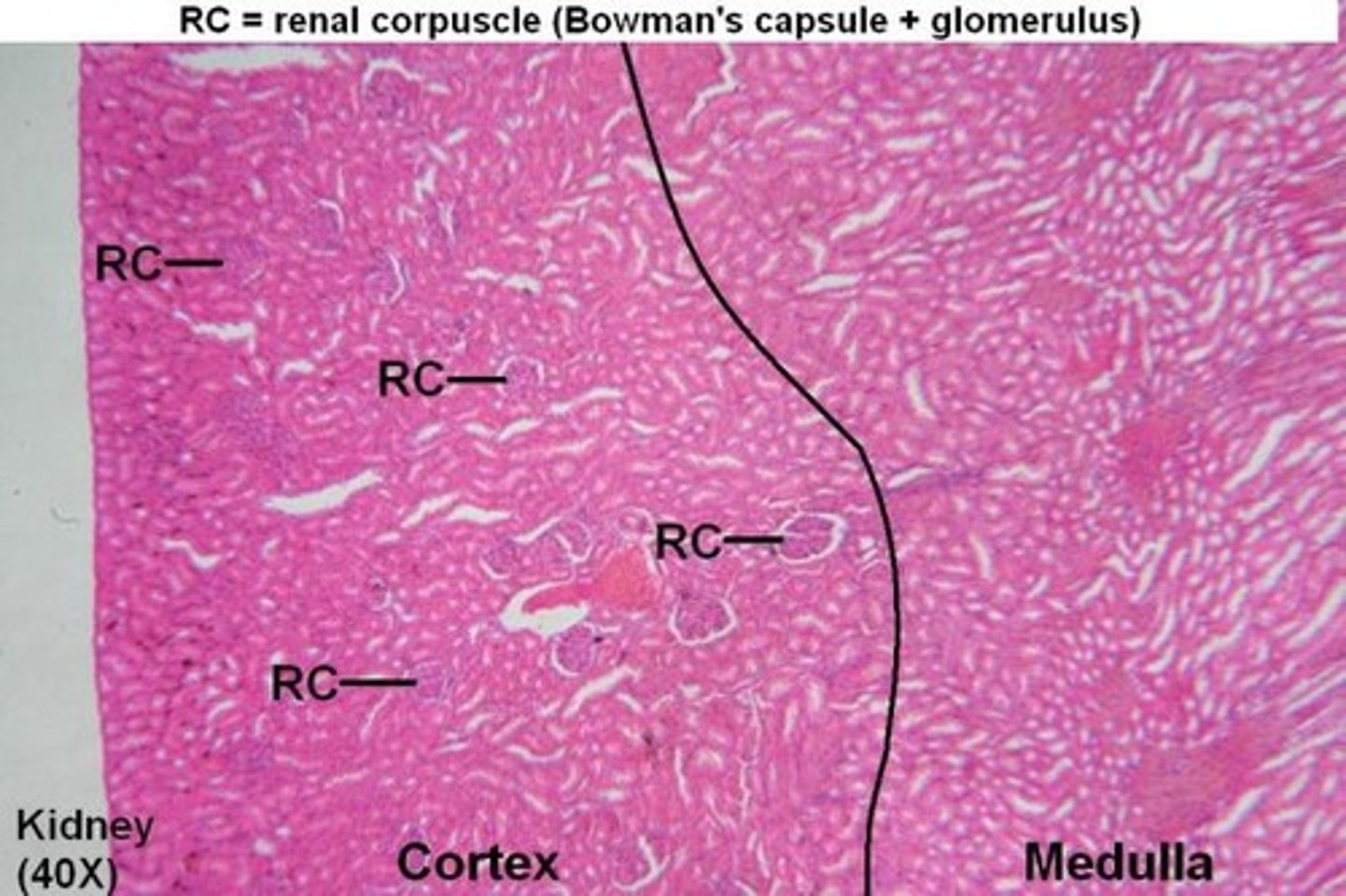
BIO 313 Lab - Urinary System
 Call Kai
 Learn
Learn Practice Test
 Spaced Repetition
 Match
Match Flashcards
 Knowt Play
1/49

There's no tags or description
Looks like no tags are added yet.
Name | Mastery | Learn | Test | Matching | Spaced | Call with Kai |
|---|
No analytics yet
Send a link to your students to track their progress
50 Terms
Adrenal gland (suprarenal gland)
Hormone-producing glands located superior to the kidneys.
Pyramid shaped.
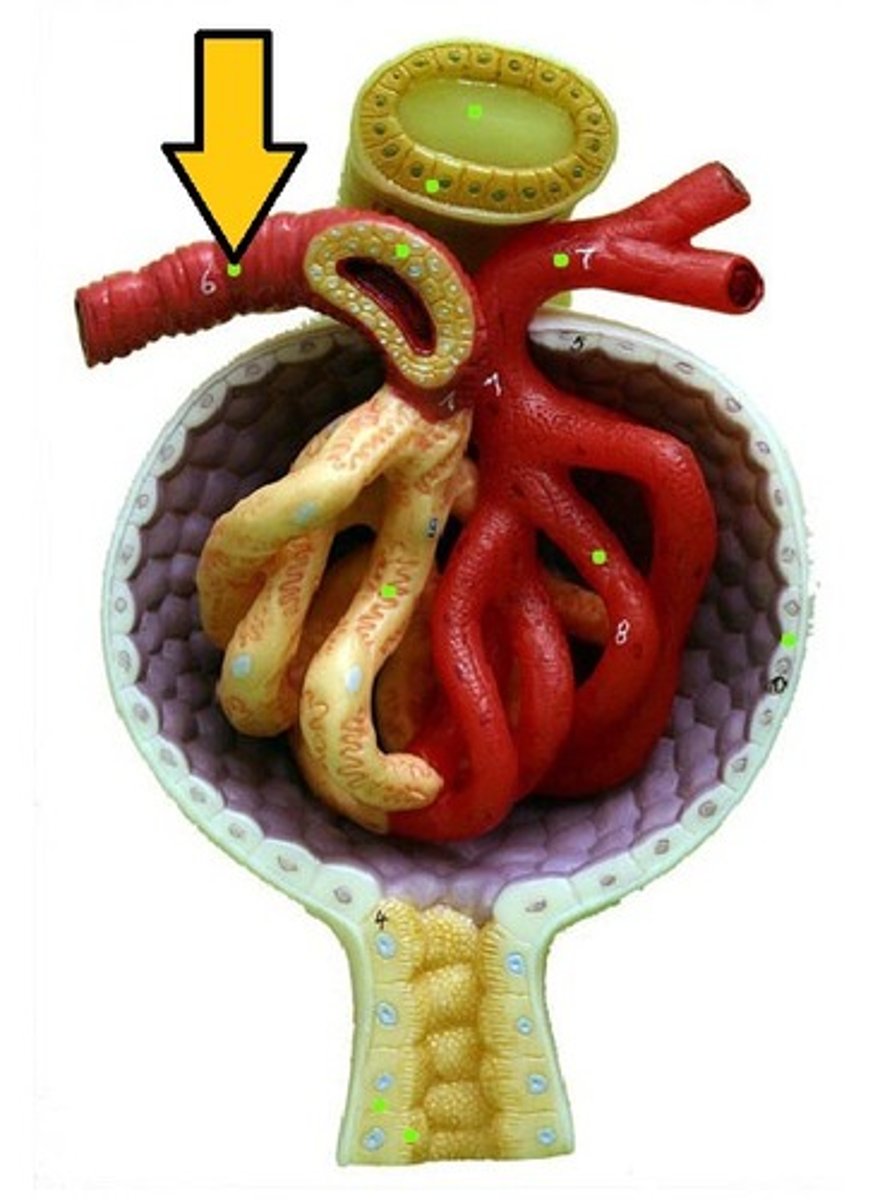
Afferent arteriole
The small artery that carries blood toward the capillaries of the glomerulus.
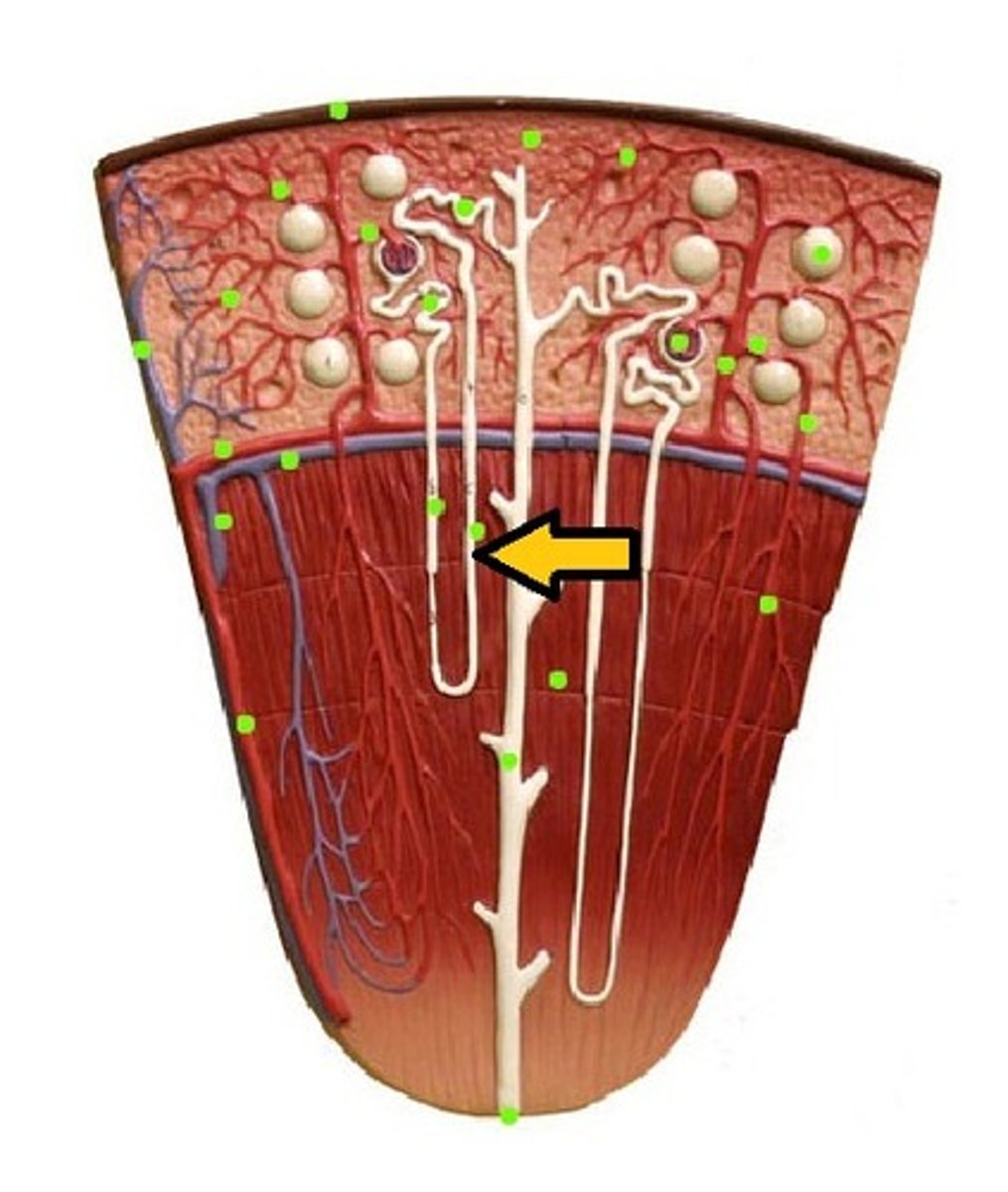
Ascending limb
The limb of the loop of Henle that carries fluid from the medulla towards the cortex of the kidney (distal convoluted tubule).
Impermeable to water.
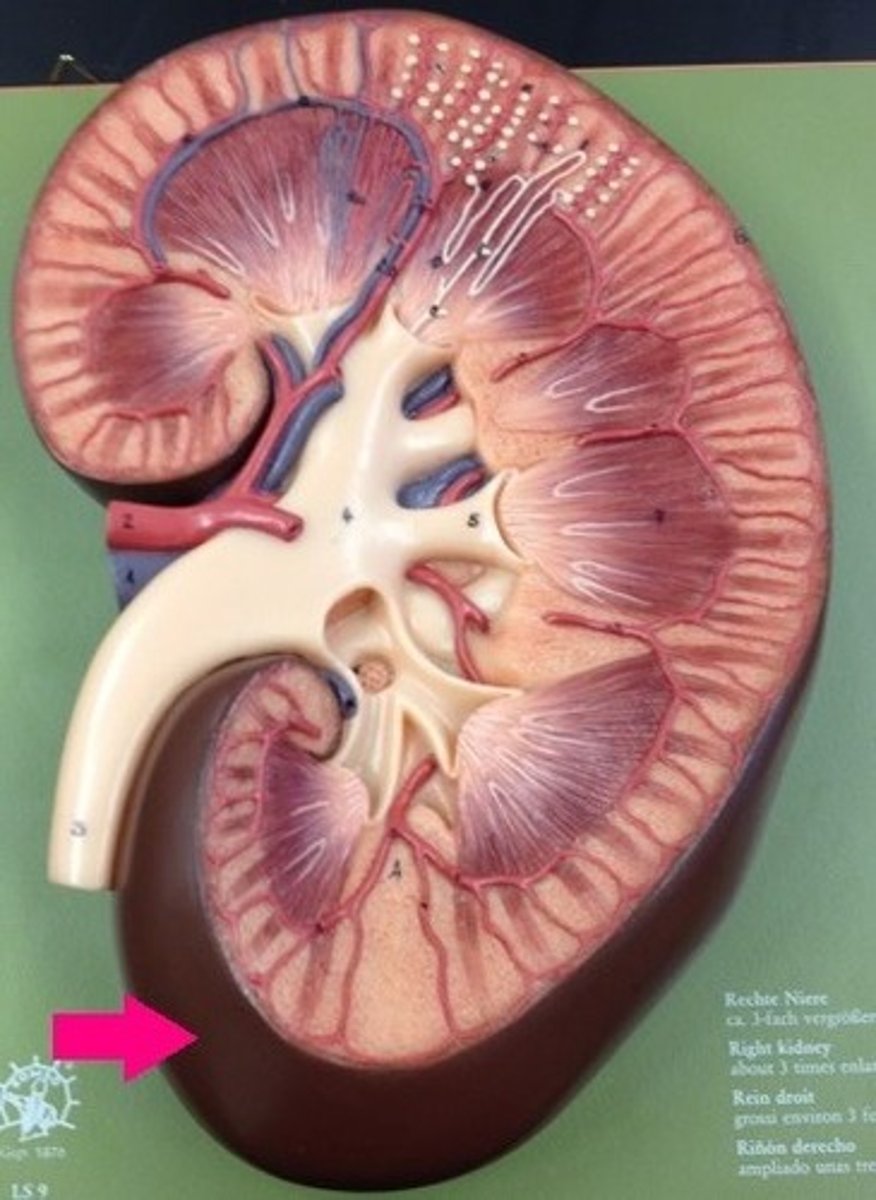
Capsule
Outer membrane covering kidney.
Collecting duct
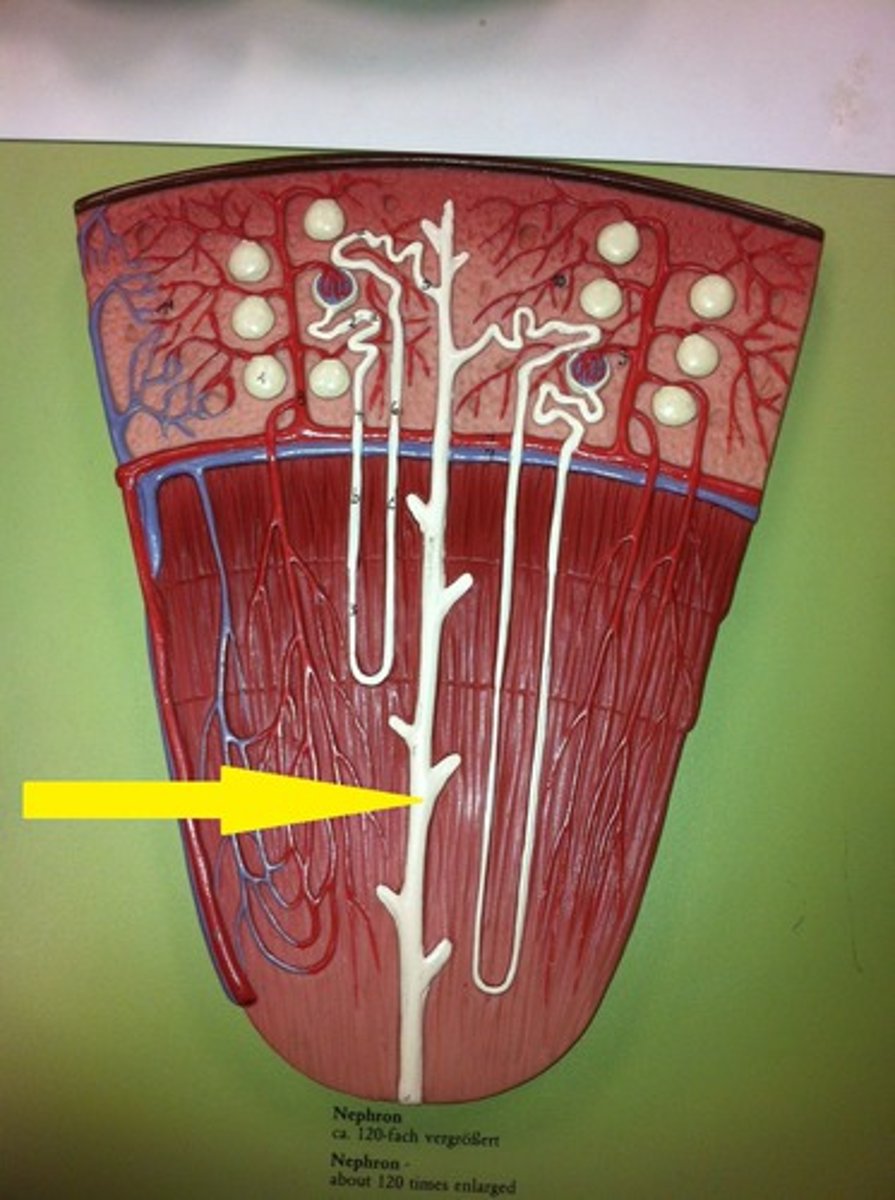
Collects urine from multiple distal convoluted tubules, passes through renal pyramid and empties through renal papilla into minor calyx.
Cortex
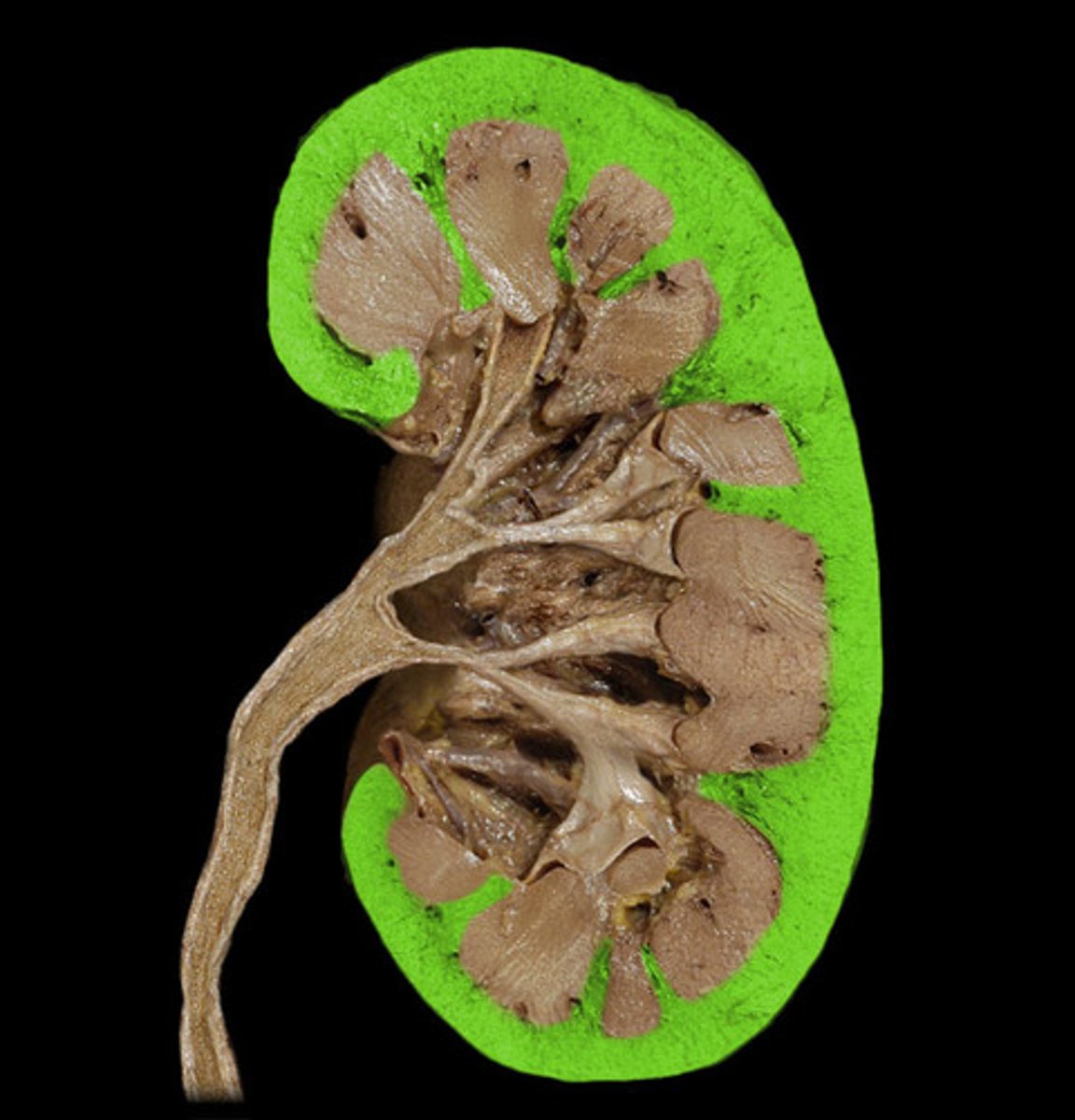
Outer, light colored region extending from capsule to base of pyramids and into spaces between pyramids as renal columns.
Descending limb
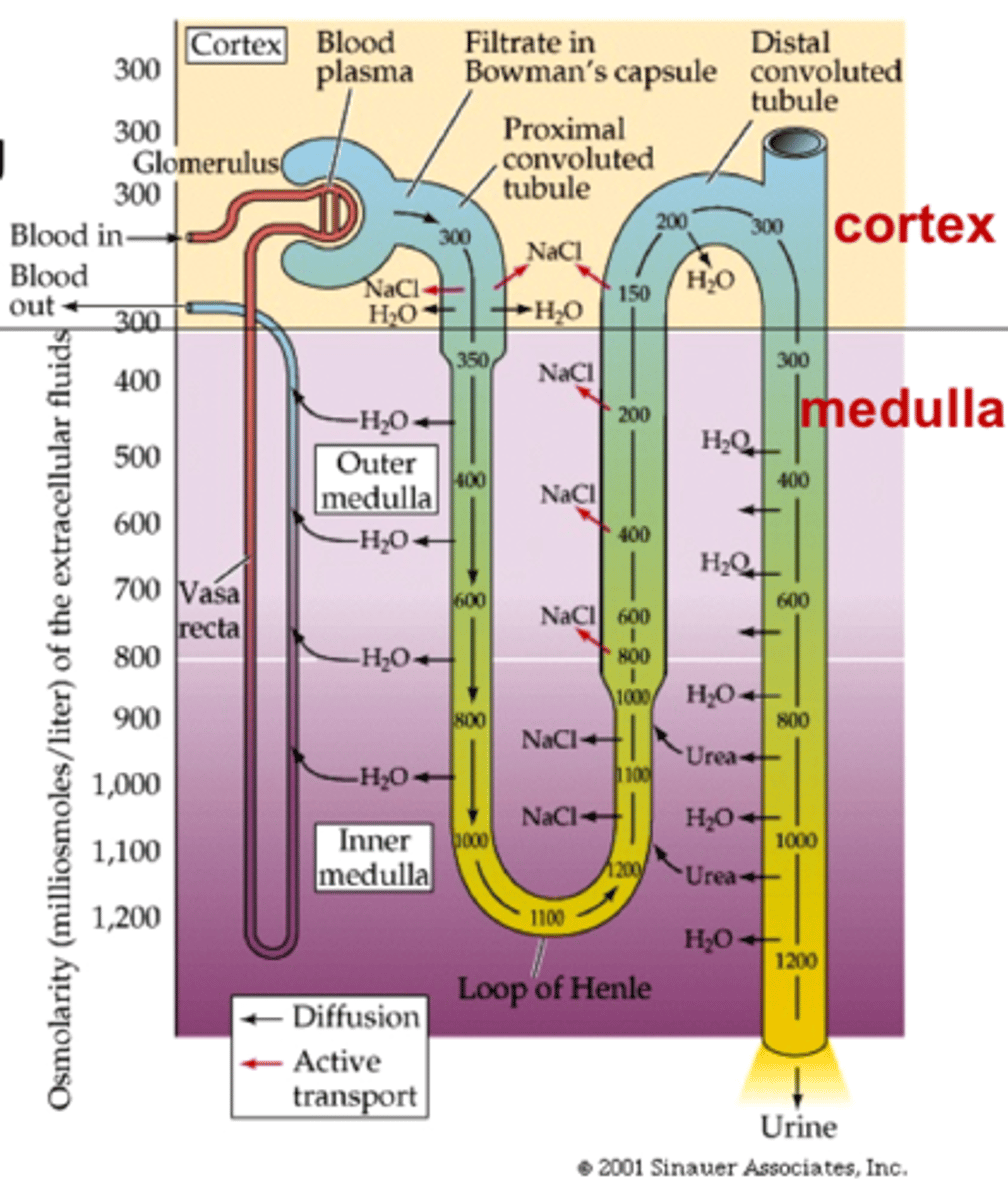
The limb of the loop of Henle that carries fluid from the cortex towards the medulla of the kidney.
Permeable to water.
Distal convoluted tubule
Short, twisted segment connecting nephron loop with collecting duct.
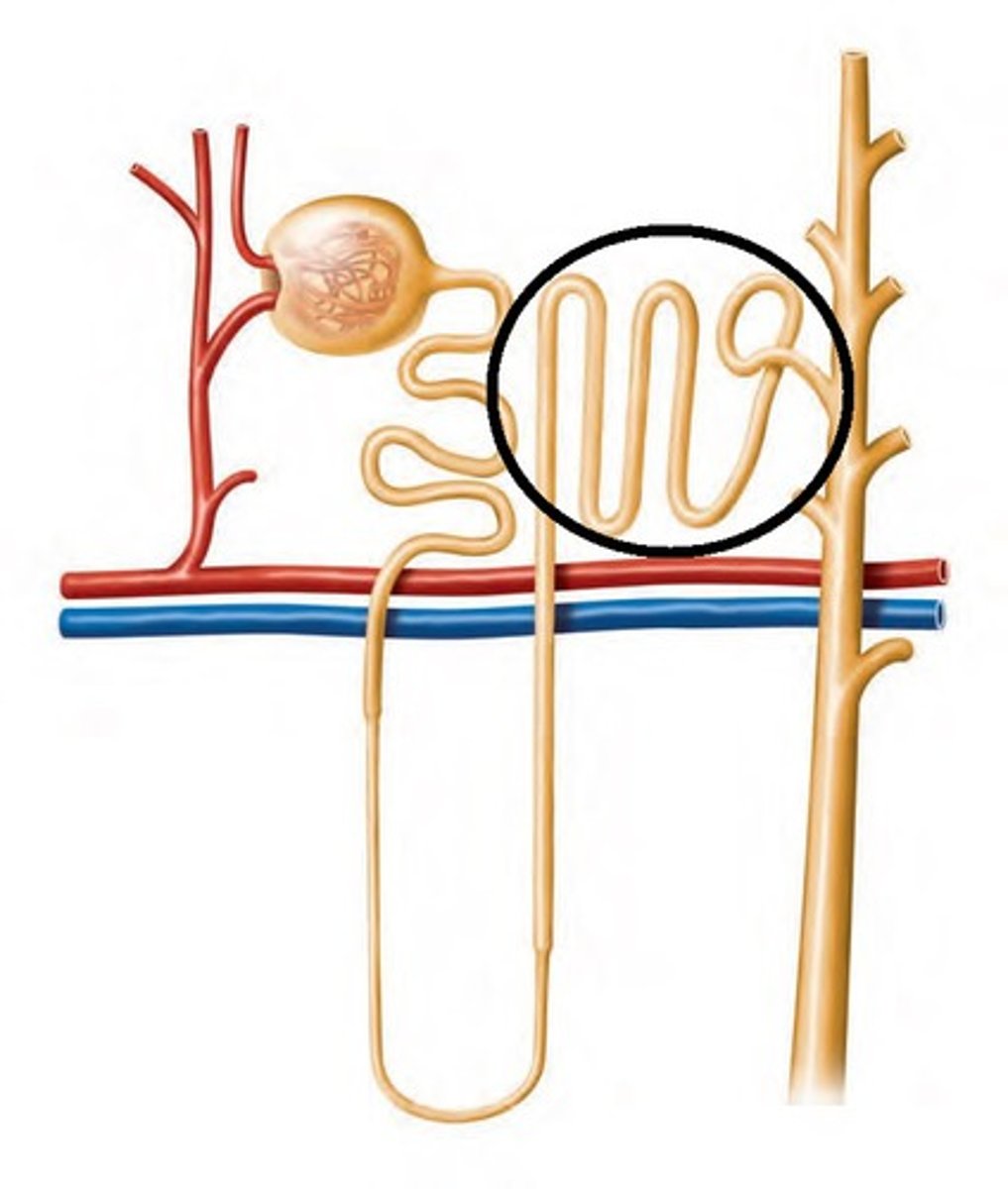
Efferent arteriole
Carries blood away from glomerulus into peritubular capillary bed.
Letter A in picture.
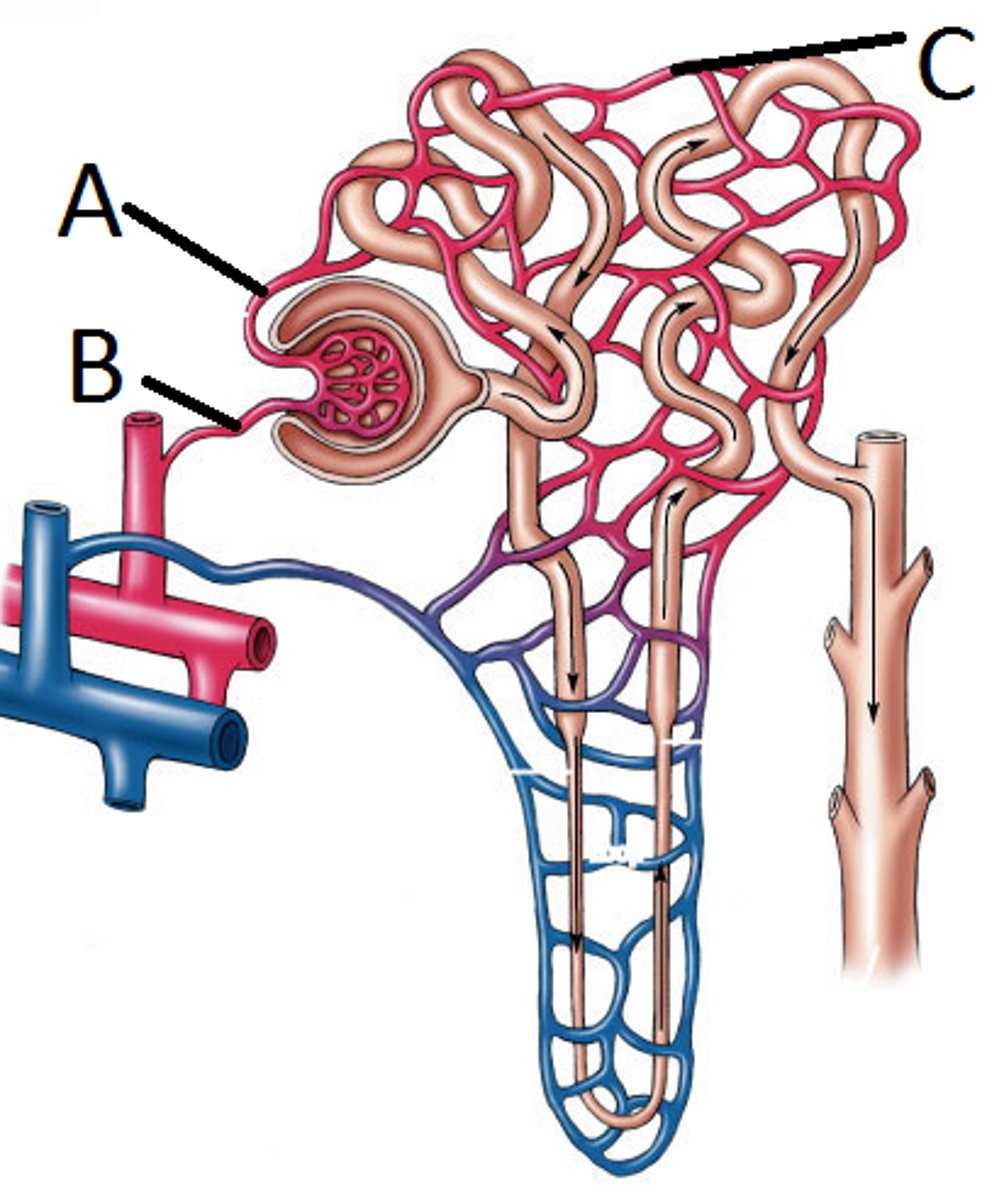
External urethral orifice
Opening of the urethra to the outside.
Letter P in picture.
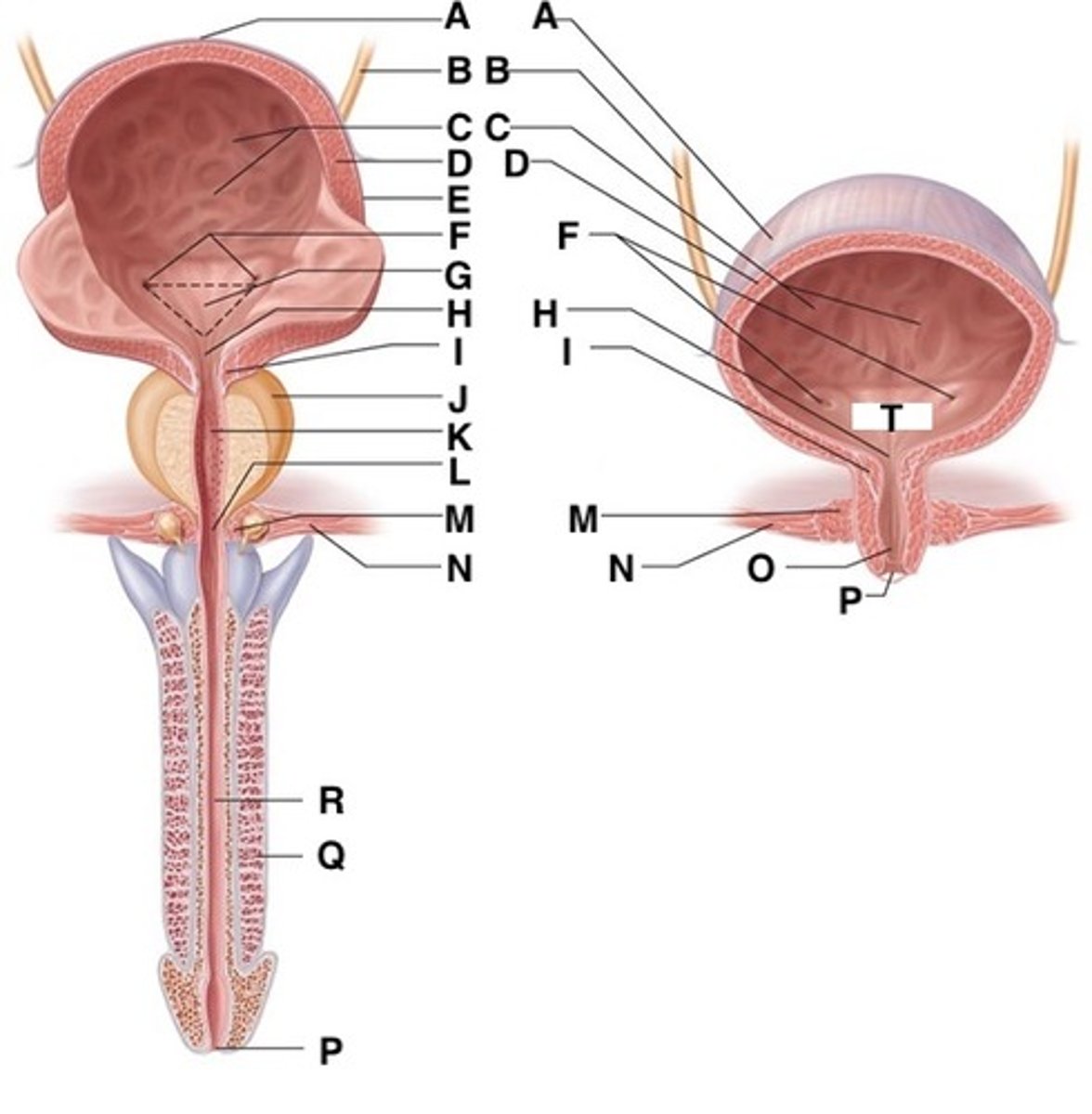
Glomerular capsule (Bowman's capsule)
Double walled tubular component.
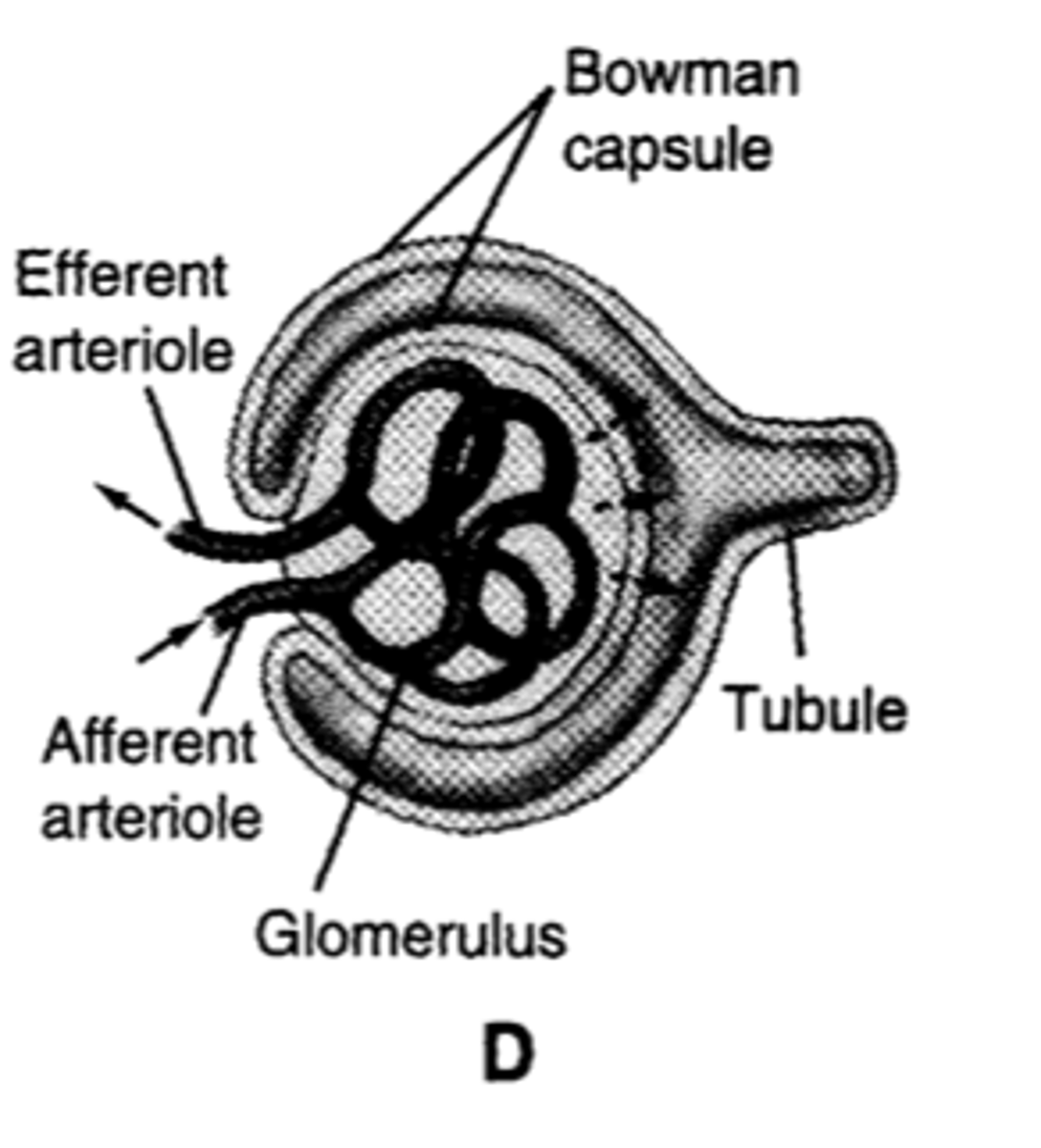
Glomerular filtration
The first step in urine formation in which substances in blood pass through the filtration membrane and the filtrate enters the proximal convoluted tubule of the nephron.
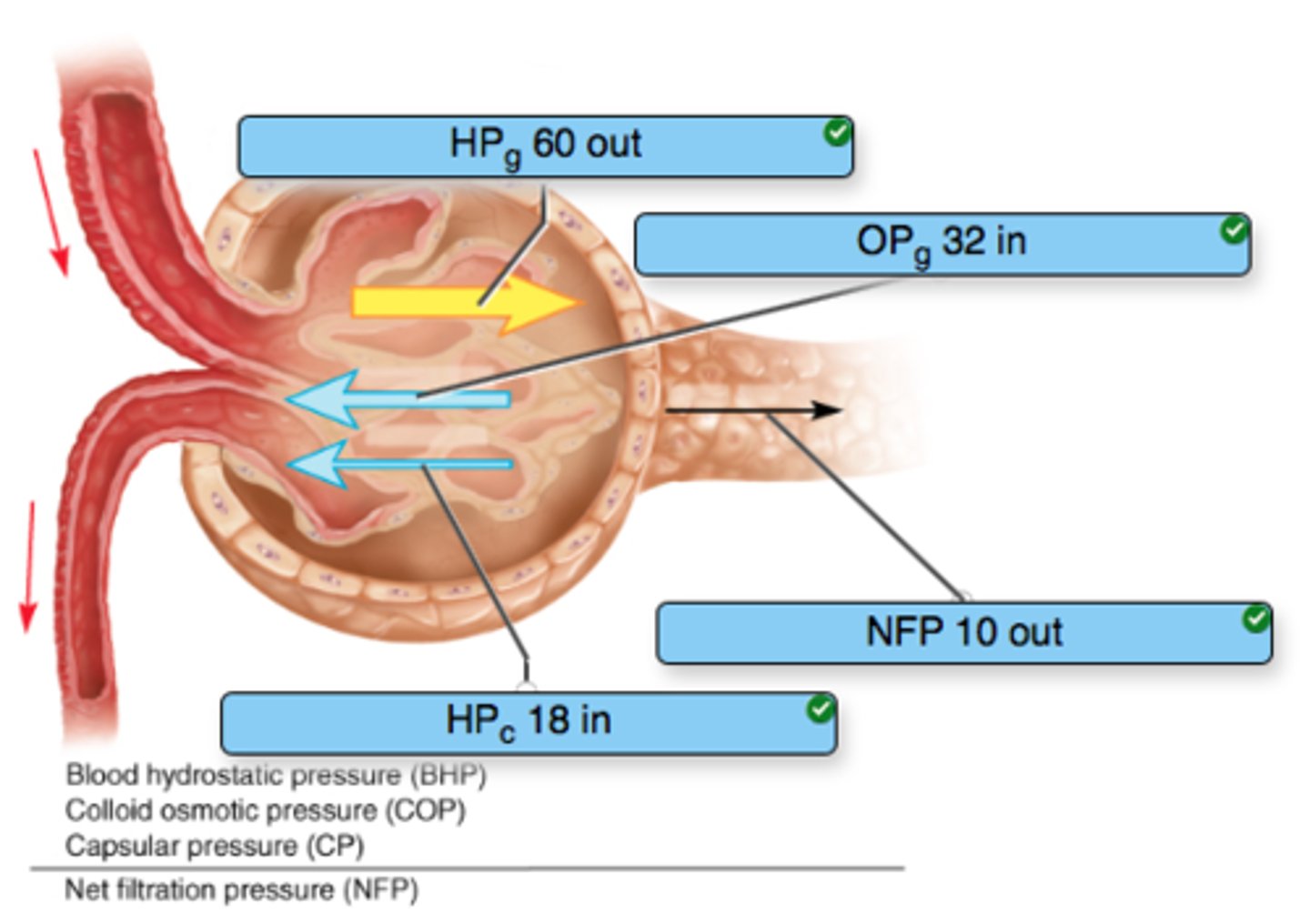
Glomerulus
Capillary bed located within glomerular capsule.
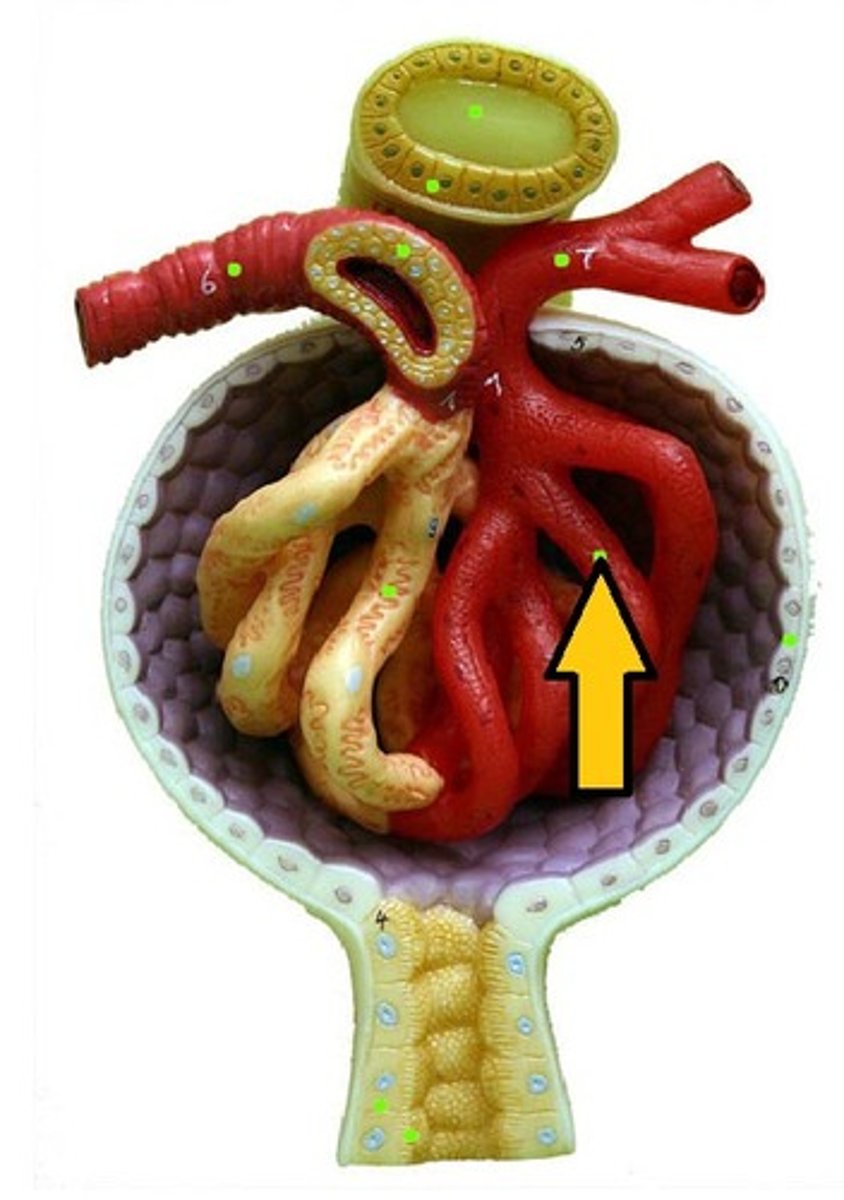
Hilum
Notch, or indentation, in center of medial surface of kidney.
Location of entrance/exit of renal vessels, nerves (consist of sympathetic fibers that regulate vascular smooth muscle of kidneys and renin secretion), and ureter.
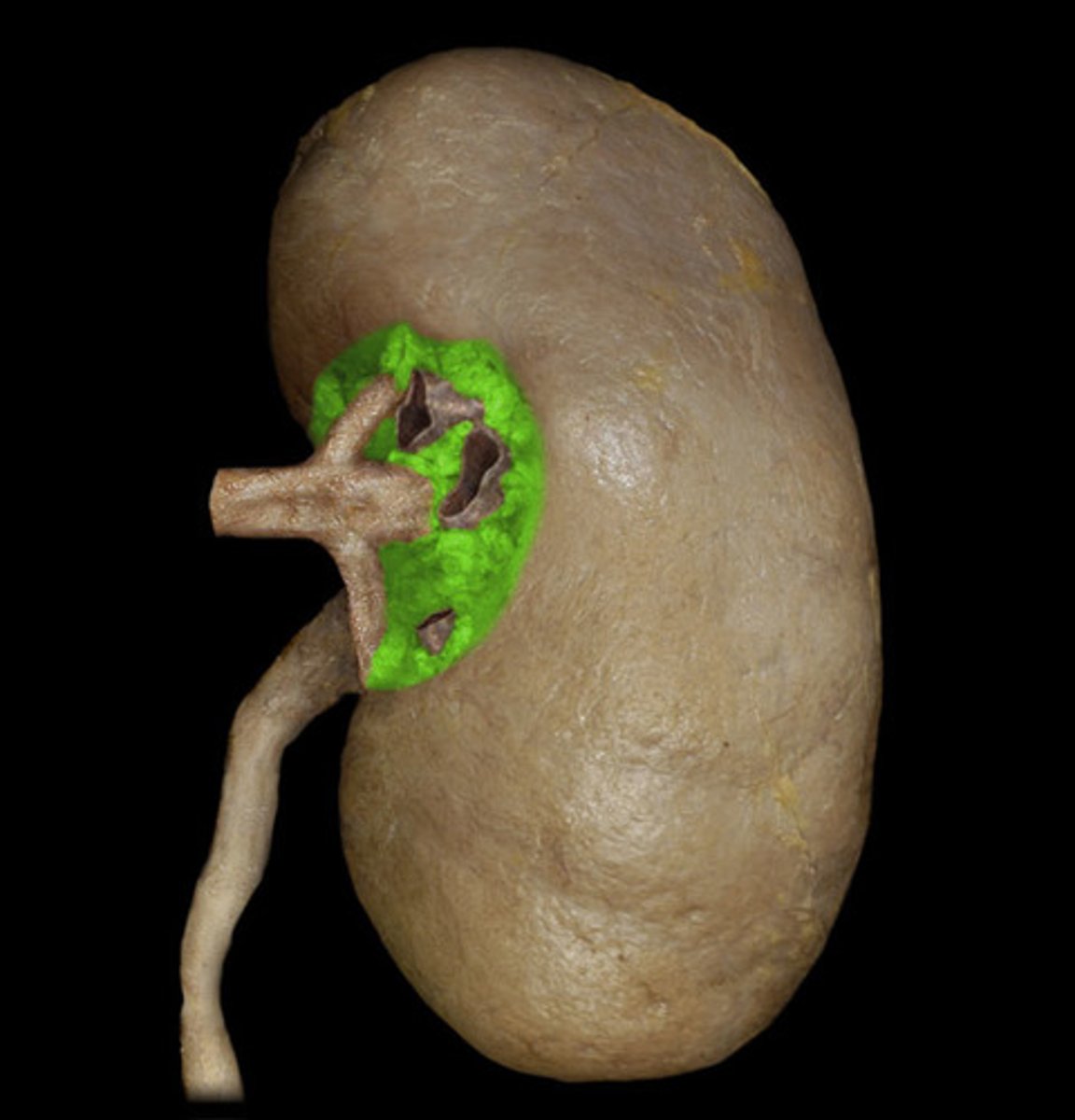
Kidney
Paired, bean-shaped organs located just above the waist between the parietal peritoneum and the posterior wall of the abdomen.
Retroperitoneal.
Right kidney is slightly lower than the left kidney (due to liver).
Average adult kidney: 1 - 1 1/2" thick, 2 1/2" wide, 5 1/2" long.
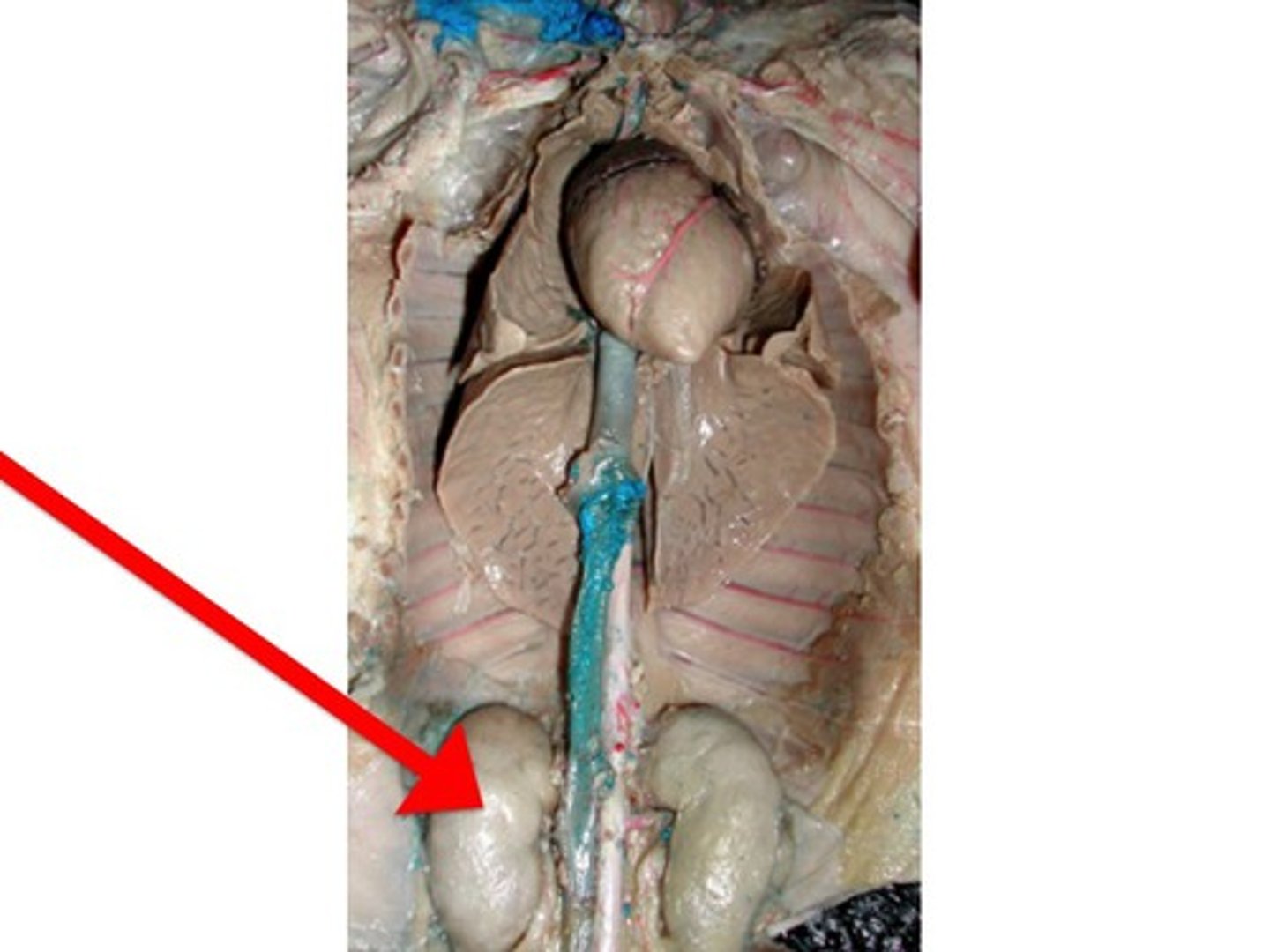
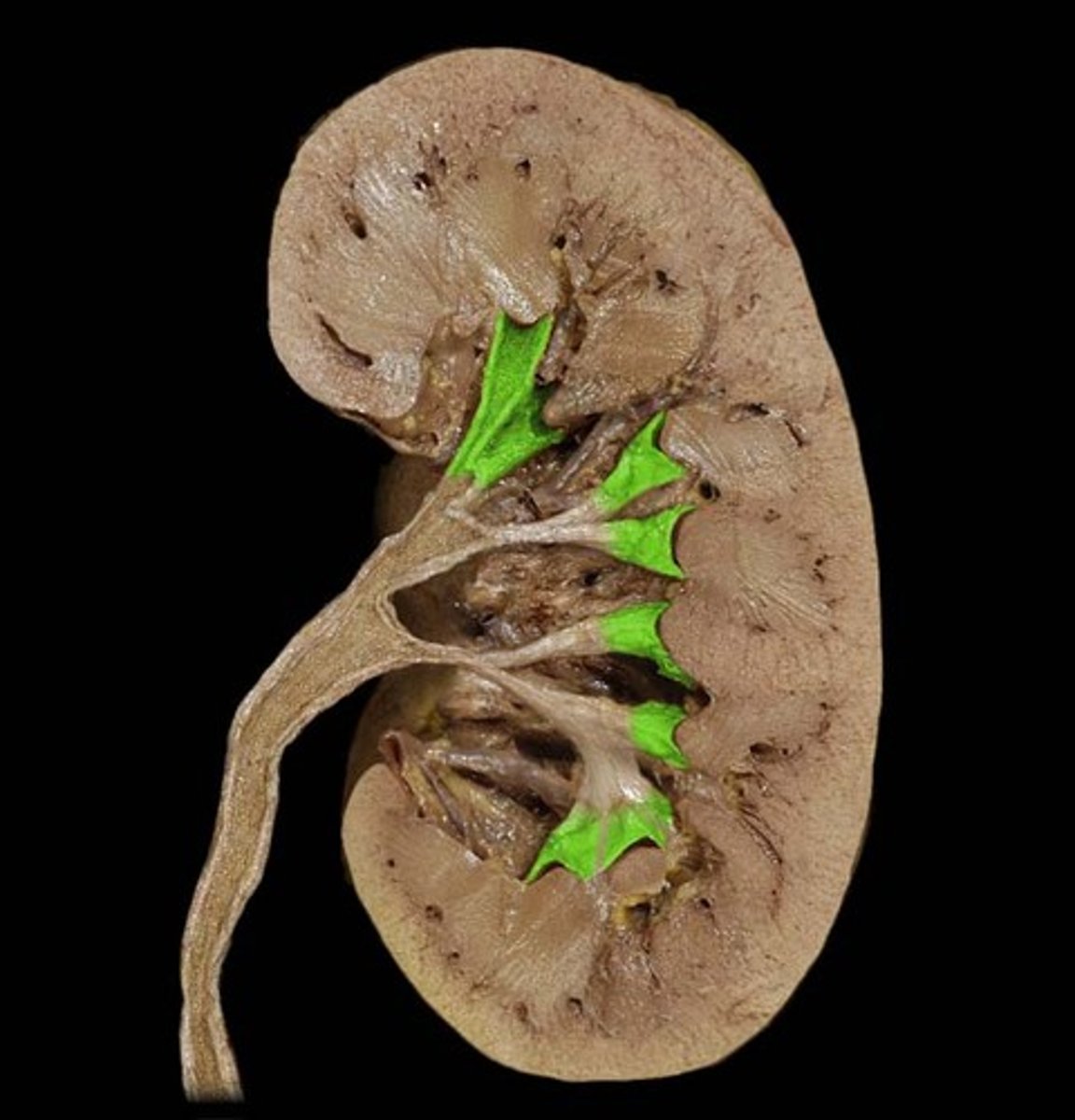
Major calyx
Minor calices combine to form major calices.
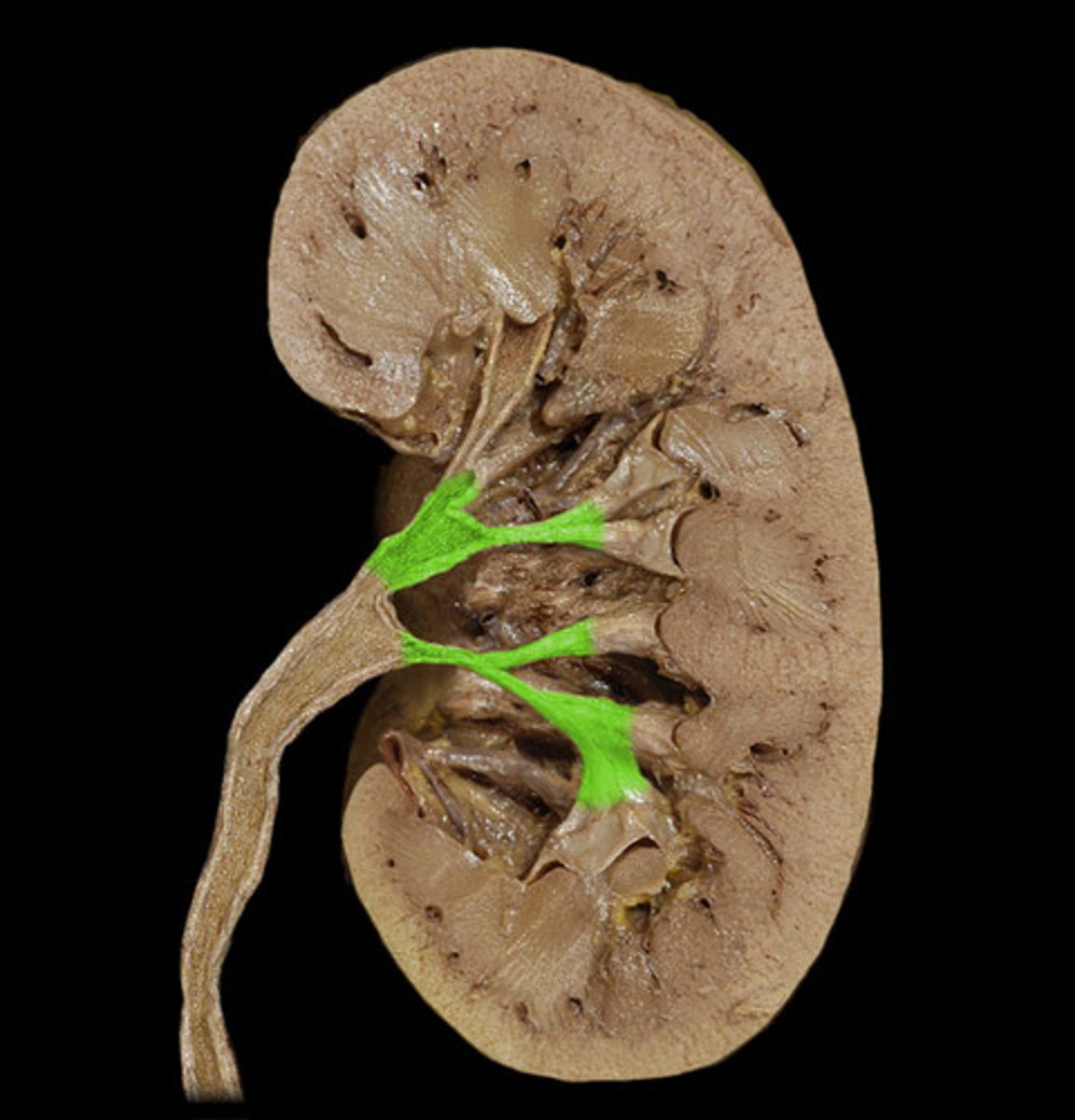
Minor calyx
Cup-like structure attached to apex of each pyramid; collects urine from collecting ducts of attached pyramid.
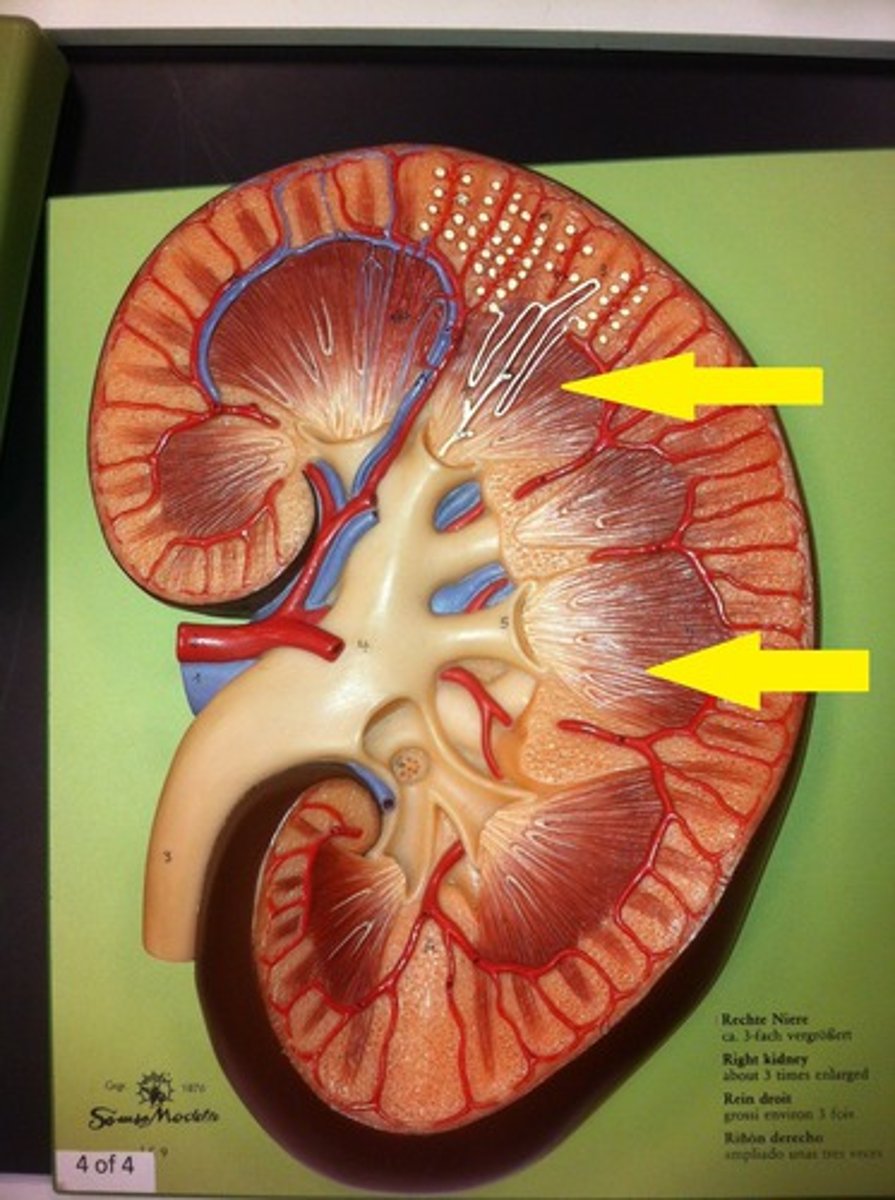
Medulla
Inner, darker region of kidney.
Consists of renal pyramids and renal papillae.
Nephron
The functional unit of the kidney that produces urine.
Each is composed of a tubular and a vascular component.
First part: in cortex; renal corpuscle.
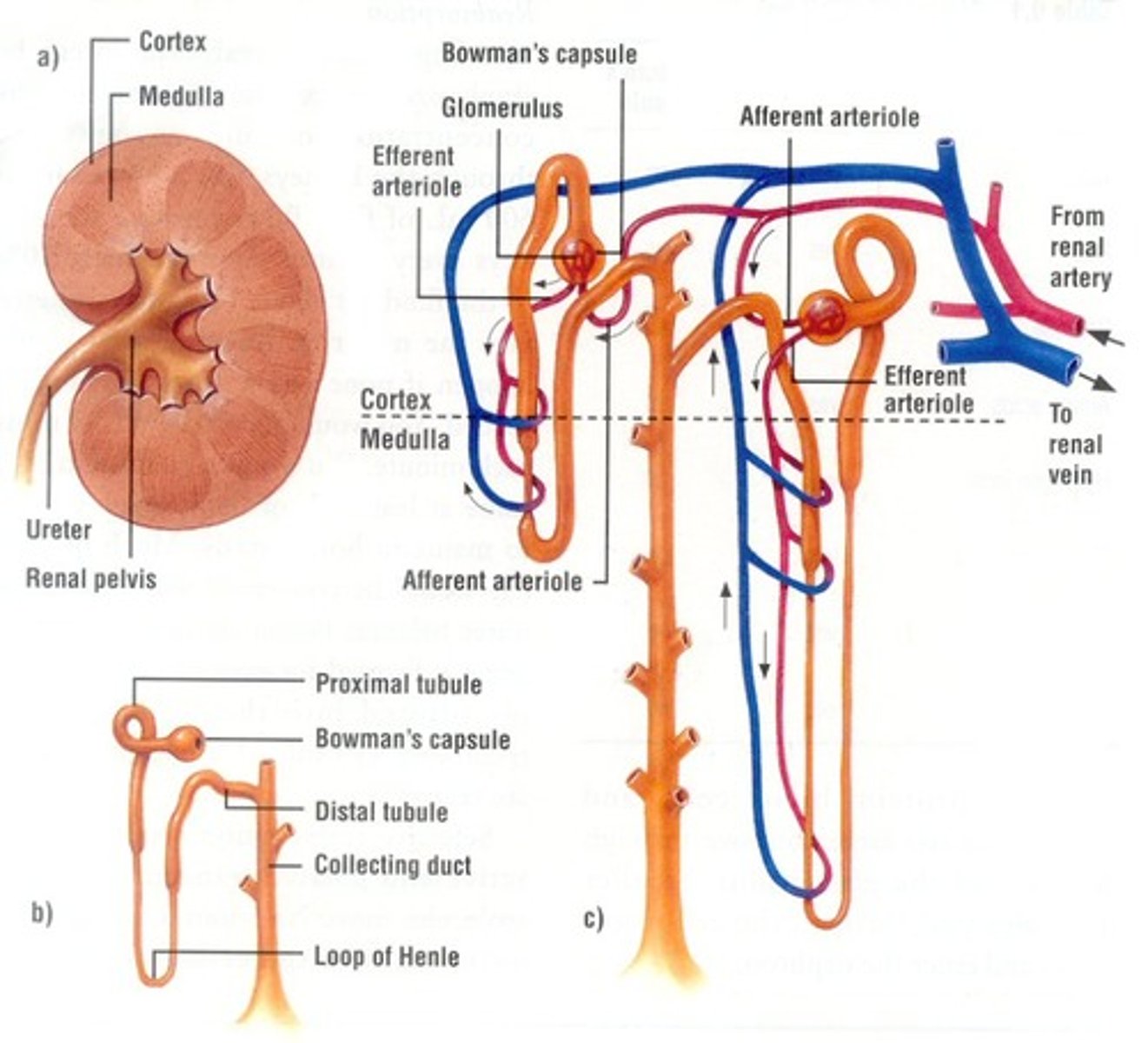
Nephron loop
Loop of Henle
Consists of:
-descending limb
-nephron loop (bend in tubule)
-ascending limb
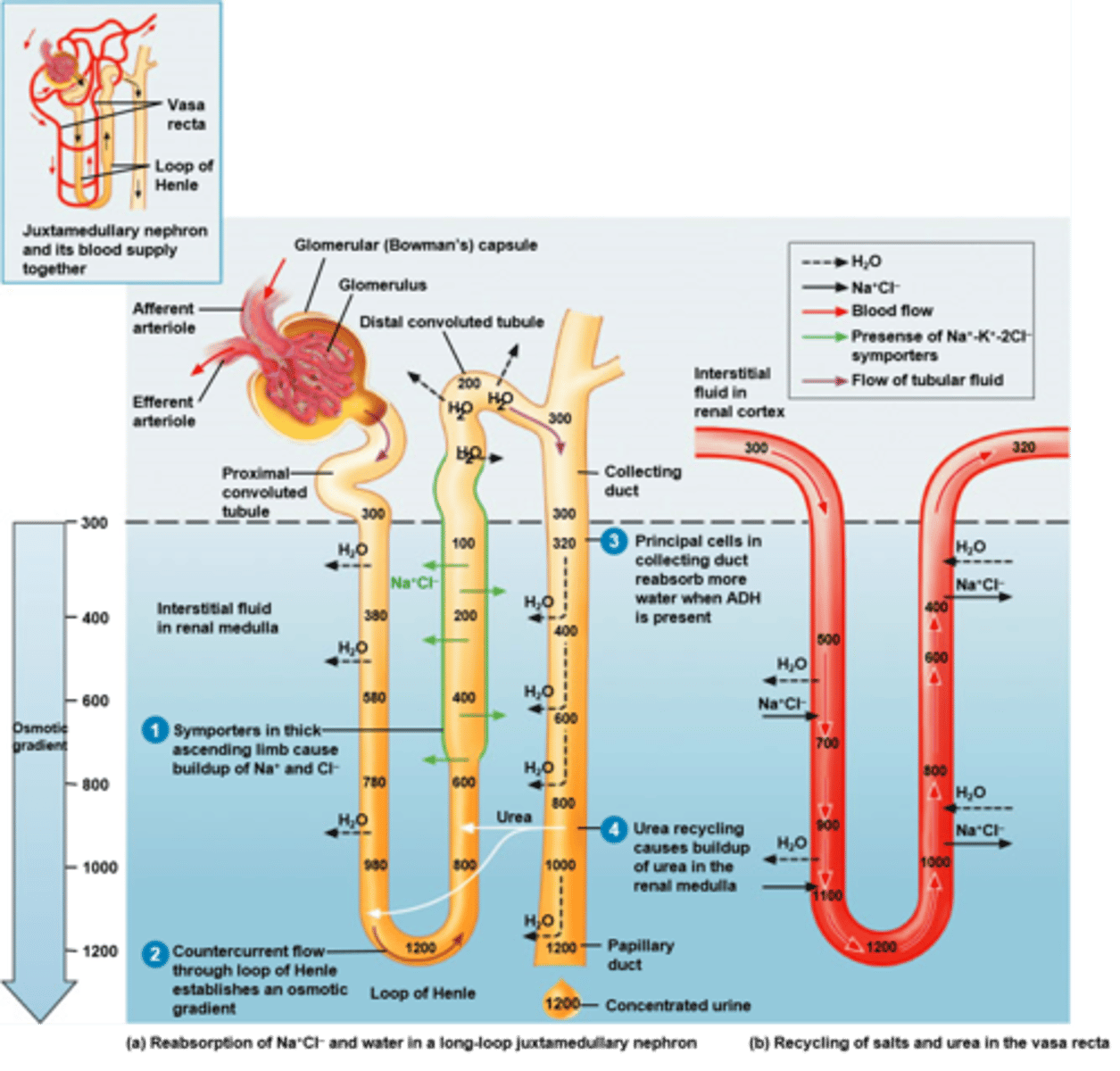
Penile urethra
Portion of male urethra that passes through the penis to the external urethral orifice.
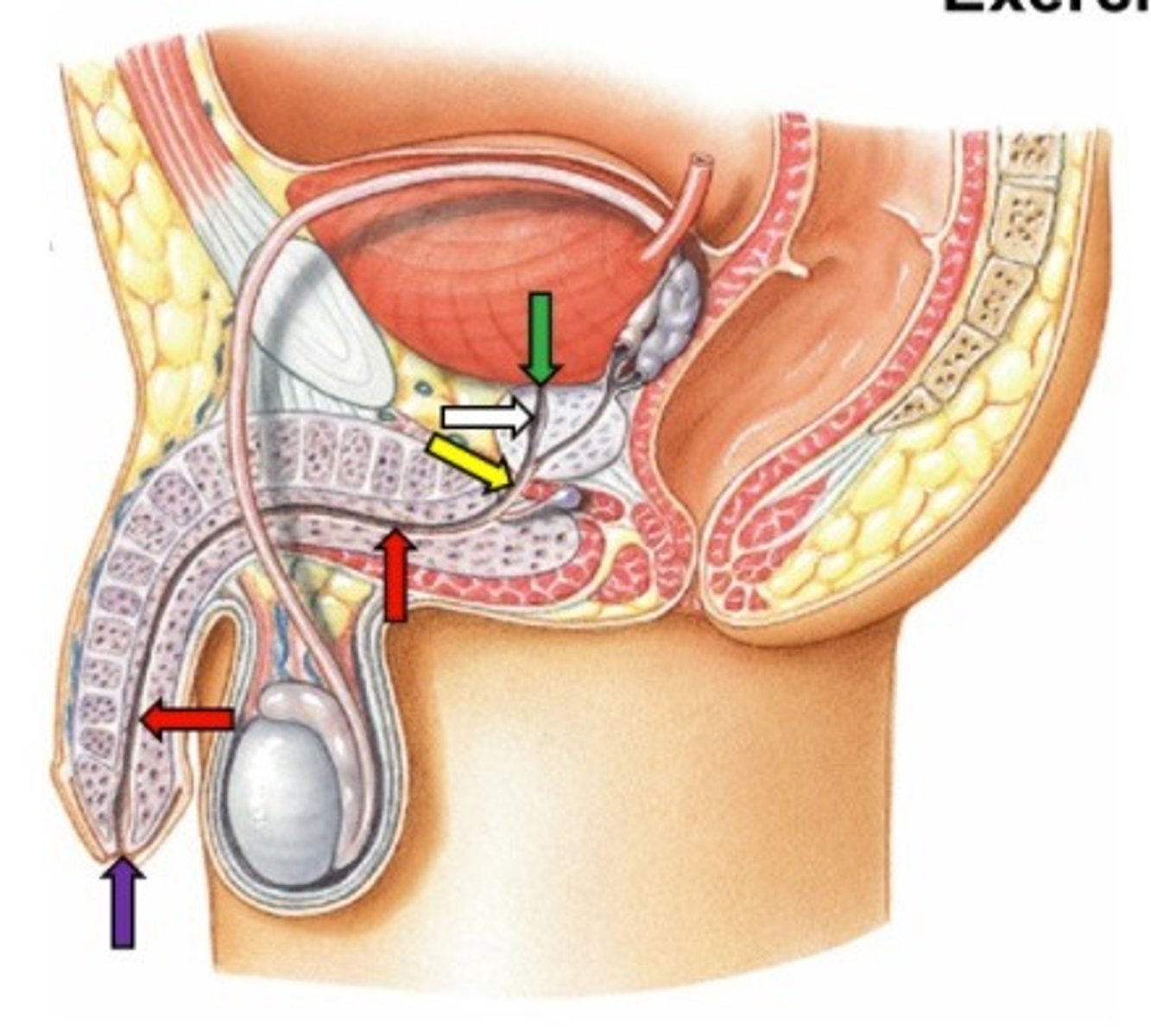
Prostatic urethra
Portion of the male urethra that passes through the prostate gland.
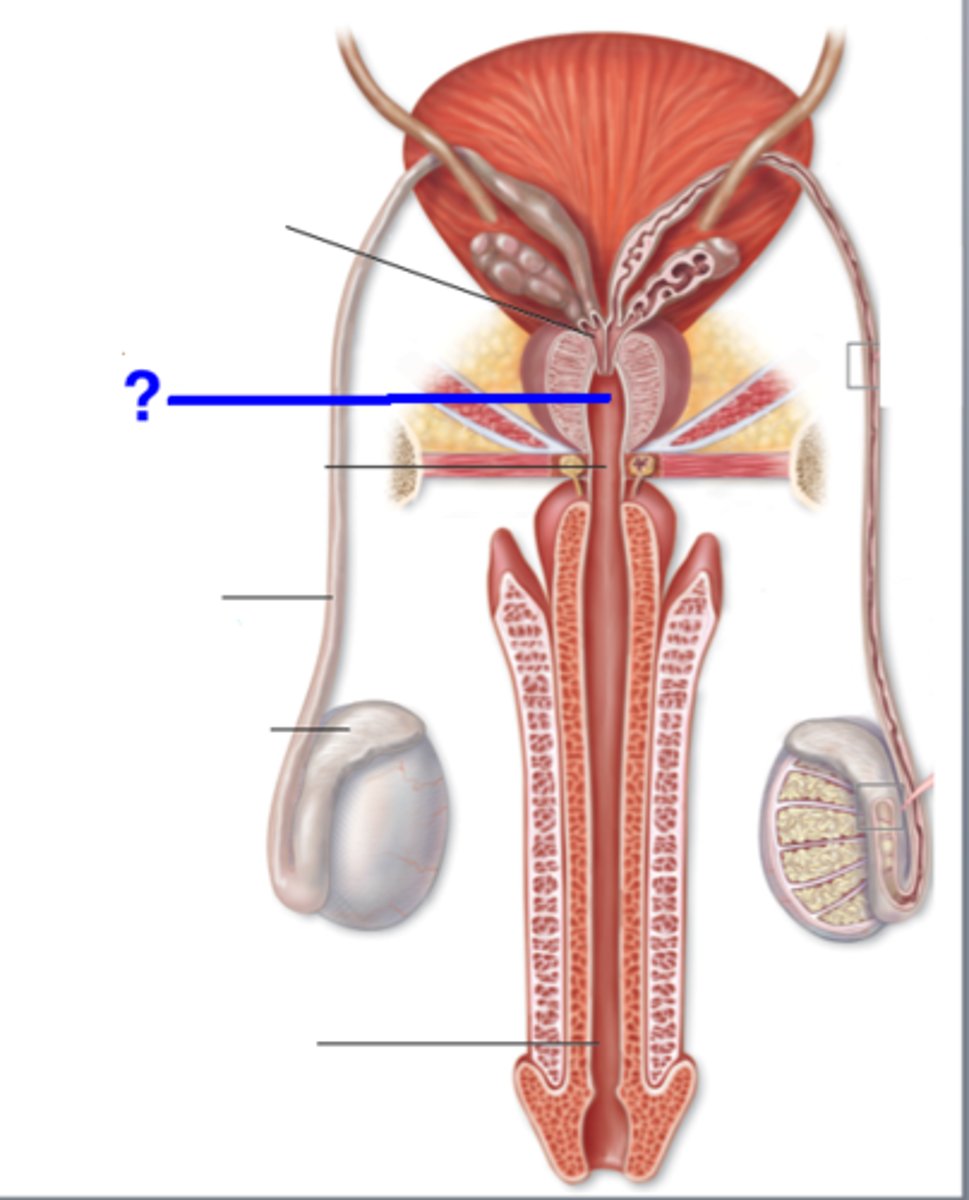
Proximal convoluted tubule
Short, twisted segment connecting the glomerular capsule with the nephron loop.
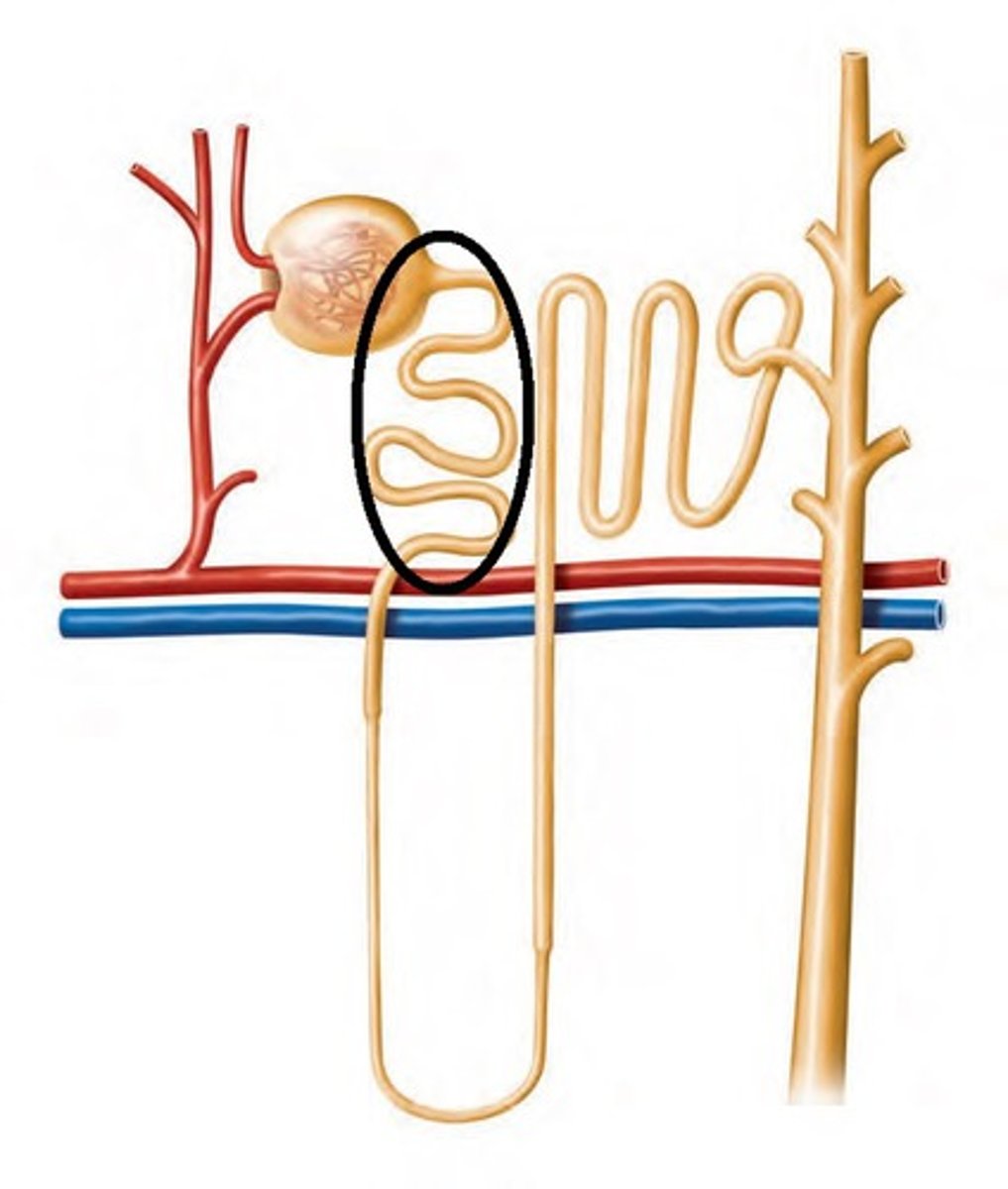
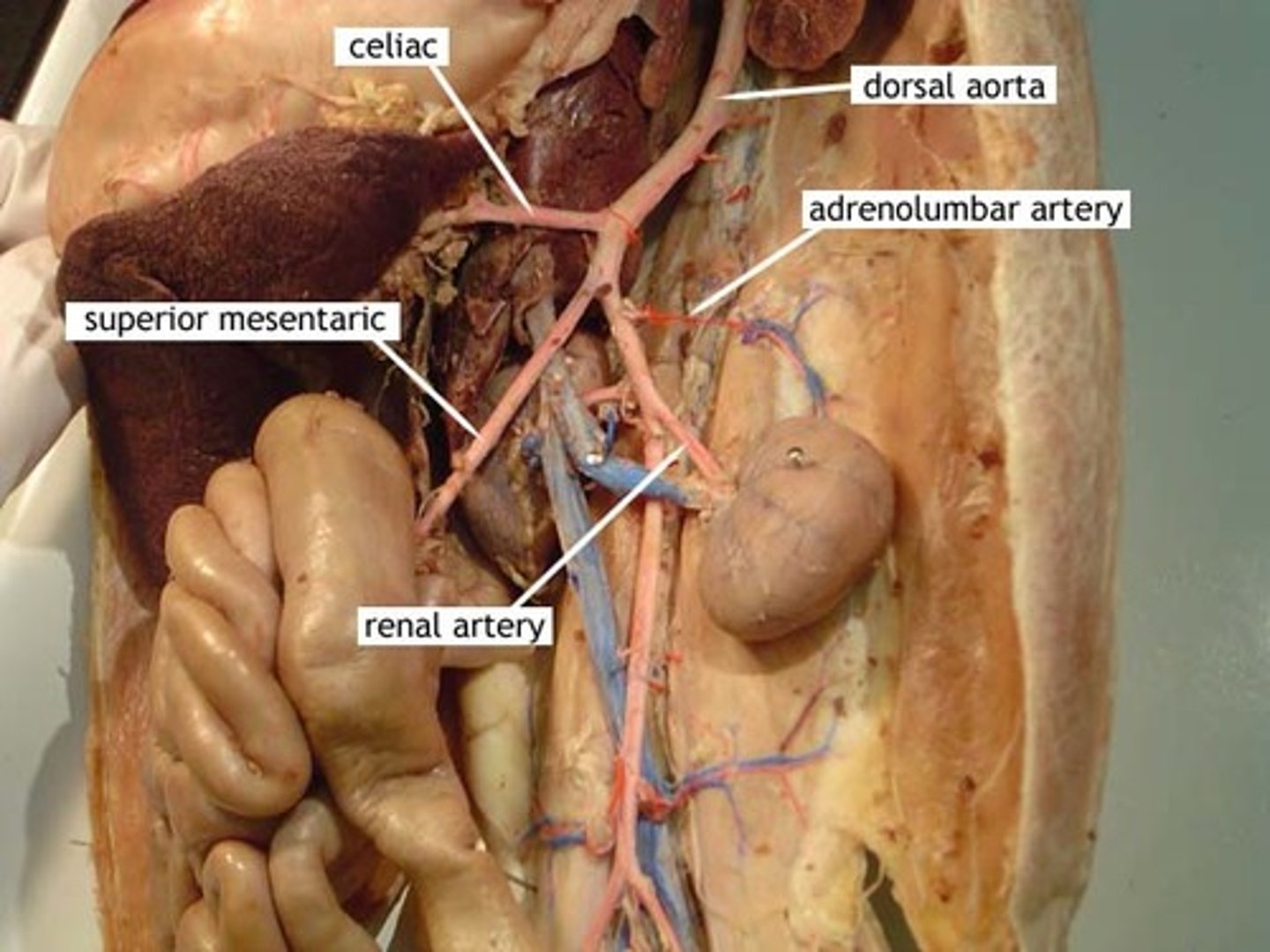
Renal artery
Delivers blood to kidney (nearly 25% of resting cardiac output cycles through the kidney with each heartbeat).
Branches into progressively smaller and smaller vessels inside the kidney.
Posterior to renal vein at hilum of kidney.
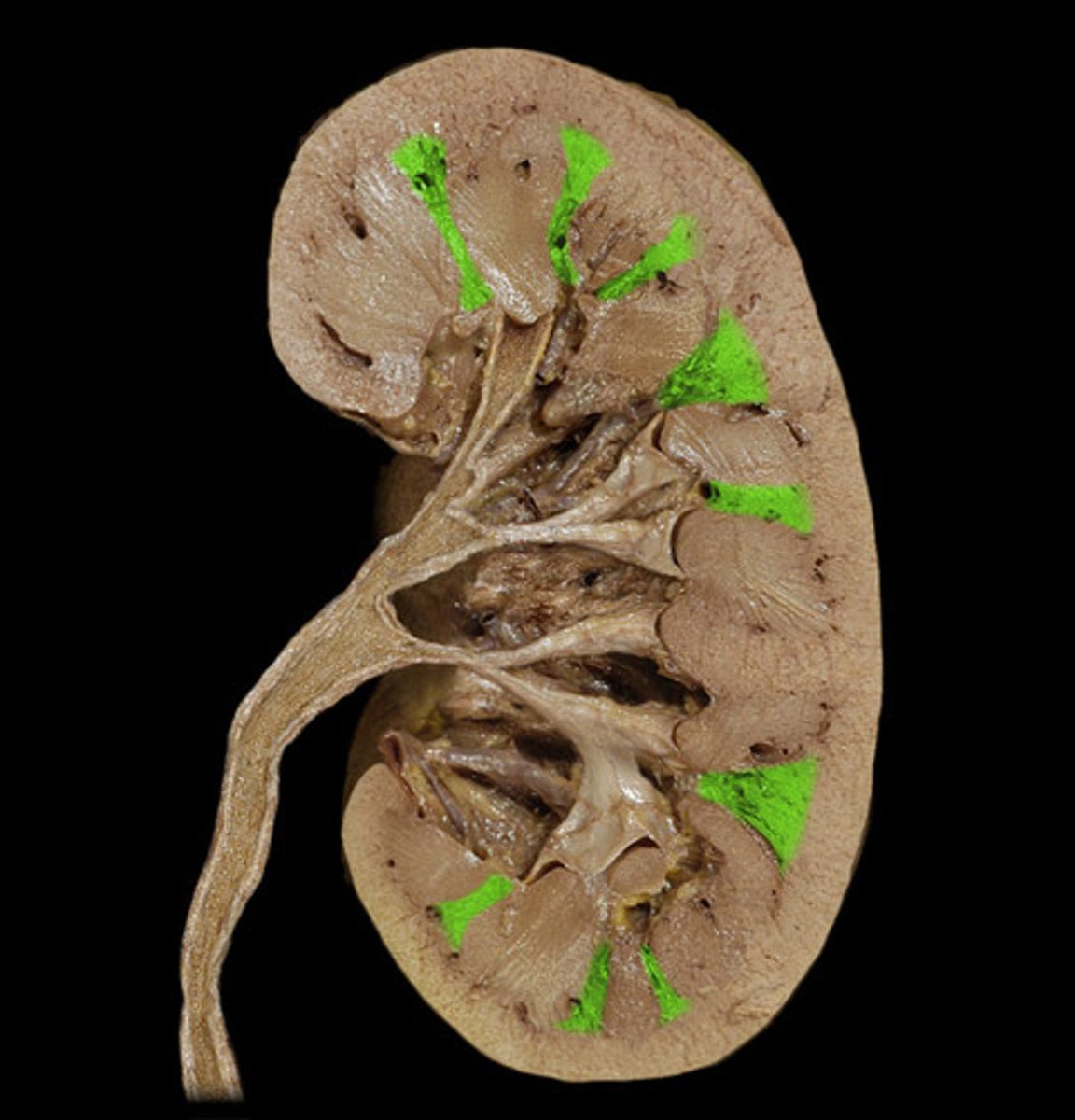
Renal column
Area of cortical tissue running between the medullary pyramids.
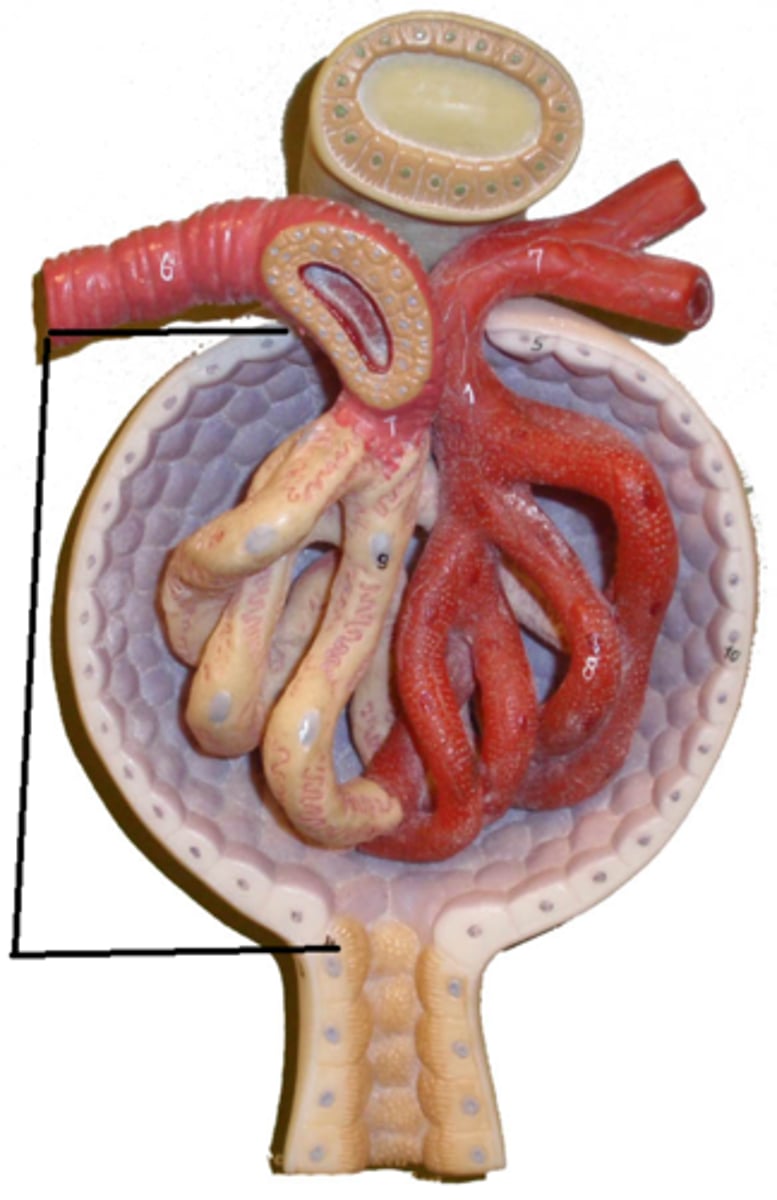
Renal corpuscle
First part of the nephron.
Responsible for the initial step in urine formation (glomerular filtration).
Consists of:
-glomerular capsule
-glomerulus
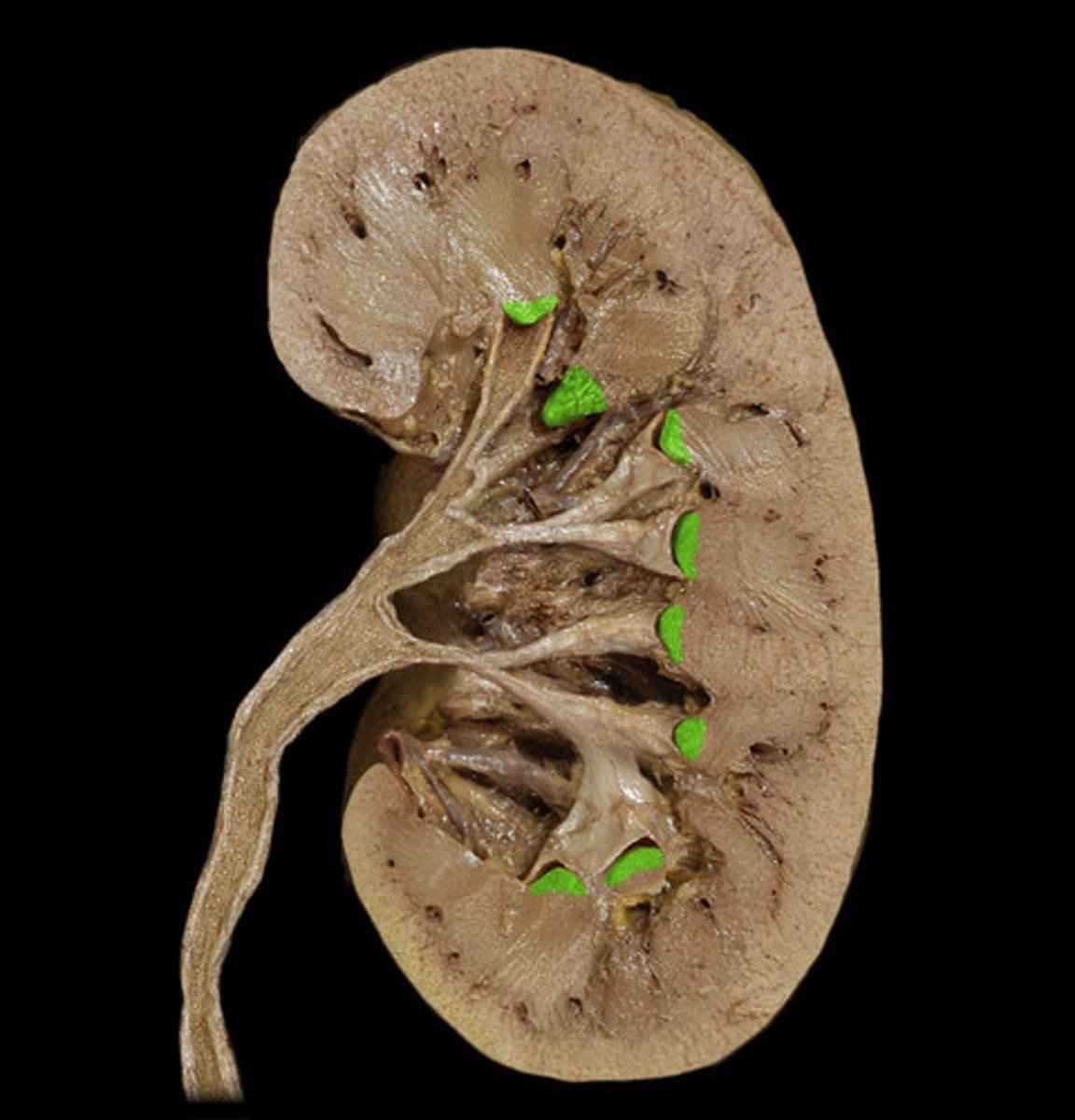
Renal papilla
Apex of renal pyramid.
Directed toward center of kidney.
Drains urine into minor calices.
Renal pelvis
Major calices drain into expanded region at origin of ureter.
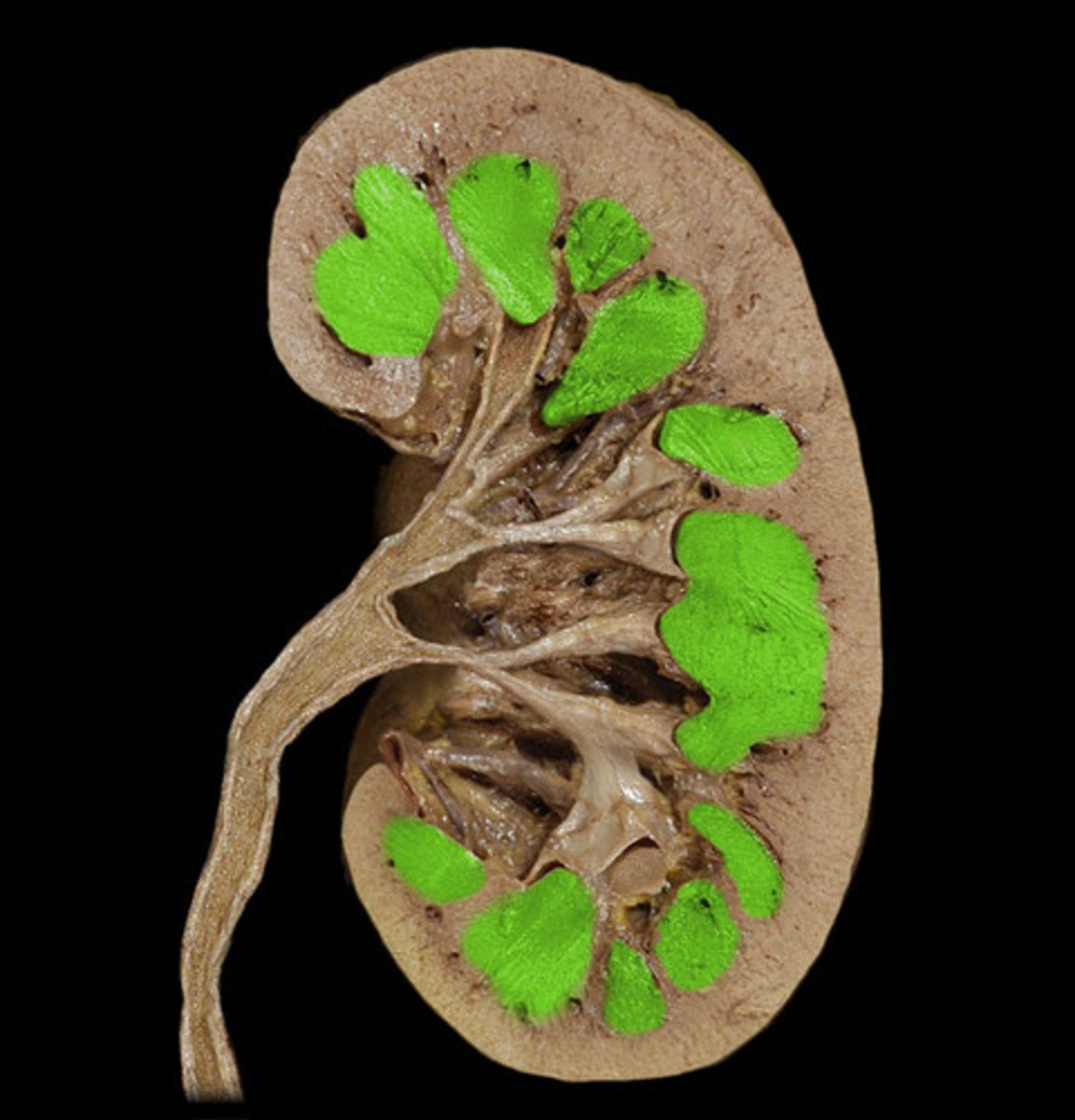
Renal pyramid
Dense network of nephrons.
Triangular shaped subdivisions of medulla of kidney.
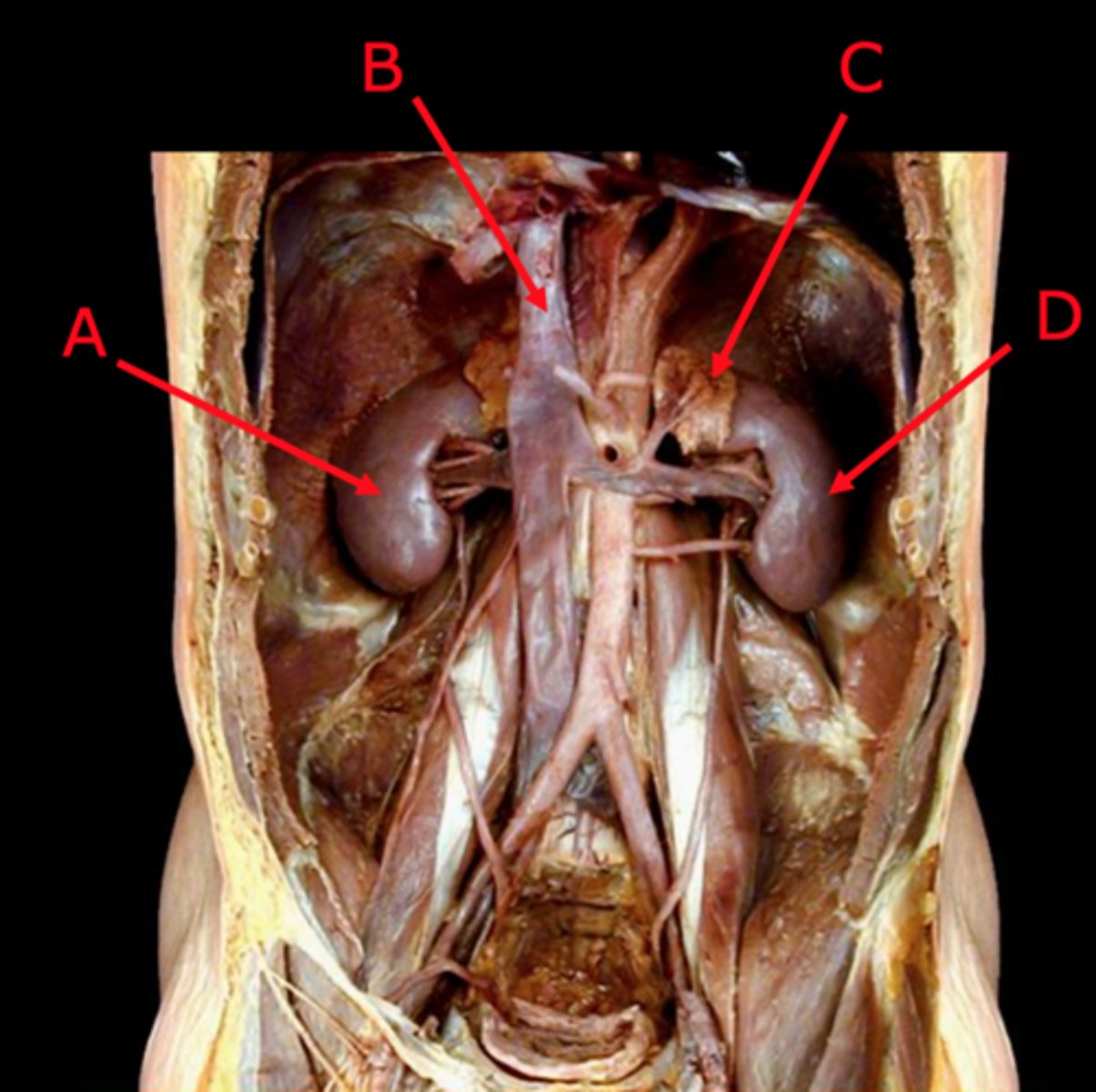
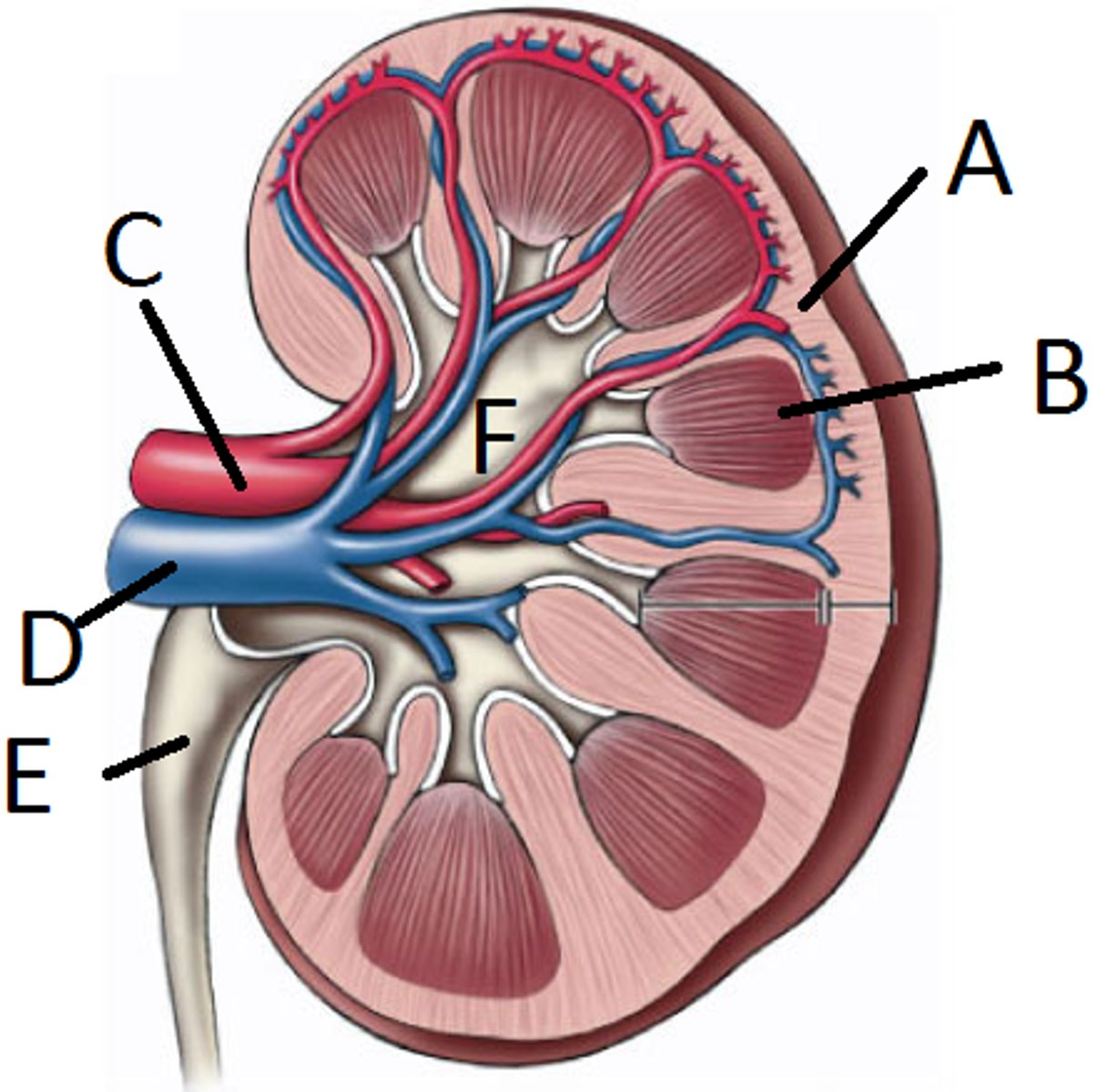
Renal vein
Carries blood exiting kidneys to inferior vena cava.
Anterior to renal artery.
Letter D in picture.
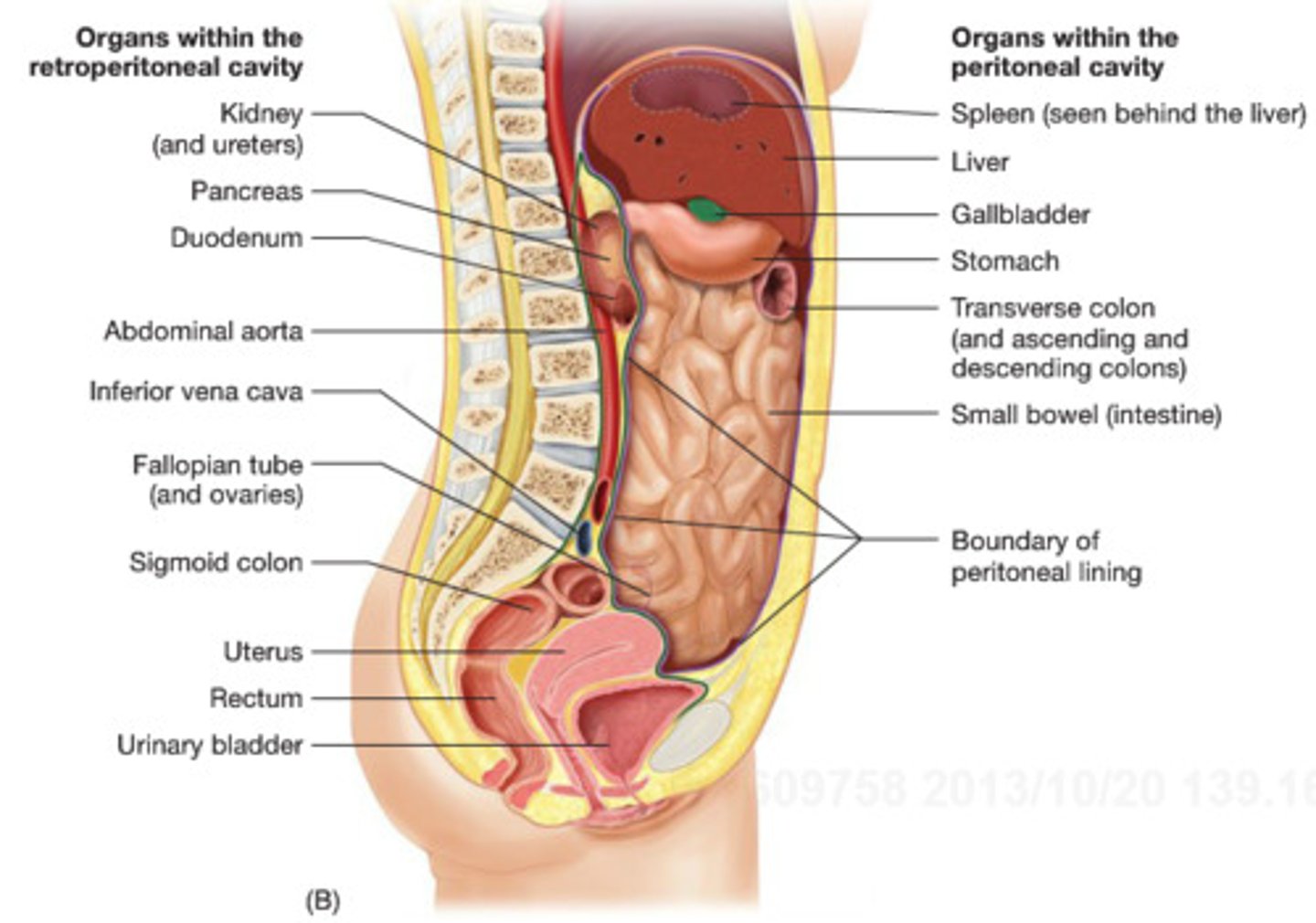
Retroperitoneal
Located behind the peritoneum.
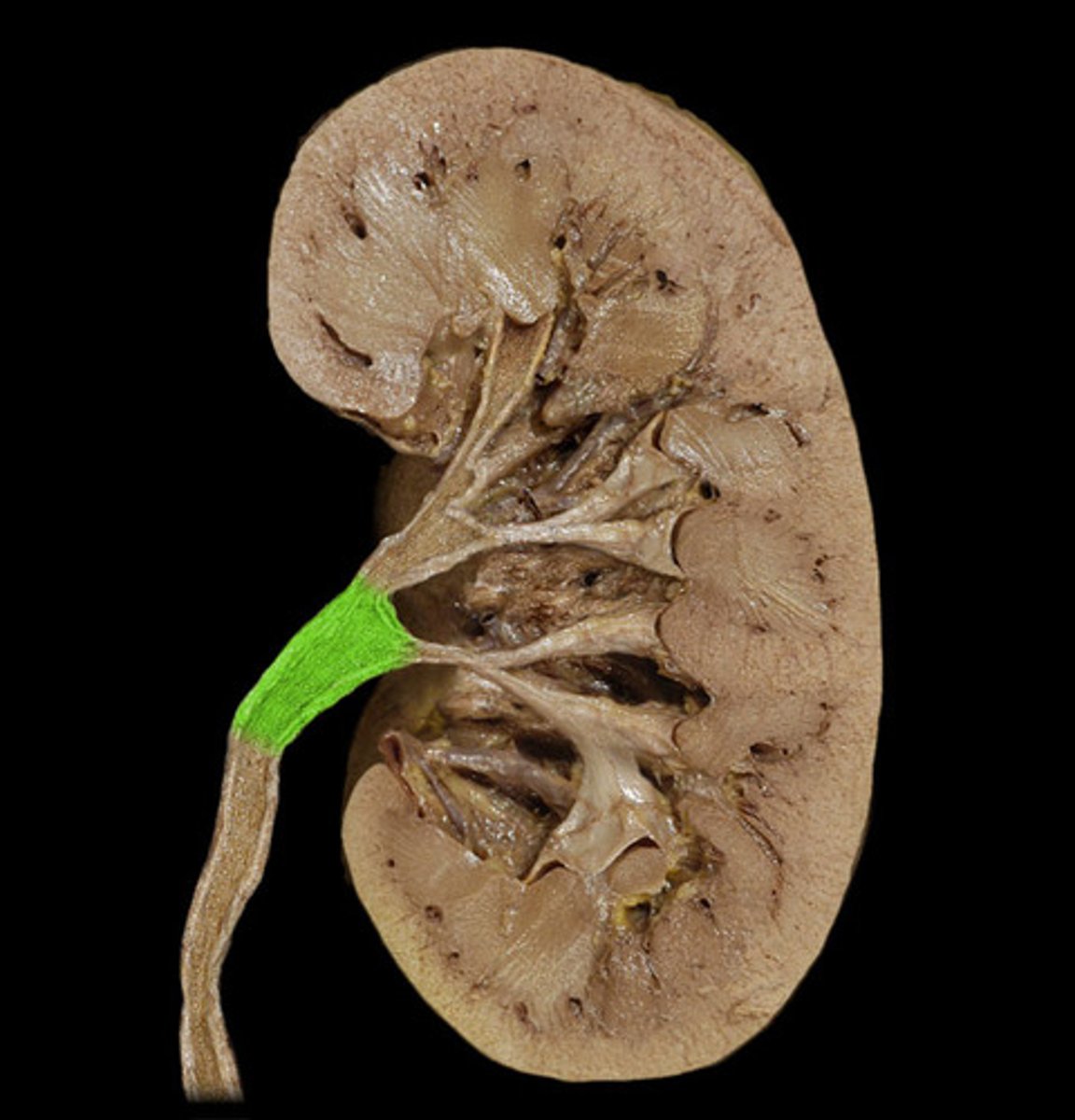
Ureter
Slender tube that is a continuation of the renal pelvis that courses to the urinary bladder.
Located retroperitoneal.
Peristaltic waves of smooth muscle contraction in the wall of the ureters propels urine into the bladder.
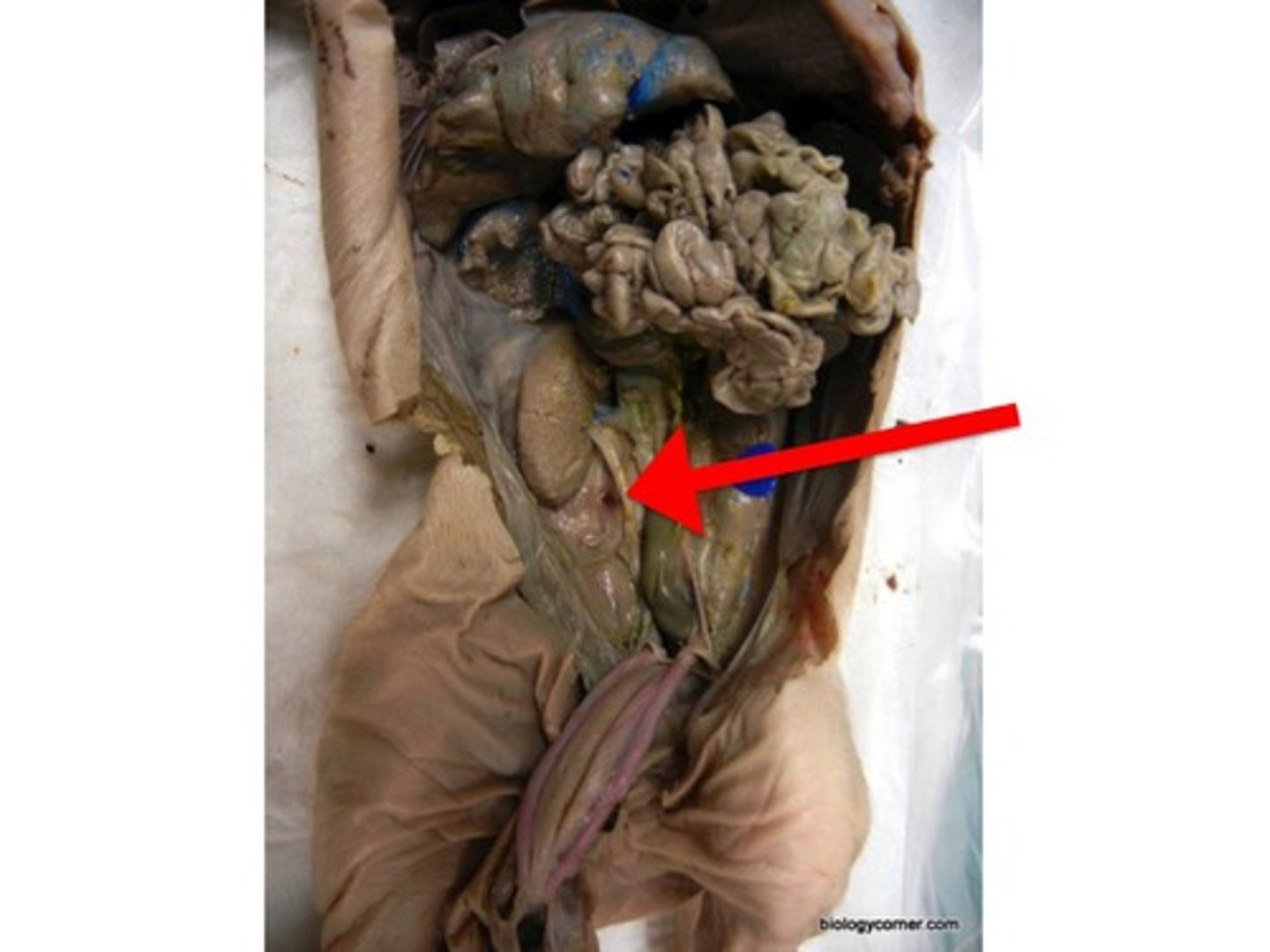
Urethra
The duct that conducts urine from the neck of the bladder to the outside of the body via the external urethral orifice.
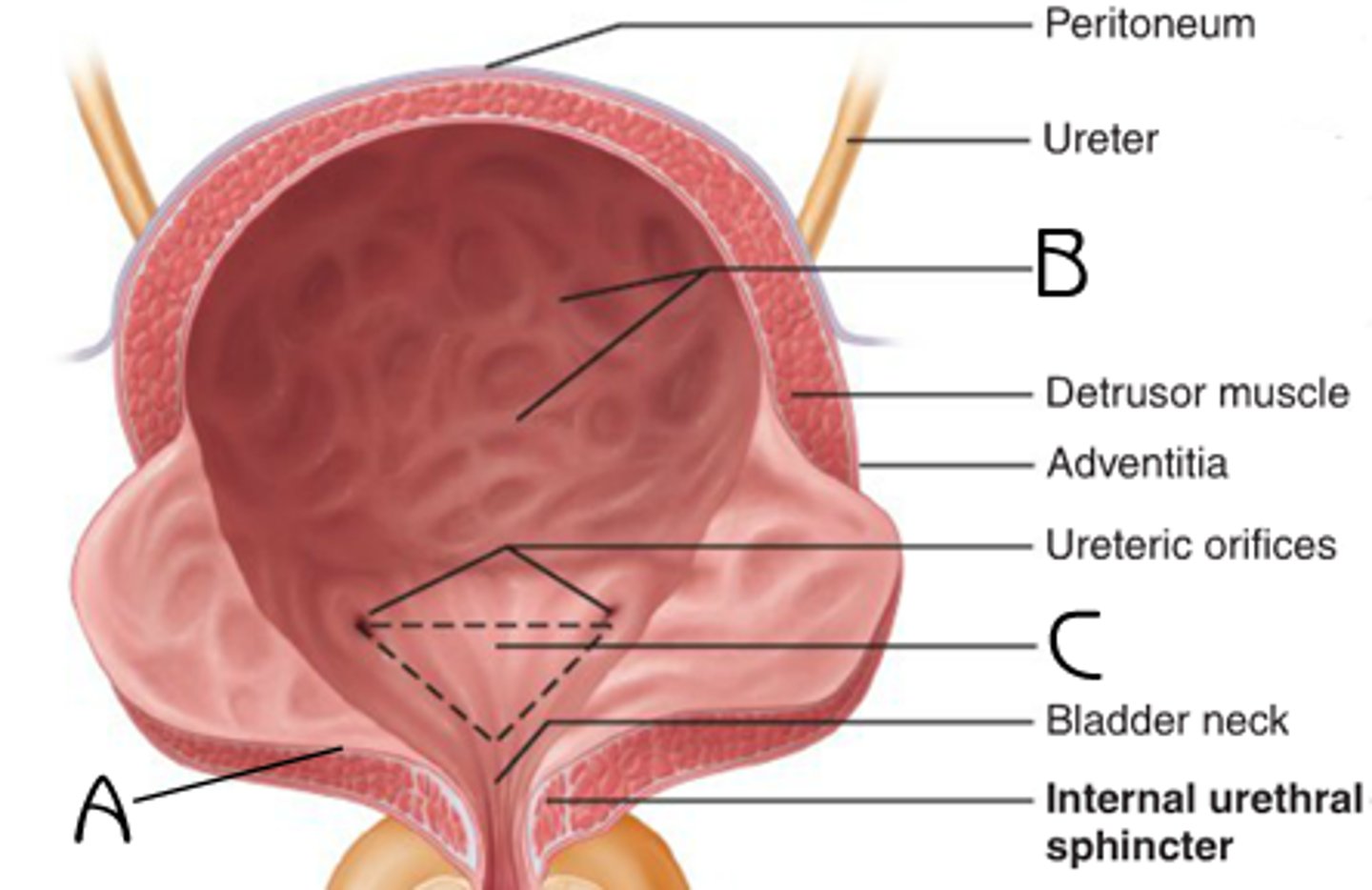
Urinary bladder
A hollow, muscular, and collapsible organ located in the pelvic region posterior to the pubic symphysis.
Has two separate openings for each of the two ureters and an opening for the urethra.
Urine
Fluid wastes removed from the body by the kidneys.
Components:
-Urea
-Na+
-K+
-PO4^3-
-SO4^2-
-Creatinine
-Uric acid
-Smaller amounts: Ca^2+, Mg^2+, HCO3^-
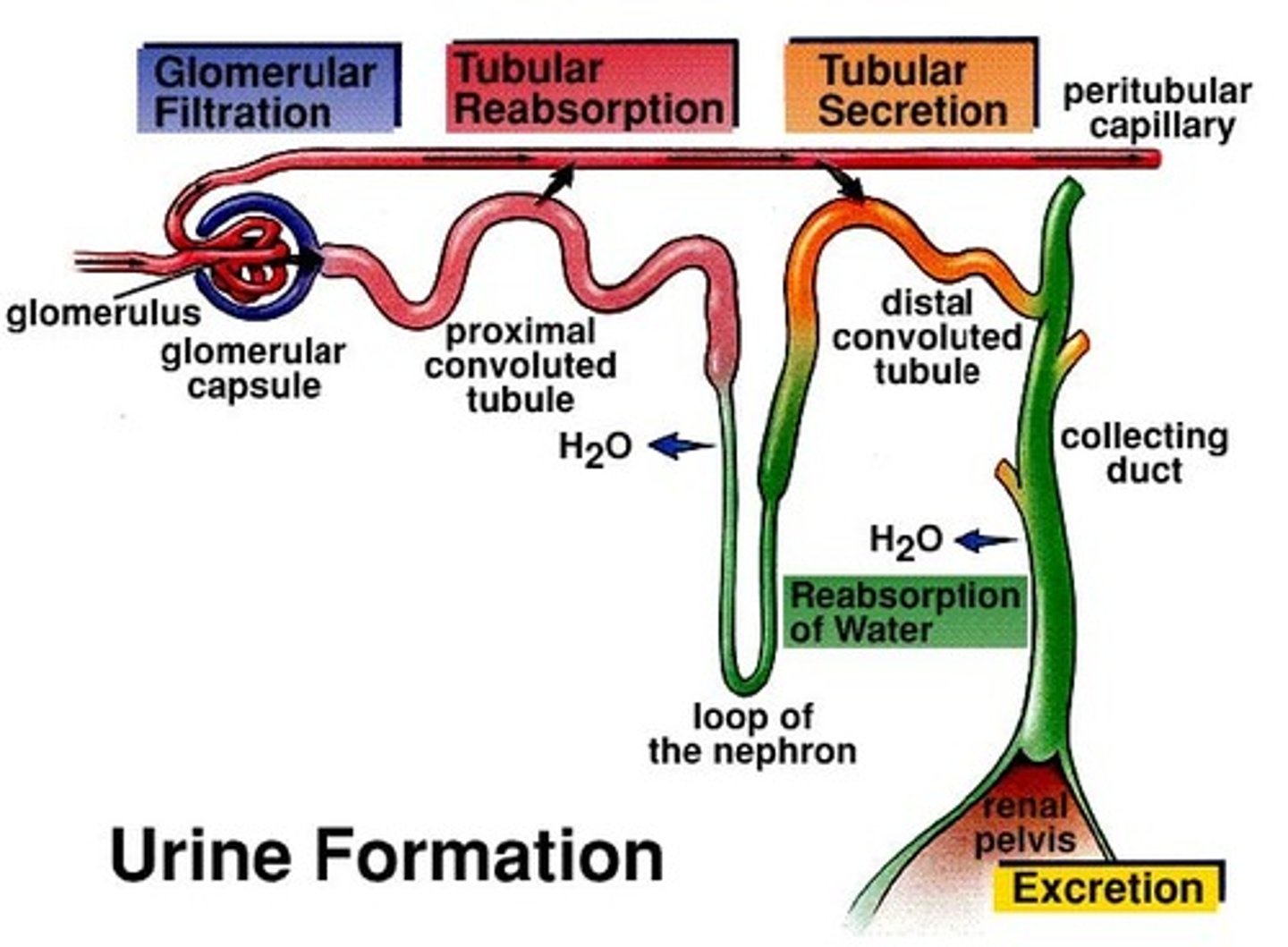
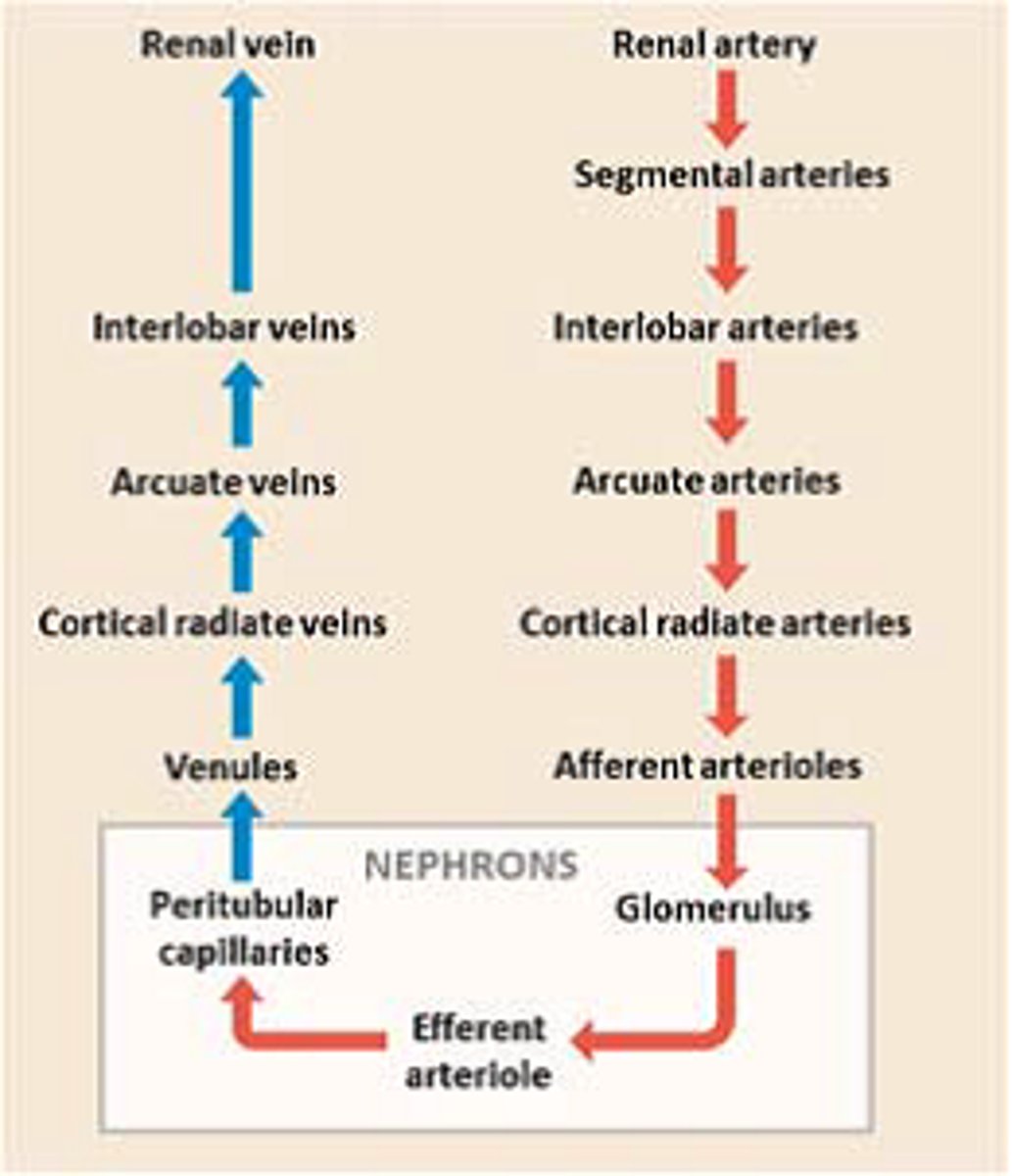
Flow of blood through kidney
renal artery-->interlobar artery-->arcuate artery-->cortical radiate artery-->afferent arteriole-->glomerular capillaries-->efferent arteriole-->peritubular capillaries-->vasa recta-->cortical radiate vein-->arcuate vein-->interlobar vein-->renal vein
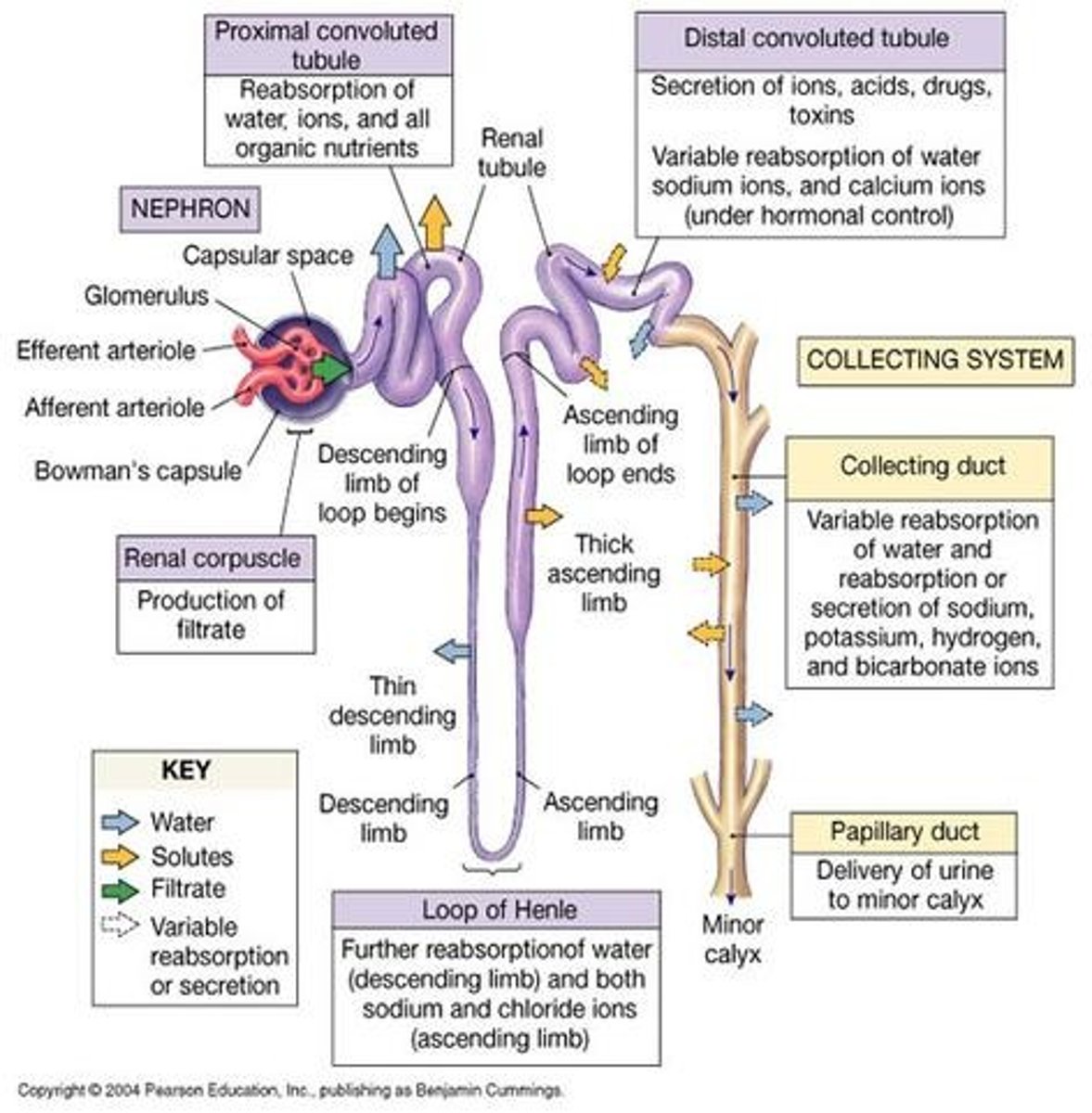
Flow of filtrate and urine through urinary system
1. glomerulus
2.capsular space
3.PCT
4. loop of hence
5.DCT
6. collecting Duct
7. Papillary duct
8. minor calyx
9. major calyx
10. renal pelvis
11. ureter
12. urinary bladder
13. urethra
14. external urethral orifice
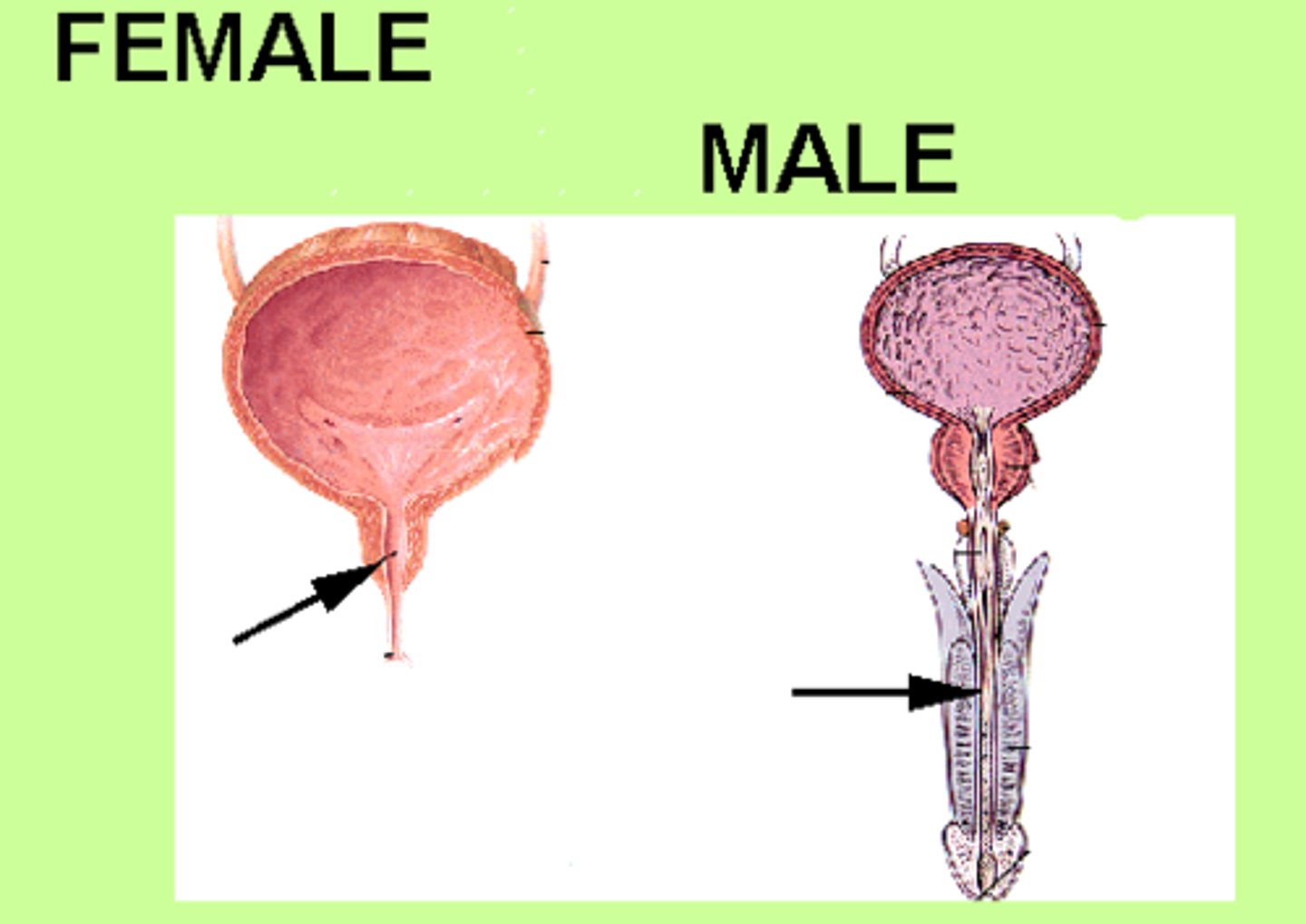
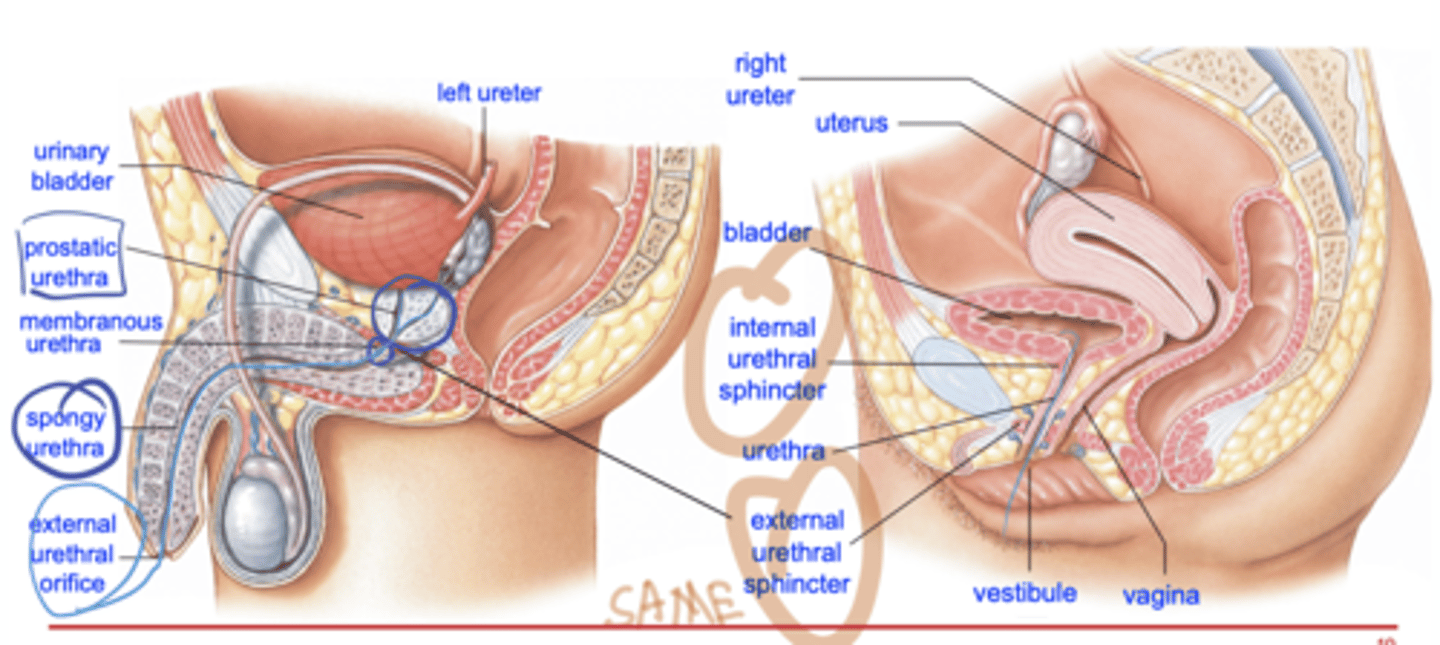
Urethra comparison
Female:
-length: 1.5"
-embedded in the anterior wall of the vagina
-external urethral orifice lies in vestibule between vaginal opening and clitoris
-UTIs are not uncommon due to shortness of urethra and proximity of external urethral orifice to anus
Male:
-length: 8"
-prostatic urethra
penile urethra
-2 functions: passageway for semen (reproductive) and urine (urinary)
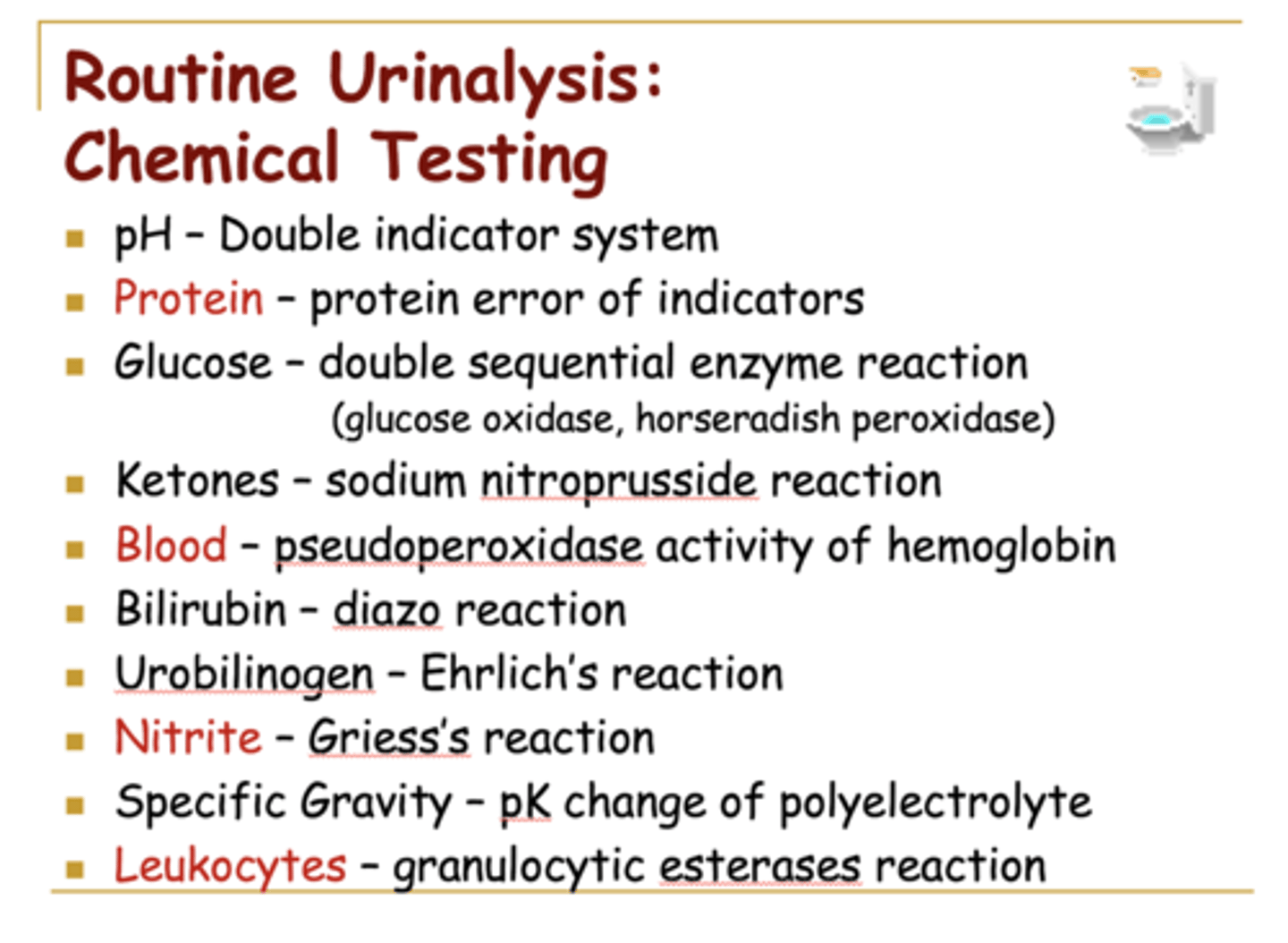
Urinalysis
Gross inspection:
-color
-turbidity
Dipstick
-specific gravity
-pH
-glucose
-heme
-protein
-leukocyte esterase
-nitrites
-ketones
-bilirubin/urobilinogen
Microscopy:
-WBCs
-RBCs
-bacteria
-crystals
-casts
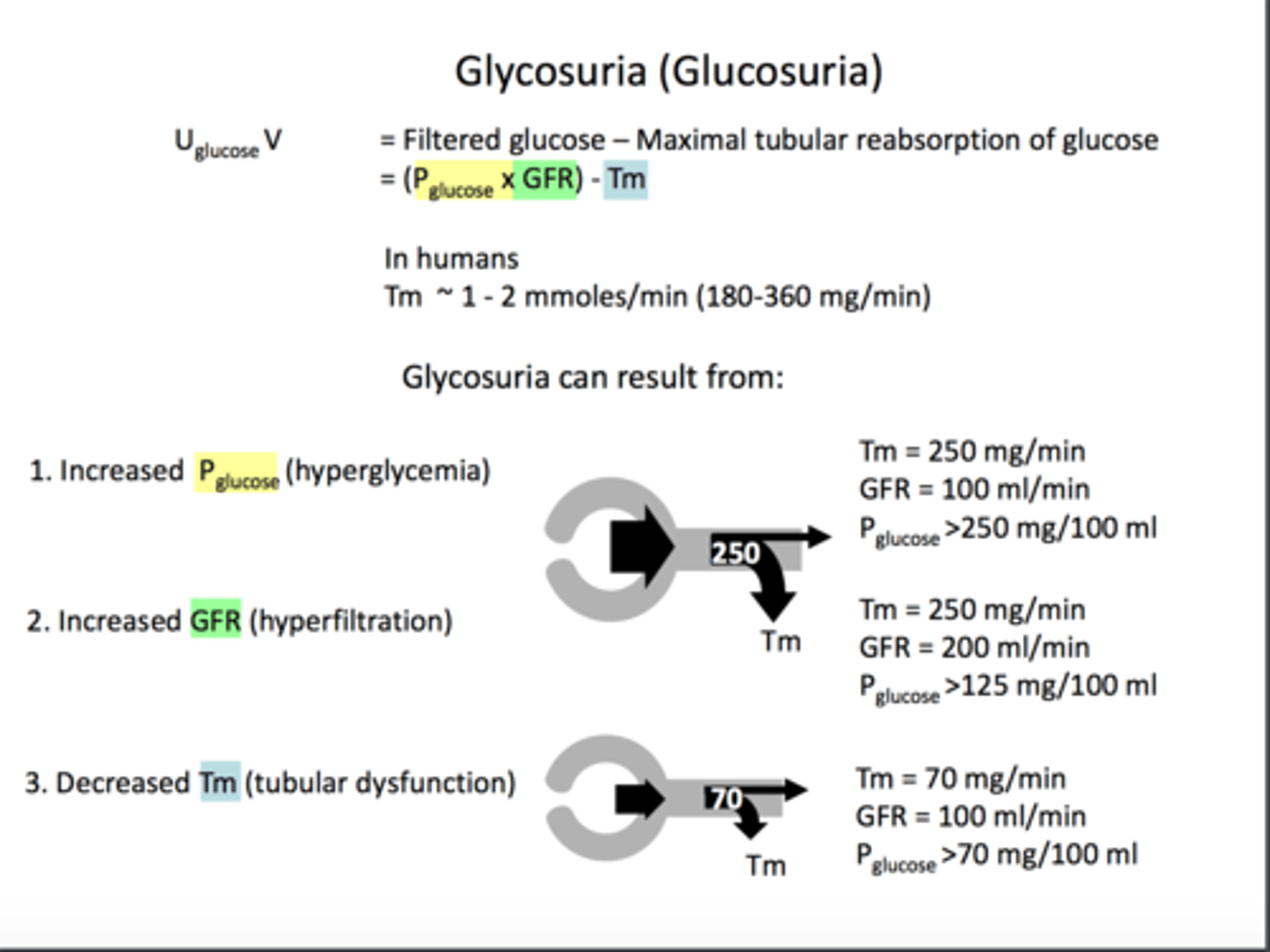
Glucosuria
The presence of detectable amounts of glucose in the urine.
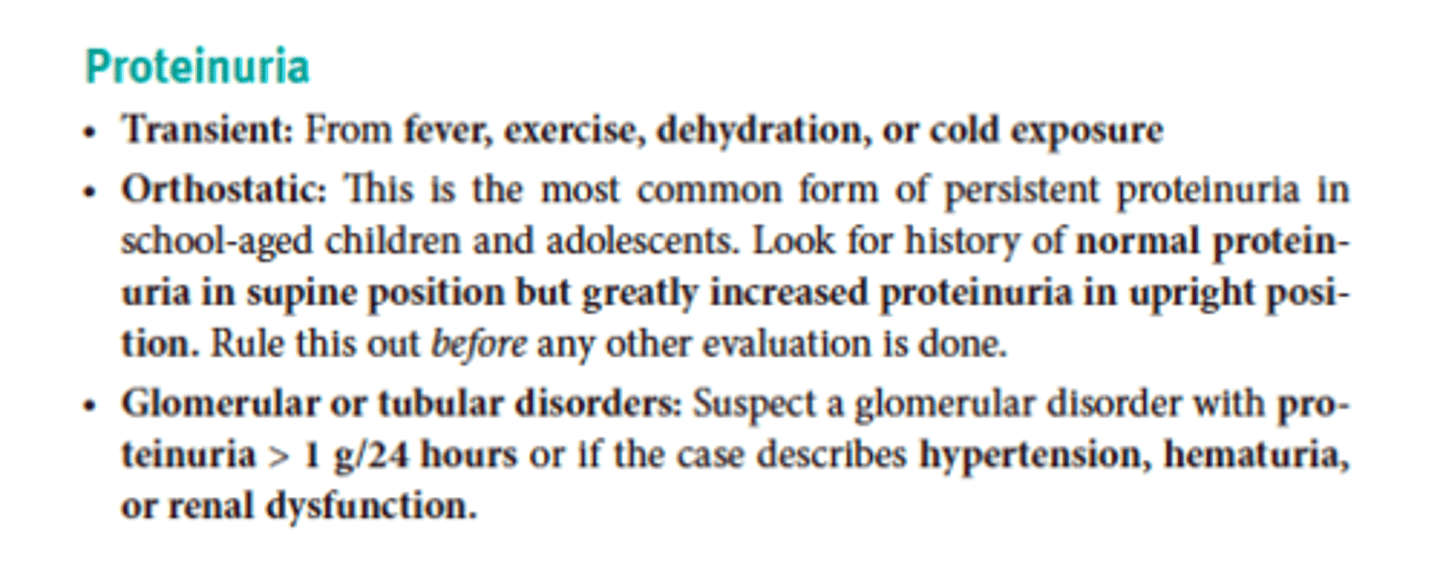
Proteinuria
Urinary protein concentration is greater than normal.
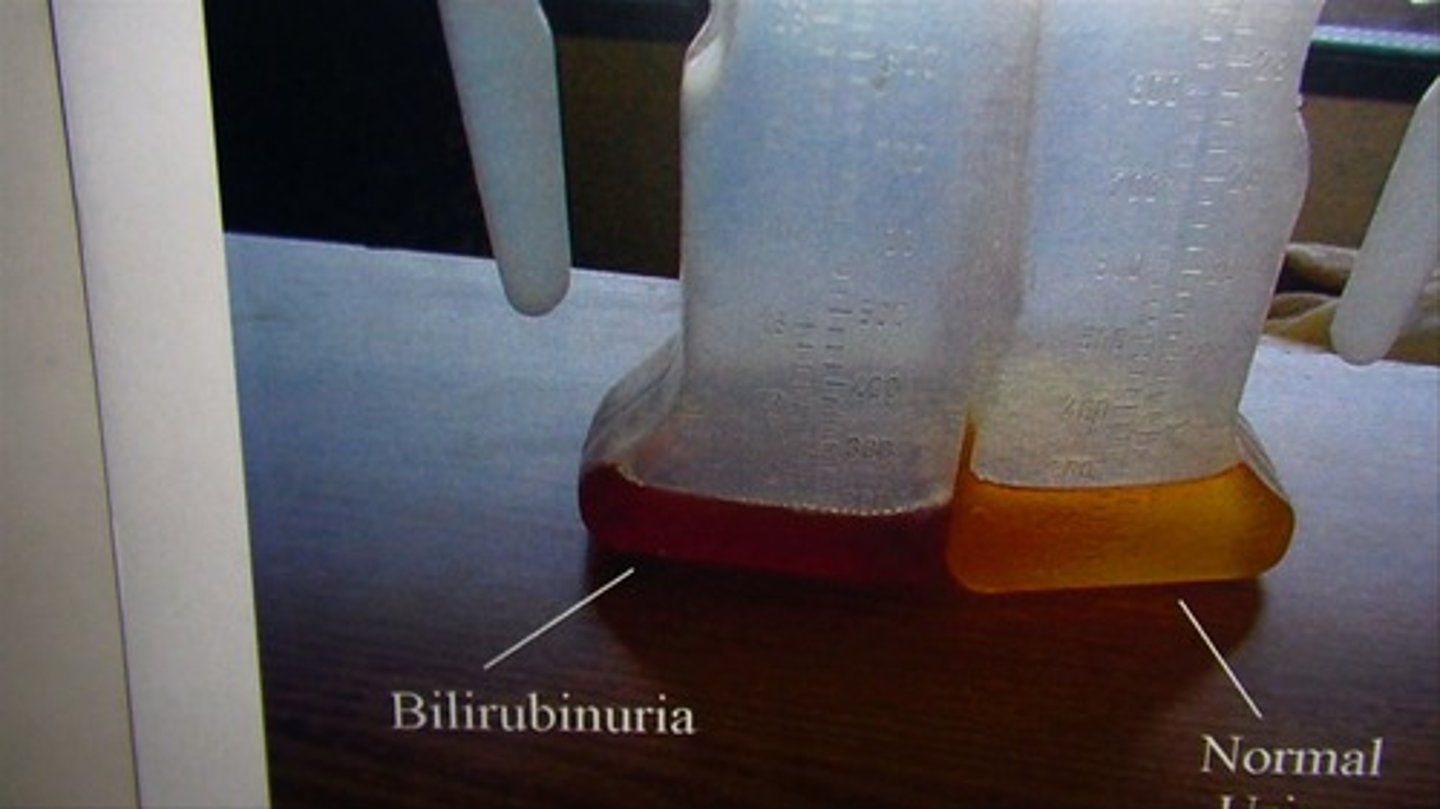
Bilirubinuria
The presence of bilirubin in the urine.
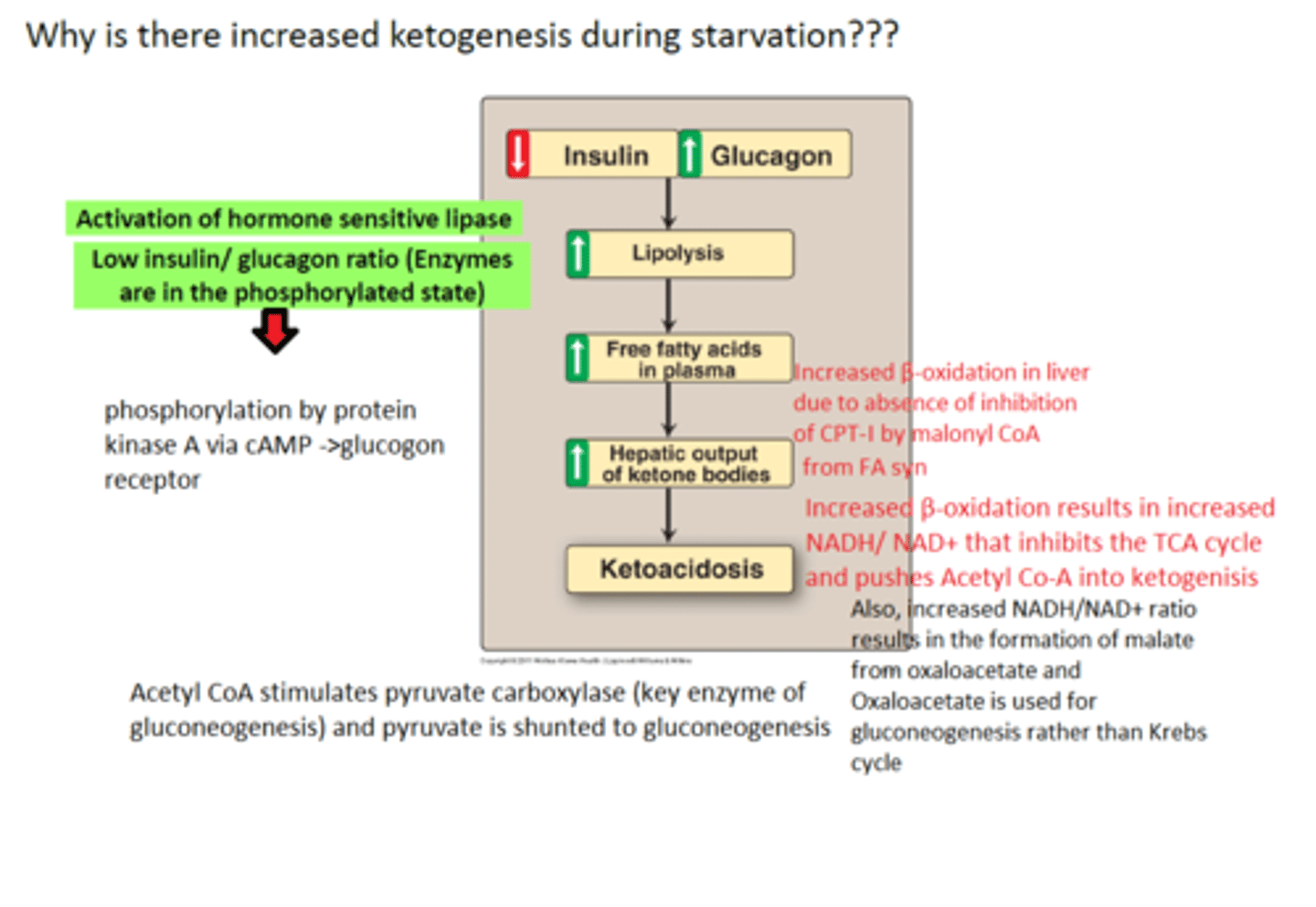
Ketonuria
The presence of ketone bodies (acetoacetic acid, beta-hydroxybutyric acid, acetone) n the urine.
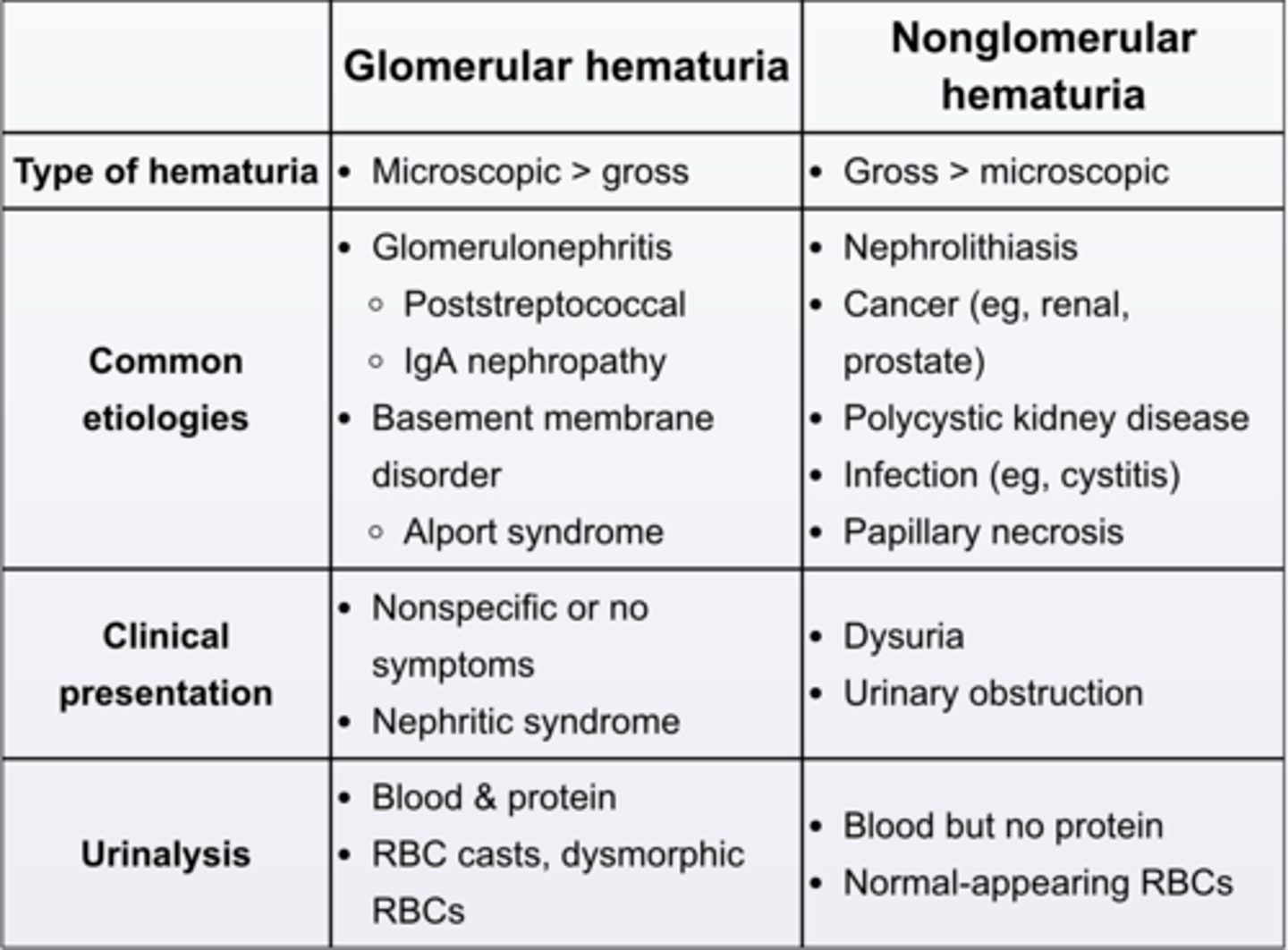
Hematuria
The presence of an abnormally high number of red blood cells in the urine.
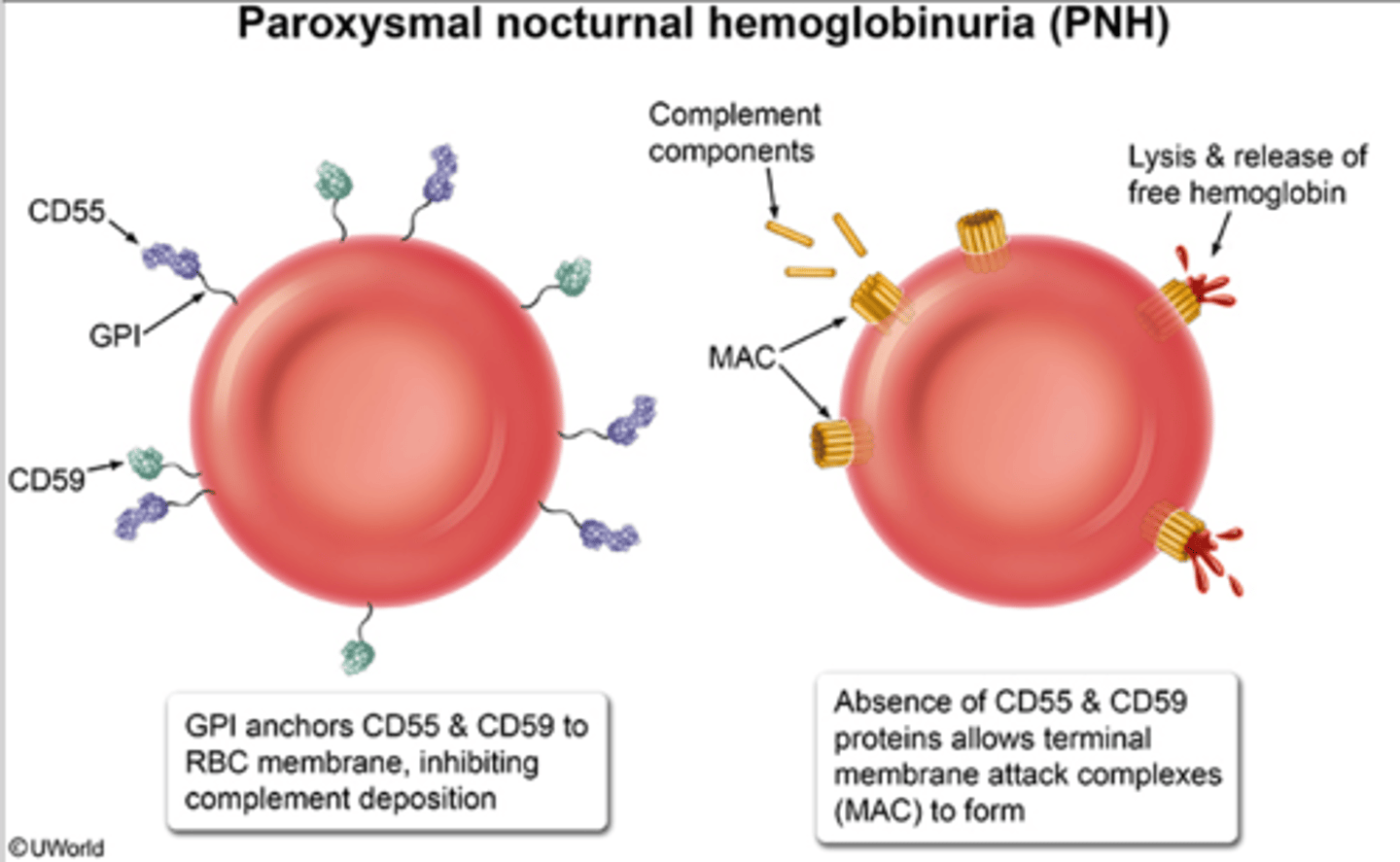
Hemoglobinuria
The presence of hemoglobin in the urine.
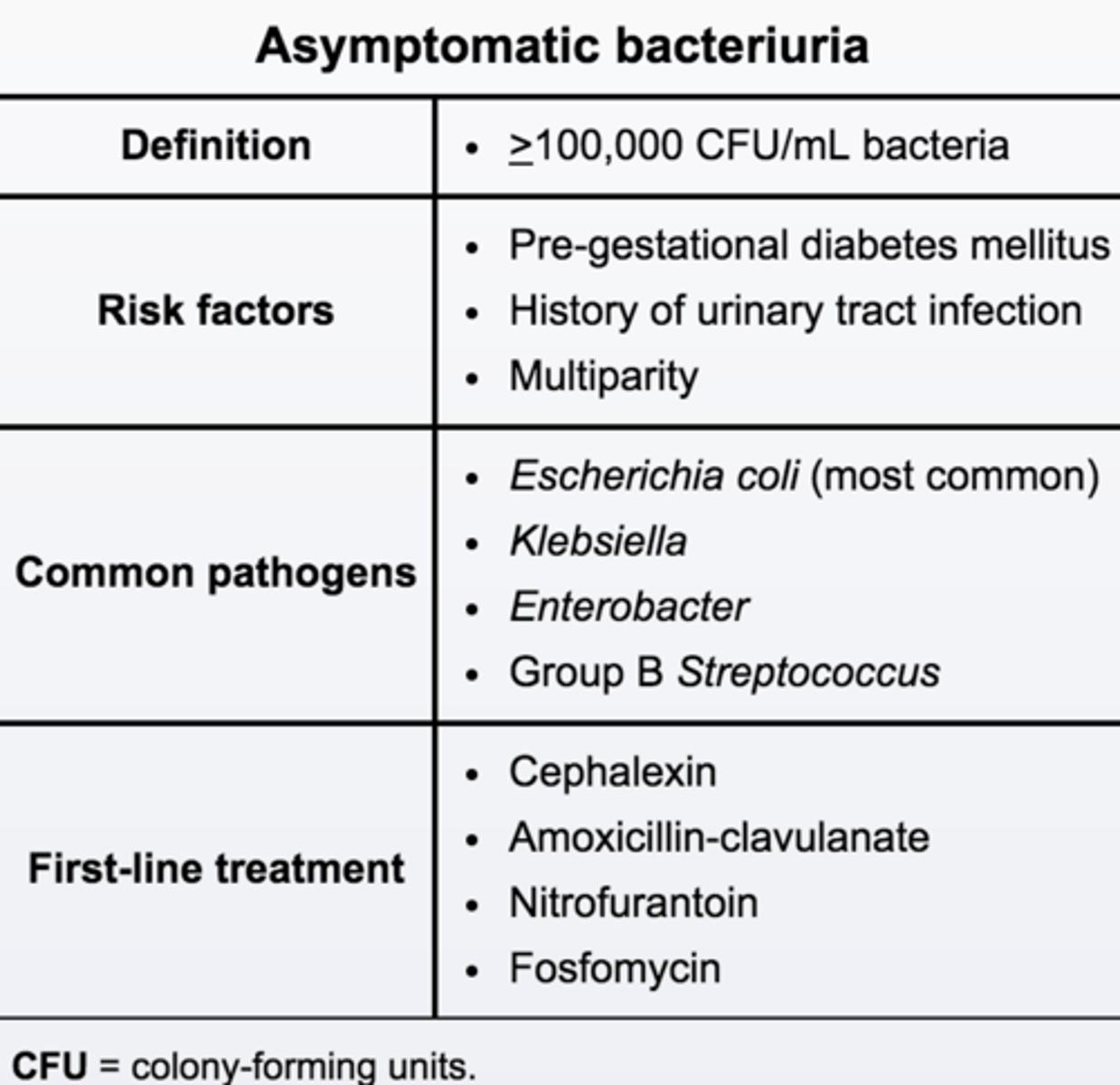
Bacteriuria
The presence of bacteria in the urine.
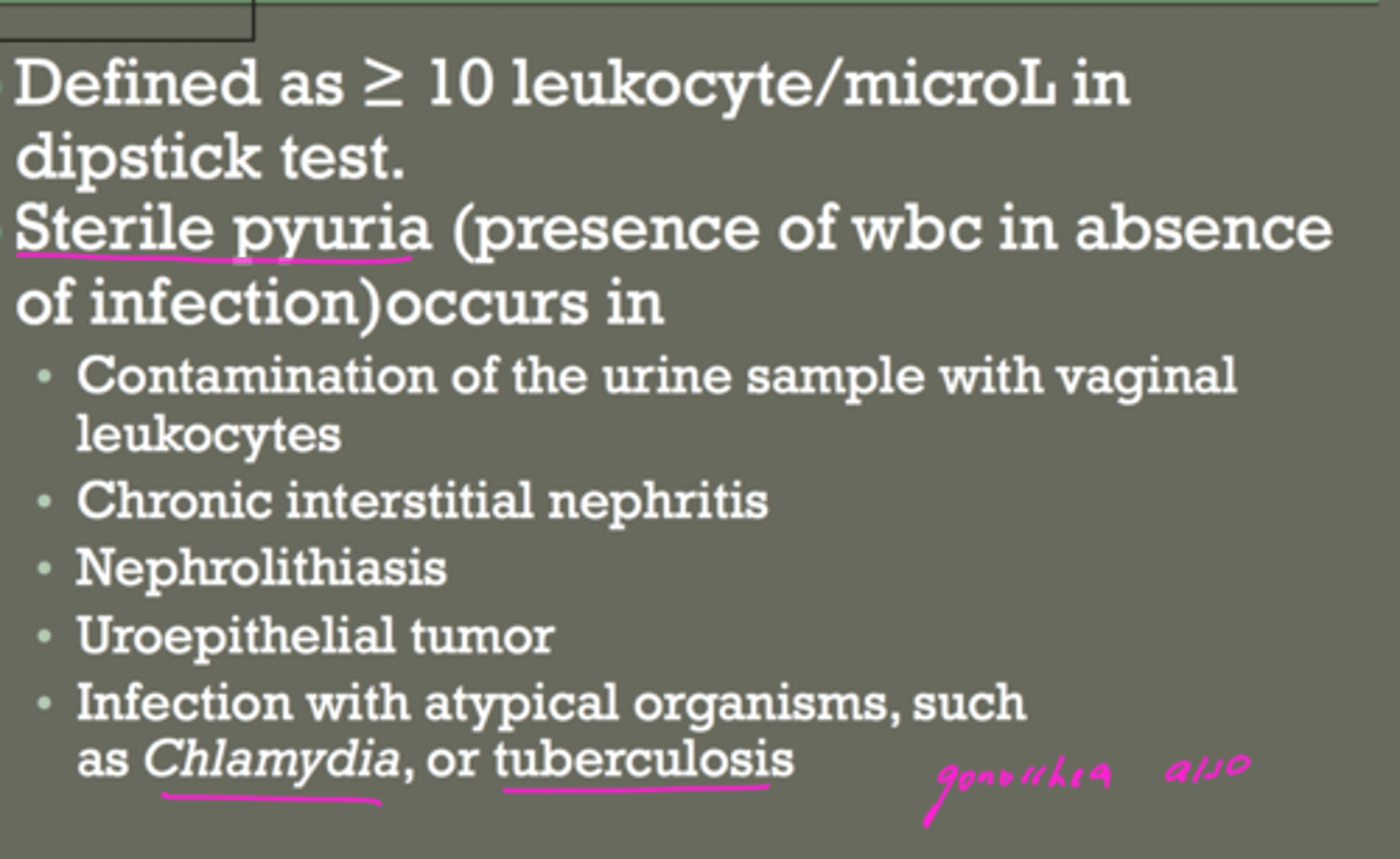
Pyuria
The presence of significant number of white blood cells in the urine.
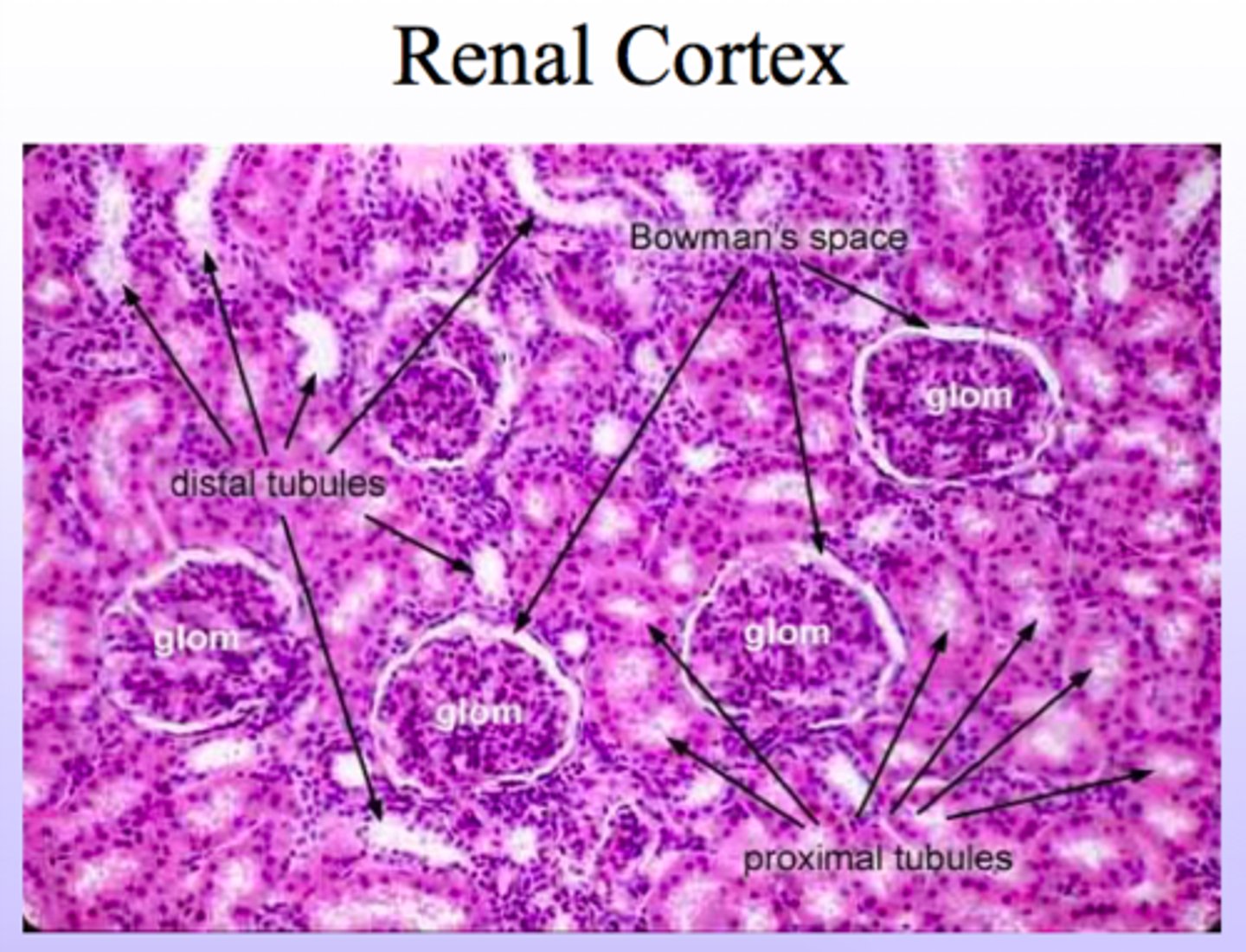
Cortex histology
Medulla histology
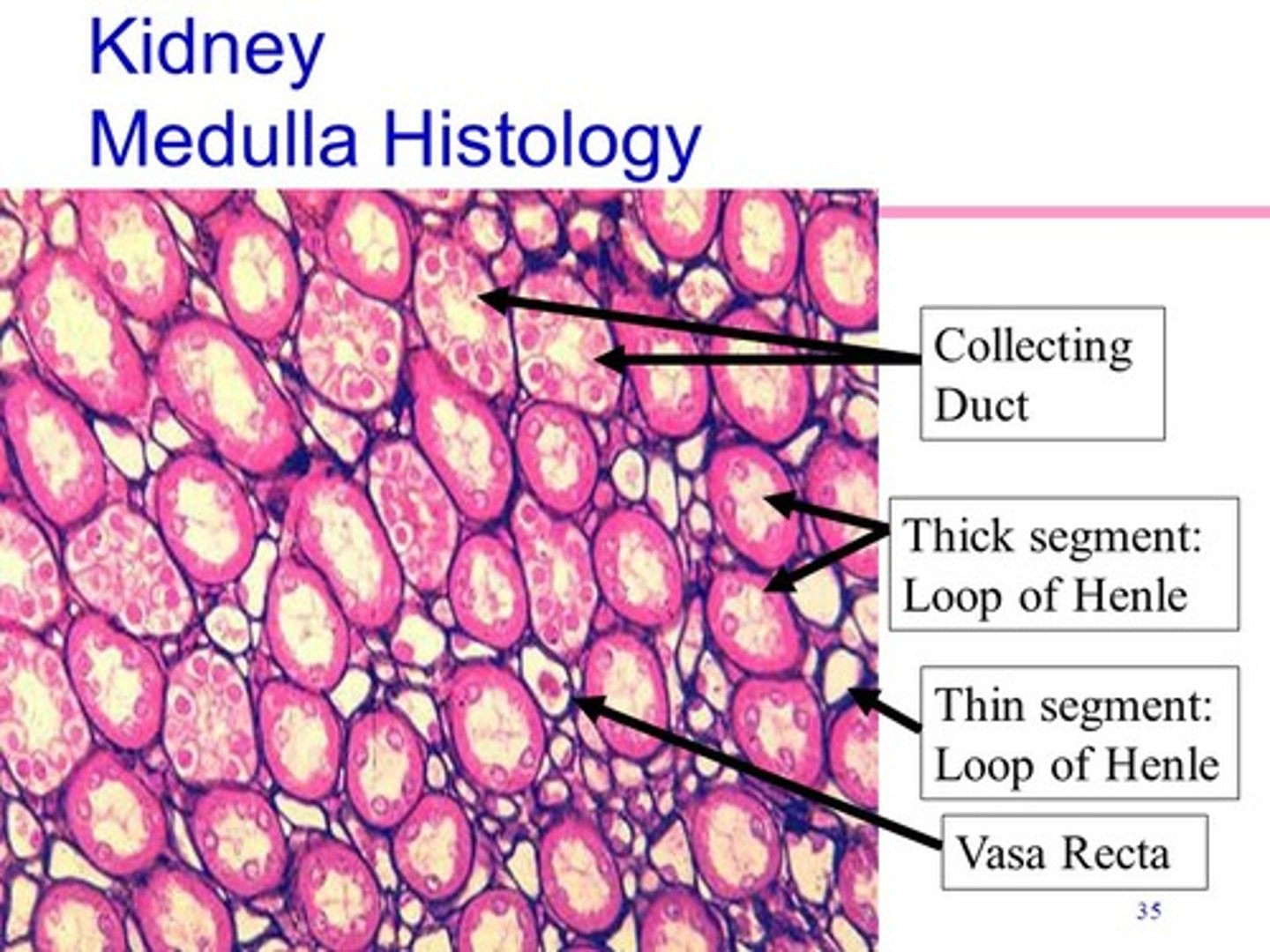
Medulla vs cortex