Modification of Neural Circuits
 Call Kai
 Learn
Learn Practice Test
 Spaced Repetition
 Match
Match Flashcards
 Knowt Play
1/16

There's no tags or description
Looks like no tags are added yet.
Name | Mastery | Learn | Test | Matching | Spaced | Call with Kai |
|---|
No analytics yet
Send a link to your students to track their progress
17 Terms
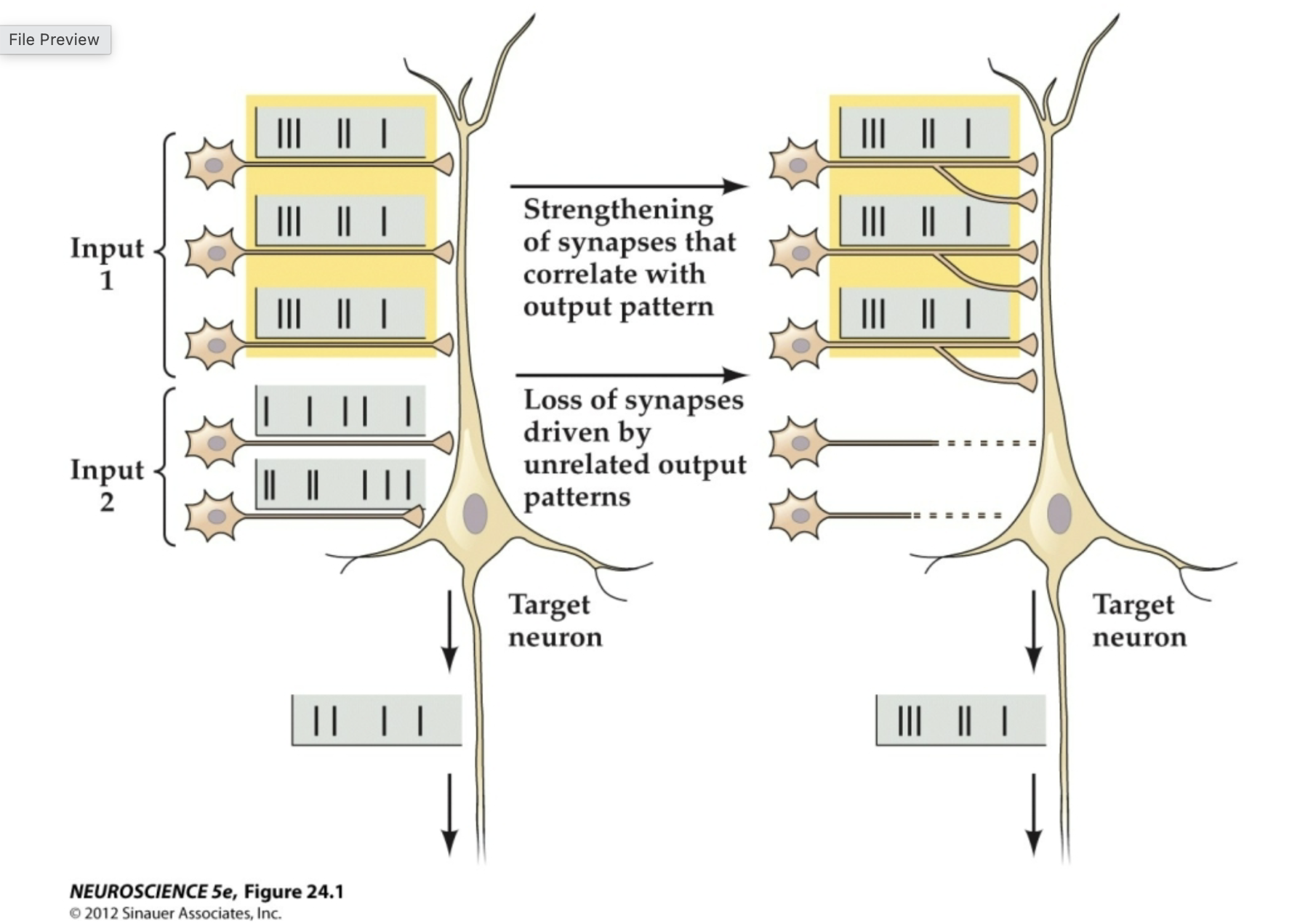
HEBB’S POSTULATE
NEURONS THAT FIRE TOGETHER WIRE TOGETHER
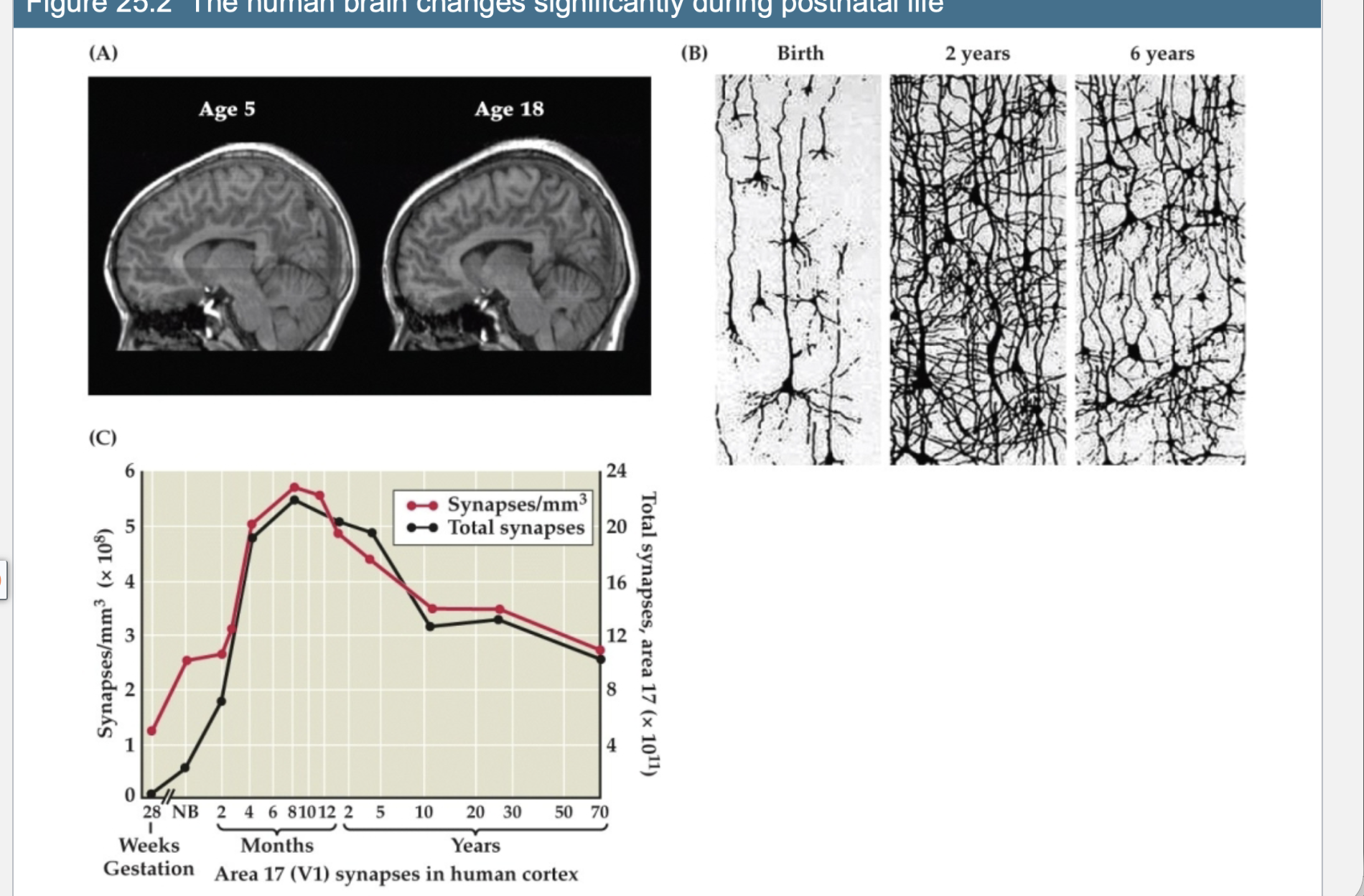
The 18-year-old brain is slightly larger than the 5-year-old brain.
The sulci and gyri are more prominent with age.
Reflects continued maturation of the cerebral cortex during childhood and adolescence.
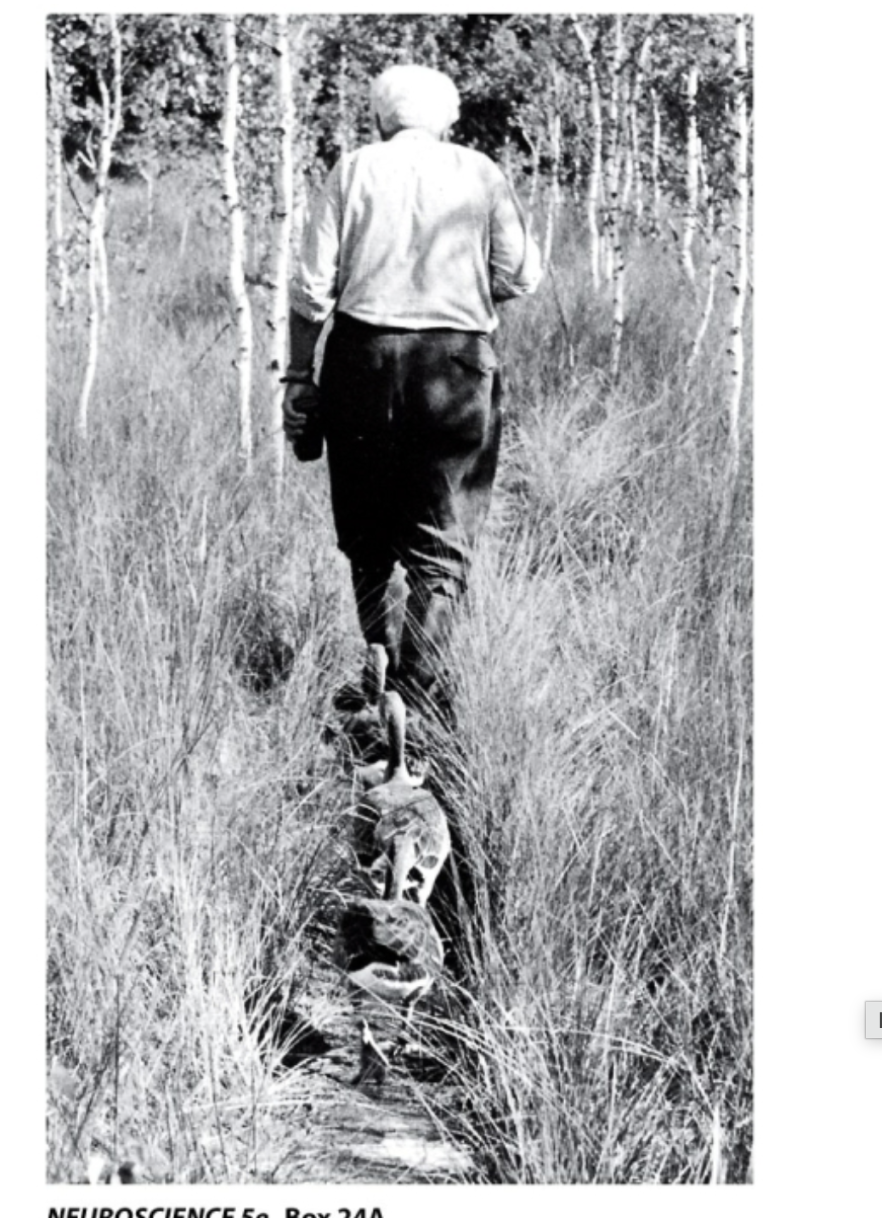
•Parental Imprinting in hatchling birds: hatchling recognizes its parent
•expressed only if animals have specific experiences during a particular time (hours or days) in early postnatal development.
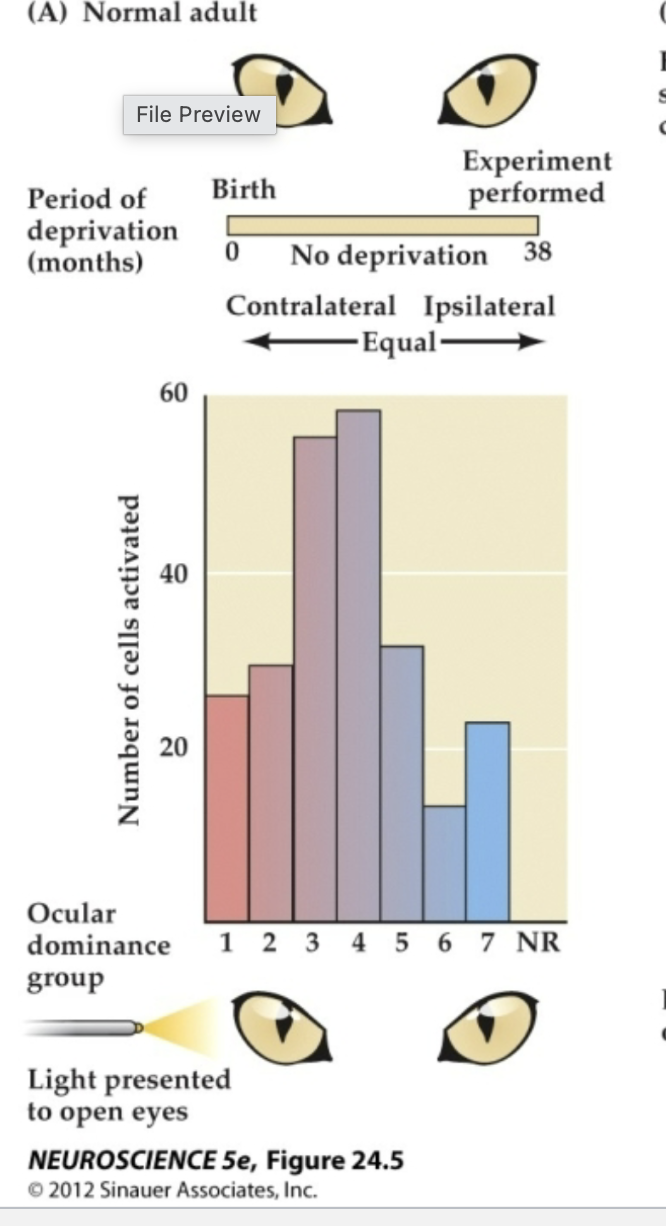
The cat grew up using both eyes normally. Most neurons respond to both eyes (the tall bars in the middle). Demonstrates binocular vision.
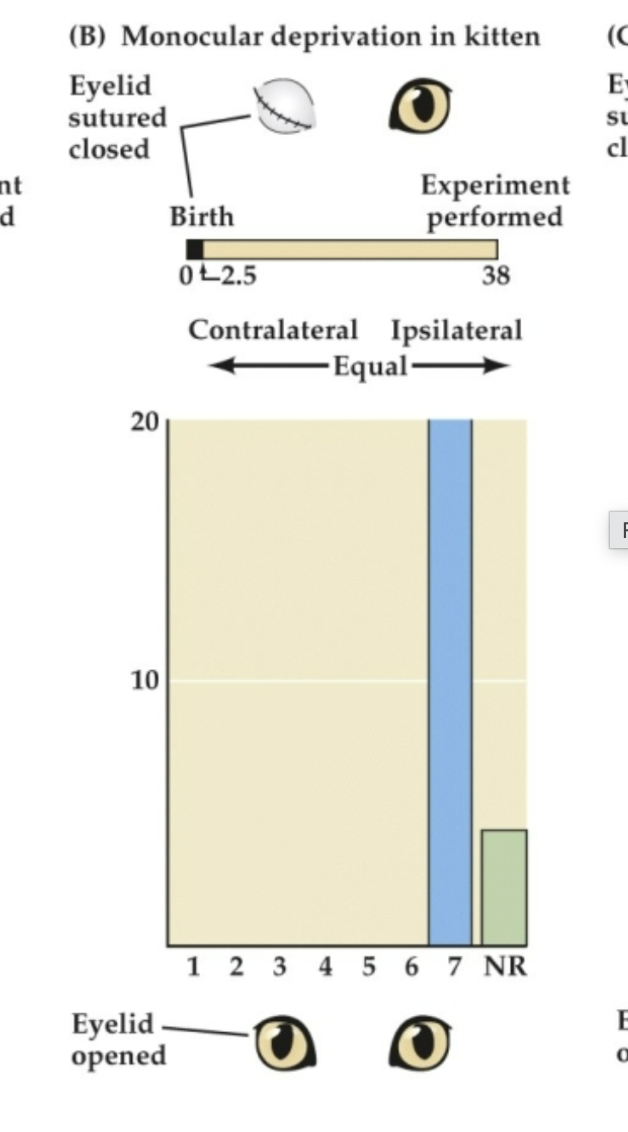
One eye was closed for just a short time while the kitten was very young. The brain rewired itself. Because the closed eye wasn't sending signals, the brain "gave up" on it. Almost all neurons now only respond to the eye that stayed open (the tall blue bar on the right).The Takeaway: Even if you open that eye later, the kitten will be functionally blind in it because the brain never learned how to process those signals. This highlights a "Critical Period" for development.
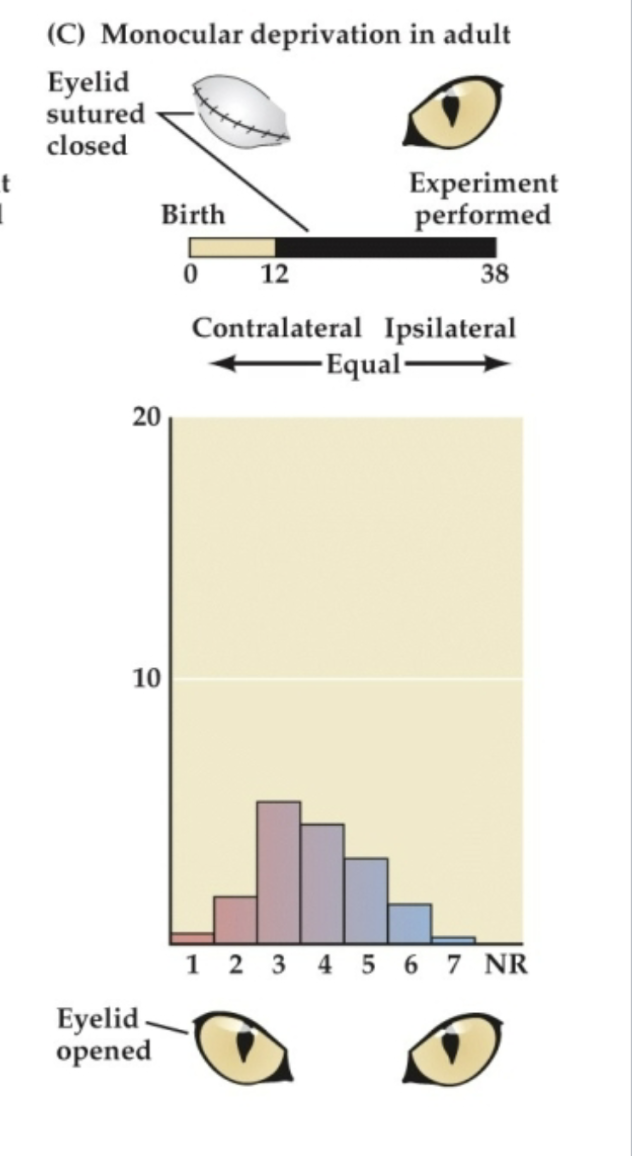
Brain plasticity (the ability to rewire) is highest during a specific window shortly after birth.The adult has passed the critical period of development".he graph looks almost like the normal cat (A). Closing the eye had very little effect.
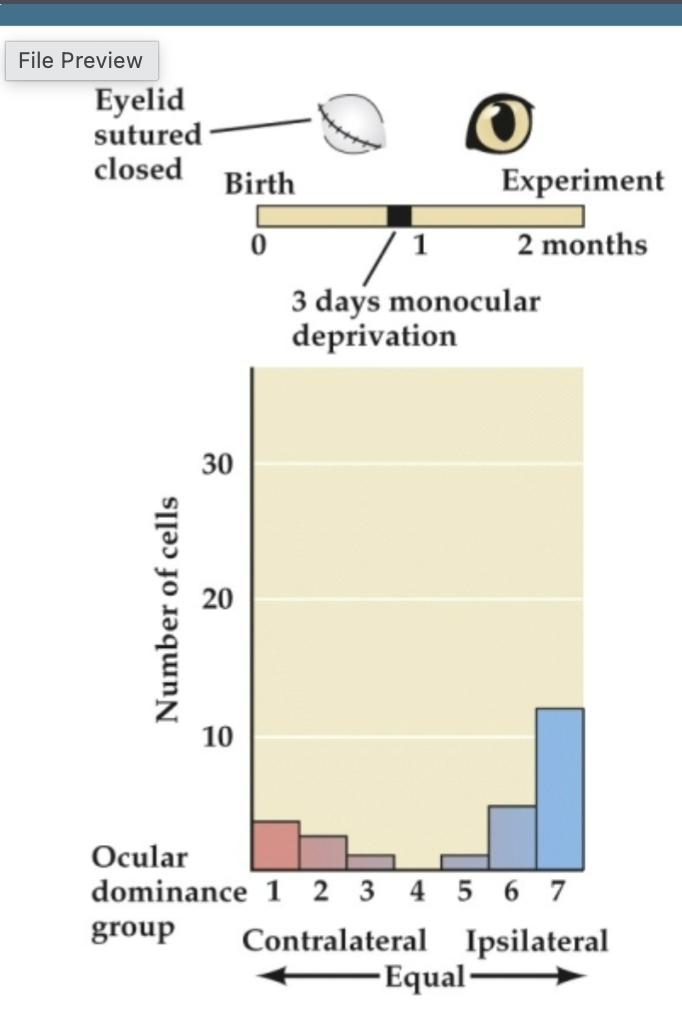
Plasticity is immediate. You don't need long-term deprivation to start losing brain connections.
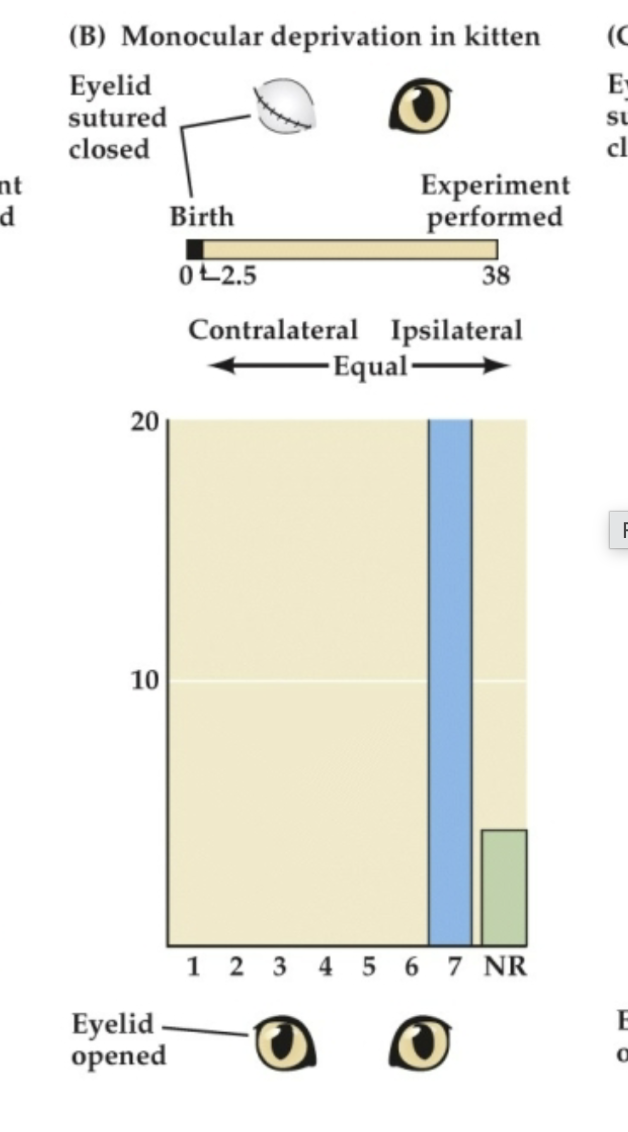
After just 6 days, the brain has "disconnected" the closed eye almost as much as it would have after 2.5 months of deprivation. Amblyopia: This leads to "cortical blindness" (Amblyopia). The eye is physically fine, but the brain has "deleted" the software needed to see with it.
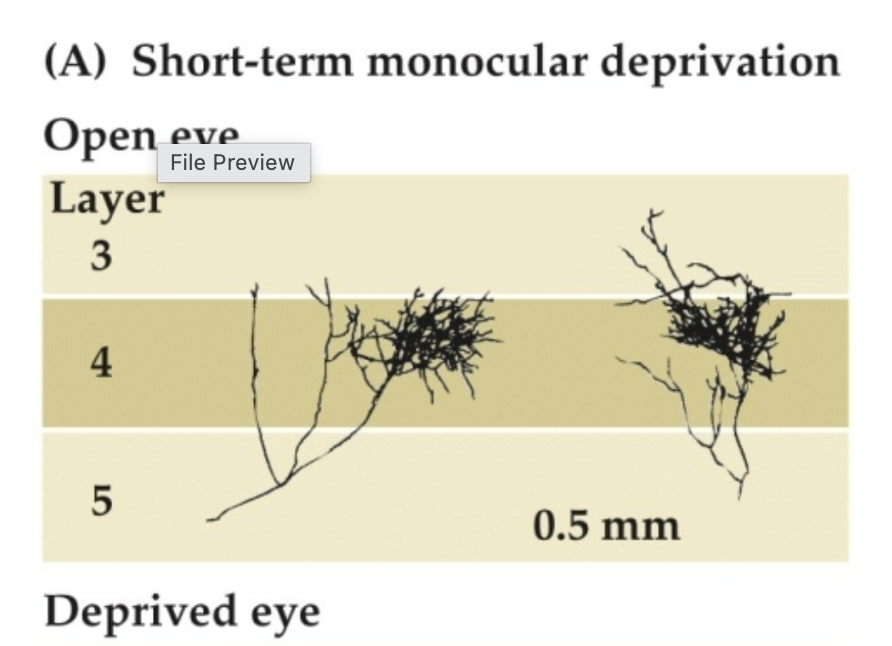
Open Eye
Because this eye is seeing the world, its axons are healthy and "bushy." They have branched out extensively in Layer 4 of the visual cortex to make strong connections.
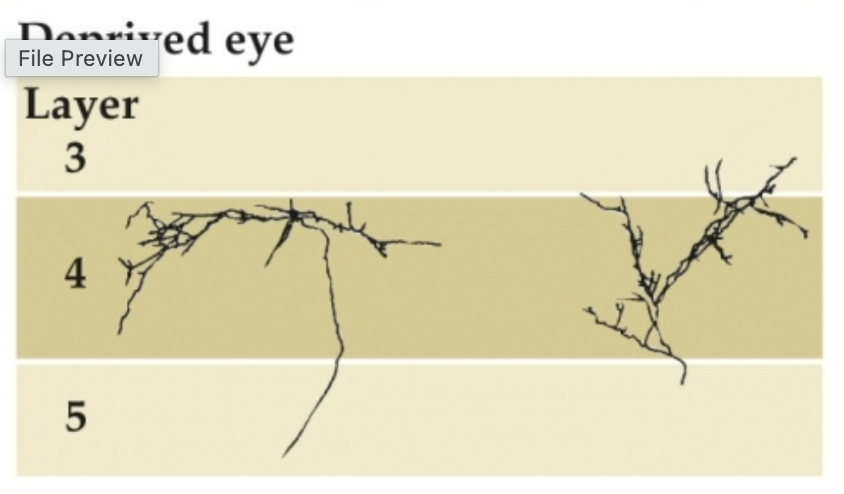
Deprived eye
If one eye is covered or "deprived" of sight for even a week, the axons from that eye begin to wither. They have far fewer branches and fewer connections.
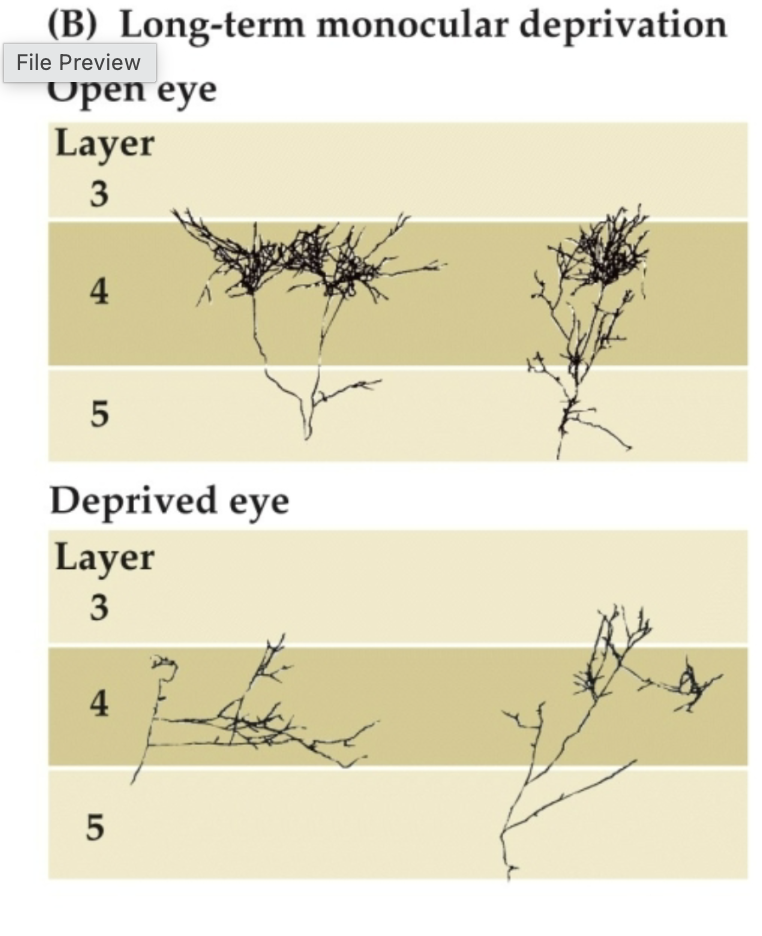
Because the Deprived Eye axons have shriveled up and left "empty" space in Layer 4, the Open Eye axons have grown even more branches to fill that gap. In the long-term image, that one eye has essentially become the "boss" of that section of the brain. It isn't just healthy; it's physically larger because it has more territory to cover.This phenomenon, where the dominant eye takes over visual processing areas in the brain, illustrates the principle of visual plasticity, showing how experience shapes neural connections.
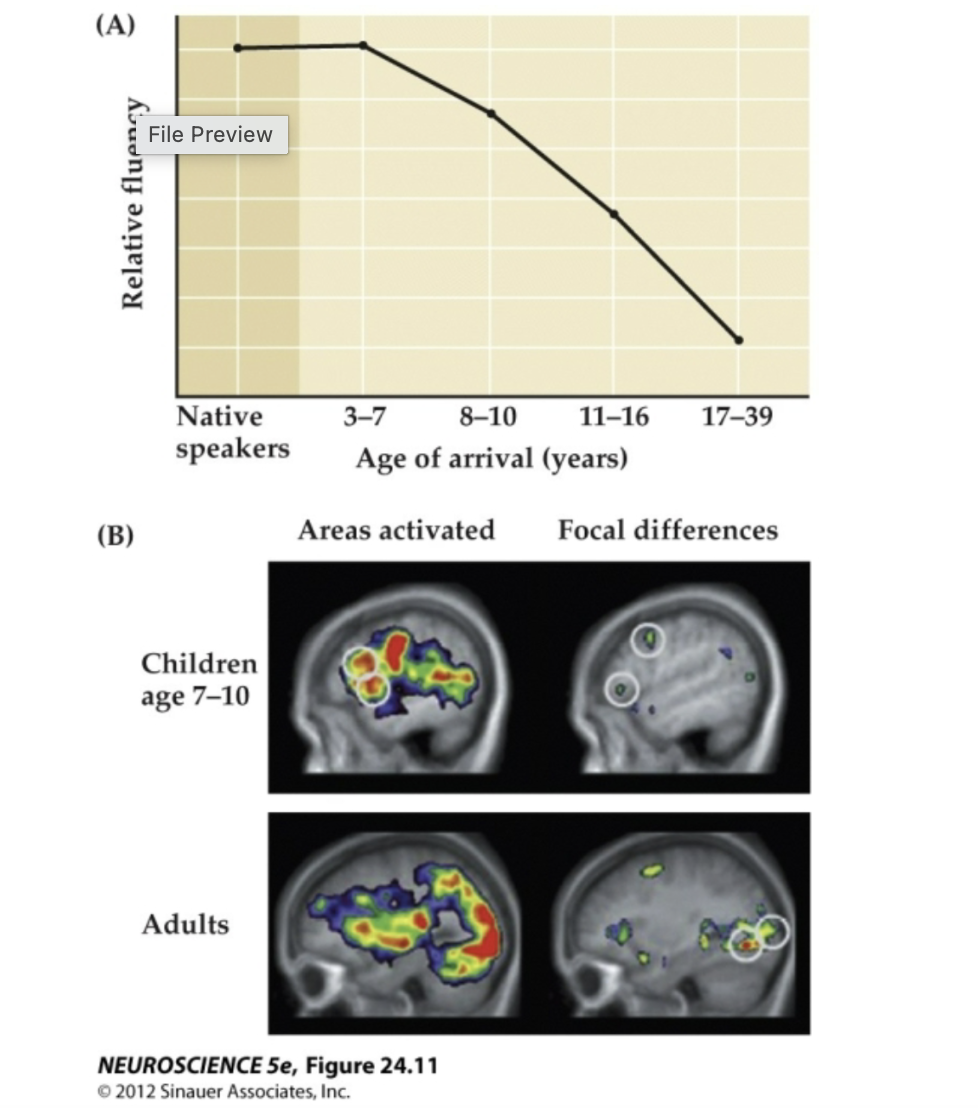
Language Fluency
Native-like fluency is generally maintained if a second language is acquired before age 7.
A steady decline in ultimate proficiency occurs when acquisition begins between ages 8 and 39.
Critical Period Hypothesis, suggesting that the brain's plasticity for language acquisition diminishes significantly after puberty
Adults: Show more distinct "focal differences" and separate areas of cortical activation when processing a second language.
Mechanism: Suggests that later-learned languages require the recruitment of additional or different neural circuits compared to early-acquired languages.
Synaptogenesis: When does the brain overproduce synapses
child development - prenatal mostly and a little bit postnatal
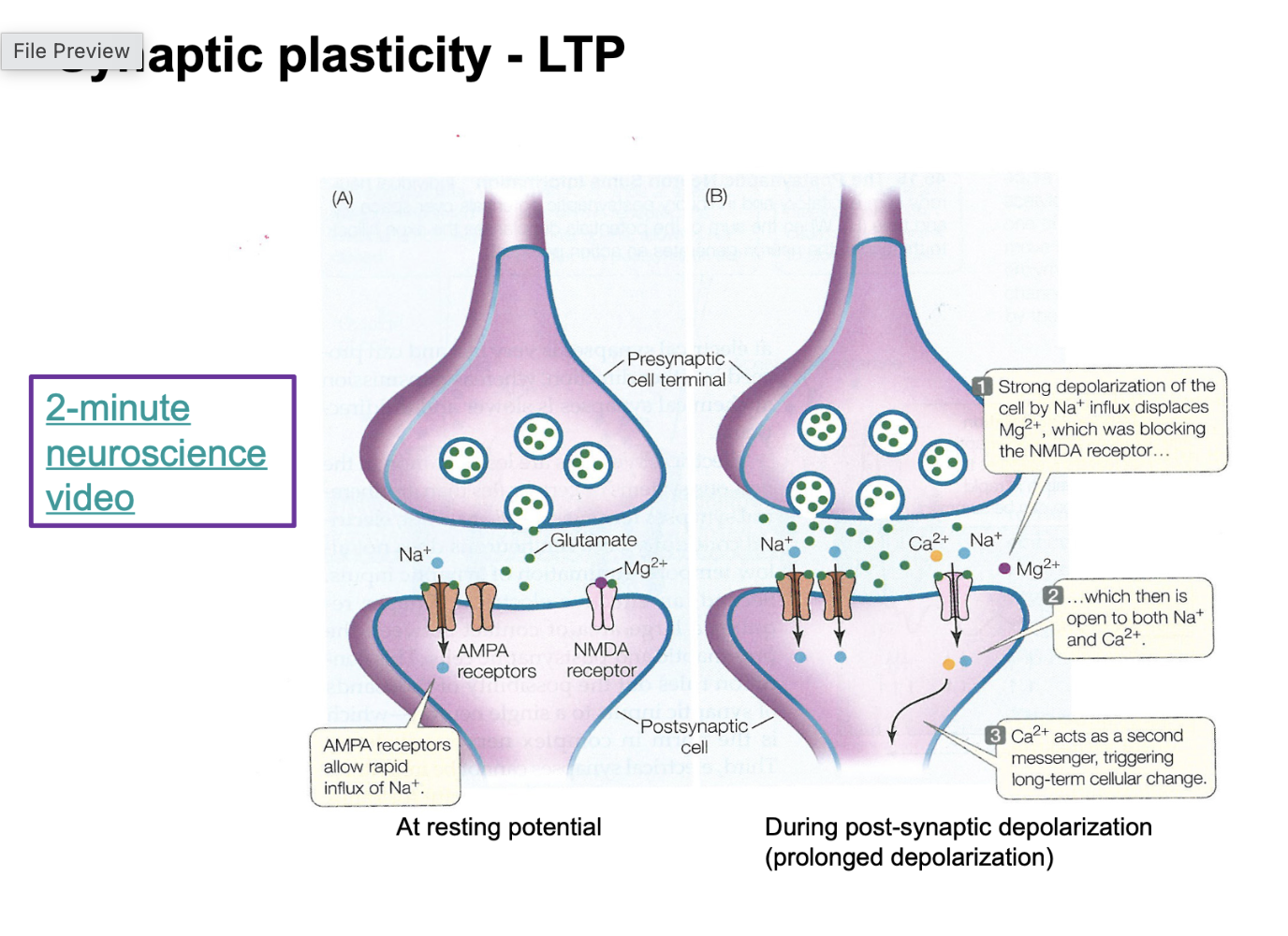
Long-Term Potentiation (LTP) is the process where a connection between two neurons gets stronger the more you use it. It is essentially the "cellular version" of a memory.
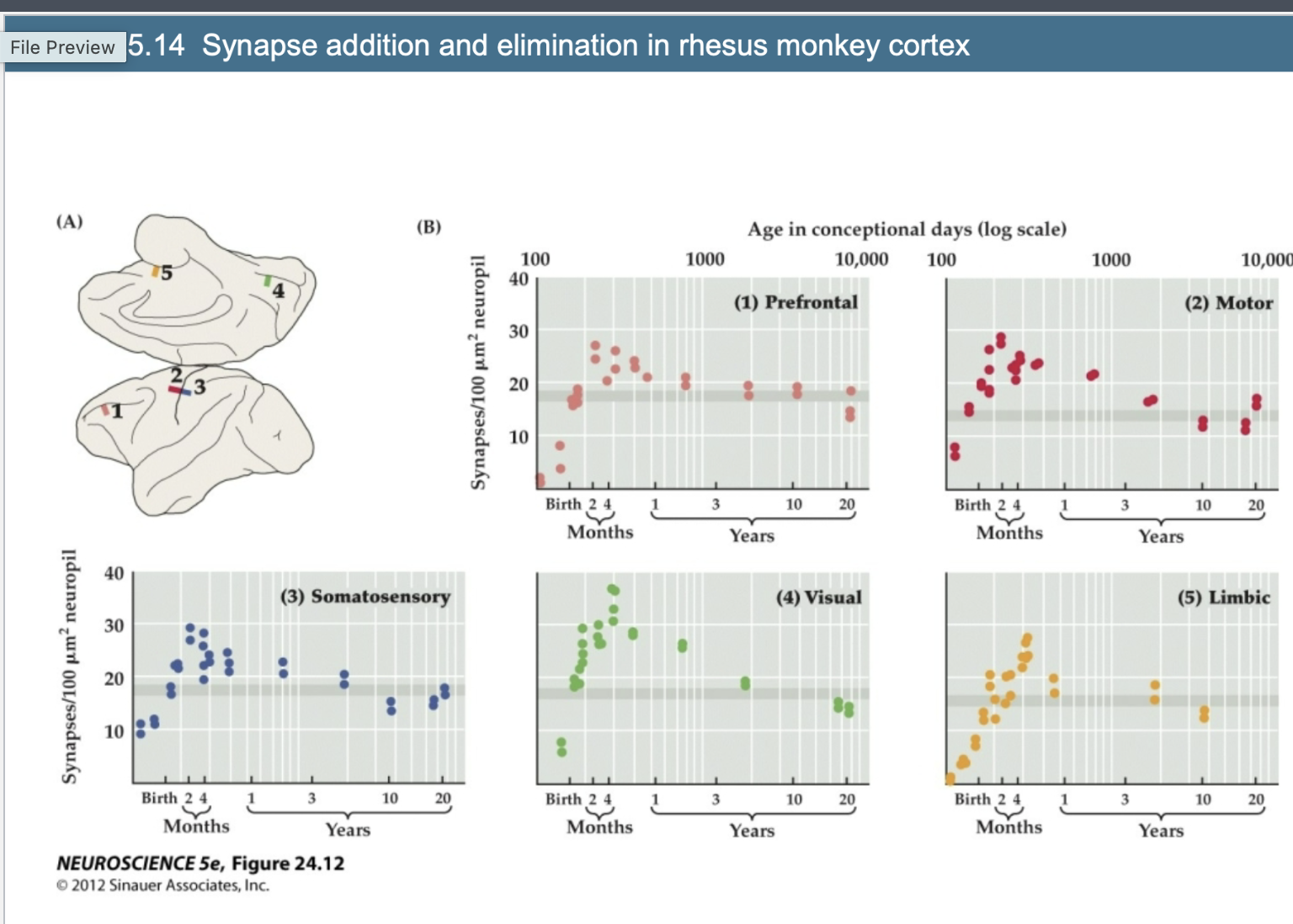
(A) Location of brain regions where synapse density was measured between mid-gestation and 20 years of age. (B) Rapid addition followed by gradual decline of synapse density in the cerebral cortex. Age has been converted to a logarithmic scale of “conceptional days” in order to fit the entire life span onto one graph. Synapse addition apparently continues through early life, gradually declines throughout most of adolescence, and reaches a steady state (shaded horizontal bar) after puberty (between 2 and 3 years of age in the rhesus monkey).
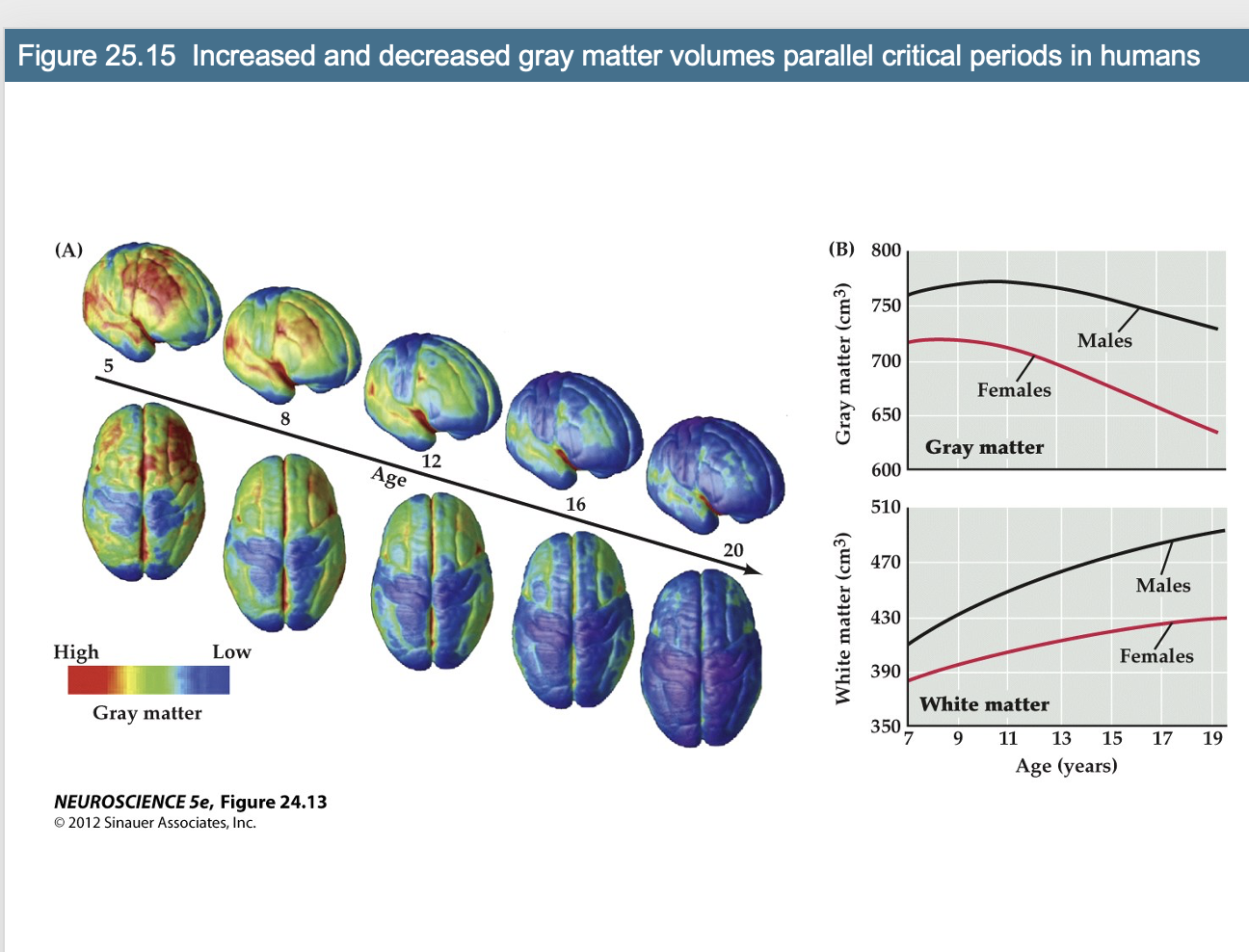
Higer amplitude due to the fact that men are bigger
Gray Matter goes down: Because of pruning (cutting out the extra, unused synapses to be more efficient). White Matter goes up: Because of myelination (insulating the remaining "important" wires to make them faster).
Gray Matter: Volume decreases because of pruning (getting rid of extra, unused connections).
White Matter: Volume increases because of myelination (insulating important connections to make them faster).
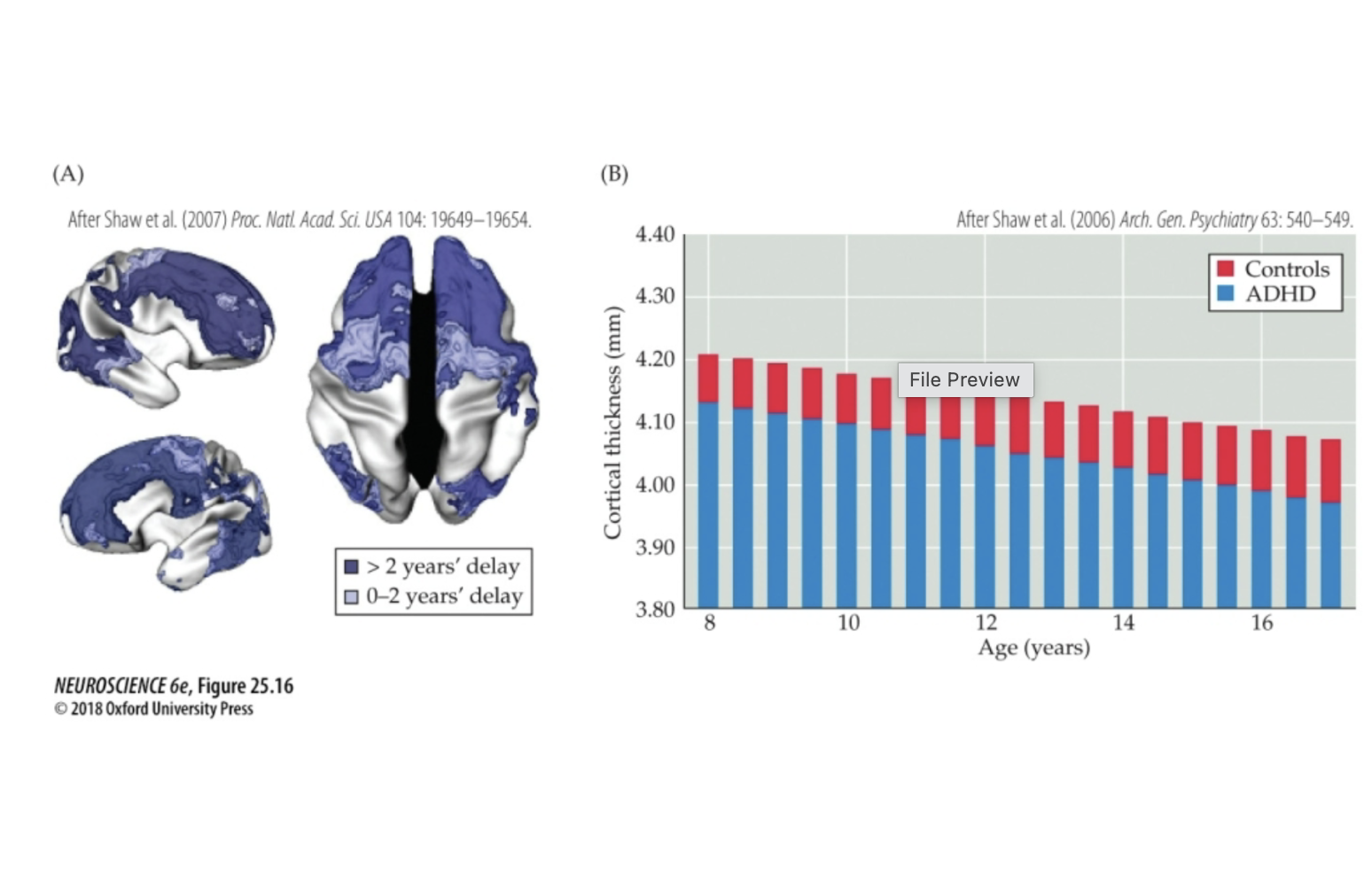
ADHD Connection: There is a delay (often 2+ years) in reaching peak gray matter thickness compared to "control" brains.