Geography - End of Year Huit
 View linked note
 Call Kai
 Learn
Learn Practice Test
 Spaced Repetition
 Match
Match Flashcards
 Knowt Play
1/28

Earn XP
Description and Tags
River landforms, procesess, and floodings population, pull/push factors,problems of over population, population pyramids tropical rainforests, location, climate, plant and animal adaptations, layers of the forest, deforestation, sustainable management
Name | Mastery | Learn | Test | Matching | Spaced | Call with Kai |
|---|
No analytics yet
Send a link to your students to track their progress
29 Terms
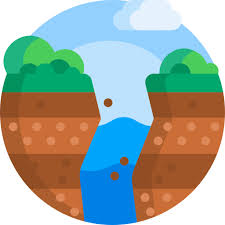
Erosion
The wearing away of the river's banks and bed.
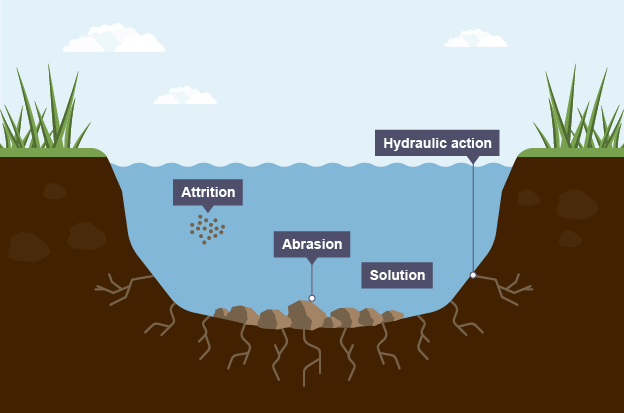
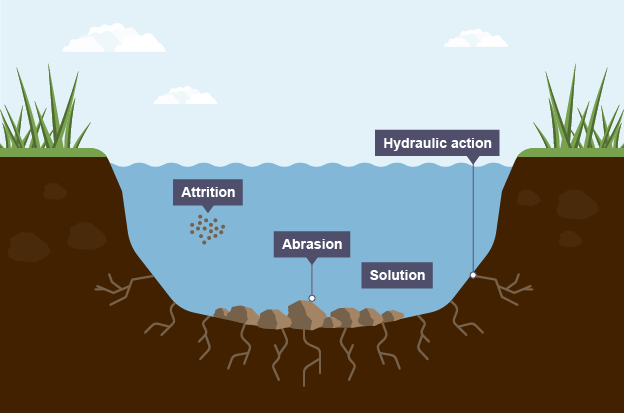
Hydraulic action
Water forces break into cracks, causing them to expand.
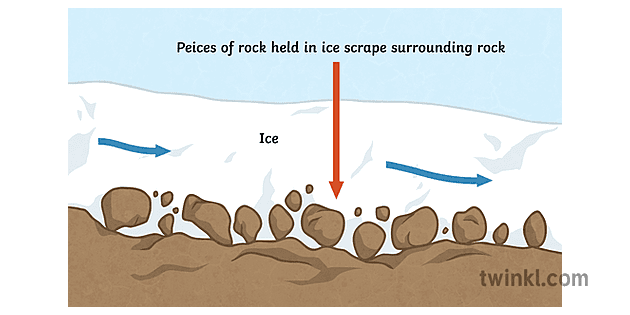
Abrasion
Abrasion is when rocks get worn down by other rocks or particles rubbing against them.
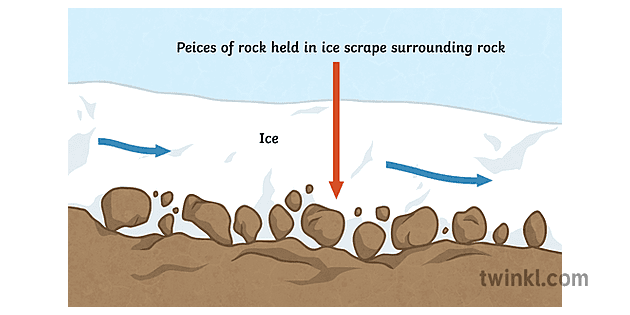
Attrition
Rocks collide and break into smaller pieces.
Solution
Minerals dissolve in the water.
Transportation
The movement of sediments.
Traction
Large rocks rolled along the riverbed.
Saltation
Small pebbles bounced along the bed.
Suspension
Fine particles carried within the water.
Deposition
The laying down of material transported by the river.
V-shaped valleys
Landforms in the upper course of rivers.
Meanders
Landforms in the middle course of rivers.
Floodplains
Landforms in the lower course of rivers.
Heavy rainfall, Snowmelt, Deforestation, Urbanization
Causes of flooding.
Property damage, Loss of life, Disruption to transport, Waterborne diseases
Impacts of flooding.
Dams and reservoirs, Levees and embankments, River channelization, Floodplain zoning
Flood management strategies.
Push Factors
Reasons people leave an area.
Pull Factors
Reasons people move to an area.
Shortage of resources, Increased pollution, Unemployment, Strain on infrastructure, Housing shortages
Problems of overpopulation.
Wide base, Narrow top, Bulge in middle
Interpretation of population pyramids.
Expanding, Stationary, Contracting
Stages of population pyramids.
Location
Tropical rainforests are found near the Equator.
Hot and humid climate, High rainfall
Characteristics of tropical rainforest climate.
Drip tips, Buttress roots
Plant adaptations in tropical rainforests.
Camouflage, Strong limbs
Animal adaptations in tropical rainforests.
Emergent Layer, Canopy Layer, Understory Layer, Forest Floor
Layers of the tropical rainforest.
Logging, Agriculture, Urban expansion
Causes of deforestation in tropical rainforests.
Loss of biodiversity, Climate change, Displacement of indigenous communities
Impacts of deforestation.
Selective logging, Reforestation, Conservation areas, Ecotourism
Sustainable management practices for tropical rainforests.