Comprehensive Study of Anatomy MSK - Histology with Key Terminology
 Call Kai
 Learn
Learn Practice Test
 Spaced Repetition
 Match
Match Flashcards
 Knowt Play
1/193

There's no tags or description
Looks like no tags are added yet.
Name | Mastery | Learn | Test | Matching | Spaced | Call with Kai |
|---|
No analytics yet
Send a link to your students to track their progress
194 Terms
cells and extracellular matrix (ECM)
What are the two interacting components of tissues?
supprts the cells, transports nutrients, carries away waste
What does the ECM do?
epithelial
connective
muscle
nerve
What are the 4 basic tissue types?
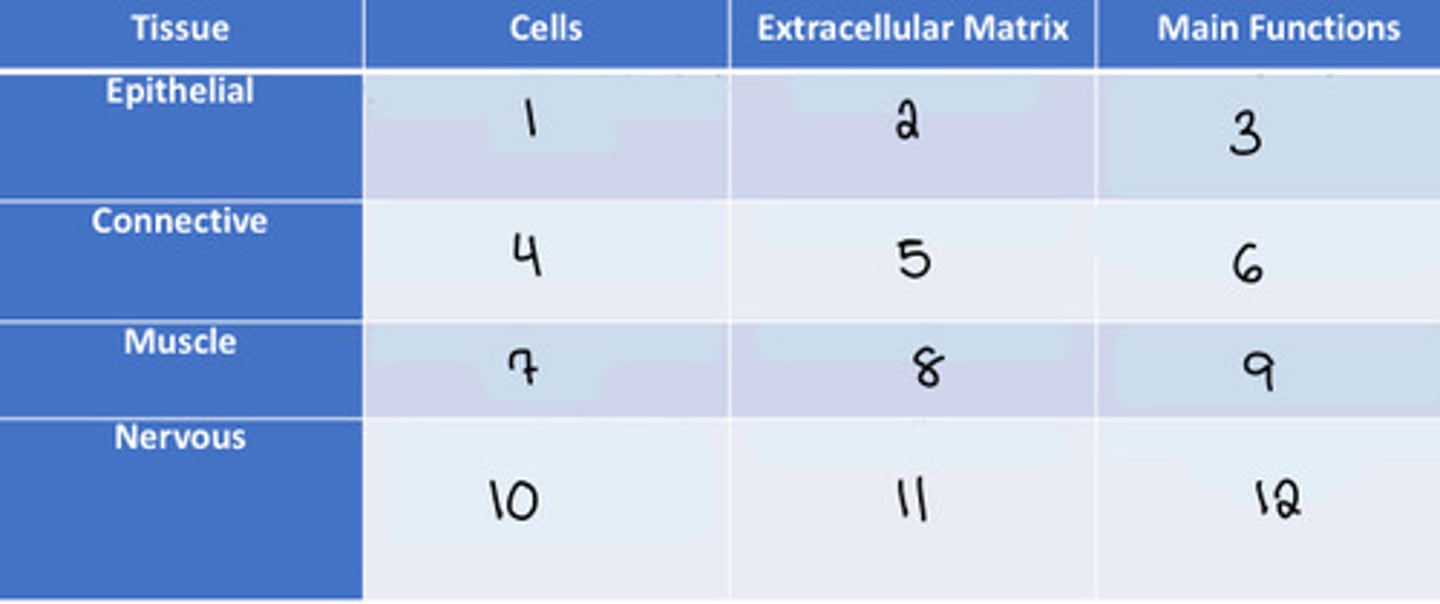
aggregated polyhedral cells
What is 1?
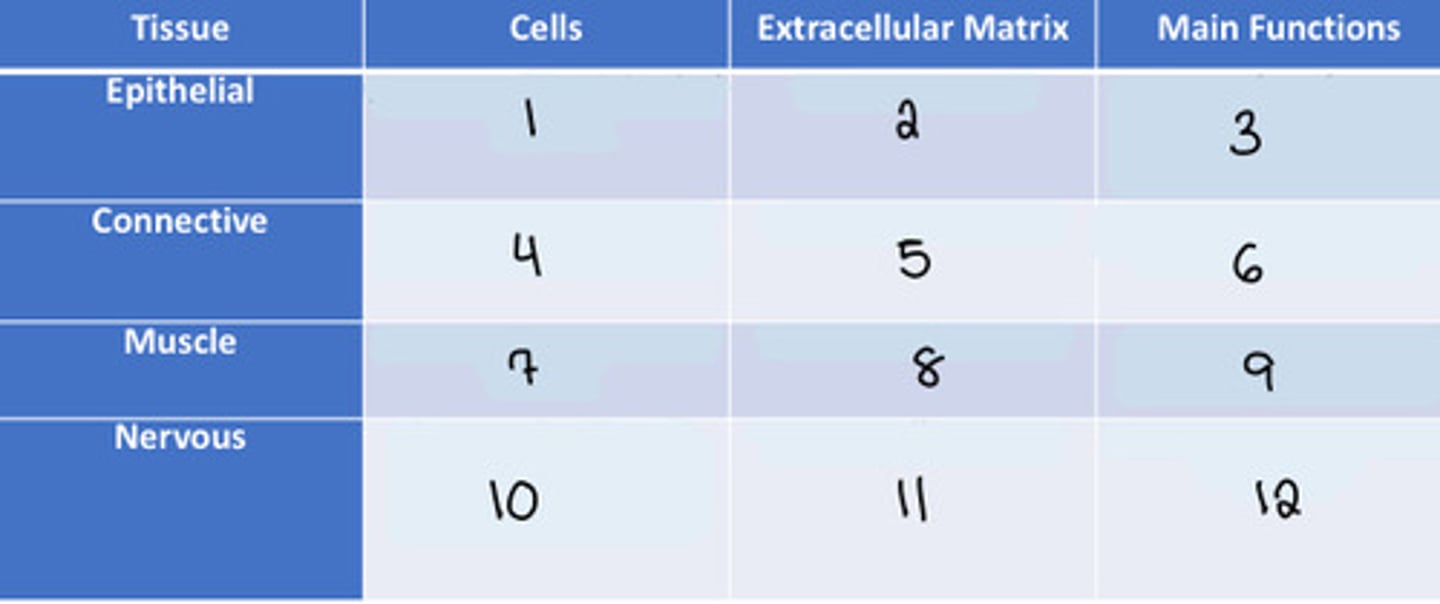
small amount
What is 2?
lining surface or body cavities
What is 3?
several types of fixed and wandering cells
What is 4?
abundant amount
What is 5?
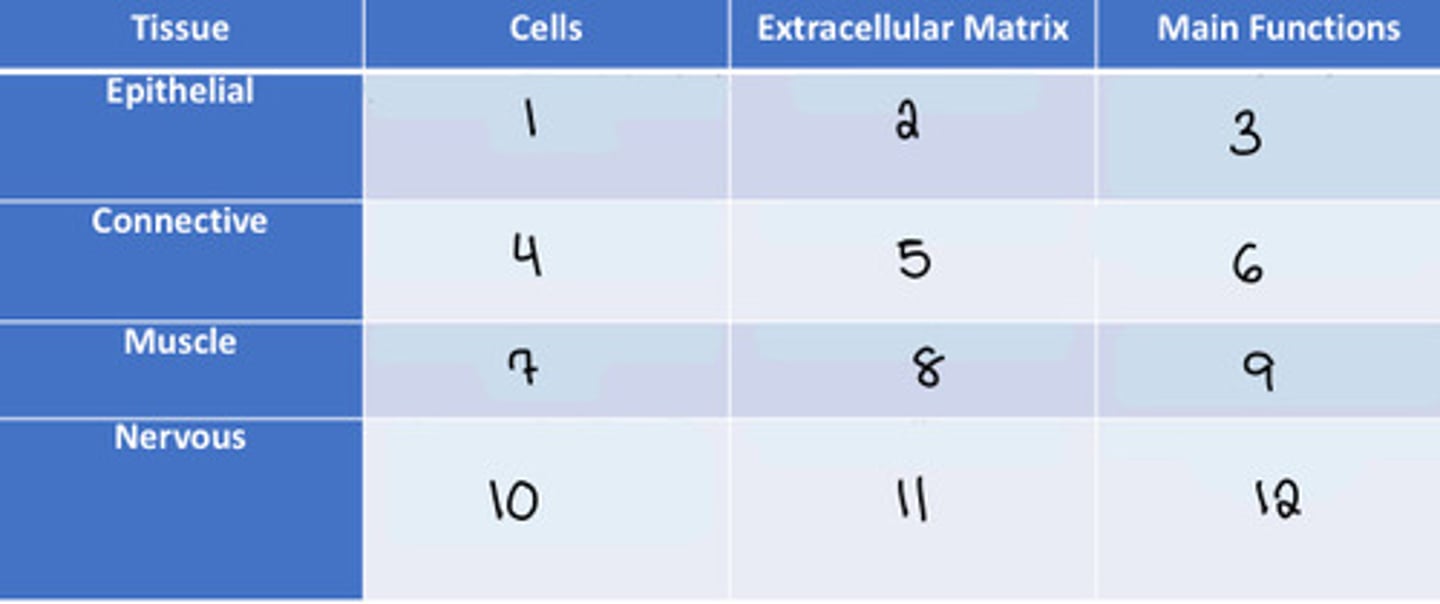
support and protection of tissues/organs
What is 6?
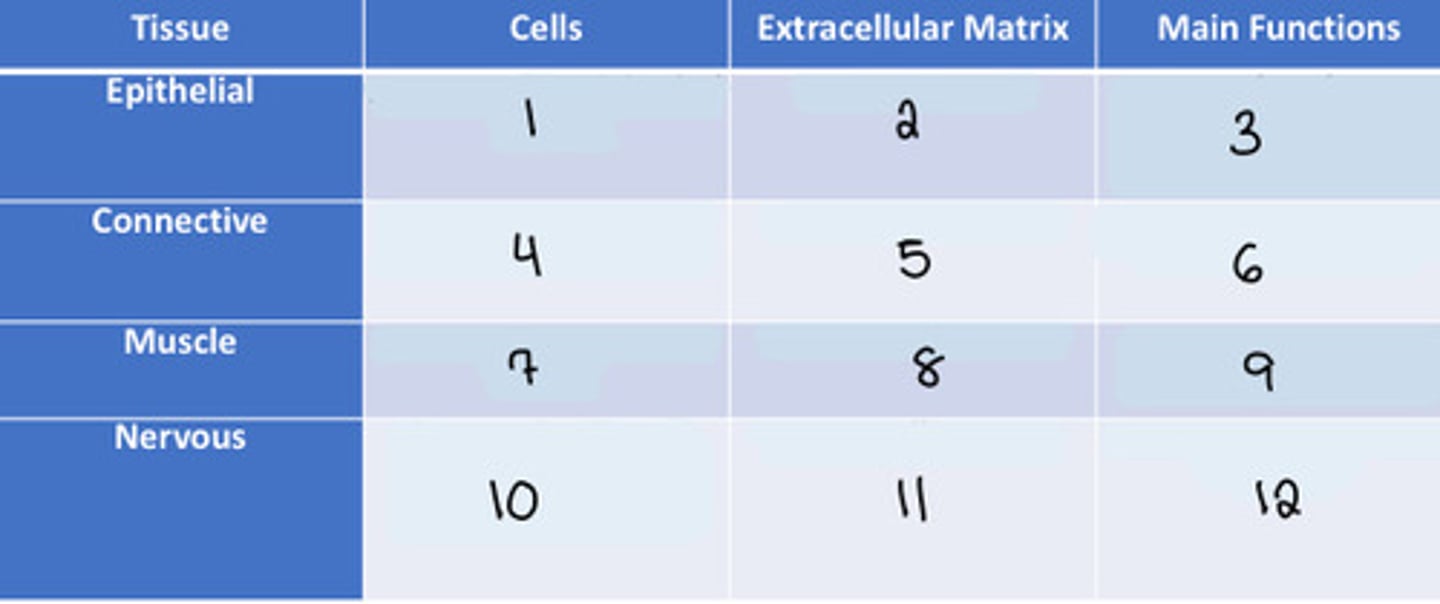
Elongated contractile cells
What is 7?
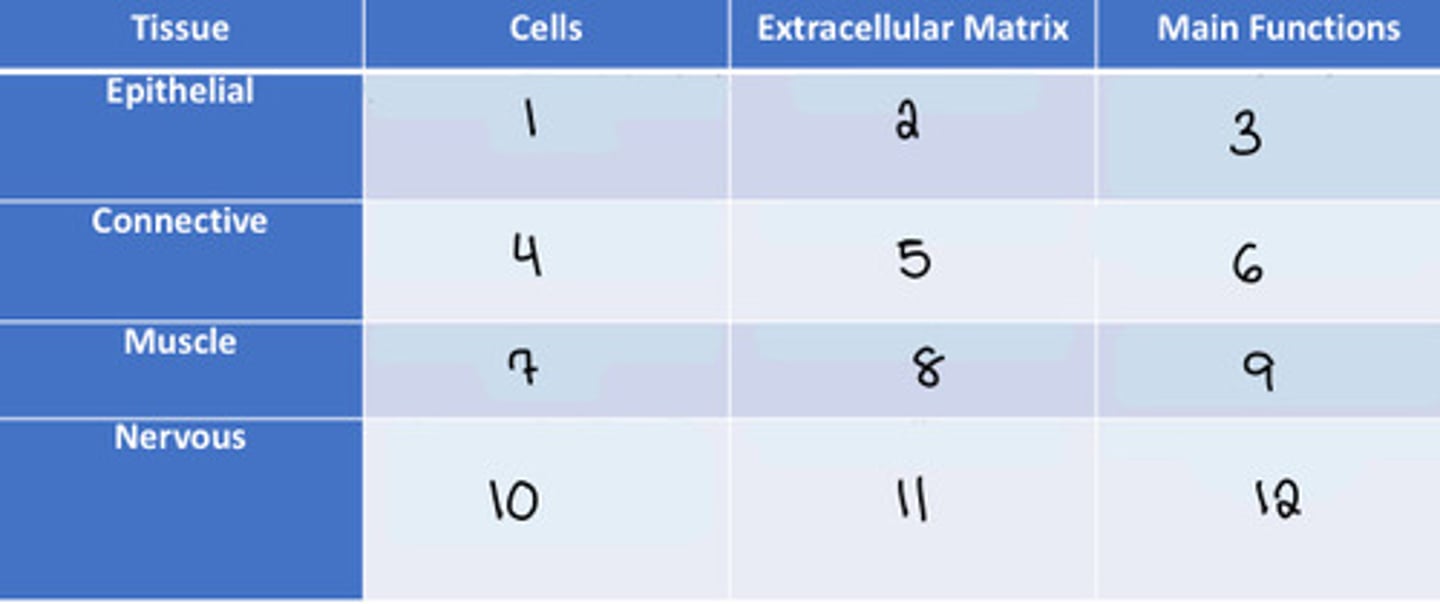
Moderate amount
What is 8?
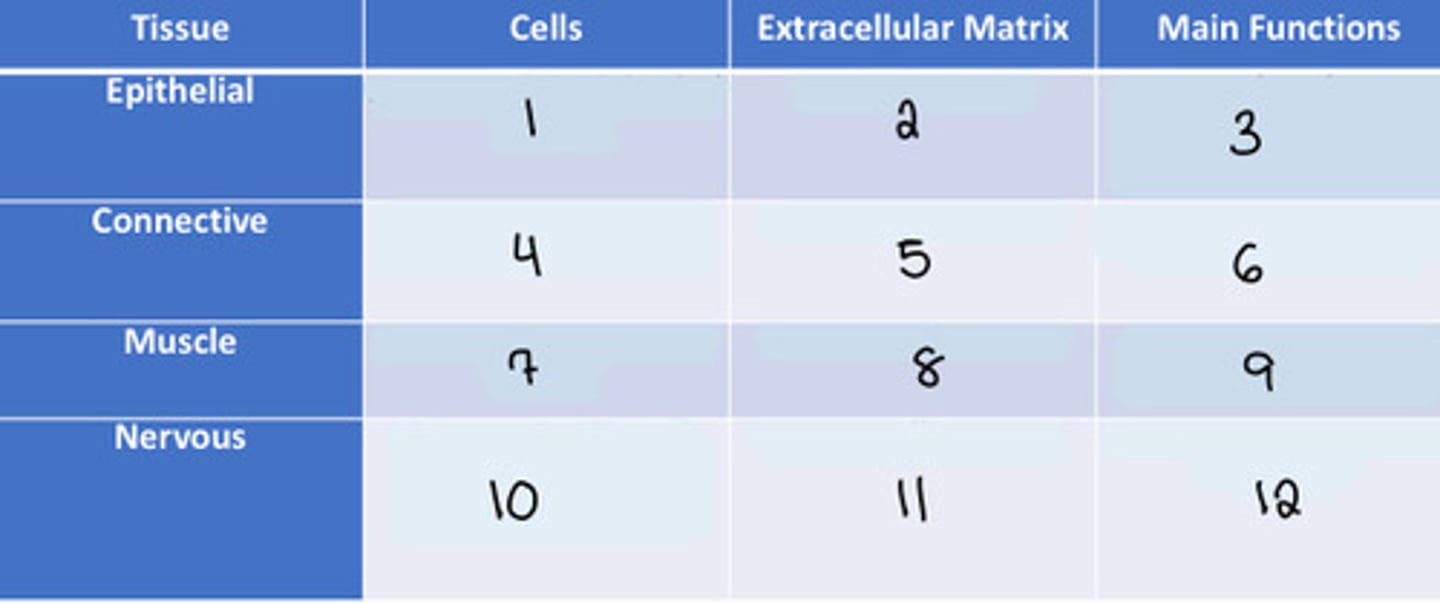
Strong contraction, body movements
What is 9?
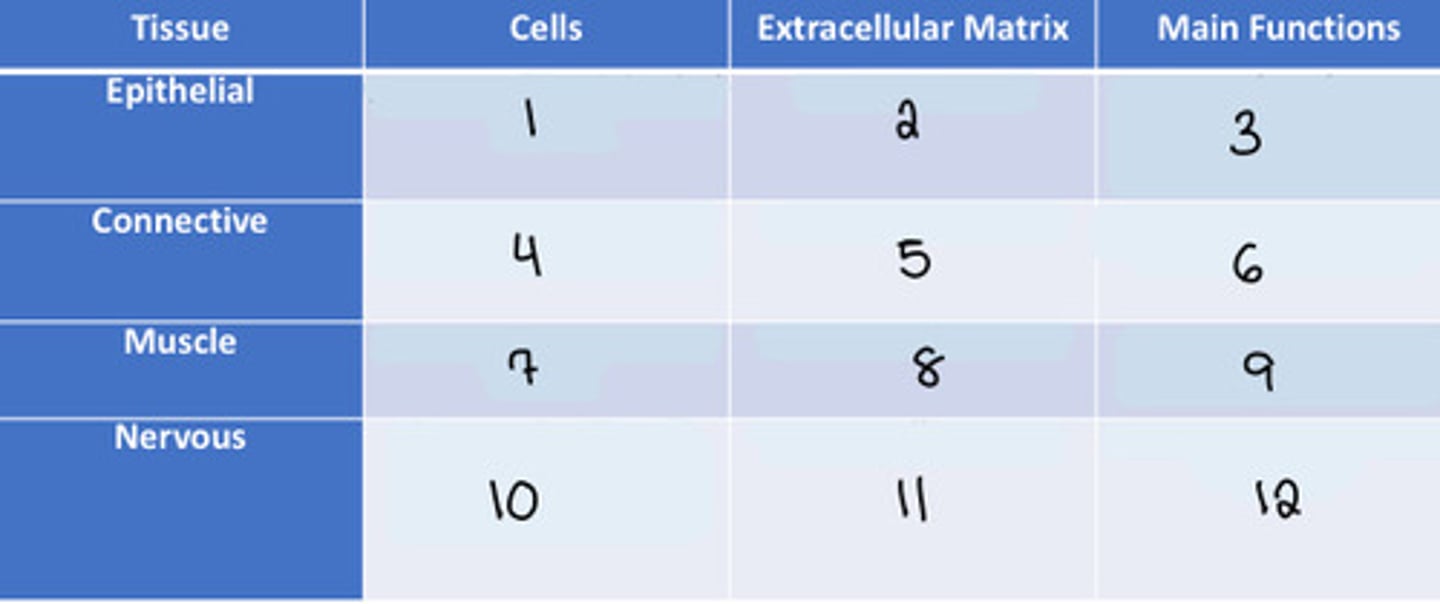
Elongated cells with extremely fine processes
What is 10?
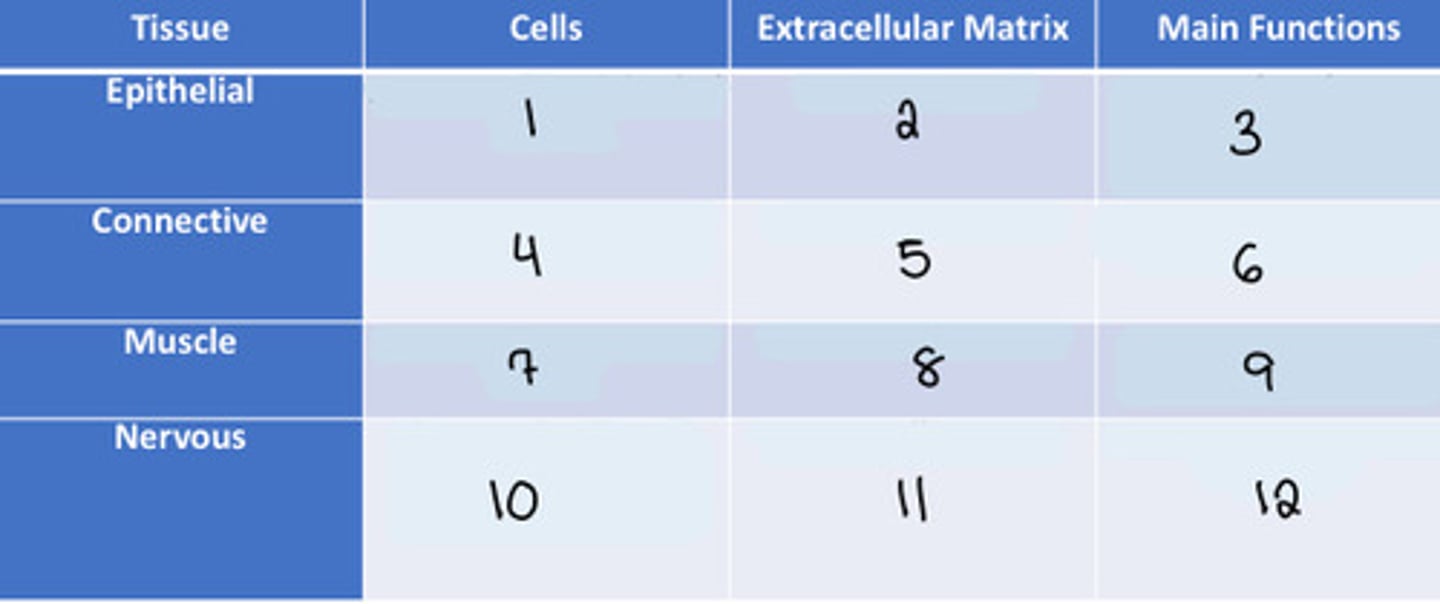
Very small amount
What is 11?
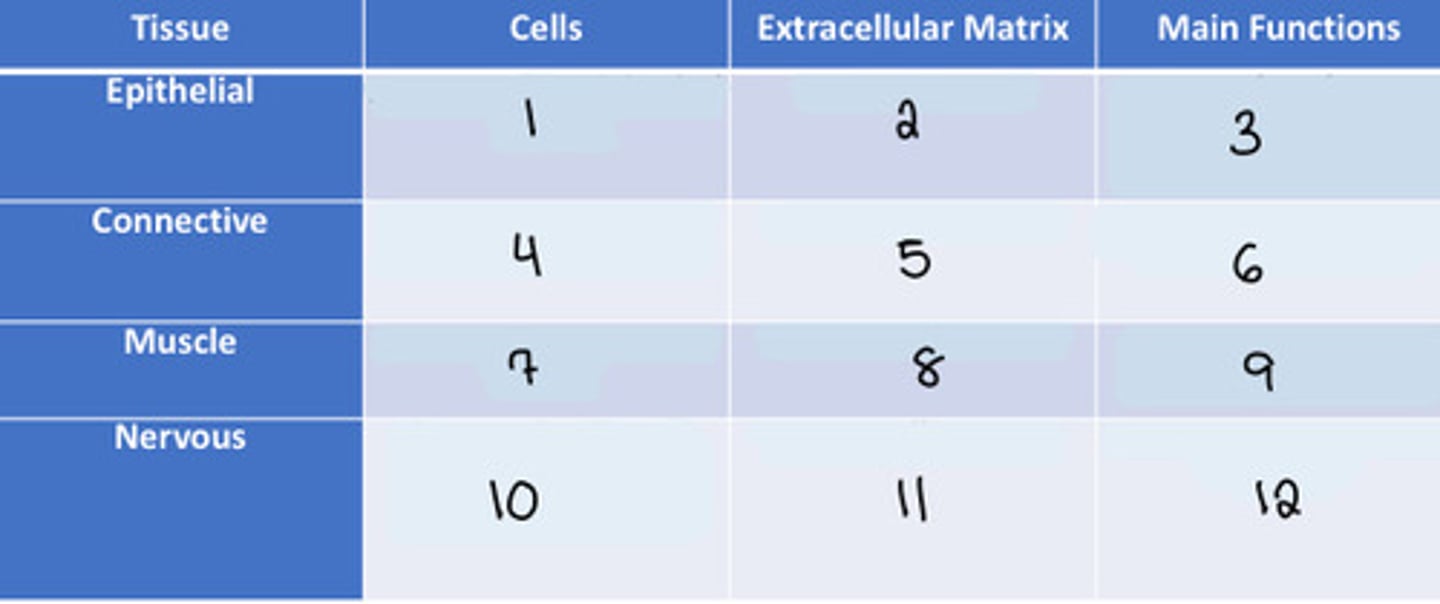
Transmission of nerve impulses
What is 12?
tightly to form a sheetlike structure
How are epithelial cells bound together?
basal lamina
reticular lamina
What are the two layers of the basement membrane of all epithelia?
collagen fibers
What is the reticular lamina made up of?
attachment
filtration
help in tissue regeneration
What does the basement membrane of epithelia do?
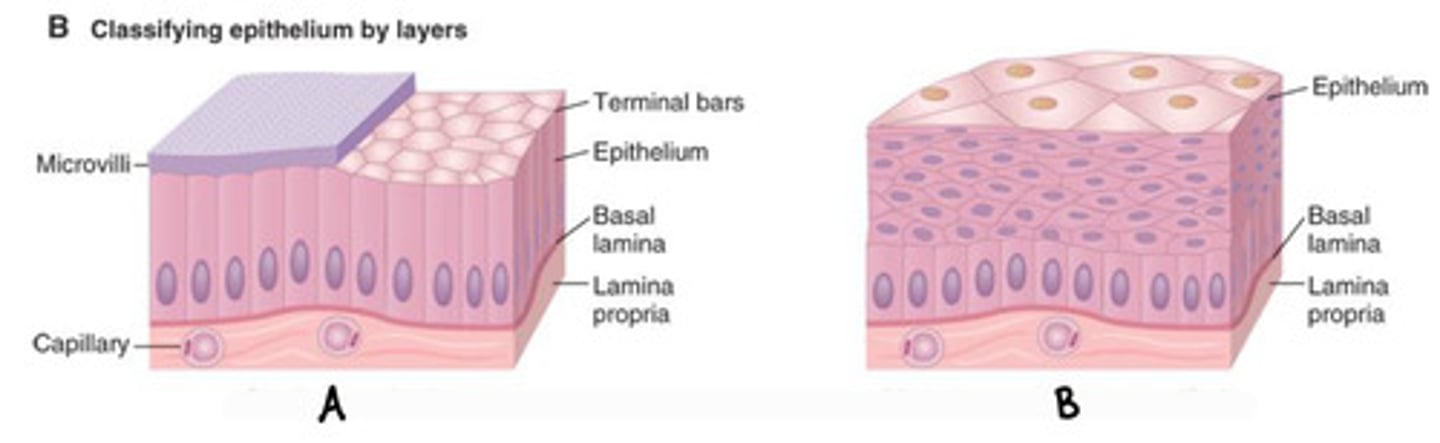
simple epithelium
What does A show?
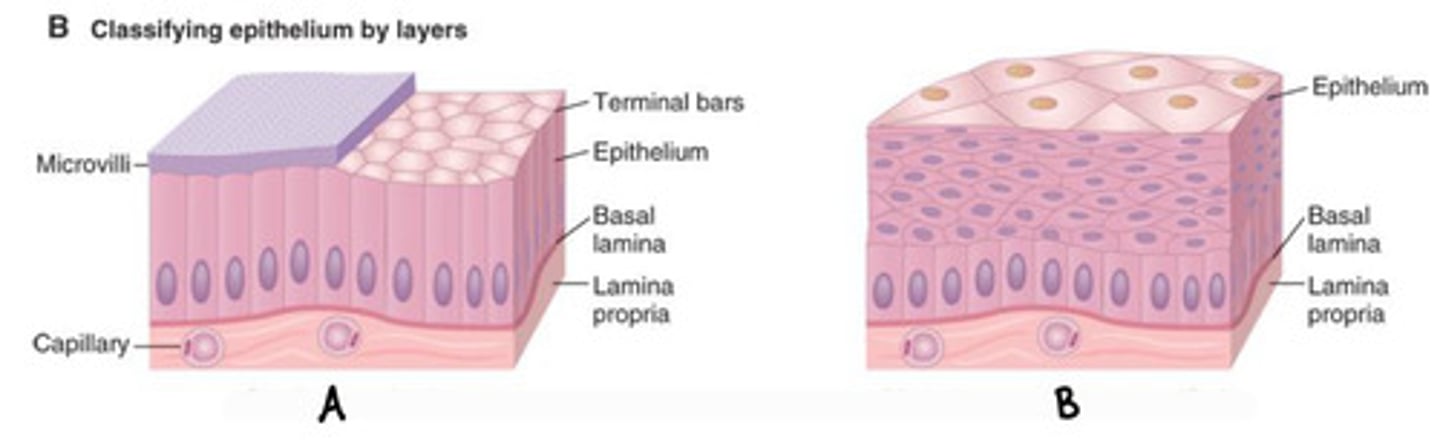
stratified epithelium
What does B show?
squamous
What does A show?
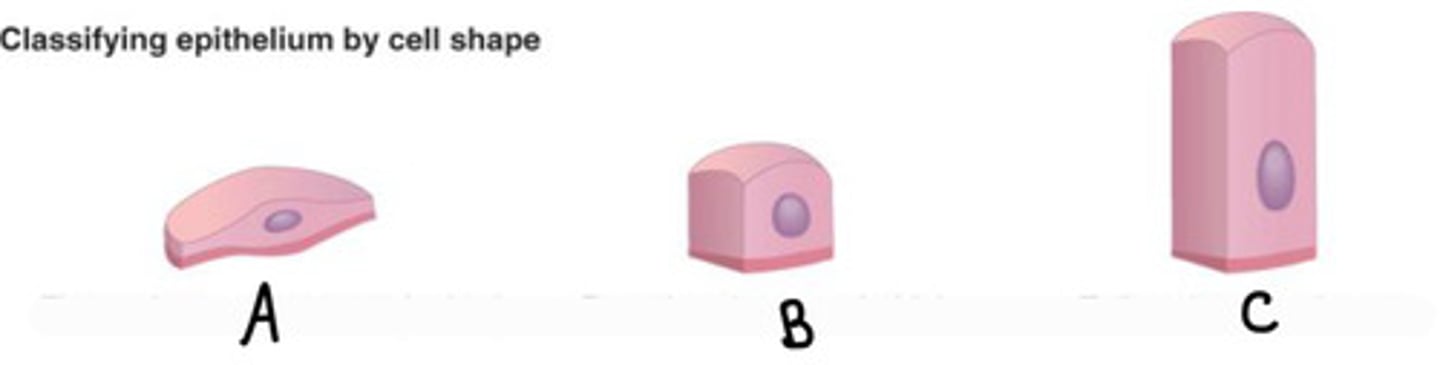
cuboidal
What does B show?
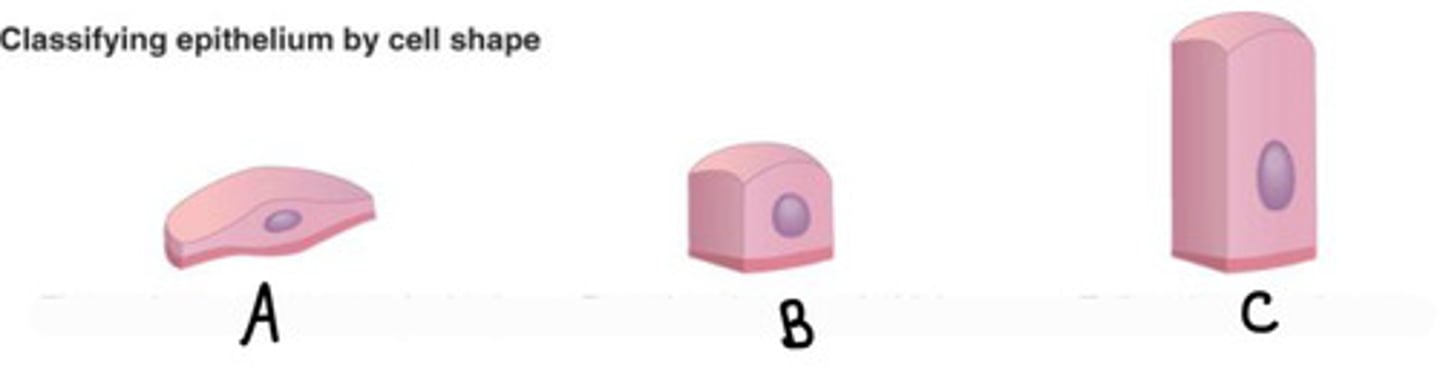
columnar
What does C show?
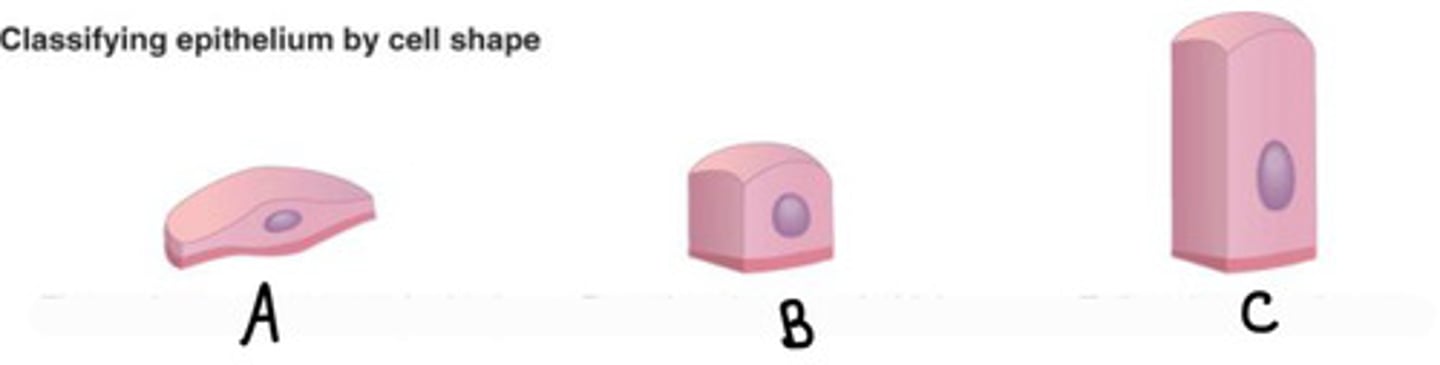
flat
What type of nucleus do squamous cells have?
round
What type of nucleus do cuboidal cells have?
tall
What type of nucleus do columnar cells have?
move mucus
What do cilia do?
inrease absorption
What do microvilli do?
connection of joints, muscles to bone, and epithelia to body structures
What does connective tissue do?
structural support
nutrition
storage
defense
What are the 6 functions of connective tissue
loose
dense
adipose
cartilage
bone
blood
hematopoietic fluid
What are the types of connective tissue?
loose connective tissue
What does A show?
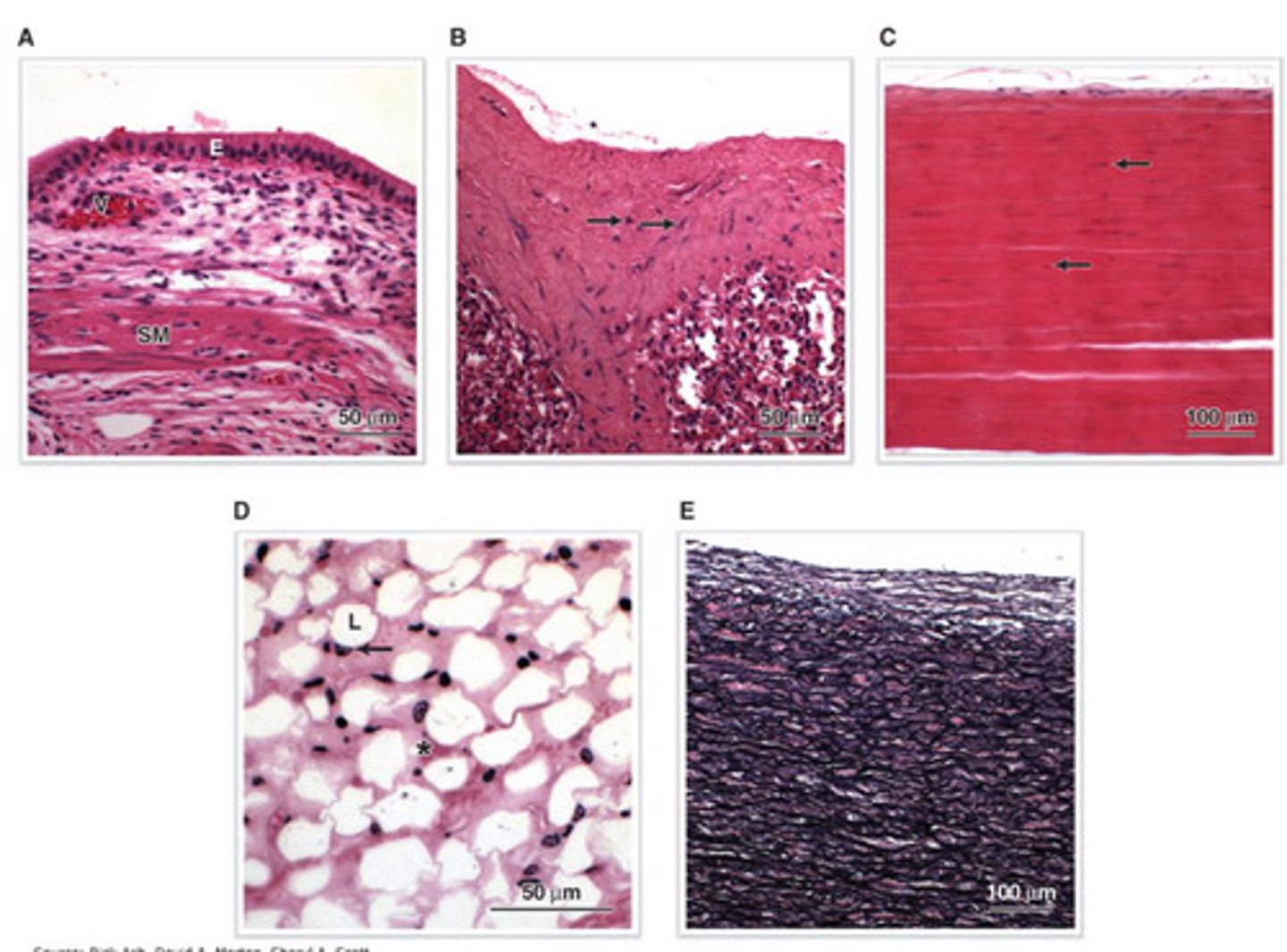
dense irregular connective tissue
What does B show?
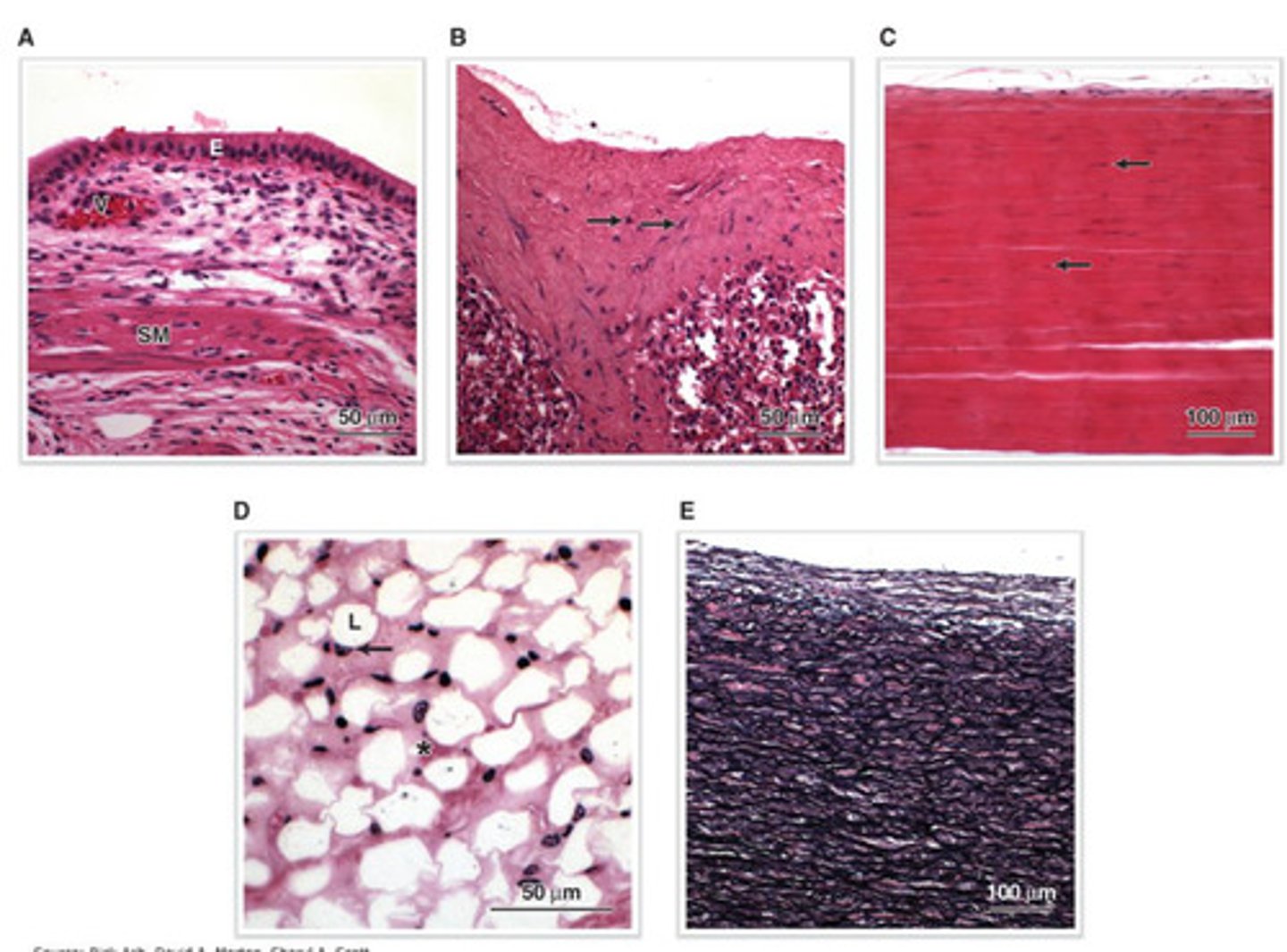
dense regular connective tissue
What does C show?
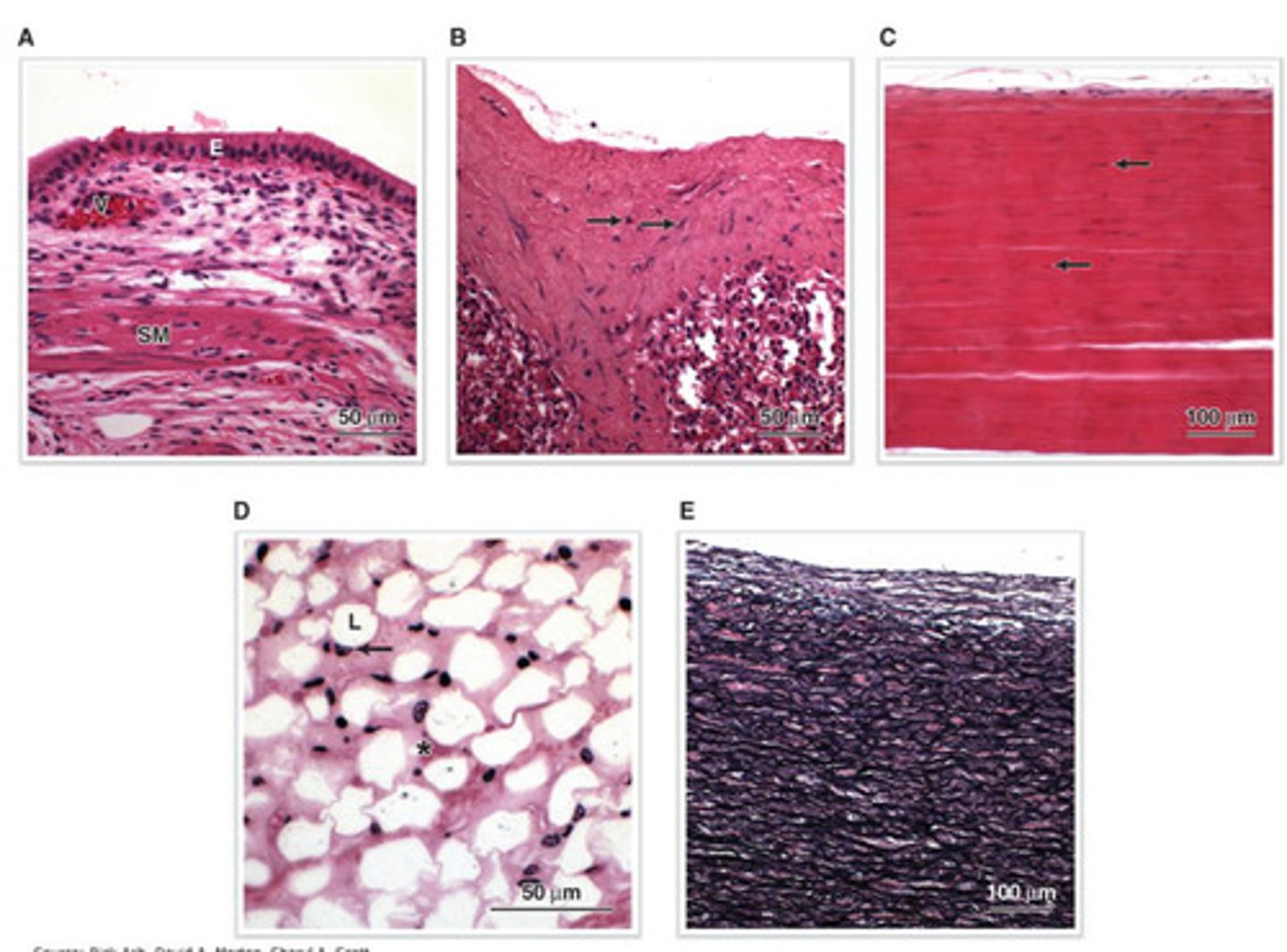
adipose tissue
What does D show?
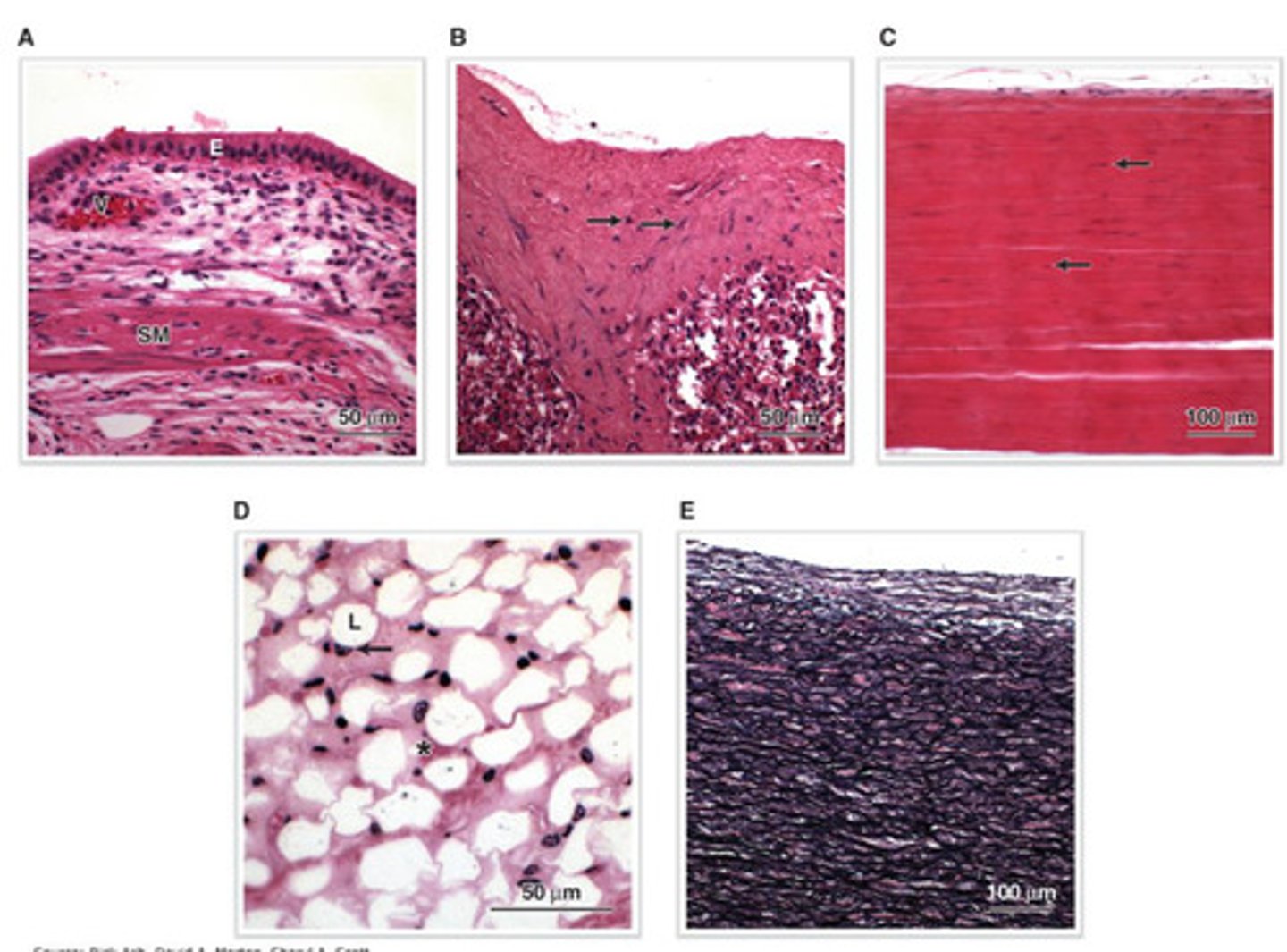
elastic connective tissue
What does E show?
along with cartilage and bone provides the framework of the body
How does connective tissue provide structural support?
exchange of nutrients and waste between blood vessels and organs
How does connective tissue provide nutrition?
ECM stores water, electrolytes, and plasma proteins
How does connective tissue provide storage?
physical barrier, site of inflammatory responses
How does connective tissue provide defense?
tissue loss stimulates growth of CT, new ECM can close wounds
How does connective tissue provide repair?
fibrosis
What happens if an organ is damaged and there is an excess production of connective tissue?
cell-cell signaling molecules are bound by the ECM
How does connective tissue provide information?
Fibroblasts
Synthesize and secrete fibers and ground substance, major component of the ECM, proliferate and increase sympathetic activity during tissue repair, contain lots of rough ER, can influence growth of other cells
Adipocyte
store lipid in a single droplet that occupies most of the cell's volume
endocrine hormones and cytokines
What do adipocytes produce?
no
Do adipocytes normally divide in adults?
Macrophage
Derived from monocytes found in the blood, which in turn are derived from stem cells in bone marrow
initiate immune response
phagocytosis
secrete hydrolytic enzymes for ECM turnover
What is the function of macrophages?
Mast cells
resemble basophils found in the blood; they also are derived from bone-marrow precursors
chemical mediators of inflammatory response
allergic reactions
What are the functions of Mast cells?
Plasma
Leukocytes
What are the transient cells of connective tissue?
proteins and polysaccharides
What does the ECM consist of?
collagens
What are proteins in the ECM?
Collagen type I
type of collagen that is thick and most common in connective tissue
skin
tendons
organs
What areas of the body are made of collagen type I fibers?
Collagen type III
type of collagen that is reticular fibers and is a flexible meshwork
smooth muscles
endocrine glands
liver
What areas of the body are made of collagen type III fibers?
Elastin fibers
fibers that are made of elastin and fibrillin, random coil configuration, randomly organized, cross-linked network
trachea
skin
What areas of the body are made of elastin fibers?
loose
What is the most widespread connective tissue?
ground substances and cells
What is most abundant in loose connective tissue?
loose and irregular
What is the meshwork of loose connective tissue like?
flexible and slightly resistant to stress
What is the movement and strength of loose connective tissue?
beneath some epithelia
wraps and cushion organs
Where is loose connective tissue found?
collagen fibers
What is most abundant in dense irregular connective tissue?
collagen fibers
What is most abundant in dense regular connective tissue?
dense, three dimensional network
What is the meshwork of dense irregular connective tissue like?
parallel bundles
What is the meshwork of dense regular connective tissue like?
can withstand tension exerted in many directions
What is the movement and strength of dense irregular connective tissue?
resist stretching in one direction
What is the movement and strength of dense regular connective tissue?
dermis of skin
gut
around organs
Where is dense irregular connective tissue found?
tendons
ligaments
Where is dense regular connective tissue found?
unilocular (white fat)
multilocular (brown fat)
What are the two types of adipose tissue?
provides lipid storage
What does unilocular (white fat) do?
generates heat in fetus/newborns
What does multilocular (brown fat) do?
dense irregular and regular elastic tissue
What are the two types of elastin connective tissue?
middle layer of large arteries
Where is dense irregular connective tissue found?
in a few ligaments
Where is dense regular connective tissue found?
type III collagen
What is reticular connective tissue made up of?
hematopoietic bone marrow
lymph nodes
spleen
Where is reticular connective tissue found?
ground substance (Hyaluronic acid and fibroblasts)
What is mucosal connective tissue made up of?
inside forming teeth
in the umbilical cord
Where is mucosal connective tissue found?
cartilage
What connective tissue is the foundation of musculoskeletal anatomy?
neurons and glial cells
What are the two kinds of cells in the nervous system?
Neuron
the functional units of information and signaling process in the nervous system
Glial cell
provide essential support to neurons
Peripheral nervous system
Receives sensory information from the outside world and from conditions within the body, transmits commands to effectors such as muscles and glands
Central nervous system
consists of the brain and the spinal cord, integrates sensory inputs and produces coordinated outputs
somatic and autonomic
What are the two functional components of the nervous system?
Somatic (voluntary) nervous system
Comprised of central elements that produce output that con be controlled by thinking
Autonomic nervous system (ANS)
Consists of both central and peripheral elements that control involuntary activities
Parasympathetic
responsible for "at rest" activity of the body
Sympathetic
fight or flight
Synapse
specialized membrane regions that receive and transfer signals from cell to cell (neuron to neuron or neuron to effector cell)
Dendrite
major site for receiving and integrating incoming signals
shape and extent of dendrites
What determines a neuron's function
Cell body
part of the neuron that is made up of rough ER (nissl bodies) and golgi apparatus
Neurofilaments
Part of the neuron that that extends from the cell body to the axon and dendrites, provide structural support to cell