Integers, Roots, Exponents & BEDMAS
 Call Kai
 Learn
Learn Practice Test
 Spaced Repetition
 Match
Match Flashcards
 Knowt Play
1/17

There's no tags or description
Looks like no tags are added yet.
Name | Mastery | Learn | Test | Matching | Spaced | Call with Kai |
|---|
No analytics yet
Send a link to your students to track their progress
18 Terms
Integers
Whole numbers that can be positive, negative, or zero
A number line helps us understand these:
Moving right → adding
Moving left → subtracting
Eg.
Positive integers: 1, 2, 3, …
Negative integers: –1, –2, –3, …
Zero: 0
Addition with integers
Same signs → add and keep the sign
Eg. (–3) + (–5) = –8
Different signs → subtract and keep the sign of the number with the larger absolute value
Eg. 7 + (–4) = 3
Subtraction with integers
Change subtraction into addition of the opposite
Eg.
- 5 – (–3) =
5 + 3 =
8
Steps for exam questions:
1. Rewrite subtraction as addition
2. Apply integer addition rules
3. Check if your answer makes sense on a number line
Common mistakes during operations with integers to avoid
Forgetting that subtracting a negative makes the value larger
Ignoring the sign of the number with the bigger magnitude
A root
The inverse of a power
Square root (√): asks “What number multiplied by itself gives this value?”
Perfect squares: 1, 4, 9, 16, 25, 36, 49, 64, …
Cube root (∛): asks “What number multiplied three times gives this value?”
Perfect cubes: 1, 8, 27, 64, 125, …
Eg.
√25 = 5 because 5 × 5 = 25
∛8 = 2 because 2 × 2 × 2 = 8
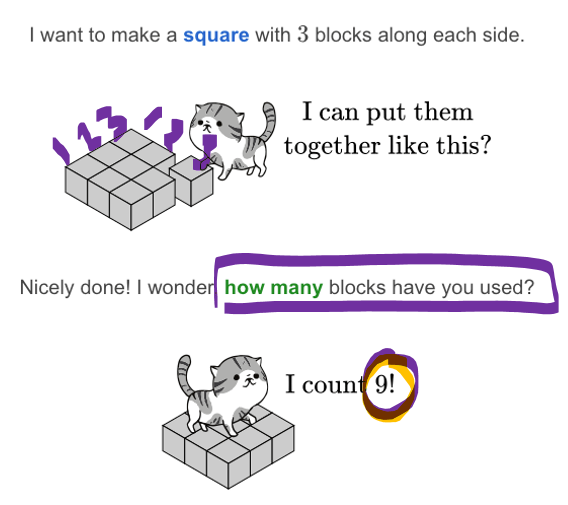
Square Roots
When we multiply a number to itself, we square it.
When we figure out what number is already multiplied to itself, we square root it
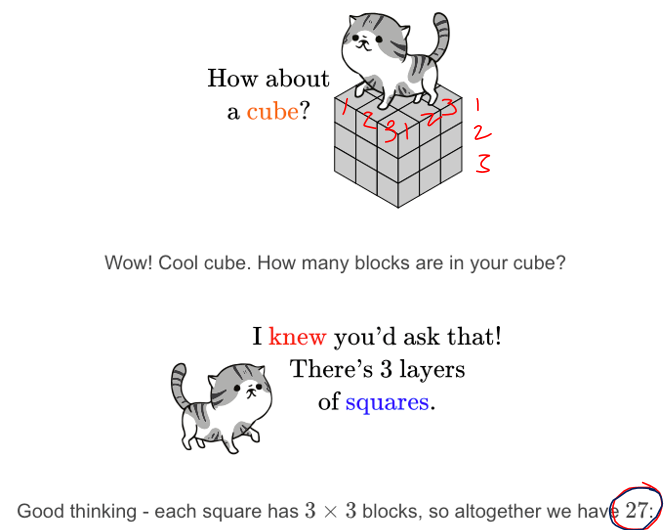
Cube Roots
When we multiply a number to itself three times, we cube it.
When we figure out what number is already multiplied to itself, we cube root it
Estimating roots
If the number is not a perfect square:
Eg:
√20
4² = 16
5² = 25
√20 lies between 4 and 5
Steps for estimation questions:
1. Find the nearest perfect squares
2. Decide which two integers the root lies between
Exponent
Shows repeated multiplication.
Eg:
2³ = 2 × 2 × 2 = 8
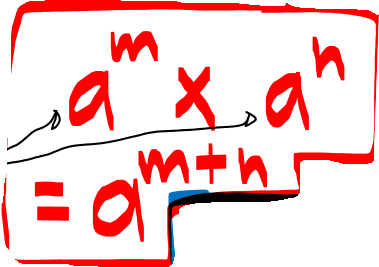
Law 1 of exponents (Multiplication)
Add the exponents:
xᵃ × xᵇ = xᵃ⁺ᵇ
Eg:
5² × 5³ = 5⁵
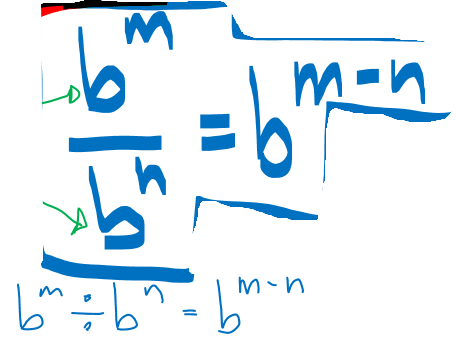
Law 2 of exponents (Division)
Subtract the exponents:
xᵃ ÷ xᵇ = xᵃ⁻ᵇ
Eg:
8⁵ ÷ 8² = 8³
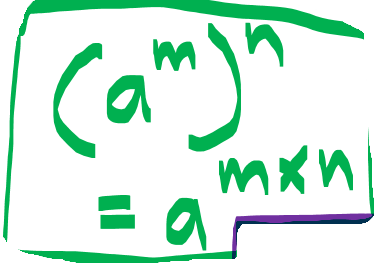
Law 3 of exponents (Power of a power)
Multiply the exponents:
(xᵃ)ᵇ = xᵃᵇ
Eg:
(2³)² = 2⁶
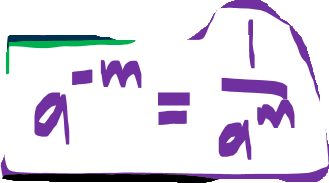
Law 4 of exponents (Negative Exponent)
Divide the number and exponent by one:
a⁻ⁿ = 1 / aⁿ
Eg:
9⁻² = 1 / 9²
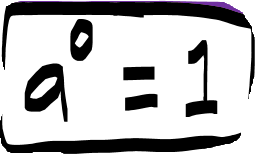
Law 5 of exponents (Zero Exponent)
Any non-zero number to the power of zero equals 1:
x⁰ = 1
Eg:
7⁰ = 1
BEDMAS
(Brackets)
Exponents²
Division Multiplication
Addition Subtraction
Nb. Go left to right
8 + 2 × 5 = ?
Multiplication first: 2 × 5 = 10
Addition: 8 + 10 = 18
10 – 2³ + 4 = ?
Exponent: 2³ = 8
Subtraction and addition (left to right): 10 – 8 + 4 = 6
12 – √16 × 2² = ?
Roots and exponents: √16 = 4, 2² = 4
Multiplication: 4 × 4 = 16
Subtraction: 12 – 16 = –4