Pysch disorders pt. 2
 Call Kai
 Learn
Learn Practice Test
 Spaced Repetition
 Match
Match Flashcards
 Knowt Play
1/26

There's no tags or description
Looks like no tags are added yet.
Name | Mastery | Learn | Test | Matching | Spaced | Call with Kai |
|---|
No analytics yet
Send a link to your students to track their progress
27 Terms
Generalized anxiety disorder (GAD)
persistent, excessive anxiety and worry
most common in 18-29 yo, decreases with age
DSM-5 criteria for GAD
excessive anxiety and worry occurring more days than not for at least 6 months (about several events or activities)
Understand irrationality of consistent anxiety/worry
Generalized anxiety disorder (GAD) 3+
Restlessness, feeling on edge
Fatigue
Concentration problems
Irritability
Muscle tension
Sleep disturbance
Biological and environmental factors
Imbalance of neurotransmitters, but precise nature of imbalance is not clear
Especially prevalent among people who:
have low income
live in large cities and/or environments that are unpredictable based on political and economic issues
trauma in childhood can increase risk of developing GAD
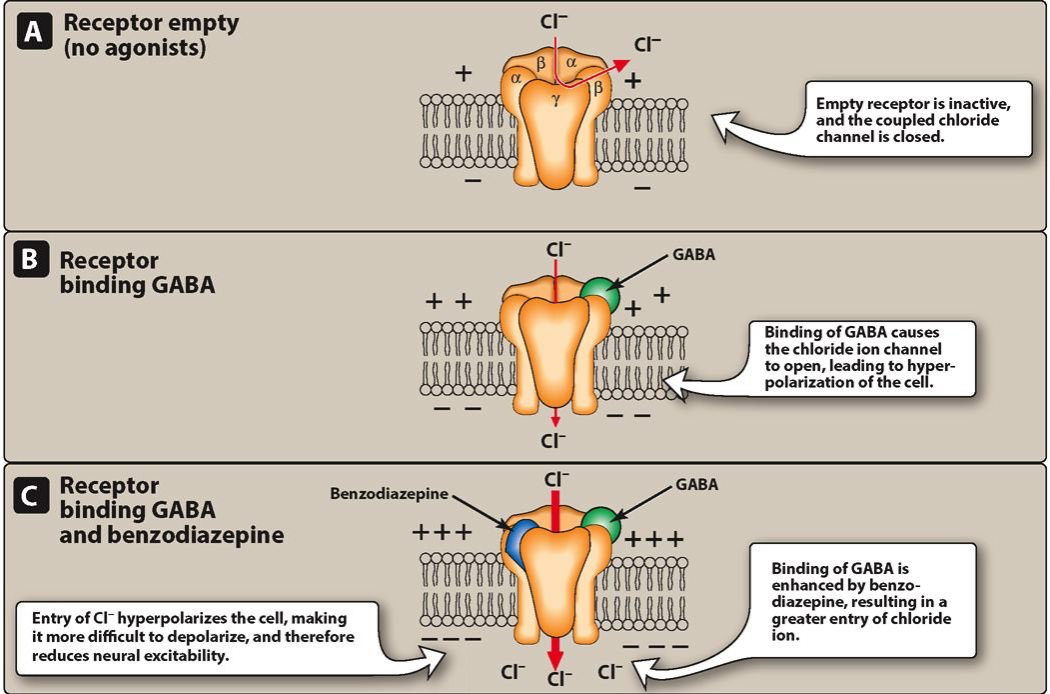
Drug treatment - Benzodiazepines
anxiolytic drugs
Bind to GABA receptors and enhance GABA’s inhibitory actions
GABAA receptors
GABAA receptors - widely distributed in the brain
Cortex, hippocampus, and amygdala
SSRIs can also treat anxiety
Mood disorders
long-lasting emotional disturbance that affects all areas of life
Depressive and bipolar disorders
Major depressive disorder (MDD; unipolar depression)
severely depressed mood that lasts 2 weeks or more
MDD symptoms
Feelings of worthlessness
Loss of interest in enjoyable activities and personal appearance
Changes in appetite (weight gain or loss)
Sleep disturbances
Increased substance use
Cognitive issues (memory, EF, decision-making)
MDD stats
18% of people in US meet criteria for depression at some point in their lives
Major depression lasts ~12 weeks, on average
Without treatment, 80% of people will experience at least 1 recurrence
Gender imbalance of depression
Women (22%) experience depression at a higher rate than men (14%)
Lower SES, sex differences in hormones, postpartum depression, maybe women are more likely to seek help & receive diagnosis
Biological factors of MDD
Depression may involve depletion of norepinephrine and serotonin
Some newer studies found increases linked to depression
Biochemical model of depression incomplete
MDD drug treatment
drugs that affect norepinephrine, dopamine, and serotonin
Modern antidepressants
SSRI’s = selective serotonin reuptake inhibitors
Can also treat anxiety
SNRI’s = serotonin-norepinephrine reuptake inhibitors
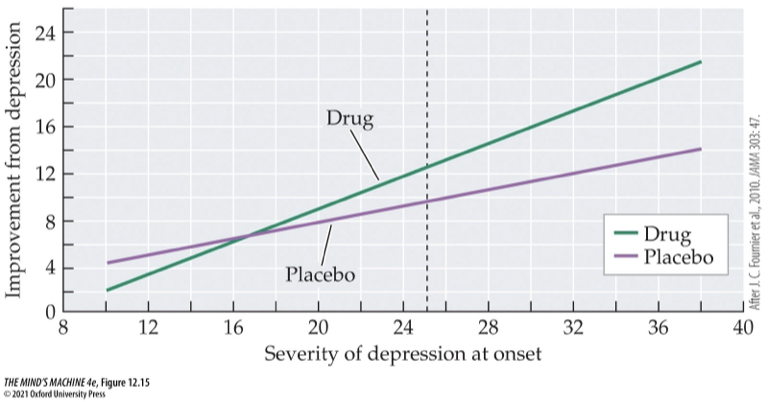
Issues with drug treatments
Problems with idea that reduced serotonin causes depression:
Long lag-time (often weeks) between treatment and reduction of symptoms
Not everyone responds to SSRIs
Some SSRI benefits are attributable to placebo effect
Genes
Moderate heritability, increases as function of severity
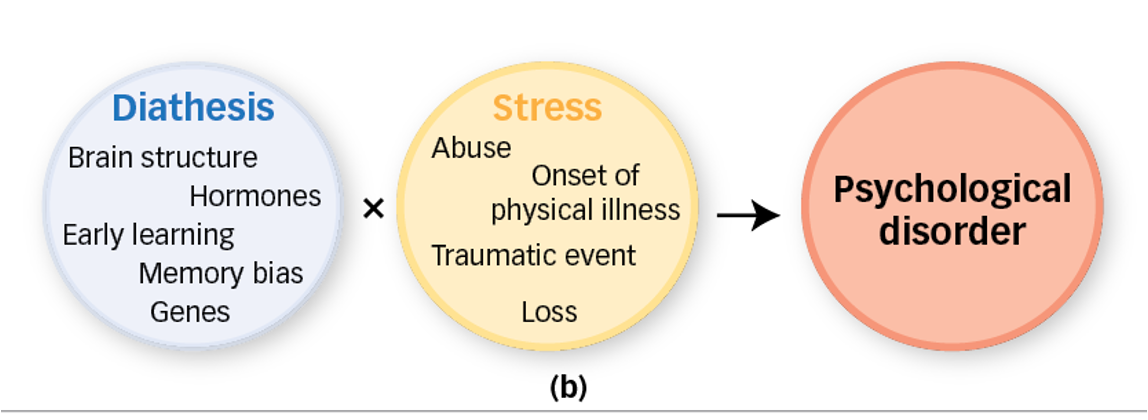
Diathesis–stress model; influence of major stressful life events
Internal predisposition + external stress
Diathesis-stress model
person may be predisposed to a mental disorder that remains unexpressed until triggered by stress
Serotonin transporter gene
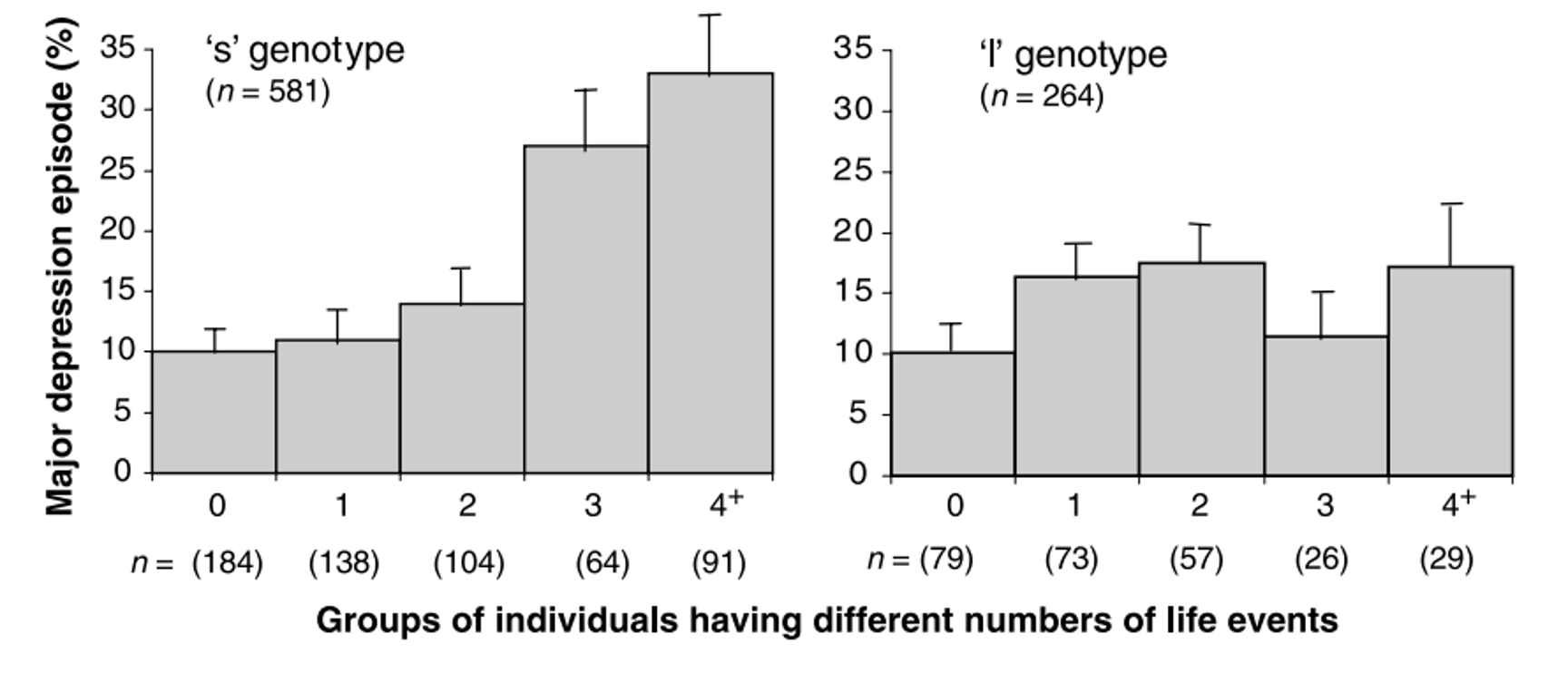
5-HTTLPR
Short allele
linked to increased risk of depression (one or two copies)
Long allele
Better serotonin regulation
Environmental factor
major life stress
Allele impact
Short alleles + more stressful life events cause more major depressive episodes.
More long alleles + more stressful life events are stable.
Aaron Beck (1967)
Noted dysfunctional attitudes and negative mood states in people who were depressed - developed a cognitive model of depression
Helplessness theory
people prone to depression automatically attribute negative experiences to causes that are internal, stable, and global.
Negative thought pattern
Student at risk for depression
Receives poor grade on exam
Views grade as sign of low intelligence (internal)
Will never change (stable)
Will lead to failure on all future endeavors (global)
Negative cognitions
“I am no good at anything”
Negative emotions
Experiencing sadness or depression
Negative behaviors toward others
Such as being gloomy and having no fun
Negative responses from others
Such as being avoided by them