B1.1 Carbohydrates and lipids
 Call Kai
 Learn
Learn Practice Test
 Spaced Repetition
 Match
Match Flashcards
 Knowt Play
1/32

There's no tags or description
Looks like no tags are added yet.
Name | Mastery | Learn | Test | Matching | Spaced | Call with Kai |
|---|
No analytics yet
Send a link to your students to track their progress
33 Terms
production of macromolecules
condensation reactions that link monomers to form a polymer
monomer
smallest repeating unit
polymer
a long continious chain of monomers
digestion of polymers
polymers break down into monomers by hydrolysis reaction
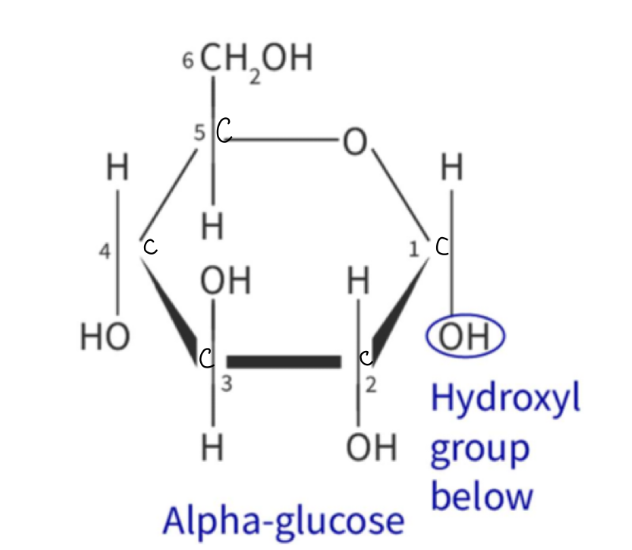
alpha glucose
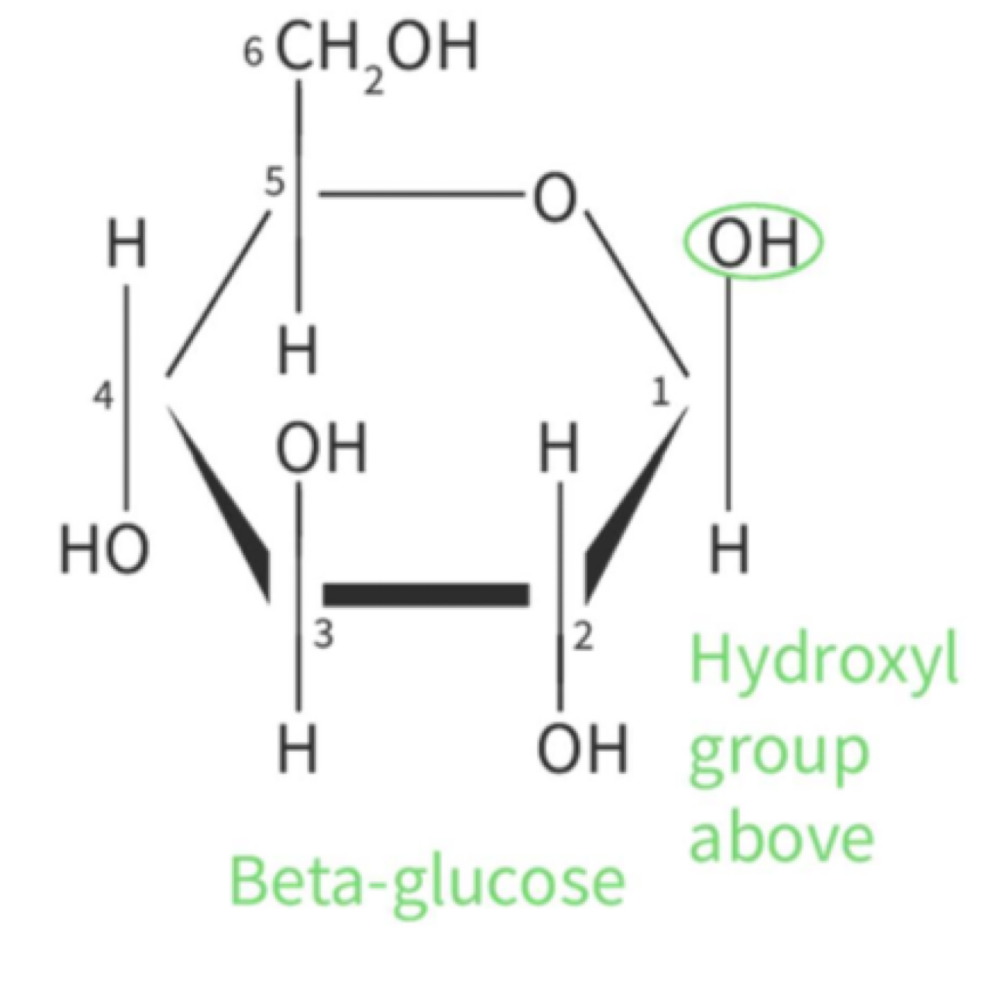
beta glucose
glucose (monosaccharide) properties
small and soluble → can be readily transported, dissolved in blood plasma, selectively reabsorbed in tubule
chemically stable → can be stored in cells, converted to starch/glycogen so it doesn’t affect osmosis
releases large amount of energy when oxidise → used in respiration
alpha glucose condensation reaction
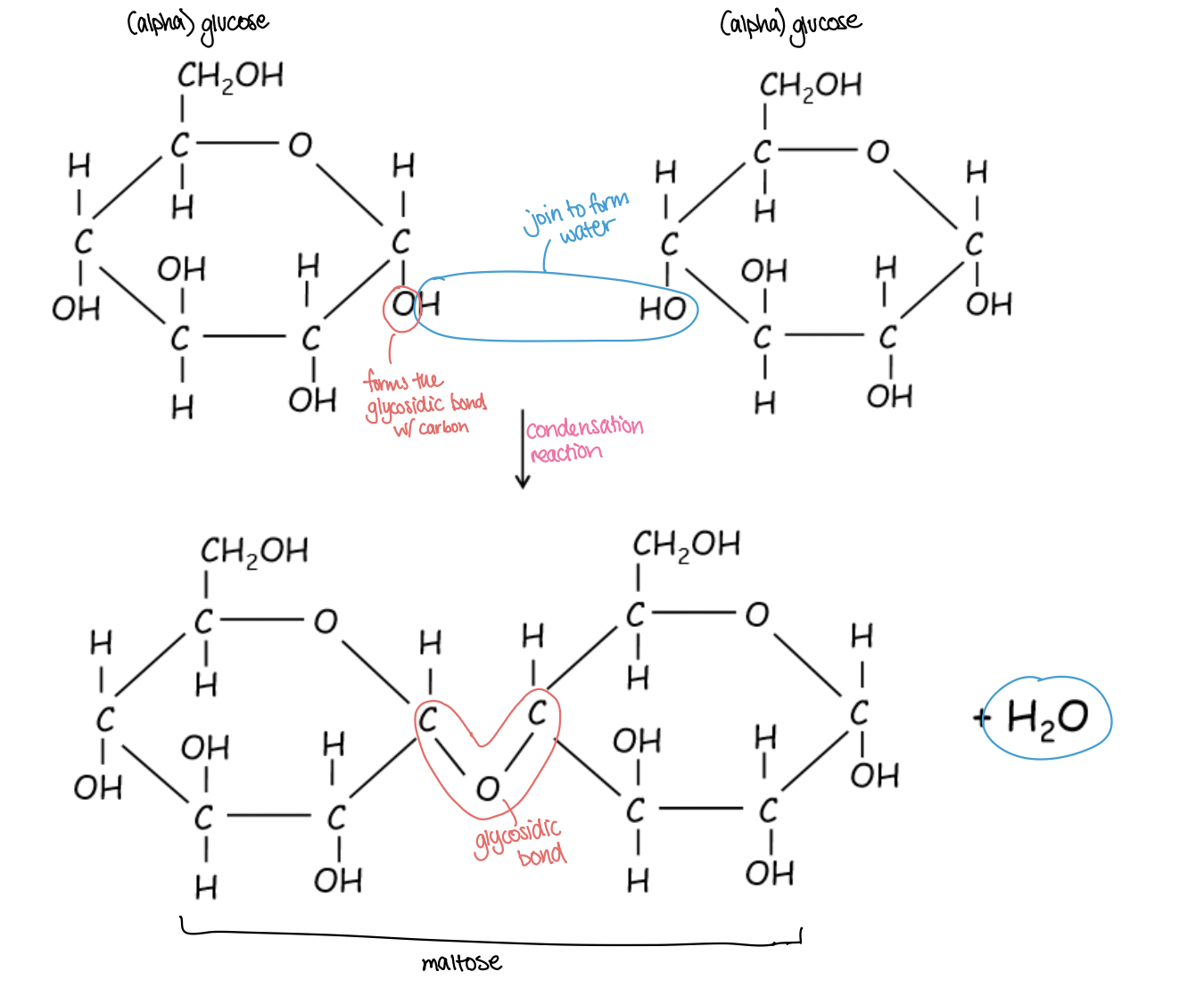
glucose + glucose →
glucose + fructose →
glucose + galactose →
maltose
sucrose
lactose
polysaccharisdes
polymers made of simple sugar monomers joined by glycosidic bonds
do not dissolve or taste sweet
energy storage molecules within cells
starch
monomer: alpha glucose
storage carbohydrate in plants
metabolically un-reactive and insoluble - does not affect osmosis
easy to add or remove glucose molecules to
made of amylose and amylopectin
amylopectin
polymer of glucose
1,4 and 1,6 glycosidic bonds, branches (hydrolysed rapidly)
amylose
polymer of glucose
1,4 glycosidic bonds
helical shape
glycogen
monomer: alpha glucose
bacteria, fungi and animals store glycogen instead of starch
highly branched (more so than amylopectin)
1,4 and 1,6 glycosidic bonds
stored in human liver and muscles
can be hydrolysed to break glucose molecules off to be used in respiration
easy to add or remove extra glucose molecules to starch
cellulose
monomer: beta glucose
glucose monomers in un-branched long straight chains
parallel chains held together in fibres by hydrogen bonds
orientation of glucose molecules alternates
bundles of cross linked chains are called microfibrils
indigestible, gives the muscles of the gut something to push against and therefore prevents constipation
found in plant cell walls, enormous tensile strength so provides structural support
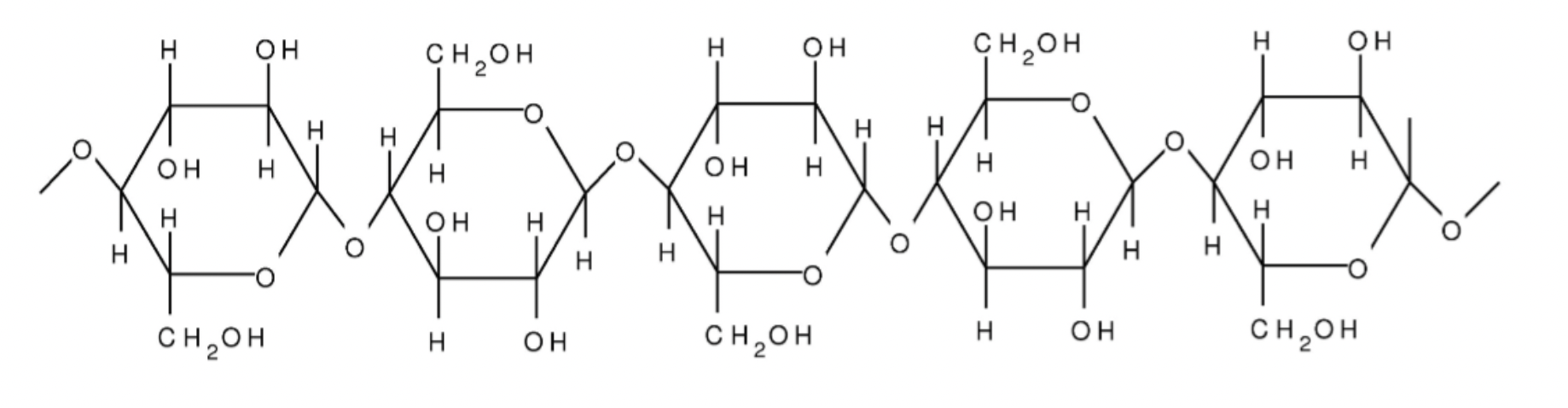
starch and glucose
compact and coiled → lots of storage, carbohydrates can fit in the cell - needed for respiration
glycoproteins
a protein molecule with a carbohydrate chain attached
glycolipids
a lipid molecule with a carbohydrate chain attached
role of glycoproteins
used in cell recognition
cells in the body can be recognised as self or non-self by glycoproteins on the cell membrane
ABO glycoproteins on red blood cells
red blood cells have glycoproteins (antigens) on their cell membranes
ABO antigens are involved in cell-cell recognition during blood transfusions and organ transplants and must match between the donor and recipient
Type A → A antigens, B antibodies, can receive A and O, cannot receive A or AB
Type B → B antigens, A antibodies, can receive B and O, cannot receive B or AB
Type AB → A and B antigens, no antibodies, can receive A, B, AB and O (universal recipient)
Type O → no antigens, A and B antibodies, can only receive O (universal donor)
lipids
insoluble in water, non polar and hydrophobic molecules
soluble in organic solvents such as ethanol
triglyceride
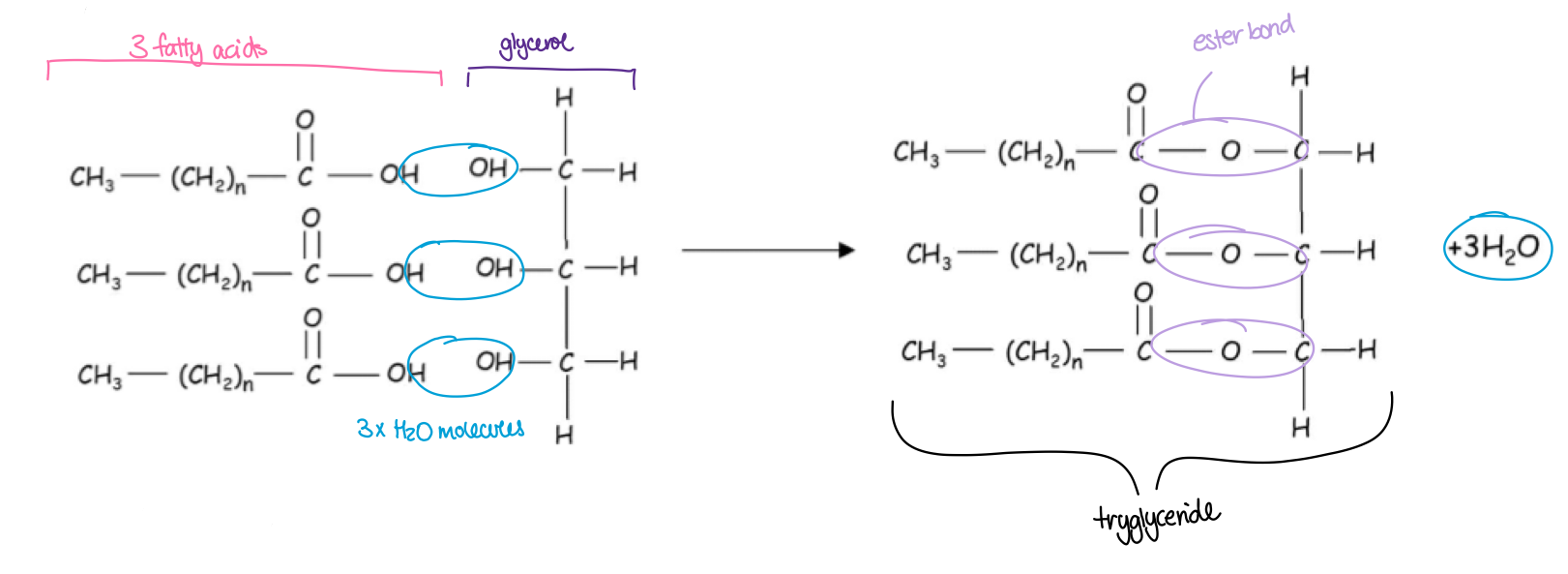
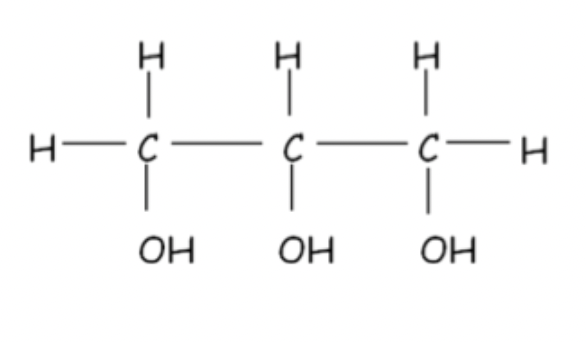
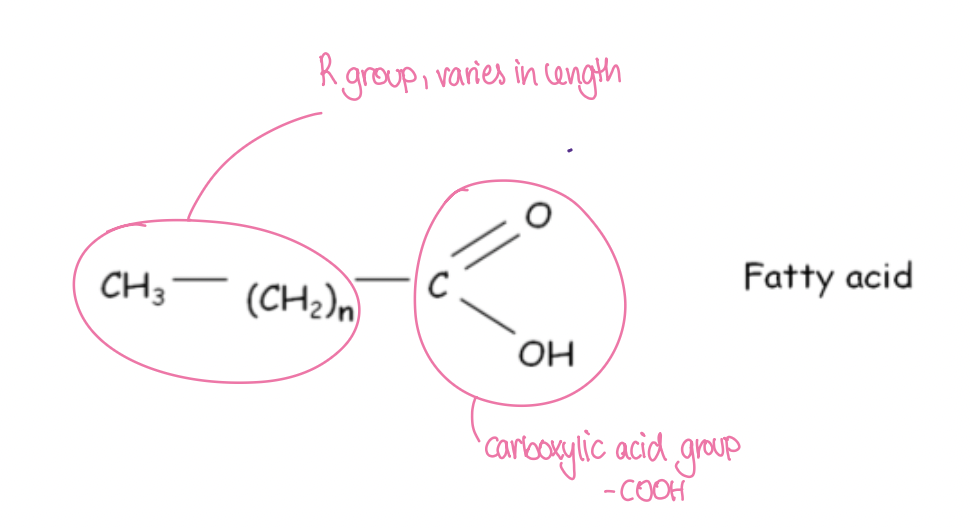
made of one glycerol and three fatty acid molecules in a condensation reaction
glycerol
fatty acid
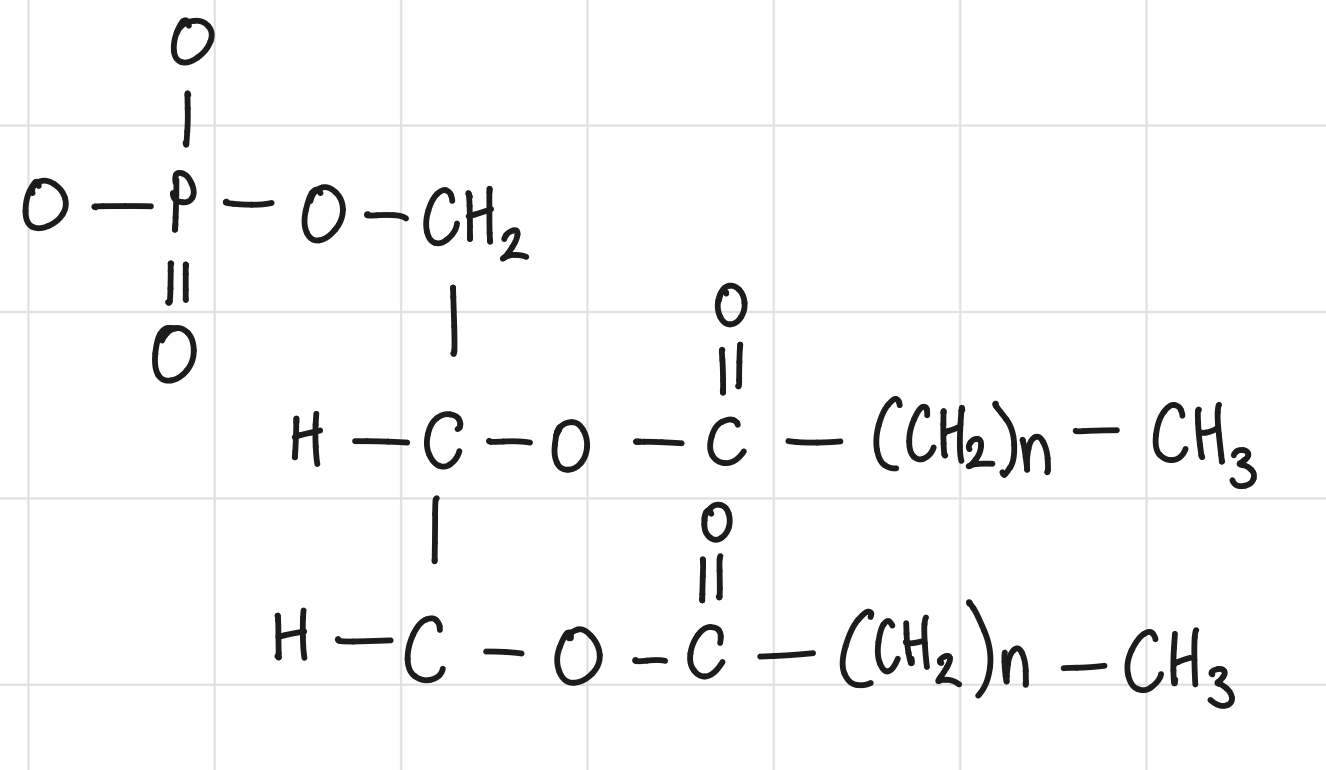
phospholipid
amphipathic molecules (both hydrophobic and hydrophilic in nature)
hydrophilic phosphate heads
hydrophobic fatty acid tails
naturally form continuous bilayers in water
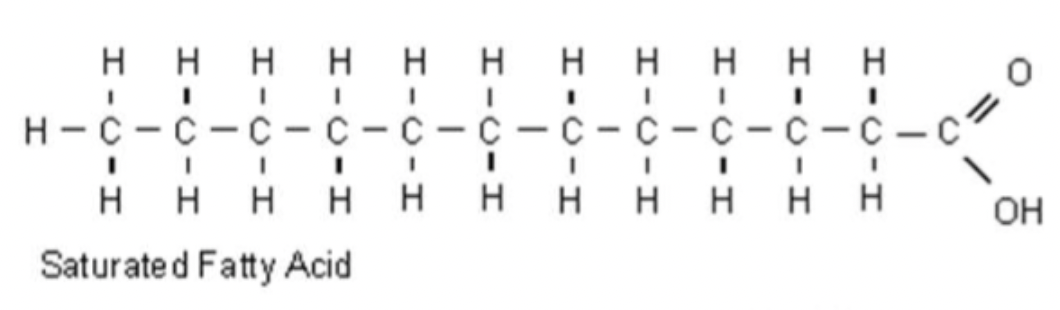
saturated fatty acids
no C=C double bonds
saturated with hydrogen
straight chained
can be tightly packed - high melting point
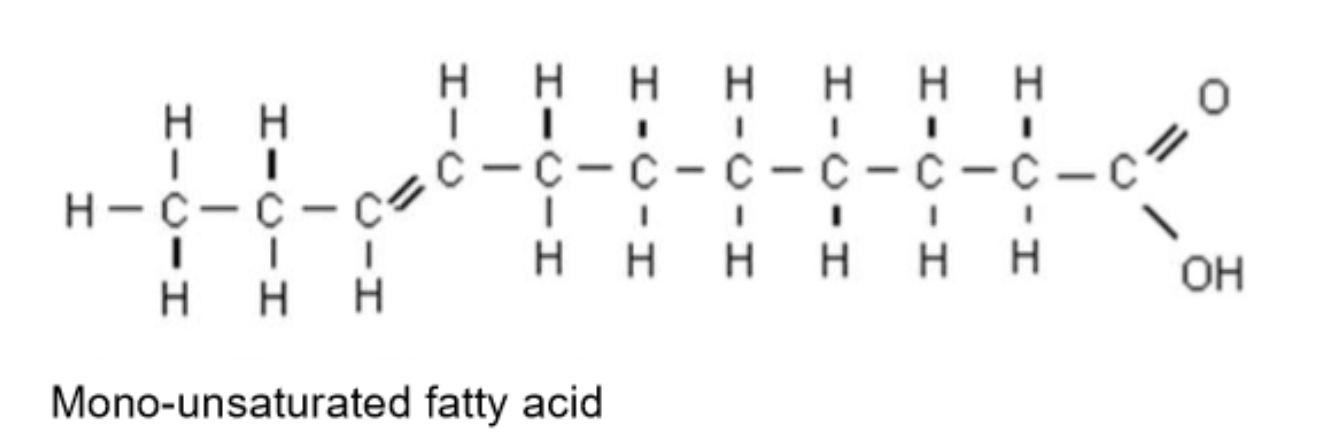
mono-unsaturated fatty acid
one C=C double bond
slightly bent chain
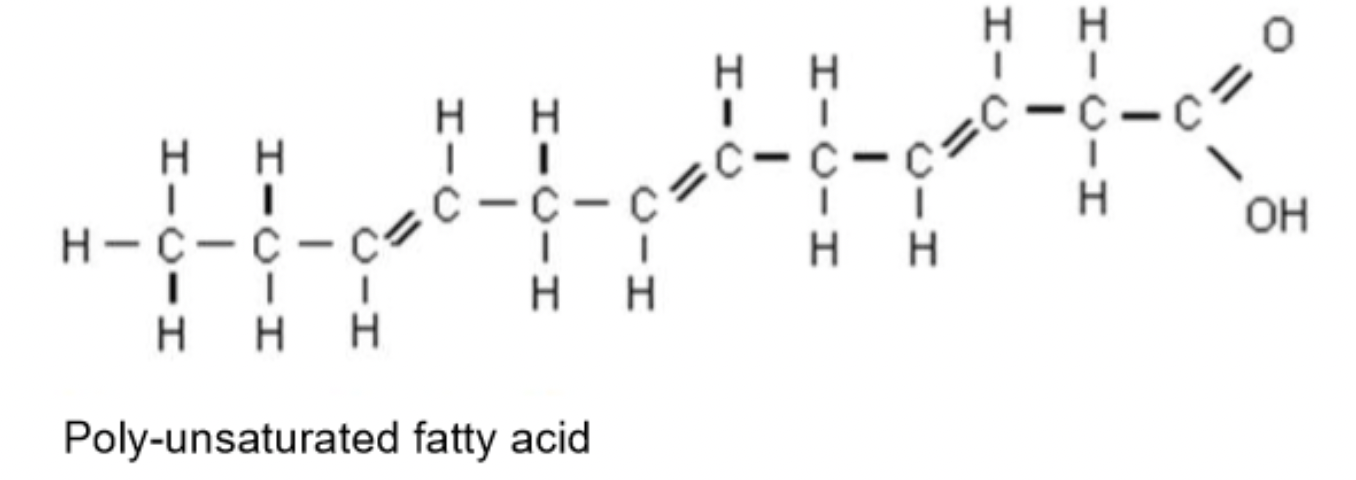
poly-unsaturated fatty acid
more than one C=C double bonds
bent/kinky chain
loosely packed/cannot be tightly packed - lower melting point
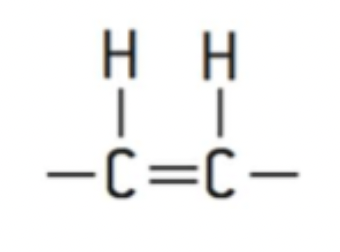
cis unsaturated fatty acids
cis configuration means adjacent hydrogen atoms are on the same side of double bond
causes the chain to bend and restrict freedom
loosely packed and liquid at room temperature (vegetable oil)
trans unsaturated fatty acids
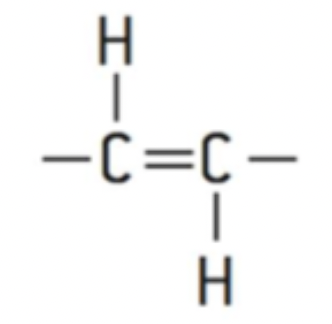
trans configuration means hydrogen atoms are bound to opposite sides of double bond
do not bend as much, shape is similar to straight saturated fatty acids
can be closely packed, usually solid at room temperature (margarine)
function of lipids in living organisms
phospholipids as main component of cell membranes
steroids involved in hormonal signalling
fats in animals as heat insulators
sphingolipids in myelin sheath as electrical insulators
triglycerides form tissue around key internal organs for protection against injury
triglycerides used in long term energy storage
lipid as energy store
stored in specialised groups of cells called adipose tissue
adipose tissue is located immediately under the skin and also around organs
lipids are chemically stable molecules
the amount of energy released in cell respiration per gram of lipids is double that for carbohydrates
contribute less to body mass than carbohydrates, critical for active animals (bats)
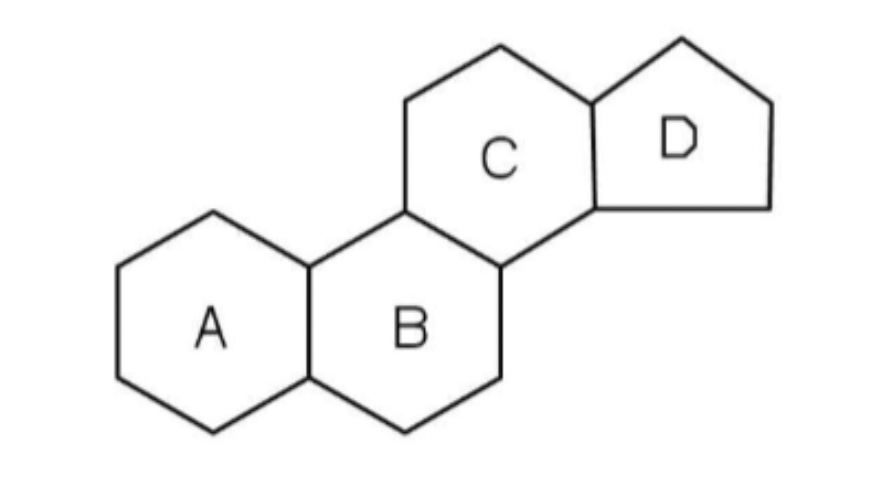
steroids
non-polar/hydrophobic, can pass through phospholipid bilayer
are a different group of lipids
all have similar 4 ring structure
e.g. oestradiol, testosterone