Geo Lecture 12
 Call Kai
 Learn
Learn Practice Test
 Spaced Repetition
 Match
Match Flashcards
 Knowt Play
1/26

There's no tags or description
Looks like no tags are added yet.
Name | Mastery | Learn | Test | Matching | Spaced | Call with Kai |
|---|
No analytics yet
Send a link to your students to track their progress
27 Terms
What is soil?
A zone of fine material at the earth’s surface composed of minerals and organic matter
What is Pedology and edaphology? How is soil studied?
The study of soil. Farmers, however, focus more on edaphology (which emphasizes the fertility and productivity of soils)
Soils are studied by examining their vertical profile.
A soil profile extends from the surface to the deepest extent of plant roots or to the point where regolith ot bedrock is encountered.
Pedon - A three-dimensional representation of a soil profile.
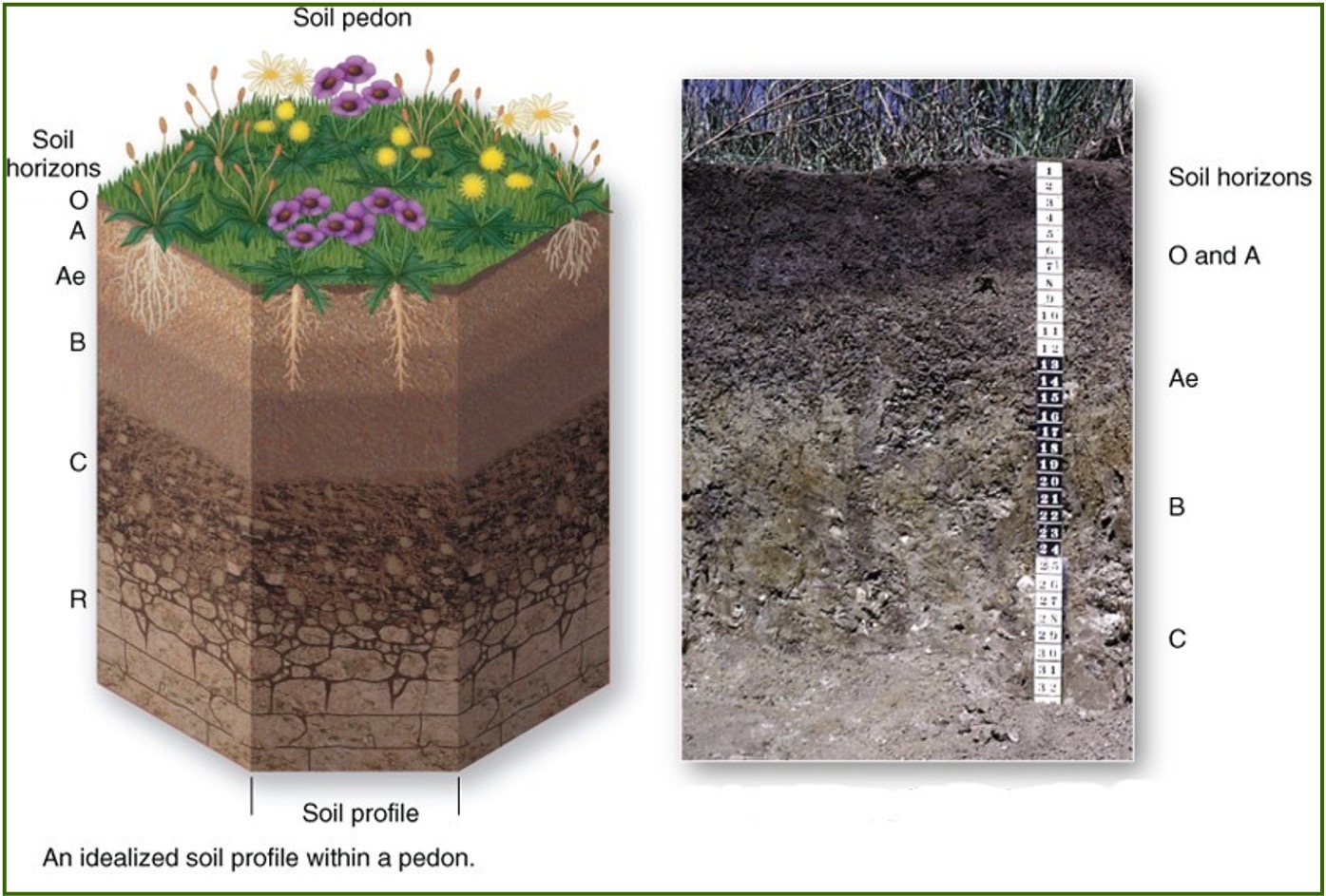
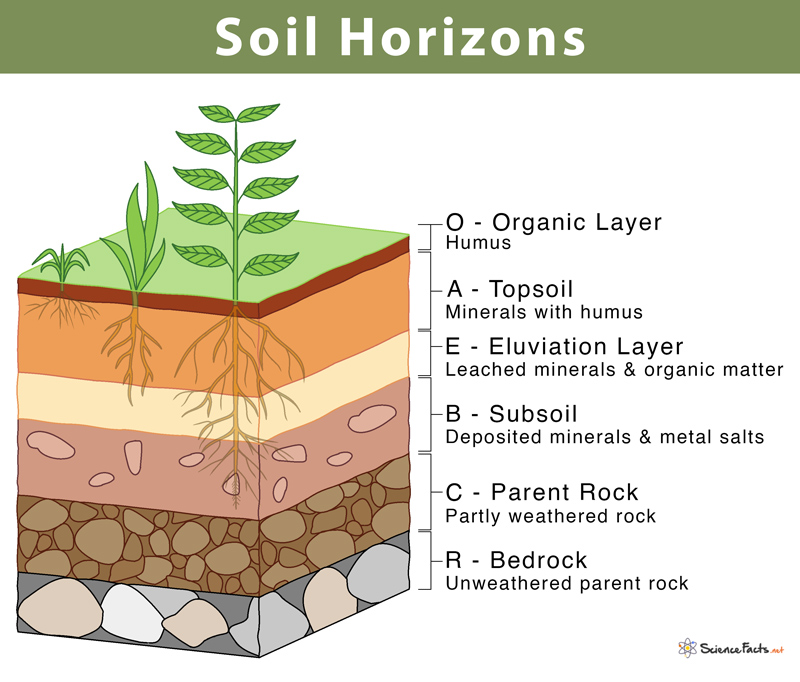
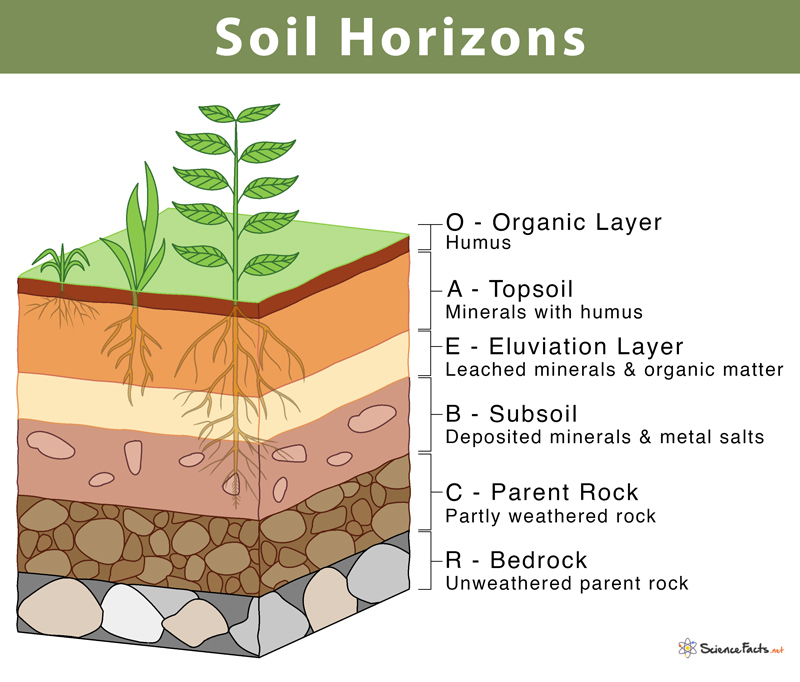
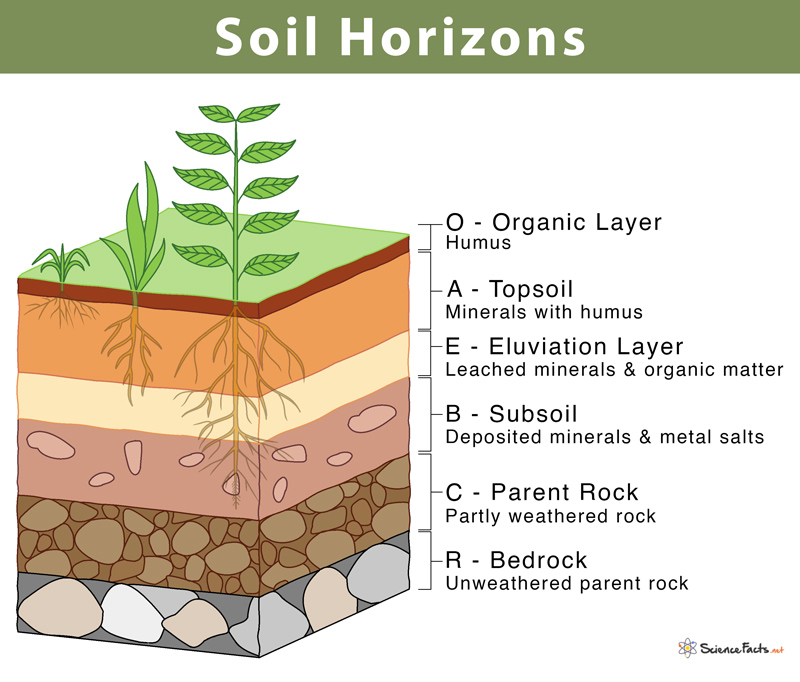
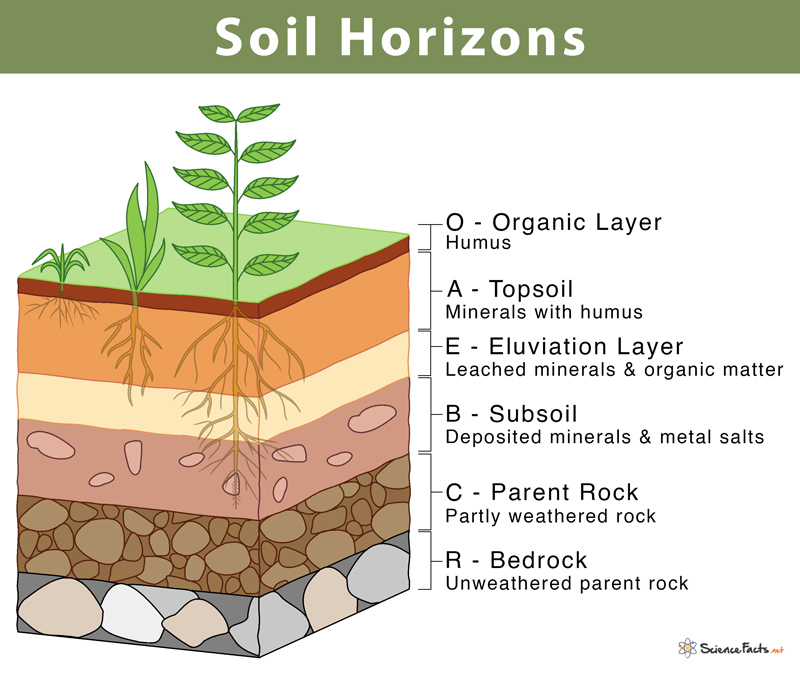
What are Soil Horizons? (OAEBCR)
Layers of the soil; they are classified into six layers that are roughly parallel to the surface. They are distinguishable by colour, texture, etc. There are six categories:
O horizon
A horizon
E horizon
B horizon
C horizon
R horizon
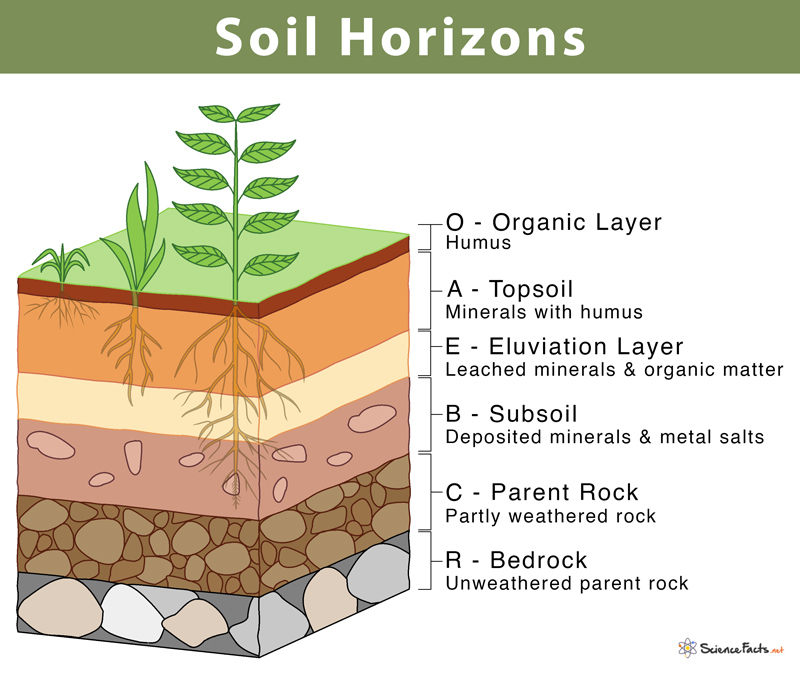
What is the O horizon?
Located at the top of the soil profile and is named for its organic content.
Contains high content of humus (mixture of organic debris), micro-organisms, and leaf litter. It easily retains water and nutrients.
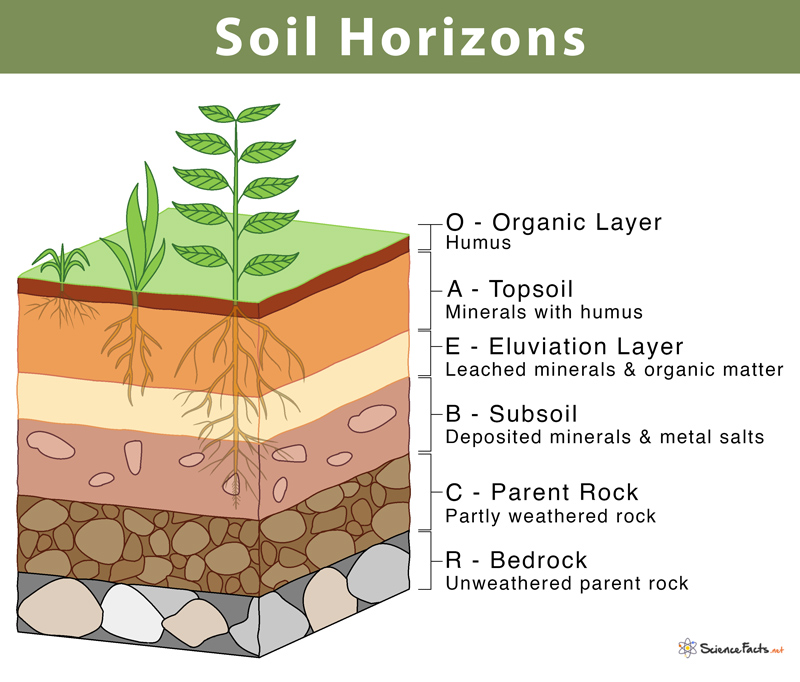
What is the A horizon?
Relatively dark in colour, especially near the top due to organic material, but becomes lighter with depth.
Commonly referred to as topsoil. Human disruptions take place throughout this layer.
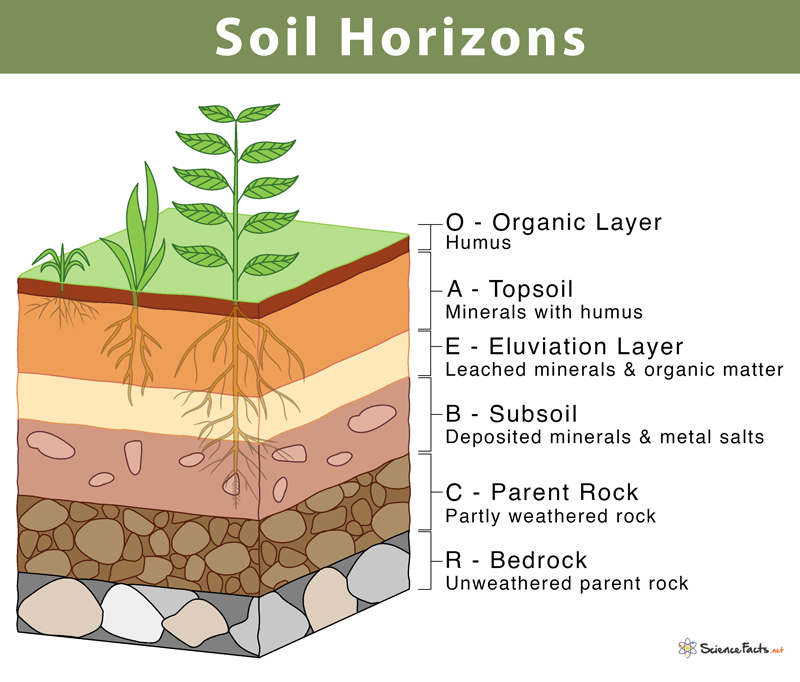
What is the Ae horizon?
topsoil layer that has started to lose material due to percolating water tending to remove fine particles and minerals leaving behind coarse and silt.
The ‘e’ in the horizon name stands for eluviation.
What is the B horizon?
a layer characterized by the accumulation of clay, aluminum, and iron from leaching from the A and Ae horizons in a process called illuviation.
May appear yellowish or reddish because of these materials.
Illuviation - a depositional process (whereas eluviation is an erosional process).
What is the C horizon?
Area composed of weathered bedrock and regolith; it lies below the zone of plant roots and micro-organism habitat.
It lacks clay and is generally composed of carbonates, iron, or silica.
These can form cementing agents which causes the hardening of the layer.
What is the R horizon?
It is the bottom layer of the soil profile; named for its high rock content.
How is soil produced? (VAB)
The factors determining the organic content of soil are vegetation, animal activity, and bacteria.
The chemical characteristics of vegetation may contribute to soil activity.
On hillsides, soil layers are thinner because soil moves downhill, causing differences in soil across the landscape.
How is soil colour classified?
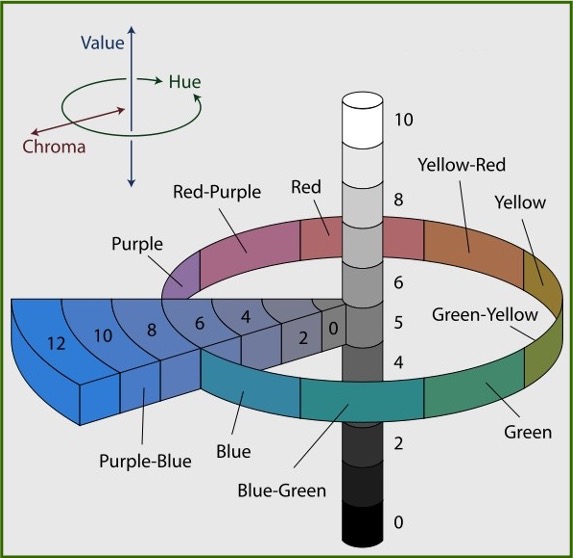
On the Munsell soil colour chart. Done by examining three characteristics:
Hue - dominant spectral colour
Value - degree of darkness or lightness
Chroma - the purity of the colour
What is soil texture? (SSC)
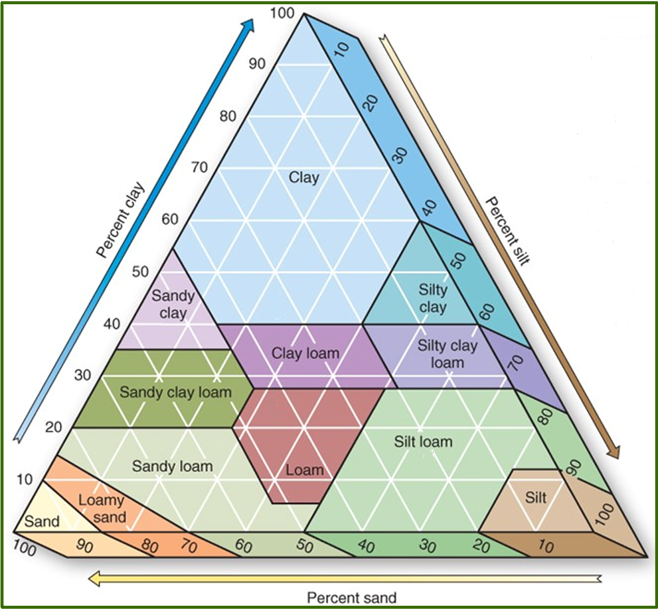
Refers to the size of soil particles and the proportions of different sizes. Any particle less than 2 mm in diameter is considered part of the soil.
Sands are coarse to medium to fine, silt is finer, and clay is finer still.
Soil texture is determined from a soil texture triangle.
What is soil structure? (GPBC)
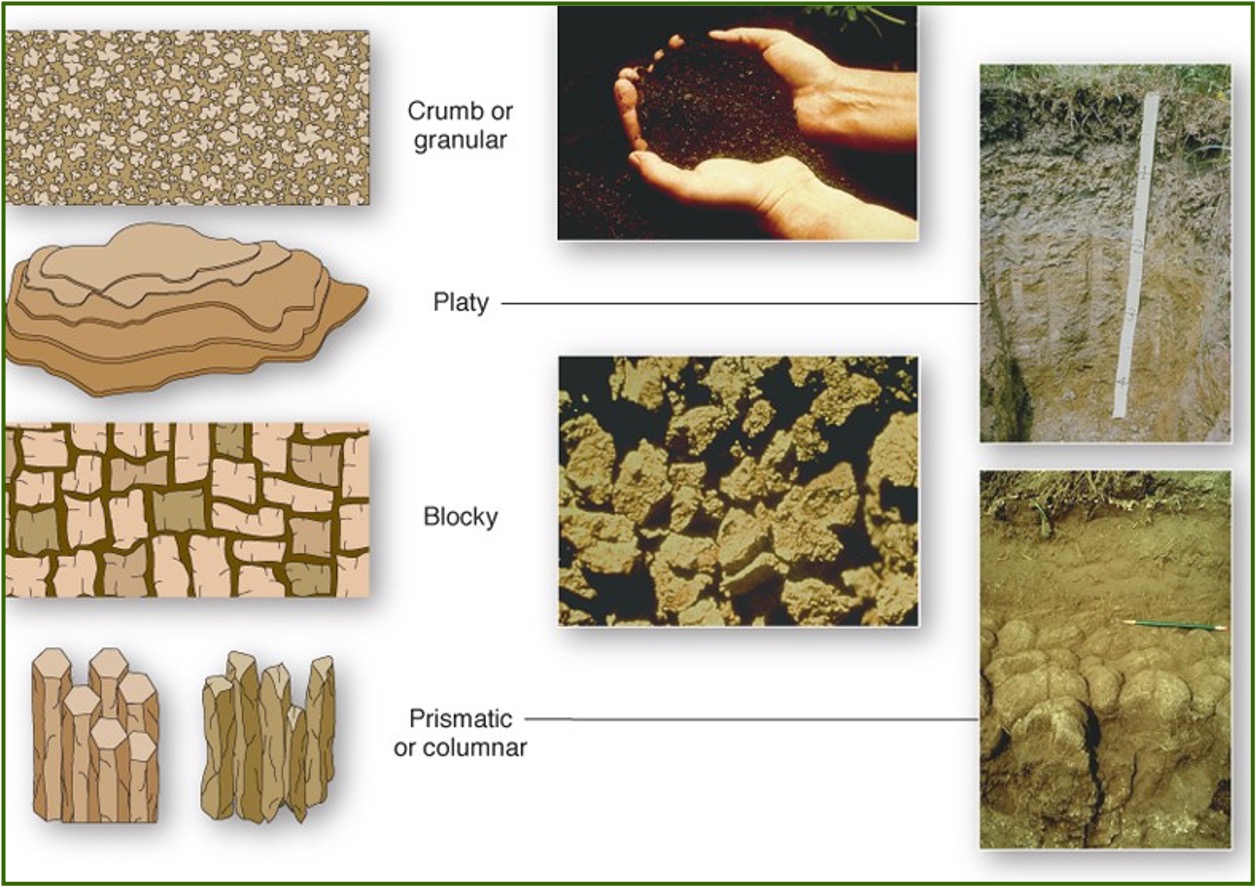
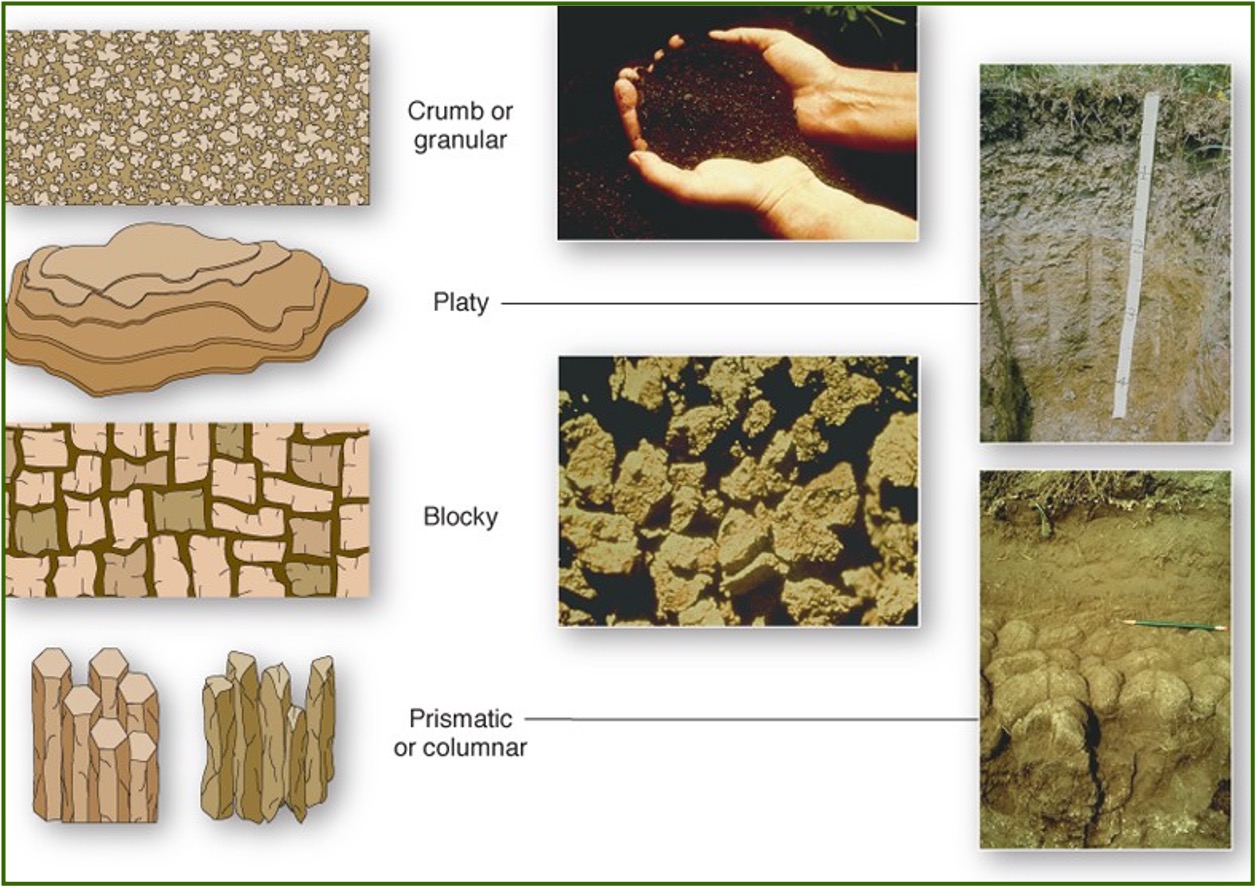
Structure - refers to the shape and arrangement of structures; it is analyzed by examining a ped (a cluster of soil particles).
The shape of soil peds determines the four possible soil structures:
Granular, platy, blocky, and columnar.
What is soil consistency?
Consistency - refers to the cohesion of soil particles, specifically the resistance to breakage and manipulation.
It can vary depending on moisture, texture, and structure.
It can be described as sticky/wet, loose/crushable, etc.
What is soil porosity and bioturbation?
Refers to the air spaces within a soil. Pores in the soil control the vertical movement of water. Porosity is increased by the presence of plant roots and tunnelling activity of gophers and worms.
The mixing of soil by animals is called bioturbation.
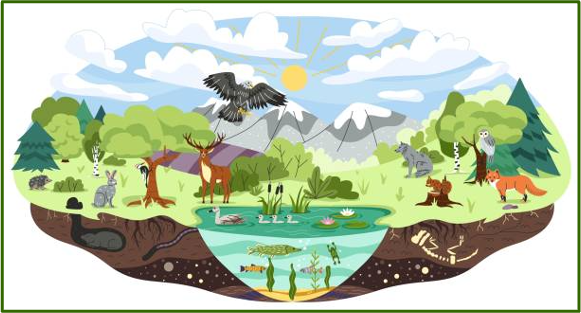
What is the biosphere?
Made up of the portions of the lithosphere, atmosphere, and hydrosphere that function together to support life.
It extends from the ocean floor to an altitude of 8 km in the atmosphere.
What is ecology vs biogeography?
Ecology - the study of the relationships between organisms and their environment
Biogeography - the study of the spatial distribution of plants and animals.
What are the components of ecosystems?
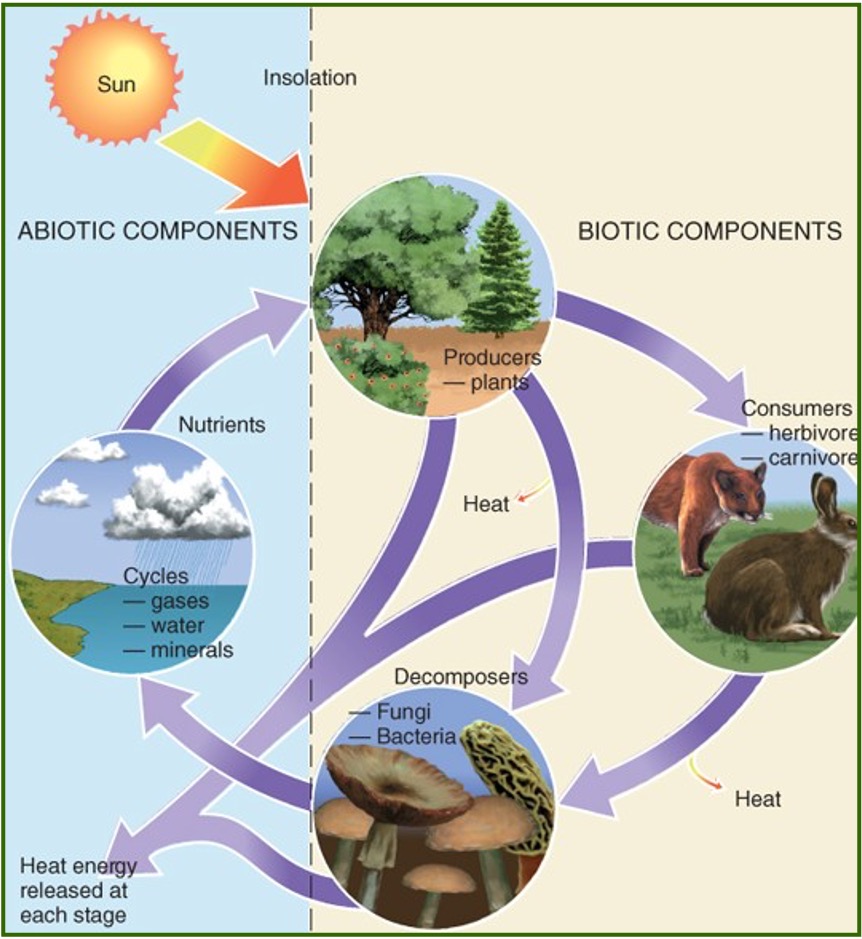
Ecosystems consist of biotic (living) and abiotic (non-living) components.
Biotic components - include producers, consumers, and decomposers.
Abiotic components - include gaseous cycles, hydrologic cycles, and mineral cycles.
What does an ecosystem consist of? (HN)
Many interactions among communities, with examples being forest canopy and ocean floor.
Habitat - the physical location to which an organism is suited.
Niche - the function or role of an organism within the ecosystem.
What are symbiotic relationships? (MP)
A close, long-term biological interaction between two organisms of different species. There are different types of symbiotic relationships:
Mutualistic - both organisms benefit and the relationship is sustained
Parasitic - where one organism benefits, but the other does not.
What are Deadzones?
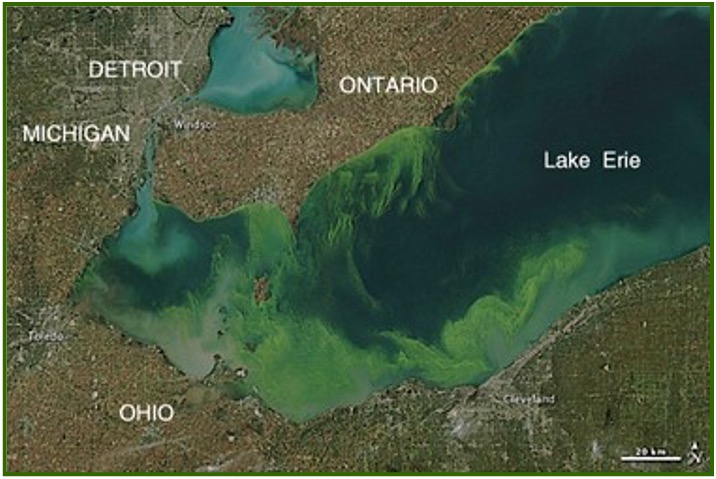
Areas that develop in lakes or seas when nitrogen and phosphorus (from agricultural fertilizers) promote the growth of algae.
Bacteria feed on algae and deplete the water of oxygen.
What is a limiting factor?
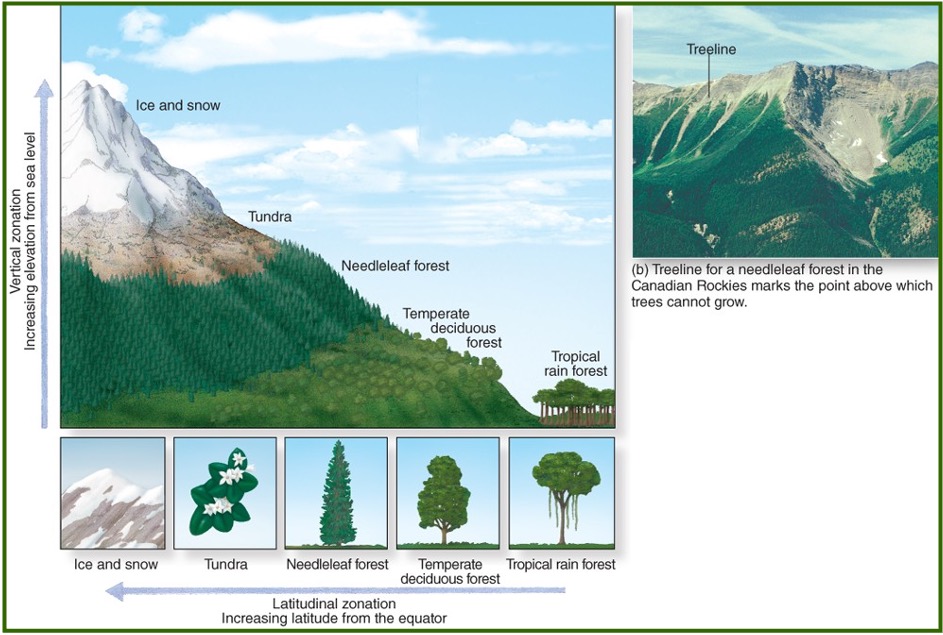
A abiotic component of an ecosystem that inhibits some biotic operations by affecting certain species. They also affect the biogeography of places. Examples include:
Temperatures below freezing
High salinity levels of water
Low nutrient content of the soil.
Explain how a Biotic Ecosystem operates
Energy within an ecosystem is constantly being replenished by the sun; nutrients and minerals are not replenished by an external source. Rather, they cycle through an ecosystem among 3 categories of organisms:
Producer (autotroph) - organism that uses CO2 as its only source of carbon (photosynthesis), providing its own nourishment.
Consumer (heterotroph) - organism that depends on producers for its source of nutrients.
Decomposer - bacteria and fungi that digest organic debris and absorb and release nutrients.
Outline food pathways within an ecosystem
Food chain - a one-directional flow of energy where the flow extends from producers to consumers to decomposers.
Food web - a complex network of interconnected food chains.
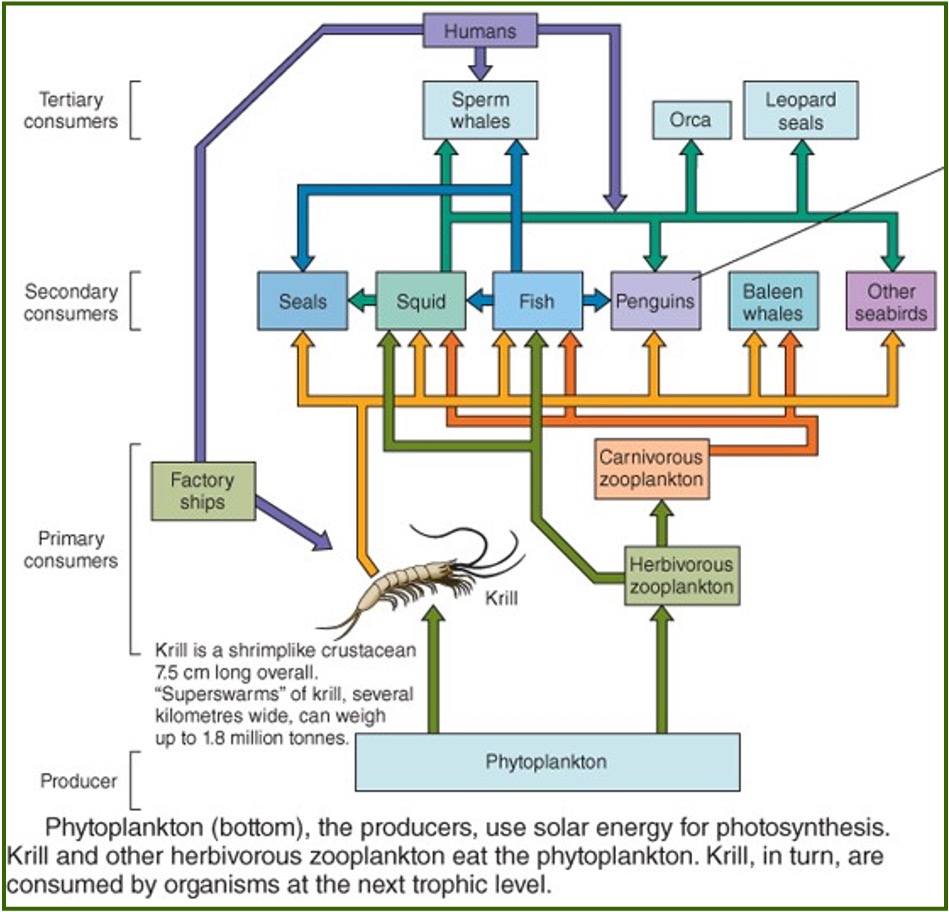
Identify the 3 types of consumers
Herbivore - an organism which only eats plants (primary)
Carnivore - an organism which only eats meat (secondary)
Omnivore - an organism that eats both plants and animals (tertiary)
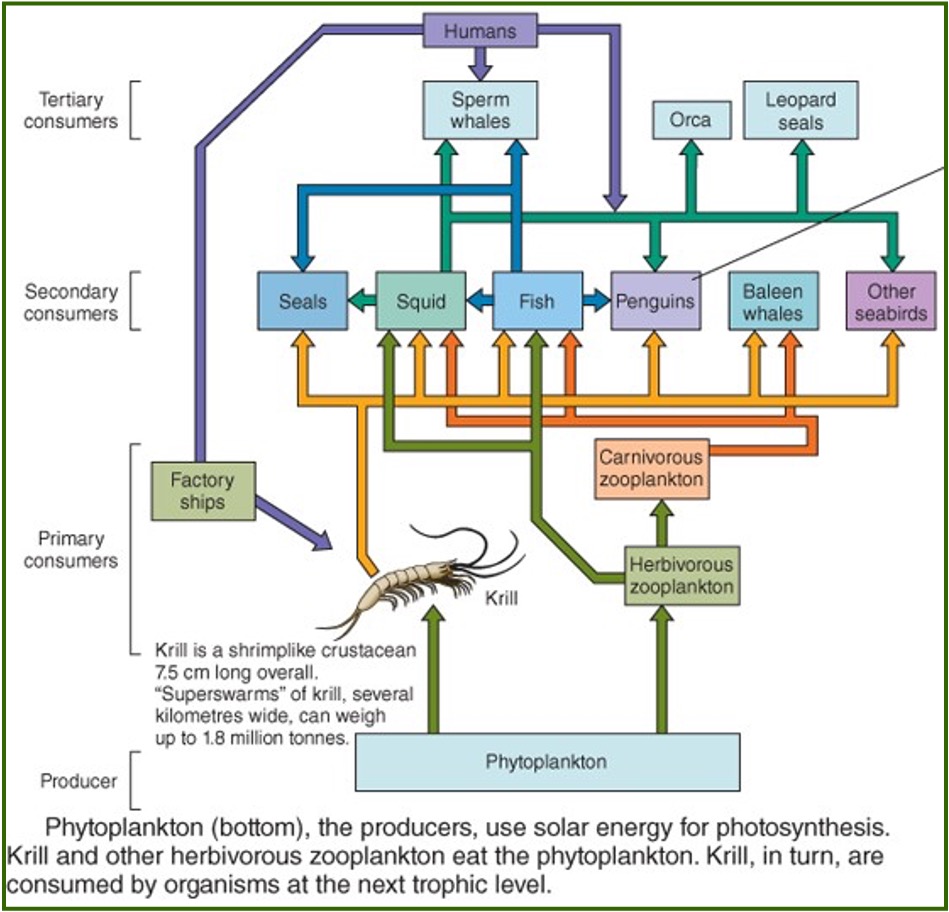
Explain trophic levels
Organisms that share the same basic foods are located at the same trophic level.
1st trophic level: producers
2nd trophic level: primary consumers
3rd trophic level: secondary consumer
4th trophic level: tertiary consumers
Producers - referred to as autotrophs while consumers are referred to as heterotrophs.
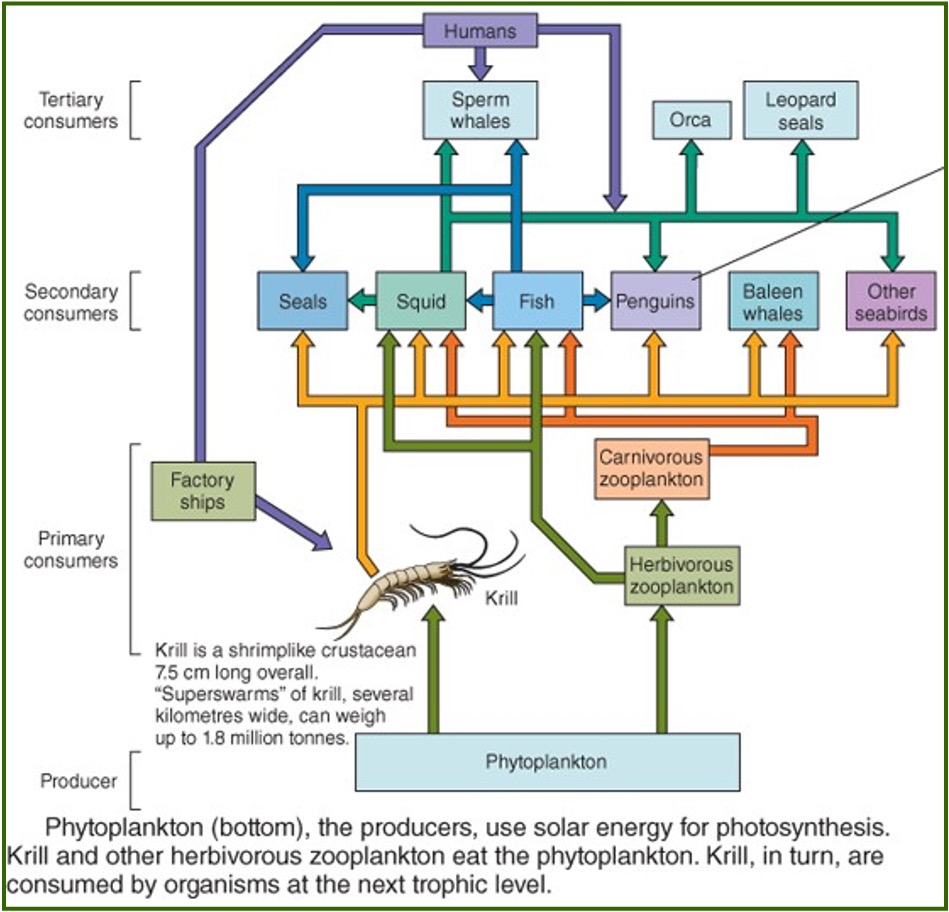
In terms of pollutants and toxins, what is biomagnification and DDT?
Biomagnification - process where toxins become more concentrated at higher levels of a food chain.
DDT - is an example that has been banned in Canada but still used in some developing countries.