SBI3U Biology Exam Review
 Call Kai
 Learn
Learn Practice Test
 Spaced Repetition
 Match
Match Flashcards
 Knowt Play
1/87

There's no tags or description
Looks like no tags are added yet.
Name | Mastery | Learn | Test | Matching | Spaced | Call with Kai |
|---|
No analytics yet
Send a link to your students to track their progress
88 Terms
Kilocalorie (kcal) vs. Calorie (cal)
A kcal raises 1 kg of water by 1°C; a cal raises 1 g.
Three Macronutrients
Carbohydrates, fats/lipids, and proteins.
Two Micronutrients
Vitamins and minerals.
Necessary vs. Essential Nutrients
Necessary are needed to function; essential cannot be made by the body.
Vitamins
Organic compounds (C, H, O, N) that mostly act as coenzymes.
Minerals
Inorganic compounds forming structures, controlling water balance, and regulating cell pH.
Fat-Soluble vs. Water-Soluble Vitamins
Fat-soluble (A, D, E, K) are stored; water-soluble (B, C) are excreted.
Major Minerals vs Trace Minerals
Major minerals are required in large amounts, trace minerals are required in small amounts
LDL vs. HDL Cholesterol
LDL is "bad" cholesterol that clogs arteries; HDL is "good" and clears it.
Mechanical vs. Chemical Digestion
Mechanical physically breaks food down; chemical uses juices to create chyme.
What is the function of saliva?
helps in moistening food for easier swallowing, begins the digestion of carbohydrates with enzymes.
Peristalsis
Rhythmic, wavelike contractions of smooth muscle moving food down the GI tract.
Epiglottis
Flap of cartilage covering the trachea to prevent food entering the lungs.
Gastric Juice Composition
Made of acid, mucus, and enzymes.
Three Parts of the Small Intestine
Duodenum, jejunum, and ileum.
Small Intestine Surface Area
Increased by folds, villi, and microvilli to maximize nutrient absorption.
Functions of the pancreas?
Secretes enzymes for digestion, neutralizes stomach acid, and regulates hormones like insulin.
Bile Function and Storage
Emulsifies fats physically; produced by the liver and stored in the gallbladder.
How do enzymes work?
Substrates fit into the active site of enzymes. The enzyme induces a shape that facilitates the reaction.
The reaction proceeds forming the product(s) for its release
The enzyme returns to its original configuration, ready to facilitate the next reaction.
Gastrin
stimulates gastric juice
secretin
stimulates bicarbonate
CCK
stimulates bile/pancreatic enzymes.
External vs. Internal Respiration
External is gas exchange in alveoli; internal is exchange at cells.
Inhalation Mechanics
Diaphragm/intercostals contract, chest volume increases, generating negative pressure to draw air in.
Exhalation Mechanics
Diaphragm/intercostals relax, chest volume decreases, pressure increases, forcing air out.
Where does gas exchange occur?
in the lungs/alveoli by diffusion
Tidal Volume vs. Vital Capacity
Tidal is normal involuntary breath; vital is maximum air inhaled/exhaled.
Primary Driver of Breathing Rate
Carbon dioxide (CO₂), which forms carbonic acid and lowers blood pH.
Plasma
Protein-rich liquid suspending blood cells and platelets; 90% water.
Three Cellular Elements of Blood
Red blood cells (erythrocytes), white blood cells (leukocytes), and platelets.
Erythrocytes (RBC) Function
Carry oxygen and carbon dioxide using iron-containing hemoglobin.
Leukocytes function
wbc immune defense
Platelets function
initiates blood clotting
Arteries vs. Veins
Arteries are thick, carry oxygen-rich blood away; veins are thin, return oxygen-poor blood.
Why Ventricle Walls Are Thicker
They pump blood long distances to the lungs or body, unlike atria.
Blood Flow Pathway Through Heart
Right atrium → right ventricle → pulmonary artery → lungs → pulmonary vein → left atrium → left ventricle → aorta.
What is the Rhesus factor?
Rh is an inherited protein found on the rbc surface.
What are the valves between the atria and the ventricles?
Atrioventricular (AV) valves
What are the valves between the arteries and the ventricles?
Semilunar valves
Systole vs. Diastole
Systole is cardiac contraction (emptying); diastole is relaxation (filling).
SA Node vs. AV Node
SA node is the pacemaker; AV node signals Purkinje fibers.
What Causes Heart Sounds?
"Lub" is ventricles contracting; "dub" is ventricles relaxing.
Angina vs. Heart Attack
Angina is chest pain from low blood supply; heart attack is muscle death due to oxygen deficiency
What is hypertension
Blood againsts your artery walls is always too high.
what is the normal blood pressure?
Less than 120 mmHg systolic on top and 80 mmHg diastolic on bottom.
Chromatin vs. Chromosome vs. Chromatid
Chromatin is loose DNA; chromosomes are condensed chromatin; chromatids are duplicated chromosomes.
Diploid vs. Haploid
Diploid contains two sets of chromosomes (2n); haploid contains one set (n).
Four Stages of Mitosis (nuclear division)
Prophase (condenses), Metaphase (aligns), Anaphase (separates), Telophase (reforms nuclei).
Interphase
G1 recovers from previous division; just grows
S Phase duplicates copy of DNA
G2 double checks and undergoes a final period of growth
Meiosis Goal
To produce four genetically unique haploid gametes from one diploid cell.
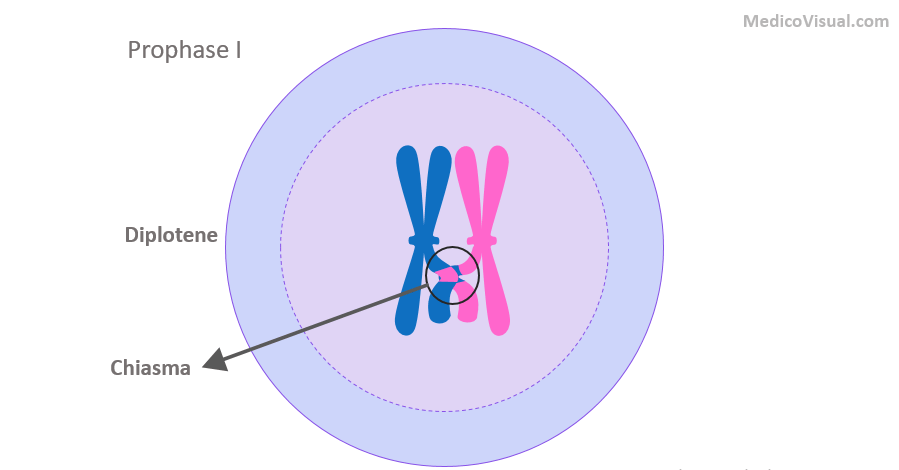
Prophase I
chromosomes find matching partner and cross over
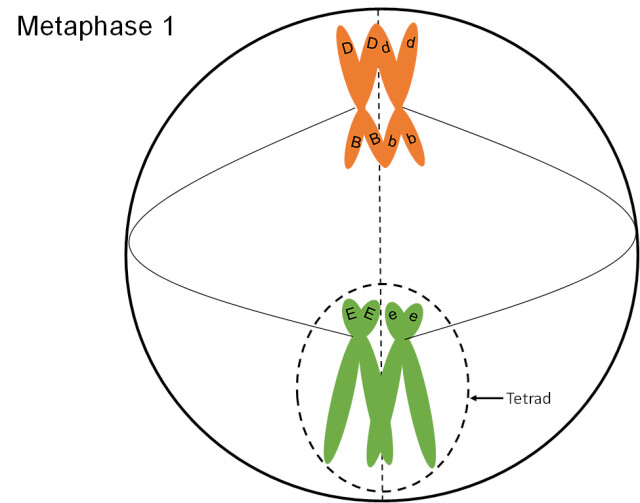
Metaphase I
pairs line up down the middle in 2 straight rows
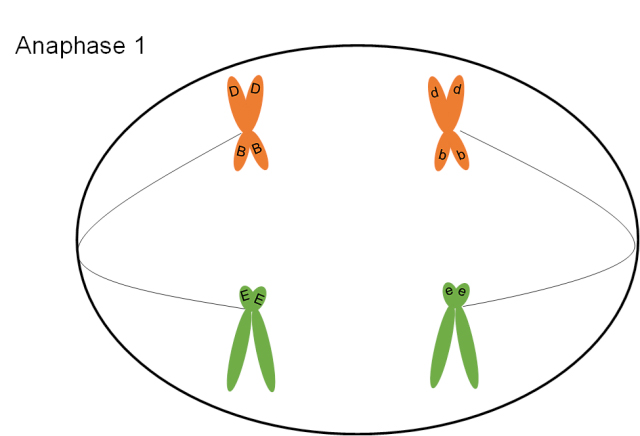
anaphase I
spindle fibers pull replicated chromosomes to opposite sides
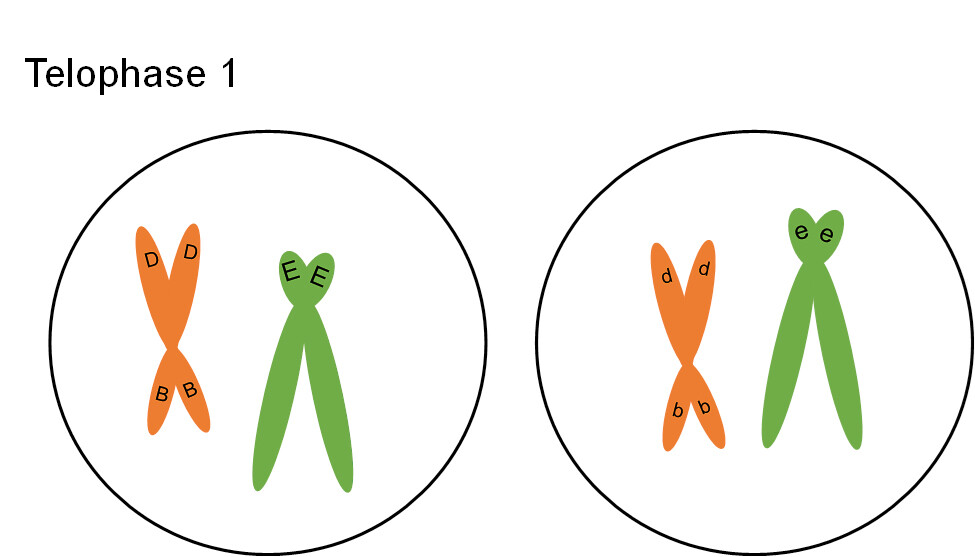
telophase I
original cell becomes 2 cells with replicated chromosomes
prophase II
starts with 2 haploid cells, nuclear membrane disintegrates and new spindle fibers attach
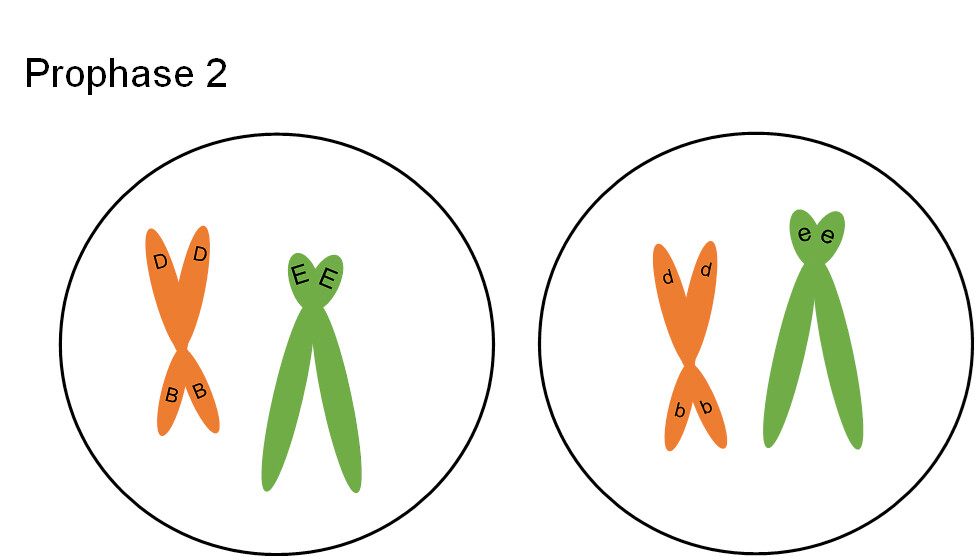
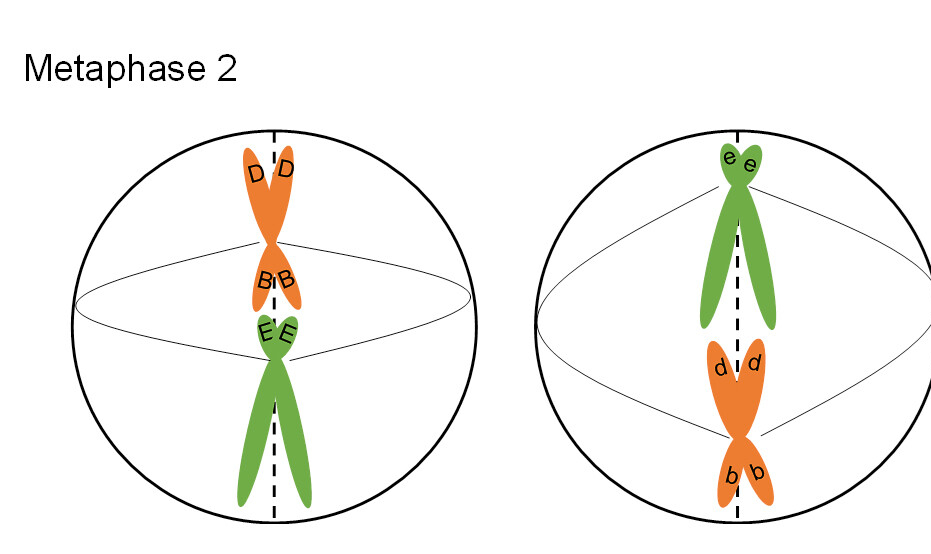
metaphase II
remaining chromosomes line up in a straight row down the center
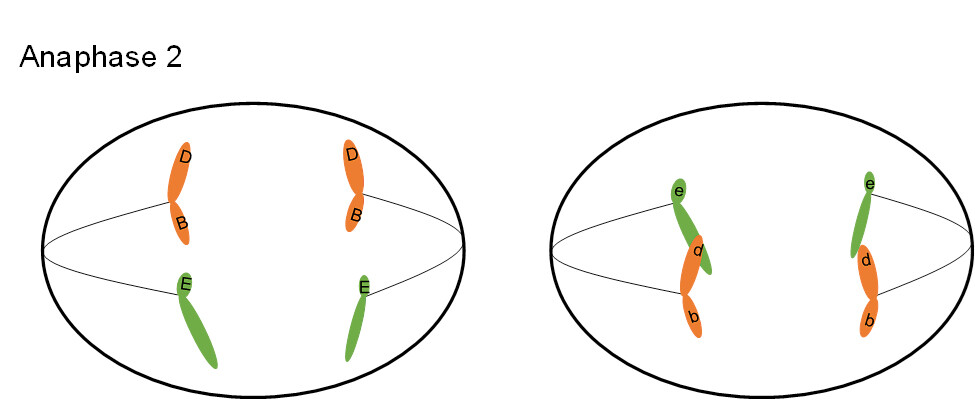
anaphase II
chromosomes look like an X because it is made up of 2 identical copies, cell snaps x in half and pulls copies to opposite sides
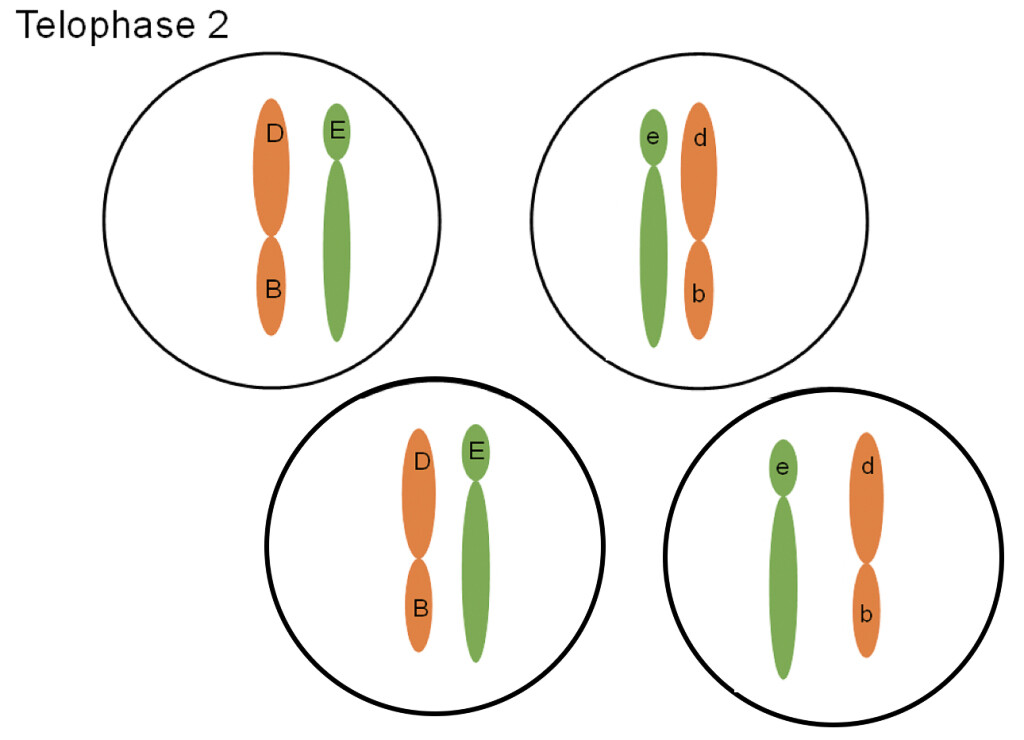
telophase II
2 cells divide into 2 haploid daughter cells; total of 4
Synapsis vs. Crossing Over
Synapsis is homologous pairing; crossing over is homologous chromosomes intertwining and producing genetic recombination during Prophase I.
Spermatogenesis vs. Oogenesis Output
Spermatogenesis yields 4 functional sperm; oogenesis yields 1 functional egg.
Nondisjunction
Failure of chromosomes to separate properly during cell division.
Monosomy vs. Polysomy
Monosomy is missing one chromosome (45); polysomy is having extra chromosomes (47+).
Four Chromosome Structure Abnormalities
Deletion (fragment lost), duplication (extra copies), inversion (reversed), translocation (attached to non-homologous).
Three Types of Asexual Reproduction
Spore formation (bacteria/mold), budding (hydra/potatoes), and fragmentation (sea stars/worms).
Genotype vs. Phenotype
Genotype is genetic makeup (alleles); phenotype is observable physical traits.
Dominant vs Recessive
Dominant main trait expressed that masks the presence of another allele.
Recessive only expressed when you inherit 2 identical copies
Carrier
An individual carrying a recessive allele masked by a dominant allele.
Three Mutation Types
Harmful (disrupts proteins), neutral (no effect), and beneficial (improves traits).
Pedigree
A chart showing the inheritance of a specific trait across generations.
Law of Segregation
Alleles separate during gamete formation so each gamete carries one allele.
Law of Independent Assortment
Genes for different traits segregate independently during gamete formation.
Artificial Selection
Intentional human breeding of organisms for specific desired traits.
Stabilizing, Disruptive, and Directional Selection
Stabilizing favors average; disruptive favors both extremes; directional favors one extreme.
Homologous vs. Analogous Features
Homologous have similar structure/different function; analogous have similar function/different structure.
Vestigial Structures
features that are no longer useful (e.g., appendix).
Genetic Drift vs. Bottleneck Effect
Drift is random allele frequency change; bottleneck is random reduction from catastrophe.
Allopatric vs. Sympatric Speciation
Allopatric occurs via geographic separation; sympatric occurs within the same area.
Prezygotic vs. Postzygotic Barriers
Prezygotic prevents fertilization; postzygotic prevents hybrid survival or reproduction.
What are the prezygotic isolation mechanisms?
Behavioural isolation, temporal isolation, Ecological isolation, Mechanical isolation, Gametic isolation
What are the postzygotic isolation mechanisms?
Zygotic mortality, hybrid inviability
Abiogenesis
The theory that life originated from non-living matter.
Lamarck's Theory of Evolution
Inheritance of acquired traits and development via use and disuse.
Evolutionary Fitness vs. Adaptation
Fitness is reproductive success; adaptation is an inherited trait improving the chances of reproduction/survival.
What is survival of the fittest?
individuals that are best suited for survival; traits that help them survive and reproduce are more likely to pass those traits on to their offspring.
Six Kingdoms of Life
Animalia, Plantae, Fungi, Protista, Archaebacteria, Eubacteria.
Why Viruses are Non-Living
They lack cells, cannot reproduce independently, and require a host.
Lichen Symbiosis
Algae produce food via photosynthesis; fungi provide water, protection, and support.
Plant Adaptations to Land
Waxy cuticles, roots, vascular tissue, and waterless reproduction (seeds/pollen).