Lifespan- Primitive Reflexes
 Call Kai
 Learn
Learn Practice Test
 Spaced Repetition
 Match
Match Flashcards
 Knowt Play
1/69

There's no tags or description
Looks like no tags are added yet.
Name | Mastery | Learn | Test | Matching | Spaced | Call with Kai |
|---|
No analytics yet
Send a link to your students to track their progress
70 Terms
Crossed Extension
noxious stim to sole of foot causes flexion then extension of contralateral leg.
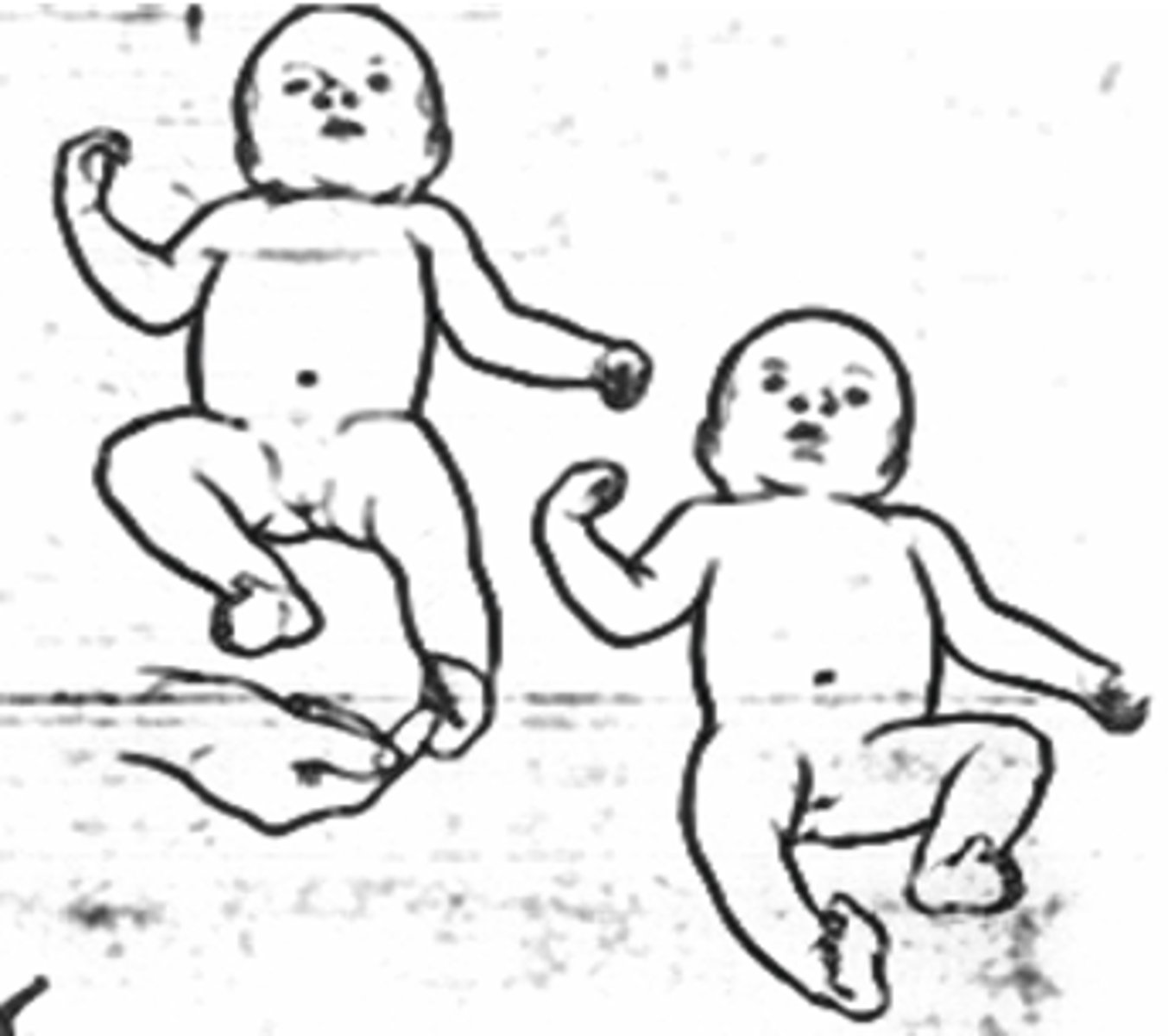
1-2 months
when is the crossed extension reflex integrated
flexor withdrawal
noxious stim to foot causes flexion of knee to withdraw from stimulus
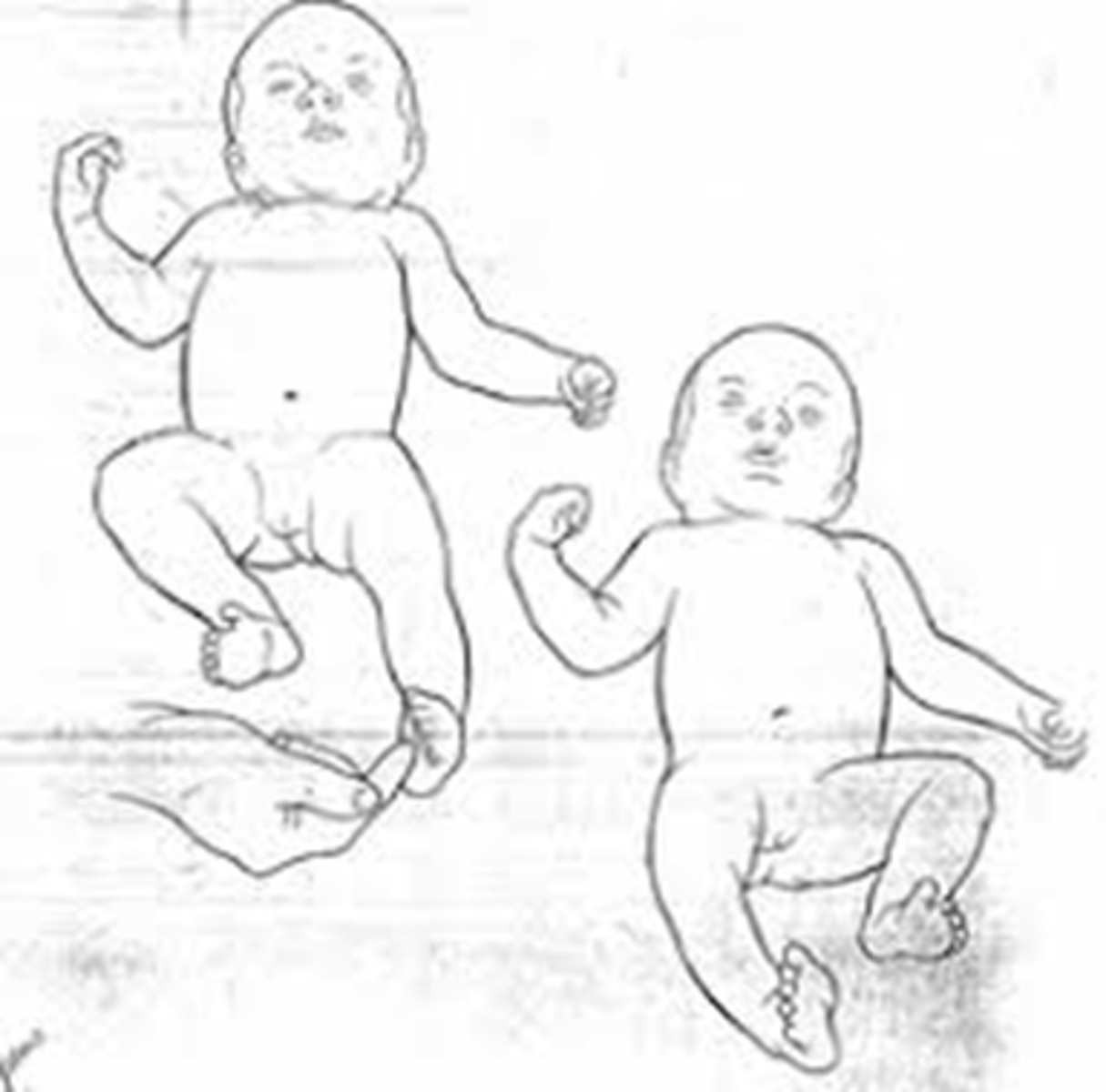
1-2 months
when does the flexor withdrawal reflex integrate
standing balance and walking, safety (all upright motor skills)
if the cross extension and/or flexor withdrawal reflexes persist, what does it interfere with?
Positive support reflex (primary standing reaction)
baby suspended in vertical with feet touching a solid surface; extension at hips, knees, and ankles and bouncing in attempt to support weight
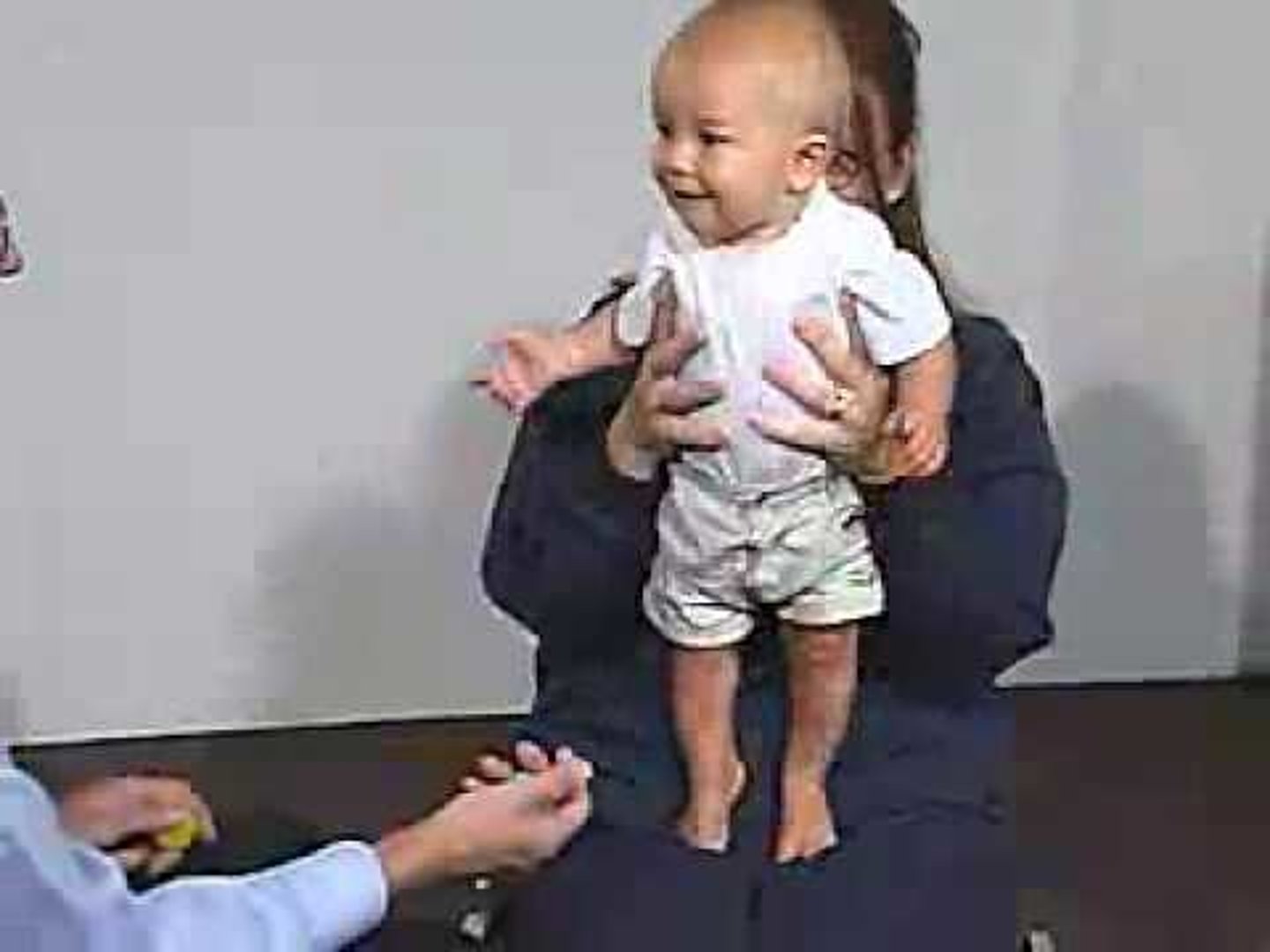
1-2 months
when is the positive support reflex (primary standing reaction) integrated
inability to support weight on own, rigid stance, lack of reciprocal gait/stepping
if the positive support reflex persists, it can interfere with
galant
stimuli to the back, such as stroking one side of the spine; infant curves spine and buttock towards stimuli
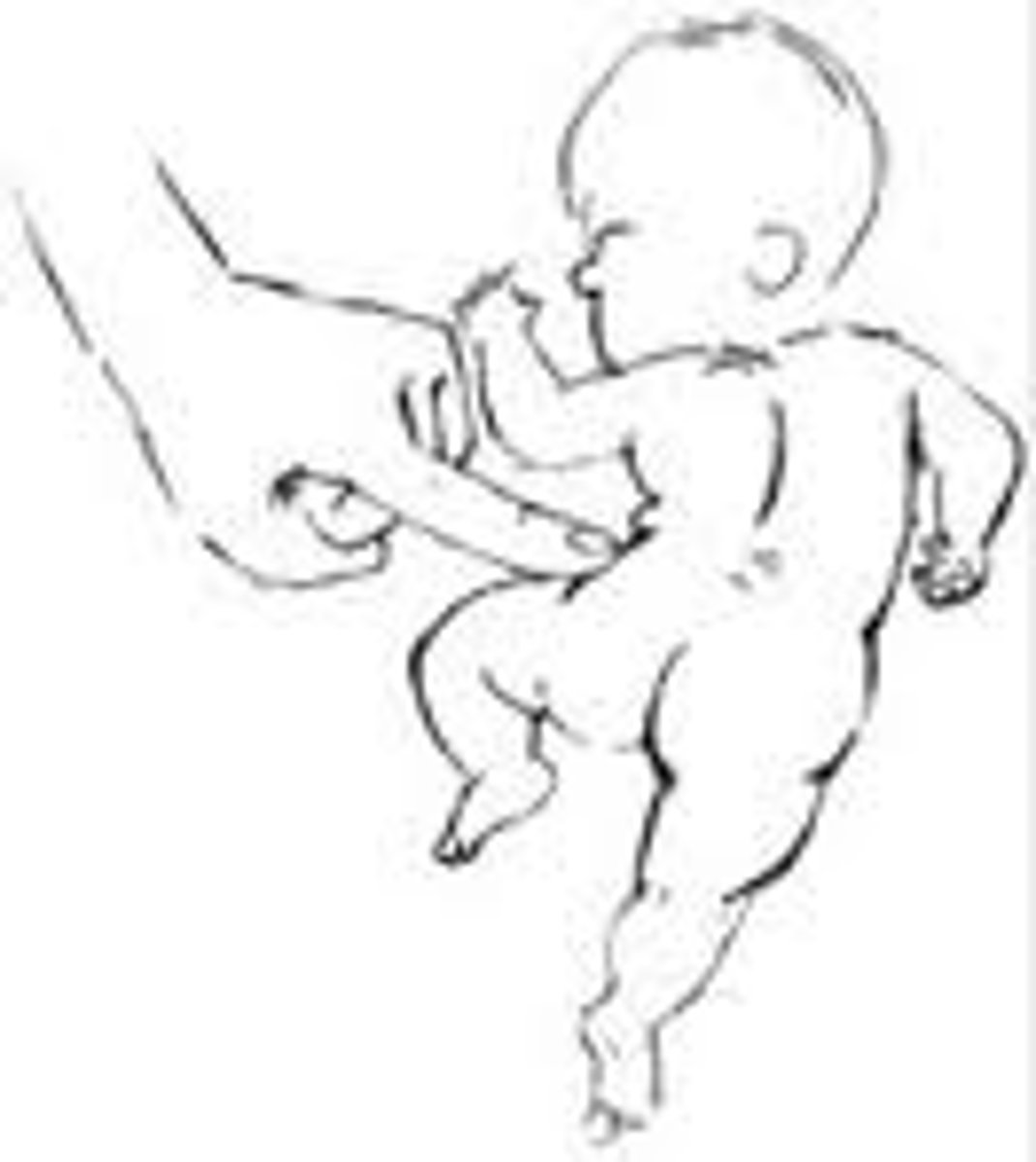
3 months
when does the galant reflex integrate
movement, balance, muscle tone, coordination, excessive fidgeting, bedwetting, tactile hypersensitivity, attention deficits, potential scoliosis/poor posture, gait abnormalities, dyslexia, dislike of exercise/tight clothing, back pain
if the galant reflex persists, it can interfere with
rooting
corner of infant's mouth is touched or stroked; infant will turn their head toward the stimulus and open their mouth with tongue thrusting (sticking tongue out of mouth)
3 months
when does the rooting reflex integrate
tongue control, excessive drooling, forward tongue, difficulty swallowing and chewing
if the rooting reflex persists, it can interfere with
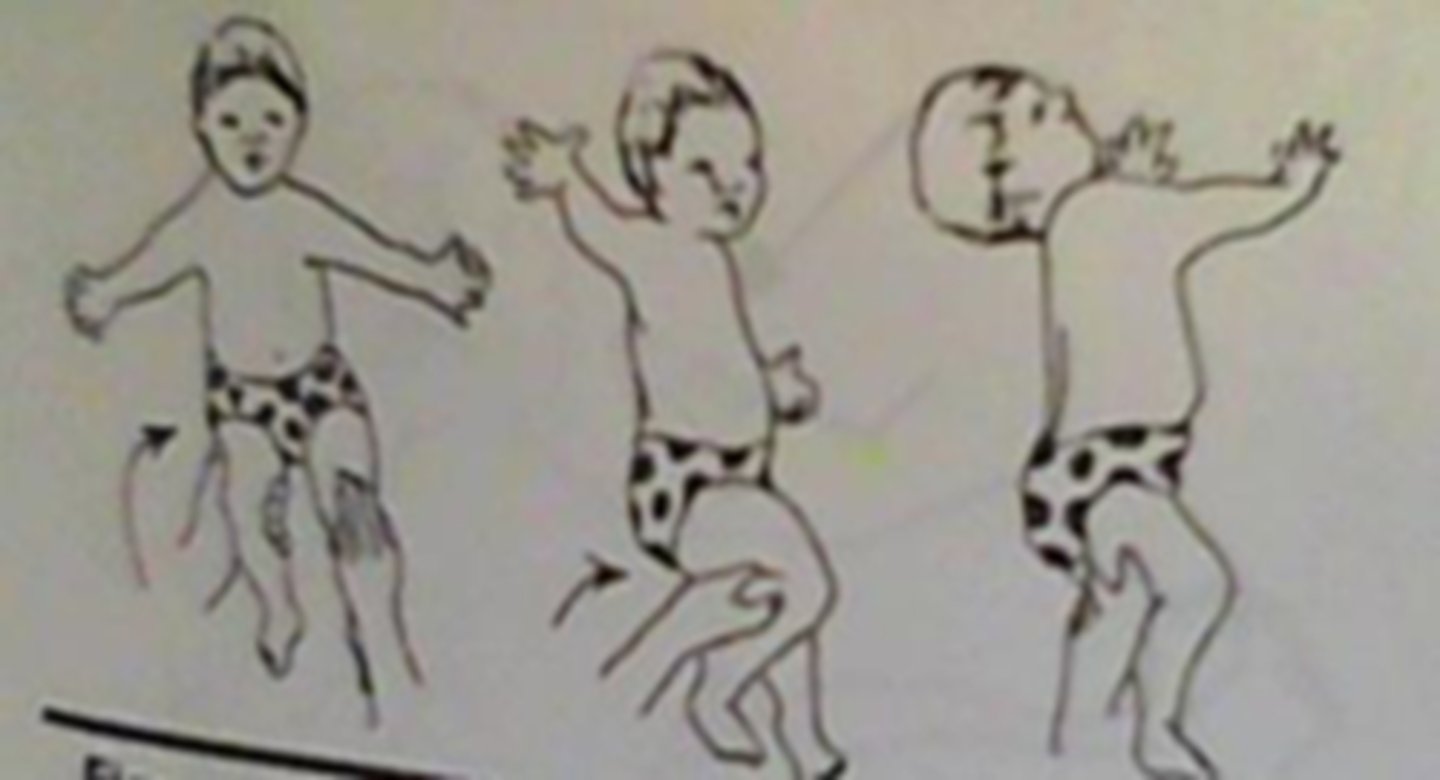
stepping reflex (primary walking or dancing reflex)
hold the baby upright with his/her feet touching a flat surface; baby will move his/her legs as if she/she is walking or trying to take steps, even though the baby is too young to walk
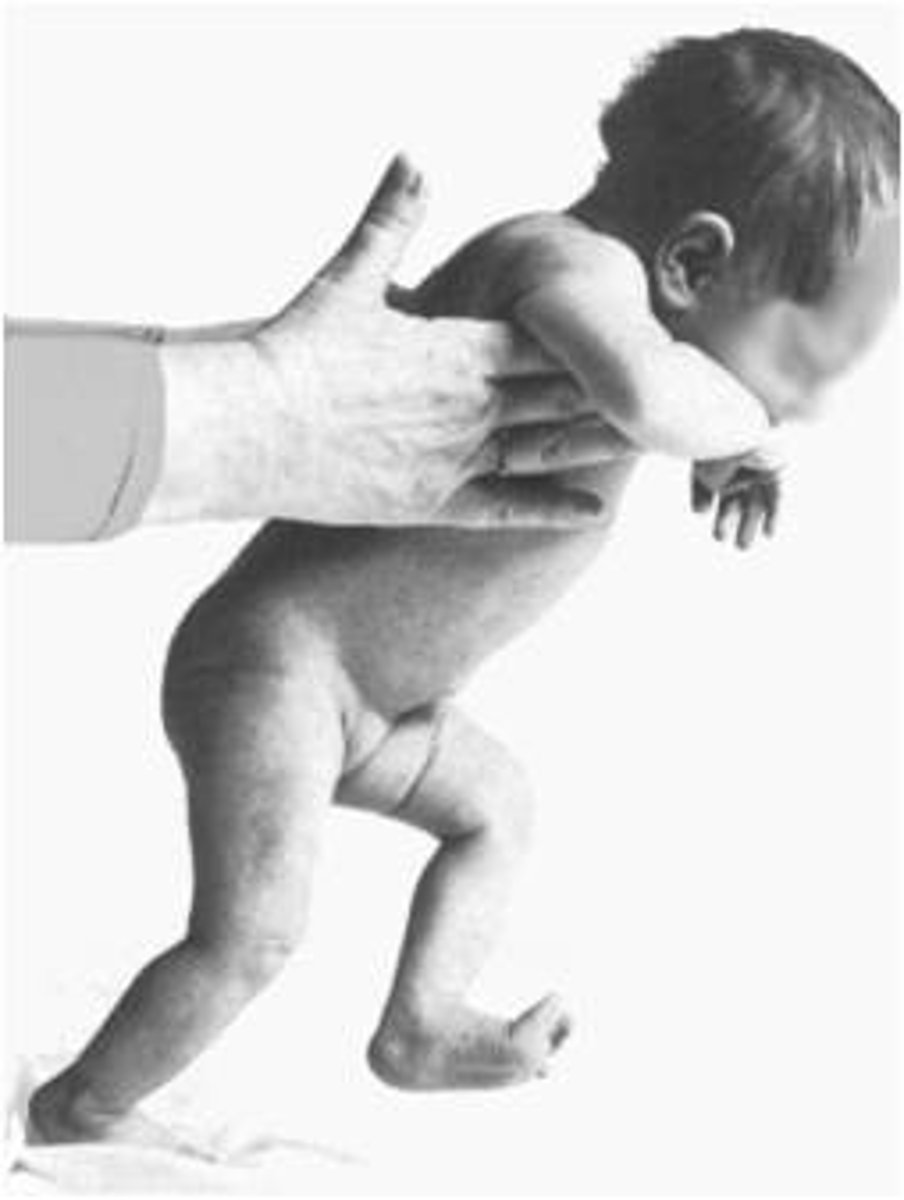
3-4 months
when is the stepping reflex (primary walking or dancing reflexes) integrate
walking will look robotic
if the stepping reflex (primary walking or dancing reflex) persists, it can interfere with
Tonic Labyrinthine Reflex
with head and neck in flexion, arms and legs go into flexion (fetal position); with head and neck extension arms and legs go into extension
4 months
when does the tonic labyrinthine reflex integrate
crawling, creeping, sitting, pull to stands, poor balance and posture
if the tonic labyrinthine reflex presists, it interferes with
moro reflex
baby's head shifts position abruptly or falls backward; baby will extend and abduct UE's extend fingers, and slightly extends the neck and spine, after initial phase, UEs adduct and come in front of their body
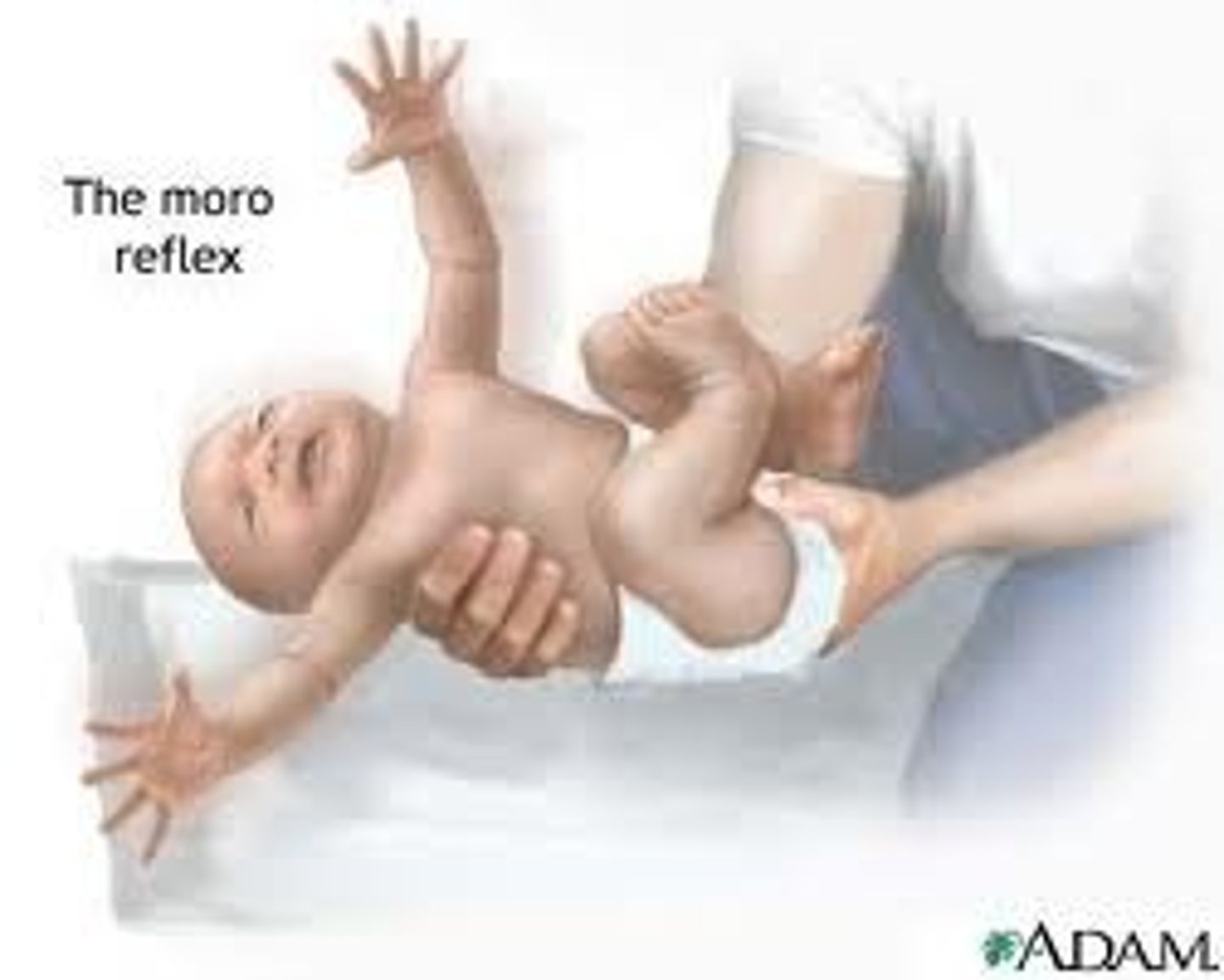
3-5 months
When does the moro reflex integrate?
hypersensitivity or over-reactive to various stimuli, balance problems, difficulty concentrating, headaches, insecurity, generalized anxiety, poor tolerance to change
if the moro reflex persists, it can interfere with
startle reflex
a sudden change in the positioning of the baby's head and extremities due to an abrupt sound, bright light, or change in temperature; baby's will extend LE and UE causing them to jerk outwards, may cry and then flex the arms and legs back in
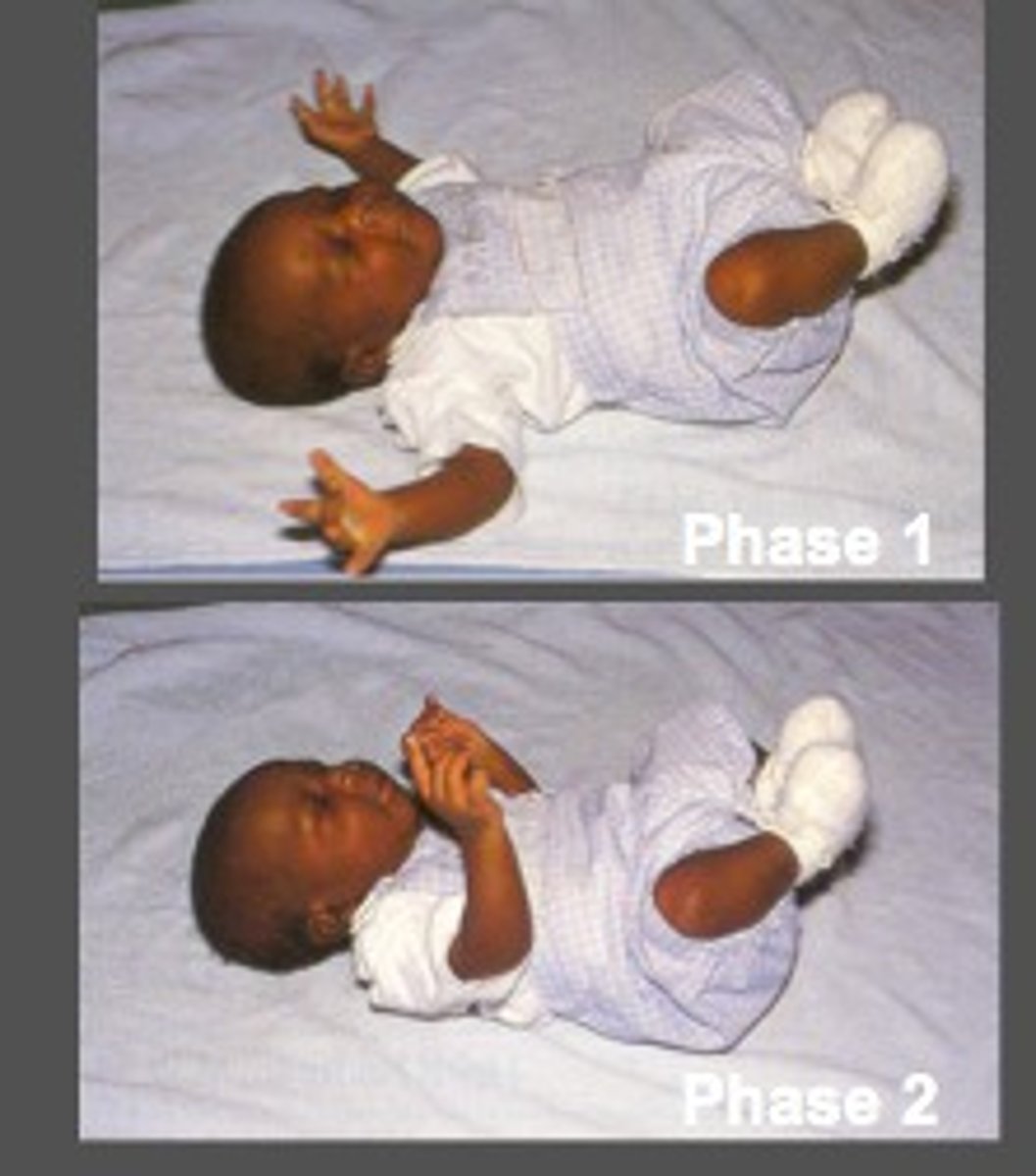
3-5 months
when does the startle reflex integrate
over sensitive to stimulus resulting in poor impulse control, sensory overload, anxiety, social immaturity, poor balance, motion sickness, unable to adapt to change
if the startle reflex persists, it can interfere with
asymmetrical tonic neck reflex
turning the child's head to one side with jaw over shoulder; causes extension at arm and leg of face side and flexion of arm and leg of occipital side
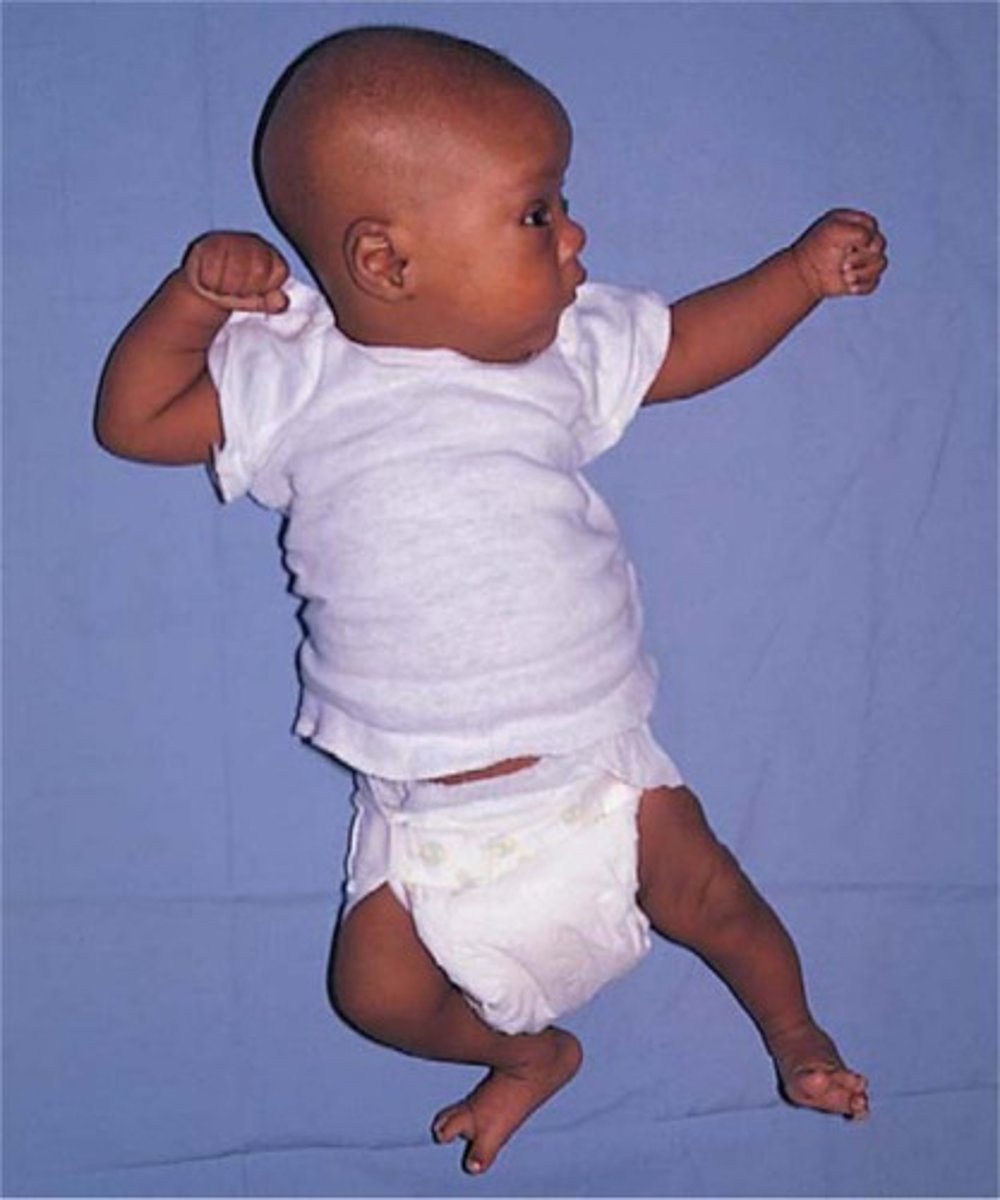
4-5 months
when does the asymmetric tonic neck reflex integrate
poor balance, poor eye movement, increase in learning problems, decreased ability to multitask, prone propping, crawling, sitting, fine motor skills, difficulty crossing midline, rolling can lead to torticollis
if the asymmetrical tonic neck reflex persists, it can interfere with
palmar grasp reflex
apply pressure to palm of hand; finger flexion to grasp object in palm
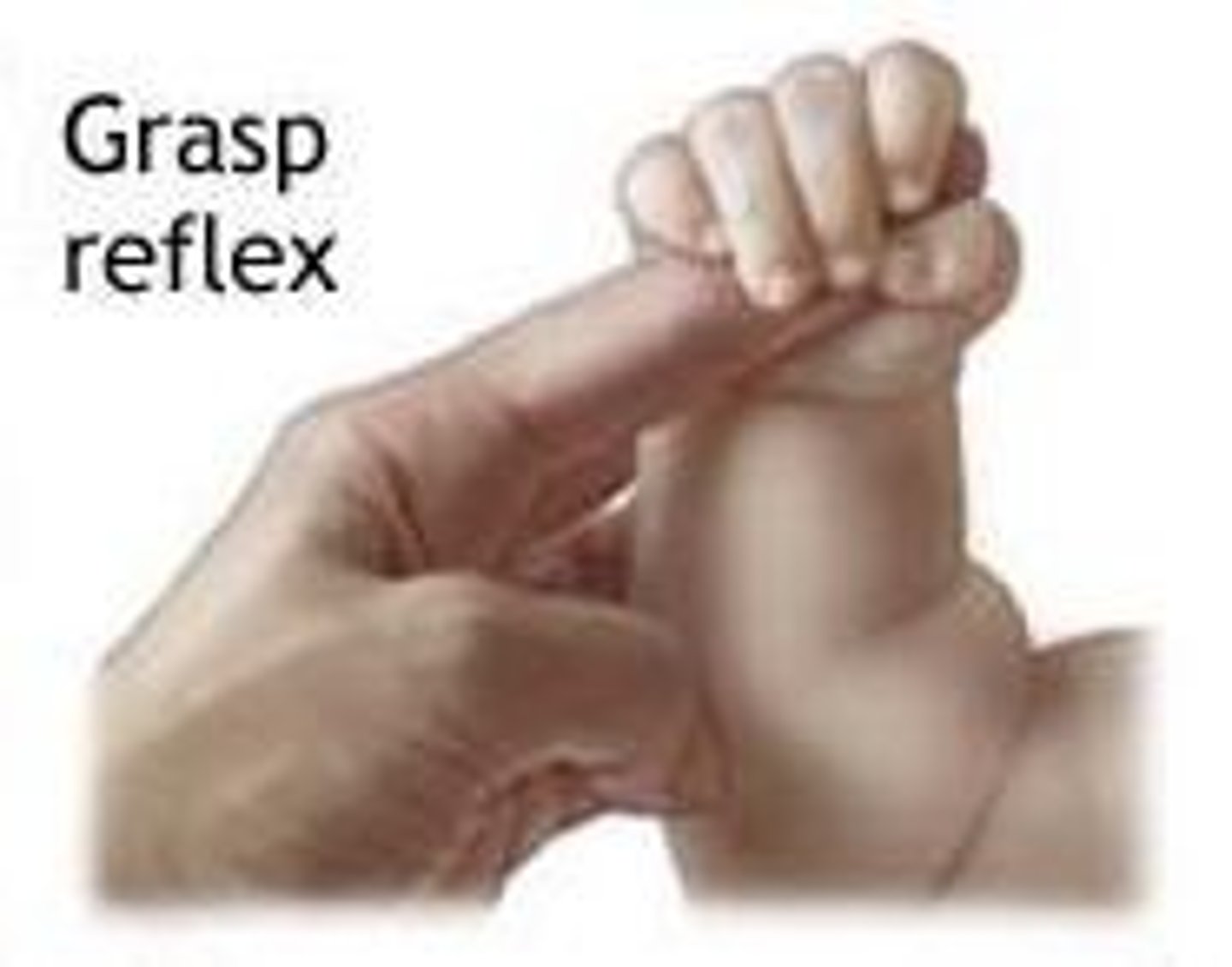
4-7 months
when does the palmar grasp reflex integrate
intentional grasp and release of objects (fine motor skills), ability to bear weight on open hands for prone propping, belly crawling, creeping, pull to stand
if the palmar grasp reflex persists, it can interfere with
sucking reflex
place gloved finger, pacifier, bottle nipple in mouth; rhythmically sucking
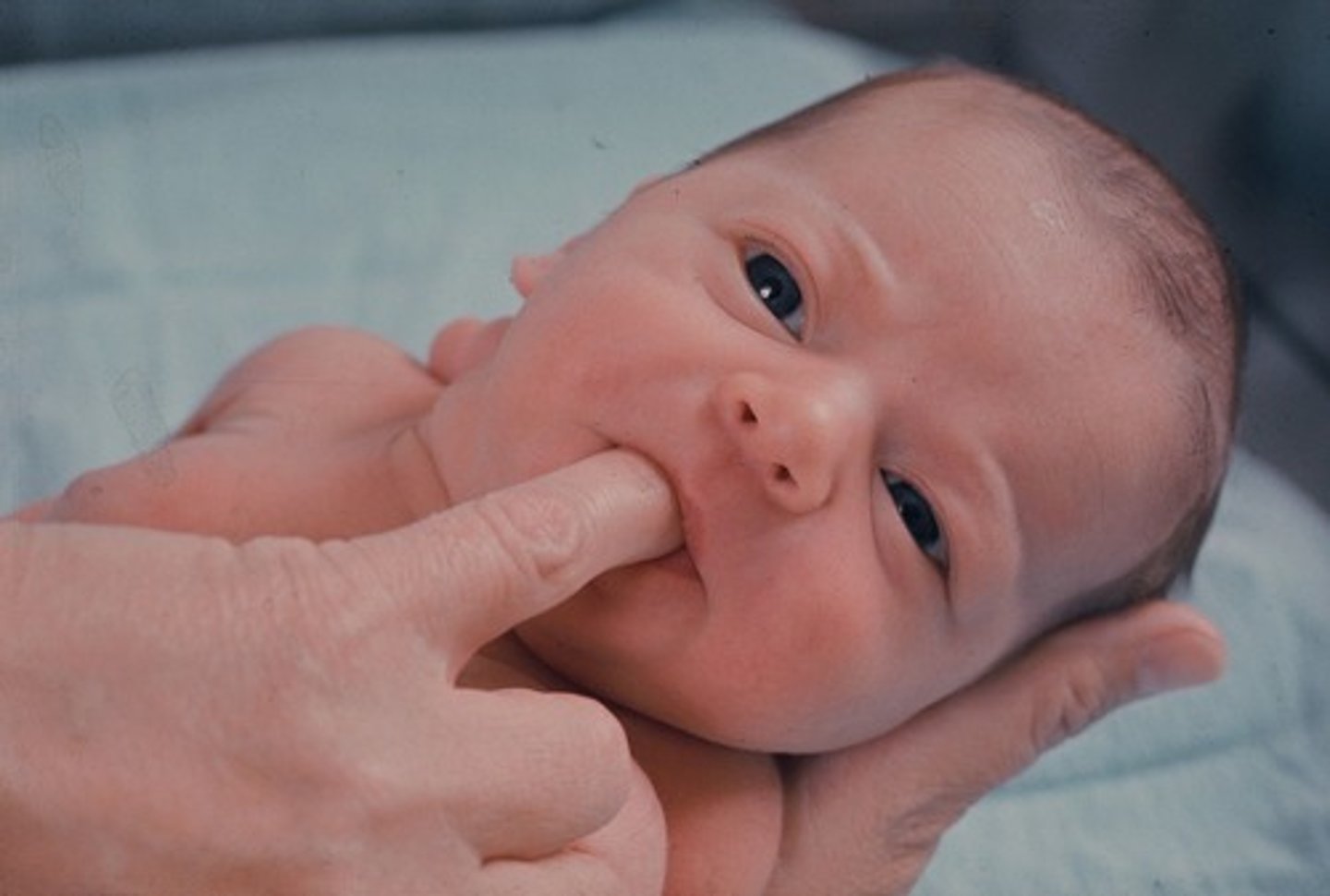
5 months
when does the sucking reflex integrate
eating, drinking, speech impairments, drooling, risk for choking, tendency to suck thumb
if the sucking reflex persists, it can interfere with
head/neck on body
passively rotate head in supine; body follows head by trunk rotating into sidelying
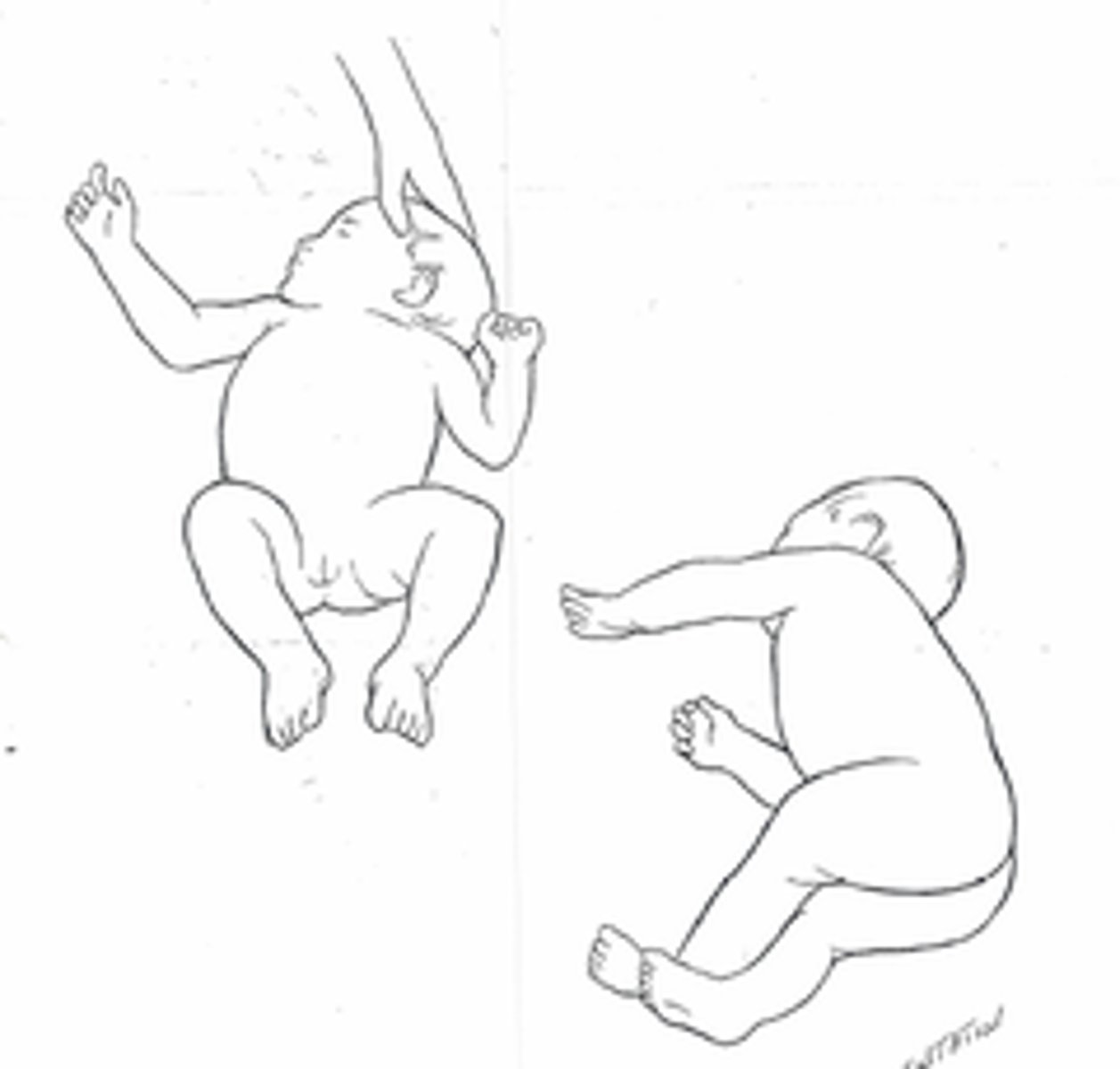
4-6 months
when does the head/neck on body reflex integrate
complete voluntary rolling
if the head/neck on body reflex persists, it can interfere with
body on head/neck
passively rotate trunk/body into sidelying; head follows trunk and rotates to the same side
5 years
when does the body on head/neck reflex integrate
complete voluntary rolling
if the body on head/neck reflex persists, it can interfere with
gag reflex
stimulates back of the throat; tongue thrusts forward

6 months
when does the gag reflex integrate
intraoral hypersensitivity, difficulties eating, drinking, risk for choking, impaired speech, poor nutrition
if the gag reflex persists, it can interfere with
symmetrical tonic neck
passive or active motion of the neck/head into flexion or extension; in neck flexion= arms will flex, legs will extend; in neck extension= arms will extend, legs will flex
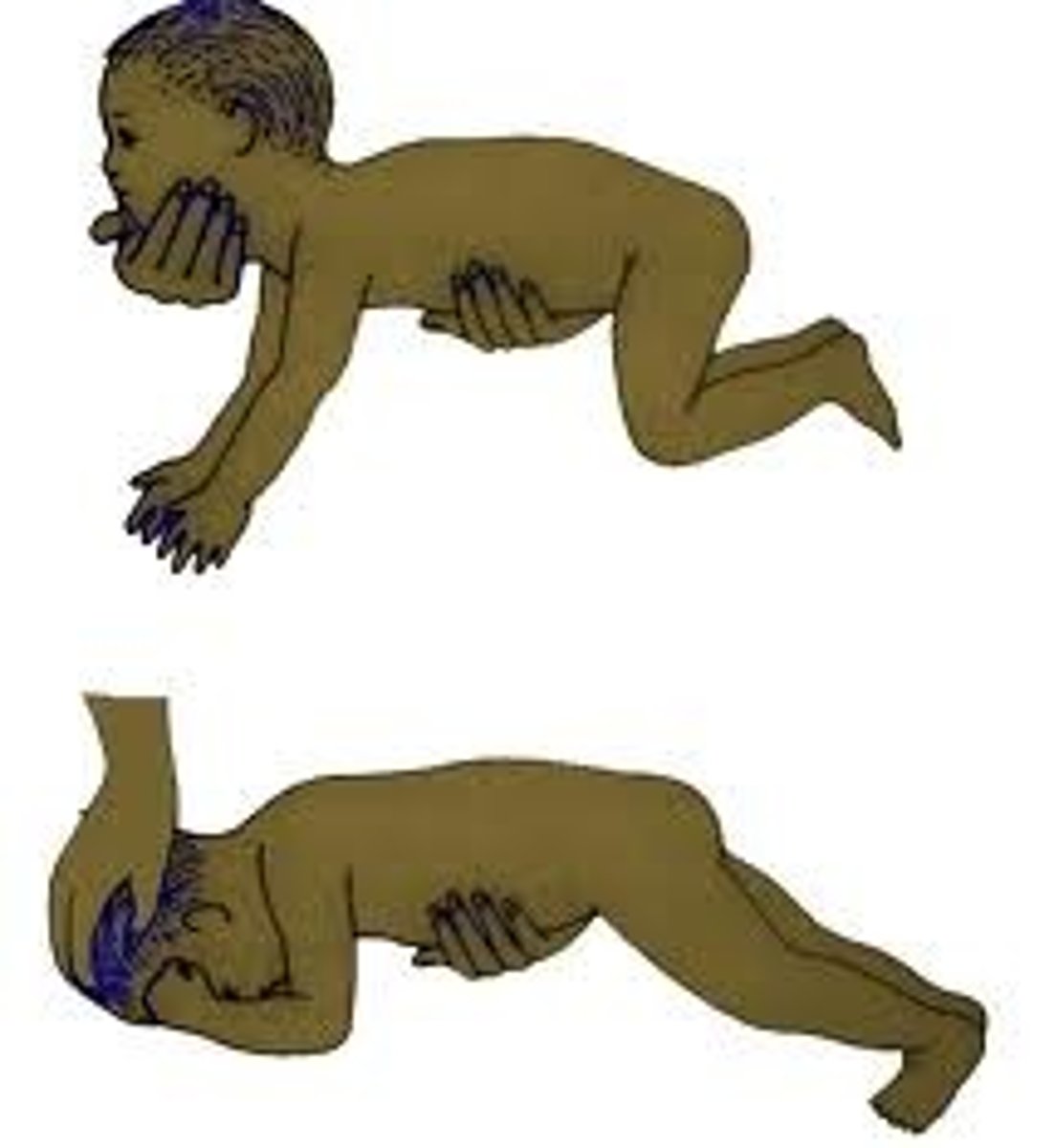
8-9 months
when does the symmetrical tonic neck reflex integrate
crawling, belly crawling, creeping, prone movement, sitting and standing balance, sit to stand, walking, coordination
if the symmetrical tonic neck reflex persists, it can interfere with
plantar grasp reflex
pressing the thumb against the sole of the foot or stroking the bottom of the foot medially; lateral surface of the foot bend. Flexion and adduction of all toes as if the toes were grasping the object
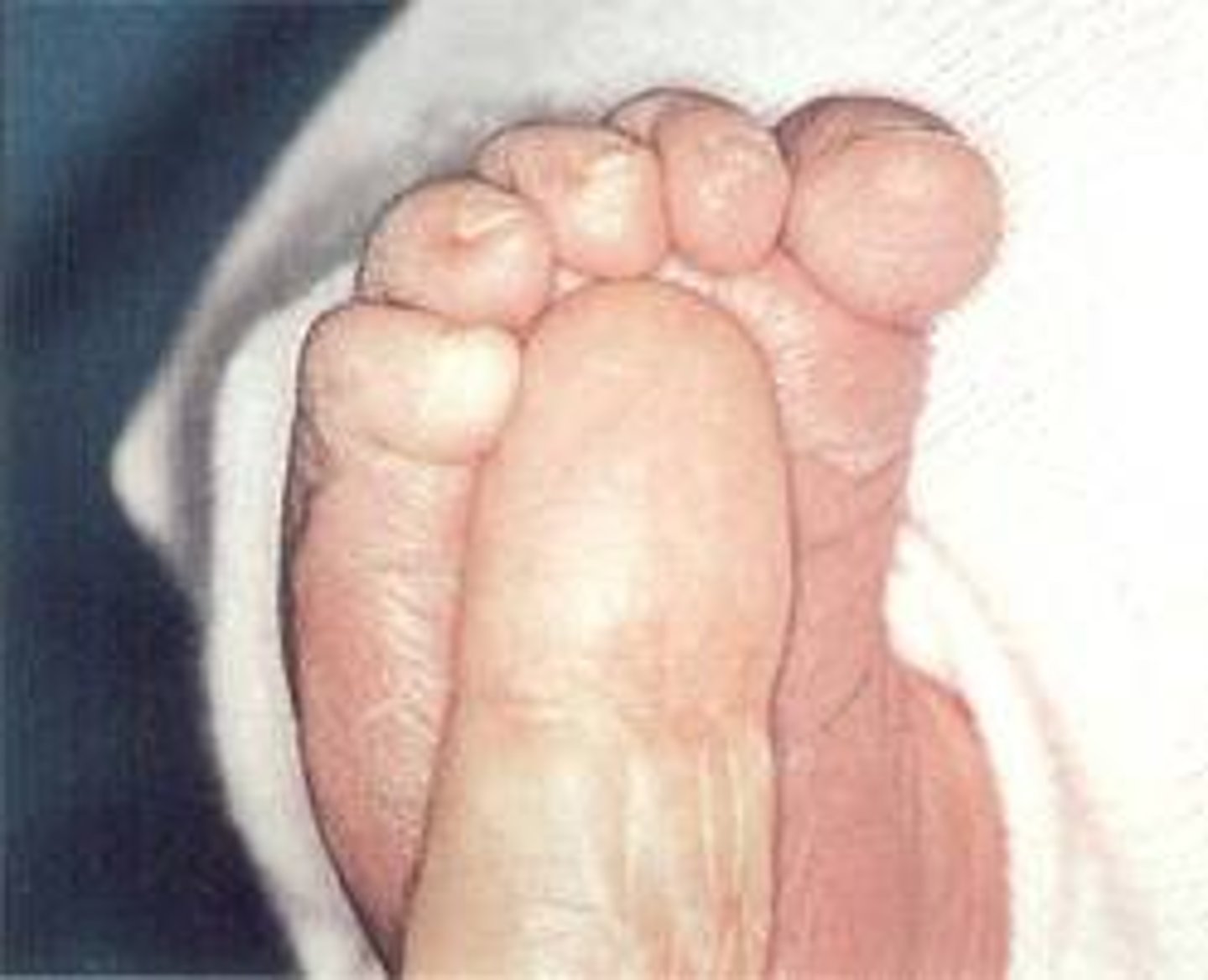
9 months
when does the plantar grasp reflex integrate
balance, ability to walk, standing activities
if the plantar grasp reflex persists, it can interfere with
Babinski reflex
firmly stroke sole of foot heel to toes, in lateral to medial curve; great toe extends and other toes splay
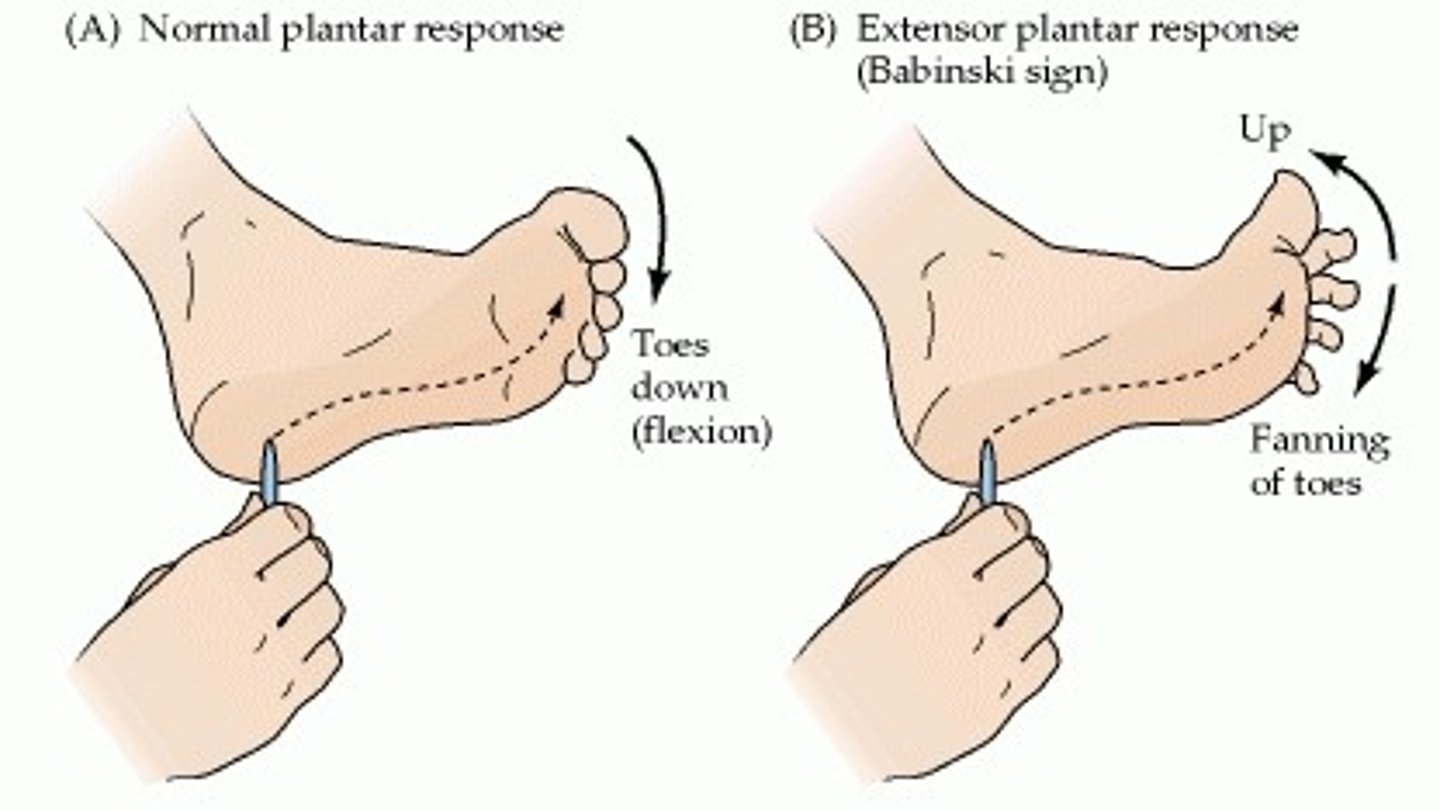
24 months
when does the babinski reflex integrate
landau reflex
with child in prone position and suspended in space with support under chest, passive or active neck extension will cause back and legs to extend.
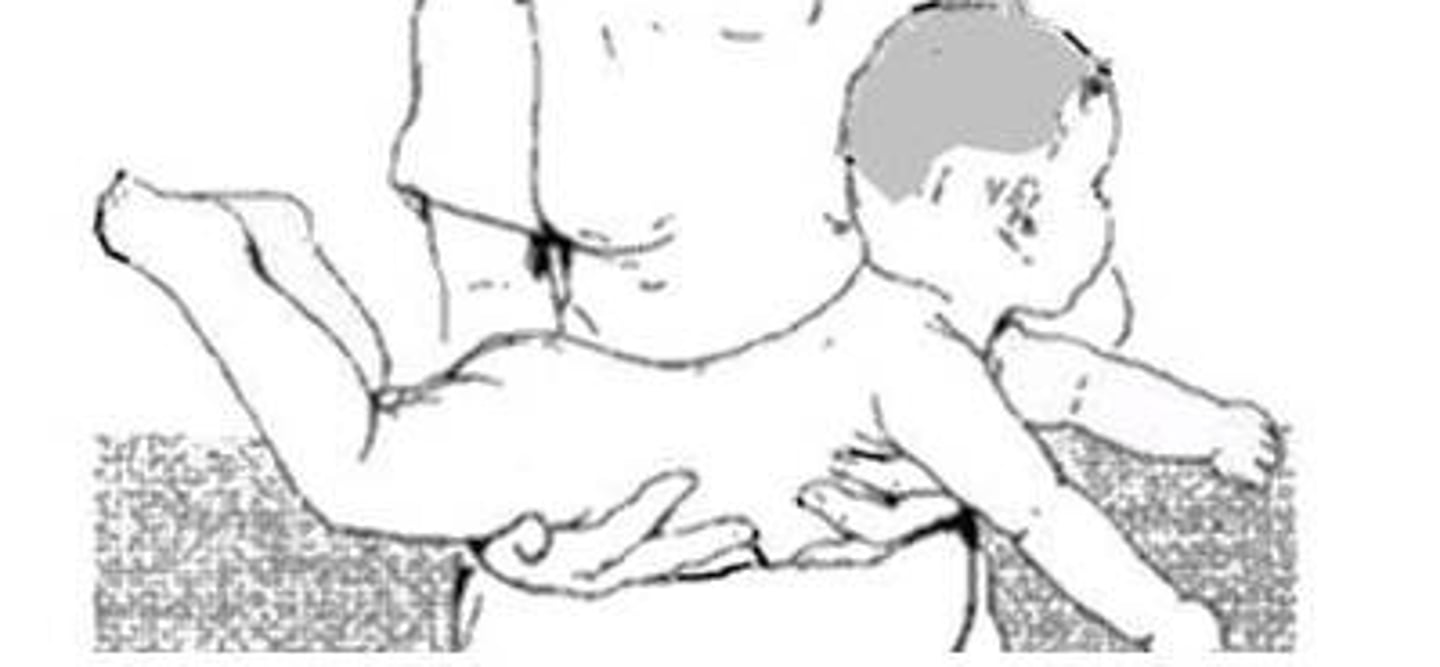
standing balance and walking
if the babinski reflex persists, it can interfere with
3-12 months
when does the landau reflex integrate
slows development of prone extension, sitting and standing
if the landau reflex persists, it can interfere with
primitive reflexes
most are present at birth; 27-28week premies have many; should be integrated by 8-9 months
righting reaction, equilibrium/tilting reaction, protective reaction
postural "reactions" once thought to be reflexes
righting reaction
slight perturbation (well within base of support)
equilibrium/tilting reaction
moderate perturbation (close to edge of base of support)
protective reaction
extreme perturbation (beyond base of support)
head righting
ability to maintain head vertical in all planes with disturbance of center of mass
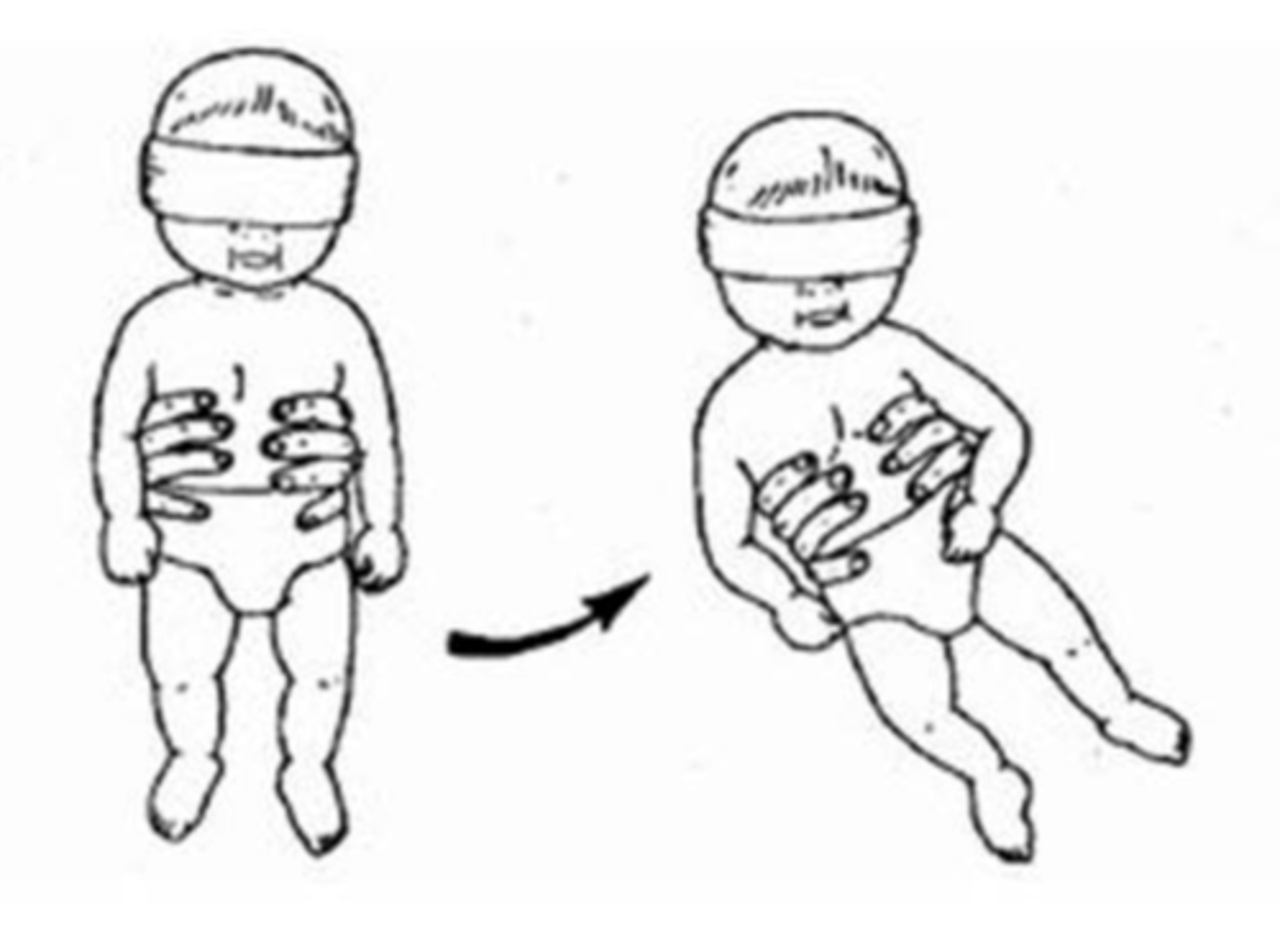
trunk righting
ability to maintain upright trunk in all planes with further disturbance of center of mass
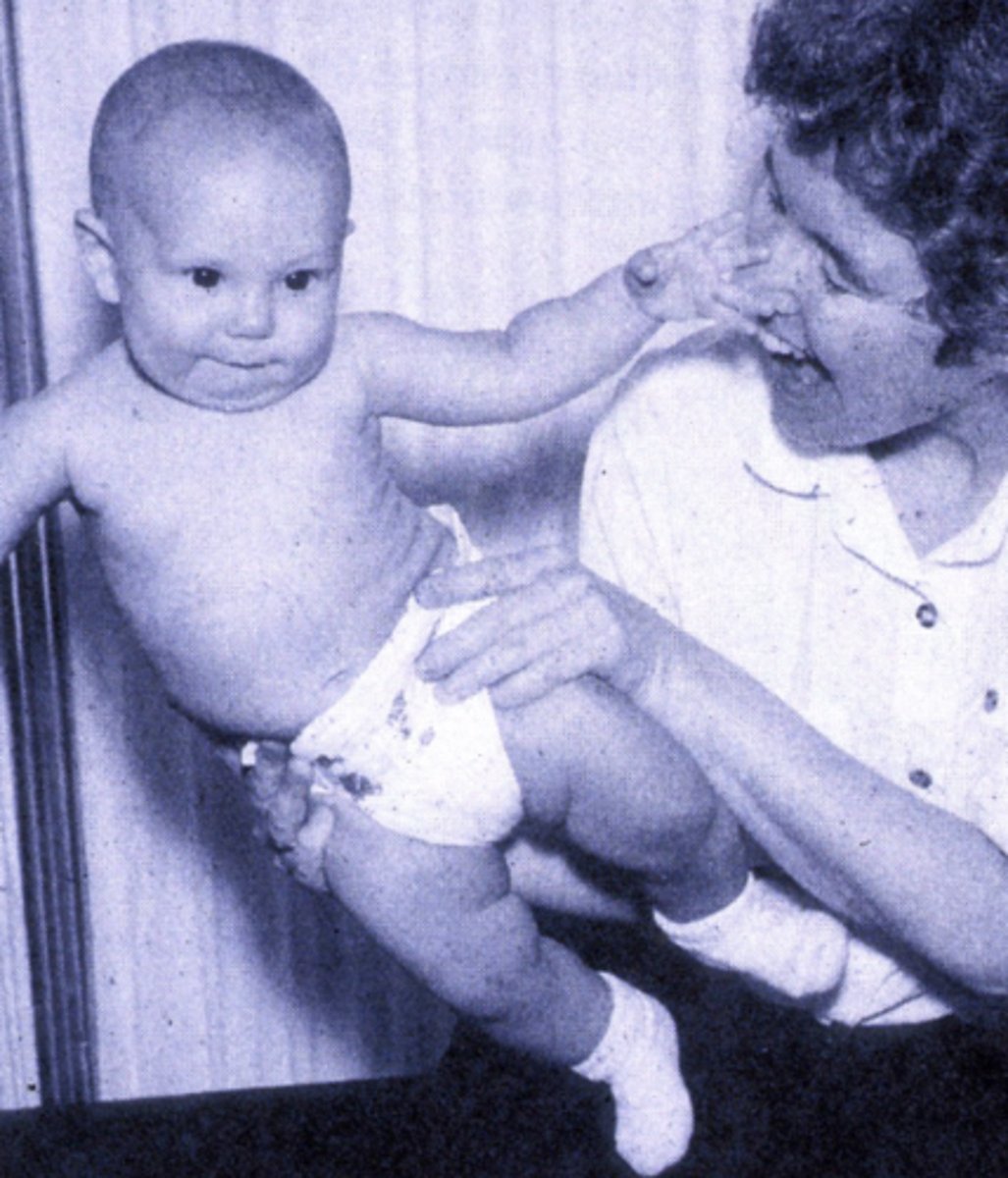
tilting reaction, equilibrium reaction
what are trunk righting reactions
tilting reaction
ability to maintain upright trunk in all planes with further disturbance of center of mass- when on moving surface
equilibrium righting
ability to maintain upright trunk in all planes with further disturbance of center of mass- when on stationary surface with perturbation
protective extension reactions
in sitting will extend UE to prevent falling; should have mastered all directions by 12 months
stepping reaction, parachute reaction
what are different protective extension reactions
stepping reaction
protective extension reactions; in standing will extend LE
parachute reaction
protective extension reaction; when suspended by PT and moving head toward ground, child will extend UEs to prevent head hitting on the floor