CPE Part 6: OS Rx indications & Instruments, NO & Sedation, Infection Control Protocol
 Call Kai
 Learn
Learn Practice Test
 Spaced Repetition
 Match
Match Flashcards
 Knowt Play
1/196

There's no tags or description
Looks like no tags are added yet.
Name | Mastery | Learn | Test | Matching | Spaced | Call with Kai |
|---|
No analytics yet
Send a link to your students to track their progress
197 Terms
Left off at OS tools & such slide 51 of Kelseys & slide 95 of Julias
Includes: OS Rx indications & Instruments, NO & Sedation, Infection Control Protocol
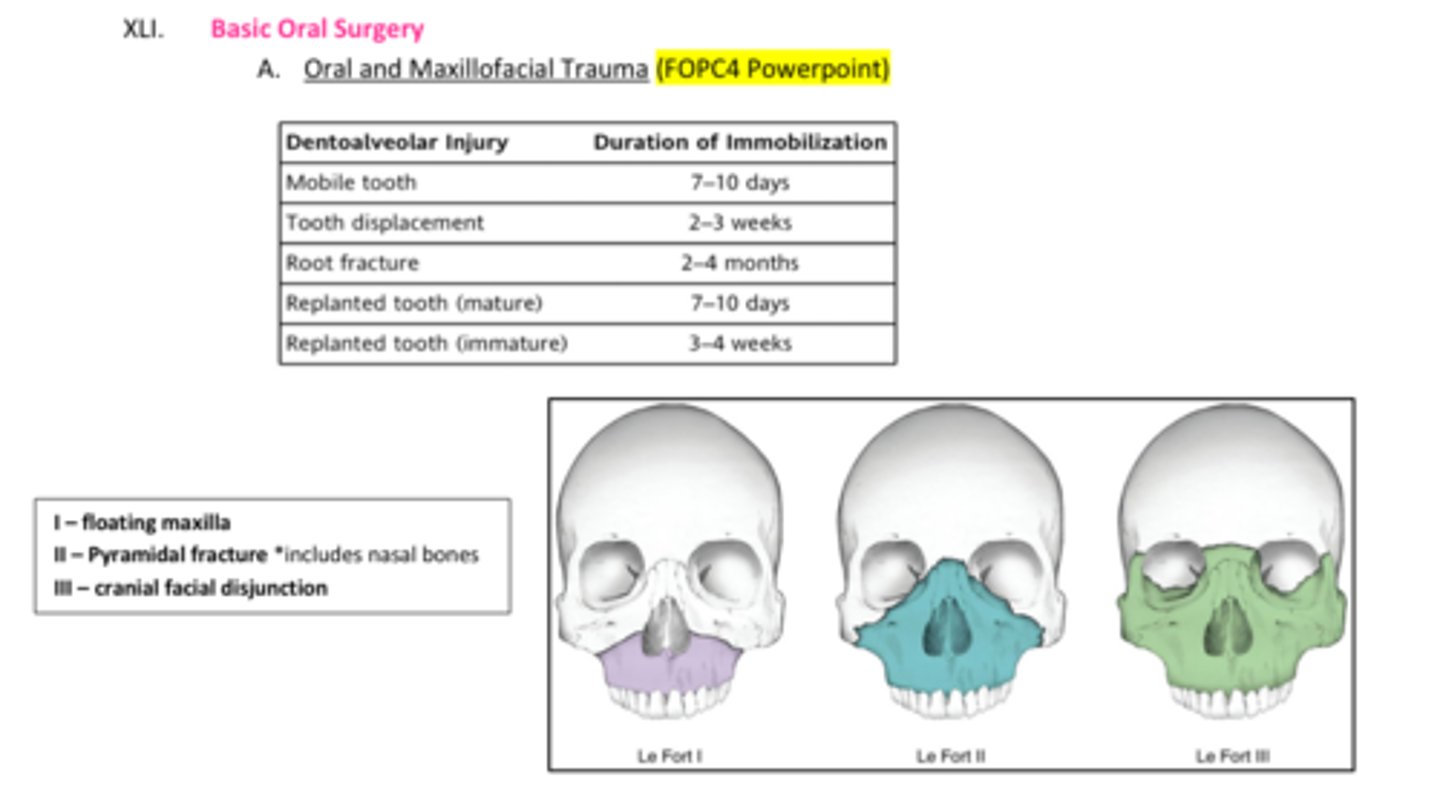
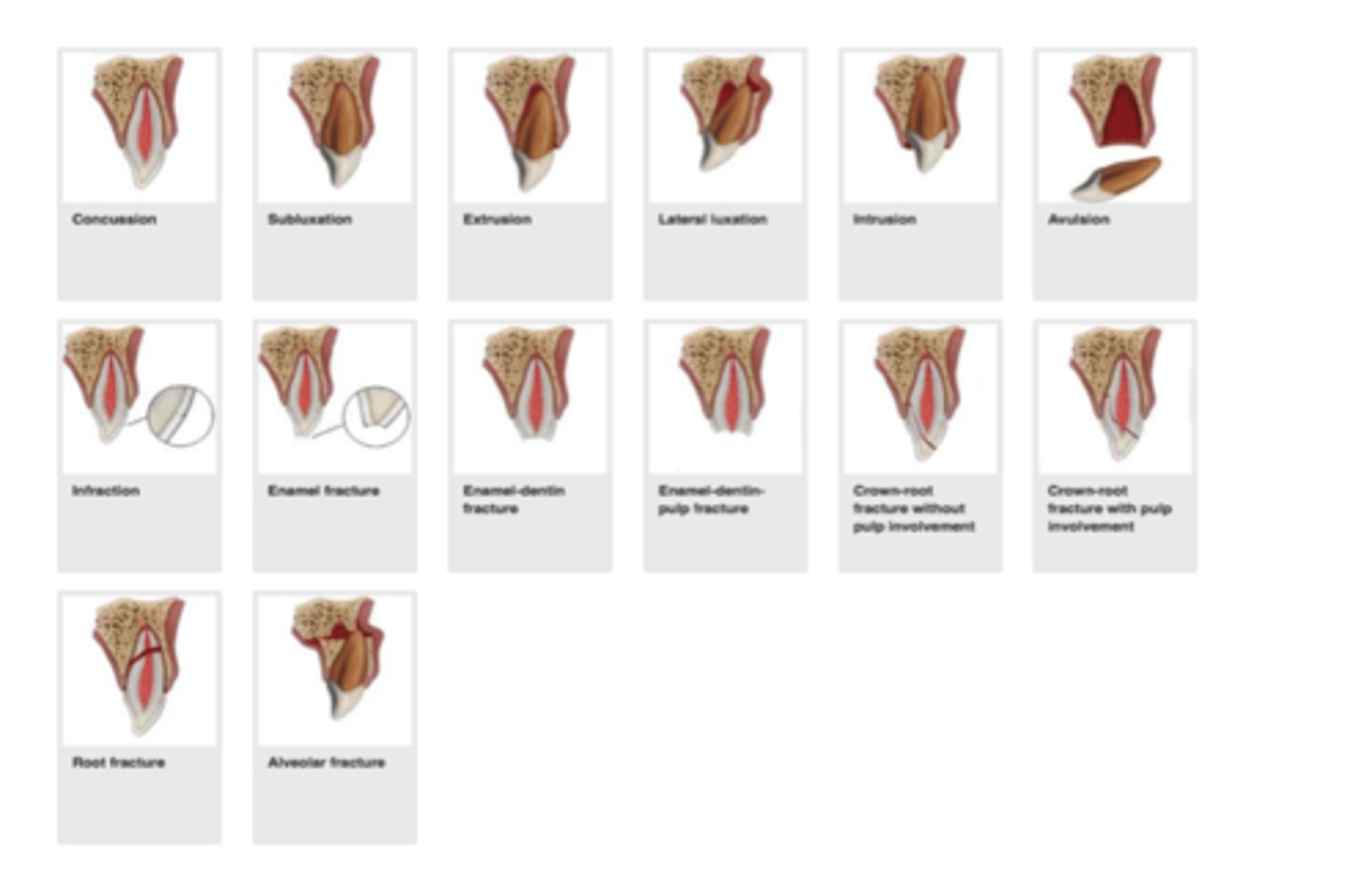
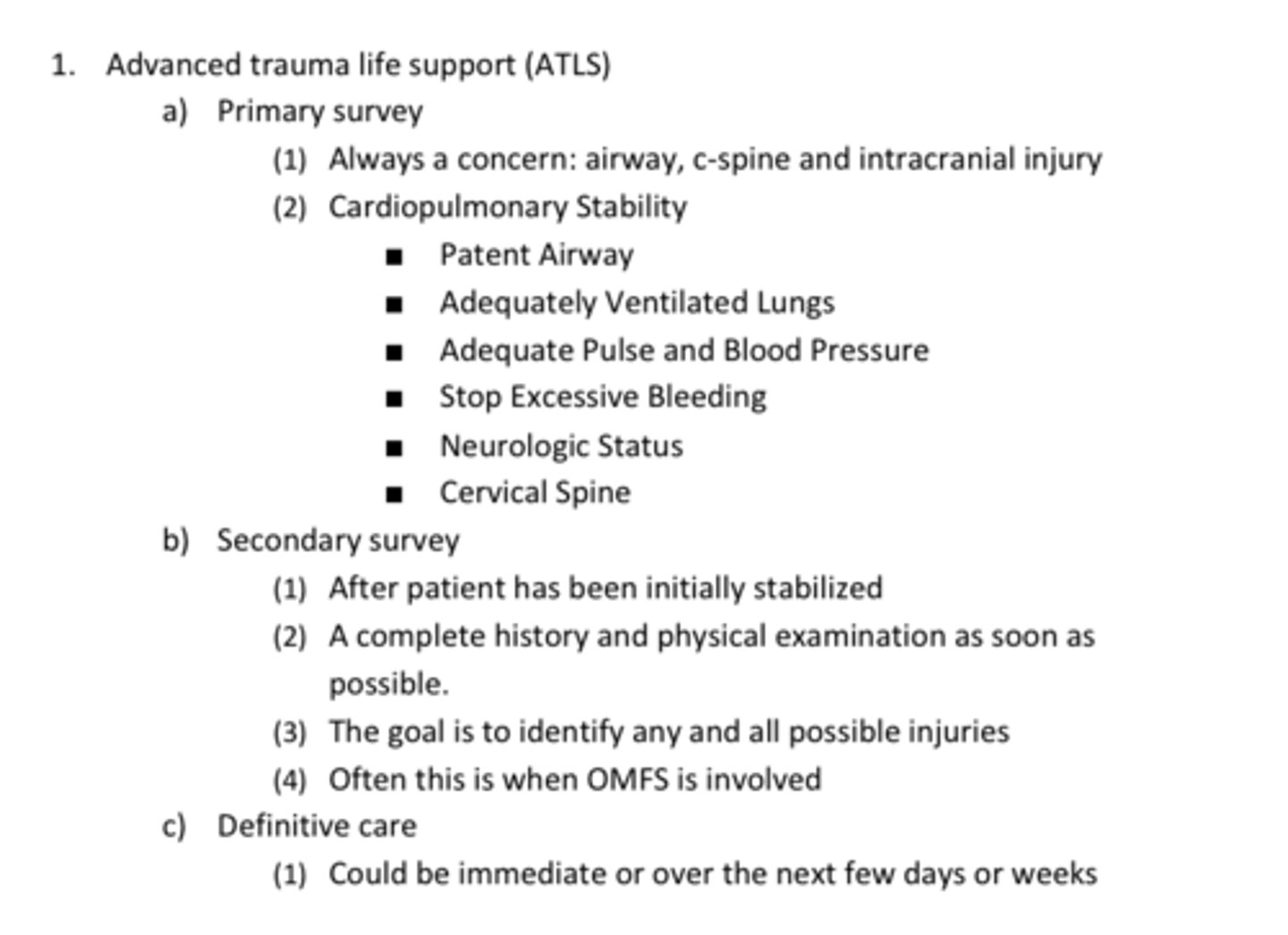
ATLS
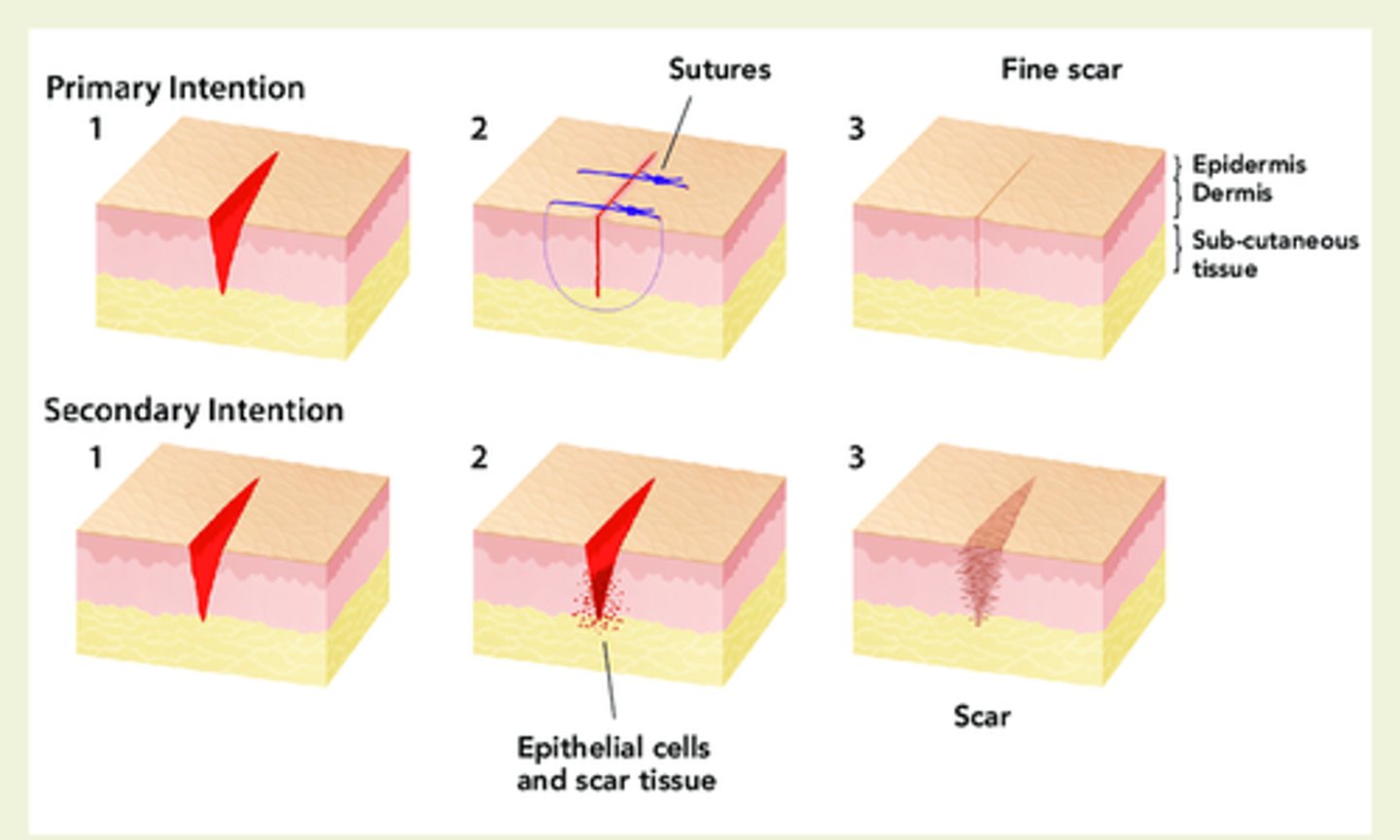
Primary Union
Which type of healing?
1. Takes place when wound margins are closely adapted (Sutured closed) & the wound heals from the TOP- Down
2. Minimum of exudate and debris
3. More rapid healing process
4. Usually planned procedures
5. Example --> closing an incision
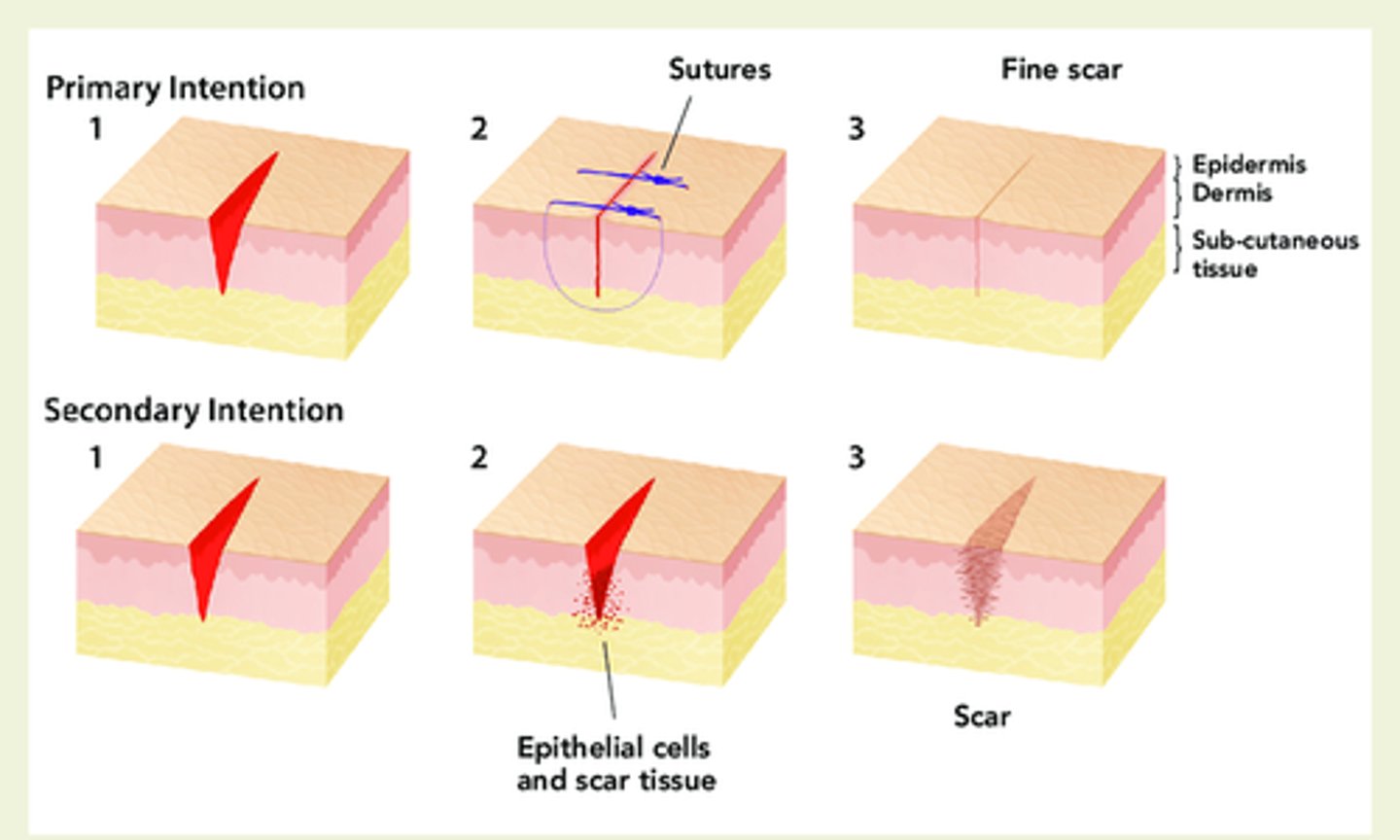
Secondary Union
Which type of healing?
1. Takes place when the wound is not well adapted (tissue loss or not sutured)
2. Slower process
3. There is a need to cleanup exudate & debris
4. Defect is filled with granulation tissue
5. Re-epithelialization can occur after debris is removed
6. Example dog bites (other than facial wounds), scraped knee, etc.
7. EXTRACTIONS!
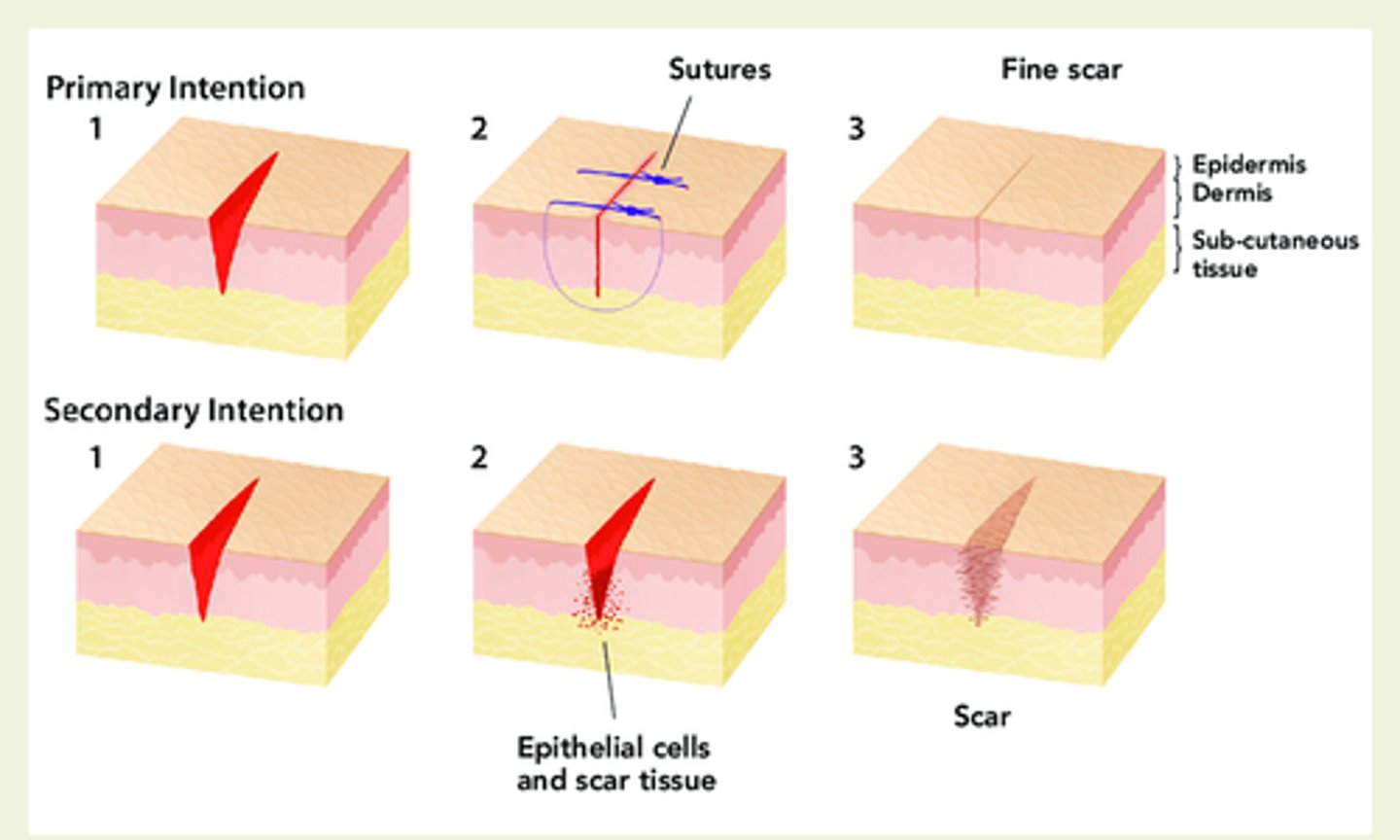
Secondary Union
Which type of healing?
EXTRACTIONS!
Secondary Union
Extractions close by ______ _____
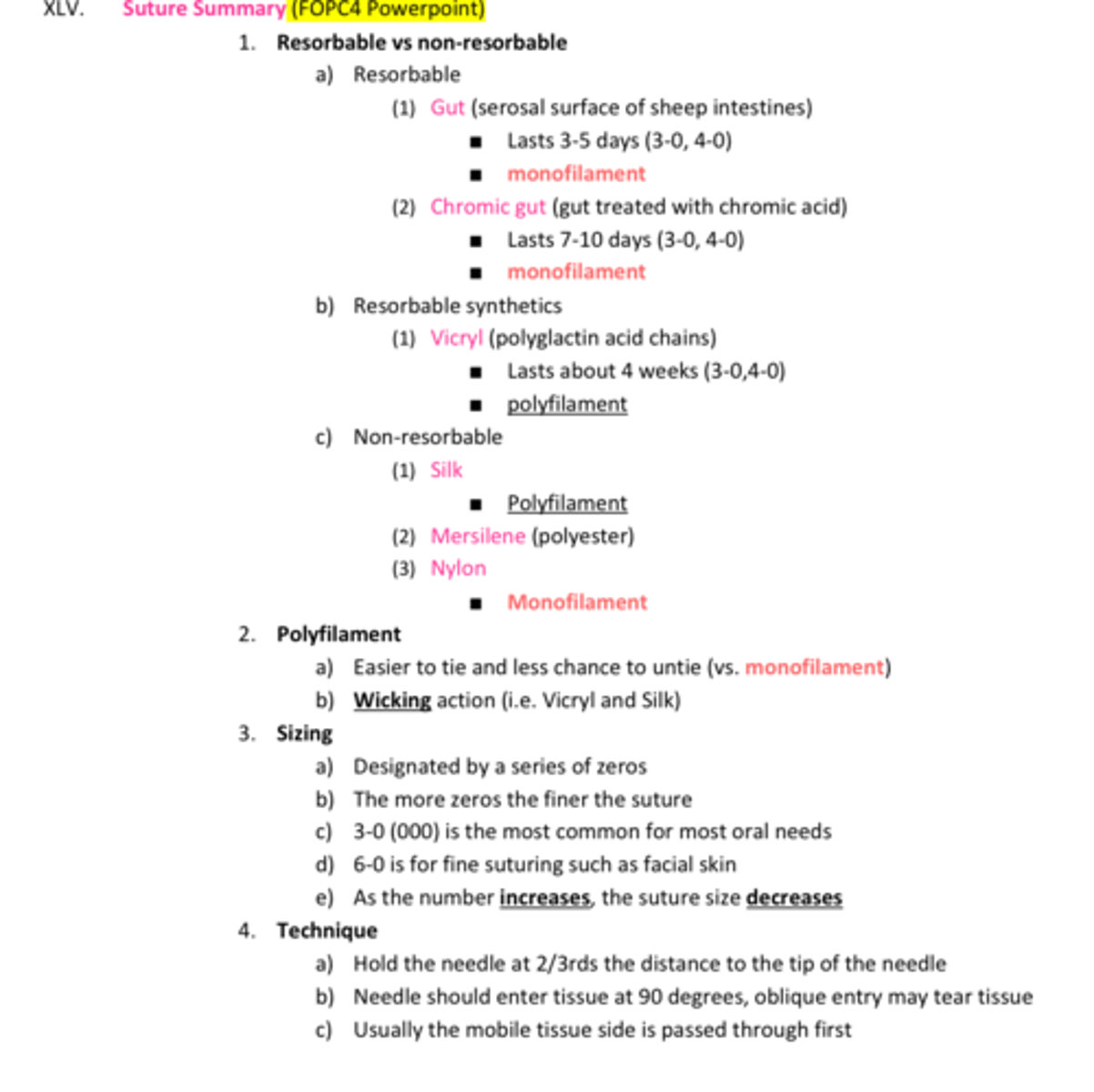
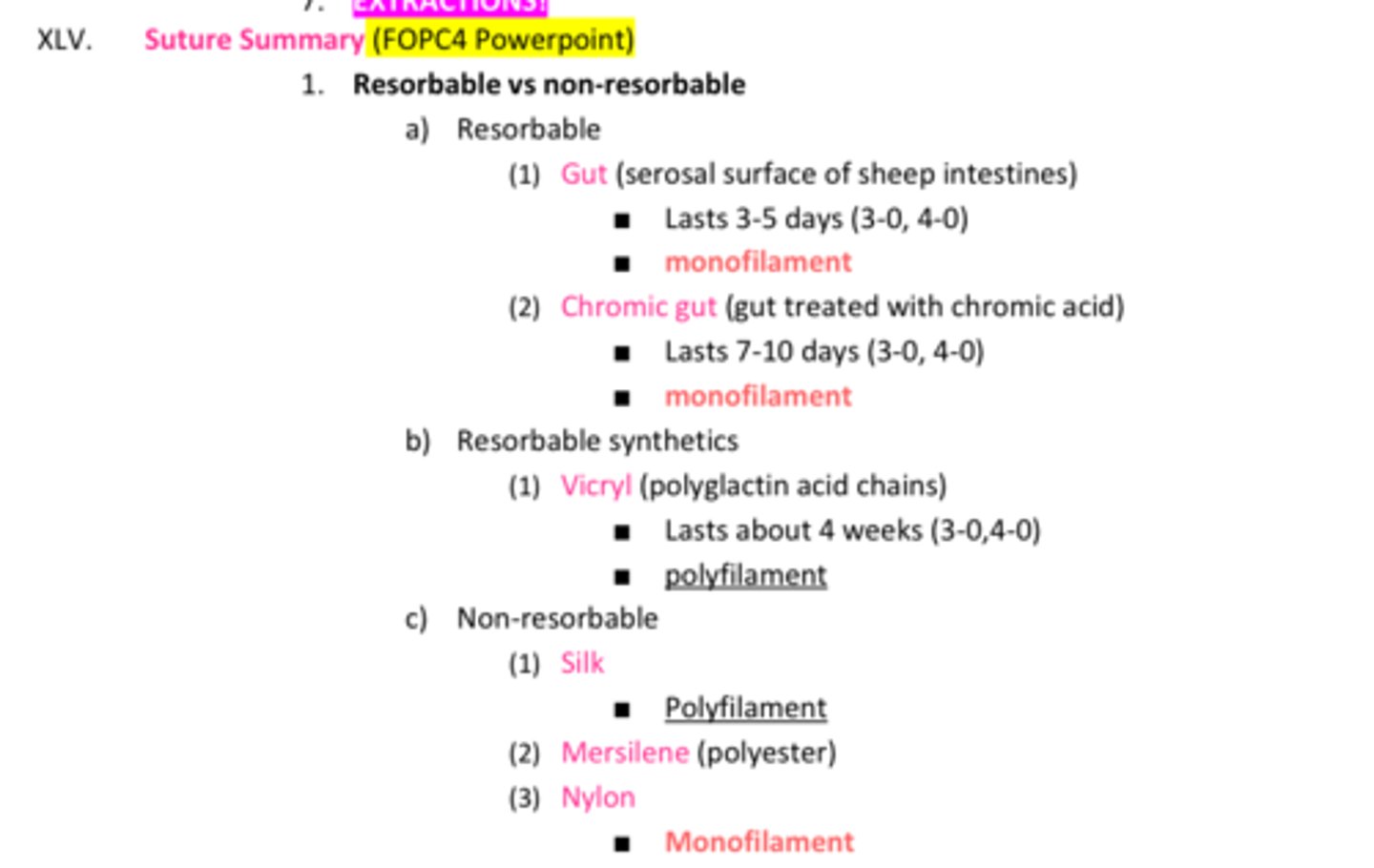
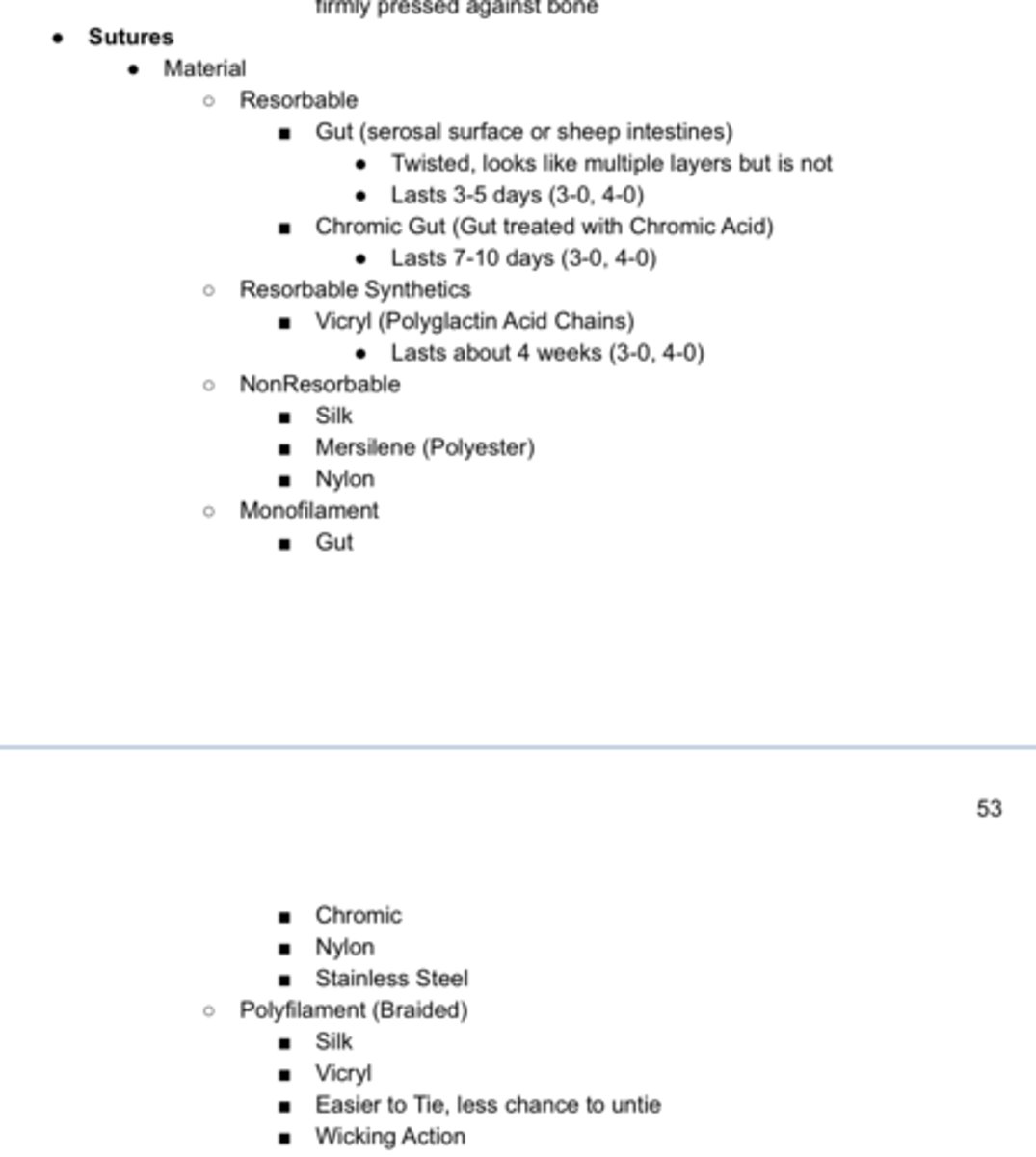
Sutures
Sutures
Sutures
Sutures
Sutures
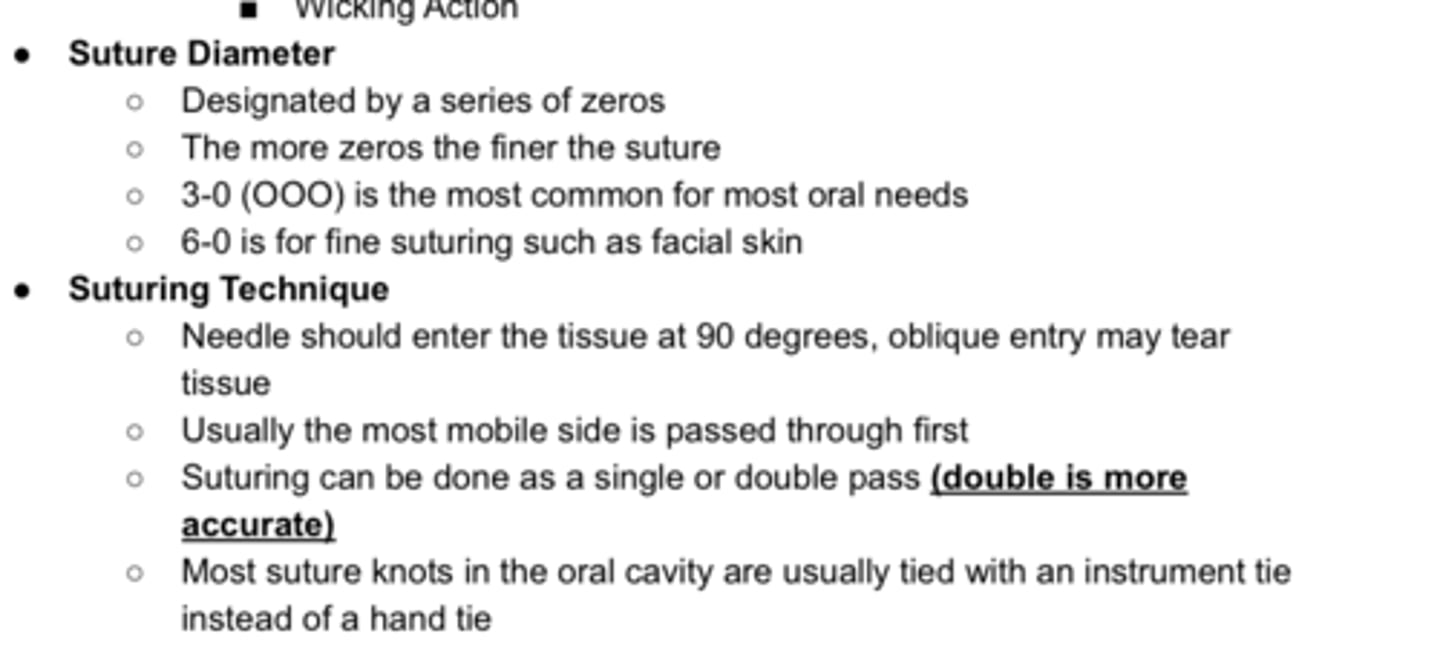
Suture technique
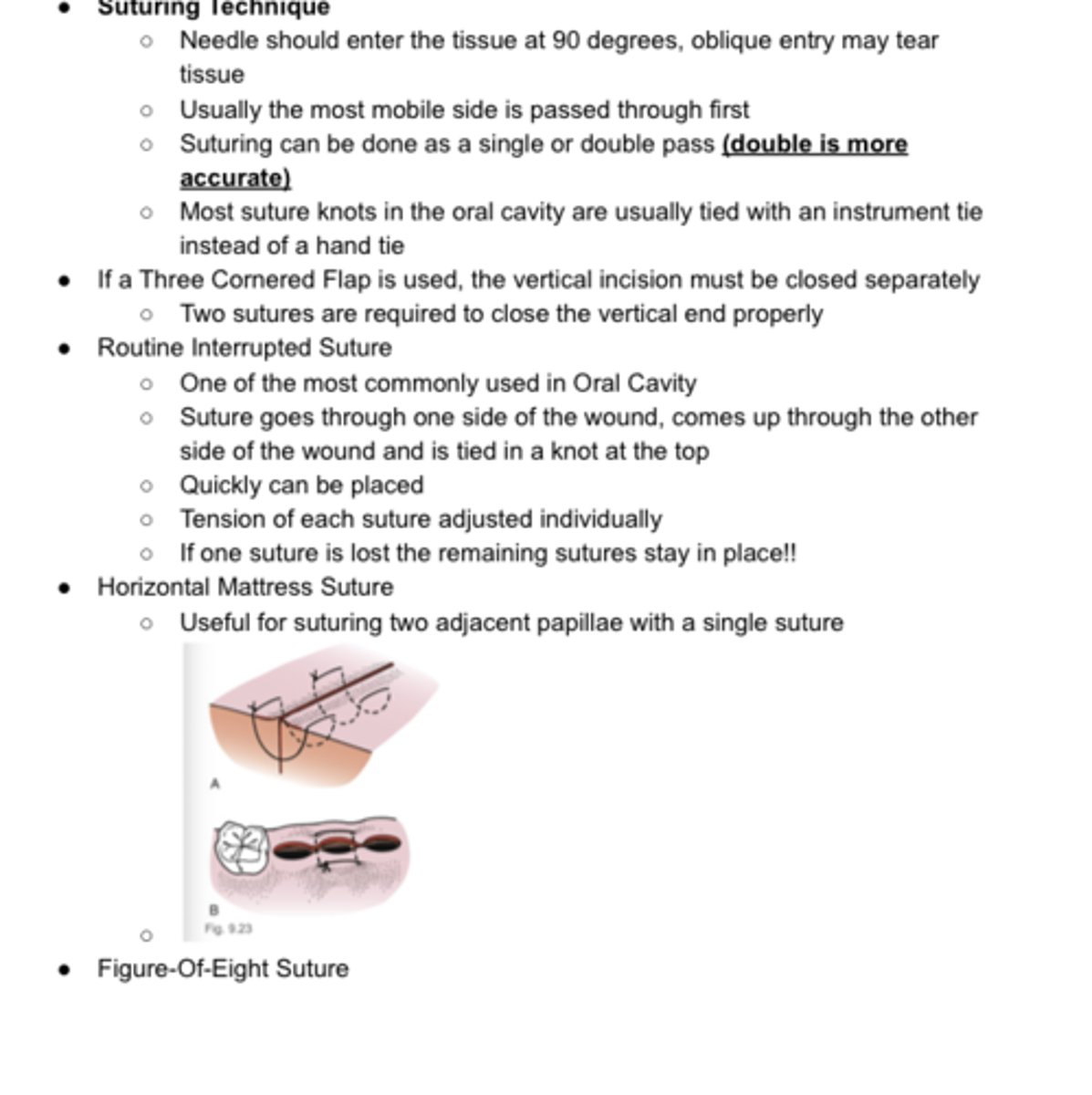
Suture technique
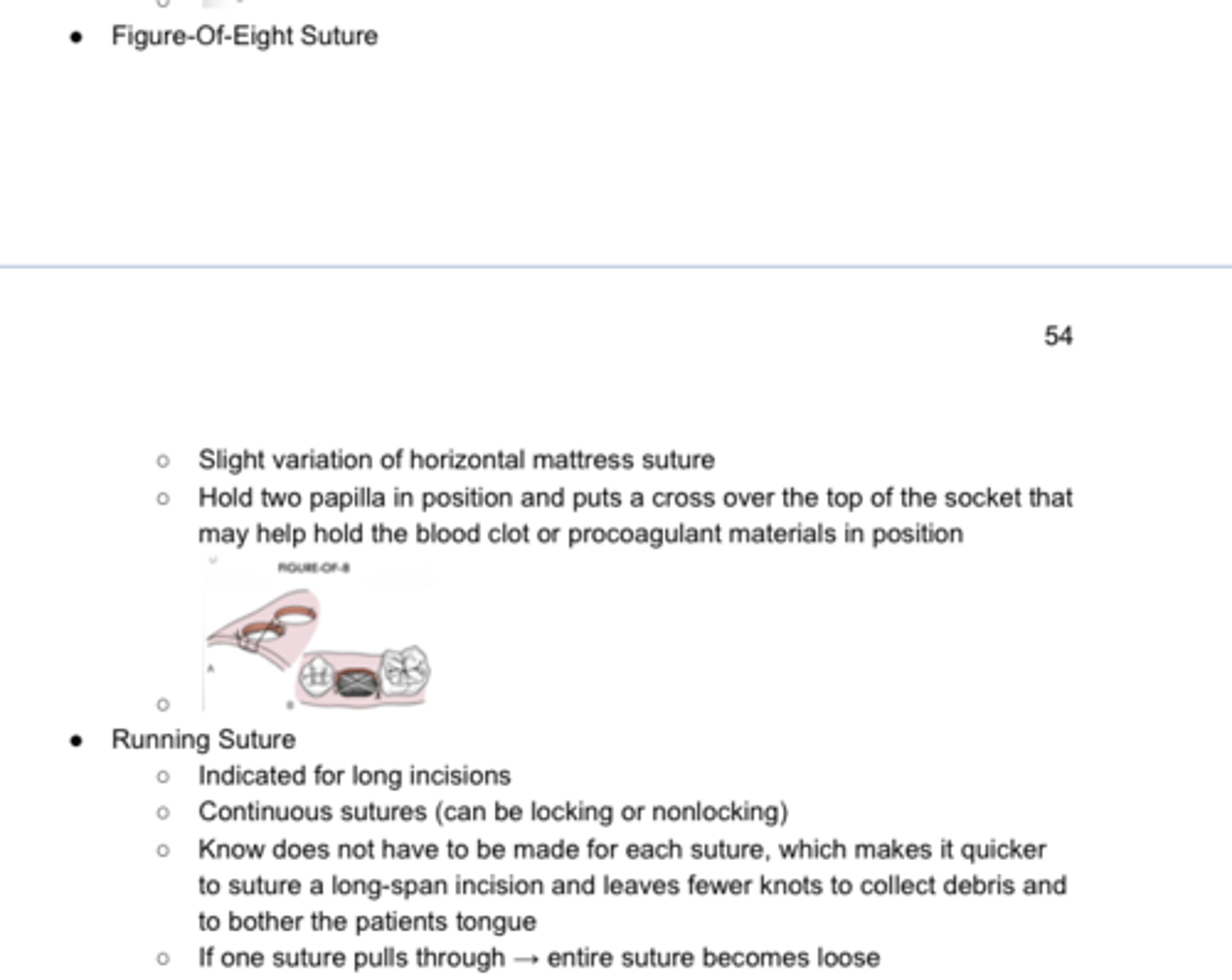
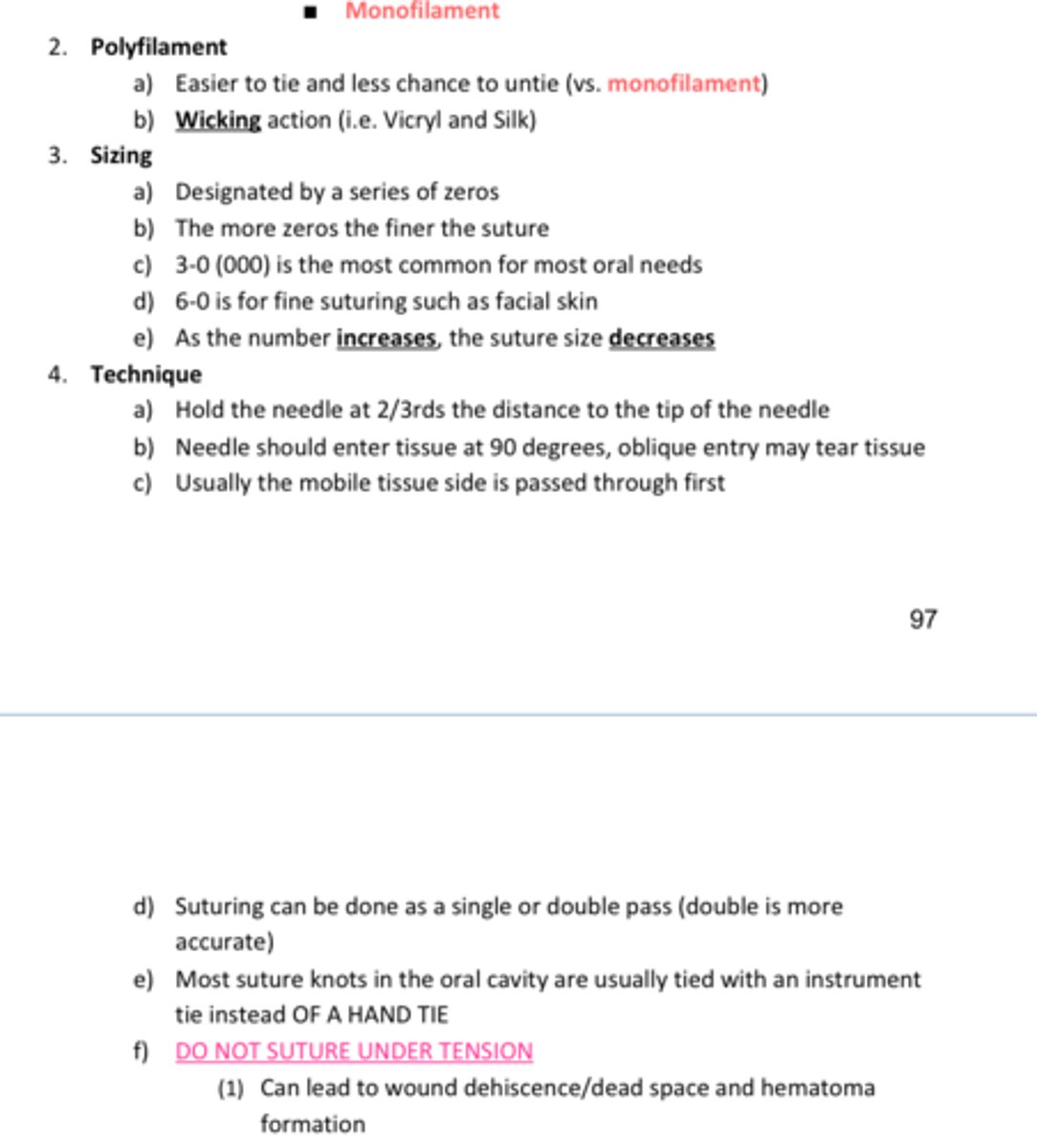
Polyfilament
a) Easier to tie and less chance to untie (vs. monofilament)
b) Wicking action (i.e. Vicryl and Silk)
monofilament or polyfilament suture
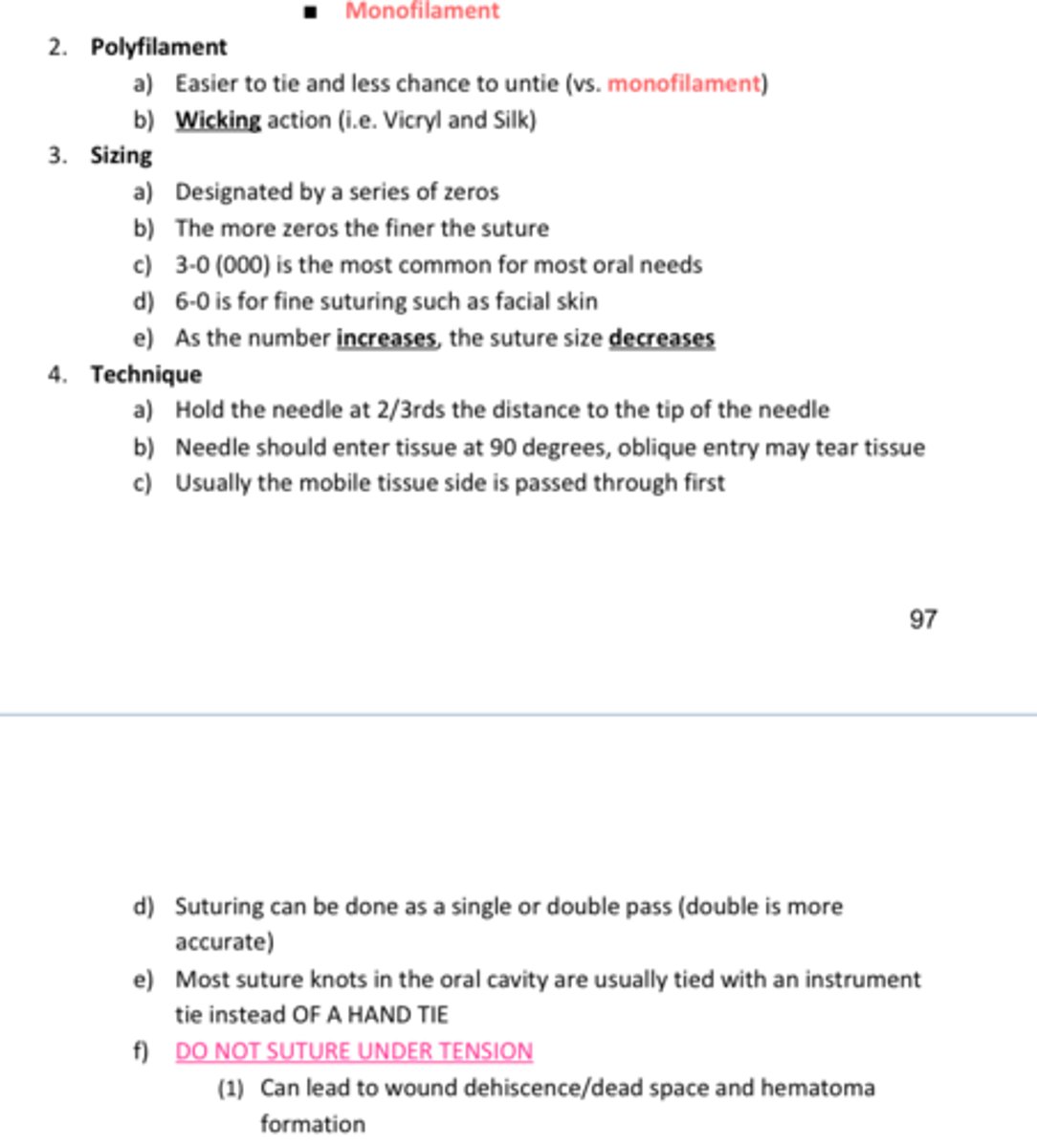
0's
finer
Suture sizing is designated by the amount of ______
The more 0's, the _____ the suture
increases
decreases
6-0!!
For suture sizes, as the number _______, the suture size ________
is 3-0 or 6-0 smaller?
3-0
6-0
______ is the most common for most oral needs
______ is for fine suturing such as facial skin
2/3rds
90
mobile
instrument tie
TENSION
Suture Technique:
a) Hold the needle at _______ the distance to the tip of the needle
b) Needle should enter tissue at ____ degrees, oblique entry may tear tissue
c) Usually the _____ tissue side is passed through first
d) Suturing can be done as a single or double pass (double is more accurate)
e) Most suture knots in the oral cavity are usually tied with an _____ ______ instead of a hand tie
f) Do not suture under _______, it can lead to wound dehiscence/dead space and hematoma formation
instrument tied
Are suture knots mostly instrument tied or hand tied?
below
above
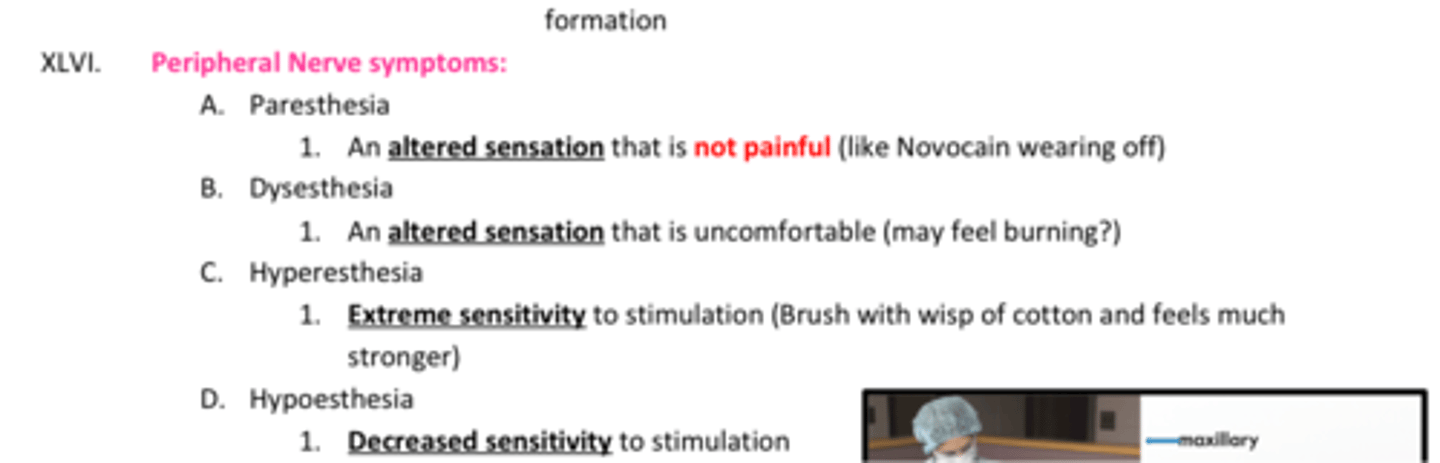
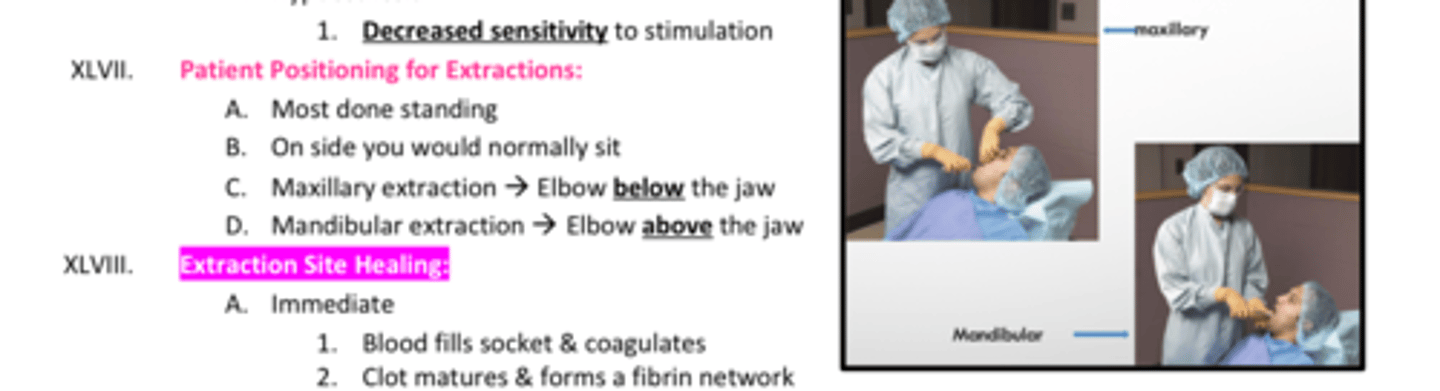
Maxillary extraction: elbow is _____ the jaw
Mandibular extraction: elbow is _____ the jaw
Imediate
Extraction site healing time:
1. Blood fills socket & coagulates
2. Clot matures & forms a fibrin network
3. Clot acts as a scaffold for healing
4. 24-48 hours post extraction the clot is covered by fibrin
5. Most dry sockets caused by excessive hygiene
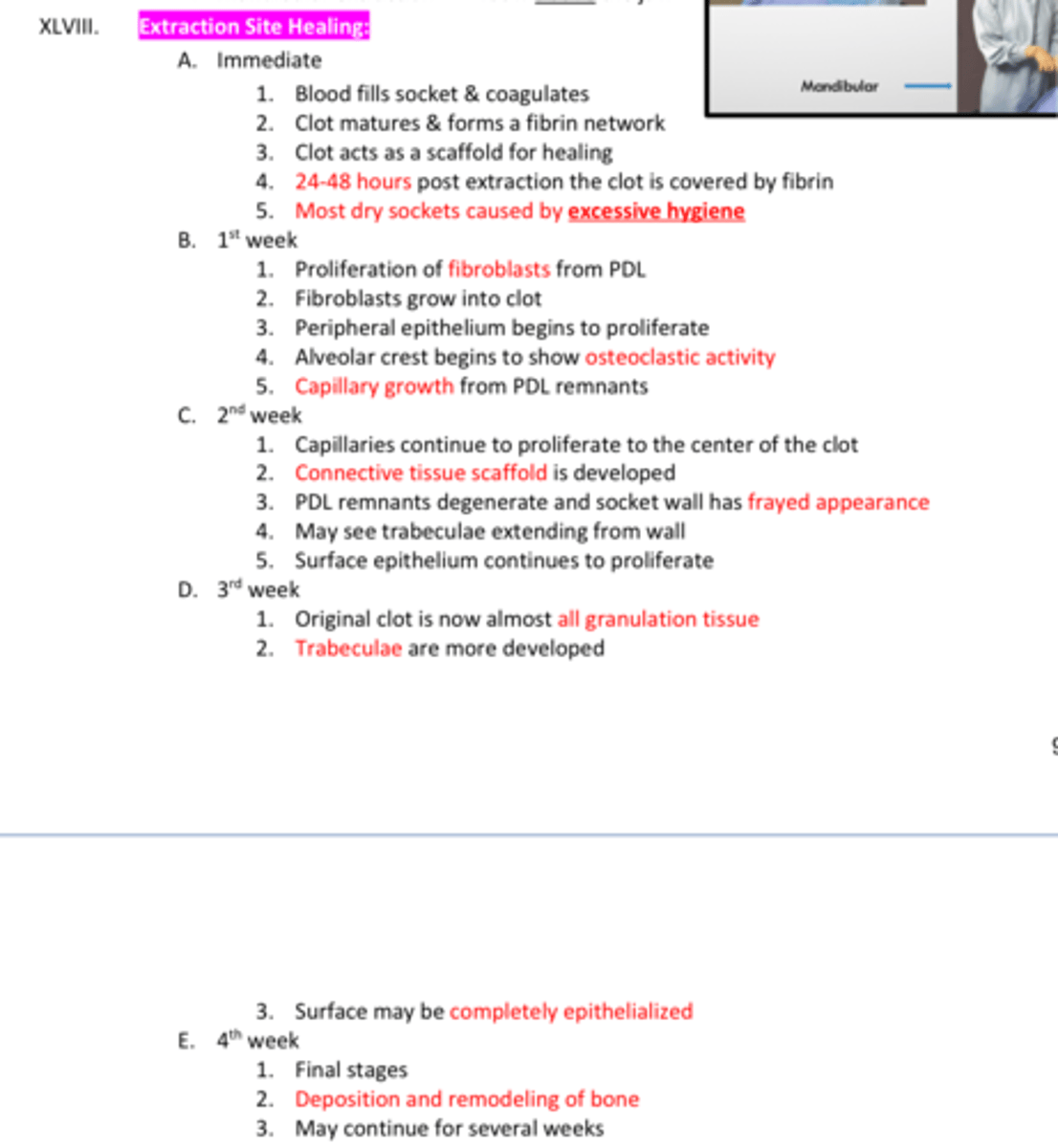
3rd week
Extraction site healing time:
1. Original clot is now almost all granulation tissue
2. Trabeculae are more developed
3. Surface may be completely epithelialized
decreases
increases
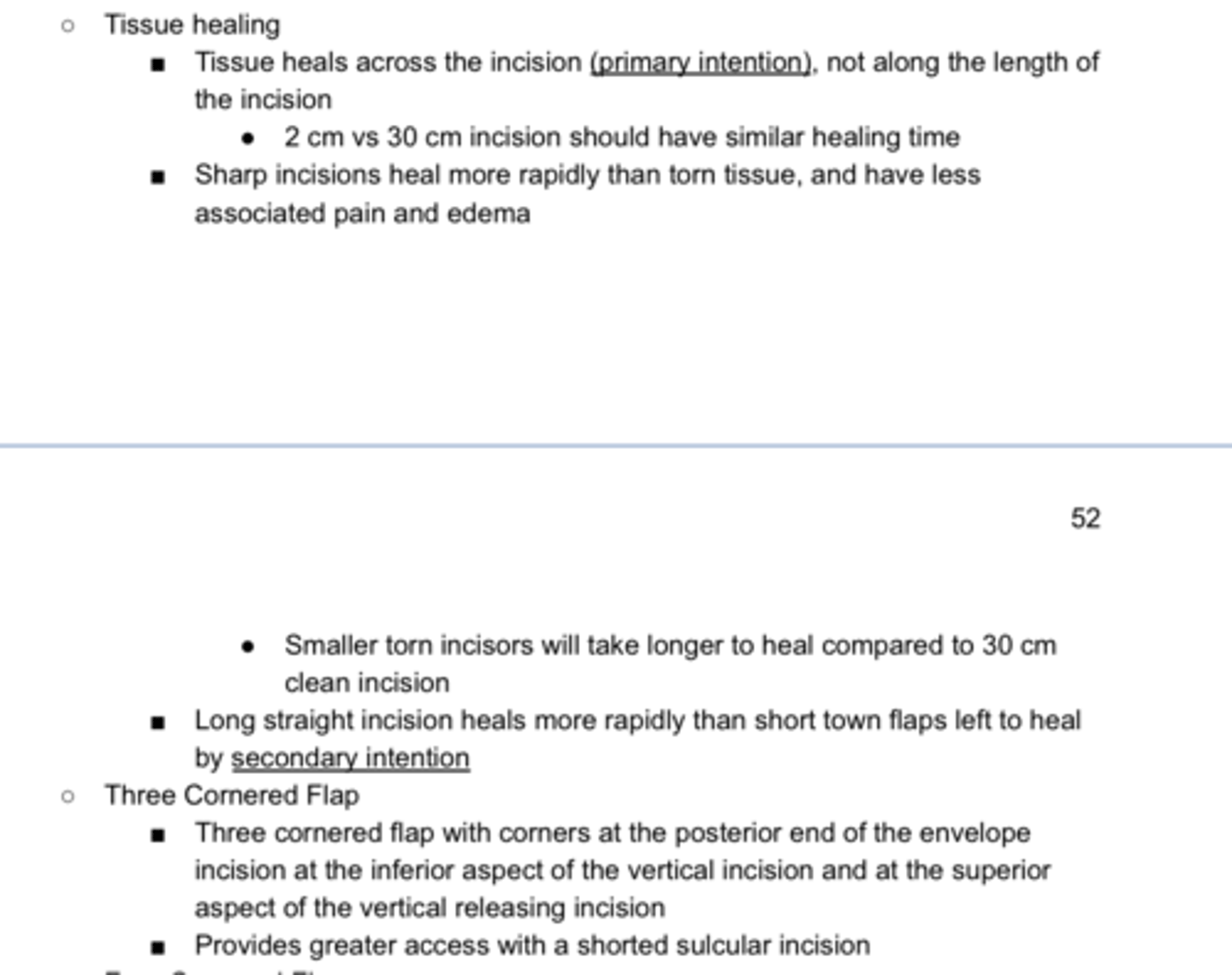
Tension of a surgical flap _____ as exposure and access to surgical site ______
-KNOW
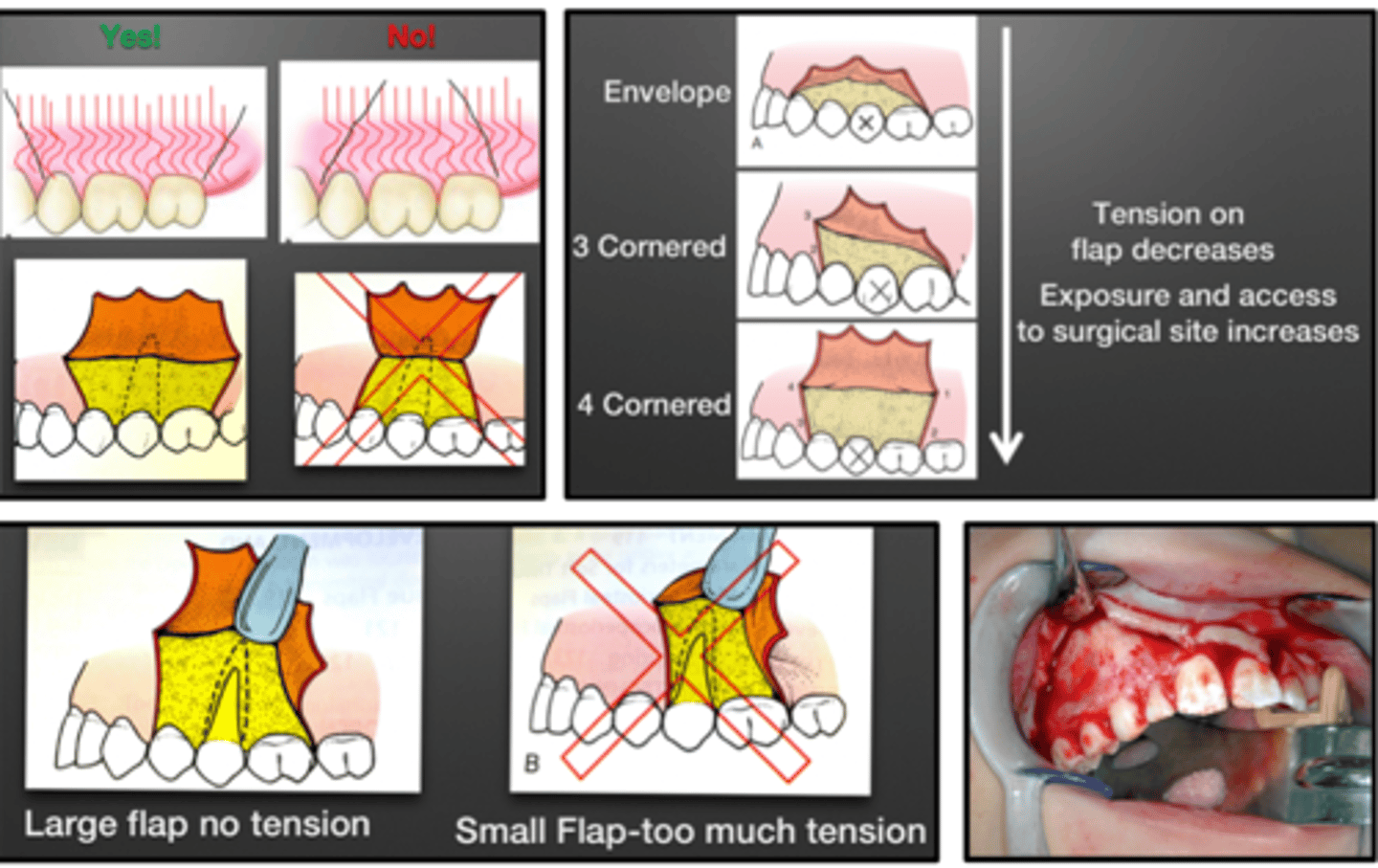
broader
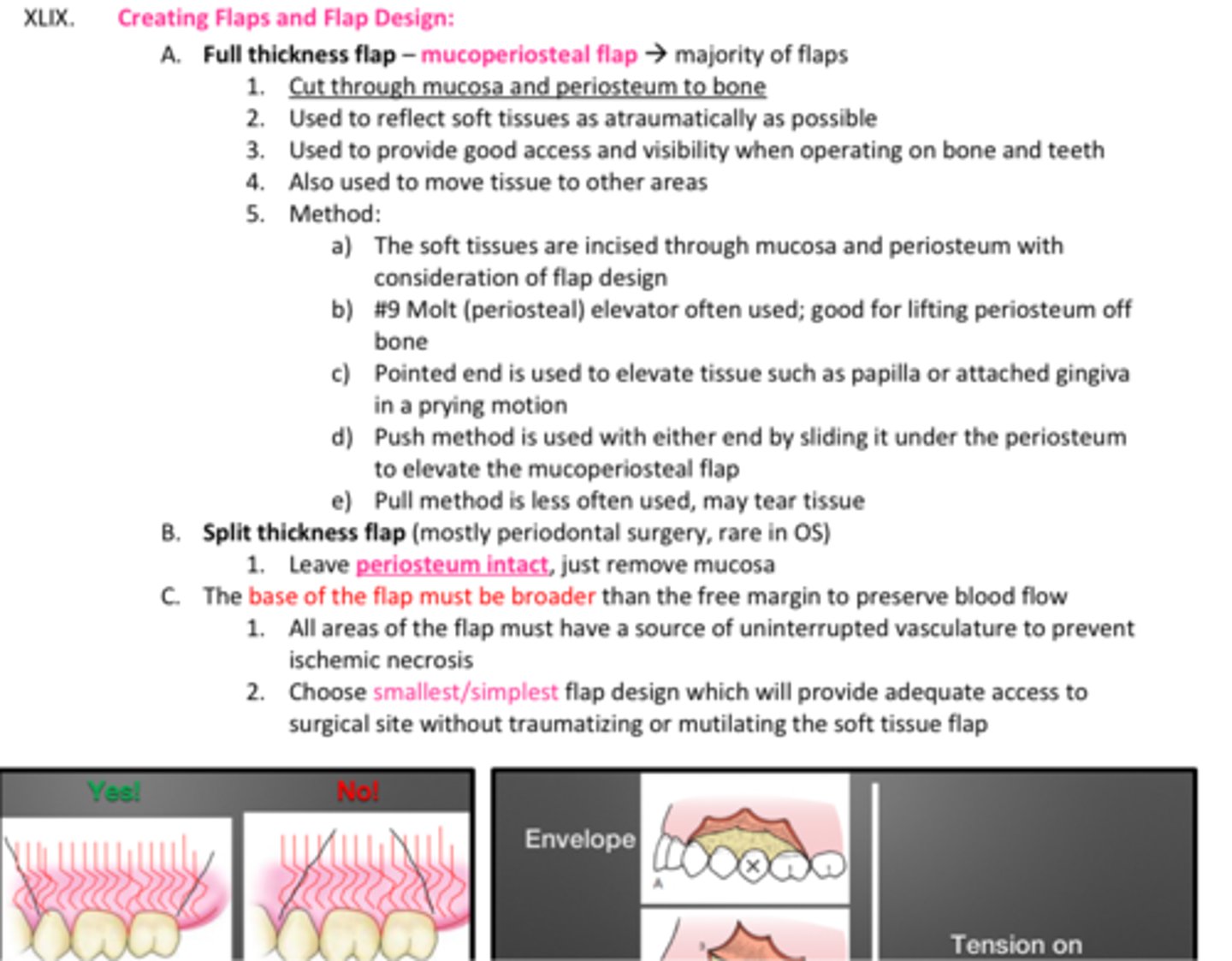
The base of the flap must be _____ than the free margin to preserve blood flow
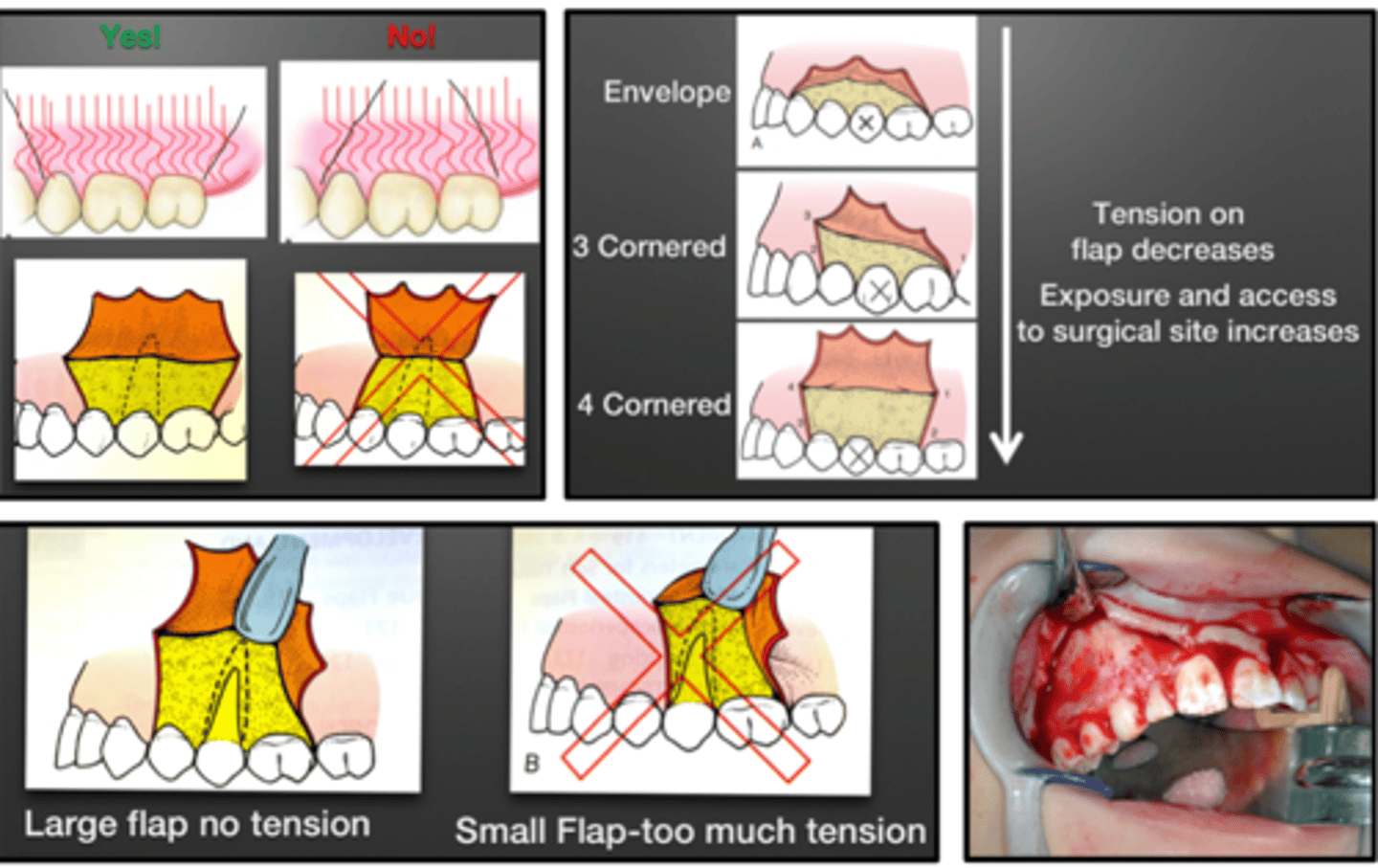
Review everything about Flap design - Kelseys
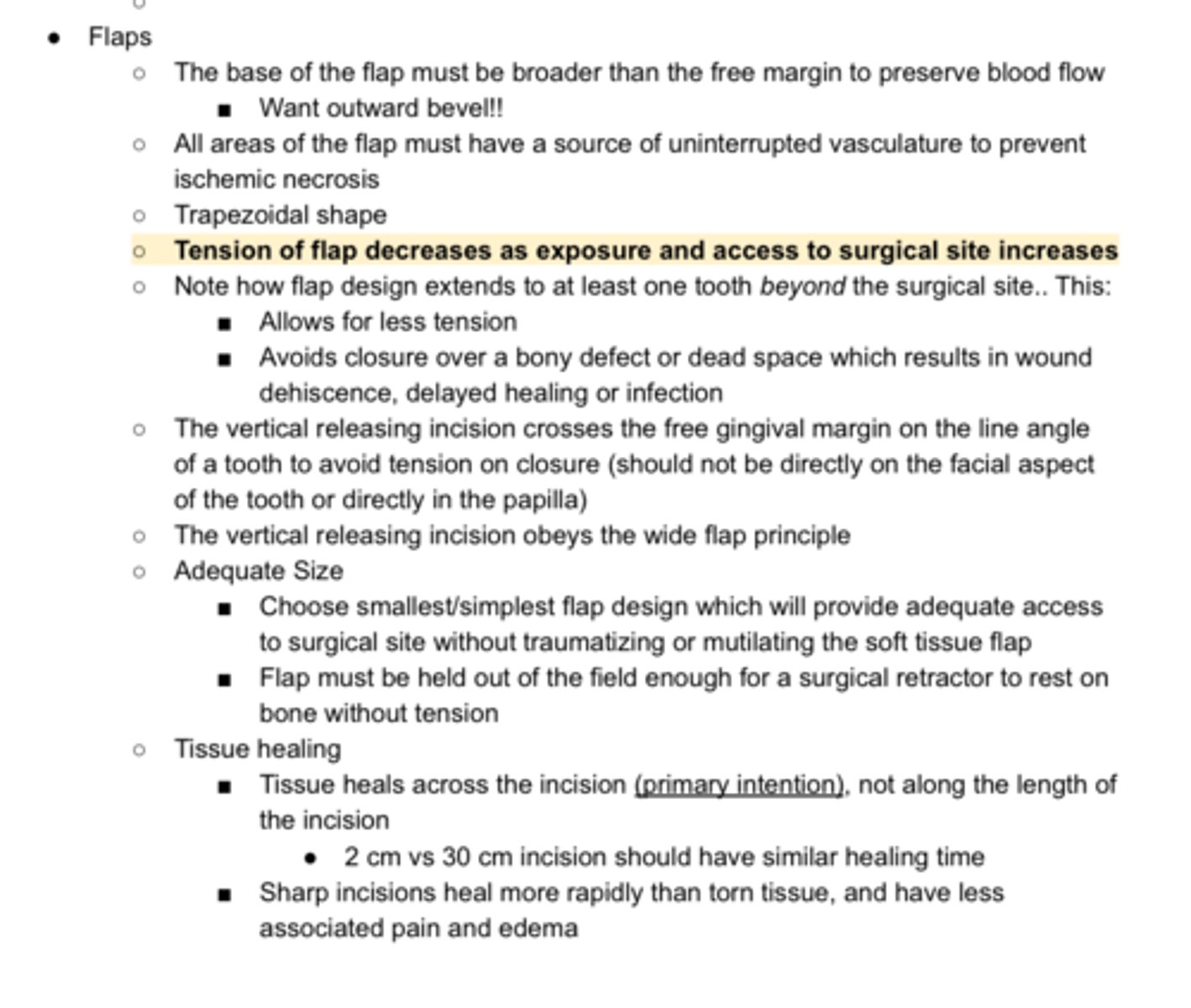
Review everything about Flap design - Julias
across
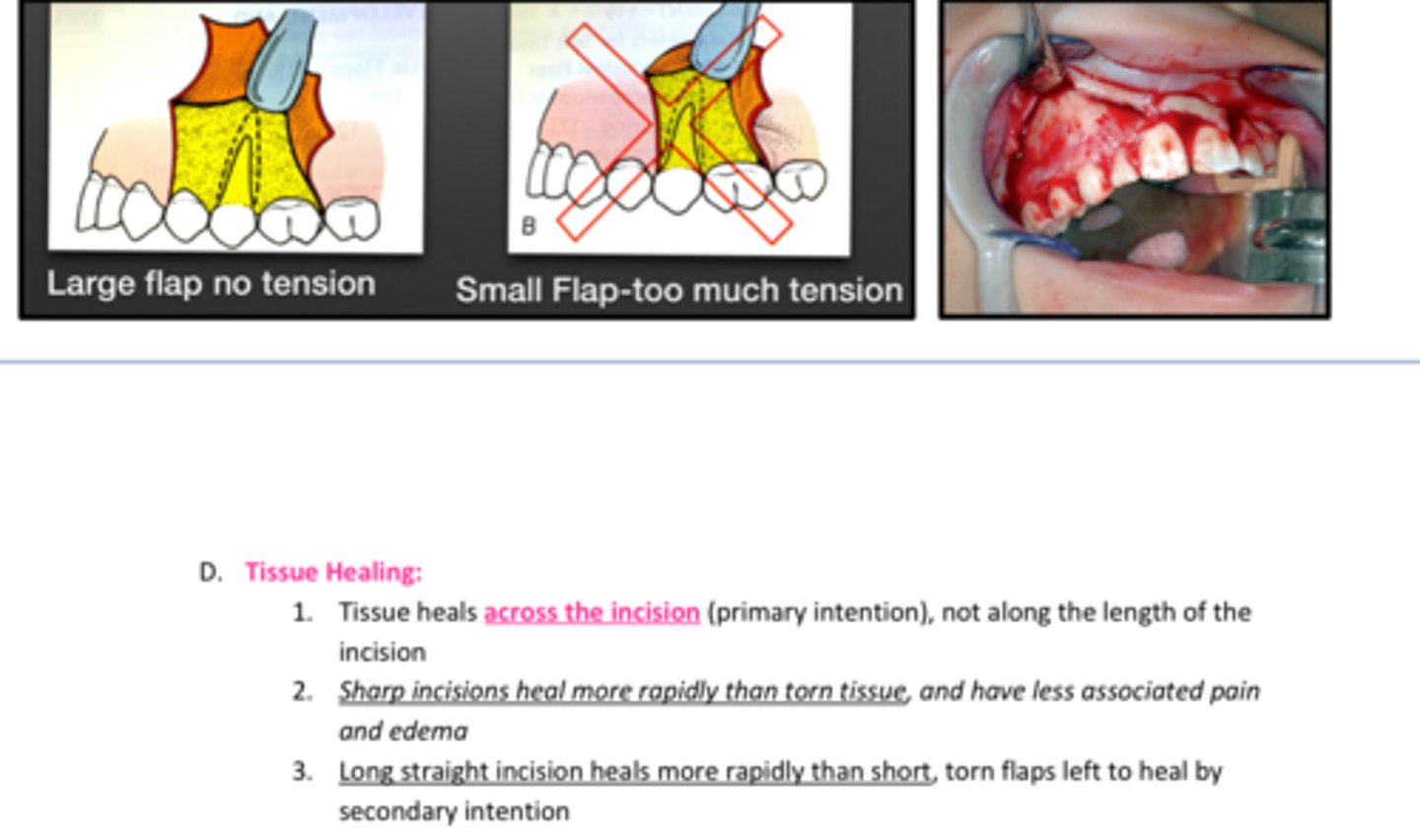
NOT along the length of the incision
Tissue heals ______ the incision (primary intention)
True
T/F: Long straight incision heals more rapidly than short, torn flaps left to heal by secondary intention
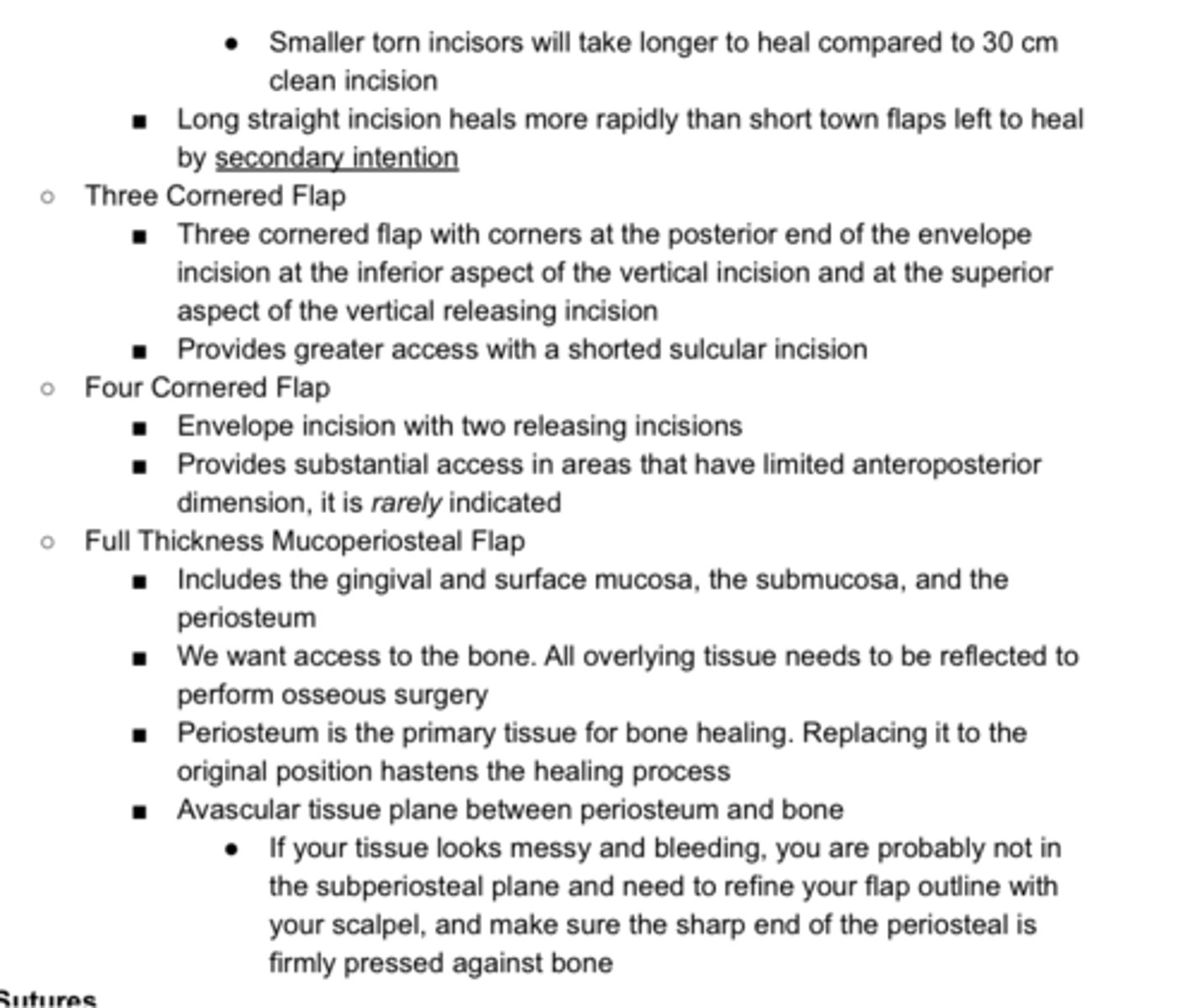
Review protocol for Leaving Root Tips!!
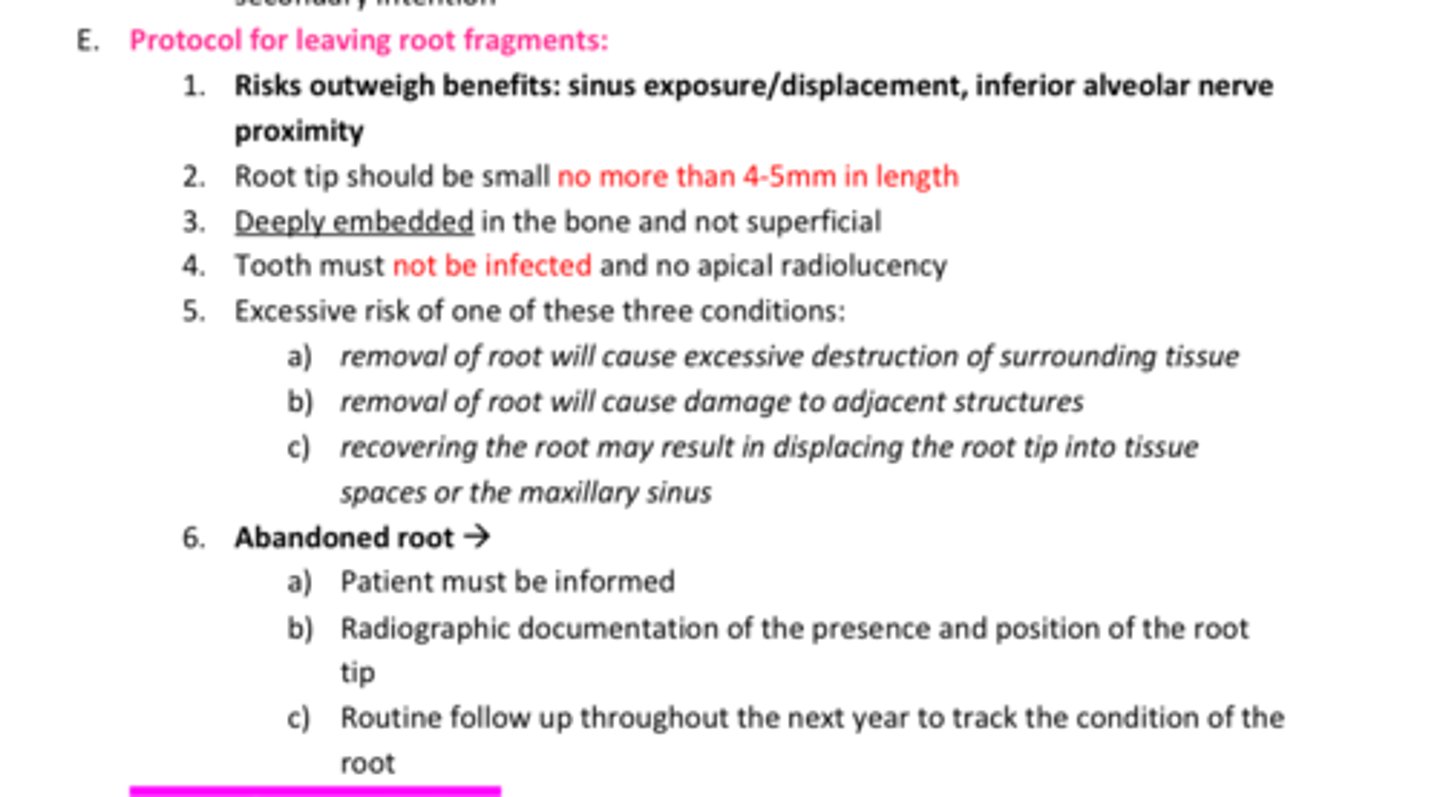
4-5
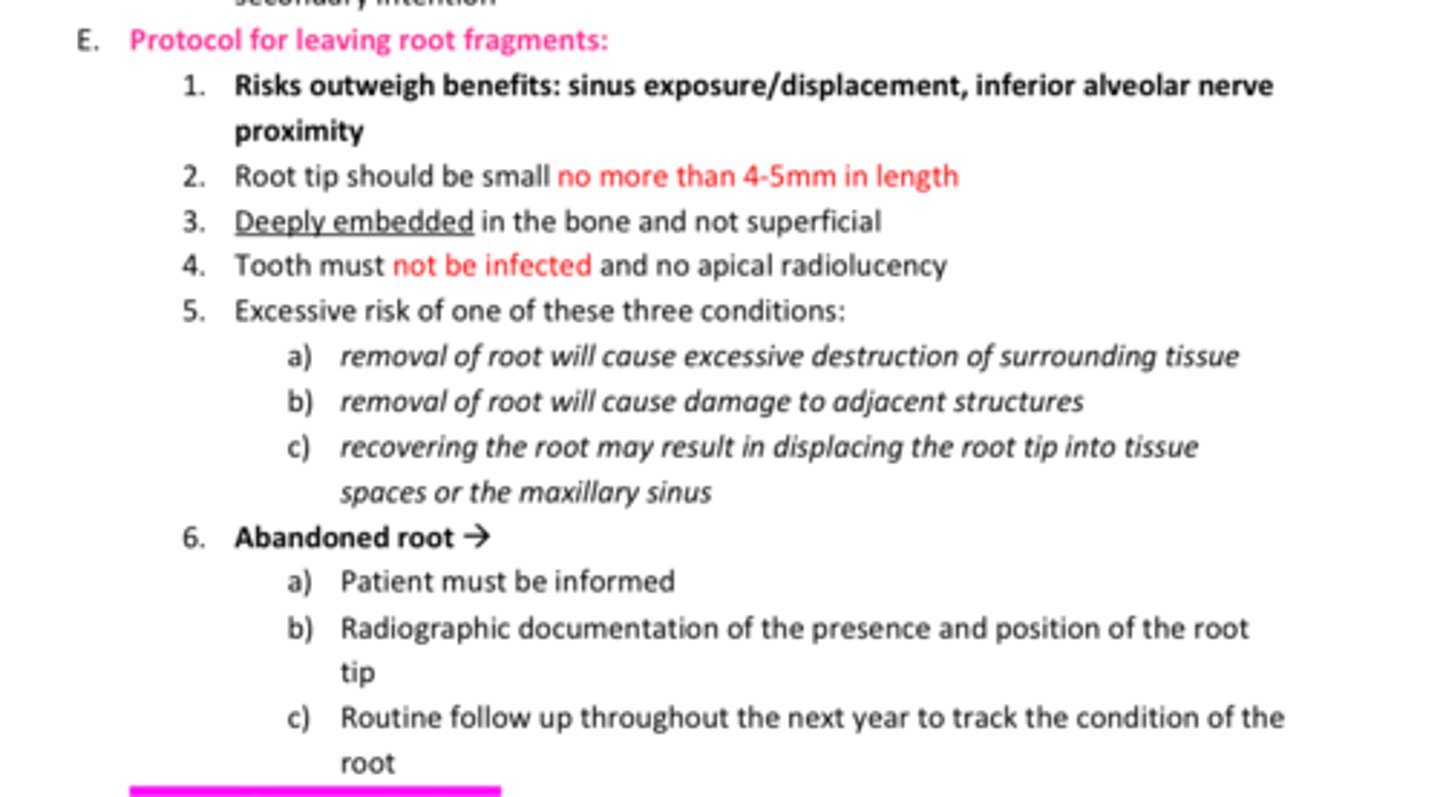
Protocol for Leaving Root Tips!!
1. Risks outweigh benefits: sinus exposure/displacement, inferior alveolar nerve
proximity
Root tip should be small no more than ___-___mm in length
Deeply embedded in the bone and not superficial
Tooth must not be infected and no apical radiolucency
Excessive risk of one of these three conditions:
a) removal of root will cause excessive destruction of surrounding tissue
b) removal of root will cause damage to adjacent structures
c) recovering the root may result in displacing the root tip into tissue spaces or the maxillary sinus
- review last part for Abandoned root!!
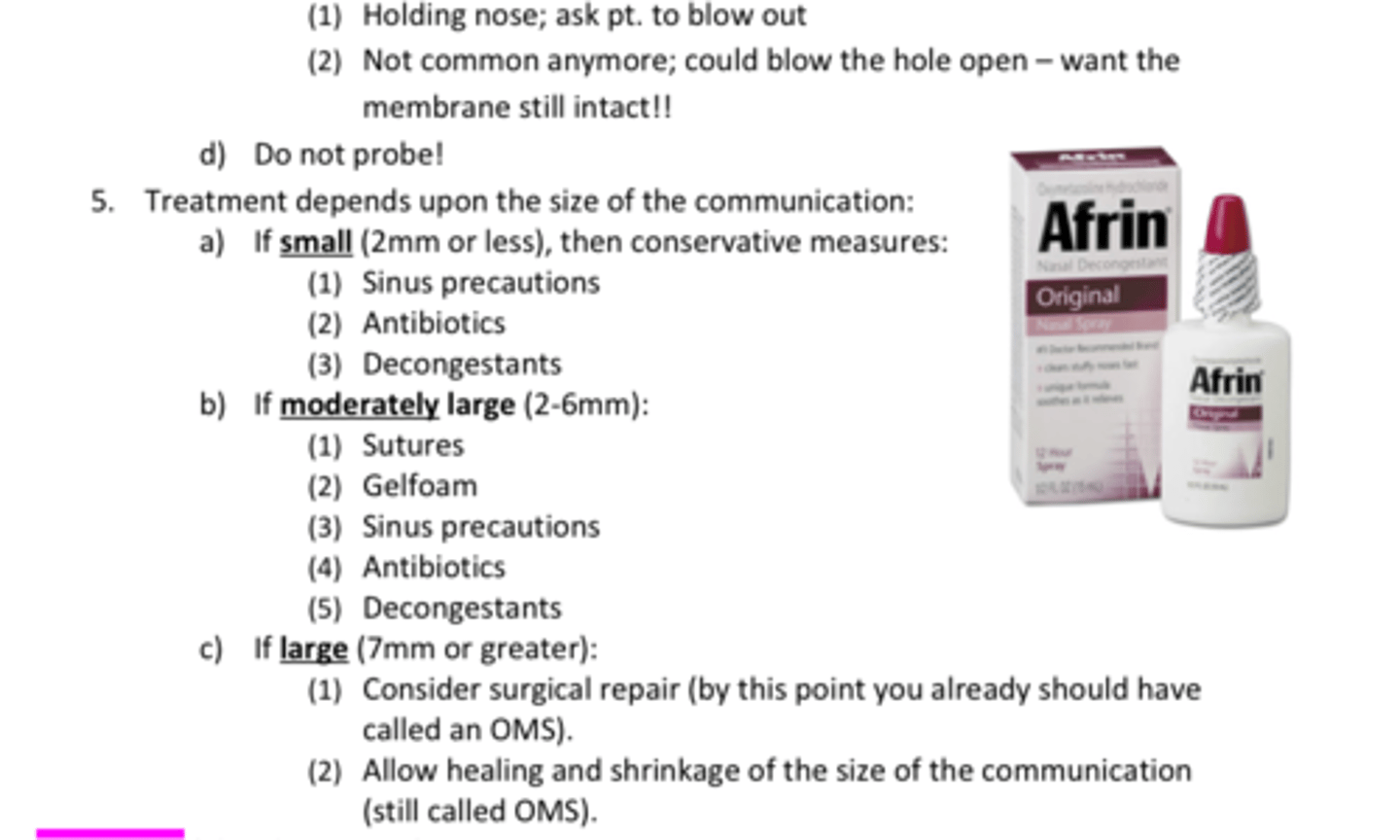
Alveolar Osteitis
**Dry Socket is aka
Dry socket
Alveolar Osteitis is aka
Dry Socket
____ _____ is aka Alveolar osteitis,
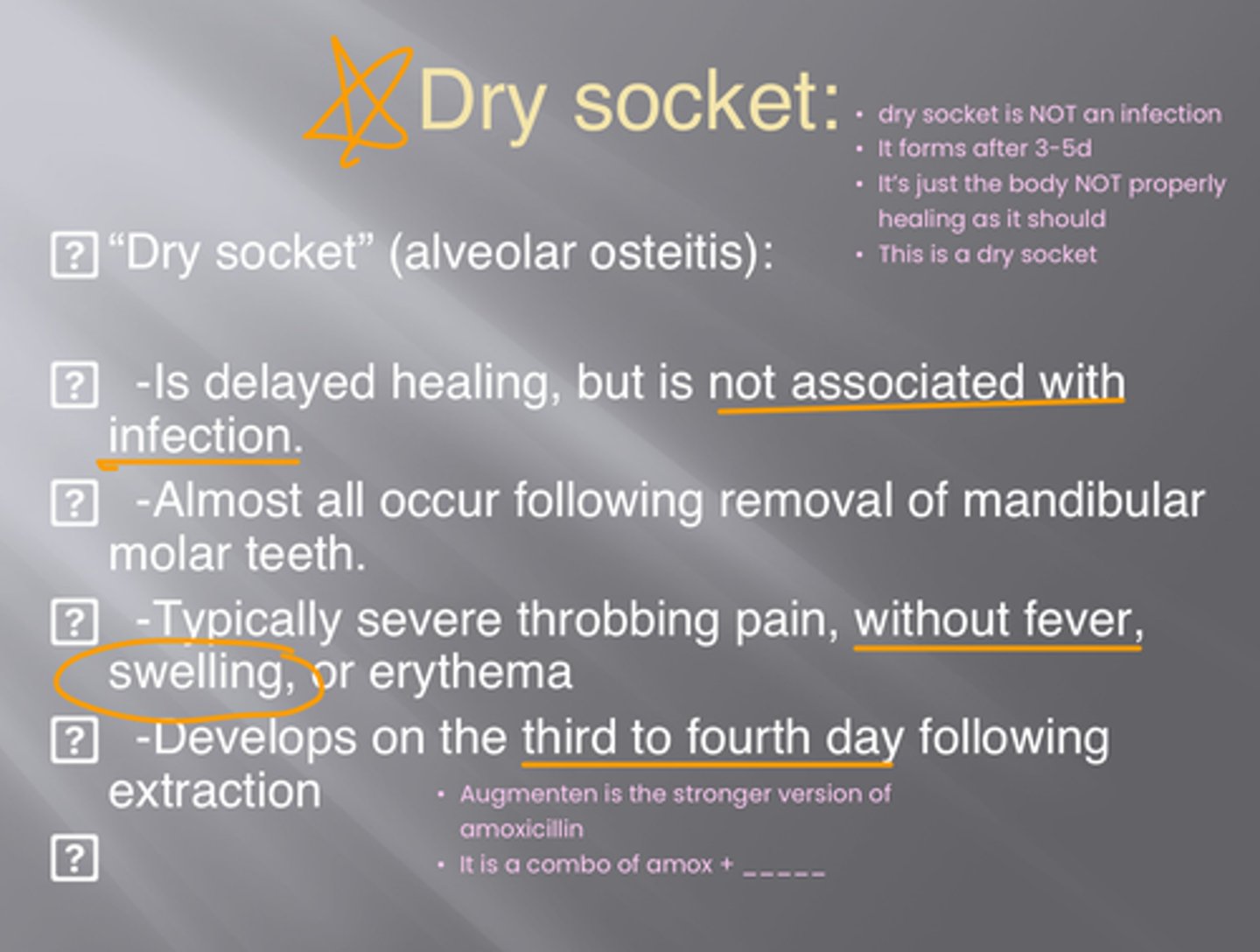
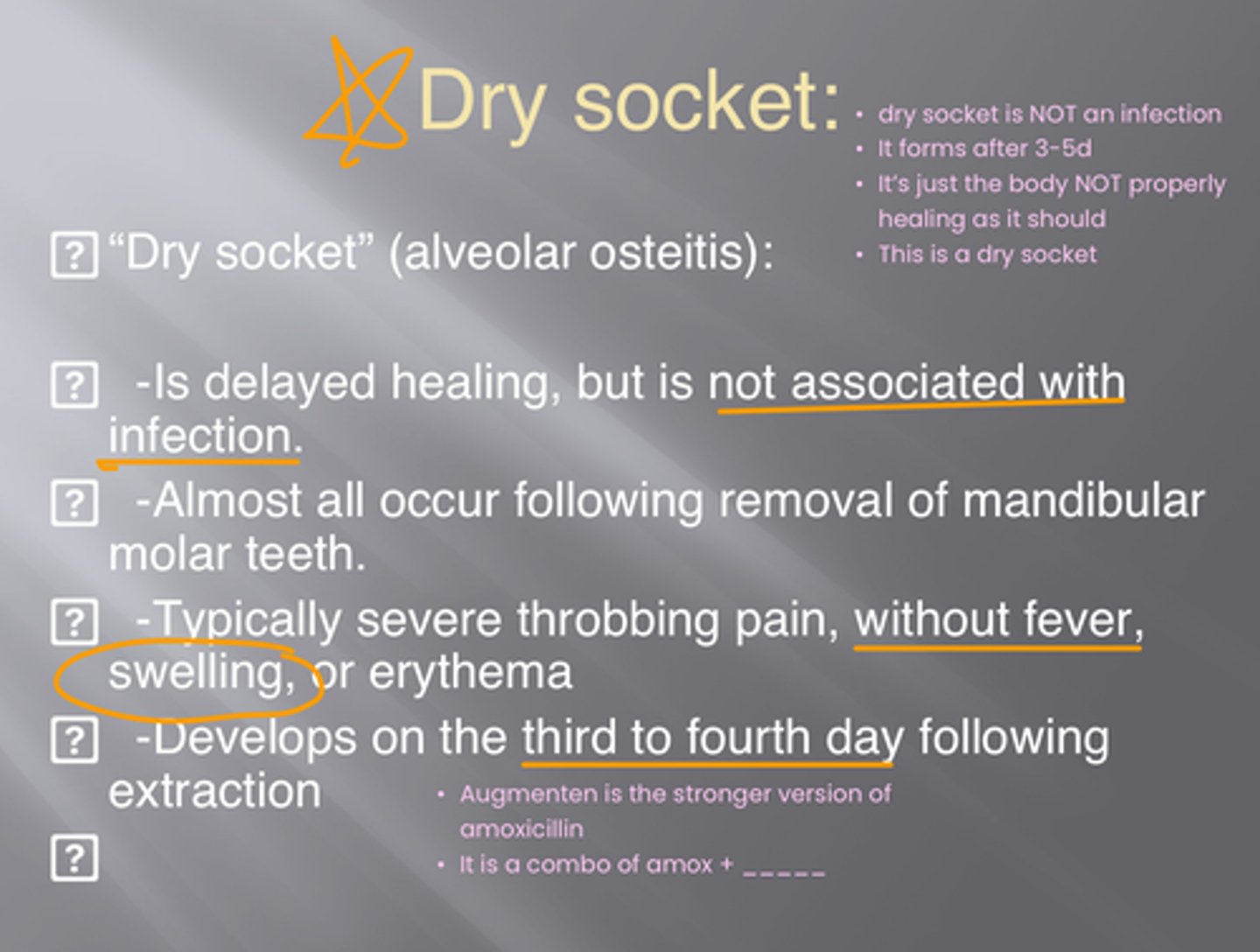
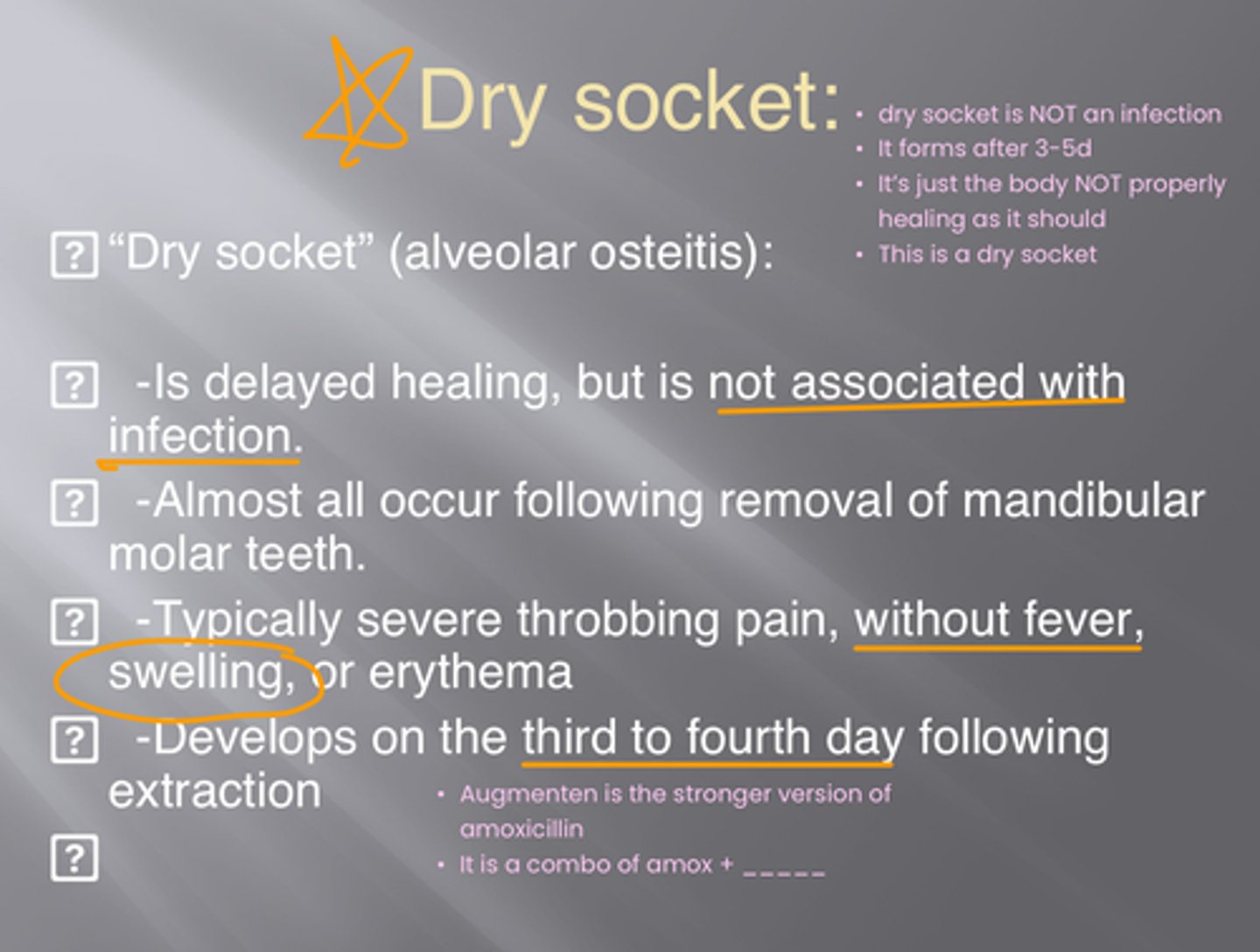
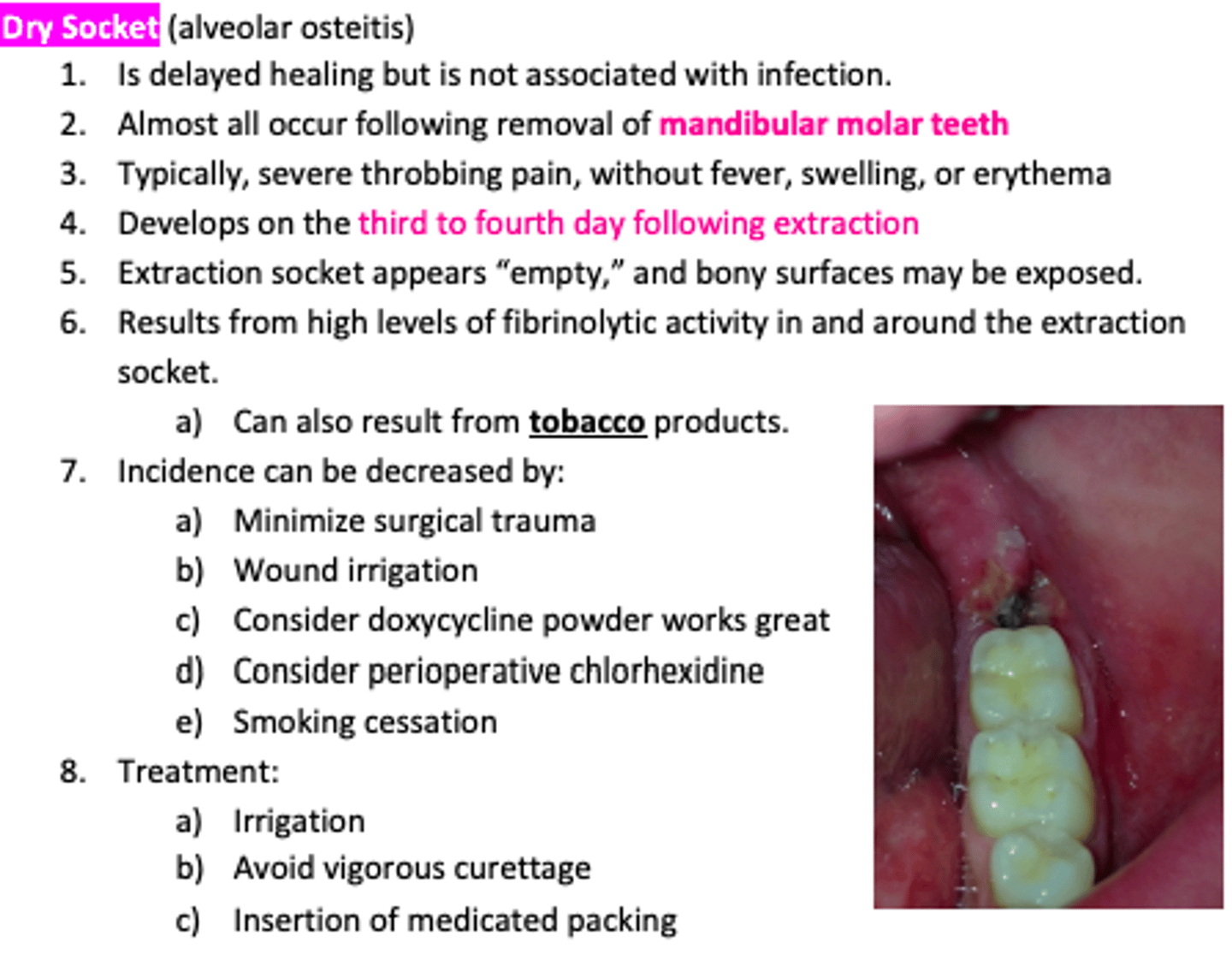
Delayed healing of extraction site that is NOT associated w infection , almost always occur following removal of mandibular molar teeth, typically causes severe throbbing pain without fever or swelling
- develops on the 3rd or 4th day after ext
- on quiz/KNOW
False
- dry socket is NOT an infection
- its just the body not healing as it should
- know
Dry socket is an infection (T/F)
What causes Dry socket
- fibrinolysis= process of removing (lyzing) a blood clot that formed
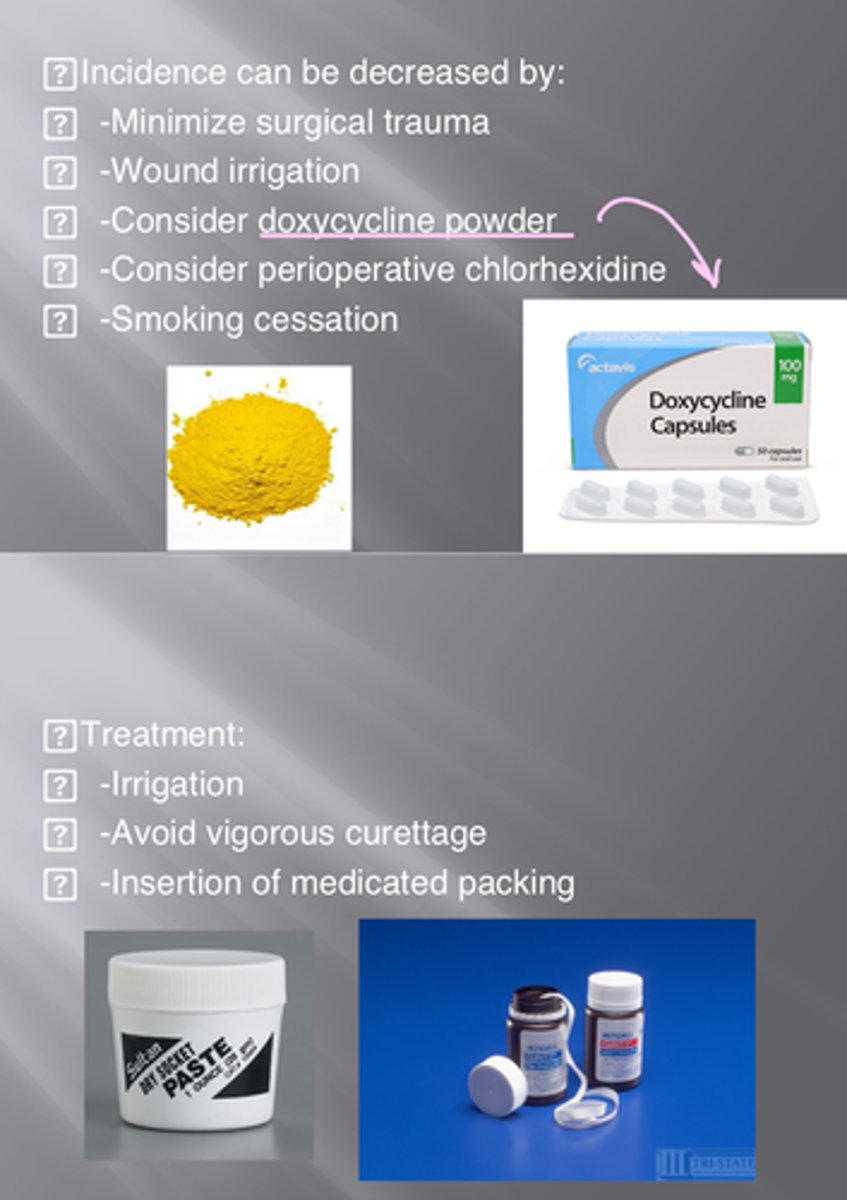
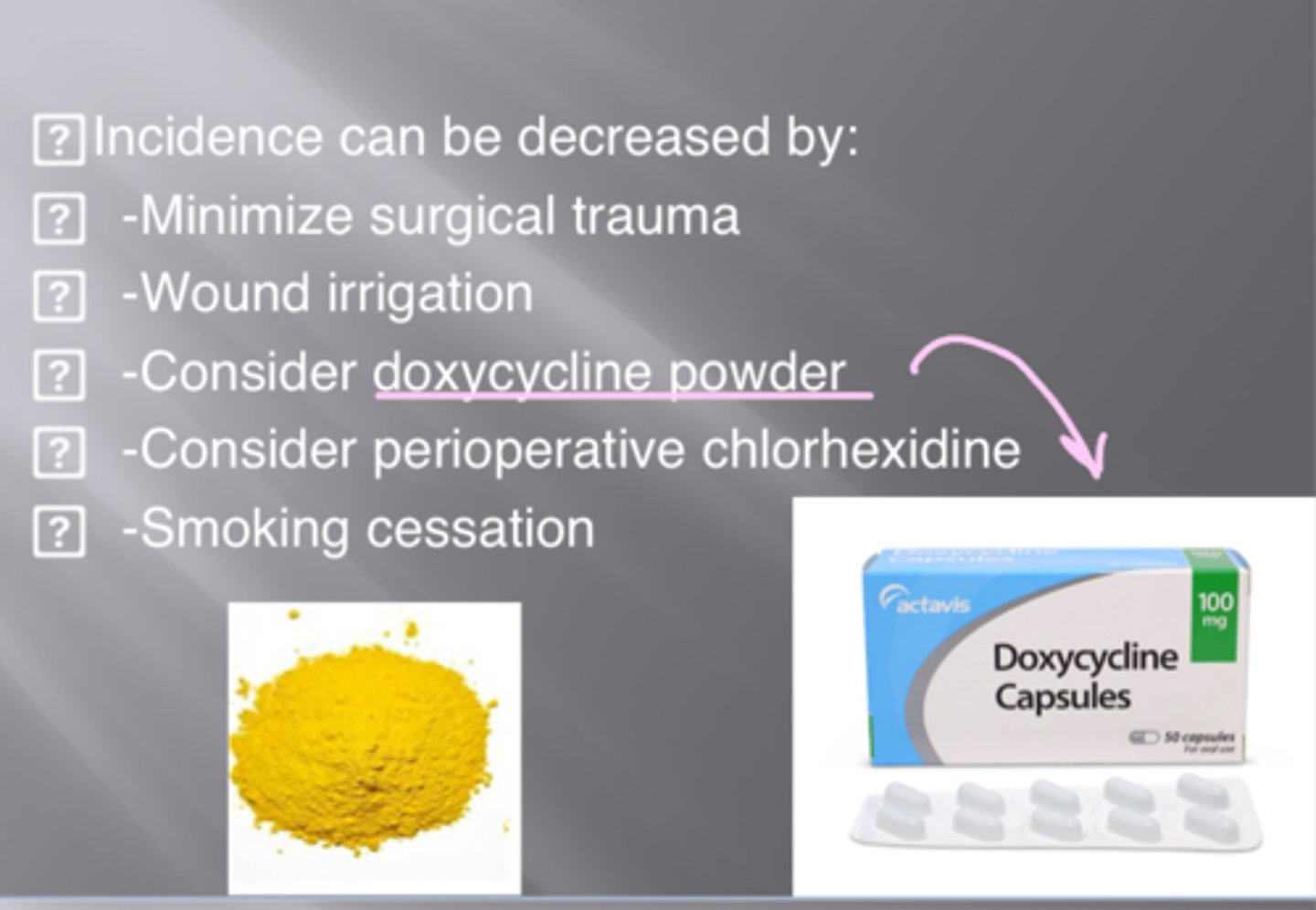
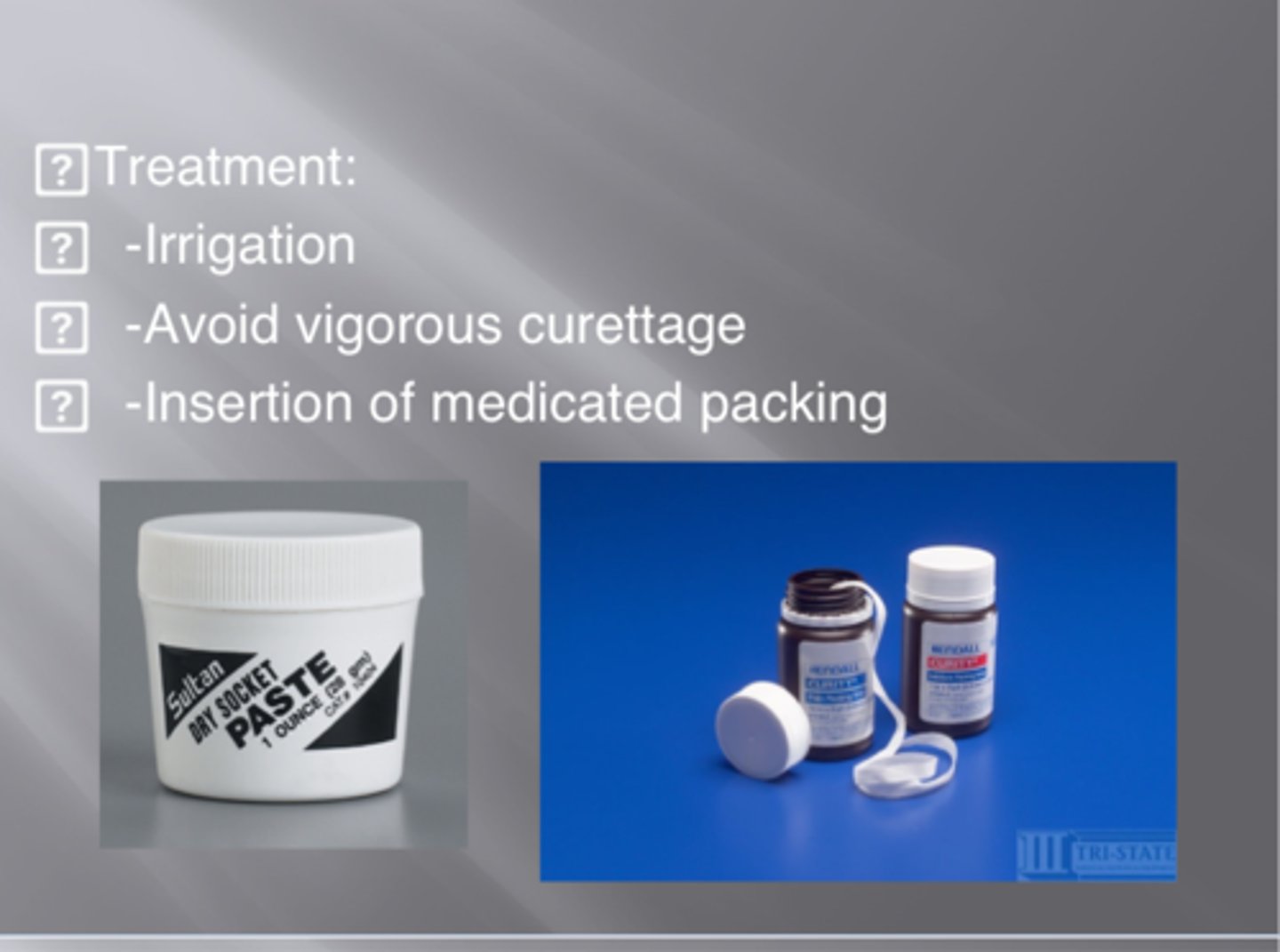
Eugenol
What is dry socket paste made of
- refer to photo
Mandibular molars
3rd-4th day
Almost all Dry Sockets occur following the removal of ______ ______ & develop ___ to ____ day after extraction
-KNOW!!!
- NOT an infection
Dry sockets
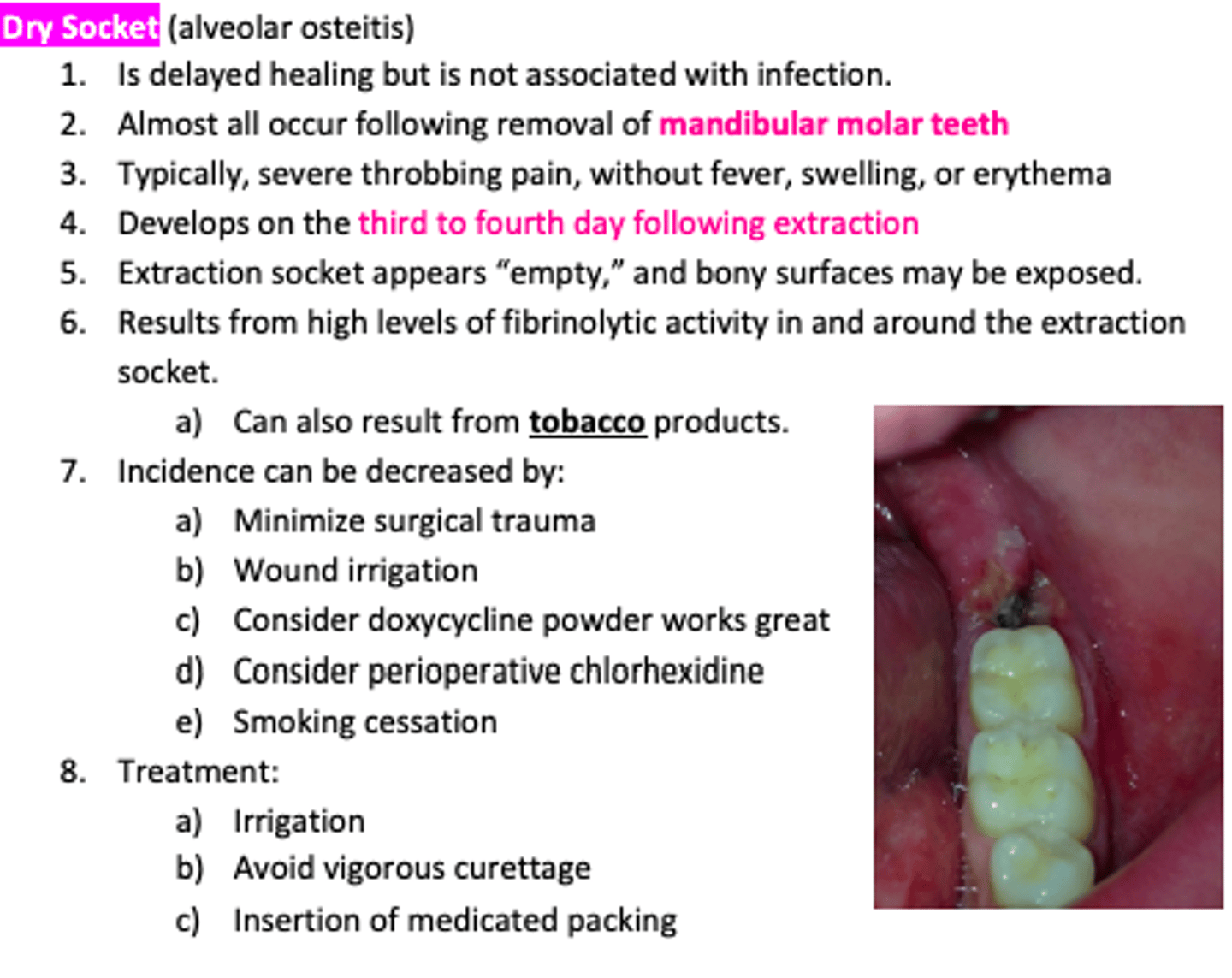
OS Instruments review - Julia
Slide 101-104
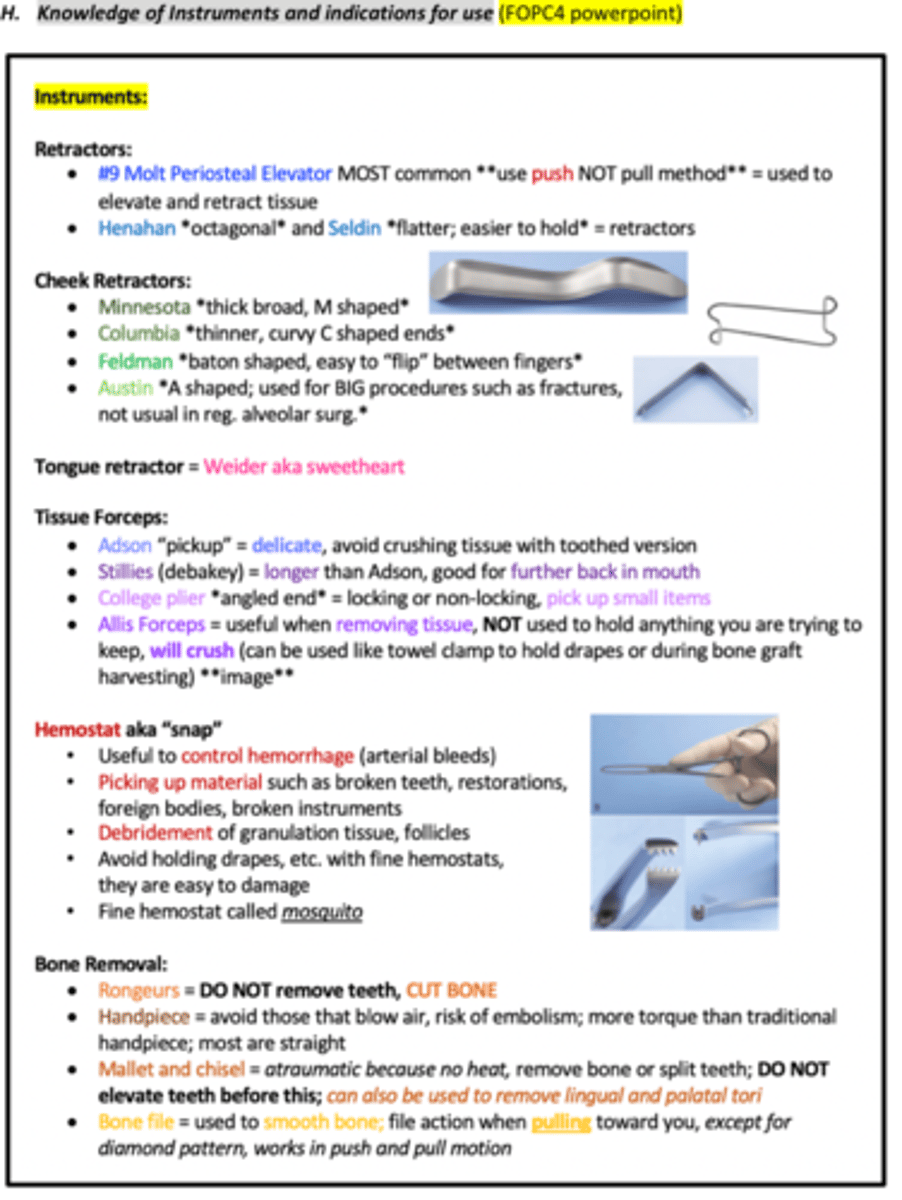
OS Instruments review - Julia
Slide 101-104
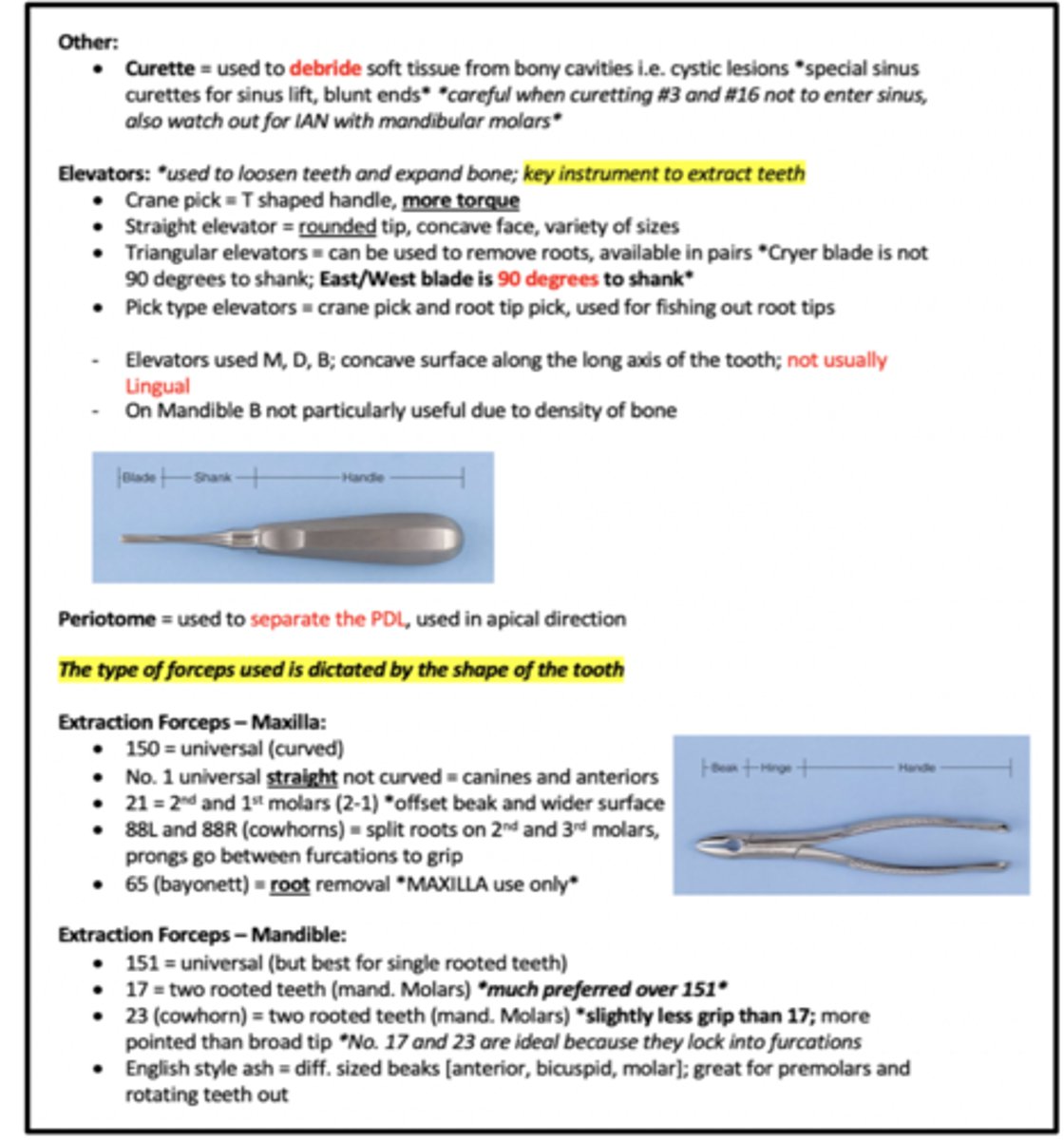
OS Instruments review - Kelsey
Slide 54-63
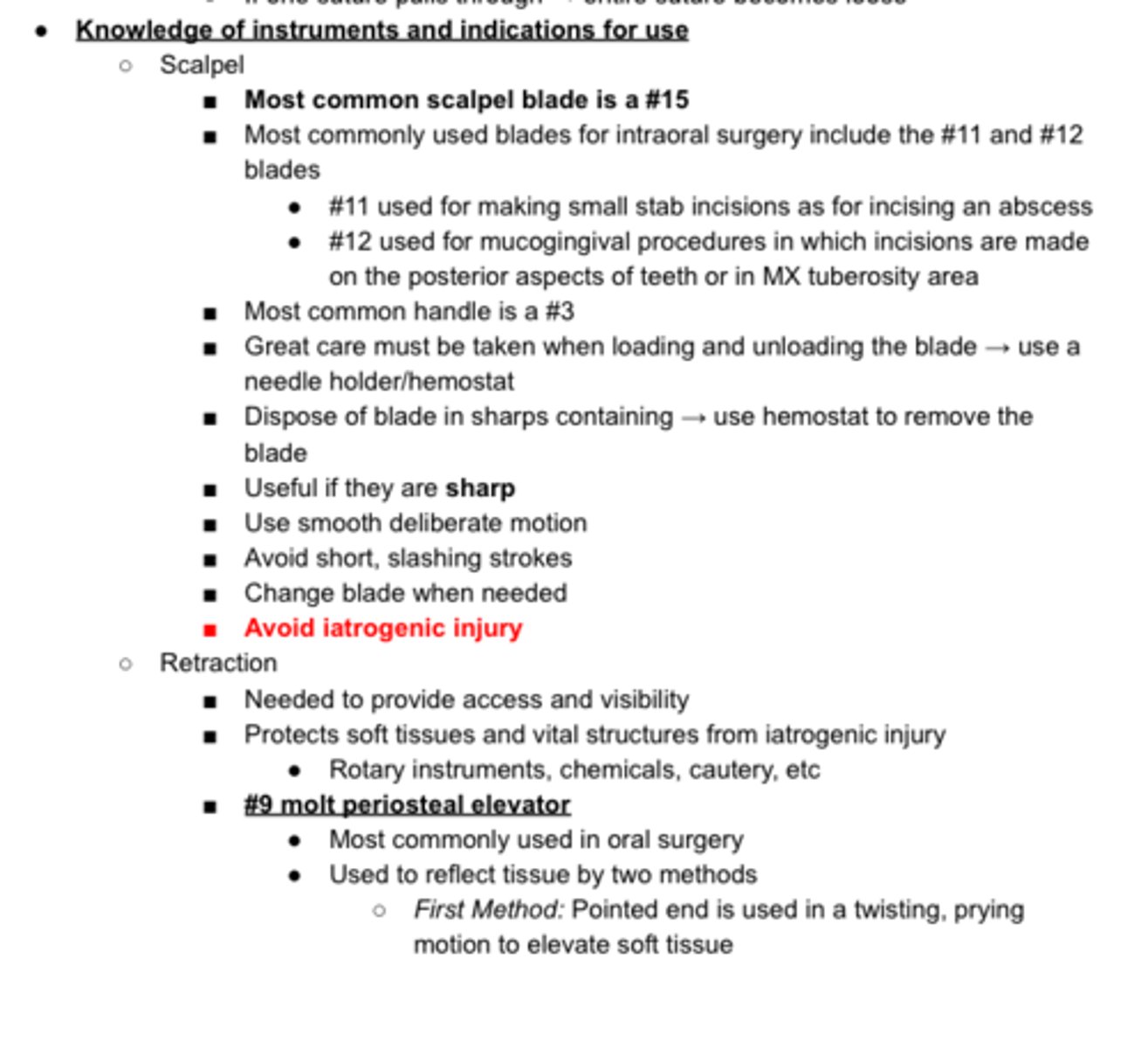
OS Instruments review - Kelsey
Slide 54-63
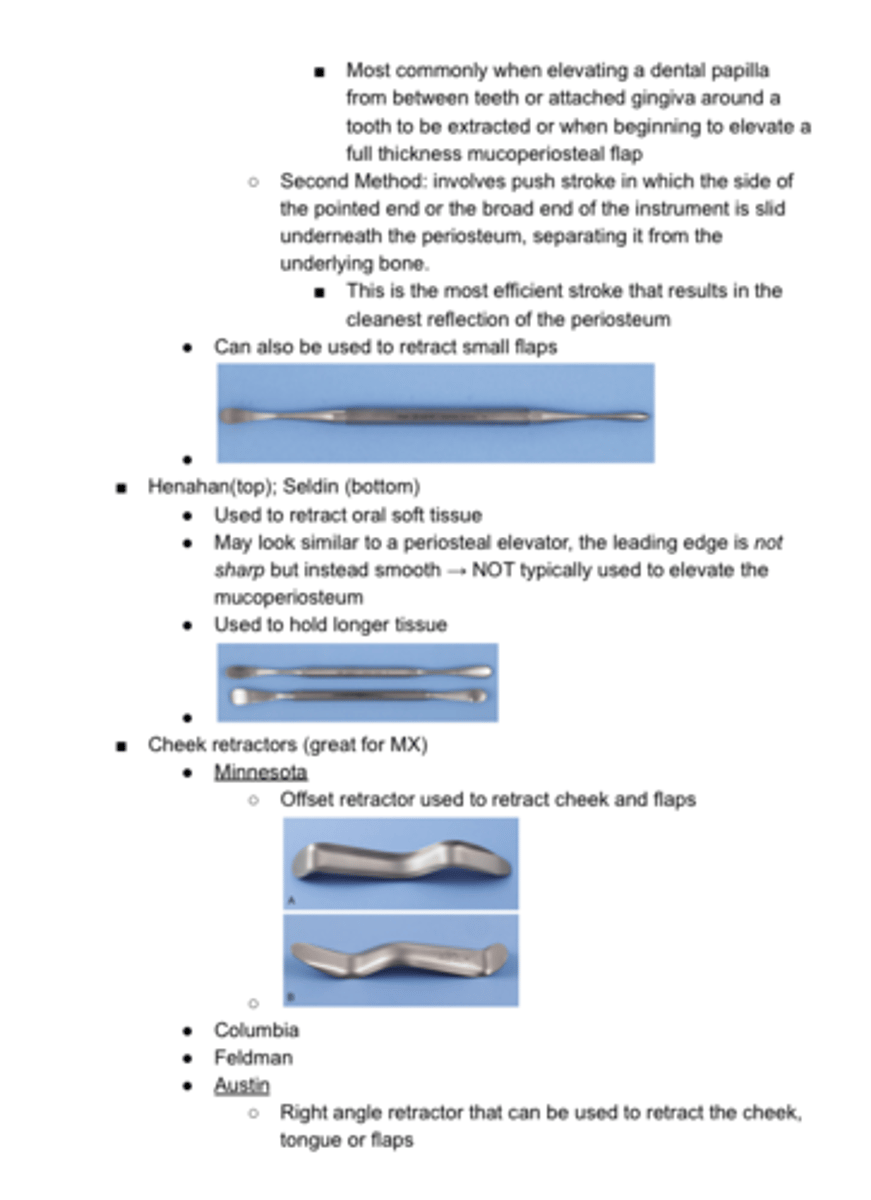
OS Instruments review - Kelsey
Slide 54-63
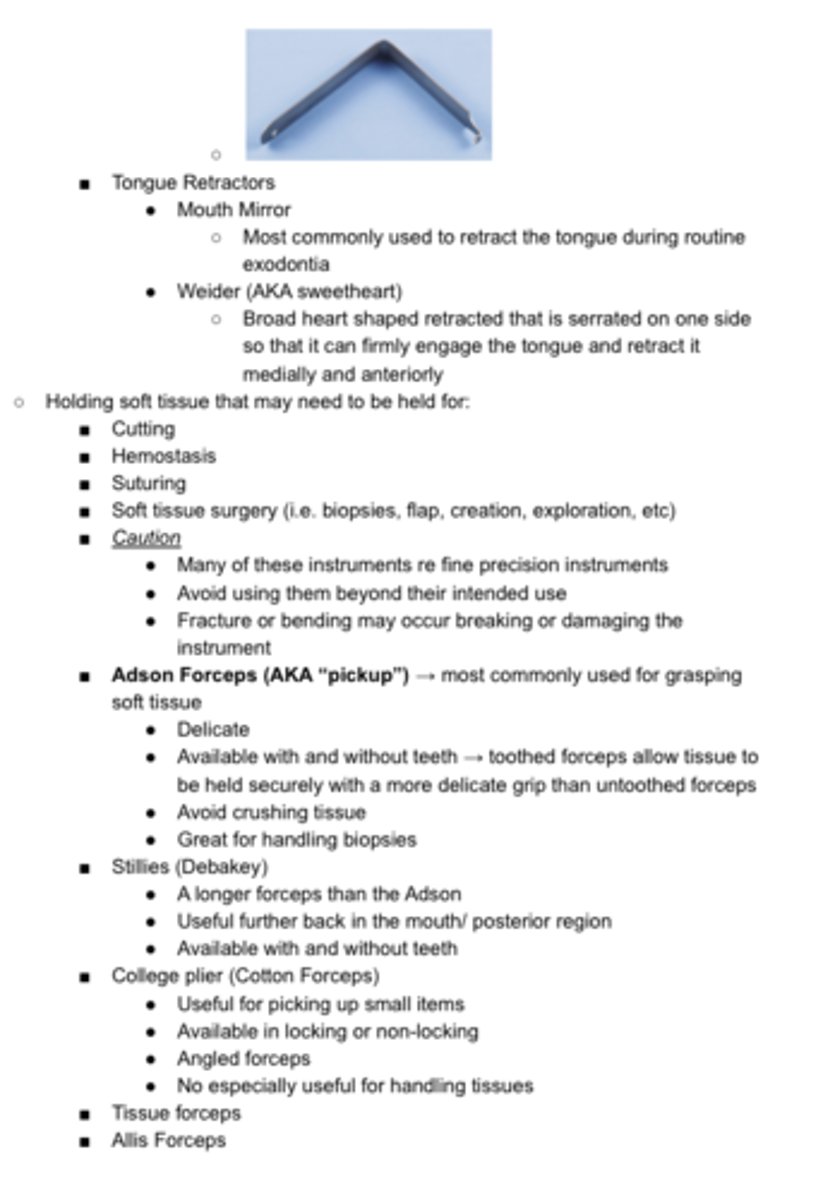
OS Instruments review - Kelsey
Slide 54-63
OS Instruments review - Kelsey
Slide 54-63
OS Instruments review - Kelsey
Slide 54-63
OS Instruments review - Kelsey
Slide 54-63
OS Instruments review - Kelsey
Slide 54-63
OS Instruments review - Kelsey
Slide 54-63
OS Instruments review - Kelsey
Slide 54-63
OS Instruments review - Kelsey
Slide 54-63
OS Instruments review - Kelsey
Slide 54-63
OS Instruments review - Kelsey
Slide 54-63
OS Instruments review - Kelsey
Slide 54-63
OS Instruments review - Kelsey
Slide 54-63
Scalpel blade #15 (15 blade)
#3
Most common OS scalpel blade #=
Most common OS scalpel handle #=
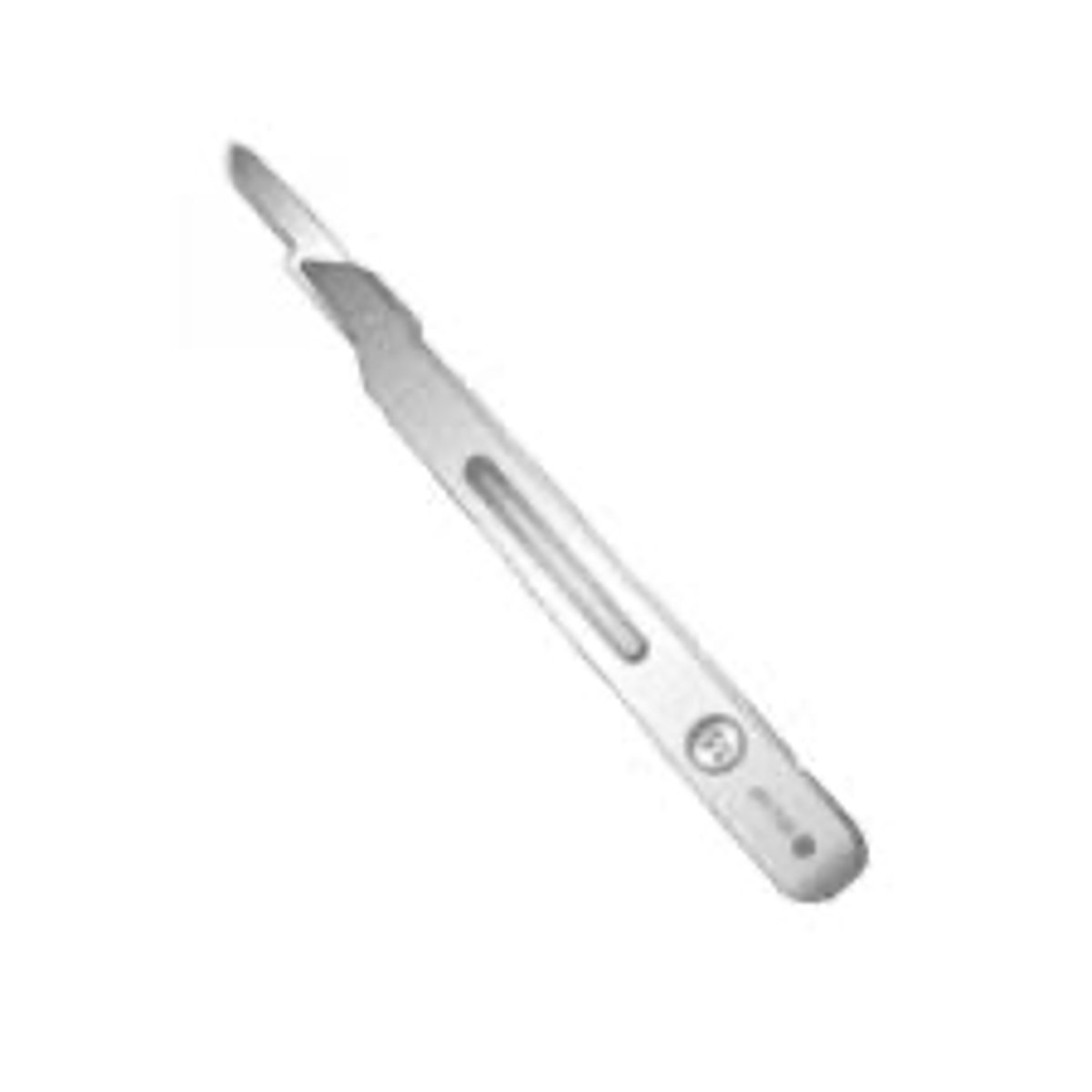
review scalpel part
#9 molt periosteal elevator
Most commonly used Retractor in OS
Used to elevate and retract tissue
Use push, not pull method!
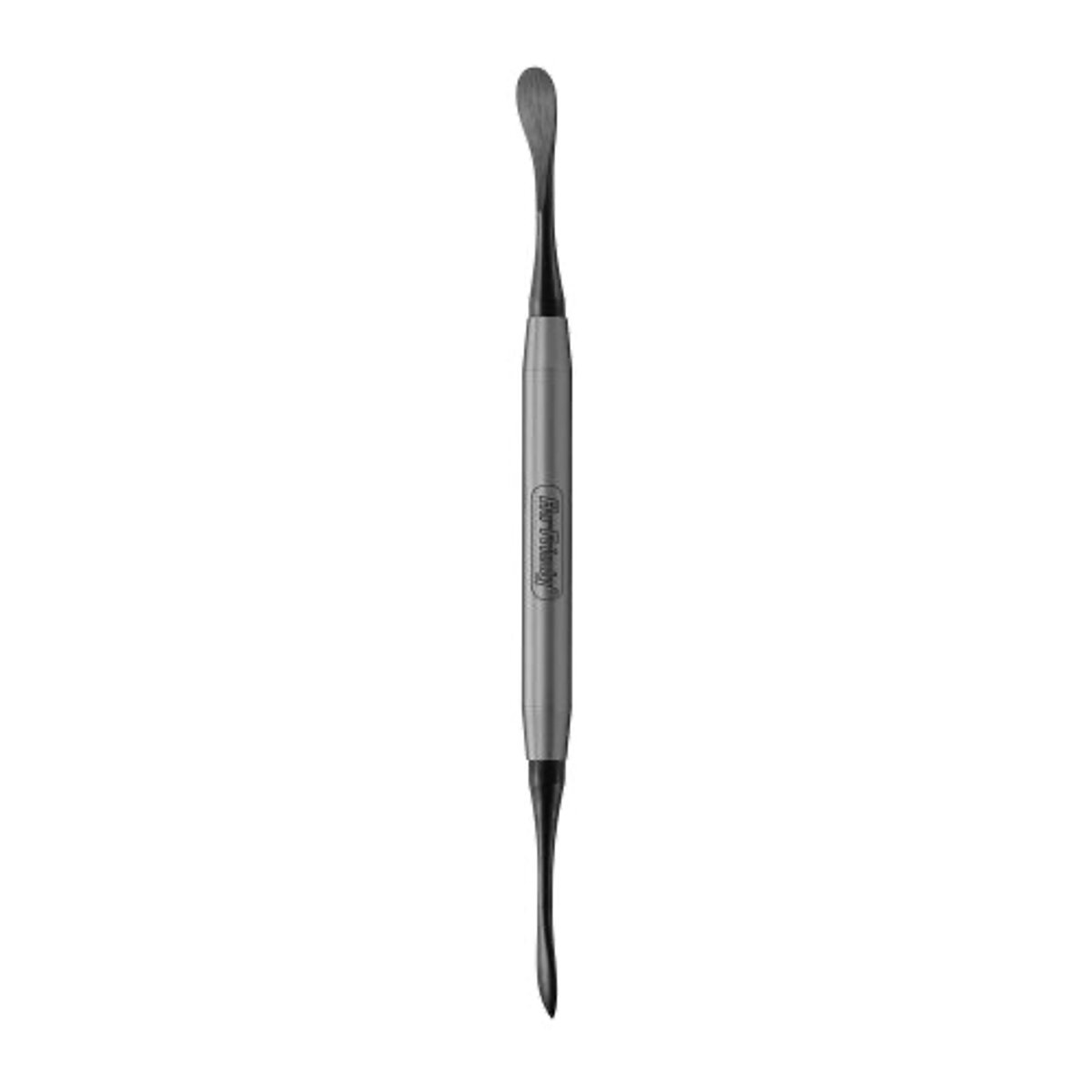
#9 molt periosteal elevator
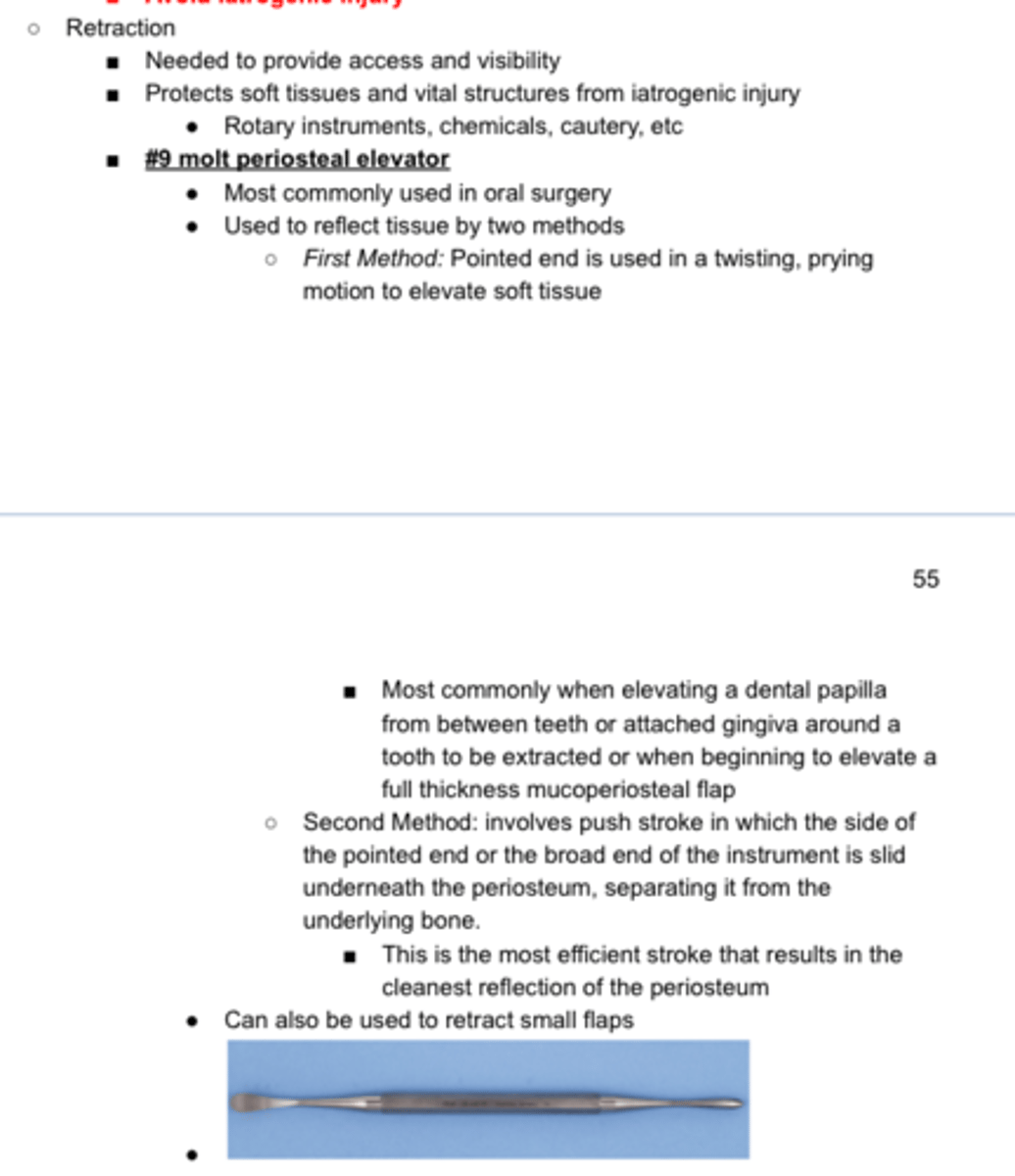
#9 molt periosteal elevator
Most commonly used Retractor in OS
Used to elevate and retract tissue
Use push, not pull method!
- First Method: Pointed end is used in a twisting, prying motion to elevate soft tissue
- Most commonly when elevating a dental papilla from between teeth or attached gingiva around a tooth to be extracted or when beginning to elevate a full thickness mucoperiosteal flap
- review photo
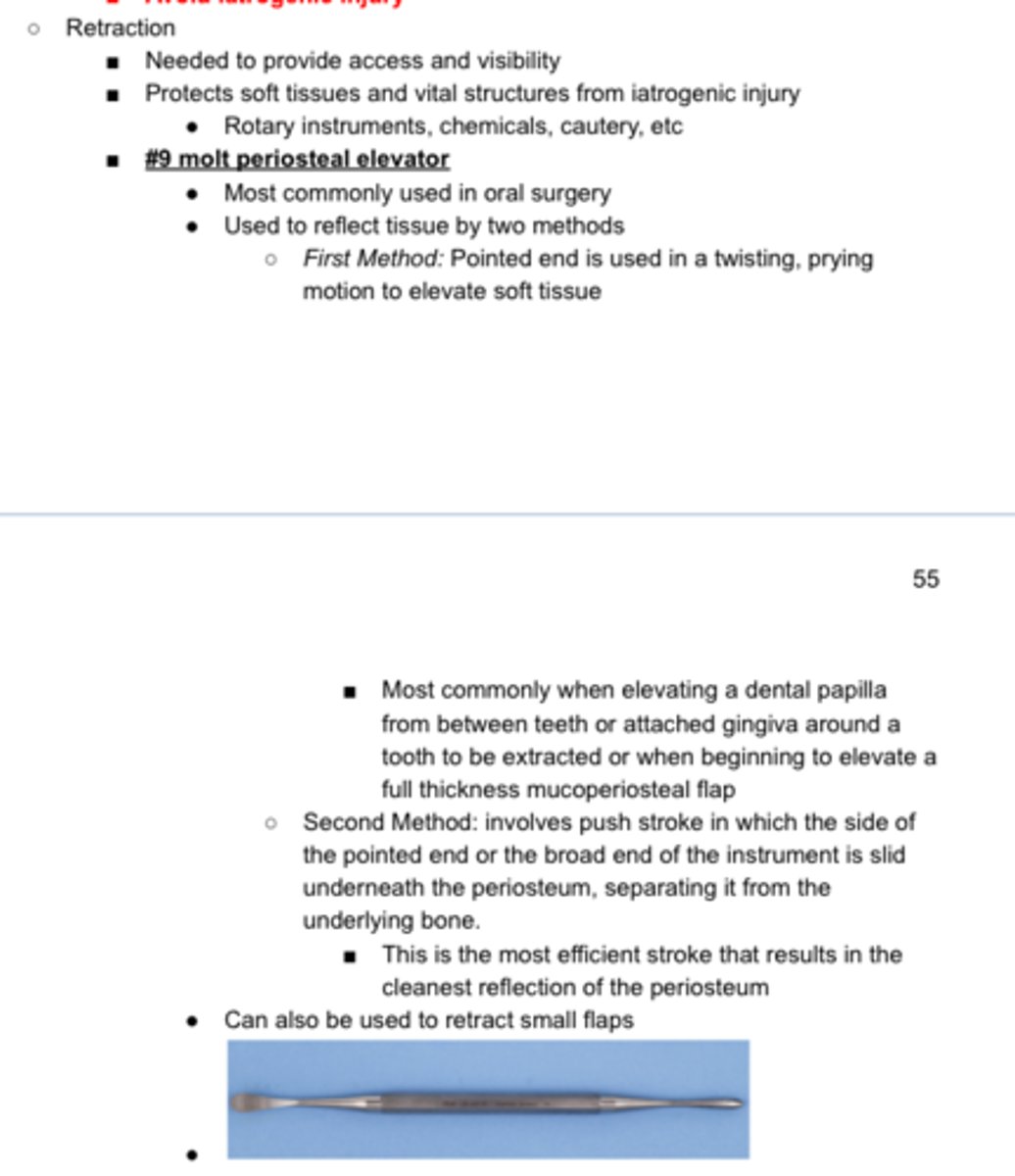
Henahan (top) & Seldin Retractors (bottom)
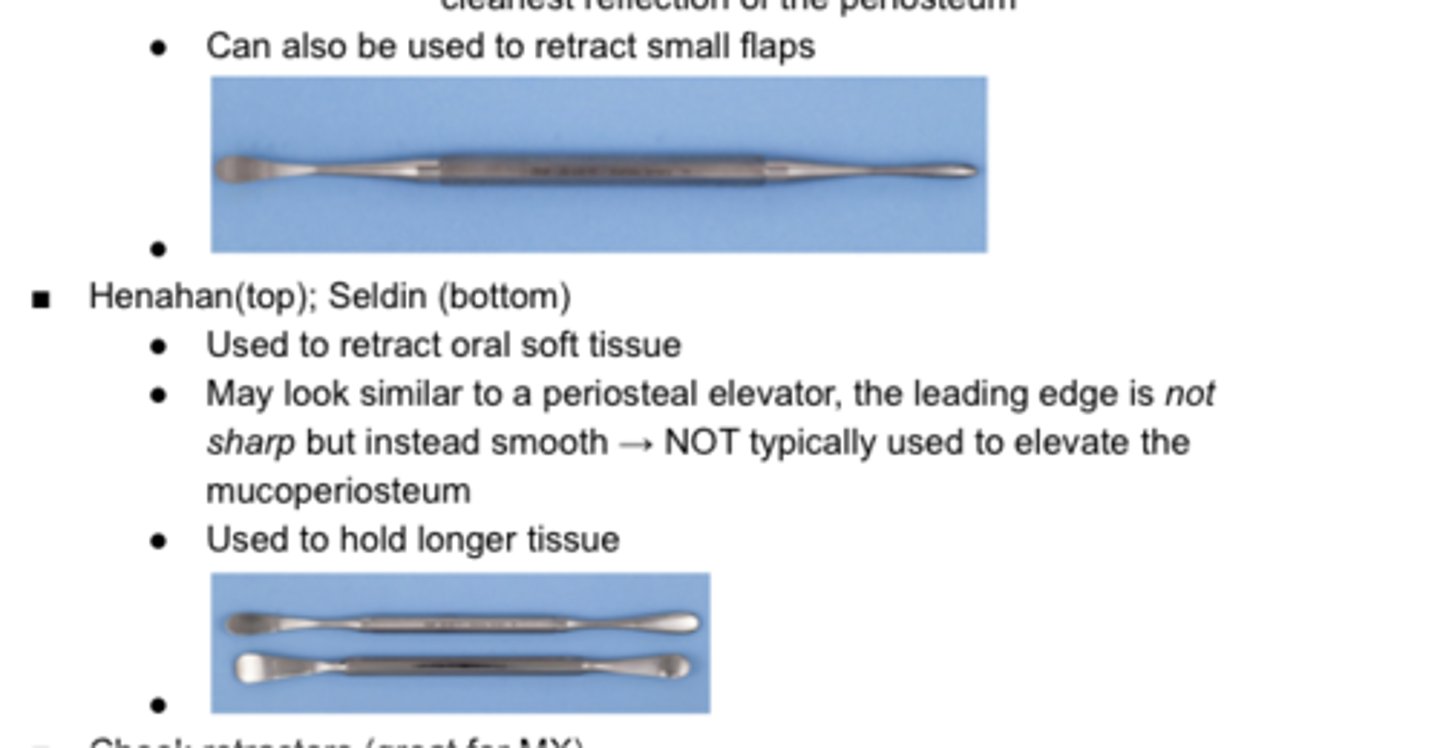
Minnesota
You would use the _____ cheek retractor on any maxillary procedure
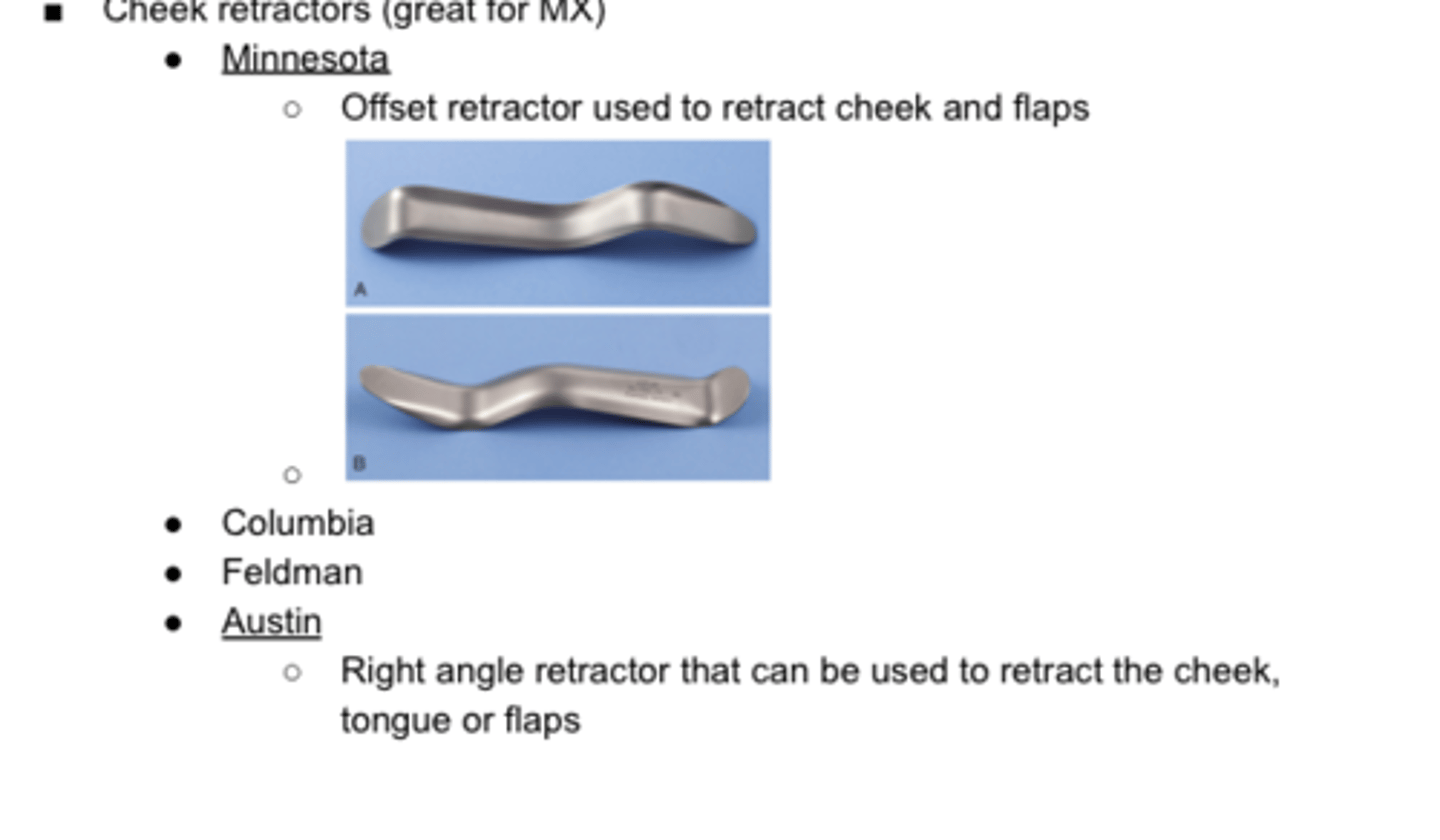
Columbia
_________ cheek retractor is pictured
- used to hold the cheek out of the way
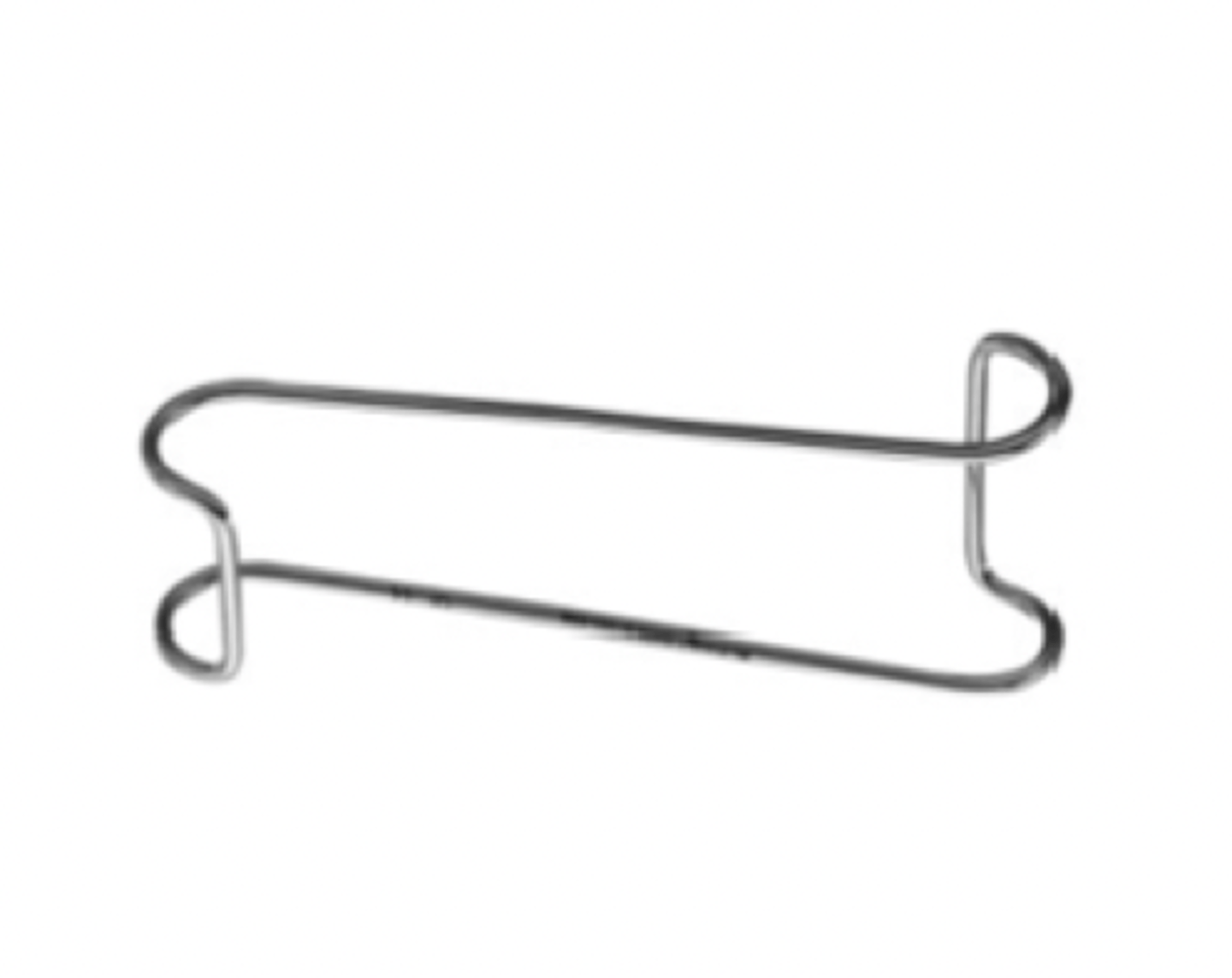
Feldman
________ cheek retractor is pictured
- what he uses at his office
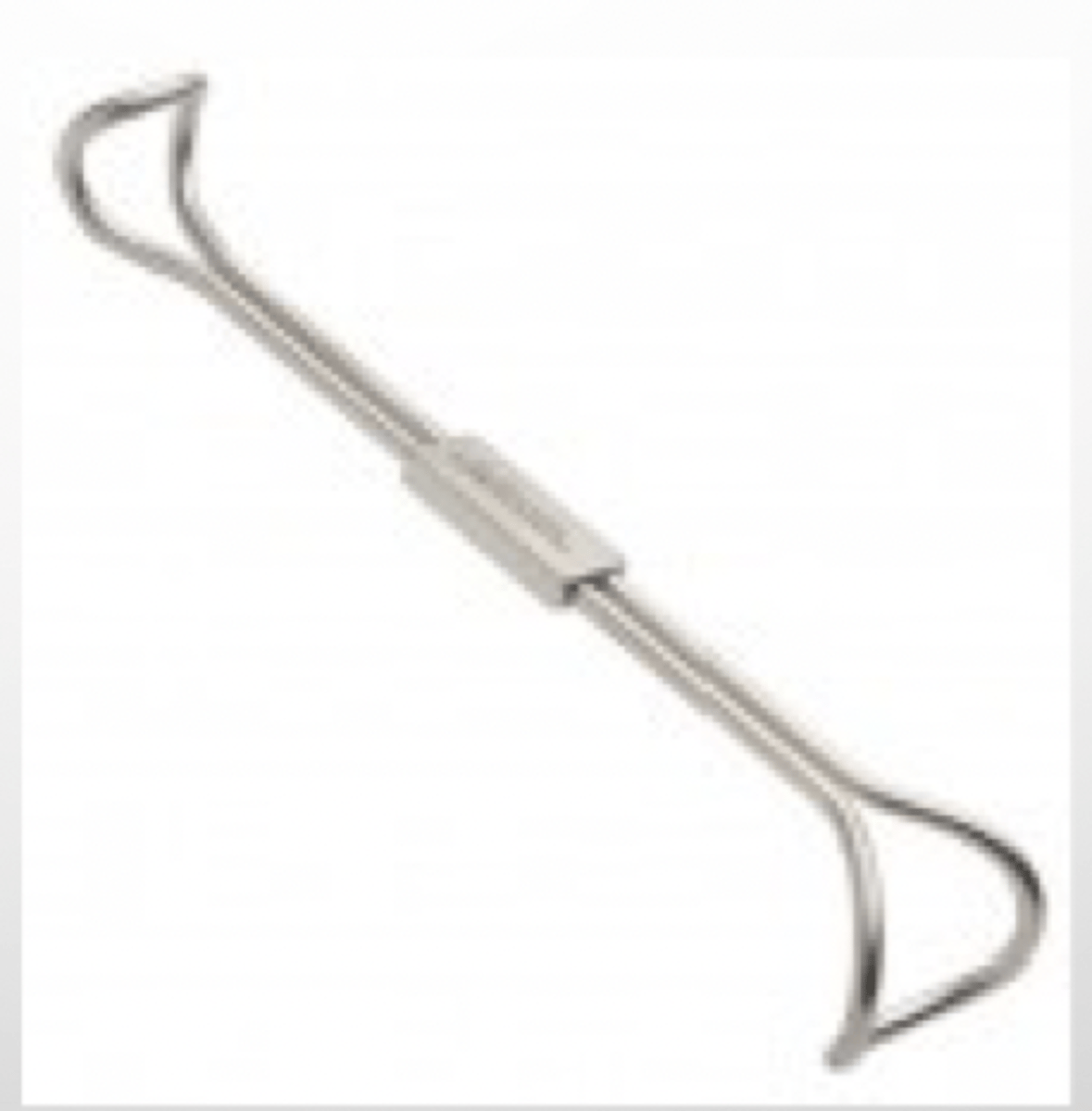
Tongue retractors
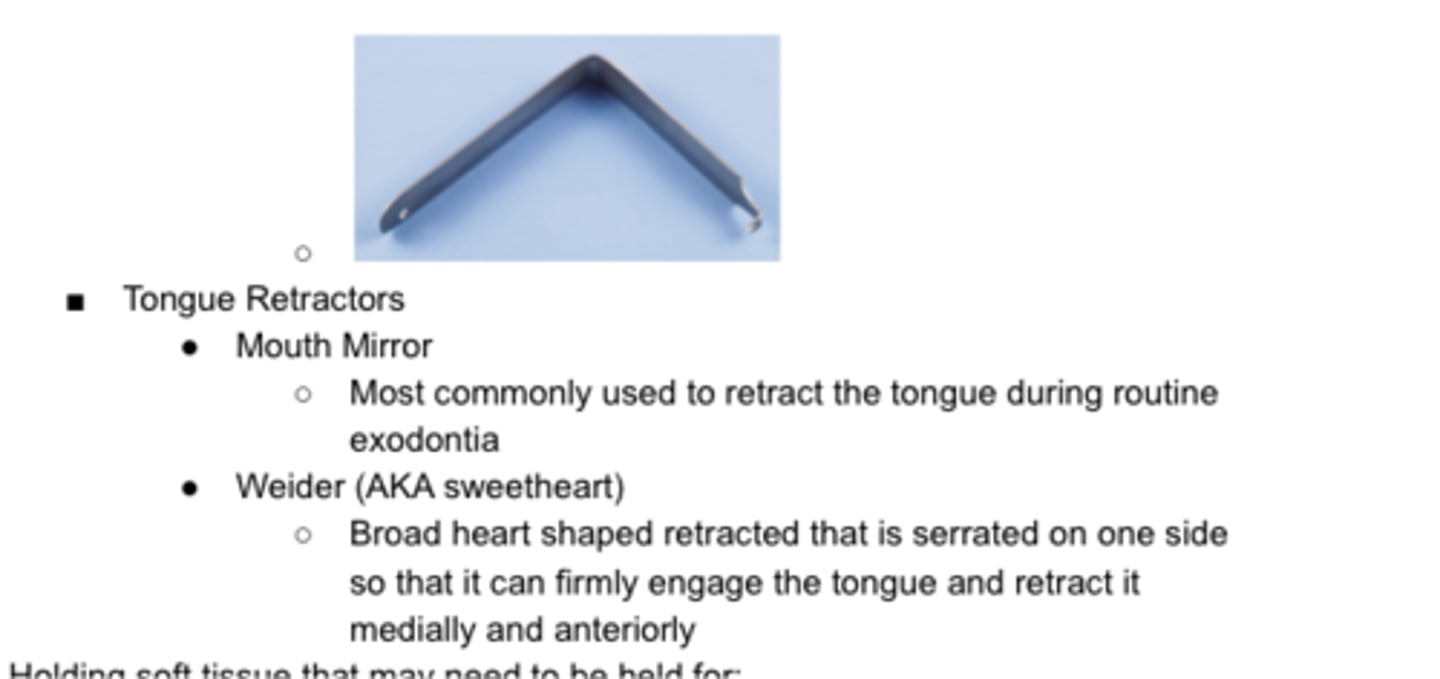
Weider (sweetheart)
_________ retractor is pictured
- used to retract the tongue
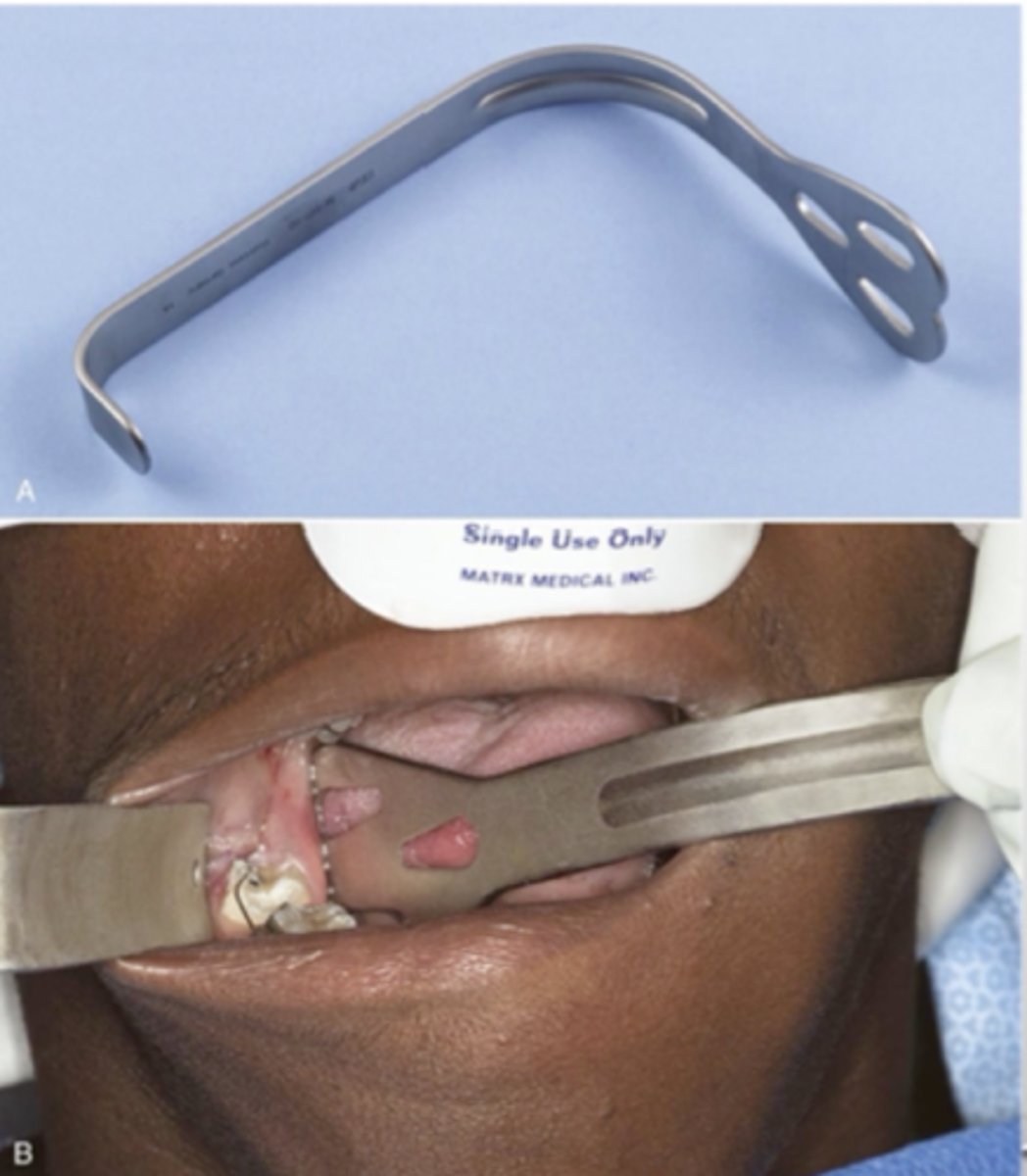
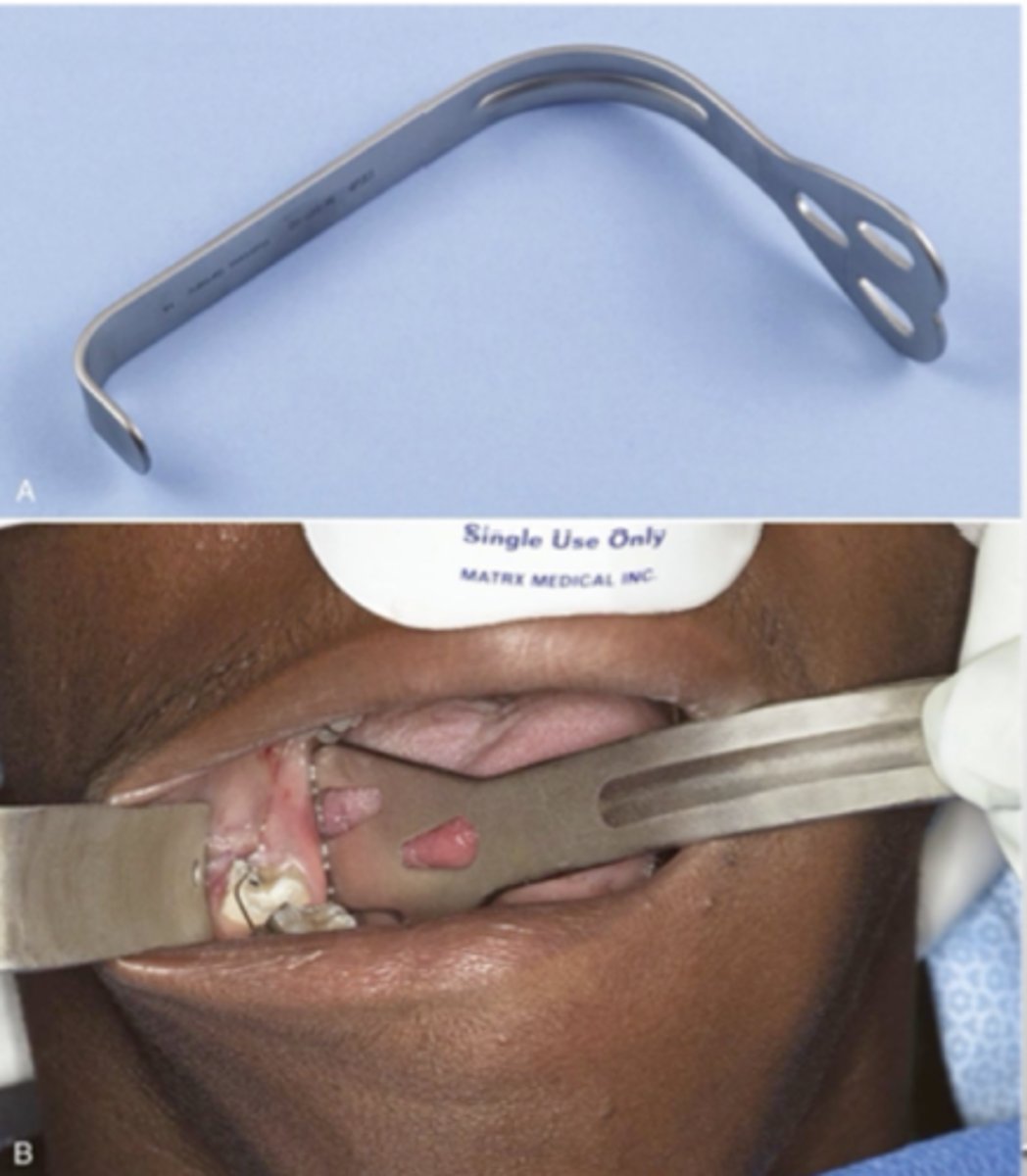
the tongue
Weider (Sweetheart) Retractors retracts
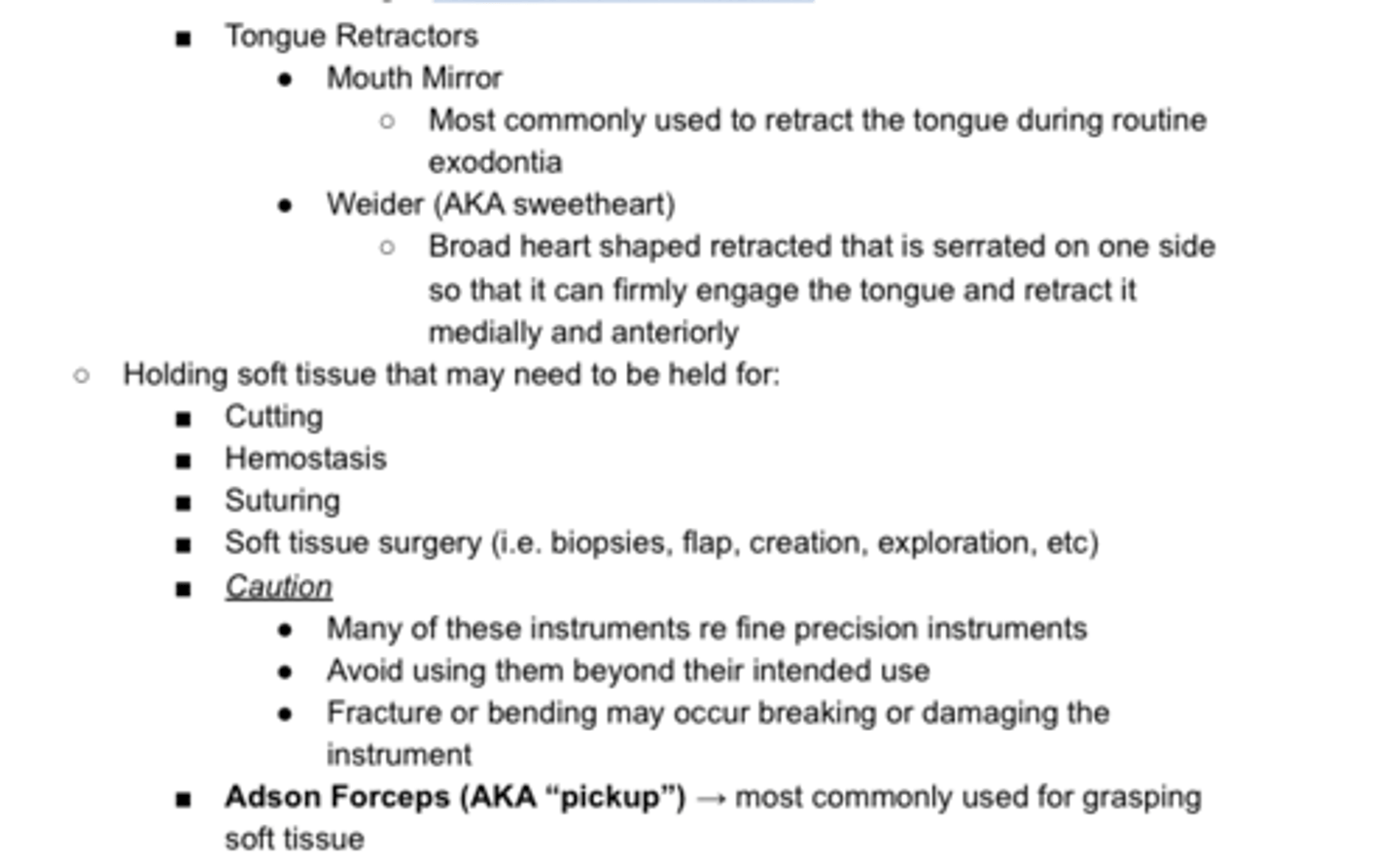
Tissue Forceps
These are all OS ____ ____
Adson Forcep
Stillies Forcep
College Plier
Tissue Forcep
Allis Forcep
Hemostat
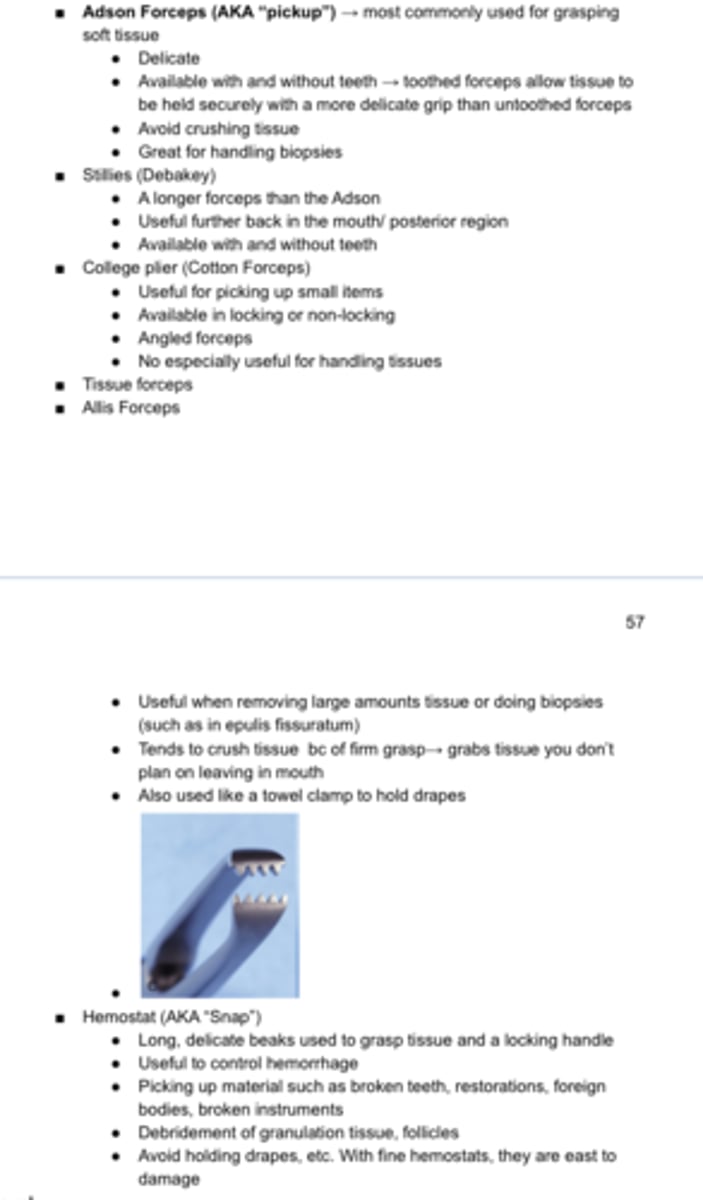
adson
stillies
college
_____ tissue forceps: "pickup," delicate, avoid crushing tissue with toothed version
- Forcep used to retract tissues when suturing
______ tissue forceps: longer than Adson, good for further back in the mouth
_____ tissue forceps: good for picking up small items
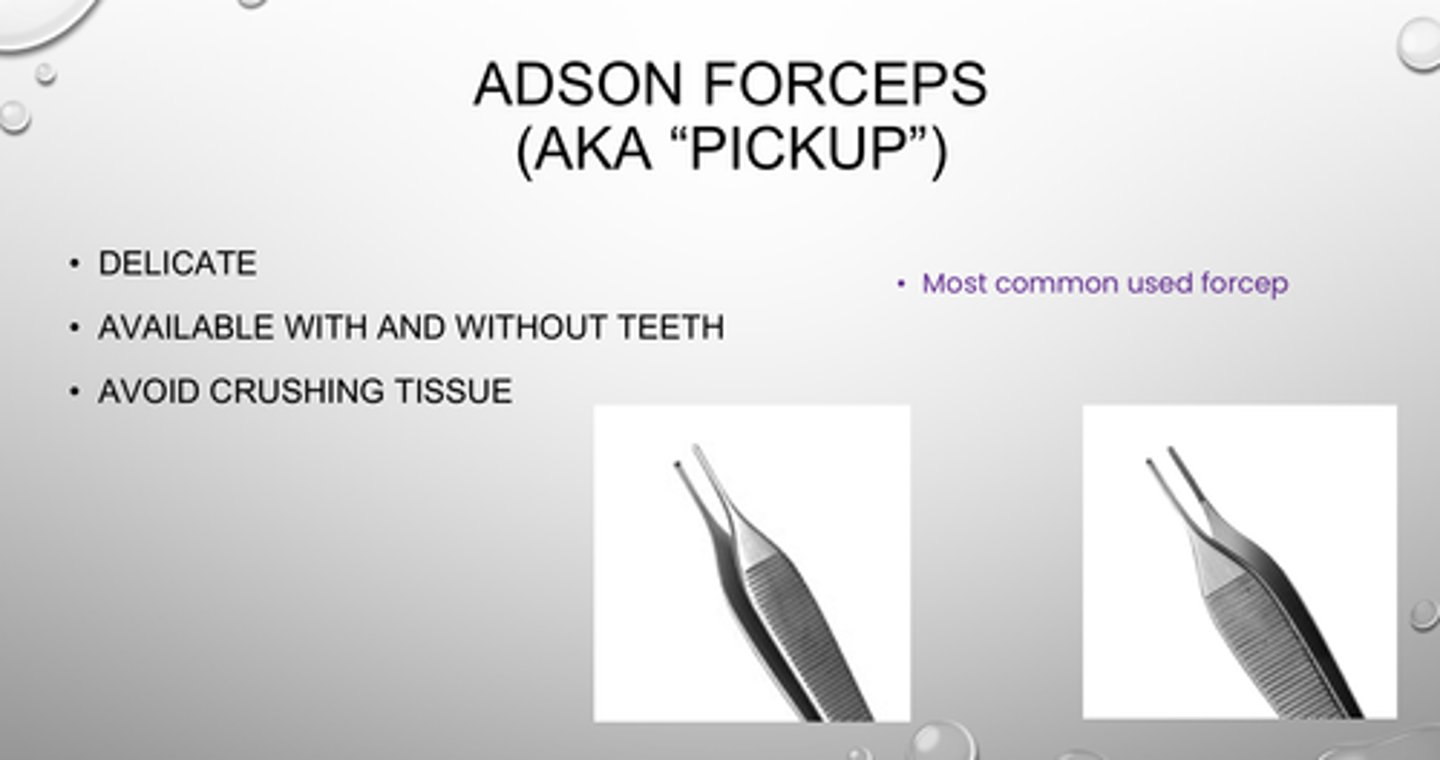
Adson Forcep
Most commonly used Forcep
- Available with and without teeth, delicate
- avoid crushing tissue
- KNOW/on quiz
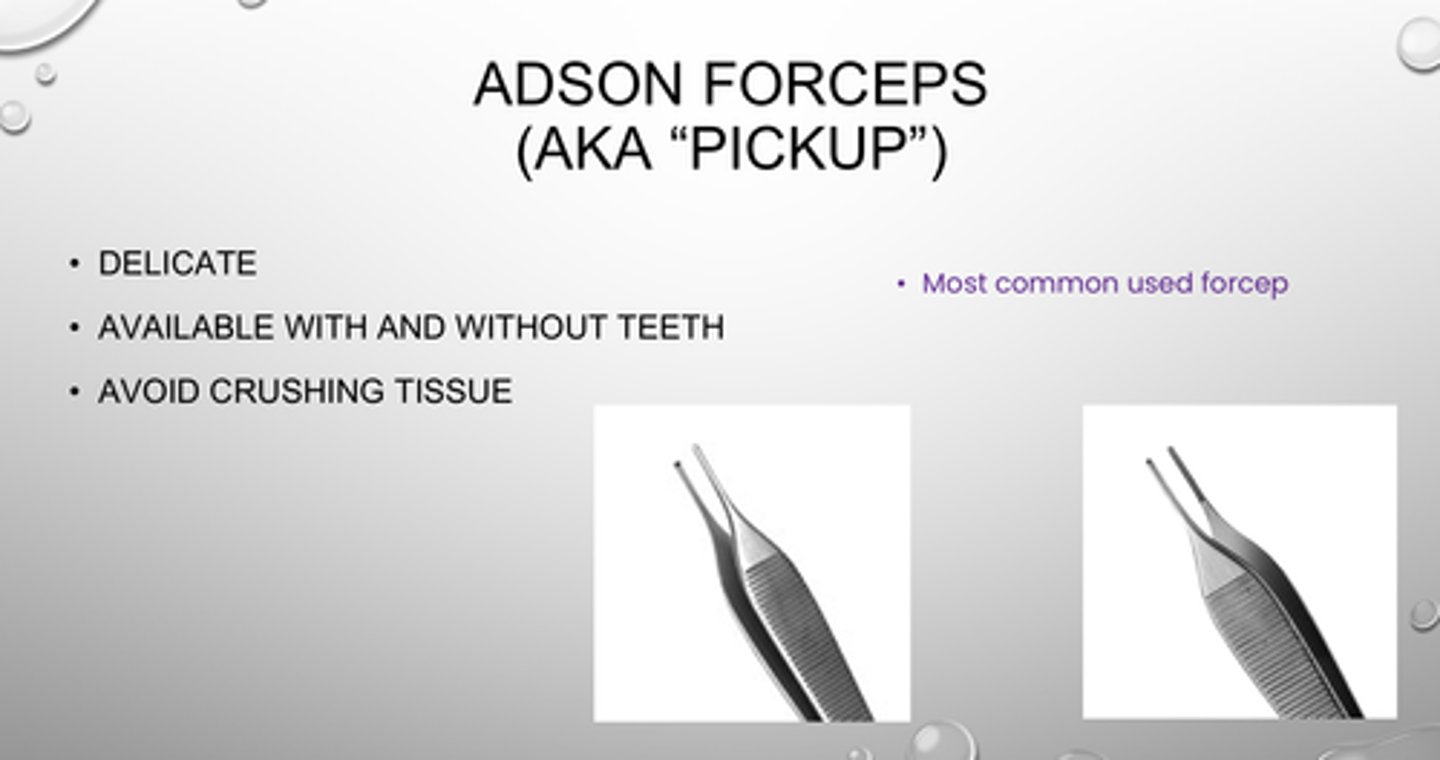
Adson Forcep (aka Pickup Forcep)
- Most commonly used Forcep (to grab tissue)
- Forcep used to retract tissues when suturing
- Delicate
- Most commonly used for grabbing tissue
Stillies Forcep
- Longer forcep than Adson
- Good for further back in the mouth (posterior areas)
College Plier
- Useful for picking up small items
- Can be locking or non locking
- Not useful for handing tissues (tweezers that comes in restorative kit)
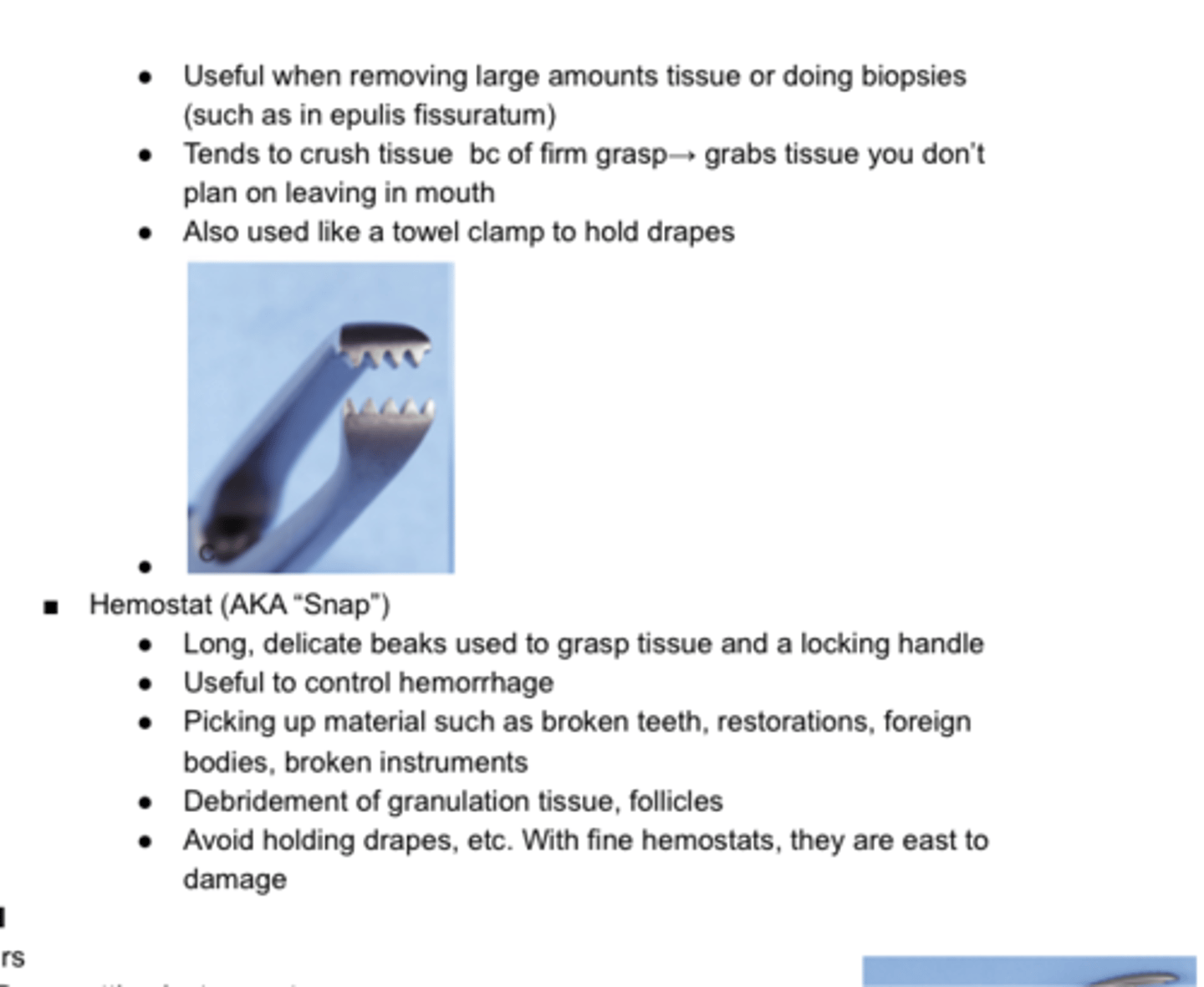
Allis Forcep
- Used for REMOVING large amount of tissue or doing Biopsies (ex: Epulis fissuratum)
- Tends to CRUSH tissue (bc of firm grasp & locking handle)
Hemostat (aka SNAP)
- Used to control Hemorrhage
- & to pick up material such as broken teeth, restorations, foreign
- Long, delicate beaks used to grasp tissue and a locking handle
- Avoid holding drapes/flaps w these= they are easy to damage tissues
OS Tissue Forceps:
Adson Forcep
Stillies Forcep
College Plier
Tissue Forcep
Allis Forcep
Hemostat
-KNOW
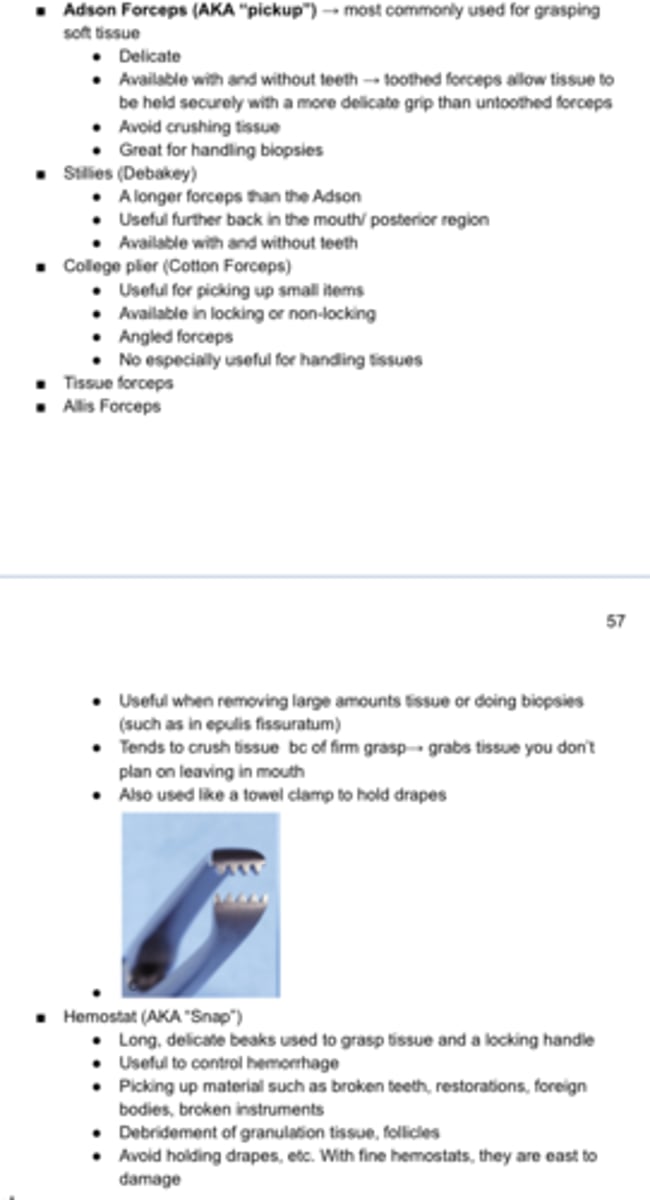
Adson Forcep
Which OS Tissue Forcep:
- Most commonly used Forcep (to grab tissue)
- Forcep used to retract tissues when suturing
- Delicate
- Most commonly used for grabbing tissue
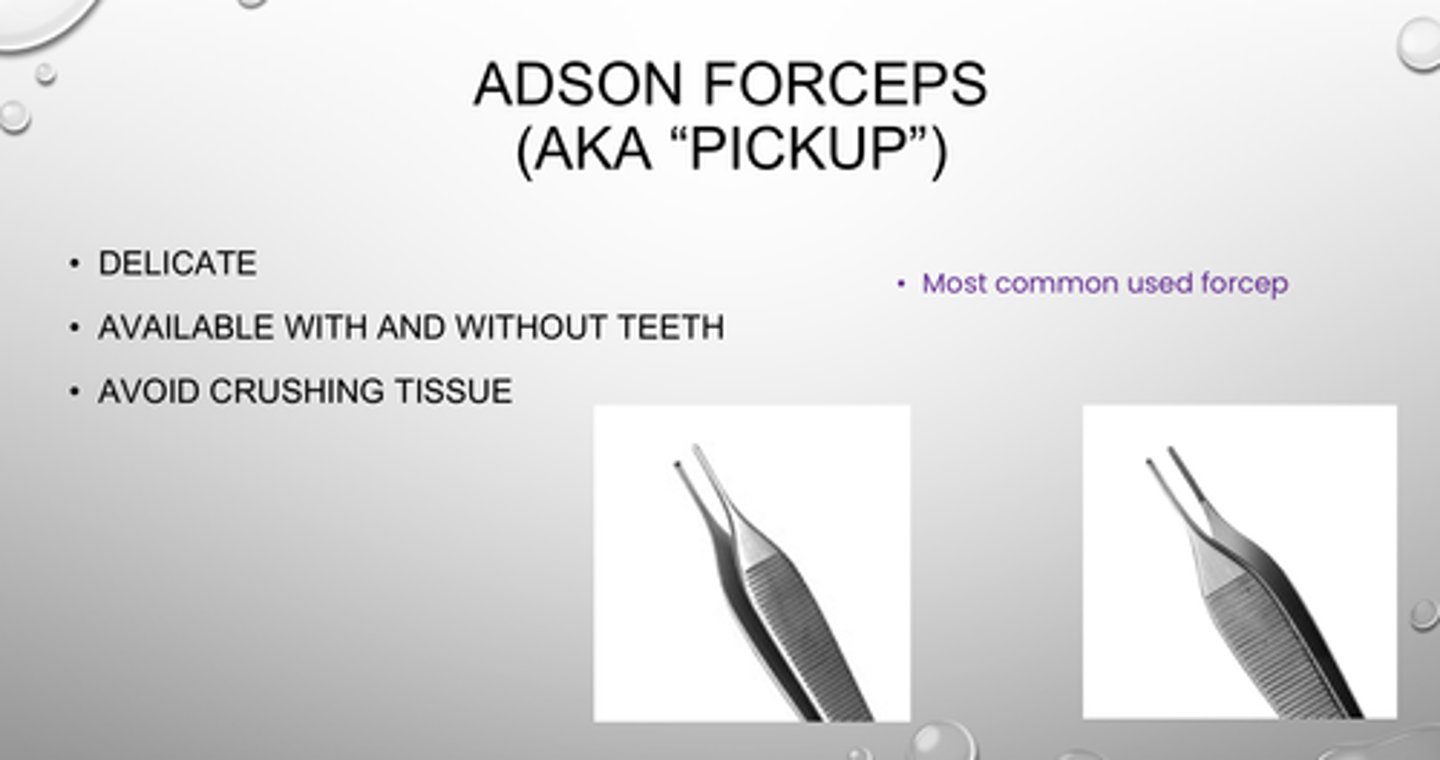
Stillies Forcep
Which OS Tissue Forcep:
- Longer forcep than Adson
- Good for further back in the mouth (posterior areas)
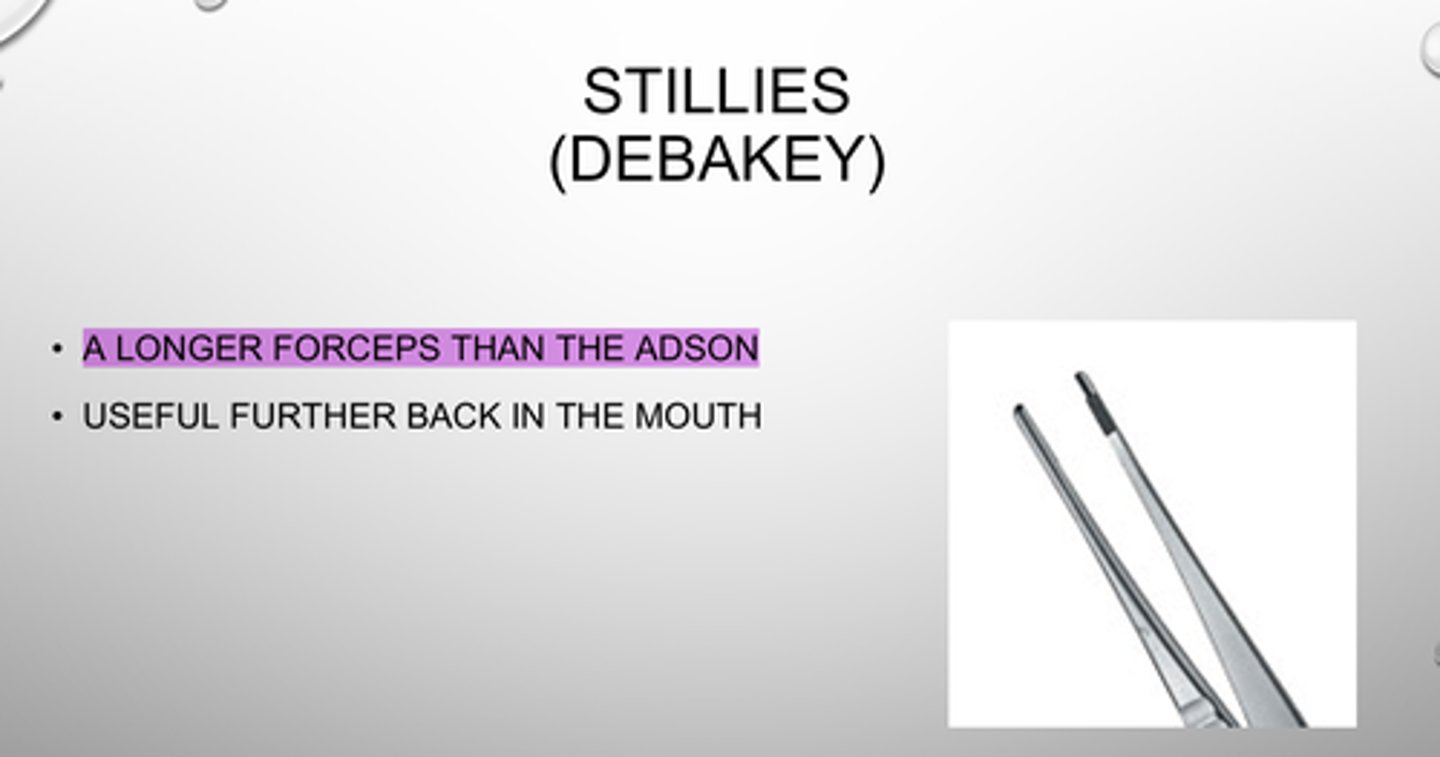
Allis Forcep
Which OS Tissue Forcep:
- Used for REMOVING large amount of tissue or doing Biopsies (ex: Epulis fissuratum)
- Tends to CRUSH tissue (bc of firm grasp & locking handle)
- Was tested on in OS!!!
College Plier
Which OS Tissue Forcep:
- Useful for picking up small items
- Can be locking or non locking
- Not useful for handing tissues (tweezers that comes in restorative kit)
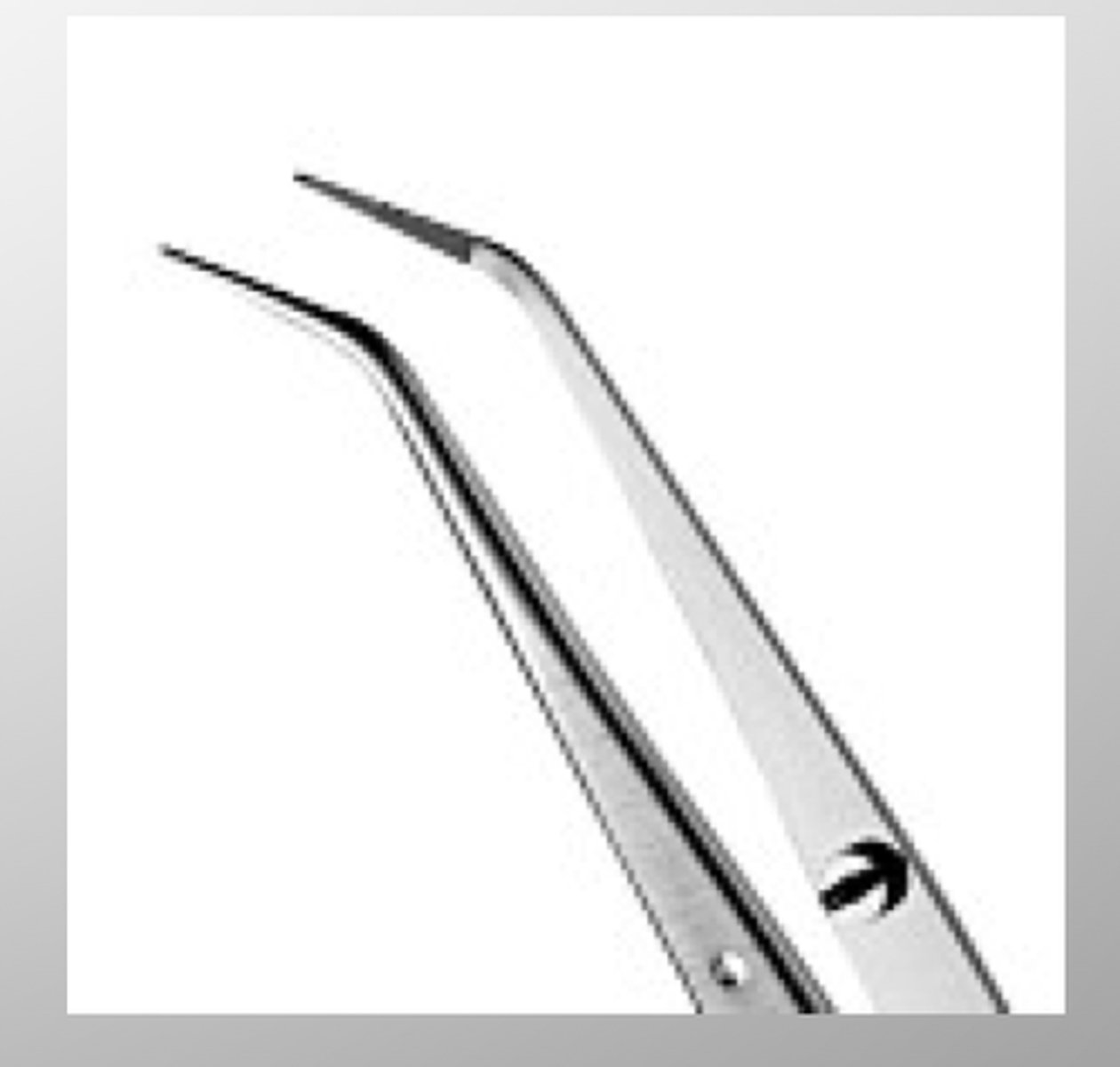
Tissue forcep
Which OS Tissue Forcep:
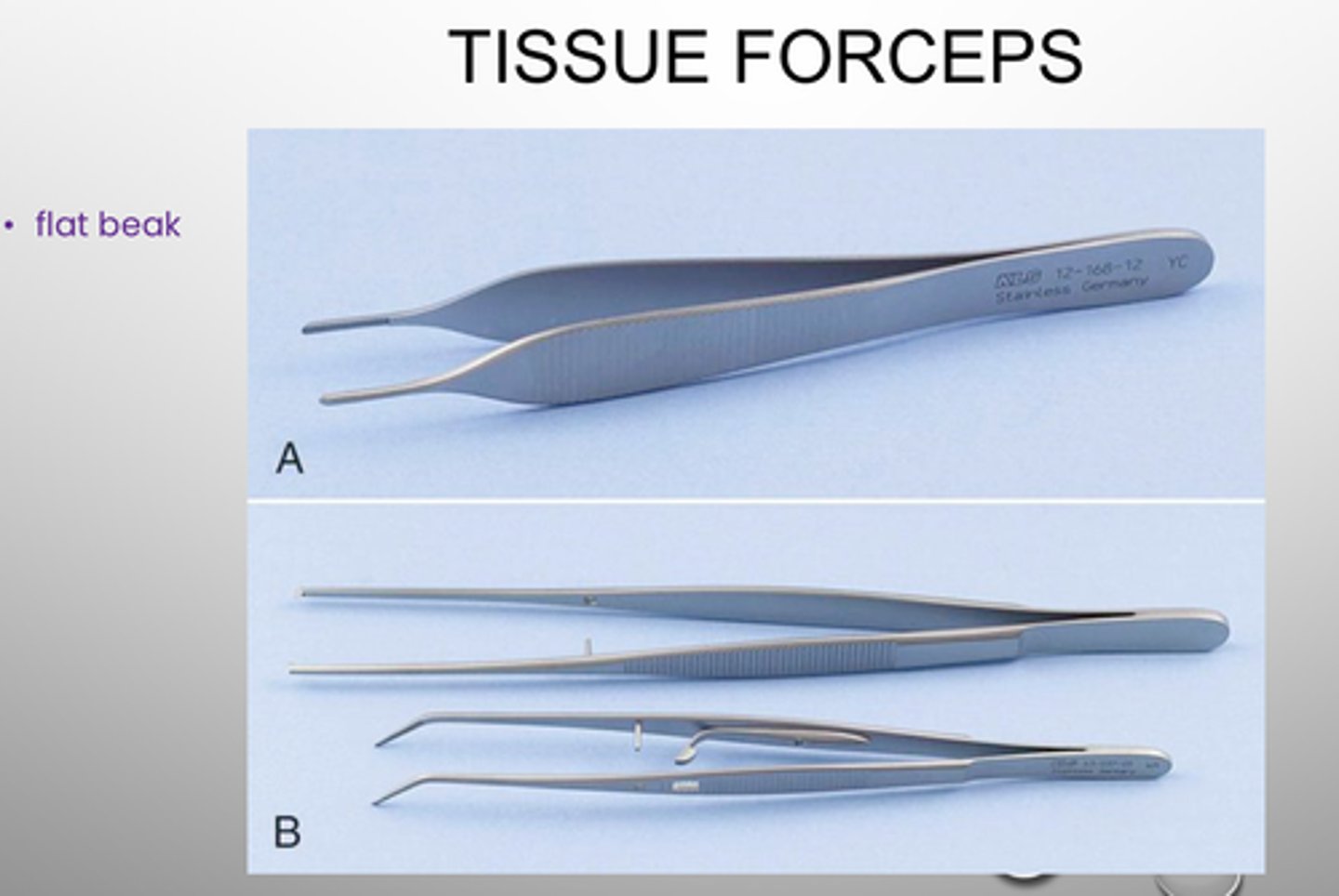
Hemostat (aka SNAP)
Which OS Tissue Forcep:
- Used to control Hemorrhage
- & to pick up material such as broken teeth, restorations, foreign
- Long, delicate beaks used to grasp tissue and a locking handle
- Avoid holding drapes/flaps w these= they are easy to damage tissues
- VERY commonly used
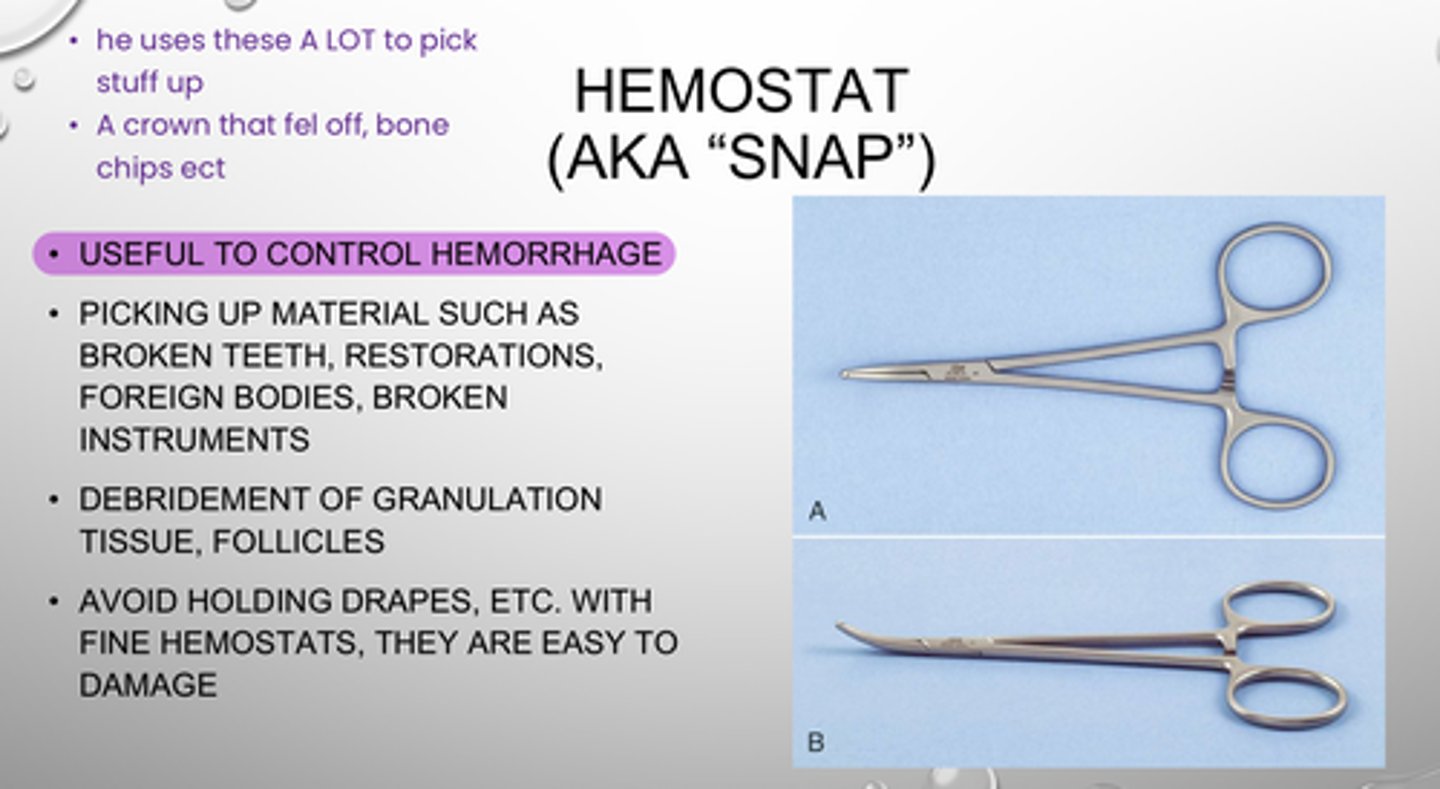
Hemostats
Avoid holding Drapes/Flaps w fine _____bc they are easy to damage things
Remove bone
These OS Instruments are all used to ____ ____
Rongeur
Mallet & Chisel
Bone File
Curette
Handpiece
OS Handpiece for bone removal
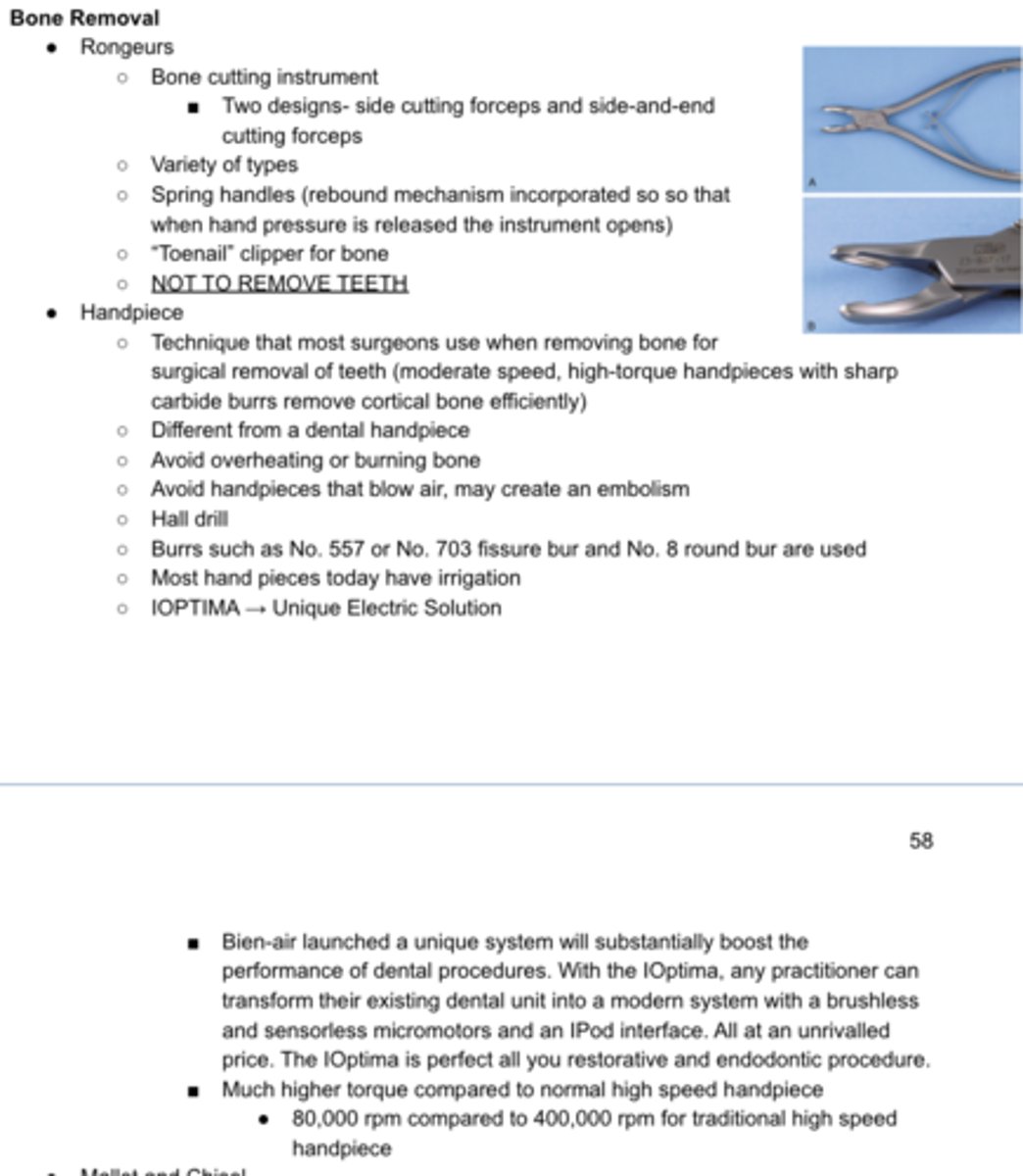
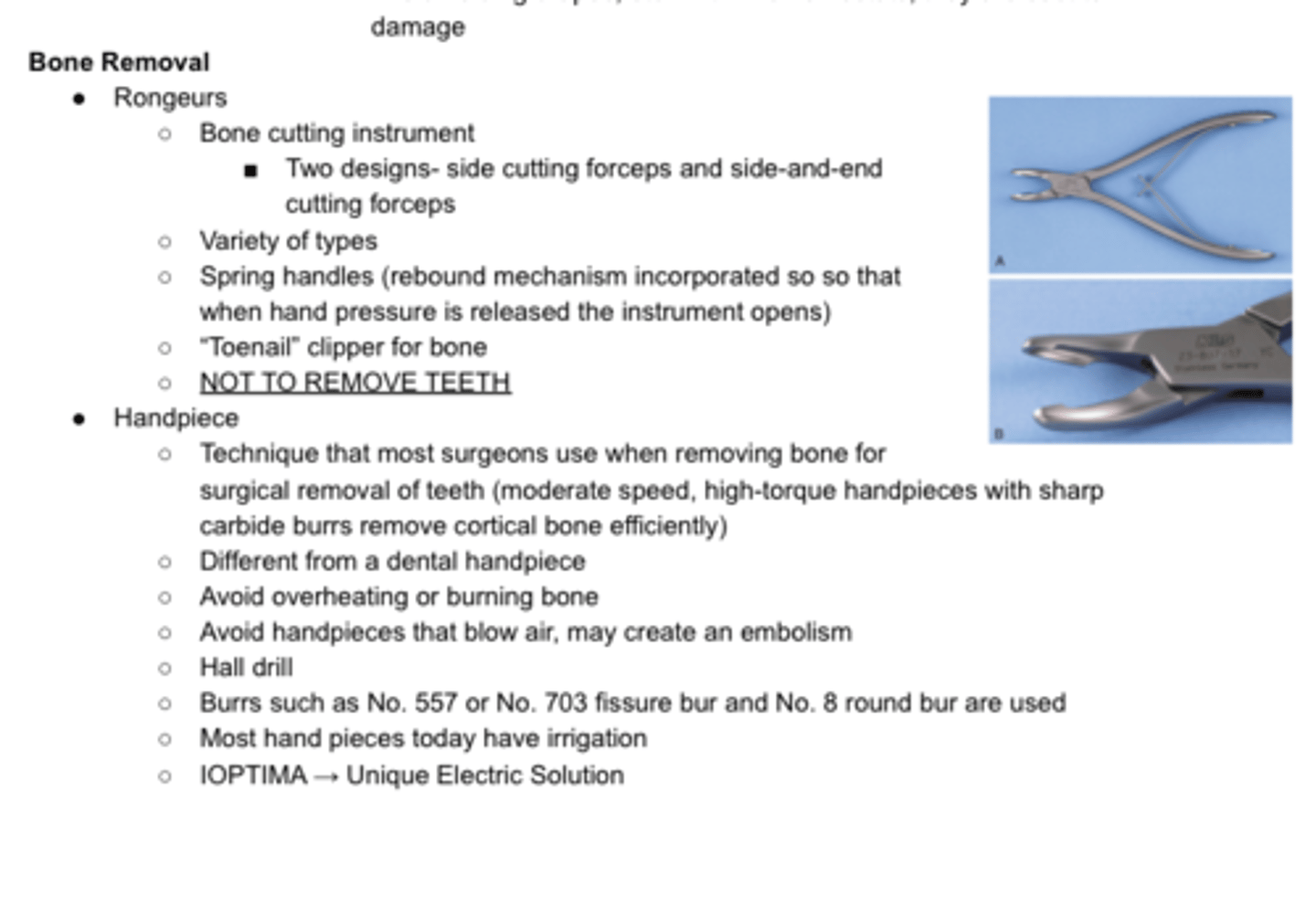
Rongeur
- Used for Bone CUTTING
- NOT used to remove teeth (sharp=causes too much damage)
- "Toenail clippers" for bone
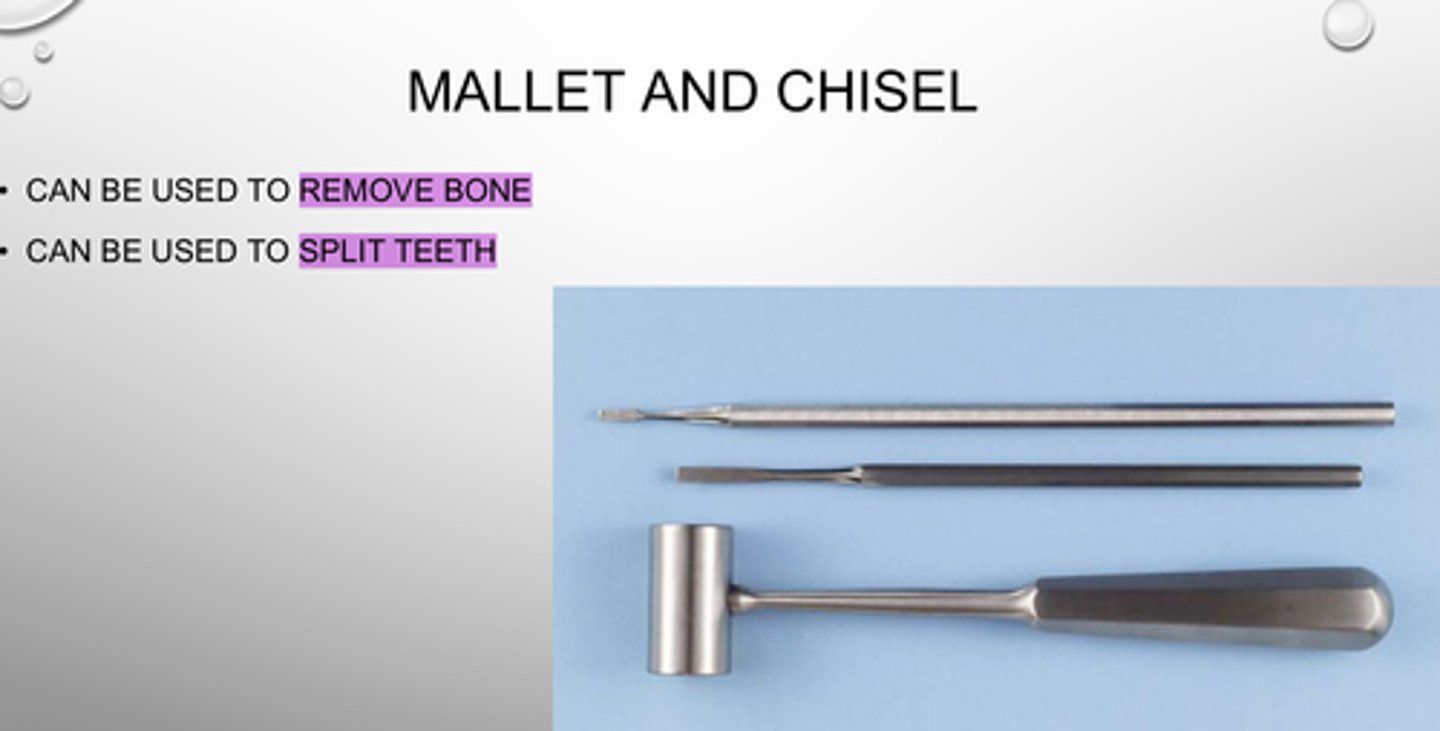
Mallet & Chisel
- Can be used to remove bone
- Can be used to split teeth
- Ex: Osteotomes: made to cut bone (i.e. lingual tori)
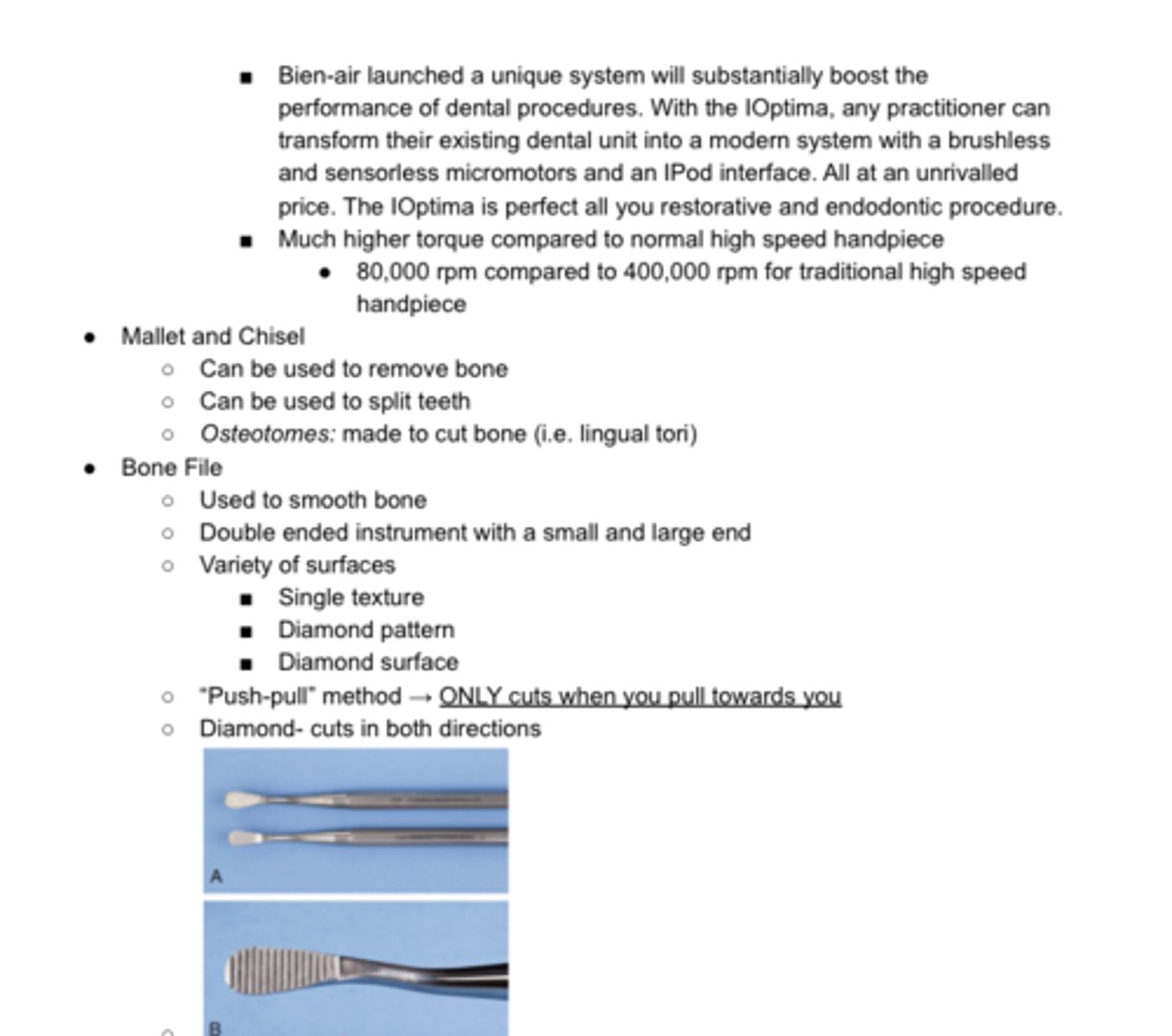
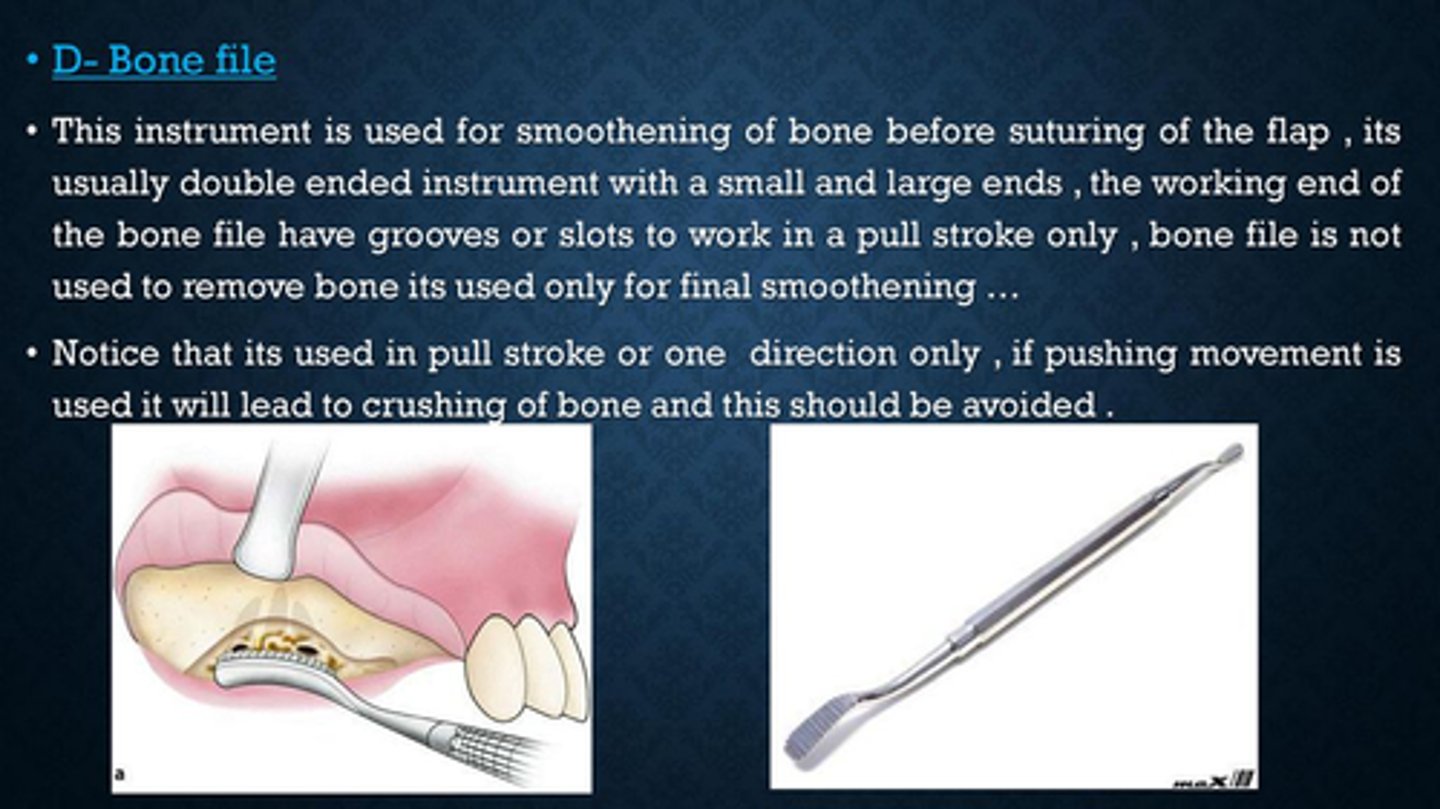
Bone File
- Used to SMOOTH bone
- Double ended instrument with a small and large end & a variety of surfaces (single texture, diamond texture ect)
- “Push-pull” method → ONLY cuts when you pull towards you
- Diamond pattern- cuts in both directions
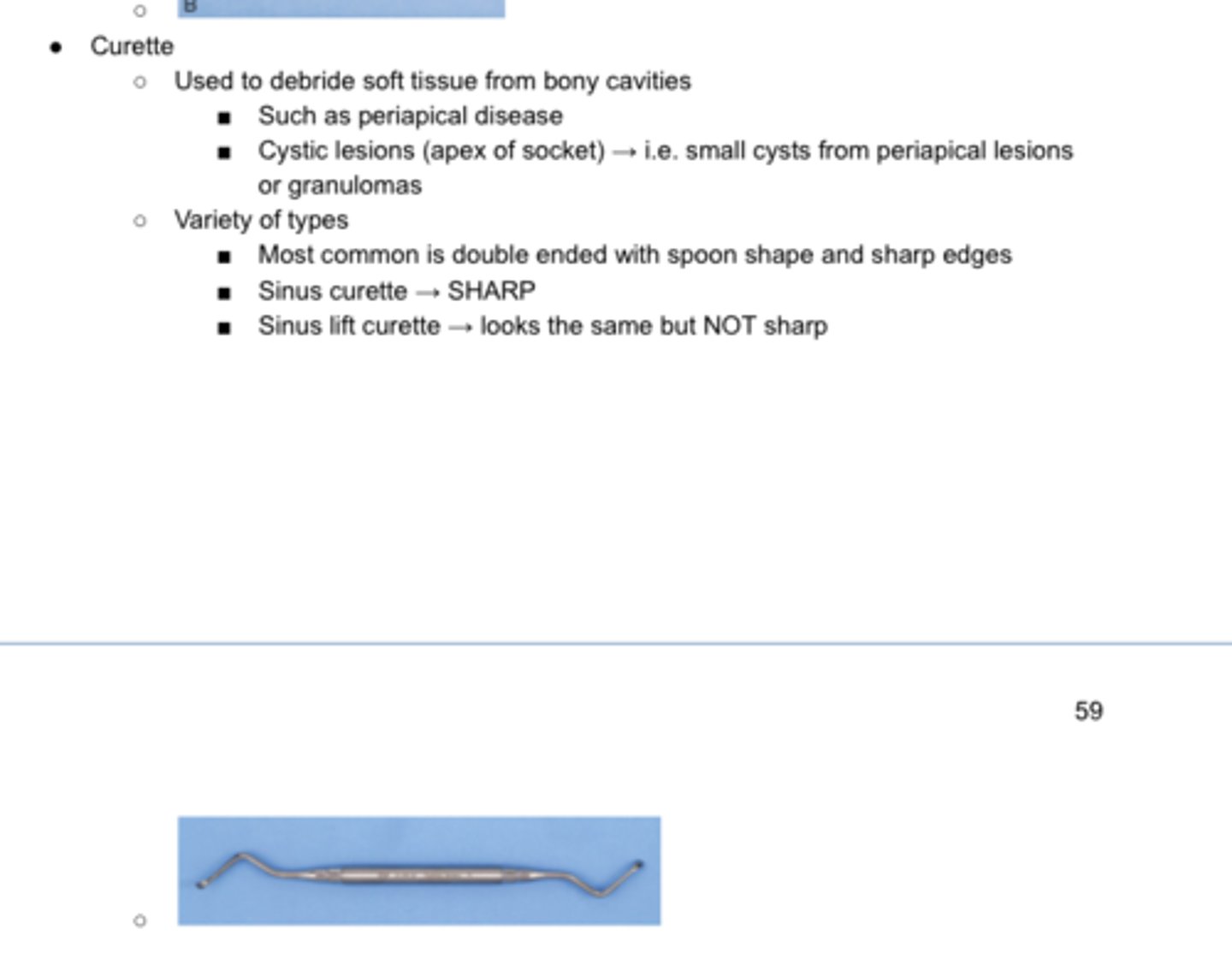
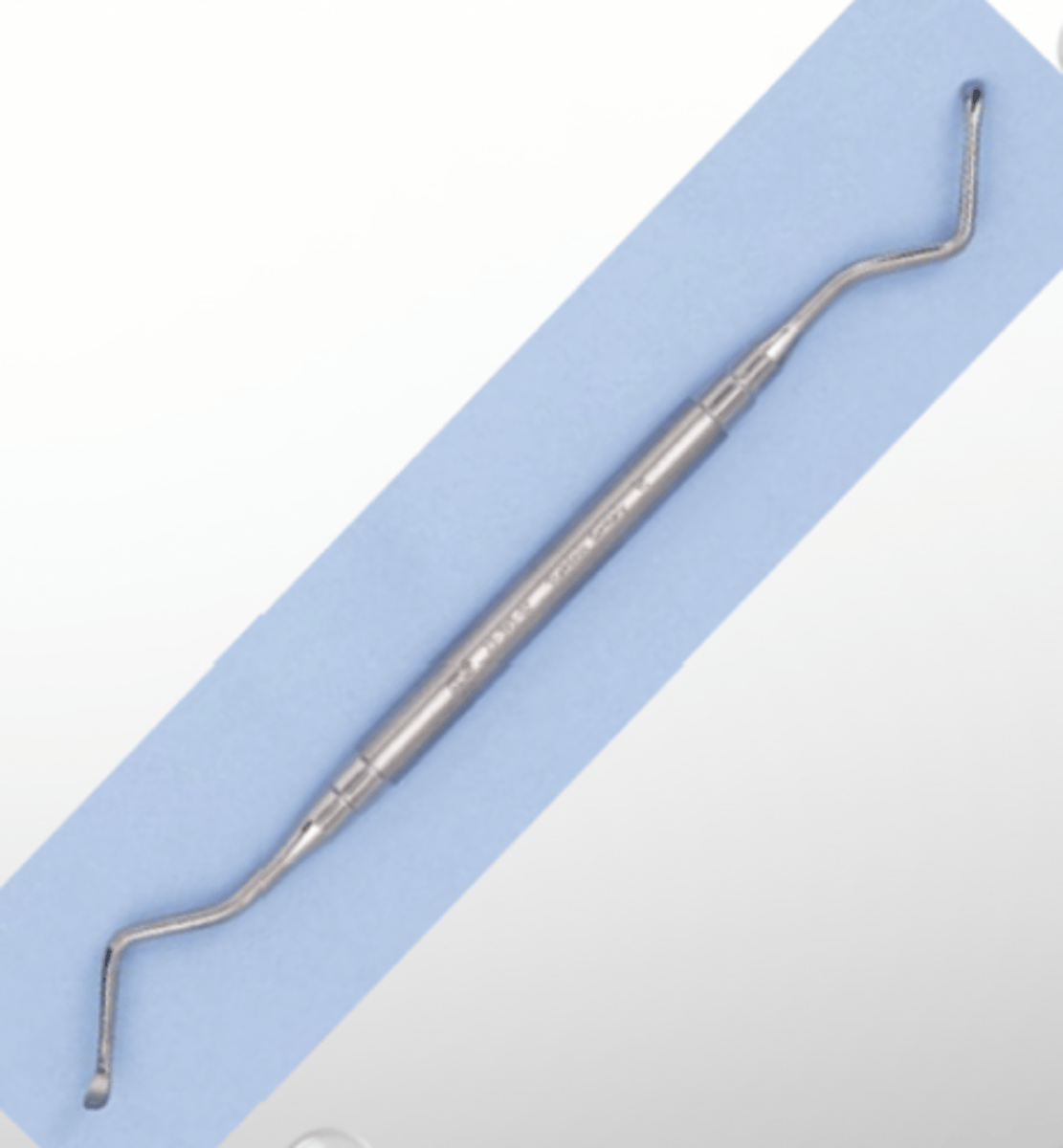
Curette
- Used to debride soft tissue from bony cavities (scoop stuff out)
- Ex: scooping out periapical disease
- Ex: Cystic lesions (apex of socket) → i.e. small cysts from periapical lesions or granulomas
Handpiece
Bone removal OS Instruments:
Rongeur
Mallet & Chisel
Bone File
Curette
Handpiece
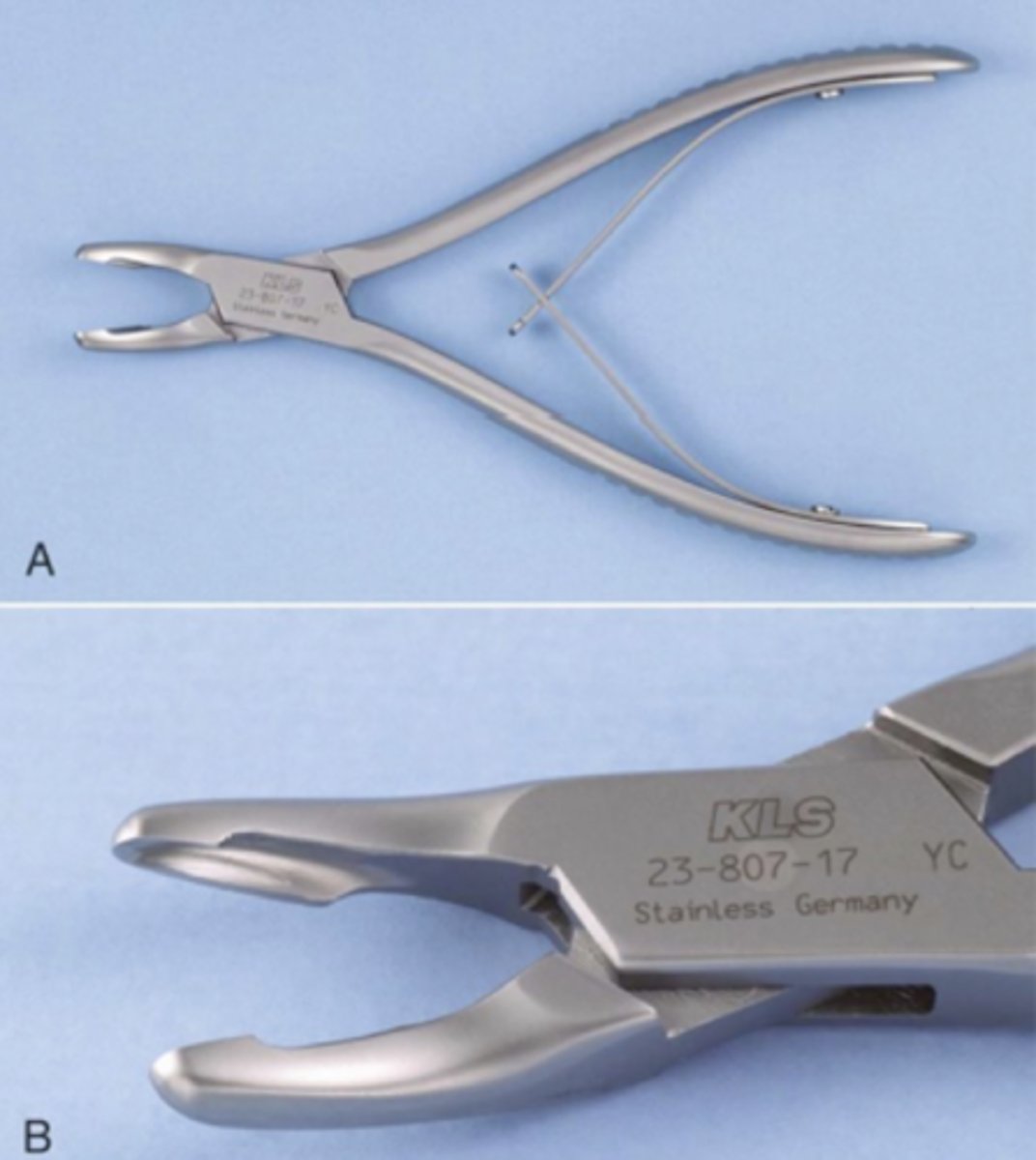
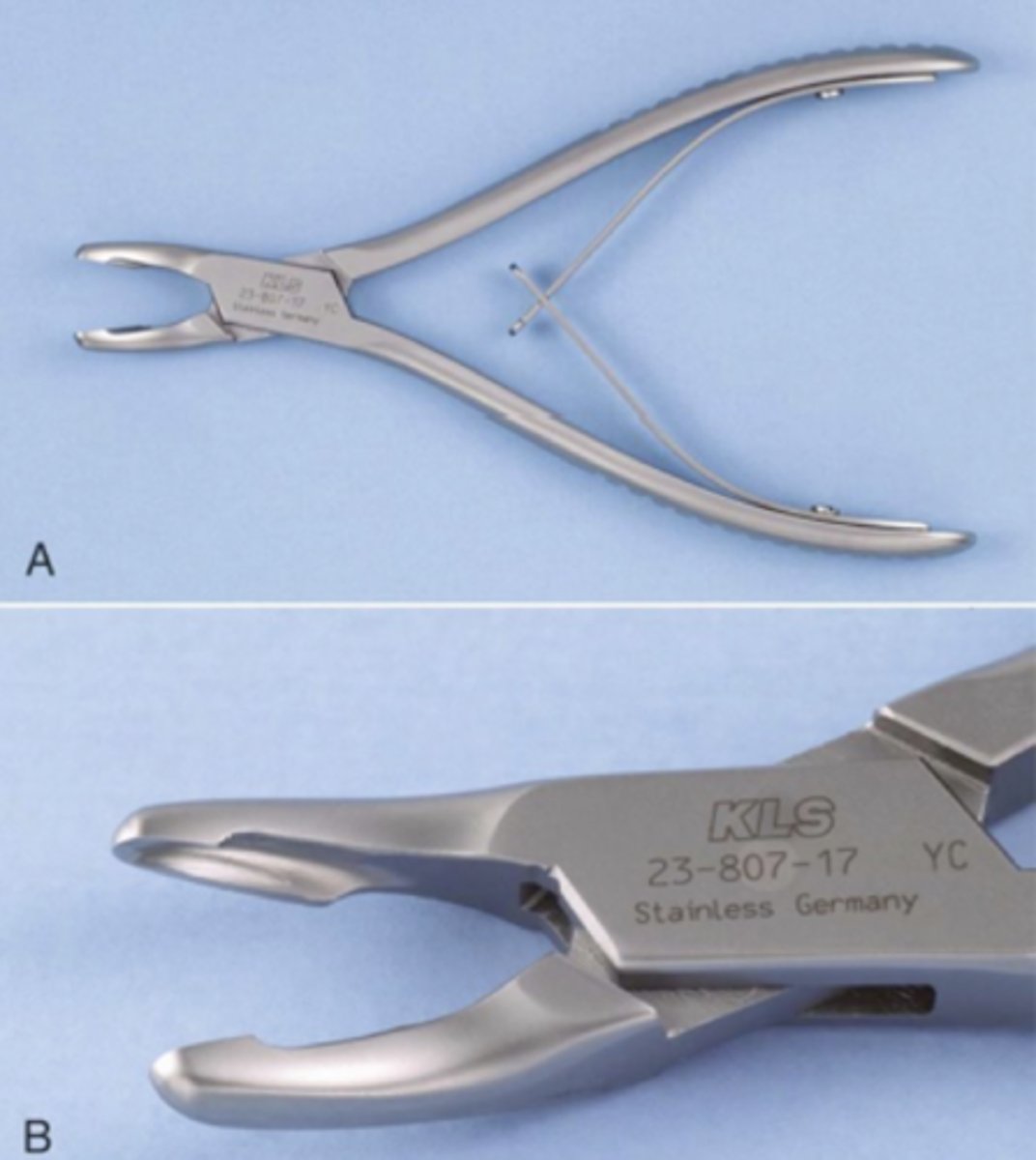
Rongeur
Which OS Bone Removal instrument:
- Used for Bone CUTTING
- NOT used to remove teeth (sharp=causes too much damage)
- "Toenail clippers" for bone
False
- do NOT remove teeth w the rongeurs
Rongeurs are useful for removing teeth (T/F)
Mallet & Chisel
Which OS Bone Removal instrument:
- Can be used to Remove bone & Split teeth
- Ex: Osteotomes: made to cut bone (i.e. lingual tori)
Bone FIle
Which OS Bone Removal instrument:
- Used to SMOOTH bone
- Double ended instrument with a small and large end & a variety of surfaces (single texture, diamond texture ect)
- “Push-pull” method → ONLY cuts when you pull towards you
- Diamond pattern- cuts in both directions
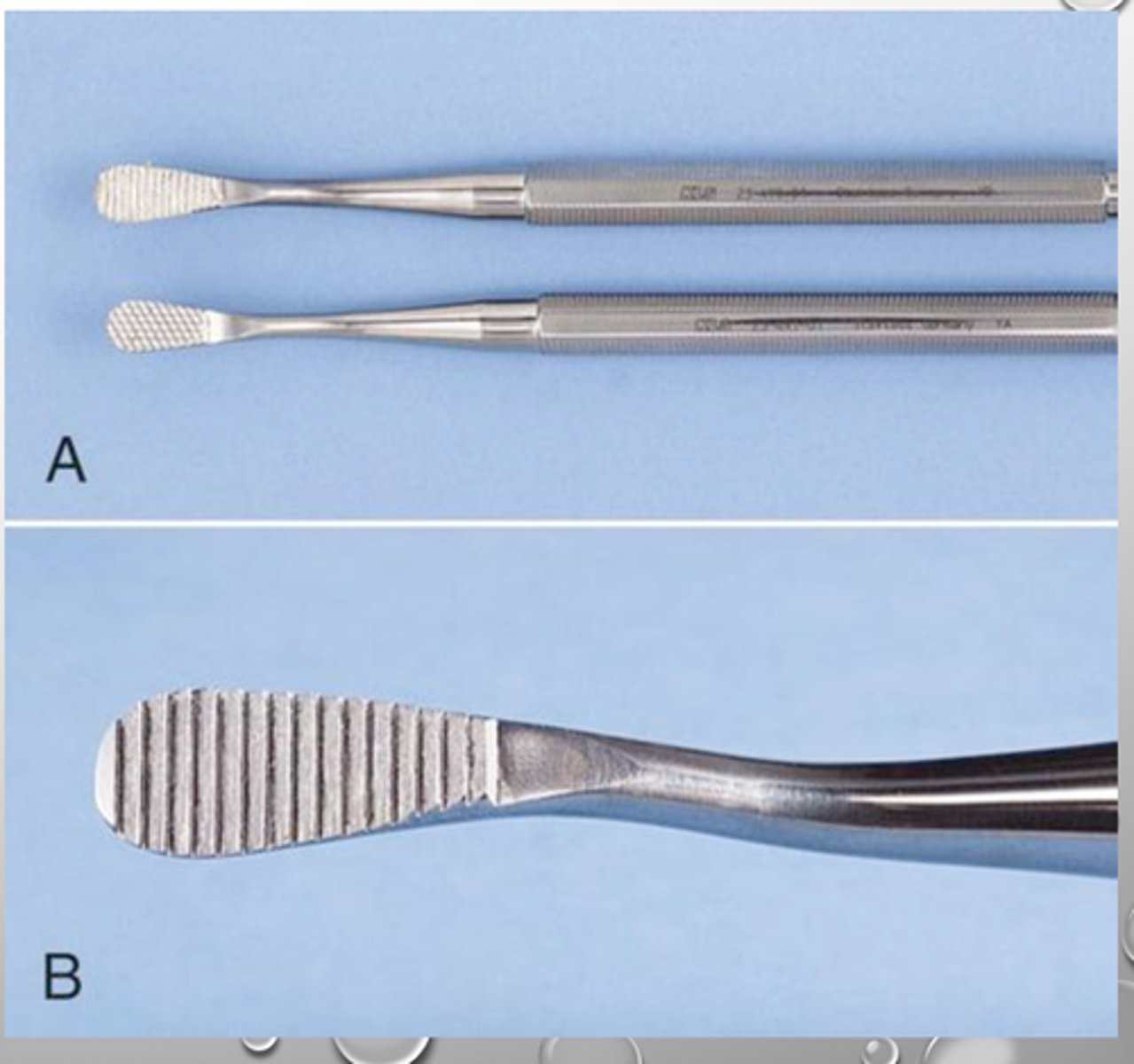
Bone file to SMOOTH bone
Curette
Which OS Bone Removal instrument:
- Used to debride soft tissue from bony cavities (scoop stuff out)
- Ex: scooping out periapical disease
- Ex: Cystic lesions (apex of socket) → i.e. small cysts from periapical lesions or granulomas
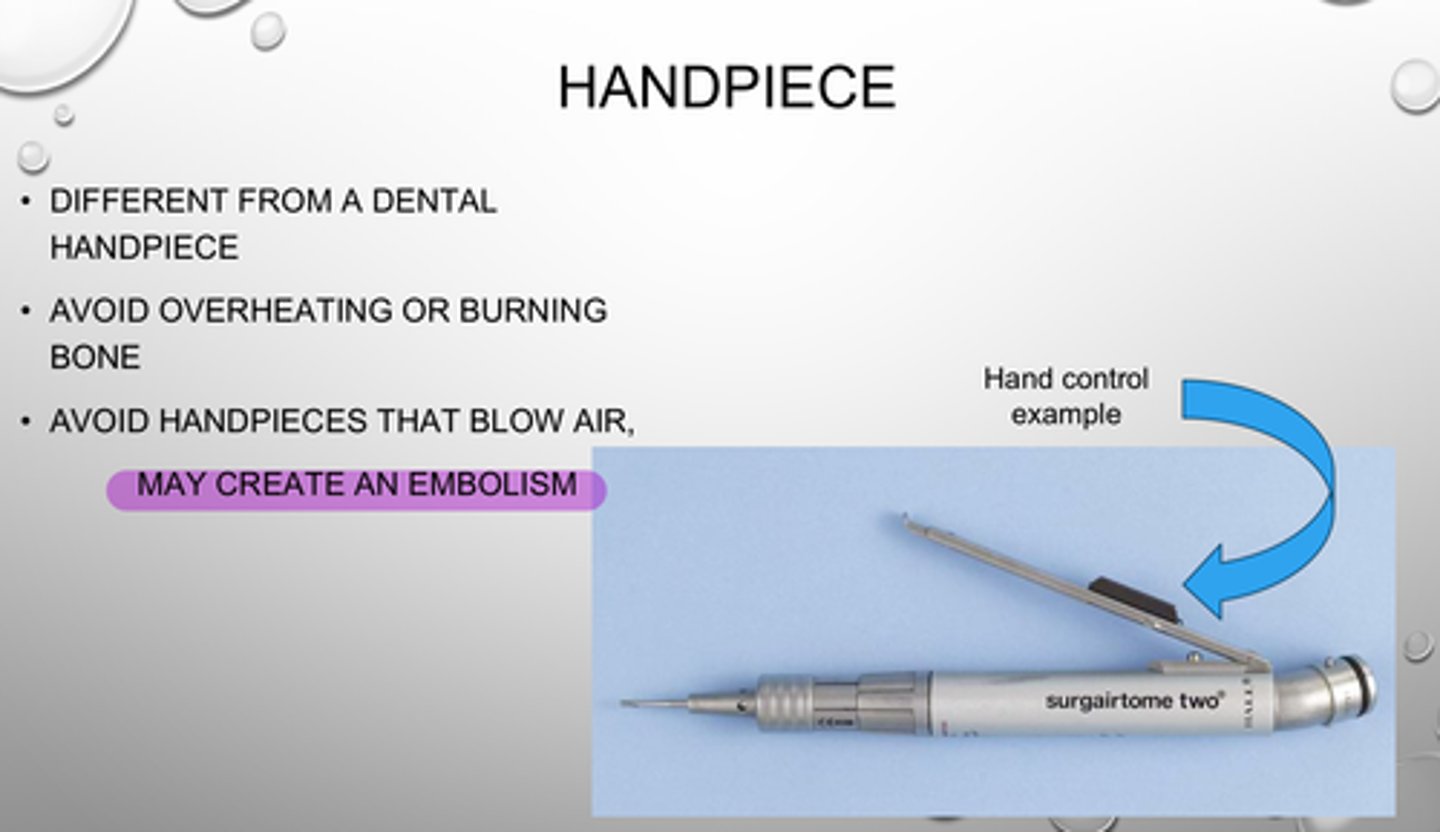
Embolism
- An embolism is a blocked artery caused by a foreign body, such as a blood clot or an air bubble
Surgical handpieces that blow air may create an ___________
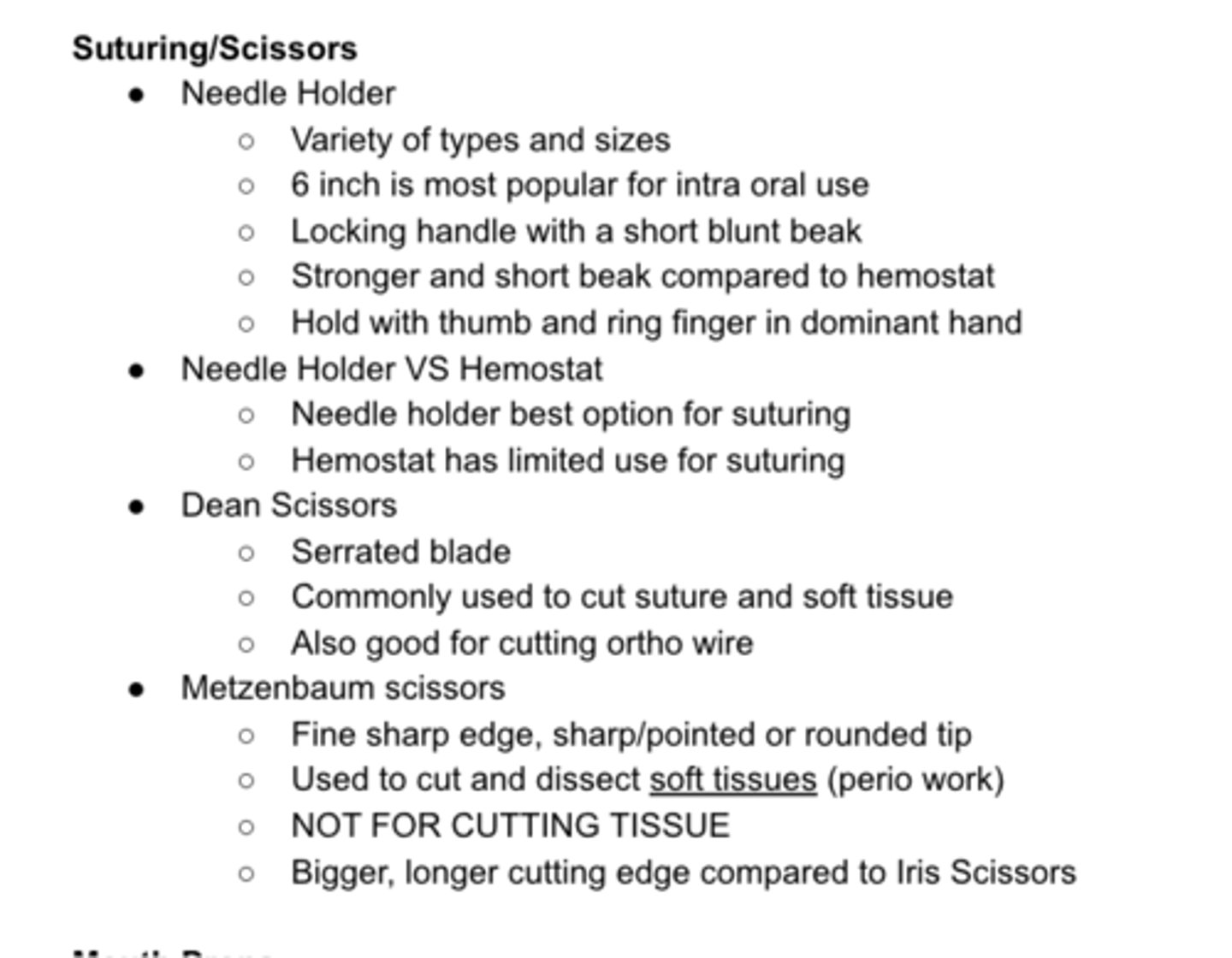
6 inch
the ____ inch Needle Holder is the most popular for INTRA oral use
- review photo for rest