17. abusive relationships
 Call Kai
 Learn
Learn Practice Test
 Spaced Repetition
 Match
Match Flashcards
 Knowt Play
1/30

There's no tags or description
Looks like no tags are added yet.
Name | Mastery | Learn | Test | Matching | Spaced | Call with Kai |
|---|
No analytics yet
Send a link to your students to track their progress
31 Terms
5 steps? of relationship to blue line of abuse (includes what predicts women and men leaving)
FIRST INCIDENT usually not considered abuse
LATER INCIDENTS are measured against quality of relationship
as violence escalates and affects others, VICTIM REDEFINES act as abuse
FREQUENCY OF ACT predicts WOMEN leaving
SEVERITY OF ACT predicts MEN leaving
#1 predictor of abuse and also infidelity in a relationship
alcohol use
7 causes of violence
high lvls of aggression
cycle of violence
life stressors
low socio-economic status
poor communication
power differential
attitudes accepting partner violence
4 parts to the cycle of violence
buildup to abuse - tensions rising
violence occurs
reconciliation - abuser is kind and loving
hope - abused person hopes violence will not recur
life stressor
an event that is perceived as exceeding the individual’s resources or ability to cope, and is also perceived as a negative threat or harm
3 reasons why husbands w less power are more likely to abuse
violence compensates for lack of economic power or attractiveness
violence by males has long been more acceptable than violence by females
masculine roles encourage “keeping women in their place”
explain why victims don’t leave in terms of Rusbult’s investment model of relationships
satisfaction w relationships
they’re not happy w the abuse, but they believe the relationship is providing them w what they need
abusers usually apologize and “make up” for abuse
partner-enhancing biases keep ppl from recognizing questionable behavior as abuse
quality of alternatives
victim’s economic status is critical
amount invested
victim’s time in relationship matters
emotional investment matters
cost of leaving matters
violence
behaving in a manner that’s intended to do physical harm to others
3 types of couple violence + most common one
situational couple violence (SCV)
intimate terrorism (IT)
violent resistance
SCV
situational couple violence
typically erupts from heated conflicts that get out of hand, occurs when both partners are angry and is tied to specific arguments, so it’s only occasional and is usually mild, being unlikely to escalate into srs, life-threatening forms of aggression
often mutual
intimate terrorism
one partner uses violence as a tool to control and oppress the other
more likely to be one-sided
violent resistance
in which a partner forcibly fights back against IT
least common of the 3
5 other facets of IT besides physical violence
isolation
intimidation
economic abuse
emotional abuse
minimizing
isolation
controlling where partner goes, what they do, whom they see
intimidation
threatening, destroying partner’s property, abusing pets
economic abuse
taking partner’s money, preventing their employment
emotional abuse
humiliating, disregarding, and blaming: “this is your fault”
minimizing
denying any abuse
indirect aggression
attempting to ruin someone’s reputation by spreading rumors or gossip
more common among women
mate-guarding
we work to regulate and control our partners’ access to potential rivals, and vice versa
vigilance and surveillance
dropping by unexpectedly, calling at random, or lurking on social media
I3 model
organizes influences on SCV into…
INSTIGATING TRIGGERS that cause one or both partners to be frustrated or on edge
IMPELLING INFLUENCES that make it more likely that the partners will experience violent impulses
INHIBITING INFLUENCES that encourage the partners to refrain from acting on those impulses
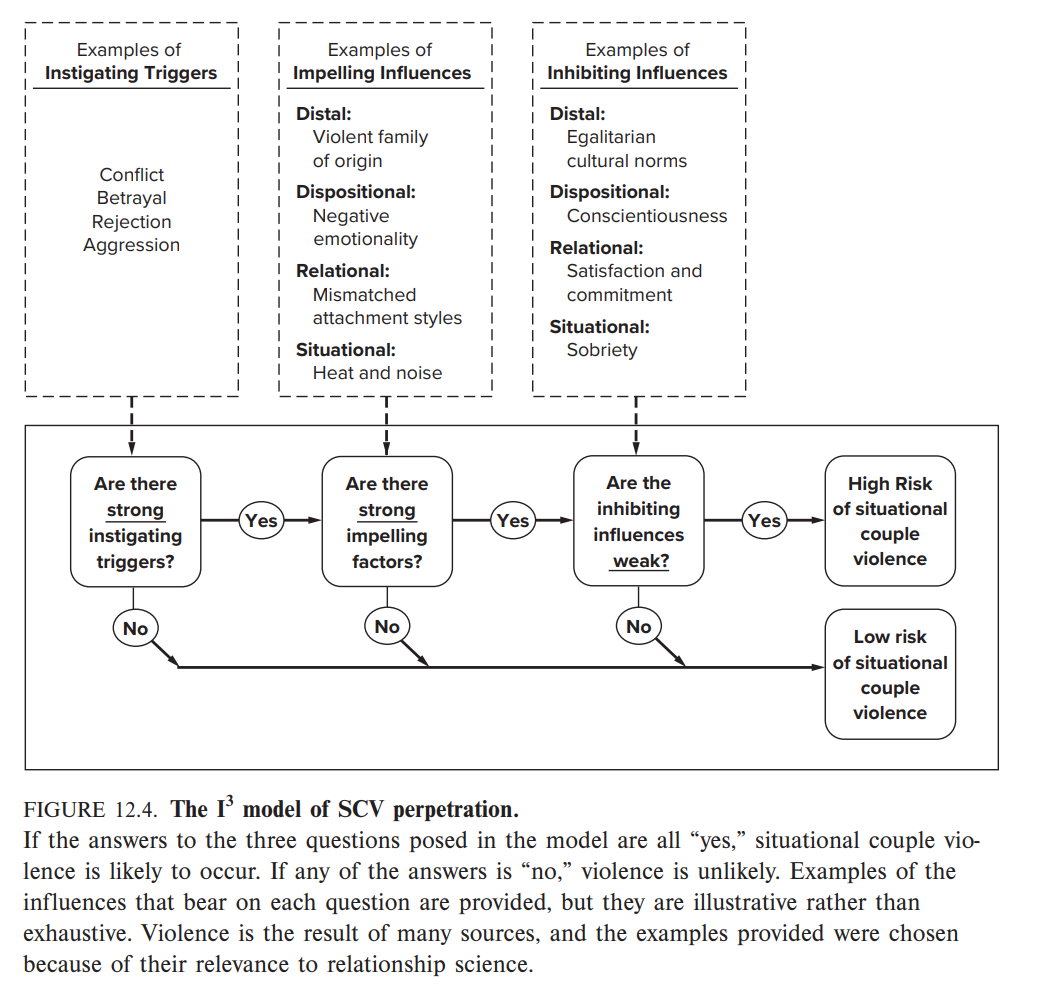
4 kinds of impelling and inhibitory influences
distal influences
dispositional influences
relational influences
situational influences
distal influences + ex of impelling vs instigating influences
emerge from one’s bg, include cultural norms, economic conditions, and family exps
violent family of origin vs egalitarian cultural norms
dispositional influences + ex of impelling vs instigating influences
include personality traits and long-standing beliefs
negative emotionality vs conscientiousness
relational influences + ex of impelling vs instigating influences
involve the current state of the couple’s relationship
mismatched attachment styles vs satisfaction and commitment
situational influences + ex of impelling vs instigating influences
include the immediate circumstances
heat and noise vs sobriety
2 types of ppl who resort to IT
some are just clumsy and pathetic and threats of harm are their wretched efforts to keep their partners from leaving
others seem to be more malevolent; they are antisocial or narcissistic, and violence is just another tool w which to get what they want
why do ITs often feel inferior to their partners?
bc they tend to be plagued by poverty, and violence is much more common in homes w low annual incomes
stalking
repeated, malicious following and harassing of an unwilling target that may include (depending on the state) unwanted messages, surveillance, breaking and entering, and other invasions of privacy that scare those who are pursued
3 kinds of stalkers
ppl pursuing ex-partners after the end of romantic relationship - usually insecure ppl high in anxiety abt abandonment and seeking reconciliation, or vengeful, controlling, possessive ppl who seek retaliation and punishment of their departed partner
some stalkers are just a little crazy, being obsessed w someone who is a mere acquaintance or whom they don’t even know
may be lonely and possessed of poor social skills and may be seeking to form a relationship in an inept and hopeless way