Exploring Medical Language Chapter 7
 Call Kai
 Learn
Learn Practice Test
 Spaced Repetition
 Match
Match Flashcards
 Knowt Play
1/127

There's no tags or description
Looks like no tags are added yet.
Name | Mastery | Learn | Test | Matching | Spaced | Call with Kai |
|---|
No analytics yet
Send a link to your students to track their progress
128 Terms
Testis (pl. testes)
primary male sex organs, paired, oval-shaped, and enclosed in a sac called the scrotum. The testes produce spermatazoa (sperm cells) and the hormone testosterone. (also called testicle)
Male Reproductive System Function
produce, sustain, and transport
spermatozoa or sperm
(male reproductive cell)
secrete
testosterone
(hormone)
sperm
the microscopic male germ cell, which, when united with the ovum, produces a zygote (fertilized egg) that with subsequent development becomes an embryo. (also called spermatozoon, pl. spermatozoa)
testosterone
the principle male sex hormone. Its chief function is to stimulate the development of the male reproductive organs and secondary sex characteristics such as facial hair
seminiferous tubules
approximately 900 coiled tubes within the testes in which spermatogenesis occurs
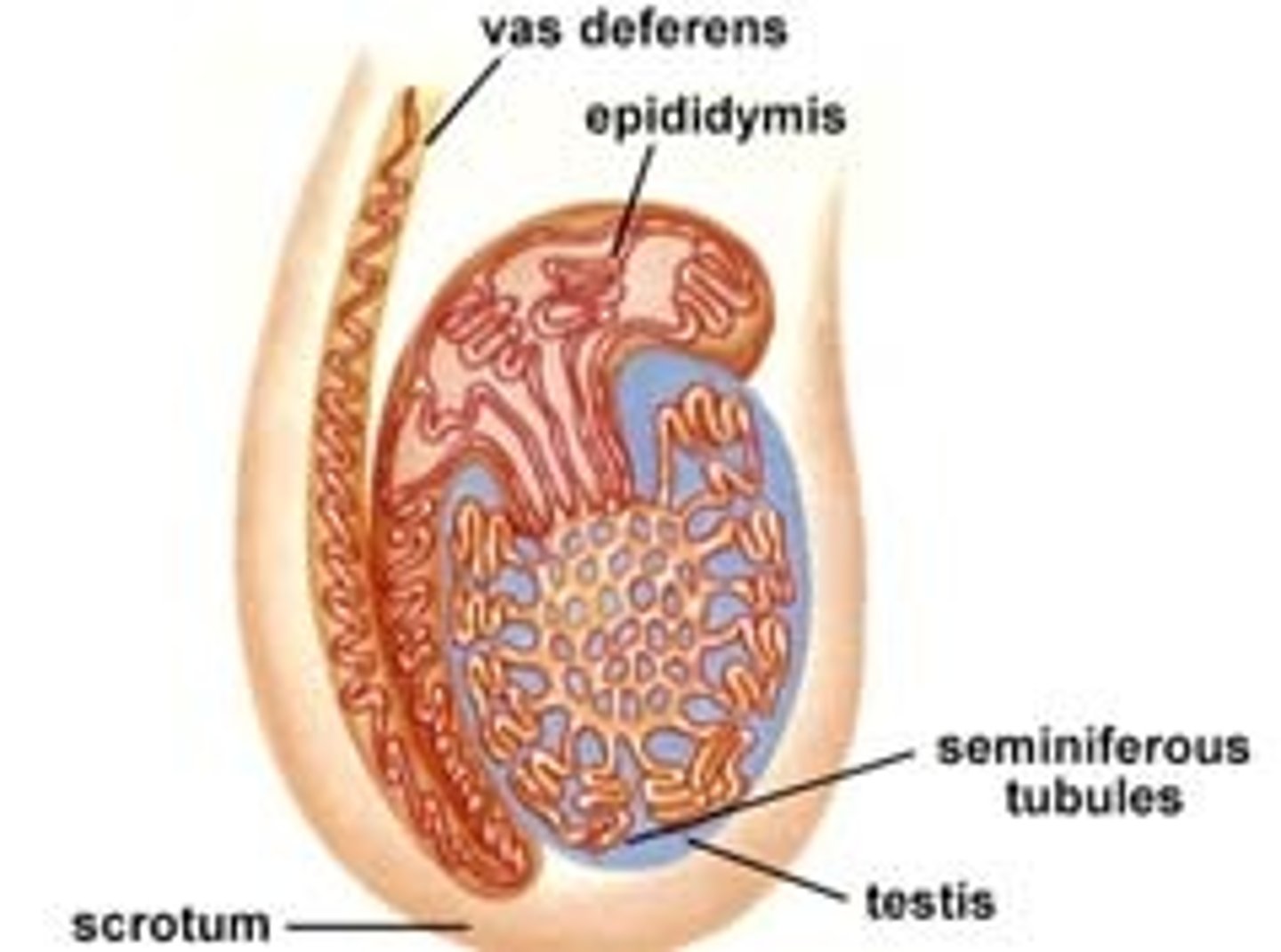
epididymis
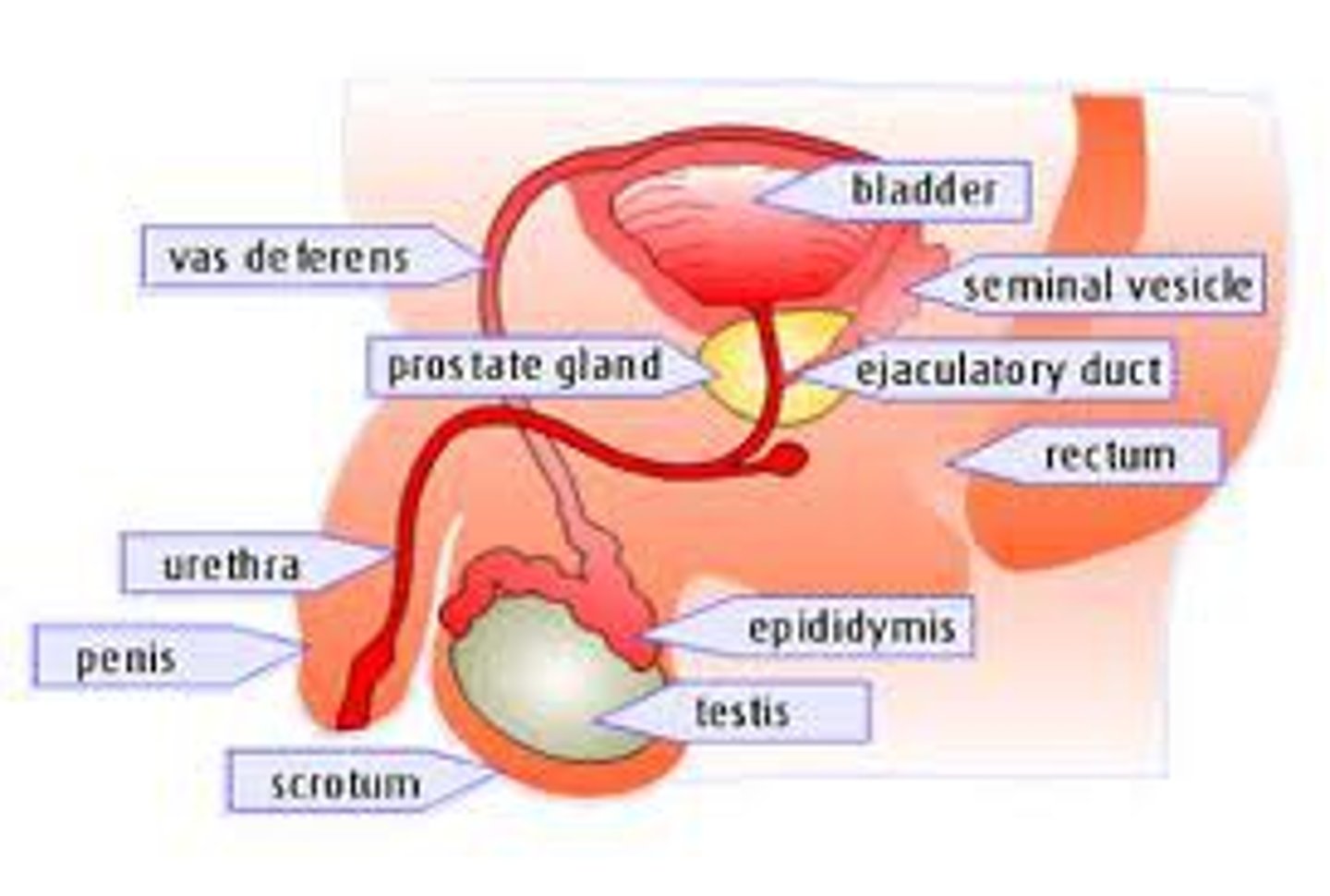
coiled tube attached to each of the testes that provides for storage, transit, and maturation of sperm; continuous with the vas deferens
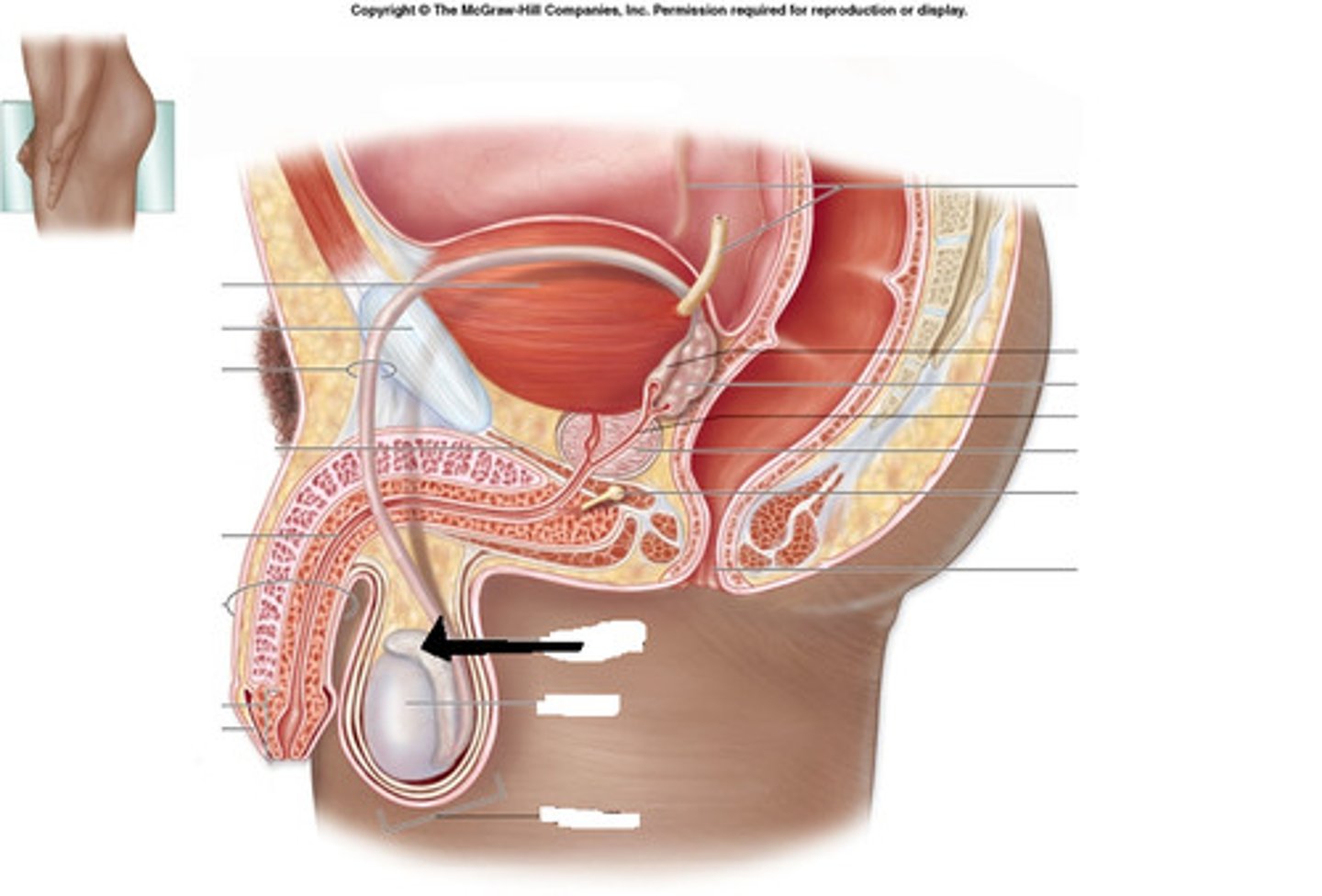
vas deferens
duct carrying the sperm from the epididymis to the urethra. The spermatic cord encloses each vas deferens with nerves, lymphatics, arteries, and veins. The urethra also connects with the urinary bladder and carries urine outside the body. A circular muscle constricts during intercourse to prevent urination. (also called ductus deferens.)
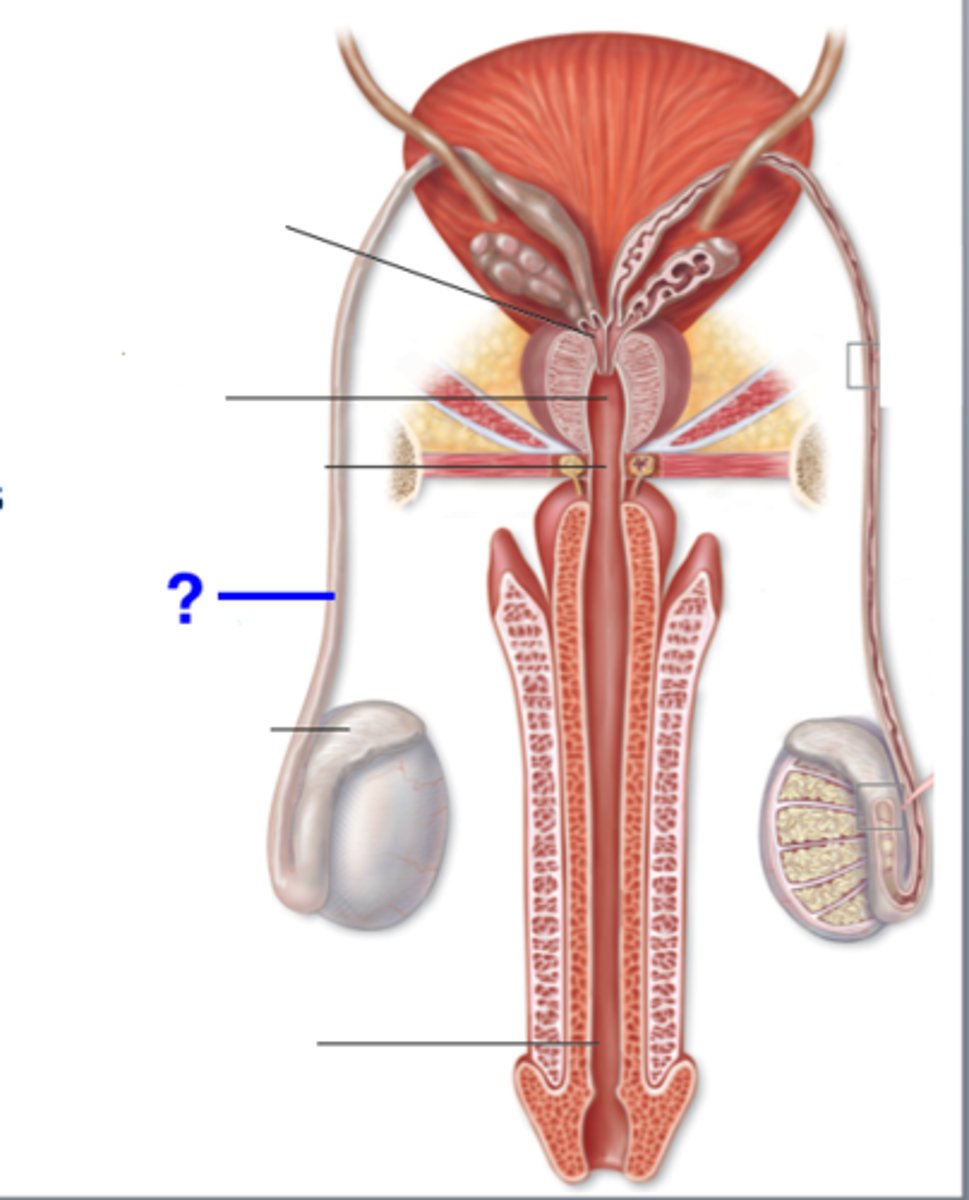
seminal vesicles
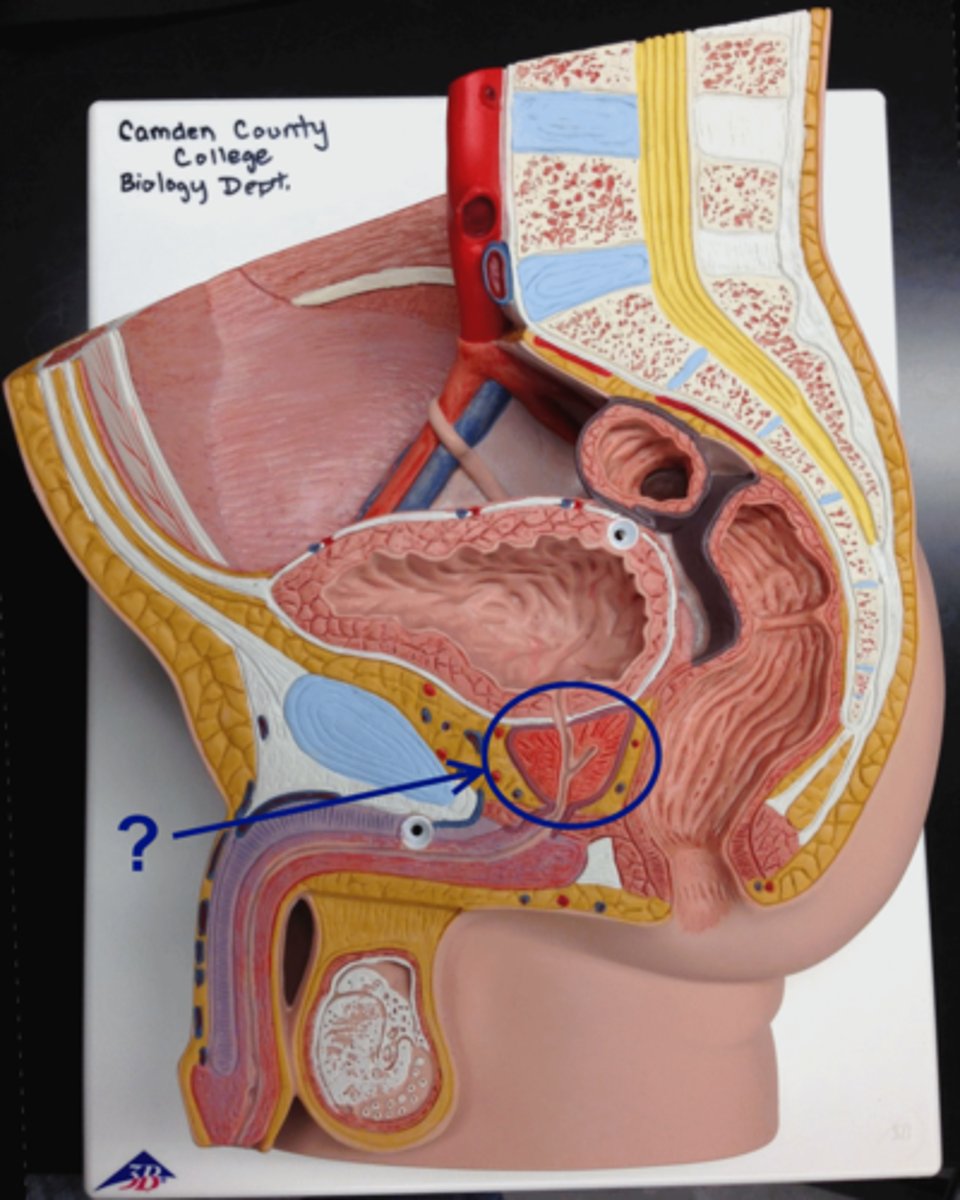
two main glands located posterior to the base of the bladder that opens into the vas deferens. The glands secrete a thick fluid that forms part of the semen
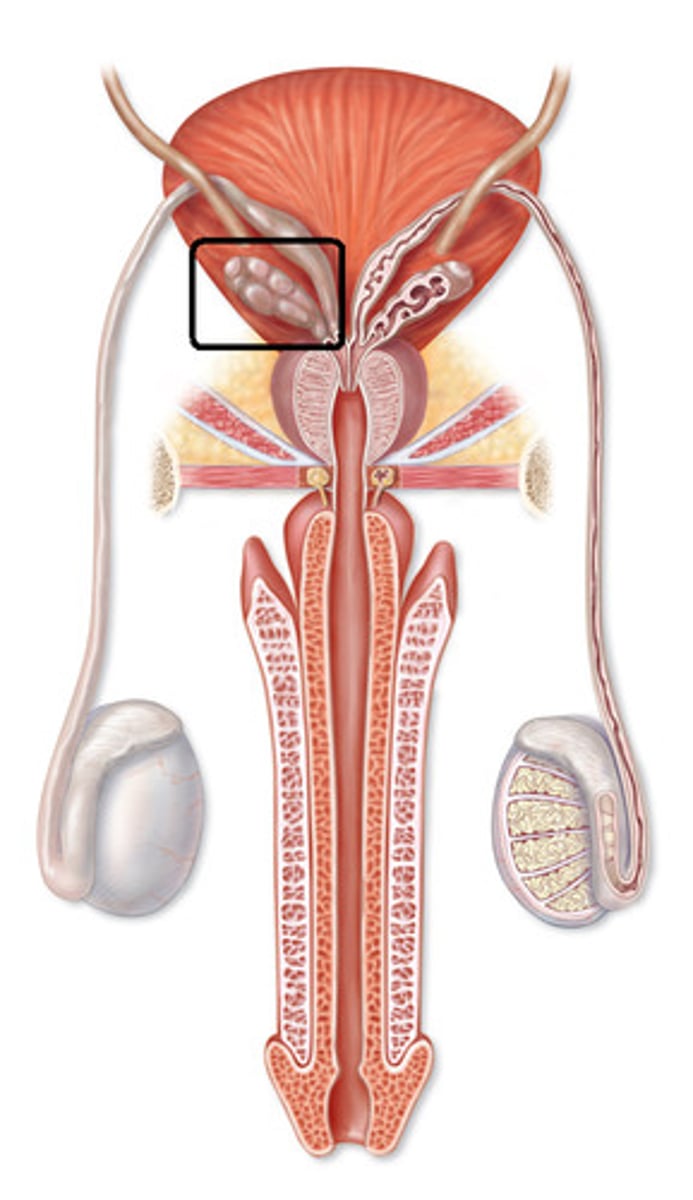
prostate gland
encircles a proximal section of the urethra. The prostate gland secretes a fluid that aids in the movement of the sperm and ejaculation
semen
composed of sperm, seminal fluids, and other secretions.
scrotum
sac containing the testes and epididymis, suspended on both sides of and posterior to the penis
penis
male organ of urination and coitus (sexual intercourse)
glans penis
enlarged tip on the end of the penis
prepuce
fold of skin covering the glans penis in the uncircumcised males (foreskin of the penis)
genitalia
reproductive organ (male or female); includes internal and external reproductive organs (also called genitals)
gonads
primary reproductive organs; testes in males and ovaries in females
andr/o
male
balan/o
glans penis
epididym/o
epididymis
orchid/o, orchi/o, orch/o
testis, testicle
prostat/o
prostate gland
sperm/o, spermat/o
sperm, spermatozoon (pl. spermatozoa)
vas/o
vessel, duct (vas deferens in terms describing the male reproductive system)
vesicul/o
seminal vesicle(s)
-algia
pain
-ism
state of
anorchism
state of absence of testis (unilateral or bilateral)
balantitis
inflammation of the glans penis
balanorrhea
discharge from the glans penis
benign prostatic hyperplasia (BPH)
benign prostatic hyperplasia (BPH)
cryptorchidism
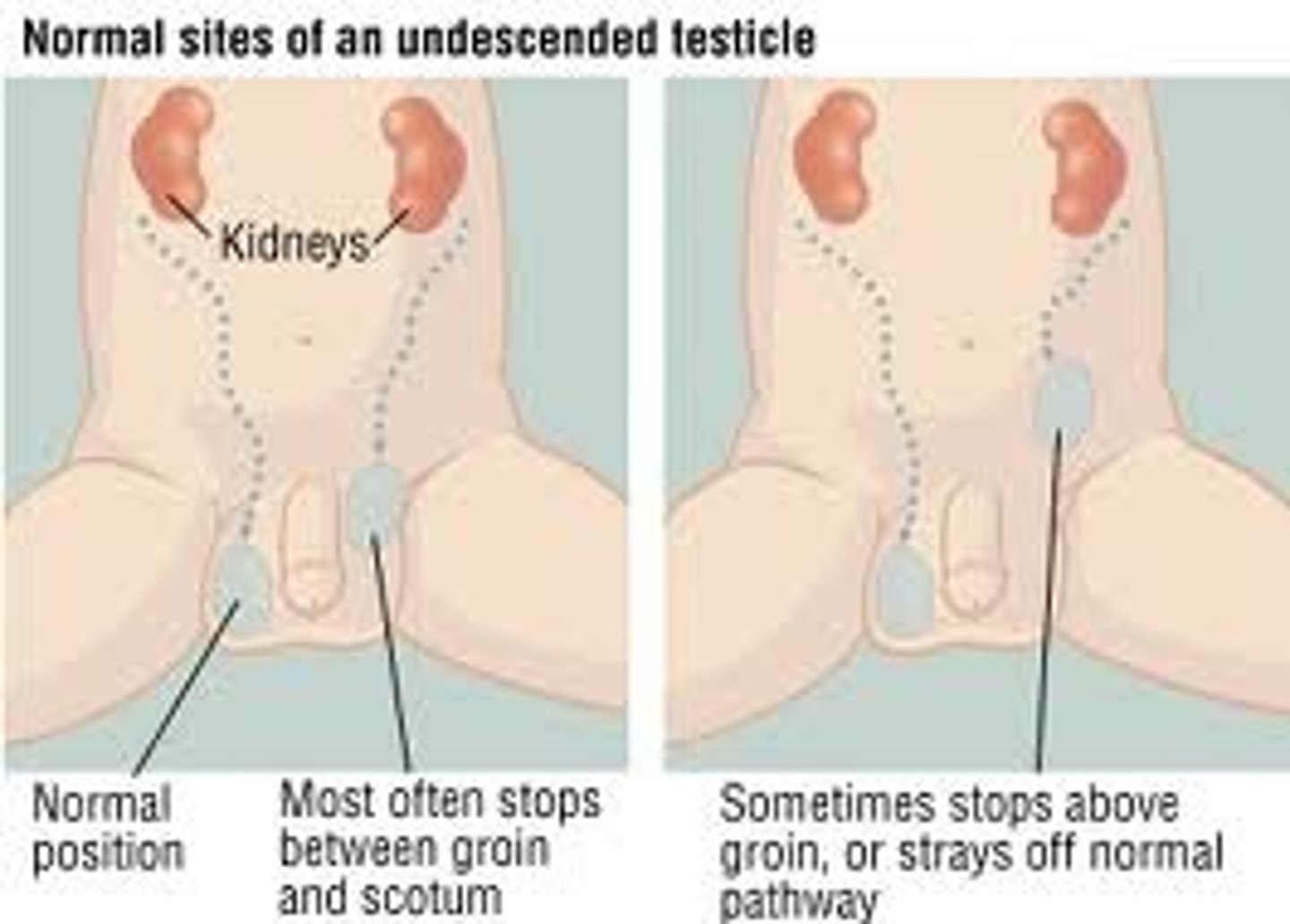
state of hidden testes. (During fetal development, testes are located in the abdominal area near the kidneys. Before birth they move down into the scrotal sac. Failure of the testes to descend from the abdominal cavity into the scrotum before birth results in cryptorchidism) (also called undescended testicle and undescended testicles)
epididymitis
inflammation of the epididymis
orchiepididymitis
inflammation of the testis and epididymis
orchitis
inflammation of the testis
- also called orchiditis
prostatitis
inflammation of the prostate gland
prostatocystitis
inflammation of the prostate gland and the (urinary) bladder
prostatolith
stone(s) in the prostate gland
prostatorrhea
discharge from the prostate gland
prostatovesiculitis
inflammation of the prostate gland and seminal vesicles
erectile dysfunction (ED)
the inability of the male organ to attain or maintain an erection sufficient to perform sexual intercourse (formerly called impotence)
hydrocele
fluid-filled sac around the testicle; causes scrotal swelling
phimosis
a tightness of the prepuce(foreskin of the penis) that prevents its retraction over the glans penis, it may be congenital or a result of balanitis. Circumcision is the usual treatment
priapism
persistent abnormal erection of the penis accompanied by pain and tenderness
prostate cancer
cancer of the prostate gland, usually occurring in men middle-aged and older
transvesical
across or through the bladder
laproscopic surgery
surgeon inserts a tiny camera into your body and operates it without having to put in their hands
spermatocele
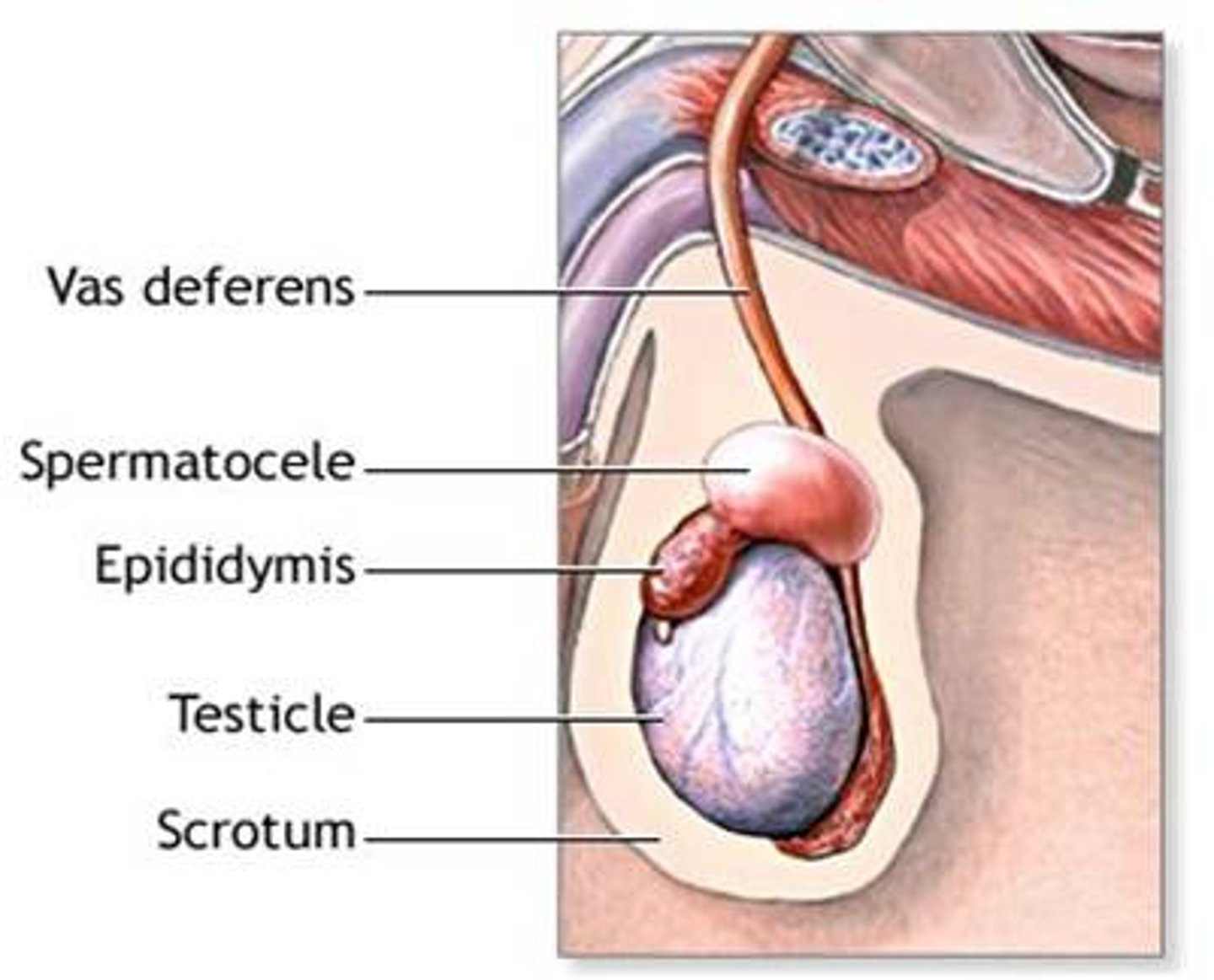
distention of the epididymis containing an abnormal cyst-like collection of fluid and sperm cells; may cause scrotal swelling.
testicular cancer
cancer of the testicles, usually occuring in men 15 to 35 years of age
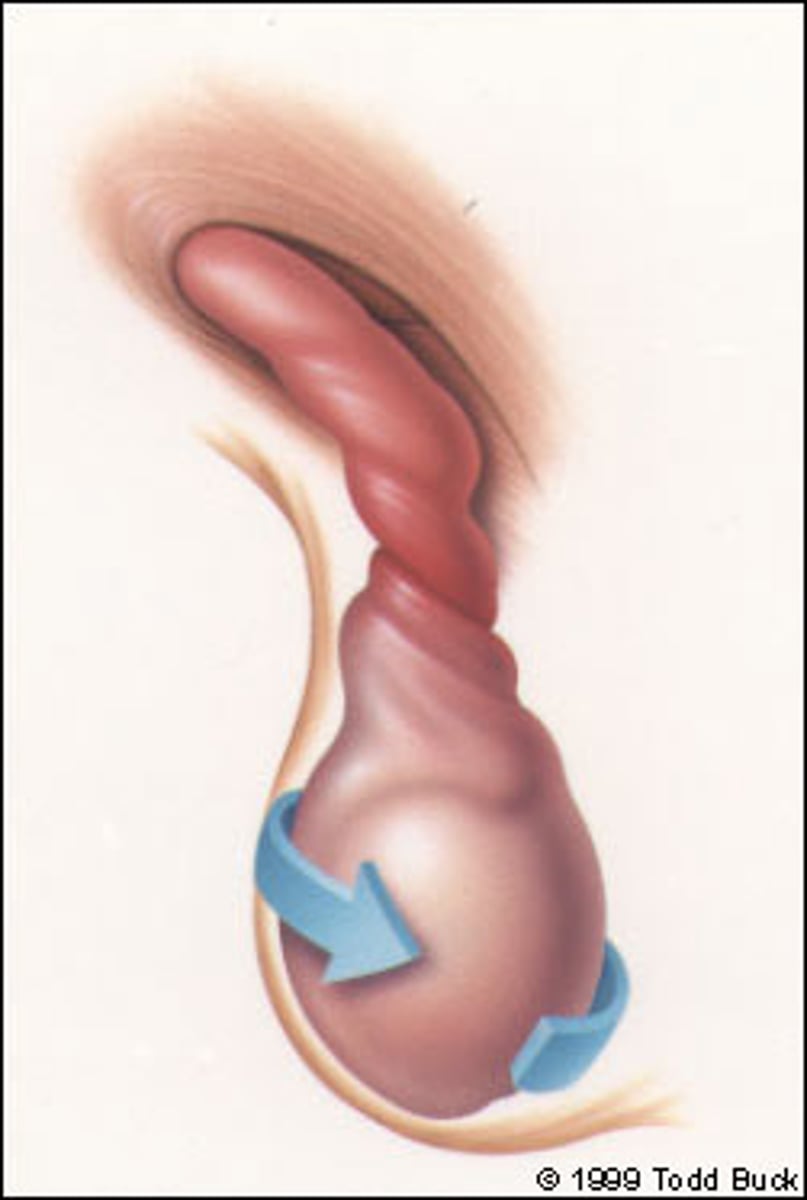
testicular torsion
twisting of the spermatic cord causing decreased blood flow to the testis, occurs most often during puberty and often presents with sudden onset of severe testicular or scrotal pain. Because of lack of blood flow to the testis, it is often considered a surgical emergency
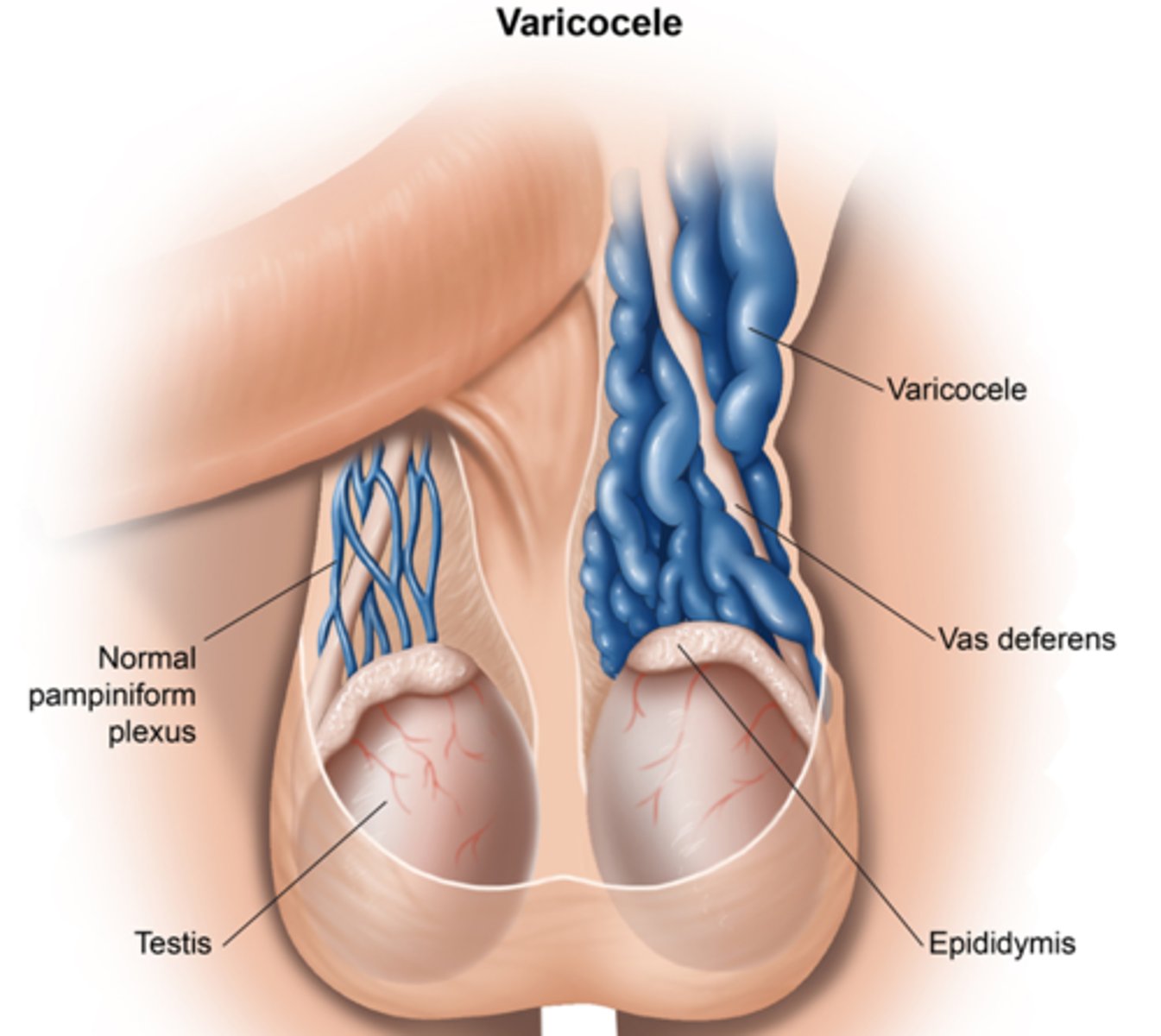
varicocele
enlarged veins of the spermatic cord; may cause scrotal swelling.
balanoplasty
surgical repair of the glans penis
epididymectomy
excision of the epididymis
orchiectomy
excision of the testis (bilateral orchiectomy is called castration)
also called orchidectomy
orchiopexy
surgical fixation of a testicle (performed to bring undecsended testicles into the scrotum)
- also called orchidopexy
blanoplasty
surgical repair of the glans penis
orchiotomy
incision into a testis
also called orchidotomy
orchioplasty
surgical repair of a testis
prostatectomy
excision of the prostate gland
radical prostatectomy (RP)
excision of the prostate gland and all its components as a treatment for prostate cancer
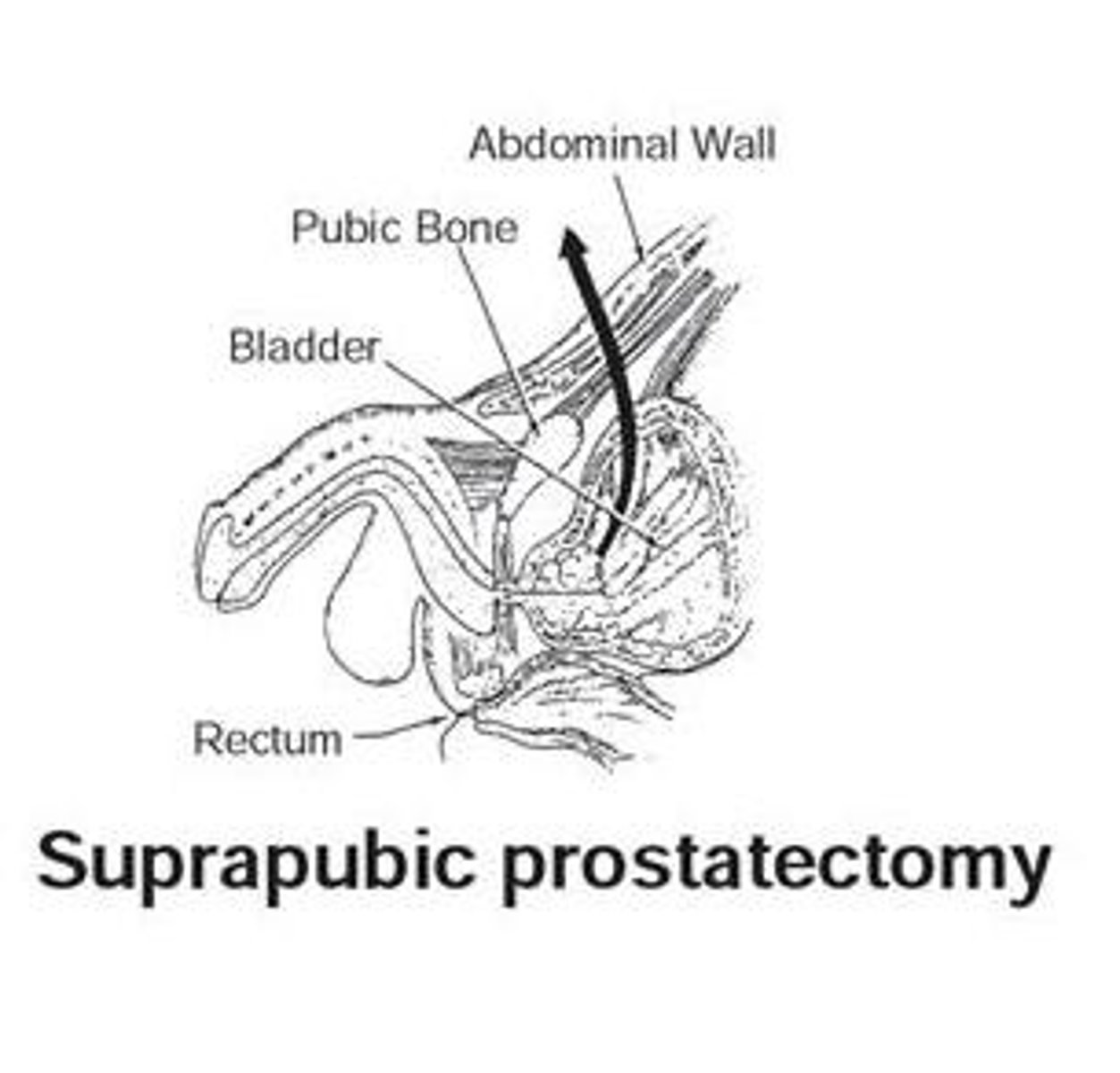
suprapubic prostatectomy
removal of the prostate gland via incision into the abdomen above the pubic bone of the pelvis
- form of endoscopic surgery. This procedure is used to tx early states of prostate cancer, especially for men younger than age 70
3 types of surgical treatments for benign prostatic hyperplasia
1. incisional
2. thermotherapy
3. laser prostatectomy
laser prostatectomy
operation for men who have problems passing urine because of an enlargement of the prostate gland
-uses cystoscope
prostatocystotomy
incision into the prostate gland and (urinary) bladder
prostatolithotomy
incision into the prostate gland to remove stones
prostatovesiculectomy
excision of the prostate gland and the seminal vesicles
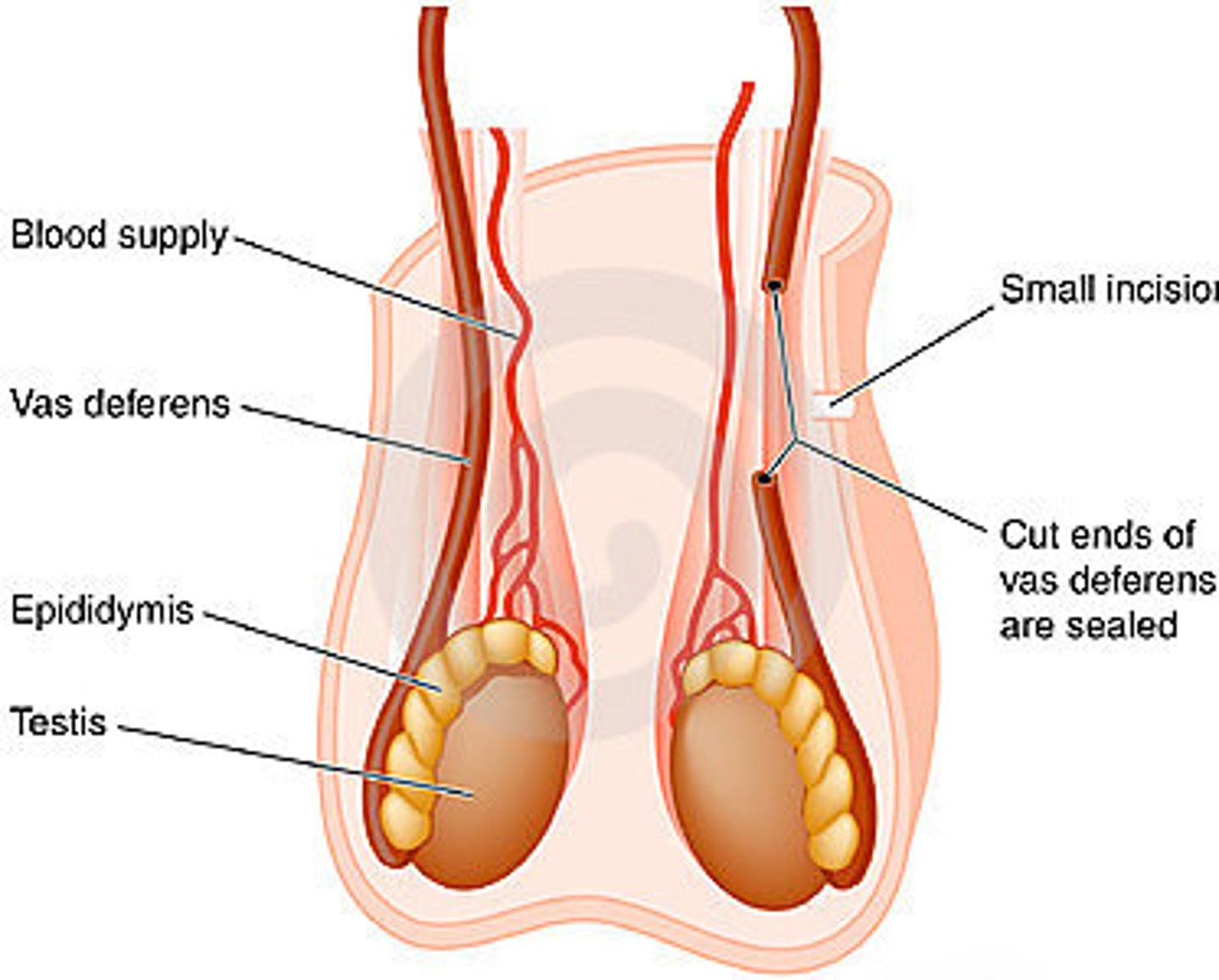
vasectomy
excision of a duct
- partial excision of the vas deferens bilaterally, resulting in male sterilization
vasovasostomy
creation of artificial openings between ducts (the severed ends of the vas deferens are reconnected in an attempt to restore fertility in men who have had a vasectomy)
vesiculectomy
excision of the seminal vesicles
ablation
destruction of abnormal or excessive tissue by melting, vaporizing, or eroding.
circumcision
surgical removal of the prepuce (foreskin); all or part of the foreskin may be removed
enucleation
excision of a whole organ or mass without cutting into it.
hydrocelectomy
surgical removal of a fluid-filled sac around the testicle causing scrotal swelling (hydrocele)
laser surgery
use of a focused beam of light to excise or vaporize abnormal tissue and to control bleeding; uses a variety of non-invasive and minimally invasive procedures. tTwo common types of laser surgery used to treat BPH are holmium laser enucleation of the prostate gland (HoLEP) and photoselective vaporization of the prostate gland (PVP)
morcellation
cutting or grinding solid tissue into smaller pieces for removal.
MRI ultrasound fusion biopsy
combination of magnetic resonance imaging with transrectal ultrasound (TRUS) to obtain a tissue from a prostate lesion. Software merges an existing MRI with live ultrasound images. The combined, or fused, MRI-TRUS image is used to direct the biopsy needle into the area of the prostate that looked suspicious on MRI. (also called MRI-TRUS fusion, and fusion guided biopsy.
robotic surgery
use of small surgical instruments attached to a computer and operated by the surgeon from a console several feet from the operating table.
robotic-assisted laparoscopic radical prostatectomy with a da Vinci system (RALP)
magnified 3D HD vision system and special instruments that bend and rotate far greater than the human hand; surgeon inserts a tiny camera into your body and operates it without having to put in their hands
transurethral incision of the prostate gland (TUIP)
surgical procedure that widens the urethra by making a few small incisions in the bladder neck and the prostate gland. No prostate tissue is removed. TUIP may be used instead of TURP when the prostate gland is less enlarged
rectoscope
instrument used to examine the rectum
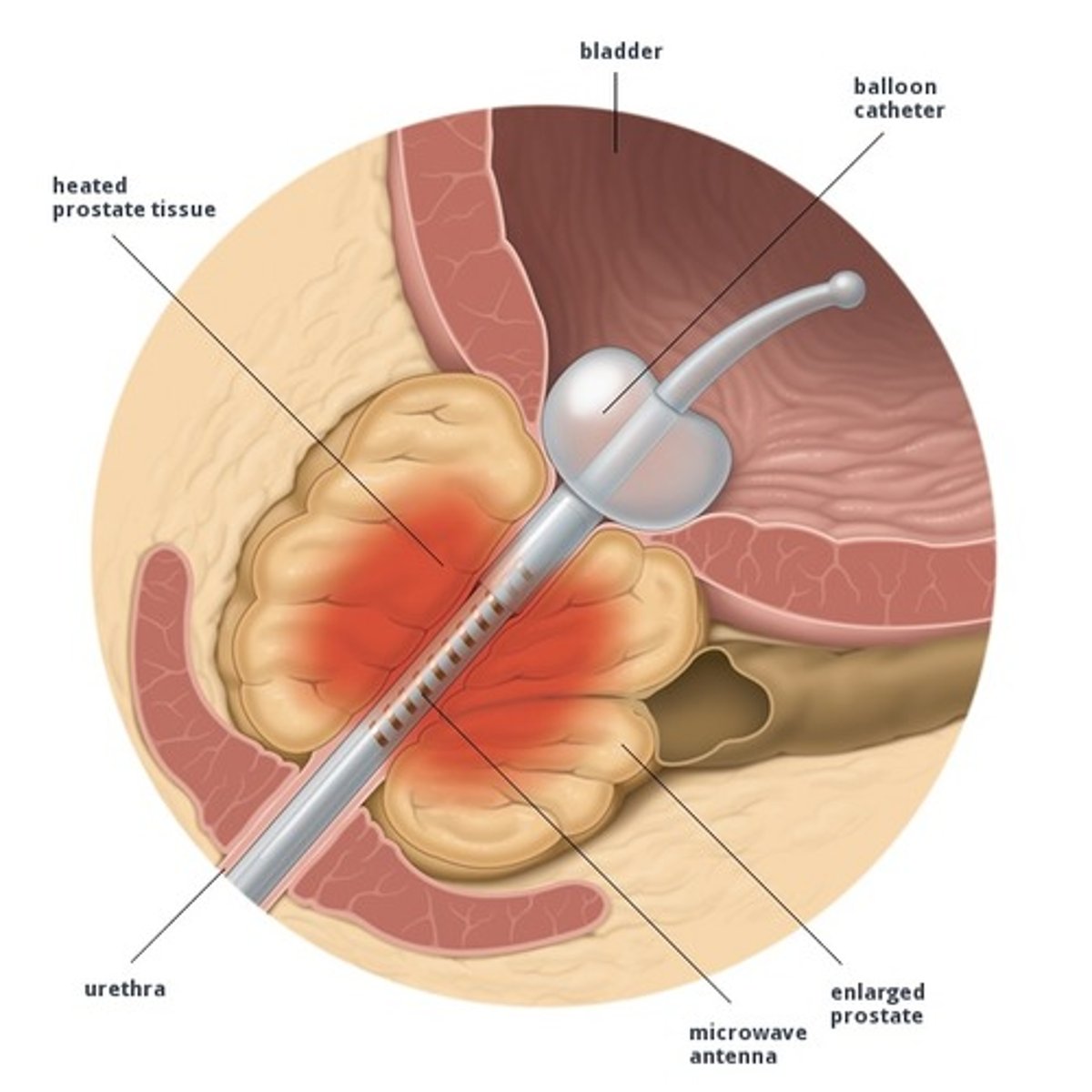
transurethral microwave thermotherapy (TUMT)
treatment that eliminates excess tissue present in benign prostatic hyperplasia by using heat generated by microwave
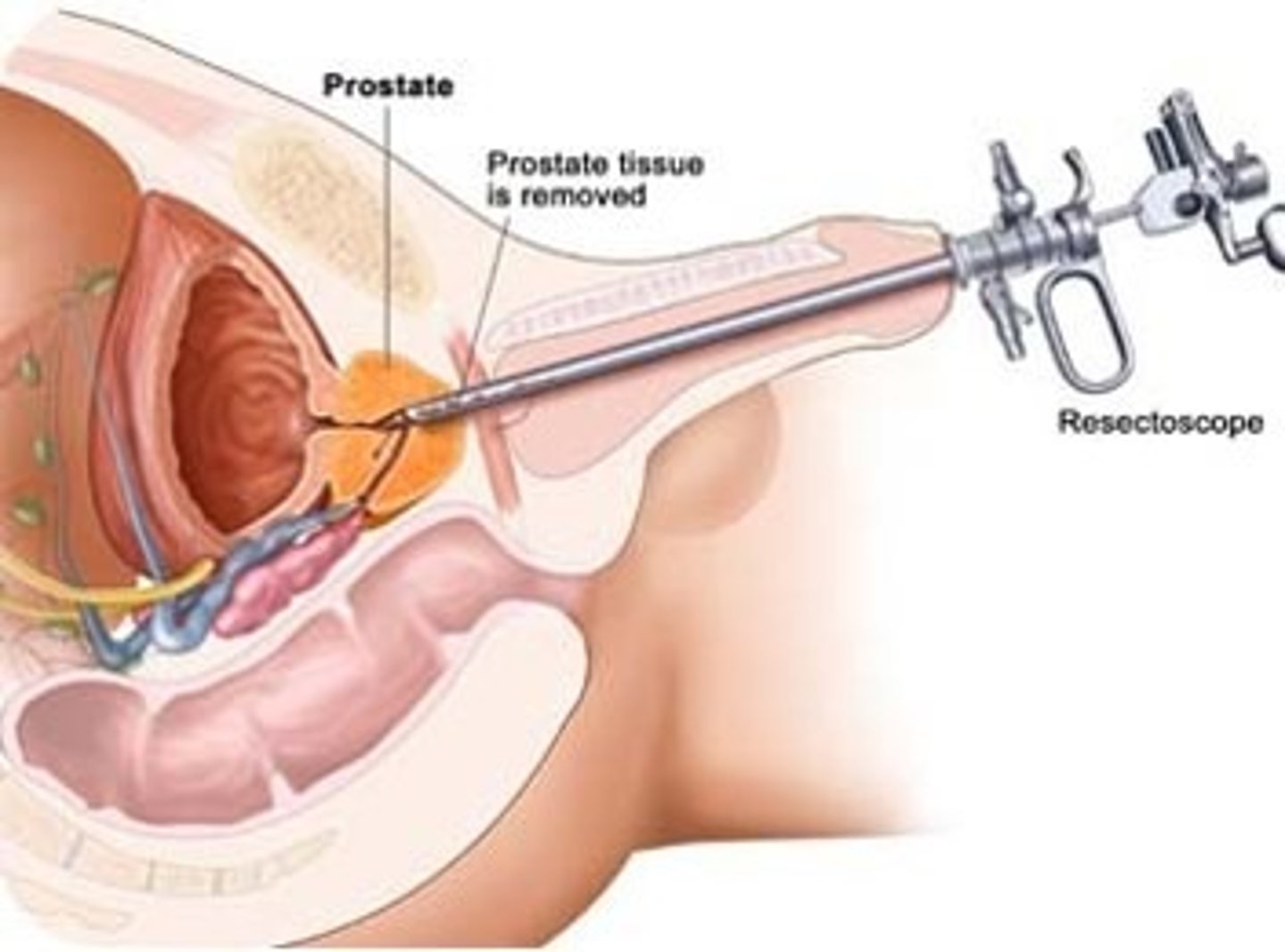
transurethral resection of the prostate gland (TURP)
surgical removal of pieces of the prostate gland tissue by using an instrument through the urethra.
-The capsule is left intact; usually performed when the enlarged prostate gland interferes with urination
-for benign prostatic hyperplasia
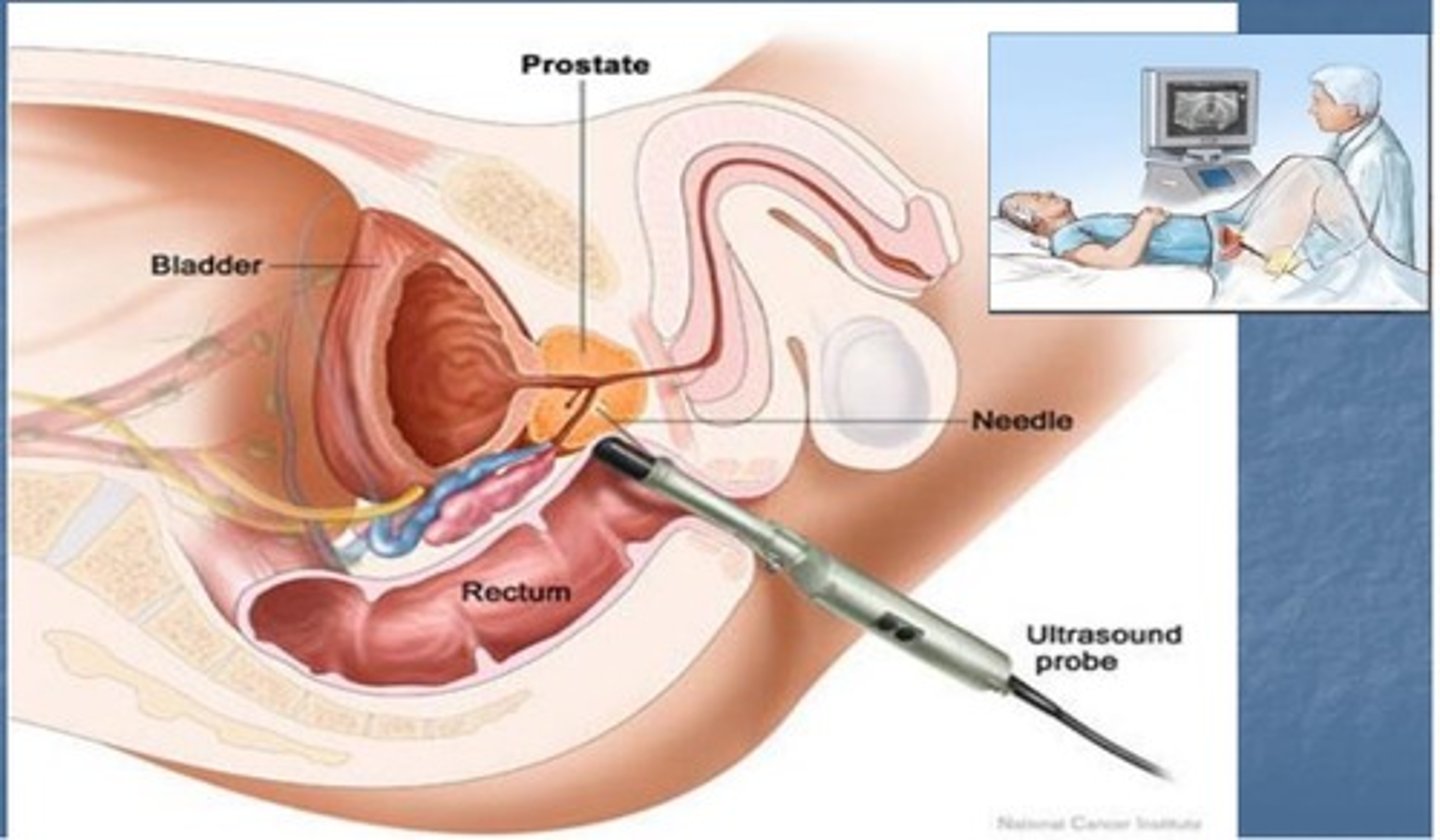
transrectal ultrasound (TRUS)
ultrasound procedure used to diagnose prostate cancer. Sound waves are sent and recieved by a transducer probe that is placed into the rectum
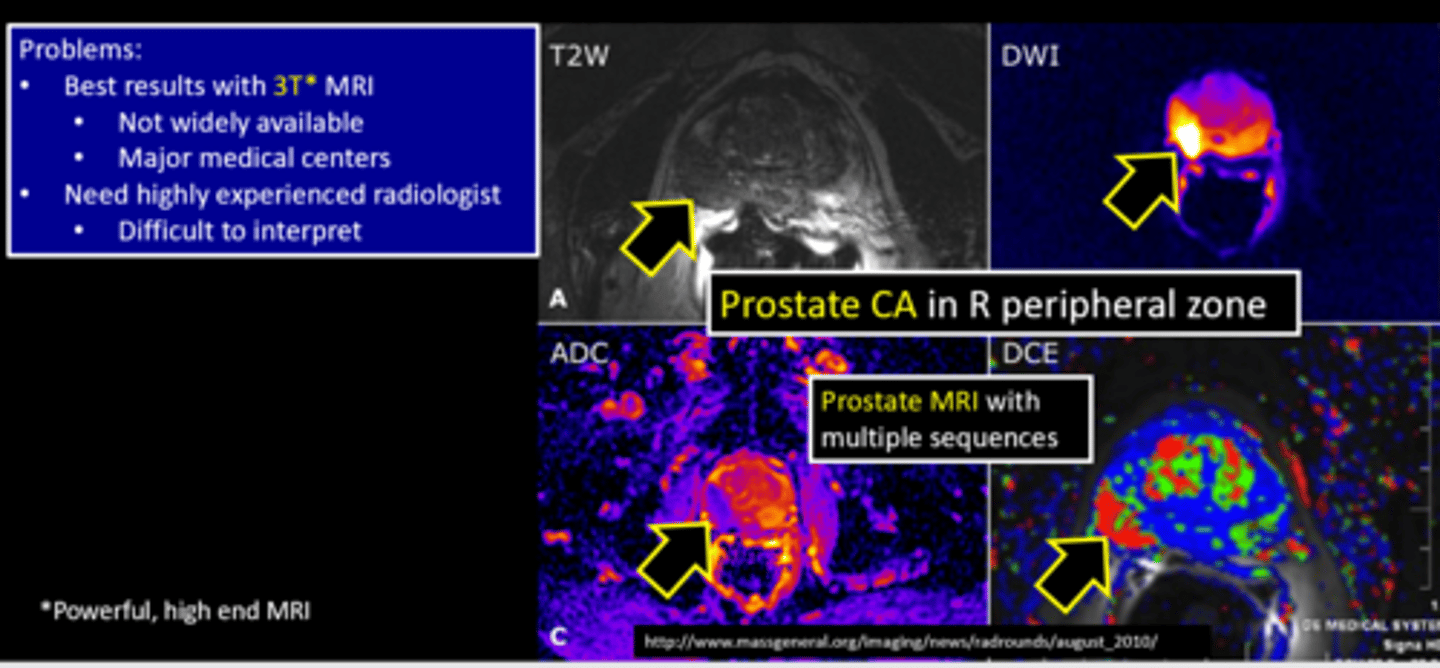
multiparametric MRI
magnetic resonance imaging procedure providing information of anatomic structure and physiology for the staging of prostate cancer It uses a combination of different MRI modalities to better understand the size and extent of prostate tumors.
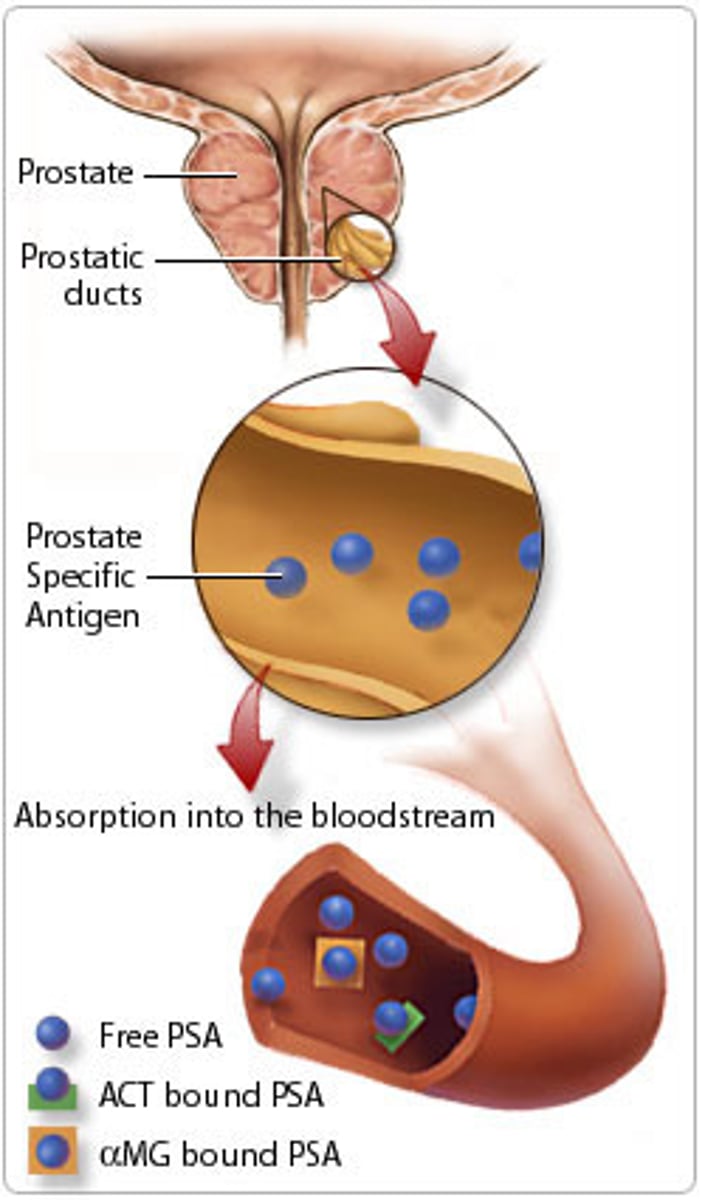
prostate-specific antigen (PSA)
blood test that measures the level of prostate-specific antigen in the blood. Elevated test results may indicate the presence of prostate cancer, urinary or prostatic infection, or excess prostate tissue, as found in benign prostatic hyperplasia or prostaitis
semen analysis
microscopic analysis of ejaculated semen, revealing the size, structure, and movement of sperm; used to evaluate male infertility and to determine the effectiveness of a vasectomy (also called a sperm count and sperm test)
digital rectal examination (DRE)
physical examination in which the healthcare provider inserts a finger into the rectum and palpates the prostate through the rectal wall to determine the size, shape, and consistency of the gland; used to screen for BPH and prostate cancer. BPH usually presents as a uniform, nontender enlargement, whereas cancer usually presents as a stony hard nodule
andropathy
disease of the male (specific to the male, such as orchitis)
aspermia
condition of without sperm (or semen or ejaculation)
oligospermia
condition of scanty sperm (in the semen, may contribute to infertility)
orchialgia
pain in the testes (also called testalgia)
spermatolysis
dissolution (destruction) of sperm
transurethral
pertaining to go through the urethra
acquired immunodeficiency syndrome (AIDS)
advanced, chronic immune system suppression cause by human immunodeficiency virus (HIV) infection; manifested by opportunistic infection (such as candidiasis or tuberculosis), neurologic disease (periapical neuropathy or cognitive motor impairment), and/or secondary neoplasms (Kaposi sarcoma)
artificial insemination
introduction of washed and concentrated sperm into the female reproductive tract; used as a treatment for infertility.
azooaspermia
a lack of live sperm in the semen
chlamydia
sexually transmitted disease, cause by the bacterium C. trachomatis; sometimes referred to as a silent STD because many people are not aware they have the disease. Symptoms that occur when the disease becomes serious are painful urination and discharge from the penis in men and genital itching, vaginal discharge, and bleeding between menstrual periods in women
coitus
sexual intercourse between male and female
condom
cover for the penis worn during coitus to prevent conception and the spread of sexually transmitted diseases
ejaculation
ejection of semen from the male urethra
genital herpes
sexually transmitted disease cause by herpes simplex virus type 2