6.6, 6.7, 6.8 human gas exchange
 Call Kai
 Learn
Learn Practice Test
 Spaced Repetition
 Match
Match Flashcards
 Knowt Play
1/41

There's no tags or description
Looks like no tags are added yet.
Name | Mastery | Learn | Test | Matching | Spaced | Call with Kai |
|---|
No analytics yet
Send a link to your students to track their progress
42 Terms
why are terrestrial gas exchange systems internalised?
prevents excessive water loss from the large, moist surface area
where in the respiratory system are there cilia
nostril, bronchi, trachea
cilia move mucus produced by goblet cells. what is the function of this?
traps pathogens and particulates
where else in the female body are there cilia and why?
fallopian tubes- waft and beats egg unto uterus
the lungs are surrounded by thin membranes. what are these called?
pleural membranes
what do pleural membranes secrete and what does this do?
pleural fluid- natural lubricant which makes it easier for the lungs to move when you breathe
what are bronchioles
branching subdivisions of bronchi
what are bronchiole walls made of and what is its function?
muscle lined with epithelial cells- so can constrict to control air in and out of the alveoli
what are alveoli and what diameter?
minute air sacs at end of bronchioles. diameter of 100-300 micrometres
what is the structure of alveoli? (whats it made of)
lined with epithelium. collagen and elastic fibres between each alveolus. gas exchange surface is alveolar membrane
what do elastic fibres allow the alveoli to do?
stretch as they fill with air when inhaling and spring back when exhaling to expel co2 rich air
role of alveoli in gas exchange (5)
lining of thin epithelial cells for short diffusion distance
network of pulmonary capillaries
red blood cells slow down and flatten against capillary wall to absorb oxygen
continuous tidal ventilation and blood flow to maintain favourable concentration gradient
elastic fibres allow alveoli to stretch during inhalation and to expel air
what happens to the intercostal muscles during inspiration?
external contract, internal relax
what happens to the ribs during inhalation
up and out
what happens to the diaphragm during inhalation
contracts and flattens
what happens to the volume of the thorax during inspiration
increases
what happens to the pressure in the thorax in inhalation
decreases
what is the atmospheric pressure in inspiration
greater than pulmonary pressure so air is forced into lungs
what happens to the intercostal muscle during expiration
external relax, internal contract
what happens to the ribs during expiration
down and in
what happens to the diaphragm during expiration
relax and returns to dome shape
what happens to the volume in the thorax during expiration
decreases
what happens to the pressure in the thorax during expiration
increases
what is the atmospheric pressure during expiration
lower than pulmonary, so air is forced out
what structure makes the windpipe stay open, but able to bend?
rings of cartilage
what happens when lung tissue is put into water
float- has air filled tubes
in a living animal, what body movements, draw air into the lungs?
diaphragm contracts, rib cage up and out
in a living animal, what body movements force air from the lungs?
ribs down and in, diaphragm up and returns to concave shape
describe the difference in appearance of healthy and diseased lung tissues
diseased and black and clotty, healthy are smooth and don’t have excessive mucus
3 symptoms of lung disease and explain them
shortness of breath- loss of elasticity as elastin permanently stretched, therefore reduced oxygen levels.
chronic cough- body trying to remove damaged tissue as the cilia is destroyed.
bluish skin coloration- poor rate of gas exchange, low co2 levels
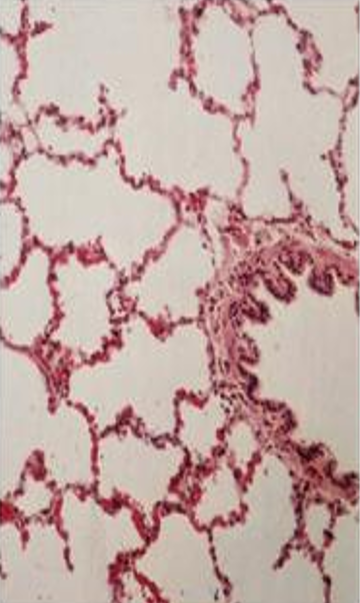
what is this?
emphysema
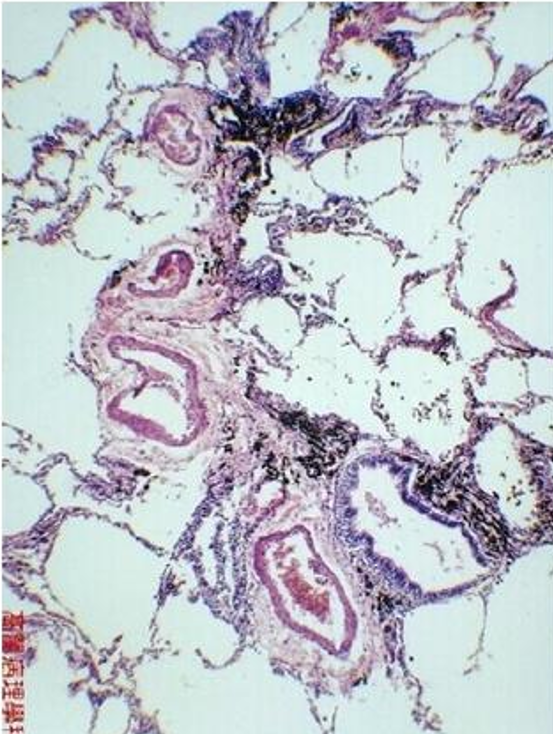
what is this
anthracosis
how many smokers does emphysema affect and how long does it take to develop
1 in 5 smokers, develops over 20 years
is it easy to diagnose emphysema?
no- impossible to diagnose until lungs are irreversibly damaged
what are the physiological effects of emphysema?
elastin permanently stretched so air cant be forced out if lungs
surface area of alveoli is reduced so very little gas exchange
breathlessness due to lack of oxygen
what percentage of the worlds population have asthma
10 percent
how many deaths each year from asthma
2000
what is asthma stimulated by?
allergens like pets, pollution, cold air
allergens cause white blood cells to produce histamines, what does this cause?
lining of lungs inflamed
cells of epithelial lining secrete lots of mucus
fluid leaves capillaries and enters airways
muscle surrounding bronchioles contracts so constricts airways
what does copd stand for?
chronic obstructive pulmonary disorder
what is copd
a build up of pollution over time can result in the lining of the lungs, trachea and airways inflaming
why are terrestrial gas exchange systems internalised?