[ESP2] KEY TERMS U1-8
 Call Kai
 Learn
Learn Practice Test
 Spaced Repetition
 Match
Match Flashcards
 Knowt Play
1/144

There's no tags or description
Looks like no tags are added yet.
Name | Mastery | Learn | Test | Matching | Spaced | Call with Kai |
|---|
No analytics yet
Send a link to your students to track their progress
145 Terms
Superior communication skills
will make you marketable in the workplace of the future regardless of the economic climate
time spent answering emails
average 12 hours at office
5 hours at home
Soft skills, people skills, or emotional intelligence
powerful social skills employers expect.
Interpersonal skills or professional skills
a combination of communication, logical reasoning, critical-thinking, teamwork, and management skills.
Smartphone apps
programs or software designed for mobile devices, have contributed to the development of the sharing economy
sharing economy
an economic model in which individuals rent or borrow assets owned by others (think Uber or Lyft).
Ad hoc teams
are project-based teams that disband once they have accomplished their objectives.
Our future gig economy
may rely on free agents who will be hired on a project basis > traditional full-time, relatively steady jobs.
Active, empathic listening
the most effective form of listening, researchers tell us.
when we sincerely strive to understand other’s viewpoints
When we are mindful
meaning fully present
we build trust and gain respect.
speech-thought differential.
The difference between our rate of speaking and our rate of listening/thinking
listener process 450 words per minute
speakers talk 125-175 words per minute
Nonverbal communication
includes all unwritten and unspoken messages, whether intended or not
eye contact, facial expression, body movements, time, space, territory, and appearance and affects how a receiver interprets, or decodes, a message
culture
the complex system of values, traits, morals, and customs shared by a society
context: most important dimension, difficult to define
individualism
time orientation
power distance
communication style.
context
stimuli, environment, or ambience surrounding an event
low-context cultures: north america, scandinavia, germany)
high-context cultures: china, japan, middle eastern
Individualism
attitude of independence and freedom from control
members of low-context cultures
Collectivism
emphasizes membership in organizations, groups, and teams; it encourages acceptance of group values, duties, and decisions.
members of high-context cultures
cultural convergence
a lessening of group differences and a trend toward greater global similarity particularly in higher individualism and lower power distance.
Monochronic time (M-time)
time perceived as if it were running on a single, linear track
a precious commodity associated with productivity, efficiency, and money
Polychronic time (P-time)
is viewed as abundant and nonlinear
an unlimited resource to be enjoyed; it is open and flexible
power distance
measures how people in different societies cope with inequality—in other words, how they relate to more powerful individuals
loneliness epidemic
widespread feeling of loneliness and depression felt by a large portion of the population
digital nationalism
restricted access to the Internet in authoritarian countries around the world.
Splinternet
a fragmentation of the Internet
Ethnocentrism
the belief in the superiority of one’s own ethnic group.
stereotype
an oversimplified, rigid perception of a behavioral pattern or characteristic applied uncritically to groups
tolerance
learning about those who are not like us and being open-minded and receptive to new experiences
empathy
the ability to share sb else’s feelings
understanding our emotional impact on others and making change as a result
trying to see the world through another’s eyes
being less judgmental
seek common ground.
groupthink
Sameness fosters an absence of critical thinking
communication
the transmission of information and meaning from a sender to a receiver.
meaning
the idea, as the sender intended it.
mood, frame of reference, background, culture, and physical makeup, context
experiences and assumptions
process of communication achieve its purpose
both the sender and receiver understand the process and how to make it work
beginning of communication process
when the sender has an idea.
encoding
converting the idea into words or gestures that will convey meaning
senders’ alert
receiver’s communication skills, attitudes, background, experiences, and culture
channel
the medium over which the message travels.
noise
anything that interrupts the transmission of a message in the communication process.
receiver
the individual for whom the message is intended
decoding
process of translating the message from its symbol form into meaning
receptive attitude
minimizing distractions
feedback
the verbal and nonverbal responses of the receiver
SENDER
timing the delivery
provide suitable amount of in4
informational messages
explain procedures, announce meetings, answer questions, and transmit findings
persuasive messages
sell products, convince managers, motivate employees, and win over customers
indirectly
richness of a channel/ media richness
the extent to which a channel or medium recreates or represents all the information available in the original message
richer medium: more interactivity and feedback (f2f, live video chat)
leaner medium: flat, 1 dimensional message (letter, email)
jargon
technical or specialized terms within a field
use only when the audience (primary and secondary) will understand
research
collecting information about a topic
primary data
come from firsthand experience.
surveys, interviews, observation, experimentation
secondary data
from reading what others have experienced or observed and written about
books, magazines, journals, online resources
brainstorming
the spontaneous contribution of ideas by team members
mind mapping
a process for generating and sorting ideas.
emphasize visual concepts, a single one in the center of a blank page
associated words and images branch out
outline
organize ideas into a hierarchy
organize thoughts → word choice, sentence structure
freewriting
a writing technique that involves
getting your thoughts down quickly
refining them in later versions.
fragment
a broken-off part of a complex sentence
can be identified by the words that introduce them such as: "although," "as," "because," "even," "except," "for example," "if," "instead of," "since," "such as," "that," "which," and "when.
run-on sentence ~ fused sentence
a sentence error that results when two independent clauses are incorrectly joined (fused) together without a conjunction (and, or, nor, but) or a semicolon (;)
comma splice
a sentence error that results when a writer joins two independent clauses with a comma
achieve emphasis through mechanics
underline, italic, bold
font changes, all caps, dashes, tabulation
space, color, lines, boxes, columns, titles
achieve emphasis through stylistic
vivid words
label main ideas → place first or last, in simple sentence or independent clause
parallelism
a writing technique that produces balanced writing.
dangling modifier
word or phrase it describes is missing from its sentence
ex: Driving through Malibu Canyon, the ocean came into view.
misplaced modifier
word or phrase it describes is not close enough to be clear.
ex: Firefighters rescued a dog from a burning car that had a broken leg
paragraph
a group of sentences about one idea.
topic sentence
Expresses the primary idea of the paragraph; often, but not always, comes first in a paragraph
supporting sentences
Illustrate, explain, or strengthen the primary idea/ topic sentence.
paragraphs are coherent
when ideas stick together, and one idea leads logically to the next.
transitional expressions
enable the receiver to anticipate what’s coming, reduce uncertainty, and speed comprehension.
They signal that a train of thought is moving forward, being developed, possibly detouring, or ending
editing
improving the content and sentence structure of a message
proofreading
correcting its grammar, spelling, punctuation, format, and mechanics of a message
evaluating
analyzing whether a message achieves its purpose
long lead-ins
sentence introductions that contain unnecessary words
unnecessary introductory words
unnecessary fillers
expressions such as “there is/are” or “it is/was” that often delay getting to the point of the sentence.
microblogging
short messages exchanged on social media networks such as Twitter, Facebook, and Tumblr
trite expressions
stale overused phrases that have lost their vigor
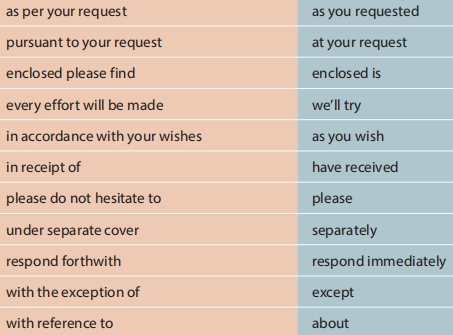
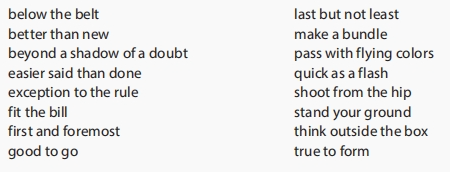
Clichés
expressions that have become exhausted by overuse
slang
composed of informal words with arbitrary and extravagantly changed meanings
snarky
lousy
blowing the budget
bombed
b/c, FOMO
buzzwords
technical but often empty expressions that have become fashionable and often are meant to impress > express
optimize
impactful
leveraging
cost effective
solutions-oriented
buried verbs
those that are needlessly converted to wordy noun expressions—nominalizations
"acquire," "establish," and "develop" are made into nouns such as "acquisition," "establishment," and "development." ~ zombie nouns
exuberance
over-the-top intensity or enthusiasm (very, definitely, quite, completely,…)
white space
empty space on a printed page
margins
white space on the left, right, top, and bottom of a block of type → reading area, visual relief, enhance readability
justified margins
When letter and word-spacing are adjusted so that lines are aligned at both left and right margins
>< ragged right
serif typefaces
have small features at the ends of strokes (i.e., Times New Roman, Cambria, Georgia)
tradition, maturity, formality → body text, longer documents
sans serif typefaces
clean typeface than excludes small features at the ends of strokes (i.e., Arial, Calibri, Gothic, Tahoma, Helvetica, and Univers)
headings, signs, material that does not require continuous reading
font
a specific style (such as italic) within a typeface family (such as Times New Roman).
most comfortable: 10-12 point type for body
high skim value
a document design that allows readers to browse quickly and grasp main ideas
numbered, bulleted lists
capitalization
punctuation
parallelism
Virtual private networks (VPNs)
offer secure access to organizations’ information from any location in the world that provides an Internet connection
Instant messaging (IM)
enables two or more individuals to communicate in real time by exchanging brief text-based messages.
Text messaging, or texting
popular means for exchanging brief messages in real time, usually exchanged via smartphone.
short message service
SMS supplied by a wireless service provider.
Rich communication services (RCS)
promises advanced features such as multimedia-enhanced texts that can be customized for more appealing opt-in text alerts and mobile marketing.
presence functionality
led by IM, texting → helps employees save time by locating coworkers online
phishing
fraudulent schemes
malware
malicious software programs
discovery, disclosure
Any type of message and all other electronic records are subject to discovery (disclosure) and become evidence in lawsuits.
podcasts
digital audio programs distributed over the Internet and usually downloaded on smart electronic devices.
blog
a website or social media platform
journal entries usually written by one person/ well-crafted articles
comments added by others/ commentaries on topics
influencers
loyal fans with a large social media following → create pro5 and blog
influential plugged-in opinion leaders who boast large online audiences and followers, are invited by retailers to create a profile and blog on its platform.
brand ambassadors
influential online opinion-leaders who are powerful product champions
→ evangelize (~advocate) for brands and services in exchange for compensation and perks
dark web
the black market of the Internet, a mostly illicit network of websites that cannot be accessed by standard search engines and browsers
echo chambers
online communities of like-minded people who embrace narratives confirming their existing views → polarization
disinformation
false news stories, doctored narratives, and propaganda spread on social media to confuse and incite the public → confuse the public.
post-truth era
circumstances in which objective facts are less influential in shaping public opinion than appeals to emotion and personal belief
deepfakes
doctored video footage that makes people seem to say or do something they did not do