Spinal Cord Tracts, Reflexes, and Nervous System Disorders
 Call Kai
 Learn
Learn Practice Test
 Spaced Repetition
 Match
Match Flashcards
 Knowt Play
1/20

There's no tags or description
Looks like no tags are added yet.
Name | Mastery | Learn | Test | Matching | Spaced | Call with Kai |
|---|
No analytics yet
Send a link to your students to track their progress
21 Terms
What is the function of spinal cord tracts?
They serve as highways for sensory and motor information.
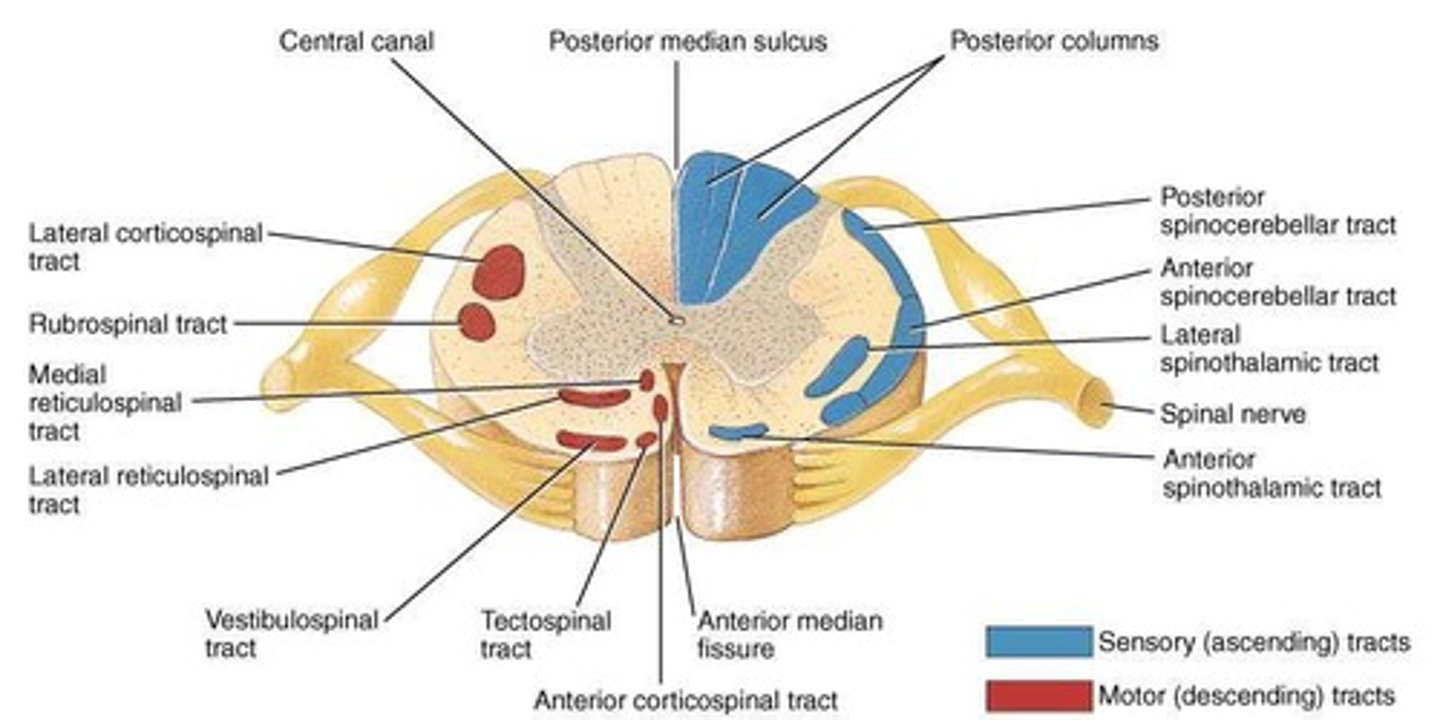
What direction do sensory tracts travel?
Sensory tracts ascend.
What direction do motor tracts travel?
Motor tracts descend.
How are spinal cord tracts named?
They indicate the position and direction of the signal, e.g., anterior spinothalamic tract.
What is a reflex?
A fast, predictable, automatic response to changes in the environment that helps maintain homeostasis.
Where do spinal reflexes occur?
In the gray matter of the spinal cord.
What is a reflex arc?
The simplest type of pathway in the nervous system that includes at least one synapse.
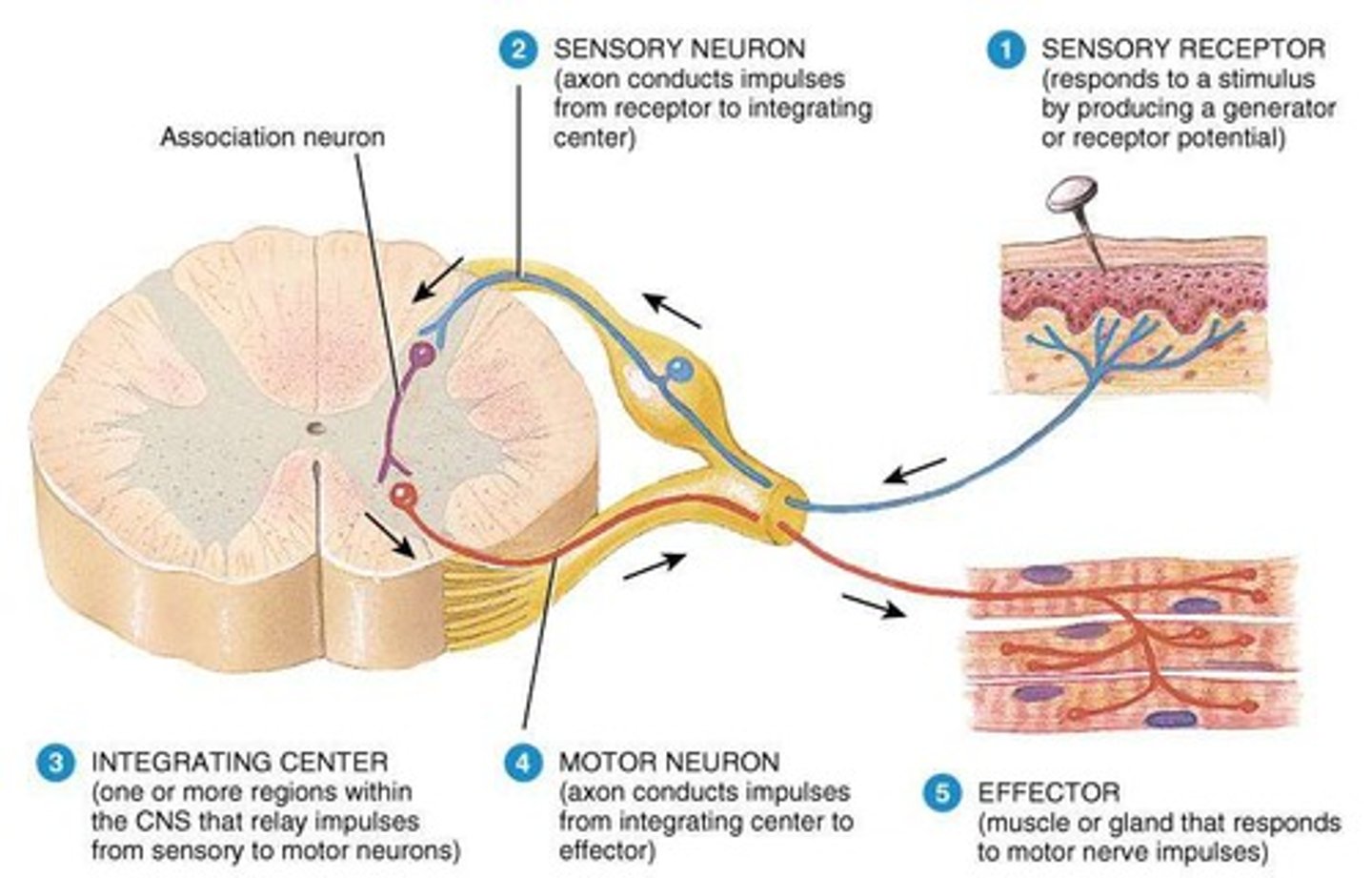
What are the five components of a reflex arc?
1. Sensory receptor 2. Sensory neuron 3. Integrating center 4. Motor neuron 5. Effector
What does a sensory receptor do?
It responds to a stimulus by producing a generator or receptor potential.
What is the role of the integrating center in a reflex arc?
It relays impulses from sensory to motor neurons.
What is the difference between monosynaptic and polysynaptic reflexes?
Monosynaptic involves two neurons and one synapse; polysynaptic involves more than two neurons and multiple synapses.
What does ipsilateral mean in the context of reflex arcs?
The receptor and effector are on the same side of the body.
What does contralateral mean in reflex arcs?
The receptor and effector are on opposite sides of the body.
What is the purpose of the stretch reflex?
It controls muscle length by causing muscle contraction to prevent injury from overstretching.
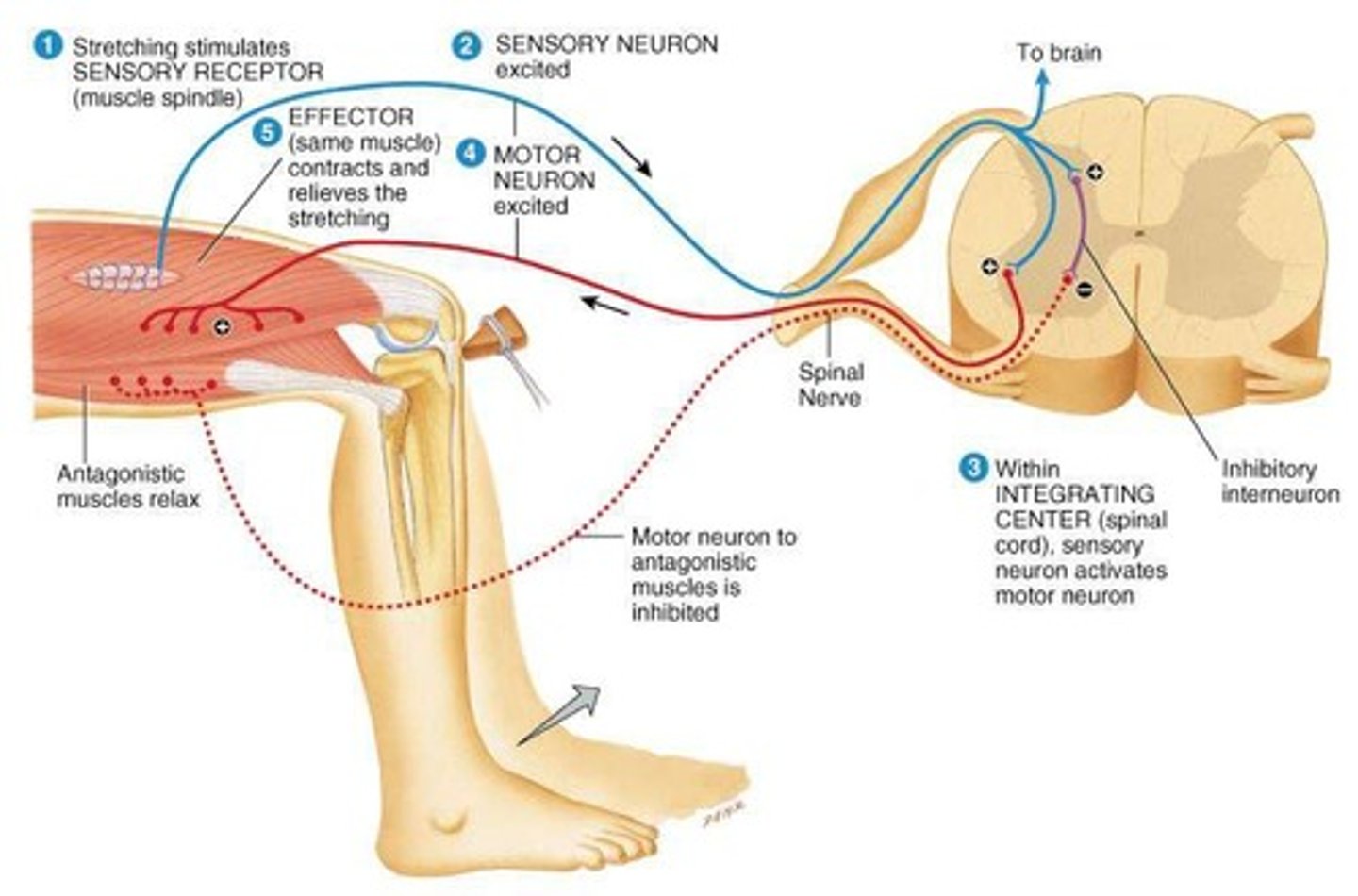
What type of reflex is the stretch reflex?
Monosynaptic and ipsilateral.
What is the role of Golgi tendon organs in the tendon reflex?
They are activated by stretching of the tendon and help control muscle tension.
What is the flexor reflex?
An ipsilateral protective withdrawal reflex that moves a limb to avoid pain.
What is the crossed extensor reflex?
A contralateral reflex that helps maintain balance during the flexor reflex.
What is neuritis?
Inflammation of nerves caused by injury, vitamin deficiency, or poison.
What causes shingles?
Infection of peripheral nerves by the chickenpox virus.
What is poliomyelitis?
A viral infection causing motor neuron death and possible death from cardiac failure or respiratory arrest.