Openstax Endocrine System: Glands, Hormones, and Homeostasis
 Call Kai
 Learn
Learn Practice Test
 Spaced Repetition
 Match
Match Flashcards
 Knowt Play
1/27

There's no tags or description
Looks like no tags are added yet.
Name | Mastery | Learn | Test | Matching | Spaced | Call with Kai |
|---|
No analytics yet
Send a link to your students to track their progress
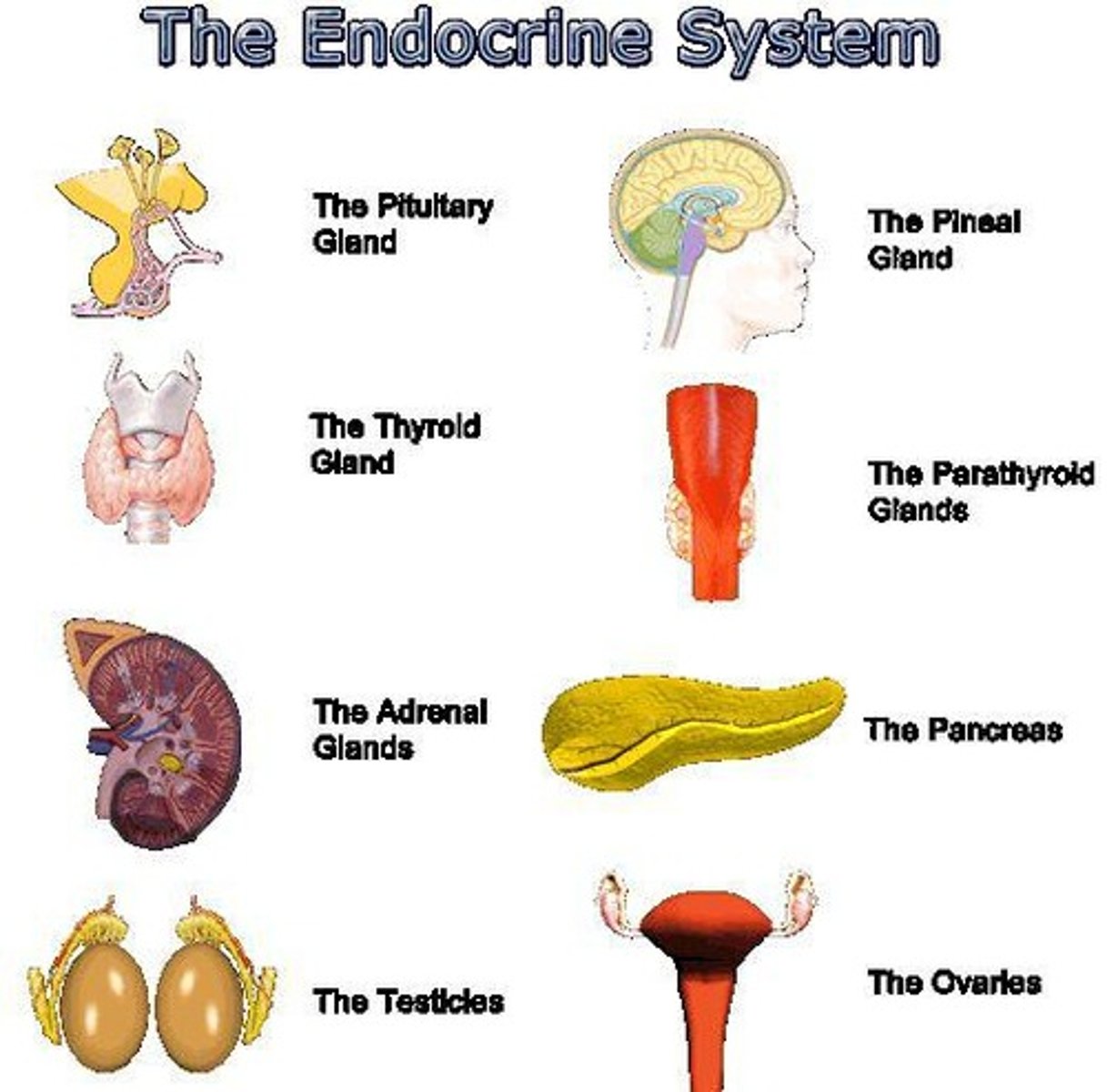
28 Terms
What is the primary function of the endocrine system?
To produce and secrete hormones that regulate growth, metabolism, sexual development, and maintain homeostasis.
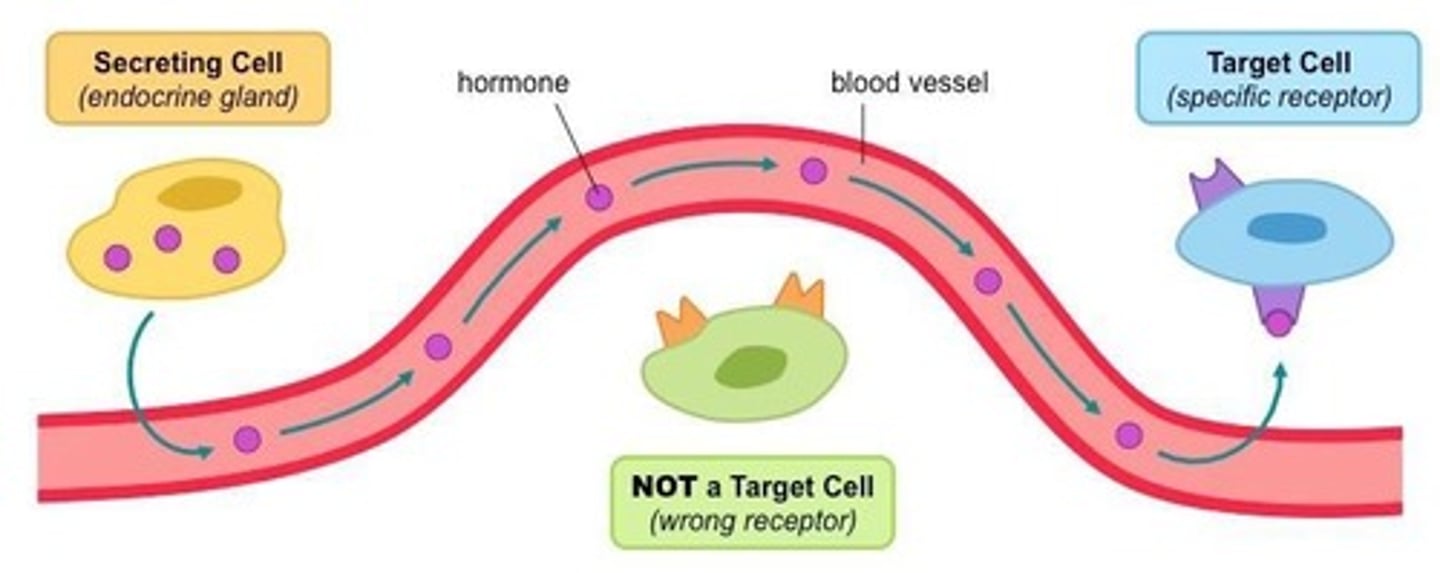
What are hormones?
Chemical messengers that act on target cells.
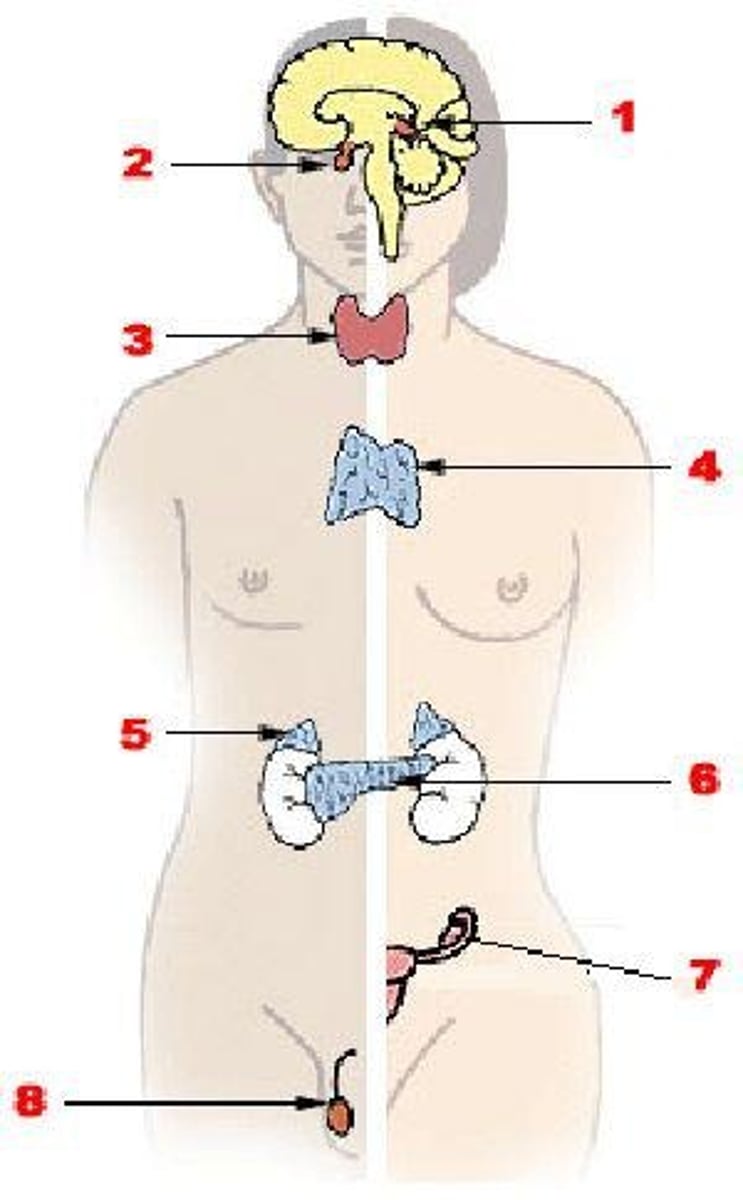
What is the location of the pituitary gland?
Below the brain, attached to the hypothalamus.
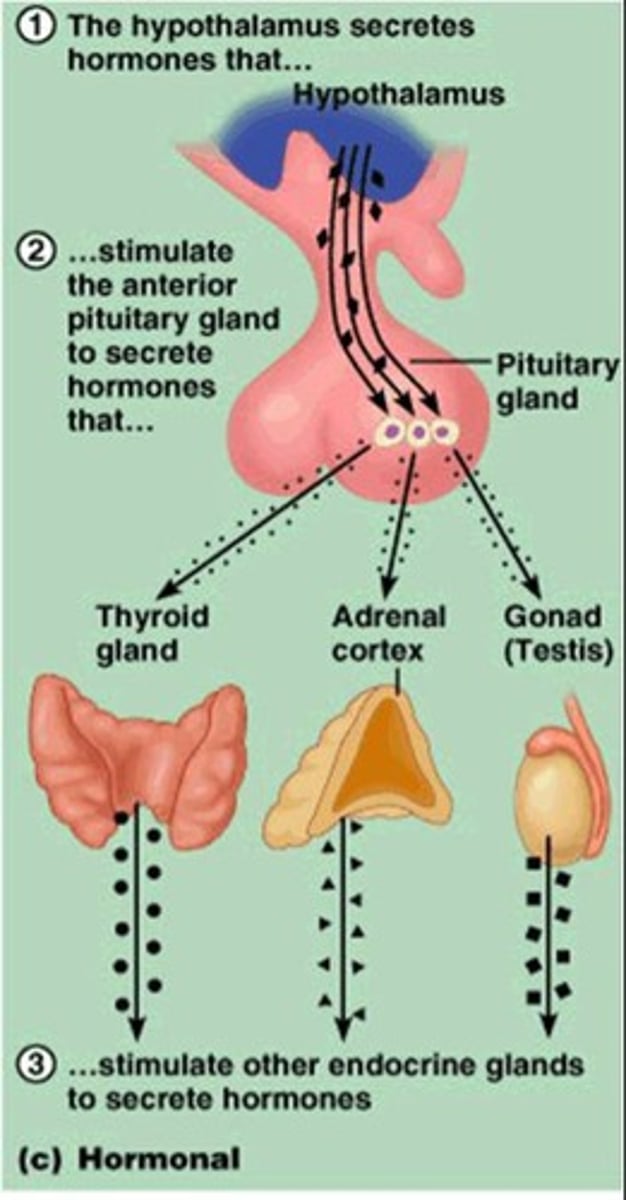
What is the role of the pituitary gland?
Often called the 'master gland' because it controls all other glands.
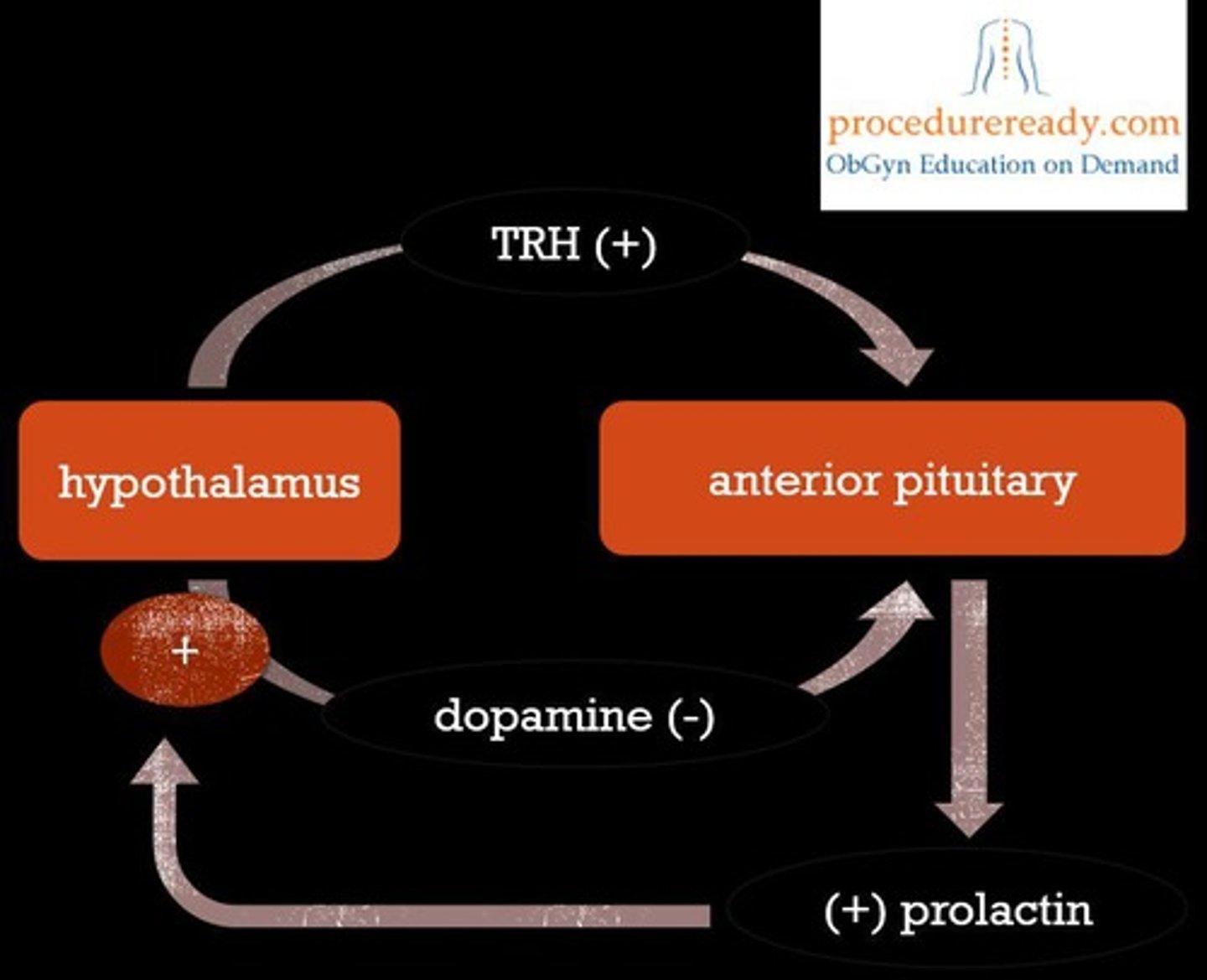
What hormone stimulates milk production after childbirth?
Prolactin (PRL).
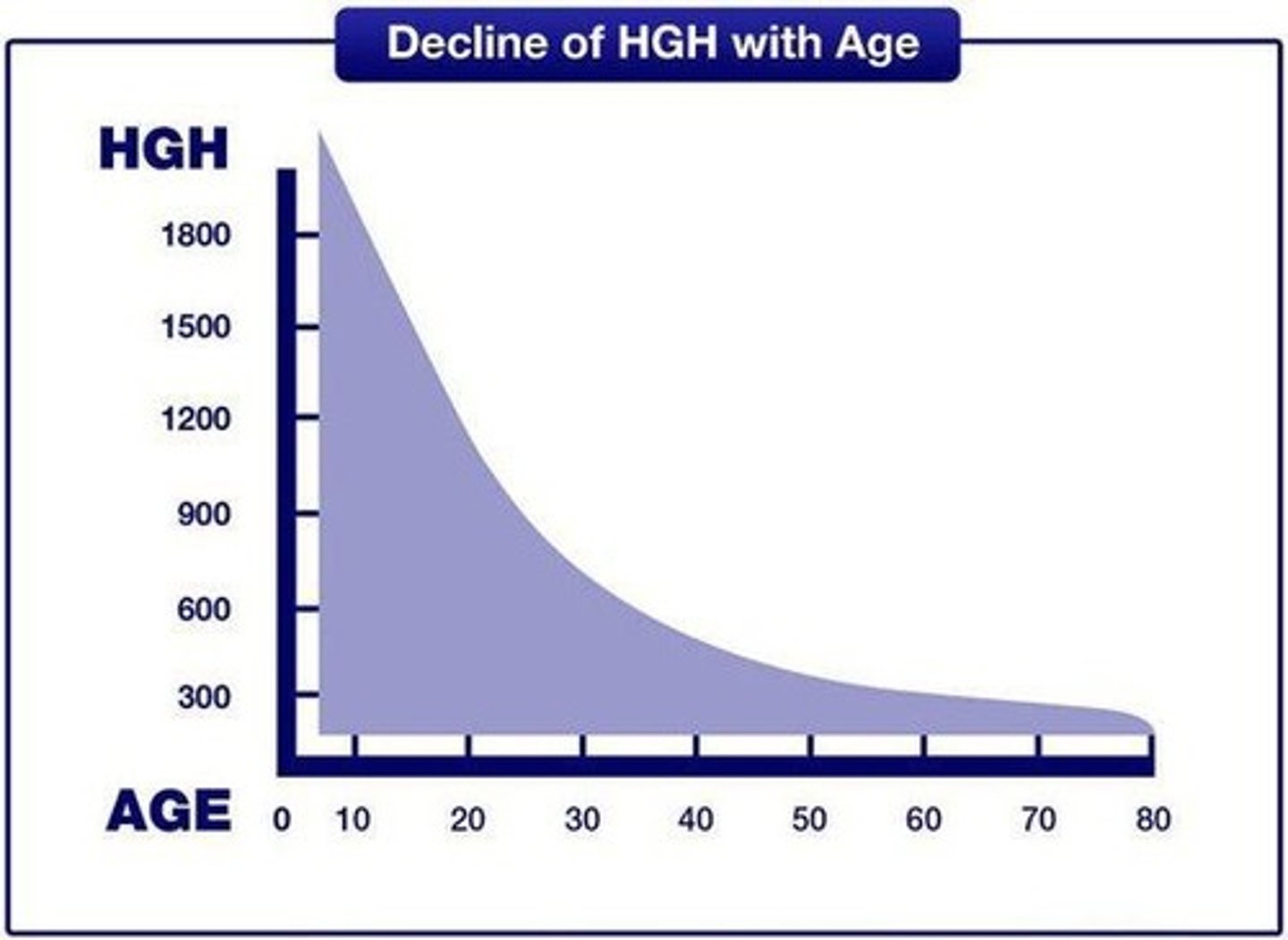
What does growth hormone (GH) stimulate?
Growth in childhood and helps maintain healthy body composition, muscle mass, and bone mass.
What is myostatin's role in muscle growth?
Myostatin inhibits muscle growth.
What condition can result from problems with growth hormones?
Dwarfism or gigantism.
What does adrenocorticotropin (ACTH) stimulate?
Production of cortisol by the adrenal glands.
What is cortisol commonly known as?
The 'stress hormone.'

What does thyroid-stimulating hormone (TSH) regulate?
The thyroid gland's production of thyroid hormones, which control metabolism, energy, growth, and nervous system activity.
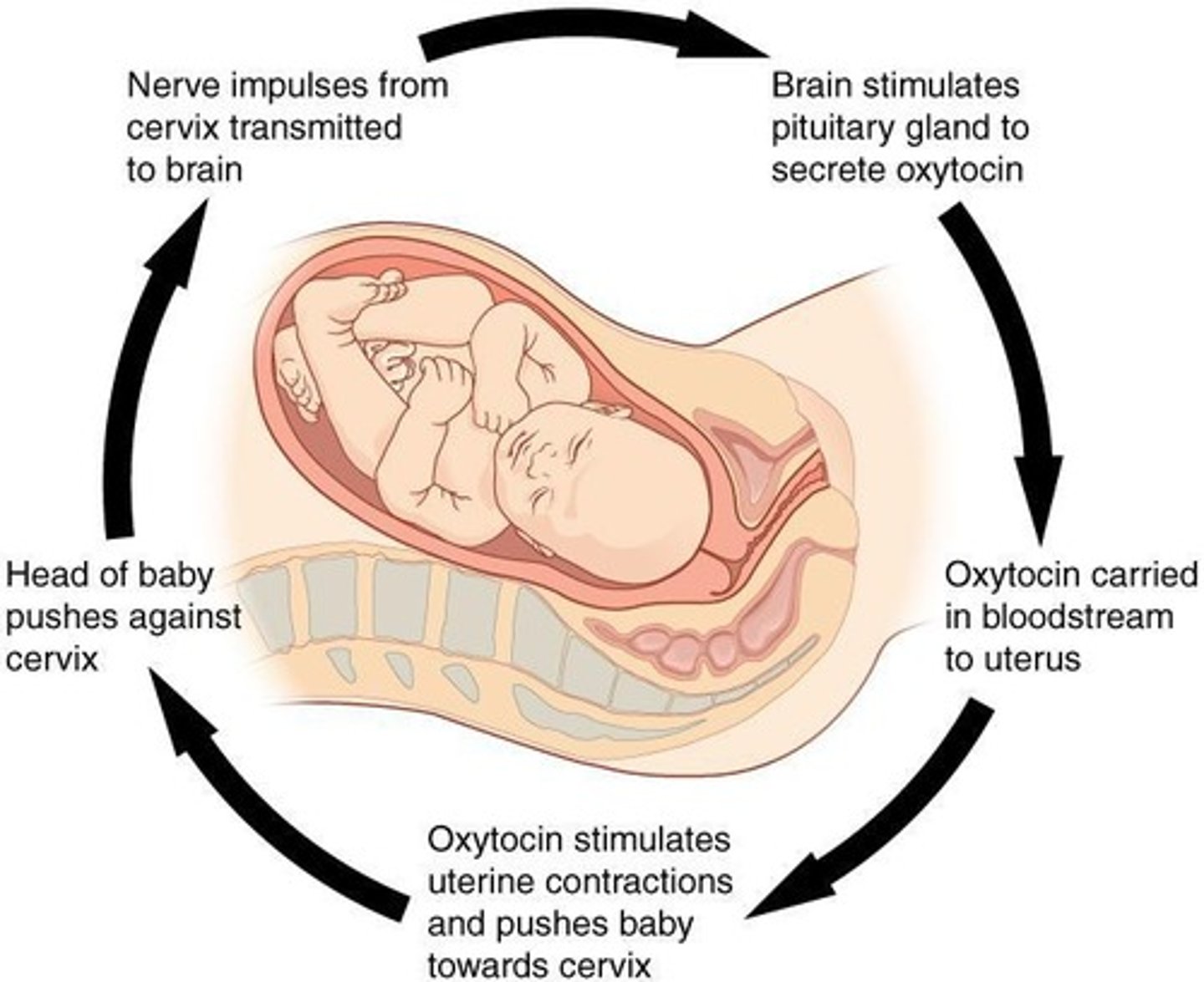
What is the function of oxytocin?
Causes milk letdown in nursing mothers and contractions during childbirth.
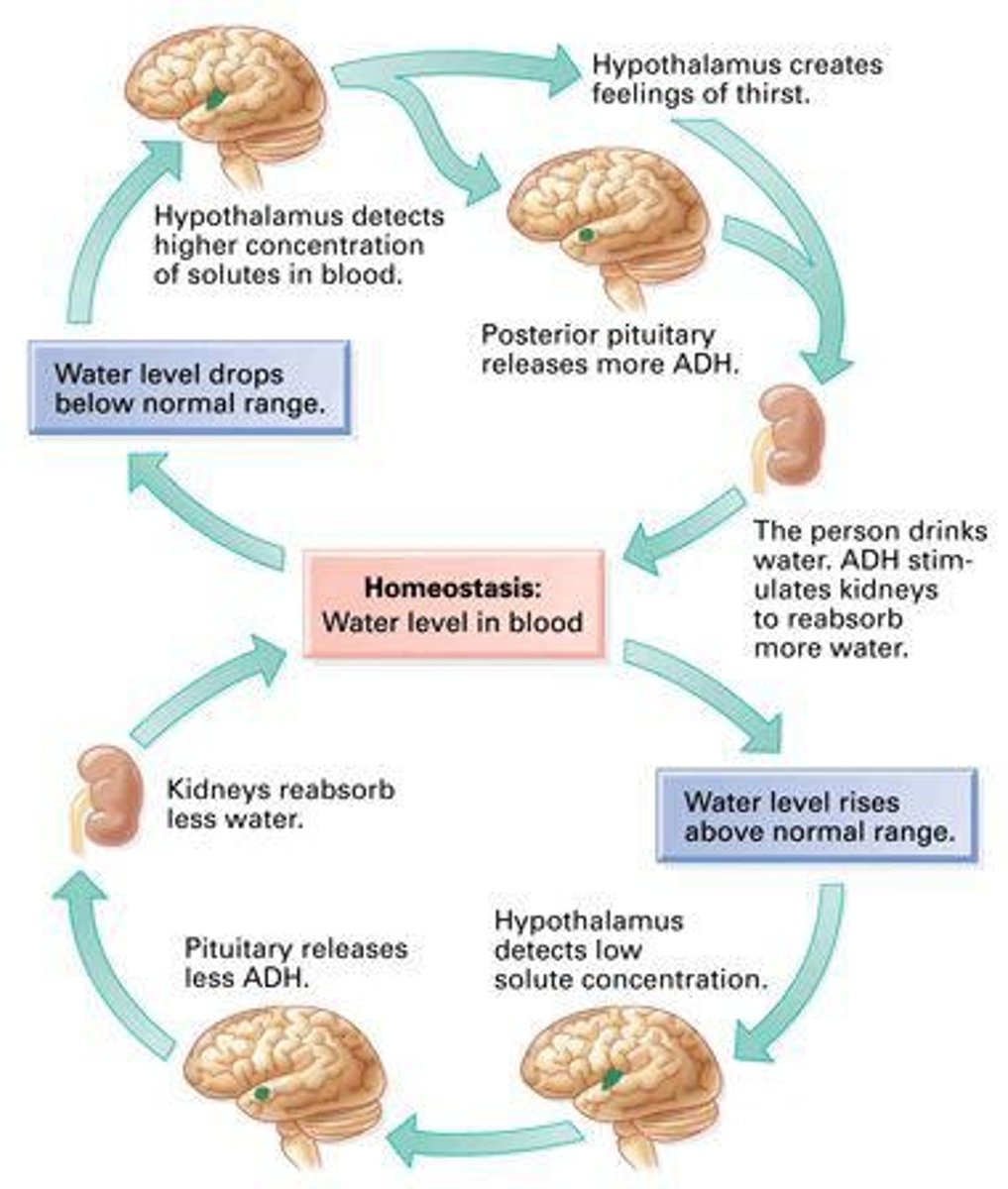
What does antidiuretic hormone (ADH) regulate?
Water balance in the body.
What are the two main thyroid hormones?
Thyroxine (T4) and Triiodothyronine (T3).
What condition is caused by an iodine deficiency affecting the thyroid?
Goiter.
What is hyperthyroidism?
A condition where the thyroid gland makes too much thyroid hormone, leading to symptoms like weight loss and irregular heart rate.
What is hypothyroidism?
A condition where the thyroid gland makes too little thyroid hormone, leading to symptoms like weight gain and fatigue.
What hormone does the adrenal medulla produce?
Epinephrine (adrenaline).
What is the function of aldosterone?
Helps kidneys conserve sodium and excrete potassium, maintaining blood pressure.
What is Cushing's Disease?
A condition caused by excessive cortisol production, leading to symptoms like increased thirst and obesity.
What is Addison's disease?
A condition characterized by hyposecretion of cortisol, leading to low blood pressure and increased pigmentation.
What hormones do the pancreas produce?
Insulin and glucagon.
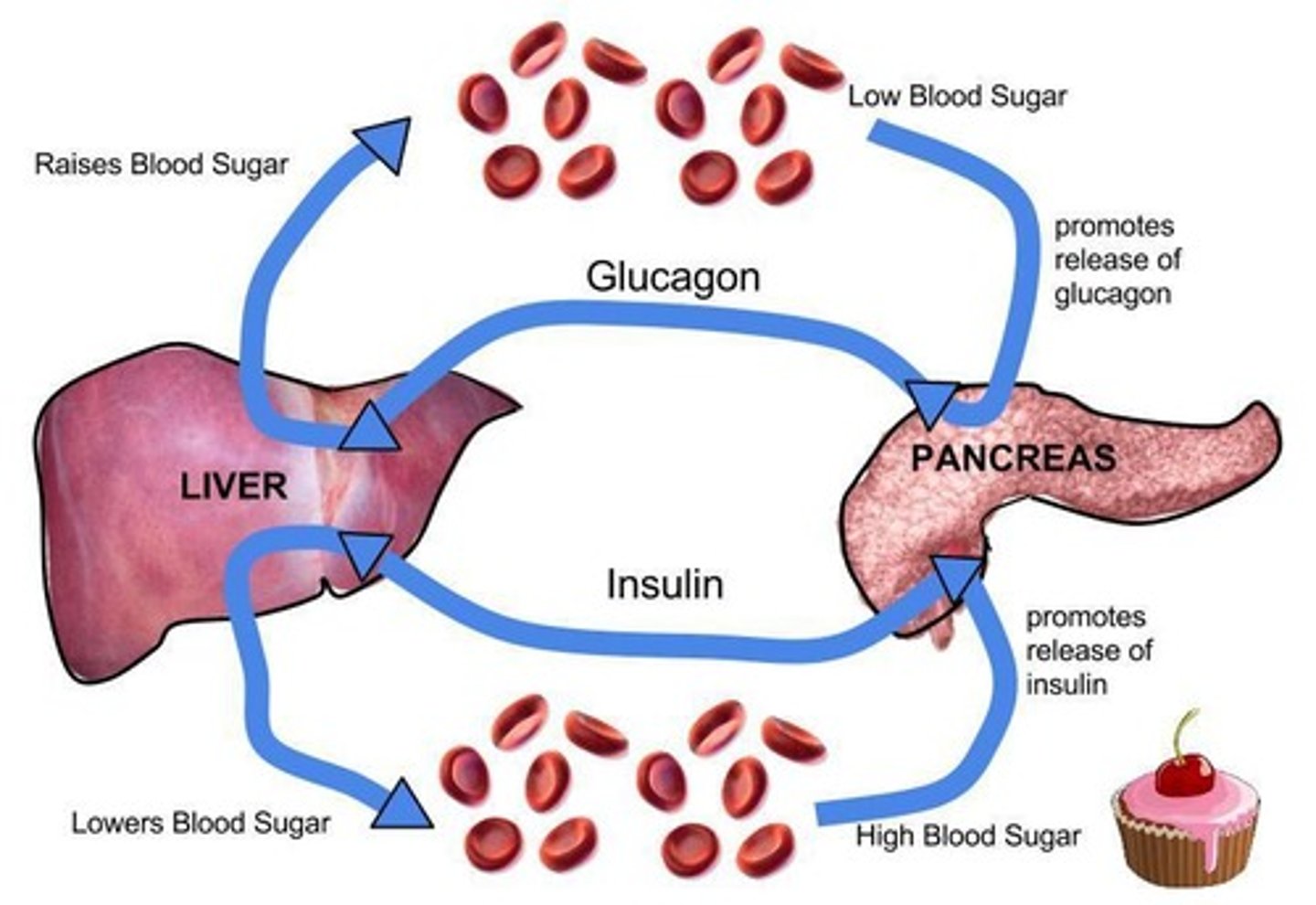
What is diabetes?
A condition resulting from insulin deficiency, leading to high blood sugar levels.
What is the difference between Type I and Type II diabetes?
Type I is juvenile onset, often due to an immune disorder; Type II is mature onset, often related to obesity.
What is diabetes insipidus?
A condition where the kidneys cannot conserve water, leading to excessive thirst and urine volume.
What does the pineal gland secrete?
Melatonin, which helps maintain circadian rhythms.
What is the function of the thymus gland?
Secretes thymosins, important for immune function.
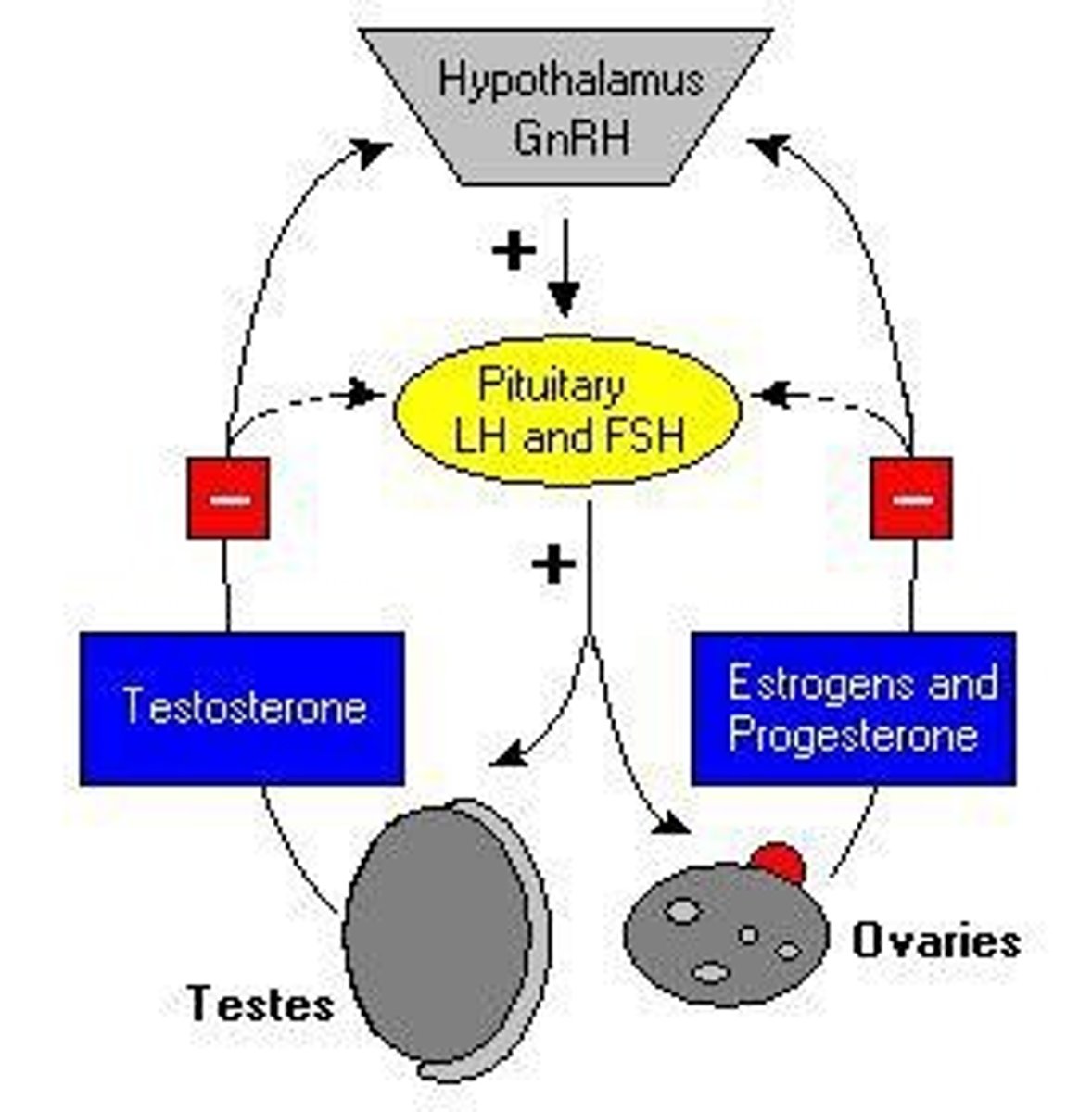
What are gonadotropins?
Hormones that affect the gonads (testes and ovaries).