Part 2: Acquired Neurcognitive Disorders
 Call Kai
 Learn
Learn Practice Test
 Spaced Repetition
 Match
Match Flashcards
 Knowt Play
1/15

There's no tags or description
Looks like no tags are added yet.
Name | Mastery | Learn | Test | Matching | Spaced | Call with Kai |
|---|
No analytics yet
Send a link to your students to track their progress
16 Terms
Traumatic brain injury: how does it happen?
Impact → damage at coup (impact site), but worse at contrecoup
TBI: what happens? (1→4)
Trauma disrupts blood supply to brain tissue through:
Bleeding (increased intracranial pressure)
Swelling (increased intracranial pressure)
Exposure to infection
Scar tissues (blocks neural connections)
Length of time blood supply is disrupted for?
Short, but disruption to neuronal functioning is longer lasting
How can we determine the extent of TBI? (3)
Longer LOC → worse TBI (bc worse damage → brain needs to be shut down for longer)
Memory loss
Loss of vision
etc. etc.
TBI symptoms/consequences? (2) + note
Diffuse injury (lots of small injuries) → loss of complex cognitive skills due to slower processes
Frontal + temporal damage → personality change
*Symptoms vary widely based on type + location of injury as well as treatment access + timing
Prevalence of TBI? (2)
Most common form of brain damage in individuals under 40
Young men (ages 15–30) being the highest-risk group due to risk-taking and impulsivity.
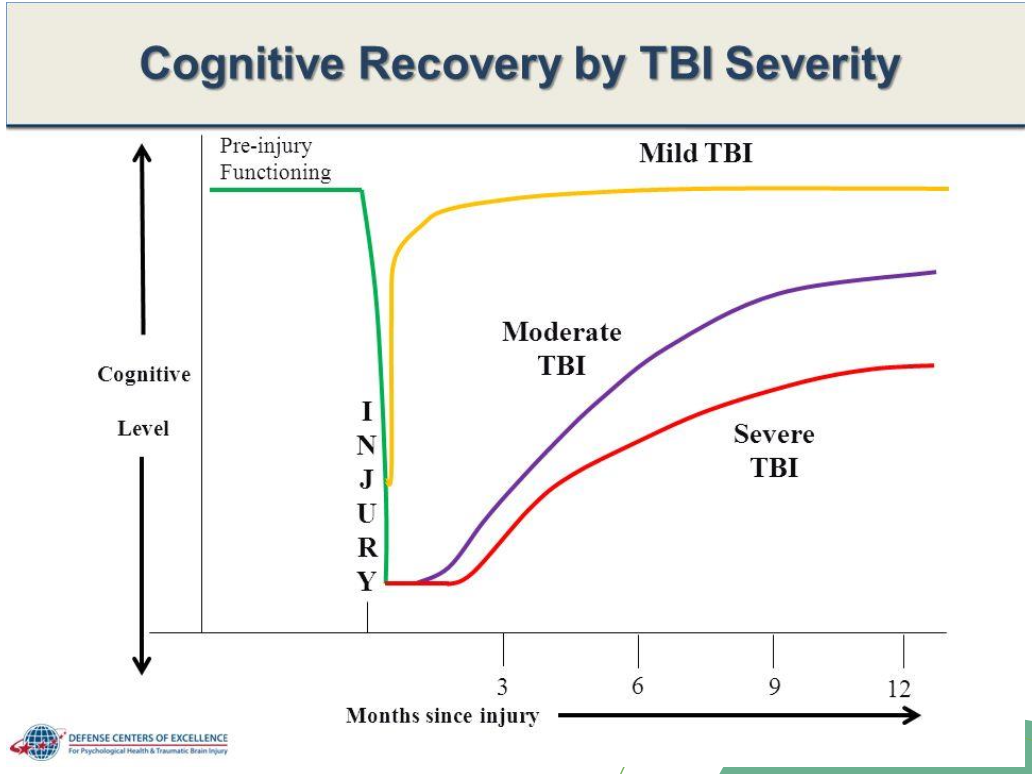
Golden window for TBI rehabilitation
Within first 3 months
Cognitive recovery + TBI severity
What happens with repeated concussions or mild TBIs? (1)
Chronic traumatic encephalopathy (CTE)
CTE def, characteristics (5), common population
Progressive degenerative disease from repeated TBI
Neurofibrillary tangles, plaques, neuronal death, cerebral atrophy, ventricle expansion
Athletes
When can CTE be diagnosed?
Post-mortem
Stroke def
Sudden interruption in blood flow to brain (ischemia) from blockage/occlusion of a vessel (infarct) or a burst vessel (haemorrhage; aneurysm)
Impacts of stroke (1→3)
Depends on location but:
Cellular changes
Inflamed brain tissue → can affect cells far from injury site
Reduced metabolism (up to 25%)
Transient ischemic attack (3)
"mini-strokes,"
Small, temporary blockages or bursts in minor vessels.
Brain can sometimes compensate for these, repeated TIAs cause widespread damage over time
How do you identify a stroke
FAST
Facial droop
Arm weakness (contralateral)
Speech (slurred or difficult)
Time (to call for help)
Symptom of hemorrhagic strokes?
“Thunderclap headache” (from burst vessel)