Unit 6: Ancient China, Japan, and Korea Study Guide
 View linked note
 Call Kai
 Learn
Learn Practice Test
 Spaced Repetition
 Match
Match Flashcards
1/34

Earn XP
Description and Tags
A set of vocabulary flashcards covering the geography, dynasties, philosophies, and cultural exchanges of Ancient China, Japan, and Korea based on the Unit 6 study guide.
Name | Mastery | Learn | Test | Matching | Spaced | Call with Kai |
|---|
No analytics yet
Send a link to your students to track their progress
35 Terms
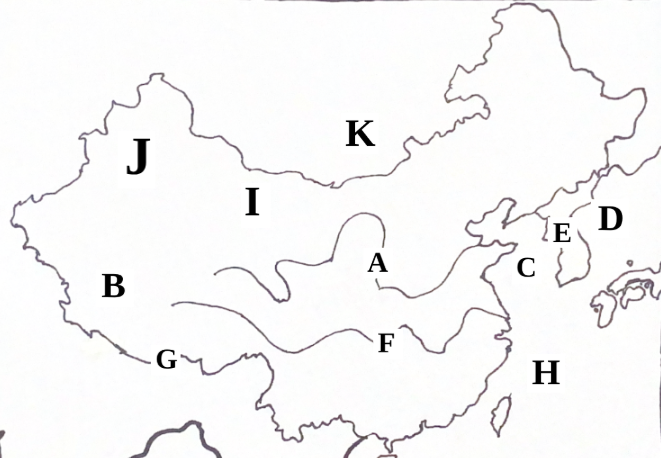
Which letter represents the Yellow River?
A
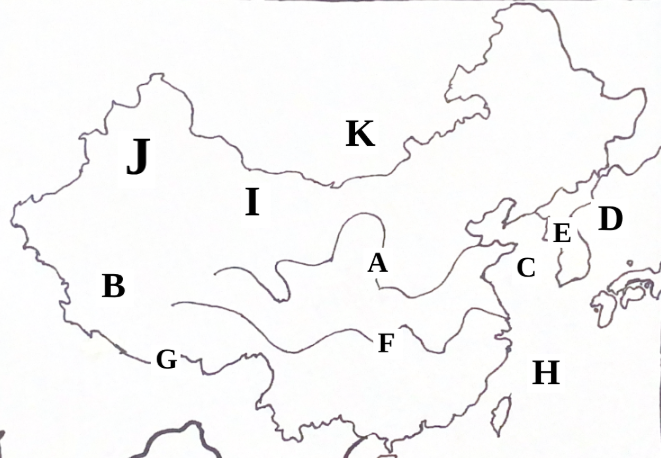
Which letter represents the Tibetan Plateau?
B
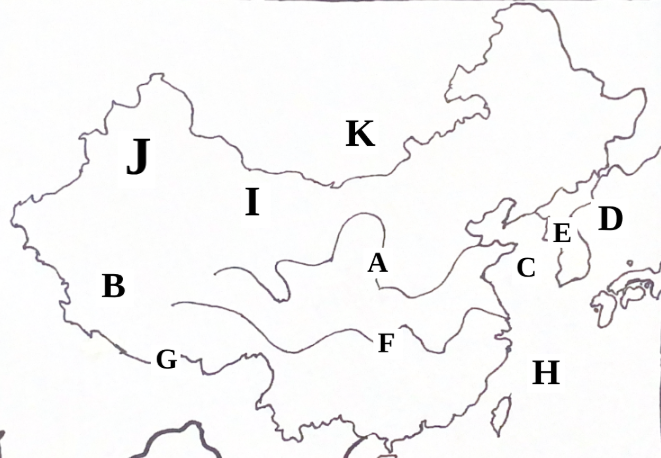
Which letter represents the Yellow Sea?
C
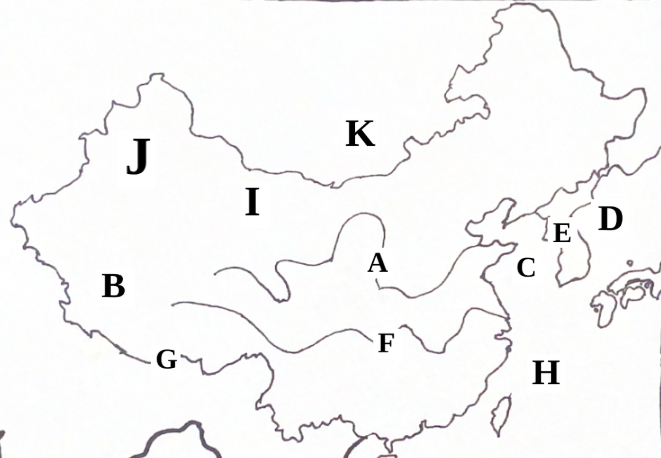
Which letter represents the Sea of Japan?
D
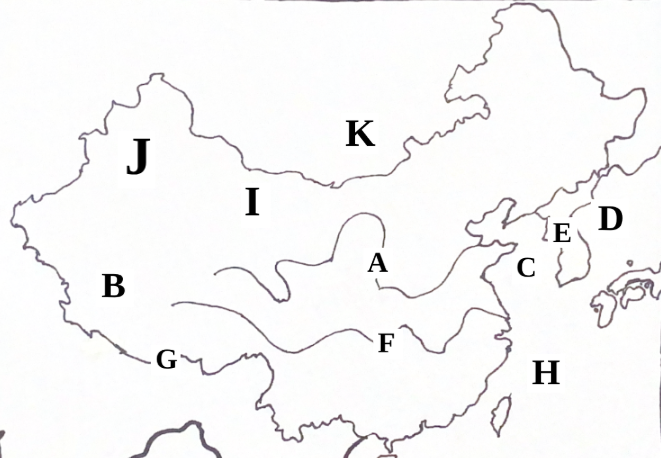
Which letter represents the Korean Peninsula?
A peninsula in East Asia extending from the mainland, designated as item E.
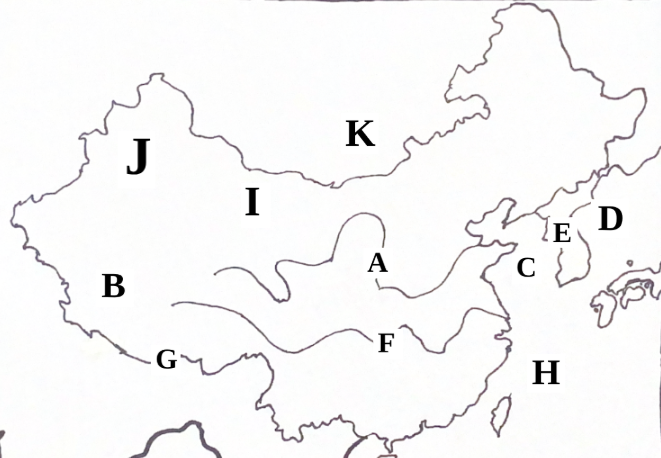
Which letter represents the Yangtze River?
F
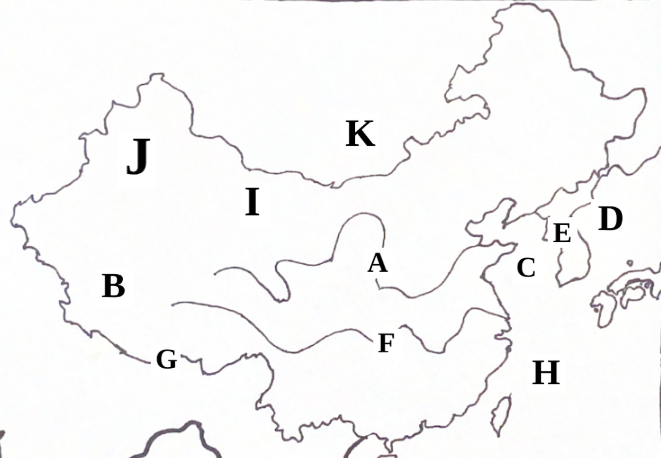
Which letter represents the Himalayas?
G
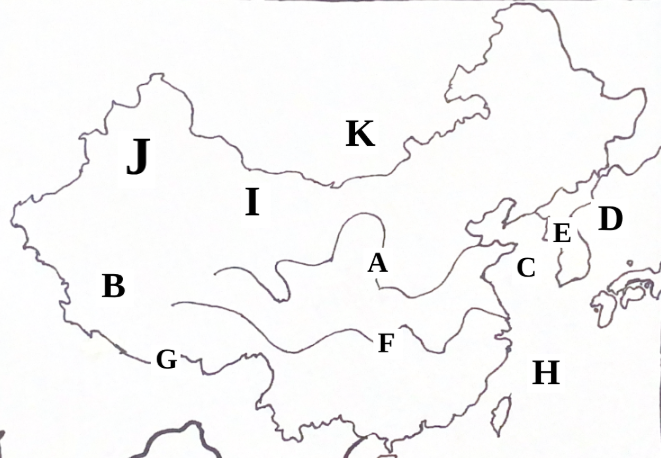
Which letter represents the East China Sea?
H
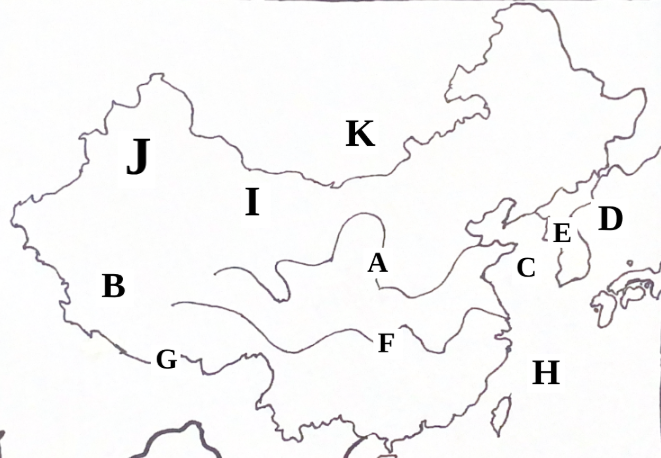
Which letter represents the Gobi Desert?
I
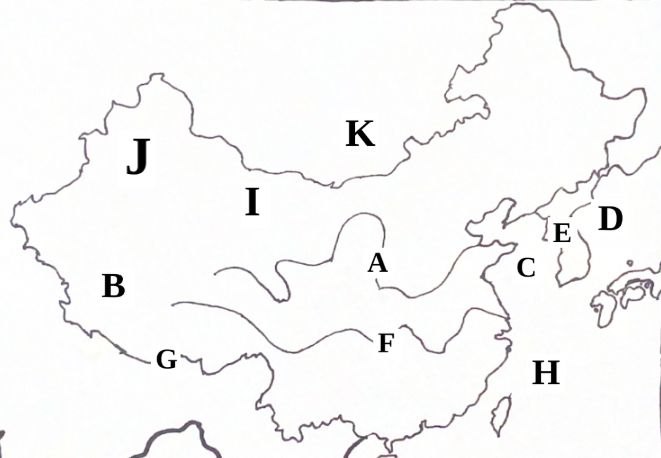
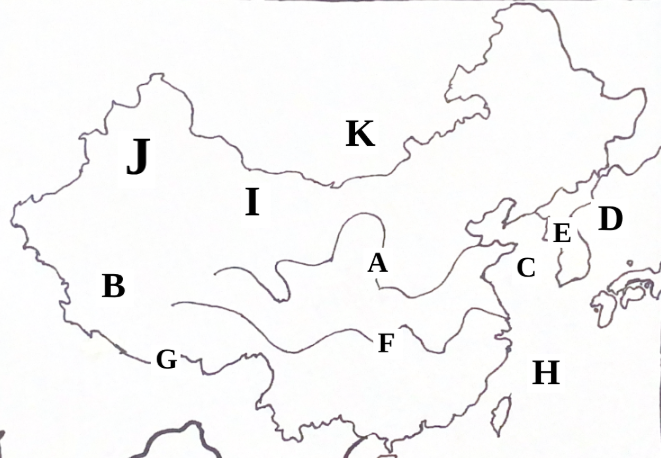
Which letter represents the Taklamakan Desert?
J
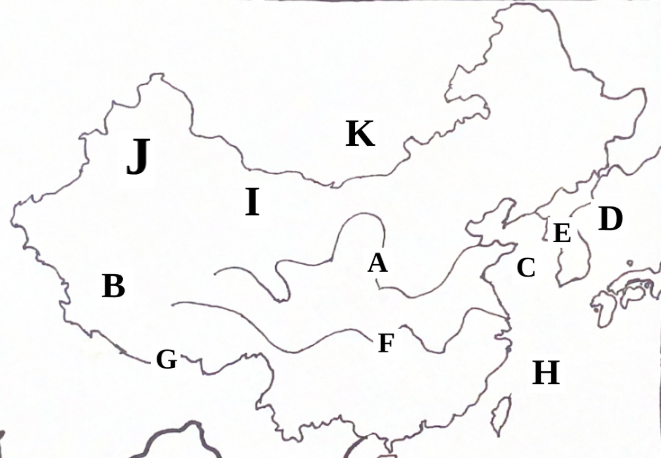
Which letter represents Mongolia?
K
Dynasty
A line of rulers from the same family who pass power from one generation to the next.
Clan
A large group of families that are related and share a common ancestor.
Aristocrat
A member of the wealthy and powerful upper class who often owned land and had important jobs.
Ideograph
A written symbol that represents an idea or object instead of a sound.
Oracle Bones
Animal bones or shells used by Shang priests to ask their ancestors questions and predict the future.
Mandate of Heaven
The belief that a ruler had the right to rule as long as they governed well and fairly.
How many social classes was Shang society divided into? What were they?
The five main levels of society in the Shang Dynasty: 1. King and royal family, 2. Aristocrats, 3. Warriors and soldiers, 4. Peasants and farmers, and 5. Slaves.
What was feudalism in the Zhou Dynasty?
A system where the king gave land to nobles in exchange for loyalty and soldiers, while peasants worked the land and provided food.
What were the teachings of Confucianism?
A philosophy teaching respect for elders, following rules, family loyalty, education, and that rulers should lead by example.
What were the teachings of Daoism?
A philosophy teaching that people should live in harmony with nature, value peace, simplicity, and balance, and go with the flow.
Legalism
A philosophy that teaches people are naturally selfish and need strict laws, harsh punishments, and a ruler with strong control.
How did Qin Shihuangdi unify China?
The ruler who unified China using Legalism, conquering other states, building roads, and implementing strict laws.
Why was the Great Wall of China significant?
The Great Wall was built to protect China from northern invasions and demonstrate the power of the emperor.
What were censors?
Government officials who made sure other officials were doing their jobs honestly
What is the Civil Service System?
A system in the Han Dynasty for choosing government workers based on exams on history, law, and Confucian ideas.
Han Dynasty Inventions
Key technological advancements including paper, the seismograph (earthquake detector), waterwheel, and iron tools.
Silk Road
A network of trade routes connecting China to the Middle East and Europe, allowing the spread of goods, ideas, and cultures.
How did the Han Dynasty collapse?
The Han Dynasty collapsed due to weak leadership, corruption, and rebellions.
Three Kingdoms of Korea
Goguryeo, Baekje, and Silla.
How did the Yamato Kingdom unify Japan?
By forming alliances with powerful clans through marriage and military strength and adopting Chinese ideas to strengthen their government.
Which religion spread into China after the Han Dynasty fell?
Buddhism?
What ideas did the Three Kingdoms of Korea borrow from China?
They borrowed Chinese ideas like writing, Buddhism, technology, and Confucian values.
What did the early Kingdoms of Japan borrow from China?
Japan borrowed Chinese writing, Buddhism, food, technology, and Confucian ideas. They also adopted Chinese art and architecture styles.
Why did People rebel against Qin Shihuangdi?
People rebelled because his laws were very strict and punishments were harsh. Many were forced to work on big projects like the Great Wall. They were unhappy with the heavy control and suffering.