[BIOCHEMISTRY] Nucleic Acids p1
 Call Kai
 Learn
Learn Practice Test
 Spaced Repetition
 Match
Match Flashcards
 Knowt Play
1/118

There's no tags or description
Looks like no tags are added yet.
Name | Mastery | Learn | Test | Matching | Spaced | Call with Kai |
|---|
No analytics yet
Send a link to your students to track their progress
119 Terms
e. All
Components of nucleotides:
a. Nitrogenous base
b. Sugar
c. Phosphate group
d. a and b
e. All
a. Ribose
Monosaccharide of RNA.
a. Ribose
b. Deoxyribose
a. Ribose
Has OH on 2 prime carbon.
a. Ribose
b. Deoxyribose
b. Deoxyribose
Monosaccharide of DNA.
a. Ribose
b. Deoxyribose
b. Deoxyribose
Has H on 2 prime carbon.
a. Ribose
b. Deoxyribose
a. N base
In nucleotide, what is in the monosaccharide 1' carbon?
a. N base
b. OH
c. H
d. Phosphodiester bond
e. Phosphate group
c. H
In DNA nucleotide, what is in the monosaccharide 2' carbon?
a. N base
b. OH
c. H
d. Phosphodiester bond
e. Phosphate group
b. OH
In RNA nucleotide, what is in the monosaccharide 2' carbon?
a. N base
b. OH
c. H
d. Phosphodiester bond
e. Phosphate group
d. Phosphodiester bond
In nucleotide, what is in the monosaccharide 3' carbon?
a. N base
b. OH
c. H
d. Phosphodiester bond
e. Phosphate group
e. Phosphate group
In nucleotide, what is in the monosaccharide 5' carbon?
a. N base
b. OH
c. H
d. Phosphodiester bond
e. Phosphate group
c. Both
Nitrogenous base:
a. Purine
b. Pyrimidine
c. Both
d. None
b. I, II - Guanine, Adenine
Purines:
I. Guanine
II. Adenine
III. Cytosine
IV. Uracil
V. Thymine
a. I, II, III, IV, V
b. I, II
c. III, IV, V
d. I, II, III
e. IV, V
c. III, IV, V - Cytosine, Uracil, Thymine
Pyrimidine:
I. Guanine
II. Adenine
III. Cytosine
IV. Uracil
V. Thymine
a. I, II, III, IV, V
b. I, II
c. III, IV, V
d. I, II, III
e. IV, V
b. 2
Number of H bonds between Adenine and Thymine.
a. 1
b. 2
c. 3
d. 4
c. 3
Number of H bonds between Guanine and Cytosine.
a. 1
b. 2
c. 3
d. 4
e. All
DNA structure can be:
a. Primary
b. Secondary
c. Tertiary
d. a and b
e. All
f. All
DNA primary structure:
a. Deoxyribose
b. Individual bases: AG, TC
c. Phosphodiester bond
d. a and b
e. b and c
f. All
c. Both
DNA secondary structure:
a. 2 polynucleotides which can be antipallarel or helix
b. Base pairing: A-T, G-C
c. Both
d. None
b. Chargaff's rule
Qty A = Qty T
Qty C = Qty G
a. Huckle's rule
b. Chargaff's rule
c. Avogadro's rule
d. Burk's rule
c. DNA tertiary structure
Packed in histones which form chromatin.
a. DNA primary structure
b. DNA secondary structure
c. DNA tertiary structure
a. Form A
More compact and more helical form of DNA.
a. Form A
b. Form B
c. Form Z
d. a and b
e. b and c
f. All
b. Form B
Most common form of DNA which contains 10 base pair per turn.
a. Form A
b. Form B
c. Form Z
d. a and b
e. b and c
f. All
b. Form B
First describe by Watson and Crick.
a. Form A
b. Form B
c. Form Z
d. a and b
e. b and c
f. All
c. Form Z
Left handed helix wherein phosphate group is more toward the periphery of the helix.
a. Form A
b. Form B
c. Form Z
d. a and b
e. b and c
f. All
d. a and b - Form A and B
Right handed form of DNA.
a. Form A
b. Form B
c. Form Z
d. a and b
e. b and c
f. All
e. All
True about DNA structure:
a. Composed of two polynucleotide chains joined by H bonds between the bases
b. Two strands are complementary
c. Chains are antiparallel (one is 5'-3' paired with 3'-5')
d. a and b
e. All
a. Denaturation
Alkali or heat cause the strands of DNA to separate but do not break phosphodiester bonds.
a. Denaturation
b. Renaturation
c. Hybridization
d. Resonance
b. Renaturation
If strands of DNA are separated by heat and then the temperature is slowly decreased under the appropriate conditions, base pairs reform and complementary strands of DNA come back together.
a. Denaturation
b. Renaturation
c. Hybridization
d. Resonance
b. Renaturation
RNA to DNA.
a. Denaturation
b. Renaturation
c. Hybridization
d. Resonance
c. Hybridization
Single strand of DNA pairs with complementary base sequences on another strand of DNA or RNA.
a. Denaturation
b. Renaturation
c. Hybridization
d. Resonance
c. Chromatin
Consists of DNA complexed with histones in nucleosomes.
a. Chromatid
b. Chromosome
c. Chromatin
d. Histones
d. Histones
Relatively small, basic proteins with a high content of arginine and lysine.
a. Chromatin
b. Ghrelin
c. Leptin
d. Histones
a. Prokaryotes
Histones are not present in:
a. Prokaryotes
b. Eukaryotes
c. Both
a. R, K - Arginine and Lysine
Major amino acid present in histones.
a. R, K
b. R, L
c. A, K
d. A, L
a. Nucleosome core
Eight histone molecules form an octamer around which approximately 140 base pairs of DNA are wound.
a. Nucleosome core
b. Nucleotide core
a. True
DNA that joins one nucleosome core to the next is complexed with Histone 1.
a. True
b. False
a. Selenoid structure
"Beads on a string" nucleosomal structure of chromatin that is further compacted.
a. Selenoid structure
b. Cystenoid structure
c. Serenoid structure
d. Thyroxine structure
e. None
True about RNA structure except:
a. Sugar group is ribose
b. Has uracil rather than thymine
c. Single stranded
d. Some act as catalyst of reaction thus have enzymatic activity
e. None
e. All
Types of RNA.
a. mRNA
b. tRNA
c. rRNA
d. a and b
e. All
e. None
True about mRNA except:
a. Carries codon
b. Has 7-methylguanosine triphosphate cap on the 5' end
c. Has tail poly(A) tail (200 adenine (A) nucleotide) on the 3' end
d. Synthesized in the nucleus
e. None
e. None
True about structure of mRNA except:
a. Has 7-methylguanosine triphosphate cap on the 5' end
b. Has tail poly(A) tail (200 adenine (A) nucleotide) on the 3' end
c. N7 in the guanine is methylated
d. 2′-hydroxyl groups of the first and second ribose moieties may be methylated
e. None
f. None
True a about tRNA except:
a. Carries anticodon
b. Clover leaf structure
c. Relatively small, containing about 80 nucleotides
d. Its anticodon loop carries anticodon
e. It has CCA sequence which is amino acid attachment site
f. None
f. All
Modified nucleotides present in tRNA.
a. Pseudouridine (ψ)
b. Dihydrouridine (d)
c. Ribothymidine (t)
d. a and b
e. b and c
f. All
a. tRNA first loop
From the 5′ end. The d loop which contains dihydrouridine.
a. tRNA first loop
b. tRNA middle loop
c. tRNA third loop
d. tRNA CCA sequence
b. tRNA middle loop
Contains the anticodon, which base-pairs with the codon in mRNA.
a. tRNA first loop
b. tRNA middle loop
c. tRNA third loop
d. tRNA CCA sequence
c. tRNA third loop
ψ loop, contains both ribothymidine and pseudouridine.
a. tRNA first loop
b. tRNA middle loop
c. tRNA third loop
d. tRNA CCA sequence
d. tRNA CCA sequence
tRNA structure at the 3′ end that carries the amino acid.
a. tRNA first loop
b. tRNA middle loop
c. tRNA third loop
d. tRNA CCA sequence
f. All
True a about rRNA:
a. The associate with proteins to form ribosomes.
b. Contains many loops and extensive base-pairing
c. rRNA molecules differ in their sedimentation coefficients (S)
d. a and b
e. b and c
f. All
a. Sedimentation
rRNA molecules differ in their:
a. Sedimentation
b. Solubility
c. Solvation
d. Segregation
e. All
30s + 50s —> 70s
Prokaryotic ribosomes:
a. 30s
b. 50s
c. 70s
d. a and b
e. All
e. All
40s + 60s —> 80s
Eukaryotic ribosomes:
a. 40s
b. 60s
c. 80s
d. a and b
e. All
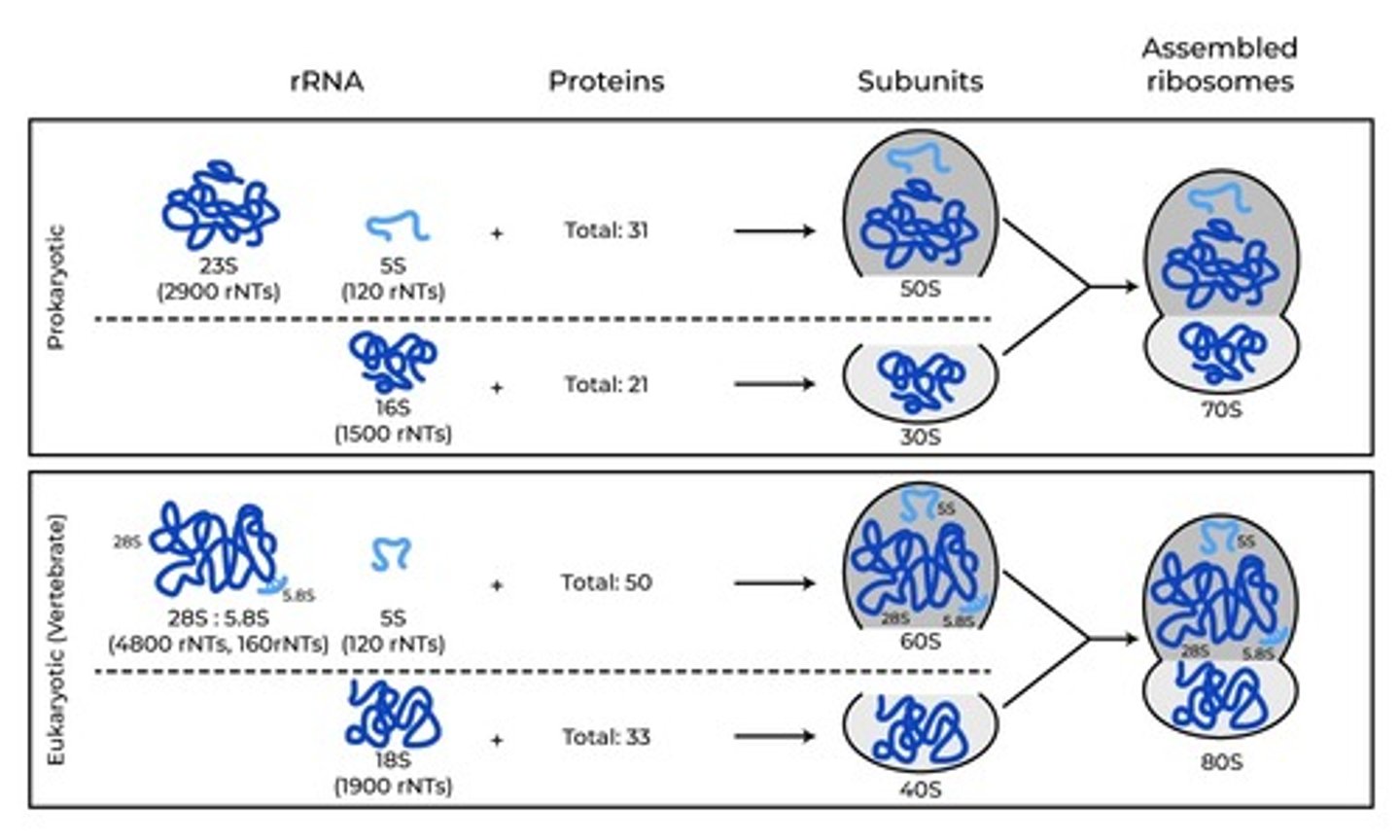
f. All - 52 proteins
rRNA in prokaryotes.
a. 16s
b. 23s
c. 5s
d. a and b
e. b and c
f. All
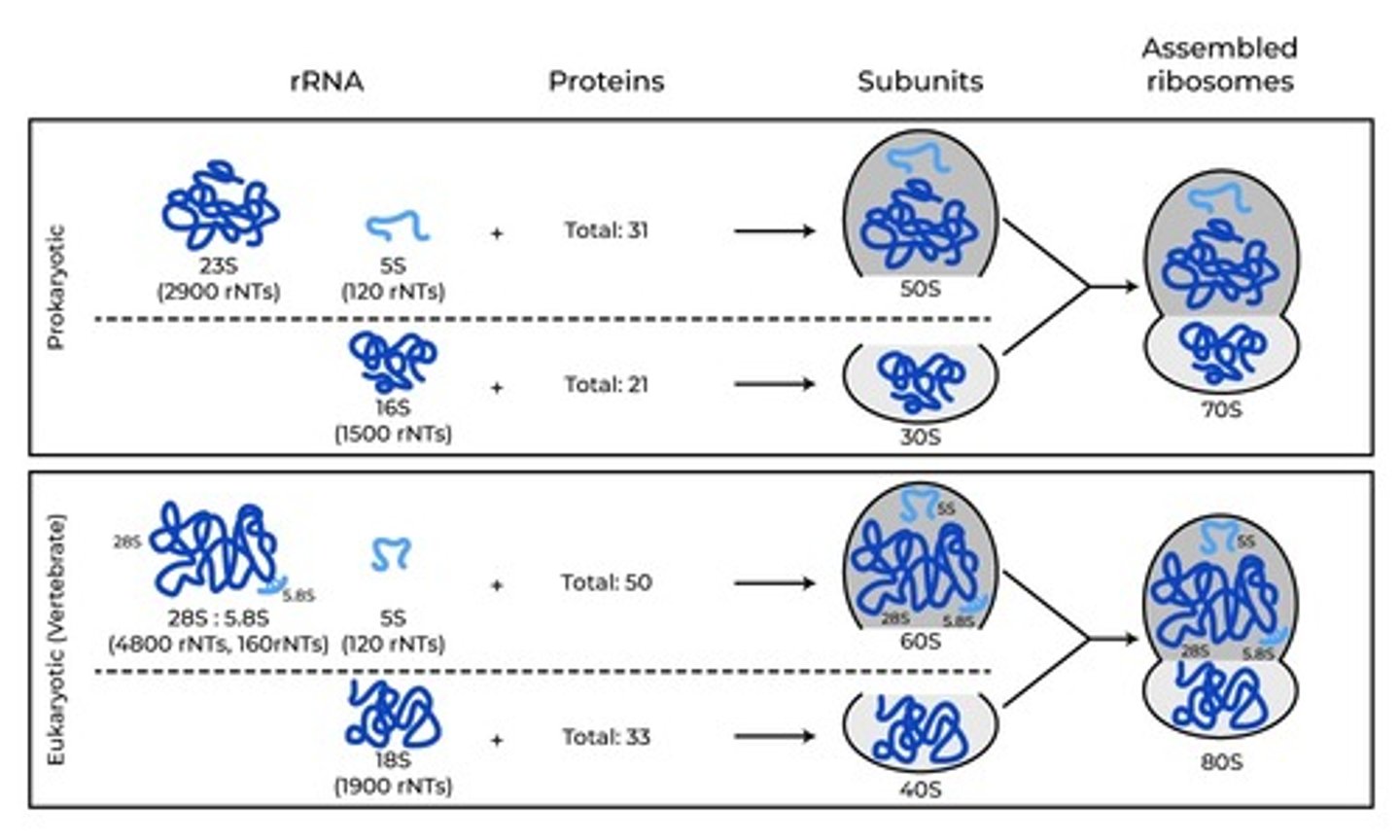
e. None - 83 proteins
rRNA in eukaryotes except:
a. 18s
b. 28s
c. 5s
d. 5.8s
e. None
f. All
RNA enzymes:
a. Ribozymes
b. Ribonuclease
c. Peptidyltransferase
d. a and b
e. b and c
f. All
a. Ribozymes
Usually precursors of rRNA which remove internal segments of themselves, splicing the ends together.
a. Ribozymes
b. Ribonuclease
c. Peptidyltransferase
b. Ribonuclease
Cleave other RNA molecules
a. Ribozymes
b. Ribonuclease
c. Peptidyltransferase
b. tRNA
RNase P is a ribonuclease that cleaves precursors of what RNA?
a. mRNA
b. tRNA
c. rRNA
c. Peptidyltranferase
Enzyme in protein synthesis.
a. Ribozymes
b. Ribonuclease
c. Peptidyltransferase
a. Chromatin
Protein-DNA complexes found on chromosomes, within the nucleus.
a. Chromatin
b. Chromolein
c. Chromatid
c. Starting point is Ori which is multiple in ProK and 1 in EuK
Starting point is Ori which ONE in ProK and MULTIPLE in EuK.
True about DNA replication mechanism except:
a. Occurs in the nucleus
b. Bidirectional
c. Starting point is Ori which is multiple in ProK and 1 in EuK
d. Semi conservative
e. Actual site is replication fork
f. None
b. Bidirectional
Means that replication begins at a site of origin and simultaneously moves out in both directions from this point.
a. Semiconservative
b. Bidirectional
c. Degenerate
d. Universal
a. Ori
Starting point of DNA replication.
a. Ori
b. Replication fork
c. Topoisomerase
d. Helicase
e. ssDNA binding protein
a. 1
How many ori in prokaryotes?
a. 1
b. 2
c. 3
d. Many
b. Replication fork
Actual site of DNA replication after it started in the Ori.
a. Ori
b. Replication fork
c. Topoisomerase
d. Helicase
e. ssBP
d. Helicase
For unwinding of dsDNA to ssDNA.
a. Ori
b. Replication fork
c. Topoisomerase
d. Helicase
e. ssBP
e. ssBP: Single Stranded Binding Protein
Prevent recoiling of ssDNA.
a. Ori
b. Replication fork
c. Topoisomerase
d. Helicase
e. ssBP
c. Topoisomerase
Prevent supercoiling of DNA.
a. Ori
b. Replication fork
c. Topoisomerase
d. Helicase
e. ssBP
a. Nuclease action
Topoisomerase has cutting action known as:
a. Nuclease action
b. Ligase action
b. Ligase action
Topoisomerase has joining action known as:
a. Nuclease action
b. Ligase action
a. Top I
Cut 1 strand.
a. Top I
b. Top II
c. Top III
d. a and b
e. All
b. Top II
Cut 2 strands.
a. Top I
b. Top II
c. Top III
d. a and b
e. All
b. Top II
DNA Gyrase is ________ in bacteria.
a. Top I
b. Top II
c. Top III
d. a and b
e. All
b. Fluoroquinolones
Drugs targeting topoisomerase.
a. Beta lactams
b. Fluoroquinolones
c. Macrolides
d. Monobactams
e. All
RNA primer:
a. Composed of short RNA strand: 10 RNA nucleotides
b. Synthesized via DNA primase
c. Important for DNA polymerase activation
d. a and b
e. All
b. DNA polymerase
Adds deoxyribonucleotides to the 3′-hydroxyls of the RNA primers and subsequently to the ends of the growing DNA strands.
a. RNA primer
b. DNA polymerase
c. Helicase
d. Topoisomerase
b. DNA Polymerase
For elongation, catalyze the synthesis of DNA.
a. RNA primer
b. DNA polymerase
c. Helicase
d. Topoisomerase
a. DNA Polymerase I
Has the following actions:
• Excision of primer
• Elongation activity to fill the gap; filling of the primer
• Proofreading
a. DNA polymerase I
b. DNA polymerase II
c.DNA polymerase III
a. DNA polymerase I
For repair and synthesis on the lagging strand.
a. DNA polymerase I
b. DNA polymerase II
c.DNA polymerase III
c. DNA Polymerase III
For the actual elongation and also has proof reading activity
a. DNA polymerase I
b. DNA polymerase II
c. DNA polymerase III
c. DNA polymerase III
Joins the Okazaki fragments; enzyme that catalyzes the formation of phosphodiester bonds between two polynucleotide chains.
a. DNA polymerase I
b. DNA polymerase II
c. DNA polymerase III
a. Elongation
Polymerase action
a. Elongation
b. Proofreading
c. Both
d. None
b. Proofreading
Exonuclease action
a. Elongation
b. Proofreading
c. Both
d. None
a. Leading strand
Continuous and advances the replication fork.
a. Leading strand
b. Lagging strand
b. Lagging strand
Okazaki fragments which discontinuous and grow away from the replication fork.
a. Leading strand
b. Lagging strand
a. 3' to 5'
Direction of copying of DNA polymerase.
a. 3' to 5'
b. 5' to 3'
e. All
DNA Polymerase types of prokaryotes
a. I
b. II
c. III
d. a and b
e. All
a. Elongation
5' to 3' polymerase enzyme activity indicate:
a. Elongation
b. Proofreading
c. Primer excision
b. Proofreading
3' to 5' exonuclease enzyme activity indicate:
a. Elongation
b. Proofreading
c. Primer excision
c. Primer excision
5' to 3' exonuclease enzyme activity indicate:
a. Elongation
b. Proofreading
c. Primer excision
f. All
Action of DNA Pol I.
a. Elongation
b. Proofreading
c. Primer excision
d. a and b
e. b and c
f. All
d. a and b
Action of DNA Pol III.
a. Elongation
b. Proofreading
c. Primer excision
d. a and b
e. b and c
f. All
e. Proliferating Cell Nuclear Antigen
Enhances processivity of the DNA polymerases; binds to many proteins present at the replication fork.
a. Primase
b. Helicase
c. Topoisomerase
d. DNA ligase
e. Proliferating Cell Nuclear Antigen
10^-9 to 10^-10 .
Fidelity of elongation is very high with an overall rate
a. Chromosome mutation
May be either changing the structure of a chromosome, or loss or gain of part of a chromosome.
a. Chromosome mutation
b. Gene mutation
b. Gene mutation
Change in the nucleotide sequence of a gene involving only a single nucleotide and may be due to copying errors, chemicals, viruses.
a. Chromosome mutation
b. Gene mutation
f. None
Chromosomes mutation except:
a. Deletion
b. Duplication
c. Translocation
d. Inversion
e. Non-disjunction
f. None
e. Non-disjunction
"No coming apart" wherein there is abnormal number of chromosomes due to homologous chromosomes failing to separate properly during meiosis.
a. Deletion
b. Duplication
c. Translocation
d. Inversion
e. Non-disjunction
a. Deletion
Involves the loss of all or part of a chromosome.
a. Deletion
b. Duplication
c. Translocation
d. Inversion
e. Non-disjunction
b. Duplication
Involves the production of extra copies of parts of chromosomes.
a. Deletion
b. Duplication
c. Translocation
d. Inversion
e. Non-disjunction
c. Translocation
When one part of a chromosome breaks off and attaches to another chromosomes.
a. Deletion
b. Duplication
c. Translocation
d. Inversion
e. Non-disjunction