Derivate Securities
 Call Kai
 Learn
Learn Practice Test
 Spaced Repetition
 Match
Match Flashcards
 Knowt Play
1/191

There's no tags or description
Looks like no tags are added yet.
Name | Mastery | Learn | Test | Matching | Spaced | Call with Kai |
|---|
No analytics yet
Send a link to your students to track their progress
192 Terms
Stochastic Processes
Describes how variables like stock prices, exchange rates, or interest rates change through time, incorporating uncertainties
Markov Processes
A process where future movements depend only on the current state, not the history of how that state was reached
Weak-Form Market Efficiency
The assertion that technical analysis (using past price history) cannot produce consistently superior returns
Stationary Process
A process where the parameters do not change over time
Continuous Stochastic Process
A process defined by taking the limits of time intervals as they tend toward zero.
Wiener Process
A specific type of Markov stochastic process with a mean change of 0 and a variance rate of 1 per year
Generalized Wiener Process
A Wiener process where the drift rate and variance rate can be set to chosen constants
Drift Rate
The average change per unit of time
Variance Rate
The variance of the change per unit of time
Itô Process
A generalized Wiener process where the drift and variance rates are functions of both the variable and time
Itô’s Lemma
A mathematical theorem used to find the stochastic process followed by a function of a variable that itself follows an Itô process
Geometric Brownian Motion
A specific Itô process used for stock prices where the expected percentage change (not actual dollar change) is constant.
Lognormal Distribution
The distribution followed by stock prices, derived from the assumption that stock returns are normally distributed
Continuously Compounded Return
The realized annual return when compounding occurs constantly
Volatility (σ)
The standard deviation of the continuously compounded rate of return in one year
Historical Volatility
An estimate of volatility calculated from historical stock price observations
Trading Days
The days a market is open for trading; options are usually valued assuming 252 trading days per year
Call Option
An option to buy an asset
Put Option
An option to sell an asset
European Option
Can be exercised only at the end of its life
American Option
Can be exercised at any time during its life
Strike Price (K)
The price at which the option holder can buy or sell the underlying asset
Option Positions
Including Long Call, Long Put, Short Call (writing a call), and Short Put (writing a put)
Moneyness
Categorized as At-the-money, In-the-money, or Out-of-the-money
Intrinsic Value
The value an option would have if it were exercised immediately
Time Value
The part of an option's price not accounted for by its intrinsic value
Option Class
All options of the same type (calls or puts) on the same stock
Option Series
All options of a certain class with the same expiration date and strike price.
Warrants
Options issued by a corporation or financial institution, representing a Primary Market Action
Black-Scholes-Merton (BSM) Differential Equation
The fundamental equation used to price options based on a riskless portfolio of the stock and the derivative
Arbitrage
The practice of selling a "rich" portfolio and buying a "cheap" portfolio to lock in a riskless profit
Law of One Price
Two portfolios paying the same amount in every state of the world must have the same price
Lower Bound
The minimum theoretical price for an option
Put-Call Parity
The relationship between the price of a European call, a European put, the underlying stock, and a risk-free bond
Early Exercise
Exercising an American option before its expiration date
Principal Protected Note
A strategy combining a zero-coupon bond and an option to take a risky position without risking the original principal
Spread
A strategy involving two or more options of the same type (e.g., Bull Spread, Bear Spread, or Butterfly Spread)
Combination
A strategy involving options of different types (e.g., Straddle or Strangle)
Binomial Model / Binomial Trees
A model for valuing derivatives by assuming stock prices move to one of two possible values over discrete time steps
Risk-Neutral Valuation
The principle that derivatives can be valued by assuming the expected return on all assets is the risk-free rate
Delta (Δ)
The ratio of the change in the price of an option to the change in the price of the underlying stock
put-call parity formula

c: European call option price
p: European put option price
S0: Stock price today
K: Strike price
r: Risk-free rate for maturity T with continuous compounding
T: Life of the option
e−rT: The discount factor used to find the present value of the strike price
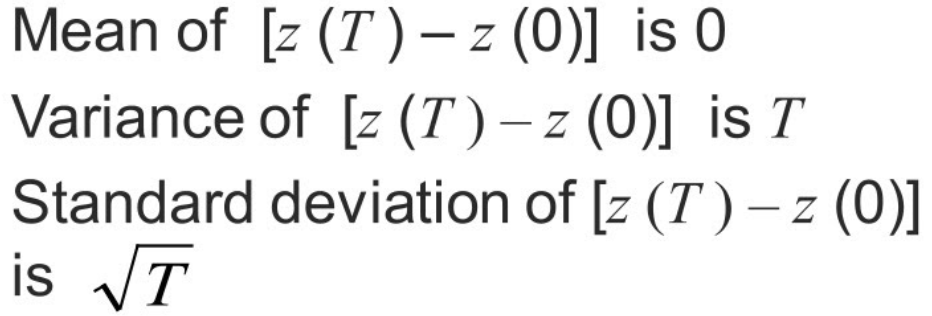
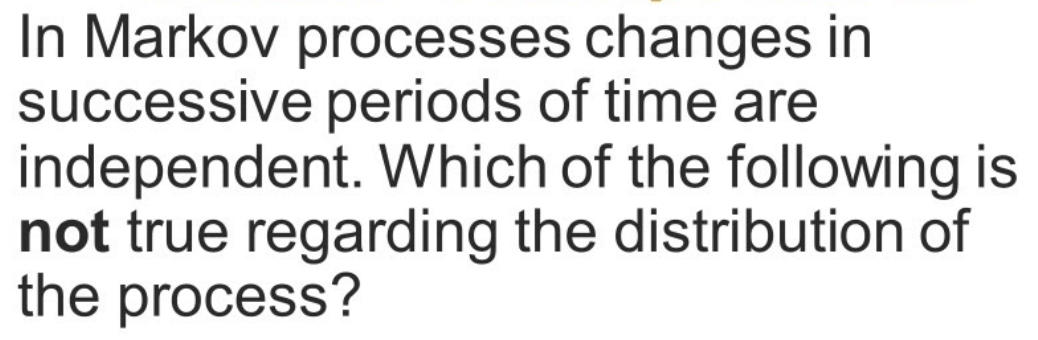
the std and variances in the Markov process
the variances are additive
Standard deviations are not additive
because the Markov process changes in successive periods of time are independent

Stochastic and Markov Processes
variables change through time with uncertainty
future price movements depend only on the current price, not the historical path. This assumption is consistent with weak-form market efficiency
Wiener and Itô Processes
Wiener process as a specific Markov process with a mean change of zero and a variance rate of one.
An Itô process generalizes this by making drift and variance functions of time and the underlying variable.
Pricing Variables
the current stock price (S0),
strike price (K),
time to maturity (T),
volatility (σ),
the risk-free interest rate (r),
and dividends (D
Call Options: In-the-Money
A call option is in-the-money when the stock price is greater than the strike price (S>K). In this state, the option holder can buy the stock for less than its current market value, resulting in a positive payoff
Call Options: Out-of-the-Money
A call option is out-of-the-money when the stock price is less than the strike price (S<K). In this scenario, the option has no immediate payoff because the holder would not choose to buy the stock at a strike price that is higher than the current market price
Put Options: In-the-Money
A put option is in-the-money when the stock price is less than the strike price (S<K). This allows the holder to sell the stock for more than its current market value, creating a positive payoff
Put Options: Out-of-the-Money
A put option is out-of-the-money when the stock price is greater than the strike price (S>K). The option has no intrinsic value because the holder could sell the stock on the open market for a higher price than the strike price
At-the-Money
An option is at-the-money when the current stock price is equal to the strike price (S=K). For example, if a stock portfolio is currently worth $1,000, an "at-the-money" call option would also have a strike price of $1,000
Early Exercise Logic
An American call option on a non-dividend-paying stock should never be exercised early
his is because exercising early sacrifices the insurance against the stock price falling and loses the time value of money on the strike price
American puts may be exercised early under certain conditions
The Law of One Price
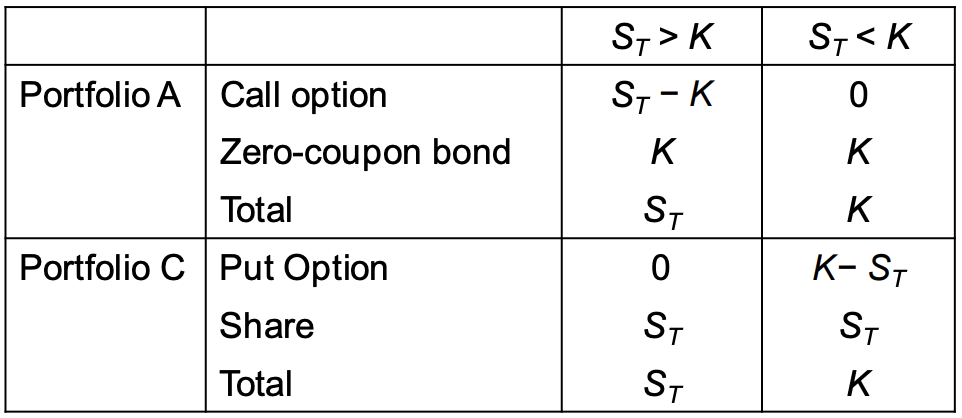
Arbitrage is the practice of buying a "cheap" portfolio and selling a "rich" one to lock in riskless profit; if two portfolios provide the same payoff in all future states, they must have the same price today
Put-Call Parity
For European options, there is a fixed relationship between call and put prices: c+Ke−rT=p+S0. If this equality does not hold, an arbitrage opportunity exists
The Differential Equation
By assuming this riskless portfolio must earn the risk-free rate, the BSM differential equation is derived, which is used to value derivatives based on the price of the underlying asset and time
Principal Protected Notes structure
Typically combines a zero-coupon bond (which pays the original principal at maturity) with an at-the-money call option.
Performance Factors: The viability of this note depends on interest rates, the volat
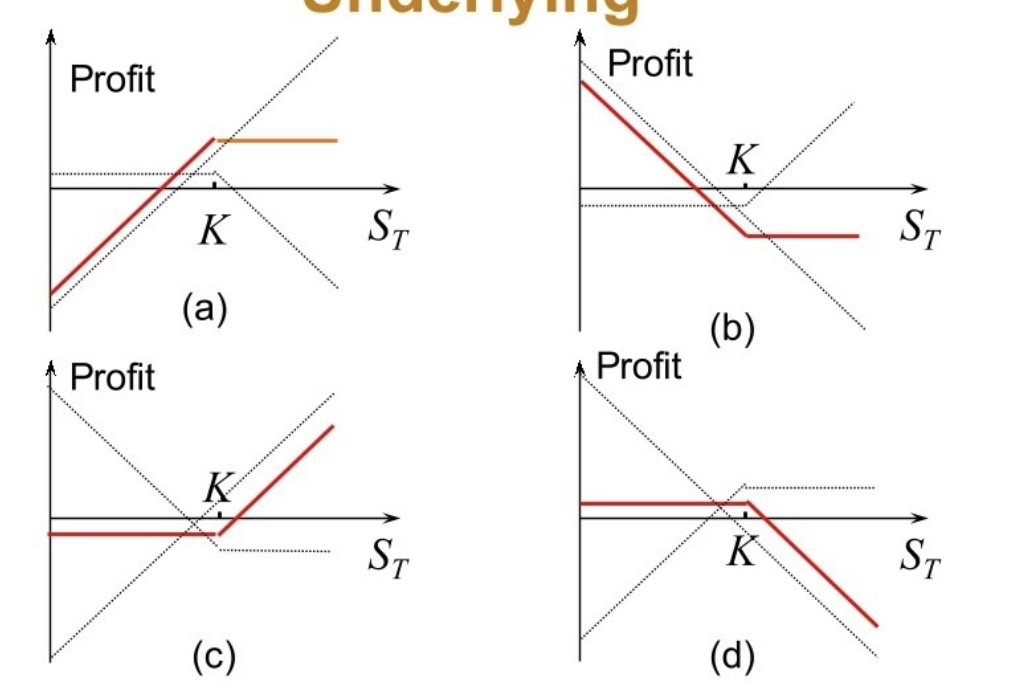
ility of the portfolio, and dividend levels
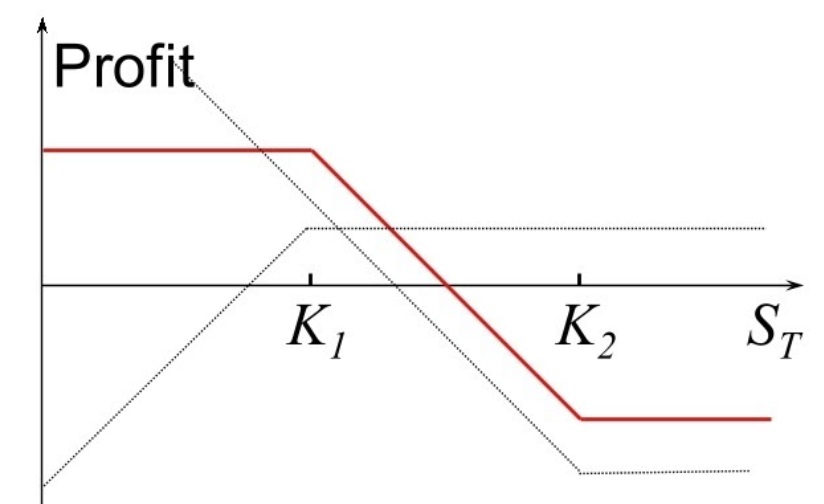
Bull Spreads
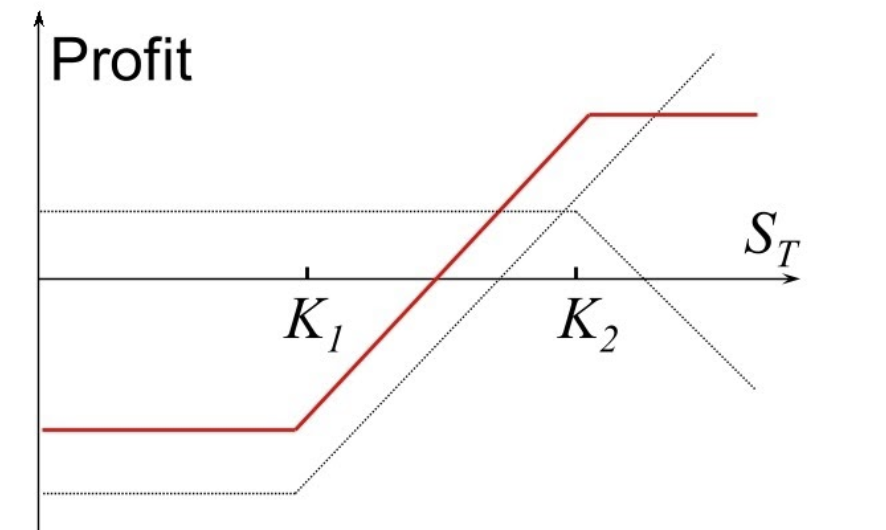
Created using either calls or puts. involves being long a call with a lower strike price (K1) and short a call with a higher strike price (K2)
Bear Spreads
Designed to profit from falling prices, these can also be created using either calls or puts
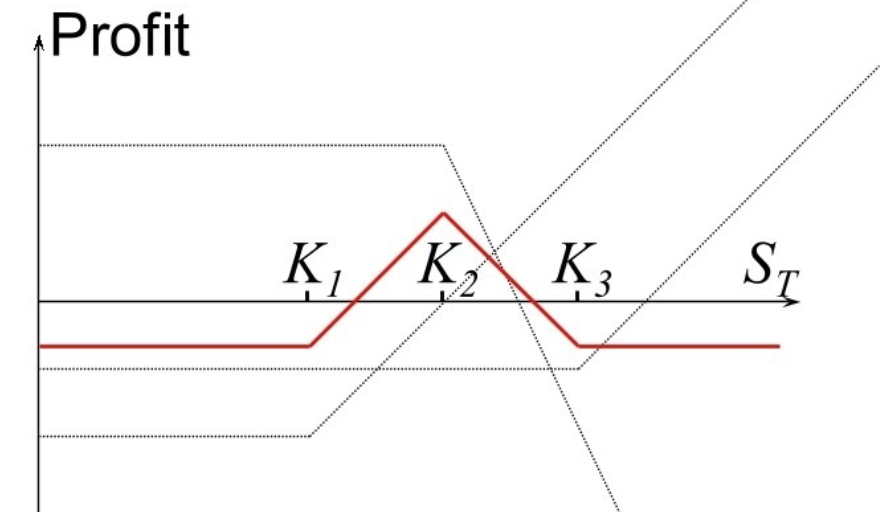
Butterfly Spreads
These utilize three different strike prices (K1,K2,K3) and can be constructed using either all calls or all puts
Combinations
involves taking positions in two or more options of different types (mixing calls and puts)
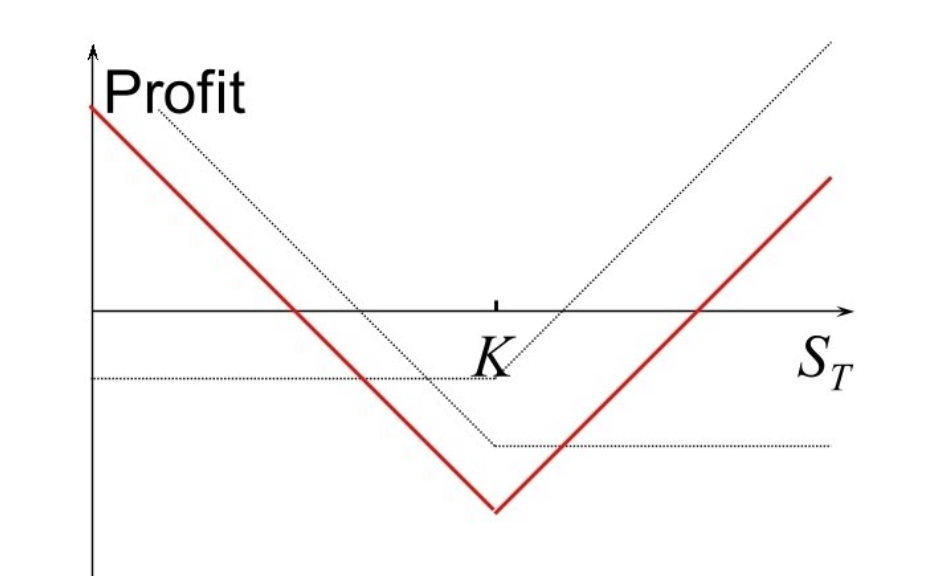
Straddle combination
Involves being long both a call and a put with the same strike price (K) and expiration date
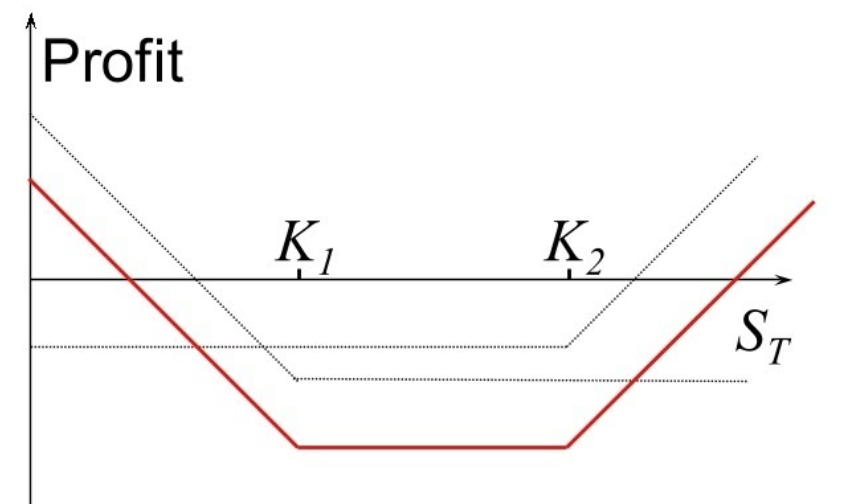
Strangle Combination
Similar to a straddle, but the call and put have different strike prices (K1 and K2)
Arbitrage
This is the core strategy of identifying and exploiting price discrepancies. It involves selling a "rich" (overpriced) portfolio and buying a "cheap" (underpriced) portfolio to lock in a riskless profit
Riskless Hedging
Used in the derivation of the Black-Scholes-Merton model and Binomial Trees, this strategy involves forming a portfolio of a stock and its derivative (like shorting a call and buying Δ shares) to eliminate uncertainty and earn the risk-free rate
why do options have value?
They allow you to delay a decision until you have better information
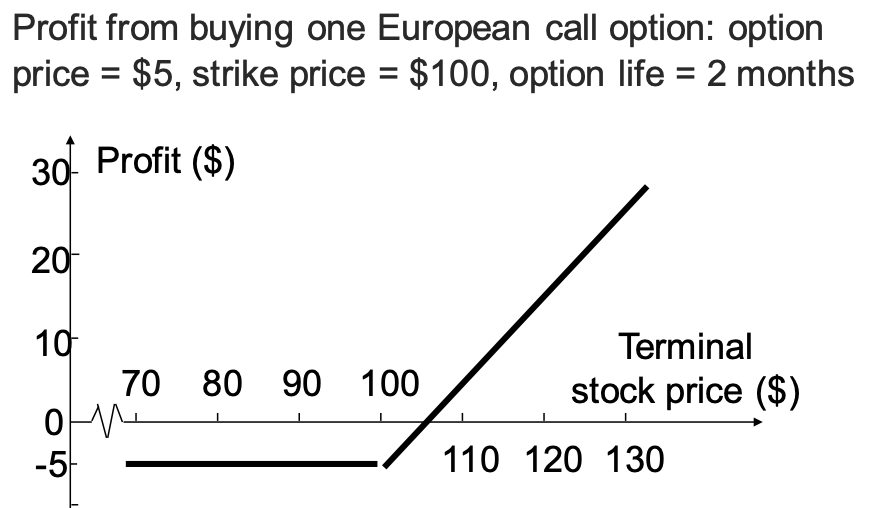
Long call
Payoff moves one-for-one if S>K
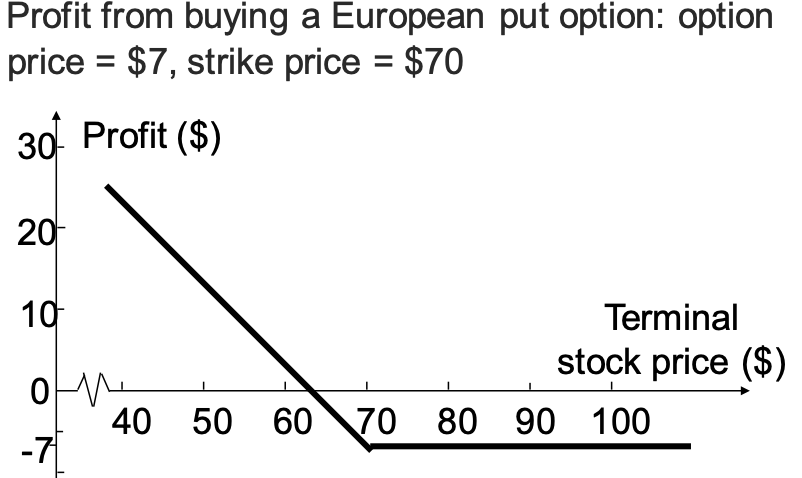
Long put
Payoff moves minus one-for-one if S
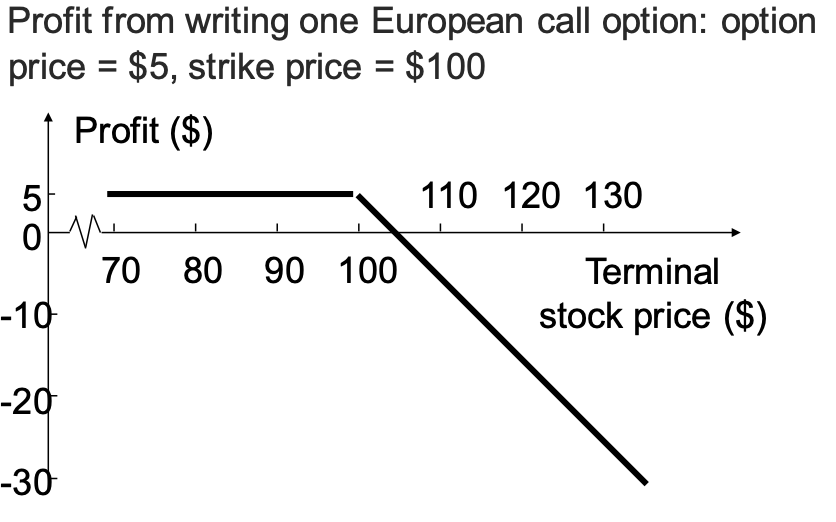
Short call
Opposite of long call S>K
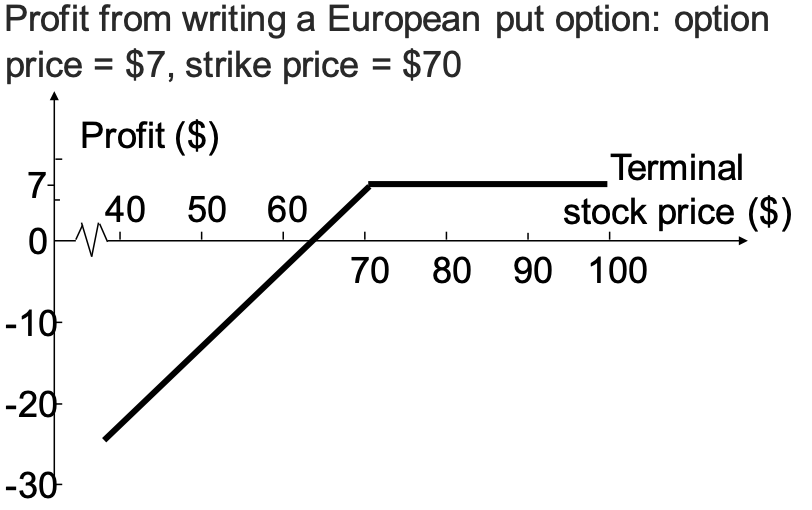
Short put
Opposite of long put S<K
Suppose you own N options with a strike price of K : When there is an n-for-m stock split,
the strike price is reduced to mK/n
the no. of options is increased to nN/m
effect of variables on option pricing
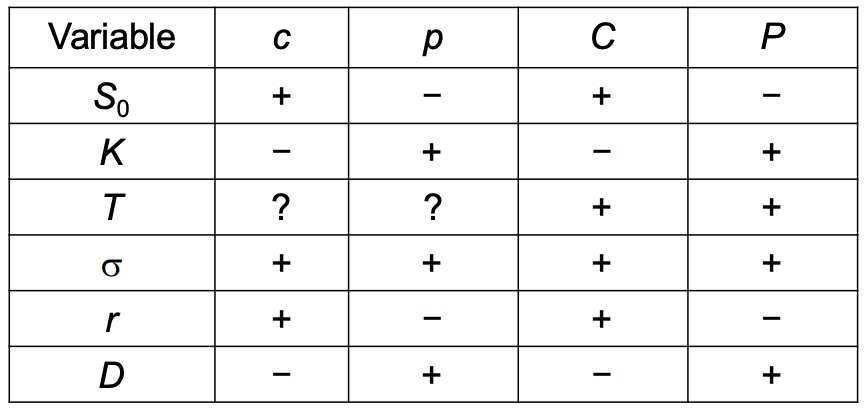
If the stock price decreases, the value of a call option will:
Decrease
Two portfolios that pay the same amount in each state of the world should have
the same price
Barring other financial market frictions
Law of One Price
An American option is worth
at least as much as the corresponding European option C ≥ c P ≥ p
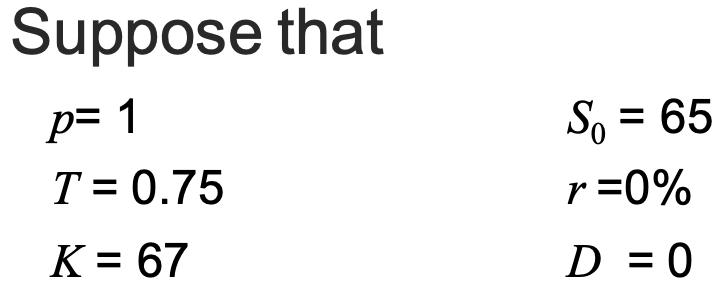
Arbitrage opportunity of at least $1
values of portfolios
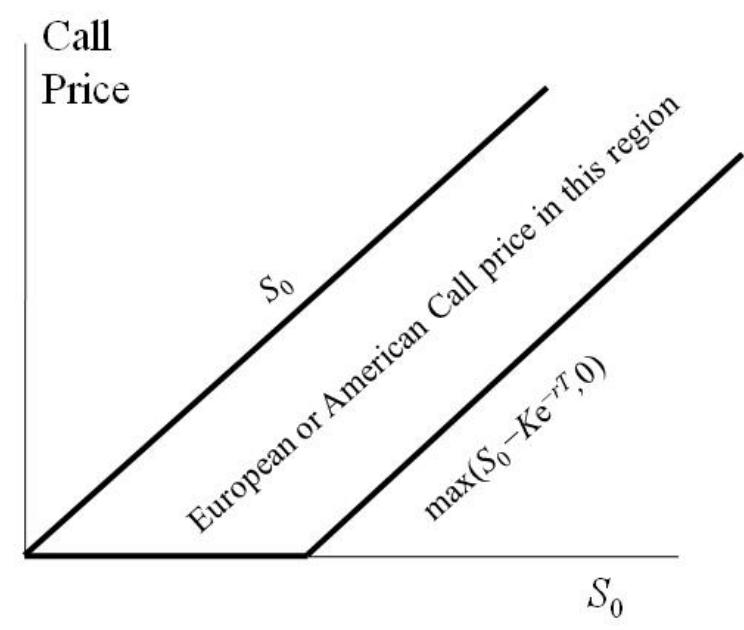
early exercise exception
is an American call on a non-dividend paying stock • This should never be exercised early!
No income is sacrificed
You delay paying the strike price
Holding the call provides insurance against the stock price falling below the strike price
Bounds for European and American Put Options (No Dividends)
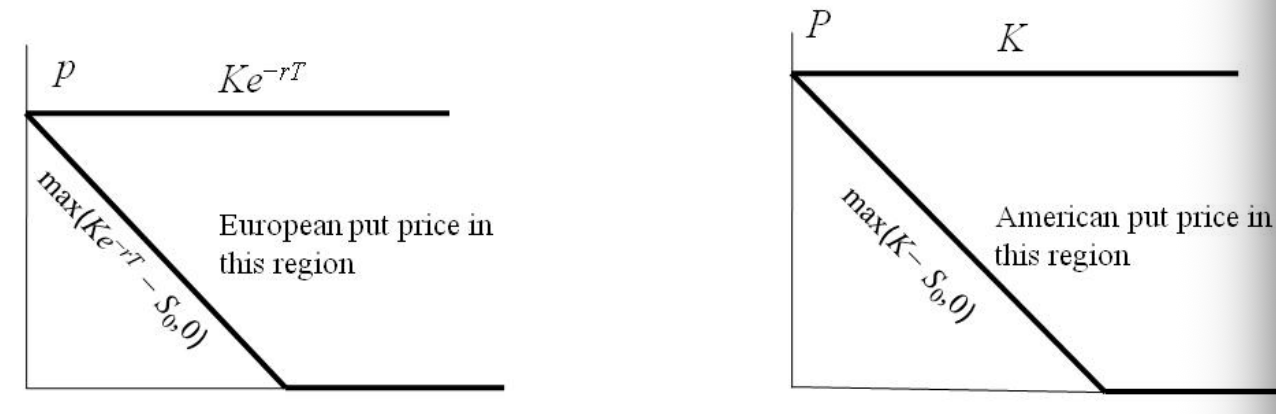
Extensions of Put-Call Parity American options; D = 0
S0 − K < C − P < S0 − Ke−rT
Extensions of Put-Call Parity European options; D > 0
c + D + Ke −rT = p + S0
Extensions of Put-Call Parity American options; D > 0
S0 − D − K < C − P < S0 − Ke −rT
Strategies to be Considered
Bond plus option to create principal protected note
Stock plus option
Two or more options of the same type (a spread)
Two or more options of different types (a combination)
Principal Protected Notes: Viability depends on
Level of dividends
Level of interest rates
Volatility of the portfolio
Principal Protected Notes: Variations on standard product
Out of the money strike price
Caps on investor return
Value of a portfolio that is long ∆ shares and short 1 derivative:
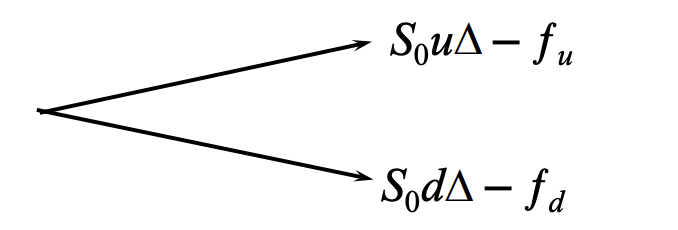
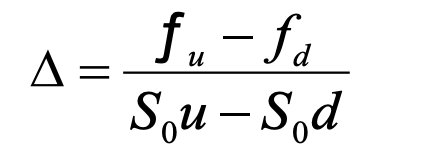
The portfolio is riskless when
Value of the portfolio at time T is
S0u∆ – ƒu
Value of the portfolio today is
(S0u∆ – ƒu)e–rT or S0∆ – f
When we are valuing an option in terms of the price of the underlying asset, the probability of up and down movements in the real world are
irrelevant
Delta (∆)
the ratio of the change in the price of a stock option to the change in the price of the underlying stock
The value of ∆ varies from node to node
A variable z follows a Wiener process if
∆z = ε ∆t where ε is φ(0,1)
The change in z in a small interval of time ∆t is ∆z
The values of ∆z for any 2 different (non-overlapping) periods of time are independent
What does an expression involving dz and dt mean?
It should be interpreted as meaning that the corresponding expression involving ∆z and ∆t is true in the limit as ∆t tends to zero
The expected value of the stock price is
S0e^µT
The expected return on the stock is
µ – σ 2/2 not µ
because ln[E(ST/S0)]E[ln(ST/S0)]
μ
the expected return in a very short time, ∆t, expressed with a compounding frequency of ∆t
μ −σ2 /2
the expected return in a long period of time expressed with continuous compounding (or, to a good approximation, with a compounding frequency of ∆t)
The volatility
the standard deviation of the continuously compounded rate of return in 1 year
The standard deviation of the return in a short time period time ∆t is

The option price and the stock price depend on
the same underlying source of uncertainty