Circulatory System
 Call Kai
 Learn
Learn Practice Test
 Spaced Repetition
 Match
Match Flashcards
 Knowt Play
1/37

There's no tags or description
Looks like no tags are added yet.
Name | Mastery | Learn | Test | Matching | Spaced | Call with Kai |
|---|
No analytics yet
Send a link to your students to track their progress
38 Terms
angio-
vessel
arteriolo-
arteriole-small
a/telo-
incomplete or without/end
auricolo-
ear shaped heart part
conio-
dust
lympho-
watery
plasmo-
blood fluid, cells float
anguino-
blood
pericardium
a double membrane fibrous sac that encloses the heart, surrounding the myocardmiun and is the progom of the bodys great blood vessels
visceral pericardium
inner serous layer, aka epicardium
pericardium
outer fibrous layer. also called parietal
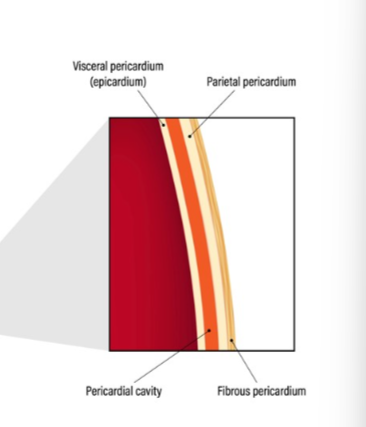
myocardium
is the middle heart layer, consisting of the heart muscle
coronary artery
blood vessels that supply blood directly to heart muscle
heart attacks are usually referred to as coronary thrombosis myocardial infarction
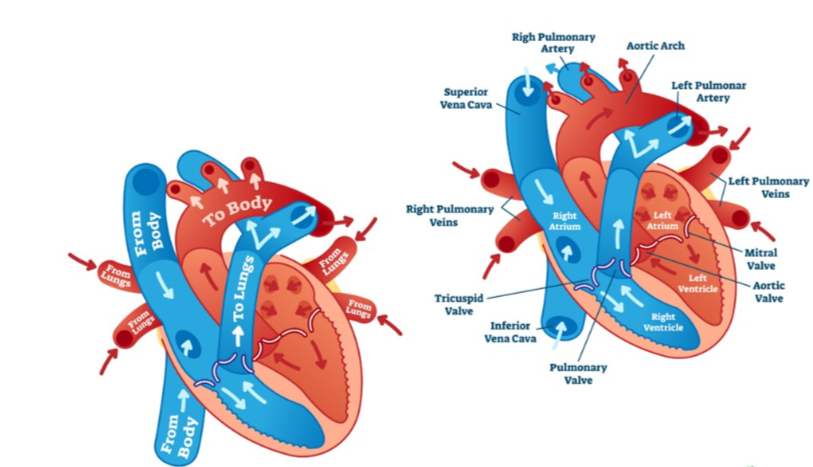
blood returns to the heart from (2)
the neck and the arms through the superior vena cava
and
from the bottom part of the body through the inferior vena cava
to the right atrium
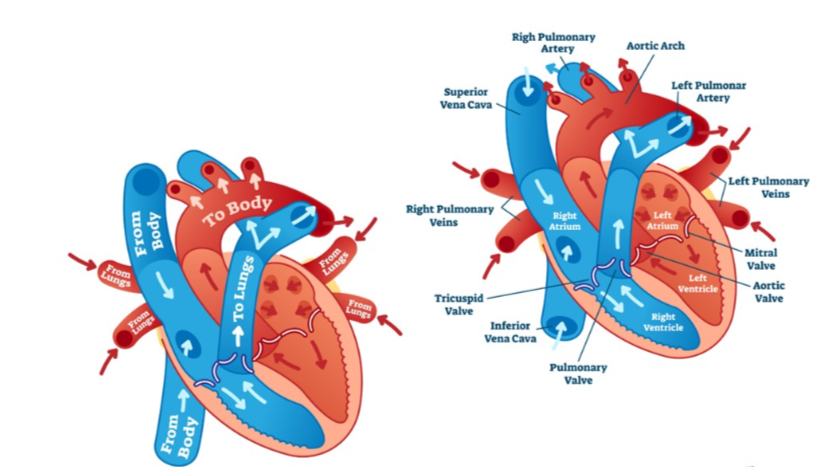
blood flows from the right atrium to
down through the right tricuspid (atrioventricular) valve into the right ventricle
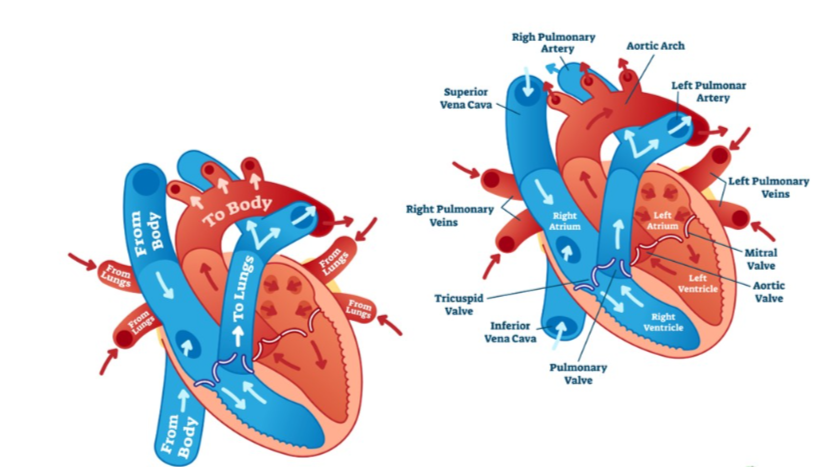
right side of the heart pumps blood to the
lungs, which is why its considered the pulmonary side of the heart
the AV node generated impulses to
the lower chambers, causing systole/contraction
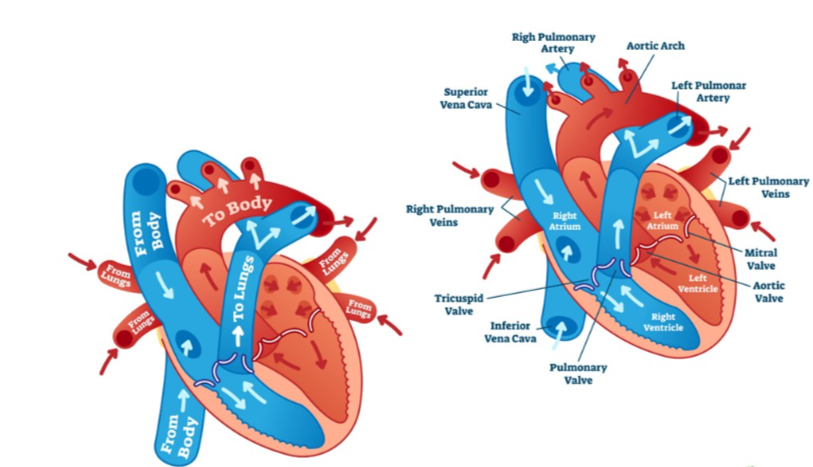
right ventricle pumps blood through the
pulmonary valve to the lungs for oxygenation
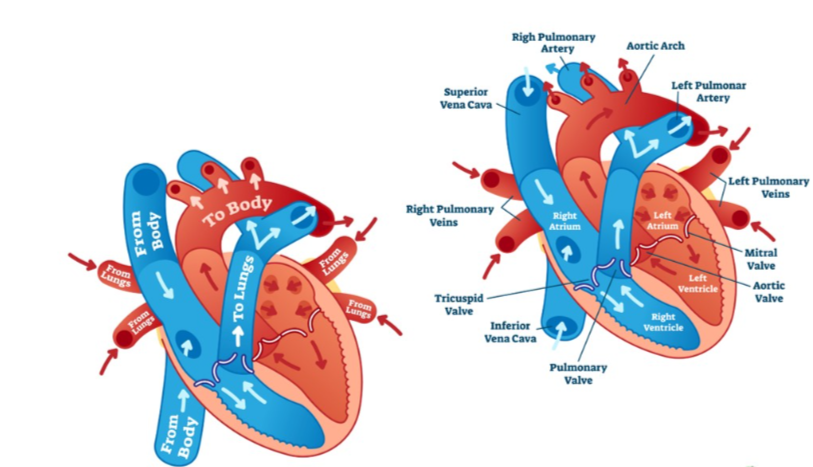
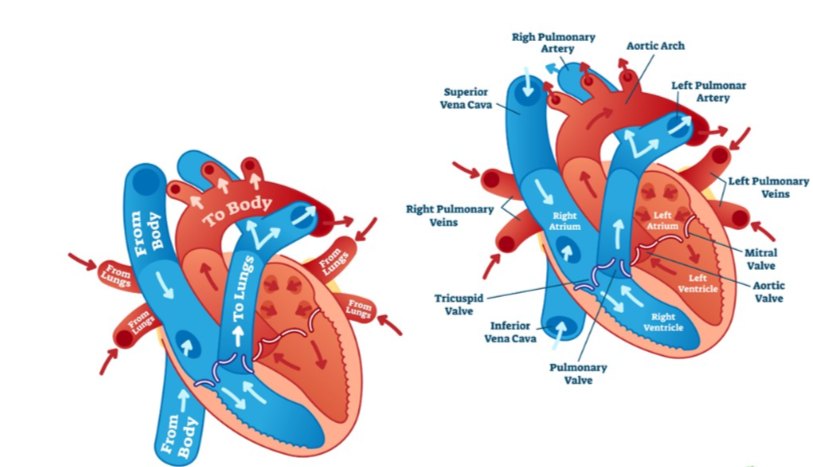
oxygenated blood returns from the lungs
under pressure to the left atrium down to the left ventricle through the mitral valve
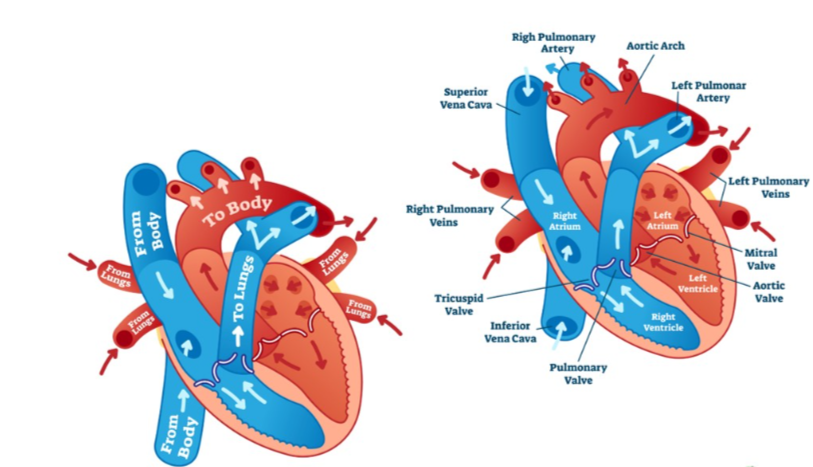
when the left ventricle contracts
it pumps blood out of the heart through the aortic calve and up out the aortic arch
3 layers of arteries and veins
tunica intima
tunica media
tunica externa
lymphatic system
network of capillaries, valves, ducts, nodes, and organs that help protect and maintain the internal fluid environment of the body by producing, filtering, and conveying lymph and producing blood cells
what does the lymphatic system transport
fats, proteins, and other substances to the blood system and restores fluid that filters out of the blood capillaries into interstitial spaced
lymph collected is drained into
the blood through the thoracic and lymphatic duct
body muscle contractions pump the lymph through the system
bone marrow becomes what type of cell
hematopoietic stem cells
hematopoietic stem cells can become what cells
myeloid progenitor cells or lymphoid progenitor cell
lymphoid cells can become
t cell or b cell
help immune system stay strong
myeloid cells can become
platelets
eosinophils
basophils
neutrophil
monocyte
erythrocyte
what are controllable factors for heart attack risk factors
smoking, obesity, inadequate exercise, emotional stress, alcohol n
on controllable factors for heart attack risk factors
age, genetics, homocysteine
doppler ultrasonography
used to see blood flow pattern. this can be used to view blood flow in the kidneys, placenta, and the heart
angiogram
x ray of blood vessels taken in rapid succession following injection of radio opaque substance in vessel
it defines size and shape of arteries and veins in organs or tissue and is used to define tumors of the aorta
angioplasty
process of surgically repairing a blood vessel to restore normal blood flow to the heart
can be laser, balloon, and transluminal extraction catheter
p wave is caused by
the depolarization of the atrium muscle that causes chamber contraction
q,r,s,t waves are related to
ventricles
ABCs of CPR
a-open airway
b- restore breathing
c- restore circulation
what is anemia
reduction of red blood cells or blood volume
causes of anemia
considered a symptom of other disease like sickle cell anemia
deficiency of iron and or bone marrow malfunction can also be causes