Geo 1A 2023-2024 KIM
 Call Kai
 Learn
 Practice Test
 Spaced Repetition
 Match
 Flashcards
 Knowt Play
1/173

Earn XP
Description and Tags
174 Terms
postulate
a statement that is accepted as true without proof
Theorem
A mathematical statement which we can prove to be true
ray
a part of a line that starts at an endpoint and extends forever in one direction
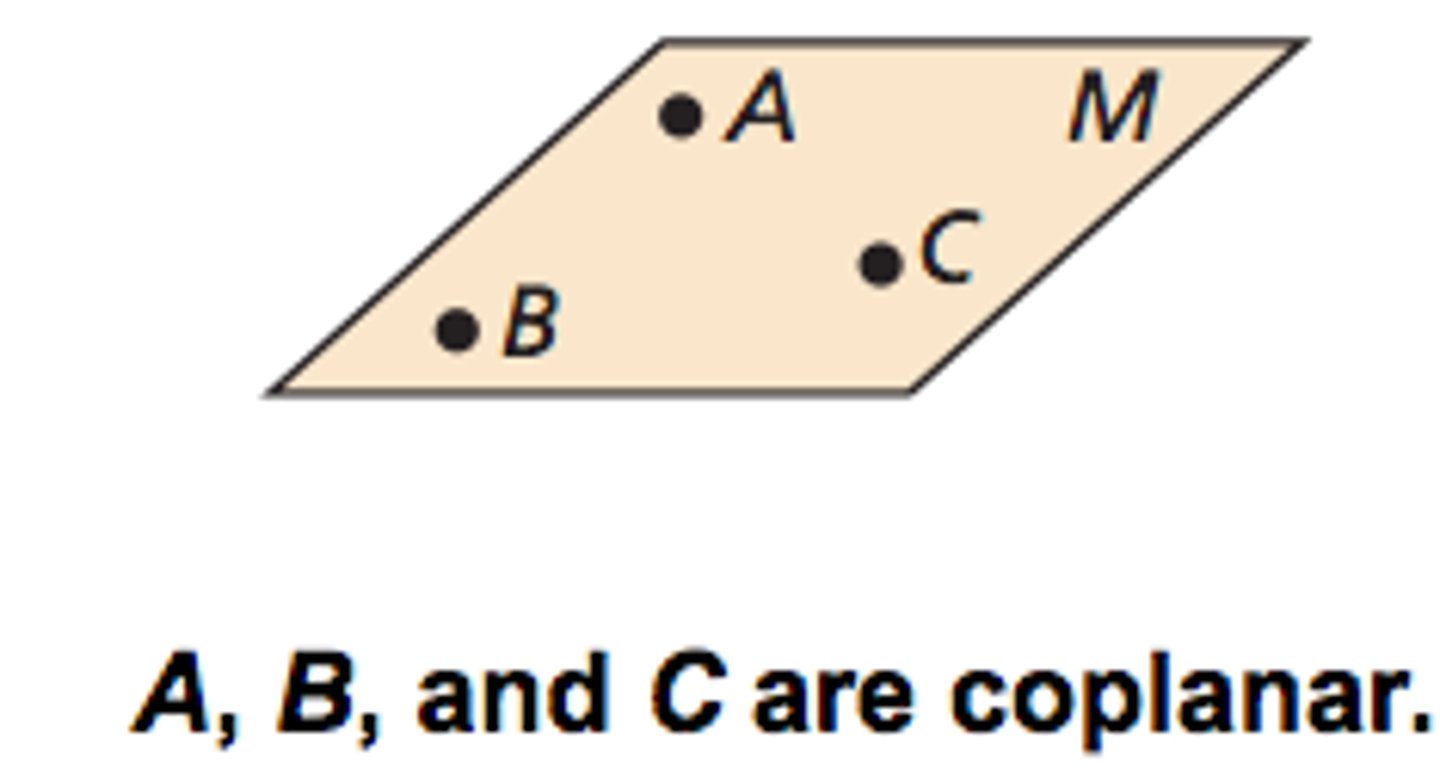
coplanar points
points that lie on the same plane
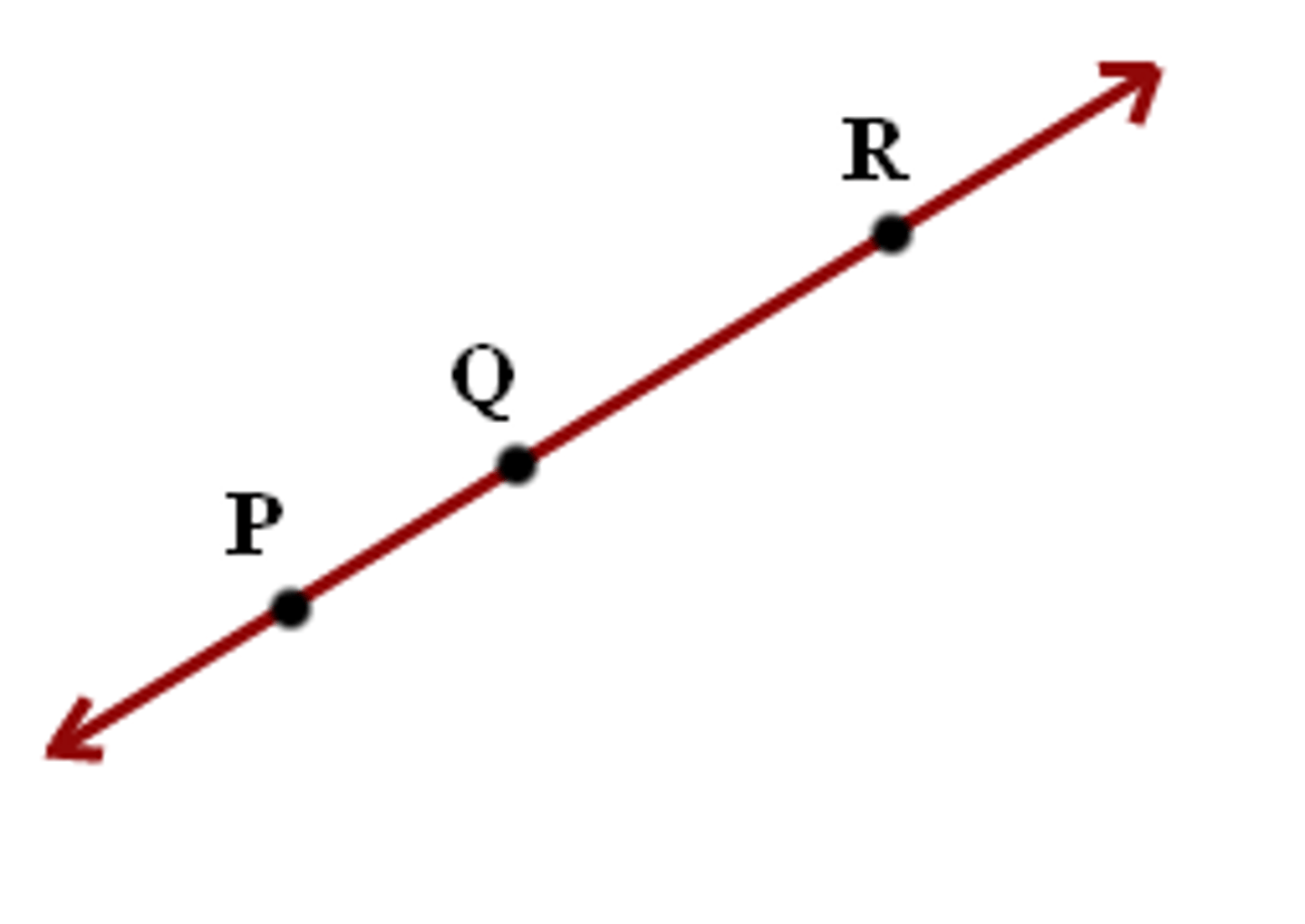
Colinear
points that lie on the same line
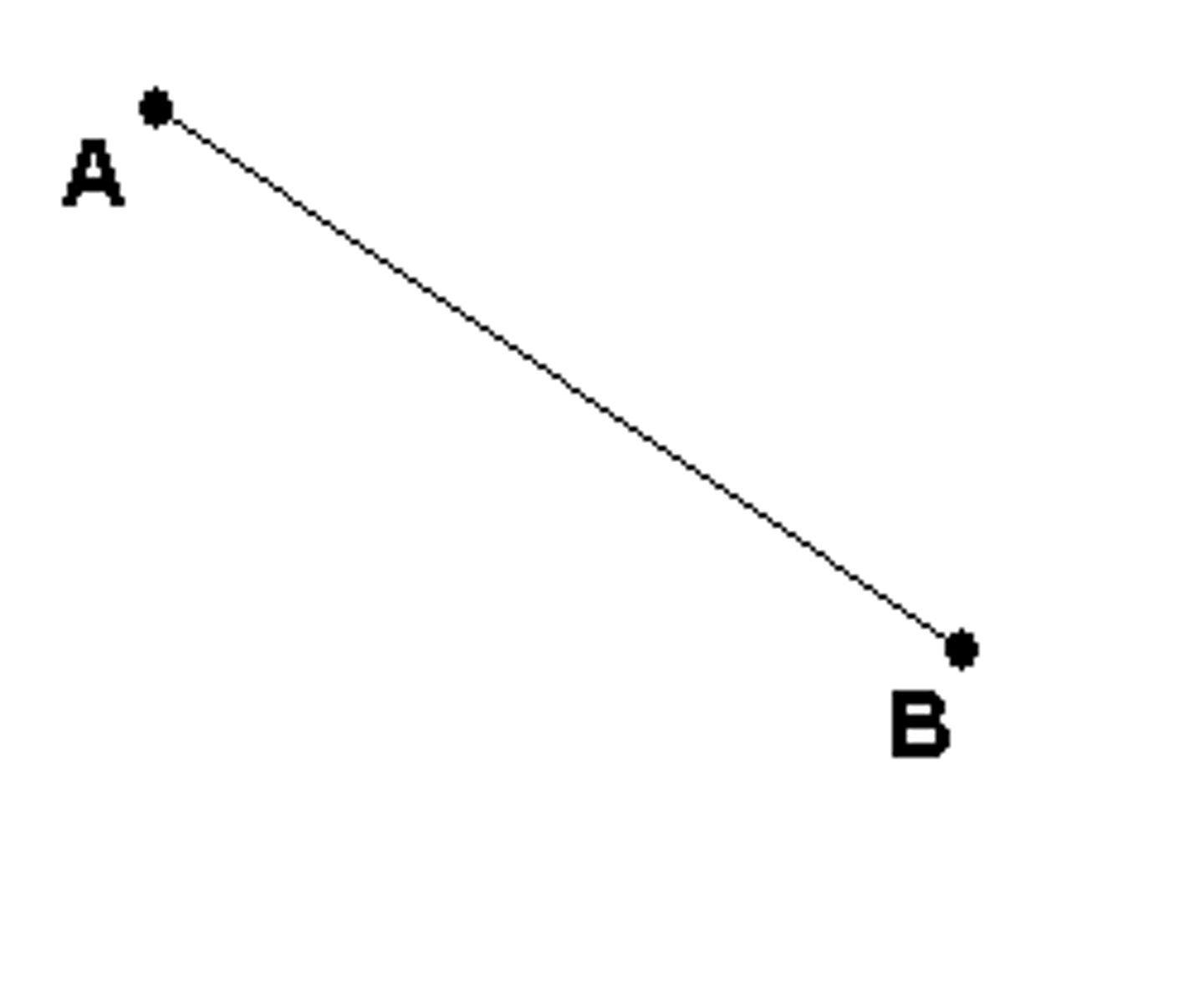
line segment
a part of a line that has two endpoints
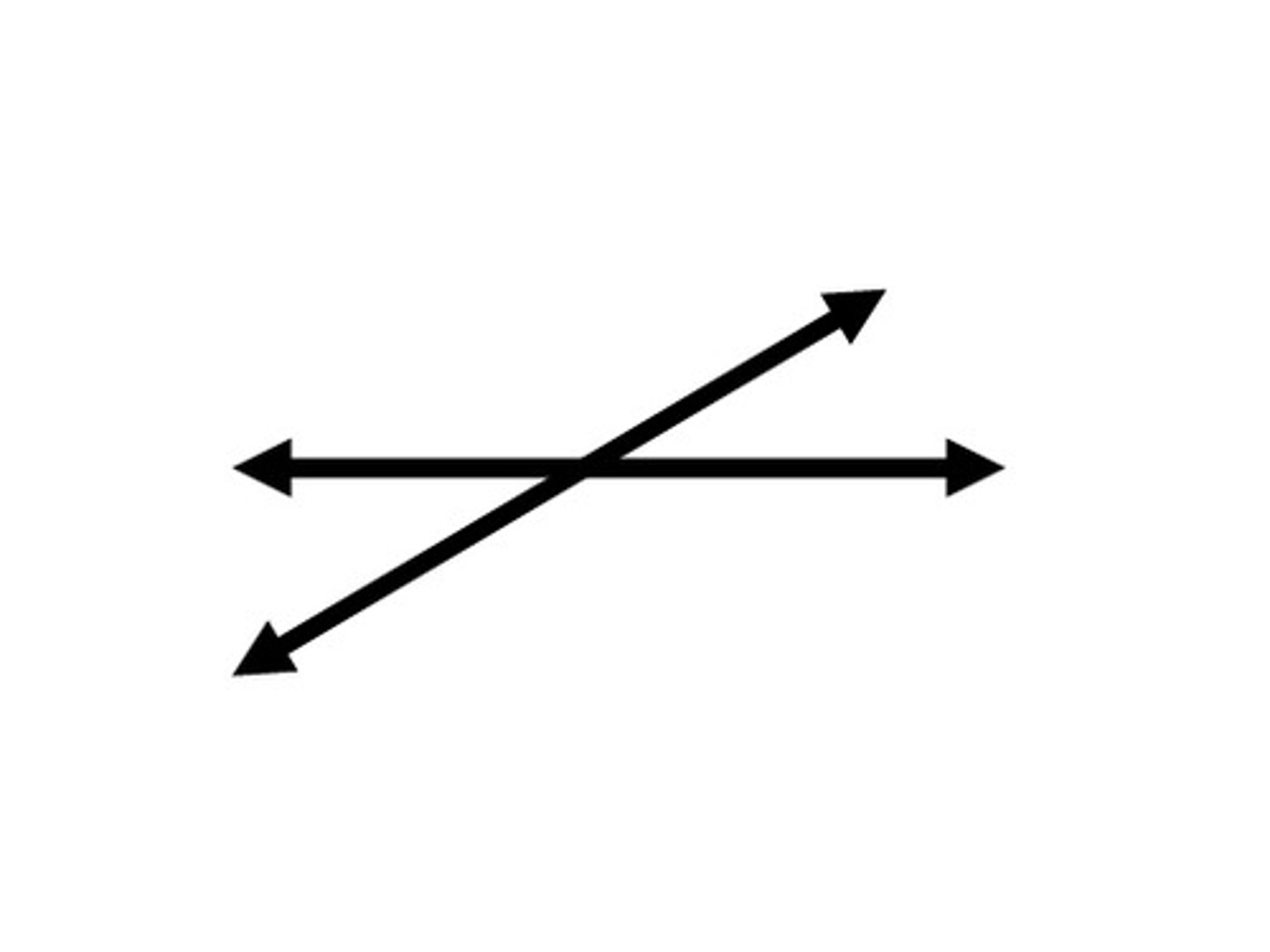
intersection
the set of points the figures have in common
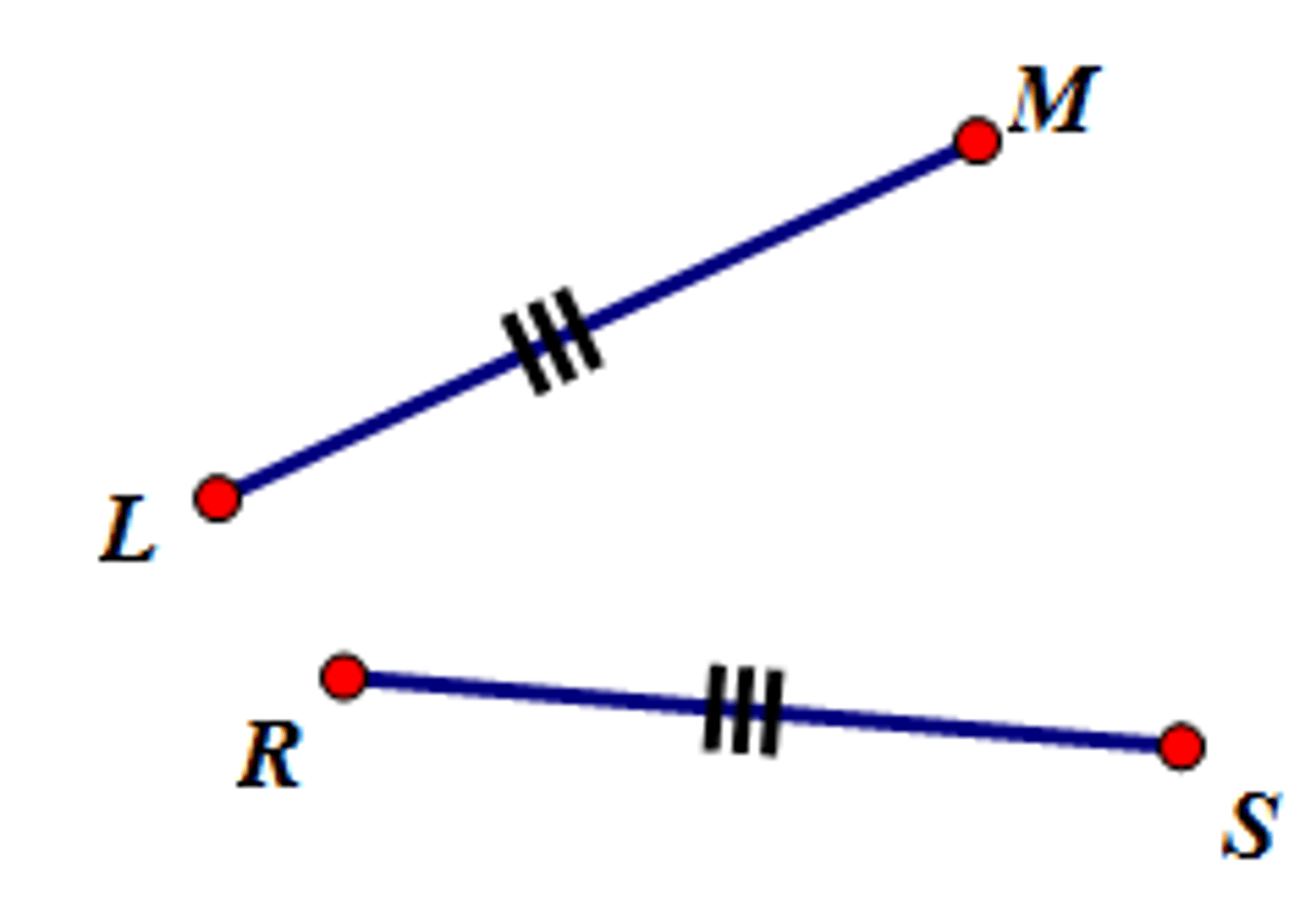
congruent segments and angles
segments/angles that have the same measure
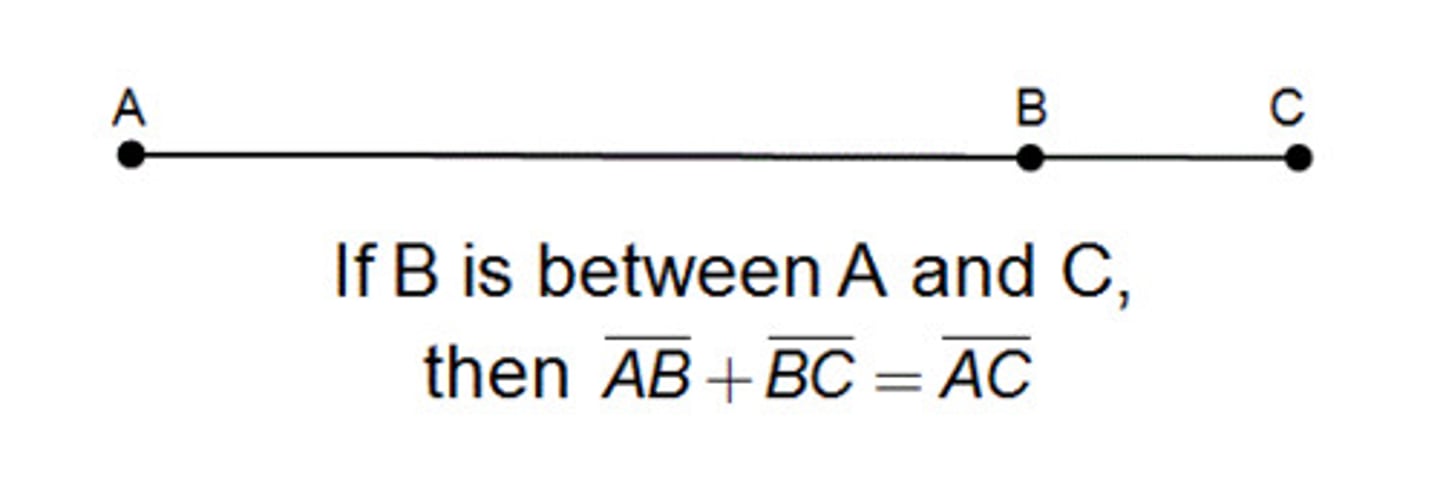
Segment Addition Postulate (SAP)
If B is between A and C, then AB+BC=AC
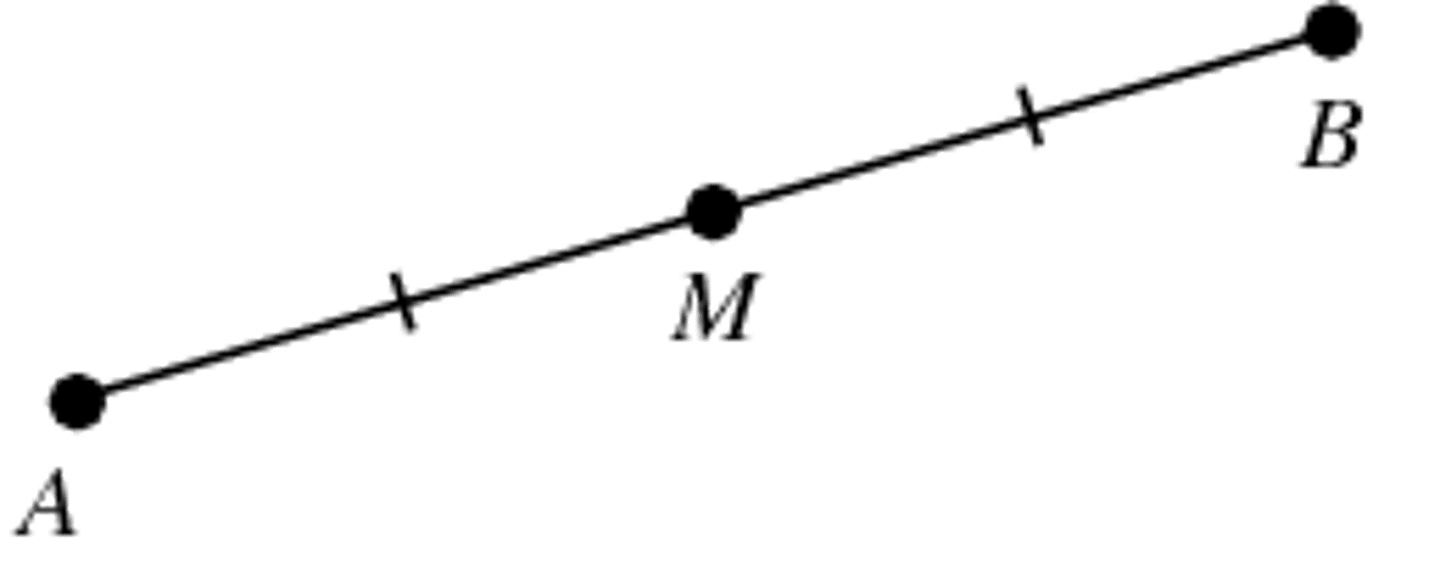
Midpoint
A point that divides a segment into two congruent segments
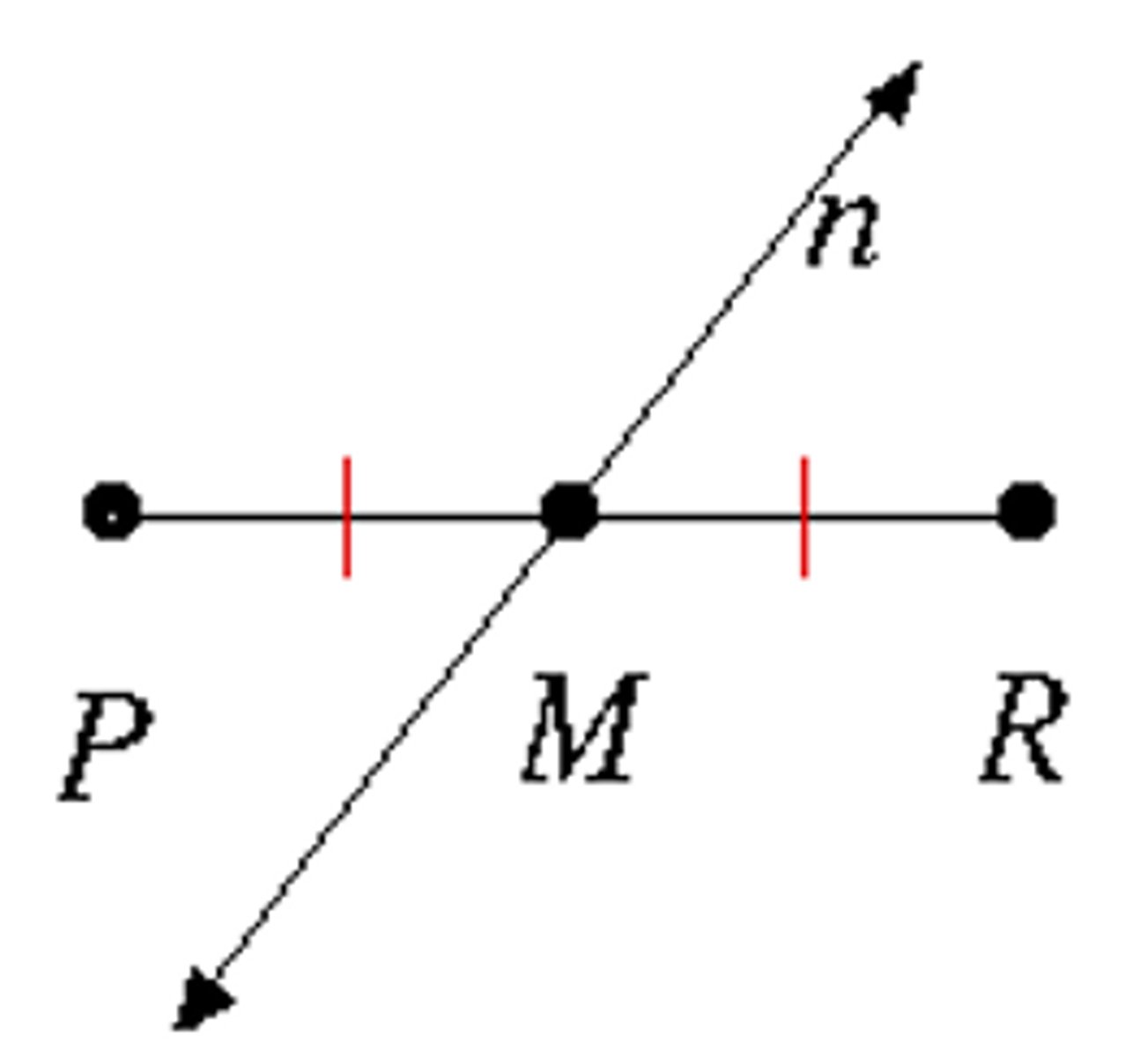
segment bisector
a segment, ray, line, or plane that intersects a segment at its midpoint
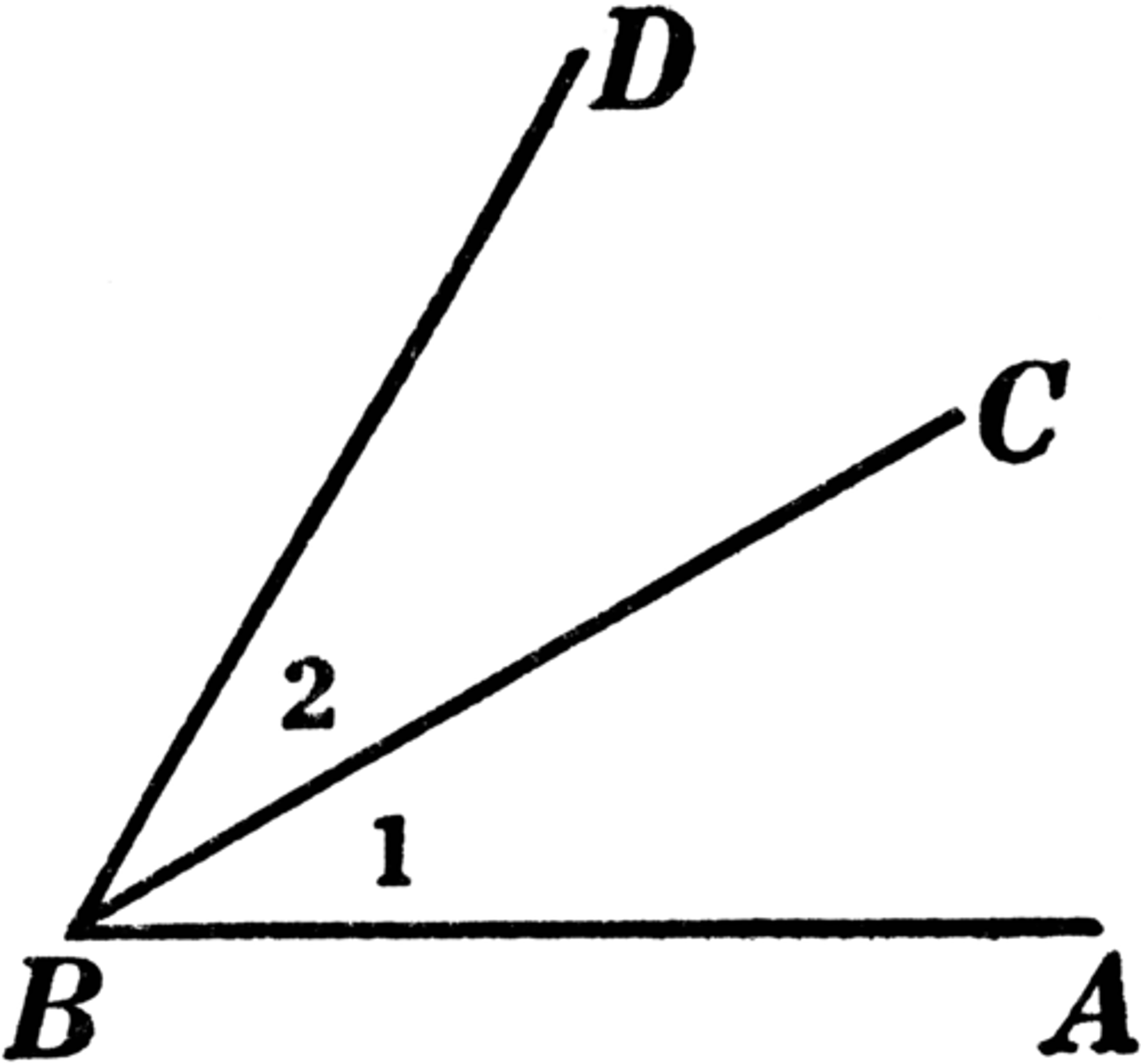
adjacent angles
Angles that have a common side and a common vertex (corner point).
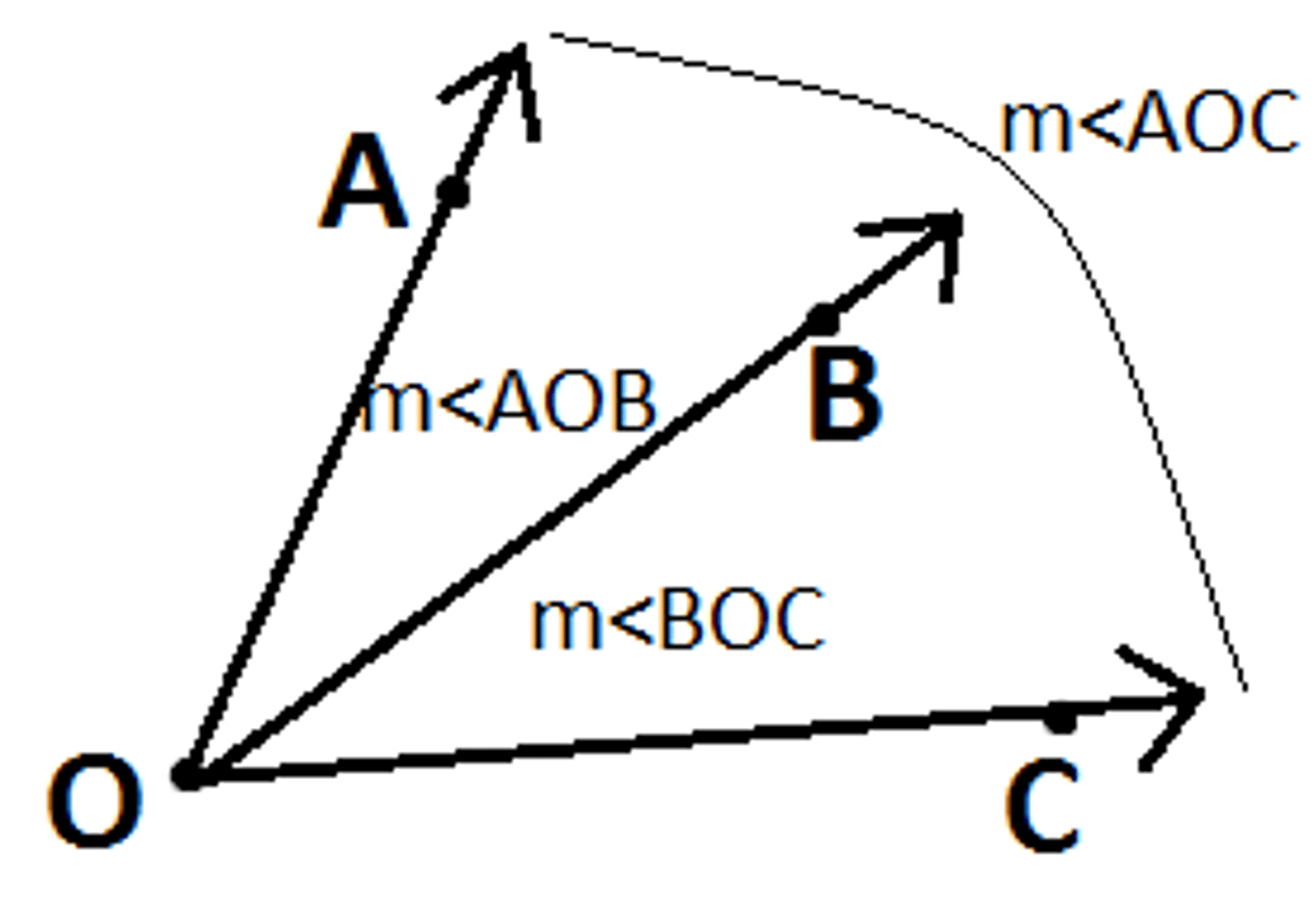
Angle Addition Postulate (AAP)
If point B lies in the interior of angle AOC, then m∠AOB + m∠BOC = m∠AOC
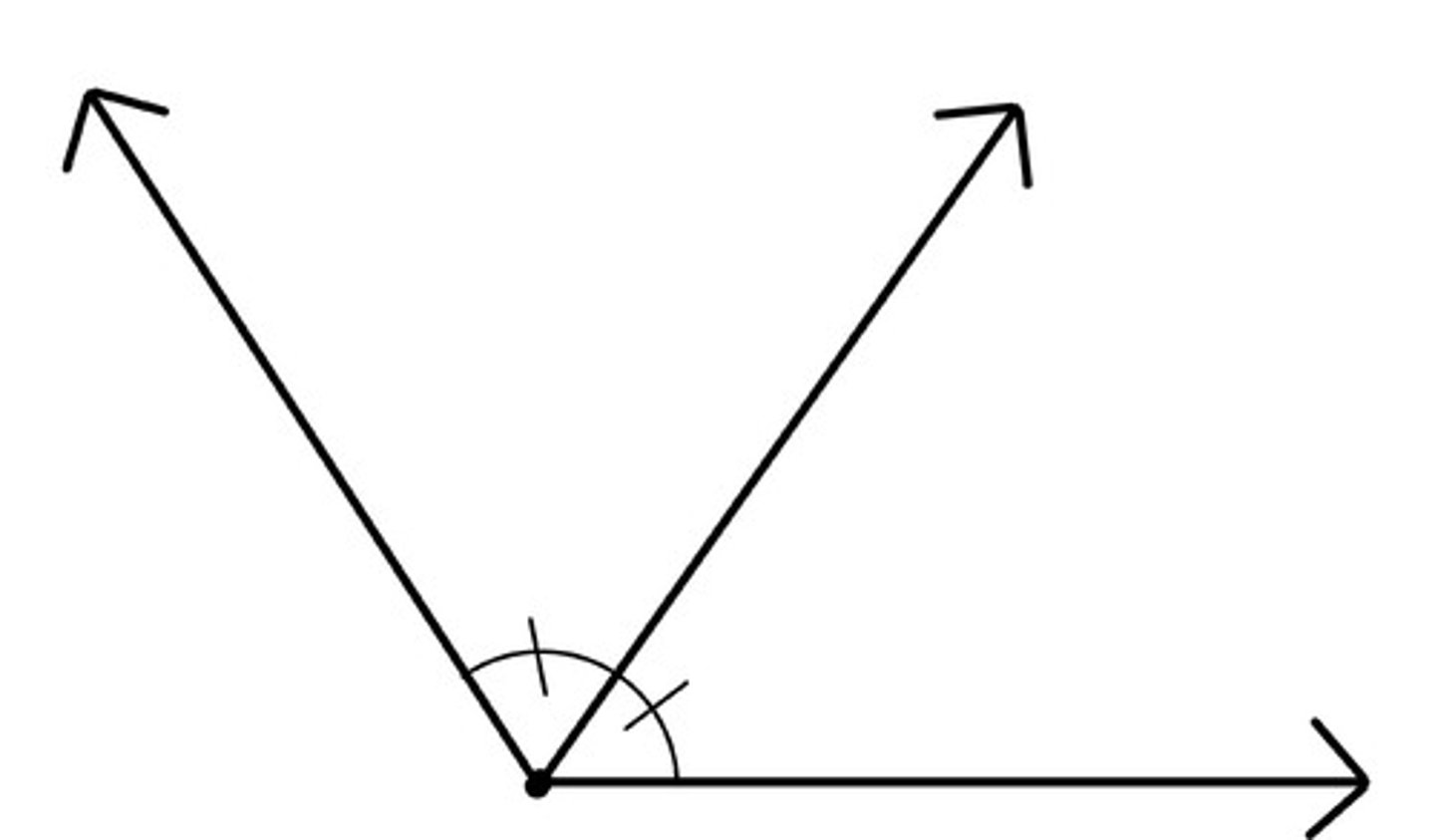
bisector of an angle
the ray that divides the angle into two congruent adjacent angles. Each of the small angles are halves of the original angle.
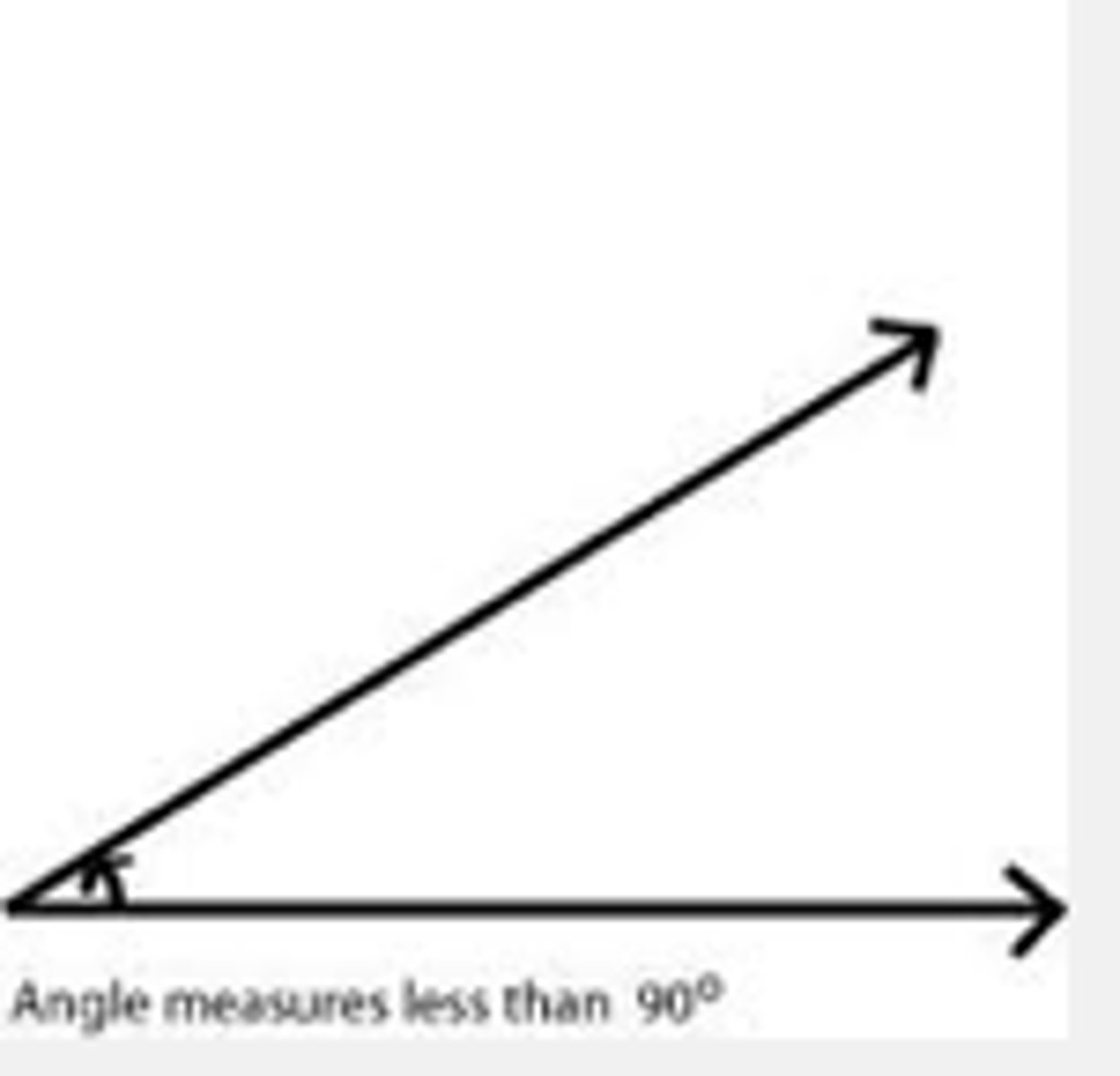
acute angle
an angle that measures less than 90 degrees
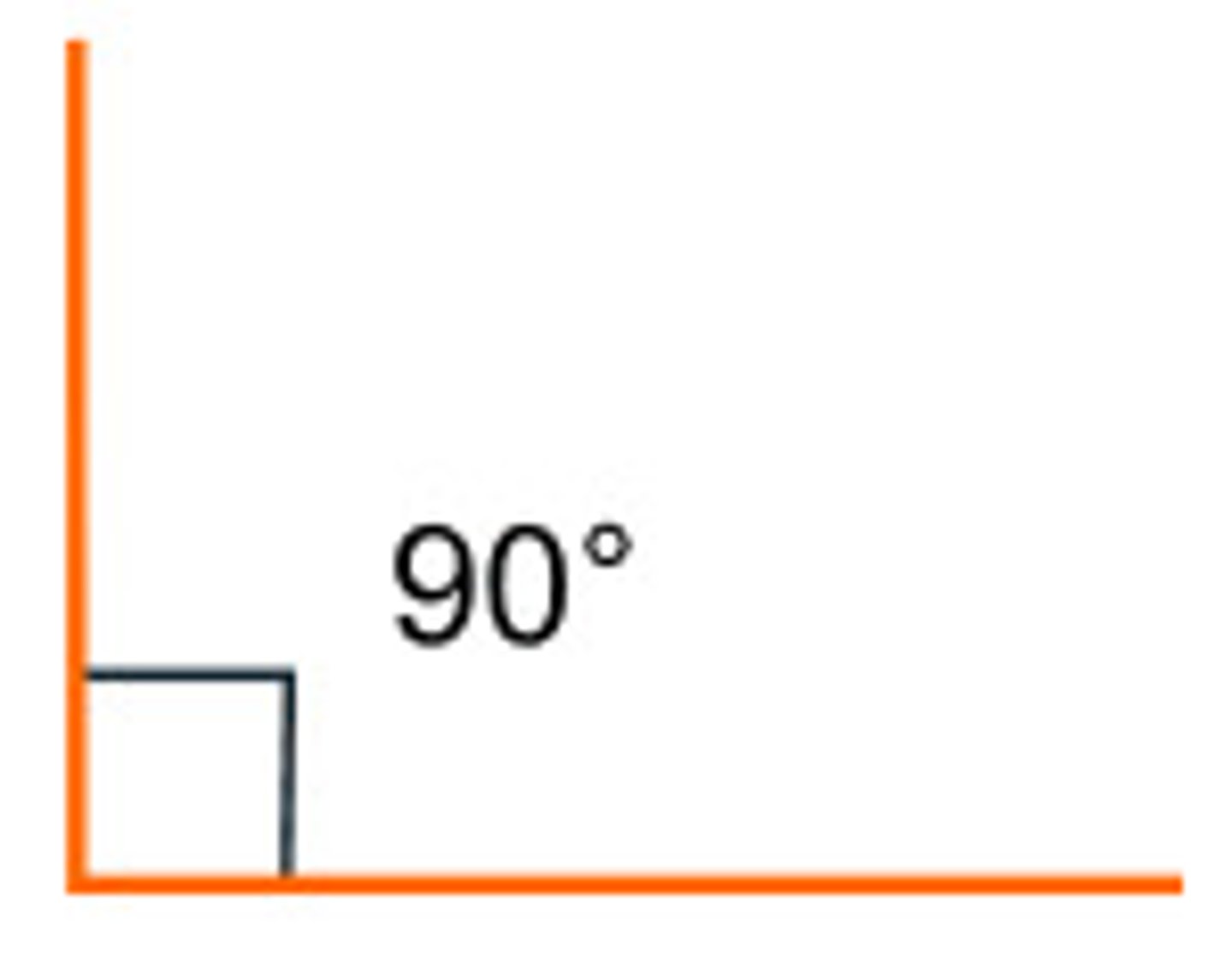
right angle
an angle that measures 90 degrees
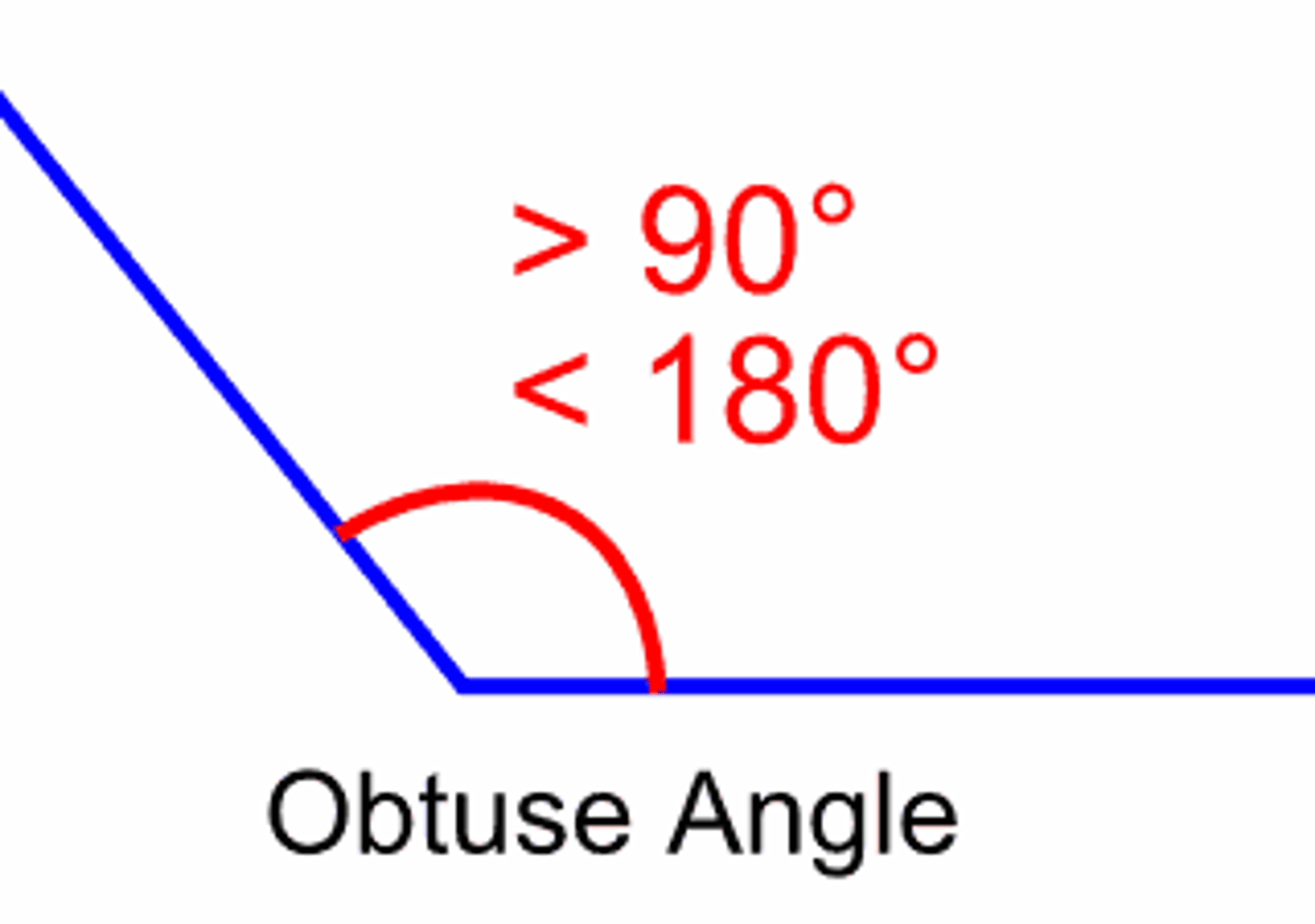
obtuse angle
An angle that measures more than 90 degrees but less than 180 degrees
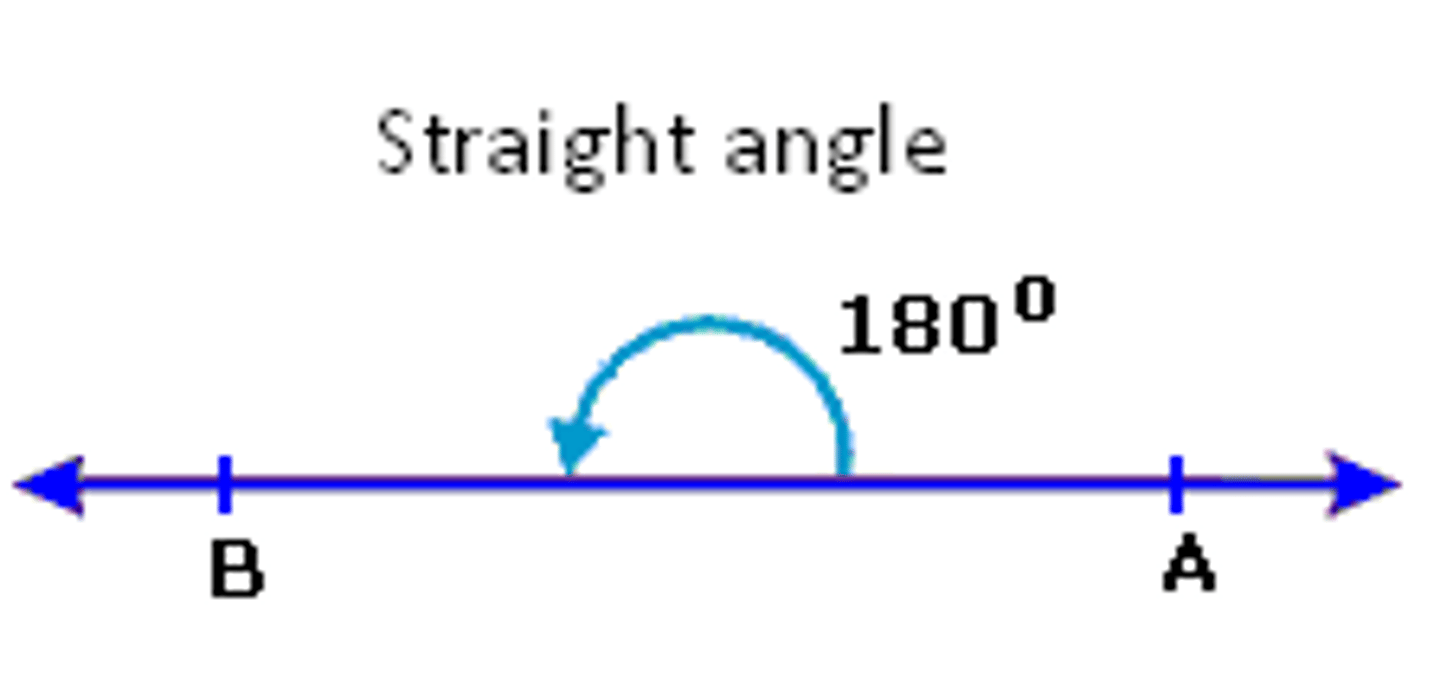
straight angle
an angle that measures 180 degrees
Symmetric Property of Equality
if a=b, then b=a

Transitive Property of Equality
If a=b and b=c, then a=c

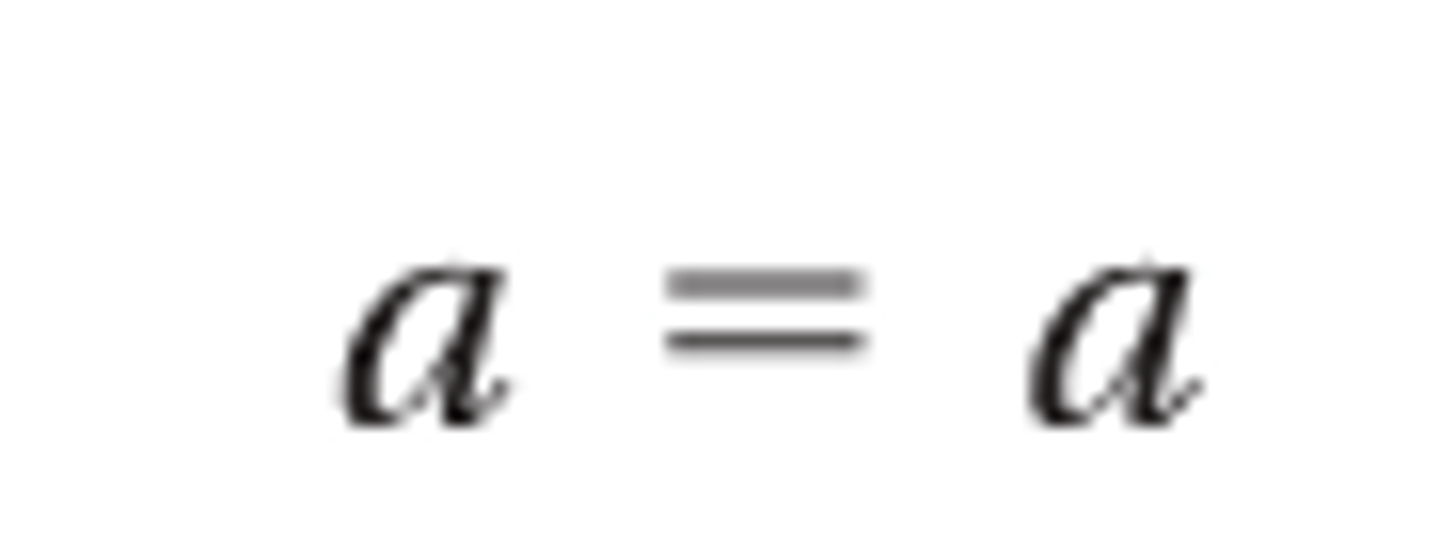
Reflexive Property of Equality
For any real number a, a=a
+ prop. of = (Addition property of equality)
If a=b and c=d, then a+c=b+d
- prop. of = (Subtraction property of equality)
If a=b, then a-c = b-c
x prop. of = (Multiplication property of equality)
If a=b, then ac=bc
÷ prop. of = (division property of equality)
If a=b, then a/c=b/c
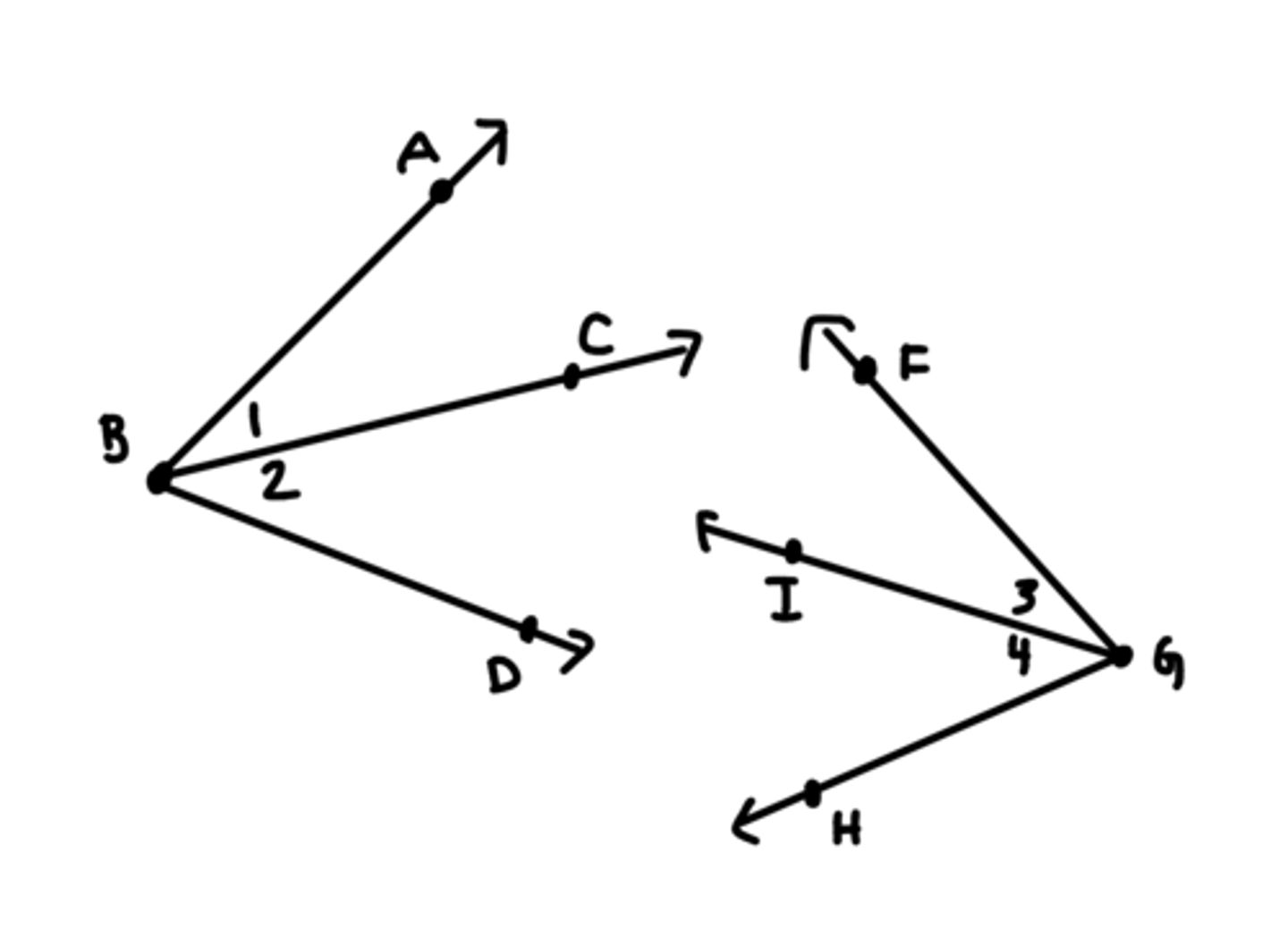
Sums of ≅ seg/∠ are ≅
Sum of congruent segments (or angles) are congruent.
(If ∠1≅∠3 and ∠2≅∠4, then ∠ABD≅∠FGH)
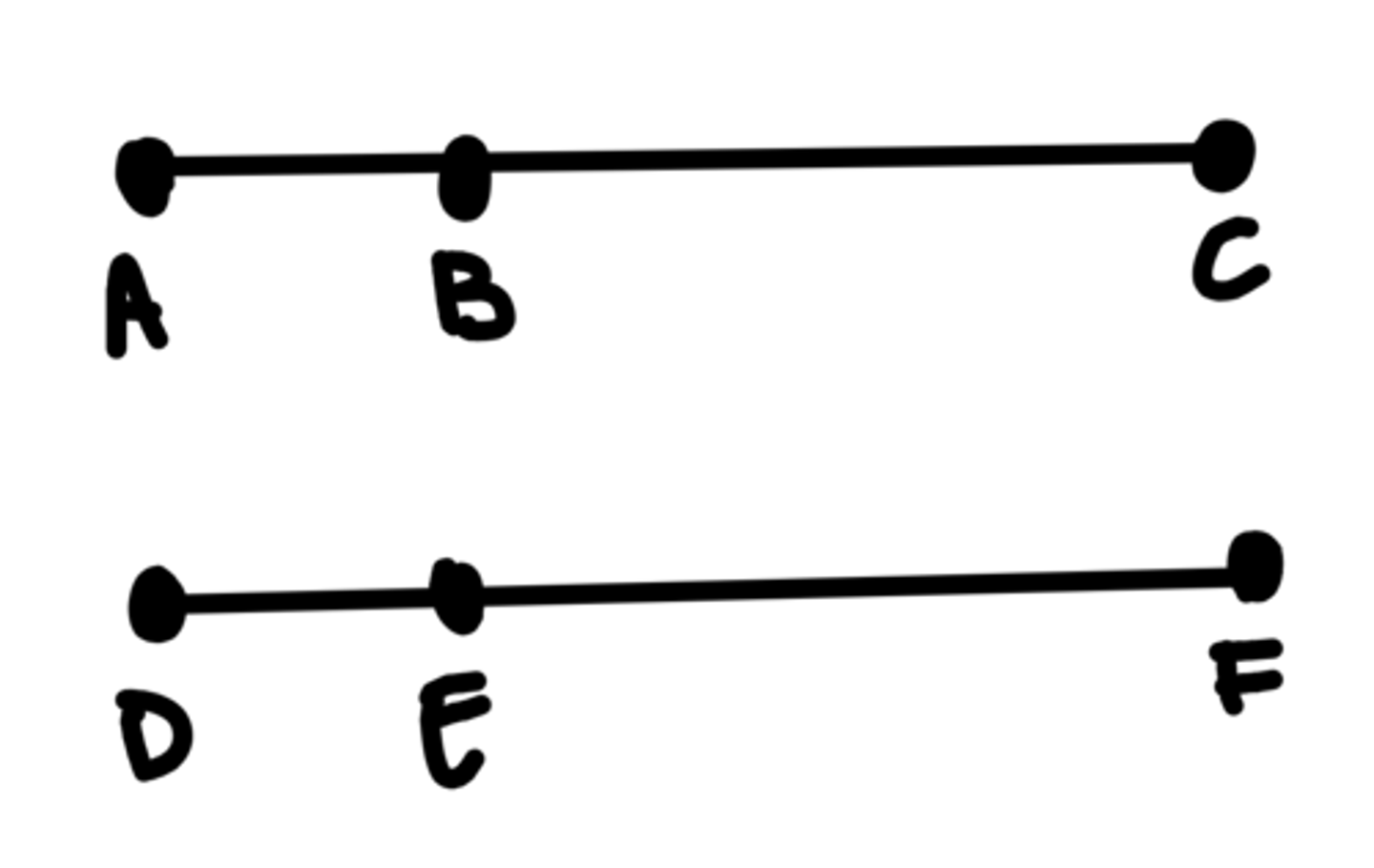
Diff's of ≅ seg/∠ are ≅
Differences of congruent segments (or angles) are congruent.
(If AC≅DF and AB≅DE, then BC≅EF)
Multiples (double) of ≅ seg/∠ are ≅
Multiples of congruent segments (or angles) are congruent.
(If ∠JKO≅∠NPS, ∠JKM=2∠JKO and ∠NPR=2∠NPS, then ∠JKM≅∠NPR)
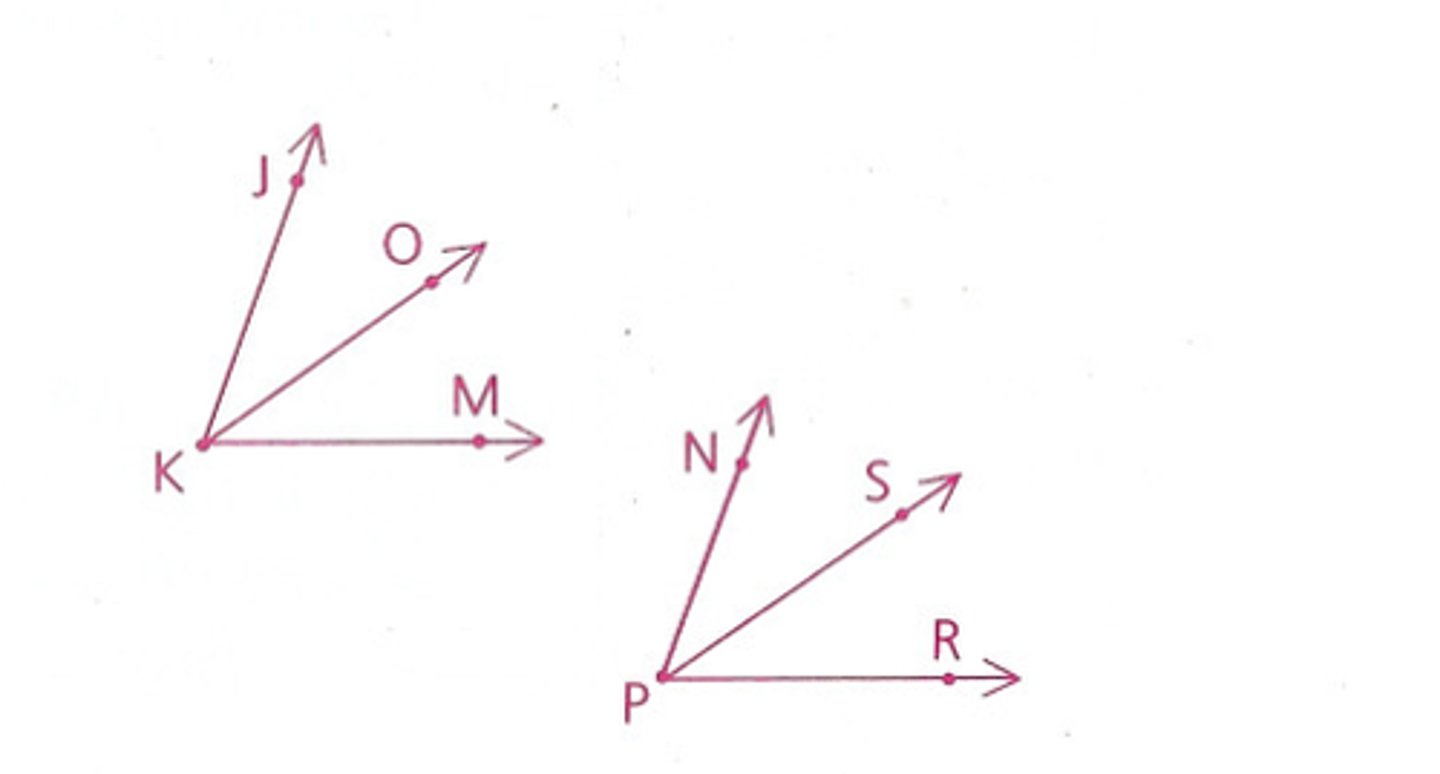
Quotients (halves) of ≅ seg/∠ are ≅
Half of congruent segments (or angles) are congruent
linear pair
A pair of adjacent angles whose noncommon sides form a straight angle
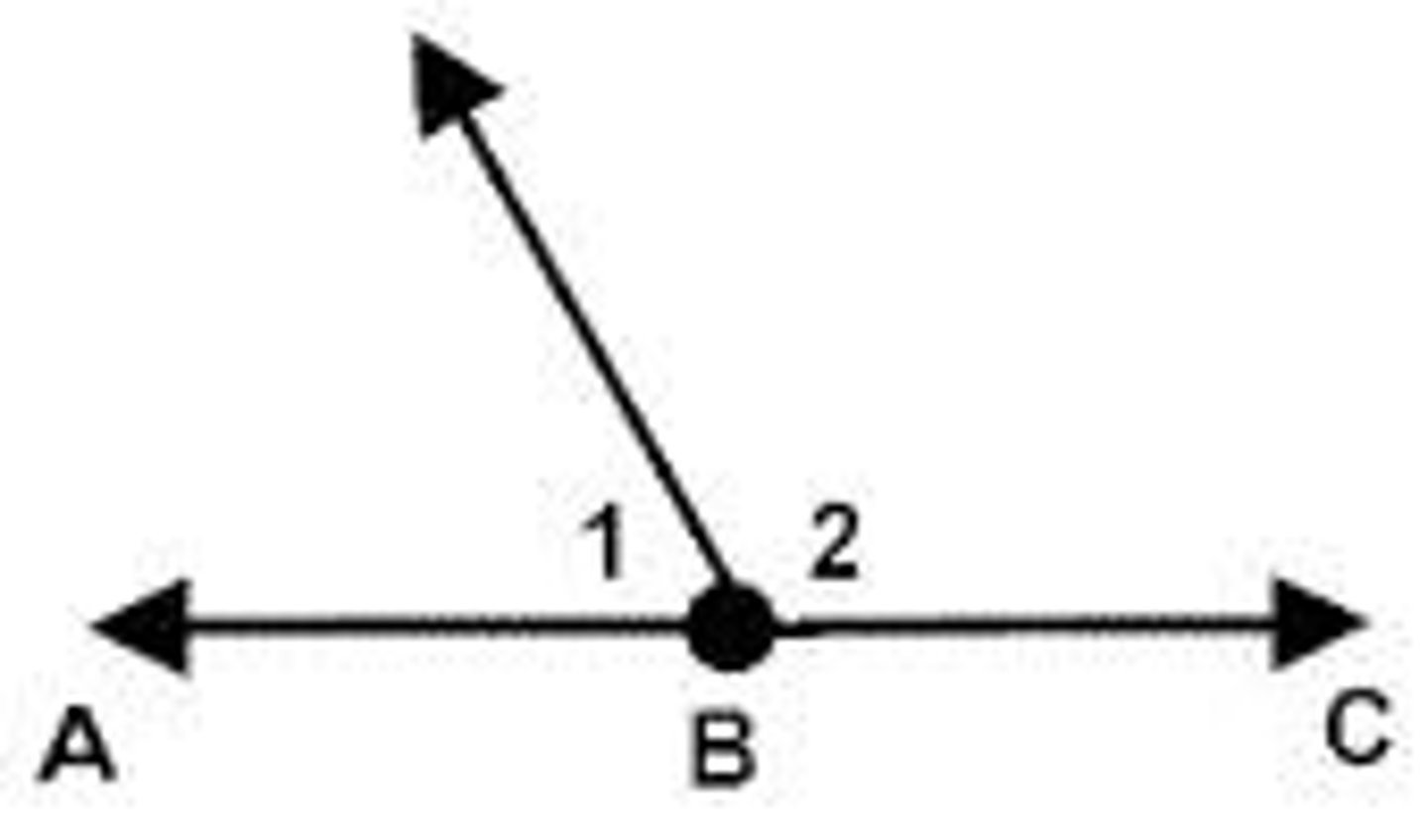
Lin pair → 180
If two angles form a linear pair, their sum is 180 degrees
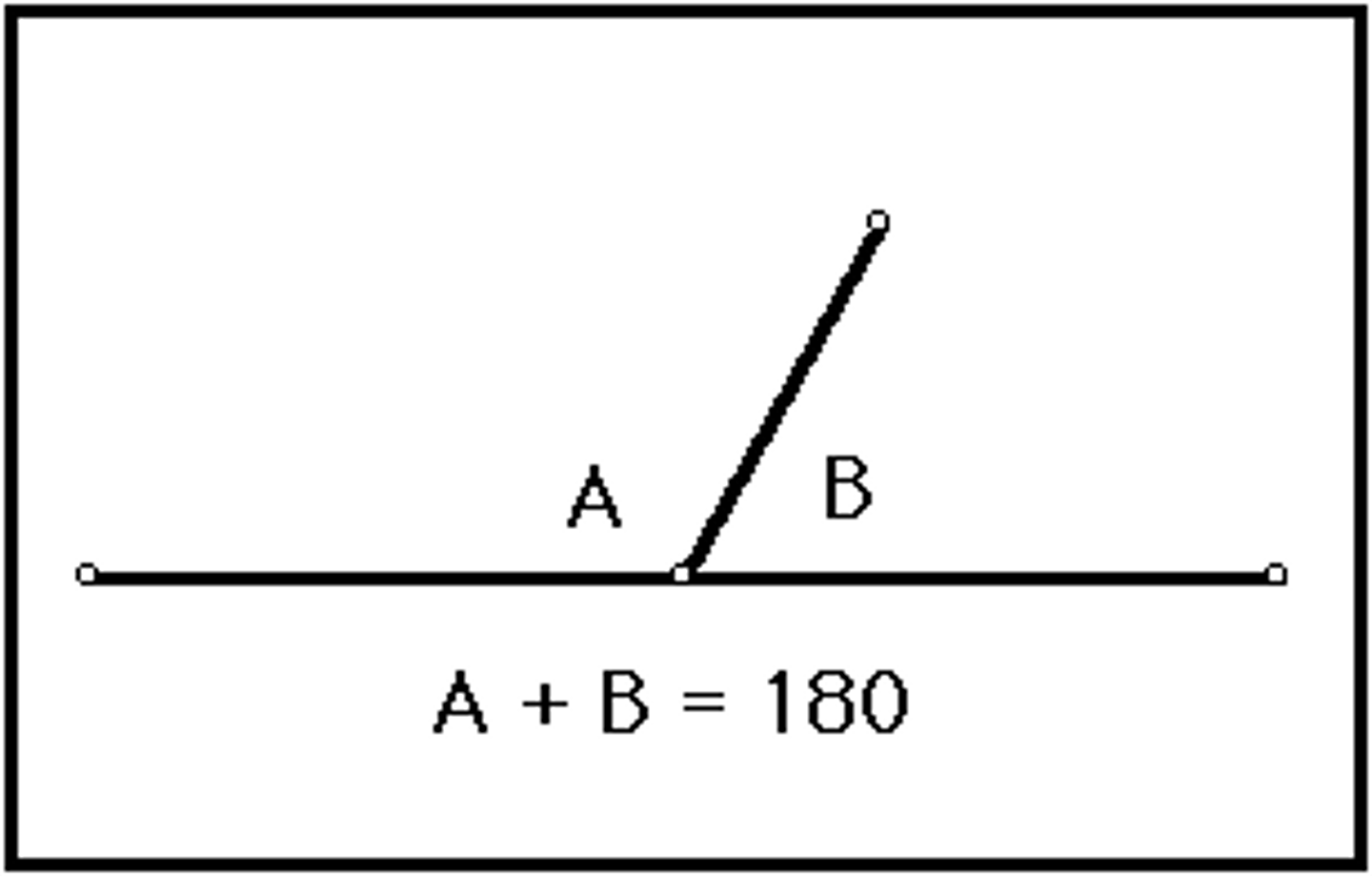
supplementary angles
Two angles whose sum is 180 degrees
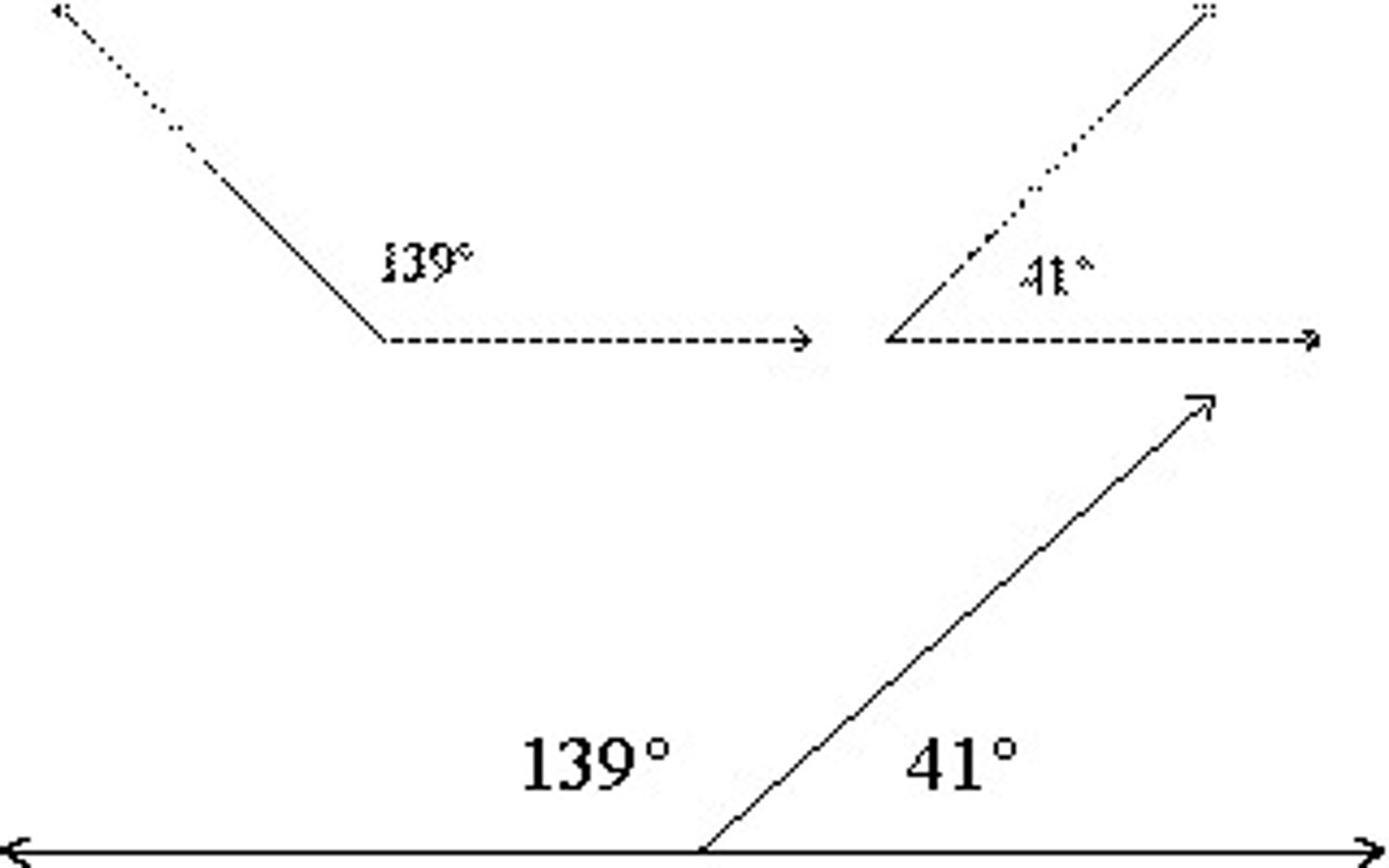
lin pair → supp
If two angles form a linear pair, they are supplementary.
Supp's of ≅∠'s are ≅
Supplementary of congruent (or equal) angles are congruent
complementary angles
Two angles whose sum is 90 degrees
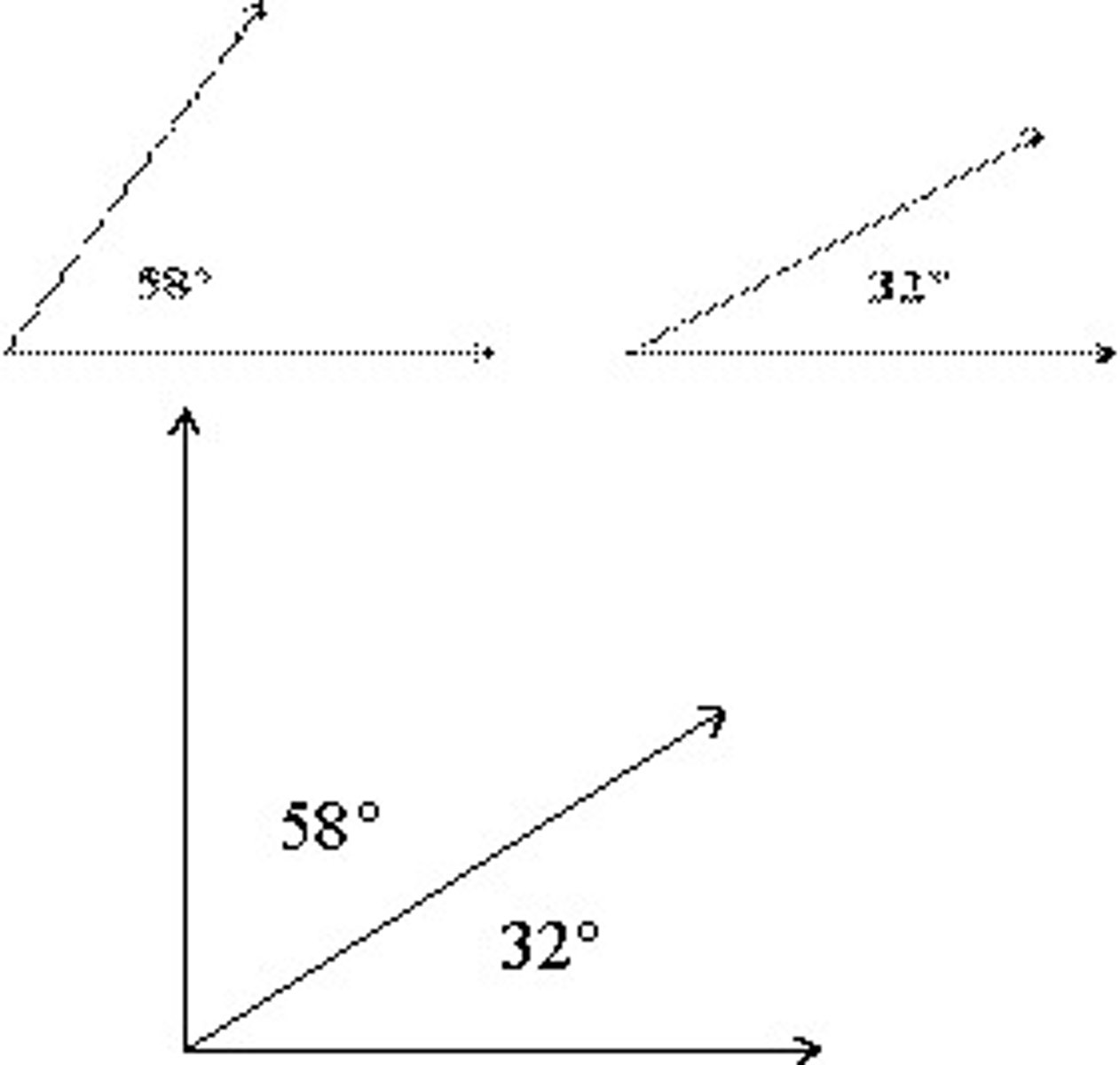
Comp's of ≅∠'s are ≅
Complementary of congruent (or equal) angles are congruent
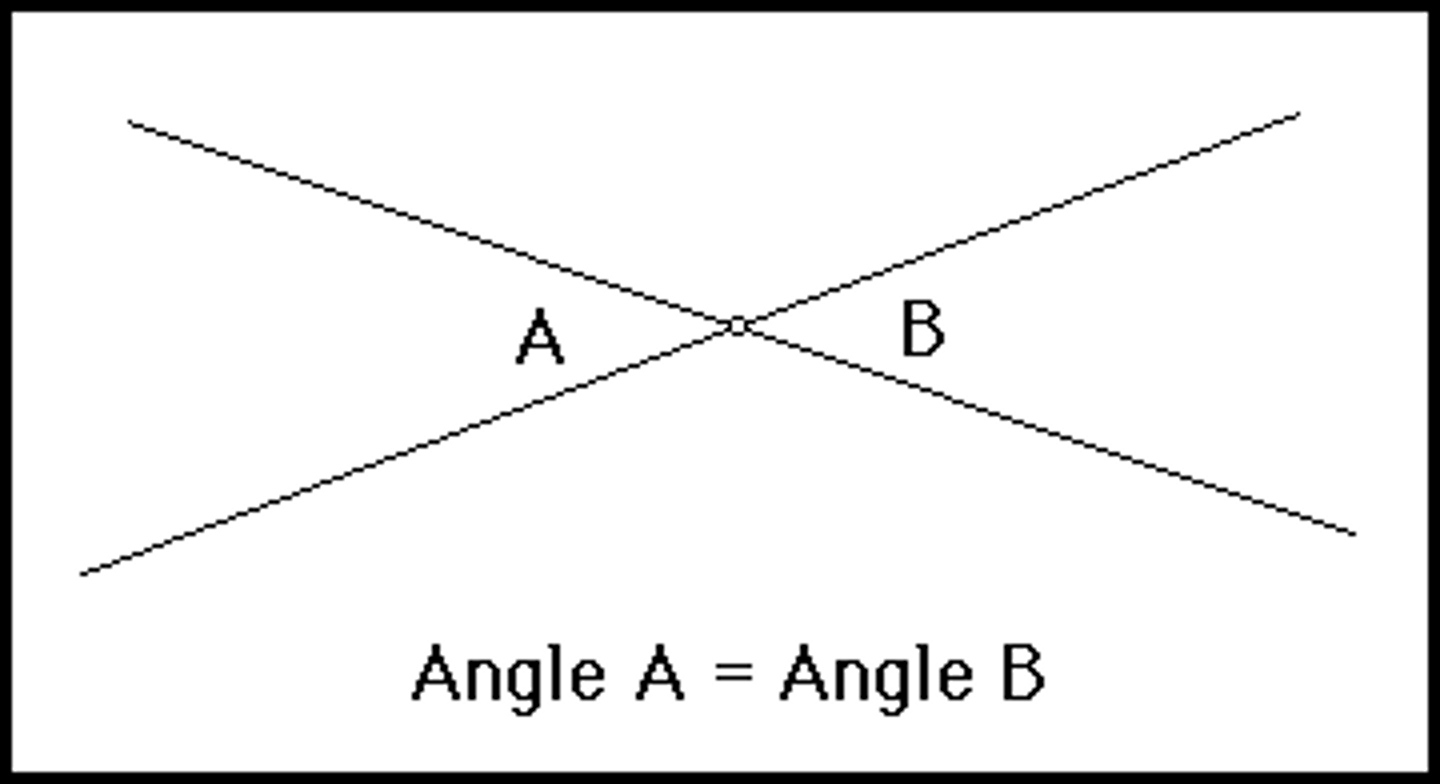
vertical angles
A pair of opposite congruent angles formed by intersecting lines
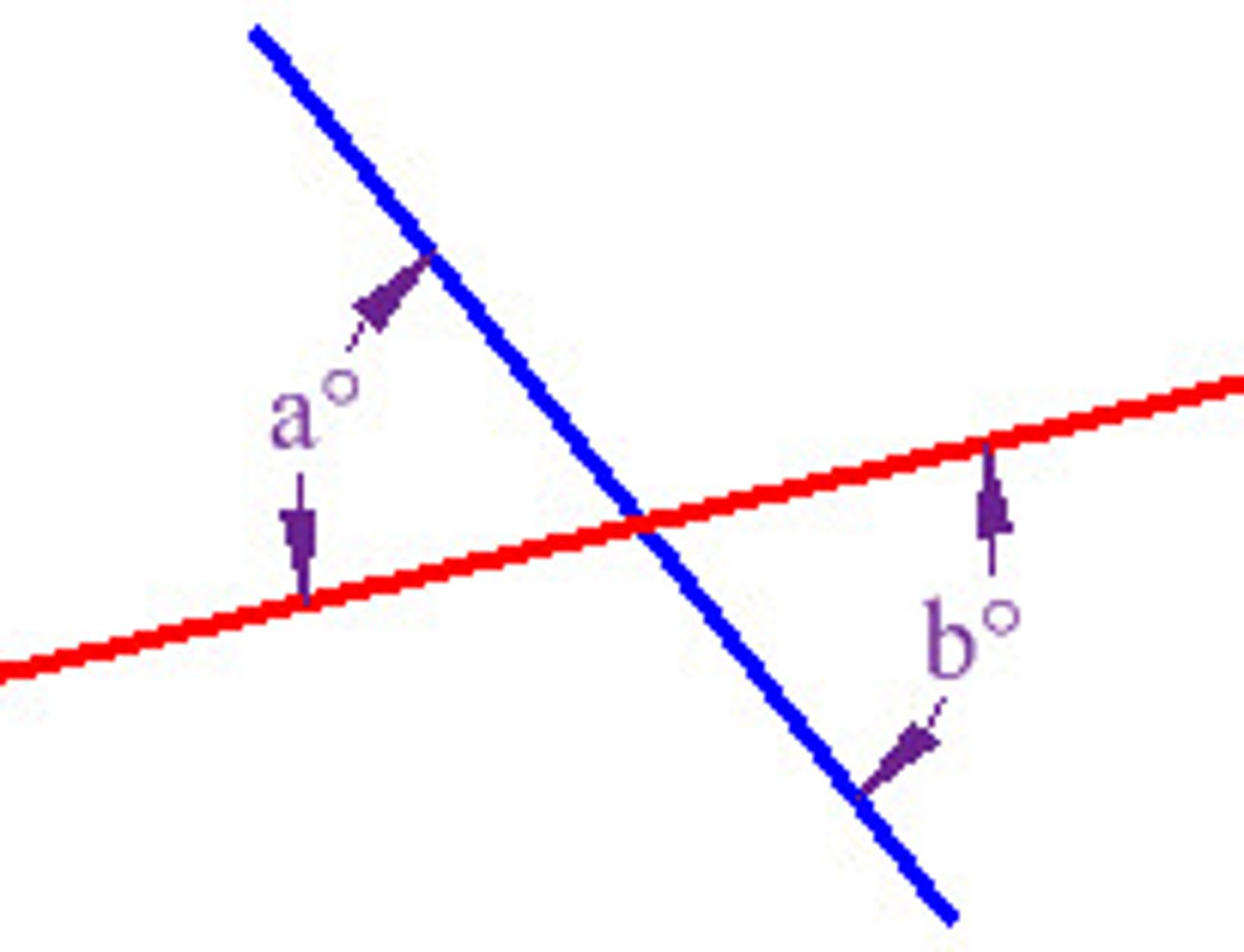
Vertical Angle Theorem (VAT)
If two angles are vertical angles, then they are congruent.
perpendicular lines
Lines that intersect to form right angles
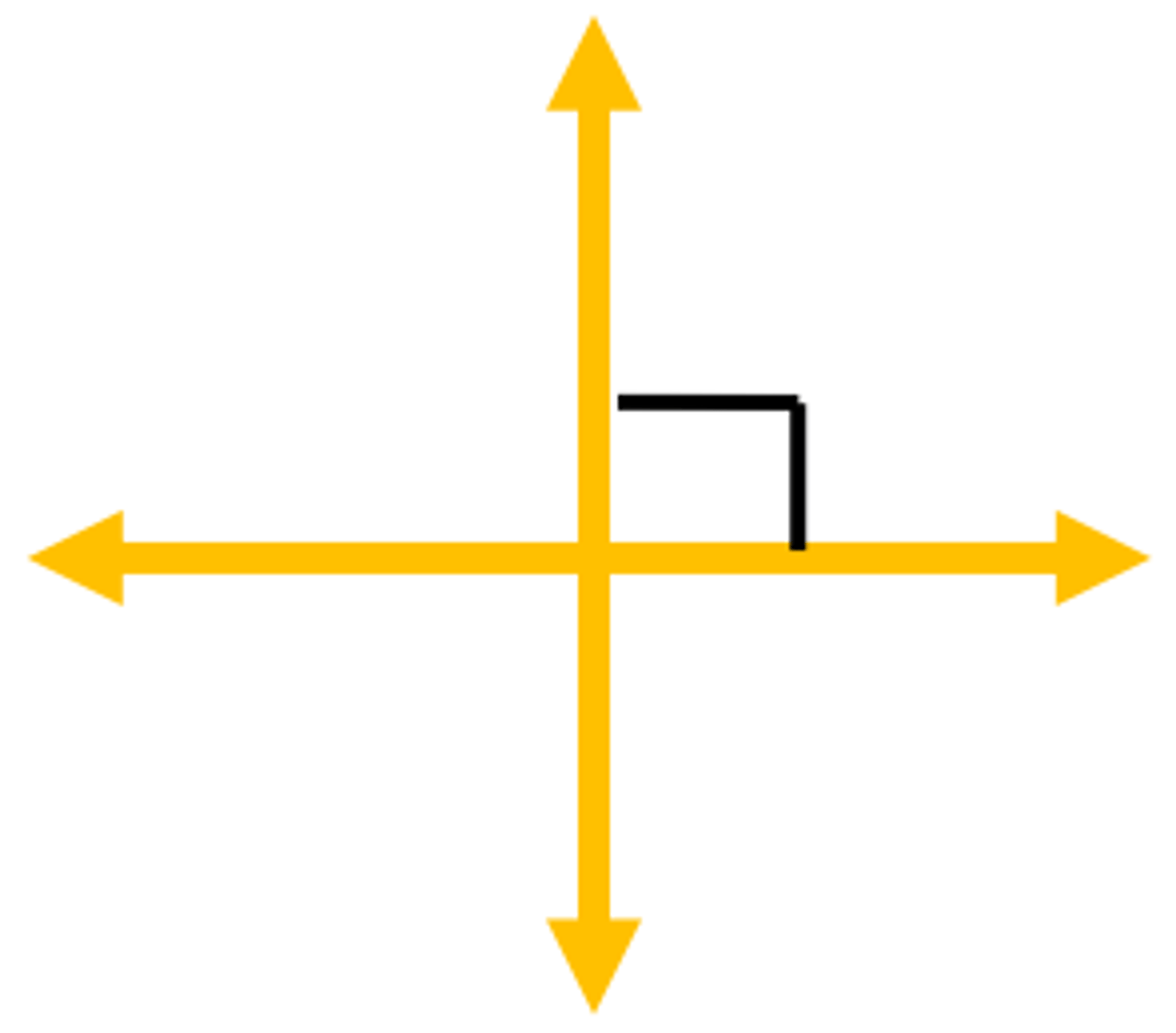
⊥ → 90 (Def of perp)
If two intersecting lines are perpendicular, they form (at least one) right angle
90 → ⊥ (Def of perp)
If two intersecting lines form (at least one) right angle, then they are perpendicular
Right angles are congruent
All right angles are congruent
⊥ → ≅ lin pair
If two lines are perpendicular, then they form congruent linear pair (adjacent angles)
≅ lin pair → ⊥
If two lines form congruent linear pair (adjacent angles), then the lines are perpendicular
⊥→ acute adj ∠'s comp. (right pair)
If the exterior rays of two adjacent angles are ⊥, then acute adj ∠'s are comp
Right pair → ⊥
If two acute adjacent ∠'s complementary, then the lines forming them are ⊥
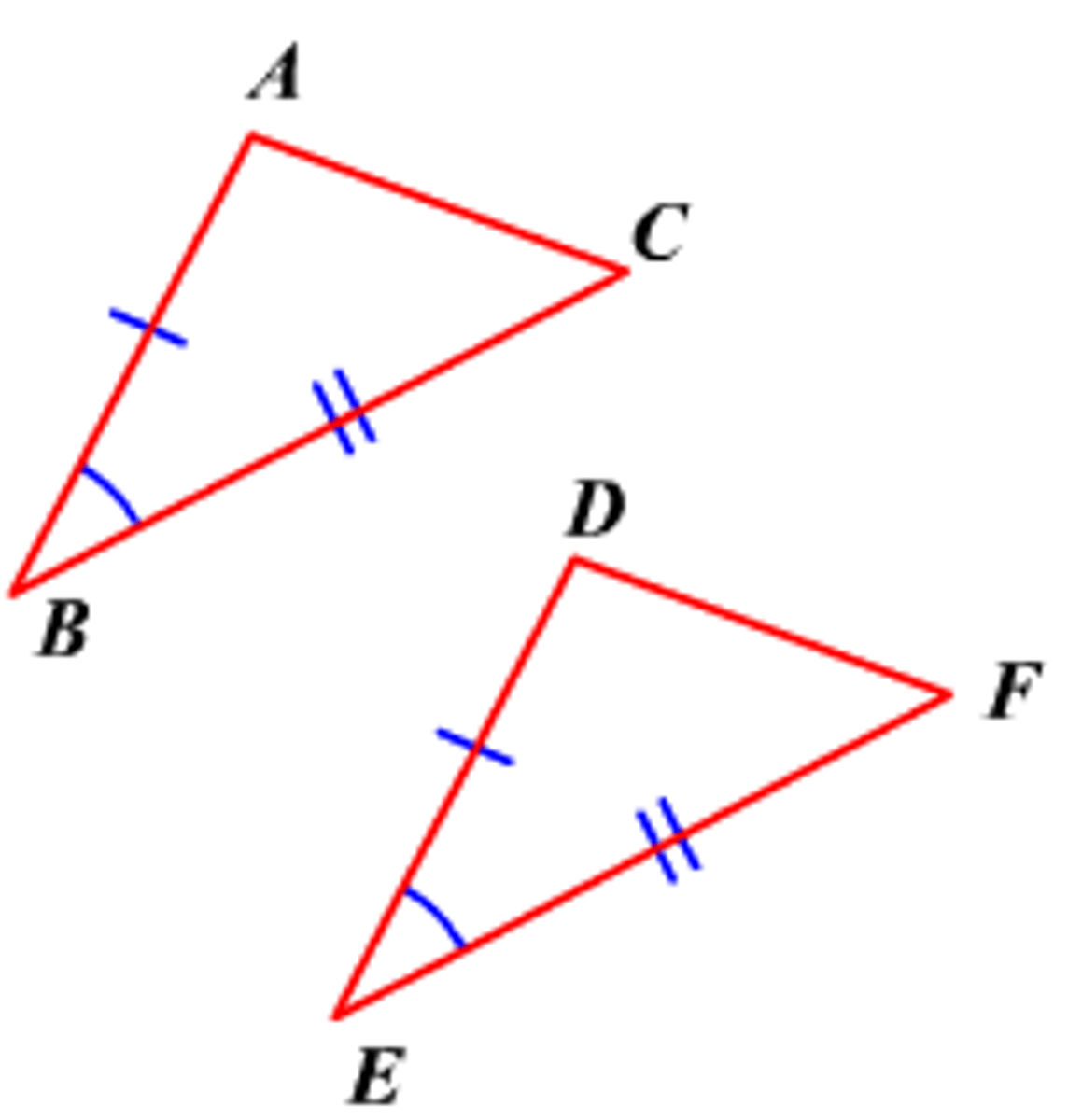
SAS ≅
Two triangles are congruent if two sides and their included angle of one triangle are congruent to the corresponding two sides and included angle of another triangle.
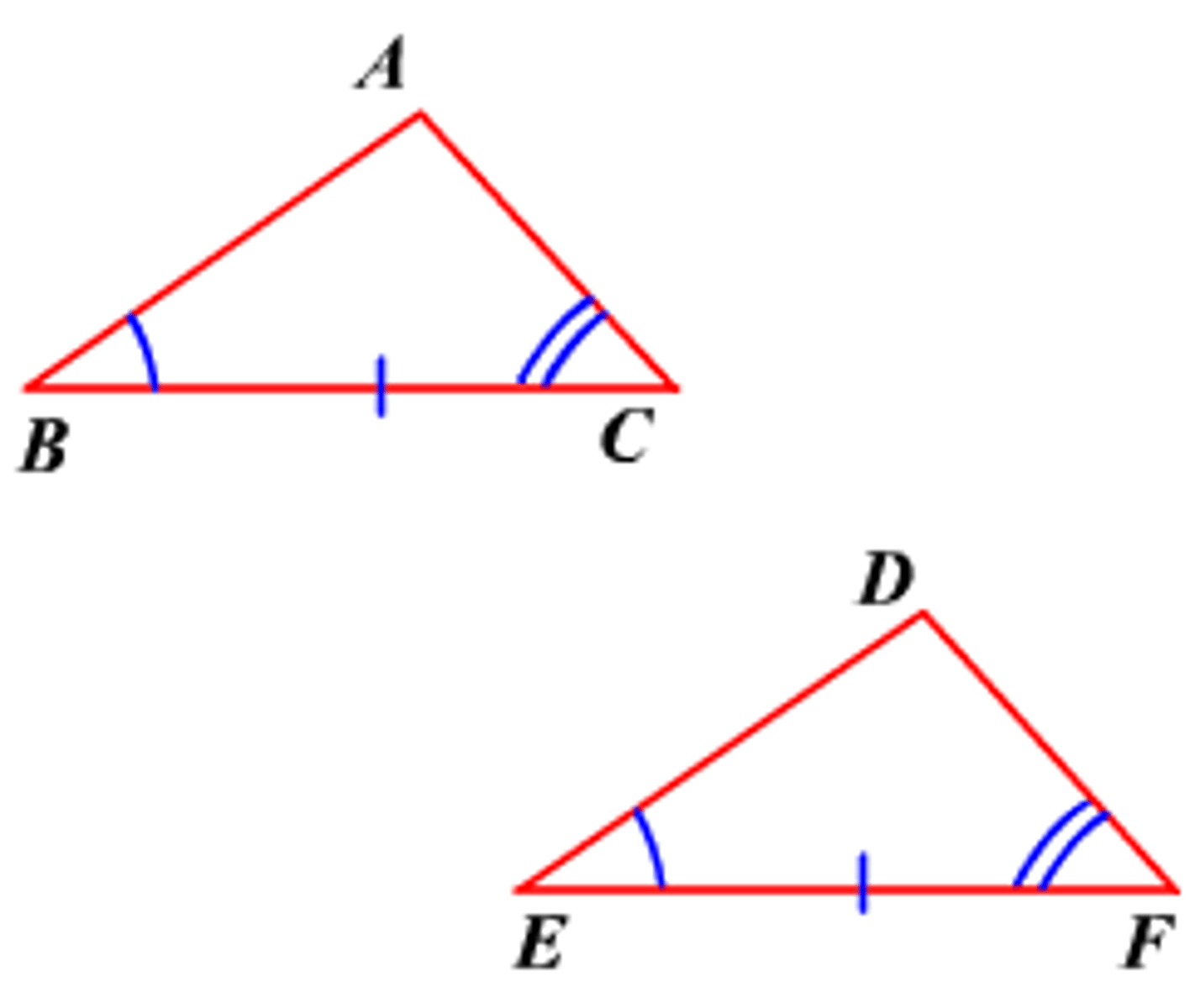
ASA ≅
If two angles and an included side of one triangle are congruent to the corresponding two angles and included side of another triangle, the two triangles are congruent.
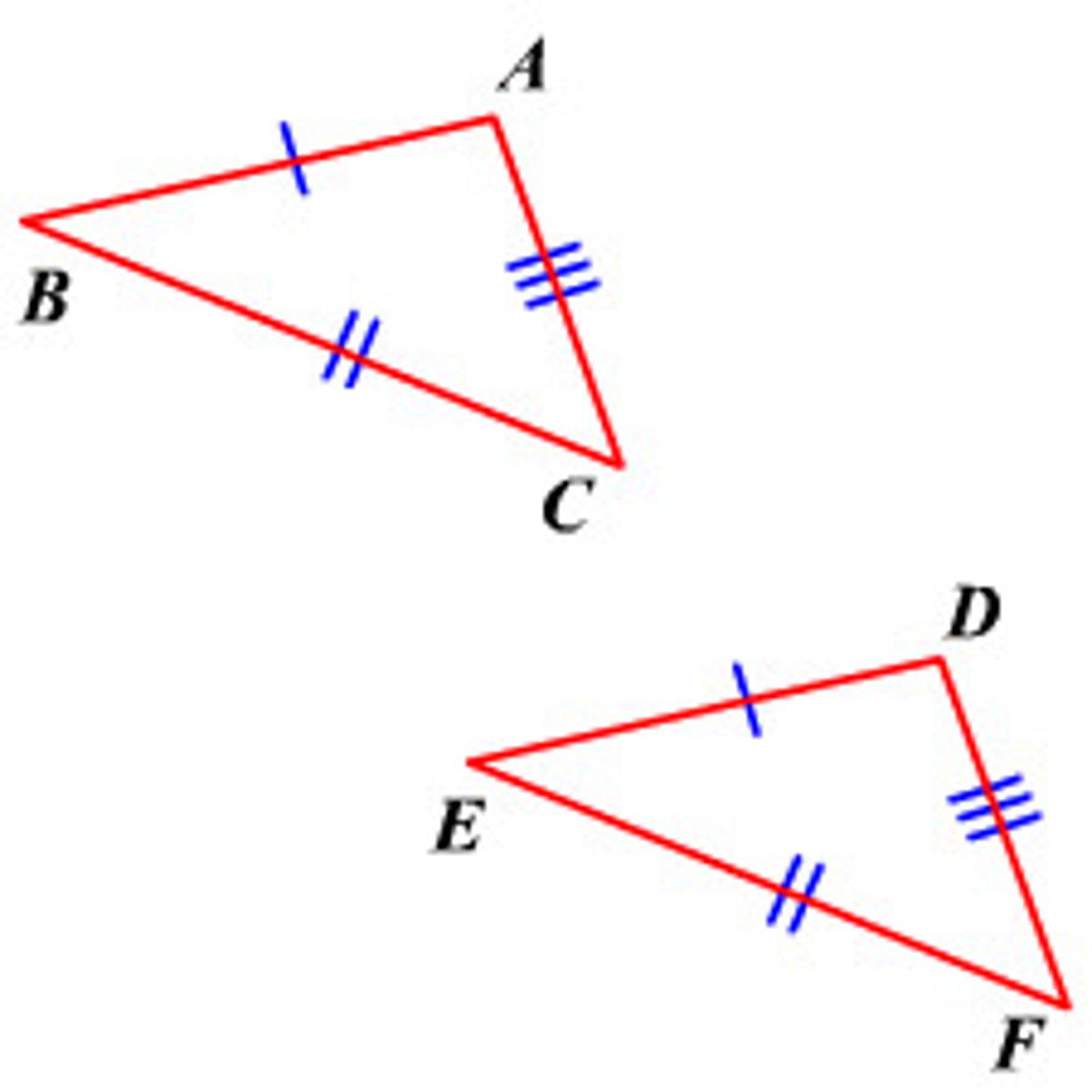
SSS ≅
Two triangles are congruent if all three pairs of corresponding sides are congruent.
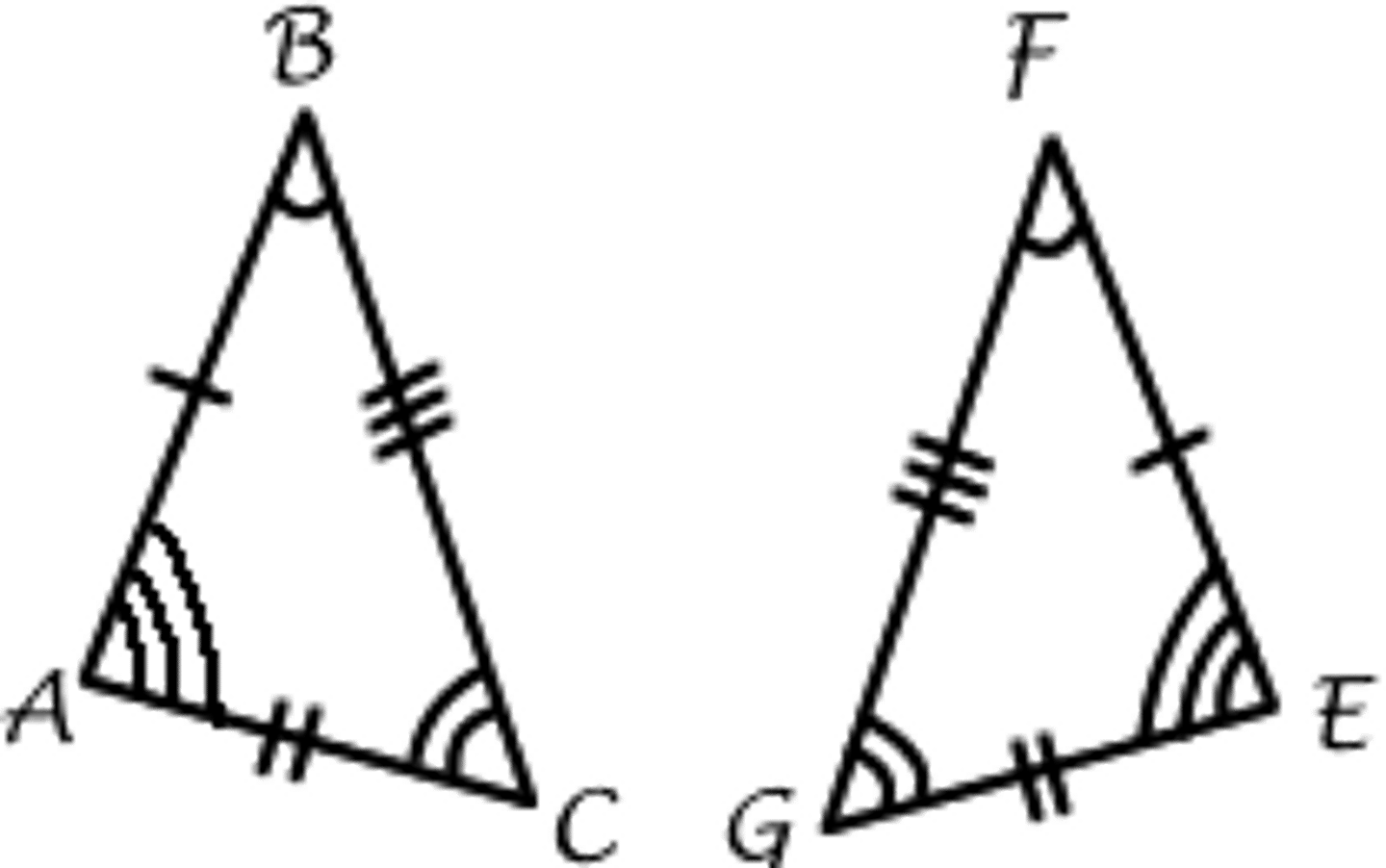
CPCTC
corresponding parts of congruent triangles are congruent
isosceles triangle
a triangle with at least two congruent sides
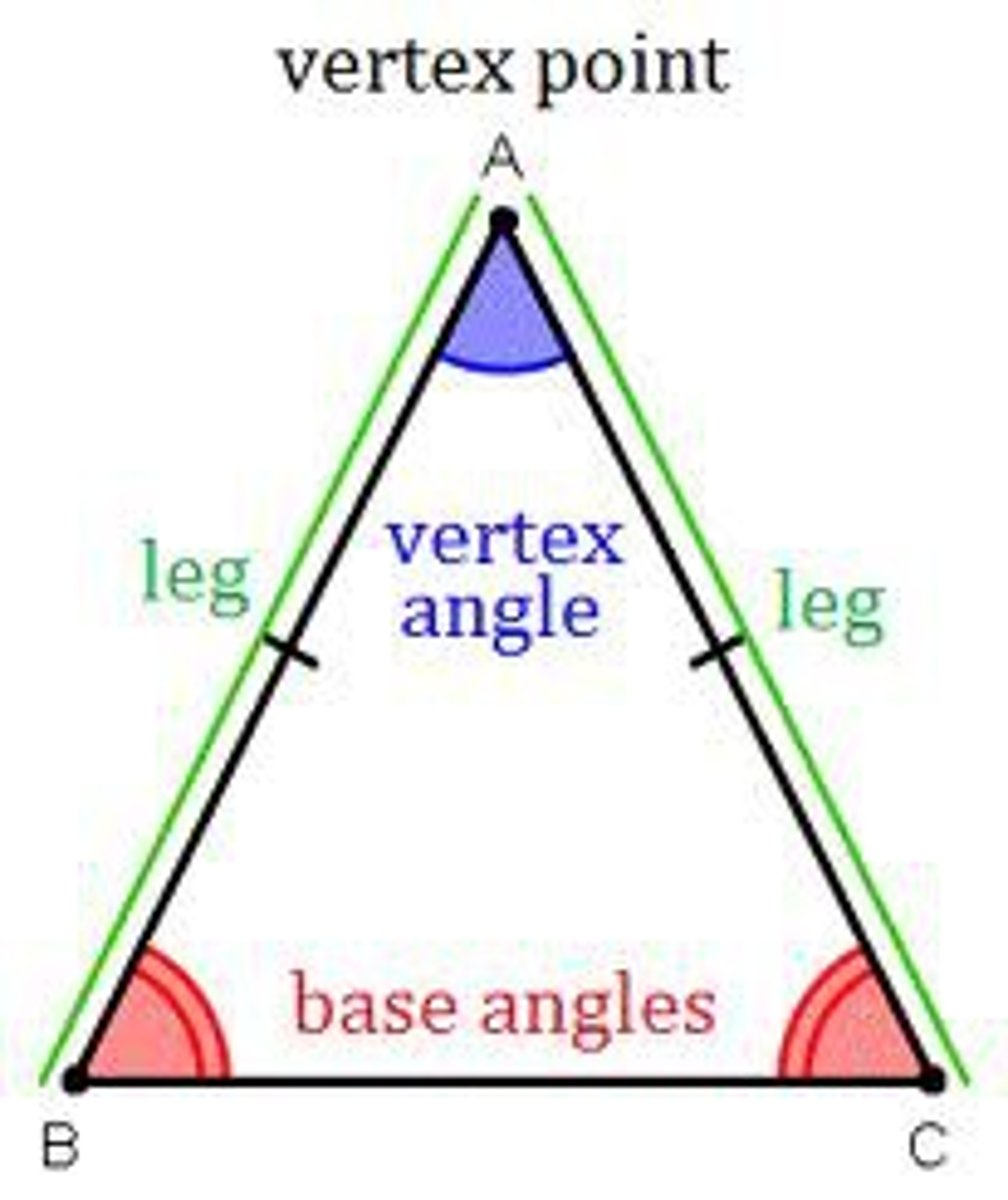
ITT
If two sides of a triangle are congruent, then the angles opposite those sides are congruent.
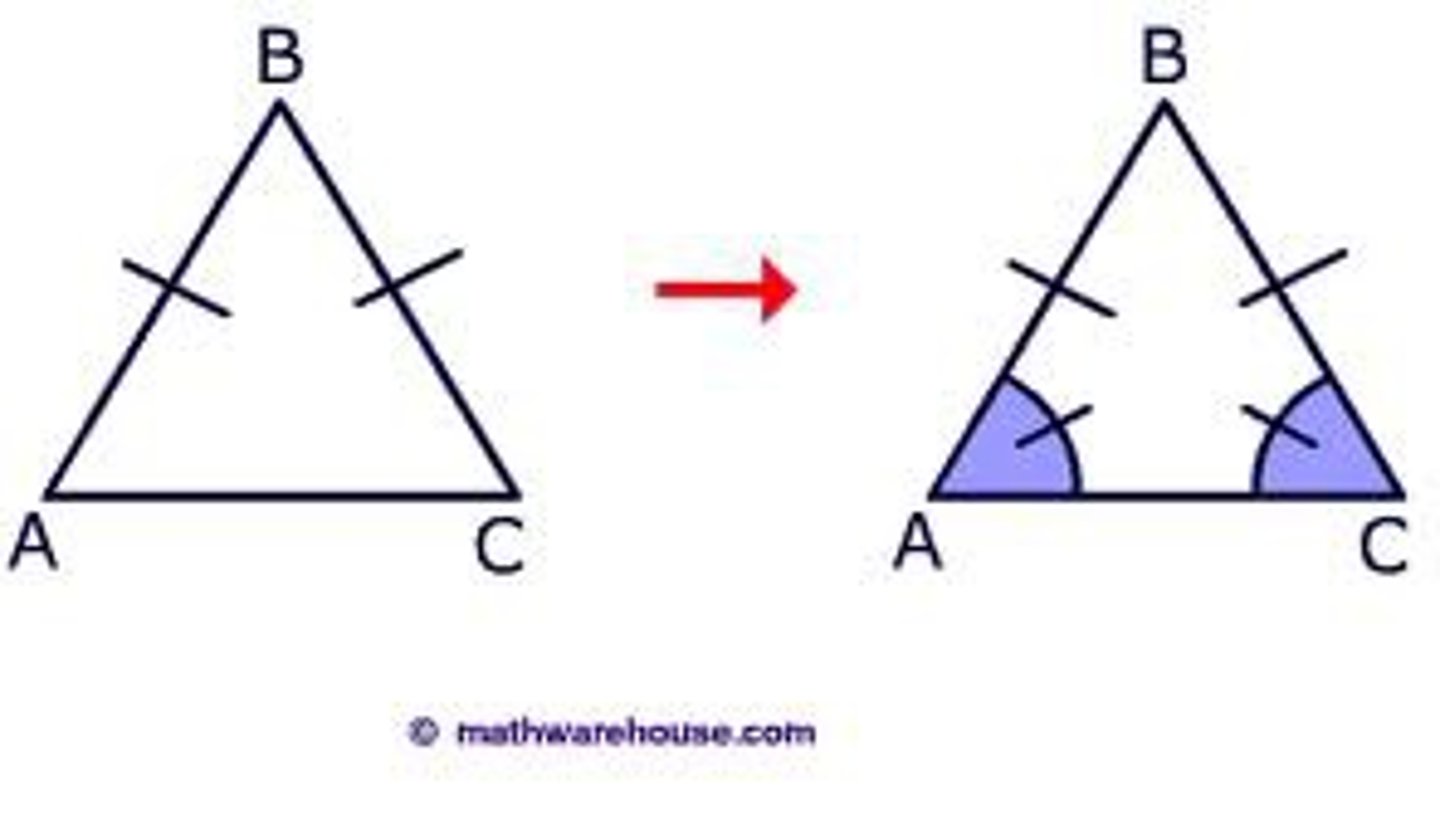
ITT Converse
If two angles of a triangle are congruent, then the sides opposite those angles are congruent.
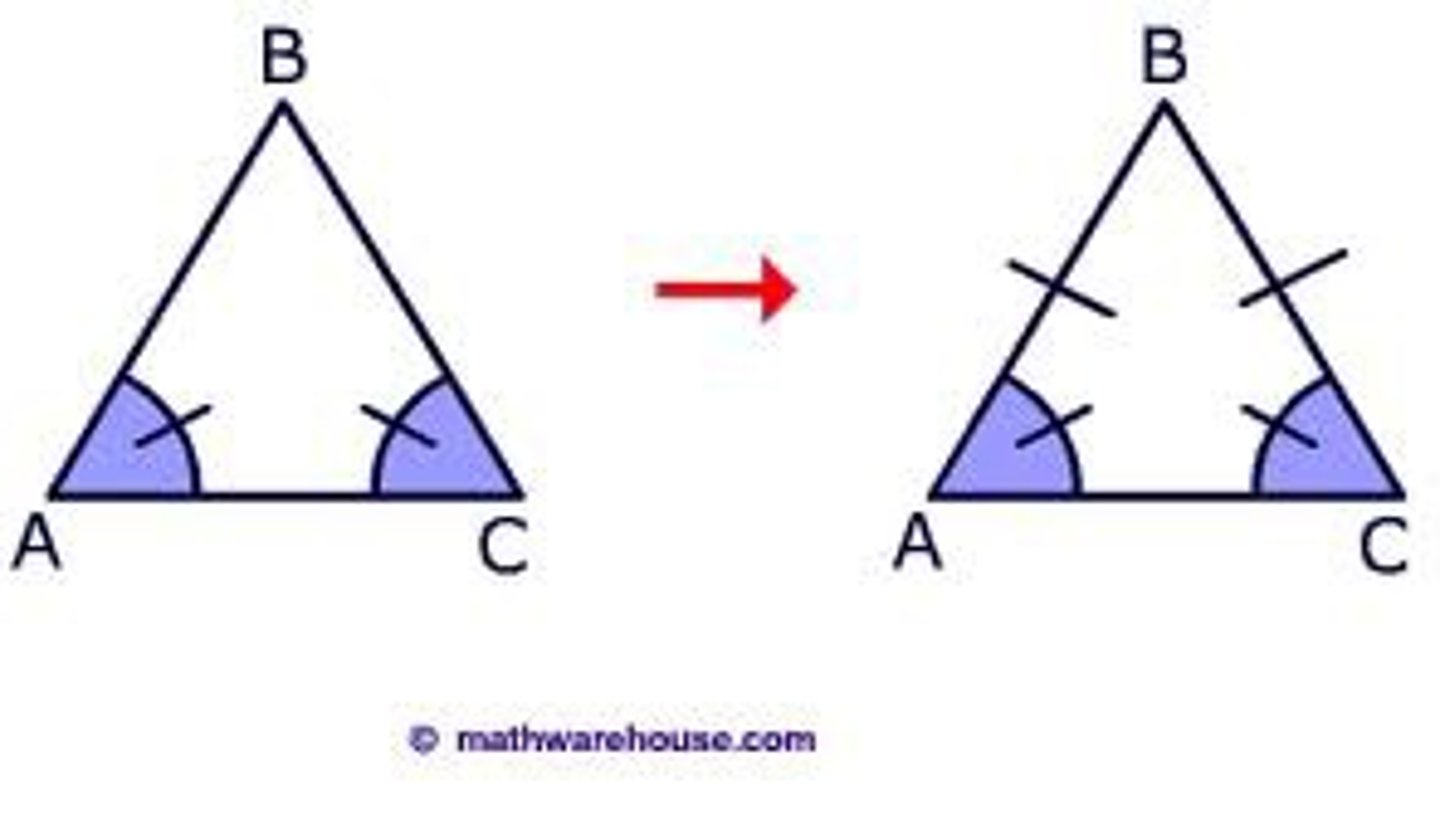
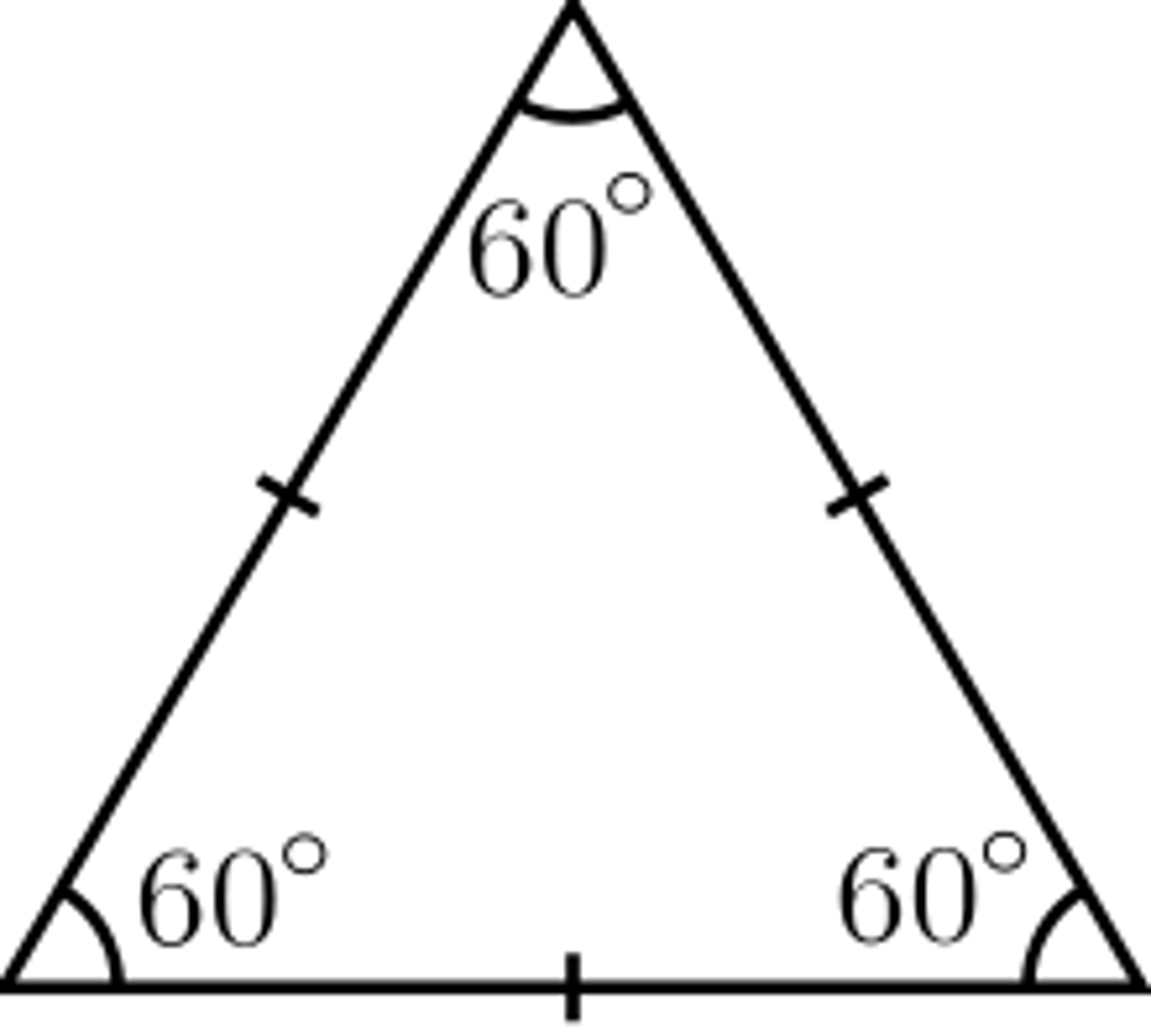
equilateral triangle
A triangle with three congruent sides
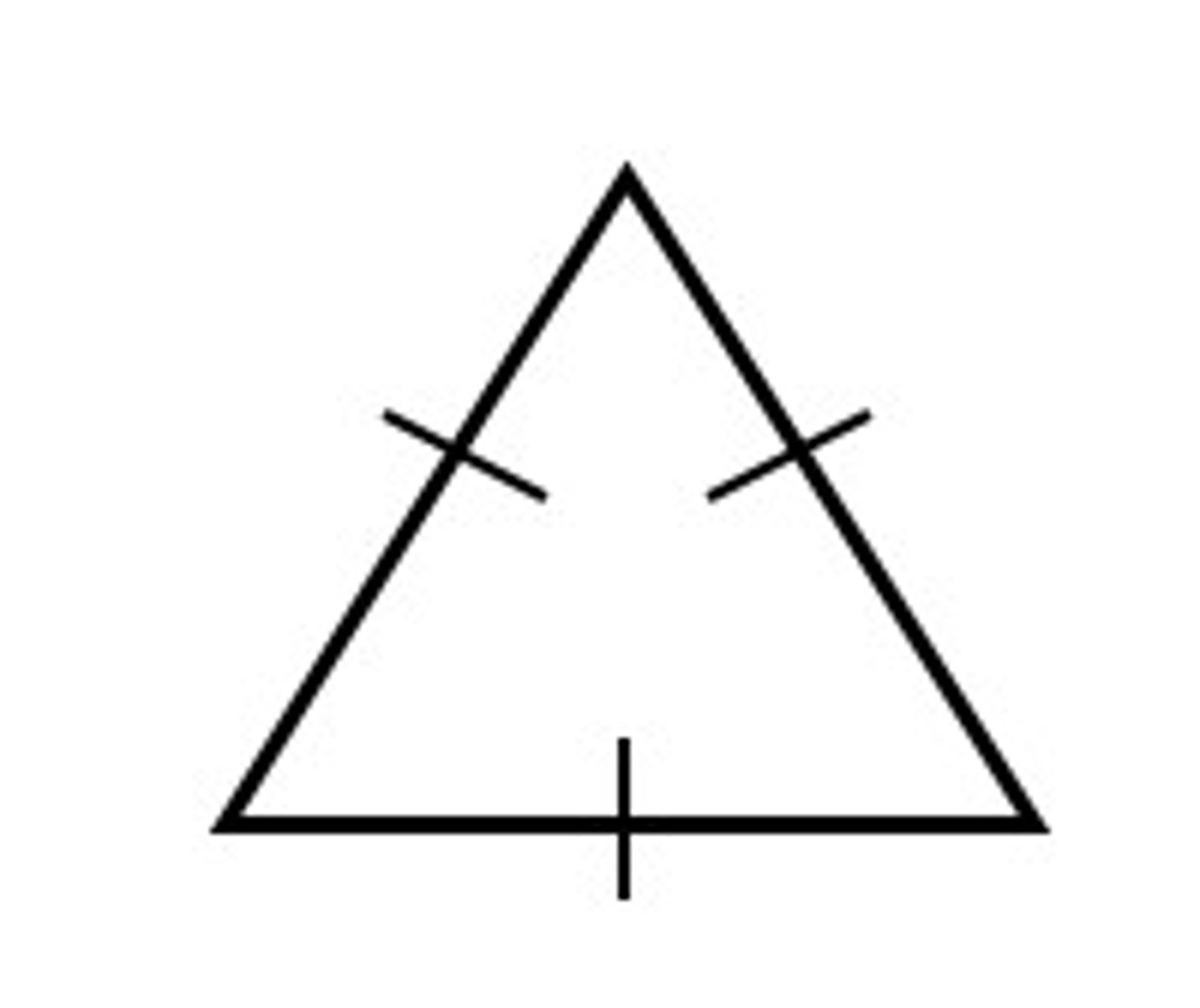
Equiangular Triangle Corollary
Each angle of an equiangular triangle has measure 60
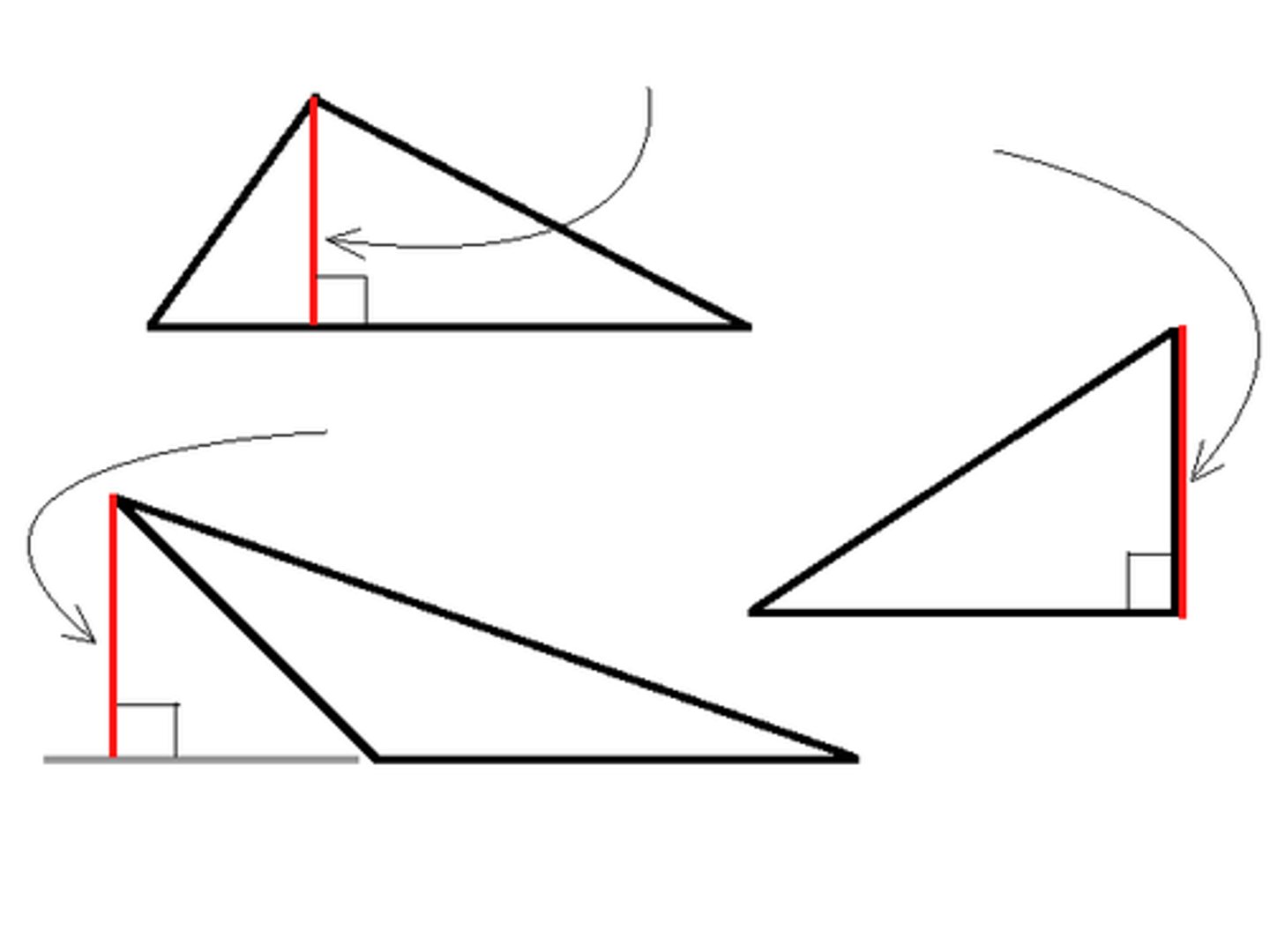
altitude of a triangle
the perpendicular segment from a vertex to the opposite side or to the line that contains the opposite side
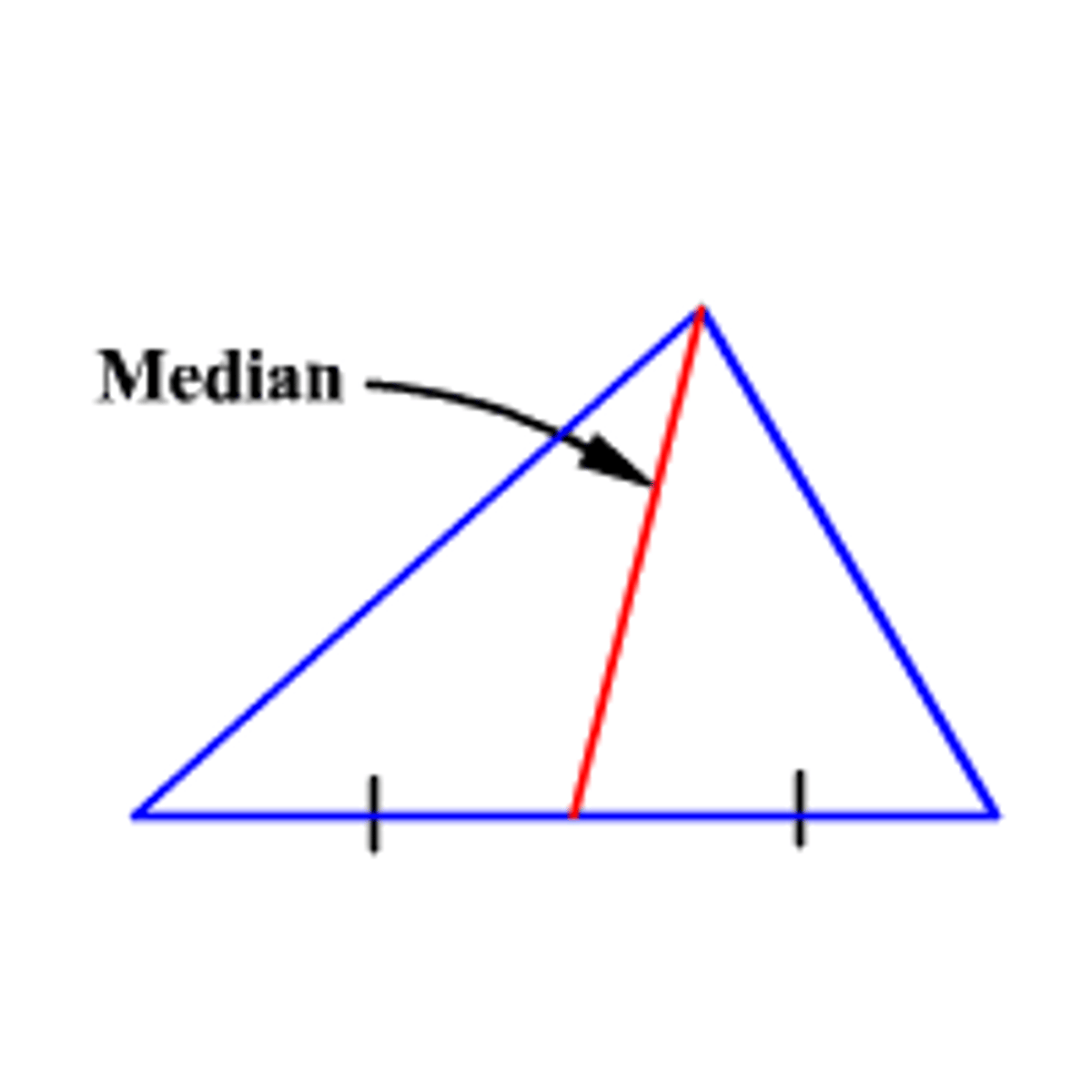
median of a triangle
a segment from a vertex to the midpoint of the opposite side
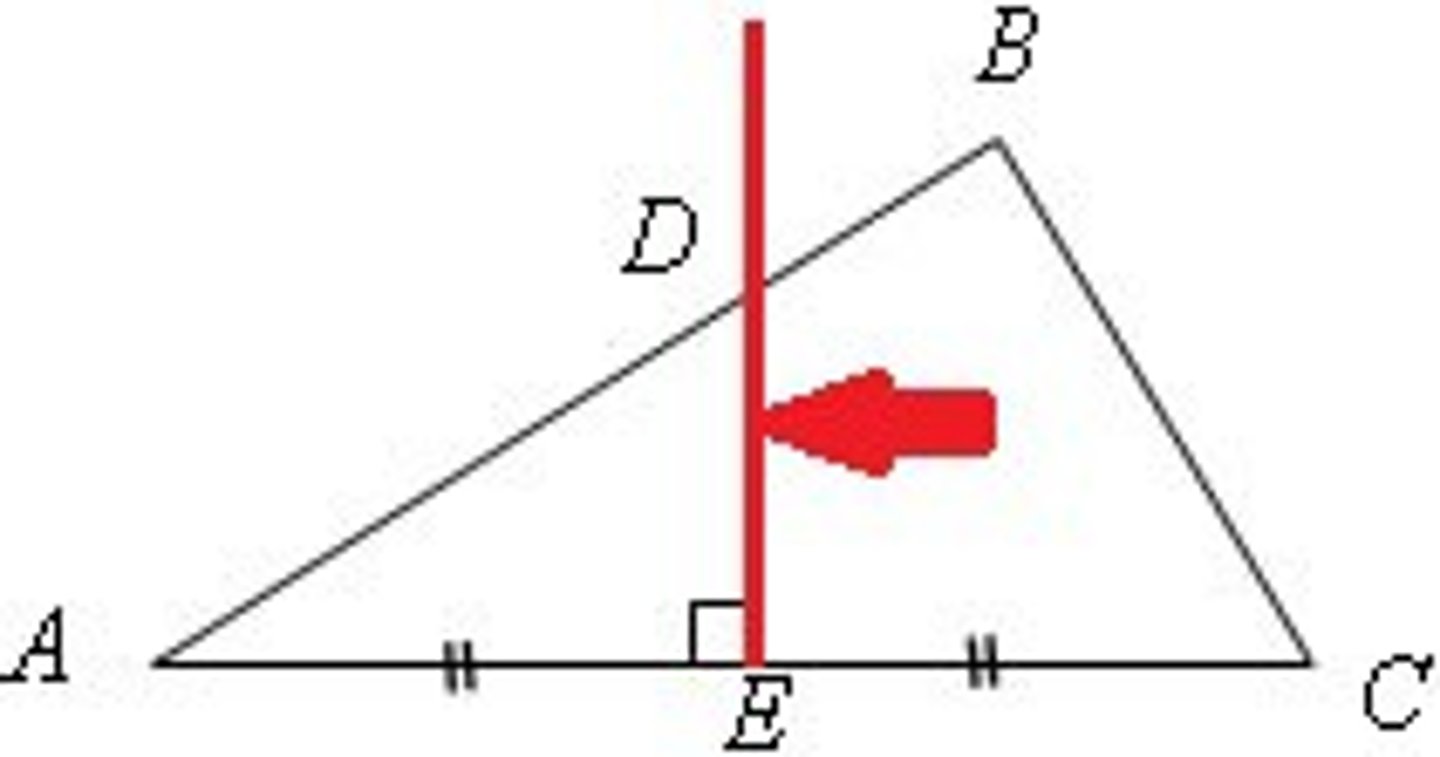
perpendicular bisector
A line that is perpendicular to a segment at its midpoint.
Perpendicular Bisector Theorem
If a point is on the perpendicular bisector of a segment, then it is equidistant from the endpoints of the segment.
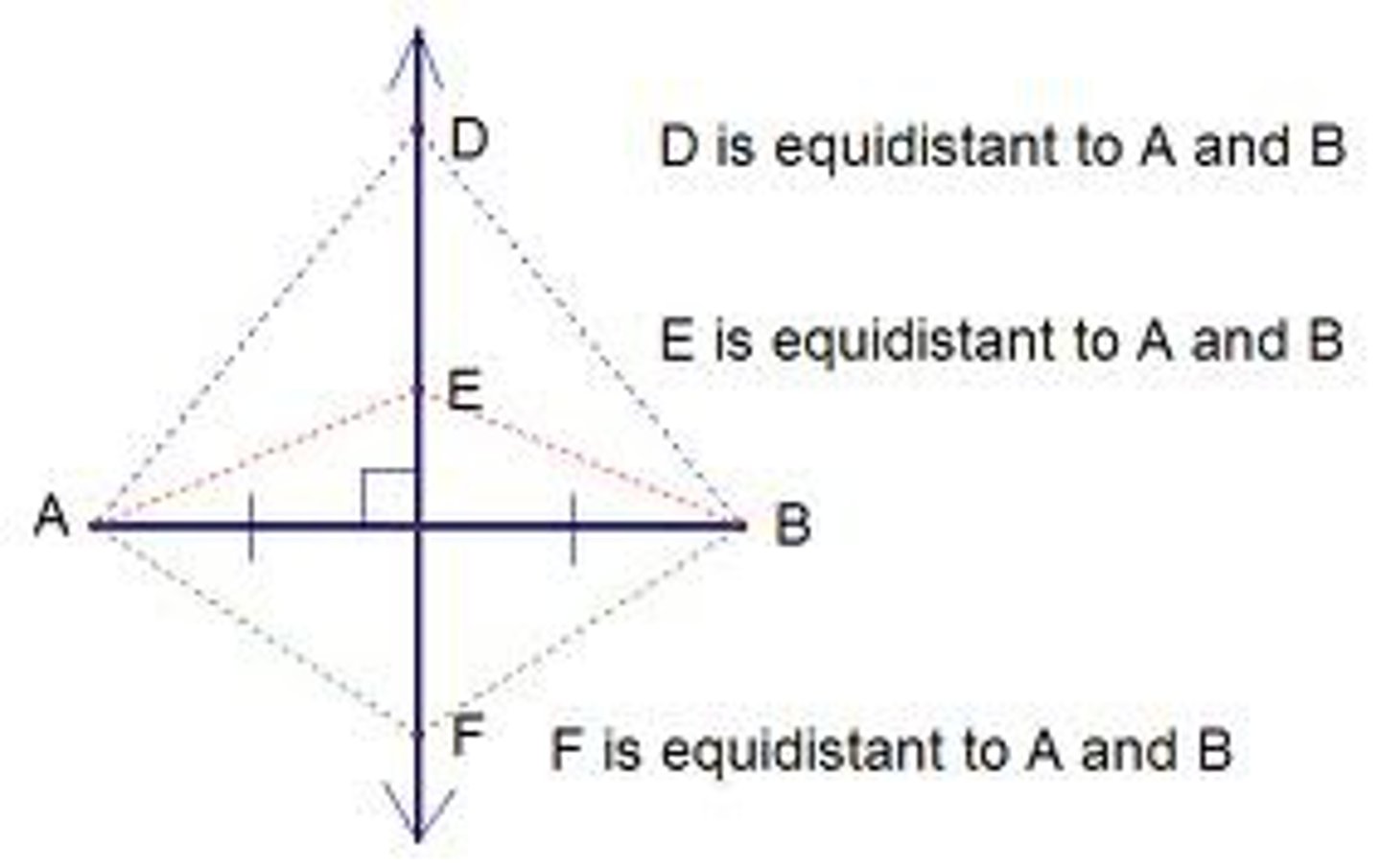
Alt/Med/Angle Bisector of iso triangle → Alt/Med/Angle Bisector
An altitude/median/angle bisector of the vertex angle of an isosceles triangle is also an altitude/median/angle bisector
parallel lines
lines in the same plane that never intersect
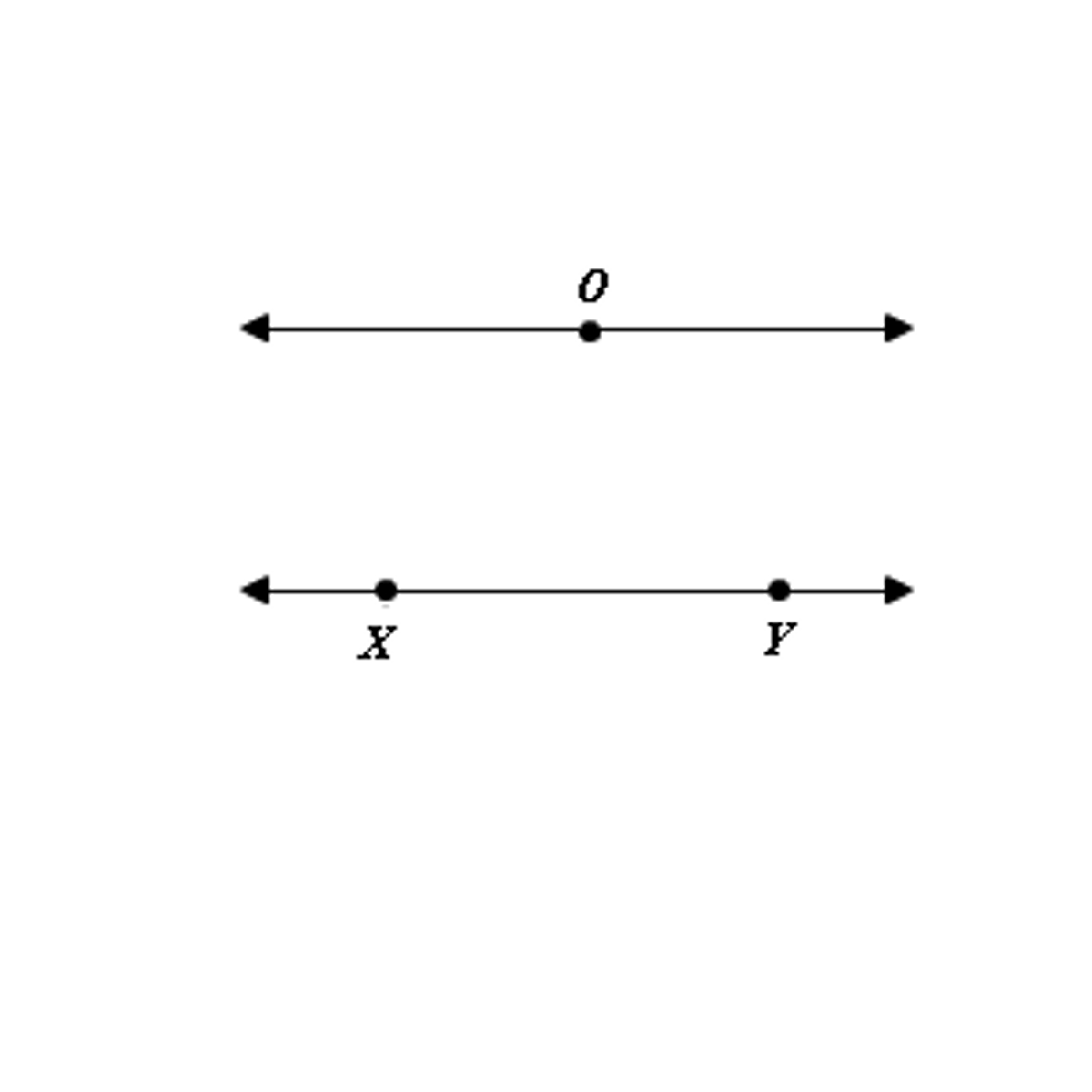
Transversal Line
a line that intersects two or more lines
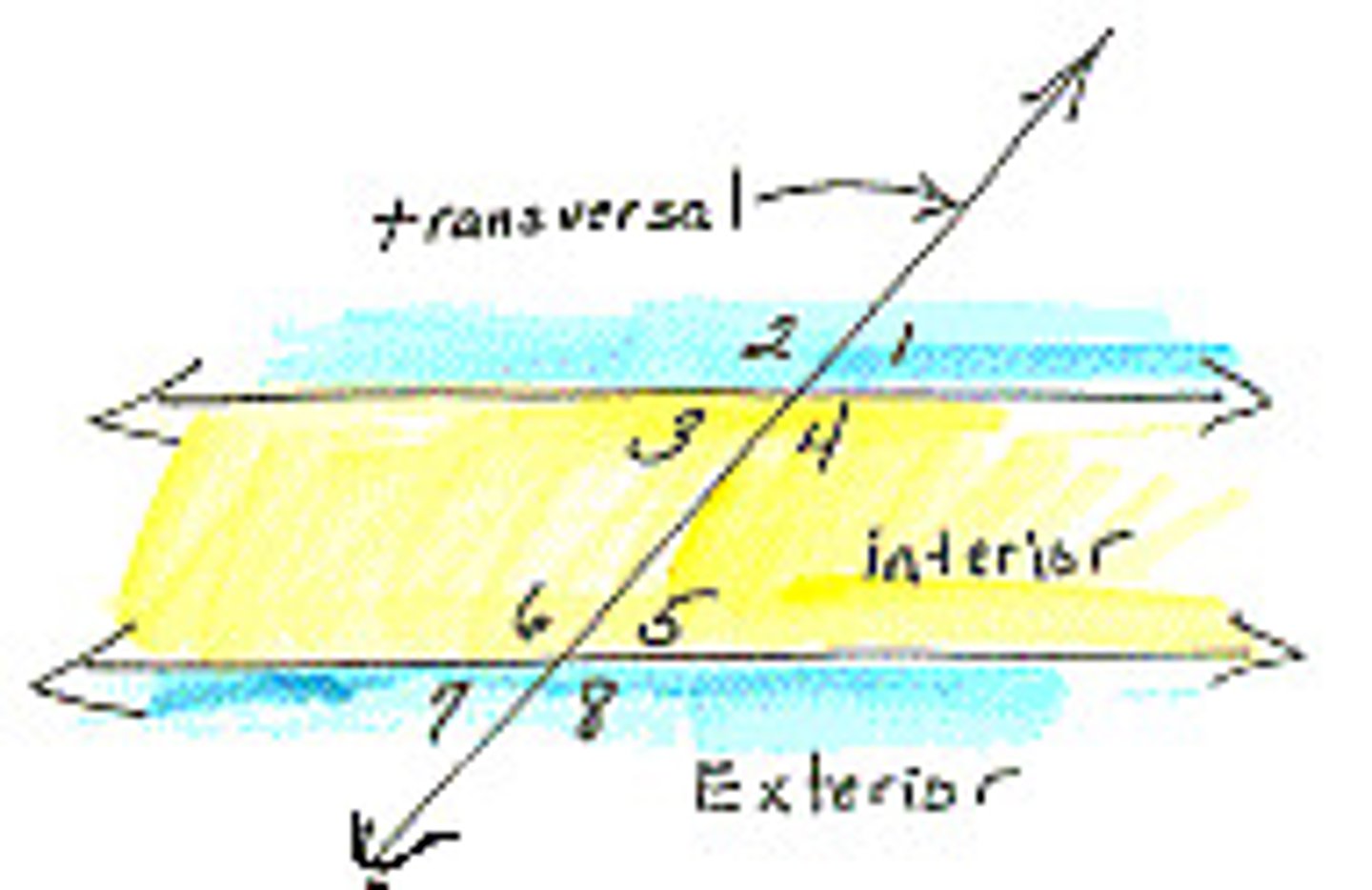
// → ≅ corresponding ∠'s
If two parallel lines are cut by a transversal, then all pairs of corresponding angles are congruent
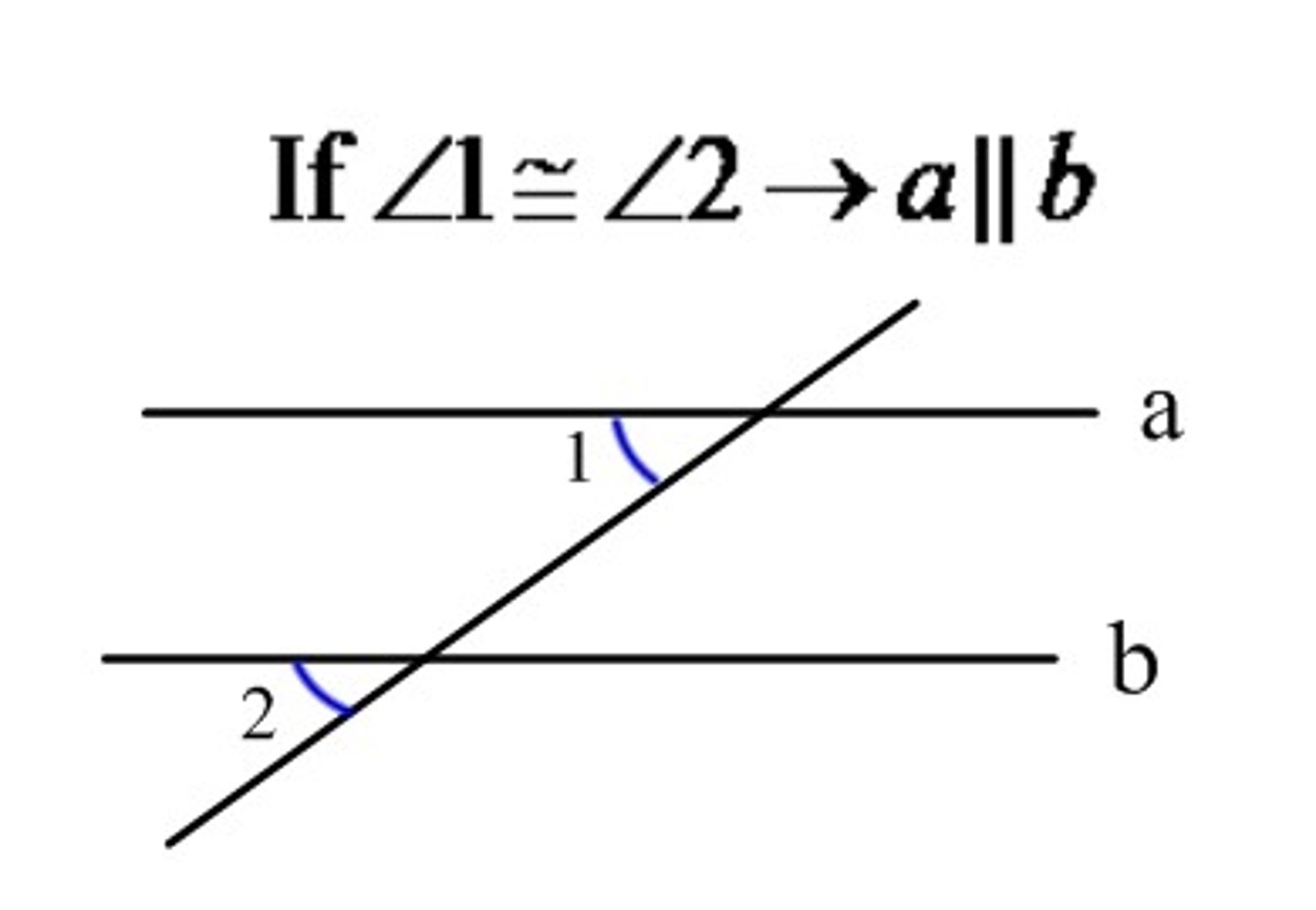
// → ≅ AIA
If two parallel lines are cut by a transversal, then all pairs of alternate interior angles are congruent
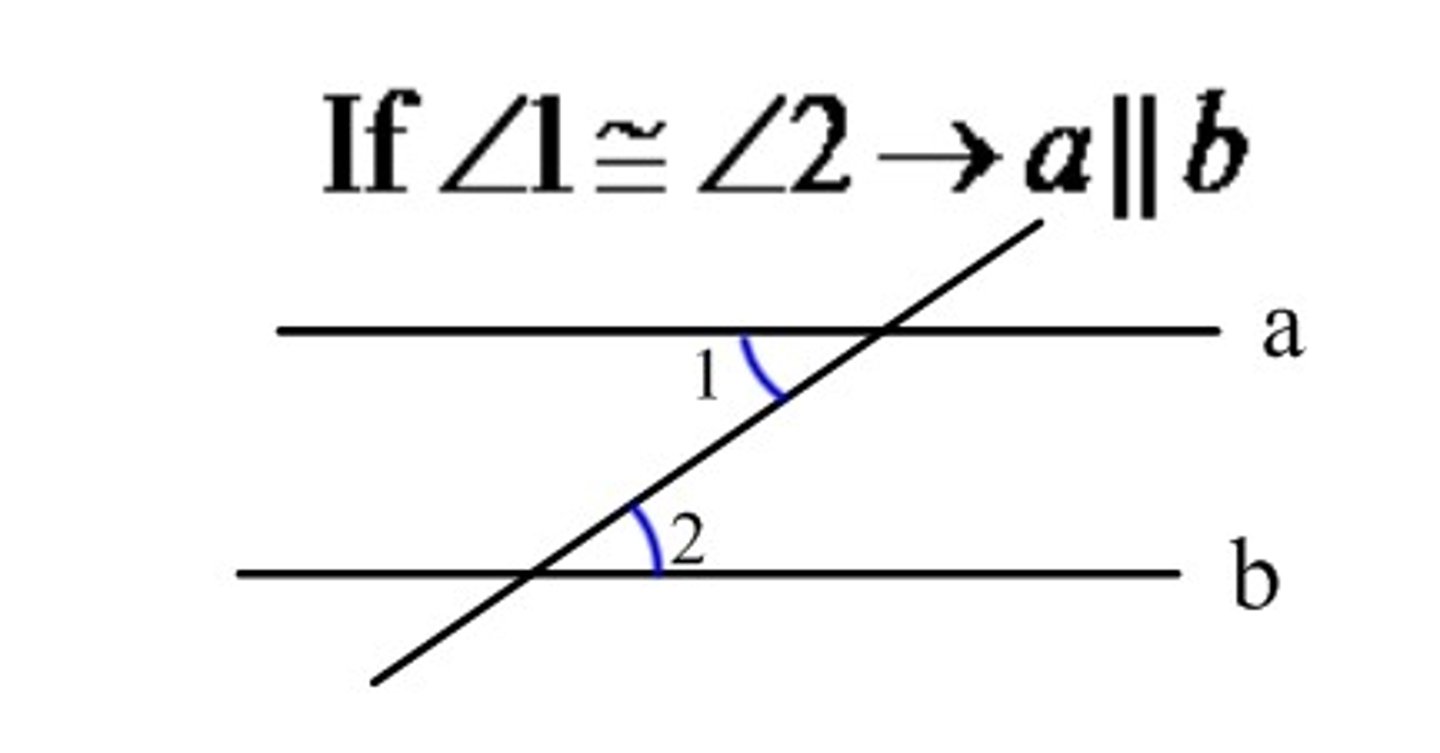
// → ≅ AEA
If two parallel lines are cut by a transversal, then all pairs of alternate exterior angles are congruent
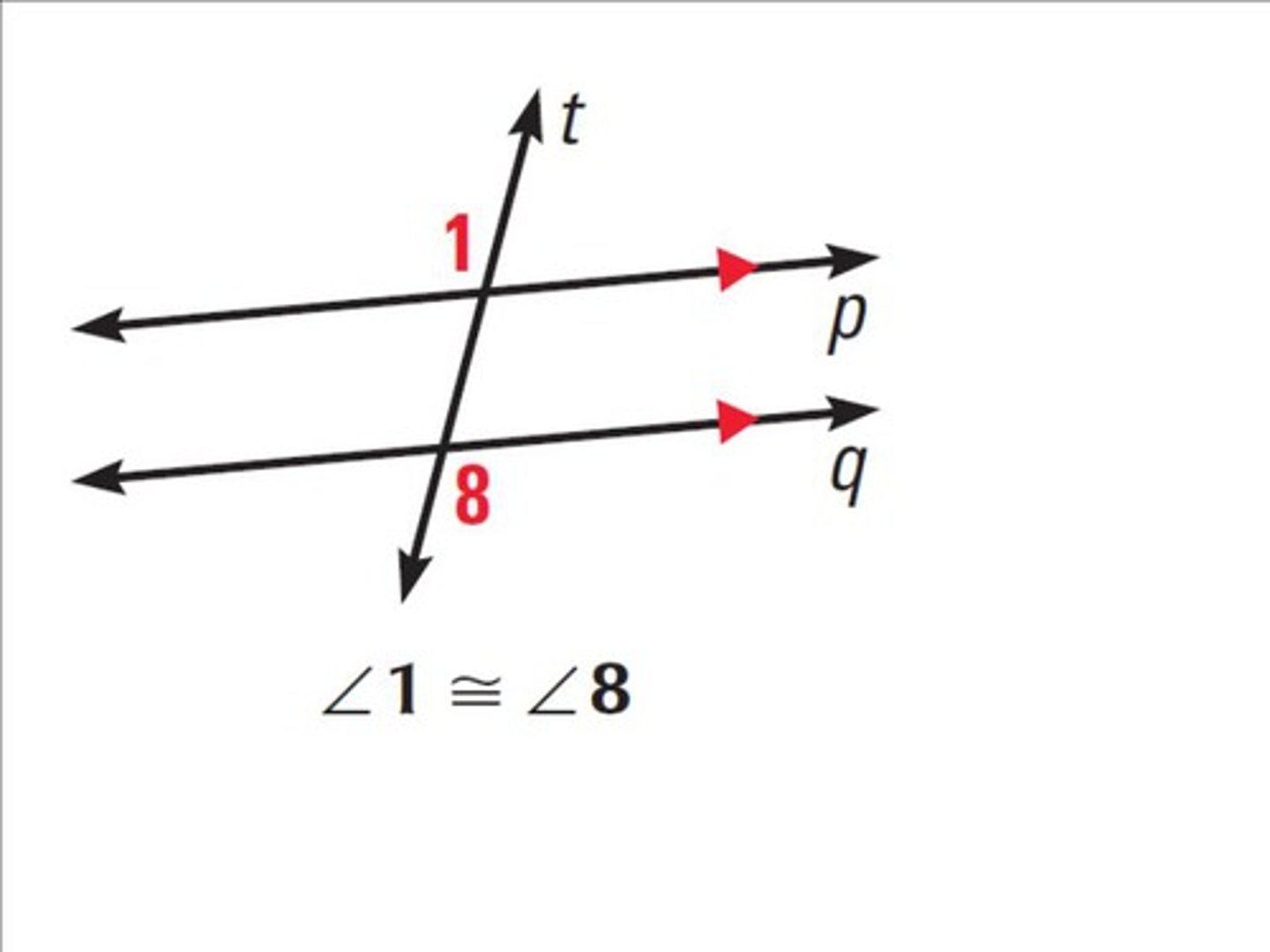
// → suppl. SSI
If two parallel lines are cut by a transversal, then all pairs of same side angles are supplementary
// and ⊥1 → ⊥2
If a transversal is perpendicular to one of two parallel lines, then it's perpendicular to the other one as well
≅ corresponding ∠'s → //
If two lines are cut by a transversal and form congruent corresponding angles, then the lines are parallel
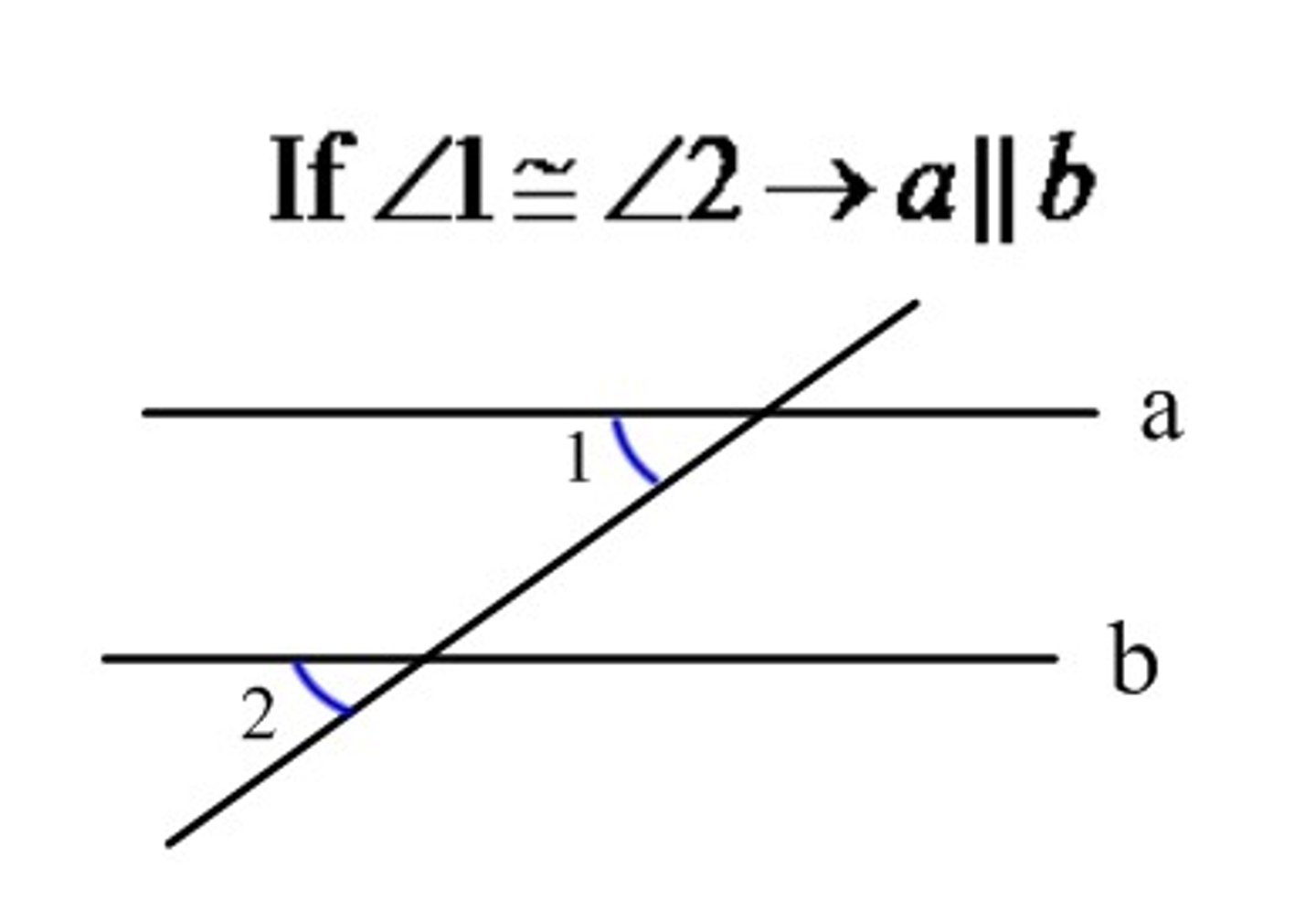
≅ AIA → //
If two lines are cut by a transversal and form congruent alternate interior angles, then the lines are parallel
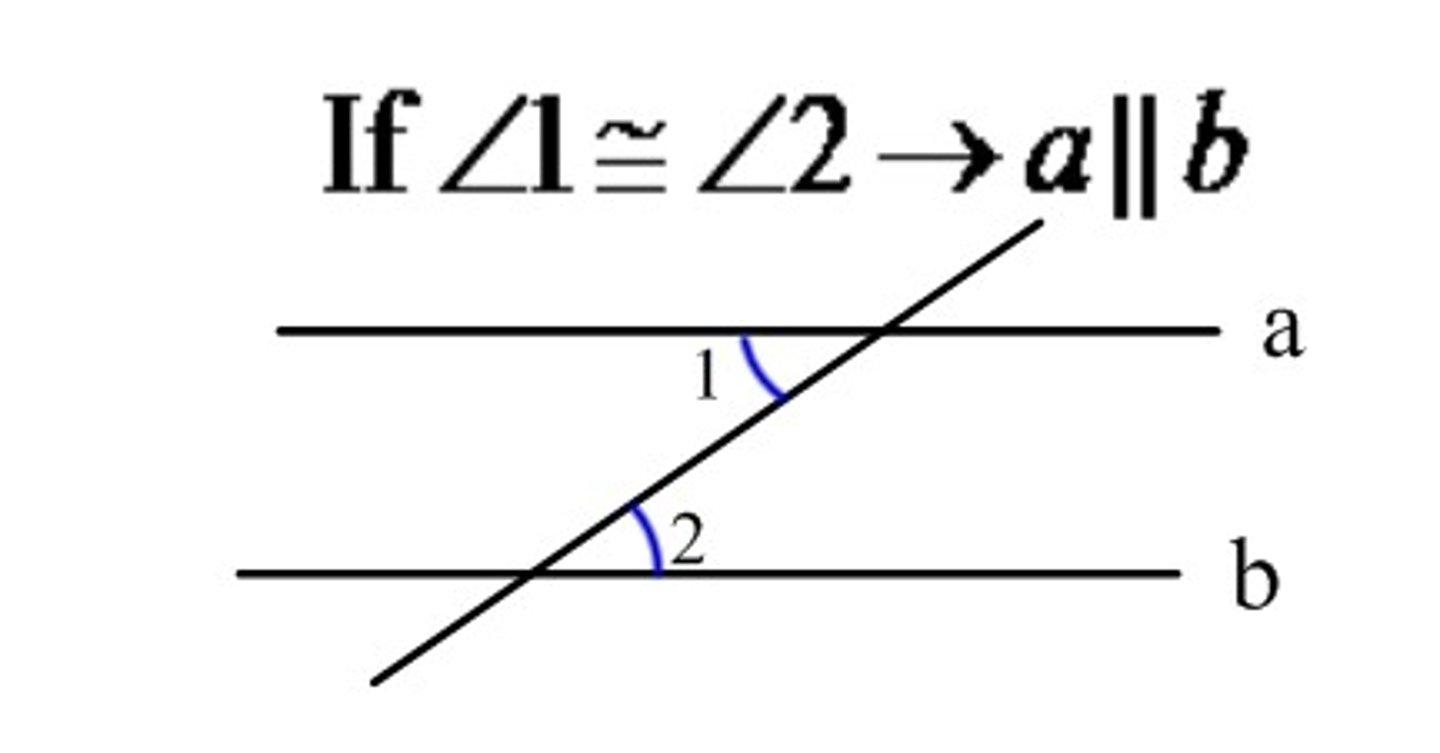
≅ AEA → //
If two lines are cut by a transversal and form congruent alternate exterior angles, then the lines are parallel
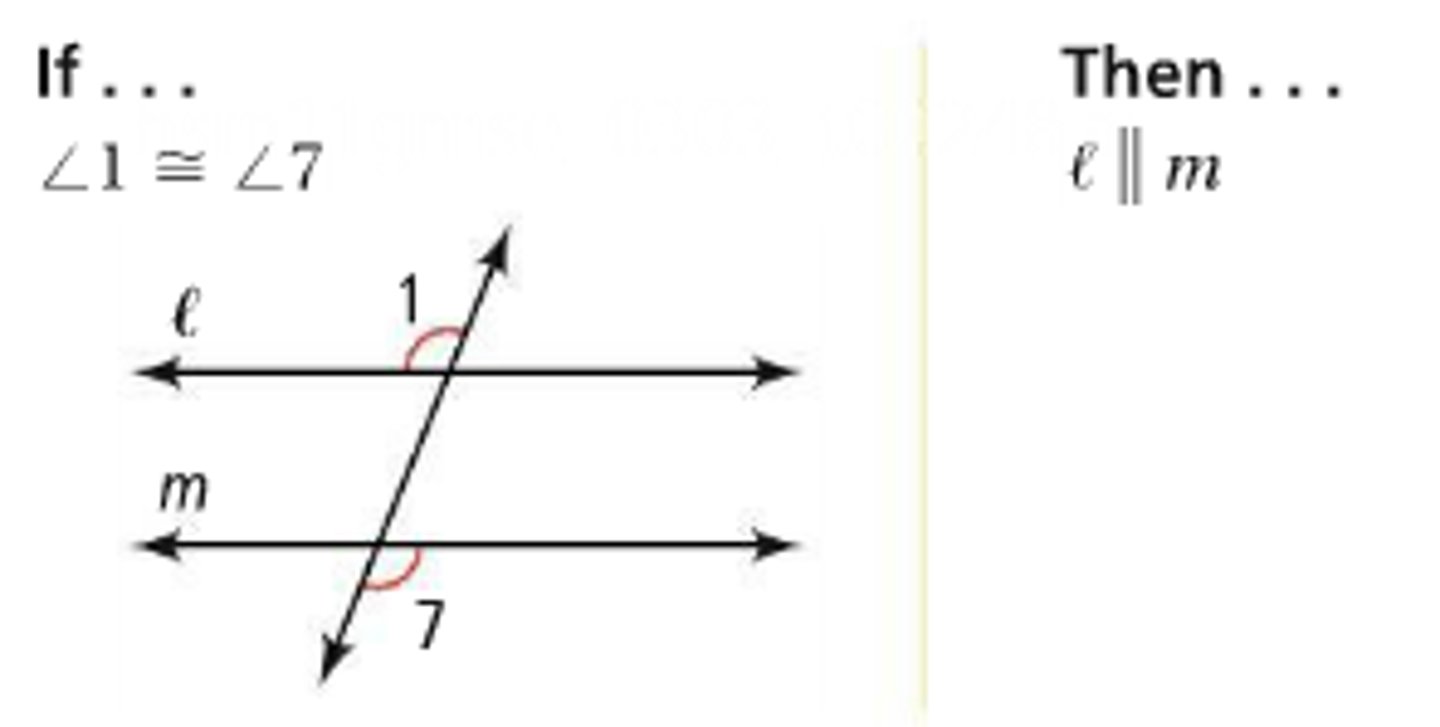
Supplementary SSI → //
If two lines are cut by a transversal and form supplementary same-side interior angles, then the lines are parallel
1 and ⊥2 → //
In a plane, two lines perpendicular to the same line are parallel
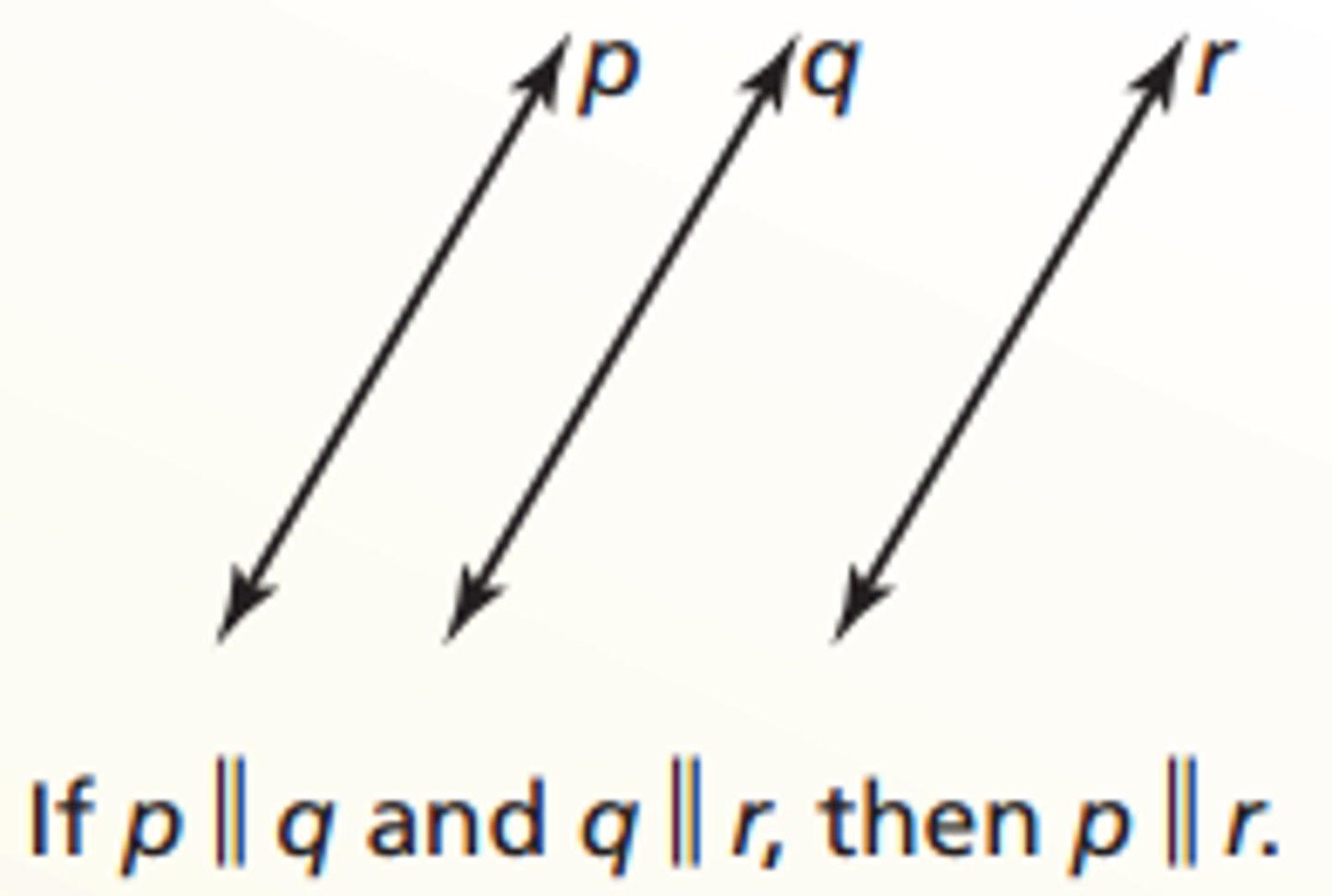
Transitive prop. of //
If two lines are both parallel to the same line, then they are parallel to each other
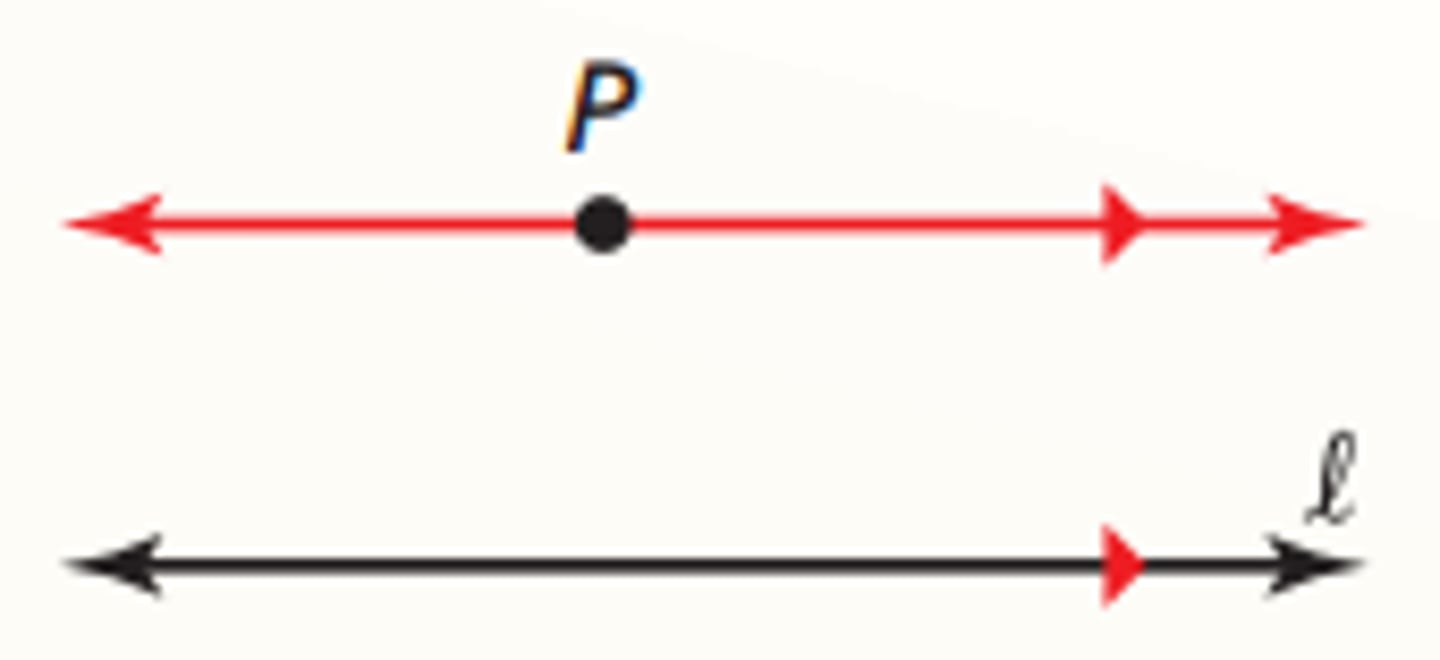
// postulate
Through a line and a point not on the line, there exists one parallel to the given line
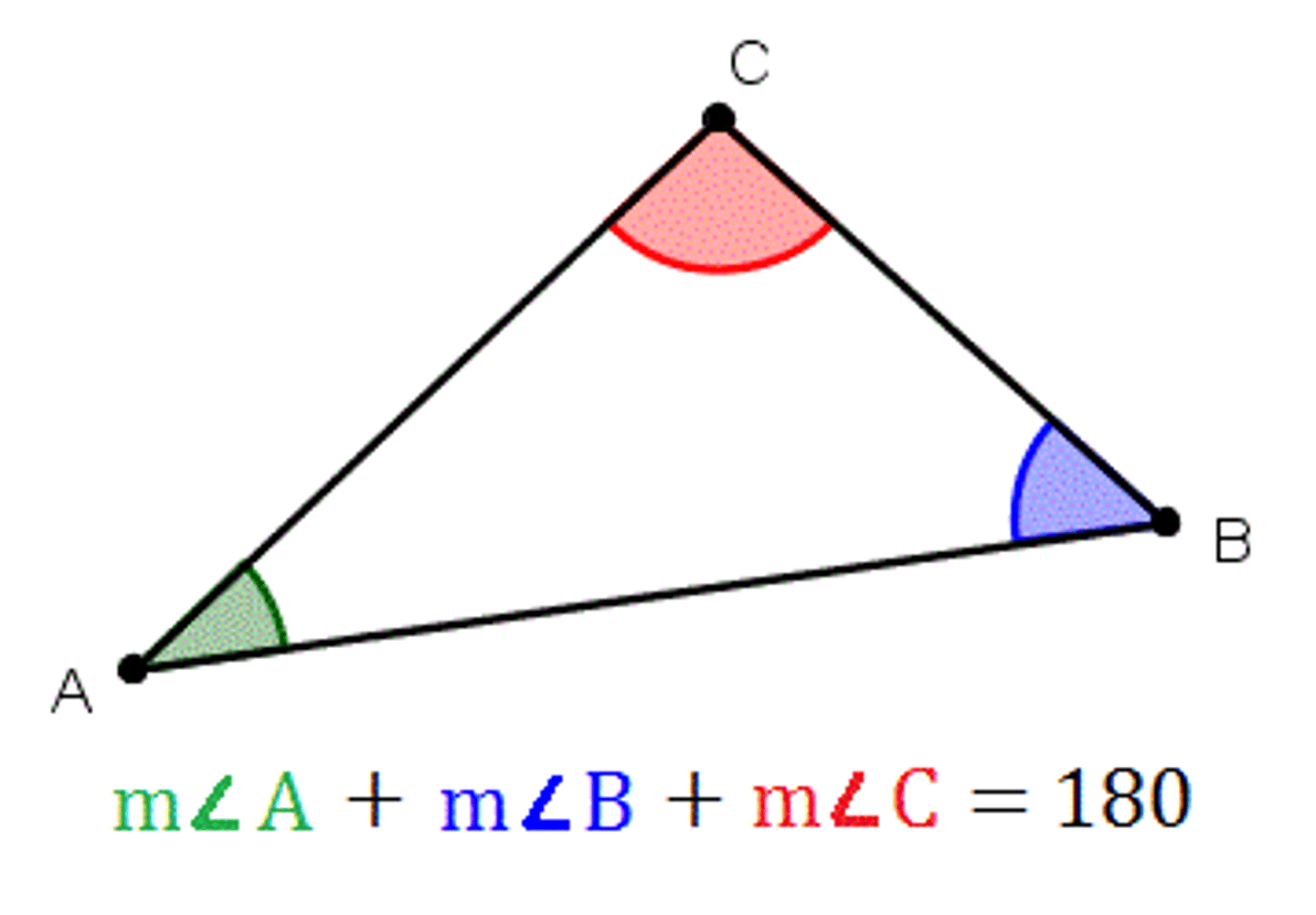
Triangle Sum Theorem (TST)
The sum of the measures of the interior angles of a triangle is 180 degrees
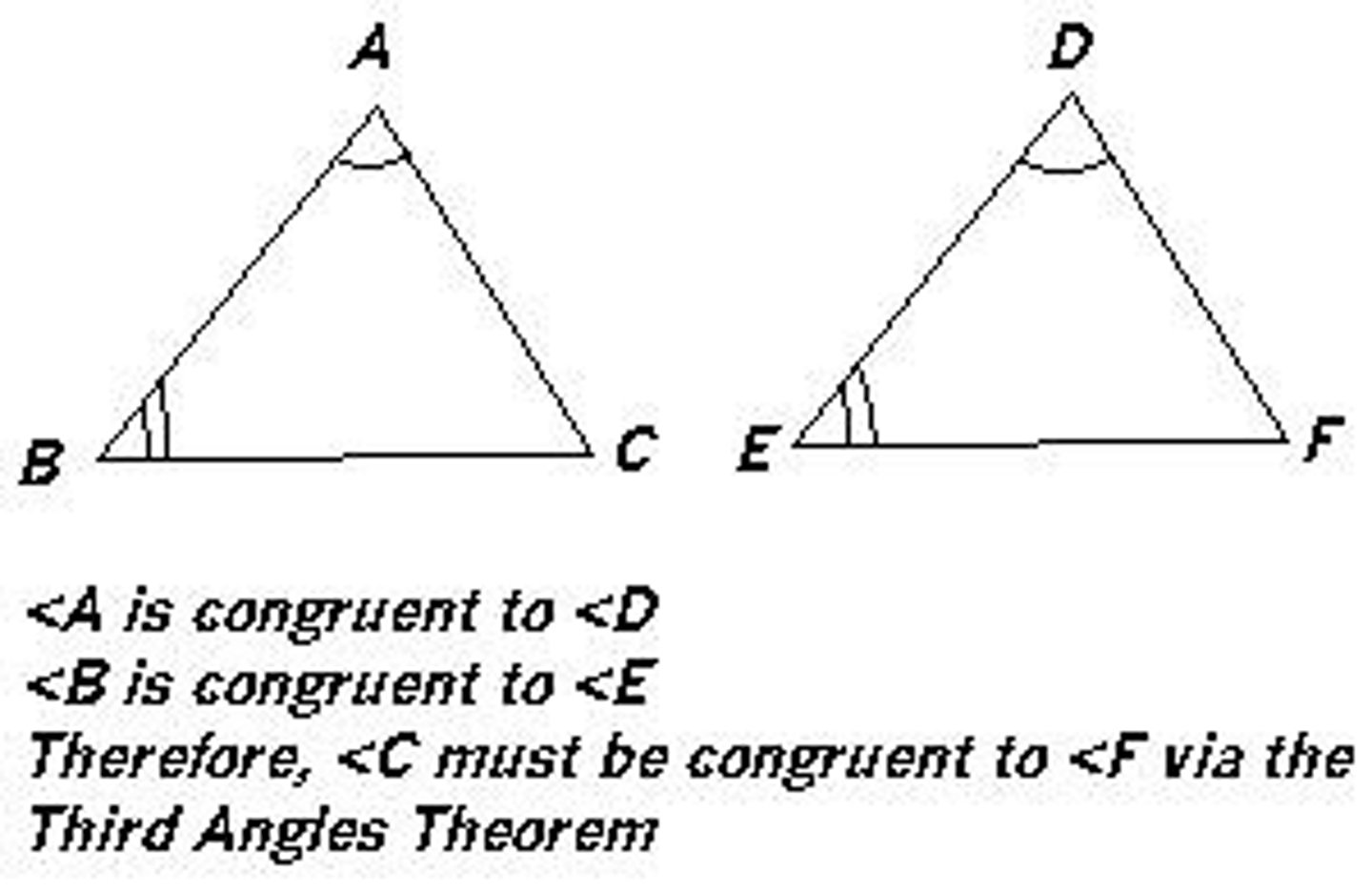
3rd angle theorem
If 2 angles of a triangle are congruent to 2 angles of another triangle, then the 3rd angles are congruent
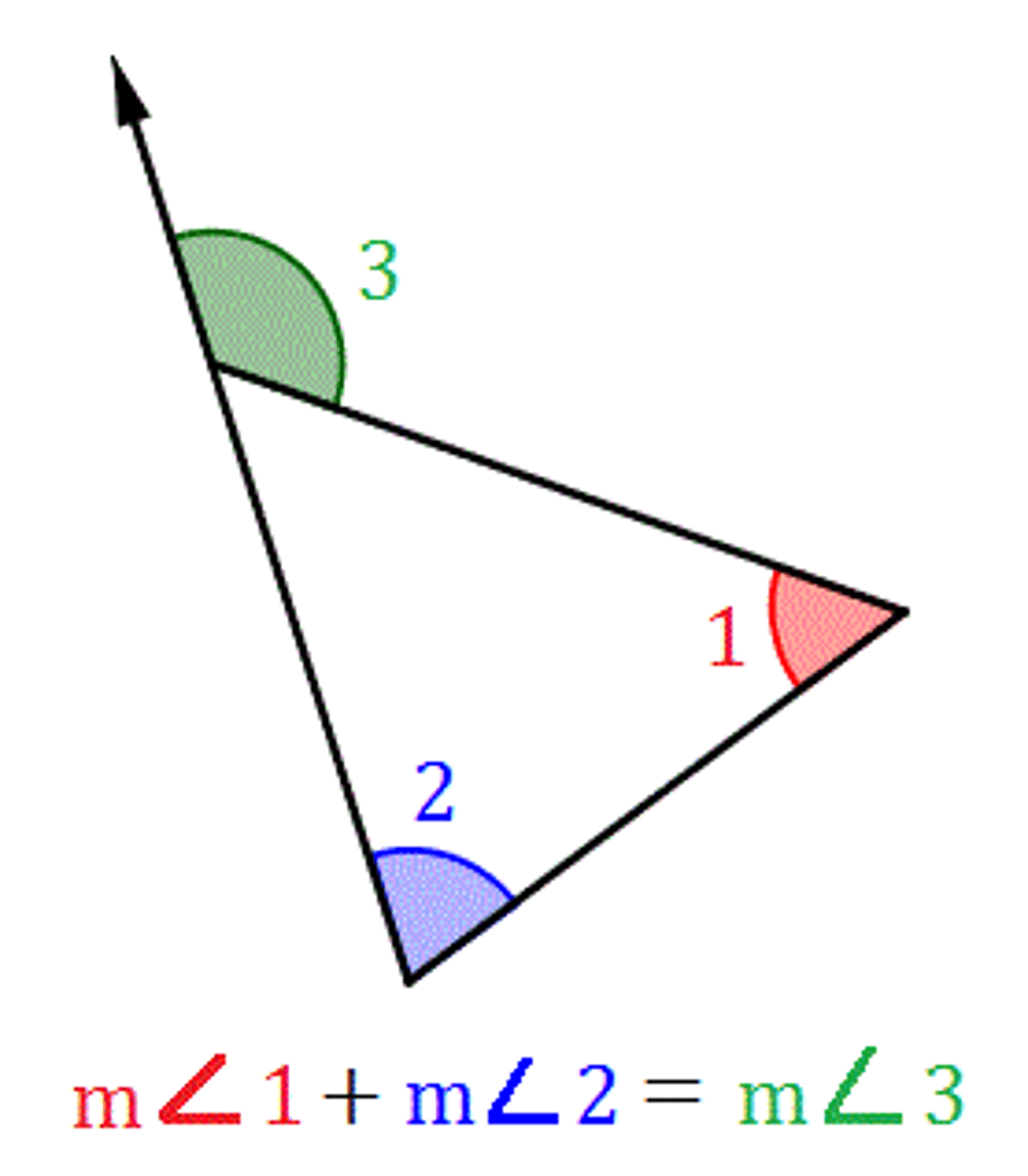
Exterior Angle Theorem
The measure of an exterior angle of a triangle is equal to the sum of the measures of the two nonadjacent interior angles.
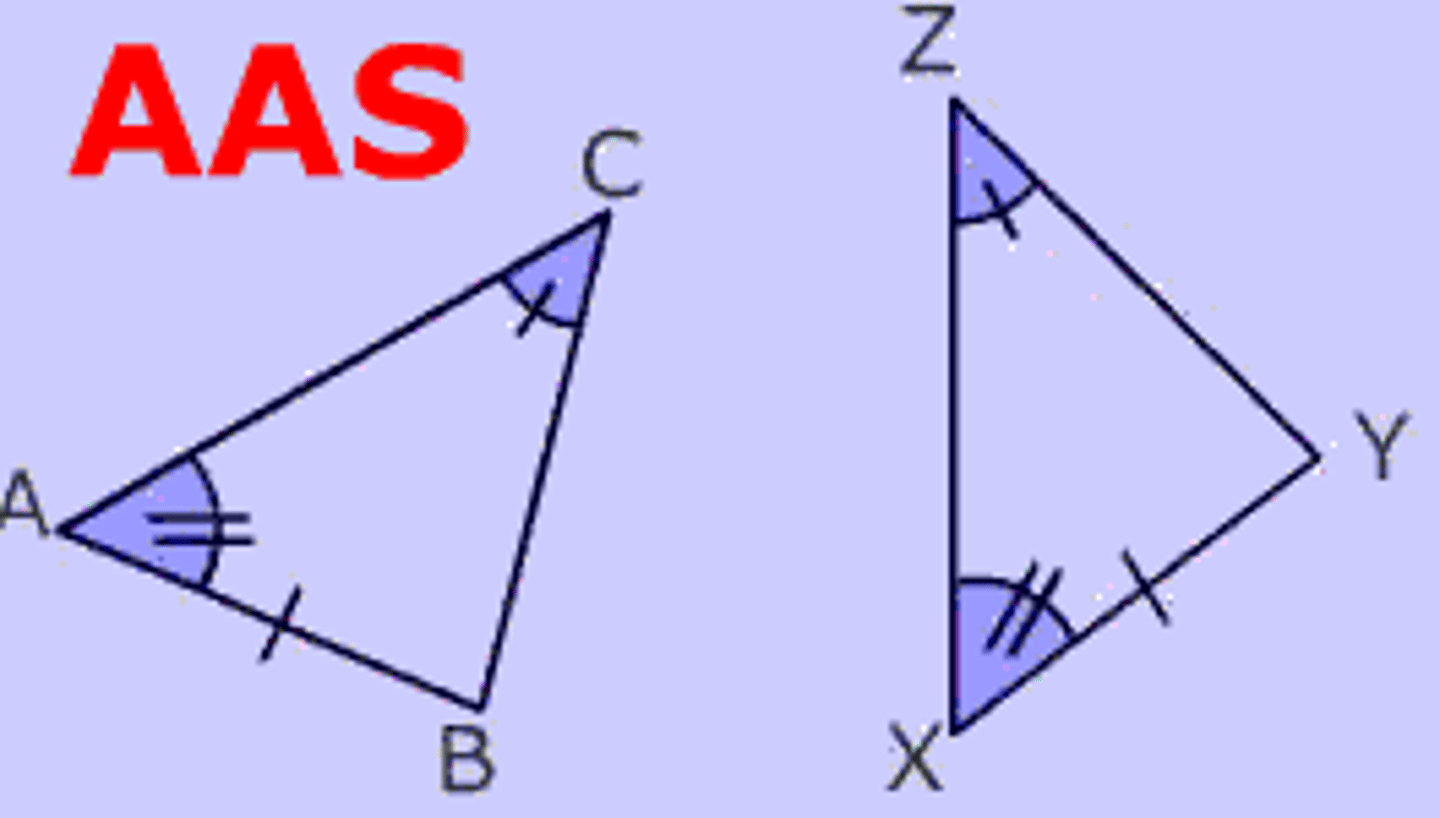
AAS ≅
If two angles and a non-included side of one triangle are congruent to the corresponding two angles and non-included side of another triangle, the two triangles are congruent.
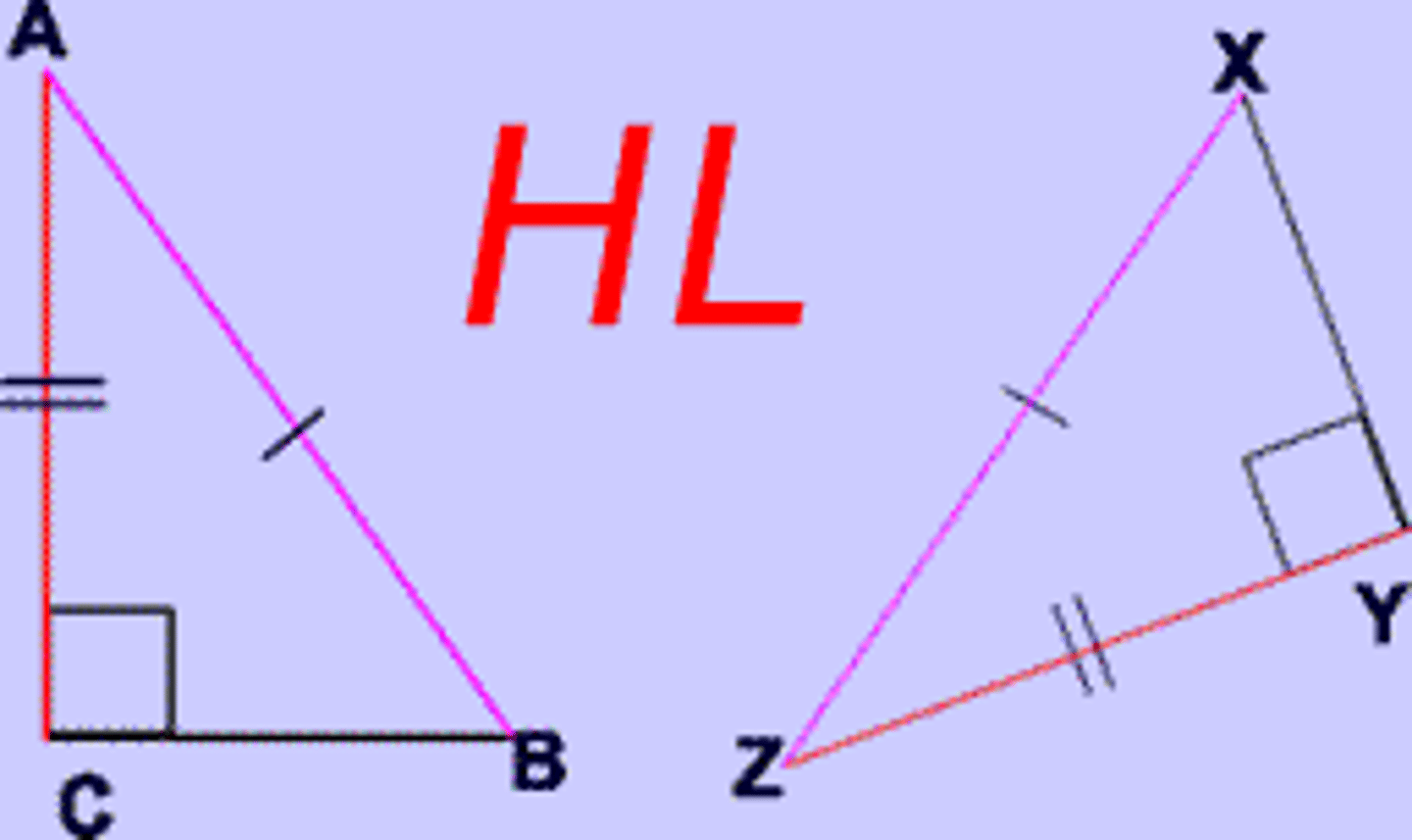
HL ≅
If the hypotenuse and one leg of one right triangle are congruent to the hypotenuse and corresponding leg of another right triangle, the two right triangles are congruent.
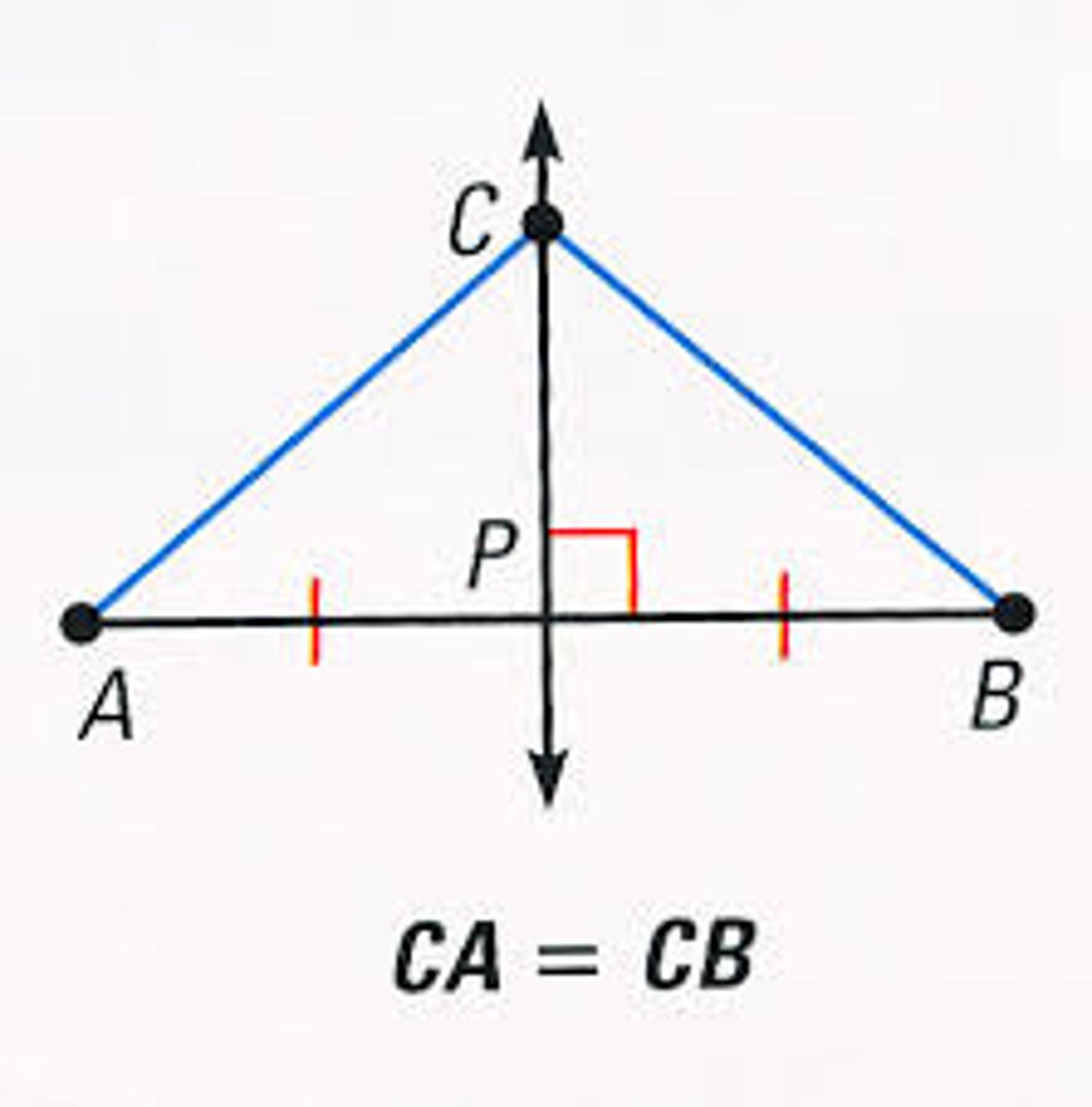
Perpendicular bisector equidistance theorem (PBET)
A point is equidistant from the endpoints of a segment if and only if it lies on the perpendicular bisector of the segment.
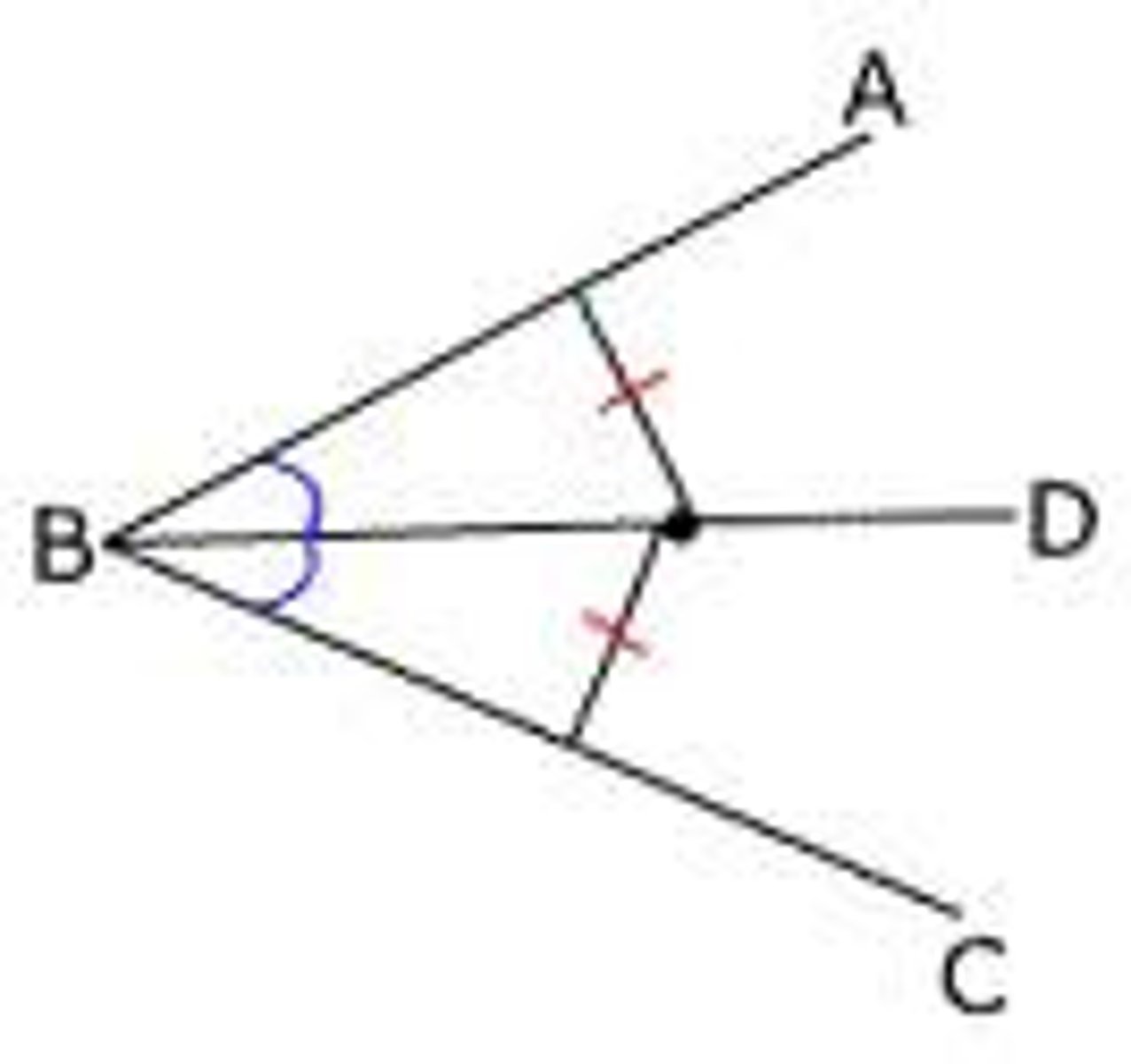
Angle bisector equidistance theorem (ABET)
A point is equidistant from the sides of an angle if and only if it lies on the angle bisector
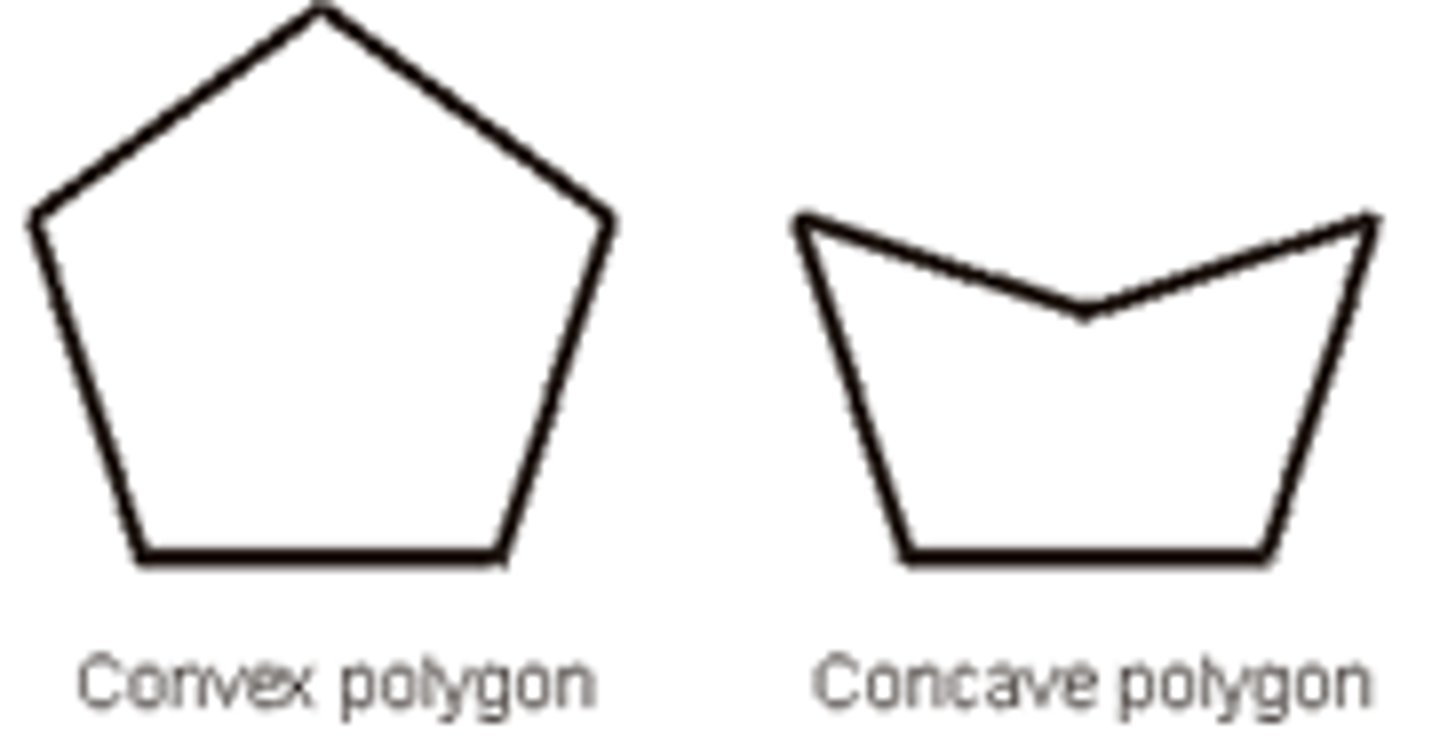
polygon
A closed figure formed by three or more line segments
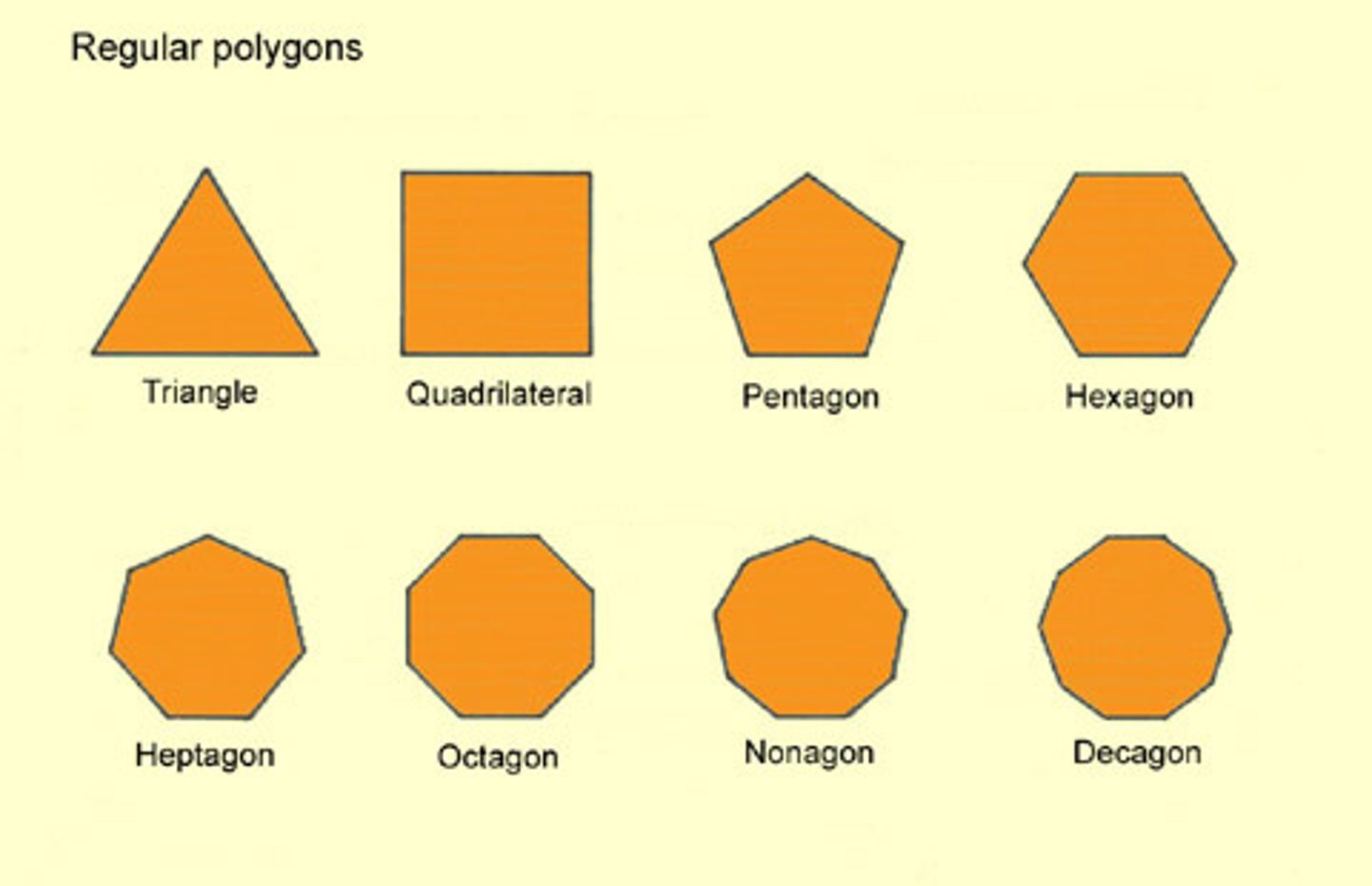
regular polygon
a polygon that is both equilateral and equiangular
Polygon internal angle sum
The sum of the measure of all interior angles in a polygon is (n-2)180
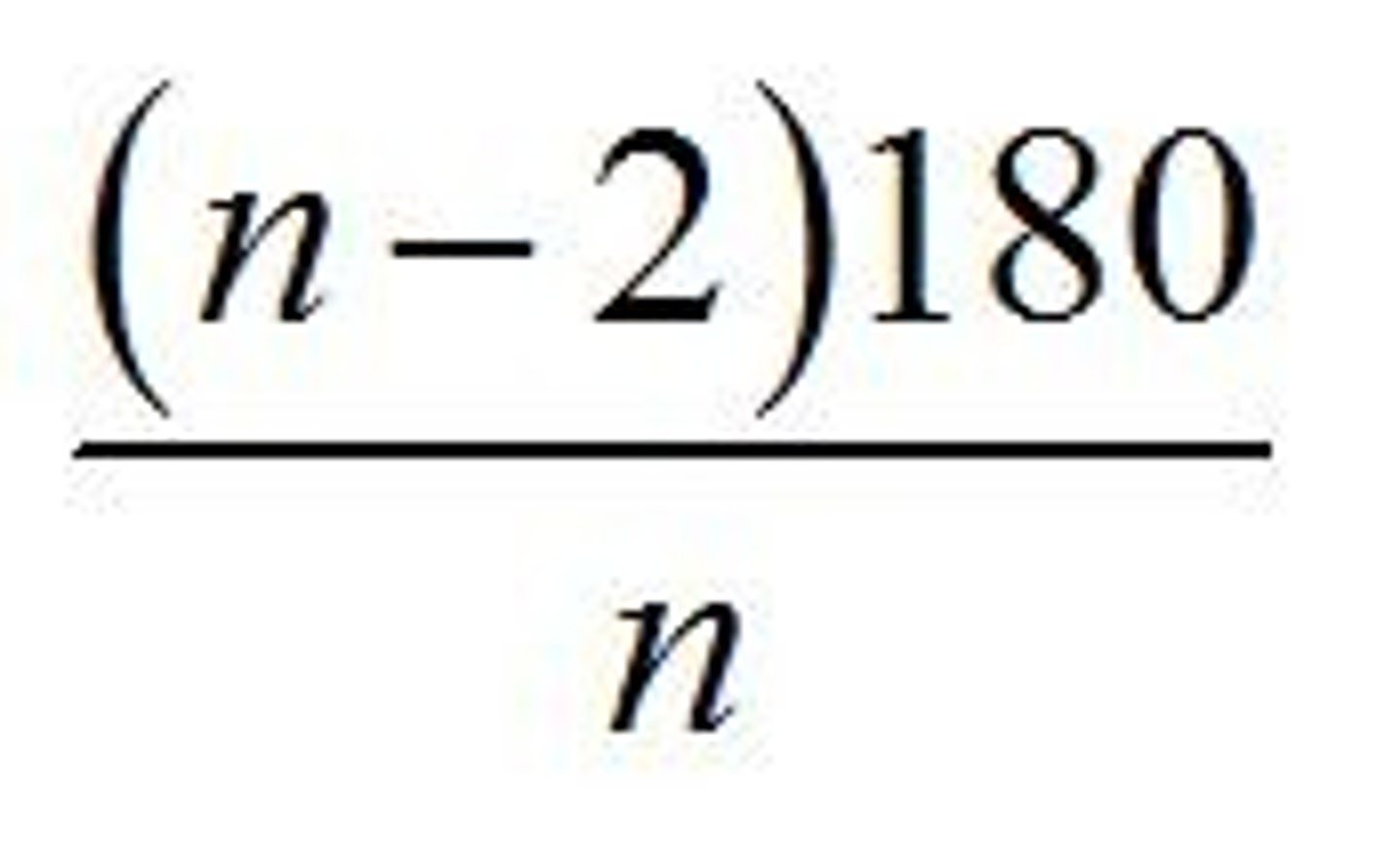
Regular polygon interior angle theorem
The measure of an interior angle of a REGULAR polygon is (n-2)180/n
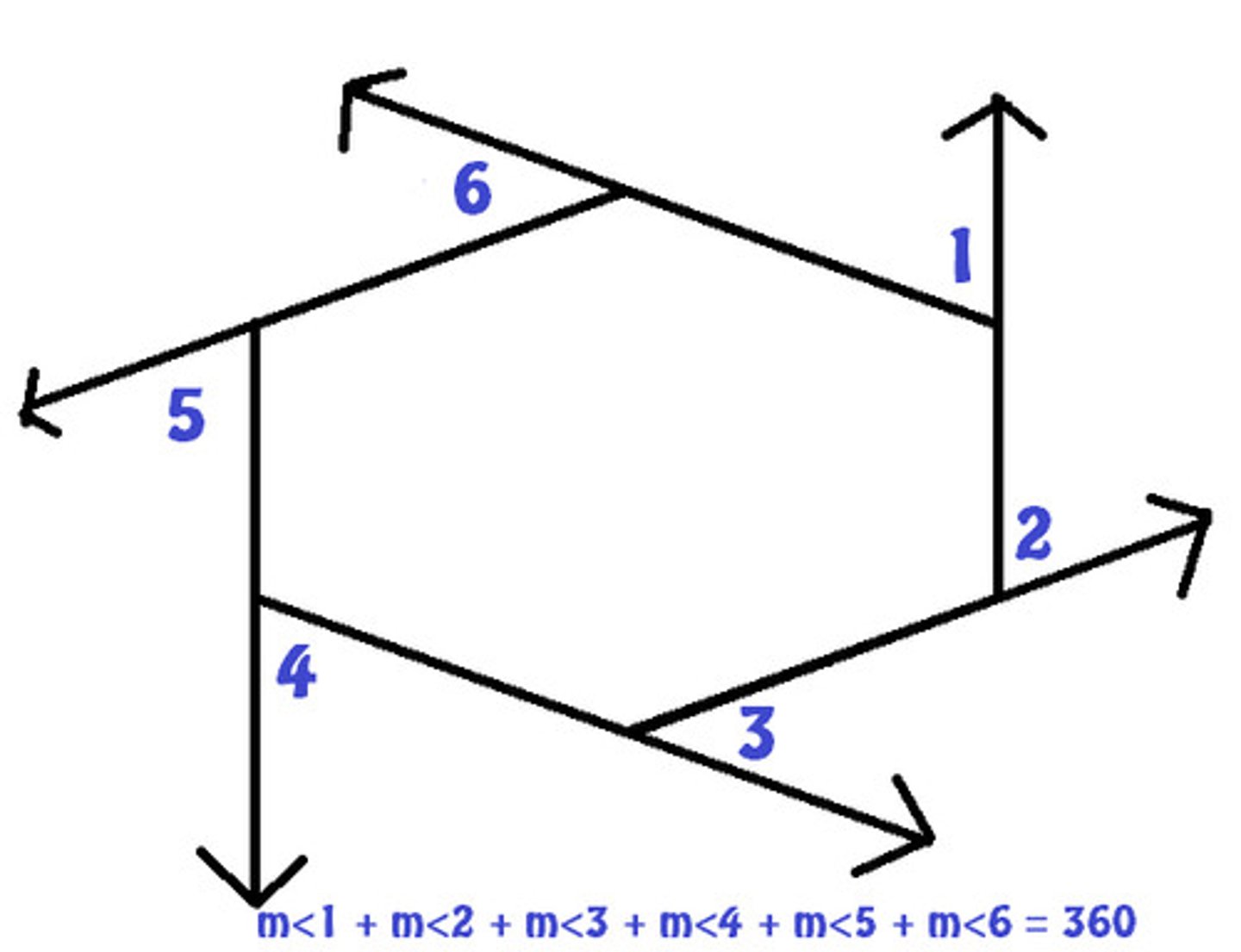
Polygon Exterior Angle Sum Theorem
The sum of the exterior angle measures, one angle at each vertex, of a convex polygon is 360 degrees
Regular polygon external angle theorem
360/n
Parallelogram
a quadrilateral with both pairs of opposite sides parallel
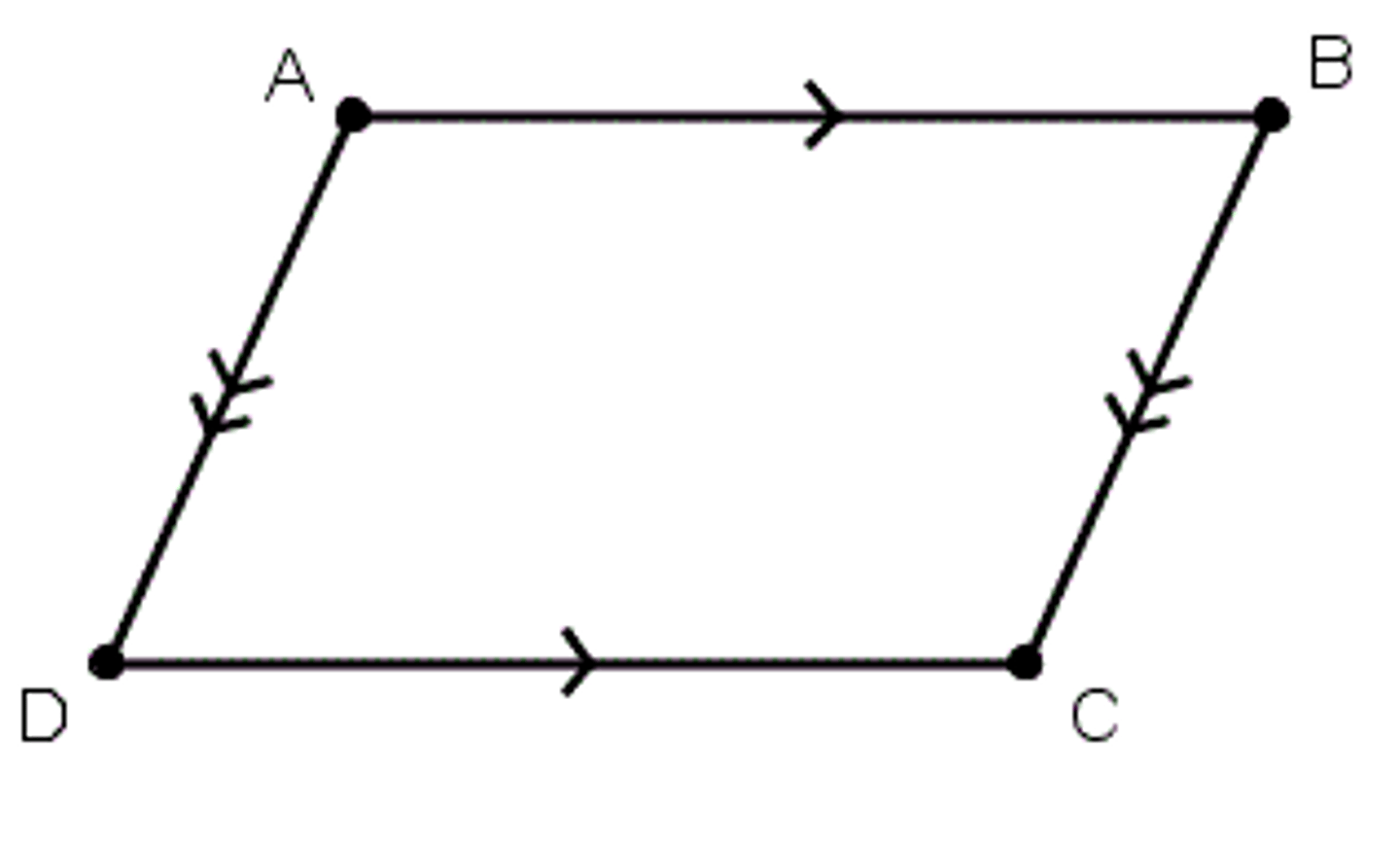
Pgram → ≅ opposite sides
In a parallelogram, the opposite sides are congruent (2 pairs)
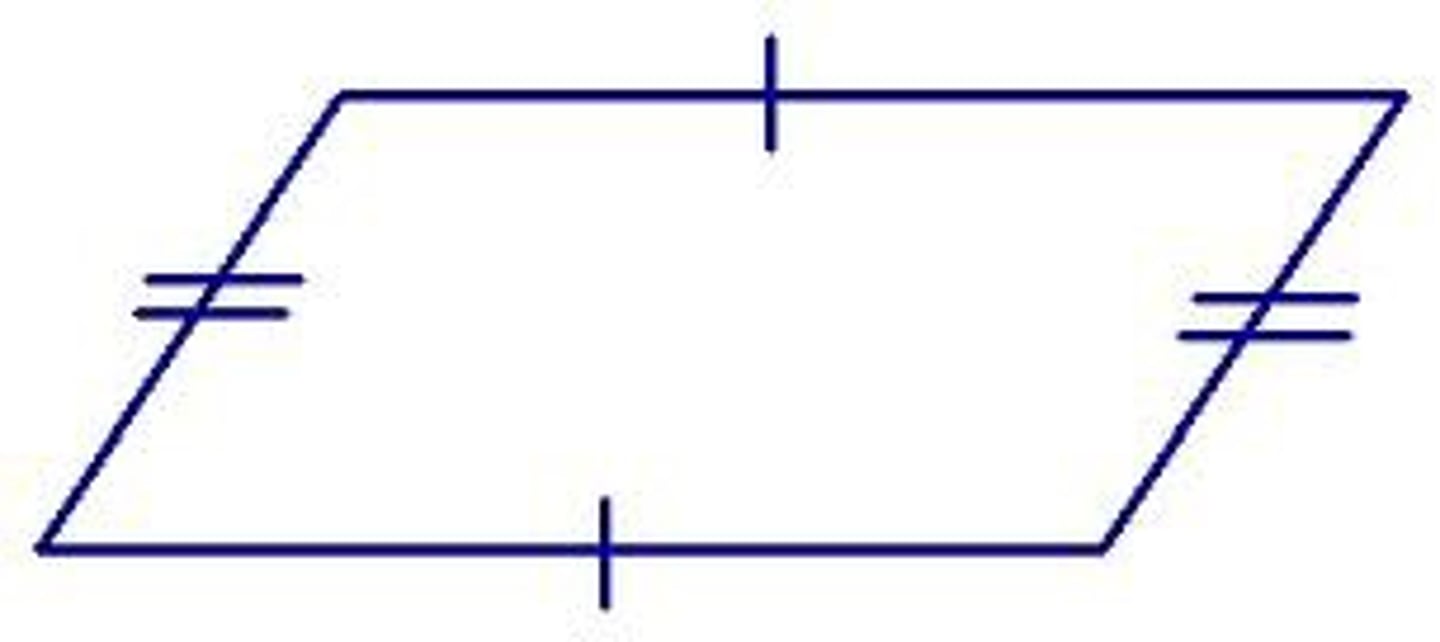
Pgram → ≅ opposite angles
In a parallelogram, the opposite angles are congruent (2 pairs)
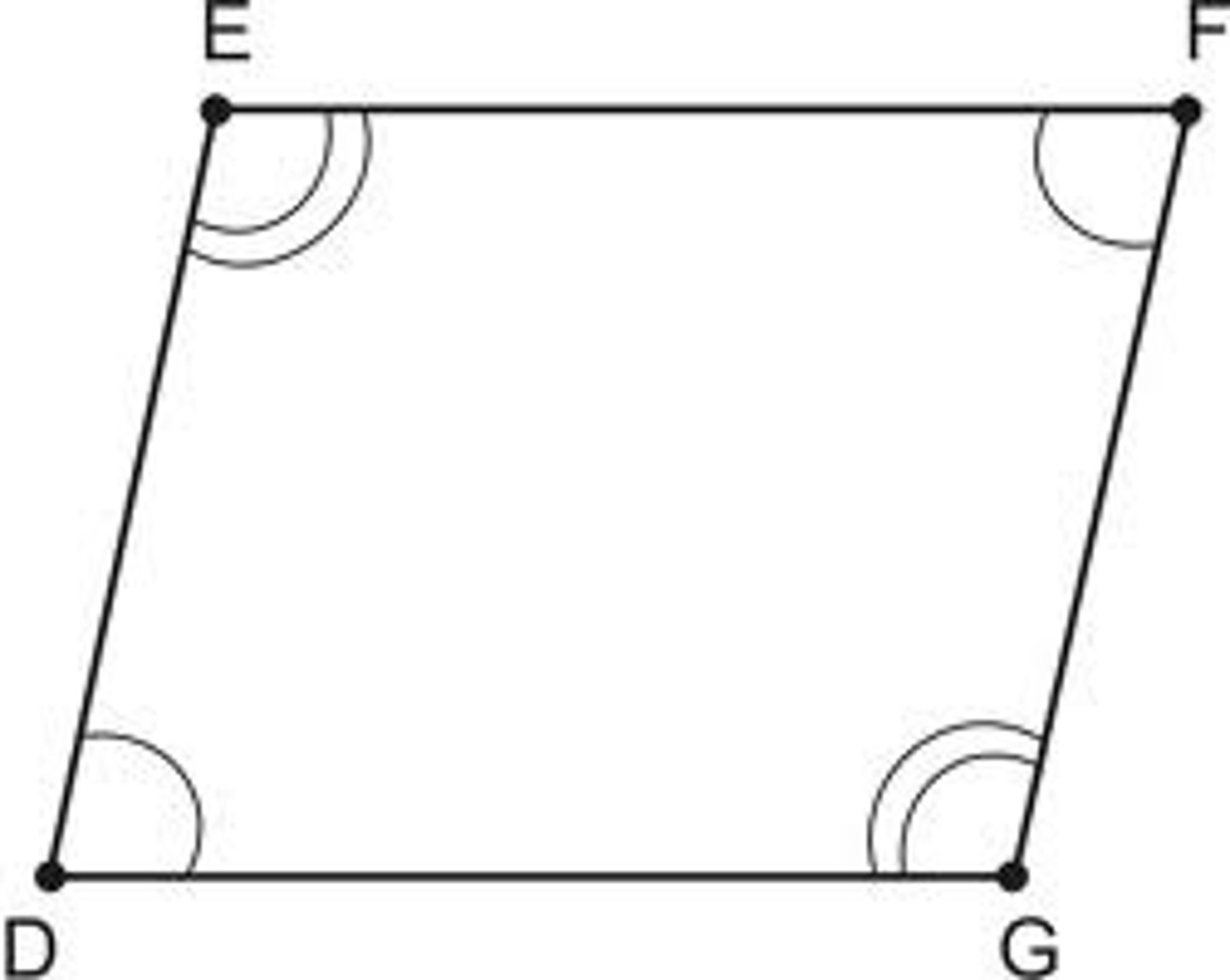
Pgram → Supp consecutive angles
In a parallelogram, two consecutive angles are supplementary
Pgram → Diagonals bisect each other
In a parallelogram, two diagonals bisect each other
≅ opposite sides → Pgram
A quadrilateral with TWO pairs of congruent opposite sides is a parallelogram
≅ opposite angles → Pgram
A quadrilateral with TWO pairs of congruent opposite angles is a parallelogram
≅ AND // opposite sides → Pgram
A quadrilateral with ONE pairs of congruent and parallel opposite sides is a parallelogram
Supp consecutive angles → Pgram
A quadrilateral with TWO pairs of supplementary consecutive angles is a parallelogram
Diagonals bisect each other → Pgram
A quadrilateral with bisected diagonals is a parallelogram
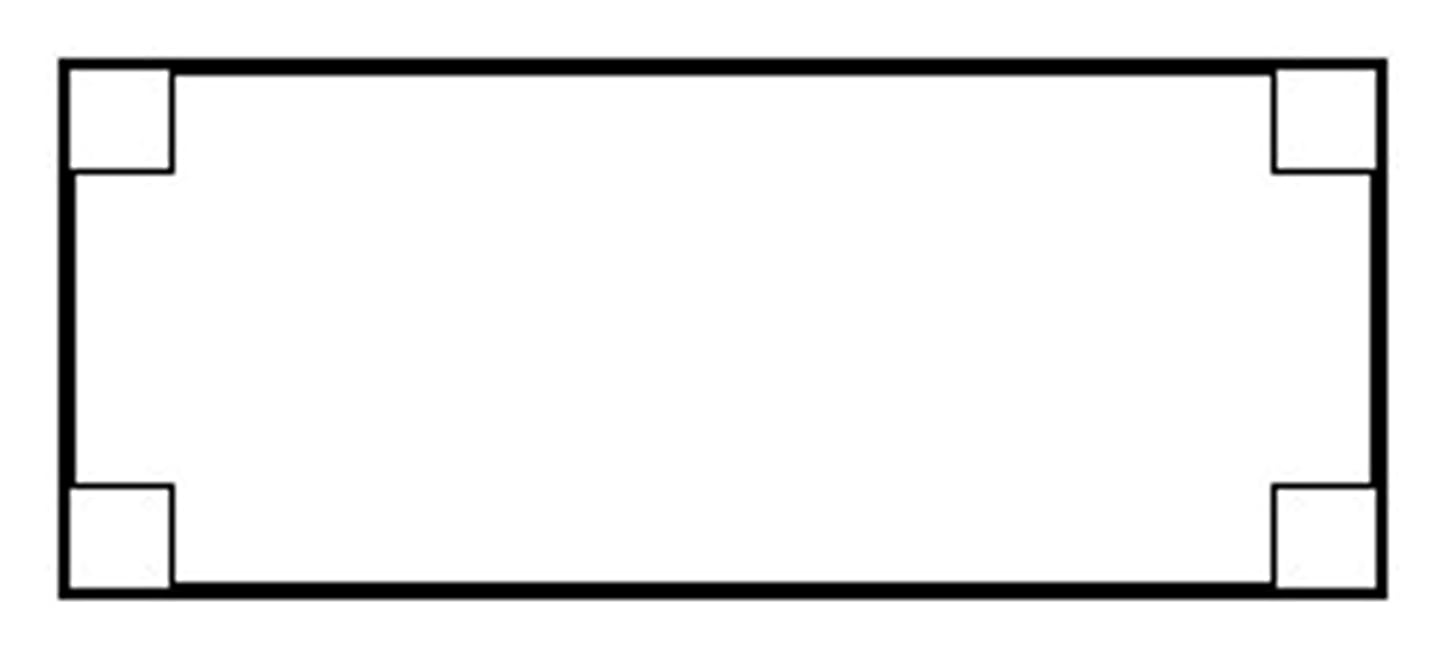
rectangle
A quadrilateral with four right angles
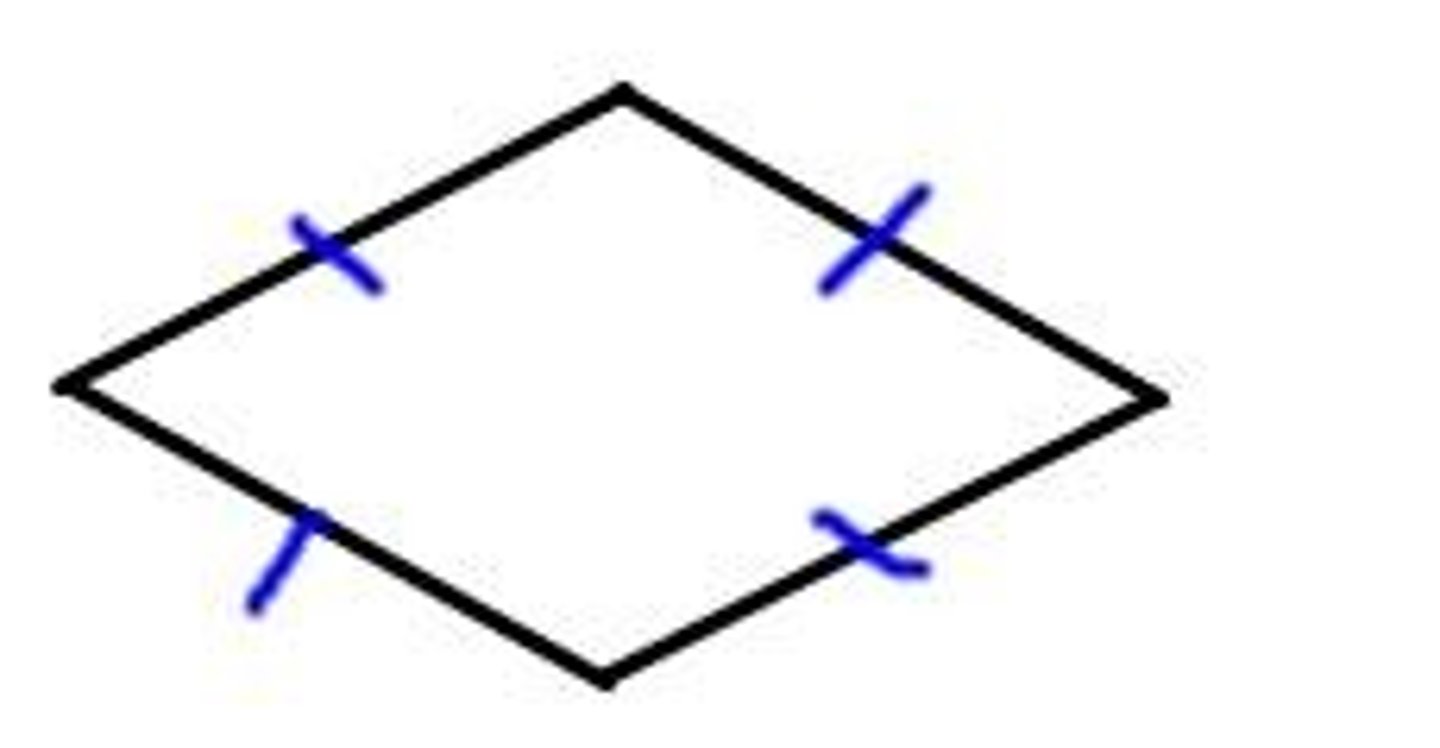
Rhombus
A quadrilateral with four congruent sides
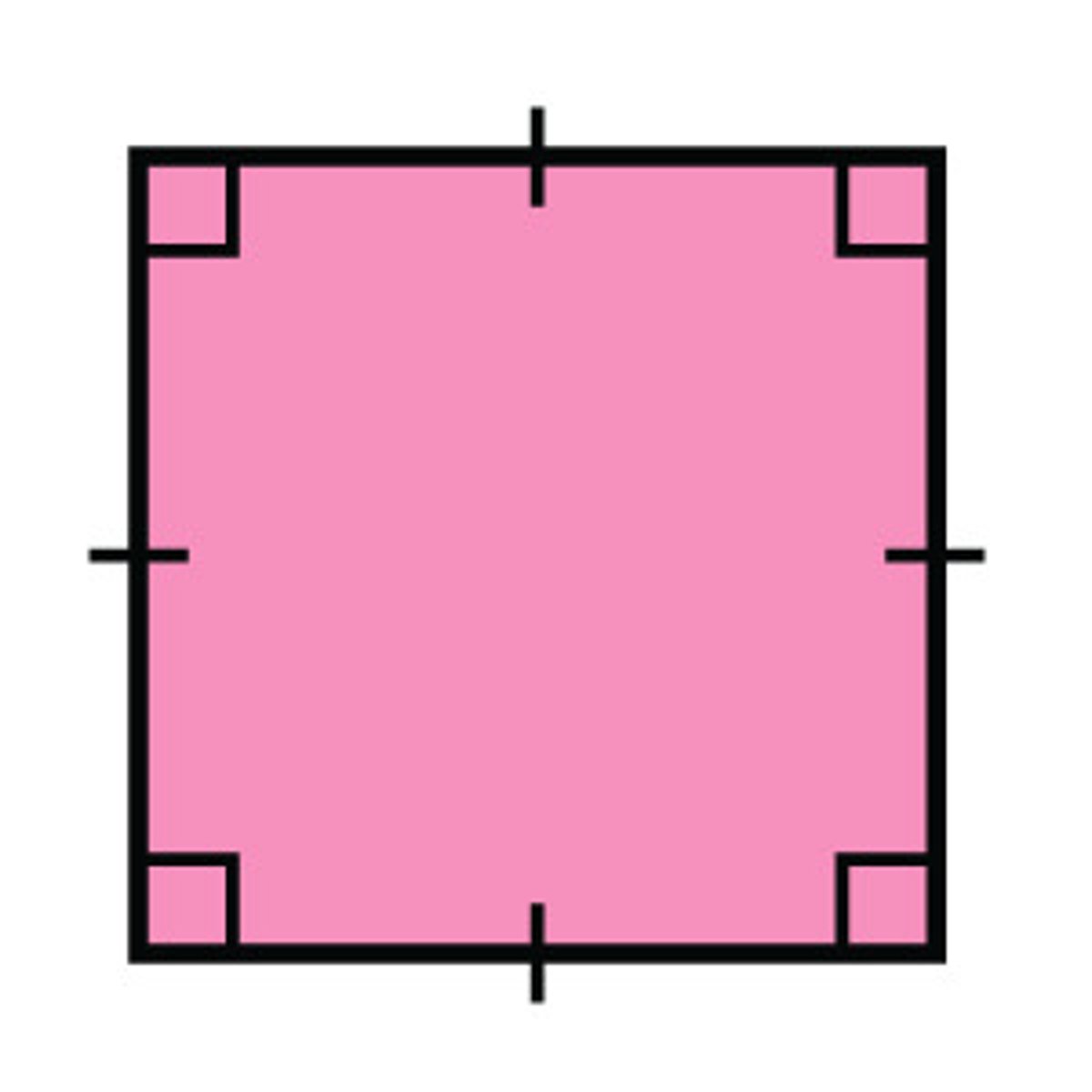
square
A quadrilateral with 4 sides that are equal and has all 90 degree angles