Human Bio - organelles + membrane
 Call Kai
 Learn
Learn Practice Test
 Spaced Repetition
 Match
Match Flashcards
 Knowt Play
1/48

There's no tags or description
Looks like no tags are added yet.
Name | Mastery | Learn | Test | Matching | Spaced | Call with Kai |
|---|
No analytics yet
Send a link to your students to track their progress
49 Terms
Rough ER function
Where chemical reactions take place
Ribosomes function
Site of protein synthesis
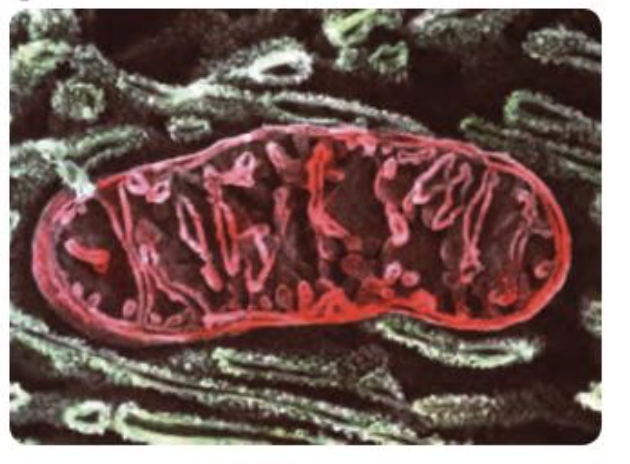
Mitochondria function
Powerhouse of a cell
Site if cellular respiration and ATP production
why do some cells have more mitochondria
Cells with higher metabolic energy require more energy meaning more production of ATP
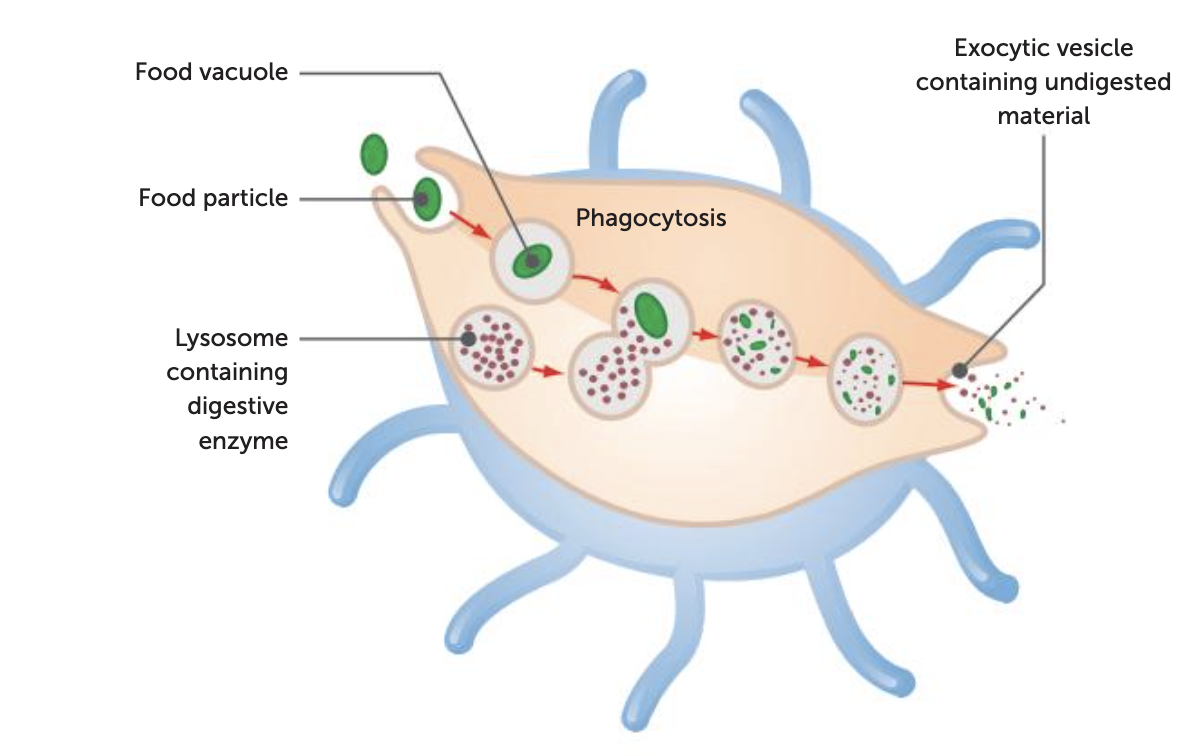
Lysosomes function
small spheres formed from golgi apparatus
creates digestive enzymes that releases sells waste and pathogens (acts as waste disposal)
Smooth ER function
Lacks ribosomes esponsible for lipid synthesis and metabolism
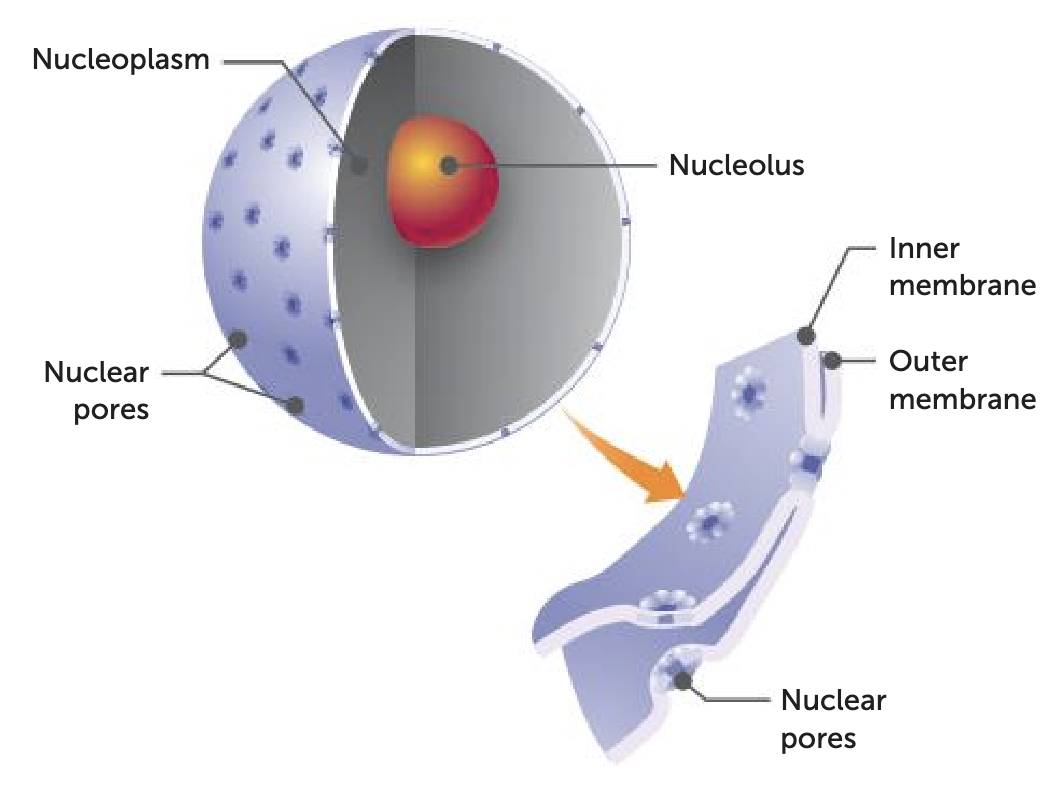
nucleolus function
contains RNA and regulates production of proteins
Nucleus function
Contains DNA and regulates metabolism and reproduction
Centioles function
Appears during cell division ( mitosis and meiosis )
Golgi Body function
packages proteins for secretion out of the cell
Cell membrane function
Protects the contents of the cells - controlling what leaves and enters
What is Cytoplasm
Thick fluid within the cell, that organelles are suspended in
What is the cytoskeleton
micro-fragments that provide the cell structure assisting movement of organelles and materials in the cell.
What is the cytosol
The liquid portion of cytoplasm containing salts and carbohydrates
What are inclusions and give an example
Substances that aren’t apart of the cell structure but are located in the cytoplasm
e.g hemoglobin in red blood cells
What is Cell Theory
States that all organisms are made of cells.
What is the difference between Cilla and Flagella
Cilla - numerous, short Fine projections on the outside of a cell membrane
Flagella - few, longer fine projections on the on the cell membrane (sperm cell)
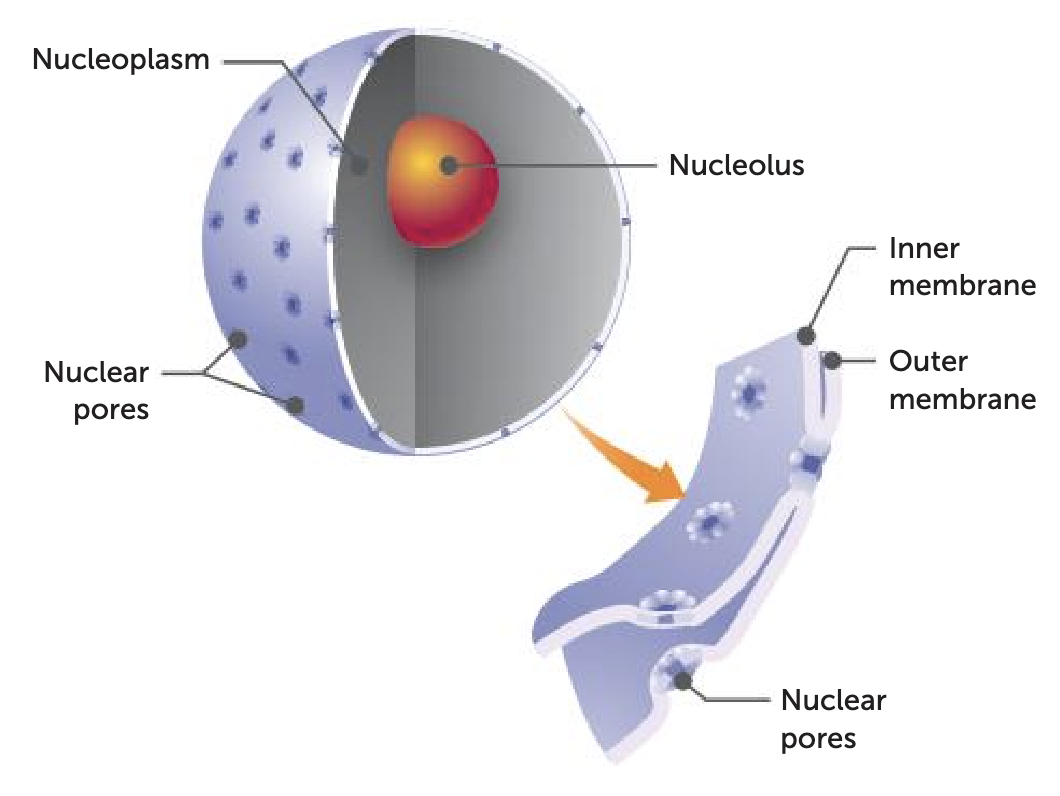
What are nuclear pores
Allow large molecules such as messenger RNA to leave and enter nucleus
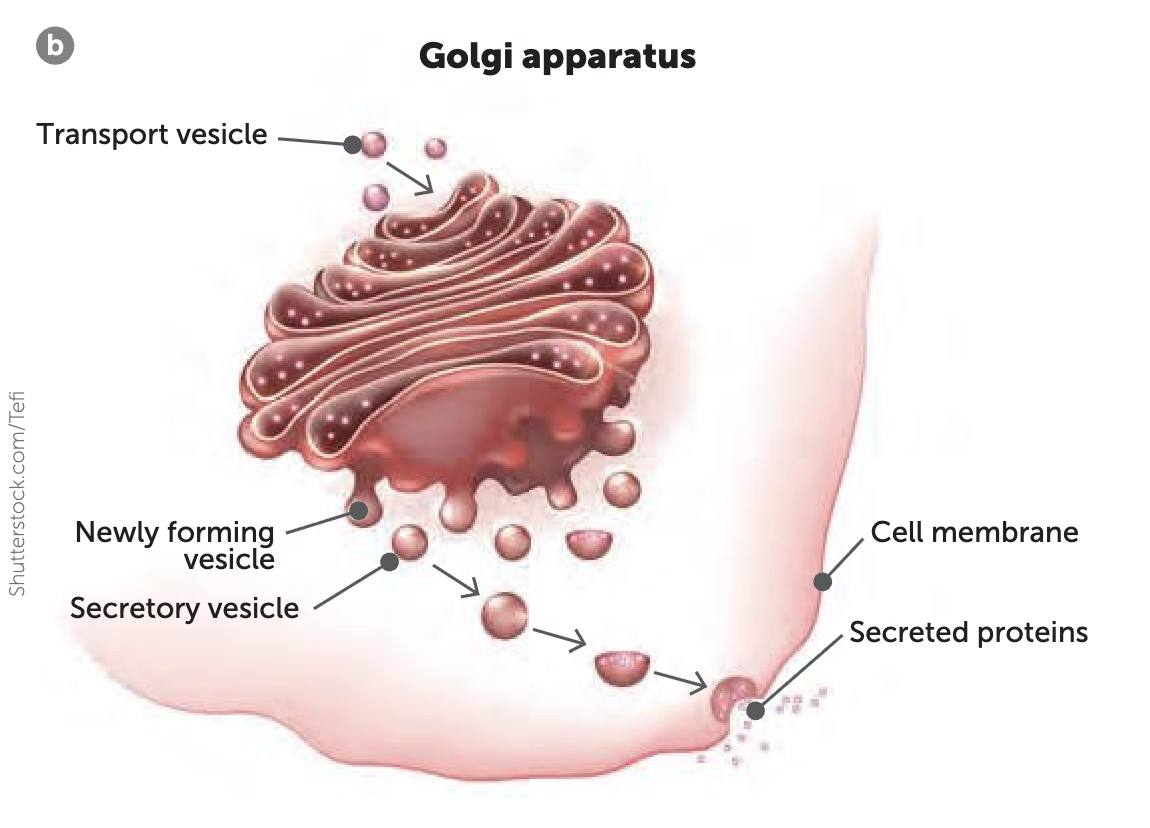
What are vesicles and where are they formed
At the edges of the membranes of the Golgi body
What is the top and bottom half of a phospholipid bilayer called
The head that is hydrophilic (water-loving)
The tail that is hydrophobic (water-hating)
What does amphipathic mean
molecule consisting of a polar head and none polar tail such as phospholipid bilayers
what are the difference functions of a cell membrane
Acts as a physical barrier
where and what is the function of cholestrol
Found wedged between the phospholipids.
If the temp increases inside a cell what happends
cholesterol keeps phospholipids together stopping them from becoming to fuild
If the temp decreases inside a cell what happens
cholesterol acts as spacers keeping them from becoming to packed
What does it mean by Isomtonic
Same solute concentration in both intercellular and extracellular fluids
What does it mean by Hypertonic describing the osmotic pressure
higher solute conc in extracellular fluid causing water to leave the cell (shrinking).
What does Hypotonic mean when describing the osmotic pressure
lower solute conc in intercellular fluid causing water to enter the cell (swelling)
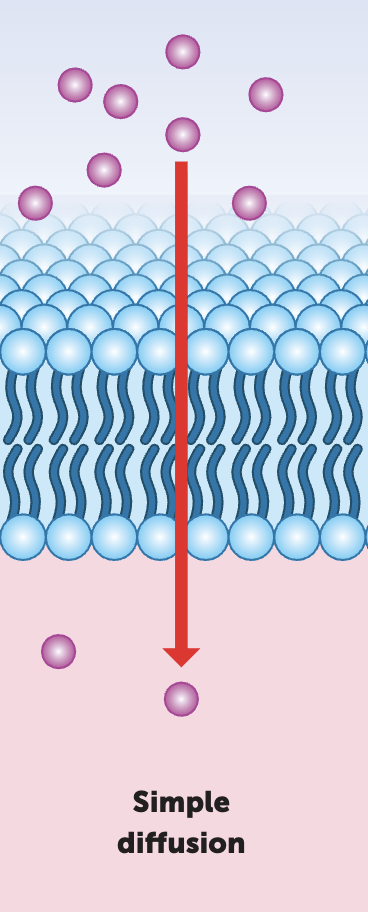
What is simple diffusion
movement of oxygen and carbon dioxide across a semipermeable membrane ( along gradient)
What is diffusion
movement of particles (Liquid or gas) from high to low conc
what is Facilitated transport
process where special proteins are used for transport across the cell membrane
Vesicular transport
where materials are moved in membrane-bound sacs.
what subtances can more through diffusion.
alcohol, steroids and other fat soluble substances
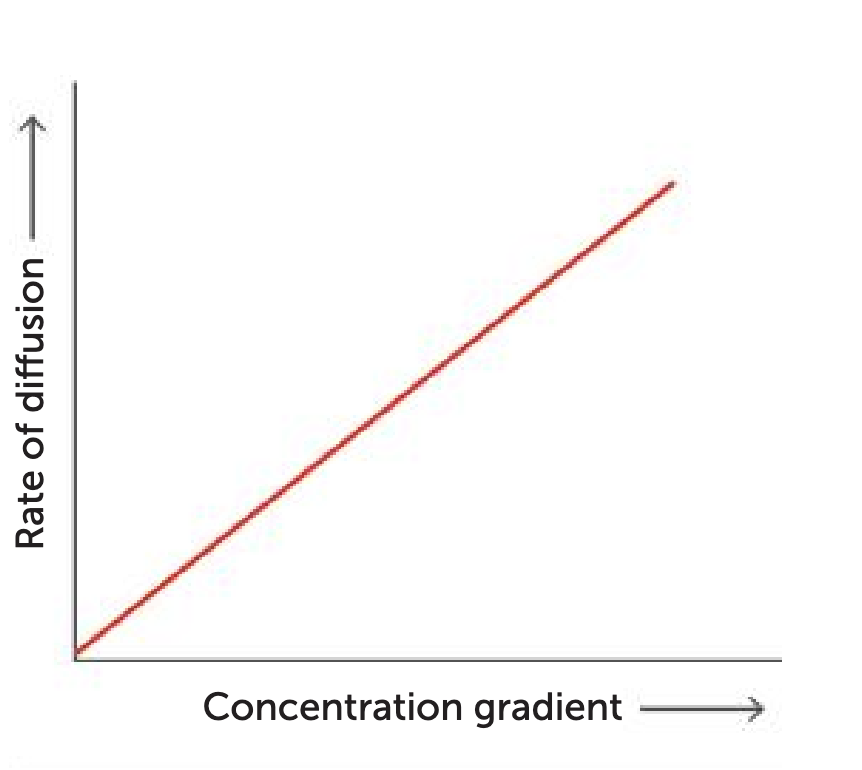
how does a high conc gradient effect diffusion
the greater the rate of diffusion
What is net diffusion
movement of liquid or gas molecules from places of higher to lower concentration, along a concentration gradient
Why is oxygen and carbon dioxide diffused though bio-layer
Oxygen diffuses because it used up inside the cell for respiration.
Carbon dioxide is produced inside the cell by respiration there will
What is Osmosis
water will move to an area where a solute (sugar) is in high conc
What is osmotic pressure.
pressure due to the differences in conc either side of
a differentially permeable membrane
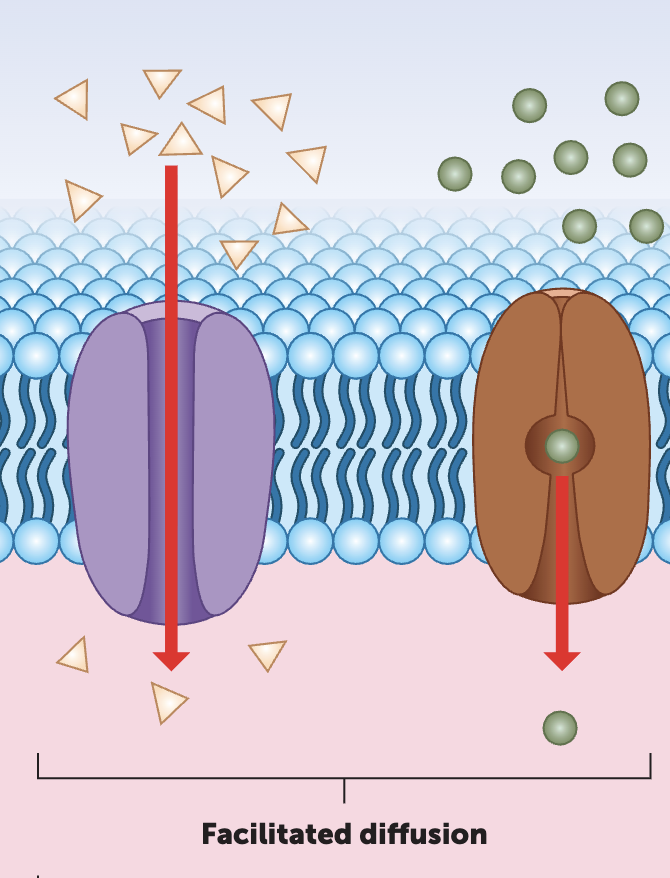
What is facilitated diffusion
process where proteins allow the movement of substances
through the cell membrane along the conc gradient
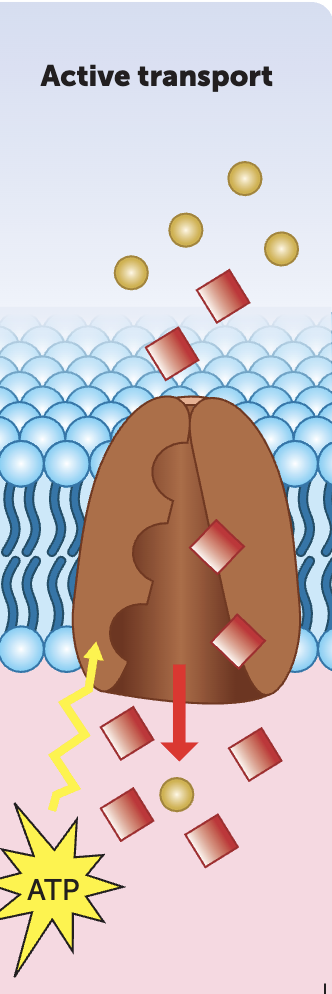
What is active transport
Movement of substances through carrier proteins against conc gradient
What is vesicular transport
transport of materials into or out of a cell in membrane-
bound sacs
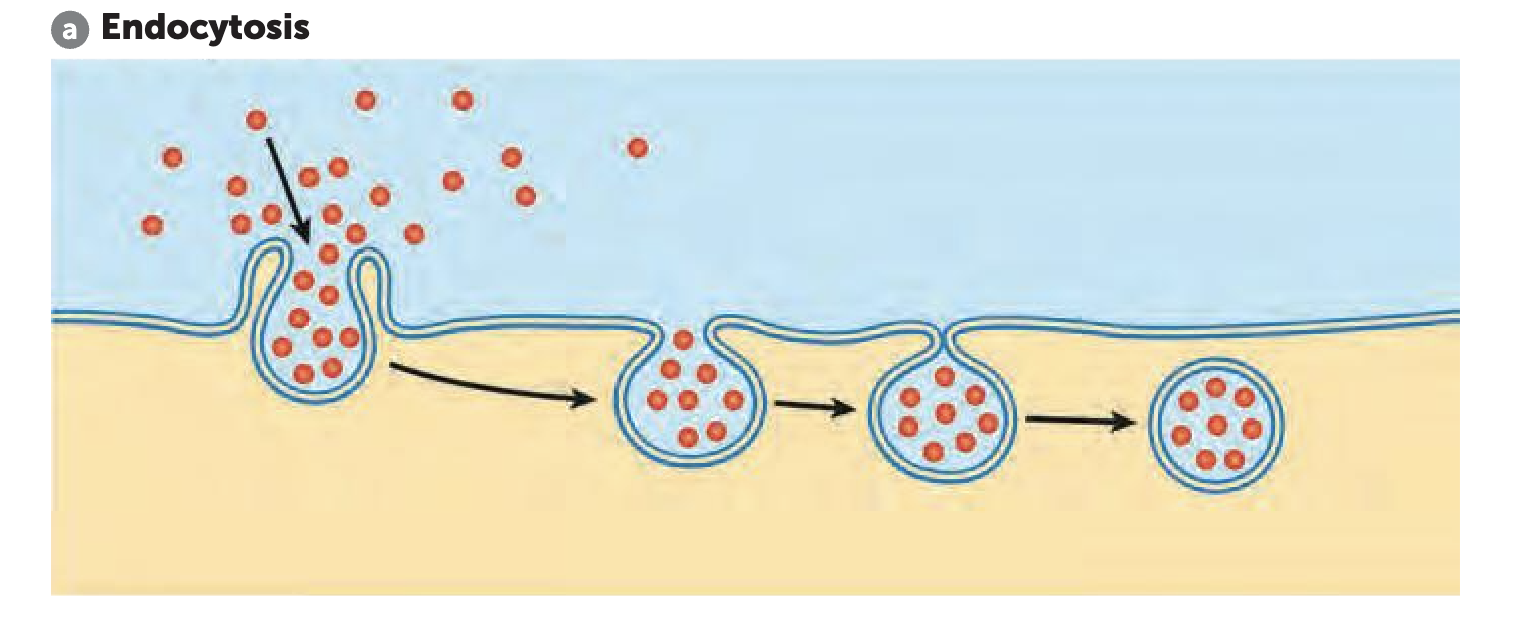
What is endocytosis
taking liquid or solids into the cell by vesicular transport
Steps of endocytosis
cell membrane folds around droplet of liquid or solid particle until completely enclosed.
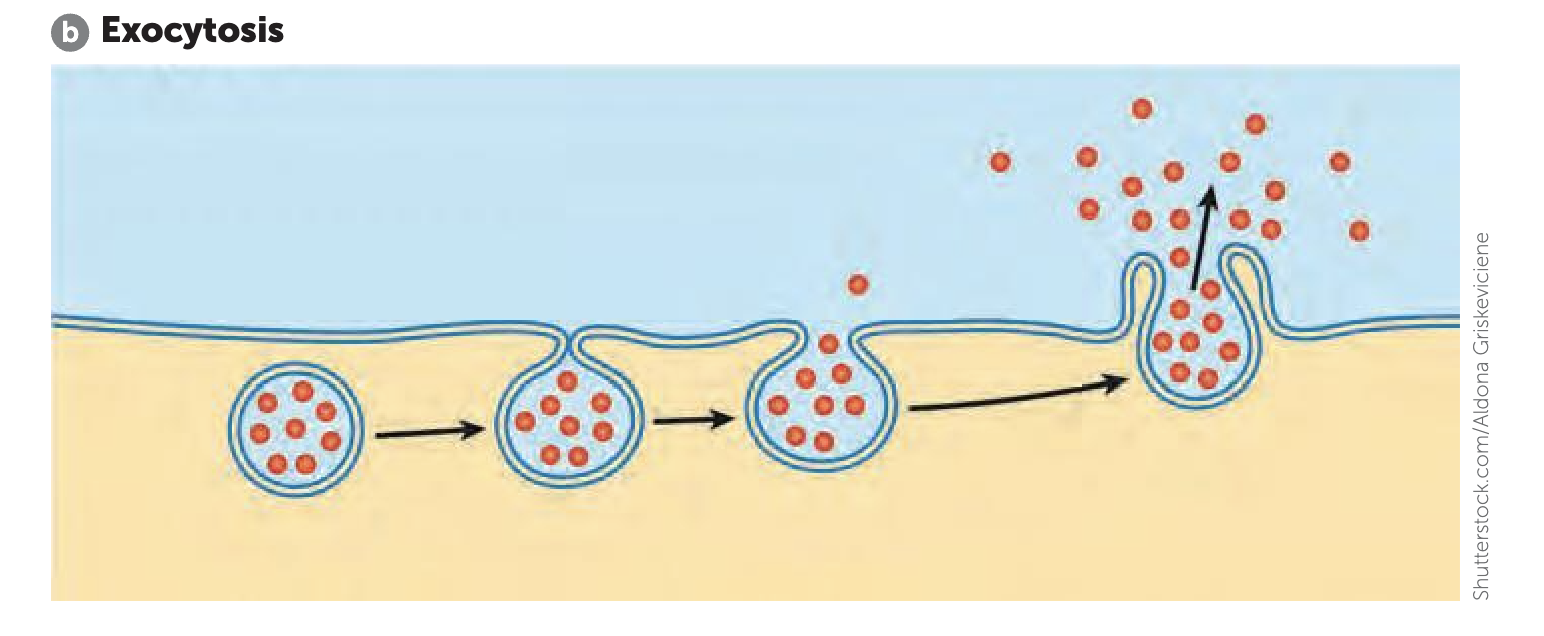
What is Exocytosis
contents of a vesicle inside the cell are passed to the outside
steps of Exocytosis
A vesicle ormed inside the cell migrates to the cell membrane and fuses with it